Abhijeet Dipke started the movement as a joke. But after ousting a minister over a dysfunctional college entrance exam system, India’s youth say they now want to save democracy.
Abhijeet Dipke started the movement as a joke. But after ousting a minister over a dysfunctional college entrance exam system, India’s youth say they now want to save democracy.
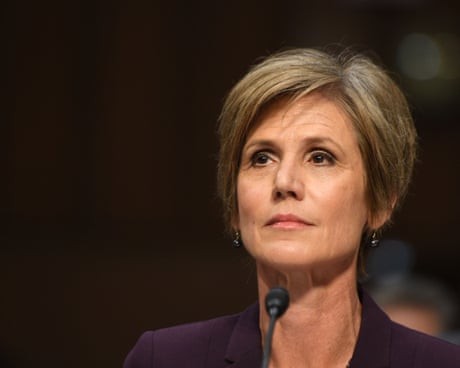
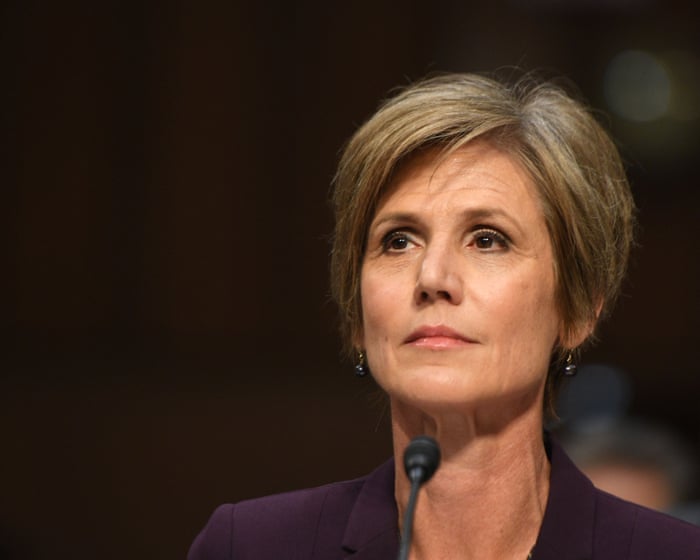
School trustees appoint Sally Yates to review policies as university grapples with fallout from alleged frat gang rapeA former high-ranking Department of Justice official will look at how Cornell handles sexual misconduct complaints, university trustees announced on Tuesday as they tried to address an outpouring of anger over allegations of a 2024 gang rape at a fraternity house.Sally Yates, who was a deputy attorney general in the Obama administration, will spearhead the review, the trustees sa
School trustees appoint Sally Yates to review policies as university grapples with fallout from alleged frat gang rape
A former high-ranking Department of Justice official will look at how Cornell handles sexual misconduct complaints, university trustees announced on Tuesday as they tried to address an outpouring of anger over allegations of a 2024 gang rape at a fraternity house.
Sally Yates, who was a deputy attorney general in the Obama administration, will spearhead the review, the trustees said. The assessment is to include how the Ivy League university investigates reports of sexual assault and sexual harassment, how the disciplinary process works, the adequacy of campus police responses, and more.
Ukraine's parliament registered a bill on minority-language schooling on 1 October to lift Hungary's block on the country's European Union membership talks, Ukrinform reported. Kyiv acts first with the legislation. Budapest reciprocates by letting the EU push the stalled accession process forward. Hungary's government welcomed the text within a day.
Ukraine's route into the European Union turns on unanimous votes, so one member state's leverage can stall the entire queue—and Kyiv is try
Ukraine's parliament registered a bill on minority-language schooling on 1 October to lift Hungary's block on the country's European Union membership talks, Ukrinform reported. Kyiv acts first with the legislation. Budapest reciprocates by letting the EU push the stalled accession process forward. Hungary's government welcomed the text within a day.
Ukraine's route into the European Union turns on unanimous votes, so one member state's leverage can stall the entire queue—and Kyiv is trying to pry the clusters open one bargain at a time before the window for this year's progress closes.
A tightly timed swap
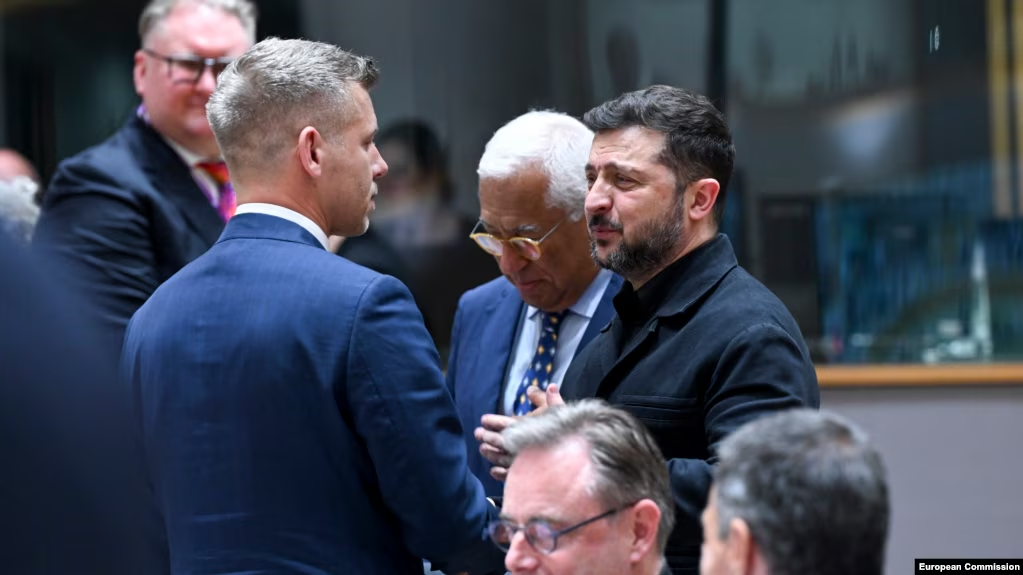
European Pravda, citing unnamed sources, reported that the two capitals agreed to move in parallel after a public standoff, with neither side willing to go first on trust alone. Ukraine registers and passes the bill. In return, Hungary is to let the Council of the EU presidency send Kyiv, on 6 October, the requests needed to open two negotiating clusters—stages of the membership process. The Rada plans an extraordinary session on 12 October to adopt it, and European Pravda says the votes are there. A Council of the EU decision is due on 13 October, ahead of a European Council summit two days later. Deputy Prime Minister Vsevolod Chentsov said rebuilding trust will take concrete steps from both governments.
What the bill changes
Lawmakers filed Bill No. 16119, which creates a national minority school status: a school qualifies when over half its pupils—50% plus one—study in a national-minority language that is also an official EU language. By Education Ministry estimates, that fits about 149 schools, roughly 1.2% of Ukraine's general secondary institutions. Ukrainian stays the language of instruction, and the bill does not return Russian to classrooms.
Explore further
Sybiha hails new page in Ukraine-Hungary relations as Cyprus launches first EU cluster procedure
Pupils at qualifying schools could use the minority language with teachers and classmates, not only in lessons, and parents could petition to add subjects taught in Ukrainian. The text also covers Ukraine's indigenous peoples, such as Crimean Tatars, and drops a Ukrainian-language certificate requirement for the heads of 29 private schools for as long as they stay in their posts. Education committee head Serhii Babak said the solution protects Ukrainian while meeting an EU accession commitment.
What changed in Budapest
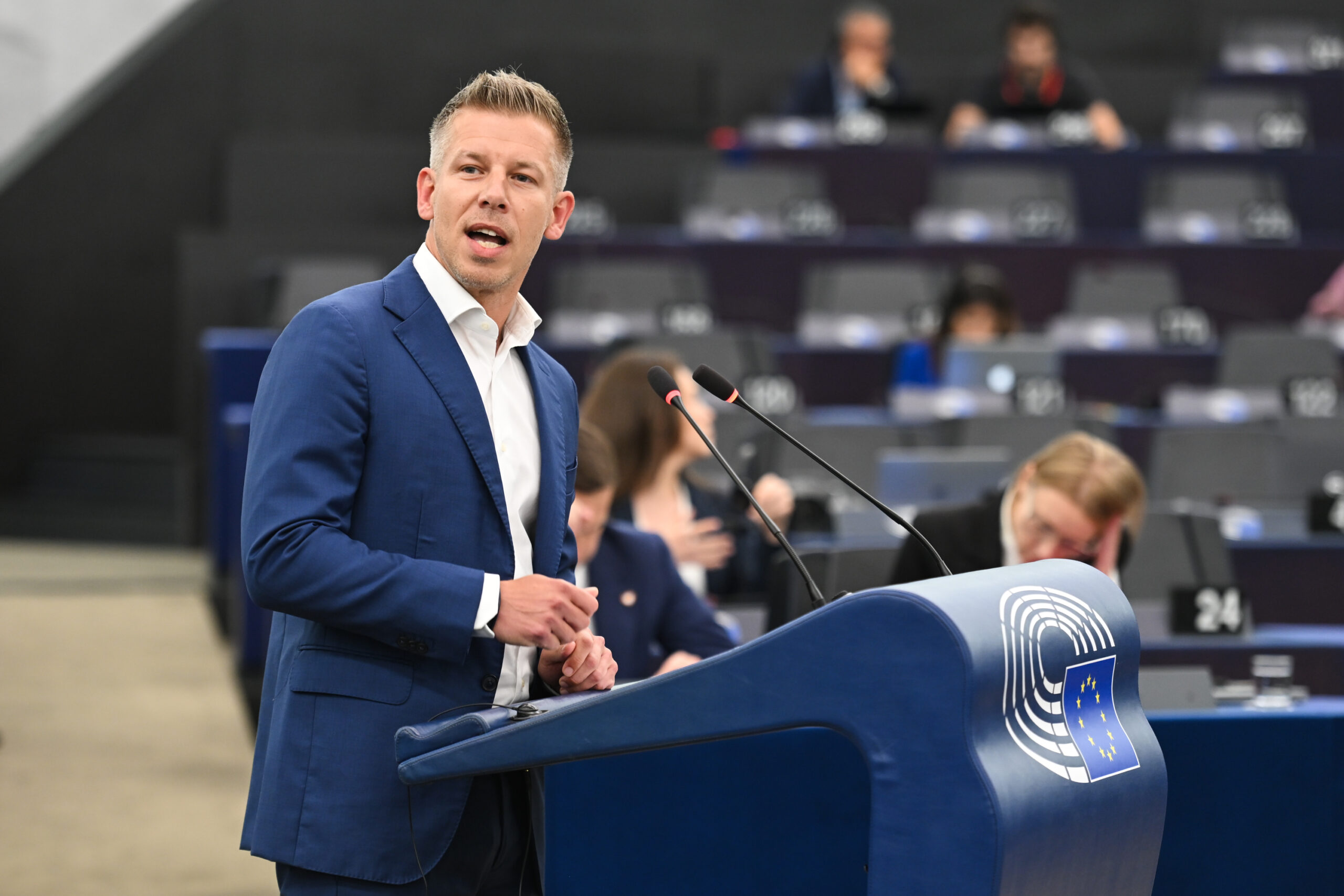
Hungarian Prime Minister Péter Magyar posted on Facebook that the bill strengthens legal guarantees for Hungarian-language education and the school network, and wrote that he expects those rights honored in practice. European Pravda framed the outcome as a win Magyar's own voters can read as delivering what the previous government never secured. Foreign Minister Anita Orbán said the new government had achieved more in a few months for the Hungarian minority in Zakarpattia than Viktor Orbán's cabinet managed in ten years. Under Magyar, Hungary agreed in June to open the first accession cluster but kept slowing the rest. Only in recent weeks, European Pravda wrote, did Budapest abandon Orbán-style unconditional blocking. This bill is meant to free the next two.
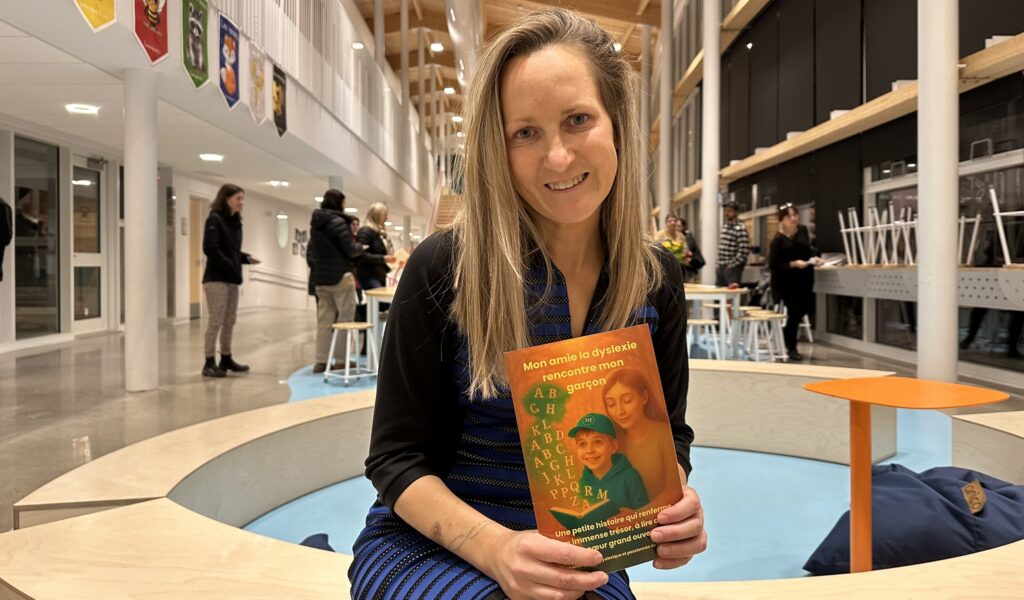
Le premier Congrès de l’éducation de l’Est-du-Québec se tiendra le dimanche 25 octobre, au centre communautaire de Sainte-Odile, à Rimouski. L’événement s’adresse autant aux parents qu’à ceux qui travaillent dans le domaine de l’éducation.
Des conférences, des formations et des kiosques de professionnels sont au programme. Une quinzaine d’exposants seront sur place pour rencontrer les visiteurs.
Avec son événement, la fondatrice et directrice du Congrès de l’éducation, Lyne Poirier, souha
Le premier Congrès de l’éducation de l’Est-du-Québec se tiendra le dimanche 25 octobre, au centre communautaire de Sainte-Odile, à Rimouski. L’événement s’adresse autant aux parents qu’à ceux qui travaillent dans le domaine de l’éducation.
Des conférences, des formations et des kiosques de professionnels sont au programme. Une quinzaine d’exposants seront sur place pour rencontrer les visiteurs.
Avec son événement, la fondatrice et directrice du Congrès de l’éducation, Lyne Poirier, souhaite rassembler et permettre aux participants de connecter pour échanger leurs trucs et leur expertise.
« C’est pour s’élever entre nous. Je pense que nous étions dus pour être interpellés physiquement et pour nous rencontrer humainement. Depuis la pandémie, il y a beaucoup de formations sur le Web, mais je pense qu’il faut recréer un moment humain », dit-elle.
La clinique Réflexologie Claudia, Wendy Bourgoin massothérapeute, Jessica Gagné intervenante psychosociale, TDL Bas-St-Laurent, Pro-Jeune-Est, Diane Martel consultante en pédagogie et la clinique CEIMEA font notamment partie des exposants présents pendant la journée. La plupart proviennent de Rimouski.
Gestion des émotions
« Le congrès est beaucoup pour le bien-être des parents et des enseignants parce que plus on est bien comme adulte, mieux on peut transmettre aux enfants et on reflète un modèle de bien-être. L’auteure de Trois-Rivières, Manon Jean, sera présente pour offrir une conférence sur la gestion des émotions. Nous allons faire le lien avec l’enfant, mais l’adulte a autant de gestion d’émotions à faire », explique madame Poirier.
L’anxiété et le niveau d’attention font également partie des thèmes qui seront abordés pendant le Congrès.
« Plusieurs parents vivent des enjeux. S’ils prennent le temps de venir se connecter à la conférence de Manon Jean et aux exposants qui sont là, ça va les aider à avoir un meilleur bagage et une meilleure confiance », indique la directrice.
Les conférencières lors du Congrès de l’éducation, Jessica Talon-Croteau et Manon Jean. (Photos courtoisie)
Les parents seront invités en avant-midi (9 h à 11 h) alors que les intervenants du domaine de l’éducation pourront assister aux différentes activités en après-midi (13 h à 16 h ). Un réseautage sur l’heure du dîner et un cocktail en fin de journée sont également prévus pour permettre aux exposants d’échanger entre eux.
Elle souhaite que le Congrès de l’éducation de l’Est-du-Québec devienne un événement annuel et qu’il prenne de l’ampleur dès l’an prochain. Madame Poirier aimerait attirer des professionnels du domaine de l’éducation de la Gaspésie.
Pour les enseignants, la participation au Congrès pourrait être admissible à un remboursement dans le cadre de leur budget de formation ou de perfectionnement.
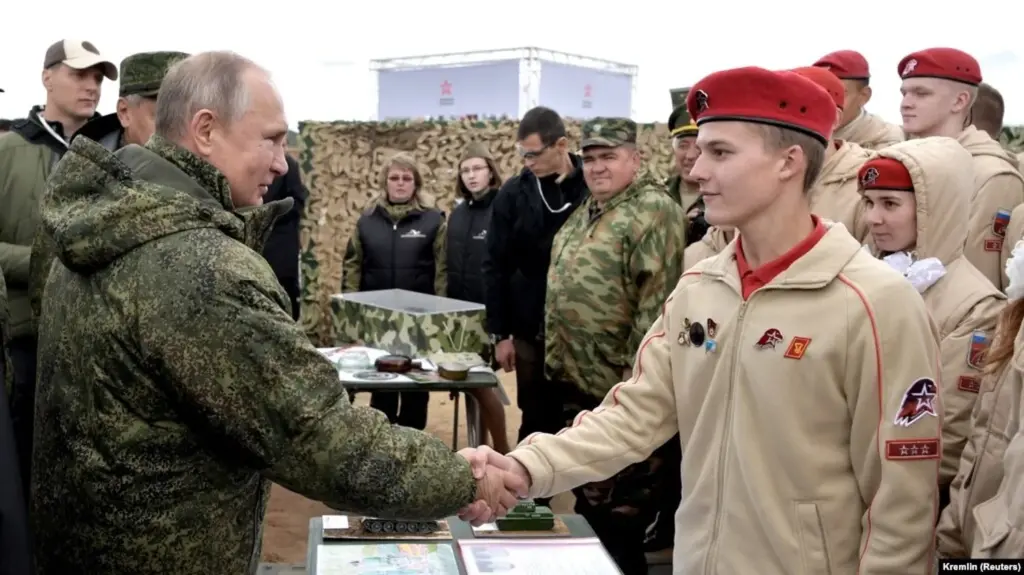
A Kremlin-backed program aimed at primary-school children claims 10,154 participants in occupied Zaporizhzhia, nearly 30 times Yunarmia's 355 members—Russia's uniformed military youth organization—Petro Andryushchenko, head of the Center for the Study of Occupation, said. Cadet classes in the same region account for another 387, according to Andryushchenko.
Yunarmia may represent only a fraction of Moscow’s system for militarizing Ukrainian children under occupation. Movement of the Fir
A Kremlin-backed program aimed at primary-school children claims 10,154 participants in occupied Zaporizhzhia, nearly 30 times Yunarmia's 355 members—Russia's uniformed military youth organization—Petro Andryushchenko, head of the Center for the Study of Occupation, said. Cadet classes in the same region account for another 387, according to Andryushchenko.
Yunarmia may represent only a fraction of Moscow’s system for militarizing Ukrainian children under occupation. Movement of the First, a Kremlin-backed mass youth group covering ages 6 to 18, claims about 65 times Yunarmia's membership in occupied Zaporizhzhia—over 23,000 by the end of 2025, up from about 14,000 a year earlier, according to Andryushchenko's breakdown of the series. A separate infographic in the same series puts the figure at over 19,000. Moscow has sustained the broader campaign throughout the full-scale invasion, combining classroom indoctrination, Kremlin youth movements, military games, and weapons training.
Andryushchenko explains why: Movement of the First is not a military organization, and that is precisely its function—a mass base that enrolls children without their joining any military-patriotic structure, then moves some into specialized programs. Through it, Zarnitsa stopped being a school game and became part of Russia's military-patriotic system. The movement functions as a gateway, not an endpoint.
In Kherson Oblast, the pattern repeated: over 2,700 children and young people passed through Movement of the First events in 2024, and by spring 2025, the registered count had reached 6,200, with primary cells growing from about 70 to 114–115.
From Eaglets to Zarnitsa: programs across occupied Zaporizhzhia
Andryushchenko said Eaglets of Russia, a program aimed at primary-school children aged 6 to 10, claims 10,154 participants across 97 schools and 626 class-teams in occupied Zaporizhzhia, while more than 2,000 children aged 11 to 17 have passed through the Zarnitsa 2.0 military game. In May 2026, children from all four occupied oblasts appeared at a federal Eaglets session alongside children from Russian regions—a sign the occupied territories are already integrated into the system.
He said military-applied instruction now fills about half of the OBZR course, Russia’s “Fundamentals of Security and Defense of the Motherland” subject, in occupation schools. He described a broader system stretching from kindergarten and mass children's organizations through military games and cadet structures to practical training in drones, tactics, weapons, and military medicine.
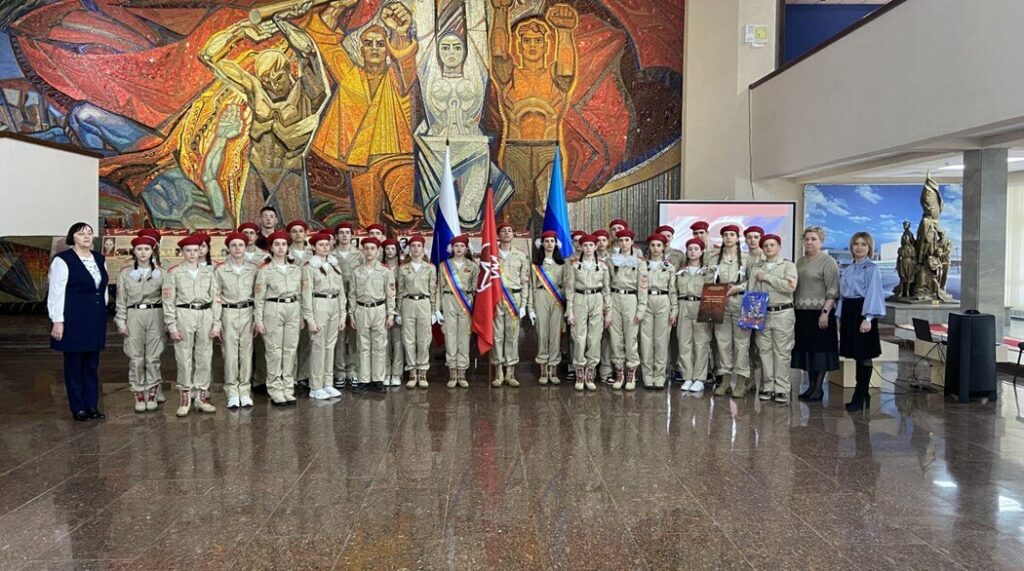
So-called "dedication ceremony for students of Milove secondary school to become members" of Russia's paramilitary organization Yunarmia. Occupied Sorokyne (ex-Krasnodon), Luhansk Oblast, April 2023. Image: lug-info.ru.
Military training center claims thousands across four occupied territories
Beyond Zaporizhzhia, Andryushchenko said the Russian military-sports training center VOIN claims 14,450 trained cadets across four occupied Ukrainian territories in his overview post. A later infographic in the series gives 10,381 for the same four territories, suggesting the figures may count differently.
That cannot be read as a count of children because VOIN programs accept participants aged 14 to 35, according to the Center's own website, and no age breakdown was provided. VOIN says it has trained more than 100,000 cadets across 21 Russian regions overall.
Andryushchenko's post opened a six-part series tracing the system "from first grade to cadet"—though the series itself showed the pipeline actually begins in kindergarten, with "Conversations about Important Things" starting at age 5. Part two, published on 22 September, broke down Movement of the First's role as a gateway, with Zarnitsa 2.0 next. The participation totals cited in his post are claims by Russian-run organizations relayed by the Center. They may overlap, have not been independently verified, and do not show how many individual children participated or whether children move from one program to another.
Luhansk school students wearing the uniform of the so-called "Young Army." 2022. Photo: lug-info
Militarization has continued throughout the full-scale invasion
These latest participation claims are the newest snapshot of a campaign that has expanded steadily throughout Russia’s full-scale invasion. In 2023, occupation schools were already teaching children to use assault rifles and provide battlefield first aid.
By late 2024, Putin had ordered the expansion of military-sports camps and youth indoctrination programs.
Reports published in 2025 and 2026 described mandatory “patriotism” lessons from first grade and documented Ukrainian orphans who entered cadet schools and later appeared in Russian military uniforms.
Le gouvernement Carney avait instauré l’an dernier un financement de 1,7 milliard $ pour attirer ou ramener au Canada «les meilleurs talents».
Mélanie Joly, ministre fédérale de l’industrie, a annoncé hier que 540 millions $ avaient permis de recruter une première cohorte de 64 chercheurs.
Ces chercheurs ont accepté un poste de titulaire de chaire de recherche au pays.
Selon plusieurs médias, 48 d’entre eux travaillaient auparavant aux États-Unis.
[L'article Le Canada a attiré
À une semaine de la rentrée scolaire, le tableau de bord du ministère de l’éducation indique que 2075 postes d’enseignants sont encore vacants.
Selon un sondage de la Fédération autonome de l’enseignement, les enseignants restent passionnés par leur profession, mais se disent épuisés par le système.
93% d’entre eux affirment que «la passion de transmettre leurs connaissances et de donner le gout d’apprendre» est ce qui les motive le plus à rester.
Toutefois, 16% ne pensent proba
À une semaine de la rentrée scolaire, le tableau de bord du ministère de l’éducation indique que 2075 postes d’enseignants sont encore vacants.
Selon un sondage de la Fédération autonome de l’enseignement, les enseignants restent passionnés par leur profession, mais se disent épuisés par le système.
93% d’entre eux affirment que «la passion de transmettre leurs connaissances et de donner le gout d’apprendre» est ce qui les motive le plus à rester.
Toutefois, 16% ne pensent probablement pas rester dans la profession ou ne savent pas encore s’ils y resteront.
Un gouvernement solidaire adopterait immédiatement 6 mesures:
hausser le salaire minimum à 20 $;
plafonner les hausses de loyer aux taux d’inflation;
annuler la politique de retour au bureau visant les fonctionnaires;
créer un ministère des femmes et de l’égalité des genres;
fermer le bureau du Québec à Tel-Aviv;
bloquer les projets de pipelines et gazoducs sur le territoire québécois.
QS lancerait 3 grands chantiers, pour être réalisés au cours d’un premier mandat:
Dans l’édition 2026 du classement de Shanghai, un classement mondial des 1000 meilleures institutions universitaires établi par une université chinoise réputée, le Canada compte 30 établissements, dont 6 au Québec.
Le classement est fondé sur des critères principalement liés à la recherche: distinctions scientifiques, chercheurs les plus cités, publications dans des revues scientifiques.
Les trois universités canadiennes les mieux classées:
Université de Toronto (24e)
Universi
Dans l’édition 2026 du classement de Shanghai, un classement mondial des 1000 meilleures institutions universitaires établi par une université chinoise réputée, le Canada compte 30 établissements, dont 6 au Québec.
Le classement est fondé sur des critères principalement liés à la recherche: distinctions scientifiques, chercheurs les plus cités, publications dans des revues scientifiques.
Les trois universités canadiennes les mieux classées:
Université de Toronto (24e)
Université de la Colombie-Britannique (54e)
Université McGill, à Montréal (73e)
Les universités américaines occupent la tête du classement:
Harvard (1re)
Stanford (2e)
Institut de technologie du Massachusetts – MIT (3e)
Montréal arrive au 20e rang de la plus récente édition du QS Best Student Cities, un classement mondial de 150 grandes villes universitaires réalisé par une firme britannique spécialisée dans l’analyse de l’enseignement supérieur.
La métropole a descendu:
de 2 places par rapport au classement de l’an dernier;
de 10 places par rapport à il y a deux ans.
Montréal demeure cependant la première ville universitaire du Canada.
Elle se classe deuxième en Amérique du Nord, derri
Montréal arrive au 20e rang de la plus récente édition du QS Best Student Cities, un classement mondial de 150 grandes villes universitaires réalisé par une firme britannique spécialisée dans l’analyse de l’enseignement supérieur.
La métropole a descendu:
de 2 places par rapport au classement de l’an dernier;
de 10 places par rapport à il y a deux ans.
Montréal demeure cependant la première ville universitaire du Canada.
Elle se classe deuxième en Amérique du Nord, derrière Boston.
Serhii Plokhii, a renowned scholar of Ukrainian history, is stepping down as director of the Ukrainian Research Institute at Harvard University (HURI) after 12 years of leadership, the institute announced on June 30."It has been a privilege and an honor to lead the Institute over the past 12 years," Plokhii said in a farewell message. Plokhii is one of the leading experts on the history of Eastern Europe. Born to a Ukrainian family in Russia, he has lived in Ukraine for 35 years and has written
Serhii Plokhii, a renowned scholar of Ukrainian history, is stepping down as director of the Ukrainian Research Institute at Harvard University (HURI) after 12 years of leadership, the institute announced on June 30.
"It has been a privilege and an honor to lead the Institute over the past 12 years," Plokhii said in a farewell message.
Plokhii is one of the leading experts on the history of Eastern Europe. Born to a Ukrainian family in Russia, he has lived in Ukraine for 35 years and has written several best-selling books on the subject, including "The Gates of Europe: A History of Ukraine" and "The Last Empire: The Final Days of the Soviet Union."
Plokhii expressed gratitude to colleagues, staff, and supporters and offered best wishes to historian Terry Martin, who will assume the role of director in the upcoming academic year.
"Years marked by the anxiety and challenges of war, but also by the opportunities that institutions like HURI offer to advance what Harvard’s motto calls 'good knowledge' about Ukraine and the region."
The Ukrainian Research Institute, founded in 1973 through the support of the Ukrainian-American community, is the leading academic institution in the United States focused on Ukrainian studies.
Based at Harvard, HURI promotes research and scholarship on Ukraine's history, culture, and politics through fellowships, conferences, digital initiatives, and its flagship journal, Harvard Ukrainian Studies.
Under Plokhii's leadership, the Institute expanded its programming significantly, including the establishment of the Temerty Contemporary Ukraine Program in 2019, an initiative that became central to HURI's academic response following Russia's full-scale invasion of Ukraine in 2022.
The incoming director, Martin, is a scholar of Soviet history and professor of Russian studies.

 Connexion