Floods from powerful thunderstorms devastated Gary, where a third of residents live below the poverty line and full restoration isn’t expected until next week.
Floods from powerful thunderstorms devastated Gary, where a third of residents live below the poverty line and full restoration isn’t expected until next week.
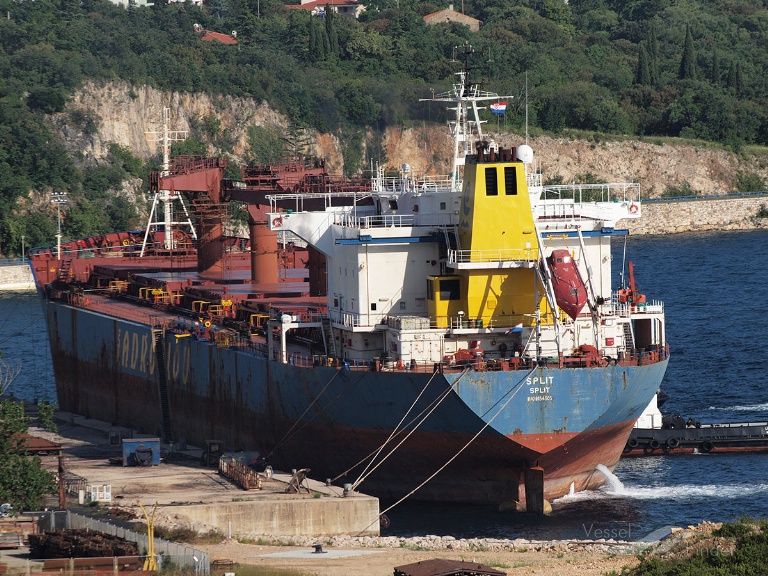
On 14 August, Ukraine's Military Intelligence (HUR) published data on 26 vessels via its War&Sanctions portal, noting that 18 ships face no sanctions from any of Ukraine's partner countries.
The agency said the ships carry Russian oil, liquefied natural gas (LNG), or agricultural products from occupied Ukraine. Euromaidan Press could not independently verify HUR’s vessel records.
Russia relies on maritime trade both to fund its war through energy exports and to s
On 14 August, Ukraine's Military Intelligence (HUR) published data on 26 vessels via its War&Sanctions portal, noting that 18 ships face no sanctions from any of Ukraine's partner countries.
The agency said the ships carry Russian oil, liquefied natural gas (LNG), or agricultural products from occupied Ukraine. Euromaidan Press could not independently verify HUR’s vessel records.
Russia relies on maritime trade both to fund its war through energy exports and to sell crops taken from occupied Ukraine. Kyiv began building a dedicated system against Russia’s shadow grain fleet in April, modeled on its oil-fleet campaign. A US bill introduced this week would also target vessels, owners, insurers, and ports involved in sanctions evasion. HUR’s new list shows how many ships remain outside those restrictions.
Russia’s grain shadow fleet
HUR divided the 26 vessels into three groups:
oil tankers serving Lukoil, Rosneft, Surgutneftegas, Novatek, Tatneft, and Gazprom;
dry-cargo ships using the occupied ports of Berdiansk, Sevastopol, Kerch, and Feodosia;
LNG carriers moving gas from the sanctioned SAAM FSU floating storage unit, which holds LNG from the sanctioned Arctic LNG 2 project.
HUR highlighted three of the 18 vessels that are not facing partner sanctions. The bulk carrier LAMAR S repeatedly loaded wheat at the Avlita terminal in occupied Sevastopol in 2026 for delivery abroad, including to Syria, the agency said.
NAYA FALCON carried baking soda and granulated wheat bran from occupied Sevastopol to Egypt and Cyprus, HUR said. The agency linked the oil tanker GREGAL to UAE-based Cymare Navigation FZC, which it described as affiliated with Sovcomflot, Russia’s state-controlled shipping company.
Russia steals grain while striking Ukraine’s exports
Crops taken from occupied land are sold abroad as Russian produce, while Russia's attacks leave Ukraine’s legitimate harvest with fewer routes to market.
Ukraine’s Foreign Intelligence Service said Russia sold more than 2 million tons of grain from occupied Ukraine as Russian produce in 2025. The agency said ship-to-ship transfers at Kavkaz helped conceal its origin.
Meanwhile, Russian attacks have squeezed Ukraine’s legitimate grain trade. Strikes on civilian ships brought the Black Sea corridor to a near standstill during the July harvest peak. Ten people died when Russian missiles hit the grain-laden Golden Leo on 19 July.
HUR called on Ukraine and its partners to synchronize sanctions and detain vessels that violate restrictions. It said the measures could curb Russia’s maritime logistics and war funding.
Ukraine and Moldova are discussing transporting Ukrainian grain by rail through Moldovan territory to the Romanian port of Constanta, an option driven by intensified Russian attacks on shipping in the Black Sea, according to unnamed sources in both countries cited by Reuters.
The talks come as Russian strikes on vessels using the Black Sea corridor have disrupted traffic during the harvest season and forced Ukraine to cut its export forecast. On 22 July, no ship passed
Ukraine and Moldova are discussing transporting Ukrainian grain by rail through Moldovan territory to the Romanian port of Constanta, an option driven by intensified Russian attacks on shipping in the Black Sea, according to unnamed sources in both countries cited by Reuters.
The talks come as Russian strikes on vessels using the Black Sea corridor have disrupted traffic during the harvest season and forced Ukraine to cut its export forecast. On 22 July, no ship passed through the corridor at all, and the country's agriculture ministry has already lowered its projection for the 2026–2027 season by up to five million tons.
Discount sought, volume guarantees demanded
Kyiv is asking for a discount of 50 percent off the nominal rate to transport its grain, according to the agency's sources. A source at Moldovan Railway said Moldova responded with a counterproposal: guarantees from Ukraine on the volumes of grain it would transport through the route.
"We are currently collecting information on potential volumes from interested shippers. The information-gathering process has not yet been completed," a senior Ukrainian industry official told Reuters.
Ukraine expects corridor to cover 10 percent of exports
Ukraine estimates the Moldovan corridor could handle 10 percent of its grain exports. Agriculture Minister Taras Vysotskyi said earlier that his ministry had lowered its grain export forecast for the 2026–2027 season from 43 million tons to 38–40 million tons because of Russian attacks on ports.
Ministers discuss rail links
A day before the Reuters report, Moldova's Minister of Infrastructure and Regional Development, Vladimir Bolea, visited Ukraine's Odesa region and met with his Ukrainian counterpart, Mykola Kalashnyk, to discuss improving rail connections and expanding the transit network between the two countries.
Moldova's premier defends transit revenue
Moldovan Prime Minister Vasile Tofan said his country should not pass up the opportunity to earn millions of euros from transiting Ukrainian grain cargo. He dismissed suggestions by Moldovan farming groups that Ukrainian grain prices would depress the value of their own produce.
"Let's not look for enemies where there are none," he said on Moldovan television.
Russian attacks on shipping
Russia intensified strikes on vessels using the Ukrainian Black Sea corridor in July. On 13 July, Russian forces struck a civilian ship flying the flag of Togo while it was unloading mineral fertilizer off the coast of Odesa region, killing five crew members and injuring five others.
The following day, 14 July, Russia attacked two civilian vessels in the Black Sea — cargo ships flying the flags of Tanzania and Liberia. The captain of one of the ships was killed. On the evening of 17 July, a vessel flying the flag of the Marshall Islands was struck. Attacks continued afterward.
On 22 July, no vessel passed through the sea corridor. The Ukrainian government called the disruption "deliberate economic and humanitarian terror," coming at the height of the harvest season.
Ukraine convened an urgent session of the UN Security Council over the attacks, calling on all states — particularly those "which this directly concerns" — to demand that Russia stop striking shipping. Separately, the Southern Mining and Processing Plant (Pivdennyi HZK) announced it was suspending extraction and temporarily scaling back operations.
Ukraine's Ministry of Agrarian Policy and Food has asked the European Commission for €220 million ($253 million) in grants to keep its small and medium farmers afloat, after Russian strikes on the Greater Odesa ports severed the sea route that carries most of the country's agricultural exports. The money would cover interest on loans issued under the state "Affordable Loans 5-7-9%" program, the ministry's press service said.
The request marks the point where Russia's Bl
Ukraine's Ministry of Agrarian Policy and Food has asked the European Commission for €220 million ($253 million) in grants to keep its small and medium farmers afloat, after Russian strikes on the Greater Odesa ports severed the sea route that carries most of the country's agricultural exports. The money would cover interest on loans issued under the state "Affordable Loans 5-7-9%" program, the ministry's press service said.
The request marks the point where Russia's Black Sea campaign stopped being a shipping story and became a farm-finance one. With the corridor all but stalled, the ministry projects exports for the 2026/2027 season could fall by almost half, from 64.4 million to about 29.6 million tonnes. Grain the farmers have already harvested is piling up in silos the ministry expects to be full by October, and without cash from those sales, producers cannot finance the autumn sowing that plants next year's crop.
How €220 million turns into €4 billion in loans
The grant is small next to the hole it is meant to plug. Ukraine estimates its farm sector will take in roughly €6.4 billion this season against €11.2 billion in operating costs, and will need about €4 billion in working capital just to keep running. The €220 million would not cover that gap directly. Instead, by subsidizing interest, it is designed to unlock a credit portfolio of up to €4 billion ($4.6 billion) at a rate to farmers of no more than 10%, open to small and medium producers that meet the program's environmental and social criteria. Wheat exports alone could otherwise drop from 17.6 million to 8.3 million tonnes.
The blockade behind the request
Through July, Russia intensified strikes on civilian cargo ships in the Black Sea corridor, killing crew members and, on 22 July, halting traffic entirely — not a single vessel passed that day, at the height of the harvest. Ukraine's government called it "deliberate economic and humanitarian terror." Around 90% of Ukraine's farm exports normally move through three Odesa Oblast ports, and Agriculture Minister Taras Vysotskyi has said the rail, road, and Danube routes that remain can carry only about half the lost volume.
The squeeze is already reaching the fields. Oilseed and grain prices have fallen about 30% as unsold stock backs up inside the country, and the ministry puts direct losses to the sector this year at between $1.5 billion and $3 billion. The government has lowered minimum export prices on some products to keep trade moving, and Prime Minister Serhii Koretskyi has said it is expanding a separate program of grain-backed loans so farmers can borrow against stored crops rather than sell them cheap.
Whether Brussels funds the €220 million request, and how fast, will help decide how much of this year's harvest gets planted — and how much stays stranded in silos while the ports stay shut.
[en]
Oscar died a bit over a month ago. Five weeks exactly, actually. Of course it hasn’t been simple. I’ve been wanting to write for weeks, but not getting around to it. It’s a pattern, isn’t it. It has been for years, decades probably. Wanting to write, needing to write, and not getting around to it. Other things are “more important”, always. Anyway, now I’m writing.
The first week I was off work, and that was a good decision. My brain was useless. You know grief badly messes up your a
Oscar died a bit over a month ago. Five weeks exactly, actually. Of course it hasn’t been simple. I’ve been wanting to write for weeks, but not getting around to it. It’s a pattern, isn’t it. It has been for years, decades probably. Wanting to write, needing to write, and not getting around to it. Other things are “more important”, always. Anyway, now I’m writing.
The first week I was off work, and that was a good decision. My brain was useless. You know grief badly messes up your ability to function, right. Well, put that on top of the brain injury that is already messing up my ability to function. So, good call.
Then I went back to work, a short three-day work week before the bank holidays. I struggled a bit, but it was OK. It’s weird, I keep wanting to say Bagha instead of Oscar. Is this a grief/cat thing, or is it related to my post-accident language issues? I was sad, but ok-ish sad, you know, because it was mostly a “good death”, he’d lived a long life, had good years with me, we’d managed his ailments as much as we could, and when it wasn’t possible anymore, we said goodbye before it got too bad. At least I hope. The worst was something I put a word on more recently: yearning. I missed him, simply said. I understood that he was gone and it was kind of ok, but I missed him.
With Oscar’s death I lost a lot of daily structure. His habits, medication schedules, etc. I’ve been working hard to get back to managing my schedule in some way. Not easy, and I’m not there yet. I realised that not having a “meal plan” for the next day led to me procrastinating dinner, because I’d end up in the situation where I’m hungry, I’m tired, my meds are checking out for the day, I not only need to stop whatever I’m faffing around with or engrossed in to make food, but I need to decide what I’m going to eat. And that’s what stops me, because at that point in the day, I have no decision capacity left, particularly when I’m hungry. So I’ve been paying attention to making a meal plan for the next day every evening after dinner. It helps a lot. It’s not 100%, but it helps – and removes another obstacle to me being in bed with the lights out and my eyes closed at some half-decent hour.
Week three was great. I thought I was out of the woods. My mood was OK, I was starting to not be jolted by Oscar’s absence each time I opened the door to the flat, I was getting meals and sleep back under control, work was good, I even spoke German for two hours and a half with my boss, something I would have been incapable of doing a month earlier. I reached Friday evening feeling like I had some energy to spare, and planned a little social life and a short hike for the extended week-end. Sad though Oscar’s death was, I figured that I was feeling the benefits of the major reduction in my mental load: no more worrying about medication schedules, about how he’s doing, about when the next seizure will be, about when it will be time, about how I will cope with his death.
Week four, last week, I crashed, and I didn’t see it coming. I was a bit tired but OK during the first couple of days. But Thursday evening, my brain collapsed. And all the rest collapsed. Because when your executive function is impaired, it messes up your emotion management, for example. It messes up your ability to stick to your schedule and your decisions – and simply, your decisions. It messes up your ability to stop when you need to stop, get done what you need to get done. Hello, downwards spiral. Last week-end, I couldn’t make it through a 45 minute conversation with a friend. In the days that followed, I was either stuck in some escape-activity, or feeling super sad, crying in the evening and not able to sleep. Grief of course, Oscar and all the little wagons the train of grief pulls along with it when it enters the station, but also discouragement because I’d crashed again, because I was so happy the week before, because once more, despite all the care I take to pace myself and watch out for warning signals and take it easy and be patient, I hadn’t seen it coming until it was too late.
I’ve been picking myself up these last few days. I’m still having a hard time, but I’m slowly functioning better. Frankly, so much effort for what sometimes feels like so little result. I am blessed that I have the very realistic prospect of recovery to hang onto, even if the timeline is uncertain. Maybe it’s a double-edged blessing, though, because I’m working with a moving target, which makes it easier to overshoot regularly.
I have a gigantic backlog of “to do’s”. It reminds me of the years before my ADHD was diagnosed – this was pretty much a constant state. It is not pleasant. Setting priorities is always very challenging for me, and the current circumstances make it so much worse. I’ve been trying to get my Digital Assistant up and running, and it’s proving a perfect metaphor for life: each thing you decide to tackle seems to spawn half a dozen new items to deal with. It’s like brain crashes: being forewarned and knowing the tricks and strategies isn’t always enough. Even having top-notch support, which I’m thankful to have.
The only thing I don’t have right now and which, I think, does me a disservice, is that I live alone. This means I have no “everyday help” for simple things like “hey, let’s eat” or “yeah, potting those plants this afternoon seems like a good idea” or “hmm, I noticed xyz these last few days”. It’s all between me and me. I have friends, but they don’t live with me, they don’t see me every day. I know living with people can bring on its share of challenges, of course. But it’s also a fact that recovery is more difficult when you don’t have day-to-day support, physically present. That’s one of the reasons that a Big Project of mine for the coming years is to get seriously cracking on a co-living concept for my senior years. But first, the brain needs to get back into shape.
I find the state of everything that has to do with administration really depressing. After decades of applying capitalist logic to public and customer service, we’ve been left with empty broken shells where a few harried drones try and keep things together as best they can, doing “their job” – but nobody sees the whole system anymore, nobody can, and even those that want to “do good” are promptly set back into their drone slots by whatever dysfunctional machine everybody is imprisoned in. It’s not the people who suck, it’s the processes, and even if somebody was responsible for repairing them, there are no ressources available. Enshittification is not just limited to Big Tech.
At work, I feel like I’m in a place where I can actually bring some change. But every other week, I’m hit by a wave of doubt. Am I being too ambitious, or even, is this hubris, to think I can move enough people to think a bit differently, work a bit differently? We’re also in a big machine that despite its qualities (and it has many), sometimes feels like a patchwork of parallel organisations that struggle to relate to one another. I think everybody working in a big company knows what I mean. I consider myself extremely lucky to have the chance to bring community (real community) in a space that is not used to it – but will I manage? I know I’m the right person for the job, and I am convinced it will work and that I can do it, except when I find myself wondering if it is maybe one of those impossible, system-fixing endeavours that will end up either crushing me or sucking me dry.
It’s very similar to how I feel about my recovery, actually. I know I’ll see the end of it, I know I’ll get better and that it isn’t wishful thinking because we are able to observe progress along the way, just as I can in my work, but every now and again I am seized by the fear that I might be blinding myself. I deal with the fear: have a little chat with it, and tell it to go back outside and play. But when I’m unwell, it’s a bit more complicated to convince it to leave me alone.
I miss Oscar. And there is another layer, where I just miss having a cat in my home. I’ve invited Juju to check out the flat this week-end. He’s shy, so we’re doing this carefully. Juju is the shyest cat I’ve had, I think. He’s not extremely shy, just normal-shy for a cat. Cautious. He hides when people come to the coworking space – my other cats didn’t do that. He needs coaxing. I leave the flat door open so that he doesn’t find himself trapped and freak out, give him a little treat-food inside, talk to him gently and invite him to look around, and leave whenever he likes.
I’d like to have him around when I’m in my flat. But I also don’t want to deal with “cat worries” right now: making sure he doesn’t get scared while he’s getting to know the place; giving him scratching-surfaces and protecting my tatamis which he’s already tried sinking his claws in once; food, water bowl, what about a litter try? How do I manage the “ins and outs” between the flat-floor and the coworking-space-floor where he has his cat-flap? Is there a risk he might start spraying up here (he doesn’t downstairs)? There will be a time for this, but right now, much as I’d like to be typing this on my balcony in feline company, I’m not ready for the work it requires. Getting myself back on my feet comes first – Juju is a stable situation right now, and can continue being one.
I’m starting to understand the seduction of the frugal life. Mine is the opposite. My life is full of stuff, both physical and not, and all this stuff generates work. Something as simple as having houseplants and a balcony: you have to take care of the plants. I like having plants! I have lots of plants. But lots of plants means a lot of plants to take care of. I know people who have zero plants. Imagine that! No plants to take care of. No pets. No car, no bicycle, no chalet, no coworking space, no boat. It could be just me, my furniture and my flat. Much less to manage. Oh, and my health – because that’s definitely a big chunk. Would it be worth it? Of course I’m answering no, but I can see how that answer is non-obvious. Is my life worth simplifying? Do I want to? Do I need to? Do I even want to think about this?
Today I could have taken care of my plants. I could have tidied up downstairs – at least, made some progress. I could have dealt with the mess at the entrance of my living-room, a hotspot that always seems to flare up no matter what I do about it, to the point that I can see I’ve given up on it. I could have inventoried my too-numerous jars to decide what I give, what I keep, and where, and moved them, or at least part of them, to the cellar. I could have done my taxes. I could have caught up with my snail-mail backlog. I could have worked on migrating DF to Discourse, I could have called a dozen different people I want to catch up with, I could have gone for a walk in the woods (ah no, I made a big hole in my heel yesterday with a piece of metal that slid out of my sandal, which reminds me), I could have repaired the zipper of my bag, stuck that piece of metal back in my sandal for good, repaired half a dozen other things I can’t recall right now, change the battery of my maybe-not-dead previous phone (ifixit kit waiting for me since… last summer?), and that’s just the start. I’m OK with not doing everything, with letting things slide, but I’d love to have a magic formula to help me pick what to do now.
If you’re still reading this, I sincerely apologise. I have to be honest, I’m writing this much more for me than I am for you. This is certainly not the most exciting blog post to read. And it’s getting long. You might be waiting for me to get to the point, but I don’t think there is one. I’ve been unwell, and feeling the need to write, but not too sure what, and well, here it is. I’m thinking on my keyboard. I appreciate you coming along for the ride, really. I hope you get something out of it, somewhere in between the words and lines and paragraphs.
Last week I finally printed out some photos of Oscar. I wanted to give a handful of people thank-you cards – his vet, for example, and my kind neighbours who dealt with his insulin injections these last years, when I was away. I can’t remember when I last printed anything. Probably when Tounsi died. I remember going to the photo shop, which still existed back then, and getting ten copies of a photograph. Now, I’ve discovered, there are machines in supermarkets where you can AirPrint your photos directly. The one at my usual supermarket only takes cash. Imagine that! Coins. I never carry any cash – so it took me a few attempts to manage to get there with the cash, with my photo selection, and with a functional machine (yep, it was out of ink or something). I did a first batch in another shop where you could pay by card, and discovered that unless you turned it off, the printer “improved” your photos by adding a ridiculous amount of sharpening. Anyway, I’ve got it figured out now, and I’m going to be printing much more photos in the future. Oh yay, another extra thing to do!
As I was hunting for nice photos of Oscar in Lightroom, back through the years, digging up and tagging a few thousand photos, I was struck by how much his life had shrunk. Of course that’s how it goes, we all know. It happens gradually. Seeing it in a space of an hour or two is jarring. He used to jump on the table. He used to groom himself, even the backside. He used to be all over the place. When did it stop? Little by little, I know, but I was almost shocked to see Oscar doing things or in positions that had faded from my memory. It made me sad and glad at the same time. Glad for the life he had, sad for what he had lost by the time it ended. I really hope I did right by him. I think I did. I hope I’m right.
I saw something on the socials that stuck with me: animals don’t care about length of life. They are in the now. They just care about quality of life today. We are not like that. We might want longer life even if it means it is not as rich as it could be, as it was. We’ll make the choice to cut off the leg and live the next 20 years without, rather than hang onto it and be gone in a year. Of course it’s a balancing act for us too – it’s not like we don’t care about quality of life. But for our pets, for them, that’s pretty much all there is. I’m aware there is a tension regarding these end-of-life decisions: because for the human who loves the pet, well, we tend to want longer. There is a balance to be found. These are really complicated questions, and I wrestle with them, I guess I always will. We probably all do.
I think of what Oscar’s life had become, as with Quintus. Was it really still worth it? It was for me, but was it worth it for them? Was it right? My evaluation was that there was more positive than negative for them – and when there wasn’t anymore, that’s when we stopped – but what do I really know? At this stage, I wouldn’t do things differently. But I do wonder. I don’t think it’s a bad thing.

 Connexion