Connexion
One tower linked two Russian regiments near Kharkiv border. Ukrainian partisans say they disabled it
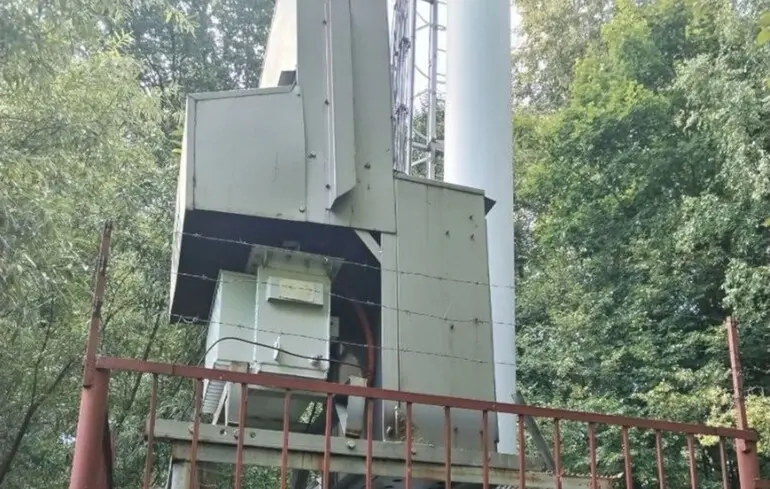
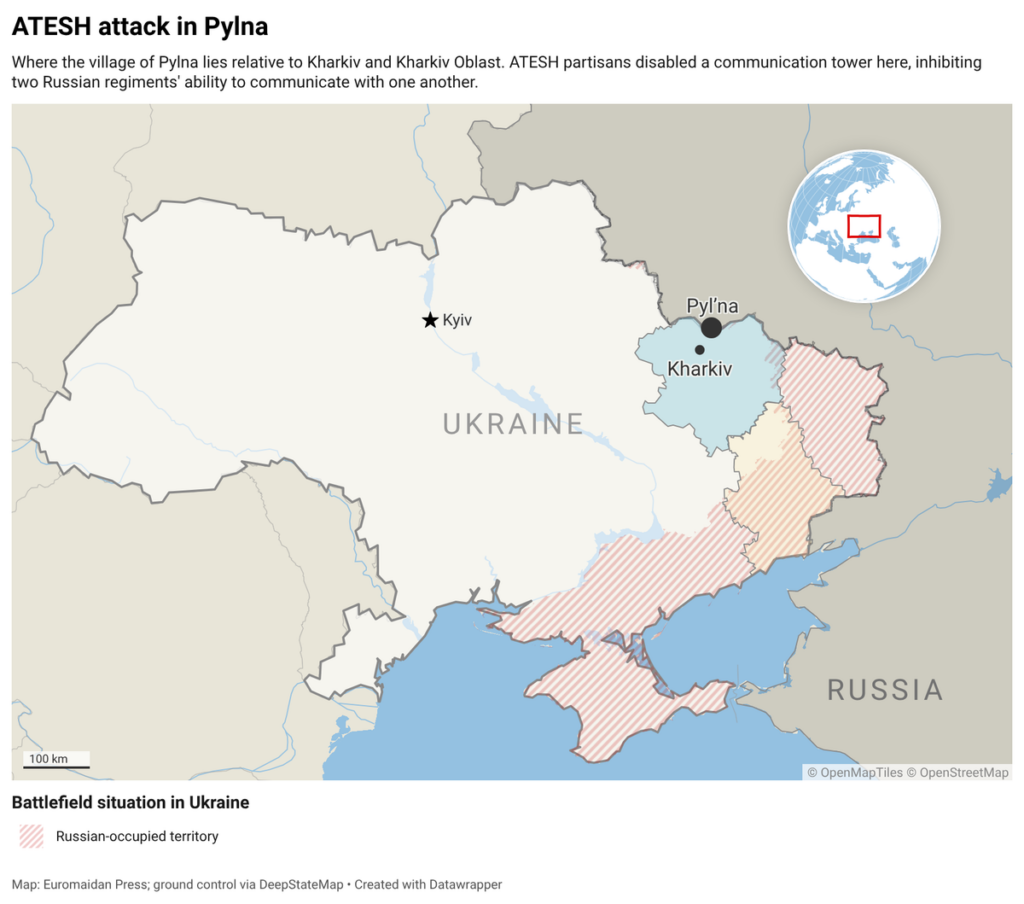
On 13 August, the Ukrainian-Crimean Tatar partisan movement ATESH said its agents had disabled a communications tower near Pylna in northern Kharkiv Oblast. The group said the damage disrupted links between two Russian motor rifle regiments near the border.
Pylna lies on the Russian border and was among the villages seized when Moscow opened the northern Kharkiv front in May 2024. The claimed tower attack is part of a wider Ukrainian resistance effort behind Russian lines. Moscow's forces still depend on infrastructure in occupied territory to communicate, move supplies, and hold the line. Ukraine’s underground fighters exploit that dependence from within, targeting communications, transport, and fuel supplies to create problems for Russian units at the front.
ATESH said the tower carried data between Russian command posts and coordinated units in the area. The movement said its loss disrupted command channels and delayed border-zone mobile groups. It did not say how agents disabled the tower or how long the interruption would last.
The partisans stated that the communications between Russia’s 345th and 380th motor rifle regiments were hit hardest. The regiments operate in neighboring sectors and rely on stable links for joint action and rapid responses, according to the group. ATESH claimed their offensive tempo and ability to support each other had fallen.
Neither the claimed ATESH sabotage nor its reported effects have been independently verified.
ATESH attacks on Russian supply lines
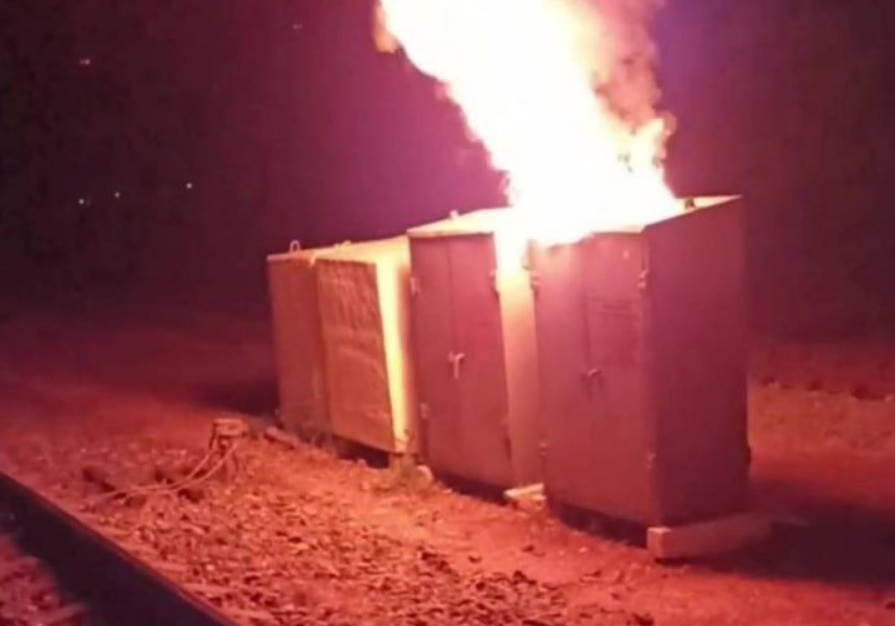
The tower claim follows ATESH’s 10 August account of sabotaging an electric locomotive near Voronezh. The group said it carried military supplies toward the Kupiansk front in Kharkiv Oblast. In June, ATESH also said agents damaged power and rail equipment near Russia’s Novomoskovsk Azot plant, whose output feeds explosives production.
ATESH has also reported intelligence work inside Russian forces. In July, the group said an agent reported a Ukrainian strike on five military fuel trucks in occupied Luhansk. Together, the claims describe a campaign against transport, fuel, and communications behind the front.
Ukrainian resistance works behind the front
The claimed tower operation is one part of the Ukrainian resistance behind Russian lines. Underground networks also gather intelligence and sustain civil defiance.
A Euromaidan Press investigation documented groups planting explosives, tracking Russian positions, distributing leaflets, and painting Ukrainian symbols despite the threat of imprisonment and torture.
ATESH says its network includes Ukrainians, Crimean Tatars, anti-war Russians, and sources inside Russia’s military and occupation administrations. Its claims are often impossible to verify independently. Taken together, they portray a campaign to make Russia’s rear less secure while other groups preserve Ukrainian identity under occupation.