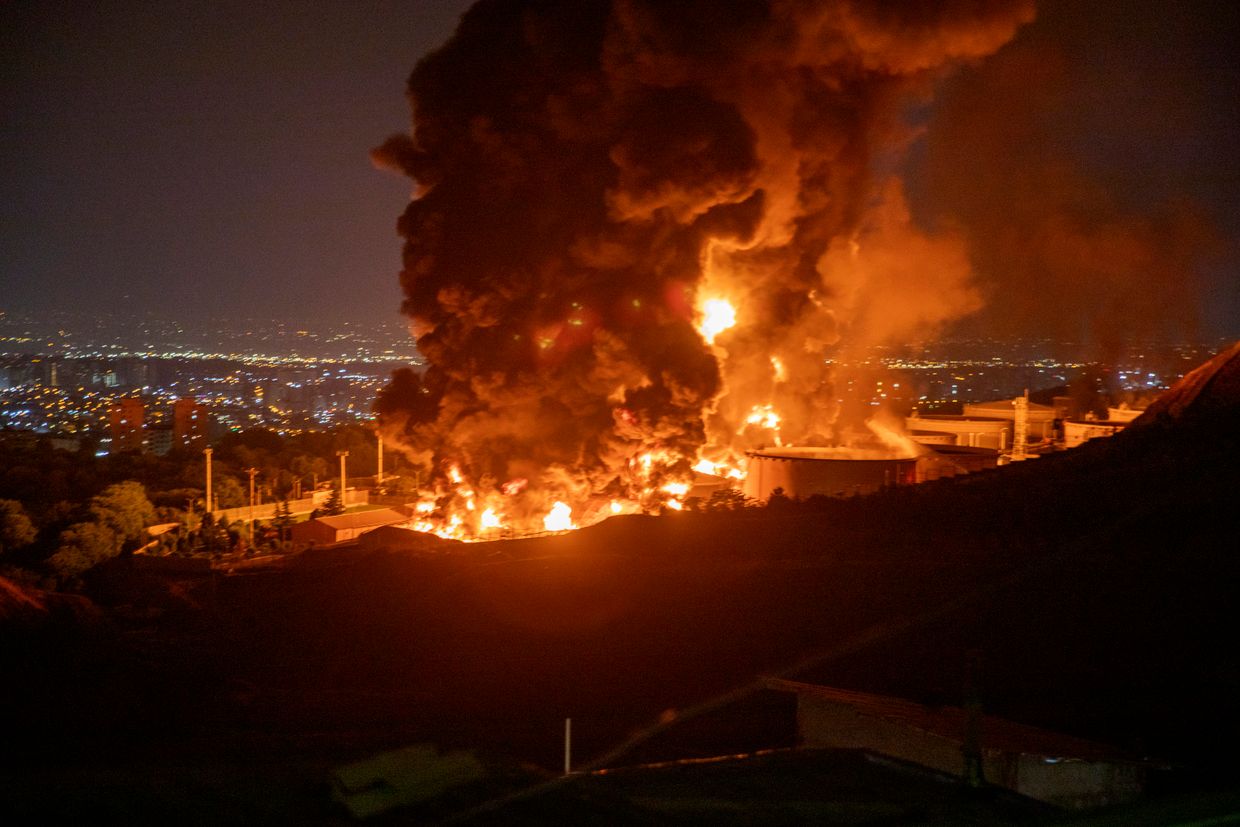
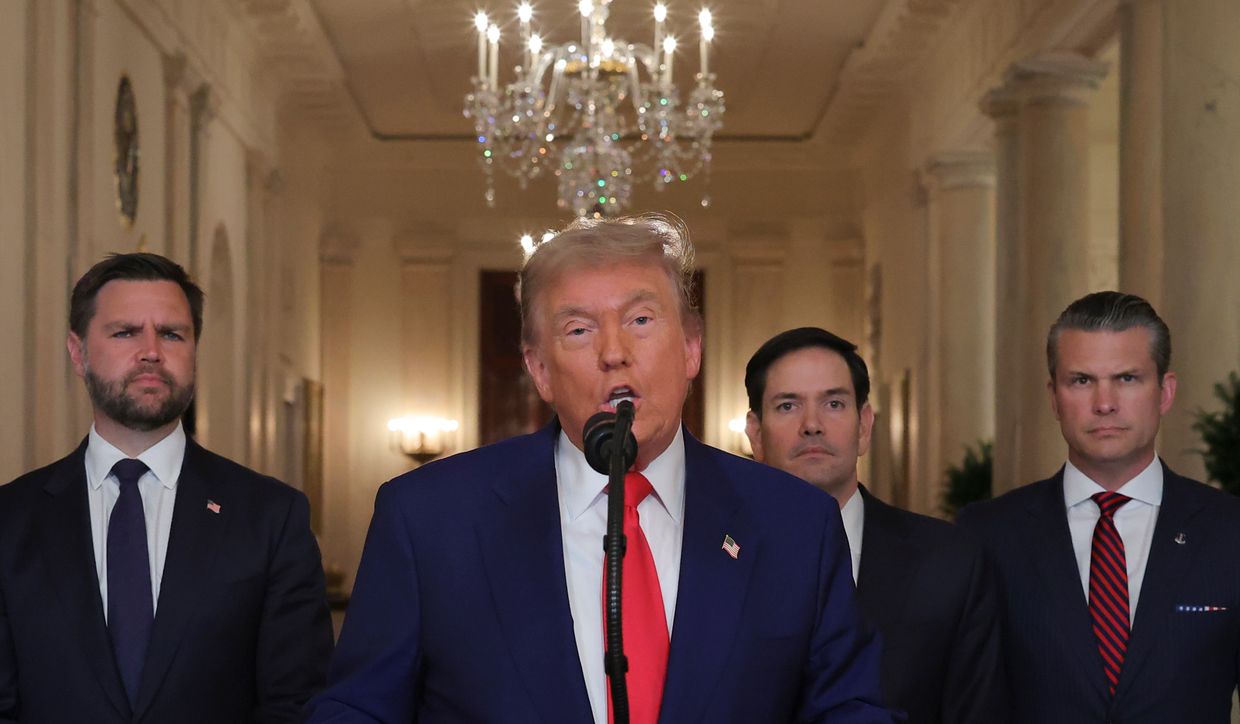
Vue normale

  • ✇Coda Story
  • Our corrupt world, run by oligarchs for oligarchs
    One difficulty in writing about corruption is explaining what it is. You’re either too specific — “it’s taking bribes”. Or too vague — “it’s being bad”. Another difficulty is obtaining the raw material to analyse: corrupt people don’t tend to speak openly about it, which means you’re left looking at corruption’s visible manifestations, which is like trying to understand a virus only from its spots. So huge kudos to Earth League International for producing a detailed, specific and thoughtful r
     

Our corrupt world, run by oligarchs for oligarchs

25 mars 2026 à 08:47

One difficulty in writing about corruption is explaining what it is. You’re either too specific — “it’s taking bribes”. Or too vague — “it’s being bad”. Another difficulty is obtaining the raw material to analyse: corrupt people don’t tend to speak openly about it, which means you’re left looking at corruption’s visible manifestations, which is like trying to understand a virus only from its spots.

So huge kudos to Earth League International for producing a detailed, specific and thoughtful report on how corruption facilitates wildlife crime globally, which is packed full of lessons for the study of corruption in general as well. Corruption is a system, everything is connected. It’s the water in which criminals swim, and it will drown the rest of us if we let it.

Earth League International embeds investigators in corrupt networks all over the world, and reveals how it is so much more than just the “abuse of entrusted power for private gain” and their report quotes multiple specific examples. The choice for an official standing in the way of a Transnational Criminal Organisation (TCO) is not between taking a bribe and being honest, it’s between taking a bribe and having a family member killed. 

“Corruption tilts the playing field of justice by turning some officials or even agencies into additional arms of criminal networks, akin to painting a group of white chess pieces red and then commencing a match, giving the criminal side a decided advantage”, notes the report. And, it adds, “Transnational Criminal Organisations are savvy about which officials they approach, assessing weaknesses such as debt or family ties that may make them more vulnerable to financial offers or threats.”

It estimates the value of global wildlife-related crime at over $1 trillion annually, which is an astonishing amount of money, but an important point to take is that this is not a separate form of corruption. The same border officials that wave through illegal shipments of timber or shark fins also help with other forms of smuggling. The money that criminals funnel into politics undermines democracy in all ways. “Corruption is not the sole purview of less wealthy nations. It is everywhere. During investigations into illegal wildlife trafficking for (traditional Chinese medicine) in Europe, for example, Earth League International found enablers in San Marino, Italy, Belgium, and Poland,” notes the report.

There is something grimly ironic that so much of the despoliation that is making things worse for everyone is driven by the trade in “medicine” and thus a desire to make the world better. In reality, of course, pangolin scales and totoaba swim bladders are no more medicinal than my toenail clippings. Perhaps the ultimate expression of this is the demand for hallucinogenic toad venom, as detailed in this excellent article from a few years ago, which supposedly helps us all access the inner divine, but which is meanwhile wiping out the unfortunate toads that secrete it. “Most harvesters don’t have a consciousness about the sacredness of the species”, said a toad practitioner. “It’s just a hustle business.”

On a more geopolitical and less psychedelic level, this report on how Russia is repurposing its influence networks in Europe so as to maintain its fossil fuel exports show that other forms of corruption have huge environmental impact of their own. “The time for polite half-measures is over. Stronger enforcement, embargoes and tariffs on Russian fossil fuels to cripple exports, personal sanctions, and transparency rules are the only way to dismantle Russia’s covert influence architecture,” it concludes.

I’d add to that: we all need to build renewable energy sources like there’s a war on, because there is, and democracies urgently need to gain the freedom to act independently of autocracies’ control of fossil fuel supplies. You can’t act freely if someone’s hands are around your neck.

So, what’s the answer? As so often with financial crime, it’s possible to be overawed by the scale of the challenge. But the important thing is just to start. Here’s a manifesto from a coalition of British environmental groups, which gives some ideas. I particularly approve of this one: “government should introduce comprehensive protections and safeguards for whistleblowers, followed by financial incentives, to enable whistleblowers to disclose evidence of corruption and money laundering”.

Of course, corrupt officials are not just standing still while we agonise about how to stop them. I am particularly alarmed by the potential appeal of modern prediction markets for allowing politicians, military officers or anyone to profit from their privileged access to advance knowledge of government actions. Here’s a remarkable story about how people betting on the specific details of the Iran War sent death threats to a Times of Israel journalist whose reporting threatened to lose them a wager.

U.S. lawmakers have introduced a bill, the BETS OFF Act, for which acronym they deserve credit — to crack down on the markets that encourage this kind of behaviour, which was also observed in the hours leading up to the U.S. attack on Venezuela. “There’s no getting around the fact that any prediction market where somebody knows or controls the outcome of a bet is ripe for corruption,” said Senator Chris Murphy of Connecticut. “When events that involve good and evil, life and death become just another financial product, morality no longer matters and the soul of America is fundamentally corrupted.” 

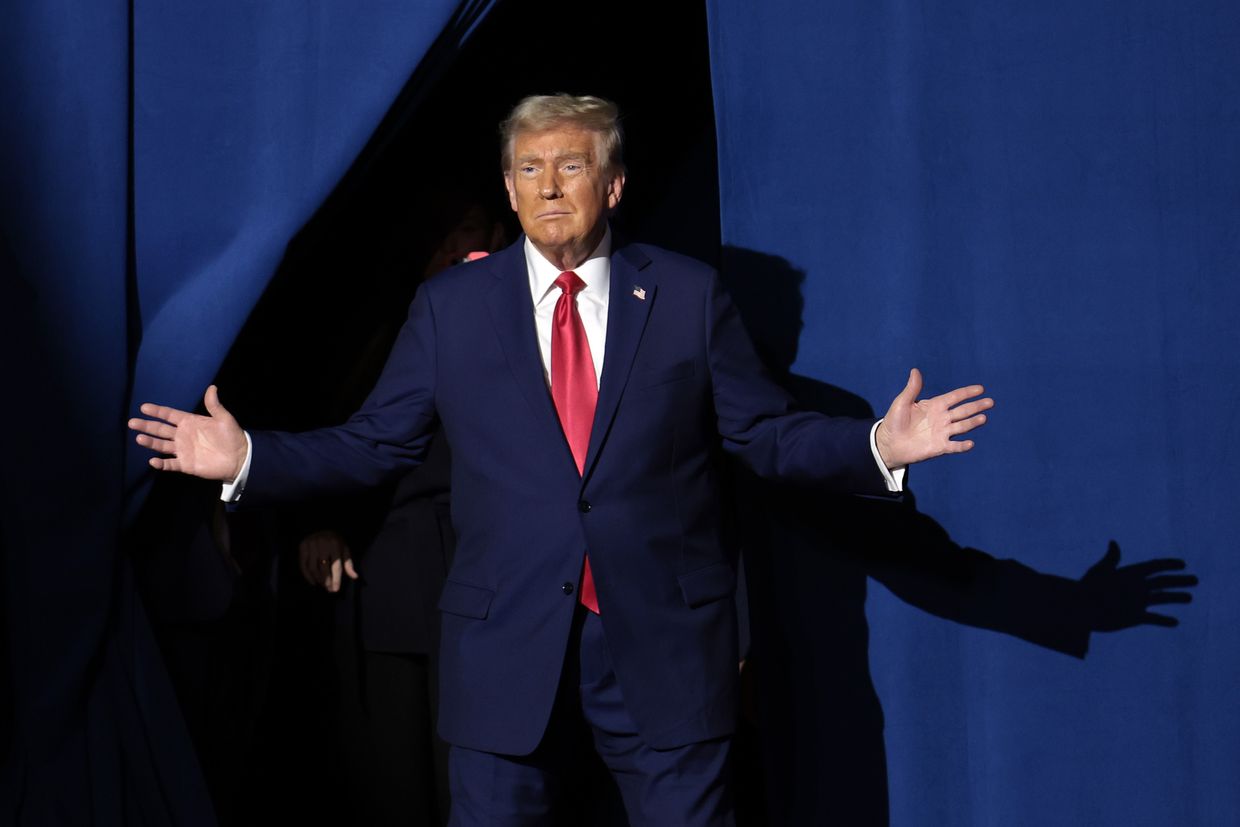
On that note, I see that someone is trying to juice the price of the $TRUMP memecoin by inviting its biggest holders to dinner at Mar-a-Lago, apparently with a speech by President Donald Trump (or whoever that is in the decidedly weird picture accompanying the announcement — Nigel Farage in a blond wig?), and an exclusive audience for the 29 biggest holders. The president, should he attend, will not, however, be accepting gifts, which is a weight off my mind. I had been worrying that this whole event was a bit dodgy.

The announcement of the event did boost the price of the $TRUMP tokens, as presumably did the announcement that Tether head Paolo Ardoino would be the headlining speaker, a remarkable turnaround for someone whose company was, just 18 months ago, having to vehemently deny it was the subject of a Department of Justice probe. Whether corruption will continue to be seriously investigated and punished, in a newly transactional world order, remains to be seen. The signs, though, are not promising.

A version of this story was published in this week’s Oligarchy newsletter. Sign up here.

The post Our corrupt world, run by oligarchs for oligarchs appeared first on Coda Story.

  • ✇Coda Story
  • Iran’s cryptocurrency enablers
    There has never been a better time to be a billionaire. It’s official, Forbes says so, and it’s got the numbers to prove it. Top of the magazine’s annual list is, of course, Elon Musk who is only a Bernaud Arnault (worth about $147 billion) and some change away from being the world’s first trillionaire. But to get the real headliner, we need to drop down to number 17 where we find Changpeng Zhao ($110 billion, since you ask), founder of cryptocurrency exchange Binance and business partner of
     

Iran’s cryptocurrency enablers

18 mars 2026 à 09:55

There has never been a better time to be a billionaire. It’s official, Forbes says so, and it’s got the numbers to prove it. Top of the magazine’s annual list is, of course, Elon Musk who is only a Bernaud Arnault (worth about $147 billion) and some change away from being the world’s first trillionaire.

But to get the real headliner, we need to drop down to number 17 where we find Changpeng Zhao ($110 billion, since you ask), founder of cryptocurrency exchange Binance and business partner of the Trump family’s own crypto firm. Centibillionaires are old hat now but CZ is, as far as I can tell, the first centibillionaire on the Forbes list to have been pardoned by the U.S. president for egregious financial criminality. That feels like quite a big deal so congratulations to him.

CZ’s pardon last October was, according to the White House, because his 2023 plea deal and $4.3 billion fine for enabling money laundering on an industrial scale were the result of “an overly prosecuted case by the Biden administration” and part of a war on cryptocurrency.

Awkwardly for all concerned, Binance is now suing the Wall Street Journal after it reported that $1 billion had moved through the company to Iran-backed terror groups. And the Wall Street Journal has not only declined to spike the story, it has doubled down by reporting that the Justice Department is now investigating the firm’s actions. “The Wall Street Journal couldn’t determine whether the Justice Department is investigating Binance itself for potential misconduct, or solely the customers on its platform,” the WSJ said. But either way, considering the White House has committed to wiping out Iran’s support of terror groups and upended the global energy markets in its quest to do so, the news reports alleging that CZ’s company enabled those same groups would surely be embarrassing for all concerned, were any of them the kind of people capable of embarrassment.

After all, the fact that Iran is using crypto on a huge scale to evade the sanctions placed on its activities, and to support foreign proxies like Hezbollah, with the active connivance of some of the biggest companies in the crypto world, could only be a surprise to the most witlessly incurious of numbskulls. Or perhaps, I suppose, they are all making so much money from crypto that they don’t care who else might be.

While we’re on the subject of Trump, he’s at No. 640 on the list of billionaires as I write this, nearly tripling his wealth in just the last two years. Forbes has this very apropos explanation: “Donald Trump has presided over the most lucrative presidency in American history, adding billions to his net worth, largely by cashing in on crypto.” 

But, I hear you ask, what about non-billionaires? How are the few billion of us whose net worth isn’t counted in the billions doing? Well, not great. And I’m beginning to feel a bit concerned about what this all means for democracy. “The widening gap between the rich and the rest is at the same time creating a political deficit that is highly dangerous and unsustainable,” said Oxfam International Executive Director Amitabh Behar back in January, and the situation has gotten worse since then.

The Bank of England’s animal stories 

I spend a lot of time at the moment talking in public about money laundering because of my new book. Top of my list for policy suggestions for tackling financial crime, if anyone were to ask, is that governments should stop printing large denomination bills: $100 bills, €200 notes or — worst of all — Switzerland’s colossal 1,000-france banknote are little used by ordinary people, but extremely helpful for criminals looking to transport large amounts of wealth in a small space.

So, in one way it was great that Britain was temporarily convulsed by controversy around banknotes last week. It’s high time we talked more about them. Could this spell the end of the UK’s own big bill: the £50, of which the Bank of England issued almost an extra 30 million last year, even though pretty much the only people that ever use them are criminals and tax dodgers? Would Britain finally get serious about ending the epidemic of financial crime?

No, of course not, the controversy was entirely about the Bank of England’s decision to replace the pictures of people on its next series of banknotes with pictures of animals. For some reason, badgers were mentioned. Also otters. “It says all you need to know about the lack of seriousness of the Bank,” said former business secretary Sir Jacob Rees-Mogg, without any apparent irony, considering his own spectacular lack of seriousness in agreeing to comment on this absurdly unserious confection.

A sledgehammer that cracks nuts

While researching the anti-money laundering system that has grown over the last few decades, I have come to find it strange that there isn’t more public disquiet over the powers that governments have awarded themselves to check ordinary people’s transactions. When there is concern, it tends to come from crypto/libertarian bores (the kind of people who talk about ‘Operation Choke Point 2.0’), so perhaps no one else wants to be associated with it. But I think the situation would be a bit healthier if more of us engaged with what is being done to us in ways that we can get.

I obviously think that tackling money laundering is of huge importance, but I am coming round to the view that more public pushback over exactly how that is being done would be good. It would force policymakers to justify what they’re doing, and therefore come up with some techniques that actually work, instead of the ineffective but intrusive mess we have at the moment.

To cut a long story short, I found this contribution from the Dutch non-profit organisation ‘Privacy First’ to be interesting. “Instead of managing risk, banks seek to eliminate it by withdrawing altogether from customers or sectors perceived as problematic. The burden of compliance and over-enforcement often falls not on criminals, but on already marginalised communities with limited access to remedies,” it says.

I agree with that, and I agree also with its argument that beneficial ownership transparency should not be absolute. Were there to be opt-outs from ownership registries for vulnerable people, there would be less scope for rich crooks to argue that shell company transparency is a violation of their human rights. 

A version of this story was published in this week’s Oligarchy newsletter. Sign up here.

The post Iran’s cryptocurrency enablers appeared first on Coda Story.

  • ✇Coda Story
  • As Iran burns, a new age of nuclear proliferation begins
    As the Iran war pushes oil prices over $100 a barrel, and ships are attacked and mines are being laid in the Strait of Hormuz, a taboo has been broken and nuclear energy is back in fashion. European Commission president Ursula von der Leyen acknowledged that “the current Middle East crisis is a stark reminder” that it was “a strategic mistake for Europe to turn its back on” nuclear energy.  She was speaking at an International Atomic Agency summit hosted by France. Just days before the summit
     

As Iran burns, a new age of nuclear proliferation begins

13 mars 2026 à 09:04

As the Iran war pushes oil prices over $100 a barrel, and ships are attacked and mines are being laid in the Strait of Hormuz, a taboo has been broken and nuclear energy is back in fashion. European Commission president Ursula von der Leyen acknowledged that “the current Middle East crisis is a stark reminder” that it was “a strategic mistake for Europe to turn its back on” nuclear energy. 

She was speaking at an International Atomic Agency summit hosted by France. Just days before the summit, French president Emanuel Macron spoke — a nuclear submarine looming behind him — of the need to increase the country’s stockpile of nuclear warheads for the first time in several decades. “In this dangerous and uncertain world,” Macron said, “you have to be feared if you want to be free.” 

In February, the ‘New START treaty’, a mutual agreement between Russia and the U.S. to reduce and limit their nuclear arsenal, officially expired. The U.S. said China had conducted secret tests and that Beijing had to be part of any future non-proliferation agreement. For its part, the Chinese accused the U.S. government of seeking to mask its own expansionist ambitions. In the wake of the Iran war, started apparently because the Iranian regime was just days away from securing a bomb, other countries have spoken openly of their nuclear ambitions. After the start of the Iran war, North Korean leader Kim Jong Un spoke pointedly about preparing a nuclear-ready navy while inspecting a new destroyer and observing the testing of nuclear-capable cruise missiles. Even Polish prime minister Donald Tusk said Poland “will not want to be passive when it comes to nuclear security in a military context.”

On X, Tusk posted that Poland is in talks with France about joining its nuclear deterrence program. “We are arming together with our friends,” he wrote, “so that our enemies will never dare to attack us.” France is the only nuclear-capable European country, its systems (unlike the UK’s) completely independent of the U.S. and its new deterrence framework will include collaborations with Germany, Poland, Greece, Sweden, Denmark, the Netherlands and Belgium. Macron is calling France’s new strategy “advance deterrence,” a willingness to spread French nuclear armaments across the continent. A senior Pentagon official said the U.S. would “obviously at a minimum strenuously oppose” European countries seeking to acquire nuclear weapons. The U.S., as part of a NATO agreement, already deploys over 100 nuclear weapons in Europe — in Germany, Belgium, Italy, the Netherlands, and Turkey. 

Europe’s anti-nuclear tradition grew out of grassroots movements in the 1970s. In West Germany, protests against a planned nuclear plant in the small wine-growing town of Wyhl began when local farmers feared pollution would destroy their land and crops. By the 1980s, millions of Europeans were protesting nuclear weapons and the deployment of NATO missiles across the continent, bringing nuclear security debates into the public arena and pushing governments toward disarmament efforts. The political impact of those protests were long-lasting. Across Europe, nuclear energy programs were curtailed or abandoned entirely. Denmark banned nuclear power plants in 1985, Germany shut down its last nuclear reactors in 2023, and several countries imposed strict limits on nuclear development. Nuclear technology, whether for energy or weapons, remained politically toxic in much of Europe. But, as Denmark’s Mette Frederiksen said European deterrence “is necessary because the military threat from Russia is expected to increase,” and its reliance on U.S. military support can arguably no longer be taken for granted.

At the Paris summit, China, Brazil, Belgium and Italy all signed up to a pledge to triple global nuclear capacity by 2050. South Africa signed the pledge earlier this month. The war in Iran has once again made clear that the world must wean itself off fossil fuels. The U.S. — which imposed additional tariffs on India for buying Russian oil and thus helping to finance the continuation of the war in Ukraine — has, since the start of the attack on Iran, told India it can continue to buy Russian oil. Delhi promptly bought 30 million barrels of Russian crude oil. But this month India also signed a deal with Canada to receive uranium to expand its nuclear energy program. But in 1974, Canada provided India with nuclear technology for peaceful uses that were promptly put towards the building of nuclear weapons. Nuclear collaborations between the two countries were suspended for decades. It’s not a coincidence that those ties are once again being revived in the current geopolitical context. A growing clamor for nuclear energy has clear proliferation risks.

While France has been talking about greater nuclear deterrence, most European states are speaking about a revival of nuclear energy as an alternative to fossil fuels and as a means to achieve climate goals. The vast energy requirements of AI and data centres is also prompting nations to adopt an “atoms for algorithms” strategy, to be, as Macron said, “at the ​heart ​of ⁠the artificial intelligence challenge.” But to talk about energy alone is to ignore the appeal nuclear deterrence has for nation states trying to navigate dangerous geopolitical straits. Iran was attacked ostensibly because it was on the verge of having a bomb. Favored nations such as Saudi Arabia are able to sign nuclear pacts that remove non-proliferation guardrails, but the actions of the U.S. and Israel in Iran will make the bomb attractive to many more as a national security strategy.

A version of this story was published in this week’s Coda Currents newsletter. Sign up here.

The post As Iran burns, a new age of nuclear proliferation begins appeared first on Coda Story.

  • ✇Coda Story
  • The Belongers: What the Chagos Islands tells us about the new world order
    When the United States and Israel started blitzing Iran last weekend, eyes turned to the Chagos Islands in the Indian Ocean. The British-administered archipelago is home to a strategically vital US air base on the island of Diego Garcia. Would US President Donald Trump be using it in his “Operation Epic Fury”? It's fair to say Trump probably didn't give a damn about Misley Mandarin’s opinion. But the self-styled “interim first minister” of Chagos, who recently upped sticks from Britain in a “
     

The Belongers: What the Chagos Islands tells us about the new world order

10 mars 2026 à 08:01

When the United States and Israel started blitzing Iran last weekend, eyes turned to the Chagos Islands in the Indian Ocean. The British-administered archipelago is home to a strategically vital US air base on the island of Diego Garcia. Would US President Donald Trump be using it in his “Operation Epic Fury”?

It's fair to say Trump probably didn't give a damn about Misley Mandarin’s opinion. But the self-styled “interim first minister” of Chagos, who recently upped sticks from Britain in a “super, super secret” mission to take up residence on the long-deserted Peros Banhos atoll, gave Washington his official “blessing” anyway.

I spoke via WhatsApp to the 47-year-old Chagossian in his base camp: basically a few tents, with a solar generator and a Starlink satellite connection enabling him to beam reels to his 10,000 Facebook followers. He quit his job as a bus driver in London to come here, determined to halt Britain’s plan to hand over what he considers to be his land to Mauritius after a long-running decolonization battle.

“We’re British citizens here. We’re not moving,” he said.

Mandarin wants the land of his forebears to remain under the rule of Britain, the former colonial ruler that booted out about 1,500 native Chagossians, including his own father, to make room for the U.S. military base in the late 1960s. The removal consigned Chagossians to a miserable fate in newly independent Mauritius.

Now on home turf, Mandarin, his 72-year-old dad, and two other Chagossians have dodged immediate deportation: they’ve obtained an injunction from a British court allowing them to stay until a hearing on March 13. Since their arrival, two more Chagossians have joined them. “We can do self-determination right now. We don't want to cut any links with Britain. We're not looking for independence,” Mandarin says.

“The next generation will decide on independence.”

Marriage of convenience

Life on Île du Coin, the largest island on Peros Banhos, is simple. The daily routine revolves around catching fish and finding a supply of fresh water. The new residents collect overnight rainfall in tarpaulin sheets to drink. Bathing involves a dip in the sea to wash off dirt, followed by a splash of precious rainwater to rinse. 

Mandarin appears to be relishing the experience. Soon after his arrival, the former army cook, who has bags of swagger, posted a video of himself cooking up “naan fromaaz”, or cheese naan, in a skillet on a makeshift stove. “Pa bizin madam isi mwa!” he jokes. I don't need a wife here!

The Chagossians arrived on the island on 16 February, accompanied by former army officer Adam Holloway, a former Conservative MP who recently defected to the radical right Reform UK party.

Reform, which is surging in the polls, is leading opposition to a bilateral treaty that would see Britain cede sovereignty of Chagos to Mauritius, while paying an average of £101-million ($135-million) per year to maintain a lease on Diego Garcia over the coming century. Negotiations began after the International Court of Justice ruled in 2019 that Britain should transfer sovereignty of Chagos to Mauritius “as rapidly as possible.”

The sleek yacht that brought the group on the five-day journey from Sri Lanka and travels back and forth with supplies was paid for by British-Thai businessman Christopher Harborne, a mega-donor to Reform. Its name is No Excuse – as in, “no excuse for us not to stay on Chagos,” says Mandarin.

Reform UK and the Chagossians make for curious bedfellows. On the one hand, there's a political party that has floated plans to create a Trump-inspired, ICE-style agency to carry out mass deportations in Britain. 

On the other, there’s Mandarin’s dad, finally back home after being brutally evicted from his atoll at the age of 14. “I will not go back to England. I want to die here,” said Michel Mandarin, as he set foot on his cherished Chagossian soil.

The unlikely pairing has had cause for joint celebration. Two days after they arrived, Trump withdrew his approval for the UK-Mauritius transfer treaty, which was supposed to provide legal certainty for the base in a hypothetical world governed by the rules-based international order. 

It turned out the president was annoyed at British Prime Minister Keir Starmer’s refusal to sanction the use of Diego Garcia for the Iran offensive. “DO NOT GIVE AWAY DIEGO GARCIA!” he told the British prime minister. The treaty was paused. Then war broke out and a beleaguered Starmer agreed to “defensive” strikes from Diego Garcia.

On Île du Coin, war seems like a distant prospect, even if it is potentially less than 200km (about 125 miles) away in Diego Garcia. As Tuesday drew to a close, there had so far been neither sight nor sound of the US’s deadly B-52, B-1, and B-2 bombers in the slightly overcast skies.

Wynona Mutisi/The Continent

Kicking the can

Mandarin left Mauritius at age 22. He joined the British army in a bid to improve his lot and later became a bus driver in south London. He says he always felt like a second-class citizen in Mauritius, with “no opportunity to progress”.

Rights groups have charted how evictees from Chagos struggled to cope in Mauritius, many of them ending up trapped in an urban nightmare of poverty, mental illness, and addiction — with little sympathy from their hosts. Many Chagossians left for Britain after securing citizenship rights.

Now the fate of their homeland is being decided by a treaty negotiated over their heads. Last year, a UN committee on racial discrimination warned that the treaty could perpetuate “long-standing violations” of Chagossian rights.

The treaty says Mauritius is “free” to resettle islanders on any of the Chagos islands — except Diego Garcia. But there is no binding obligation for it to do so and the exclusion of Diego Garcia rankles. The deal also includes a £40-million trust fund to be managed by Mauritius, which has been criticised as a ruse by Britain to avoid paying proper compensation. 

“People talk about decolonisation, but if Britain did the wrongs, Britain should have to repair the wrongs — not kick the can to Mauritius,” says Mandarin. “Or they will get away with it.”

One of the reels he has filmed on Île du Coin features an industrial oven that was used by colonial officials to burn the islanders’ dogs before they were evicted. Officials threatened the islanders with the same fate if they refused to leave. Britain must pay compensation, he says.

'Belongers'

Mandarin’s joint odyssey with Reform UK has provoked mixed feelings among the Chagossian diaspora in Britain, Seychelles, and Mauritius. 

“He’s put us back in the centre of the story, but will we be overshadowed by Reform’s agenda?” asked one Chagossian in the English town of Crawley – home to a 3,500-strong Chagossian community — who is also opposed to the deal.

As the treaty was being negotiated, Chagossians’ concerns were largely swept under the carpet as a complicating factor in a pragmatic decolonization drive.

The hard right has capitalized on the deal’s major flaw, positioning itself as the main champion of Chagossians, just as their ancestral land finds itself embroiled in a conflict that could upend the global order.

One video recently posted by Reform leader Nigel Farage saw him express outrage after being “denied access” to Île du Coin for the delivery of “humanitarian” supplies to Mandarin and his men, racking up a cool 4.7 million views on X. 

Asked whether he is being used by Reform and its supporters, Mandarin is sanguine. He says he also contacted the left-wing Green Party for support, but it never replied. “Only Reform responded. At the end of the day, it’s politics. You have to make your own judgements for the sake of your people,” he says. 

He views the upcoming hearing as a potential “turning point in our fight”. The injunction barring their removal was granted on the basis that their location was too far from the base to pose a security threat. “If the court says they can’t remove us, then maybe more people will come,” he says. “This is our people. This is our time. We’re not visitors — we’re belongers.”

The Age of Exile

This story is part of our Age of Exile series, which explores how displacement has evolved from historical punishment into a defining condition of our time—one that reveals profound transformations in how we construct identity, maintain community, and exercise power across borders. In an era where digital connection enables presence without physical proximity, exile has become more complex, more global, and more central to understanding our world. Explore The Age of Exile series

The post The Belongers: What the Chagos Islands tells us about the new world order appeared first on Coda Story.

  • ✇Coda Story
  • The AI-powered ‘forever wars’ start now
    Between them, the United States and Israel struck more than 2,000 targets within the first 24 hours of their war with Iran. For even the largest militaries, it is an almost impossible task to identify, select and then precisely locate such a high volume of targets. But the U.S. military had some help. Claude, the “next generation AI assistant” built by Anthropic, was used in the planning of ‘Operation Epic Fury’. This, even though the Department of War recently labeled Anthropic a “supply cha
     

The AI-powered ‘forever wars’ start now

6 mars 2026 à 08:55

Between them, the United States and Israel struck more than 2,000 targets within the first 24 hours of their war with Iran.

For even the largest militaries, it is an almost impossible task to identify, select and then precisely locate such a high volume of targets. But the U.S. military had some help. Claude, the “next generation AI assistant” built by Anthropic, was used in the planning of ‘Operation Epic Fury’. This, even though the Department of War recently labeled Anthropic a “supply chain risk”.

Anthropic is one of the world’s leading AI companies. Together with Palantir, another Big Tech company, it has been working since 2024 with the Pentagon to embed its systems in military decision-making – creating what is arguably the operating platform of present-day U.S. warfare and intelligence. Even though secretary of defense Pete Hegseth said the company “delivered a master class in arrogance and betrayal” and that the government would “cease all use of Anthropic's technology,” the company is too integrated into modern U.S. warfare for it not to be essential to the U.S. attack on Iran. The question might be not whether companies like Anthropic can ringfence their tech but whether the Pentagon might just commandeer it. 

Craig Jones, an academic who studies automated kill chains at the University of Newcastle, has told reporters that “the AI machine is making recommendations for what to target, which is actually much quicker in some ways than the speed of thought.” Similar AI systems have been used by Israel to coordinate its bombing campaign in Gaza, which is among the most destructive in human history. 

Among the first hits in the United States and Israel’s aerial bombardment of Iran was the Shajarah Tayyebeh primary school for girls, in the southern town of Minab. It was a Saturday morning, and school was in session. According to Iranian state media, at least 165 people were killed, mostly young girls between the ages of seven and 12. Another 96 were severely injured. Eyewitness and open source intelligence reports corroborate the claims of mass civilian casualties. Both Iran and Israel have denied responsibility. The United States has said it is “looking into” allegations that the school was destroyed by one of its missiles. Maybe, given the volume of the bombardment, they’ve lost track. 

It is too soon to know why the school was targeted – or whether it was an error. Either way, the U.S. military’s reliance on AI raises difficult questions.

AIs get things wrong all the time. Maybe it’s an extra finger in an AI-generated image, or a ‘hallucinated’ reference in a research report. Or, maybe, an algorithm sends a missile to the wrong address. That’s why Anthropic CEO Dario Amodei has said that weapons “that take humans out of the loop entirely and automate selecting and engaging targets” are simply not reliable enough. That position — along with Anthropic’s refusal to allow Claude to be used for mass domestic surveillance (although they are just fine with foreign surveillance) — led to the Pentagon cancelling a $200-million contract with the company on Friday, the day before the attacks on Iran began. The Department of War immediately signed a new deal, minus any ethical guardrails, with OpenAI.

Anthropic’s confrontation with the Pentagon has burnished its reputation as an “ethical” AI company. But it may have found its ethical backbone too late. Critics argue that even within Anthropic’s “red lines”, there is enormous potential for abuse, while a “human in the loop” does not necessarily prevent mistakes — raising questions about who, exactly, is responsible when these mistakes result in fatalities. Francesca Albanese, the United Nations special rapporteur for Palestine, accused Amazon, Google and Microsoft in a 2025 of being “complicit in genocide” for providing cloud storage systems to the Israeli military. Anthropic’s integration into the U.S. military has been much deeper.

While Israel and the U.S. are waging an AI-powered war, Iran is responding with a technological revolution of its own. The Islamic Republic has pioneered the production of low-cost one-way attack drones, most notably the Shahed-136, which costs just $34,000 to produce and as much as $4 million to shoot down. These are battle-tested: Russia has launched an estimated 57,000 Shahed-type drones in its war against Ukraine. Despite U.S. reliance on its own high-tech AI-powered systems, an American version of the Shahed also made its debut, alongside Claude, in the attack on Iran. 

In response, Iran has aimed more than 1000 drones at neighboring Gulf states since the war broke out on Saturday. Hundreds have been shot down, but even the most sophisticated air defences struggle with this sheer volume, and dozens have struck their targets, threatening to prolong this war and cause more damage to U.S. allies than anticipated. It is significant that these targets included at least three Amazon data centers in Dubai and Bahrain. Just last month, Amazon announced that it was making Anthropic’s Claude available to its Middle Eastern customers. Claude experienced two global outages this week — it is not clear if these were related to the data center attacks. 

Tech evangelists promise that artificial intelligence will, one day, cure cancer, end poverty and greatly increase our quality of life. But the new technology’s most obvious impact has been on warfare. For those with access to them, AI systems like Claude make it dramatically easier to bomb hundreds of targets at the same time — and much harder to figure out who is accountable when something goes wrong. On Truth Social, Donald Trump — who has promised to stop wars, not start them — posted approvingly that technology and munitions now mean Wars “can be fought ‘forever,’ and very successfully.” 

As the bombing of Iran continues, we are not far from a time when AI not only parses data to select targets, it actually chooses when to pull the trigger. And advanced AI models have far fewer qualms, for instance, about deploying nuclear weapons than humans faced with similar scenarios. One day, when — if — war crimes investigators are able to pin down exactly who is responsible for killing dozens of young girls in Minab, tech bosses may find themselves implicated alongside military and political leaders. “The AI did it” can’t be their defense.


A version of this story was published in this week’s Coda Currents newsletter. Sign up here.

The post The AI-powered ‘forever wars’ start now appeared first on Coda Story.
  • ✇Coda Story
  • The strike, the illusion of regime change, and what comes next
    That Iran's Supreme Leader, Ayatollah Ali Khamenei, should disappear, or be disappeared, from the scene was not a novel notion.  Throughout my nearly five years in Tehran at the turn of this century, speculation about his health and longevity was a near-constant background hum. He was reported, or rumoured, to be mortally stricken by prostate cancer, his constitution already weakened by an assassination attempt in 1981 that left his right arm largely useless. Who would succeed him was far f
     

The strike, the illusion of regime change, and what comes next

Par : Jim Muir
2 mars 2026 à 03:34

That Iran's Supreme Leader, Ayatollah Ali Khamenei, should disappear, or be disappeared, from the scene was not a novel notion. 

Throughout my nearly five years in Tehran at the turn of this century, speculation about his health and longevity was a near-constant background hum. He was reported, or rumoured, to be mortally stricken by prostate cancer, his constitution already weakened by an assassination attempt in 1981 that left his right arm largely useless. Who would succeed him was far from clear, and the object of further speculation. 

As he lived on into more recent times, reaching the same age of 86 attained by his predecessor – the Islamic Republic's founding father Ayatollah Ruhollah Khomeini – the prospect of his demise became a more immediate issue, though the question of succession remained equally shrouded in uncertainty. As Supreme Leader, Ayatollah Khamenei was the commanding voice behind the ruthless crackdown that took the lives of tens of thousands of citizens early this year in the latest and greatest of many escalating protests, at which the slogan "Marg Bar Diktator!" — Death to the Dictator! — became an increasingly prominent slogan. 

Their wish was confirmed to be true at 5 a.m. local time on Sunday morning by Iranian broadcasters. The previous morning, Khamenei’s compound in Tehran was demolished as the Israeli-American onslaught got under way while the Ayatollah was heading a meeting of the Defence Council. That ensured that top military figures were also killed, including the commander of the Revolutionary Guards, Mohammad Pakpour, the Army Chief of Staff Abdolrahim Musavi, and Khamenei's top military adviser, Ali Shamkhani, who had been wounded but survived the attack in June last year. 

The Iranian leadership appears to have been caught by surprise, as it was last year when the opening Israeli strike, which culled many top military leaders as well as nuclear scientists, was launched between two rounds of indirect negotiations between Iran and the U.S. Oman, which was mediating the talks, was furious then, denouncing Israel as the real destabilising factor in the region. 

Perhaps the Iranian leaders — and the Omani mediators — thought that such a dirty trick could only be pulled once. But it has happened again, with no evidence that the talks in Geneva had broken down. The chief Omani negotiator, Badr Albusaidi, was livid. Only hours before the strike, he was in Washington for meetings “to explain that a peace agreement between the U.S. and Iran is now within reach. No nuclear weapons. Not ever. Zero stockpiling. Comprehensive verification. Peacefully and permanently. Let’s support the negotiators in closing the deal.”

After learning of the attack, he expressed his outrage in another tweet: “I am dismayed. Active and serious negotiations have yet again been undermined. Neither the interests of the United States nor the cause of global peace are well served by this. And I pray for the innocents who will suffer. I urge the United States not to get sucked in further. This is not your war.”

But Donald Trump and the U.S. were already thoroughly sucked in, and it was indeed their war, or at least his. According to the Israelis, the date had been decided jointly weeks before, after months of planning. Which meant that the Geneva negotiations, focused on the nuclear issue, were simply deceptive camouflage designed to give time for the U.S. to complete the marshalling of its biggest naval and air buildup in the region since the 2003 invasion of Iraq. 

Trump and the Israeli prime minister Benjamin Netanyahu soon made it clear that the campaign now had little to do with the niceties of Iran's nuclear programme: the agenda was regime change in Tehran, and a surprise attack to decapitate the regime was an essential element. 

With Iran's air defences largely taken out in last year's 12 days of war, it was like shooting fish in a barrel. Hundreds of air, missile and drone strikes were carried out on missile launchers, military bases and other targets around the country, with inevitable "collateral damage", including a girl's primary school in the southern town of Minab where scores of children were reported killed.

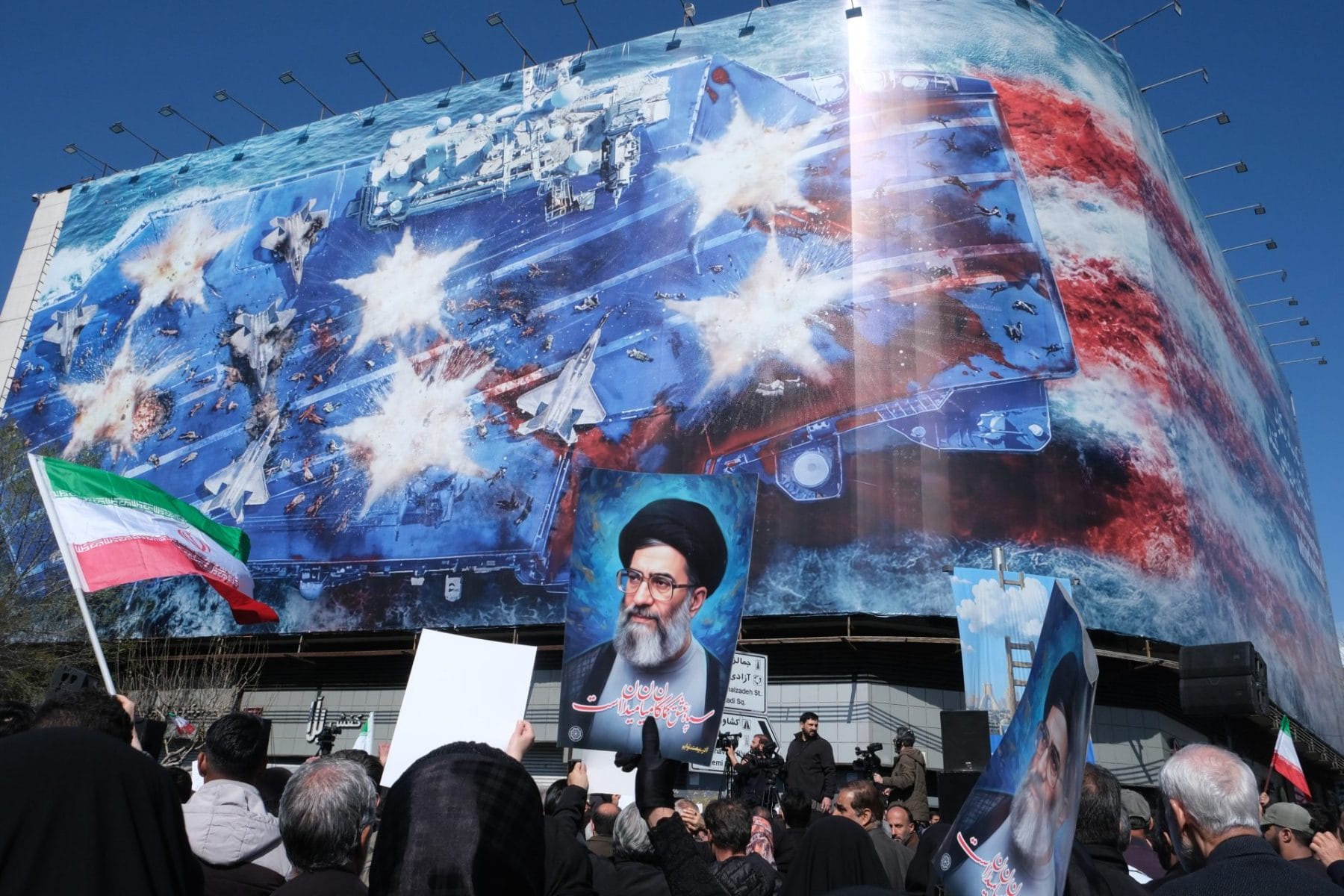
People gathered in Tehran's Revolution Square to mourn the assassination of Iran's Supreme Leader Ayatollah Ali Khamenei on March 1, 2026.

The Iranians did their best to live up to their dire warnings of deadly reprisals against Israel, and against American bases and allies on the Arab side of the Gulf and elsewhere. Missiles hailed down on airports and other installations in Kuwait, Bahrain, the UAE, Saudi Arabia and even Oman, despite its active mediation. While some U.S. bases may have been hit, so too were many civilian sites such as Dubai's iconic Burj al Arab hotel. Explosions too are being heard in Beirut, after Hezbollah fired rockets and drones at northern Israel to "avenge" Khamenei's death and the Israel Defense Forces struck back.

Air traffic was halted throughout a region rich in international hubs, sowing chaos worldwide. Iran's declaration that the strategic Strait of Hormuz was closed to shipping forced cargo shippers to suspend the voyages that transport some 20% of the world's oil and a lot of liquid gas, causing tremors through international markets. Once again, a decision taken by a tiny circle of men in Washington, Jerusalem and Tehran instantly rewired daily life, reminding us who actually gets to pull the global emergency brake.

What all this would do to Iran's relations with the Arab side of the Gulf was one of many open questions. While Oman was actively mediating, the other Arab oil states had been pressing the Americans not to allow a campaign that would predictably destabilise the region, and declaring their airspace not available for any hostilities. But any sympathy for Tehran quickly evaporated when the missiles started flying in: the Gulf Arab states closed ranks.

Trump and the Israelis made it clear that this was not one quick spectacular strike, but an ongoing campaign that would last days, perhaps even weeks. Presumably at the end, Iran would find its missile capabilities "obliterated," in Trump's favourite term, along with any nuclear activities. 

Once the bombs stop falling, Trump and Netanyahu urged, the Iranians should come out of their basements and take over a government that would be theirs for the taking. A historic opportunity that would likely not recur for generations, Iranians were told. 

But it is hard to imagine such regime change being wrought remotely from the skies. The regime lost little time in filling the leadership vacuum, setting up a three-man ruling council in line with the constitution, composed of the President, Masood Pezeshkian, the head of the Judiciary, Gholamhossein Mohseni-Ejei, and Ayatollah Alireza Arafi from the Council of Guardians. All regime loyalists, and the latter two noted hard-liners. So business as usual as far as they are concerned. But the fact is that the assassination of the Supreme Leader and the attendant bludgeoning of the regime's capabilities will inevitably usher in a new and unpredictable phase in Iran's turbulent history.

On the streets, reactions were fractured: jubilation in areas that had long chanted “Death to the dictator”, state-promote mourning in others, but also fear and a grim resignation, an understanding that power vacuums are often filled with fresh repression or civil war.

A smooth transition to a peaceful democracy is about the least likely scenario among the many possibilities. So too is an imminent return of the monarchy, with a comeback by Israeli-backed Reza Pahlavi, son of the Shah ousted by the 1979 revolution. So far there has been no sign visible to the outside world of a split in the ranks of the defenses built up by the Islamic Republic, which still has regular military forces numbering around 400,000, Revolutionary Guards of up to 190,000, and its auxiliary militia enforcers, the Basij, who may be able to mobilise around a million at street level. 

There must be much anger among regime loyalists, which may fall on the heads of any opposition protestors who imagine they can move in and take over the reins of government from the bombed-out wreckage of the Islamic Republic. The U.S. military is not likely to be able to remain engaged in the detail of defanging the regime once the main thrust of the campaign is done. But Israel likely will. Its equivalent of the CIA, the Mossad, has spent years building up formidable intelligence at street level, and will be doing its utmost to continue hamstringing the regime from within and fomenting opposition.Among the many unanswerable questions is whether all this will lead simply to chaos and fragmentation, which is probably Israel's preferred outcome, or to a more compliant regime willing to compromise with the U.S. in order to get crippling economic sanctions lifted. As Trump concedes the war might last weeks, who knows what Iran will eventually emerge from the smoke and the rubble?

The post The strike, the illusion of regime change, and what comes next appeared first on Coda Story.

  • ✇Coda Story
  • The phoney war: Will the U.S. strike a decisive blow against Iran?
    Will he or won't he? The Middle East is on tenterhooks as the U.S. continues to build up a massive and menacing military posture around Iran, threatening an attack that could trigger a conflagration whose tremors would be felt throughout the region.  If anybody hoped that the man on whose word it all hangs, President Donald Trump, might clarify his intentions in his State of the Union address on Tuesday night, they were disappointed.  Speaking 36 hours before a third round of indirect an
     

The phoney war: Will the U.S. strike a decisive blow against Iran?

Par : Jim Muir
27 février 2026 à 08:55

Will he or won't he? The Middle East is on tenterhooks as the U.S. continues to build up a massive and menacing military posture around Iran, threatening an attack that could trigger a conflagration whose tremors would be felt throughout the region. 

If anybody hoped that the man on whose word it all hangs, President Donald Trump, might clarify his intentions in his State of the Union address on Tuesday night, they were disappointed. 

Speaking 36 hours before a third round of indirect and ultimately inconclusive talks with the Iranians in Geneva on Thursday, he said, "My preference is to stop this problem through diplomacy but one thing is for certain, I will never allow the world's number one sponsor of terror, which they are by far, to have a nuclear weapon...they want to make a deal, but we haven't heard those secret (sic) words, 'We will never have a nuclear weapon.’”

In the run-up to the Geneva talks, led on the U.S. side by real estate moguls Steve Witkoff and Trump son-in-law Jared Kushner, Iranian officials voiced optimism that a deal could be struck and insisted they would be flexible on the nuclear issue. Various formulas were being bandied around, such as Iran sending abroad half of its estimated 300kg of highly enriched uranium and diluting the rest under supervision, participating in a regional consortium for peaceful enrichment and so on. 

In theory, for Iran to say "We will never have a nuclear weapon" should not be an issue — it has said all along that it is not pursuing that goal, which is banned by a fatwa. Iranian foreign minister Abbas Araghchi posted on X this week that Tehran “will under no circumstances ever develop a nuclear weapon.” Which begs the question as to why it has enriched uranium to 60% — short of weapons grade but well beyond the levels needed for peaceful civilian purposes.  

Witkoff and Kushner will be vigilant for signs of Iranian duplicity and foot-dragging. But with another set of talks ending with no deal apart from promises of more talks, both sides might simply be playing for time, Iran to delay the feared blow, and the U.S. to finish assembling the assault force, its biggest mobilization of naval and air power in the region since the 2003 invasion of Iraq.

There is strong apprehension in the region that the huge and costly U.S. buildup must mean business. American bombs and missiles would hit Iran. The Iranians would make good on their threat to make it a regional war, not a symbolic retaliation as happened in the 12-day war in June last year after American bunker-buster bombs hit Iran's nuclear facilities in Isfahan, Natanz and Fordow. This time Iranian missiles would target U.S. military assets, bases on the Arab side of the Gulf and elsewhere, and perhaps oil installations. And Israel. The Israelis would hit back hard. Hezbollah in Lebanon would do its best to join in, prompting a further massive Israeli response. 

There were ominous straws in the wind. The U.S. withdrew non-essential personnel from bases in the Gulf, and from its embassy in Beirut. The Israelis reportedly warned Lebanon that if Hezbollah joined in, they would hit back at government targets, including Beirut airport, which were unscathed throughout the earlier hostilities. They stepped up their daily attacks on suspected Hezbollah targets, including a big missile attack on February  20 on the eastern Beqaa valley which left 12 dead, including eight Hezbollahis. Since the November 2024 ceasefire, Hezbollah has not fired so much as a peashooter at Israel while well over 400 of their people have been killed in Israeli attacks on Lebanon.

Does all this mean the doomsday scenario is inexorable? Are the Americans set on a clear game plan, with identified objectives and the means to attain them?

Apparently not. Trump is reportedly receiving divided counsel from his advisers, military and political, some more hawkish and others more cautious than others. Above all, he has an eye on the looming mid-term elections in November. He was elected on a platform of ending the "forever" wars in the Middle East, yet could be on the brink of starting another one, which would not go down well with part of his MAGA base or the public in general. 

The signs are that he was hoping the swashbuckling display of power would intimidate the Iranians into buckling. Witkoff admitted Trump was puzzled that Iran had not capitulated. “Why, under this pressure, with the amount of sea power and naval power over there, why haven’t they come to us and said, ‘We profess we don’t want a weapon, so here’s what we’re prepared to do?’ And, yet, it’s sort of hard to get them to that place,” he told Fox News. Iran's Foreign Minister Abbas Araqchi explained: "It's because we're Iranian."

Trump's adrenalin was clearly set pumping by the adventure in Venezuela, where a similar military buildup culminated in the operation to abduct President Nicolas Maduro. But Iran is not Venezuela. It is a highly militarized regime which has spent 47 years preparing its internal and external defences, and which has different power bases that make it hard simply to decapitate. There is no magic bullet that might not set the region on fire. 

Taking out the Supreme Leader, Ayatollah Ali Khamene'i (who is also a religious leader, and this is Ramadan) would not be likely to bring about a change in regime behavior as in Venezuela. Bringing the regime down altogether would require a prolonged and detailed campaign that the U.S. military machine might not be able to sustain. 

That's where Israel comes in. Some White House advisers reportedly believe it would play better politically for Israel to strike first rather than the U.S., and thus force Iran to retaliate. Like Trump, Israel’s Prime Minister Benjamin Netanyahu is a man with an eye on impending elections (October at the latest) is Prime Minister Benjamin Netanyahu, who makes no secret of his ambition to see the Iranian regime brought down. Netanyahu — backed by almost the entire Israeli political spectrum — is clearly champing at the bit, but aware of the danger of being seen to drag the U.S. into a potentially messy embroilment. One reason perhaps for the unusually discreet nature of Netanyahu's sixth visit to the White House on  February 11 — in through the back door, no lovefest press appearances. 

Which may also actually have been a sign that the two allies might not be on the same strategic page. Plunging Iran into fragmentation and chaos would absolutely fit Israel's playbook, but not necessarily America's. The two are working at cross-purposes in Syria, where the Israelis are pushing against a strong central government which the U.S. is supporting, even against its erstwhile Kurdish allies in the north-east. 

If there are two constants in the current equation, they are that the Iranian people’s disillusionment and rage against the regime will not go away, and neither will Israel's desire to overthrow it. But if Trump does not share that goal, he will have to find a face-saving way to wriggle off the hook he has created with his ostentatious military buildup. 

A version of this story was published in this week’s Coda Currents newsletter.Sign up here.

The post The phoney war: Will the U.S. strike a decisive blow against Iran? appeared first on Coda Story.
  • ✇Coda Story
  • Europe vs Big Tech: A battle for democracy?
    “The impunity of the giants must end,” posted Spanish prime minister Pedro Sánchez on X. His government has instructed the public prosecutor to “investigate the crimes that X, Meta and TikTok may be committing through the creation and dissemination of child pornography by means of their AI.” Sánchez has said the state “cannot allow” platforms to affect the “mental health, dignity and rights of our sons and daughters.” But Republican legislators, seemingly in response, released Part II of a repor
     

Europe vs Big Tech: A battle for democracy?

20 février 2026 à 09:14

“The impunity of the giants must end,” posted Spanish prime minister Pedro Sánchez on X. His government has instructed the public prosecutor to “investigate the crimes that X, Meta and TikTok may be committing through the creation and dissemination of child pornography by means of their AI.” Sánchez has said the state “cannot allow” platforms to affect the “mental health, dignity and rights of our sons and daughters.” But Republican legislators, seemingly in response, released Part II of a report, titled ‘The Foreign Censorship Threat’, in which it accuses the European Commission of “directly infringing on Americans’ online speech.”

Almost simultaneously, Ireland’s Data Protection Commission launched an investigation into Grok, X’s generative AI chatbot, for producing sexualized deepfakes which might have included personal data of Europeans, including children. Even British prime minister Keir Starmer, who has signed a sweeping “Technology Prosperity Deal” with the U.S. has, spoken about the need to “protect children’s wellbeing” from Grok. And earlier this month, French police searched the Paris offices of X as part of a process that X described as a “politicized criminal investigation.” 

With Australia having set a precedent for “age-gating” the Internet through legislation, France’s under-15 ban is now due to come into force in September. The UK already requires age verification for certain content via the Online Safety Act, and Spain, Slovenia, Denmark, Germany, and Greece are among those considering similar measures. ​​The social and political consensus is striking. A 30-country Ipsos survey found strong majorities in every country supporting bans for under-14s.

Elon Musk responded to the Spanish prime minister’s comments about social media being essentially a failed state, rife with criminality and a disregard for law, by calling him “a tyrant and traitor to the people of Spain.” The U.S. government has only been marginally more restrained. The House Judiciary Committee’s report accused Europe of mounting a decade-long campaign to “censor the global internet.” 

The involvement of the U.S. government, and its consistent defence of U.S. tech companies, means the battle is increasingly less about European regulators and Silicon Valley and more about what appears to be a profound ideological mismatch. “Though often framed as combating so-called ‘hate speech’ or ‘disinformation’,” said the Republican legislators’ report, the EU was working to “censor true information and political speech about some of the most important policy debates in recent history — including the Covid-19 pandemic, mass migration, and transgender issues.” Meanwhile, a recently published report in Europe shows how Silicon Valley companies spent 151 million euros lobbying far right European parliamentarians in 2025 to water down regulations. 

Big Tech forging links to the European far right dovetails with a Trump administration in which senior figures, including Donald Trump himself, endorse certain candidates in elections and routinely repeat far right talking points as part of an “unapologetic defense of Western civilization.” And now the U.S. State Department has openly touted the building of a “freedom.gov” portal that enables people to access restricted content, even if it contravenes local laws in sovereign countries.

But European regulations are not the only challenge to the impunity with which social media platforms seem to be able to act. As momentum builds to hold social media platforms to account in Europe, in the U.S. Meta owner Mark Zuckerberg has been defending Instagram in a Los Angeles courtroom. He was testifying in a lawsuit, one of several hundred filed in U.S. civil courts, alleging that social media platforms are addictive, harm the mental health of children and that platforms are aware of these effects but do little to safeguard teenage users from harm. 

The lawsuits have the effect of making the Australian, European, and perhaps global attempt to ban teens from setting up social media accounts appear necessary. But Paige Collings, a digital policy expert at the Electronic Frontier Foundation and board member at European Digital Rights, said that bans are politically attractive precisely because they are simple. “Complex problems require complex solutions,” she said. “It’s more expensive. It’s longer-term. It can’t just be implemented overnight. But blocking under-16s from social media — that is something you can implement overnight.” 

Collings is among a growing chorus of experts that are cautious about embracing bans as a comprehensive solution. For instance, she explains, to ban children, platforms first need to know who is a child. This relies on national digital ID systems, facial recognition, and third-party age verification. In all scenarios, Collings said, “we are trusting that these services and platforms are not storing this information, not selling the information,” often without meaningful guardrails to ensure that is the case. 

When the UK introduced age restrictions last summer, searches for VPNs surged as users of all ages tried to avoid giving away personal information. Now the government has floated expanding restrictions to VPN usage to plug enforcement gaps. The purpose of a VPN itself is to preserve the privacy of its user, however imperfectly. VPNs are essential tools for businesses to secure communications, for journalists to protect sources, and for citizens in restrictive environments to access independent information. Forcing identification to use them fundamentally undermines their purpose. And when the argument for banning them is framed around the protection of children, it reinstates the urgency of an entire infrastructure required to keep children off the internet and risks normalizing identity checks as conditions for access to online spaces. In a digital economy where personal data is highly valuable, such measures raise the question of who ultimately benefits.Beyond privacy concerns, Collings points out that age-gating can become “a fantastic tool for censorship with no accountability or remedy.” It does, in fact, do in part what the U.S. government and Silicon Valley companies say it does, which is restrict speech. At an AI summit in Delhi, French president Emmanuel Macron dismissed Silicon Valley’s invocation of censorship as a defense against European regulation. “Free speech,” he said, “is pure bullshit if nobody knows how you are guided through this… having no clue about how the algorithm is made, how it is tested and where it will guide you — the democratic biases of this could be huge.” But, forcing accountability and improving safety would perhaps be better than a blanket ban where the cutoff is 14 or 16, leaving everyone else to take cover as best they can in a “digital Wild West,” to borrow the Spanish prime minister’s phrase.

currents

Subscribe to our coda currents newsletter

Insights from the Coda newsroom on the global forces that shape local crises.

The post Europe vs Big Tech: A battle for democracy? appeared first on Coda Story.

  • ✇The Kyiv Independent
  • Trump mulls sending Kyiv another Patriot air defense system, WSJ reports
    U.S. President Donald Trump is considering sending Ukraine an additional Patriot air defense system, a move that would mark his administration's first major weapons transfer to Kyiv, the Wall Street Journal (WSJ) reported on July 8, citing two defense officials. The report is the latest in a series of contradictory messages from the Trump White House in recent days regarding military aid to Ukraine. While the Pentagon on July 2 announced a halt in weapons shipments to Kyiv due to dwindling U.S.
     

Trump mulls sending Kyiv another Patriot air defense system, WSJ reports

8 juillet 2025 à 19:17
Trump mulls sending Kyiv another Patriot air defense system, WSJ reports

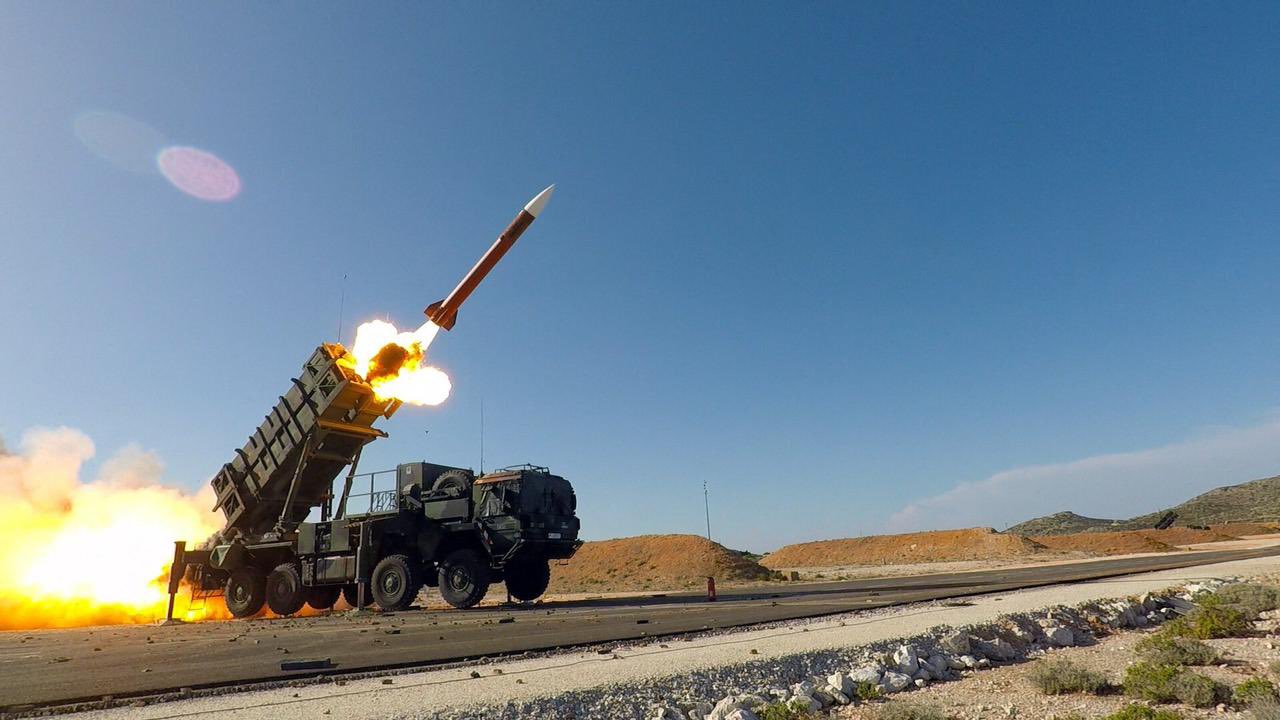
U.S. President Donald Trump is considering sending Ukraine an additional Patriot air defense system, a move that would mark his administration's first major weapons transfer to Kyiv, the Wall Street Journal (WSJ) reported on July 8, citing two defense officials.

The report is the latest in a series of contradictory messages from the Trump White House in recent days regarding military aid to Ukraine. While the Pentagon on July 2 announced a halt in weapons shipments to Kyiv due to dwindling U.S. stockpiles, Trump later claimed he wasn't responsible for the decision and wanted to send more weapons to Ukraine.

A U.S. defense official told the WSJ that Trump has asked the Pentagon to look into options for supplying Ukraine with more arms, including a Patriot air defense system. Officials are also reportedly exploring whether other nations can send Patriots to Kyiv.

The claim dovetails with recent media reports about the administration's plans to bolster Ukraine's air defenses. Axios reported on July 8 that the White House is pursuing a plan to have Germany sell another Patriot battery to Ukraine, with the U.S. and European allies splitting the cost of the purchase. Sources told the outlet that Trump also pledged to send 10 Patriot interceptor missiles to Kyiv.

If the U.S. provides Ukraine with an additional Patriot system, it would mark the first time Trump has approved a major military aid package to Kyiv that wasn't previously greenlighted by former U.S. President Joe Biden.

Washington has thus far provided Kyiv with three Patriots, a former Pentagon official told the WSJ. Germany has also sent three, while a group of European countries provided one. According to the official, not all systems are in use at the same time due to maintenance issues.

The U.S.-made air defense systems are in high demand around the world. Each system consists of two or three launchers, a radar, a command and control element, and interceptor missiles. Patriot missiles are also in short supply globally: Ukraine faces an urgent need for the munitions amid increased Russian aerial attacks, and the Guardian reported on July 8 that even the U.S. has only 25% of the interceptors required by its defense readiness plans.

According to one of the officials who spoke to the WSJ, the U.S. military would be able to supply an additional Patriot to Ukraine if ordered by the White House.

Putin throws ‘a lot of b*llshit’, Trump says as he ‘looks strongly’ at Russia sanctions bill
Trump also addressed U.S. legislation on sanctions, saying the Senate’s Russia sanctions bill was “totally optional” for him to implement or terminate. “I’m looking at it very strongly,” Trump said.
Trump mulls sending Kyiv another Patriot air defense system, WSJ reportsThe Kyiv IndependentAnna Fratsyvir
Trump mulls sending Kyiv another Patriot air defense system, WSJ reports

  • ✇The Kyiv Independent
  • Putin throws 'a lot of bullsh*t', Trump says as he 'looks strongly' at Russia sanctions bill
    U.S. President Donald Trump said on July 8 he was "not happy" with Russian President Vladimir Putin. "We get a lot of bullsh*t thrown at us by Putin," he said at a cabinet meeting. "He's very nice all the time, but it turns out to be meaningless."Trump has vacillated for months between criticizing Putin and praising the Kremlin. So far, he has failed to increase military aid to Ukraine or sanction Russia despite Moscow's refusal to accept a ceasefire.During his election campaign, Trump repeated
     

Putin throws 'a lot of bullsh*t', Trump says as he 'looks strongly' at Russia sanctions bill

8 juillet 2025 à 14:04
Putin throws 'a lot of bullsh*t', Trump says as he 'looks strongly' at Russia sanctions bill

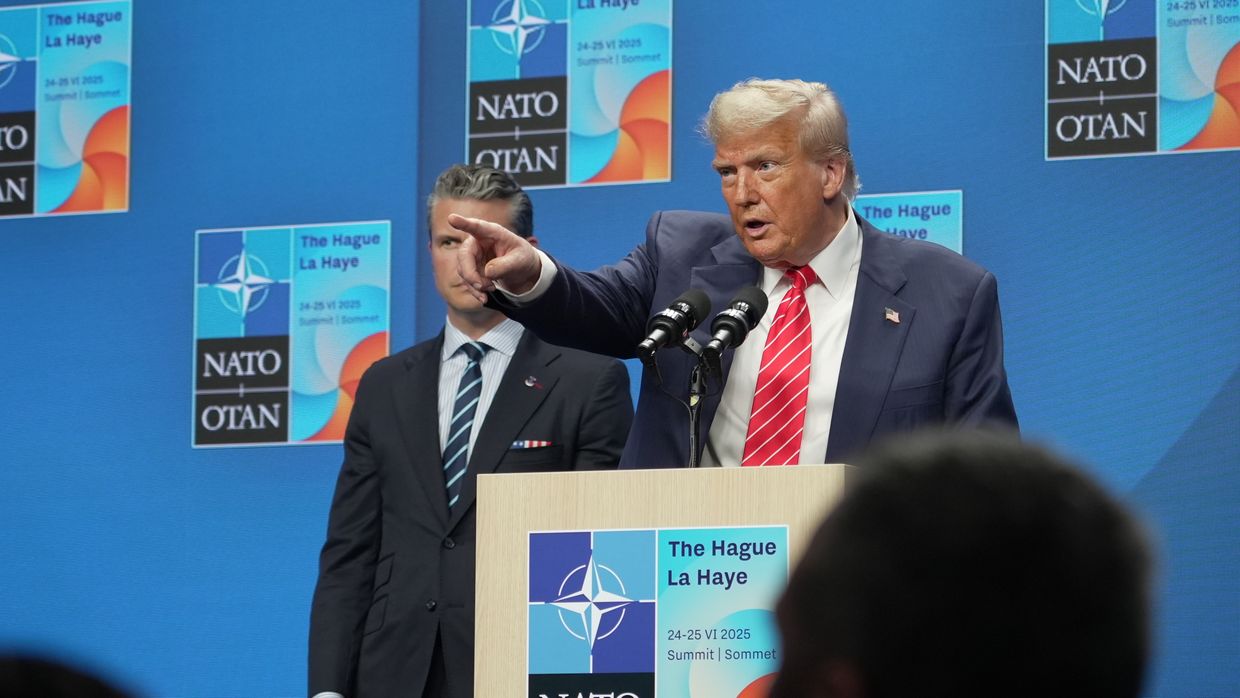
U.S. President Donald Trump said on July 8 he was "not happy" with Russian President Vladimir Putin.

"We get a lot of bullsh*t thrown at us by Putin," he said at a cabinet meeting. "He's very nice all the time, but it turns out to be meaningless."

Trump has vacillated for months between criticizing Putin and praising the Kremlin. So far, he has failed to increase military aid to Ukraine or sanction Russia despite Moscow's refusal to accept a ceasefire.

During his election campaign, Trump repeatedly pledged to end the war in Ukraine within "24 hours." However, his efforts to broker a peace deal between Ukraine and Russia have seen no progress.

Trump also addressed U.S. legislation on sanctions, saying the Senate's Russia sanctions bill was "totally optional" for him to implement or terminate.

"I'm looking at it very strongly," Trump said.

The bill would impose 500% tariffs on imports from countries purchasing Russian oil, gas, uranium, and other products. It was introduced in April but has seen no progress since then.

Earlier, Trump signaled growing openness to tougher measures against Moscow, ABC News reported on June 29.

According to Senator Lindsey Graham, Trump privately told him it was "time to move" the Russia sanctions bill.

"I’m confident the president is ready for us to act," Graham said.

The Senate is expected to vote on the bill after Congress returns from a break in July.

"(Putin is) killing a lot of people — his soldiers and their soldiers mostly. And it's now up to 7,000 a week," Trump said on July 8, referring to Russia's battlefield losses.

In recent weeks, Trump has been critical of the Russian president. Following a phone call with Putin on July 3, Trump said he was "very disappointed," signaling growing frustration with the Kremlin.

When asked by a journalist on July 8 whether he would take action, Trump responded: "Wouldn't be telling you... We want to have a little surprise."

Trump also commented on the the current pause in weapons deliveries to Ukraine. He pointed to the previous transfer of advanced systems, including Javelin anti-tank missiles and Patriot air defense systems, calling them "the best equipment in the world."

His remarks come after the United States halted military aid shipments to Ukraine on July 2 amid an internal Pentagon review of stockpile capacity. The freeze coincided with a surge in Russian aerial attacks, leaving Ukraine increasingly vulnerable amid a shortage of U.S.-supplied air defense systems.

The U.S. halted weapons shipments to Ukraine amid a capability review, the White House and Pentagon previously confirmed, with Trump later denying the pause.

On July 7, the Pentagon said it would renew shipments, saying the additional defensive weapons were intended to help Ukraine protect itself while the U.S. works toward "a lasting peace."

Dnipropetrovsk village likely contested despite Russia’s claim of its capture
The village of Dachne in the southern part of Dnipropetrovsk Oblast appears to be contested, according to the Finnish Black Bird Group open-source intelligence collective. The Russian Defense Ministry on July 7 claimed to have seized Dachne, which would mark the first village to be under Russian control in the industrial Dnipropetrovsk Oblast, located just west of the war-torn Donetsk Oblast. The Ukrainian military denied the claimed capture, calling it “disinformation.” Viktor Tregubov, spok
Putin throws 'a lot of bullsh*t', Trump says as he 'looks strongly' at Russia sanctions billThe Kyiv IndependentAsami Terajima
Putin throws 'a lot of bullsh*t', Trump says as he 'looks strongly' at Russia sanctions bill
  • ✇The Kyiv Independent
  • Trump reportedly pledges to send 10 Patriot missiles to Ukraine, asks Germany to send battery
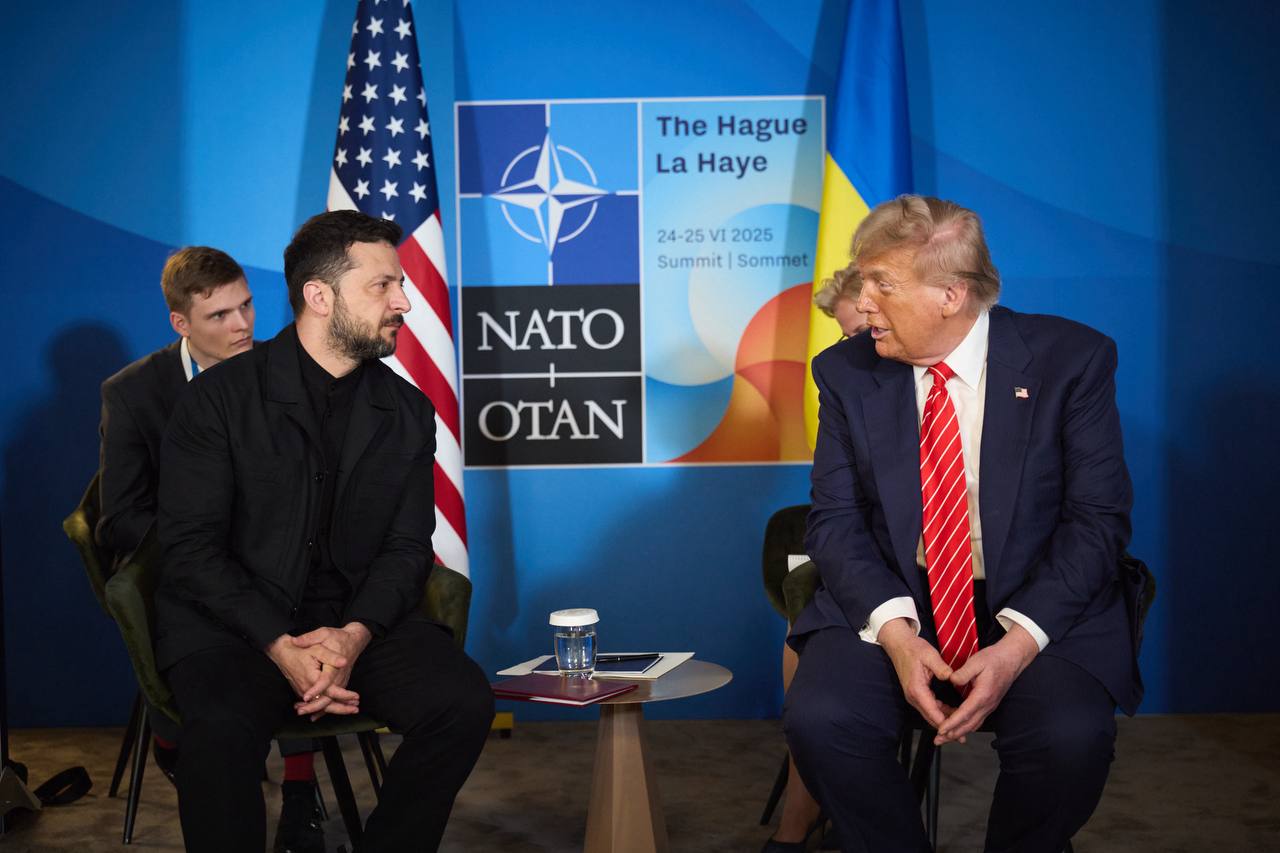
    U.S. President Donald Trump has promised to send 10 Patriot interceptors to Ukraine - a smaller number than had been paused previously while en route to the country, Axios reported on July 8, citing its sources. Trump has also suggested that Germany sell one of its Patriot batteries to Ukraine, according to three sources cited by Axios. They said the U.S. and European allies would split the cost of the purchase.The discussion comes as Ukraine is calling upon its allies, particularly the United S
     

Trump reportedly pledges to send 10 Patriot missiles to Ukraine, asks Germany to send battery

8 juillet 2025 à 10:15
Trump reportedly pledges to send 10 Patriot missiles to Ukraine, asks Germany to send battery

U.S. President Donald Trump has promised to send 10 Patriot interceptors to Ukraine - a smaller number than had been paused previously while en route to the country, Axios reported on July 8, citing its sources.

Trump has also suggested that Germany sell one of its Patriot batteries to Ukraine, according to three sources cited by Axios. They said the U.S. and European allies would split the cost of the purchase.

The discussion comes as Ukraine is calling upon its allies, particularly the United States, to support Ukrainian air defense by supplying "life-saving" Patriot systems and relevant missiles.

The Pentagon said on July 2 that some military assistance to Ukraine had been halted as the U.S. Defense Department conducts a review of foreign aid deliveries.

On July 7, the Pentagon said it would renew shipments, saying the additional defensive weapons were intended to help Ukraine protect itself while the U.S. works toward "a lasting peace."

Merz called Trump to request the release of the paused interceptors, according to Axios. During the call, Trump proposed that Germany sell one of its own Patriot batteries to Ukraine.

While no agreement has been reached, officials on both sides say negotiations are ongoing. German officials maintain that Berlin has already sent a higher share of its available Patriot systems to Ukraine than any other NATO country, including the U.S.

Russia has escalated its aerial campaign against Ukraine in recent weeks, launching large-scale missile and drone attacks that have killed and injured hundreds of civilians across multiple cities.

The suspension of U.S. arms deliveries, which include Patriots and precision-guided munitions, drew criticism from Kyiv. During a July 4 phone call with Ukrainian President Volodymyr Zelensky, Trump said he was not responsible for halting the aid, according to the Wall Street Journal.

He reportedly told Zelensky that a review of U.S. munitions stockpiles was initiated after last month's U.S. strikes on Iranian nuclear sites, but denied ordering a full pause in shipments.

NBC News reported that Defense Secretary Pete Hegseth halted the shipments unilaterally on July 2, despite internal Pentagon assessments that the move would not jeopardize U.S. military readiness.

Special Envoy Keith Kellogg and Ukrainian Defense Minister Rustem Umerov are set to meet in Rome later this week to discuss resuming the stalled military aid, Politico reported on July 7.

Seeing war through the lens of narcissism
We usually think of narcissism as a personal flaw — a grandiose ego, a craving for attention, a lack of empathy. But what if narcissism is not just a diagnosis, but a lens? A way of understanding how individuals — and even entire nations — cope with wounds too painful to face directly?
Trump reportedly pledges to send 10 Patriot missiles to Ukraine, asks Germany to send batteryThe Kyiv IndependentDr. Gary E Myers
Trump reportedly pledges to send 10 Patriot missiles to Ukraine, asks Germany to send battery

  • ✇The Kyiv Independent
  • Ukraine's ambassador to the US to be dismissed, source says
    Editor's Note: Read the latest developments to this story. Ukraine's ambassador to the U.S. has been informed by President Volodymyr Zelensky that she is to be dismissed, a source in the President's Office confirmed to the Kyiv Independent on July 8.Oksana Markarova has held the post since April 2021, and played a central role in coordinating U.S. military and financial support during the early phases of Russia's full-scale invasion.But her future in the role was thrown into doubt earlier this w

     

Ukraine's ambassador to the US to be dismissed, source says

8 juillet 2025 à 06:33
Ukraine's ambassador to the US to be dismissed, source says

Editor's Note: Read the latest developments to this story.
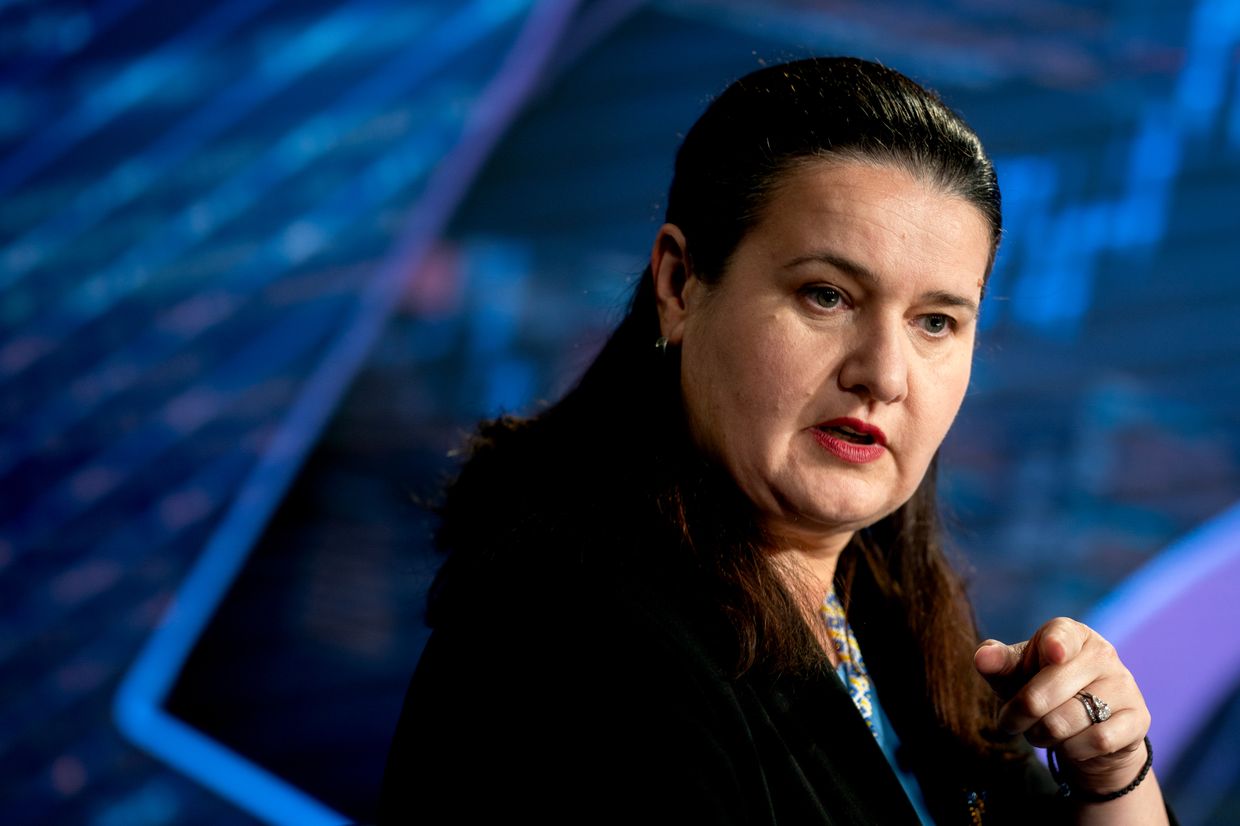
Ukraine's ambassador to the U.S. has been informed by President Volodymyr Zelensky that she is to be dismissed, a source in the President's Office confirmed to the Kyiv Independent on July 8.

Oksana Markarova has held the post since April 2021, and played a central role in coordinating U.S. military and financial support during the early phases of Russia's full-scale invasion.

But her future in the role was thrown into doubt earlier this week when it was revealed that Zelensky and U.S. President Donald Trump discussed a potential change during a recent phone call, a source in the President's Office told the Kyiv Independent on July 7.

According to the source, the topic of replacing her was raised by Kyiv, suggesting the move could be "useful for both sides." The source added that there are multiple "strong candidates" in the running.

The source added that there are multiple "strong candidates" in the running.Prime Minister Denys Shmyhal, Deputy Prime Minister Olha Stefanishyna, Defense Minister Rustem Umerov, and Energy Minister Herman Halushchenko are among the candidates, Bloomberg previously reported.

The possible reshuffle comes at a moment of renewed tension between Kyiv and Washington. The U.S. Defense Department recently paused shipments of critical weapons systems, including Patriot missiles and precision-guided munitions, sparking concern in Kyiv.

The discussion about Ukraine's representation in Washington also coincides with longstanding speculation about a broader government reshuffle.

‘Neither side wasted time’ — Ukraine’s economy minister on minerals deal negotiations with Trump’s ‘business-oriented’ administration
Ukraine’s Economy Minister Yuliia Svyrydenko says her task is simple — to get the investment fund behind the closely watched minerals deal with the U.S. off the ground, and prove its detractors wrong. “There are so many criticisms from different parties that this fund is just a piece of paper we can put on the shelves — that it won’t be operational,” Svyrydenko, who is also Ukraine’s first deputy prime minister, tells the Kyiv Independent at Ukraine’s Cabinet of Ministers on July 4, the morning
Ukraine's ambassador to the US to be dismissed, source saysThe Kyiv IndependentLiliane Bivings
Ukraine's ambassador to the US to be dismissed, source says
  • ✇The Kyiv Independent
  • Trump reportedly told Zelensky he's not responsible for US arms halt to Ukraine
    U.S. President Donald Trump told President Volodymyr Zelensky during a phone call on July 4 that he was not responsible for the suspension of U.S. arms shipments to Ukraine, The Wall Street Journal (WSJ) reported on July 7, citing unnamed sources familiar with the matter.The suspension of aid, which includes Patriot air defense missiles and precision-guided munitions, has drawn criticism from Kyiv amid an intensifying Russian aerial campaign that has killed and injured hundreds of civilians in r
     

Trump reportedly told Zelensky he's not responsible for US arms halt to Ukraine

8 juillet 2025 à 02:19
Trump reportedly told Zelensky he's not responsible for US arms halt to Ukraine

U.S. President Donald Trump told President Volodymyr Zelensky during a phone call on July 4 that he was not responsible for the suspension of U.S. arms shipments to Ukraine, The Wall Street Journal (WSJ) reported on July 7, citing unnamed sources familiar with the matter.

The suspension of aid, which includes Patriot air defense missiles and precision-guided munitions, has drawn criticism from Kyiv amid an intensifying Russian aerial campaign that has killed and injured hundreds of civilians in recent weeks.

According to WSJ, Trump told the Ukrainian president that he had ordered a review of Pentagon munitions stockpiles following last month's U.S. strikes on Iran's nuclear sites, but he did not direct the military to halt weapons deliveries.

NBC News reported on July 4 that Defense Secretary Pete Hegseth unilaterally halted the shipment to Ukraine on July 2, despite internal Pentagon assessments showing the aid would not compromise U.S. military readiness.

According to Politico, U.S. Special Envoy Keith Kellogg and Defense Minister Rustem Umerov are scheduled to meet in Rome later this week to discuss restarting U.S. military aid to Ukraine.

Trump did not acknowledge a halt in U.S. weapons shipments to Ukraine. On July 7, he said the U.S. would provide Ukraine with "more weapons," pointing to the scale of Russia's attacks.

"They have to be able to defend themselves, they're getting hit very hard now," Trump told reporters alongside a U.S. and Israeli delegation at the White House.

The comments follow Trump's July 3 call with Russian President Vladimir Putin, after which he said he was "very disappointed" with the Kremlin's continued refusal to end hostilities.

The following day, Trump and Zelensky spoke by phone in what the U.S. president described as a "very strategic" conversation focused on Ukraine's need for air defenses.

Two rounds of direct talks between Russia and Ukraine held in Istanbul in May and June led only to prisoner exchanges, with no breakthrough on ending hostilities. Moscow has maintained maximalist conditions while rejecting calls for an unconditional ceasefire.

Russia striking NATO while China invades Taiwan ‘plausible’ scenario, experts say
If Beijing moves against Taiwan, NATO might soon find itself in a two-front war with China and Russia — or so the alliance’s secretary general believes. “If Xi Jinping would attack Taiwan, he would first make sure that he makes a call to his very junior partner in all of this, Vladimir Vladimirovich Putin… and telling him, ‘Hey, I’m going to do this, and I need you to to keep them busy in Europe by attacking NATO territory,’” Secretary General Mark Rutte said in a July 5 interview with the New
Trump reportedly told Zelensky he's not responsible for US arms halt to UkraineThe Kyiv IndependentMartin Fornusek
Trump reportedly told Zelensky he's not responsible for US arms halt to Ukraine

'They have to be able to defend themselves' — Trump says US will send additional weapons shipments to Ukraine, criticizes Putin

7 juillet 2025 à 21:15
'They have to be able to defend themselves' — Trump says US will send additional weapons shipments to Ukraine, criticizes Putin

The United States will send "more weapons" to Ukraine amid intensified Russian strikes, U.S. President Donald Trump told reporters on July 7, adding that he is disappointed in Russian President Vladimir Putin.

"We're gonna send some more weapons we have to them, they have to be able to defend themselves, they're getting hit very hard now," Trump said alongside a U.S. and Israeli delegation at the White House.

The U.S. halted weapons shipments to Ukraine amid a capability review, the White House and Pentagon previously confirmed, with Trump later denying the pause.

Trump previously said he was disappointed in Putin for not making progress to end Russia's war against Ukraine, following a phone call between the two leaders on July 3.

On July 7, Trump again said he was unhappy with Putin for failing to cooperate with U.S. efforts to end the war in Ukraine.

"It's a horrible thing, and I'm not happy with President Putin at all," Trump said. "I'm disappointed frankly that President Putin hasn't stopped."

He noted that the additional assistance the U.S. will supply to Ukraine will mainly consist of defense weapons amid increased Russian attacks.

"They're getting hit very hard. We're gonna have to send more weapons, your defensive weapons primarily, but they're getting hit very, very hard. So many people are dying in that mess," Trump said.

Later on July 7 the Pentagon released a statement confirming more weapons would be sent to Ukraine.

"At President Trump's direction, the Department of Defense is sending additional defensive weapons to Ukraine to ensure the Ukrainians can defend themselves while we work to secure a lasting peace and ensure the killing stops," it read.

‘Neither side wasted time’ — Ukraine’s economy minister on minerals deal negotiations with Trump’s ‘business-oriented’ administration
Ukraine’s Economy Minister Yuliia Svyrydenko says her task is simple — to get the investment fund behind the closely watched minerals deal with the U.S. off the ground, and prove its detractors wrong. “There are so many criticisms from different parties that this fund is just a piece of paper we can put on the shelves — that it won’t be operational,” Svyrydenko, who is also Ukraine’s first deputy prime minister, tells the Kyiv Independent at Ukraine’s Cabinet of Ministers on July 4, the morning
'They have to be able to defend themselves' — Trump says US will send additional weapons shipments to Ukraine, criticizes PutinThe Kyiv IndependentLiliane Bivings
'They have to be able to defend themselves' — Trump says US will send additional weapons shipments to Ukraine, criticizes Putin

"Our framework for POTUS to evaluate military shipments across the globe remains in effect and is integral to our America First defense priorities."

President Volodymyr Zelensky has previously said he and Trump discussed supplying Ukraine with additional Patriot missile systems following a phone call between the two on July 4.

Zelensky described his recent phone call with Trump as "the best conversation in all this time" in an evening address on July 5.

"Patriot (missiles) are key to protection from ballistic (missiles). We discussed several other important issues that our teams will work out in detail at meetings in the near future," he said.

Trump described his July 3 conversation with Putin as disappointing, saying that the call "didn't make any progress" in stopping Russia's war against Ukraine.

"I'm very disappointed with the conversation I had today with President Putin," Trump told journalists. "Because I don't think he's there. And I'm very disappointed.  I don't think he's looking to stop this fighting."

Pentagon spokesperson Sean Parnell confirmed on July 2 that some military assistance to Ukraine has been halted as the U.S. Defense Department conducts a review of foreign aid deliveries.

"This capability review... is being conducted to ensure U.S. military aid aligns with our defense priorities... We see this as a common-sense, pragmatic step towards having a framework to evaluate what munitions are sent and where," Parnell said.

Despite the Pentagon announcement, Trump did not acknowledge a halt in U.S. weapons shipments to Ukraine.

"Why did you pause weapons shipments to Ukraine?" a reporter asked Trump as the U.S. president prepared to board Air Force One on July 3.

"We haven't," Trump replied. "We're giving weapons."

Ukraine war latest: Russian airports cancel nearly 300 flights amid drone attacks on Russia
Key developments on July 7: * Russian airports cancel nearly 300 flights amid drone attacks on Russia * BRICS summit statement condemns attacks on Russian railways, avoids urging Russia to cease war efforts in Ukraine * Ukrainian drone strike hits major oil refinery in Russia’s Krasnodar Krai, HUR source claims * Ukraine confirms drone strike on Russian chemical plant near Moscow * Russia strikes conscription offices in Kharkiv and Zaporizhzhia, Ukraine says Several Russian airports have
'They have to be able to defend themselves' — Trump says US will send additional weapons shipments to Ukraine, criticizes PutinThe Kyiv IndependentThe Kyiv Independent news desk
'They have to be able to defend themselves' — Trump says US will send additional weapons shipments to Ukraine, criticizes Putin
  • ✇The Kyiv Independent
  • Zelensky, Trump discussed replacement of Ukraine's US ambassador, source says
    President Volodymyr Zelensky and U.S. President Donald Trump discussed a potential change in Ukraine's ambassador in Washington during a recent phone call, a source familiar with the conversation told the Kyiv Independent.Oksana Markarova has held the post since April 2021, and played a central role in coordinating U.S. military and financial support during the early phases of Russia's full-scale invasion. According to the source, the topic of replacing her was raised by Kyiv, suggesting the mov
     

Zelensky, Trump discussed replacement of Ukraine's US ambassador, source says

7 juillet 2025 à 06:12
Zelensky, Trump discussed replacement of Ukraine's US ambassador, source says

President Volodymyr Zelensky and U.S. President Donald Trump discussed a potential change in Ukraine's ambassador in Washington during a recent phone call, a source familiar with the conversation told the Kyiv Independent.

Oksana Markarova has held the post since April 2021, and played a central role in coordinating U.S. military and financial support during the early phases of Russia's full-scale invasion.

According to the source, the topic of replacing her was raised by Kyiv, suggesting the move could be "useful for both sides." The source added that there are multiple "strong candidates" in the running.

Prime Minister Denys Shmyhal, Deputy Prime Minister Olha Stefanishyna, Defense Minister Rustem Umerov, and Energy Minister Herman Halushchenko are among the candidates, Bloomberg reported.

When contacted by the Kyiv Independent, a spokesperson for Stefanishyna said they "do not comment on rumors."

The possible reshuffle comes at a moment of renewed tension between Kyiv and Washington. The U.S. Defense Department recently paused shipments of critical weapons systems, including Patriot missiles and precision-guided munitions, sparking concern in Kyiv.

The discussion about Ukraine's representation in Washington also coincides with longstanding speculation about a broader government reshuffle.

Rumors about replacing Shmyhal as prime minister have circulated since last summer. Although Zelensky replaced several officials in September 2024, Shmyhal remained in office.

Halushchenko, one of the potential ambassadorial candidates, has faced criticism in parliament. Lawmakers from the Energy Committee, led by lawmaker Inna Sovsun, introduced a motion to dismiss him in January, citing alleged corruption.

Shmyhal has served as Ukraine's Prime Minister since March 2020, overseeing national governance during a period marked by reforms and wartime crises. Before his premiership, he held key roles as Ivano-Frankivsk Oblast Governor and Vice Prime Minister.

Stefanishyna is a seasoned Ukrainian diplomat and expert in European integration who has held high-level government roles since 2020. In September 2024, she was appointed Deputy Prime Minister for European and Euro-Atlantic Integration, and Justice Minister.

Umerov is Ukraine's current Defence Minister, appointed in September 2023. He started his political career as a member of the Parliament for the opposition party Voice (Holos). Umerov played a major role in peace talks with Russia in the early phase of the full-scale war.

The ambassadorial review comes as Kyiv seeks to strengthen its diplomatic ties with Washington.

Zelensky described his July 5 phone call with Trump as "the best conversation in all this time." The U.S. president echoed the sentiment, calling the exchange "very strategic."

As Ukraine awaits stalled US weapons, Trump says he’s ‘helping a lot’ in war with Russia
“I am helping Ukraine. I’m helping it a lot,” U.S. President Donald Trump said when asked in Washington why the U.S. does not support Ukraine as strongly as it supports Israel.
Zelensky, Trump discussed replacement of Ukraine's US ambassador, source saysThe Kyiv IndependentTim Zadorozhnyy
Zelensky, Trump discussed replacement of Ukraine's US ambassador, source says
  • ✇The Kyiv Independent
  • As Ukraine awaits stalled US weapons, Trump says he's 'helping a lot' in war with Russia
    U.S. President Donald Trump said on July 6 that his administration is "helping a lot" when it comes to Ukraine, defending his approach to the ongoing war."I am helping Ukraine. I'm helping it a lot," Trump told reporters when asked in Washington why the U.S. does not support Ukraine as strongly as it supports Israel.The comment follows a growing outcry in Kyiv over the U.S. Defense Department's decision to pause deliveries of key weapons, including Patriot air defense missiles and precision-guid
     

As Ukraine awaits stalled US weapons, Trump says he's 'helping a lot' in war with Russia

7 juillet 2025 à 03:36
As Ukraine awaits stalled US weapons, Trump says he's 'helping a lot' in war with Russia

U.S. President Donald Trump said on July 6 that his administration is "helping a lot" when it comes to Ukraine, defending his approach to the ongoing war.

"I am helping Ukraine. I'm helping it a lot," Trump told reporters when asked in Washington why the U.S. does not support Ukraine as strongly as it supports Israel.

The comment follows a growing outcry in Kyiv over the U.S. Defense Department's decision to pause deliveries of key weapons, including Patriot air defense missiles and precision-guided munitions.

Ukrainian officials have warned that the delay leaves the country more vulnerable to intensified Russian missile and drone attacks, which have killed and injured hundreds of civilians in recent weeks.

While Trump has repeatedly said he wants to end the war and support Ukraine, his administration has not imposed new sanctions on Russia since he took office in January and has yet to approve additional military assistance packages.

Instead, the Trump administration has prioritized military action in the Middle East. The U.S. launched air strikes on three nuclear sites in Iran on June 21, a move critics say stands in contrast to Washington's cautious posture toward Moscow.

Speaking on Air Force One on July 5, Trump expressed frustration over his July 3 phone call with Russian President Vladimir Putin.

"It just seems like he wants to go all the way and just keep killing people," Trump said.

Trump also spoke with President Volodymyr Zelensky on July 4 in what the U.S. president later described as a "very strategic" call. Trump said the two discussed Ukraine's urgent need for air defenses.

"They're going to need something because they're being hit pretty hard," Trump said, adding that supplying Patriot systems was a possibility.

Despite those comments, there have been no new authorizations for weapons deliveries, and Trump's administration has continued to avoid direct economic pressure on Moscow.

Two rounds of direct talks between Russia and Ukraine held in Istanbul in May and June led only to prisoner exchanges, with no breakthrough on ending hostilities. Moscow has maintained maximalist conditions while rejecting calls for an unconditional ceasefire.

Ukraine war latest: Drones attack Russia’s Black Sea Fleet; Russian pipelines explode in country’s Far East, HUR says
Key developments on July 5-6: * Drones reportedly attack Russia’s Black Sea fleet * Pipelines supplying Russian military explode in Russia’s Far East, HUR source says * Ukrainian drone strike on Russian airfield hits bomb depot, aircraft * Ukraine hits Russian electronic warfare facility making Shahed, Iskander components, General Staff says * Ukraine’s army chief warns of new Russian offensives in northeast as he visits Kharkiv Oblast front Drones attacked Russia’s Black Sea Fleet at the
As Ukraine awaits stalled US weapons, Trump says he's 'helping a lot' in war with RussiaThe Kyiv IndependentThe Kyiv Independent news desk
As Ukraine awaits stalled US weapons, Trump says he's 'helping a lot' in war with Russia
  • ✇The Kyiv Independent
  • Trump threatens 10% tariff on countries backing BRICS 'anti-American policy'
    U.S. President Donald Trump said on July 6 that his administration will impose an additional 10% tariff on countries aligning themselves with what he described as the BRICS group's "anti-American policy.""There will be no exceptions to this policy," Trump wrote on the social network Truth Social.The announcement coincided with the BRICS summit in Brazil, where member states, including Russia, China, and India, adopted a declaration condemning strikes on Iran and Israel's operations in Gaza. The
     

Trump threatens 10% tariff on countries backing BRICS 'anti-American policy'

7 juillet 2025 à 02:12
Trump threatens 10% tariff on countries backing BRICS 'anti-American policy'

U.S. President Donald Trump said on July 6 that his administration will impose an additional 10% tariff on countries aligning themselves with what he described as the BRICS group's "anti-American policy."

"There will be no exceptions to this policy," Trump wrote on the social network Truth Social.

The announcement coincided with the BRICS summit in Brazil, where member states, including Russia, China, and India, adopted a declaration condemning strikes on Iran and Israel's operations in Gaza.

The document did not explicitly name the U.S. but criticized actions perceived as destabilizing. On June 21, the country carried out strikes on three major Iranian nuclear sites: Fordow, Natanz, and Isfahan.

Trump's latest trade threat escalates tensions with the BRICS group, which has increasingly sought to reduce dependence on the U.S. dollar and shift toward a multipolar world order.

Kirill Dmitriev, head of Russia's sovereign wealth fund, described the summit as the start of a new "Global South" era, highlighting the group's aim to reshape the global order.

Though Russian President Vladimir Putin said in October 2024 that there are no immediate plans to create a BRICS currency, he highlighted the group's goal of financial sovereignty.

In January, Trump warned of 100% tariffs on BRICS members if they attempt to adopt a new or existing currency to replace the U.S. dollar in international trade.

Russian Foreign Minister Sergey Lavrov attended the BRICS summit in person, while Putin participated via video due to an outstanding International Criminal Court (ICC) warrant. Brazil, the summit's host, is an ICC member and obligated to arrest Putin if he enters the country.

The declaration also condemned incidents on Russian railway infrastructure and called for a negotiated settlement in the war against Ukraine. However, it avoided urging Russia to halt its full-scale invasion.

BRICS expanded in 2024, admitting Egypt, Ethiopia, Iran, and the United Arab Emirates as new members. In October 2024, Putin hosted a BRICS forum in Kazan, attended by 36 world leaders.

Russian airports cancel nearly 300 flights amid drone attacks on Russia
Rosaviatsia reported on the evening of July 6 that 287 flights had been grounded across three major airports: Moscow’s Sheremetyevo, St. Petersburg’s Pulkovo, and Strigino Airport in Nizhny Novgorod.
Trump threatens 10% tariff on countries backing BRICS 'anti-American policy'The Kyiv IndependentOlena Goncharova
Trump threatens 10% tariff on countries backing BRICS 'anti-American policy'
  • ✇The Kyiv Independent
  • Trump slams Musk’s third party plan as ‘ridiculous,’ calls Musk ‘train wreck’
    U.S. President Donald Trump on July 6 commented on tech billionaire Elon Musk's plan to create a new political party, calling it "ridiculous" and warning that third-party movements have historically failed in the United States. "I think creating a third party is ridiculous... we've had tremendous success with the Republican Party," Trump told reporters on July 6 before boarding Air Force One in Morristown. "The Democrats have lost their way, but it's always been a two-party system, and I think c
     

Trump slams Musk’s third party plan as ‘ridiculous,’ calls Musk ‘train wreck’

7 juillet 2025 à 00:52
Trump slams Musk’s third party plan as ‘ridiculous,’ calls Musk ‘train wreck’

U.S. President Donald Trump on July 6 commented on tech billionaire Elon Musk's plan to create a new political party, calling it "ridiculous" and warning that third-party movements have historically failed in the United States.

"I think creating a third party is ridiculous... we've had tremendous success with the Republican Party," Trump told reporters on July 6 before boarding Air Force One in Morristown. "The Democrats have lost their way, but it's always been a two-party system, and I think creating a third party just adds to the confusion."

These comments came after Musk unveiled plans on July 5 to launch a new political force in the U.S. called the "America Party."

Musk said the party's goal is to "give you back your freedom" and offer an alternative to the entrenched Republican and Democratic systems, a few weeks after a public split with Trump.

The strained relationship between Musk and Trump began to deteriorate significantly after a period when Musk publicly supported Trump's re-election bid and held a high-profile role in the U.S. government's Department of Government Efficiency (DOGE).

Musk's new party announcement followed Trump signing a major tax and spending bill into law, the One Big Beautiful Bill Act, legislation that Musk had strongly criticized.

Trump later commented further in a Truth Social post, saying that third parties bring "complete and total disruption and chaos" and criticizing Musk.

"I am saddened to watch Elon Musk go completely 'off the rails,' essentially becoming a TRAIN WRECK over the past five weeks," Trump wrote.

Trump also linked Musk's political shift to his frustration over the recently passed Republican bill eliminating the federal electric vehicle mandate.

"It is a Great Bill but, unfortunately for Elon, it eliminates the ridiculous Electric Vehicle (EV) Mandate, which would have forced everyone to buy an Electric Car in a short period of time. I have been strongly opposed to that from the very beginning," Trump added.

Musk led DOGE until May 30 and had been a key figure in dismantling U.S. foreign aid institutions, including USAID, which delivered billions in aid to Ukraine.

Musk launches ‘America Party’ following public feud with Trump
The announcement came a day after Trump signed his sweeping tax cut and spending bill into law, a legislative act that Musk has fiercely opposed.
Trump slams Musk’s third party plan as ‘ridiculous,’ calls Musk ‘train wreck’The Kyiv IndependentOlena Goncharova
Trump slams Musk’s third party plan as ‘ridiculous,’ calls Musk ‘train wreck’
  • ✇The Kyiv Independent
  • Musk launches 'America Party' following public feud with Trump
    Weeks after a high-profile public falling out with U.S. President Donald Trump, tech mogul Elon Musk announced the creation of a new political party in the United States, dubbed the "America Party." Musk said on July 5 that the party's aim is to "give you back your freedom" and challenge the traditional two-party Republican and Democratic system.The announcement came a day after Trump signed his sweeping tax cut and spending bill into law, a legislative act that Musk has fiercely opposed. It rem
     

Musk launches 'America Party' following public feud with Trump

5 juillet 2025 à 23:58
Musk launches 'America Party' following public feud with Trump

Weeks after a high-profile public falling out with U.S. President Donald Trump, tech mogul Elon Musk announced the creation of a new political party in the United States, dubbed the "America Party."

Musk said on July 5 that the party's aim is to "give you back your freedom" and challenge the traditional two-party Republican and Democratic system.

The announcement came a day after Trump signed his sweeping tax cut and spending bill into law, a legislative act that Musk has fiercely opposed. It remains unclear if the America Party has been formally registered with election authorities, but Musk indicated it would launch "next year."

Musk's decision follows a poll he conducted on X on July 4, asking his followers if he should create a new political party.He cited the overwhelming support, writing: "By a factor of 2 to 1, you want a new political party and you shall have it! When it comes to bankrupting our country with waste & graft, we live in a one-party system, not a democracy."

The strained relationship between Musk and Trump began to deteriorate significantly after a period where Musk publicly supported Trump's re-election bid and held a high-profile role in the U.S. government's Department of Government Efficiency (DOGE).

In May, Musk announced his departure from DOGE, citing the end of his "scheduled time." Initially, Trump praised him as "one of the greatest business leaders and innovators the world has ever produced."

However, tensions escalated sharply on May 22 after the U.S. House of Representatives passed the "One Big Beautiful Bill Act," a significant tax-cut and spending bill that Trump signed into law on Friday.
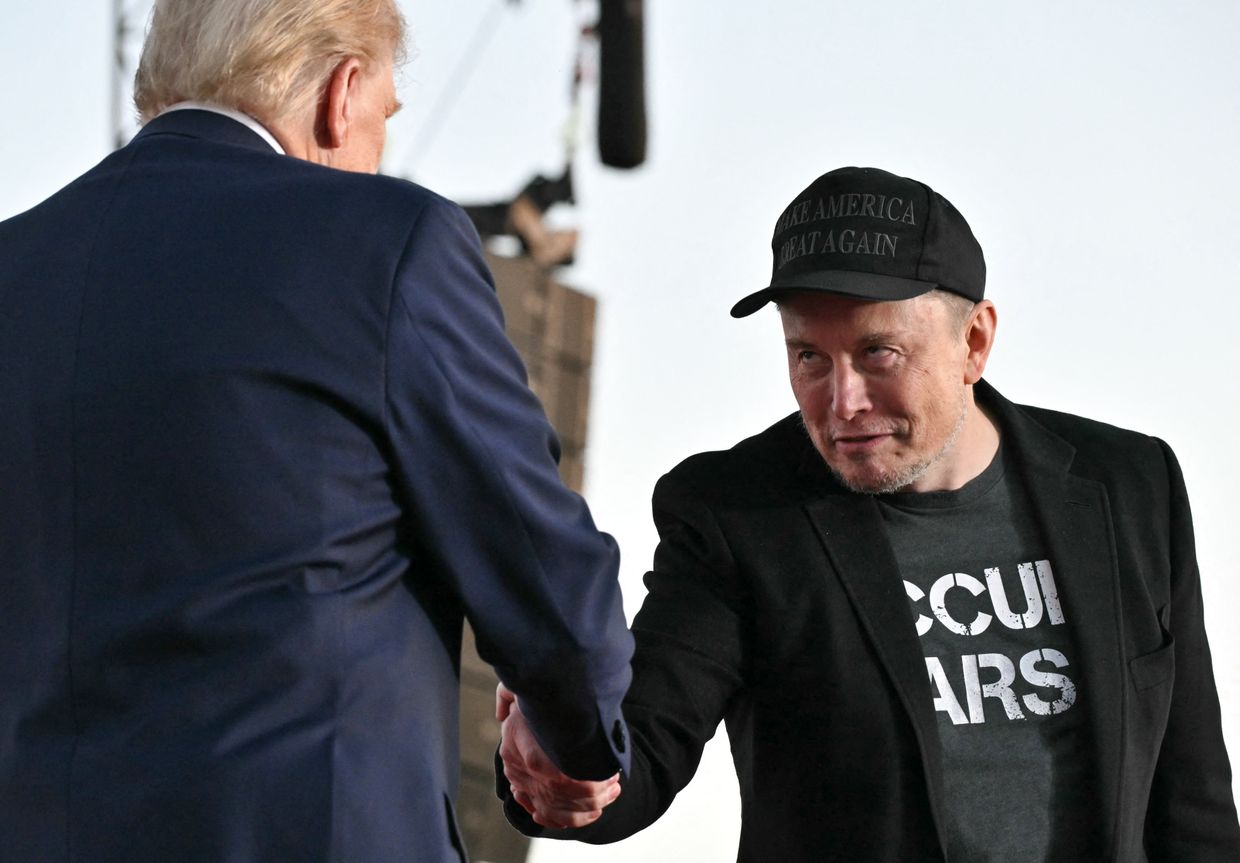
Musk vehemently condemned the legislation, calling it a "massive, outrageous, pork-filled Congressional spending bill is a disgusting abomination." He argued that the bill's spending would exacerbate the "already gigantic budget deficit" and "burden American citizens with crushingly unsustainable debt."

Adding to the friction earlier this week, Trump threatened to cut off billions of dollars in federal subsidies to Musk's companies and even hinted at the possibility of deporting the South Africa-born entrepreneur.
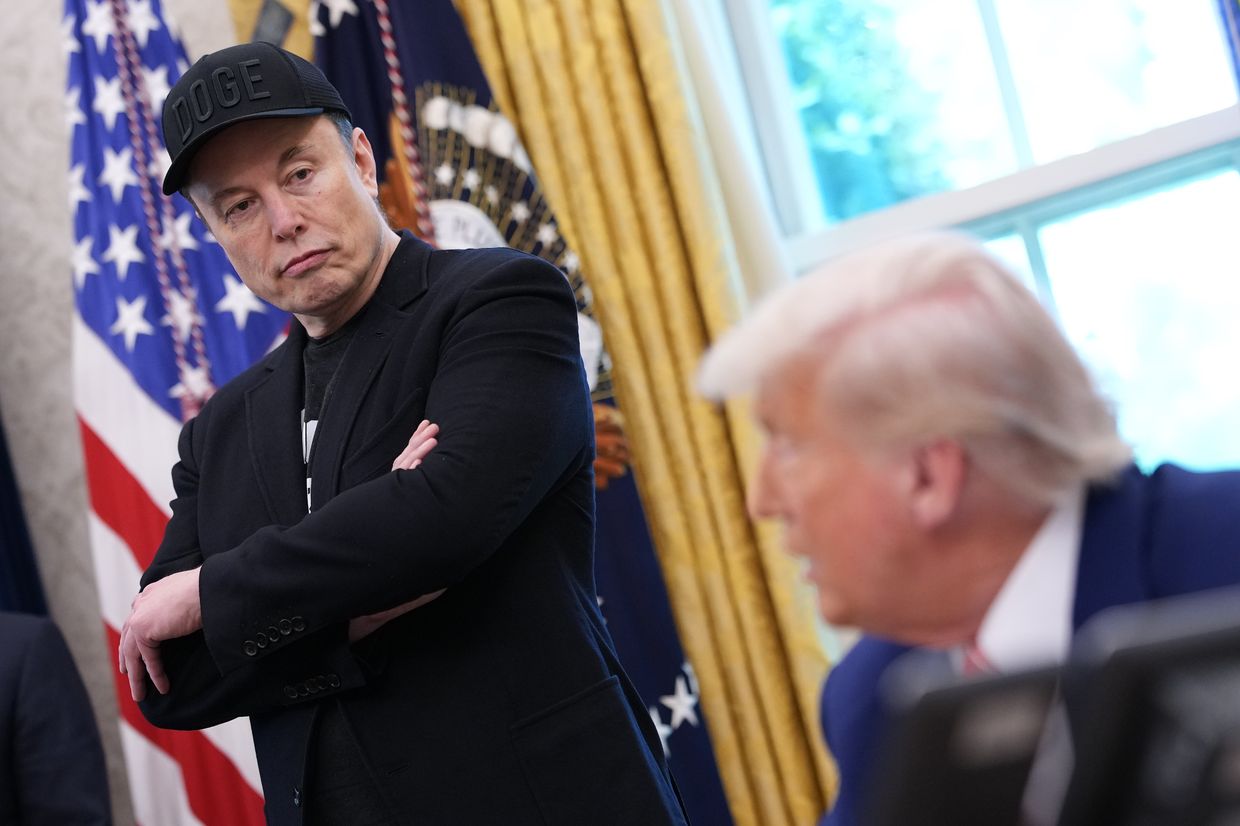
‘Disingenuous’ Hegseth paused Ukraine weapons despite Pentagon finding aid wouldn’t hurt US readiness, NBC reports
A senior military review had concluded that while some munitions stockpiles, including precision weapons, were low, they had not fallen below critical thresholds, according to NBC. Still, U.S. Defense Secretary Pete Hegseth opted to stop the shipment. This is reportedly his third such move since February.
Musk launches 'America Party' following public feud with TrumpThe Kyiv IndependentAnna Fratsyvir
Musk launches 'America Party' following public feud with Trump
  • ✇The Kyiv Independent
  • Rutte praises Trump in a NYT interview while warning of Russia's rising threat to NATO
    Europe must dramatically ramp up its defenses against a resurgent Russia, NATO Secretary General Mark Rutte said in an interview with the New York Times published on July 5, crediting U.S. President Donald Trump for driving the alliance to unprecedented levels of commitment.Rutte, who assumed his role late last year after 14 years as Prime Minister of the Netherlands, has been navigating NATO through a period marked by Russia's expansionist ambitions and questions about the reliability of the Un
     

Rutte praises Trump in a NYT interview while warning of Russia's rising threat to NATO

5 juillet 2025 à 21:17
Rutte praises Trump in a NYT interview while warning of Russia's rising threat to NATO

Europe must dramatically ramp up its defenses against a resurgent Russia, NATO Secretary General Mark Rutte said in an interview with the New York Times published on July 5, crediting U.S. President Donald Trump for driving the alliance to unprecedented levels of commitment.

Rutte, who assumed his role late last year after 14 years as Prime Minister of the Netherlands, has been navigating NATO through a period marked by Russia's expansionist ambitions and questions about the reliability of the United States as an ally.

"Russia is reconstituting itself at a pace and a speed which is unparalleled in recent history," he told the outlet, adding that "...they are now producing three times as much ammunition in three months as the whole of NATO is doing in a year. This is unsustainable, but the Russians are working together with the North Koreans, with the Chinese and Iranians, the mullahs, in fighting this unprovoked war of aggression against Ukraine."

He emphasized the interconnectedness of security across different regions, noting that a secure Arctic is vital due to increased Chinese and Russian activity, and a secure Atlantic is "crucial" for the U.S. "If the Arctic, if the Atlantic Ocean, if Europe is not secure, the U.S. has a big problem," Rutte said, arguing that Russia is ultimately aiming to attack the U.S.

The Secretary General strongly dismissed Russian Foreign Minister Sergey Lavrov's comments that NATO's new defense spending targets would "bankrupt" members.

"I know Sergey Lavrov very well. He has been foreign minister of Russia since the birth of Jesus Christ, and I’ve never taken him seriously. When you talk about fake news, listen to Sergey Lavrov," Rutte told the NYT. He believes Lavrov's comments are "clearly evidence that the deterrence is working."

Rutte acknowledged concerns about the defense industrial output across the alliance, adding that, "we simply lack the defense industrial base to produce the weapons we need to make sure that we can deter the Russians or the North Koreans or whoever to attack us." He underscored the importance of not just financial investment, but also having sufficient personnel and industrial capacity to effectively utilize weaponry.

On the subject of Ukraine, Rutte confirmed that European allies have significantly increased their financial commitment. "The Europeans have now cobbled together $35 billion in military aid this year to deliver to Ukraine, which is more than last year," he said. He viewed this as a logical and fair shift, with the U.S. expecting Europeans to "take more of the burden when it comes to the concrete support to Ukraine."

While acknowledging the complex discussions surrounding peace talks, Rutte recognized President Donald Trump's role in initiating dialogue with Russian President Vladimir Putin.

"He is the one who broke the deadlock with Putin. When he became president in January, he started these discussions with Putin, and he was the only one who was able to do this. This had to happen. A direct dialogue between the American president and the president of the Russian Federation."

However, Rutte admitted that subsequent peace talks in Istanbul involved Russia sending a less serious delegation, leading to the conclusion that "we are not there yet, and that means that in the meantime you have to make sure that Ukraine has what it needs to stay in the fight."

Despite some perceived divergences in approach between NATO and the U.S. regarding peace talks, Rutte insisted on the American administration's commitment to the conflict's importance.

"The American administration completely takes the view and shares it with the Europeans that this war in Ukraine is crucial for the defense of NATO territory going forward and that we have to make sure that Ukraine is in the strongest possible position to stop the Russians from taking more territory, and that when it comes to a cease-fire or, even better, a peace deal, that Ukraine with some help will be able to prevent Putin from ever attacking Ukraine again in the future."

Trump says Putin ‘wants to keep killing people,’ signals US may send Patriots to Ukraine
“It just seems like he wants to go all the way and just keep killing people. It’s not good,” U.S. President Donald Trump said.
Rutte praises Trump in a NYT interview while warning of Russia's rising threat to NATOThe Kyiv IndependentTim Zadorozhnyy
Rutte praises Trump in a NYT interview while warning of Russia's rising threat to NATO
  • ✇The Kyiv Independent
  • Zelensky describes phone call with Trump as 'best conversation in all this time'
    President Volodymyr Zelensky described his recent phone call with U.S. President Donald Trump as "the best conversation in all this time" in an evening address on July 5."Patriot (missiles) are key to protection from ballistic (missiles). We discussed several other important issues that our teams will work out in detail at meetings in the near future," Zelensky said.The two leaders spoke on July 4, agreeing to strengthen Ukraine's air defenses amid intensified Russian strikes, Zelensky said earl
     

Zelensky describes phone call with Trump as 'best conversation in all this time'

5 juillet 2025 à 15:29
Zelensky describes phone call with Trump as 'best conversation in all this time'

President Volodymyr Zelensky described his recent phone call with U.S. President Donald Trump as "the best conversation in all this time" in an evening address on July 5.

"Patriot (missiles) are key to protection from ballistic (missiles). We discussed several other important issues that our teams will work out in detail at meetings in the near future," Zelensky said.

The two leaders spoke on July 4, agreeing to strengthen Ukraine's air defenses amid intensified Russian strikes, Zelensky said earlier.

A day prior to speaking with Zelensky, Trump held a phone call with Russian President Vladimir Putin in an effort to discuss ending Russia's war against Ukraine.

"This was probably the best conversation in all this time, it was maximally productive. We discussed the topic of air defenses. I am grateful for the readiness to help," Zelensky said, describing his phone call with Trump.

Relations between Ukraine and the U.S. have previously been strained as the White House pushed Kyiv to sign a lucrative bilateral minerals deal and tried to broker a peace deal with Moscow that did not rule out major concessions for Ukraine.

Zelensky's phone call with the U.S. leader followed media reports and announcements from Washington of a pause in military assistance to Ukraine. Trump, on July 3, denied that Washington has stopped supplying weapons to Kyiv.

Trump described his July 3 conversation with Putin as disappointing, saying that the call "didn't make any progress" in stopping Russia's war against Ukraine.

"I'm very disappointed with the conversation I had today with President Putin," Trump told journalists. "Because I don't think he's there. And I'm very disappointed.  I don't think he's looking to stop this fighting."

Russia launches another horrific attack on Kyiv hours after Trump-Putin call
Ripe cherries and apricots fill the stalls of fruit vendors, while people bustle about on a scorching July Friday. Yet just a five-minute walk from the stand, the scene shifts dramatically: a gaping hole mars the five-story residential building where the stairwell once stood. Rescuers tirelessly sift through the
Zelensky describes phone call with Trump as 'best conversation in all this time'The Kyiv IndependentKateryna Hodunova
Zelensky describes phone call with Trump as 'best conversation in all this time'
  • ✇The Kyiv Independent
  • Trump says Putin 'wants to keep killing people,' signals US may send Patriots to Ukraine
    Editor's note: This story has been updated with additional comments by U.S. President Donald Trump.U.S. President Donald Trump said on July 5 that Russian President Vladimir Putin does not appear interested in ending the war in Ukraine, according to a comment made onboard Air Force One.Trump reiterated that he was "very unhappy" with the July 3 phone call between the two leaders. "It just seems like he wants to go all the way and just keep killing people. It's not good. I wasn't happy with it,"
     

Trump says Putin 'wants to keep killing people,' signals US may send Patriots to Ukraine

5 juillet 2025 à 04:09
Trump says Putin 'wants to keep killing people,' signals US may send Patriots to Ukraine

Editor's note: This story has been updated with additional comments by U.S. President Donald Trump.

U.S. President Donald Trump said on July 5 that Russian President Vladimir Putin does not appear interested in ending the war in Ukraine, according to a comment made onboard Air Force One.

Trump reiterated that he was "very unhappy" with the July 3 phone call between the two leaders.

"It just seems like he wants to go all the way and just keep killing people. It's not good. I wasn't happy with it," Trump told reporters.

The call, which lasted about an hour, was confirmed by the Kremlin to have focused on Ukraine. Putin reportedly told Trump that Russia would continue pursuing its "goals" in the war.

Trump's remarks follow a sharp escalation in Russian missile and drone attacks across Ukraine that have killed and injured hundreds of civilians in recent weeks.

The strikes have hit multiple regions, destroying civilian infrastructure amid persistent calls from Ukraine, the U.S., and Europe for an unconditional ceasefire.

When asked if he can end Russia's war against Ukraine, Trump said, "I don’t know. I can’t tell you whether or not that’s going to happen."

Trump agreed when asked if ending the war is a priority, saying, "Yes. I’d like to see it happen."

The day after his call with Putin, the U.S. president spoke by phone with President Volodymyr Zelensky and said the two had a "very strategic" conversation.

"We talked about different things... I think it was a very, very strategic call," Trump said. When asked about supplying Patriot air defense systems to Ukraine, he replied, "Yeah, we might."

"They're going to need something because they're being hit pretty hard," Trump added.

The statement comes as the U.S. Defense Department has paused deliveries of several key weapons systems, including Patriot missiles and precision-guided munitions, prompting concern in Kyiv.

While Trump has said he wants to help Ukraine, his administration has not imposed new sanctions on Russia since taking office and has not approved additional aid packages.

The U.S. president has instead directed strikes against Iran, targeting three nuclear facilities in June in response to regional escalations, a move critics say contrasts with his cautious approach toward Moscow.

When asked why he appears tougher on Tehran than Moscow, Trump told reporters, "No, I think I'm tougher on Russia than I am on Iran."

Despite two rounds of face-to-face talks between Moscow and Kyiv in May and June in Istanbul, no agreement on a ceasefire has been reached. The negotiations have only resulted in prisoner exchanges, as Moscow continues to push for maximalist demands in peace talks.

  • ✇The Kyiv Independent
  • Zelensky, Trump discuss air defense, joint drone production amid Russian strikes
    President Volodymyr Zelensky and U.S. President Donald Trump held a phone conversation on July 4, agreeing to strengthen Ukraine's air defenses, Zelensky announced on Telegram.The call came as Russia escalated its aerial campaign across Ukraine, including an overnight July 4 attack that struck Kyiv and several other regions, injuring at least 23 civilians and sparking dozens of fires in the capital."Today we discussed the situation: Russian air strikes and, more broadly, the situation on the fro
     

Zelensky, Trump discuss air defense, joint drone production amid Russian strikes

4 juillet 2025 à 09:47
Zelensky, Trump discuss air defense, joint drone production amid Russian strikes

President Volodymyr Zelensky and U.S. President Donald Trump held a phone conversation on July 4, agreeing to strengthen Ukraine's air defenses, Zelensky announced on Telegram.

The call came as Russia escalated its aerial campaign across Ukraine, including an overnight July 4 attack that struck Kyiv and several other regions, injuring at least 23 civilians and sparking dozens of fires in the capital.

"Today we discussed the situation: Russian air strikes and, more broadly, the situation on the front lines. President Trump is very well informed," Zelensky said.

"We discussed air defense options and agreed to work on increasing airspace protection. We agreed on a meeting between our teams."

Zelensky said the two leaders also discussed Ukraine's defense industry potential and explored possibilities for direct cooperation with U.S. partners.

"We are ready for direct projects with America and believe that this is extremely necessary for security, especially with regard to drones and related technologies," he added.

Trump told Zelensky that the U.S. is willing to assist Ukraine with air defense amid intensified Russian strikes, Axios reported, citing unnamed sources. The call between the two presidents reportedly lasted about 40 minutes.

This conversation followed a phone call between Trump and Russian President Vladimir Putin on July 3, during which the Kremlin said Putin reaffirmed that "Russia will continue to pursue its goals" in its war against Ukraine despite U.S. calls for a ceasefire.

Trump told reporters on July 3 that he was "very disappointed" by the conversation with Putin.

"I don't think he's there... I don't think he's looking to stop this fighting."

The call also followed the U.S. Defense Department's decision to pause shipments of key weapons systems to Ukraine, including Patriot missiles and precision-guided artillery rounds. Kyiv has warned that the delay threatens to weaken its air defenses and emboldens Moscow.

Despite repeated expressions of frustration about Russia's continued aggression, Trump's administration has yet to impose new sanctions or approve additional aid for Ukraine since taking office in January.

While Russia and Ukraine resumed direct talks in Istanbul this year, the two rounds of negotiations — on May 16 and June 2 — have yielded only prisoner exchanges and no progress toward a ceasefire.

‘Deliberately massive and cynical’ — Russian attack on Ukraine began as Trump and Putin spoke, Zelensky says
“Patriots and their missiles are real defenders of life,” President Volodymyr Zelensky said. “It is very important to maintain the support of partners in ballistic missile defense.”
Zelensky, Trump discuss air defense, joint drone production amid Russian strikesThe Kyiv IndependentAnna Fratsyvir
Zelensky, Trump discuss air defense, joint drone production amid Russian strikes
  • ✇The Kyiv Independent
  • 'I'm very disappointed,' Trump says after phone call with Putin
    U.S. President Donald Trump said he was "very disappointed" with Russian President Vladimir Putin following a phone call on July 3, during which the two leaders discussed the ongoing war in Ukraine. Trump told reporters he "didn't make any progress" and accused Putin of showing no willingness to stop the fighting.Trump also said that he is planning to talk to President Volodymyr Zelensky on July 4. "I'm speaking to President Zelensky tomorrow in the early morning, and I'm very disappointed with
     

'I'm very disappointed,' Trump says after phone call with Putin

4 juillet 2025 à 05:26
'I'm very disappointed,' Trump says after phone call with Putin

U.S. President Donald Trump said he was "very disappointed" with Russian President Vladimir Putin following a phone call on July 3, during which the two leaders discussed the ongoing war in Ukraine.

Trump told reporters he "didn't make any progress" and accused Putin of showing no willingness to stop the fighting.

Trump also said that he is planning to talk to President Volodymyr Zelensky on July 4.

"I'm speaking to President Zelensky tomorrow in the early morning, and I'm very disappointed with the conversation I had today with President Putin," Trump told journalists. "Because I don't think he's there. And I'm very disappointed.  I don't think he's looking to stop this fighting."

Later on July 4, Kremlin spokesperson Dmitry Peskov said Russia "is paying close attention to all of Trump's statements," but added Moscow will continue its full-scale war in Ukraine because "it is not yet possible to achieve goals through diplomatic means."

The hour-long conversation between Trump and Putin marked the sixth time the two leaders have spoken since Trump took office in January. According to Kremlin aide Yury Ushakov, Putin reiterated that "Russia will continue to pursue its goals," refusing to back down from what the Kremlin calls the "root causes” of the conflict.

The White House did not issue a readout of the call. Trump provided few additional details, only saying the discussion covered "a lot of things" and confirming no progress had been made on securing a ceasefire.

The call came just hours before one of the largest Russian aerial assaults on Ukraine in recent months. According to Zelensky, air raid sirens began sounding across Ukraine almost simultaneously with media reports about the Trump-Putin call.

"Russia is once again demonstrating that it is not going to end the war and terror," Zelensky said. "The first air raids in our cities and regions began yesterday, almost simultaneously with the start of media discussions of President Trump's phone call with Putin."

Overnight on July 4, Russian forces launched more than 550 aerial weapons, including over 330 Iranian-type Shahed drones and multiple types of missiles, across Ukraine, with Kyiv as the main target. At least 23 people were injured in the capital, where fires broke out in multiple districts and air pollution reached dangerous levels.

Zelensky renewed calls for increased military assistance from Ukraine's partners, especially the delivery of U.S.-made Patriot missile systems.

"Patriots and their missiles are real defenders of life," he said.

Despite Ukraine's urgent appeals, the U.S. Defense Department has paused shipments of Patriot systems and other key munitions, citing the need to replenish domestic stockpiles. Ukrainian officials have warned that such delays threaten to embolden Russia and intensify attacks on civilians.

Putin tells Trump Russia won’t back down from its war aims in Ukraine
The hour-long conversation between the two presidents focused on Russia’s war in Ukraine and the situation in the Middle East, according to Kremlin aide Yury Ushakov.
'I'm very disappointed,' Trump says after phone call with PutinThe Kyiv IndependentTim Zadorozhnyy
'I'm very disappointed,' Trump says after phone call with Putin
  • ✇The Kyiv Independent
  • Trump's pause on Russia sanctions under investigation by Senate Democrats
    Three Democratic Senators have launched an investigation into U.S. President Donald Trump's refusal to impose new sanctions against Russia, the legislators announced in a joint statement on July 3. Since taking office in January, Trump has passed no new sanctions against Moscow. In some cases, he has even eased restrictions, even as Russia intensifies its full-scale war against Ukraine. Senate Democrats Jeanne Shaheen, Elizabeth Warren, and Chris Coons called on the administration to impose new
     

Trump's pause on Russia sanctions under investigation by Senate Democrats

3 juillet 2025 à 23:27
Trump's pause on Russia sanctions under investigation by Senate Democrats

Three Democratic Senators have launched an investigation into U.S. President Donald Trump's refusal to impose new sanctions against Russia, the legislators announced in a joint statement on July 3.

Since taking office in January, Trump has passed no new sanctions against Moscow. In some cases, he has even eased restrictions, even as Russia intensifies its full-scale war against Ukraine.

Senate Democrats Jeanne Shaheen, Elizabeth Warren, and Chris Coons called on the administration to impose new penalties on the Kremlin and said they planned to investigate Trump's "five-month pause" on sanctions.

"Americans should be asking why a president who says he wants to end a major war is instead letting the aggressor run rampant," the senators said in a joint statement issued July 3.

The statement followed an analysis by the New York Times (NYT), published July 2, which found that Washington's slowed momentum on sanctions created more opportunities for shell companies to funnel sanctioned goods into Russia.

Former U.S. President Joe Biden imposed an average of 170 new sanctions per month on entities tied to Moscow between 2022-2024, according to the NYT. Overall, the Biden administration slapped 6,200 penalties on individuals, businesses, ships, and aircraft connected to Russia.

Without new sanctions to maintain pressure on Moscow, the effects of the Biden sanctions regime have begun to erode, the NYT reported. An analysis of trade records and other data. showed that over 130 companies in China and Hong Kong are advertising sales of sanctioned computer chips to Russia. Despite this illegal activity, none of the companies have been sanctioned.

Ukraine scrambles to clarify extent of US military aid pause and ‘whether everything will continue’
When the U.S. Department of Defense (DOD) halted the transfer of critical air defense missiles and other weapons to Ukraine, Kyiv and its partners were caught off-guard and are now left scrambling for clarity on the scope and length of the Trump administration’s decision. The White House confirmed the halt after a July 1 report by Politico said shipments were paused due to concerns over the size of domestic stockpiles. The decision “was made to put America’s interests first following a DOD rev
Trump's pause on Russia sanctions under investigation by Senate DemocratsThe Kyiv IndependentAndrea Januta
Trump's pause on Russia sanctions under investigation by Senate Democrats

"On top of halting key assistance to Ukraine, President Trump has blocked regular updates to our sanctions and export controls for five months and counting—enabling a growing wave of evaders in China and around the world to continue supplying Russia's war machine," Senators Shaheen, Warren, and Coons said in their statement.

The senators called on Trump to "actively enforce the existing sanctions against Russia" and urged the administration to partner with EU and G7 nations to mount pressure on Moscow.

"Instead of taking clearly available steps to pressure the aggressors, President Trump is doing nothing and we will be investigating this missed opportunity to push for an end to this war," they said.

Along with letting U.S. sanctions on the Kremlin go stagnant, the Trump administration has removed sanctions on Karina Rotenberg, the wife of a key ally of Russian President Vladimir Putin, and notably exempted Russia from its sweeping "Liberation Day" tariffs.

reportedly obstructed bipartisan congressional efforts to target the Russian economy.  Trump has asked Republican senators to weaken a proposed sanctions bill and has urged delays in a vote on the legislation.

The bipartisan sanctions bill, introduced by Republican Senator Lindsey Graham and Senate Democrat Richard Blumenthal, seeks to impose a 500% tariff on imports from countries that continue purchasing Russian oil and raw materials.

Ukraine war latest: Putin tells Trump Russia won’t back down from its war aims in Ukraine
Key developments on July 3: * Putin tells Trump Russia won’t back down from its war aims in Ukraine * Deputy commander of Russian Navy killed in Ukrainian strike in Kursk, Russian official confirms * Ukraine signs major drone co-production deal with US Swift Beat, Zelensky announces * Russia targets Ukrainian conscription offices to disrupt mobilization, military spokesperson says after Poltava attack * ‘One of Russia’s most critical targets’ — Ukraine confirms strike on missile battery pl
Trump's pause on Russia sanctions under investigation by Senate DemocratsThe Kyiv IndependentThe Kyiv Independent news desk
Trump's pause on Russia sanctions under investigation by Senate Democrats

  • ✇The Kyiv Independent
  • 'We haven't' — Trump denies US pausing weapons to Ukraine, despite Pentagon decision to halt shipments
    U.S. President Donald Trump brushed off a reporter's question on July 3 about pausing weapons deliveries to Ukraine, claiming Washington is "giving weapons" to Kyiv. The Pentagon previously confirmed that the U.S. has already halted some military aid shipments to Ukraine in order to conduct what it calls a "capability review" of its own stockpiles. "Why did you pause weapons shipments to Ukraine?" a reporter asked Trump as the president prepared to board Air Force One."We haven't," Trump replied
     

'We haven't' — Trump denies US pausing weapons to Ukraine, despite Pentagon decision to halt shipments

3 juillet 2025 à 21:35
'We haven't' — Trump denies US pausing weapons to Ukraine, despite Pentagon decision to halt shipments

U.S. President Donald Trump brushed off a reporter's question on July 3 about pausing weapons deliveries to Ukraine, claiming Washington is "giving weapons" to Kyiv.

The Pentagon previously confirmed that the U.S. has already halted some military aid shipments to Ukraine in order to conduct what it calls a "capability review" of its own stockpiles.

"Why did you pause weapons shipments to Ukraine?" a reporter asked Trump as the president prepared to board Air Force One.

"We haven't," Trump replied. "We're giving weapons."

Trump then offered a contradictory answer, saying the U.S. is "trying to help" Ukraine while also claiming that former U.S. President Joe Biden depleted the country's weapons stocks with military aid to Kyiv and that Washington must defend its own interests.

"But we've given so many weapons — but we are giving weapons, and we're working with (Ukraine), we're trying to help them," Trump said.

"But we haven't... You know, Biden emptied out our whole country giving them weapons and we have to make sure that we have enough for ourselves."

Trump then asked the reporter which media outlet he represented.

"The New York Times," the journalist said.

"Ah, no wonder," Trump replied.

Ukraine scrambles to clarify extent of US military aid pause and ‘whether everything will continue’
When the U.S. Department of Defense (DOD) halted the transfer of critical air defense missiles and other weapons to Ukraine, Kyiv and its partners were caught off-guard and are now left scrambling for clarity on the scope and length of the Trump administration’s decision. The White House confirmed the halt after a July 1 report by Politico said shipments were paused due to concerns over the size of domestic stockpiles. The decision “was made to put America’s interests first following a DOD rev
'We haven't' — Trump denies US pausing weapons to Ukraine, despite Pentagon decision to halt shipmentsThe Kyiv IndependentAndrea Januta
'We haven't' — Trump denies US pausing weapons to Ukraine, despite Pentagon decision to halt shipments

Reports that the U.S. had suddenly paused some weapons shipments — including deliveries of desperately needed air defense missiles — left officials in Kyiv scrambling for answers. Trump's response provides little clarity and even less reassurance to Ukrainians facing increasingly deadly Russian missile attacks night after night.

The decision to halt the shipments "was made to put America's interests first following a (U.S. Defense Department) review of our nation's military support and assistance to other countries across the globe," White House Deputy Press Secretary Anna Kelly said in a statement after Politico broke the story on July 1.

The Washington Post later reported that a shipment of U.S. weapons, including advanced air defense systems and precision missiles, was halted in Poland where it was awaiting delivery to Ukraine.

U.S. State Department Spokesperson Tammy Bruce, like Trump, insisted that the U.S. was not pulling support from Ukraine.

"This is not — I will reinforce this — this is not a cessation of us assisting Ukraine or of providing weapons," Bruce told reporters at a briefing.

"This is one event in one situation, and we'll discuss what else comes up in the future. But be wary of painting too broad a brush there."

Trump's remarks about the weapons shipments followed an update on his July 3 phone call with Russian President Vladimir Putin.

"We had a call. It was a pretty long call. We talked about a lot of things," he said.

Their conversation brought the Kremlin no closer to agreeing to a ceasefire, according to Trump.

"No, I didn't make any progress with (Putin) today at all," he said.

Ukraine war latest: Putin tells Trump Russia won’t back down from its war aims in Ukraine
Key developments on July 3: * Putin tells Trump Russia won’t back down from its war aims in Ukraine * Deputy commander of Russian Navy killed in Ukrainian strike in Kursk, Russian official confirms * Ukraine signs major drone co-production deal with US Swift Beat, Zelensky announces * Russia targets Ukrainian conscription offices to disrupt mobilization, military spokesperson says after Poltava attack * ‘One of Russia’s most critical targets’ — Ukraine confirms strike on missile battery pl
'We haven't' — Trump denies US pausing weapons to Ukraine, despite Pentagon decision to halt shipmentsThe Kyiv IndependentThe Kyiv Independent news desk
'We haven't' — Trump denies US pausing weapons to Ukraine, despite Pentagon decision to halt shipments
  • ✇The Kyiv Independent
  • Trump says he 'didn't make any progress' with Putin following phone call
    U.S. President Donald Trump told reporters on July 3 that he "didn't make any progress" on ending the war in Ukraine during his call with Russian President Vladimir Putin earlier in the day."We had a call. It was a pretty long call. We talked about a lot of things," Trump said ahead of his flight to an Iowa event.When asked if he had made any progress with Putin on the call, Trump responded: "No, I didn't make any progress with him today at all."The two leaders held an hour-long conversation ear
     

Trump says he 'didn't make any progress' with Putin following phone call

3 juillet 2025 à 18:04
Trump says he 'didn't make any progress' with Putin following phone call

U.S. President Donald Trump told reporters on July 3 that he "didn't make any progress" on ending the war in Ukraine during his call with Russian President Vladimir Putin earlier in the day.

"We had a call. It was a pretty long call. We talked about a lot of things," Trump said ahead of his flight to an Iowa event.

When asked if he had made any progress with Putin on the call, Trump responded: "No, I didn't make any progress with him today at all."

The two leaders held an hour-long conversation early in the on July 3 focused on Russia's war in Ukraine and the situation in the Middle East. The call marks the sixth conversation between the two men since Trump took office in January.

Kremlin aide Yury Ushakov told reporters earlier in the day that Putin said "Russia will continue to pursue its goals" in the war against Ukraine.

"Our president said that Russia will pursue its goals, specifically addressing the root causes that led to the current situation, and will not back down from these objectives," Ushakov added.

The White House did not provide a read out of the meeting, and Trump did not provide further comment on the phone call.

Since taking office, Trump has attempted to broker a ceasefire between Ukraine and Russia to no avail. Despite two rounds of negotiations between Kyiv and Moscow, Putin has refused to implement a ceasefire, citing his maximalist demands.

While Trump has expressed frustration with Russia's continued aggression, his administration has not imposed new sanctions nor taken steps to pressure the Kremlin directly.

Putin's message came amid a surge of Russian drone and missile attacks across Ukraine that have killed and injured hundreds of civilians in recent weeks.

The strikes have destroyed numerous infrastructure as Russia intensifies its assault despite repeated calls from Kyiv, Washington, and European leaders for an unconditional ceasefire.

The phone call also came just a day after the U.S. Defense Department paused shipments of key weapons systems to Ukraine, including Patriot air defense missiles and precision-guided munitions. Ukraine's Foreign Ministry has warned that the delay undermines defense efforts and risks emboldening Russia to escalate further.

President Volodymyr Zelensky, speaking from Denmark earlier in the day, said that achieving peace would require direct talks between national leaders.

The president described Trump and Putin as "completely different people" but emphasized that only Putin makes decisions in Russia.

"In Russia, only Putin makes decisions, which is why we need a meeting at the leadership level if we want to have peace," Zelensky said.

Putin tells Trump Russia won’t back down from its war aims in Ukraine
The hour-long conversation between the two presidents focused on Russia’s war in Ukraine and the situation in the Middle East, according to Kremlin aide Yury Ushakov.
Trump says he 'didn't make any progress' with Putin following phone callThe Kyiv IndependentTim Zadorozhnyy
Trump says he 'didn't make any progress' with Putin following phone call


  • ✇The Kyiv Independent
  • Putin tells Trump Russia won't back down from its war aims in Ukraine
    During a phone call with U.S. President Donald Trump on July 3, Russian President Vladimir Putin said "Russia will continue to pursue its goals" in the war against Ukraine, Kremlin aide Yury Ushakov said.The hour-long conversation between the two presidents focused on Russia's war in Ukraine and the situation in the Middle East, according to Ushakov."Trump once again emphasized the need to end military hostilities as soon as possible. Vladimir Putin noted that Russia continues to seek a politica
     

Putin tells Trump Russia won't back down from its war aims in Ukraine

3 juillet 2025 à 12:40
Putin tells Trump Russia won't back down from its war aims in Ukraine

During a phone call with U.S. President Donald Trump on July 3, Russian President Vladimir Putin said "Russia will continue to pursue its goals" in the war against Ukraine, Kremlin aide Yury Ushakov said.

The hour-long conversation between the two presidents focused on Russia's war in Ukraine and the situation in the Middle East, according to Ushakov.

"Trump once again emphasized the need to end military hostilities as soon as possible. Vladimir Putin noted that Russia continues to seek a political negotiated solution to the conflict," Ushakov said.

"Our president said that Russia will pursue its goals, specifically addressing the root causes that led to the current situation, and will not back down from these objectives."

The Kremlin aide added that the two leaders discussed cultural diplomacy, specifically the exchange of films promoting what Ushakov described as "traditional values close to Russia and the U.S. presidential administration."

In response, U.S. President Donald Trump said later in the day that he "didn't make any progress" on ending the war in Ukraine during his call with Putin.

"No, I didn't make any progress with him today at all," told reporters in response to questions about the call.

Putin's message came amid a surge of Russian drone and missile attacks across Ukraine that have killed and injured hundreds of civilians in recent weeks.

The strikes have destroyed numerous infrastructure as Russia intensifies its assault despite repeated calls from Kyiv, Washington, and European leaders for an unconditional ceasefire.

The phone call also came just a day after the U.S. Defense Department paused shipments of key weapons systems to Ukraine, including Patriot air defense missiles and precision-guided munitions. Ukraine's Foreign Ministry has warned that the delay undermines defense efforts and risks emboldening Russia to escalate further.

President Volodymyr Zelensky, speaking from Denmark earlier in the day, said that achieving peace would require direct talks between national leaders.

The president described Trump and Putin as "completely different people" but emphasized that only Putin makes decisions in Russia.

"In Russia, only Putin makes decisions, which is why we need a meeting at the leadership level if we want to have peace," Zelensky said.

According to Ushakov, the presidents did not discuss the possibility of a meeting, but "the idea is in the air," and they agreed to continue communication.

Moscow and Kyiv have held two rounds of face-to-face talks in Istanbul this year, first on May 16 and again on June 2, following more than three years with no direct negotiations.

The meetings resulted in several prisoner exchanges, but no steps toward a ceasefire.

While Trump has expressed frustration with Russia's continued aggression, his administration has not imposed new sanctions nor taken steps to pressure the Kremlin directly.

As Trump ‘loses interest’ in Ukraine, Kyiv scrambles to clarify extent of U.S. military aid pause
When the U.S. Department of Defense (DOD) halted the transfer of critical air defense missiles and other weapons to Ukraine, Kyiv and its partners were caught off-guard and are now left scrambling for clarity on the scope and length of the Trump administration’s decision. The White House confirmed the halt after a July 1 report by Politico said shipments were paused due to concerns over the size of domestic stockpiles. The decision “was made to put America’s interests first following a DOD rev
Putin tells Trump Russia won't back down from its war aims in UkraineThe Kyiv IndependentAndrea Januta
Putin tells Trump Russia won't back down from its war aims in Ukraine

'It's time to move your bill' — Senator says Congress will soon vote on new Russian sanctions after talks with Trump

29 juin 2025 à 11:57
'It's time to move your bill' — Senator says Congress will soon vote on new Russian sanctions after talks with Trump

After holding a discussion with U.S. President Donald Trump, Senator Lindsey Graham said on June 29 that the U.S. president was ready for the Senate to vote on a bill to impose new sanctions on Russia.

Voting on the bill is expected to begin following the end of the July congressional break, Graham said.

"For the first time yesterday the president told me... he says, 'it's time to move your bill'," Graham said in an interview with ABC News, stressing that it would be Trump's purview as to whether the bill would ultimately be signed into law.

When asked if Graham expected Trump to sign the bill, the senator responded: "Yes, I think we're in good shape... But he has a waiver. It's up to him how to impose it."

Graham said he held the talk with Trump during a round of golf on June 28. No specific timeline was provided as to when the bill can be expected to be moved, although Congress is set to reconvene on July 9.

Signed by 84 co-sponsors, Senators Lindsey Graham (R-S.C.) and Richard Blumenthal (D-Conn.) have been working on a revised version of their bill that would impose secondary sanctions on Russian trading partners, while shielding Ukraine’s allies from penalties and making technical adjustments.

"So what does this bill do? If you're buying products from Russia and you're not helping Ukraine, then there's a 500 percent tariff on your products coming into the United States. India and China buy 70 percent of Putin's oil. They keep his war machine going," Graham explained.

Despite pressure, Trump has thus far refused to impose additional sanction against on his own accord. Amid discussion around the Senate bill, Trump has reportedly asked Graham to to soften his proposed sanctions, having previously postponed a vote on the bipartisan measure.

Amid the slow process of moving the proposed bill, Graham described the move as a "big breakthrough."

Ukraine has repeatedly urged the United States to impose additional sanctions on Russia as Moscow continues increase the frequency and magnitude of its attacks on Ukrainian cities.

Graham's comments come just hours after Hungarian Foreign Minister Peter Szijjarto claimed that Washington lifted sanctions that hindered the expansion of the Paks Nuclear Power Plant, where Russia's state-owned energy company Rosatom is to build two new reactors.

Hungarian FM says US lifted Russian sanctions that hindered expansion of Paks Nuclear Power Plant
“Construction of the major pieces of equipment for the Paks nuclear plant is proceeding in Russia and France,” Foreign Minister Peter Szijjarto said, as cited by Bloomberg.
'It's time to move your bill' — Senator says Congress will soon vote on new Russian sanctions after talks with TrumpThe Kyiv IndependentThe Kyiv Independent news desk
'It's time to move your bill' — Senator says Congress will soon vote on new Russian sanctions after talks with Trump
  • ✇The Kyiv Independent
  • 'Without question' — Trump says US would consider bombing Iran again, halts plans to ease sanctions
    The United States would consider bombing Iran again if the country's nuclear program once again became of concern, U.S. President Donald Trump told reporters during a press briefing on June 27.When asked whether Trump would consider bombing Iran if the country were able to enrich uranium to a concerning level, Trump responded: "Sure. Without question, absolutely."On June 21, the United States conducted strikes on three major Iranian nuclear sites, Fordow, Natanz, and Isfahan, dropping over a doz
     

'Without question' — Trump says US would consider bombing Iran again, halts plans to ease sanctions

27 juin 2025 à 16:55
'Without question' — Trump says US would consider bombing Iran again, halts plans to ease sanctions

The United States would consider bombing Iran again if the country's nuclear program once again became of concern, U.S. President Donald Trump told reporters during a press briefing on June 27.

When asked whether Trump would consider bombing Iran if the country were able to enrich uranium to a concerning level, Trump responded: "Sure. Without question, absolutely."

On June 21, the United States conducted strikes on three major Iranian nuclear sites, Fordow, Natanz, and Isfahan, dropping over a dozen bunker buster bombs on the sites and causing significant damage to the country's nuclear program.

"Turned out to be unbelievable," Trump said of the strikes on June 27, despite mixed reports on the success of the strikes.

A leaked U.S. Defense Intelligence Agency (DIA) assessment, reported by CNN, found that the strikes did not destroy the core of Tehran's nuclear program. Instead, the intelligence suggests the attacks likely delayed Iran's progress by "a few months."

Despite the leak, Trump administration officials have rebuffed reports that the strikes did not fully fulfill its object, amid reports of Iran having possibly moved its enriched uranium away from the sites.

"The objective was to eliminate enrichment in Iran… and he achieved that objective," U.S. Special Envoy to the Middle East Steve Witkoff said on June 24, adding that he personally reviewed damage assessments and saw "no doubt" that key nuclear infrastructure was destroyed.

Trump's comments on future attacks comes as Iran's Supreme Leader Ayatollah Ali Khamenei downplayed the success of the strikes, claiming victory over Israel and the United States.

"I SAVED (Khamenei) FROM A VERY UGLY AND IGNOMINIOUS DEATH," Trump wrote on Truth social on June 27, adding that he has halted plans to potentially ease sanctions on Iran. "The sanction are BITING," Trump wrote.

"Iran has to get back into the World Order flow, or things will only get worse for them," he added.

On June 24, Trump announced that a ceasefire between Iran and Israel had come into effect, following the U.S. strikes on Iranian nuclear facilities and a retaliatory Iranian attack on a U.S. military base in Qatar.

Ukraine war latest: Ukrainian drones reportedly strike 4 fighter jets in Russia
Key developments on June 27: * Ukraine war latest: Ukrainian drones reportedly strike 4 fighter jets in Russia * North Korea deployed 20% of Kim’s elite ‘personal reserve’ to fight against Ukraine in Russia, Umerov says * Pro-Palestinian activists reportedly destroy military equipment intended for Ukraine * Zelensky signs decree to synchronize Russia sanctions
'Without question' — Trump says US would consider bombing Iran again, halts plans to ease sanctionsThe Kyiv IndependentThe Kyiv Independent news desk
'Without question' — Trump says US would consider bombing Iran again, halts plans to ease sanctions


  • ✇The Kyiv Independent
  • Trump wants to slash war crimes investigation funds, Reuters reports
    The White House has recommended terminating U.S. funding for multiple programs that investigate war crimes worldwide, including Russian war crimes in Ukraine, Reuters reported on June 26. Since U.S. President Donald Trump's inauguration in January, the administration has imposed sweeping layoffs and budget cuts, targeting foreign aid, media outlets, and federal workers. Many of the cuts have directly impacted programs assisting Ukraine.The Trump administration's Office of Management and Budget (
     

Trump wants to slash war crimes investigation funds, Reuters reports

26 juin 2025 à 18:38
Trump wants to slash war crimes investigation funds, Reuters reports

The White House has recommended terminating U.S. funding for multiple programs that investigate war crimes worldwide, including Russian war crimes in Ukraine, Reuters reported on June 26.

Since U.S. President Donald Trump's inauguration in January, the administration has imposed sweeping layoffs and budget cuts, targeting foreign aid, media outlets, and federal workers. Many of the cuts have directly impacted programs assisting Ukraine.

The Trump administration's Office of Management and Budget (OMB) on June 25 recommended canceling funds for nearly two dozen programs that investigate and seek accountability for war crimes, two U.S. sources familiar with the matter told Reuters. The outlet also reviewed internal government documents to support their claims.

The targeted programs include groups investigating Russian war crimes in Ukraine, as well as atrocities in Myanmar, Syria, Iraq, Nepal, Sri Lanka and the Gambia.

Multiple programs designated for termination are operating in Ukraine, three sources told Reuters. One of the groups is Global Rights Compliance, which gathers evidence of Russian war crimes across the country, including torture and sexual violence. Another is Legal Action Worldwide, a legal aid organization that supports efforts to prosecute suspects accused of perpetrating war crimes in Ukraine.

The State Department will have the opportunity to appeal the OMB's recommendation, though two U.S. officials told Reuters that Secretary of State Marco Rubio is not likely to advocate for most of the programs.

Rubio could potentially argue to preserve a few key programs, such as those supporting the prosecution of Russian war crimes in Ukraine, one source said.

According to an internal State Department email viewed by Reuters, the department has until July 11 to submit their arguments on behalf of preserving any of the targeted war crimes accountability programs.

The Trump administration's funding cuts have already impacted humanitarian aid and civil society programs across Ukraine as the country faces its fourth year of Russia's full-scale invasion. One of Trump's first acts in his second term was to freeze all U.S. foreign assistance for 90 days. He then worked alongside former ally Elon Musk to dismantle the U.S. Agency for International Development (USAID).

Among the defunded organizations is Ukraine Conflict Observatory, the leading U.S.-backed initiative documenting Russia's abduction of Ukrainian children. A part of Yale University's Humanitarian Research Lab, the group will end its efforts to track and monitor illegally deported Ukrainian children as of July 1 due to funding cuts.  

The White House also previously disbanded the U.S. Justice Department's War Crimes Accountability Team and fired a coordinator responsible for collecting data on Russian war crimes in Ukraine.

Trump gets king’s treatment at NATO summit while Ukraine sits on the sidelines
THE HAGUE, Netherlands — As NATO leaders convened in The Hague for a two-day summit on June 24–25, allies and Kyiv braced for the first annual meeting since U.S. President Donald Trump’s return to office. With the Israel-Iranian conflict dominating the news and the summit agenda focused on
Trump wants to slash war crimes investigation funds, Reuters reportsThe Kyiv IndependentMartin Fornusek
Trump wants to slash war crimes investigation funds, Reuters reports

  • ✇The Kyiv Independent
  • Trump vowed at NATO summit that Russia won’t attack alliance during his presidency, WP reports
    U.S. President Donald Trump promised during the NATO summit in The Hague that Russia would never attack the alliance while he is in office, the Washington Post reported on June 26, citing three unnamed European officials.Speaking at a briefing in The Hague a day earlier, Trump, however, did not rule out that Russia has territorial ambitions beyond Ukraine."It's possible," he said. Still, the U.S. president immediately downplayed Moscow's threat and aggression against Ukraine, saying Russian Pres
     

Trump vowed at NATO summit that Russia won’t attack alliance during his presidency, WP reports

26 juin 2025 à 14:03
Trump vowed at NATO summit that Russia won’t attack alliance during his presidency, WP reports

U.S. President Donald Trump promised during the NATO summit in The Hague that Russia would never attack the alliance while he is in office, the Washington Post reported on June 26, citing three unnamed European officials.

Speaking at a briefing in The Hague a day earlier, Trump, however, did not rule out that Russia has territorial ambitions beyond Ukraine.

"It's possible," he said.

Still, the U.S. president immediately downplayed Moscow's threat and aggression against Ukraine, saying Russian President Vladimir Putin was "misguided."

Foreign officials and EU diplomats have increasingly called for the preparation for a potential full-scale conflict between NATO and Russia.

Trump's remarks came days after President Volodymyr Zelensky said that Ukraine's intelligence has proof that Russia is preparing new military operations in Europe and just a week after Putin declared "all of Ukraine is ours."

During the summit, NATO Secretary General Mark Rutte called on alliance members to be realistic about the threats posed by Russia and China. Previously, he warned that Russia could be ready to launch an attack against the alliance within five years.

Amid rising threats from Russia, NATO member states have agreed to a new defense spending benchmark, committing to allocate 5% of their gross domestic product annually to defense and security-related expenditures by 2035.

In early June, German intelligence chief Bruno Kahl said Russia may try to test NATO’s unity with provocations beyond Ukraine, as some Russian officials believe that the alliance's collective defense principle no longer works.

Putin under pressure to declare war on Ukraine, but experts say Russia isn’t ready
Despite suffering over 1 million casualties, pounding Ukrainian cities nightly with missiles and drones, and committing countless war crimes, one startling fact about Russia’s full-scale invasion remains — Moscow has yet to officially declare war on Ukraine. In February 2022, Russian President Vladimir Putin described what he believed was going to be a swift victory and the capture of Kyiv within days as a “special military operation.” Nearly three-and-a-half years later, the Kremlin is stuck
Trump vowed at NATO summit that Russia won’t attack alliance during his presidency, WP reportsThe Kyiv IndependentChris York
Trump vowed at NATO summit that Russia won’t attack alliance during his presidency, WP reports

  • ✇The Kyiv Independent
  • Erdogan says Trump ready to join Zelensky-Putin talks in Turkey
    Turkish President Recep Tayyip Erdogan said Ankara is working to organize a meeting between President Volodymyr Zelensky and Russian President Vladimir Putin, with U.S. President Donald Trump potentially joining the talks, Reuters reported.Speaking after his meeting with Trump, Erdogan said on June 26 that the U.S. president expressed interest in participating if the meeting were to take place in Turkey. "He said,'If Russian President Vladimir Putin comes to Istanbul or Ankara for a solution, th
     

Erdogan says Trump ready to join Zelensky-Putin talks in Turkey

26 juin 2025 à 08:49
Erdogan says Trump ready to join Zelensky-Putin talks in Turkey

Turkish President Recep Tayyip Erdogan said Ankara is working to organize a meeting between President Volodymyr Zelensky and Russian President Vladimir Putin, with U.S. President Donald Trump potentially joining the talks, Reuters reported.

Speaking after his meeting with Trump, Erdogan said on June 26 that the U.S. president expressed interest in participating if the meeting were to take place in Turkey.

"He said,'If Russian President Vladimir Putin comes to Istanbul or Ankara for a solution, then I will also come,'" Erdogan told reporters. "We will hold the necessary contacts and, God willing, realize this meeting as soon as possible."

Zelensky and Trump met during the NATO summit on June 25, where the two leaders discussed battlefield developments, Kyiv's need for additional air defense systems, and the potential for co-production of drones.

Zelensky has previously voiced openness to a trilateral meeting. On May 27, he told public broadcaster Suspilne that he was ready to sit down with both Trump and Putin.

Putin has claimed he is also willing to meet, but did not attend previous talks proposed in Istanbul, opting instead to send lower-level delegates to peace discussions held on May 16.

The Kremlin has long sought to portray Zelensky as "illegitimate", with spokesperson Dmitry Peskov in February claiming that any talks must consider "legal aspects" of his mandate.

Turkey previously hosted direct peace talks in March 2022 and has remained one of the few countries with open lines to both Kyiv and Moscow. The latest round of direct talks on June 2 was held in Istanbul.

Trump gets king’s treatment at NATO summit while Ukraine sits on the sidelines
THE HAGUE, Netherlands — As NATO leaders convened in The Hague for a two-day summit on June 24–25, allies and Kyiv braced for the first annual meeting since U.S. President Donald Trump’s return to office. With the Israel-Iranian conflict dominating the news and the summit agenda focused on
Erdogan says Trump ready to join Zelensky-Putin talks in TurkeyThe Kyiv IndependentMartin Fornusek
Erdogan says Trump ready to join Zelensky-Putin talks in Turkey
  • ✇The Kyiv Independent
  • Taking lessons from Ukraine war, Trump's US defense budget prioritizes drones, missiles
    U.S. President Donald Trump's proposed defense budget for fiscal year 2026 prioritizes drones and long-range missile systems over traditional air and naval platforms, Reuters reported on June 26.The $892.6 billion request maintains the overall funding level from 2025 but shifts spending toward innovation and high-tech systems. The budget includes increased investment in small drones, a response to their proven battlefield value in Ukraine.The proposal slashes procurement of key legacy systems. T
     

Taking lessons from Ukraine war, Trump's US defense budget prioritizes drones, missiles

26 juin 2025 à 04:40
Taking lessons from Ukraine war, Trump's US defense budget prioritizes drones, missiles

U.S. President Donald Trump's proposed defense budget for fiscal year 2026 prioritizes drones and long-range missile systems over traditional air and naval platforms, Reuters reported on June 26.

The $892.6 billion request maintains the overall funding level from 2025 but shifts spending toward innovation and high-tech systems. The budget includes increased investment in small drones, a response to their proven battlefield value in Ukraine.

The proposal slashes procurement of key legacy systems. Trump's plan includes just 47 F-35 fighter jets, down from the 68 planned by the Biden administration, and only three warships.

The Pentagon will continue to purchase Joint Air to Surface Standoff Missile – Extended Range and Long Range Anti-Ship missiles for the U.S. Air Force. Fewer Precision Strike Missiles, meant to replace the ATACMS, are included in the main request.

The proposal also includes a 3.8% increase in military salaries, while decommissioning aging and costly aircraft and ships. The Navy's civilian workforce will be reduced by more than 7,000 employees to free up resources for technology and modernization.

The shift from traditional fleet expansion indicates a move towards asymmetric, precise warfare with drones playing a crucial battlefield role.

Ukraine's experience has informed several elements of the request. Since Russia's full-scale invasion in 2022, Kyiv has expanded drone production across all domains — air, land, and sea — with plans to manufacture 30,000 long-range drones in 2025.

Ukraine's hybrid strike platforms, such as the Palianytsia and Peklo missile-drones, have drawn international attention for their range and versatility.

Putin insists the Russian economy is fine, but Kremlin officials say otherwise
In a rare public sign that all is not well in Russia, two high-ranking Moscow officials last week issued separate warnings about the state of the country’s economy. Russian Central Bank Governor Elvira Nabiullina and Economy Minister Maxim Reshetnikov both highlighted that amid the Kremlin’s full-scale war against Ukraine, the tools Moscow once relied on to maintain wartime growth are nearly exhausted. Almost immediately, Russian President Vladimir Putin on June 20 dismissed the concerns, clai
Taking lessons from Ukraine war, Trump's US defense budget prioritizes drones, missilesThe Kyiv IndependentTim Zadorozhnyy
Taking lessons from Ukraine war, Trump's US defense budget prioritizes drones, missiles
  • ✇The Kyiv Independent
  • Meloni tells Trump US must show 'same determination' on Ukraine as with Iran
    Italian Prime Minister Giorgia Meloni told U.S. President Donald Trump that the determination shown by the U.S. toward Iran should also be applied to ending Russia's war against Ukraine, she said on June 25 on the sidelines of the NATO summit in The Hague.Meloni, a close Trump ally and the only European leader invited to his 2025 inauguration, welcomed the recently announced ceasefire between Israel and Iran.She emphasized that sustained commitment is also needed in Ukraine, where Russian Presid
     

Meloni tells Trump US must show 'same determination' on Ukraine as with Iran

26 juin 2025 à 02:22
Meloni tells Trump US must show 'same determination' on Ukraine as with Iran

Italian Prime Minister Giorgia Meloni told U.S. President Donald Trump that the determination shown by the U.S. toward Iran should also be applied to ending Russia's war against Ukraine, she said on June 25 on the sidelines of the NATO summit in The Hague.

Meloni, a close Trump ally and the only European leader invited to his 2025 inauguration, welcomed the recently announced ceasefire between Israel and Iran.

She emphasized that sustained commitment is also needed in Ukraine, where Russian President Vladimir Putin last week declared "all of Ukraine is ours."

"I spoke about this with President of the United States Donald Trump, to whom I said the same determination is needed to achieve two other important ceasefires," Meloni said. "One in Ukraine, where Russia seems unwilling to take any steps forward, and one in Gaza."

On June 24, Trump announced that a ceasefire between Iran and Israel had taken effect following U.S. airstrikes on Iran's nuclear infrastructure.

The escalation followed Israel's June 13 attack that prompted Iran to retaliate with missile attacks on Tel Aviv and other cities, killing multiple civilians, including five Ukrainian citizens.

President Volodymyr Zelensky met with Trump during the summit, held amid concerns over waning U.S. support for Kyiv. Unlike in 2024, this year's communique did not directly condemn Russia's invasion, a shift that underscores changing political dynamics within the Alliance.

The leaders reaffirmed support for Ukraine's defense, saying national contributions toward Ukraine's military-industrial capacity will count toward NATO's new defense spending goal.

All 32 NATO member states agreed to a new benchmark, committing to raise defense spending to 5% of GDP by 2035. Meloni praised the decision as a sign of unity.

"I believe the unity of the alliance and its willingness to strengthen itself is more important, especially in the context we are in, and is clearly a very important element," she said.

The NATO summit comes just one week after Trump departed early from the G7 in Canada, delaying direct talks with Zelensky until June 25.

Ukraine war latest: US signals more Patriot missiles for Kyiv after Zelensky-Trump talks at NATO summit
Key developments on June 25: * Zelensky, Trump hold talks on NATO summit sidelines * ‘Something unknown’ hits key Russian drone facility in Taganrog, Ukrainian official says * Russia has launched over 28,000 Shahed drones at Ukraine since 2022, with nearly 10% fired in June alone, Zelensky says * Donetsk Oblast city “on
Meloni tells Trump US must show 'same determination' on Ukraine as with IranThe Kyiv IndependentThe Kyiv Independent news desk
Meloni tells Trump US must show 'same determination' on Ukraine as with Iran
  • ✇The Kyiv Independent
  • Trump signals support for sending more Patriot missiles to Ukraine
    Washington will "see" whether it can supply Kyiv with additional missiles for its Patriot air defense systems, U.S. President Donald Trump said during the NATO summit in The Hague on June 25 as Russia escalates its air strikes against Ukraine."They (Ukraine) do want to have the anti missiles, as they call them, the Patriots, and we're going to see if we can make some available," Trump said."They are very hard to get. We need them too. We are supplying them for Israel, and they are very effective
     

Trump signals support for sending more Patriot missiles to Ukraine

25 juin 2025 à 12:42
Trump signals support for sending more Patriot missiles to Ukraine

Washington will "see" whether it can supply Kyiv with additional missiles for its Patriot air defense systems, U.S. President Donald Trump said during the NATO summit in The Hague on June 25 as Russia escalates its air strikes against Ukraine.

"They (Ukraine) do want to have the anti missiles, as they call them, the Patriots, and we're going to see if we can make some available," Trump said.

"They are very hard to get. We need them too. We are supplying them for Israel, and they are very effective."

After the meeting with Trump earlier in the day, Zelensky said that the two discussed the purchase of American air defense systems to shield Ukrainian cities and critical infrastructure.

In recent weeks, Moscow has intensified its drones and missiles strikes. As NATO leaders gathered for the summit, Russia launched an attack on the city of Dnipro, killing at least 19 people and injuring more than 300 others.

"Ukraine is ready to buy this equipment and support American weapons manufacturers. Europe can help. We also discussed the potential for co-production of drones. We can strengthen each other," Zelensky added.

Previously, despite Kyiv's appeals, Trump has dismissed the request, accusing Ukraine's president of "always looking to purchase missiles" and falsely blaming Ukraine for provoking the war.

The Patriot is a high-precision, U.S.-made surface-to-air missile platform capable of intercepting aircraft, cruise missiles, and ballistic threats. Zelensky has repeatedly said Ukraine needs at least seven more systems to defend its most at-risk regions.

In early June, he confirmed that Trump's administration diverted 20,000 anti-drone missiles originally intended for Ukraine to American forces in the Middle East.

Since the start of Russia’s full-scale invasion, Moscow has launched 28,743 Shahed-type drones at Ukraine — with 2,736, or roughly 9.5%, fired in June 2025 alone, Zelensky said.

‘It’s possible’ — Trump on Putin’s territorial ambitions beyond Ukraine
“I consider him (Russian President Vladimir Putin) a person I think is misguided,” U.S. President Donald Trump said speaking at a NATO press conference in The Hague on June 25.
Trump signals support for sending more Patriot missiles to UkraineThe Kyiv IndependentKateryna Denisova
Trump signals support for sending more Patriot missiles to Ukraine
  • ✇The Kyiv Independent
  • 'It's possible' — Trump on Putin's territorial ambitions beyond Ukraine
    Speaking at a NATO press conference in The Hague on June 25, U.S. President Donald Trump said it was possible Russia could target other countries beside Ukraine.When asked whether Russian President Vladimir Putin has territorial ambitions beyond Ukraine, Trump replied, "it's possible.""I know one thing: He (Putin) would like to settle (the war). He'd like to get out of this thing. It's a mess for him," he added.Foreign officials and EU diplomats have increasingly called for the preparation for a
     

'It's possible' — Trump on Putin's territorial ambitions beyond Ukraine

25 juin 2025 à 11:29
'It's possible' — Trump on Putin's territorial ambitions beyond Ukraine

Speaking at a NATO press conference in The Hague on June 25, U.S. President Donald Trump said it was possible Russia could target other countries beside Ukraine.

When asked whether Russian President Vladimir Putin has territorial ambitions beyond Ukraine, Trump replied, "it's possible."

"I know one thing: He (Putin) would like to settle (the war). He'd like to get out of this thing. It's a mess for him," he added.

Foreign officials and EU diplomats have increasingly called for the preparation for a potential full-scale conflict between NATO and Russia.

Trump's remarks came days after President Volodymyr Zelensky said that Ukraine's intelligence has proof that Russia is preparing new military operations in Europe and just a week after Putin declared "all of Ukraine is ours."

During The Hague summit, NATO Secretary General Mark Rutte called on alliance members to be realistic about the threats posed by Russia and China.

While Trump appeared to downplay concerns about Putin’s threat, he later said that the Russian leader "really has to end that war" against Ukraine. During his speech, he also referred to Russia’s all-out war as a "crisis," a term used by some Russian allies but criticized by Kyiv.

"I consider him (Putin) a person I think is misguided," Trump said.

The U.S. leader said his June 25 meeting with Zelensky, which preceded the briefing, "couldn’t have been nicer."

"I think it’s a great time to end it (war). I’m going to speak to Vladimir Putin, see if we can get it ended," Trump said. "He (Zelensky) is fighting a brave battle, it's a tough battle."

Separately, Trump acknowledged that Ukraine wants to receive Patriot missiles, saying that the U.S. is going to see "if we can make some available."

In recent weeks, Russia has intensified drone and missile attacks on Kyiv and other Ukrainian cities, killing and injuring hundreds of civilians.

Despite Kyiv's appeals, Trump has dismissed the request, accusing Zelensky of "always looking to purchase missiles" and falsely blaming Ukraine for provoking the war.

NATO allies set new 5% defense spending target, reaffirm support for Ukraine, but fail to condemn Russia
The leaders also reaffirmed support for Ukraine, stating that direct contributions to Ukraine’s defense and industrial capacity will be counted toward the 5% total.
'It's possible' — Trump on Putin's territorial ambitions beyond UkraineThe Kyiv IndependentAnna Fratsyvir
'It's possible' — Trump on Putin's territorial ambitions beyond Ukraine
  • ✇The Kyiv Independent
  • Zelensky, Trump hold talks on NATO summit sidelines
    President Volodymyr Zelensky met with U.S. President Donald Trump at the NATO summit in The Hague on June 25.The meeting lasted approximately 50 minutes, according to Suspilne. In a post on X, Zelensky described the conversation as "long and substantive.""We covered all the truly important issues," he wrote. "We discussed how to achieve a ceasefire and a real peace. We spoke about how to protect our people. We appreciate the attention and the readiness to help bring peace closer."Zelensky said t
     

Zelensky, Trump hold talks on NATO summit sidelines

25 juin 2025 à 09:49
Zelensky, Trump hold talks on NATO summit sidelines

President Volodymyr Zelensky met with U.S. President Donald Trump at the NATO summit in The Hague on June 25.

The meeting lasted approximately 50 minutes, according to Suspilne. In a post on X, Zelensky described the conversation as "long and substantive."

"We covered all the truly important issues," he wrote. "We discussed how to achieve a ceasefire and a real peace. We spoke about how to protect our people. We appreciate the attention and the readiness to help bring peace closer."

Zelensky said that he briefed Trump about the situation on the battlefield.

"Putin is definitely not winning," Ukraine's president said.

The two leaders also discussed the purchase of American air defense systems as well as the potential for co-production of drones.

"Ukraine is ready to buy this equipment and support American weapons manufacturers," Zelensky added.

Speaking at a briefing, Trump was asked what he would be discussing during the meeting with Zelensky.

"Obviously we'll be discussing his difficulties, he's got a little difficulty," the U.S. president replied without elaborating on what he meant.

Andriy Yermak, Zelensky's chief of staff, said that the presidents discussed the future of global security, ways to end Russia's all-out war, and defense cooperation between Kyiv and Washington.

Speaking at a press conference following the meeting, Trump said that it "couldn’t have been nicer."

"I think it’s a great time to end it (war). I’m going to speak to Vladimir Putin, see if we can get it ended," Trump said. "He (Zelensky) is fighting a brave battle, it's a tough battle."

The NATO summit convenes at a time when U.S. support for Kyiv is waning, and just a week after Russian President Vladimir Putin declared "all of Ukraine is ours."

This is the first meeting between the two leaders since April, when they spoke briefly on the sidelines of Pope Francis' funeral in Rome.

A planned discussion at the G7 summit earlier this month fell through after both leaders left the event early, Trump due to escalating tensions in the Middle East, and Zelensky in response to drone and missile attack on Kyiv.

Upon arriving in The Hague, Andriy Yermak, head of the Ukrainian presidential office, said on June 24 that he had held "substantive" talks with U.S. Secretary of State Marco Rubio to prepare for the Zelensky-Trump meeting, including its structure and key topics.

Zelensky is also scheduled to meet with NATO Secretary-General Mark Rutte and European Commission President Ursula von der Leyen during the summit.

In a recent interview with Sky News, Zelensky expressed uncertainty about Trump's ties to Putin but said he believes Trump understands that Ukraine is a U.S. ally and that "the real existential enemy of America is Russia."

NATO allies set new 5% defense spending target, reaffirm support for Ukraine, but fail to condemn Russia
The leaders also reaffirmed support for Ukraine, stating that direct contributions to Ukraine’s defense and industrial capacity will be counted toward the 5% total.
Zelensky, Trump hold talks on NATO summit sidelinesThe Kyiv IndependentAnna Fratsyvir
Zelensky, Trump hold talks on NATO summit sidelines
  • ✇The Kyiv Independent
  • Trump says Zelensky is a 'nice guy,' will discuss 'his difficulties' during meeting at NATO summit
    U.S. President Donald Trump has said President Volodymyr Zelensky is a "nice guy" ahead of a meeting at NATO summit in The Hague on June 25, saying they will be "discussing his difficulties."The White House confirmed the meeting on June 24 but did not release further details. According to a diplomatic source cited by AFP, the talks between Zelensky and Trump were scheduled for early afternoon, with both sides finalizing the agenda.The two leaders are expected to discuss Ukraine's planned purchas
     

Trump says Zelensky is a 'nice guy,' will discuss 'his difficulties' during meeting at NATO summit

25 juin 2025 à 06:52
Trump says Zelensky is a 'nice guy,' will discuss 'his difficulties' during meeting at NATO summit

U.S. President Donald Trump has said President Volodymyr Zelensky is a "nice guy" ahead of a meeting at NATO summit in The Hague on June 25, saying they will be "discussing his difficulties."

The White House confirmed the meeting on June 24 but did not release further details. According to a diplomatic source cited by AFP, the talks between Zelensky and Trump were scheduled for early afternoon, with both sides finalizing the agenda.

The two leaders are expected to discuss Ukraine's planned purchase of a new defense package, including air defense systems, as well as additional sanctions on Russia and an international price cap on Russian oil.

Speaking at a press briefing at The Hague on June 25, Trump was asked by a reporter what he would be discussing during the meeting with Zelensky.

"Obviously we'll be discussing his difficulties, he's got a little difficulty," Trump replied.

"Zelensky is a nice guy, I'm going to meet him today. I don't know, I assume we're going to be discussing Ukraine. It seems the most likely," he added.

Trump did not elaborate on what he meant by "difficulties" but the NATO summit comes at a time when U.S. support for Kyiv is waning, and just a week after Russian President Vladimir Putin declared "all of Ukraine is ours."

This will be the first meeting between Zelensky and Trump since April, when they spoke briefly on the sidelines of Pope Francis' funeral in Rome.

A planned discussion at the G7 summit earlier this month fell through after both leaders left the event early, Trump due to escalating tensions in the Middle East, and Zelensky in response to drone and missile attack on Kyiv.

Upon arriving in The Hague on Monday, Andriy Yermak, head of the Ukrainian presidential office, said he held "substantive" talks with U.S. Secretary of State Marco Rubio to prepare for the Zelensky-Trump meeting, including its structure and key topics.

Zelensky is also scheduled to meet with NATO Secretary-General Mark Rutte and European Commission President Ursula von der Leyen during the summit.

In a recent interview with Sky News, Zelensky expressed uncertainty about Trump's ties to Putin but said he believes Trump understands that Ukraine is a U.S. ally and that "the real existential enemy of America is Russia."

Investigation: How Russia prepares its strategic missile plant for ‘eternal war’
Key findings: * Despite international sanctions, Russia’s strategic missile plant was able to import complex machinery to dramatically increase missile production. * The Kyiv Independent has identified the equipment supplied to the plant, as well as the supply chains, mostly from China. * We located the plant’s new premises, built to house the
Trump says Zelensky is a 'nice guy,' will discuss 'his difficulties' during meeting at NATO summitThe Kyiv IndependentAlisa Yurchenko
Trump says Zelensky is a 'nice guy,' will discuss 'his difficulties' during meeting at NATO summit

'Treasonous' — Trump, Witkoff slam intel leak undermining US strikes on Iran, insist nuclear targets 'obliterated'

25 juin 2025 à 02:01
'Treasonous' — Trump, Witkoff slam intel leak undermining US strikes on Iran, insist nuclear targets 'obliterated'

U.S. Special Envoy to the Middle East Steve Witkoff condemned on June 24 the leak of an intelligence assessment that undercuts U.S. President Donald Trump's claims of having "obliterated" Iran's nuclear program.

His remarks follow a leaked U.S. Defense Intelligence Agency (DIA) assessment, reported by CNN, which found that strikes on three major Iranian nuclear sites, Fordow, Natanz, and Isfahan, did not destroy the core of Tehran's nuclear program. Instead, the intelligence suggests the attacks likely delayed Iran's progress by "a few months."

"It goes without saying that leaking that type of information, whatever the information, whatever side it comes out on, is outrageous. It's treasonous," Witkoff said during an appearance on Fox News. "It ought to be investigated, and whoever is responsible should be held accountable."

Witkoff, who served as Assistant to the U.S. president and led peace mission efforts during the recent conflict between Israel and Iran, defended Trump's portrayal of the U.S.-led strikes as a decisive success.

"The objective was to eliminate enrichment in Iran… and he achieved that objective," Witkoff said, adding that he personally reviewed damage assessments and saw "no doubt" that key nuclear infrastructure was destroyed.

The report leaked in media contradicts public statements from Trump and Defense Secretary Pete Hegseth, who had described the operation as delivering "total obliteration." Trump, for his part, stood by the claim on June 24. "Those targets were obliterated," he said. "That place is demolished."

According to the DIA assessment, though the strikes damaged above-ground infrastructure, most of the centrifuges and the enriched uranium stockpile reportedly remain intact. The assessment also noted that underground sections of the sites, where Iran's most sensitive work is done, were largely unaffected. Two officials told CNN that Iran likely retains operational nuclear facilities that were not targeted.

Witkoff dismissed the report as "preposterous," insisting that the Isfahan conversion facility, critical to Iran's ability to weaponize enriched uranium, was "completely destroyed" by a 30,000-pound bunker buster bomb.

"Without conversion, you can't begin or end enrichment," he said. "They cannot weaponize, even if they've enriched to 90%."

Witkoff also claimed successful targeting of Fordow and Natanz, saying the U.S. dropped more than a dozen bunker busters on the sites that made the facilities inoperable.

The White House acknowledged the assessment’s existence but strongly dismissed it. "This alleged assessment is flat-out wrong and was classified as ‘top secret’ but was still leaked to CNN by an anonymous, low-level loser in the intelligence community," press secretary Karoline Leavitt said.

"The leaking of this alleged assessment is a clear attempt to demean President Trump, and discredit the brave fighter pilots who conducted a perfectly executed mission to obliterate Iran’s nuclear program. Everyone knows what happens when you drop fourteen 30,000 pound bombs perfectly on their targets: total obliteration."

Trump, for his part, stood by his assessment of the mission's success. "I think it’s been completely demolished," he said on June 24. "Those pilots hit their targets. Those targets were obliterated, and the pilots should be given credit.” Asked if Iran could rebuild, Trump responded: "That place is under rock. That place is demolished."

While both Trump and Hegseth praised the strikes as decisive, others expressed caution. Chairman of the Joint Chiefs of Staff Dan Caine said it was "way too early" to determine whether Iran retained nuclear capabilities.

Trump says Putin called him to offer help with Iran
“He (Vladimir Putin) said, can I help you with Iran? I said, ‘no, I don’t need help with Iran. I need help with you,’” Donald Trump said.
'Treasonous' — Trump, Witkoff slam intel leak undermining US strikes on Iran, insist nuclear targets 'obliterated'The Kyiv IndependentKateryna Hodunova
'Treasonous' — Trump, Witkoff slam intel leak undermining US strikes on Iran, insist nuclear targets 'obliterated'
  • ✇The Kyiv Independent
  • Strikes didn’t destroy Iran’s nuclear sites, US intel finds, contradicting Trump, CNN reports
    Recent U.S. strikes on three Iranian nuclear facilities did not eliminate the core components of Tehran’s nuclear program and likely delayed it by only a few months, according to an early assessment by the U.S. Defense Intelligence Agency (DIA), CNN reported on June 24, citing four sources familiar with the findings.The analysis, based on a battle damage report from U.S. Central Command, contradicts public statements by President Donald Trump and Defense Secretary Pete Hegseth, who claimed the o
     

Strikes didn’t destroy Iran’s nuclear sites, US intel finds, contradicting Trump, CNN reports

24 juin 2025 à 18:15
Strikes didn’t destroy Iran’s nuclear sites, US intel finds, contradicting Trump, CNN reports

Recent U.S. strikes on three Iranian nuclear facilities did not eliminate the core components of Tehran’s nuclear program and likely delayed it by only a few months, according to an early assessment by the U.S. Defense Intelligence Agency (DIA), CNN reported on June 24, citing four sources familiar with the findings.

The analysis, based on a battle damage report from U.S. Central Command, contradicts public statements by President Donald Trump and Defense Secretary Pete Hegseth, who claimed the operation had "obliterated" Iran’s nuclear capabilities.

"So the (DIA) assessment is that the U.S. set them back maybe a few months, tops," one source told CNN, adding that Iran’s stockpile of enriched uranium was not destroyed and that most centrifuges remain “intact.”

The White House acknowledged the assessment’s existence but strongly dismissed it. "This alleged assessment is flat-out wrong and was classified as ‘top secret’ but was still leaked to CNN by an anonymous, low-level loser in the intelligence community," press secretary Karoline Leavitt said. “The leaking of this alleged assessment is a clear attempt to demean President Trump, and discredit the brave fighter pilots who conducted a perfectly executed mission to obliterate Iran’s nuclear program. Everyone knows what happens when you drop fourteen 30,000 pound bombs perfectly on their targets: total obliteration.”

Trump, for his part, stood by his assessment of the mission's success. “I think it’s been completely demolished,” he said on Tuesday. “Those pilots hit their targets. Those targets were obliterated, and the pilots should be given credit.” Asked if Iran could rebuild, Trump responded: “That place is under rock. That place is demolished.”

While both Trump and Hegseth praised the strikes as decisive, others expressed caution. Chairman of the Joint Chiefs of Staff Dan Caine said it was “way too early” to determine whether Iran retained nuclear capabilities.

Republican Rep. Michael McCaul, former chair of the House Foreign Affairs Committee, also avoided endorsing the president’s characterization. “I’ve been briefed on this plan in the past, and it was never meant to completely destroy the nuclear facilities, but rather cause significant damage,” McCaul told CNN. “But it was always known to be a temporary setback.”

The DIA’s assessment reportedly found that damage at the Fordow, Natanz, and Isfahan sites was mostly limited to aboveground infrastructure, such as power systems and uranium metal processing buildings. The underground facilities—where Iran's most sensitive nuclear work takes place—were largely unaffected, the sources said.

According to CNN, Israel had been carrying out its own strikes on Iranian nuclear facilities prior to the U.S. operation, but relied on U.S. B-2 bombers equipped with 30,000-pound “bunker buster” bombs to finish the job. Despite over a dozen bombs being dropped on Fordow and Natanz, the sites’ key components remain intact, the sources said.

The U.S. also reportedly used Tomahawk missiles launched from a submarine to target Isfahan, rather than deploying bunker busters. A source said this was due to doubts over whether the bombs could penetrate Isfahan’s deep underground levels, which are believed to be even more fortified than Fordow.

Two sources also told CNN that Iran likely retains undisclosed nuclear facilities that were not targeted and remain operational.

Meanwhile, classified briefings for lawmakers on the strikes were postponed. The all-Senate briefing was rescheduled for Thursday, and the House briefing’s new date remains unclear.

More empty threats from Washington, more deadly bombs from Russia
The ongoing and escalating slaughter of Ukrainian civilians depends on two preconditions: Moscow’s determination to erase Ukraine, and the tacit permission it receives from America and Europe. On Monday, a Russian missile tore through a residential building in Kyiv, leaving at least six civilians dead and over a dozen
Strikes didn’t destroy Iran’s nuclear sites, US intel finds, contradicting Trump, CNN reportsThe Kyiv IndependentAndrew Chakhoyan
Strikes didn’t destroy Iran’s nuclear sites, US intel finds, contradicting Trump, CNN reports
  • ✇The Kyiv Independent
  • Trump casts doubt on NATO defense pledge as alliance confronts Russian threat
    President Donald Trump refused to give a clear commitment to NATO’s Article 5 — the alliance’s collective defense clause — as he departed for a pivotal summit in The Hague, raising fresh concerns about his stance on one of NATO’s core principles.When pressed by reporters aboard Air Force One on whether he would uphold the mutual defense obligation, Trump replied, “It depends on your definition of Article 5,” adding, "There’s numerous definitions of Article 5. You know that, right? But I’m commit
     

Trump casts doubt on NATO defense pledge as alliance confronts Russian threat

24 juin 2025 à 17:09
Trump casts doubt on NATO defense pledge as alliance confronts Russian threat

President Donald Trump refused to give a clear commitment to NATO’s Article 5 — the alliance’s collective defense clause — as he departed for a pivotal summit in The Hague, raising fresh concerns about his stance on one of NATO’s core principles.

When pressed by reporters aboard Air Force One on whether he would uphold the mutual defense obligation, Trump replied, “It depends on your definition of Article 5,” adding, "There’s numerous definitions of Article 5. You know that, right? But I’m committed to being their friends, you know, I’ve become friends with many of those leaders, and I’m committed to helping them."

Although Article 5 is central to NATO’s security framework, Trump has previously expressed skepticism about honoring it, often criticizing member states for not contributing enough to shared defense efforts.

Asked to elaborate, he said, "I’m committed to saving lives. I care about life and safety." He added that he would explain his position in full once at the summit: "I’ll give you an exact definition when I get there — I just don’t want to do it from the back of a plane."

Trump’s remarks come as NATO faces what its leadership describes as its most significant threat in decades.

At a press briefing on June 23, NATO Secretary General Mark Rutte said Russia remains the primary danger to the alliance, citing its growing alignment with China, North Korea, Iran, and Belarus.

"Moscow continues to wage war against Ukraine, with support of North Korea, Iran, and China, as well as Belarus," Rutte said.

He added that NATO leaders plan to adopt a "historic" defense investment plan at the June 24–25 summit in The Hague, including a new 5% of GDP benchmark for defense spending and stronger backing for Ukraine.

"All leaders will take bold decisions to strengthen our collective defense, making NATO a stronger, fairer, and more lethal alliance," Rutte said. “This is a leap that is ambitious, historic, and fundamental to securing our future.”

While at the summit, Trump is also set to meet President Volodymyr Zelensky, the White House confirmed on June 24.

Their last meeting was in April at Pope Francis' funeral, amid concerns over the U.S. role in peace talks between Kyiv and Moscow. Details of the June 25 meeting are still being finalized, but the talks are expected in the "early afternoon," a source told AFP.

Investigation: How Russia prepares its strategic missile plant for ‘eternal war’
Key findings: * Despite international sanctions, Russia’s strategic missile plant was able to import complex machinery to dramatically increase missile production. * The Kyiv Independent has identified the equipment supplied to the plant, as well as the supply chains, mostly from China. * We located the plant’s new premises, built to house the
Trump casts doubt on NATO defense pledge as alliance confronts Russian threatThe Kyiv IndependentAlisa Yurchenko
Trump casts doubt on NATO defense pledge as alliance confronts Russian threat
  • ✇The Kyiv Independent
  • Trump says Putin called him to offer help with Iran
    U.S. President Donald Trump said on June 24 that his Russian counterpart Vladimir Putin had called him and offered to help resolve the conflict between Iran and Israel, Fox News reported."As you know, Vladimir called me up. He said, can I help you with Iran? I said, 'no, I don't need help with Iran. I need help with you.' And I hope we're going to be getting a deal done with Russia, which is a shame. Six thousand soldiers died last week," Trump told journalists while heading to a NATO summit.Tru
     

Trump says Putin called him to offer help with Iran

24 juin 2025 à 10:06
Trump says Putin called him to offer help with Iran

U.S. President Donald Trump said on June 24 that his Russian counterpart Vladimir Putin had called him and offered to help resolve the conflict between Iran and Israel, Fox News reported.

"As you know, Vladimir called me up. He said, can I help you with Iran? I said, 'no, I don't need help with Iran. I need help with you.' And I hope we're going to be getting a deal done with Russia, which is a shame. Six thousand soldiers died last week," Trump told journalists while heading to a NATO summit.

Trump's remarks come as The Hague hosts the NATO summit on June 24-25, at which the American leader is expected to meet Ukraine's President Volodymyr Zelensky.

Trump added he would like "to see a deal with Russia," which recently launched a new summer offensive against Ukraine, disregarding calls by Kyiv and its Western partners for an unconditional ceasefire.

The U.S. president did not provide further details on a potential deal with Russia.

Russia has deepened military and political ties with Tehran during the full-scale invasion of Ukraine.

Iran has supplied Moscow with thousands of Shahed attack drones used in routine strikes on Ukrainian cities.

Russia and Iran have cooperated to develop their own nuclear programs as both countries face Western sanctions. Russia supplied Iran with the Middle East's first nuclear power plant despite objections from the West.

Tensions between Iran and Israel had already been rising after Iran launched missile strikes on Tel Aviv and other Israeli cities on June 13, killing multiple civilians, including five Ukrainian nationals. The attack came in retaliation for Israeli military action.

Following several days of escalating conflict, Trump announced a ceasefire between Israel and Iran, but it was violated within hours of the American president's statement.

‘Dead and wounded everywhere’ — at least 160 casualties as Russia strikes Dnipro with ballistic missiles, hits civilian train
Russia launched a deadly missile attack on the Ukrainian city of Dnipro on June 24, striking civilian infrastructure and a passenger train, local officials reported.
Trump says Putin called him to offer help with IranThe Kyiv IndependentAnna Fratsyvir
Trump says Putin called him to offer help with Iran
  • ✇The Kyiv Independent
  • Israel reportedly strikes Iran despite Trump's call for calm after announced ceasefire
    Editor's note: This is a developing story and is being updated.Israel launched airstrikes on Iranian territory on June 24, defying U.S. President Donald Trump's call for calm just few hours after he announced a ceasefire between the two countries, according to the Times of Israel.The attack comes less than an hour after Trump told reporters that "Israel needs to calm down" as he criticized both countries for undermining the ceasefire he says he brokered. "We basically have two countries that hav
     

Israel reportedly strikes Iran despite Trump's call for calm after announced ceasefire

24 juin 2025 à 08:11
Israel reportedly strikes Iran despite Trump's call for calm after announced ceasefire

Editor's note: This is a developing story and is being updated.

Israel launched airstrikes on Iranian territory on June 24, defying U.S. President Donald Trump's call for calm just few hours after he announced a ceasefire between the two countries, according to the Times of Israel.

The attack comes less than an hour after Trump told reporters that "Israel needs to calm down" as he criticized both countries for undermining the ceasefire he says he brokered.

"We basically have two countries that have been fighting so long and so hard that they don't know what the f*ck they're doing," Trump said on June 24.

Hours after Trump said the ceasefire came into effect, Israel accused Tehran of launching missiles toward its territory — an allegation Iran denied.

Following Iran's alleged missile strike, Trump and Israeli Prime Minister Benjamin Netanyahu reportedly spoke on the phone and agreed that Israel would carry out a limited response. The air force strike targeted a single "symbolic" radar installation.

Ahead of Israel's strike, Trump wrote on Truth Social that all of the Israeli planes "turn around and head home, while doing a friendly 'Plane Wave" to Iran."

According to the Times of Israel, Israeli officials said Trump was still sending messages promising that Israel would not attack Iran "after he knew we would attack," a senior official told the Kan public broadcaster.

Why can’t the West match Russia’s ammunition production?
Editor’s Note: This article has been updated to reflect new details of BAE Systems’ new chemical process that the company confirmed to the Kyiv Independent after initial publication. The West is failing to catch up to Russia’s production of the most basic unit of war for the past half-millennium — gunpowder.
Israel reportedly strikes Iran despite Trump's call for calm after announced ceasefireThe Kyiv IndependentKollen Post
Israel reportedly strikes Iran despite Trump's call for calm after announced ceasefire
  • ✇The Kyiv Independent
  • Trump to meet Zelensky during NATO summit, White House confirms
    Editor's note: The story was updated after the White House confirmed the meeting between Ukraine's President Volodymyr Zelensky and his American counterpart Donald Trump.U.S. President Donald Trump will meet his Ukrainian counterpart Volodymyr Zelensky during a NATO summit in The Hague, the White House confirmed on June 24.The last time Zelensky and Trump met was in April on the sidelines of Pope Francis' funeral amid concerns that Washington would withdraw from mediating peace talks between Kyi
     

Trump to meet Zelensky during NATO summit, White House confirms

24 juin 2025 à 06:15
Trump to meet Zelensky during NATO summit, White House confirms

Editor's note: The story was updated after the White House confirmed the meeting between Ukraine's President Volodymyr Zelensky and his American counterpart Donald Trump.


U.S. President Donald Trump will meet his Ukrainian counterpart Volodymyr Zelensky during a NATO summit in The Hague, the White House confirmed on June 24.

The last time Zelensky and Trump met was in April on the sidelines of Pope Francis' funeral amid concerns that Washington would withdraw from mediating peace talks between Kyiv and Moscow.

The White House did not provide any further details about the meeting between the two leaders.

The talks between Zelensky and Trump were scheduled for the "early afternoon" on June 25, the source told AFP, adding that "the teams are finalizing the details" of the meeting.

Trump and Zelensky are expected to discuss Ukraine's "purchase of a defense package, a large part of which consists of air defense systems," according to the source.

The discussion will also focus on "sanctions against Russia, and a price cap on oil," the source added.

Earlier, Trump said that he "would probably meet" Zelensky in The Hague after the two presidents did not manage to talk during the G7 summit in Canada earlier in June, AFP reported on June 24.

When asked what he would say to Zelensky, Trump replied: "I'll say: 'How are you?' He's (Zelensky) in a tough spot, he shouldn't have been there at all".

Zelensky also said in an interview with Sky News that he planned to meet Trump in The Hague. Asked whether the meeting would be a formal discussion or an informal encounter, Zelensky said it was a matter of scheduling: "They are talking about timing. It's timing."

Zelensky's participation in the summit was confirmed by the European Council on June 20, following reports that he was reconsidering the visit due to uncertainties surrounding Trump's participation.

Upon arrival in The Hague on June 24, Andriy Yermak, head of Ukraine's presidential office, said he held a "substantive" discussion with U.S. Secretary of State Marco Rubio about the upcoming Zelensky-Trump meeting. Yermak said the two discussed the structure, agenda, and key topics for the meeting.

Zelensky is also scheduled to meet European Commission President Ursula von der Leyen and NATO Secretary-General Mark Rutte during the summit.

In the interview, Zelensky also addressed concerns about Trump's perceived closeness to Russian President Vladimir Putin.

"It is a complicated question because I truly do not know what relationship Trump has with Putin," Zelensky said. "I think what I know, you know, and the media knows. There are various signals about that."

He added that he believes Trump understands Ukraine is a U.S. ally and that "the real existential enemy of America is Russia."

"They will never be friends. They may be short-term partners, but they will never be friends," Zelensky said.

Zelensky expressed hope that Trump's approach to Russia is tactical, intended to pressure Putin into peace negotiations. "I would like this approach to be only a way to force Putin to the negotiating table and to end the war. And let us hope so," he said.

Zelensky was scheduled to meet Trump at the Group of Seven (G7) summit, held June 15-17. However, the U.S. president left the multilateral event early due to the renewed conflict between Israel and Iran.

Zelensky also left the summit early, citing Russia's mass drone and missile attack on Kyiv.

‘Let’s not be naive’ — Rutte urges NATO to face Russia, China threats, pledges support for Ukraine
NATO Secretary General Mark Rutte said NATO’s role is to ensure Ukraine has the military means to stay in the fight until “serious” peace negotiations begin.
Trump to meet Zelensky during NATO summit, White House confirmsThe Kyiv IndependentAnna Fratsyvir
Trump to meet Zelensky during NATO summit, White House confirms
  • ✇The Kyiv Independent
  • Europeans oppose following Trump if he pushes Ukraine to cede territory, lift Russia sanctions, poll finds
    A majority of Europeans would oppose following the U.S.' lead if President Donald Trump pushed Ukraine to cede territories or lifted sanctions on Russia as part of a peace agreement, a new poll published on June 23 has found.Despite the self-imposed deadline of 100 days to end the war in Ukraine, Trump is now 155 days into his presidency and Russian attacks have only escalated.Trump has still yet to take any concrete steps to pressure Moscow into ending its war but has floated several concession
     

Europeans oppose following Trump if he pushes Ukraine to cede territory, lift Russia sanctions, poll finds

24 juin 2025 à 06:04
Europeans oppose following Trump if he pushes Ukraine to cede territory, lift Russia sanctions, poll finds

A majority of Europeans would oppose following the U.S.' lead if President Donald Trump pushed Ukraine to cede territories or lifted sanctions on Russia as part of a peace agreement, a new poll published on June 23 has found.

Despite the self-imposed deadline of 100 days to end the war in Ukraine, Trump is now 155 days into his presidency and Russian attacks have only escalated.

Trump has still yet to take any concrete steps to pressure Moscow into ending its war but has floated several concessions that Ukraine could be forced to make including ceding territory, while at the same time announcing no new military aid packages for Kyiv.

The survey, conducted by the European Council on Foreign Relations, found that even in countries with pro-Russian governments like Hungary, more people opposed the idea than supported it.

Respondents in 12 countries (Denmark, Estonia, France, Germany, Hungary, Italy, Poland, Portugal, Romania, Spain, Switzerland and the U.K.) were asked about three scenarios — the U.S. pushing Ukraine to cede territory, lifting sanctions on Russia, and withdrawing all military support.

Majorities in all countries opposed their own governments following the U.S. lead except for Hungary in the case of withdrawing all military support.

Opposition was highest in Denmark, the U.K., Poland, Spain and Portugal, and lowest in Hungary, Romania and Italy.

"A benevolent interpretation is that Europeans support an autonomous European policy to support Ukraine and they don’t want to blindly follow Trump’s lead," the report's authors said.

"But another reading of that data is that Europeans want Ukrainians to continue fighting on their behalf."

The wide-ranging survey also asked about attitudes to increasing defense spending and compulsory military service.

Majorities supported increased defense spending in Poland (70%), Denmark (70%), and the U.K. (57%), with large minorities in Germany (47%), Spain (46%), and France (45%).

When asked about compulsory military service, France (62%), Germany (53%), and Poland (51%) were the strongest supporters but crucially, not in the age bracket most likely to be called up — 18 to 29-year-olds.

Europeans are also becoming increasingly despondent about the U.S. under the leadership of Trump, with large majorities in the U.K. (74%) and Germany (67%) believing the U.S. political system is "broken."

The ECFR poll surveyed 16,440 adults last month.

‘Let’s not be naive’ — Rutte urges NATO to face Russia, China threats, pledges support for Ukraine
NATO Secretary General Mark Rutte said NATO’s role is to ensure Ukraine has the military means to stay in the fight until “serious” peace negotiations begin.
Europeans oppose following Trump if he pushes Ukraine to cede territory, lift Russia sanctions, poll findsThe Kyiv IndependentAnna Fratsyvir
Europeans oppose following Trump if he pushes Ukraine to cede territory, lift Russia sanctions, poll finds
  • ✇The Kyiv Independent
  • Israel accuses Iran of violating ceasefire hours after Trump announcement
    Editor's note: This story was updated to include comments made by U.S. President Donald Trump.Iran launched missiles toward Israel on June 24, just hours after U.S. President Donald Trump announced a ceasefire between the two countries had come into effect, the Israeli military said. Iran denied the accusation."A short while ago, sirens sounded in northern Israel following the identification of missiles launched from Iran toward the State of Israel," the Israel Defense Forces (IDF) said in a sta
     

Israel accuses Iran of violating ceasefire hours after Trump announcement

24 juin 2025 à 04:05
Israel accuses Iran of violating ceasefire hours after Trump announcement

Editor's note: This story was updated to include comments made by U.S. President Donald Trump.

Iran launched missiles toward Israel on June 24, just hours after U.S. President Donald Trump announced a ceasefire between the two countries had come into effect, the Israeli military said. Iran denied the accusation.

"A short while ago, sirens sounded in northern Israel following the identification of missiles launched from Iran toward the State of Israel," the Israel Defense Forces (IDF) said in a statement.

"At this time, the IAF (Israeli Air Force) is operating to intercept and strike where necessary to eliminate the threat," the statement read.

Israeli Defense Minister Israel Katz instructed the army to respond forcefully to Iran's ceasefire violation, Reuters reported. Katz said that Israel will continue to strike Iran after the "utter violation" of the ceasefire.

Shortly after Israel's statement, Iranian state media reported that Tehran denied firing missiles at Israel after the ceasefire began.

A senior security official in Iran told CNN that “no missiles have been fired at the enemy" after the ceasefire.

The reports come after days of escalating hostilities in the Middle East. Early on June 24, Trump declared in a Truth Social post that a ceasefire had begun, writing, "The ceasefire is now in effect. Please do not violate it!"

Israeli Prime Minister Benjamin Netanyahu said on June 24 Israel had agreed to Trump's ceasefire proposal, claiming that Israel had "achieved its goal of removing the Iranian nuclear and ballistic missile threat," according to Reuters.

Trump said later on June 24 that Israel needs to "calm down" after what he described as violations of the ceasefire by both sides.

"I gotta get Israel to calm down now," Trump said as he left the White House. "Israel, as soon as we made the deal, they came out and they dropped a load of bombs, the likes of which I've never seen before, the biggest load that we've seen."

He added: "We basically have two countries that have been fighting so long and so hard that they don't know what the f*ck they're doing."

Trump also wrote on Truth Social that "Israel is not going to attack Iran."

"Nobody is going to be hurt. The Ceasefire in in the effect," U.S. president wrote,  

Previously, the U.S. launched airstrikes on Iran's nuclear facilities in Fordow, Natanz, and Esfahan on June 21. In response, Iran fired missiles at U.S. military bases in the region, including at least 10 targeting Al Udeid Air Base in Qatar and one aimed at a base in Iraq.

The Pentagon confirmed that Iran launched several short- and medium-range missiles at Al Udeid but reported no U.S. casualties. Trump dismissed the attacks as "limited and largely ineffective."

Iran is a key arms supplier to Russia, providing Shahed drones used in attacks on Ukrainian cities and pledging to send ballistic missiles. Israel, while home to a significant Russian-speaking population, has not joined Western sanctions against Moscow.

Ceasefire between Iran and Israel now in effect, Trump says
“The ceasefire is now in effect. Please do not violate it!” U.S. President Donald Trump said in a post on Truth Social on June 24.
Israel accuses Iran of violating ceasefire hours after Trump announcementThe Kyiv IndependentAnna Fratsyvir
Israel accuses Iran of violating ceasefire hours after Trump announcement

  • ✇The Kyiv Independent
  • Amid Iran-Israel tensions, Trump calls for action to keep oil prices down
    U.S. President Donald Trump on June 23 called for urgent measures to prevent rising oil prices amid escalating tensions with Iran."Everyone, keep oil prices down. I'm watching," Trump wrote on Truth Social. "To the Department of Energy: Drill, baby, drill! And I mean now."The post comes after global oil prices surged on June 13 following a series of Israeli air strikes on Iranian nuclear facilities. The escalation sparked fears of broader conflict in the energy-rich Middle East, home to critical
     

Amid Iran-Israel tensions, Trump calls for action to keep oil prices down

23 juin 2025 à 11:39
Amid Iran-Israel tensions, Trump calls for action to keep oil prices down

U.S. President Donald Trump on June 23 called for urgent measures to prevent rising oil prices amid escalating tensions with Iran.

"Everyone, keep oil prices down. I'm watching," Trump wrote on Truth Social. "To the Department of Energy: Drill, baby, drill! And I mean now."

The post comes after global oil prices surged on June 13 following a series of Israeli air strikes on Iranian nuclear facilities. The escalation sparked fears of broader conflict in the energy-rich Middle East, home to critical oil shipping routes.

The surge in oil prices risks undermining Western attempts to curb Russia's war funding, as the Kremlin relies heavily on oil revenues to sustain its invasion of Ukraine. President Volodymyr Zelensky has warned that a price surge could further embolden the Kremlin.

On June 21, the U.S. joined Israel in conducting airstrikes that targeted three nuclear facilities in Iran — Fordow, Natanz, and Esfahan. The operation triggered a strong response from Tehran, which threatened to block the Strait of Hormuz, a key global oil transit route.

U.S. Vice President JD Vance responded on June 22 that any Iranian attempt to shut the strategic waterway would "destroy their own economy." The strait is a vital chokepoint for global energy supplies, with nearly a fifth of the world's oil passing through it daily.

Amid the turmoil, the EU has reportedly postponed plans to tighten the $60-per-barrel price cap on Russian crude, originally imposed in December 2022. The mechanism restricts Western firms from shipping or insuring Russian oil sold above that threshold.

The Russian Finance Ministry has relied heavily on energy revenues to sustain defense spending, which hit record highs this year.

Ukraine has evidence Russia prepares military operations in Europe, Zelensky says
“We are observing a continued intellectual decline within the Russian leadership and have evidence that they are preparing new military operations on European territory,” President Volodymyr Zelensky said.
Amid Iran-Israel tensions, Trump calls for action to keep oil prices downThe Kyiv IndependentNatalia Yermak
Amid Iran-Israel tensions, Trump calls for action to keep oil prices down
  • ✇The Kyiv Independent
  • Iran's top diplomat to meet Putin in Moscow after US air strikes on nuclear sites
    Iran's Foreign Minister Abbas Araghchi confirmed that he plans to travel to Russia on June 22 to meet with Russian President Vladimir Putin following the recent U.S. strikes on Iranian nuclear facilities.The statement was made during Araghchi's press conference in Istanbul on June 22, according to Associated Press."We enjoy a strategic partnership and we always consult with each other and coordinate our positions," Araghchi said with reference to Russia.Araghchi also said that there is "no red l
     

Iran's top diplomat to meet Putin in Moscow after US air strikes on nuclear sites

22 juin 2025 à 09:18
Iran's top diplomat to meet Putin in Moscow after US air strikes on nuclear sites

Iran's Foreign Minister Abbas Araghchi confirmed that he plans to travel to Russia on June 22 to meet with Russian President Vladimir Putin following the recent U.S. strikes on Iranian nuclear facilities.

The statement was made during Araghchi's press conference in Istanbul on June 22, according to Associated Press.

"We enjoy a strategic partnership and we always consult with each other and coordinate our positions," Araghchi said with reference to Russia.

Araghchi also said that there is "no red line" that the U.S. has not crossed in its recent actions against Iran.

Earlier that day, Russia condemned the U.S. strikes against Iranian nuclear facilities, calling them a violation of international law and Iran's sovereignty, a statement in stark contrast to Russia's full-scale war against Ukraine.

The Russian Foreign Ministry urged a response from the U.N. Security Council, saying that "the confrontational actions of the U.S. and Israel must be collectively rejected."

Tehran provides Moscow with ballistic missiles and thousands of Shahed attack drones for its war against Ukraine as part of Russia and Iran's close strategic partnership.

Russia and Iran have cooperated to develop their own nuclear programs as both countries face Western sanctions. Russia supplied Iran with the Middle East's first nuclear power plant despite objections from the West.

Russia pulls its scientists out of Iranian nuclear plant, as Israeli strikes threaten decades of collaboration
Israel’s strikes on Iranian nuclear facilities have alarmed none more than Russia, the country that first brought nuclear power to Iran in defiance of Western objections. We’re “millimeters from catastrophe,” said Kremlin spokeswoman Maria Zakharova on June 18 in response to a bombing campaign that Israel launched against
Iran's top diplomat to meet Putin in Moscow after US air strikes on nuclear sitesThe Kyiv IndependentKollen Post
Iran's top diplomat to meet Putin in Moscow after US air strikes on nuclear sites
  • ✇The Kyiv Independent
  • US conducts air strikes on Iranian nuclear sites
    The United States conducted air strikes on nuclear sites in Iran, U.S. President Donald Trump said on June 21, calling the attacks a "spectacular success.""We have completed our very successful attack on the three nuclear sites in Iran, including Fordow, Natanz, and Esfahan. All planes are now outside of Iran air airspace," Trump said.Iran's Foreign Minister Abbas Araghchi condemned the U.S. attacks and warned they will have "everlasting consequences," with Tehran requesting an emergency U.N. Se
     

US conducts air strikes on Iranian nuclear sites

21 juin 2025 à 20:21
US conducts air strikes on Iranian nuclear sites

The United States conducted air strikes on nuclear sites in Iran, U.S. President Donald Trump said on June 21, calling the attacks a "spectacular success."

"We have completed our very successful attack on the three nuclear sites in Iran, including Fordow, Natanz, and Esfahan. All planes are now outside of Iran air airspace," Trump said.

Iran's Foreign Minister Abbas Araghchi condemned the U.S. attacks and warned they will have "everlasting consequences," with Tehran requesting an emergency U.N. Security Council meeting.

Israel and Iran have exchanged strikes in recent days as Israel voices concern over Tehran's continued development of nuclear weapons.

The White House has backed Israel, remaining cautious in escalating its role in the conflict. The strikes mark U.S. military involvement in the conflict.

"A full payload of bombs was dropped on the primary site, Fordow. All planes are safely on their way home. Congratulations to our great American Warriors," Trump said.

The U.S. president shared a separate post with a screenshot that said, "Fordow is gone."

The International Atomic Energy Agency (IAEA) said it had detected no increase in radiation at the targeted sites, while the Iranian state media and officials sought to downplay the damage.

"Iran must now agree to end this war," Trump then said in another post on social media.

Trump later held a live address where he reiterated calls for Iran to join negotiations as the U.S. and Israel demand that Iran abandon its nuclear program.

"This cannot continue. There will be either peace or there will be tragedy for Iran, far greater than we have witnessed over the last eight days. Remember, there are many targets left," Trump said.

Trump has called for Tehran to negotiate an end to the conflict as Israel and Iran exchange strikes.

The U.S. president hopes that the strikes will push Iran to the negotiating table, sources familiar with the matter told CNN, adding that the U.S. is not planning additional military actions in Iran.

Democratic Senate Minority Leader Chuck Schumer has condemned Trump's decision to conduct air strikes without congressional approval.

"President Trump must provide the American people and Congress clear answers on the actions taken tonight and their implications for the safety of Americans," Schumer said.

Israel asked the U.S. to join military operations targeting Iran’s nuclear program, including a strike on the fortified Fordow uranium enrichment site, Axios reported on June 14, citing two Israeli officials.

Trump suggested in a conversation with Israeli Prime Minister Benjamin Netanyahu that he would consider joining the operation if needed, an Israeli official told Axios.

A White House official denied that claim on June 13. Another U.S. official confirmed that Israel had urged the U.S. to take part, but said Washington is not currently considering involvement.

Israeli Ambassador to the U.S. Yechiel Leiter told Fox News on June 13 that "the entire operation… really has to be completed with the elimination of Fordow."

Russia and Iran have cooperated to develop their own nuclear programs as both countries face Western sanctions.

Russia supplied Iran with the Middle East's first nuclear power plant despite objections from the West.

Iran has assisted Russia in its war against Ukraine, providing drones and missiles. Tehran has helped Moscow develop weapons of its own. Russia's Geran drone is modelled after the Iranian Shahed drone.

Russia pulls its scientists out of Iranian nuclear plant, as Israeli strikes threaten decades of collaboration
Israel’s strikes on Iranian nuclear facilities have alarmed none more than Russia, the country that first brought nuclear power to Iran in defiance of Western objections. We’re “millimeters from catastrophe,” said Kremlin spokeswoman Maria Zakharova on June 18 in response to a bombing campaign that Israel launched against
US conducts air strikes on Iranian nuclear sitesThe Kyiv IndependentKollen Post
US conducts air strikes on Iranian nuclear sites
❌