Connexion
Spotify va étiqueter les artistes générés par l’intelligence artificielle
L'étiquette « AI Persona » indiquera que l'identité d'un aritste pourrait avoir été générée par IA.


L'étiquette « AI Persona » indiquera que l'identité d'un aritste pourrait avoir été générée par IA.
:quality(50)/2026/08/11/6a7b25e036afb753632175.jpg)

© Amir Hamja/The New York Times
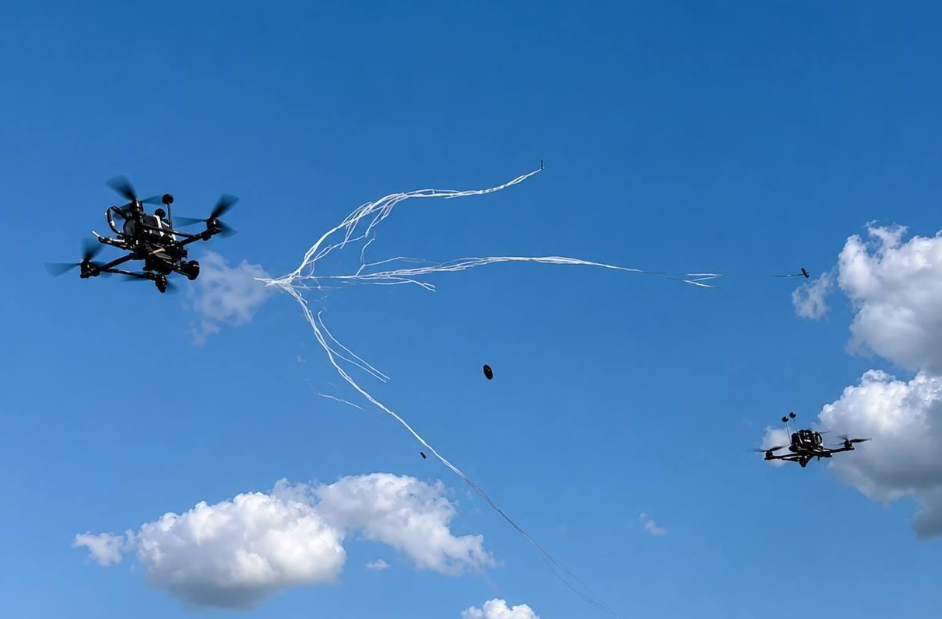
Ukraine has built an interceptor that catches Russian drones instead of ramming them. The company WINFLY has unveiled the WINFLY Spider, an interceptor equipped with a net-launcher to neutralize targets with a net and return to its launch point, the defense outlet Militarnyi reported.
The Spider is the newest entry in Ukraine's fast-growing interceptor-drone industry. Ukraine has fielded a widening range of cheap interceptors to counter Russia's massed drone attacks, and the Spider's distinction is reusability.
Most interceptors are one-shot weapons that ram or explode against their target. The Spider instead carries the Karakurt net-launcher, made of high-strength aluminum and rated to work from −20°C to +50°C, which snares an enemy drone in a net while the interceptor itself stays intact and ready for repeat flights.
The economics are the point. The developers say each net shot about $27, while the drone remains undamaged. That turns the cost equation of drone defense, where an interceptor is often spent to down a single target, into one where the same aircraft can make many intercepts, paying only for a cheap net each time.
The Spider is built on an existing WINFLY interceptor. It uses the WINFLY 10 Hunter as its base platform, which operates at up to 5,000 meters, reaches 160 kilometers per hour, and has a range of over 18 kilometers.
It is designed for a range of Russian drones. The system targets fixed-wing UAVs, Mavic quadcopters, FPV drones, and fiber-optic drones, with flight times up to 25 minutes, deployment times of up to 3 minutes, and target detection ranges of up to 500 meters. The maker offers day and night versions.
Ukraine is downing tens of thousands of Russian drones a month, per the Defense Ministry, and fielding interceptors from at least 29 licensed makers, with new designs like the high-altitude Tsyklop climbing above enemy drones and others ramming them.
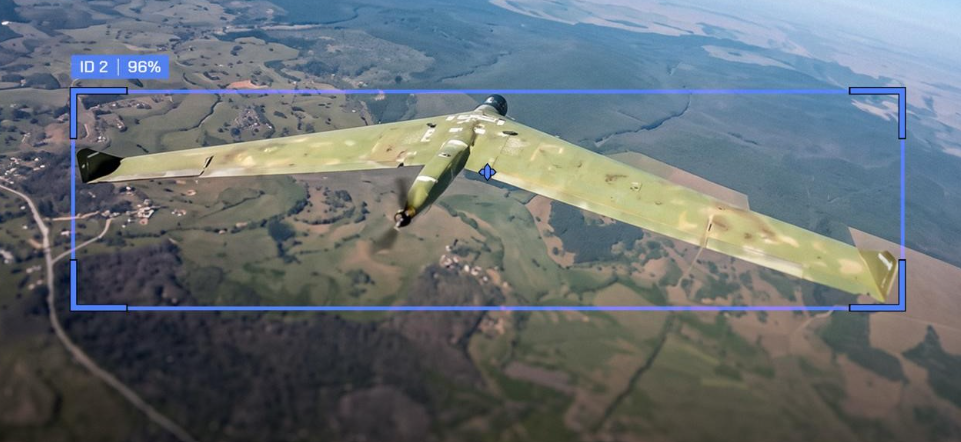
Ukraine is shooting down drones at a fast-rising rate. Ukraine's Defense Forces destroyed 40,438 Russian fixed-wing drones, or "wings", in July 2026, Ukraine's Defense Ministry reported on 11 August.
The July figures mark a defense scaling up as fast as the threat it counters. Since the start of the year, Ukraine's Defense Forces have destroyed 195,000 Russian "wings" and 66,000 copters. A counter-drone effort is growing month by month against a Russian drone campaign that has itself expanded relentlessly.
Both categories of drone kills rose sharply. Fixed-wing "wings," the category that includes long-range attack drones like Shaheds, climbed from 27,711 in May to 40,438 in July, according to the ministry.
Copter kills rose even faster in proportion. The number of destroyed copters grew 42% in a single month, from 14,071 in June to 19,945 in July. The parallel rise in both types reflects a Russian drone offensive attacking on multiple fronts at once, from deep-strike Shaheds to short-range quadcopters over the trenches, and a Ukrainian defense expanding to meet each.
Every strike has been confirmed by the DELTA system, and video recording of the shootdowns helps identify the most effective counter-drone tools for development and scaling, the Ukrainian Defense Ministry said.
That verification matters for a claimed tally. Rather than a bare count, the numbers are tied to Ukraine's battle-management system, which logs and video-confirms each kill, the same DELTA platform whose combat data now trains Ukraine's target-detection AI.
The figures capture only Ukraine's defensive half of a war fought increasingly by drones. Russia has expanded its drone production and nightly launches throughout 2026, aiming to overwhelm Ukrainian defenses with mass, and the rising Ukrainian kill counts are the answer to that escalation, not a sign it has eased.

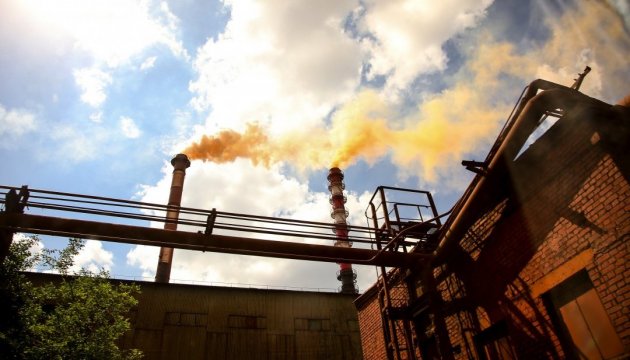

© Federico Rios for The New York Times


Le service de transport en commun à Rimouski bonifie son horaire en prolongeant ses services de Citébus et de Taxibus 365 jours par année.



© Federico Rios for The New York Times
Lawsuit challenges executive order targeting international criminal court for investigating Israeli crimes in Palestine
Four prominent US human rights organizations have accused the Trump administration of using its “crippling” sanctions regime against the international criminal court (ICC) to undermine global efforts to prosecute war crimes and crimes against humanity.
In a lawsuit filed in federal court on Tuesday, the groups – the American Friends Service Committee, the Center for Constitutional Rights, Human Rights Watch and the Open Society Institute – argued that the administration’s targeting of the ICC, as well as of groups and individuals affiliated with it or assisting its work, amounts to a “blatantly illegal attack on international justice”, the groups said.
Continue reading...
© Photograph: Simona Granati/Corbis/Getty Images

© Photograph: Simona Granati/Corbis/Getty Images

© Photograph: Simona Granati/Corbis/Getty Images

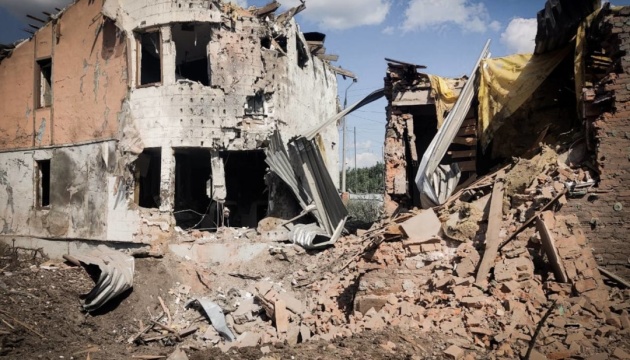

Ukraine's Security Service (SBU) said on 10 August 2026 that it had detained three more people suspected of illegally registering Starlink satellite terminals for Russian forces, and had blocked two separate schemes for putting hostile terminals onto Ukraine's verification list.
The arrests are the latest in a months-long pattern. After Ukraine and SpaceX cut off smuggled Starlink terminals and required every device to be verified, the SBU says, Russia turned to paying financially desperate Ukrainians to register hostile terminals under real Ukrainian identities, laundering them onto the whitelist meant to keep them out. Each case the service has announced follows the same script: a recruit found through Telegram, a terminal signed up in their own name, then pressure to pull in others.
In Dnipro, according to the service, counterintelligence exposed a woman who had done Russia's bidding in exchange for money to buy drugs. She registered one terminal in her own name, the SBU said, then drew in acquaintances, also looking for money for a "dose," to register more.
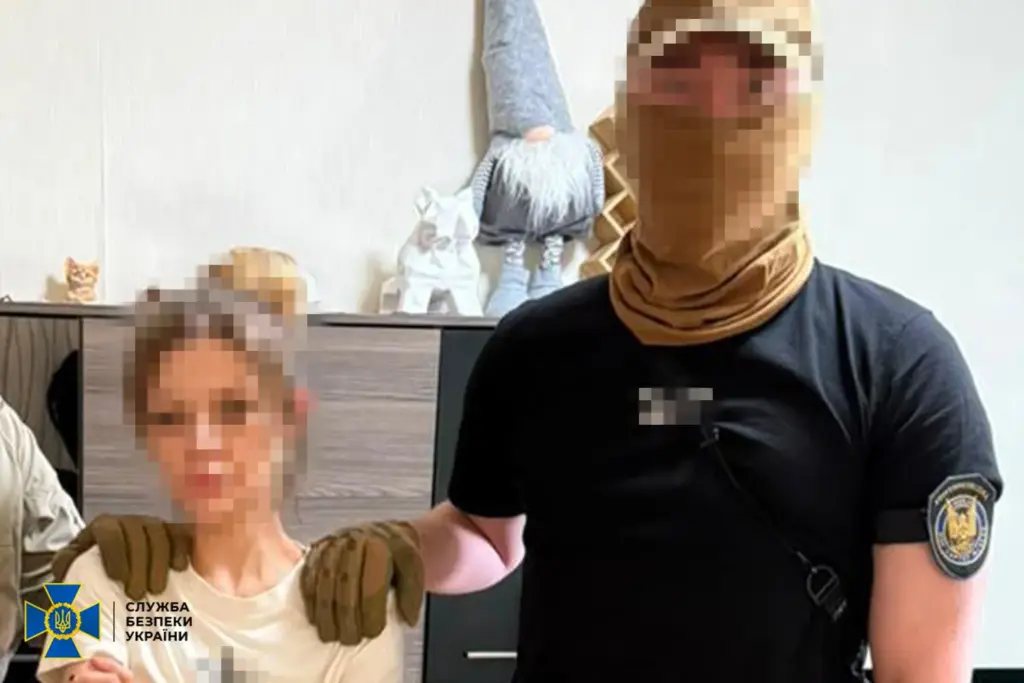
In Zhytomyr, according to the service, a local unemployed woman registered one terminal in her own name, then brought in a male acquaintance, and the two moved to what the SBU called "serial" activation at post offices, using front persons who handed over their personal data for a cut of the payment.
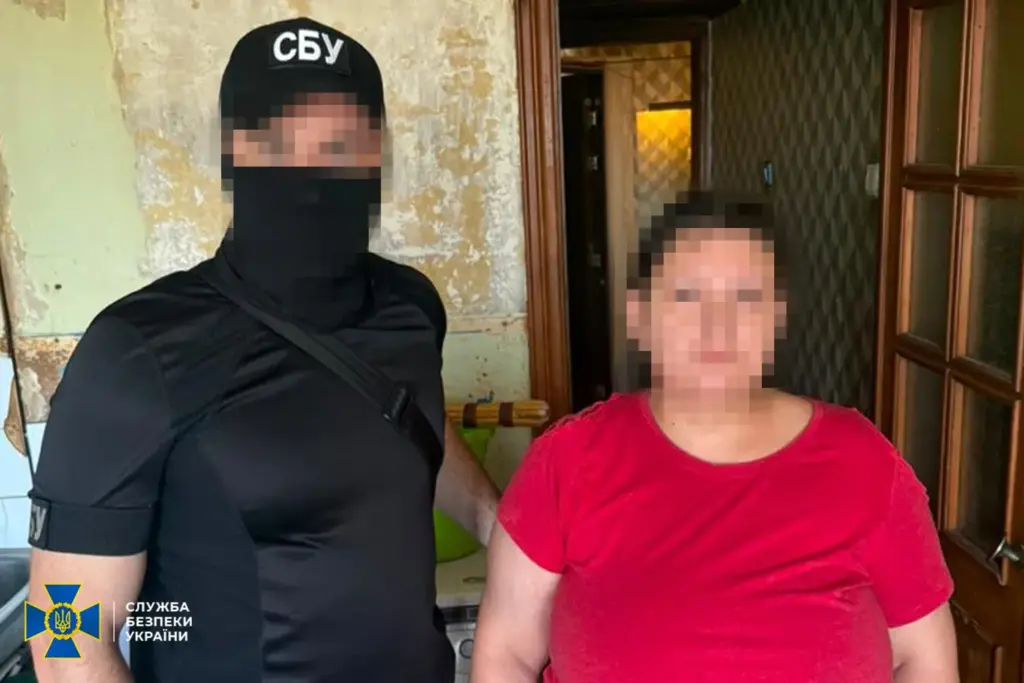
The SBU described all three suspects as drug-dependent people who had gone looking for quick money in Telegram channels, the same recruitment funnel it has flagged in earlier cases. The service said it had documented the suspects' activity, detained them at their homes, and blocked every terminal registered through the two schemes.
Investigators served the three with notices of suspicion under two articles of Ukraine's Criminal Code: Article 114-1, obstructing the lawful activity of the Armed Forces and other military formations during a special period, applied together with the prior-conspiracy provision of Article 28, and Article 111-2, aiding the aggressor state. The SBU said the suspects face eight to 12 years in prison. These are allegations, and none of the three has been convicted.
The SBU's regional directorates in Dnipropetrovsk and Zhytomyr oblasts ran the operations with the National Police, overseen by the regional prosecutors.
In February, the SBU detained a couple in Odesa Oblast who, it said, had agreed to register terminals for Russia at $30 each and planned to pull in a local resident who uses drugs to help.
In late June, the service reported eight suspected agents who registered terminals in their own names, passed the credentials to Russian handlers, and were told to recruit as many additional people as possible.
On 24 July, the SBU said it had broken up a network in Kyiv that used fake Ukrainian passports and an unwitting postal worker to activate 76 terminals for Russia's FSB security service, a case that drew high treason charges under martial law and the threat of life imprisonment.
On 25 July, the service detained a man in Dnipro suspected of registering more than 1,000 terminals, the largest single scheme reported so far.
Starlink, operated by SpaceX, has become one of the most important communications systems on the modern battlefield, providing fast, reliable satellite internet that is difficult to jam.
Ukraine has relied extensively on the network throughout Russia's full-scale invasion to maintain communications between military units and support drone operations.
Russian forces have also sought access to the system, but their use has been significantly constrained. In cooperation with SpaceX, Ukraine has introduced verification measures and whitelisted legitimate users operating on Ukrainian territory, limiting Russian access and forcing Moscow to seek alternative communications systems.



Russia will introduce two editions of a new regional history textbook series in occupied Ukrainian schools on 1 September 2026. The books present the occupied Ukrainian regions as historically Russian, MOST, a Kherson-based outlet, reported on 10 August.
The new textbooks bring Russia's campaign to erase Ukrainian identity into occupied classrooms, where authorities remove Ukrainian from curricula and replace lessons with Russian ideology, military drills, and firing-range visits. Moscow's Russification campaign extends beyond schools to efforts to change the demographics of occupied Ukrainian territory and re-educate forcibly transferred Ukrainian children.
The new textbook series, entitled "History of Our Region: Donbas and Novorossiya," comprises one edition for grade 5 and another for grades 6–7. The course attached to the books will be compulsory throughout Russia's so-called "new regions," according to the Ukrainian human rights center ZMINA.
"Novorossiya" is an imperial term Moscow uses to claim southern and eastern Ukraine.
Russia's Education Ministry calls the course "objective" and part of a "unified history of Russia," Meduza reports. Minister Sergei Kravtsov claimed it contains "objective information, rather than the lies that appeared in Ukrainian textbooks."
The "Novorossiya" textbook forms part of a broader Kremlin campaign to Russify occupied Ukraine's education, culture, and demographics.
Since occupying Melitopol, Russian authorities have systematically replaced Ukrainian curricula and textbooks. Older Russian textbooks, issued after Moscow's full-scale war, already depicted occupied Melitopol as part of Russia.
A 2025 Kremlin strategy requires occupied regions to enter Russia's educational, cultural, and information space. The policy also sets a nationwide target for “All-Russian civic identity” to reach at least 95% by 2036.
Meanwhile, experts estimate that about 35,000 Ukrainian children remain missing and are likely held in Russia or Russian-occupied territory. Yale's Humanitarian Research Lab identified at least 210 facilities used to hold children from Ukraine. The lab found that at least 130 facilities subjected Ukrainian children to pro-Russian cultural, patriotic, or military programs.
One case shows where such indoctrination can lead. Once listed as missing under occupation, Ukrainian boy Oleksandr Mustiatse later appeared online in a Russian uniform bearing the “Z” invasion symbol, Save Ukraine reported.





:quality(50)/2026/08/11/6a7b299d4a453374647172.jpg)



On aime tous avoir un beau jardin bien fleuri et des plates-bandes luxuriantes tout l’été. Mais que ce soit par manque de temps ou d’intérêt, on aime bien ne pas avoir à passer des heures à bichonner nos plantes. Voici notre top 5 des vivaces résistantes à entretien minimum.
Les aménagements paysagers sans aucun entretien n’existent pas. Il y a toujours un minimum à faire : un peu de désherbage, d’arrosage, la taille ou le rabattage, etc.
Certaines plantes sont plus fragiles et demandent plus de soins aux jardiniers alors que d’autres vivent leur vie tranquillement, avec un minimum d’entretien.
Les hostas sont appréciés pour leurs feuillages colorés et lumineux plus que pour leur floraison. Tolérant les espaces ombragés, ils enjoliveront même les sous-bois où le soleil se fait très rare. Vous pourrez facilement les diviser quand ils auront pris trop d’expansion.

Les hémérocalles sont très faciles de culture et ont une longue durée de vie. Plus souvent jaunes et orangées, mais aussi disponibles en rouge, rose et violet, les fleurs des hémérocalles ne durent qu’une journée, mais comme la floraison est abondante, ce n’est pas un enjeu. Même lorsqu’elles ne sont pas en fleurs, les hémérocalles sont très ornementales grâce à leur feuillage touffu qui rappelle les graminées.

Les rudbeckies ressemblent à des marguerites, mais dont les pétales jaunes surmontent un centre brun foncé presque noir. Faciles de culture, elles poussent bien en plein soleil ou à la mi-ombre. Elles fleurissent de juillet à septembre et on ne doit que supprimer les fleurs fanées et rabattre le feuillage en automne ou au printemps pour assurer leur santé. Elles mettent du soleil partout!

Avec leurs fleurs en forme de plumeaux rouges, roses, blancs ou violacés, les astilbes tolèrent les sols humides et les endroits ombragés. Leur feuillage délicat et bien découpé ajoute encore plus de beauté à ces vivaces polyvalentes.

L’achillée est très résistante, voire légèrement envahissante; vous devrez la contrôler de temps en temps pour ne pas qu’elle s’étende trop. Avec ses petites fleurs regroupées en talles, elle tolère la sècheresse et les endroits très ensoleillés. On retrouve différentes couleurs en jardinerie : blanc, rouge, rose et orangé.

Bon jardinage!
Pour répondre à toutes vos questions et pour des conseils de professionnels, rendez-vous chez Marcel Dionne et Fils de Rimouski, marchand Passion Jardins.
Autres trucs et astuces à lire dans Le Soir.ca!
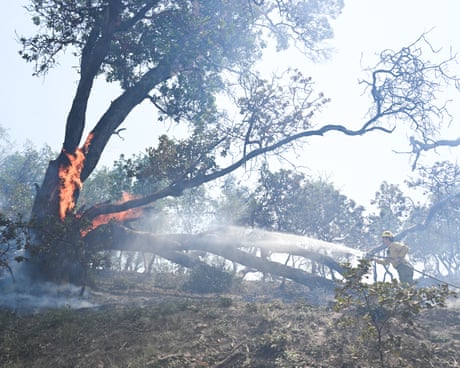
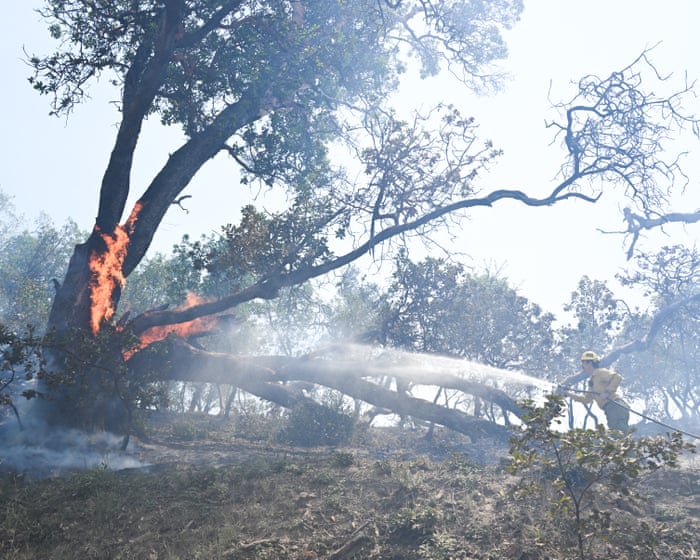
Evacuations include famed tourist destinations as blaze grew to over 1,700 acres by Monday
Evacuations have been ordered for areas along California’s famous Big Sur coast as a wildfire burns in the nearby steep, rugged mountains.
The Timber fire in Monterey county started Sunday and grew to more than 1,700 acres by Monday, according to Cal Fire, the state’s fire agency.
Continue reading...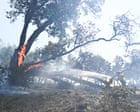
© Photograph: Anadolu/Getty Images
© Photograph: Anadolu/Getty Images
© Photograph: Anadolu/Getty Images