Soaring oil prices of above $108 a barrel after Houthi attacks on Saudi infrastructure stoke inflation fears
US government borrowing costs have risen to 5% for the first time since 2023 as soaring oil prices fuelled by the war in the Middle East trigger an intensifying sell-off in the global bond market.
The yield – in effect the interest rate – on 10-year US Treasury bonds hit the psychologically important threshold on Monday, on a day of renewed selling pressure on Wall Street as the global oil price reached $108 a barrel.
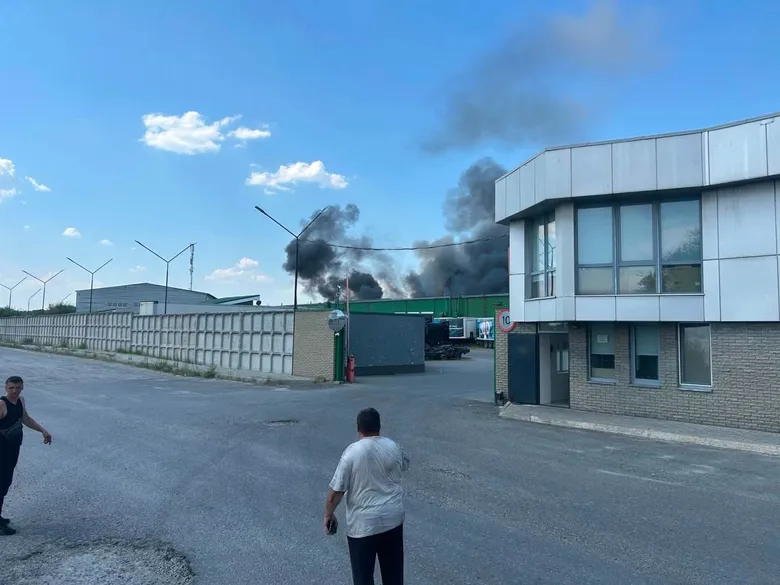
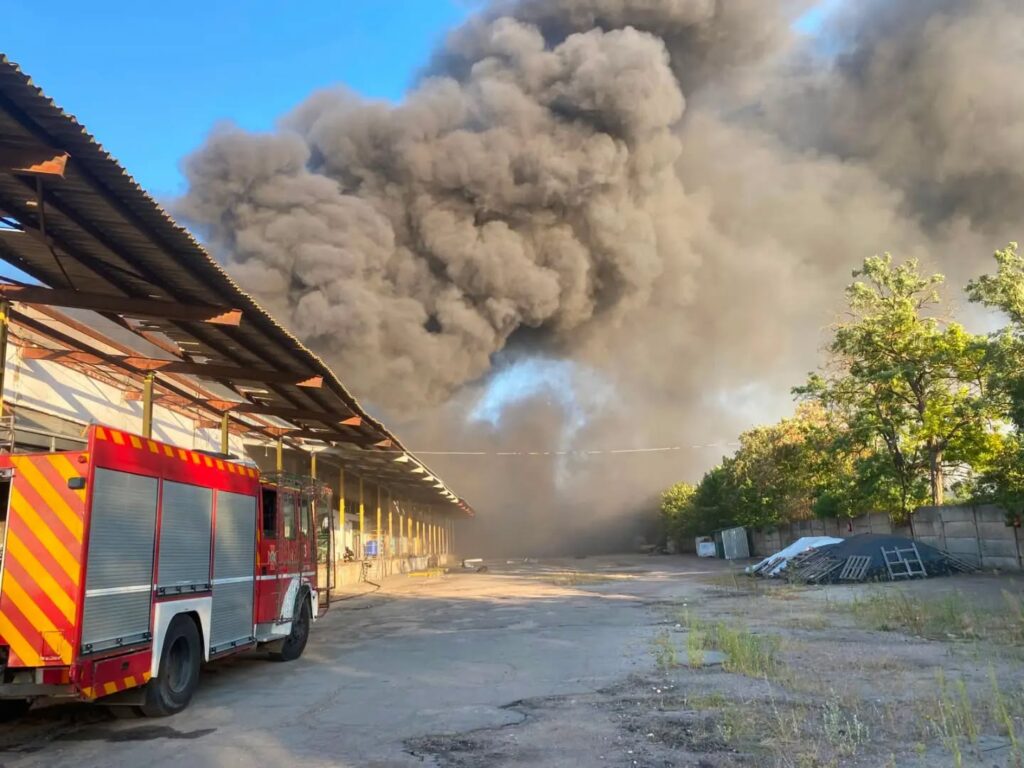
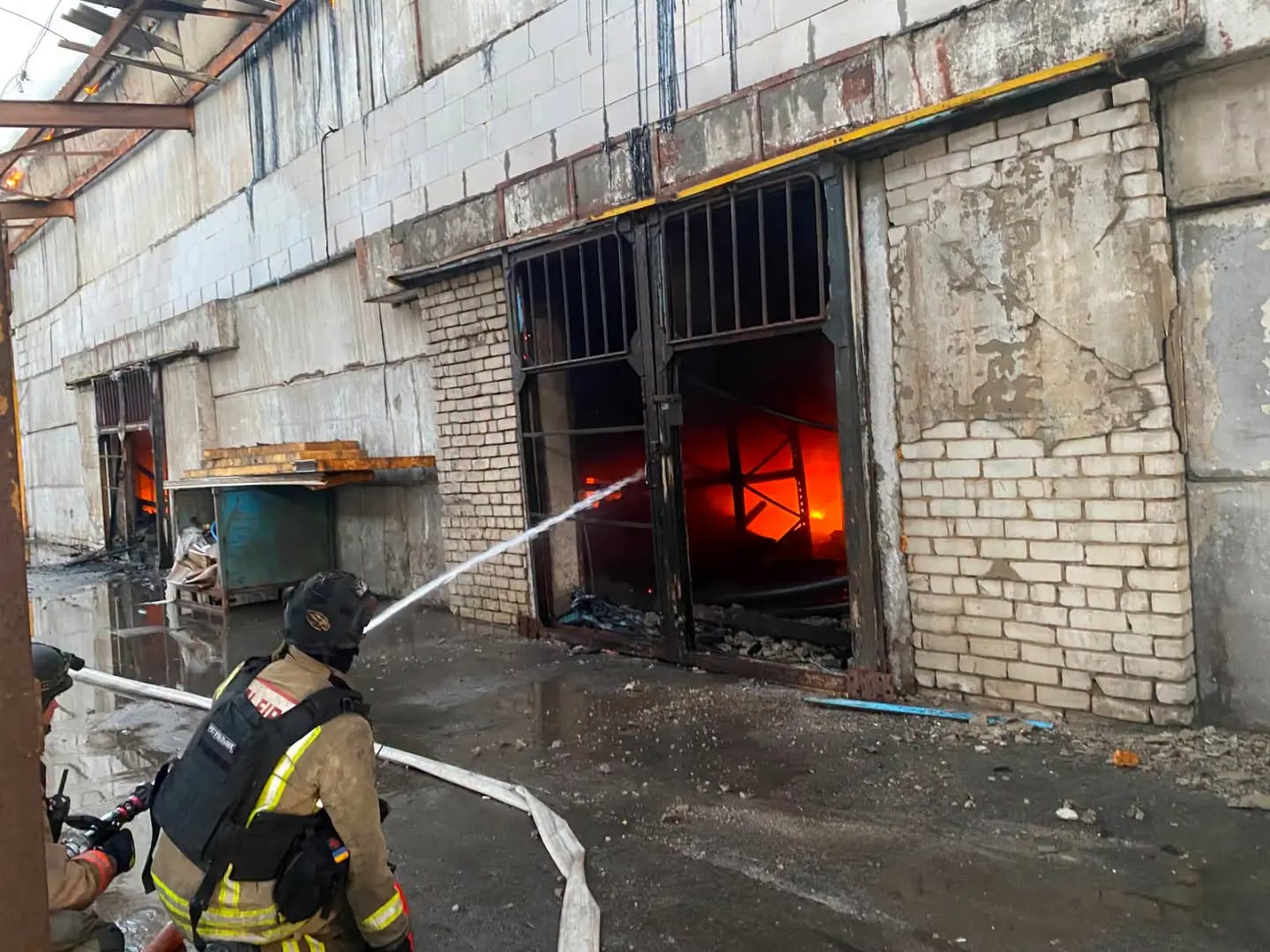
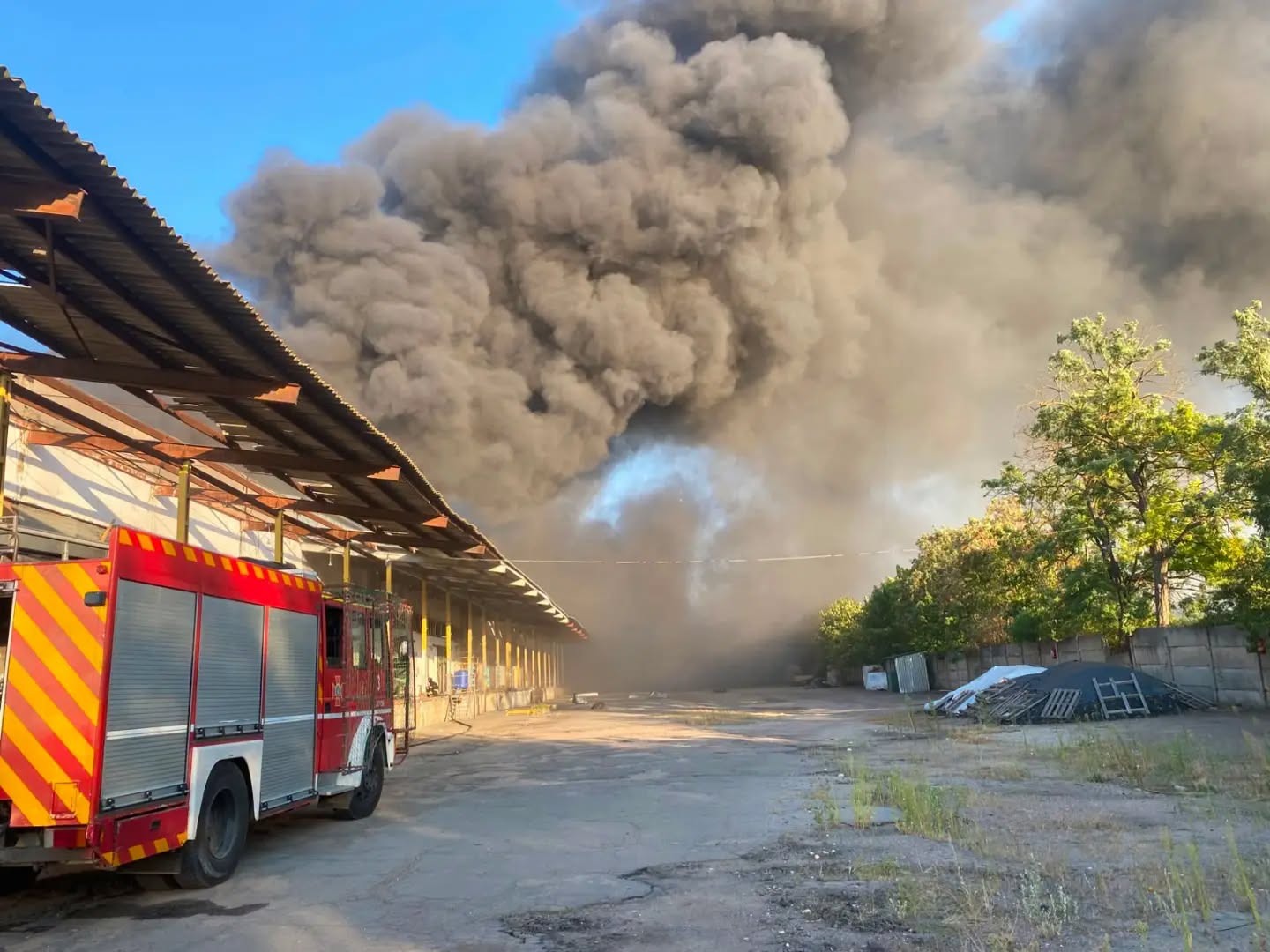
Russia struck a fourth Ukrainian pharmaceutical warehouse in two weeks on 14 September, setting fire to the Odesa depot of medicine distributor BaDM, Ekonomichna Pravda reported. Russian forces hit it during an attack they ran across the country through the night.
Russia fights a ground war on the front and bombs the country behind it with drones, cruise and ballistic missiles, and glide bombs, and in recent months it has aimed much of that at the civilian supply system, taking out the depots of retailers and carriers along with the rail that moves them. Burning stored goods does not move the front line, but it changes how a country at war feeds, supplies, and treats itself.
The fourth depot, and what Russia did to it
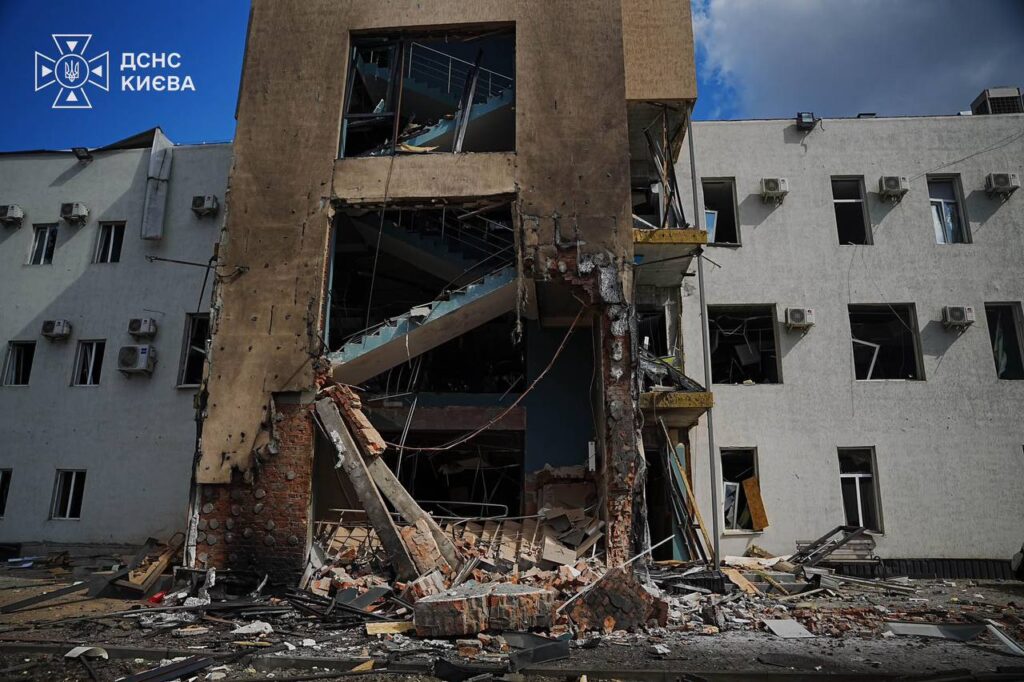
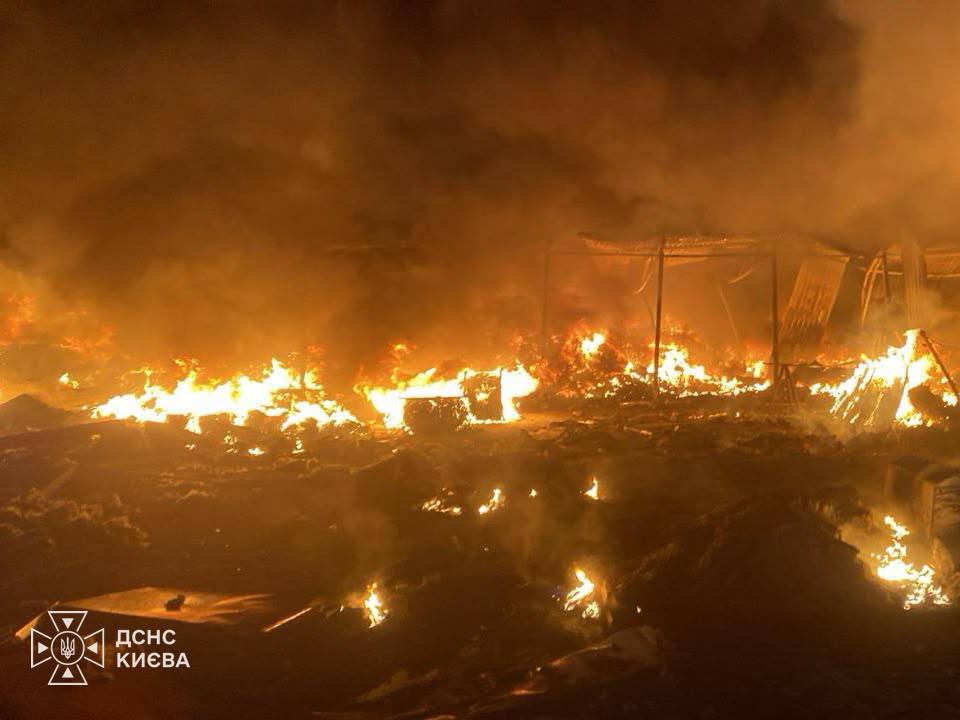
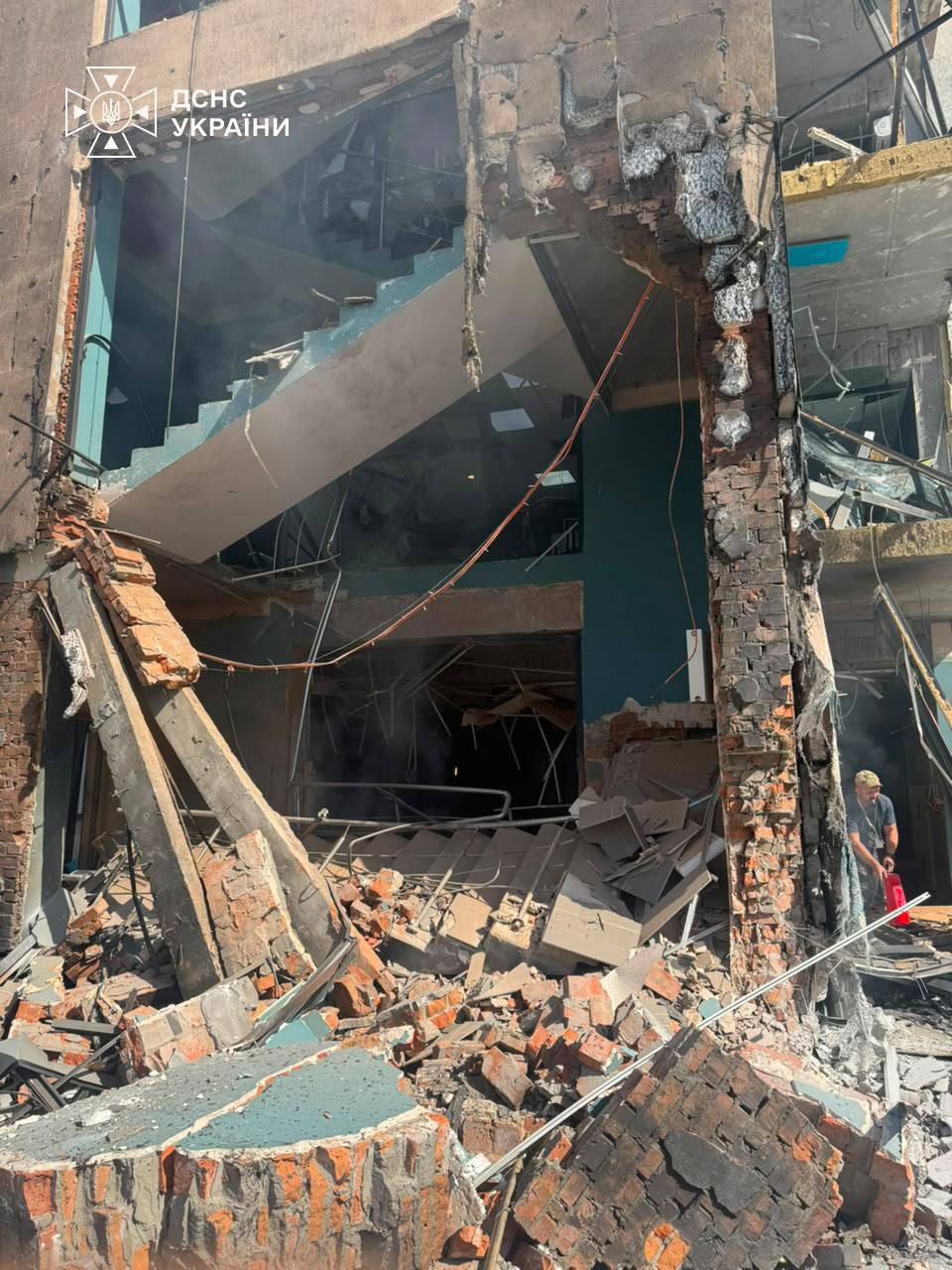
The BaDM complex stands on the edge of Odesa. The strike started a fire on the grounds, and the State Emergency Service worked at the site. It left significant damage to the storage buildings.
Preliminarily, nobody was hurt, sources on the pharmaceutical market told Ekonomichna Pravda. BaDM is one of the biggest wholesalers moving medicines to Ukrainian pharmacies.
The three depots Russia hit before it
Russia opened the run on 3 September, when it damaged the Biokon logistics complex in Boryspil raion, Kyiv Oblast. That site counts as the country's largest specialized pharmaceutical warehouse.
Overnight on 8 September, Russian forces attacked the Kyiv warehouse of Optima-Pharm with two ballistic missiles. They had already destroyed that site, which belongs to one of the largest distributors, in 2025.
On 13 September, Russian forces struck Universal Logistic, the second-largest medicine warehouse in Ukraine. Four specialized sites in two weeks is a pattern, and Russia now hits medicine storage as it has hit food, construction materials, and parcels.
Explore further
WHO humanitarian warehouse in Dnipro destroyed in strike, Director-General says
The attack the Odesa strike came in
Russia launched 108 strike drones from 18:00 on 13 September, Ukraine's Air Force said. The wave carried Shahed-type drones, among them jet-powered ones, Gerbera drones, and Parodiya decoys. Air defense downed or suppressed 85 of them by 08:00. Ukrainian forces recorded hits at seven locations, and the Air Force said the attack was still running when it published that count.
Medicine is not the only category on Russia's list. Its strikes have wrecked so much large-format storage that Ukrainian retailers are now building small sites everywhere instead of a few big ones. In August, a strike destroyed a World Health Organization humanitarian warehouse in Dnipro, which held medical supplies for frontline facilities, and the WHO did not name who fired it.
Moldova closed its airspace on the afternoon of 8 September and delayed the plane carrying Ukraine's President Volodymyr Zelenskyy to Norway after a Russian drone crossedinto the country, its government said in a statement to Reuters. The aircraft was cleared for takeoff once officials established that it had come down on Moldovan territory. Norway's prime minister described the episode as a near-miss, and neither government has said how close the drone came.
Russia runs three things at once along the EU's eastern frontier—mass drone attacks on Ukraine, drones crossing into Moldovan and Romanian airspace almost weekly, and strikes on the border checkpoints tying the three countries together—and states without interceptors can answer only by closing their skies.
What happened, and when
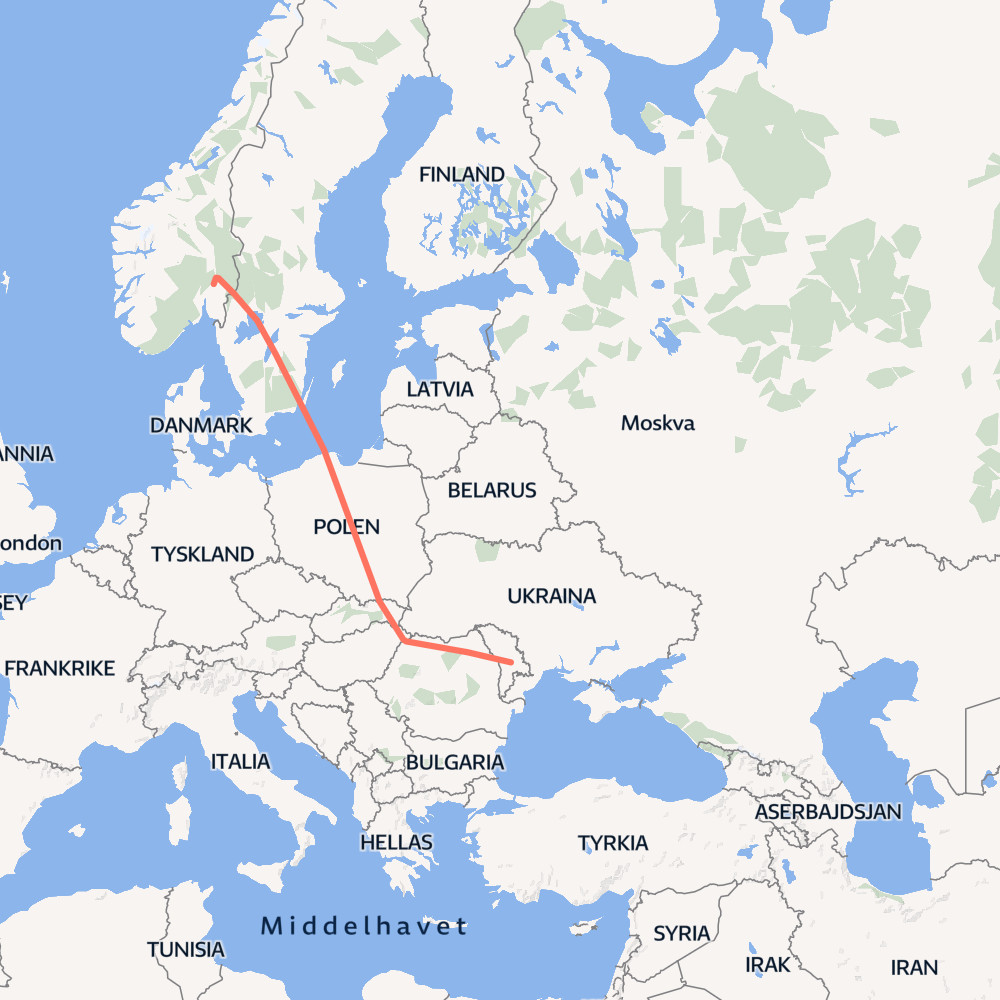
Moldova's National Army detected a Shahed-type drone entering from Ukraine at 16:20, the country's Defense Ministry reported. It flew toward Bender, a city in the Russian-backed breakaway region of Transnistria, then turned toward the capital, Chișinău, by 16:32. At 16:37, it left the country over western Moldova and headed into eastern Romania, across the Prut river border.
The route of Zelenskyy's flight from Moldova to Oslo, 8 September 2026. Map: NRK
Controllers restricted the airspace over central Moldova at 16:30. The same drone came back from the Romanian side, crossed the north of the country, and came down outside a village in the northwest, near the Romanian border, setting dry vegetation alight, according to the log. Nobody was hurt, and the airspace reopened at 17:39, more than an hour after it closed. The BBC's Ukrainian service placed the crash near a different northern village, without naming a source, so the exact spot is unsettled.
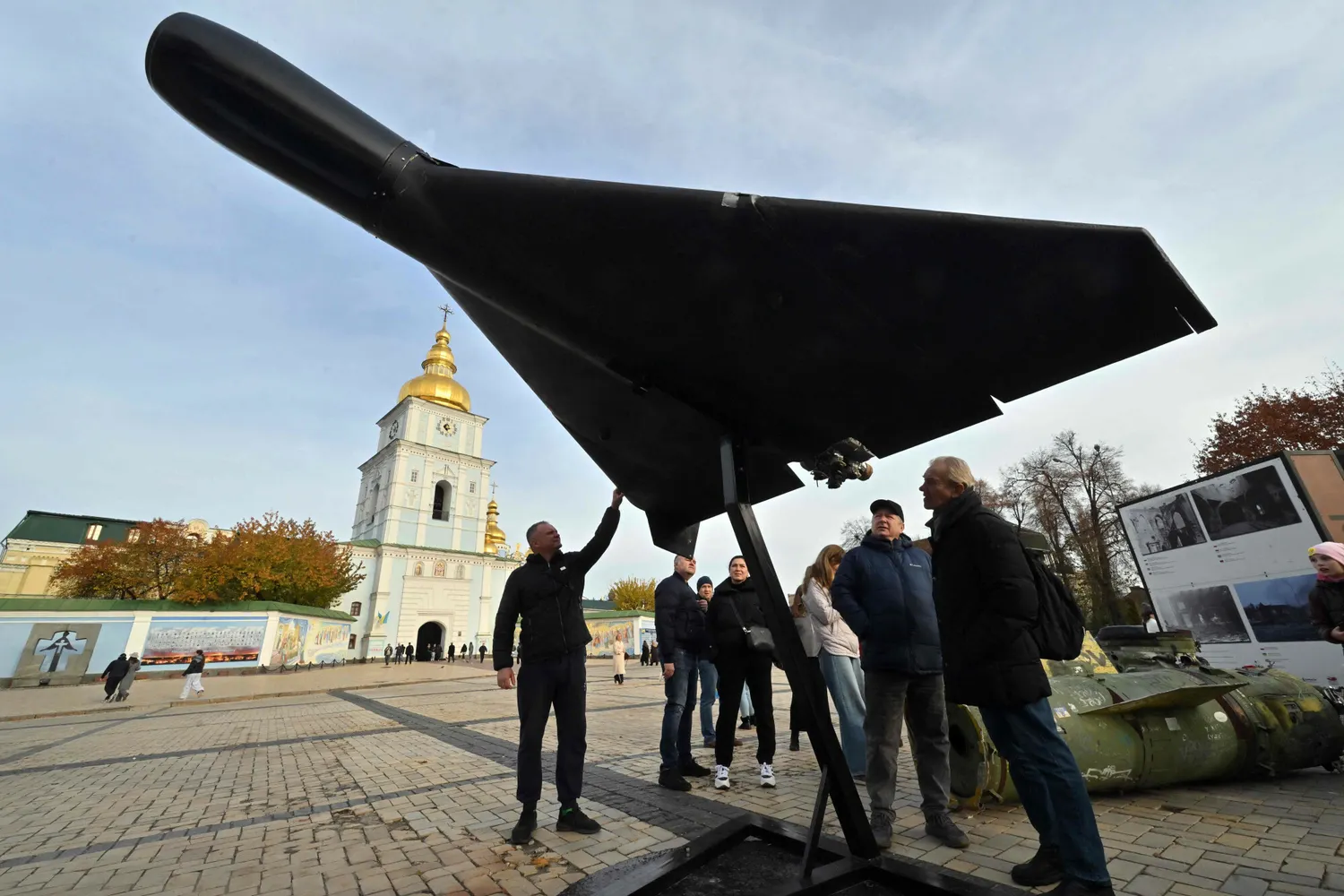
People look at an Iranian-designed Shahed 136, (Geranium-2) drone of Russian Army at an open-air exhibition of destroyed Russian equipment near Saint Michael's Golden-Domed Cathedral in Kyiv on November 2, 2025, amid the Russian invasion of Ukraine. Photo by Sergei SUPINSKY / AFP/Eastnews
The violation fell in the window when Zelenskyy's aircraft was preparing to take off, Militarnyi reported, citing the ministry. The civilian airport he was leaving from suspended operations and the border service closed the nearby crossings, the outlet added. Three departures and four arrivals were delayed in all, Reuters said.
Explore further
A drone nearly hit Zelenskyy’s plane taking off from Moldova on his way to a king’s funeral, Norway’s PM says
How the plane and the drone crossed paths
Zelenskyy flies an Airbus A319 corporate jet, and the threat to it probably came from a jet-powered Geran drone that crossed Romanian and then Moldovan airspace at around 17:00 that day, Militarnyi wrote, publishing the drone's track from the monitoring channel Oko Hora. That fits the return leg in the army's log, though no authority has tied a specific aircraft to the delay.
The route of a Russian jet-powered Geran drone across Romania and Moldova, 8 September 2026. Map: Oko Hora
Norwegian Prime Minister Jonas Gahr Støre told the broadcaster NRK the plane was almost hit as it prepared to leave, without naming his source. His office later described a danger recorded in Moldovan airspace that forced the delay. Norway's Finance Minister Jens Stoltenberg said Zelenskyy recounted the details himself at a closed meeting in Oslo.
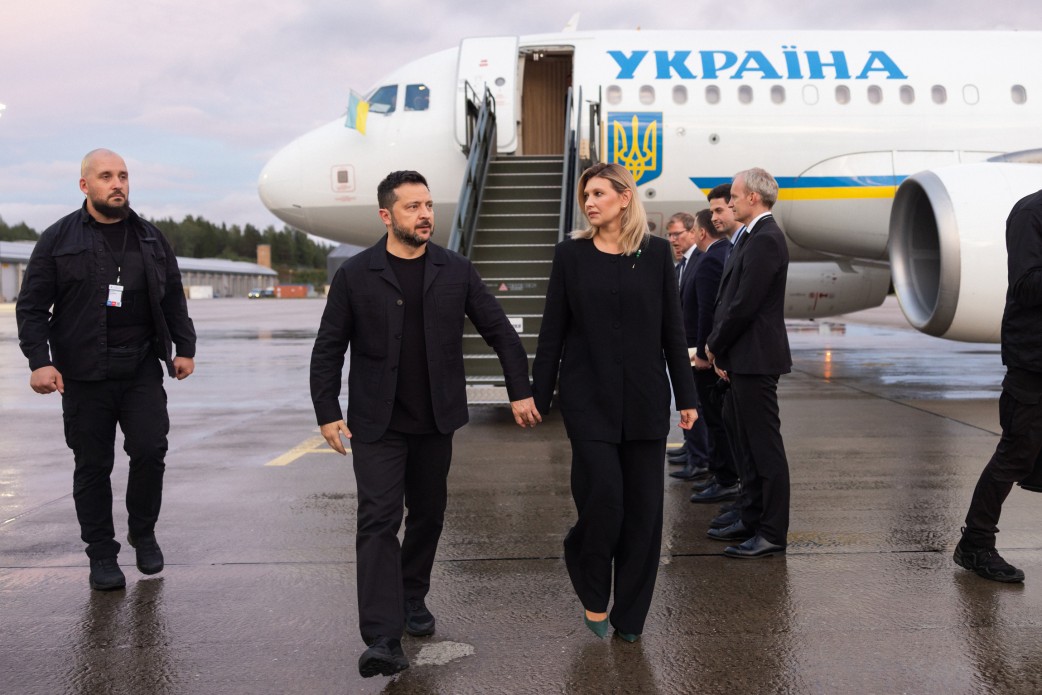
Zelenskyy and First Lady Olena Zelenska attended the farewell ceremony for King Harald V, who died on 28 August. Around it, the president worked on air defense, meeting Støre and then executives of defense companies from partner countries about the FREYJA anti-ballistic missile program, which Norway's government casts as a cheaper alternative to the Patriot.
The next night, the border crossing
Overnight on 9 September, Russian drones struck the Starokozache crossing on Ukraine's border with Moldova, killing two people and injuring three. The dead were Ukrainians, and a Moldovan citizen was among the injured, Moldova's Foreign Ministry told the broadcaster TV8. Border guards reopened the crossing that afternoon.
Russia claimed it had struck the crossing because it was used for military logistics. Moldova's Foreign Ministry rejected that outright, saying no weapons move through its territory, and that the people crossing there are families, children with their mothers, and the elderly. It is one of the working crossings on the Odesa Oblast stretch of the Ukrainian-Moldovan border, where the heaviest traffic runs through Palanca and Giurgiulești.
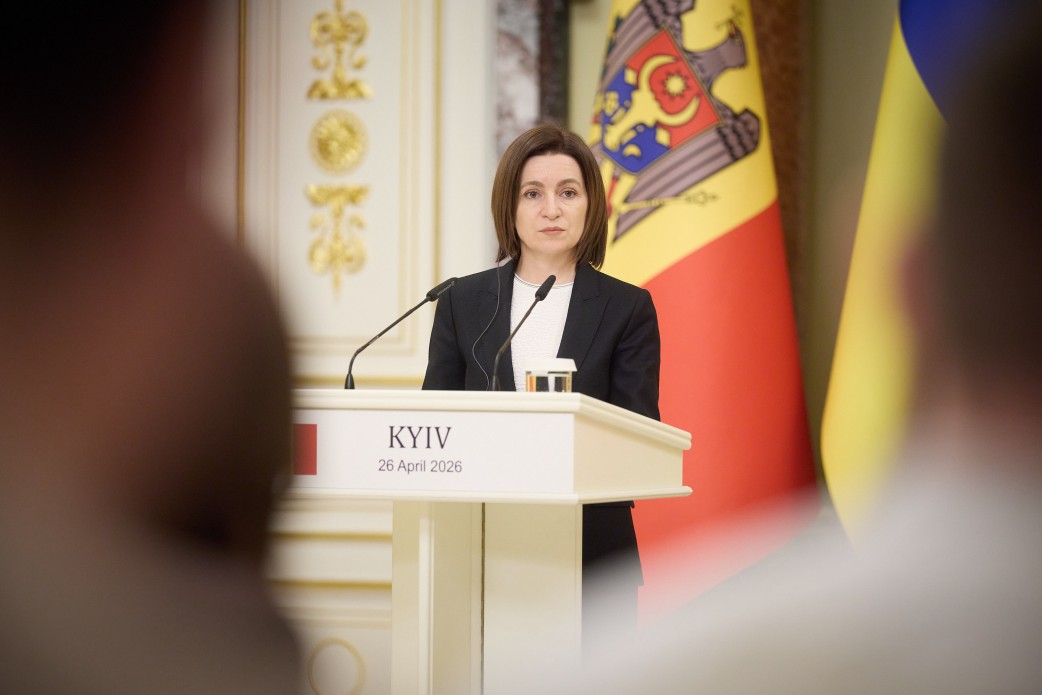
Moldova's President Maia Sandu condemned both the strike and the Geran-type drone that had forced her country to close its airspace the day before, and said the events show Ukraine needs more air defense.
Explore further
Moldova is investing in air defense against the Russian drones crossing from Ukraine—Romania shoots down the ones that reach it
The pattern, and Moldova's empty sky
Russia has hit at least five checkpoints on Ukraine's western borders since late August, four of them facing Moldova and one facing Romania, and the drone that struck the Kotlovyna crossing on 20 August flew in through Moldovan airspace. Euromaidan Press has covered part of that campaign, including burned food cargo near the Giurgiulești crossing in August. The State Border Guard Service has called such strikes an act of terrorism, because people are present at the crossings when they are hit.
In the air, Moldova can do little. It is still buying its first serious air defenses, so it restricts airspace and waits while Romania scrambles jets against the drones that reach its side. It logged three airspace breaches in nine days in August, and more than 100 drones were detected near Romania in four days that month.
A Russian strike drone hit the Kyiv premises of the television channels My-Ukraina and My-Ukraina+ in the middle of the day on 8 September, the channel reported. The main blow landed on the newsroom and the working offices while My-Ukraina was live on the national newscast. Ukrainian President Volodymyr Zelenskyy urged a response from Europe and the world.
During its ongoing all-out war, Russia runs a parallel campaign against the people who document it, jailing reporters as terrorists in the territory it occupies, killing them with drones near the front, and accumulating hundreds of crimes against them that European bodies have counted.
The strike landed on the editorial floor
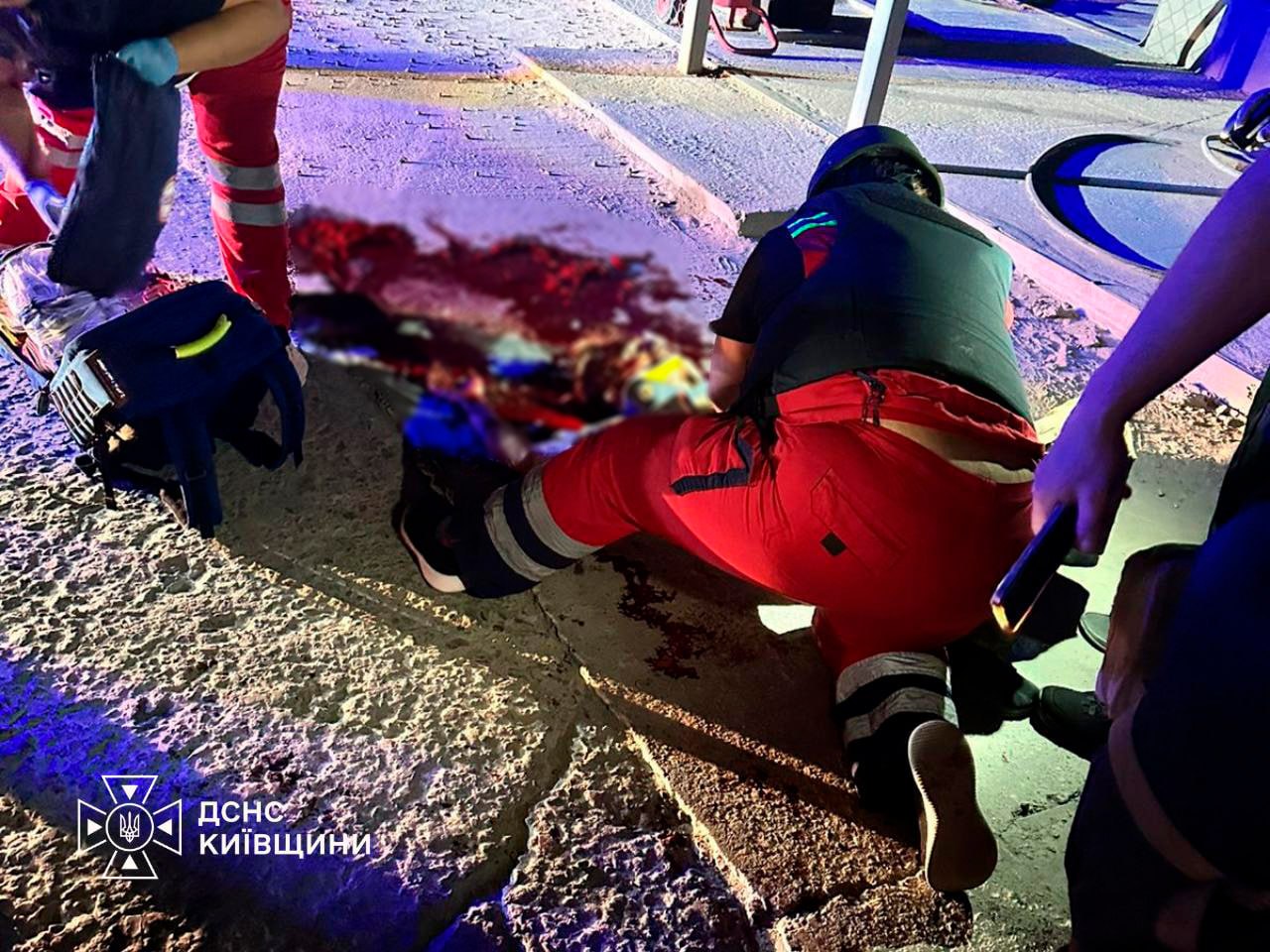
My-Ukraina was broadcasting the national United News telethon, the joint wartime newscast that Ukrainian channels share, at the moment of the attack. Rescuers and medics worked at the site and treated the injured, the channel said. The strike came in daylight, hours after a mass overnight assault on the capital.
Fire and structural destruction hit the business center in the Solomianskyi district, and rescuers evacuated two people from its upper floors, the State Emergency Service said. It put the number injured at five and called that figure preliminary, with the count of victims still being clarified.
People giving first aid to two women injured in the Russian drone strike, Kyiv, 8 September 2026. Photo: Zelenskyy's Telegram
"A new page of Russian degradation"
Zelenskyy wrote on Telegram that Russia had struck at media and at journalists with a Shahed, one of the Iranian-designed attack drones it launches at Ukrainian cities in mass waves.
"Right in the middle of the day. Exactly when the journalists were on air. The building is partly destroyed," he said.
Emergency workers had already put out the fire, and the number of injured could still grow, he added.
"Shaheds against media is a new page of Russian degradation, and there must certainly be a reaction from Europe and the world," Zelenskyy said.
Explore further
Trump’s peace envoys left, and Russia hit Kyiv with ballistics—the one thing Ukraine still struggles to stop
Russia had already damaged the channel's office overnight on 20 August during a mass attack on Kyiv. That blast blew out the windows, badly damaged the newsroom, and tore down part of the ceiling in the corridors.
A rescuer inside the wrecked stairwell of the building hit by the Russian drone, Kyiv, 8 September 2026. Photo: State Emergency Service of Ukraine
Three killed in the capital over the day
Kyiv Mayor Vitalii Klitschko said the number of people killed by Russian strikes in Kyiv since the start of 8 September had reached three. The city military administration put the number of injured across the capital at 19.
Medics loading an injured woman into an ambulance after the Russian drone strike, Kyiv, 8 September 2026. Photo: Zelenskyy's Telegram
Explosions ran for almost five hours overnight and damaged more than 50 sites in Kyiv, the Interior Ministry reported. Russia fired ballistic, cruise, and anti-ship missiles along with jet-powered drones in that attack.
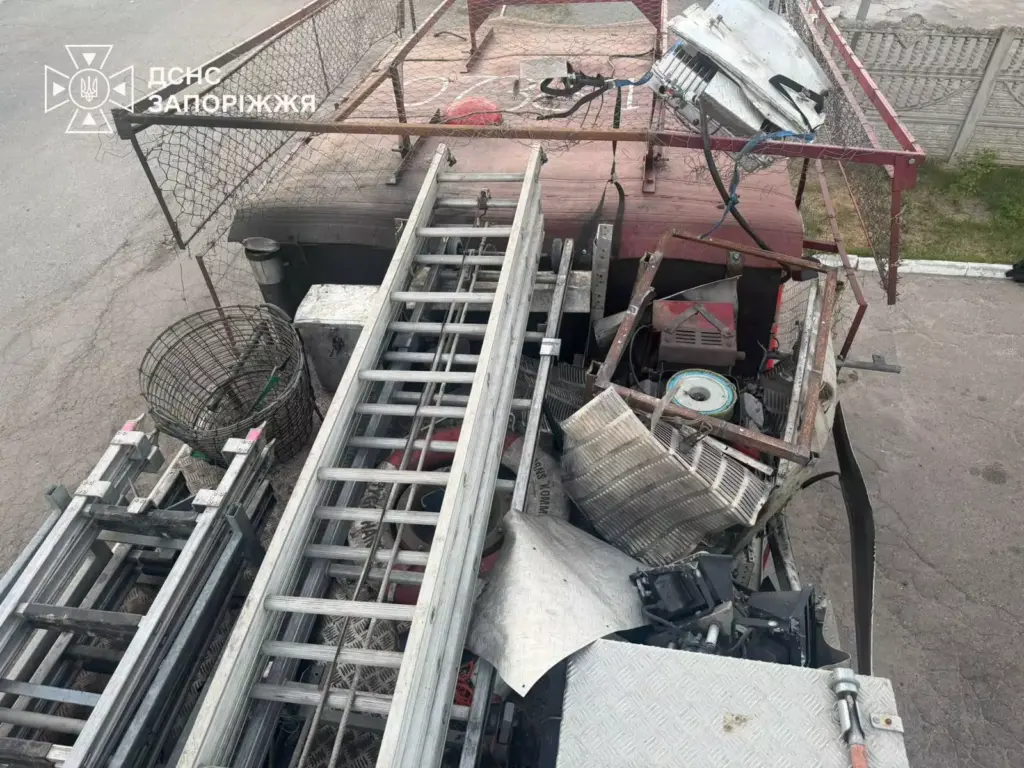
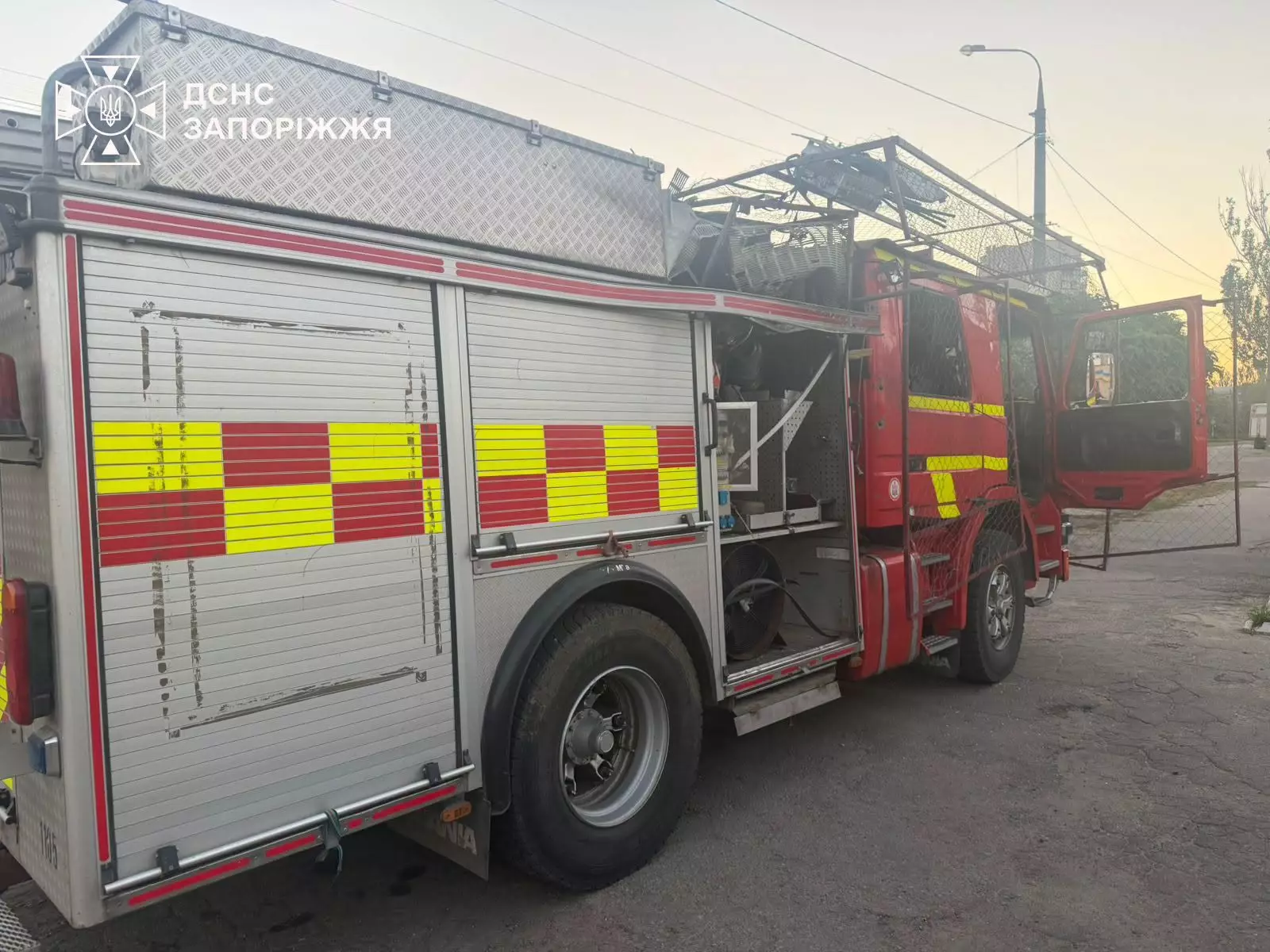
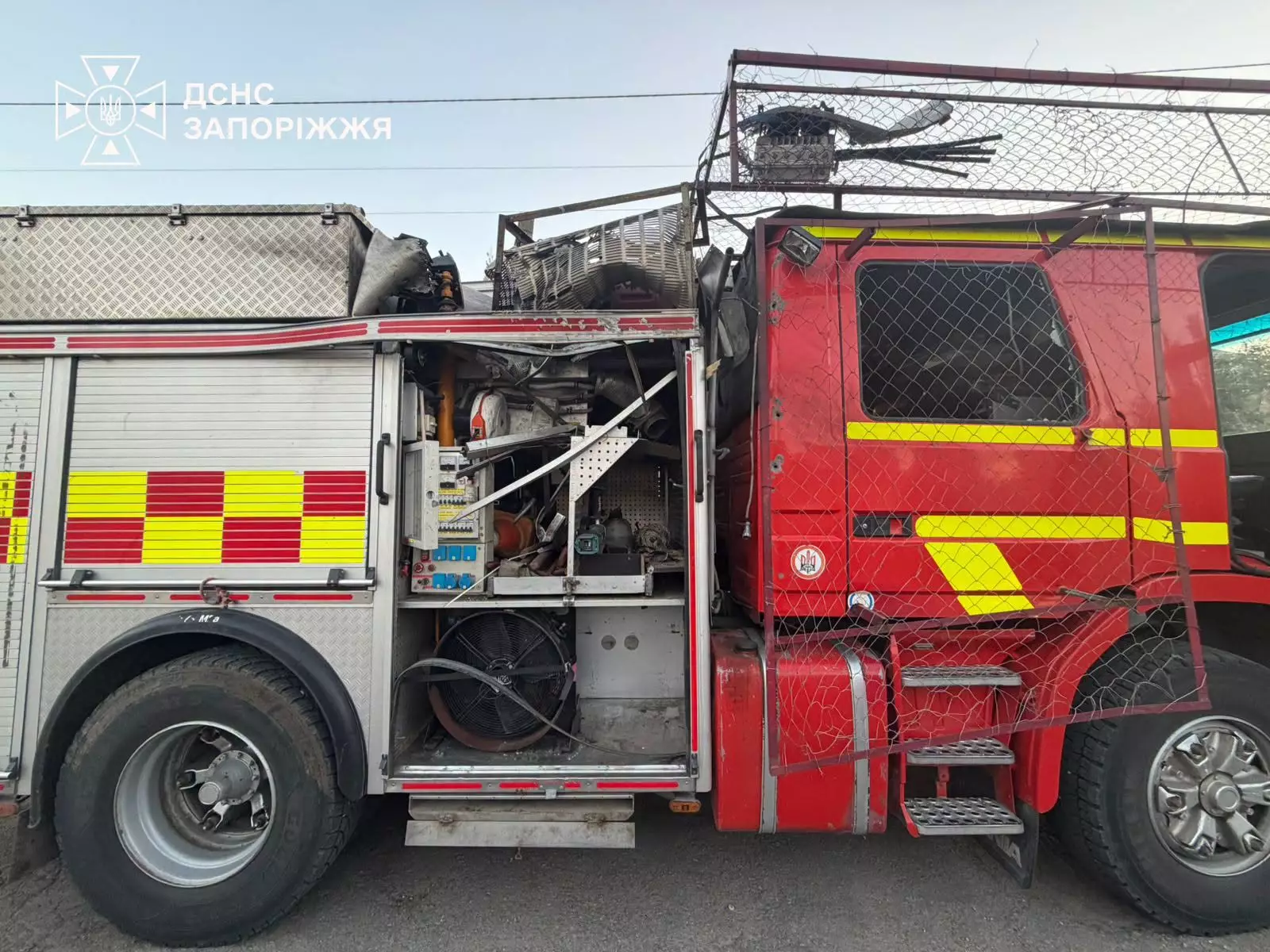
A Russian drone hit a fire truck driving to a call in the village of Kushuhum outside Zaporizhzhia on 1 September, injuring four rescuers, the head of Zaporizhzhia Oblast, Ivan Fedorov, reported. The crew was on its way to a house fire that Russian shelling had started. The strike came hours after a countrywide Russian air assault overnight.
Russian drones reach Ukrainian towns every day, the capital took a mass missile and drone strike overnight, and Russia often goes after the crews who answer those strikes.
A drone hit the crew before they reached the fire
Fedorov said a Russian drone struck the State Emergency Service vehicle in Kushuhum as it drove to put out a fire. The truck took damage, and the crew was hurt. He said the men were under the supervision of medics.
The Main Directorate of the State Emergency Service in Zaporizhzhia Oblast confirmed the attack, and added that all four injured firefighters had been taken to hospital with injuries of differing severity. The directorate specified what the crew had been sent to: a fire in a detached house in the suburb, started by Russian shelling.
The damaged fire truck with its cab door open after the Russian drone strike in Kushuhum, Zaporizhzhia Oblast, Ukraine, 1 September 2026. Photo: State Emergency Service in Zaporizhzhia Oblast
Over the past 24 hours, Russian attacks on Zaporizhzhia city and district killed two people and injured eight, Fedorov said. Russian forces carried out strikes on 57 settlements across the region.
The night before: a countrywide strike
Overnight into 1 September, Russia attacked with ballistic and cruise missiles, anti-radar missiles, Banderol munitions, and 218 Shahed-type strike drones, about a third of them jet-powered, Ukraine's Air Force reported. By preliminary data, air defenses downed or suppressed 199 targets. Odesa and Kyiv oblasts were the main directions of the strike.
The damaged fire truck with its cab door open after the Russian drone strike in Kushuhum, Zaporizhzhia Oblast, Ukraine, 1 September 2026. Photo: State Emergency Service in Zaporizhzhia Oblast
Russia killed 12 people across Ukraine, among them a citizen of India, and injured dozens, Ukrainian President Volodymyr Zelenskyy said. Russia killed four people and injured 13 and damaged a five-story residential building, and 50 people were evacuated. Nearly 350 rescuers worked in Kyiv and the surrounding oblast alone.
Explore further
Russia’s 6-day attack on Kyiv that started two days after CIA head’s visit to Moscow, culminates with massive ballistic missile strike on eve of school year
In Kyiv, a ballistic strike on Ukrzaliznytsia railway facilities killed seven people, six of them railway workers, and one more employee remains hospitalized. The capital's overall toll for the night stood at eight killed.
In Odesa Oblast, Russian drones, guided bombs, and missiles injured seven civilian men, four of whom went to hospital, and struck the Orlivka ferry crossing on the border with Romania again, the regional prosecutor's office found.
Ukraine has documented Russia striking the people who respond
As of May, Ukraine has documented 11,000 Russian first-person-view drone attacks on civilians, among them repeat strikes on the same spot once medics and firefighters arrive. Ukraine's UN envoy has built part of the case for expelling Russia from the Security Council on that practice.
Rescue workers in Zaporizhzhia have been caught that way before. After a strike on a Poltava Oblast gas site, Russia hit the crews who came to the fire. Firefighters in Chernihiv Oblast went to hospital mid-rescue. In Kryvyi Rih in August, a second Russian attack reached rescue workers thirty minutes after a drone strike on a shopping center, and a repeat strike killed a 20-year-old volunteer paramedic in Kyiv the same month.
NATO said on 30 August 2026 it sees no imminent threat of attack from Russia, Reuters reported. Russia is stepping up covert operations across Europe alongside its war on Ukraine, a NATO official said. The statement followed a week of warnings from Western capitals.
Russia's sabotage campaign in Europe has grown steeply since the full-scale invasion, reaching from Molotov cocktails thrown at a French drone plant to severed undersea cables and attacks on railways. Recorded attacks in Europe hit 34 in 2024, nearly triple the 12 counted a year earlier by the Center for Strategic and International Studies, which says Western states have yet to build an effective answer to a campaign pitched below the threshold that would trigger a military response.
Attacks on Ukraine and covert acts in Europe are both rising
Russia is attacking Ukraine harder and running more covert operations in Europe at the same time, the official said.
"Even as the Russians are facing very substantial resistance from Ukraine, they are stepping up attacks on Ukraine as well as hybrid acts in Europe," the official said, adding: "As always, NATO remains vigilant and alert to the variety of threats we face. At this time, we see no imminent threat of attack."
Hybrid acts mean covert moves—sabotage, arson, drone flights—that stop short of open war.
A week of alarms
Three developments that week bore on the same question—whether Russia would strike a NATO country, not only Ukraine. Polish Prime Minister Donald Tusk warned on 28 August that Russia is preparing to escalate both in Ukraine and across the region, putting the critical window at seven or eight months.
Days earlier, CIA Director John Ratcliffe flew to Moscow to meet intelligence counterparts. Two people familiar with the meeting told Reuters that Ratcliffe did raise the prospect of Russia acting against a NATO state, though whether the trip had any other aim stayed unclear. One source said several topics came up, including Russia's support for Iran. US President Donald Trump dismissed that reading two days later, saying Russian President Vladimir Putin will not attack NATO territory and that Ratcliffe carried no message.
Explore further
650 participants from 24 countries: Ukraine brings its battle-tested drone-defense experience to NATO’s Baltic Trust 2026 exercise
On 25 August, German Chancellor Friedrich Merz said at a coalition summit that his government will soon name who was behind the 4 August drone attack attempt at Leipzig/Halle airport. Russia denies any role in sabotage on European soil and dismisses such accusations as Western scaremongering.
Ukraine's cheap interceptor drones have been knocking Russia's nightly attackers out of the sky, so Russia has now bolted a jammer onto some of its own drones to blind them, according to Serhii "Flash" Beskrestnov, an adviser to Ukraine's President on defense technology. He examined the system, found in drone wreckage, and mapped how it strikes back at the interceptor sent to hunt it.
Russia batters Ukrainian cities with long-range drones most nights, and Ukraine has leaned on a cheap shield—drones costing a few thousand dollars—instead of burning through far pricier missiles. Anything that dulls that shield pushes the cost of defending the sky back up.
A jammer that waits for the interceptor
The unit rides on a Geran, Russia's version of the Iranian Shahed one-way drone. It listens for the video signal an approaching Ukrainian interceptor beams back to its pilot. Its receiver reads the interceptor's working frequency, then orders a transmitter to bury that same channel in noise, Beskrestnov found.
Explore further
How Ukraine uses AI to guide long-range drone strikes through electronic warfare and deep into Russian-controlled rear areas
By his first estimate, the jammer's signal runs about five times stronger than the interceptor's video link—enough to wipe the picture and any chance of steering the drone onto its target.
Seconds decide it
In Beskrestnov's account, the system detected a test transmitter and switched on jamming after about three seconds, and the feed cut out. The device stays nearly idle until a hunter comes close, then jumps to full power to smother the signal. It targets the ordinary analog video band around 5.8 gigahertz that many cheap interceptors still use.
Possible answers, include interceptors with terminal-guidance homing for the final stretch of flight, digital communication links, or transmitters set to non-standard frequencies.
Explore further
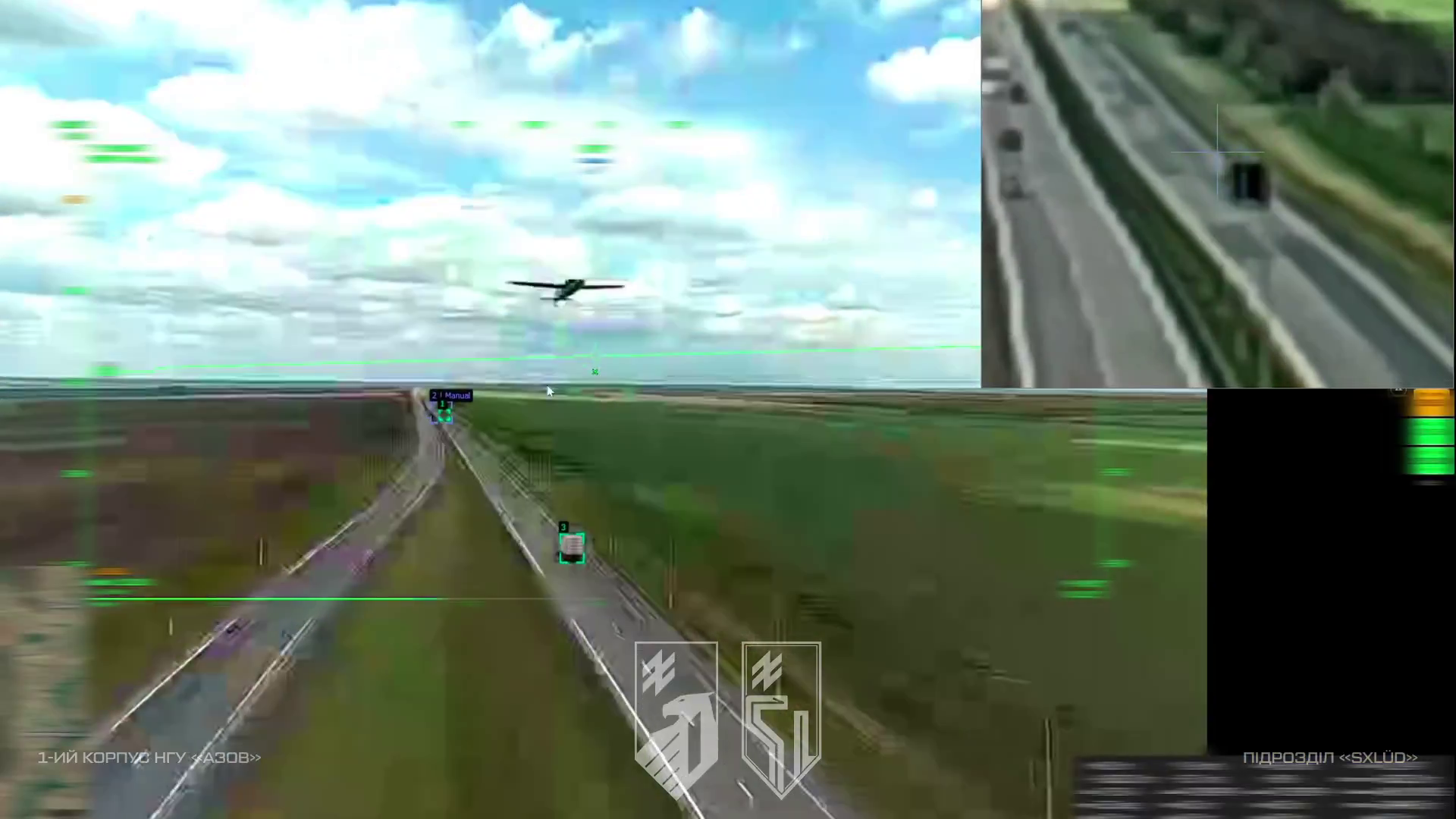
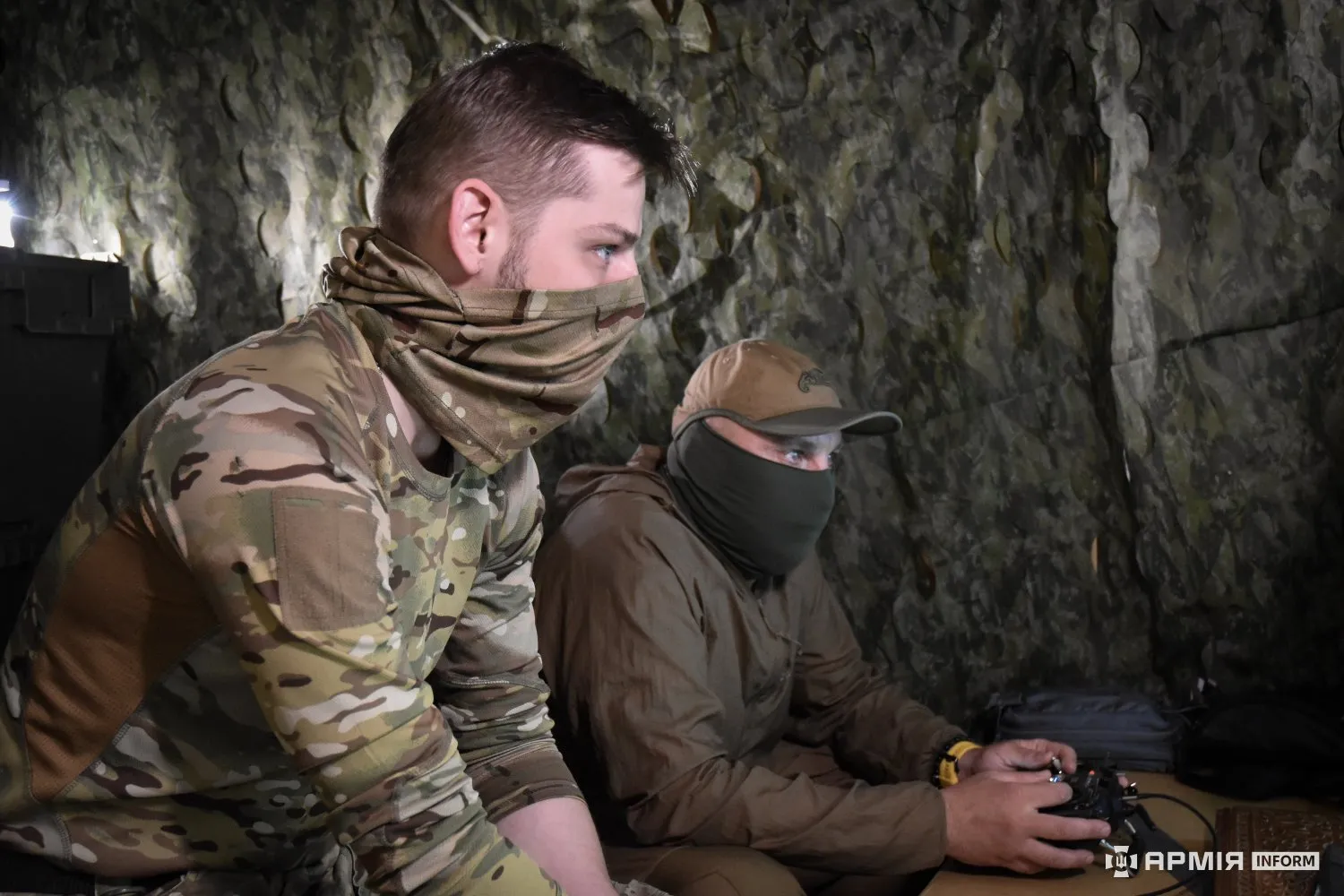
“Two targets and ammo with one drone”: How a Ukrainian drone crew hunts Russian transport behind the front line
An old problem for Russia's drones
Russia has tried again and again to keep its one-way drones alive against Ukraine's defenses, including wiring jammers into some Shaheds earlier this year. Spending weight and power to protect a drone from a far cheaper interceptor shows how well those cheap drones work.
Humanitarian supplies stored for the coming winter in Kherson burned in a Russian drone attack, the Ukrainian Red Cross said. The fire at the organization's warehouse also took stock kept for emergency repairs after Russian strikes. The attack injured no staff or volunteers, and Red Cross teams keep working in Kherson and Kherson Oblast.
The war grinds on with daily Russian strikes on cities far behind the front, wearing civilians down while Russia's ground gains stay slow and costly, and humanitarian stock is one of the things that campaign consumes.
Winter equipment, medical supplies, and blankets among the burned stock
The attack occurred on the evening of 23 August. The fire damaged or destroyed aid worth almost UAH 28 million ($626,000), the Red Cross said. Part of the stock was equipment and materials for the autumn and winter period. Another part was held for fast response after Russian shelling, including materials for temporarily covering damaged buildings. The warehouse also stored medical supplies, blankets, hygiene kits, and equipment for supplying water and electricity.
A firefighter directing water into the burning Ukrainian Red Cross warehouse, Kherson, 23 August 2026. Photo: Ukrainian Red Cross
Kherson and the de-occupied part of Kherson Oblast come under Russian attack every day with various weapons. Authorities there report civilian casualties and damage daily. Ukrainian prosecutors have documented more than 11,000 small-drone attacks on civilians since 2024, with nearly half of the cases in Kherson Oblast.
Aid the Ukrainian Red Cross stockpiled for winter in Kherson burned in a Russian drone attack
Aid stores keep burning across Ukraine
In early August, the Ukrainian Red Cross said Russian forces had subjected its facilities to "unprecedented attacks" in July, which hurt its ability to respond quickly and deliver aid to people. A massive Russian attack on Kyiv damaged one of its warehouse complexes, burning 320,000 units of humanitarian cargo and hospital equipment worth more than $1.77 million. Russian forces destroyed a Red Cross humanitarian aid warehouse in Kherson on 20 December 2023.
Fire burning inside the Ukrainian Red Cross warehouse, with rubble outside the building, Kherson, 23 August 2026. Photo: Ukrainian Red Cross
Other aid stores have burned this summer, among them a World Health Organization medical warehouse in Dnipro and a Kyiv Oblast warehouse holding HIV-prevention supplies.
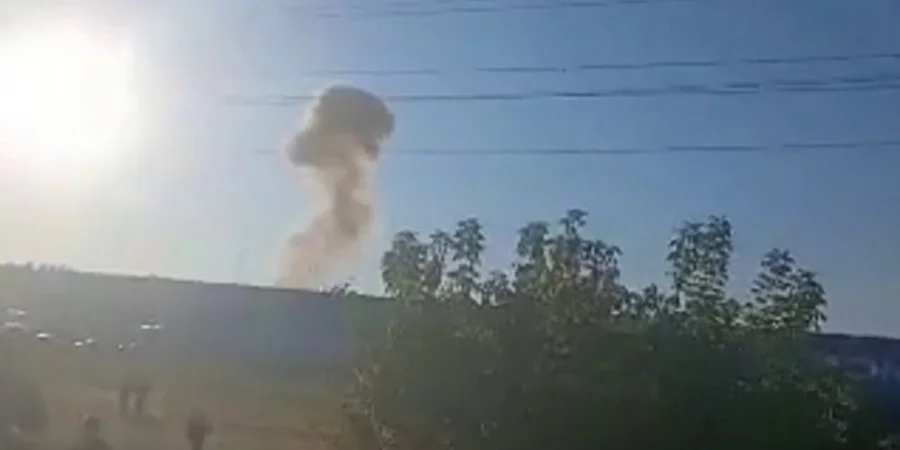
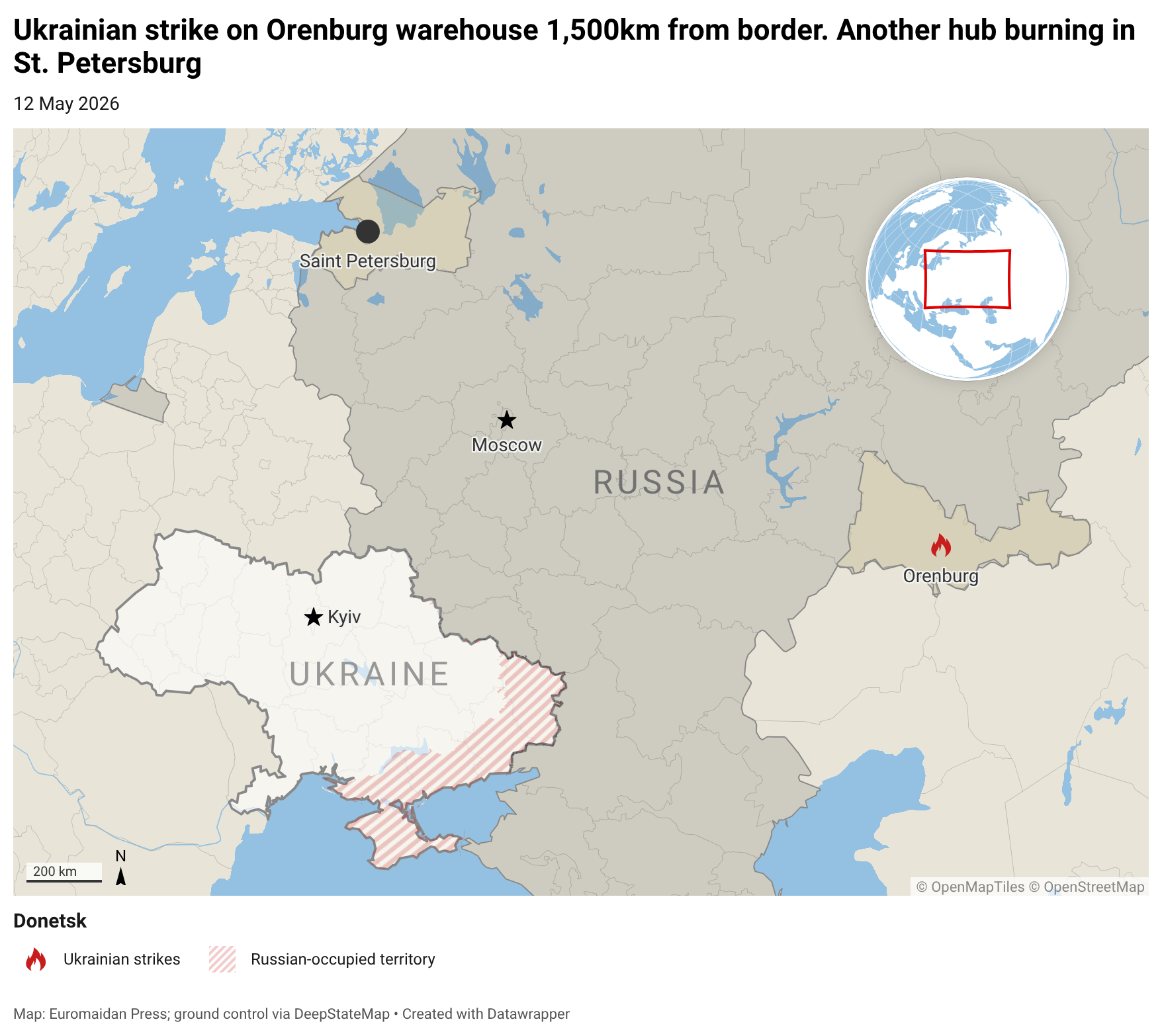
Ukrainian drones struck a logistics complex belonging to Russian online retailer Ozon in Orenburg on 23 August, the second Ozon warehouse hit in two days, monitoring Telegram channels reported. The site sits about 1,200 km from the war zone, near Russia's border with Kazakhstan. Hours earlier, a large fire tore through a separate warehouse outside St. Petersburg, roughly 900 km north of Ukraine, though local authorities declared no drone or missile threat.
Kyiv's long-range drone program has pushed its reach ever deeper into the Russian rear, turning fuel depots, factories, and delivery hubs far behind the lines into routine targets, and retail networks have drawn special attention because their warehouses double as arteries for the wider war economy. Each strike this far inside Russia forces Moscow to stretch air defenses across a country too vast to shield everywhere at once. Disrupted e-commerce warehouses also add to pressure already showing at the pumps, where fuel shortages have brought rationing to major cities.
Drones hit Russia's biggest Ozon warehouse
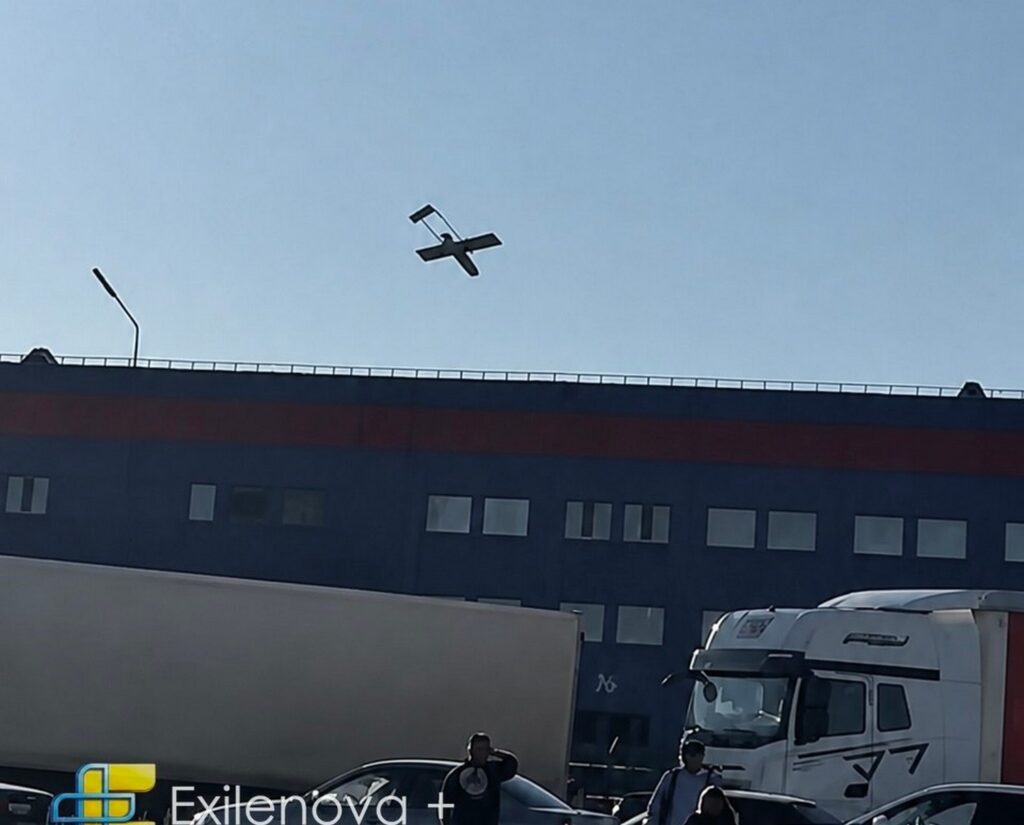
Ukrainian monitoring channel Exilenova+ published video of the strike moment, after which a fire took hold on the site. Independent Russian outlet Astra analyzed eyewitness footage showing an emergency vehicle racing toward the depot. The complex spans more than 200,000 m² and was designed to hold over 31 million items, ranking among Ozon's biggest in Russia.
Smoke rising over the Ozon logistics complex in Orenburg, Russia, 23 August 2026. Photo: Exilenova+
The warehouse stands inside the city's special economic zone, a tax-favored industrial park on the eastern edge of European Russia. The first phase opened in August 2024, and a second building followed in 2025.
Orenburg mayor Albert Yumadilov claimed several drones were downed over the special economic zone and that debris fell on the Ozon complex, starting a fire that crews quickly put out with no one hurt.
Ozon confirmed the strike, saying it evacuated more than 300 workers, pulled its goods from the marketplace and stopped taking new deliveries while the site sat idle.
A second fire near St. Petersburg, with no air-raid alert
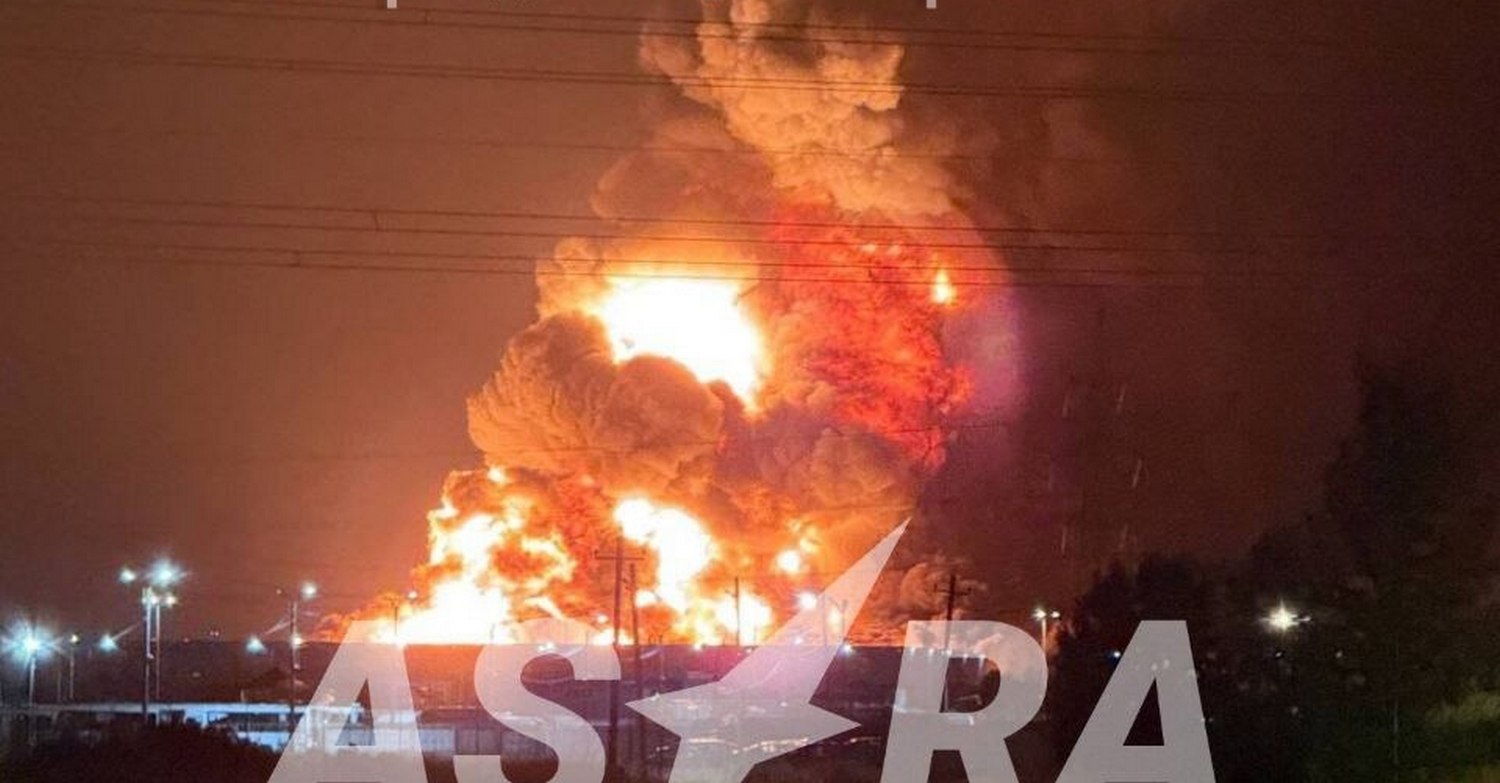
Overnight, a large blaze hit a warehouse in the Kolpino area south of St. Petersburg. Astra established that the warehouse stood about 350 m from an Ozon site, and witnesses said they heard no drones or air defense. Ukrainian Telegram channel Exile+ identified the burning facility as a storage warehouse run by Logistera.
A large fire at a warehouse complex in the Kolpino area of St. Petersburg, Russia, 23 August 2026. Photo: Astra
Part of a widening campaign on Russian marketplace logistics
The Orenburg hit followed the first-ever Ozon strike a day earlier, at a warehouse in Chapaevsk, Samara Oblast. Before turning to Ozon, Ukrainian drones had struck more than 10 warehouses belonging to the larger Russian marketplace Wildberries. Such marketplace hubs move not only consumer goods but dual-use items like electronics and drone components that can reach Russia's military.

 Connexion