❌

Vue lecture

Hours after Ukraine dropped Kerch bridge span, Pentagon called deep strikes “spectacle,” but Berlin and London pushed back

US Under Secretary of War for Policy Elbridge Colby speaks at the Ukraine Defense Contact Group meeting

Ukraine’s strikes deep into Russia have not helped end the war or slow Russia’s advance, US Under Secretary of War for Policy Elbridge Colby told the Ukraine Defense Contact Group at NATO headquarters, according to remarks the Department of War published on 17 November. The meeting’s British and German co-chairs disagreed at a joint press conference that evening, which NATO streamed.

The split came hours after Ukraine brought down the road span of Russia’s Kerch bridge. It also came two days before US President Donald Trump, Russian President Vladimir Putin, and Chinese President Xi Jinping meet in Shenzhen, a summit China’s Foreign Ministry announced for 19 November. Washington has already pressed Kyiv over refinery strikes this fall. This time, Colby argued for restraint in the same speech in which he said Europe had taken “primary responsibility for Ukraine’s defense.”

The Pentagon wants support aimed at the front line

Colby also called Ukrainian strikes on the objects inside Russia “the spectacle of deep strikes designed to incur pain on the Russian population,” and added that “in our assessment is that such strikes have not been effective in driving an end to the war.” Hits on targets like the retailer Wildberries have probably “hardened the Russian public’s resolve,” in his view, and Moscow may hold the advantage in a long-range duel.

The Pentagon instead wants allied support focused on the front line and mid-range strikes. At the same time, the under secretary said Ukraine should not be made to fight “with its hands tied behind its back,” and that “strikes that target Russia’s warmaking machinery can also help contribute to slowing Russia’s advance on the front lines.”

Streeting and Khmara: Kyiv decides how to fight

Asked by the BBC about Colby’s criticism, UK Defense Secretary Wes Streeting said that “it’s not for us to tell Ukraine how to fight their war.” Deep strikes, he added, have “helped to degrade Putin’s war machine, buying time and saving lives.”

Ukrainian Defense Minister Evgeniy Khmara said Ukraine has “the right to retaliate.” Russia has struck Ukraine’s bridges across the Dnipro 12 times since 1 October, he said, while Ukraine planned one strike on the Kerch bridge. “For each strike they’re hitting our territory we’ll retaliate twofold, tenfold,” he said, adding that Kyiv plans to scale up its deep-strike capacity threefold next year.

Rutte sidesteps Colby, Pistorius calls the criticism stupid

Before the meeting opened, NATO Secretary General Mark Rutte was asked about the Kerch bridge strike. He told reporters that Ukraine’s defense “means also hitting out at logistical nodes, that’s unavoidable.” He said it remained to be seen what exactly happened, but that judging by the media footage, “it seems that they were successful.”

At the press conference, Reuters asked whether he shared Colby’s position. Rutte did not name Colby, but he said allies agree that disabling “Russia’s war machine” is “necessary,” NATO’s transcript shows.

German Defense Minister Boris Pistorius then said he agreed with Rutte, Khmara, and Streeting. Criticizing strikes on “strategic military and military-use targets” in Russia is “quite a stupid thing,” he said. Allies should instead talk about Russia’s “terroristic strikes every night and every day” on Ukraine’s energy, water, and heat.

  •  

The night the Kerch Bridge lost its road arch, Ukraine’s drones also reached Bashkortostan and Kursk

Black smoke over Salavat after a Ukrainian drone attack on the Gazprom Neftekhim Salavat complex, Bashkortostan, 17 November 2026

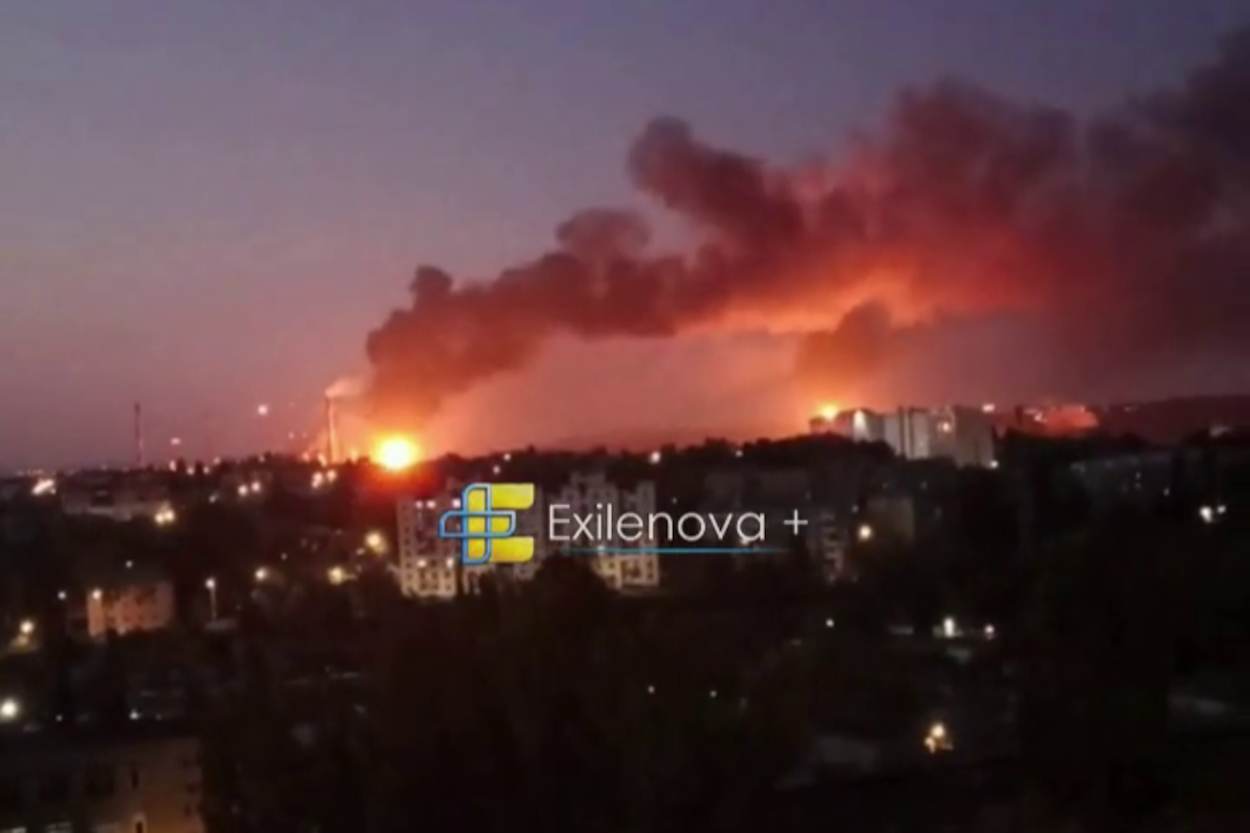
Ukrainian drones set the Gazprom Neftekhim Salavat petrochemical complex in Bashkortostan, about 1,300 km from the front line, on fire overnight on 17 November, the fourth strike on the plant since July. Numerous fires broke out on the site after the attack, Ukrainian Telegram channel Exilenova+ reported.

Ukraine has been hitting Russia's oil and petrochemical plants and the bases Russia's strikes fly from, likely to make up for its own dwindling stock of air-defense interceptors, the US-based Institute for the Study of War assessed. Overnight on 17 November, Ukraine brought down the road arch of Russia's Kerch Strait Bridge to occupied Crimea, while a key substation in Kursk caught fire after explosions. Russia's Defense Ministry claimed 1,441 Ukrainian drones downed overnight, a count Russian Telegram channel Astra called the largest such attack, though in August the ministry claimed 1,671 over 24 hours.

Salavat, hit a fourth time since July

Gazprom Neftekhim Salavat, part of Russia's state energy giant Gazprom, combines a refinery, a gas chemical plant, and the Monomer plant, and makes gasoline, diesel, kerosene, fuel oil, and polyethylene, Astra wrote after matching readers' photos to the site. Its readers reported the glow of the fire was visible from neighboring Sterlitamak. The complex can process up to 10 million tons of oil and gas condensate a year, Exilenova+ said.

Satellite map placing the fire at the Gazprom Neftekhim Salavat complex, Bashkortostan, 17 November 2026
Satellite map placing the fire at the Gazprom Neftekhim Salavat complex, Bashkortostan, 17 November 2026. Map: Exilenova+

At dawn, Ukrainian Telegram channel Supernova+ posted photos of black smoke over the plant. Ukrainian drones previously hit the complex on 14 July, 13 August, and 8 October.

ukrainian strikes on 17 nov 2026 - kerch kursk salavat

A key Kursk substation on fire

In Kursk, about 105 km from the Ukrainian border, explosions around midnight were followed by a fire at the 330 kV Sadovaya substation, Astra's OSINT analysis found from readers' video. Owned by grid operator Rosseti, it is the key power hub for Kursk and the north of Kursk Oblast and supplies about 400,000 residents, Astra wrote. Exilenova+ posted video of the blaze.

Fire at the Sadovaya substation in Kursk, matched to its location on a satellite image, 17 November 2026
Fire at the Sadovaya substation in Kursk, matched to its location on a satellite image, 17 November 2026. Image: Astra

NASA's FIRMS satellite fire data show a heat signature in northern Kursk that night, with none there earlier in November. There was no official word on the attack, Astra noted.

Footage from Azov and the night over Moscow

In Azov, Rostov Oblast, about 195 km from the front line, a CCTV camera caught a fuel tank exploding at the Flash Energy oil depot, Astra's OSINT analysis showed. Ukraine's General Staff said it had hit the depot on the night of 15–16 November.

Moscow Mayor Sergei Sobyanin said about 800 drones flew toward the Moscow region between 17:00 Moscow time on 16 November and 07:00 on 17 November, with most downed far from the city and 321 on approach to it. Russia's Defense Ministry claimed the 1,441 drones were downed over 21 Russian regions, occupied Crimea, and the Azov and Black seas, up from 1,336 it claimed a night earlier.

  •  

Ukraine is hitting Russian oil, petrochemicals, and strike bases, likely to make up for scarce interceptors, ISW says

Black smoke and flames rise over an industrial skyline of chimneys and flare stacks under a cloudy morning sky in Nizhnekamsk, Russia.

Ukrainian forces struck the Nizhnekamskneftekhim petrochemical complex and the TAIF-NK refinery in Tatarstan, the Monolit aircraft plant in Trubchevsk, Bryansk Oblast, the Akhtubinsk airfield in Astrakhan Oblast, and a drone launch site near Tsymbulova in Oryol Oblast overnight on 15 November, Ukraine’s General Staff said in two statements.

The US think tank Institute for the Study of War assessed that the strikes advanced three goals at once: cutting Russia’s oil income, its army’s fuel and petrochemical supplies, and its aviation and launch capacity. The campaign is likely meant to offset Ukraine’s limited air defenses, as interceptor stocks dwindle amid a global shortage. That evening, Ukrainian President Volodymyr Zelenskyy said intelligence showed Russia was preparing new strikes, and that partners should focus on missiles for Patriot and NASAMS systems.

Synthetic rubber, a crude unit, and a glide-bomber base

At TAIF-NK, the strike hit the plant’s only primary crude unit, the General Staff said. Six people were injured in Nizhnekamsk, the city’s mayor said. Nizhnekamskneftekhim makes synthetic rubber used in military tires, and certain types of it serve as a binding base for solid rocket fuel, including for Iskander ballistic missiles, according to the General Staff. Monolit builds aircraft, including helicopters, it added.

Map of western Russia and Ukraine. Red arrows run from Ukraine to Nizhnekamsk in Tatarstan, labeled 1,130 km, and to Akhtubinsk in Astrakhan Oblast, labeled 610 km. Fire icons mark Trubchevsk, Nizhnekamsk, and Azov, and a red dot marks Tsymbulova near Oryol. Struck regions are shaded, and Russian-occupied Ukraine is hatched.
Sites in five of the Russian regions where Ukraine reported strikes on 15–16 November, from Bryansk Oblast to Tatarstan. Map: Euromaidan Press/Datawrapper

Akhtubinsk, about 610 km from the front line, hosts Su-34 jets that drop glide bombs on Ukrainian cities. The General Staff reported a powerful secondary detonation at a depot holding kits for guided aircraft missiles.

Four ways to count Russia’s refining losses

In the same address, Zelenskyy said Ukraine had “disabled more than 55% of Russia’s oil refining capacity,” citing a report from Commander-in-Chief Mykhailo Drapatyi. He did not say how the figure was calculated.

Other estimates measure different things. Strikes since late October had cut Russia’s refining capacity by about 30%, Reuters reported on 10 November, citing two industry sources. Russian refineries processed about 700,000 tons of crude a day at the end of October, and the actual cut in processing could reach 200,000 tons a day.

In July, analytics firm Kpler put refinery downtime and attacked capacity at about 58% of Russia’s total, but estimated that only 1.5 to 2 million barrels a day was effectively offline. Ukraine’s military intelligence said that by late September, refining at the 27 plants it counted as halted or cut back had fallen 55.4% from the start of the year.

Meanwhile, the General Staff said Ukrainian forces had hit the port of Ust-Luga on 11 November, and the Volgograd refinery and the Samara oil pumping station on 13 November. On 16 November, it added the Ilsky refinery in Krasnodar Krai and an oil depot in Azov to the list.

Russia targets one Ukrainian region at a time

Russia, in turn, keeps hitting Ukraine’s grid. Zelenskyy said Russia picks one region and strikes its networks and substations for days. Since early September, Dnipropetrovsk Oblast has taken 131 hits, Kyiv Oblast 125, and Zhytomyr and Sumy oblasts more than 100.

On 11 October, after US President Donald Trump announced an energy ceasefire, Zelenskyy said Ukraine was ready not to strike Russian energy facilities and expected the same from Russia. The ceasefire did not take hold, Reuters reported, and Ukraine resumed refinery strikes on 30 October. Zelenskyy now calls them “our justified response to Russia’s refusal to de-escalate.”

  •  

Successful Neptune, Flamingo, and Storm Shadow strikes doubled this fall, OSINT count shows

Rusty Dagger (top) and RAACM (bottom) missiles

Ukrainian forces carried out at least 10 successful strikes with Neptune, FP-5 Flamingo, and Storm Shadow cruise missiles in September and October 2026, up from five in July and August, the Institute for the Study of War (ISW) reported on 10 November, citing data from Ukrainian OSINT analyst Oko Gora.

ISW assessed that Ukraine’s growing mix of long-range weapons will likely force Russia to prioritize between investing in counter-drone and missile defenses. Meanwhile, on 10 November, Russia’s Defense Ministry claimed its air defenses had shot down four Rusty Dagger cruise missiles.

Moscow claims it downed four Rusty Dagger missiles

The AGM-188A Rusty Dagger is a low-cost cruise missile developed by US firm Zone 5 Technologies for the US Air Force’s Extended Range Attack Munition program. Ukraine has used it since June, Naval News reported in July. Moscow’s shootdown claim cannot be independently verified.

For comparison: the frequency of successful strikes using Neptune, Flamingo and Storm Shadow missiles in 2025–2026.

🔴 Neptune – 30 strikes over 22 months; 🟢 Flamingo – 13 strikes over 16 months; 🟠 Storm Shadow (SS) – 14 strikes over 22 months.

Storm Shadow is included for… https://t.co/gXNBP0nROq pic.twitter.com/JdJ0aAswJR

— Oko Gora (@oko_gora_tg) November 8, 2026

Earlier, on the night of 30–31 October, drones and Neptunes hit the Kamensky plant in Rostov Oblast, the General Staff said. The plant makes solid rocket fuel for multiple rocket launchers and missiles. On the night of 6–7 November, Neptunes struck Proton-Elektrotex in Oryol, a maker of components for cruise missiles and Iskander-M ballistic missiles. Oryol Governor Andrei Klychkov claimed on his Max channel that production premises of an unnamed enterprise in the city were partially damaged in a massive missile attack, Gazeta.ru reported.

Both plants had been hit before: Kamensky in August, and Proton-Elektrotex on 23 October, the General Staff reported. Neptune alone accounted for 10 successful strikes in the three months before 7 November, Oko Gora wrote that day.

Russia must cover more ground, ISW says

Ukraine is better exploiting gaps opened by its campaign against Russian air defenses, ISW assessed. The wider mix forces Russia to deploy both counter-drone and surface-to-air missile systems across a larger area, the think tank wrote. Plants that have already invested in counter-drone defenses will have to commit new resources against missiles, it added.

ISW also tied a strike on the night of 9–10 November to that campaign. Ukrainian forces hit the 123rd Aircraft Repair Plant in Staraya Russa, Novgorod Oblast, which services A-50 early-warning aircraft, the General Staff reported. It did not say what weapon was used. The A-50 tracks aircraft and cruise missiles hundreds of kilometers away, the General Staff said.

  •  

Five strikes, 34 tanks hit—Ukraine keeps coming back to the same Russian oil hub

Satellite image of the Samara oil pumping station near Prosvet, Samara Oblast, Russia, after five Ukrainian strikes, published 8 November 2026

Satellite images show 34 oil tanks destroyed or damaged at Russia’s Samara pumping hub after five Ukrainian drone strikes, Ukrainian OSINT project Dnipro Osint reported. The latest, overnight on 2 November, also led Kazakhstan to temporarily stop oil flows through the Atyrau–Samara pipeline.

The station sits near the village of Prosvet in Samara Oblast. Russia blends crude from different fields there into Urals, its main export grade. Since spring, Ukraine has aimed what Ukrainian officials call “long-range sanctions” at the pumps and pipes that carry Russian oil to market. In May alone, Ukraine’s Defense Ministry counted 18 Russian oil facilities struck. Samara shows that method focused on a single node, hit again and again within a month.

Nearly half the tanks

Dnipro Osint published the images on 8 November. Containers shielded some of the station’s equipment and probably helped limit the damage, the channel added. The 34 tanks are nearly half of the station’s 71.

Satellite image of the Samara oil pumping station near Prosvet, Samara Oblast, Russia, after five Ukrainian strikes, published 8 November 2026
Satellite image of the Samara oil pumping station near Prosvet, Samara Oblast, Russia, after five Ukrainian strikes, published 8 November 2026. Image: Dnipro Osint

Radio Svoboda’s Russian service, which obtained satellite images on 8 November, found that up to 10 tanks had burned out completely. Smoke was still rising from one of them six days after the latest strike, the outlet wrote. Earlier, Ukraine’s General Staff said the 7 October strike alone destroyed four tanks of 50,000 cubic meters each.

Fire at the Kinef oil refinery seen from Kirishi, Leningrad Oblast, Russia, after a Ukrainian drone attack, 9 November 2026
Explore further

Drones hit three of the four refineries feeding Moscow last week. Overnight, they set fire to the one fueling St. Petersburg

Kazakhstan felt it within hours

Kazakhstan’s Energy Ministry said that oil intake through the Atyrau–Samara pipeline was temporarily suspended on the morning of 2 November because of the drone attack. Ministry spokesperson Asel Serikpayeva said oil was again moving normally through the pipeline as of 3 November, after a technical inspection.

Samara Oblast Governor Vyacheslav Fedorishchev claimed that Russian forces downed 46 drones over the region that night. He did not mention damage to oil facilities, The Insider noted. Atyrau–Samara is Kazakhstan’s second-largest oil export route after the Caspian Pipeline Consortium, and both rely on Russian infrastructure, The Times of Central Asia reported.

  •  

Drones hit three of the four refineries feeding Moscow last week. Overnight, they set fire to the one fueling St. Petersburg

Fire at the Kinef oil refinery seen from Kirishi, Leningrad Oblast, Russia, after a Ukrainian drone attack, 9 November 2026

Ukrainian drones hit the Kinef oil refinery in Kirishi, one of Russia’s largest, overnight on 9 November and started a fire, Leningrad Oblast Governor Alexander Drozdenko said. Monitoring channels also reported explosions at a Russian air base in occupied Crimea and burning wind turbines in occupied Luhansk Oblast. A day after drones closed a bridge on Russia’s road to Crimea, satellite imagery shows the damage.

Ukraine has spent months hitting the refineries that turn Russian crude into fuel for the army and money for the war budget. Kyiv says the campaign has knocked out more than half of Russia’s refining capacity. The pressure now reaches gas stations across the country. Rosneft, Russia’s largest oil company, has limited fuel sales in all regions, Russian Telegram channel Agentstvo Novosti reported, after drones hit three of the four refineries that supply Moscow within a week. With this strike, the campaign turned north to the main fuel source of Russia’s second-largest city.

Fires at the refinery that supplies St. Petersburg

Drozdenko first acknowledged drone hits in the industrial zone of Kirishi, a town about 800 km from the Ukrainian border. Debris also hit an apartment, and a family was evacuated, he said. By morning, he said a drone had hit the refinery grounds and the fire was contained. The attack also damaged Kirishi’s heating equipment, and heat and power generation have since been restored. Drozdenko claimed air defenses downed 113 drones over the region overnight.

Ukrainian Telegram channel Exilenova+ posted the first reports of the attack shortly after 3 a.m. Kyiv time. It later shared footage of several fires burning at the plant and called it the first attack on the refinery since August.

More from Kirishi, moment of the attack

— Exilenova+ (@Exilenova_plus) November 9, 2026

Drones last hit Kinef in late August, when Ukraine’s General Staff put its capacity at about 20 million tons of crude a year. Ukraine also confirmed damage to the plant in March. Another Ukrainian monitoring channel, Supernova+, listed three crude-processing units as possible points of impact, citing local footage. Ukraine’s General Staff has not yet commented on the strike.

kirishi

Russian Telegram channel Astra described the refinery as the key fuel supplier for St. Petersburg and the source of jet fuel for its Pulkovo airport. Russia’s aviation agency imposed temporary flight restrictions at Pulkovo during the attack.

Kirishi, panoramic view of oil refinery

— Exilenova+ (@Exilenova_plus) November 9, 2026

Drozdenko also claimed that drone “debris” hit the roof of an apartment block in Vsevolozhsk, outside St. Petersburg, and later said a woman on the top floor died.

Explosions in occupied Crimea and Luhansk Oblast

In occupied Luhansk Oblast, a drone hit a wind turbine, Exilenova+ said. The channel later shared video of wind turbines burning in Alchevsk, which it said Ukraine built in 2013 before Russia seized them.

Wind turbines are burning after an attack in Alchevsk, in the occupied part of Luhansk Oblast.

— Exilenova+ (@Exilenova_plus) November 9, 2026

In occupied Crimea, residents told Ukrainian monitoring channel Krymsky Veter of explosions at the Hvardiiske air base from 00:44 local time. Subscribers reported another blast at 01:26, then dense Russian air defense fire and one more explosion at 02:23, the channel added. Russia has launched drones at Ukraine from Hvardiiske. Officials on either side have not commented.

Residents also heard explosions near Zuia and in the Krasnoperekopsk district. The channel’s monitoring group spotted a fire at a Russian border post near Sterehushche, citing satellite heat signatures. Russia’s Defense Ministry claimed it downed 430 drones overnight over 13 oblasts, the Moscow region, and Crimea.

Satellite images show the damaged Mius bridge

Satellite images confirm damage to the bridge over the Mius River on the R-280, Russia’s highway from Rostov to occupied Mariupol and Crimea, Krymsky Veter’s monitoring group said.

Satellite image of the bridge over the Mius River on the A-280 highway from Rostov-on-Don to occupied Mariupol, Rostov Oblast, Russia, marked with damage to the road surface and a secondary burn area, 8 November 2026. Image: Krymsky Veter, translated by Euromaidan Press
Satellite image of the bridge over the Mius River on the A-280 highway from Rostov-on-Don to occupied Mariupol, Rostov Oblast, Russia, marked with damage to the road surface and a secondary burn area, 8 November 2026. Image: Krymsky Veter

The imagery shows a damaged road surface, and the fire was still burning at midday on 8 November, the group added. Drones damaged the bridge that morning, and traffic on the highway was stopped.

A map of the Mius River bridge at km 97 of the R-280 highway in Rostov Oblast, Russia, a street-level view of the bridge, and Rostov Oblast Governor Yuri Slyusar's posts on the drone attack of 8 November 2026, with the posts machine-translated
Explore further

Russia was widening this bridge to four lanes for its Crimea road. Drones have now closed it

The bridge is badly damaged and repairs will take a long time, Ukrainian Telegram channel DroneBomber wrote. Until then, traffic faces a 30 km detour, it said.

More from Kirishi, moment of the attack

— Exilenova+ (@Exilenova_plus) November 9, 2026

Kirishi, panoramic view of oil refinery

— Exilenova+ (@Exilenova_plus) November 9, 2026

Wind turbines are burning after an attack in Alchevsk, in the occupied part of Luhansk Oblast.

— Exilenova+ (@Exilenova_plus) November 9, 2026
  •  

A Russian refinery rated at more than 6 million tons a year burns again in Krasnodar Krai

Smoke rises from the Afipsky oil refinery after a drone attack, Krasnodar Krai, Russia, 6 November 2026

Ukrainian drones set the Afipsky oil refinery in Russia's Krasnodar Krai on fire again overnight on 6 November, Ukrainian Telegram channel Exilenova+ reported. Smoke from the plant drifted toward Krasnodar, while local authorities blamed falling drone debris for a fire at an unnamed enterprise. Explosions and power outages were also reported in neighboring Adygea and in occupied Crimea.

Ukraine has resumed its long-range drone campaign against Russia's fuel industry after a pause in late October, despite reports that Kyiv was told to spare refineries or lose US intelligence and arms. Each new fire tests how long Moscow can keep the plants that fuel its army running.

Fire at the plant, smoke over Krasnodar

Exilenova+ first flagged a likely attack on the refinery at 04:54 Kyiv time. Later, the channel posted footage of a fire on Krasnodar's outskirts, with the refinery burning in the background. It also said new waves of drones were coming in. Radio Svoboda geolocated witness footage of the fire to the refinery. It puts the plant's declared capacity at more than 9 million tons of fuel and other products a year.

Photos Exilenova+ shared on X show fire glowing in the dark and smoke at dawn.

Afipsky oil refinery got attack. pic.twitter.com/6NNTThNZim

— Exilenova+ (@Exilenova_plus) November 6, 2026

Russian news Telegram channel Astra wrote that there was no official confirmation of a hit on the refinery. Residents described explosions, air defense fire, and smoke reaching the city's outskirts. Russia's aviation agency also restricted flights at Krasnodar airport.

Smoke from the Afipsky oil refinery fire seen beyond a residential area, Krasnodar Krai, Russia, 6 November 2026
Smoke from the Afipsky oil refinery fire seen beyond a residential area, Krasnodar Krai, Russia, 6 November 2026. Photo: X/Exilenova+

Russia blames debris again

Krasnodar Krai's operational headquarters claimed that falling drone debris started a fire on the grounds of "one of the enterprises" in the township of Afipsky, Seversky district. Its statement did not name the plant. It said no one was hurt and that drone fragments broke windows in an apartment in a low-rise block.

Russia's Defense Ministry claimed its air defense downed 142 Ukrainian drones overnight. It listed Kursk, Belgorod, Tula, Oryol, Rostov, and Astrakhan oblasts, Moscow Oblast, Krasnodar Krai, occupied Crimea, and the Black and Azov seas. Footage Exilenova+ posted after sunrise shows the smoke rising above the plant.

Afipsky pic.twitter.com/5e88RxmW6W

— Exilenova+ (@Exilenova_plus) November 6, 2026

Explosions in Adygea, blackouts in occupied Crimea

Explosions were reported elsewhere overnight too. Exilenova+ reported fires after explosions in Adygea, a Russian republic surrounded by Krasnodar Krai. Ukrainian Telegram channel Supernova+ claimed there were reports that a site of Ozon, a Russian online retailer, was hit there. Drones set an Ozon logistics center in Adygea's Adygeysk on fire two nights earlier.

Occupied Crimea lost power again. Telegram channel Krymsky Veter cited subscribers who heard two powerful blasts in Dzhankoi district and two in Feodosiia, where power partly went out. Another subscriber heard eight distant explosions from the direction of Simferopol's Tavriiska thermal power plant, followed by a full blackout in the city's Mariine neighborhood. By morning, Sevastopol lacked electricity, trolleybuses stopped in Simferopol, and trams halted in Yevpatoriia. The occupation's power company, Krymenergo, blamed an accident on trunk lines without saying where, the channel noted.

ukraine says its strikes have knocked out 51% russia's oil refining capacity · post flames saratov refinery after reported ukrainian drone strike 2 2026 image_2026-08-02_14-32-39 news reports
Explore further

Ukraine says its strikes have knocked out more than 51% of Russia’s oil refining capacity

A plant the drones keep coming back to

The refinery sits about 20 km southwest of Krasnodar and about 360 km from the front line. It can process about 6.25 million tons of crude a year. Drones returned to the plant, one of southern Russia's largest, in June, and in July it was one of two refineries struck in a single night. By late August, it had burned for the fifth time this year, with Russia again citing debris.

The damage goes well beyond one plant. By late September, Ukrainian strikes had knocked out 15 of Russia's 38 major refineries and forced 12 more to cut output, Ukraine's military intelligence (HUR) said. Refining at those plants fell 55.4% compared with the start of the year, by HUR's count.

With refineries and fuel depots in the same krai hit again and again, Russia's southern fuel network has to repair the same plants over and over.

  •  

Five refineries in a week: drones set Russia’s Ryazan fuel plant on fire

Aftermath of the attack on the Ryazan oil refinery. Photo: Exilenova+.

Drones struck Russia’s Ryazan oil refinery overnight on 5 November, and the plant caught fire, Ukrainian Telegram channel Exilenova+ reported. The Rosneft-owned plant is one of Russia’s largest refineries.

Russia’s war runs on fuel and oil money, and Ukraine’s drones go for refinery parts that sanctions make hard to repair. The Ryazan refinery supplies fuel to Moscow and central Russia, and the last raid already cost it capacity. After the 15 October strike, one of its primary crude units shut down, two industry sources told Reuters. No one has yet reported which parts of the plant this fire hit. Ryazan is the fifth Russian refinery struck since 30 October, when strikes resumed after about two weeks without a reported refinery fire.

Fire at the refinery

Exilenova+ posted video of strike drones breaking through to the refinery’s industrial zone. About half an hour later, the channel wrote that the refinery had been attacked and was burning. Russian Telegram channel Astra said its OSINT analyst confirmed that the refinery itself was on fire.

The Defence Forces are using strike UAVs to break through to the industrial zone of the Ryazan Oil Refinery. pic.twitter.com/8S5E0E7vkP

— Exilenova+ (@Exilenova_plus) November 5, 2026

Ryazan Oblast Governor Pavel Malkov claimed falling drone debris caused damage. Separately, he claimed fires broke out at industrial sites in Ryazan and damaged power lines cut electricity in part of the city. He also said an outbuilding caught fire in Rybnovsky district, private houses were damaged in Ryazan district, and a city school’s windows were blown out. One person was injured, he claimed. In a later update, Malkov claimed more than 200 drones attacked the region, power was restored, and the fires were out or contained.

Map of Ukraine and western Russia marking Ryazan

He did not name the refinery. Three weeks earlier, after the 15 October raid, Malkov named the plant when he reported a fire there.

Astra also reported that a large Wildberries online-retail warehouse in Ryazan was presumably burning. Its analyst based that on a reader’s photo and had not verified it.

More from Ryazan pic.twitter.com/G0Mm1dLb9b

— Exilenova+ (@Exilenova_plus) November 5, 2026

The refinery can process more than 17 million tons of crude a year, Exilenova+ noted. It makes gasoline, diesel, jet fuel, fuel oil, and bitumen. In its post on the fire, Astra also reported that the plant supplies Russia’s army, pointing to a 2014 Defense Ministry fuel batch and the TS-1 jet fuel it produces.

Four other refineries since 30 October

Drones hit Novokuibyshevsk in Samara Oblast on 30 October, the Bashneft-Novoil refinery in Ufa, Bashkortostan, on 31 October, and Lukoil’s Kstovo plant in Nizhny Novgorod Oblast on 1 November. Together, those three plants processed about 24 million tons of crude a year. That equals roughly 10% of Russia’s refining in 2024 and over 10% of its diesel. Overnight on 3 November, drones also struck the Slavneft-YANOS refinery in Yaroslavl. Yaroslavl Oblast Governor Mikhail Yevrayev said the attack damaged its infrastructure and wounded two workers. Crews were putting out a fire there, he added.

In Ufa, Astra’s analyst identified the burning plant as Bashneft-Novoil. Exilenova+ wrote that probably two Ufa refineries were attacked. Counting both, it calls Ryazan the sixth refinery hit in a week.

Linear Production and Dispatch Station (LPDS) “Samara.” Photo: Exilenova+
Explore further

Drones hit Russia’s Samara oil hub that blends Urals export crude—first strike there since 11 October

On 15 October, US President Donald Trump called Ukraine’s renewed refinery strikes “a disgrace.” In late October, The Wall Street Journal reported that Ukraine had paused them under US pressure until after the 3 November US midterms. The Novokuibyshevsk strike came hours later, and drones have hit four more refineries since.

  •  

Three Russian refineries hit since Friday handle roughly 10% of Russia’s refining and over 10% of its diesel

The Lukoil-Nizhegorodnefteorgsintez refinery in Kstovo, Nizhny Novgorod Oblast, Russia, after a drone attack, 1 November 2026

Drones set fire to Lukoil’s refinery in Kstovo, one of Russia’s largest, overnight on 1 November, Ukrainian Telegram channel Exilenova+ reported. The raid came days after a US newspaper reported a pause in Ukraine’s refinery strikes, though Zelenskyy said units never had an order to stop. Over the same weekend, Ukraine’s military reported striking a rocket-fuel plant in southern Russia, and drones also hit a refinery in Ufa.

Russia’s war runs on fuel and oil money, and refineries have been Ukraine’s main long-range target. Ukraine says its drones hit 12 Russian refineries in September alone. Strikes then went quiet after Washington declared an energy ceasefire in mid-October. US President Donald Trump later called Ukraine’s renewed refinery strikes “a disgrace.” Every new refinery fire revives a campaign Washington has pressed Kyiv to drop.

Fire burned past dawn at Lukoil’s Kstovo plant

Exilenova+ began posting footage of explosions over Kstovo shortly after 04:00 Kyiv time. The fire kept growing past dawn, sending up a huge plume of smoke. The channel suggested the blaze centered on the AVT-6 and AVT-5 crude units and a tar visbreaker, or on unit 35/11-600. Satellite images would give a clearer picture, it added.

A portal to hell has opened in Kstovo.

A little Halloween greeting from the Ukrainian Defense Forces. pic.twitter.com/vF7691oSFP

— Exilenova+ (@Exilenova_plus) November 1, 2026

Nizhny Novgorod Governor Gleb Nikitin claimed drone strikes caused “significant damage” to an “industrial enterprise” in Kstovo district, Russian Telegram channel Astra reported. He did not name the facility. The regional government later urged drivers to fill up “as needed, without creating a rush,” Astra added. Russia’s Defense Ministry claimed it downed 235 drones over 17 Russian regions overnight, Nizhny Novgorod Oblast among them. Ukraine’s General Staff had not commented on Kstovo by midday.

Smoke rises over the Lukoil-Nizhegorodnefteorgsintez refinery in Kstovo, Nizhny Novgorod Oblast, Russia, after a drone attack, 1 November 2026
Smoke rises over the Lukoil-Nizhegorodnefteorgsintez refinery in Kstovo, Nizhny Novgorod Oblast, Russia, after a drone attack, 1 November 2026. Photo: Exilenova+

Kstovo was the third Russian refinery attacked in three days, after Novokuibyshevsk and Ufa, Russian Telegram channel Agentstvo calculated. Together, the three plants process about 24 million tons of crude a year, roughly 10% of Russia’s refining, and make more than 10% of its diesel. Nikitin also claimed air defenses destroyed more than 100 drones over the region overnight and in the morning. Regional authorities said they were taking measures to keep gas stations supplied, Agentstvo Novosti noted.

The Lukoil-Nizhegorodnefteorgsintez plant can process 15 million to 17 million tons of crude a year, depending on the estimate. It supplies about 30% of Moscow Oblast’s gasoline. The plant sits about 780 km from Ukraine’s border. Ukraine has hit it repeatedly: in November 2025, in April, and in May, when a strike halted its main crude unit.

explosions rock russia's kstovo drone strikes target oil industry hub overnight · post dxrqs-drone-attack-on-russia-s-kstovo-reported-on-24-november-2025- series shook russian city drones possibly targeted its key petrochemical infrastructure nizhny novgorod airport temporarily halted
Explore further

Explosions rock Russia’s Kstovo as drone strikes target the oil industry hub overnight (MAP)

Days after a reported pause

On 29 October, The Wall Street Journal (WSJ) reported that Ukraine had paused refinery strikes under US pressure until after the 3 November midterms. Hours later, drones hit the Novokuibyshevsk refinery in Samara Oblast. Ukrainian President Volodymyr Zelenskyy wrote on 30 October that “every Russian strike on our cities and communities always gets our fully justified response.” Ukraine’s deep-strike units will also be expanded, he added. On 27 October, he told reporters that units had been “a little more careful” but “do not have an order” to stop, WSJ reported.

Fire at the Lukoil-Nizhegorodnefteorgsintez refinery in Kstovo, Nizhny Novgorod Oblast, Russia, overnight on 1 November 2026
Fire at the Lukoil-Nizhegorodnefteorgsintez refinery in Kstovo, Nizhny Novgorod Oblast, Russia, overnight on 1 November 2026. Photo: Supernova+

Neptune missiles and drones hit a rocket-fuel plant

Ukrainian forces struck the Kamensky Combine in Kamensk-Shakhtinsky, Rostov Oblast, overnight on 31 October, Ukraine’s General Staff reported. Strike drones and the Navy’s Neptune coastal missiles hit the plant together. The strike set a finished-goods warehouse on fire and damaged four workshops. The combine makes solid rocket fuel for Russia’s Uragan, Smerch, and Tornado-S multiple rocket launchers, Ukraine’s General Staff said.

Russia’s Defense Ministry claimed it intercepted four of Ukraine’s Flamingo cruise missiles and two Neptunes that night. Ukraine’s General Staff also reported hitting four Russian supply depots in occupied Ukraine. They sit near Khartsyzk and Dokuchaievsk in Donetsk Oblast, Novovasylivka in Zaporizhzhia Oblast, and Novoaidar in Luhansk Oblast.

Map of Ukrainian strikes on Kstovo, Ufa, Lipetsk, Kamensk-Shakhtinsky, and occupied areas of Donetsk, Luhansk, and Zaporizhzhia oblasts, 31 October–1 November 2026
Map of Ukrainian strikes on Kstovo, Ufa, Lipetsk, Kamensk-Shakhtinsky, and occupied areas of Donetsk, Luhansk, and Zaporizhzhia oblasts, 31 October–1 November 2026. Map: EP/Datawrapper

A refinery fire in Ufa

On the morning of 31 October, drones hit the Bashneft-Novoil refinery in Ufa, Bashkortostan, Astra’s OSINT analyst found from eyewitness photos. Local residents said two plants came under attack. By the afternoon, the fires had been contained, Ukrainian Telegram channel Supernova+ said. Ukraine’s drones struck Bashneft’s Ufa refineries in June, and a fire in the city’s refinery zone was last reported on 21 September, Astra noted.

Ufa’s oil refineries this morning, following a second consecutive day of successful strikes on the facilities. pic.twitter.com/Kqox83sWwM

— Exilenova+ (@Exilenova_plus) October 31, 2026

Lipetsk, Rostov, and the road to Crimea

Early on 1 November, agents of Atesh, a Crimean Tatar-Ukrainian partisan movement, reported explosions near the Lipetsk Tractor Plant during a mass drone raid. Atesh says the plant is Russia’s only maker of tracked chassis for air defense systems. Russian officials have not confirmed any damage.

Overnight on 1 November, locals reported attacks in Taganrog and six districts of Rostov Oblast, the Ukrainian Telegram channel of Petro Andriushchenko’s Center for the Study of Occupation said. Local sources also reported drone attacks on Pochep in Bryansk Oblast. Two Belgorod Oblast villages came under attack on the evening of 31 October. The results remain unknown.

Ukraine’s strikes on Russian logistics are also thinning traffic to occupied Crimea, the Institute for the Study of War (ISW) said on 31 October. Anatoly Tsurkin, head of the Russian-installed freight carriers’ association in Crimea, claimed daily truck traffic from Rostov Oblast fell from 2,000–3,000 to 600–800. He claimed the M-14 highway, which occupation officials call the R-280, is the only road trucks can use. Drone strikes have also scared off drivers, he claimed.

  •  

Fire Point says its drones hit a Russian refinery’s diesel unit hours after WSJ reported Ukraine had paused such strikes under Trump’s pressure

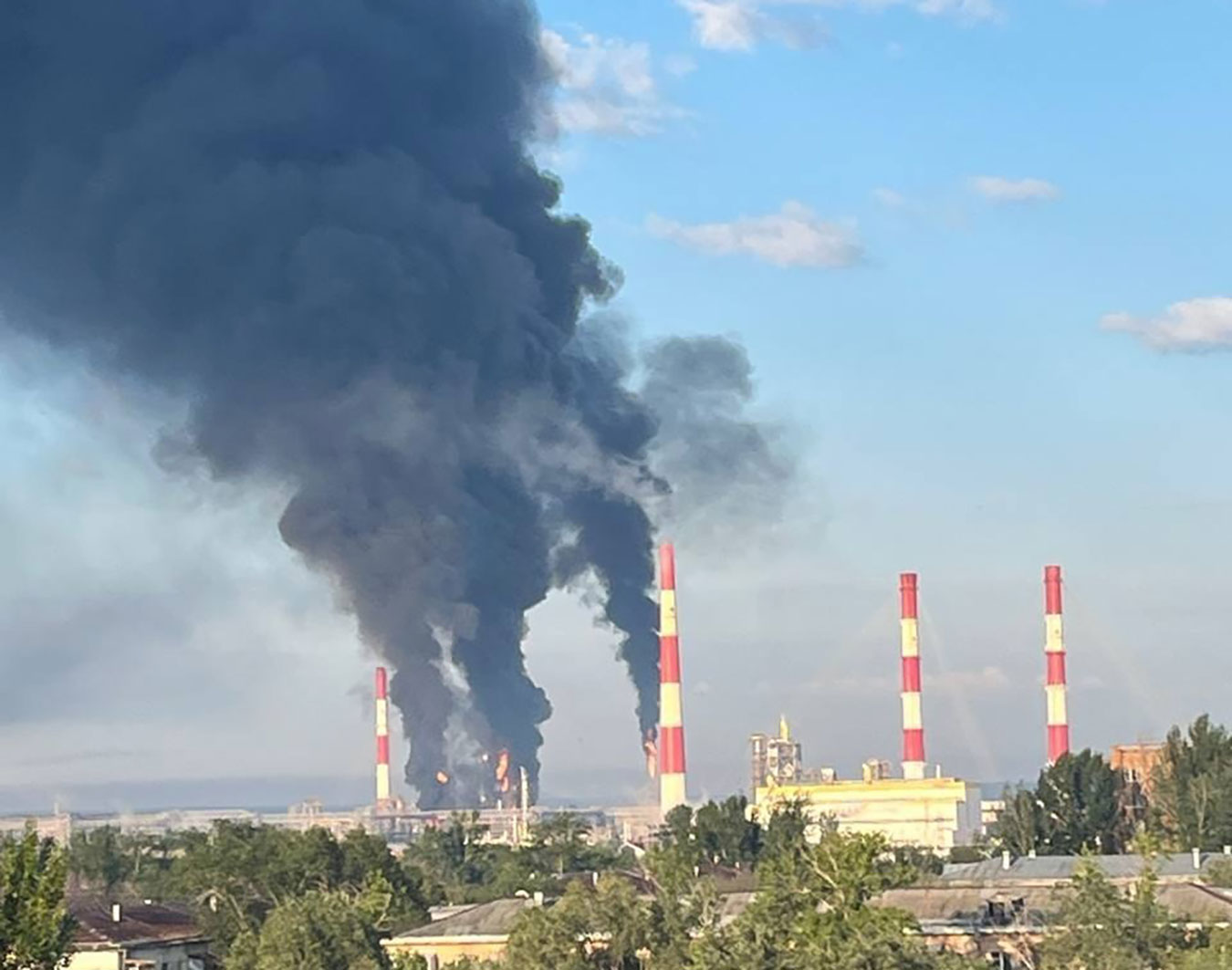
Smoke rising from the Novokuibyshevsk oil refinery in Samara Oblast, Russia, 30 October 2026

Ukraine's Defense Forces hit the Novokuibyshevsk oil refinery in Russia's Samara Oblast with FP-1 drones early on 30 October, Ukrainian drone maker Fire Point said, adding that one of the units hit hydrotreats diesel fuel. The strike came hours after WSJ reported that Ukraine had paused strikes on Russian refineries under pressure from US President Donald Trump until after the US midterm elections on 3 November.

Russia is pounding Ukraine's power grid and cities ahead of winter, with a mounting civilian toll, including 14 people killed on a Dnipro railway platform on 29 October. Ukraine's long-range drone strikes on Russian refineries, one of its most effective operations against Moscow, target the oil money that pays for that war. Trump has pressed Kyiv for weeks to stop them, blaming them for high global fuel prices, and Ukraine went quiet without saying so and without getting what it asked for in return, WSJ reported. The Samara strike is the first on Russian oil since then. Kyiv has not said whether the pause is over.

Fires spread across a refinery that makes jet fuel for Russia's military

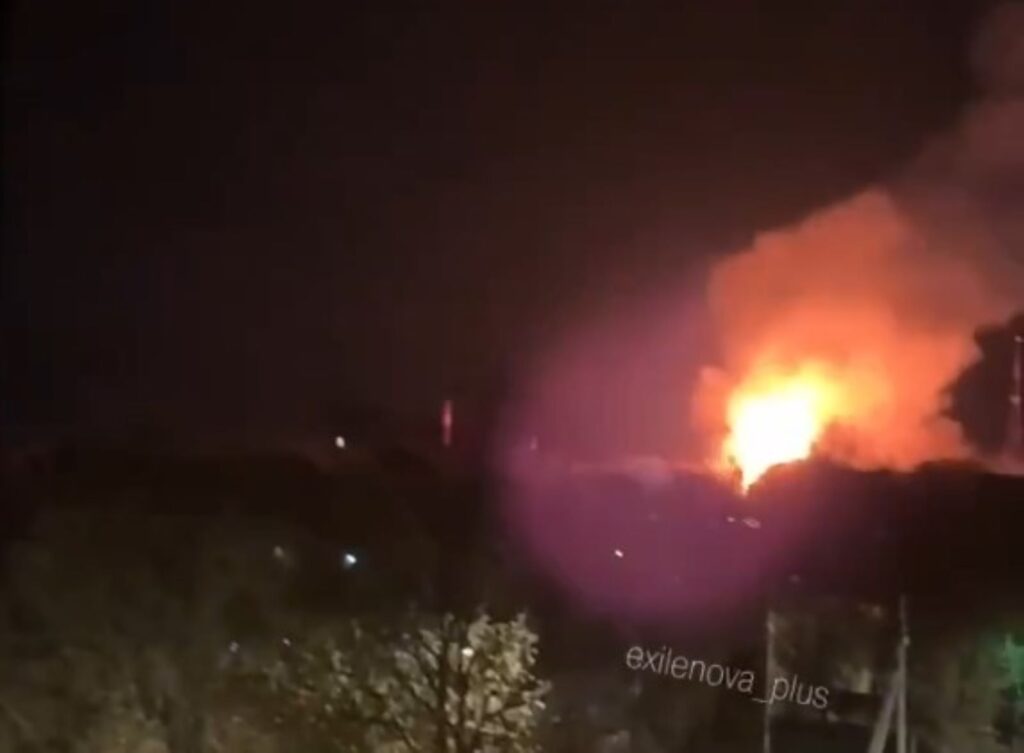
Residents of Novokuibyshevsk reported drones, explosions, and a fire before dawn. Ukrainian Telegram channel Exilenova+ posted the first photos on Telegram at 05:24 Kyiv time, and Russian Telegram channel Astra geolocated the fire to the refinery, citing its open-source analysis of residents' photos.

Novokuybyshevsk, Samara region: locals report an attack and a fire. pic.twitter.com/9UEgqmkAOU

— Exilenova+ (@Exilenova_plus) October 30, 2026

By morning, Exilenova+ counted at least 11 separate fires at the refinery. Samara Governor Vyacheslav Fedorishchev said air defense and mobile fire groups were repelling an attack, Astra reported. The region had declared a drone alert and closed its airport.

Smoke rising from the Novokuibyshevsk oil refinery in Samara Oblast, Russia, 30 October 2026
Smoke rising from the Novokuibyshevsk oil refinery in Samara Oblast, Russia, 30 October 2026. Photo: Exilenova+

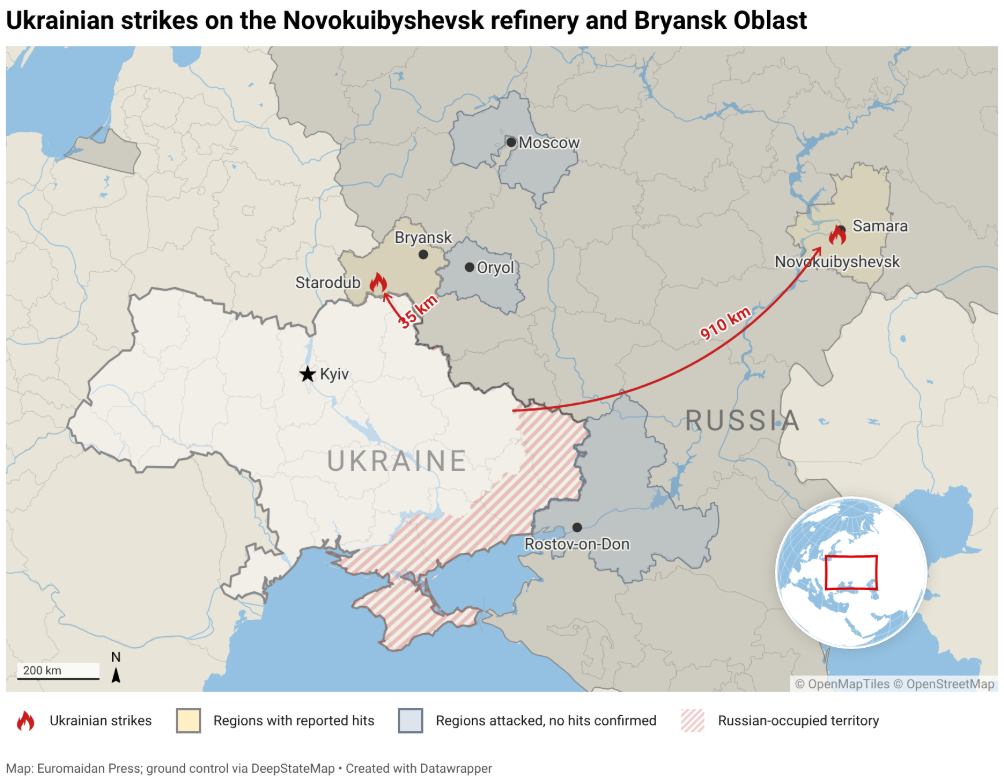
Fire Point said its FP-1 drones scored numerous hits on the refinery grounds, and that one of the units hit hydrotreats diesel fuel. The footage published so far shows several smoke columns over the plant but does not show which units burned. The Rosneft-owned refinery has a design capacity of 8.8 million tons of oil a year and is one of the main producers of jet fuel, according to its website. Astra says it supplies jet fuel to Russia's military. The plant lies about 910 km from the front line. Ukraine's General Staff has not commented.

pic.twitter.com/Ku6KRCKJ6v

— Exilenova+ (@Exilenova_plus) October 30, 2026

Ukrainian drones have hit the plant before. Ukraine's military said its forces hit it in August and caused a fire.

Map showing the Novokuibyshevsk refinery in Samara Oblast, about 910 km from the front line, and Starodub in Bryansk Oblast

It is the first fire at a Russian refinery since 15 October, when Ryazan's governor reported one at the city's refinery. It is also the first reported strike on Russia's oil industry since 20 October, when Ukrainian drones hit a Druzhba pipeline pumping station in Tambov Oblast. WSJ called that strike the last before the pause.

rosneft's kuibyshev refinery joins syzran novokuibyshevsk offline after ukrainian drone strike yesterday · post fires raging kuybyshevsky oil samara russia 10 2026 fires-rage-at-samara-kuybyshevsky-oil-refinery ukraine news reports
Explore further

All three Rosneft Samara refineries now offline or reduced as drones halt Kuibyshevsky operations yesterday

WSJ claims: Ukraine paused refinery strikes until after the US midterms

Ukraine's military paused its strikes on Russian refineries after weeks of pressure from Trump shook Kyiv's confidence in US support, people with knowledge of the operations told WSJ. The unofficial pause began early last week and is expected to last until after the midterms, and possibly deeper into November. Units carrying out long-range strikes were told in mid-October that the refinery campaign was effectively on hold once missions already under way were completed, two military officials said. Hours after the report, the Novokuibyshevsk strike called that account into question.

Smoke columns rise over residential buildings in Novokuibyshevsk, Samara Oblast, Russia, at dawn on 30 October 2026
Smoke columns rise over residential buildings in Novokuibyshevsk, Samara Oblast, Russia, at dawn on 30 October 2026. Photo: Astra

Ukraine's government has not announced a pause. Zelenskyy told reporters in Kyiv on 27 October that “our guys tried to be a little more careful during these days. But they do not have an order” not to hit refineries, according to WSJ. He said drone units were hitting other kinds of targets in Russia.

Trump's envoy Jared Kushner repeated the demand to stop the strikes at a meeting with Zelenskyy in Oslo on 20 October, two US officials told WSJ. One of them called the conversation “very tough.” Kushner, who joined remotely, said he and envoy Steve Witkoff were spending a lot of time, energy, and jet fuel on mediating with Moscow, and that a 30-day pause on refineries would be a way for Ukraine to show gratitude, the official said.

again trump presses zelenskyy stop russian refinery strikes · post ukrainian president volodymyr meets donald ankara türkiye 8 2026 presidentgovua ukraine news reports
Explore further

Energy truce with strings attached: Kyiv reportedly told to spare Russian refineries or lose US intelligence and arms

Zelenskyy had asked for something in return, WSJ reported: a mutual energy ceasefire with Russia, Patriot missiles for Ukraine's grid, or permission to use Starlink inside Russia so drones could destroy Russian missile launchers. None of those ideas got far. Some of Kyiv's European backers also nudged Zelenskyy to pause until after the midterms, a senior European official said.

The pause showed in Russia's oil industry. Russian refinery utilization at the end of October was 25% higher than at the start of the month as drone attacks subsided, Reuters reported, according to The Moscow Times.

Russia claims over 1,000 drones for a second night as Moscow's airports close again

Russia's Defense Ministry said it downed 1,043 Ukrainian drones overnight over 19 regions, including Samara Oblast, the Moscow region, and Tatarstan. The night before, it claimed 1,214.

Moscow Mayor Sergei Sobyanin stated that 862 drones flew toward the Moscow region between 20:30 on 29 October and 07:30 on 30 October, that most were downed on the far approaches, and that 170 were downed on approach to the capital. Russia's aviation agency restricted flights at all four Moscow airports, Astra reported. A day earlier, more than 460 flights were delayed or canceled at Moscow and St. Petersburg airports, Astra counted.

A building on fire at night in Starodub, Bryansk Oblast, Russia, 30 October 2026
A building on fire at night in Starodub, Bryansk Oblast, Russia, 30 October 2026. Readers who sent the footage to Astra identified it as the Konservsushprod food plant. Photo: Astra

In Starodub, in Russia's Bryansk Oblast, about 35 km from the Ukrainian border, a building of the Konservsushprod plant, which makes canned food for the Russian army, appeared to be on fire in readers' photos and videos, Astra reported, saying the plant was presumably attacked and that its open-source analyst had not verified the footage. The Atesh partisan movement reported a blast in Aleksandrovka in Rostov Oblast, and air defense fire and an explosion in Orel.

  •  

Drones reportedly hit a Russian weapons plant near Moscow that Washington and Kyiv sanctioned

drones reportedly hit russian weapons plant near moscow washington kyiv sanctioned · post fire jsc 75 arsenal serpukhov oblast 22 2026 exilenova+ ukraine news ukrainian reports

An explosion hit the 75th Arsenal, a Russian army plant in Serpukhov south of Moscow, overnight on 22 October, Russian Telegram channel Astra reported. Russian officials also claimed drone attacks on the Moscow region, Tula, and Lipetsk that night.

As Russia presses its full-scale invasion, Ukraine’s long-range drones and missiles keep hitting military plants and refineries deep inside Russia. Ukrainian outlet Militarnyi says this plant specializes in repairing Buk and S-300 air defense systems. Astra describes it more broadly, as making weapons and ammunition and repairing military equipment. If Militarnyi is right, the blast hit a site that fixes Russian air defenses. It came the night Moscow’s mayor credited air defenses with stopping hundreds of drones.

Blast at the arsenal

An Astra OSINT analyst placed the explosion inside the site from a video, the channel said. Residents claimed in local chats that blasts followed passing drones, then at least three missiles. Astra did not confirm the missile count. Serpukhov lies about 99 km south of Moscow. Ukraine has sanctioned the plant, and the US Treasury has listed it too. As of the morning of 22 October, no Russian official had confirmed the blast.

More footage of the attack on the arsenal in Serpukhov. We are awaiting satellite images. pic.twitter.com/tTsgc18W3L

— Exilenova+ (@Exilenova_plus) October 22, 2026

630 drones, by Moscow’s count

Moscow Mayor Sergei Sobyanin claimed that 630 drones flew toward the Moscow region from 20:30 on 21 October to 04:00 on 22 October. He claimed most were destroyed far out and 163 were neutralized on approach to Moscow. Two people were injured in Voronovo, in New Moscow, he stated.

Tula Oblast Governor Dmitry Milyaev claimed air defenses downed 70 Ukrainian drones over his region. Private homes were damaged in Tula and the Zaoksky district, he stated.

Lipetsk governor claims homes and a clinic damaged

Earlier in the night, Ukrainian monitoring channel Exilenova+ posted footage of commotion in Lipetsk after explosions. Lipetsk Oblast Governor Igor Artamonov claimed a drone strike damaged homes, apartment blocks, and a closed polyclinic. A man born in 2001 was injured and hospitalized, Artamonov claimed.

Lipetsk, moment of the explosion. https://t.co/wCX6GVThQr pic.twitter.com/bGwGLbUm2d

— Exilenova+ (@Exilenova_plus) October 21, 2026

In May, Ukrainian intelligence said Russia was deploying more regiments against strike drones. In September, Ukrainian units hit more Russian air defense systems and radars than in any month since 2024, Ukraine’s Defense Ministry said. Analyst Oleksandr Kovalenko counted 76 destroyed in September with days of the month still to go and argued Russia cannot replace such losses. If Militarnyi’s description holds, losing repair capacity would deepen that gap.

  •  
❌