Connexion
British man killed fighting for Russia in Ukraine
24 août 2026 à 20:19

© Telegram

© Telegram

The UK is the first country outside of Ukraine to get access to Kyiv’s ‘Avengers’ database
© AFP/Getty
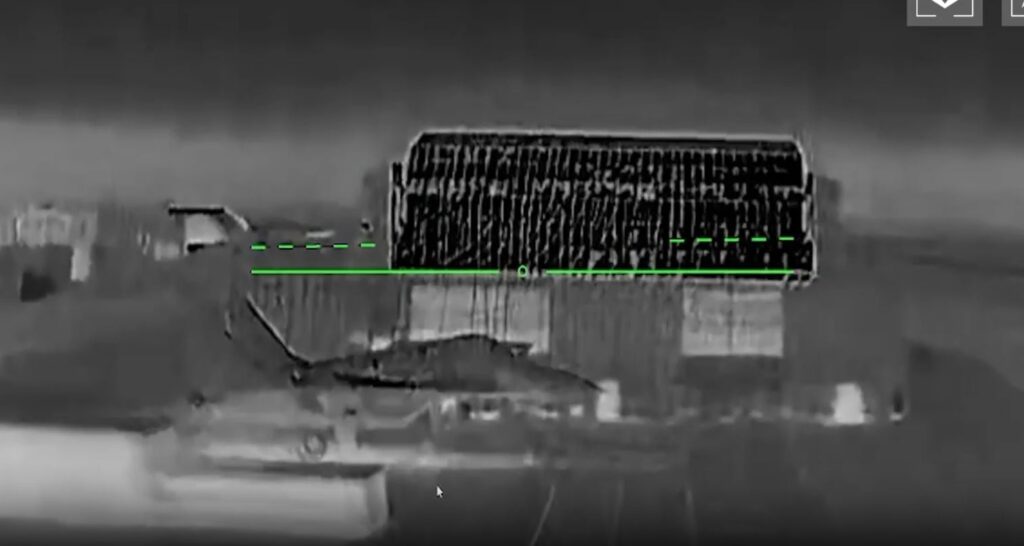
Ukrainian drones worked over dozens of Russian military and industrial sites overnight on 24 August, reaching from occupied Ukraine and the Black Sea to southern Russia, the commander of Ukraine's Unmanned Systems Forces (SBS) reported. The night's targets included a fighter jet at a Russian airbase, air-defense radars, fuel and propellant facilities, and vessels of Russia's sanctions-evading shadow fleet. A fuller breakdown released later in the day named the site of each strike and the unit that carried it out. Footage released with the breakdown shows the strikes.
Ukraine has been running mid-range strikes across the belt from occupied Crimea to Rostov Oblast for months, taking out the radars, missile batteries, and the aircraft that fly air-defense patrols over it — a rolling effort to thin the cover that meets every deeper Ukrainian strike.
Robert Brovdi, callsign Madyar, said his crews hit 66 targets in the operational depth of the Russian rear. Among them was a MiG-29 at Dolotinka, on the grounds of the Millerovo airbase in Rostov Oblast. The 1st Separate Center of the SBS carried out that strike.
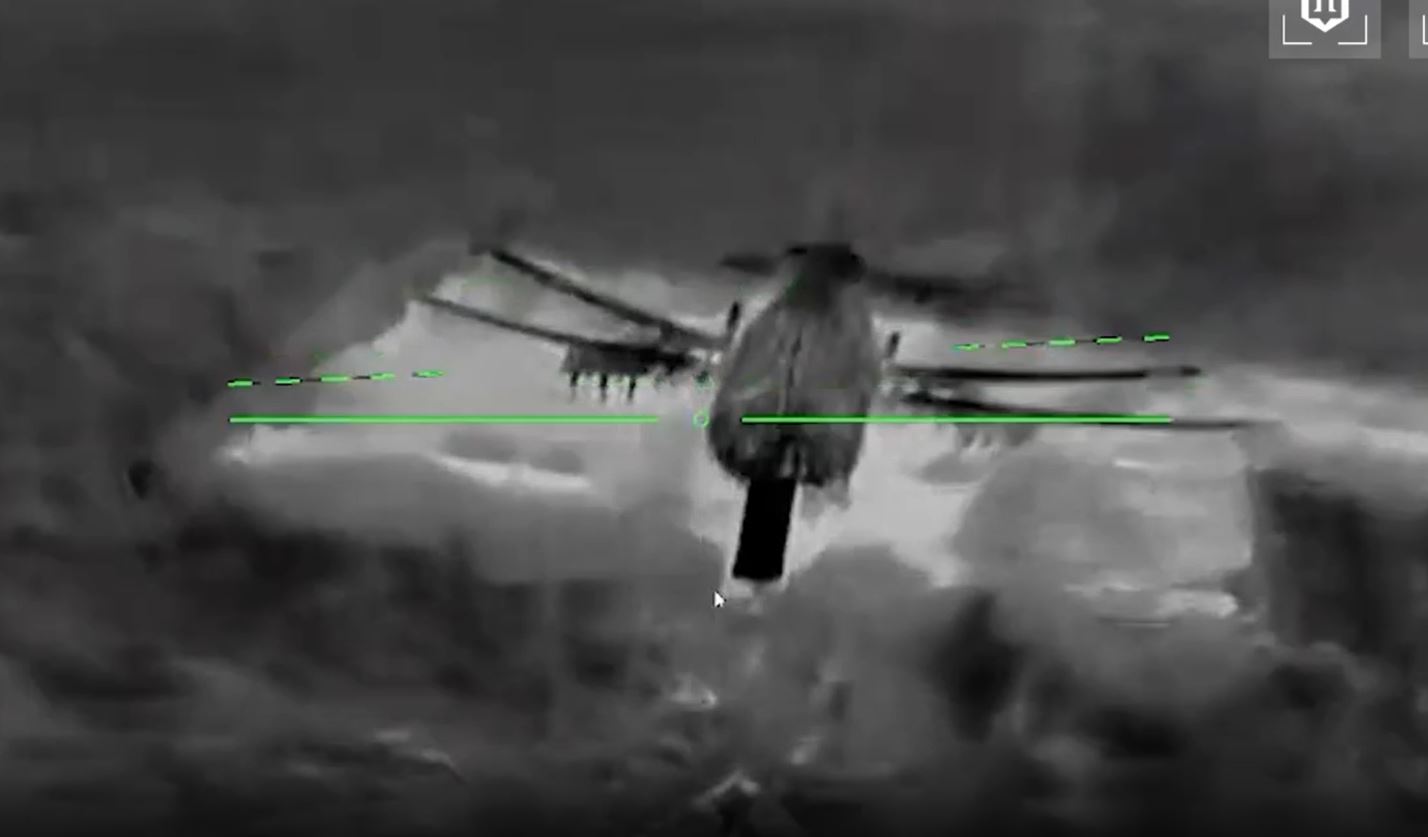
The same unit hit a mockup of a Ka-52 Alligator attack helicopter at the same location. Russia uses such decoys to draw drones away from real aircraft.
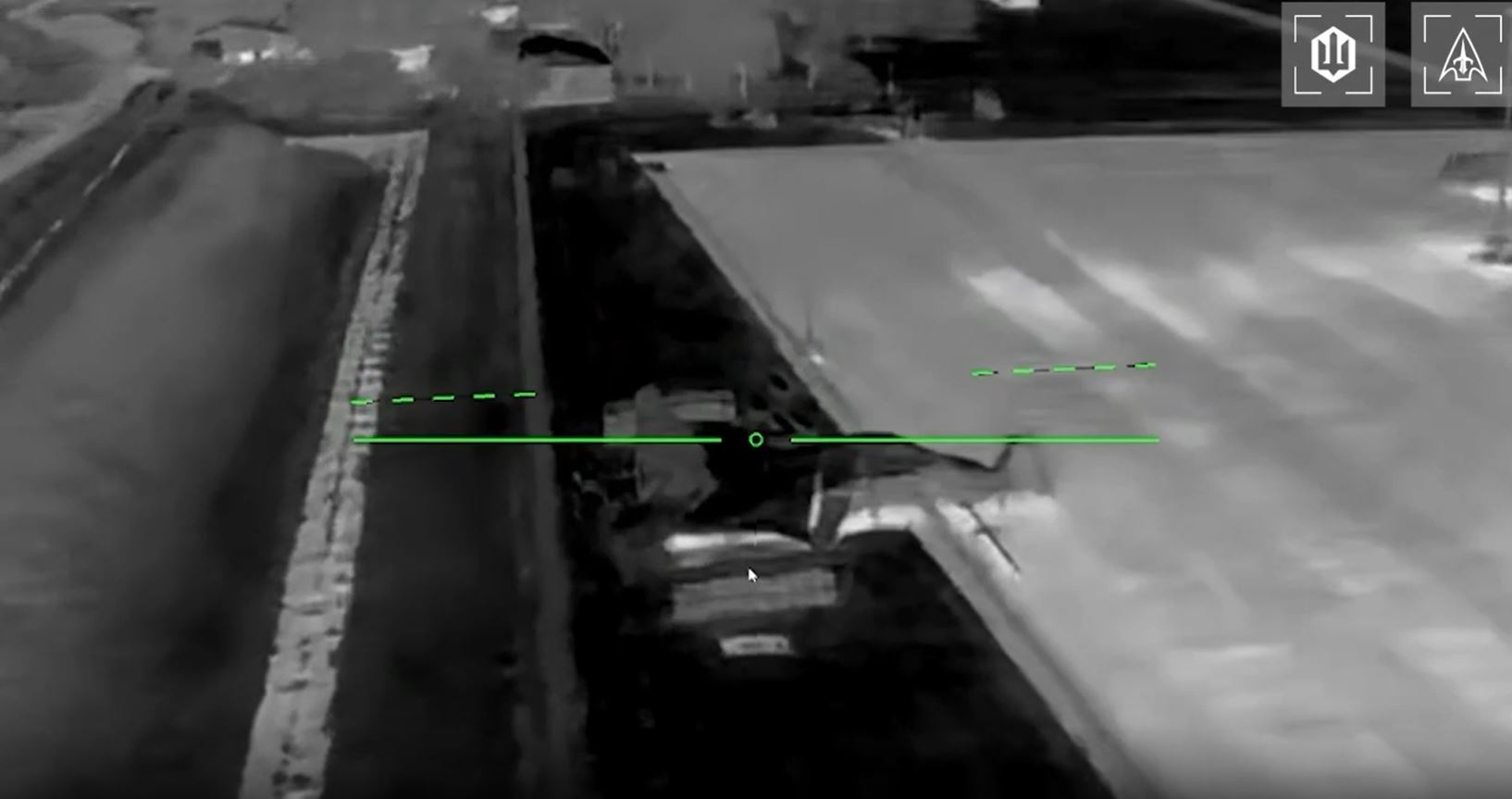
It was the third Russian fighter jet Ukrainian drones reached in two days. Crews struck another MiG-29, a jet SBS identified as a Su-33 and Militarnyi assessed as a Su-30SM, and an Orion strike-reconnaissance drone at Vityazevo in Krasnodar Krai on 23 August. Ukrainian drones have caught a MiG-29 on a Russian airfield before, at Kursk in July.
Crews hit four radar systems overnight. Two Kasta-2E2 sets went down at Geraskin and Karaichev in Rostov Oblast, and a Nebo-SV at Gukovo in the same oblast. All three fell to the 1st Separate Center.
The fourth, an ST-68, stood at Rozdolne in occupied Crimea. The 9th Kairos battalion of the 414th Madyar's Birds brigade struck it.
The radar work is part of a campaign against Russian sensors and launchers that has run for months without a pause.
The 1st Separate Center struck the Kamensky Combine at Kamensk-Shakhtinsky in Rostov Oblast, a plant producing solid rocket fuel, according to SBS. The 9th Kairos battalion hit a fuel tank at Yeysk in Krasnodar Krai. In occupied Luhansk Oblast, the 20th K-2 brigade struck a fuel depot belonging to the 106th material support brigade of Russia's 41st Army at Dovzhansk.
Brovdi also said his crews hit and destroyed two shadow-fleet vessels, a tanker and a bulk carrier, in the Black Sea. No independent account of either loss has appeared.
In occupied Kherson Oblast, Ukrainian crews destroyed the quarters of a Russian National Guard rapid-response unit and hit two relay stations for Geran attack drones, according to the SBS breakdown.

They also struck a shelter for a Zala reconnaissance drone crew in occupied Crimea, a drone school in occupied Zaporizhzhia Oblast, and a drone laboratory in occupied Donetsk Oblast.
Brovdi also reported 11 Russian rear deployment points burning across occupied Zaporizhzhia, Donetsk, and Luhansk oblasts, along with strikes on energy nodes in occupied territory.

Russian forces have gained ground on the eastern approaches to Sloviansk and continue to prioritize an eastern route toward the city, according to the Institute for the Study of War (ISW). Their earlier push from the northeast had bogged down, and Russia now aims to set up a future assault on one of the last major cities Ukraine still holds in Donetsk Oblast. A quick move on the city itself remains extremely unlikely, ISW said.
Russia's 2026 summer campaign in the east has advanced through field edges and small villages rather than the breakthroughs the Kremlin keeps promising, the grinding pattern that has defined the fighting across Donetsk Oblast for years.
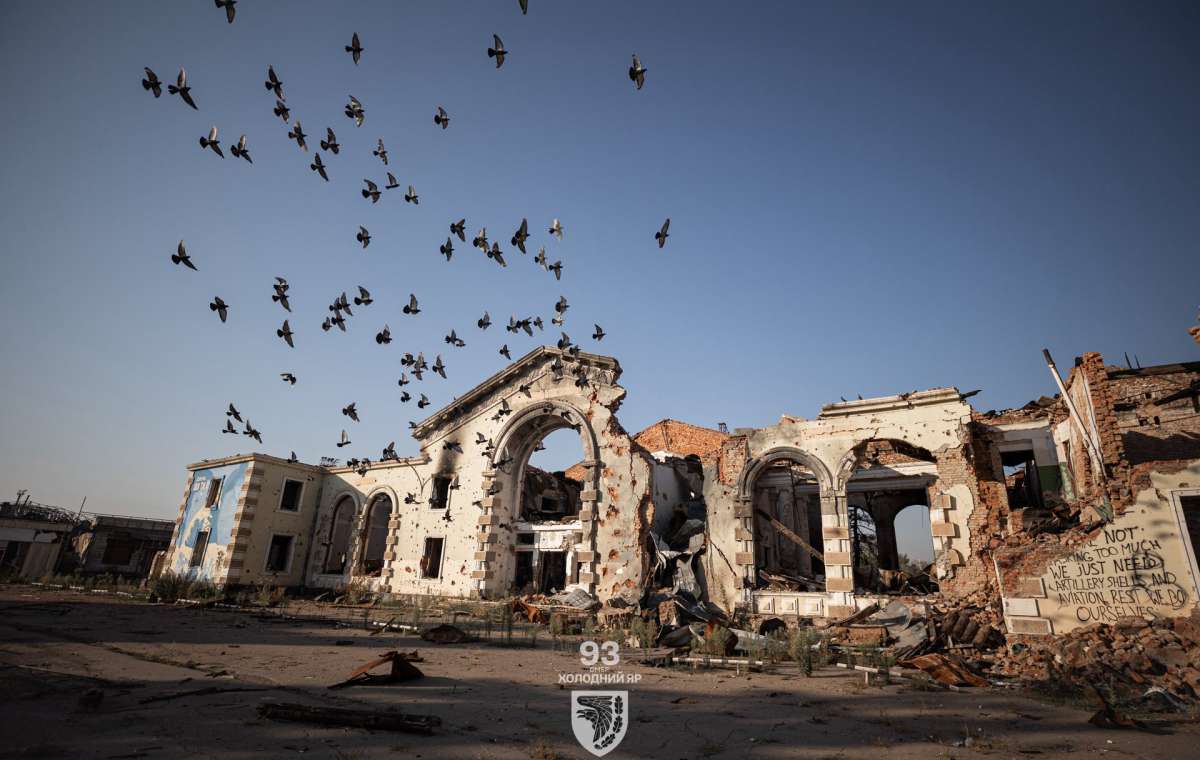
Ukrainian military observer Kostiantyn Mashovets reported that Russian forward units are advancing across several tactical areas at once in the Sloviansk direction. He said the command of Russia's 3rd Combined Arms Army rushes assault infantry forward right after each successful infiltration. Russian troops reached the southeastern edge of Pyskunivka, east of Sloviansk, from the east and northeast, moving off positions they had seized on the southern bank of the Siverskyi Donets, Mashovets said. Zakitne lies northeast of Pyskunivka and Kryva Luka southeast of it, and ISW read the advance as evidence Russia has consolidated positions in both.
They also infiltrated the southern and southeastern outskirts of Mykolaivka from western Rai-Oleksandrivka. ISW assessed that Russia is running a dual effort to connect its units near Kryva Luka with those at Rai-Oleksandrivka, so it can assault Mykolaivka from dominant terrain to the east and south at once. Mashovets added that other Russian groups slipped through three settlements along the E-40 Bakhmut-Sloviansk highway, trying to hold the western bank of the Siverskyi Donets-Donbas Canal and reach the river just east of the city.
ISW observed reports on 23 August that Ukrainian forces repelled a Russian infiltration attempt in Mykolaivka.
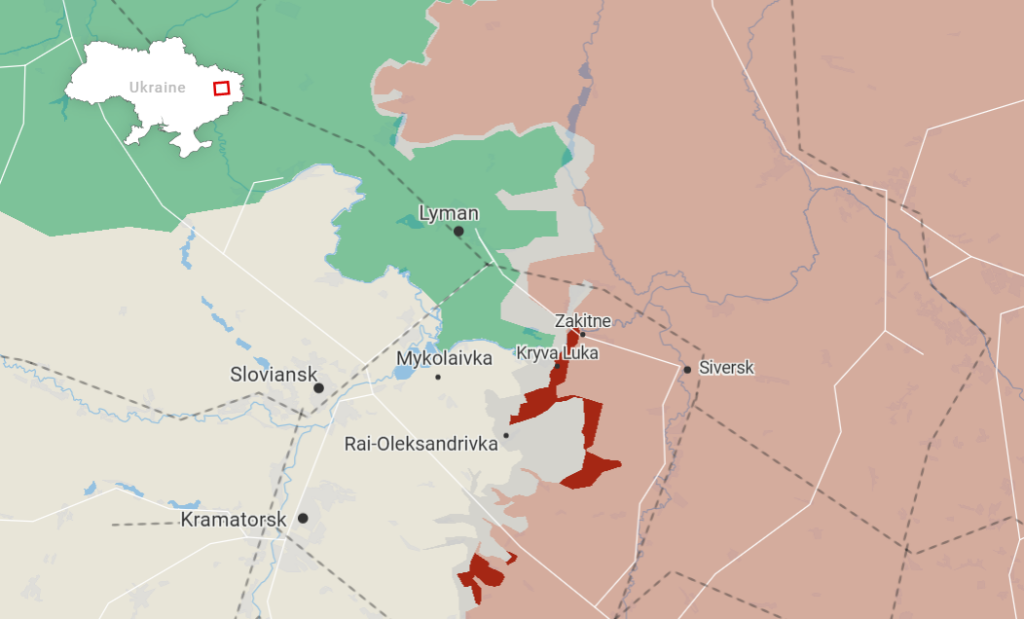
Oleksandr Borodin, spokesperson for Ukraine's 3rd Army Corps, said the Lyman direction falls in his corps' zone and that Russia's goal there is to half-encircle the Sloviansk-Kramatorsk agglomeration from the flank—first securing bridgeheads across the rivers, then cutting logistics. He called those plans unrealistic:
"We have quite serious defensive positions there and have been preparing for a long time. The capabilities they currently have to try to accomplish this task are insufficient even to come close to achieving such a goal."
Russia prioritized attacking Sloviansk from the northeast through Lyman when it opened its spring-summer 2026 offensive, but that effort has largely stalled. The Siverskyi Donets River, which loops north and northeast of the city, together with a web of canals, handed Ukrainian defenders a natural moat. So Russian commanders now treat Mykolaivka as a key prize. Taking it would let them strike west toward Sloviansk from the east, skirting the water obstacles that blocked the northeastern route.
Sloviansk anchors the northern end of Ukraine's Fortress Belt, a chain of fortified cities that has blunted Russian advances in Donetsk Oblast since 2014. ISW cautioned that Russian forces are extremely unlikely to make fast gains west of Mykolaivka, since they still need to seize several more settlements first.
Ukraine's President Volodymyr Zelenskyy said on 23 August that Putin has ordered his army to seize all of Donetsk Oblast by 31 December. By ISW's count, it is the 15th such deadline since 2022, and Russia has missed every one that has come due.
Zelenskyy put Russia's frontline casualties this year at around 267,000, including about 155,000 killed, and said 70% to 80% of them fall in the Kostiantynivka direction. Russia holds about 79.89% of Donetsk Oblast, by ISW's count, and Zelenskyy said the Kremlin is preparing to mobilize around 300,000 men after the 18–20 September State Duma elections, partly to reinforce Donetsk and Luhansk oblasts.
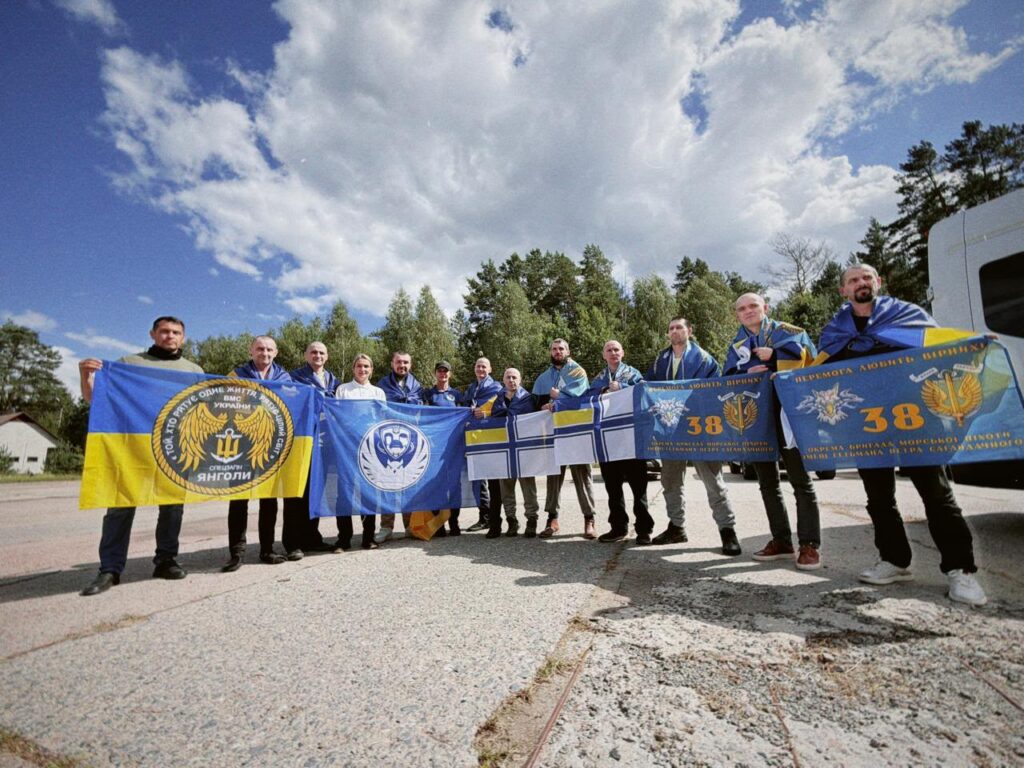
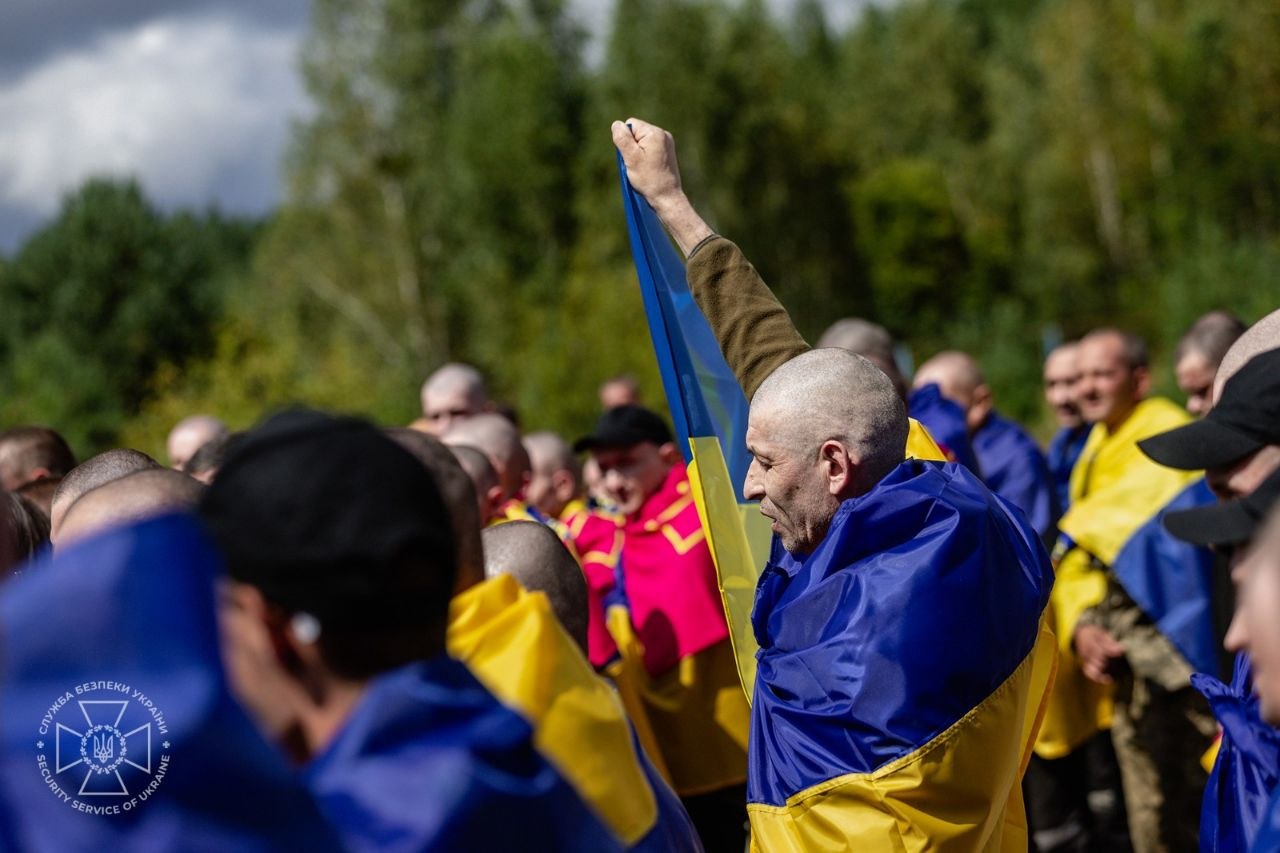
Ukraine brought a small group of servicemen home from captivity on 24 August, its Independence Day, and every one of them had been carried as missing in action, Ukrainian President Volodymyr Zelenskyy announced. The men crossed back through Belarus as a separate stage of the exchange now under way. Ukraine's prisoner-of-war agency later set out who they were.
Amid Russia's all-out war in Ukraine, prisoner swaps remain one of the few Ukrainian-Russian mechanisms still producing results while every negotiating track on territory and ceasefires stays deadlocked, which leaves each completed stage as the practical measure of what still passes between two governments that agree on nothing else.
President Zelenskyy said Ukraine was bringing back 10 of its soldiers through Belarus. They serve in the Armed Forces and the National Guard, and they defended the country in the Donetsk sector in the east. He called it a special stage of the exchange.
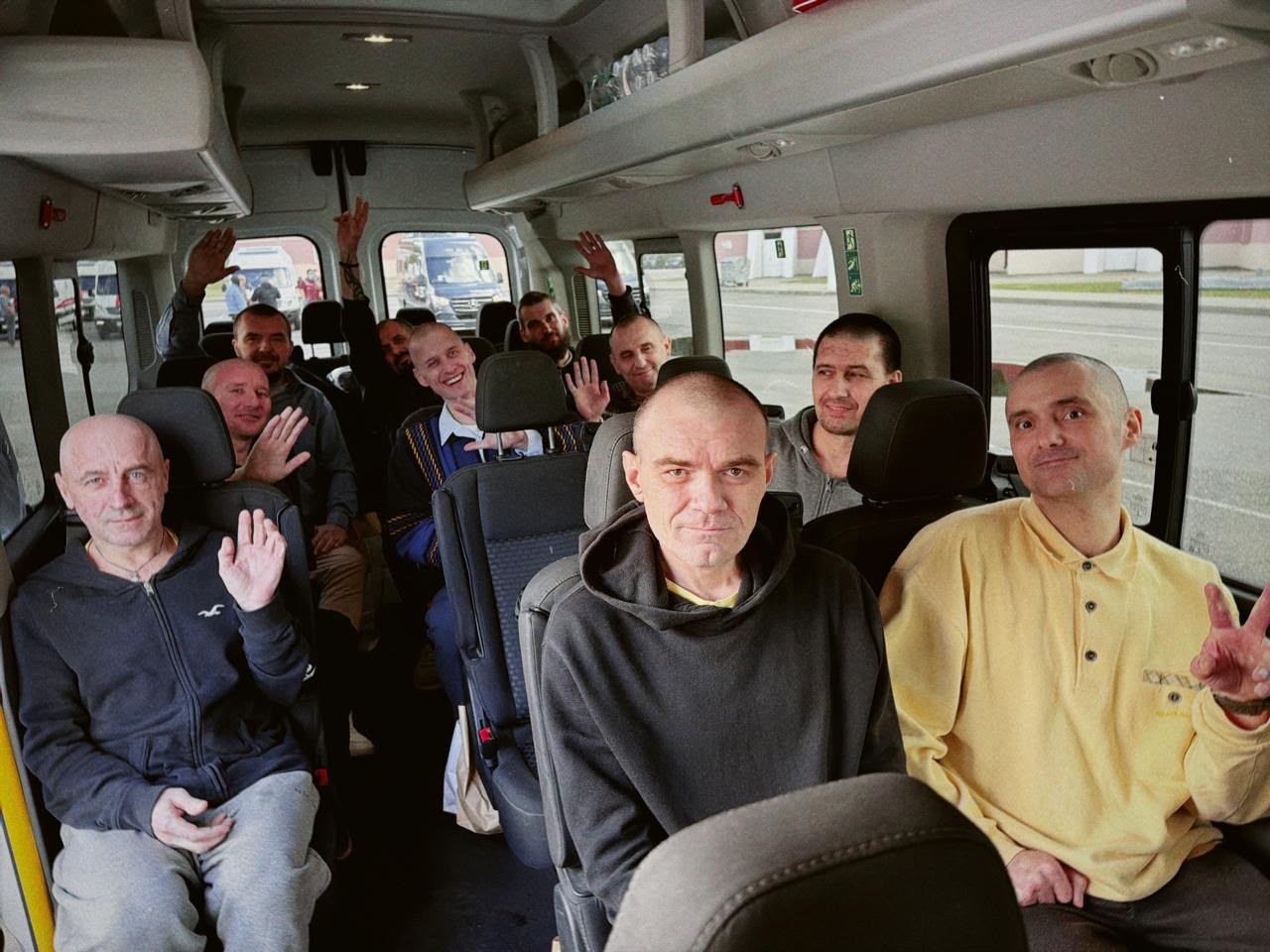
The Coordination Headquarters for the Treatment of Prisoners of War, the state body that runs Ukraine's exchanges, specified the details in the afternoon. The freed men hold the ranks of sergeant, soldier, and sailor. All 10 had been logged as missing rather than captured.
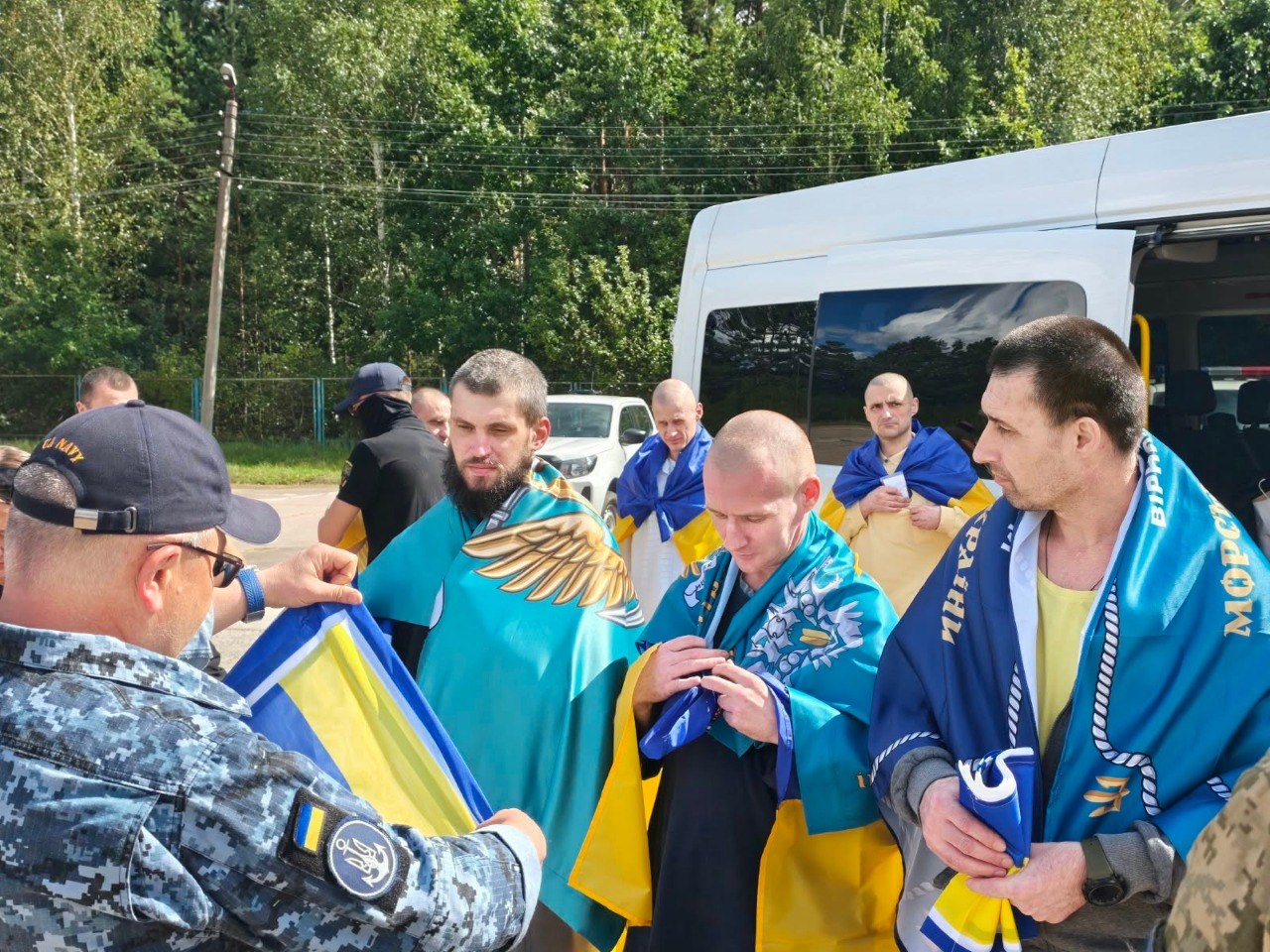
Two had been listed as missing since 2024, the other eight since 2025. The agency said the handover came out of talks run by its own exchange working group. It described the return as the second stage of the current exchange.
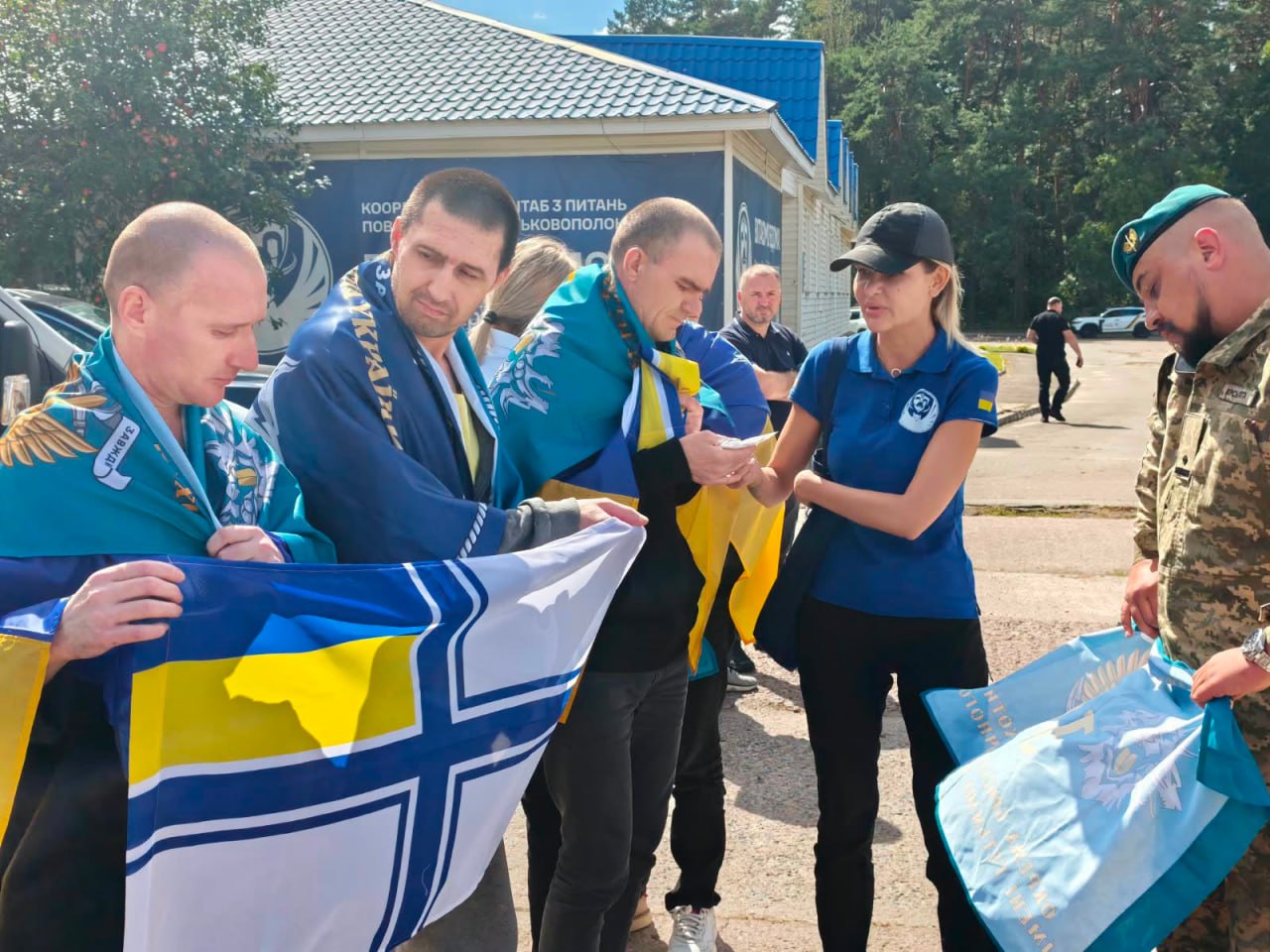
The first stage ran on 19 August and brought back 103 servicemen.
Locating Ukrainian captives inside Russia or the occupied territories is often difficult, as is verifying their identities, because Russia withholds data on captured soldiers and civilian hostages. Former detainees describe beatings, electric shocks, mock executions, and refusals of medical care, and civilians held without trial report the same treatment as the soldiers.
Roughly 7,000 Ukrainian service members were in Russian captivity as of May 2026, with civilian detainees estimated at 10,000 to 20,000. Ukraine had returned 9,606 military personnel and civilians through exchanges by late June.
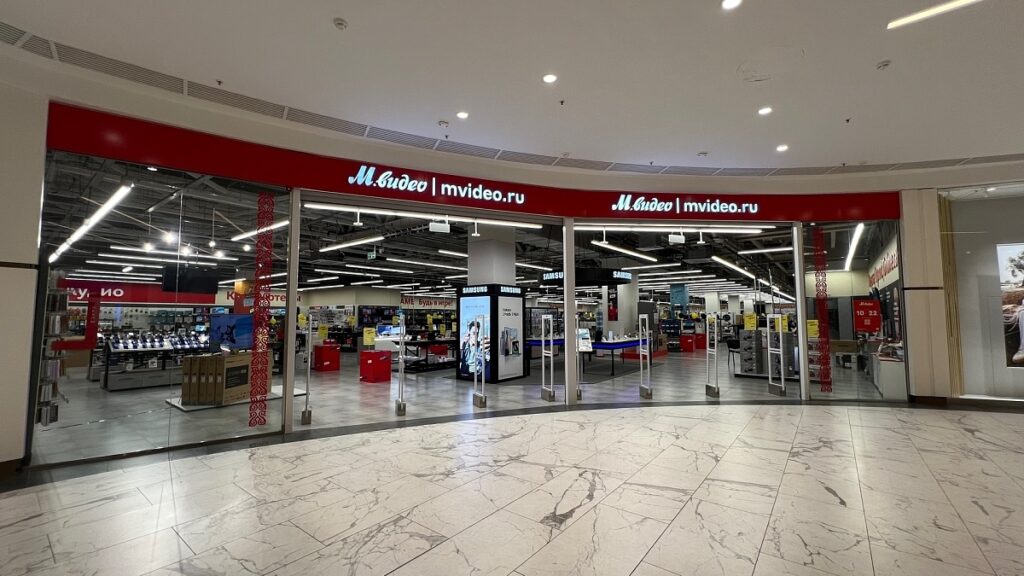
Independent businesses selling through M.Video, Russia’s largest electronics chain, waited months to receive customer payments for goods already sold. One seller received it only after filing a formal demand that usually precedes a lawsuit, according to a Vedomosti report.
The sellers are independent businesses using M.Video’s website as their storefront. Under M.Video’s seller contract, a customer buys from the independent business while M.Video collects the payment as the seller’s agent.
The business pays M.Video a commission for listing the product and handling payment and delivery. Until M.Video transfers the proceeds, the seller has already handed over the product but has not received the money from the sale.
Sellers said payments for goods sold in May and June were still missing in August. One sent M.Video a formal demand on 13 August, giving the company five days to pay and waiving interest. The money arrived on 18 August.
Another business said its demand went unanswered, while its assigned manager stopped responding. It continued shipping orders until mid-July because M.Video had promised to transfer payment for its May sales.
Similar complaints had already surfaced two months earlier. M.Video told ABN that transfers were regular, but rapid growth sometimes required additional checks before funds could be released. The same report cited a business that had waited 24 working days after approving its sales statement; its previous transfer had also arrived late.
Independent sellers are taking a larger role in M.Video’s business. M.Video’s annual results show that products from these sellers accounted for one in every ten orders in 2025. According to its half-year marketplace update, turnover from these businesses quadrupled year-on-year as M.Video expanded beyond electronics. The number of products listed grew nearly sixfold.
The shift follows heavy losses in M.Video’s store-based business. M.Video’s annual results show that it lost about 64 billion rubles (about $770 million)—nearly one-fifth of its annual revenue. The chain closed hundreds of underperforming stores and opened only 11.

The European Commission approved €6.1 billion ($7.12 billion) in new defense procurement for Ukraine on 24 August, covering air and missile defense systems, missiles, ammunition, and radars. European Commission President Ursula von der Leyen announced the decision as Ukraine marked its Independence Day.
Russia's intensifying missile campaign has outpaced what Ukraine's partners can supply, and Europe is now financing the systems its own industry can build while the scarcest interceptors stay in American hands.
The funding is part of the EU's €90 billion ($105 billion) Ukraine Support Loan for 2026-27, with €60 billion allocated to defense and €30 billion for budgetary support. The new package comes on top of €16 billion in previously approved defense procurement. Reuters put the disbursed total at €8.35 billion.
On 30 June, the European Commission disbursed €3.9 billion as the first payment under a first tranche of around €6 billion dedicated to drone procurement. On 15 July, it disbursed €1.1 billion, and on 30 July another €3.47 billion for drones, missiles, air defense, and Gripen fighter jets. The Commission's own three defense-window payments add to €8.47 billion.
Most of the buying will be from EU defense companies, and the Commission said deliveries will mean drawing down stockpiles, reprioritizing orders, and raising production. Under the mechanism, Ukraine submits signed contracts with defense companies, and the Commission reviews them before releasing funds.
Air defense is among Ukraine’s most urgent military needs as Russia steps up its aerial campaign. The European Commission said Ukraine faced 376 missile strikes in July alone.
Kyiv has repeatedly warned of shortages of interceptors, particularly for ballistic missiles. The shortfall traces to Washington: since the United States went to war with Iran, it faces its own Patriot shortage and has resisted releasing large numbers to Ukraine.
Ukrainian President Volodymyr Zelenskyy released figures ahead of the Independence Day meeting that show the scale: Ukraine received 675 Patriot interceptors in 2023 and 364 in 2025, while 264 are projected for 2026, against a request for at least 300 for the winter, according to Kyiv Post.
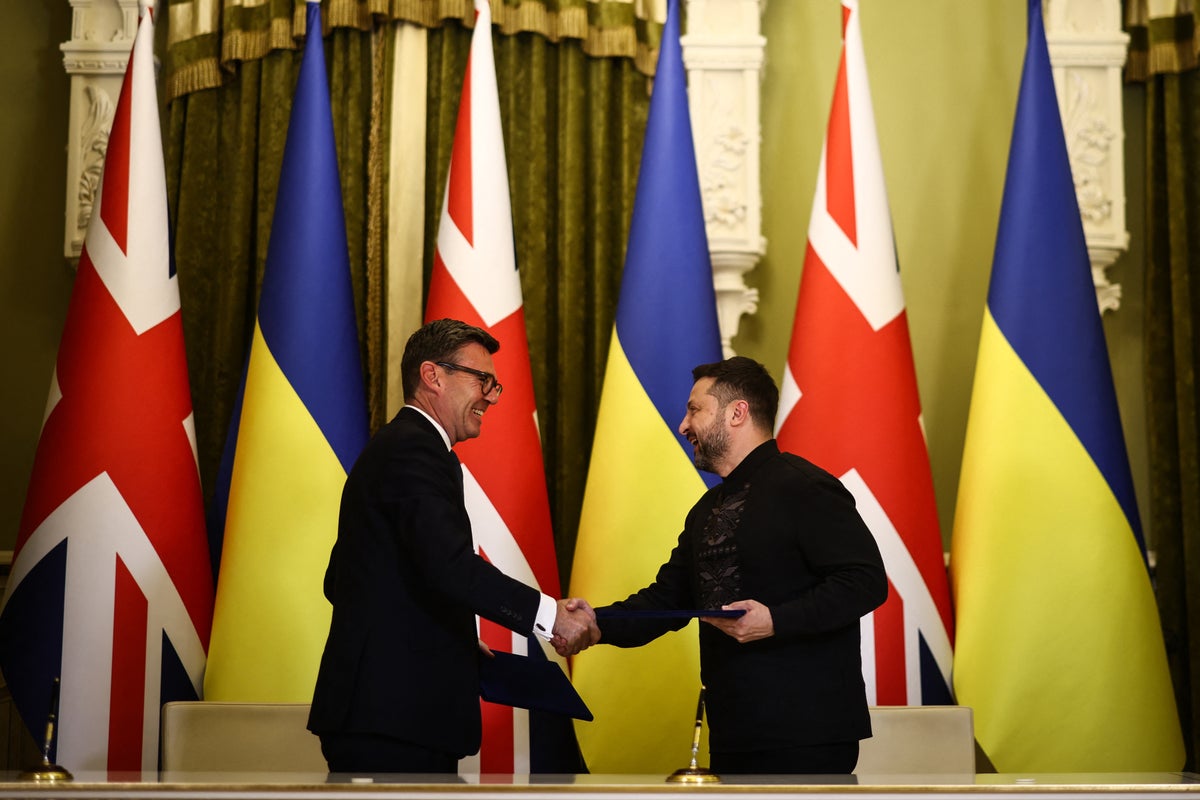
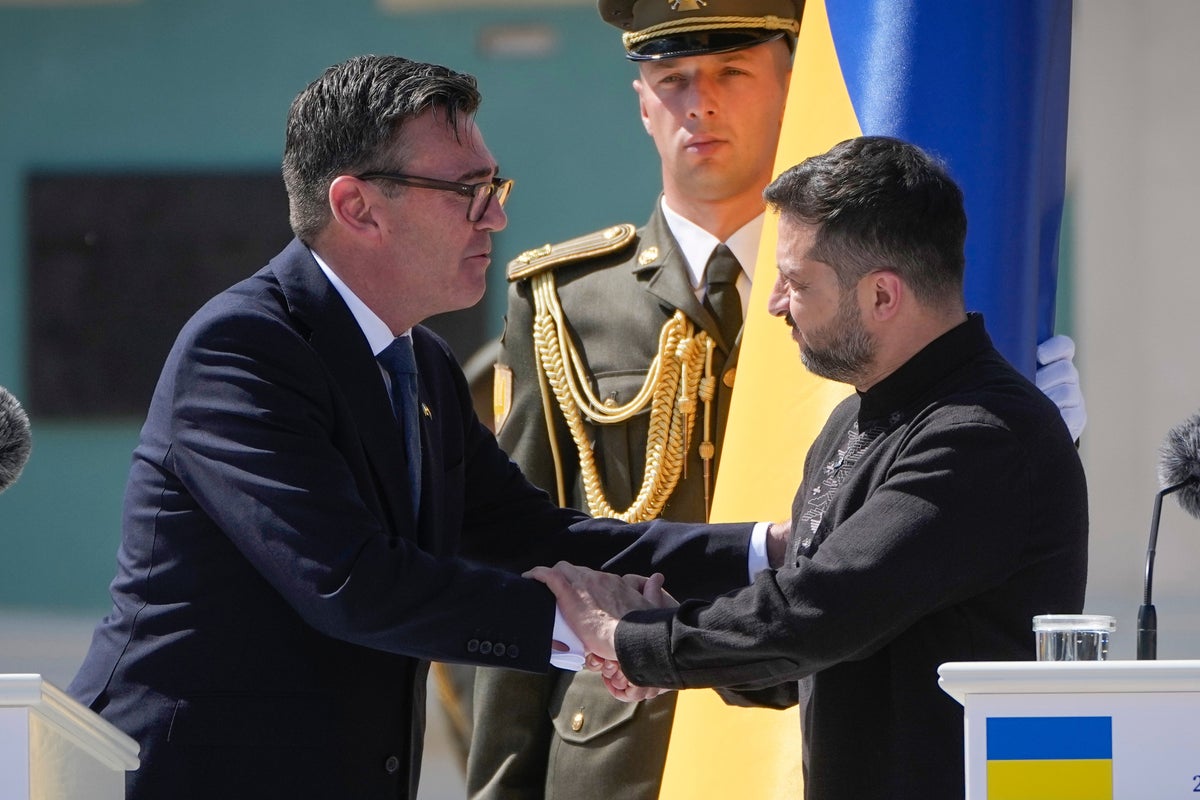
The announcement coincided with a hybrid meeting of the Coalition of the Willing in Kyiv. British Prime Minister Andy Burnham, German Chancellor Friedrich Merz, and French President Emmanuel Macron co-chaired the meeting, with Macron joining by videoconference, the Élysée Palace said. European Council President António Costa also took part, and NATO was represented by Deputy Secretary General Radmila Šekerinska.
Britain agreed to let defense firm MBDA release classified information on UK components of the long-range SCALP missile so Ukraine and France can set up local assembly lines, the UK government said. The EU decision followed Norway's pledge on 23 August to provide Ukraine with about $9 billion in support in 2027, including military, humanitarian, and financial assistance. Nordic and Baltic leaders announced the pledge during a visit to Kyiv.
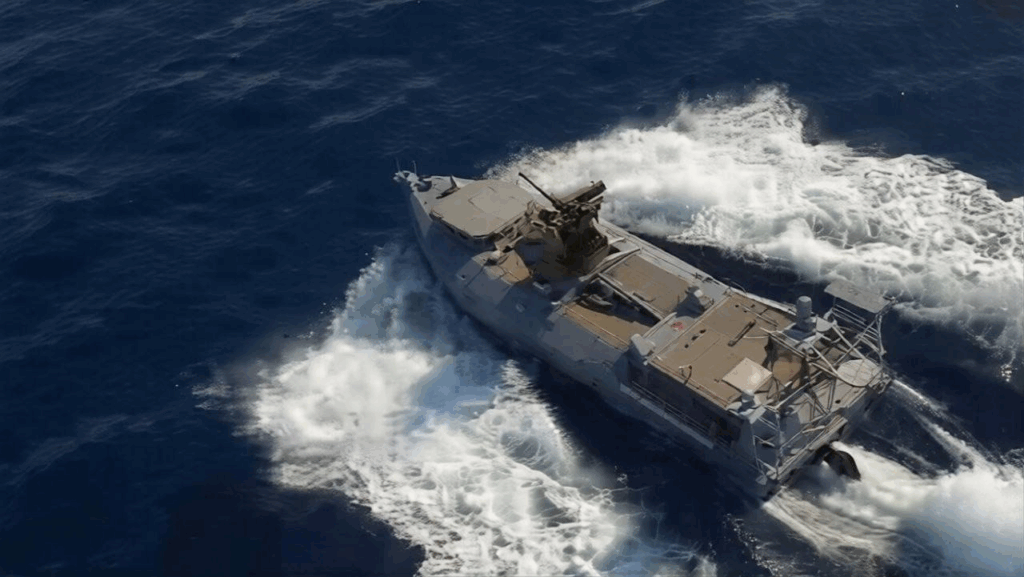
Ukraine is building a sea-facing layer of air defense along its southern coast, Kyrylo Liukov, head of the unmanned technologies department at the Serhii Prytula Foundation, wrote in a column for RBC-Ukraine. Winged interceptors now reach the Russian spy drones that guide strikes in the south.
Russia's nightly drone strikes on Ukrainian cities have turned air defense into a race to close every corridor Russia can fly through, over land first and now over the open sea. Kyiv does it with cheap interceptors rather than costly missiles, and keeps having to chase Russian workarounds. The sea was the stretch air defense could not reach, and it is where Russia keeps the spotters that make its Shahed swarms steerable.
Defending the sky over land and over open water are two different problems, Liukov wrote. Multirotor copters are fast and simple to launch near the coast, but past roughly 25 km offshore, a multirotor is almost useless. Russia builds its mission routes so that drones cross dozens of kilometers over sea before they turn toward Ukrainian targets. Fixed-wing drones close the gap. Built like gliders, they loiter for over an hour and hold a link at 40 km and beyond, helped by an open radio horizon that land's terrain and buildings deny them.
Recon drones are the priority target for a reason. Beyond spotting and confirming hits, they work as relays in a MESH network for a group of strike drones. In that setup, Russian crews can steer Shaheds by hand right up to the moment of impact, Liukov wrote.
Southern units recently set three distance records with foundation-supplied interceptors. The 18th aviation commandant's office of Air Command South downed a Russian Orlan-30 reconnaissance drone 110 km out. It used a Wovkulaka Spitfire interceptor, the longest kill on record for that system.
The 12th Separate Special Purpose Center set the other two, flying a system from the miltech company TechnoTaras: an Orlan downed at 86 km, and a 145 km hunt measured from the takeoff point that held a stable digital link the whole way, Liukov wrote. That leaves Russia's drones exposed much farther from shore than its planners assume, he added—and if such results become routine, Russia has to pull its transit routes farther out still.
A less obvious problem was navigation, not shooting. A drone flying without GPS steers by landmarks, and over open sea, there are none. Late last year, the foundation, the 12th Separate Special Purpose Center, and TechnoTaras launched a project called Maiachnia. It strings radio beacons on the Skyline system along the coast from Ochakiv to Izmail. The beacons work on their own and keep backup power, tied to a central network that operators can adjust remotely. An operator can then track the drone even under GPS jamming, bad weather, or a temporary loss of link, and bring it home. More than five southern units now fly the foundation's winged drones.
The real stakes sit offshore—the southern ports and the Black Sea grain corridor that Russian drones threaten and that land-based copters can barely reach. Keeping Russian drones farther offshore would buy room there. But Russia is scaling up a faster, jet-powered Shahed, and the interceptor answer to it is early—so the offshore edge just won will have to be defended again.
© AP
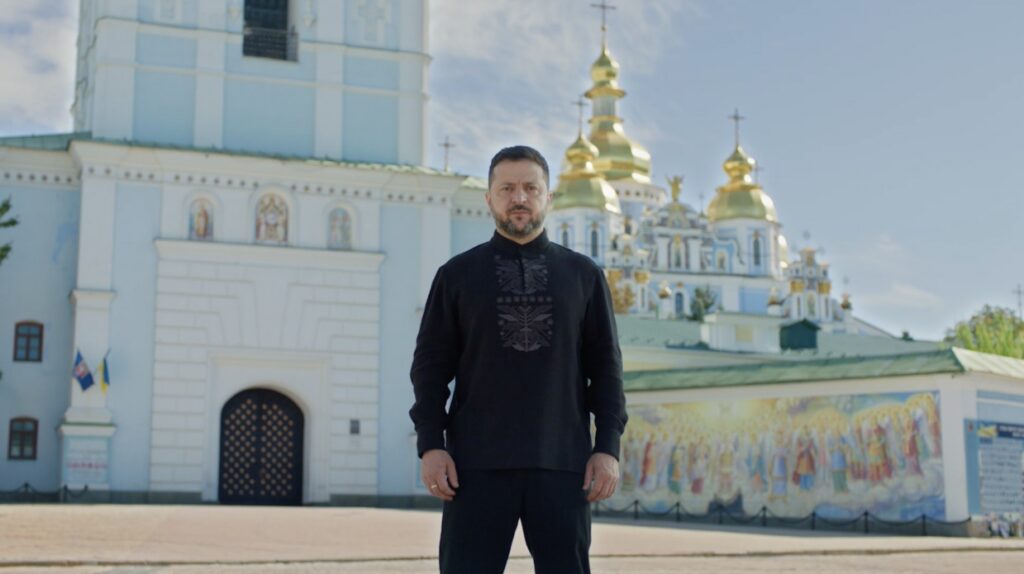
Ukraine celebrated 35 years of independence on 24 August, and Ukrainian President Volodymyr Zelenskyy marked the day with an address listing what the invasion has cost Russia, published by the President's Office. He said Putin is mortal and out of time to understand Ukraine, and said Ukraine will not hand over Donbas or save the Kremlin half a million soldiers. He also asked partners for sanctions and weapons strong enough to force an end to the war.
Russia has been invading Ukraine since 2014 and fighting a full-scale war on it since 2022, and Ukraine now supplies a growing share of the missiles and drones it fights back with, while the air defense shielding its cities still hangs on decisions taken in Washington and European capitals—which is what makes a holiday speech a statement of what Kyiv will not trade and what it needs built or delivered next.
President Zelenskyy turned from his own citizens to Russia partway through the speech.
"You wanted to take all our Ukraine, all our land; instead, you lost your oil refineries, your fleet, your profits, your entire generation that you sent into the meat grinder," he said.
A country that wanted Ukraine erased from the map, he added, is now absent from the international agenda of the future civilization.
For five years now, Russia has tried to exhaust and break Ukrainians — cutting light and heat, destroying homes, Kyiv Mayor Klitschko said on Ukraine's 35th Independence Day
— Euromaidan Press (@EuromaidanPress) August 24, 2026
"The aggressor failed to understand one fundamental thing: above all else, Ukrainians love freedom," he… pic.twitter.com/NvVVKSKIK1
He set Moscow's self-image against its filling stations.
"For 27 years, the head of Russia has talked about greatness, while Russia is standing in lines for gasoline," Zelenskyy said.
Moscow and St. Petersburg brought back gasoline rationing this month, and Rosneft capped fills at every station in the country.
On the Russian leader he was blunt.
"Putin hopes that we are tired. But we know that he is mortal," he said, adding that Putin never understood Ukraine and now will not have the time to.
Before the holiday, Russian ballistic missiles hit Kyiv and its main airport hub twice in 24 hours. A solution to Russian ballistic terror must be found, Zelenskyy said, and that gamble must not pay off.
Russia does not want peace, it wants mobilization, the president said. Ukraine will not let Moscow seize the initiative or convince Europe that surrendering Donbas ends the war. Russia keeps pushing back the dates for taking all of Donetsk Oblast and will keep pushing them back, he said.
The president called Ukraine's defense industry a giant that forges independence around the clock, and demanded more from it. Mid-range strikes cut Russian logistics and long-range weapons cut Russian profits, he said, listing Moscow, Tuapse, Tula, Ryazan, Olenya, and Omsk among the places already hit.
Ukraine's home-built Flamingo cruise missiles should stop being a rare species and arrive en masse: "They must 'winter' in Russia," Zelenskyy noted.
Previously, Flamingos have hit defense plants more than 1,000 km from the border, though they still appear in strikes in small numbers.
Ukraine is not asking anyone to fight for it, the president said — only for everything needed to stop the war before Putin starts the next one. He wants sanctions that make Russians howl and Moscow at a negotiating table, and said Washington has lost its illusions about Russian intentions. Europe must be Europe, he said: united, ambitious, brave.
"China should no longer remain silent," he added, saying Beijing must cool the ardor of someone who puts on a sailor's uniform and cap and talks about a nuclear strike—a description that fits Putin.
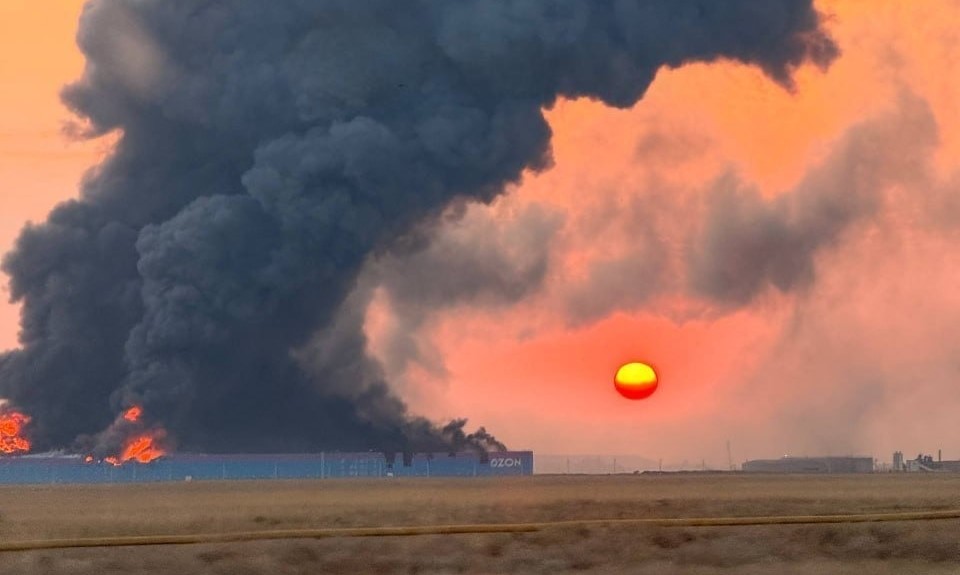
Ukrainian drones struck three warehouses of the Russian online retailer Ozon across the country's south overnight on 24 August, monitoring Telegram channels reported. Ozon is Russia's second-largest online store, an Amazon-style marketplace, shipping customer orders out of huge regional depots. Fires broke out, the company closed one hub, and its shares fell in Monday trading.
The three struck sites cover 314,714 m² in three Russian regions, Militarnyi calculated. The largest, about 130,000 m², stands in Tyube in Dagestan, 800 to 900 km from Ukraine's border. Russian news Telegram channel Astra called it the company's biggest warehouse in the North Caucasus. Residents said the fire was visible up to 10 kilometers away.
Dagestan Ozon, moment of attack pic.twitter.com/z52qNTlGV9
— Exilenova+ (@Exilenova_plus) August 24, 2026
Nevinnomyssk in Stavropol Krai holds the second site, 93,514 m². The third, 91,200 m², sits near Enem in Adygea, on the boundary with Krasnodar Krai. Drones have now hit five Ozon warehouses, Militarnyi noted.
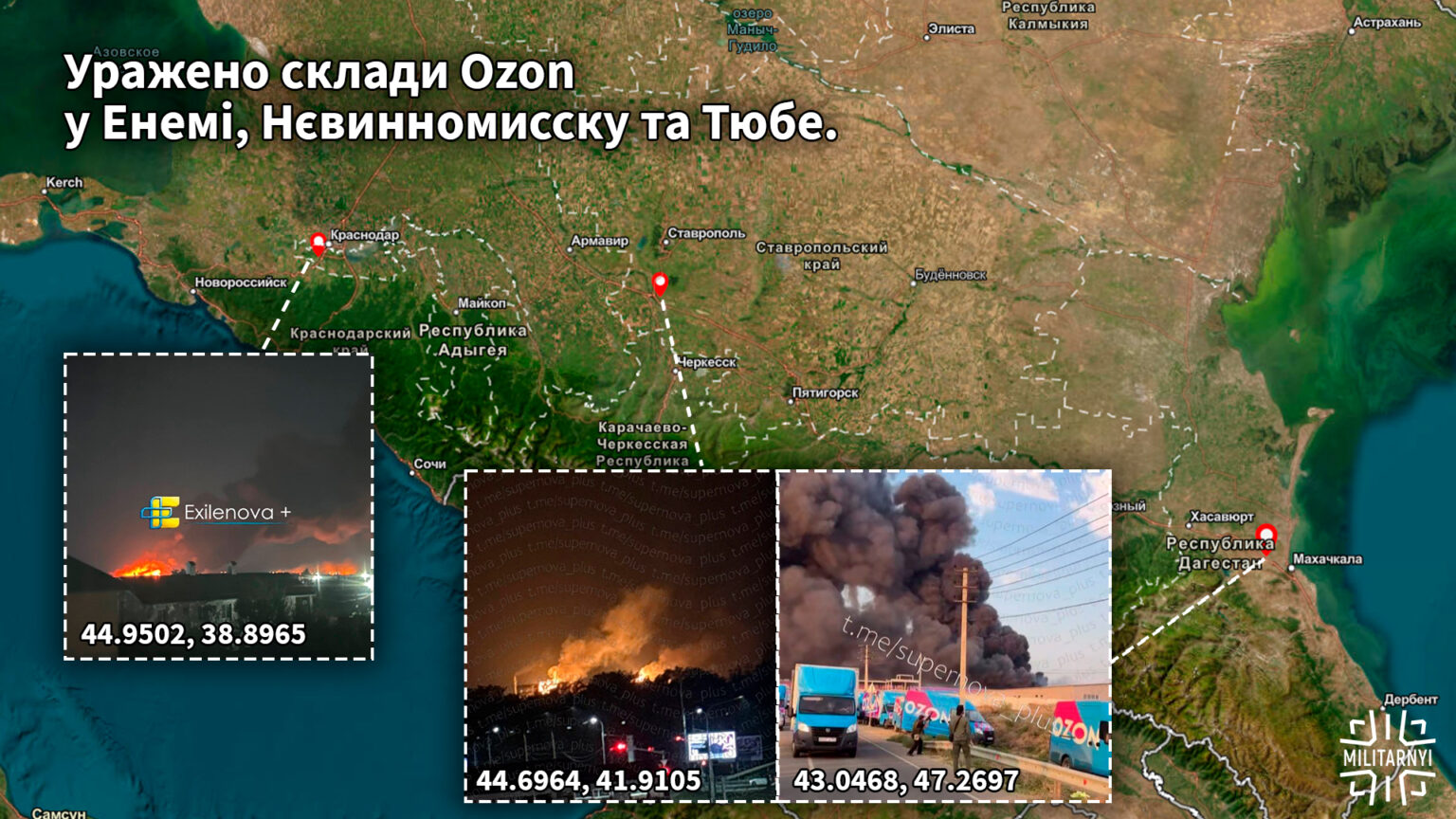
Ozon said fires started at its Dagestan and Krasnodar warehouses and that people were injured in Dagestan. In Nevinnomyssk it evacuated staff, closed the site, and stated that the facilities and the goods inside were "in order."
Six of the retailer's complexes have come under drone attack in three days, according to the company. The company also said the Adygeysk and Nevinnomyssk warehouses escaped damage. Monitoring data places a struck 93,514 m² warehouse in Nevinnomyssk.
Krasnodar Krai Governor Veniamin Kondratyev claimed drone debris allegedly killed two children at a private children's center in Krasnodar, with the injured count later put at 12.
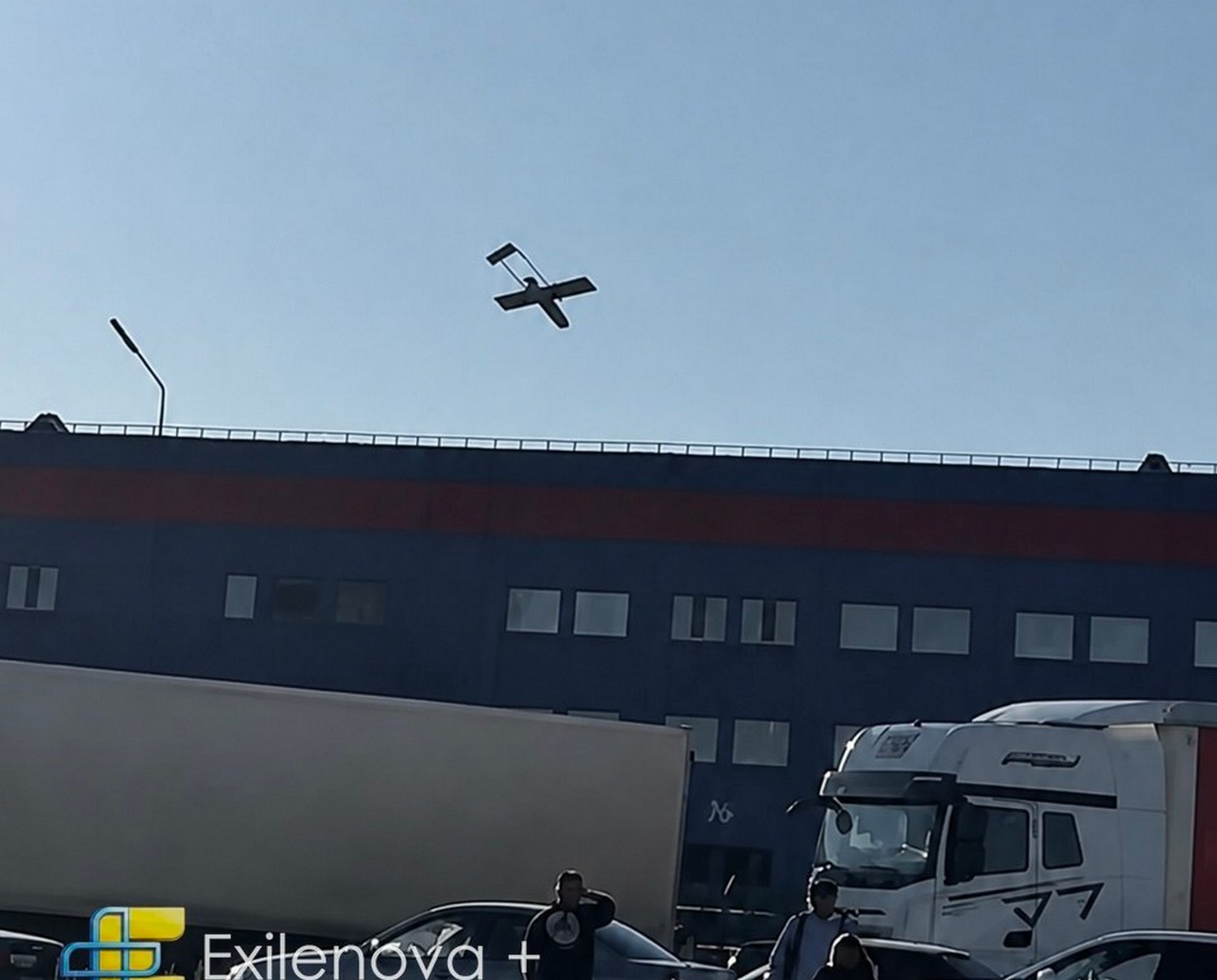
Head of Adygea Murat Kumpilov confirmed a fire at the Ozon center in Takhtamukaysky district. Acting head of Dagestan Fyodor Shchukin claimed falling drone fragments started the Kumtorkalinsky district fire and hurt nobody, which the company contradicts. Stavropol Krai Governor Vladimir Vladimirov claimed air defenses were repelling a raid on Nevinnomyssk's industrial zone.
Rostov Oblast head Yuri Slyusar claimed 120 drones were downed over the oblast. Russia's Defense Ministry claimed 351 Ukrainian drones destroyed across 10 Russian regions and occupied Crimea, without saying how many got through.
Ozon shares dropped 28% on Monday morning, state agency TASS reported, while Reuters put the fall at almost 13%.
Ukraine has destroyed or damaged 29 marketplace warehouses since 18 July, RFE/RL said, mapping them with satellite imagery. Drones struck the Orenburg complex on 23 August, where the company pulled more than 300 workers out. On 22 August they hit the Chapayevsk warehouse in Samara Oblast, the first strike on the company, where people were injured.
Custom Code
Before Ozon, Ukrainian drones spent weeks on Wildberries, Russia's largest marketplace, wrecking about 15.4% of its storage space in July alone.

© PA
© Reuters
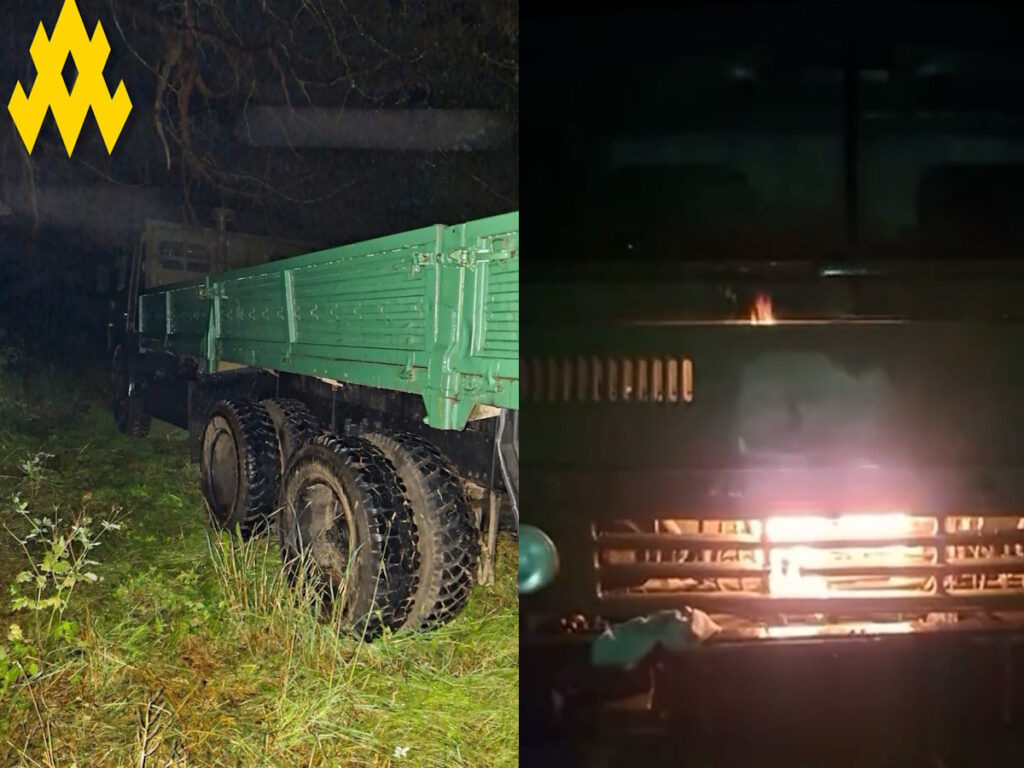
Ukrainian partisans have dedicated their new “catch” to Ukraine’s Independence Day. According to ATESH, they destroyed a military KamAZ truck that was used in assaults on Donetsk Oblast and was stationed with Russian occupation forces in Rostov Oblast.
ATESH is a Ukrainian-Crimean Tatar partisan movement founded in September 2022 in response to Russia's full-scale invasion. The group operates in occupied Ukrainian territories and in Russia itself, with members including Crimean Tatars, Ukrainians, and Russians who were mobilized into the Russian army but now work for Ukraine.
The operation was carried out without the partisans even having to do it themselves. The vehicle was used in the offensive toward Kostiantynivka, one of the hottest sectors of the current fighting, alongside the Russian advances toward Sloviansk and Kramatorsk.
The sabotage was carried out by a soldier from the Russian Armed Forces’ “Center” Group of Forces, which is assaulting Kostiantynivka. The vehicle was actively used to supply the advancing forces, and its loss disrupts Russian logistics.
Earlier, President Zelenskyy said that the offensive toward Kostiantynivka would remain one of the Russian military’s main priorities through the end of the year, according to Suspilne.
“Putin’s unchanged primary objective on the front is Kostiantynivka–Sloviansk. The latest deadline he has given his generals is to complete the occupation of Donetsk and Luhansk oblasts by the end of the year,” he said.
Since the beginning of 2026, Russia has lost 267,000 personnel along the entire front line, including approximately 155,000 killed, according to the figures cited in the report. Russian forces are suffering their heaviest losses specifically in the sector stretching from Sloviansk to Kostiantynivka.
The agent joined the movement out of revenge: his commanders killed his fellow soldiers after he refused to pay extortionate demands. The partisans said that such abuses in the Russian army are commonplace, and that the only way to survive and punish those responsible is to resist from within.
Earlier, the partisans reported that Russia’s 64th Motor Rifle Brigade, which has been implicated in crimes in Bucha, was concealing its actual losses. The command allegedly registers many of the dead as “missing in action” in order to reduce the official death toll and avoid payments to their families.
Meanwhile, security and counterintelligence services are reportedly putting pressure on the women, threatening them with criminal charges for “discrediting” the army and the complete loss of any payments if they continue searching for their missing relatives.
© PA