With a second term, Hakainde Hichilema must navigate relations with the Trump administration, which has sought greater access to the copper-rich nation’s natural resources.
With a second term, Hakainde Hichilema must navigate relations with the Trump administration, which has sought greater access to the copper-rich nation’s natural resources.
The armed group, based in Yemen and backed by Iran, said it had launched missiles near the vital maritime trade route, in a conflict that shows no sign of abating.
The armed group, based in Yemen and backed by Iran, said it had launched missiles near the vital maritime trade route, in a conflict that shows no sign of abating.
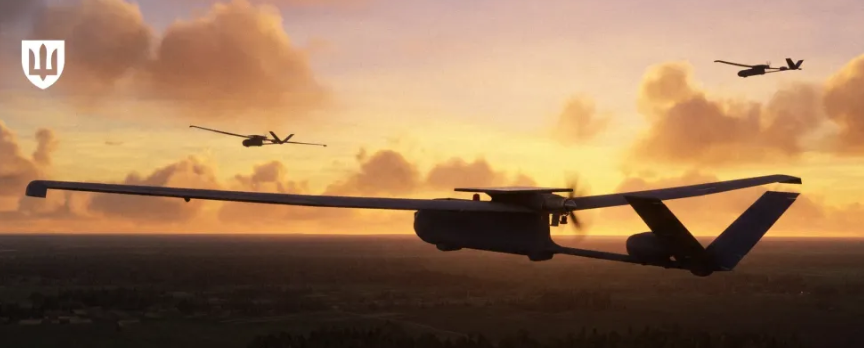
Ukraine has approved a drone built to reach the deepest parts of Russia. Ukraine's Defense Ministry has codified the domestic Dovbush T40 uncrewed aviation complex, a strategic-level drone for deep reconnaissance and precision strikes on distant Russian targets, the ministry announced.
The drone extends the reach of Ukraine's homegrown deep-strike arsenal to Siberia. With a wingspan of nearly 5 meters, the Dovbush T40 has enough range to hit targets beyond the Urals and
Ukraine has approved a drone built to reach the deepest parts of Russia. Ukraine's Defense Ministry has codified the domestic Dovbush T40 uncrewed aviation complex, a strategic-level drone for deep reconnaissance and precision strikes on distant Russian targets, the ministry announced.
The drone extends the reach of Ukraine's homegrown deep-strike arsenal to Siberia. With a wingspan of nearly 5 meters, the Dovbush T40 has enough range to hit targets beyond the Urals and in Russian Siberia.
What the drone does
The Dovbush T40 is a multi-role strategic aircraft. It is designed for deep reconnaissance, fire correction, and precision strikes on structures, equipment, and enemy personnel far from the line of contact.
Its endurance is the enabler. More than a day aloft gives it the range to reach targets, letting Ukraine threaten the deep-rear sites, from factories to airfields, that Russia has kept far from the front for safety.
Its advantages over similar drones
The drone offers several edges, the ministry said. It has ultra-low radar visibility, a high-performance engine with electronic fuel injection, and a choice of strike methods, either as a kamikaze drone or by dropping a munition.
It is built to work under jamming. The Dovbush T40 stands out for high resistance to electronic warfare, according to the Defense Ministry, the recurring requirement for any Ukrainian drone meant to fly deep into a contested electromagnetic environment.
It builds on combat-proven predecessors
The drone comes from a maker with a track record. It was built by a Ukrainian enterprise whose Dovbush T20 and Kotyhoroshko drones have operated on the battlefield since 2022 with some of the highest effectiveness ratings.
The T40 is an evolution of a proven system. The medium-range Dovbush T20, used for reconnaissance, real-time artillery correction, and pinpoint strikes, evolved through battlefield feedback into the longer-range, more powerful T40. It joins a fast-growing domestic fleet: since the start of 2026, Ukraine's Defense Ministry has codified 413 uncrewed systems, almost all of which are Ukrainian-made.
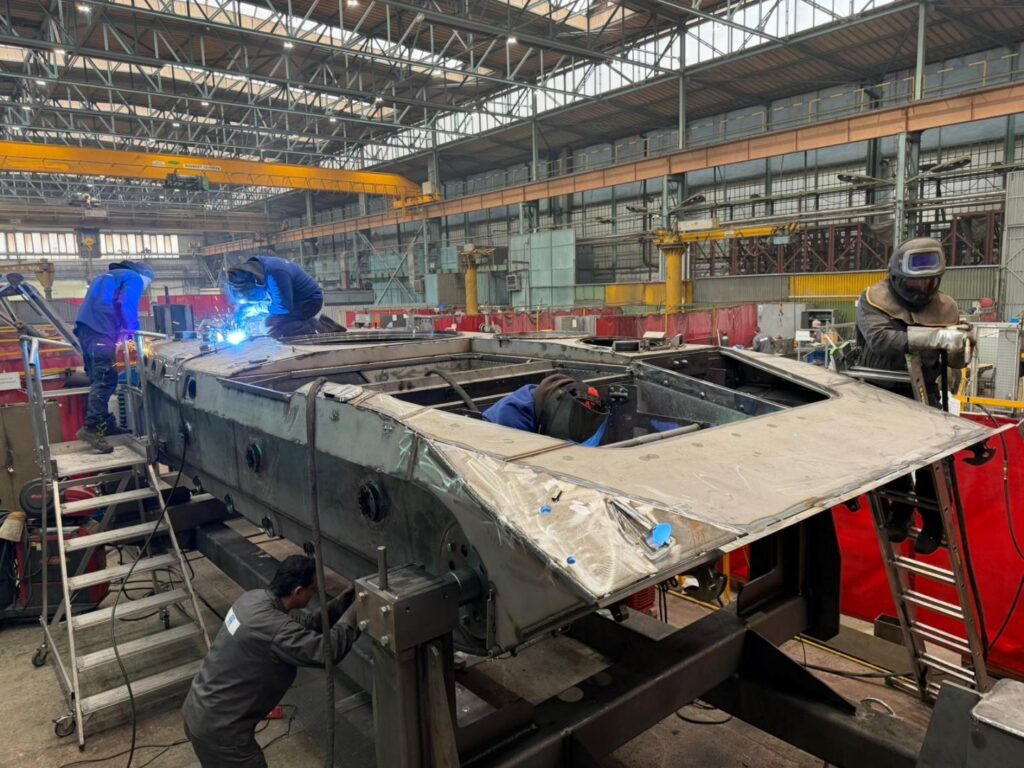
Slovak company STV Machinery has produced the first two prototype hulls for the BMP-1 infantry fighting vehicle after a 36-year break in production. The plant in Dubnica nad Váhom began developing an updated design in 2024, and a contract with an unnamed foreign customer was signed in late 2025, with serial production scheduled for 2026 to 2027.
The Slovak outlet Future Army reported this on 15 August, citing STV Group's director of special projects, Pavel Be
Slovak company STV Machinery has produced the first two prototype hulls for the BMP-1 infantry fighting vehicle after a 36-year break in production. The plant in Dubnica nad Váhom began developing an updated design in 2024, and a contract with an unnamed foreign customer was signed in late 2025, with serial production scheduled for 2026 to 2027.
The Slovak outlet Future Army reported this on 15 August, citing STV Group's director of special projects, Pavel Beran. He said one prototype is being used to test final assembly and the integration of weapons systems, while the second is undergoing physical and stress testing. The company will not disclose the customer's identity, citing security and business-ethics considerations.
Ukraine has a substantial need for armoured vehicles. Its forces already use and modernise the BMP-1, and cooperation with Western manufacturers could help replenish the fleet faster. In 2024, for example, Ukraine and Germany's Rheinmetall agreed to produce the Lynx IFV and to expand defence cooperation.
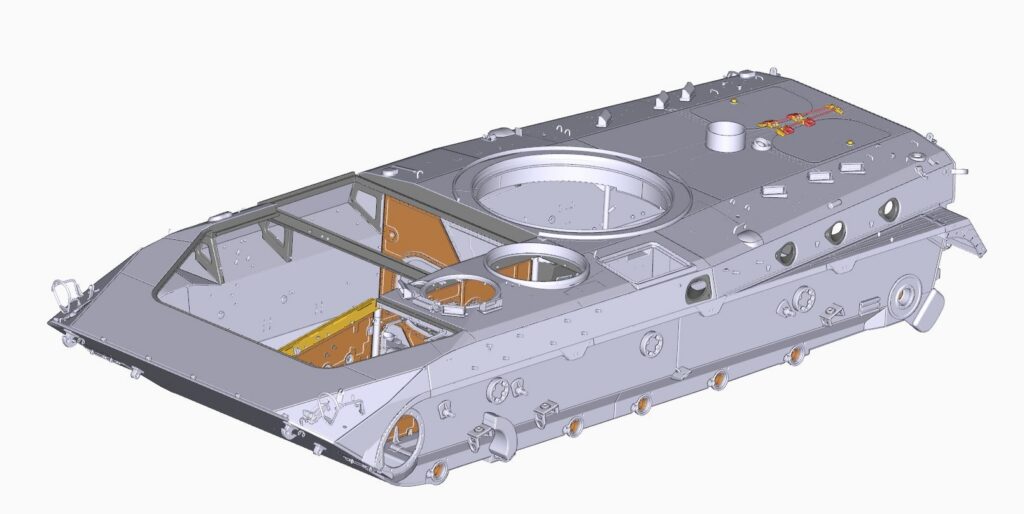
Digitised BMP-1 project. Photo: STV Machinery
The Slovak plant has returned to BMP-1 production
According to Militarnyi, the new hulls remain outwardly similar to the Soviet BMP-1 design but have been reworked to more modern requirements. STV Machinery revised the design to meet NATO standards for ergonomics and materials, and strengthened the armour using more modern materials.
Future vehicles will offer a choice of powerplant, with Western-made engines among the options. STV Machinery, the Slovak firm, will produce the hulls and other components, after which its Czech sister company STV Group will carry out full assembly and testing.
The exact size of the order is not yet known, though earlier reports suggested production could eventually reach up to 100 hulls a year.
The company has not named the customer. Defense Express suggested as early as December 2025 that it could be Ukraine. One scenario the outlet floated was the supply of hulls or turretless vehicles, which would allow other combat modules to be fitted.
Production of the BMP-1 hull by the Slovak company STV Machinery. 2025. Photo: STV Machinery
Why Slovakia is building the BMP-1 again
The Dubnica nad Váhom plant previously built licensed versions of the BMP-1, known locally as the BVP-1. Serial production there ran until 1989, after which the plant went more than three decades without making new hulls for the vehicle. The site is the same, but the manufacturer is not: the original vehicles came off the ZŤS Dubnica nad Váhom line in the Czechoslovak era, while today's hulls are made by STV Machinery.
At the same time, the BMP-1 remains a vehicle of the 1960s. Even a modernised hull does not change the platform's fundamental limitations, particularly its level of protection. So if Ukraine really is behind the order, it is likely more a way to rapidly increase the number of armoured vehicles than a long-term replacement for modern Western IFVs, Defense Express noted in 2025.
Also Defense Express stressed that the customer's identity remains only speculation, adding that the buyer could turn out to be another country that operates or once operated the BMP-1, and that firmer detail will have to wait for the company.
Russia has built or expanded at least 10 drone bases along its borders with Ukraine and Belarus, creating launch capacity for newer jet-powered attack drones, the most powerful of which could reach Warsaw, The Telegraph reported on 16 August 2026.
The network expands Russia’s capacity for mass drone attacks on Ukraine, while some sites could later threaten NATO. The findings come as Russia is also expanding bases and other military infrastructure along NATO’s northern a
Russia has built or expanded at least 10 drone bases along its borders with Ukraine and Belarus, creating launch capacity for newer jet-powered attack drones, the most powerful of which could reach Warsaw, The Telegraph reported on 16 August 2026.
The network expands Russia’s capacity for mass drone attacks on Ukraine, while some sites could later threaten NATO. The findings come as Russia is also expanding bases and other military infrastructure along NATO’s northern and Baltic borders. The Telegraph found no evidence that Moscow is planning such an attack.
Seven of the 10 sites were used during recent bombardments of Kyiv, tracking data cited by The Telegraph showed. Using leaked documents, satellite imagery, and DroneSec's analysis, the newspaper identified at least 59 launch rails—tracks that launch fixed-wing drones without runways.
Around 20 appeared long enough for Russia’s latest long-range models, while one base could reportedly store over 1,000 drones.
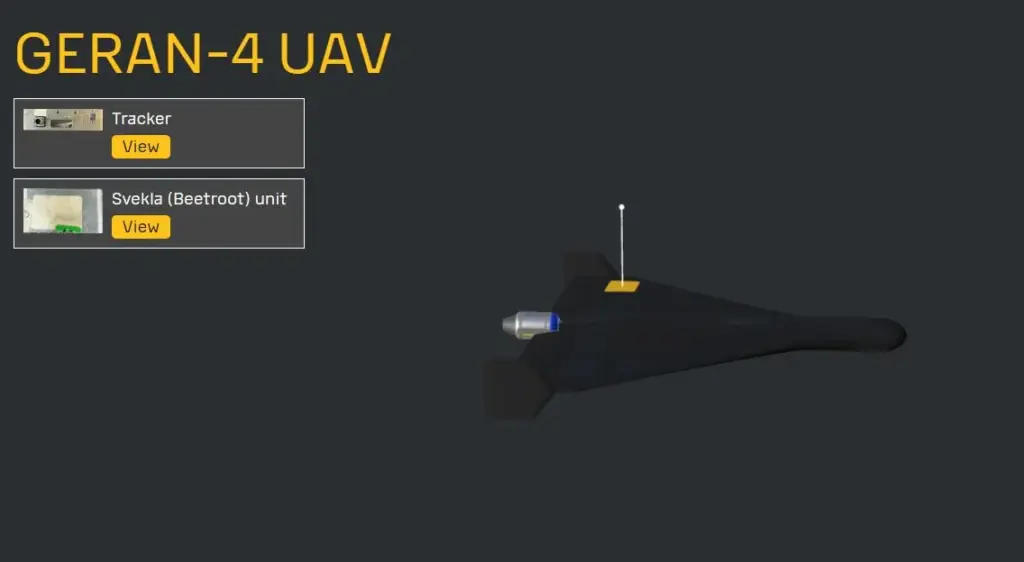
Leaked Ukrainian documents cited by The Telegraph say the jet-powered Geran-4 and Geran-5 can carry 90-kilogram warheads. However, Ukrainian military intelligence puts the Geran-4’s range at up to 450 kilometers, while the larger Geran-5 has a stated range of up to 1,000 kilometers — enough to reach Warsaw from several of the new sites.
DroneSec founder Mike Monnik said expanded launch capacity and harder-to-intercept technology together increase pressure on Ukrainian air defenses.
Russia builds military infrastructure along NATO’s northern flank
Russia is also expanding military infrastructure elsewhere along NATO’s borders. A Nordic-Baltic investigation identified new or expanded infrastructure from Norway to Kaliningrad, with potential capacity for up to 115,000 personnel.
Satellite imagery showed new barracks, ammunition warehouses, and expanded bases near NATO’s northern and Baltic members.
The Institute for the Study of War, a US-based think tank, assessed that the construction likely supports future Russian operations against NATO rather than an imminent attack. Most Russian combat power remains committed to Ukraine, it said.
Other drone hubs support rapid Russian attacks
Russia has already built comparable hubs for attacks on Ukraine. Satellite imagery analyzed by the open-source intelligence group Strategic Aviation of Russia showed 10 additional launchers under construction at Tsymbulova in Oryol Oblast, following the start of work on 22 April 2026.
At occupied Donetsk Airport, the group identified enlarged launch pads, roads to a Geran and Gerbera drone warehouse, and the apparent construction of another storage building.
Ukraine’s Security Service (SBU) said it struck Shahed storage and launch sites at Primorsko-Akhtarsk on 2 August 2025. Ukraine’s Unmanned Systems Forces commander Robert "Madyar" Brovdi reported hitting drone logistics, warhead-storage, and preparation facilities at Donetsk Airport on 30 December 2025.
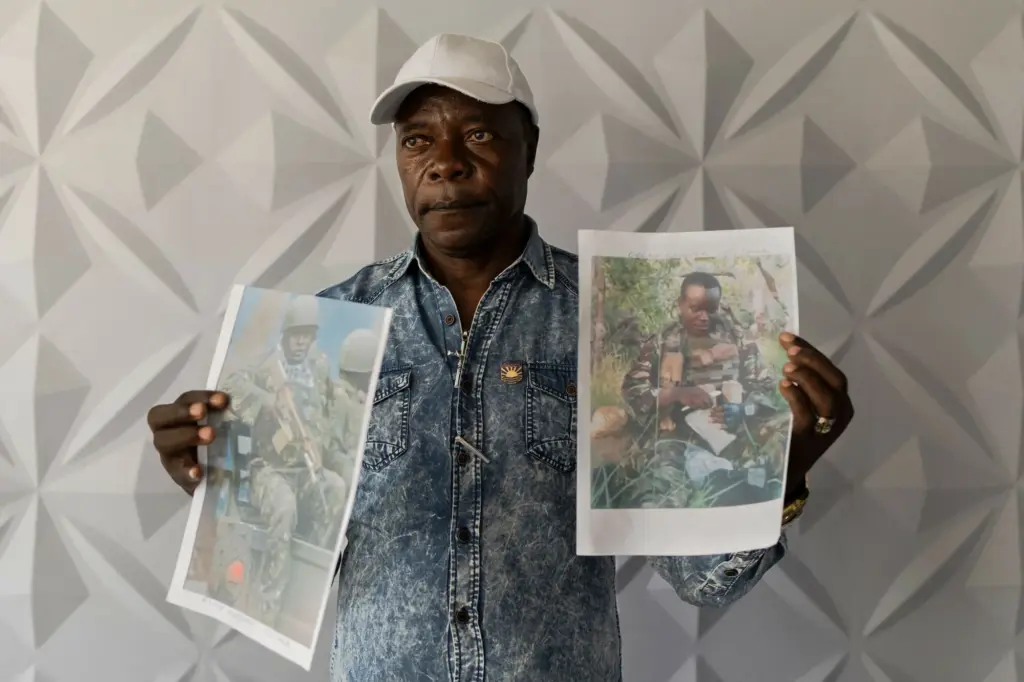
486 Africans recruited into Russia’s armed forces are dead, while Ukraine is holding 35 citizens from 17 African countries as prisoners of war, Ukraine’s Ministry of Foreign Affairs (MFA) told Ukrainian public broadcaster Suspilne in findings published on 16 August 2026. Its overall tally rose only slightly from May, climbing from 2,965 recruits from 36 countries to at least 2,982 from 37.
Russia’s recruitment in Africa is part of a broader effort to enlist foreigners f
486 Africans recruited into Russia’s armed forces are dead, while Ukraine is holding 35 citizens from 17 African countries as prisoners of war, Ukraine’s Ministry of Foreign Affairs (MFA) told Ukrainian public broadcaster Suspilne in findings published on 16 August 2026. Its overall tally rose only slightly from May, climbing from 2,965 recruits from 36 countries to at least 2,982 from 37.
Russia’s recruitment in Africa is part of a broader effort to enlist foreigners for its war. A joint human-rights investigation found that Russia had recruited at least 27,000 people from more than 130 countries since 2022. The system helps Moscow replenish its forces while shifting battlefield risk onto foreigners, many of whom are drawn in by financial pressure, deception, or coercion.
The largest groups of recruits came from Kenya, Egypt, Cameroon, Ghana, Nigeria, Uganda, Algeria, and Mali, the ministry told Suspilne.
Russia’s wider recruitment pipeline in Africa
Russian security services use a “broad arsenal of manipulative methods,” the Ukrainian MFA said. Recruiters promise civilian jobs, education, high salaries, Russian citizenship, or migration benefits. In many cases, foreigners must sign Russian-language military contracts under threat of deportation or imprisonment.
The FIDH–Truth Hounds–KIBHR report found recruiters using social media and intermediaries to advertise civilian jobs. Of 16 foreign POWs interviewed, 13 said they had been promised they would not fight. Most reached combat positions within weeks.
The human toll on African recruits
Kenyan engineer Francis told journalist Dmytro Karpenko, who interviews prisoners captured while fighting for Russia, that he thought he had accepted a security job. In Russia, he received a military uniform instead. After two weeks of training, he reached the front and was captured.
Ukraine’s response to Russia's recruitment campaign
Ukraine’s diplomatic missions regularly inform African officials about the recruitment of their citizens and run awareness campaigns, according to the ministry.
The MFA and Ukraine’s POW Coordination Headquarters also launched Stop Russian Recruiters, a website that explains recruitment methods, shares victims’ accounts, advises people at risk and their families, and accepts reports about recruiters.
Russia's most-used mapping service has digitally hidden a military missile site near Finland by copying a fake forest over it on satellite imagery, Finnish public broadcaster Yle reported. Western map services still show the same position, and a Finnish military analyst called the concealment careless and self-defeating. The clumsy edit points to Moscow's growing fear of Ukrainian drones.
Ukraine's drones now reach thousands of kilometers into Russia, striking refin
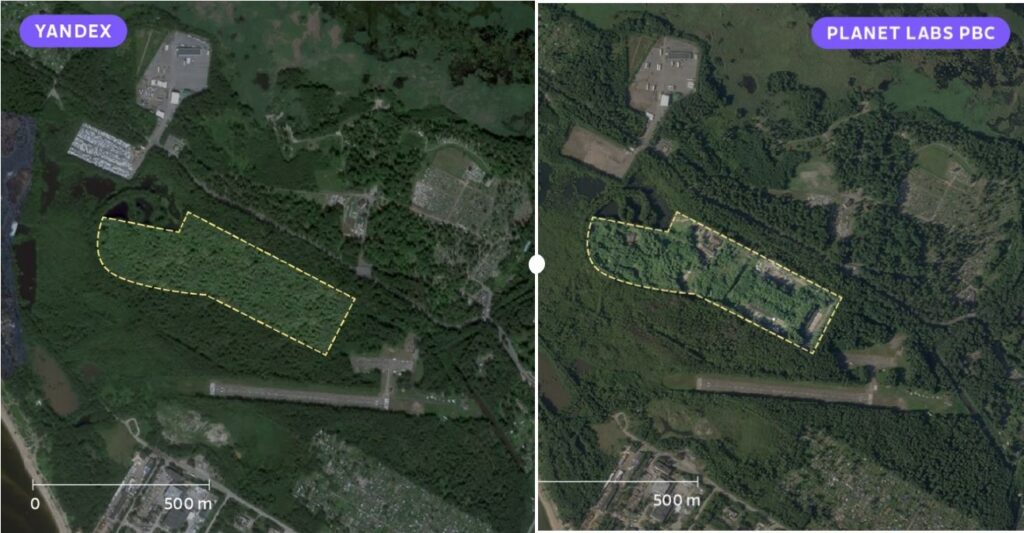
Russia's most-used mapping service has digitally hidden a military missile site near Finland by copying a fake forest over it on satellite imagery, Finnish public broadcaster Yle reported. Western map services still show the same position, and a Finnish military analyst called the concealment careless and self-defeating. The clumsy edit points to Moscow's growing fear of Ukrainian drones.
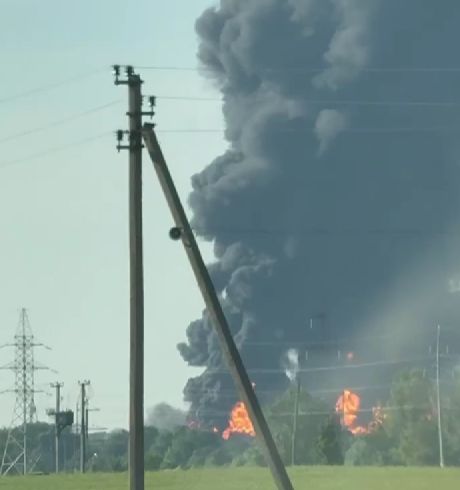
Ukraine's drones now reach thousands of kilometers into Russia, striking refineries, defense plants, and naval yards once thought safe. That expanding reach has upended Moscow's sense of a protected rear across the war.
What Yandex tried to erase
The concealed site sits beside the Kronstadt naval base, on Kotlin Island off St. Petersburg in the Gulf of Finland. Editing software copied trees from another image and laid them over the missile position. Until now, Russia mostly blurred sensitive locations rather than deleting them, but this edit tries to hide the target's existence outright. The same battery still appears on Google, Apple, and Microsoft satellite maps. In the covered zone, Russia has previously kept Bastion anti-ship missiles and their radar and reconnaissance systems.
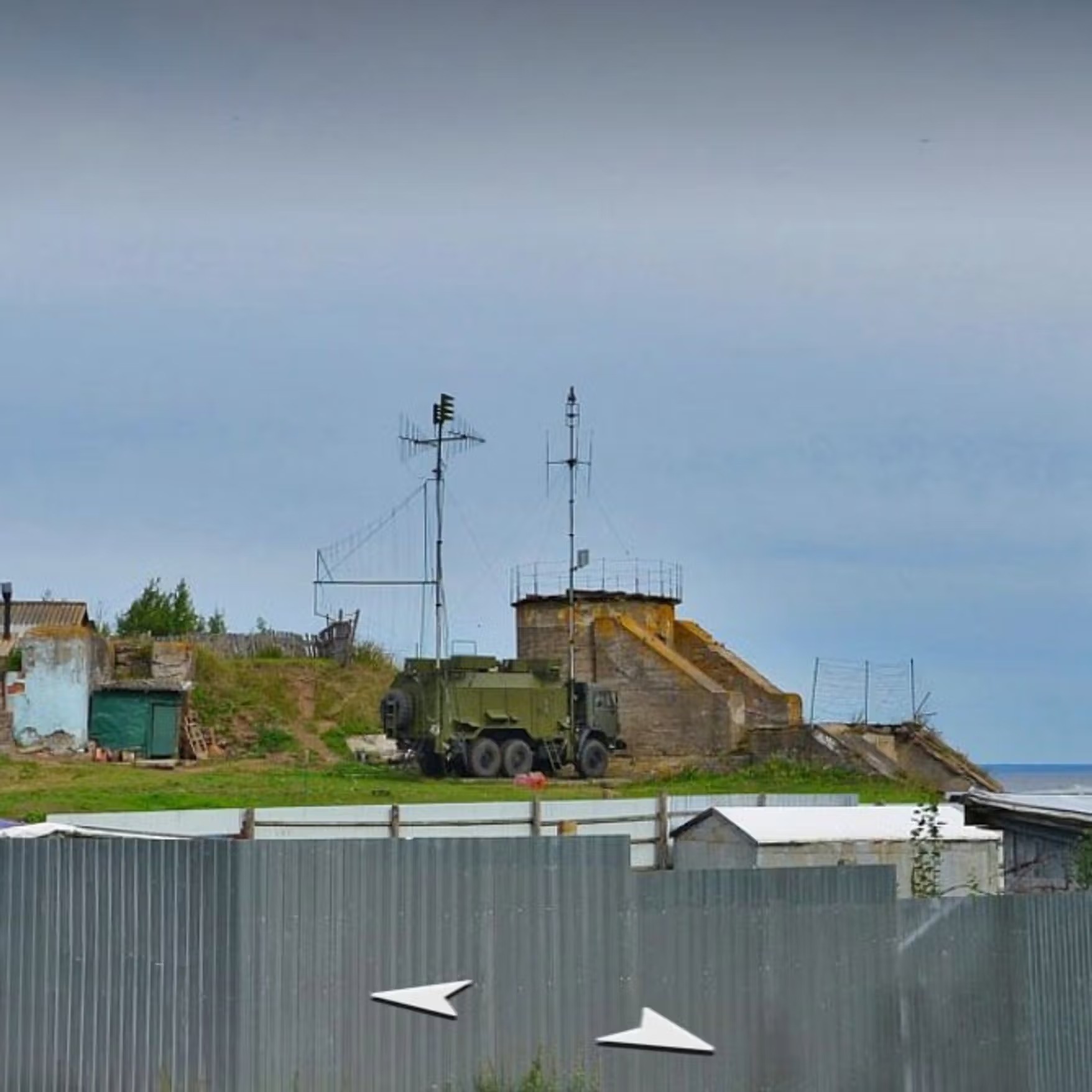
A screenshot from Yandex's map service showing an electronic warfare base near Kronstadt. Photo: Yandex
A cover-up that gives itself away
Marko Eklund, a military expert and former Finnish intelligence officer, called the secrecy pointless. Western and Ukrainian analysts read their own satellite images, not Yandex, so the edit protects nothing in practice. He believes an administrative order drove it, and that the work was done sloppily. Anyone who knows what to look for can spot the seams and repeating patterns.
Explore further
Kronstadt, Russia’s major naval Base after Black Sea Fleet losses, gets hit by Ukrainian drones (VIDEO)
A pattern set by Ukraine's drones
Russia's map cover-ups have tracked Ukraine's deep strikes. A Moscow court ordered Yandex to mask an oil refinery in Ryazan in 2024 after repeated Ukrainian strikes, and a Nordic-Baltic investigation later counted 119 blurred sites near Russia's northwestern border. Blurring shows up at once, while cloned forest hides the tampering itself.
Kronstadt gives Russia one of its main Baltic Fleet bases, and Ukraine's drones have already reached it. In early June, they set a Russian missile corvette ablaze in dry dock there.
Mon Carnet, le podcast · Farah RK : politique, réseaux sociaux, médias et citoyens À l’approche de l’élection présidentielle française de 2027, une transformation s’accélère dans le paysage médiatique. Les responsables politiques ne s’adressent plus uniquement aux grandes chaînes de télévision, aux radios et aux journaux. Ils doivent désormais composer avec une nouvelle génération de […]
Mon Carnet, le podcast · Farah RK : politique, réseaux sociaux, médias et citoyens À l’approche de l’élection présidentielle française de 2027, une transformation s’accélère dans le paysage médiatique. Les responsables politiques ne s’adressent plus uniquement aux grandes chaînes de télévision, aux radios et aux journaux. Ils doivent désormais composer avec une nouvelle génération de […]
Two adults allegedly attacked a 14-year-old Ukrainian girl and her 12-year-old brother after hearing them speak Ukrainian, Ukraine’s Consulate General in Gdańsk said. The attack occurred on 14 August 2026 in a park near a railway station in Bydgoszcz, north-central Poland.
The case comes amid a documented rise in anti-Ukrainian violence in Poland, with recent attacks reported throughout the country. Recent incidents include attacks on Ukrainians in Poznań and Wrocław, a
Two adults allegedly attacked a 14-year-old Ukrainian girl and her 12-year-old brother after hearing them speak Ukrainian, Ukraine’s Consulate General in Gdańsk said. The attack occurred on 14 August 2026 in a park near a railway station in Bydgoszcz, north-central Poland.
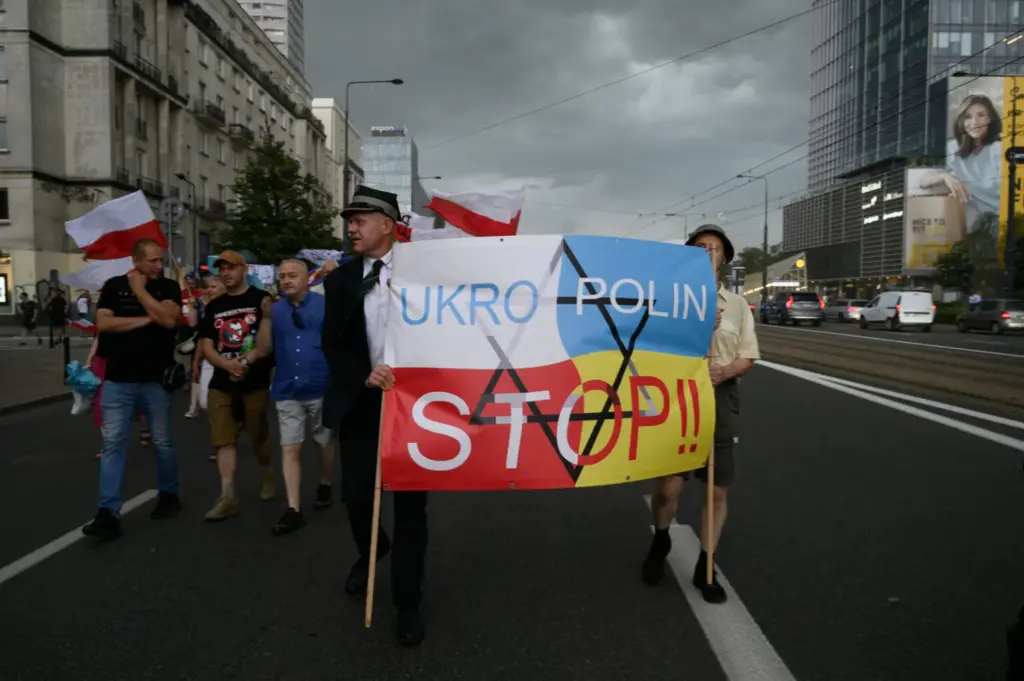
The case comes amid a documented rise in anti-Ukrainian violence in Poland, with recent attacks reported throughout the country. Recent incidents include attacks on Ukrainians in Poznań and Wrocław, as well as on people mistaken for Ukrainians or defending them. Police data obtained by the Polish newspaper Rzeczpospolita showed 180 hate-crime reports involving Ukrainian citizens in the first half of 2026, over 30% more than a year earlier.
The pair, a man and woman with a small dog, shouted obscenities and made nationality-based threats, the consulate said.
“They twisted a child’s arm, broke a toy drone, and threw fragments at the boy,” the Ukrainian consulate said, adding that the fragments scratched him.
The consulate said a complaint had been filed, police were searching for the pair, and the children were physically safe but severely stressed. It urged witnesses to contact the police. Polish police had not commented by the time of publication.
Other attacks on Ukrainians in Poland
The attack on the children came amid a string of assaults on Ukrainians across Polish cities.
Shortly after midnight on 13 August 2026, an intoxicated woman insulted two Ukrainian men, spat at one, and struck one of them outside a restaurant in Poznań, according to Polish media. Police detained her and another woman the following day.
In July, three men allegedly beat a young Ukrainian couple in Wrocław after first asking whether they were Ukrainian. Police detained two suspects and continued searching for the third.
That month, a man in Łódź attacked a passerby he supposedly mistook for a Ukrainian, breaking his nose and jaw. Three men also reportedly beat a 60-year-old Pole who intervened when they harassed a Ukrainian teenager on a Poznań tram.
The deepening Polish-Ukrainian rift and decline in relations
The attacks coincide with a broader decline in Polish-Ukrainian relations. Polish support for accepting Ukrainian refugees fell from 94% in March 2022 to 48% by early 2026, while politicians increasingly use Ukraine as a wedge issue.
Much of the fallout stems from disputes over the Volhynia massacres—the 1943–44 mass killings of Polish civilians by the Ukrainian Insurgent Army (UPA) and Polish retaliatory violence against Ukrainian civilians.
The dispute escalated after President Volodymyr Zelenskyy signed a 26 May decree granting a Ukrainian special forces unit the honorary title “Heroes of the UPA.” Polish President Karol Nawrocki responded on 19 June by stripping Zelenskyy of the Order of the White Eagle, Poland's highest state honor.

 Connexion