❌

Vue normale

Ukraine keeps hitting the fuel that Russia’s war runs on. Its latest target is the Slavyansk-EKO refinery, with an annual processing capacity of at least 3 million tonnes
14 septembre 2026 à 15:15

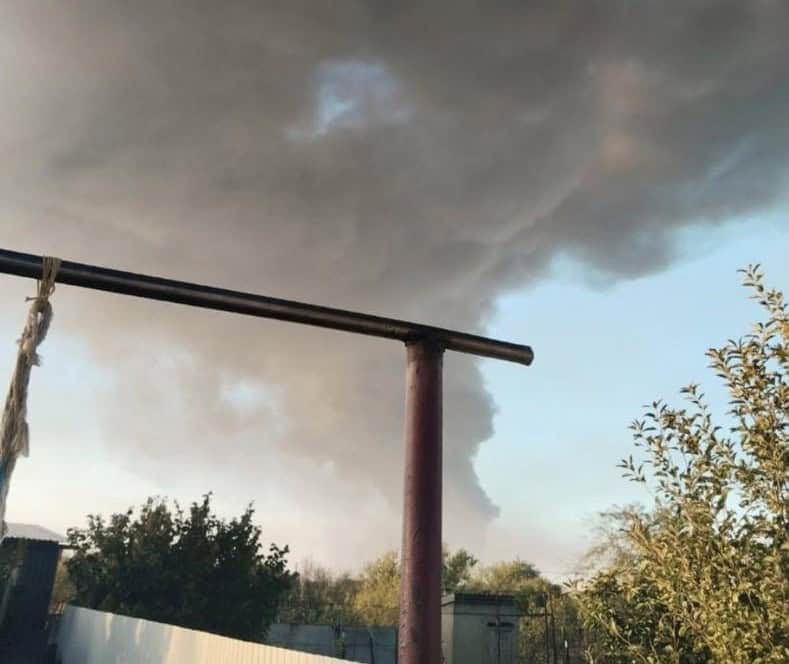
Smoke from a fire at the oil refinery in Slavyansk-on-Kuban. 13 September, 2026. Photo: Exilenova+

An oil refinery in Slavyansk-on-Kuban in southern Russia was attacked overnight on 13 September, Astra reported. By morning, residents began posting videos showing smoke over the refinery and nearby areas. That same morning, Ukraine’s Defense Intelligence (HUR) reported that Ukrainian drones had struck the Slavyansk-EKO refinery.

Ukrainian strikes on Russian oil refineries have become systematic, aimed in part at reducing the Russian military’s access to fuel, which is critical for waging the war. Ukrainian forces have been striking strategic facilities located hundreds of kilometers from the front line.

The design capacity of Slavyansk-EKO is approximately 5.2 million tonnes per year, though actual volumes are lower by about one to two million tonnes, Militarnyi reports.

Thick smoke visible for dozens of kilometers

The Ukrainian strike hit a key oil-processing unit and the facility’s oil storage tank farm, which “fuels the criminal war against Ukraine,” HUR reported.

Two oil storage tanks were destroyed in the strike, according to photos published by Dnipro Osint. Militarnyi noted that the photos also show damage to neighboring tanks.
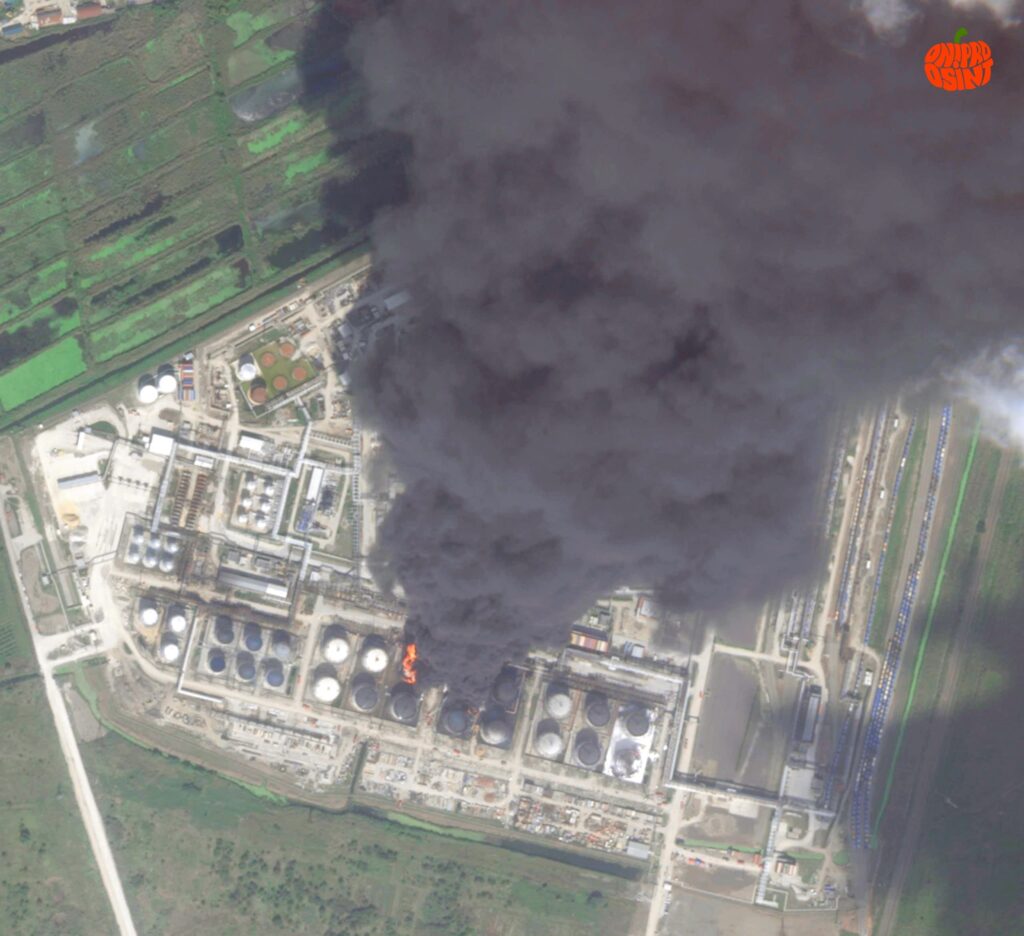
Satellite imagery of the Slavyansk oil refinery after a nighttime UAV attack on 13 September. Part of the refinery is obscured by thick smoke from a fire in the tank farm, Krasnodar Krai, Russia. Photo: Dnipro Osint


The strike reportedly hit the area containing the facility’s largest storage tanks. The refinery operates using purchased or tolling crude oil because it does not have its own crude oil production base.
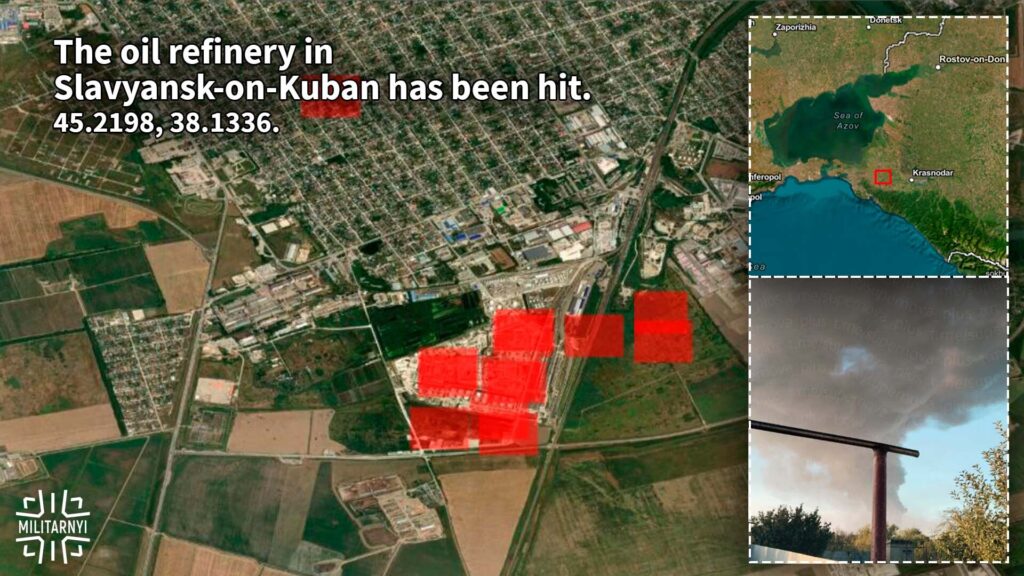
Fire broke out at the oil refinery in Slavyansk-on-Kuban following an attack by Ukrainian drones on September 13, 2026. Analysis by Militarnyi, with an Esri map and NASA FIRMS data

The refinery has been targeted before

Slavyansk-EKO is one of the largest independent oil refineries in southern Russia. The facility is located in Slavyansk-on-Kuban, about 69 kilometers northwest of Krasnodar.

Ukraine’s General Staff said that the refinery is “part of the energy rear of the Russian Federation and involved in supplying the armed forces of the aggressor.”

Before the 13 September strike, Ukrainian drones had struck the refinery at least four times, starting in 2024:

  • 27 April 2024 — a Ukrainian drone attack damaged the Slavyansk refinery, after which a fire broke out at the facility.
  • 19 May 2024 — SBU drones attacked the Slavyansk refinery, after which the facility suspended operations.
  • 26 January 2026 — Ukrainian Defense Forces struck infrastructure at the Slavyansk-EKO refinery. According to preliminary data, elements of the primary oil refining unit were damaged.
  • Five months later, on 28 June, Ukraine struck the Slavyansk refinery again, causing a large fire at the facility. EP noted that the refinery supplies fuel, including to occupied Crimea.
  • ✇Euromaidan Press
  • Belarus trains troops to fight saboteurs as Minsk puts its military on a war footing
    Belarus' Defense Ministry said a command-staff exercise will run from 14 to 16 September in the Cherven and Berezino districts of Minsk Oblast. It closes a reservist training camp that began there on 25 August, part of a wider round that also took in the Vawkavysk district of Hrodna Oblast from 26 August, the ministry announced. Under Alyaksandr Lukashenka's rule, Belarus remains Russia's closest ally in the war against Ukraine, supplying weapons, intelligence, and industrial capacity w
     

Belarus trains troops to fight saboteurs as Minsk puts its military on a war footing

14 septembre 2026 à 11:05

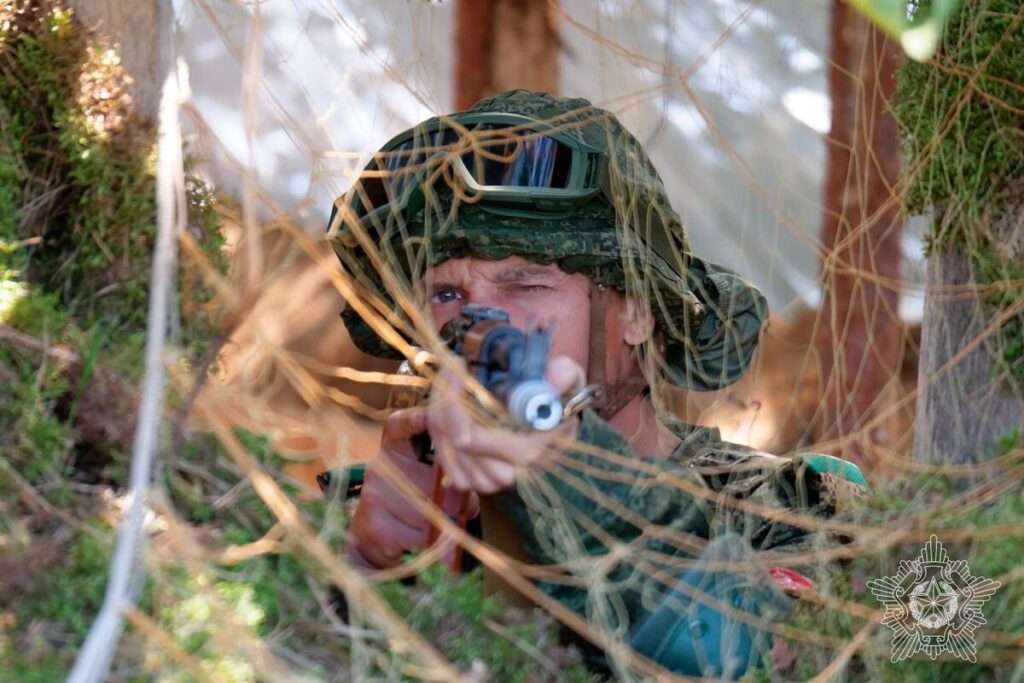
belarus trains troops fight saboteurs minsk puts its military war footing · post belarusian territorial defense soldier malaryta district brest oblast 2026 belarusian_soldier_2026_2 ukraine news ukrainian reports

Belarus' Defense Ministry said a command-staff exercise will run from 14 to 16 September in the Cherven and Berezino districts of Minsk Oblast. It closes a reservist training camp that began there on 25 August, part of a wider round that also took in the Vawkavysk district of Hrodna Oblast from 26 August, the ministry announced.

Under Alyaksandr Lukashenka's rule, Belarus remains Russia's closest ally in the war against Ukraine, supplying weapons, intelligence, and industrial capacity while Moscow fights. That alliance is what makes drills inside Belarus a question for its neighbors: Russia may again use Belarus to launch an attack on Ukraine or a NATO member state.

The Belarusian army is "preparing for war so that there will be no war," Belarusian ruler Lukashenka said during a visit to a military training ground in Brest Oblast on 11 September. He said the whole armed forces would be checked, up to mobilization, with some units deployed to wartime norms, while denying any intention to attack, since Belarus could not win a war against its neighbors.

Belarus prepares reservists for military missions

The exercise is meant to sharpen officers' command of subordinate territorial defense forces and drill personnel in coordinated action, and the deputy chairman of the Minsk oblast executive committee will lead it.

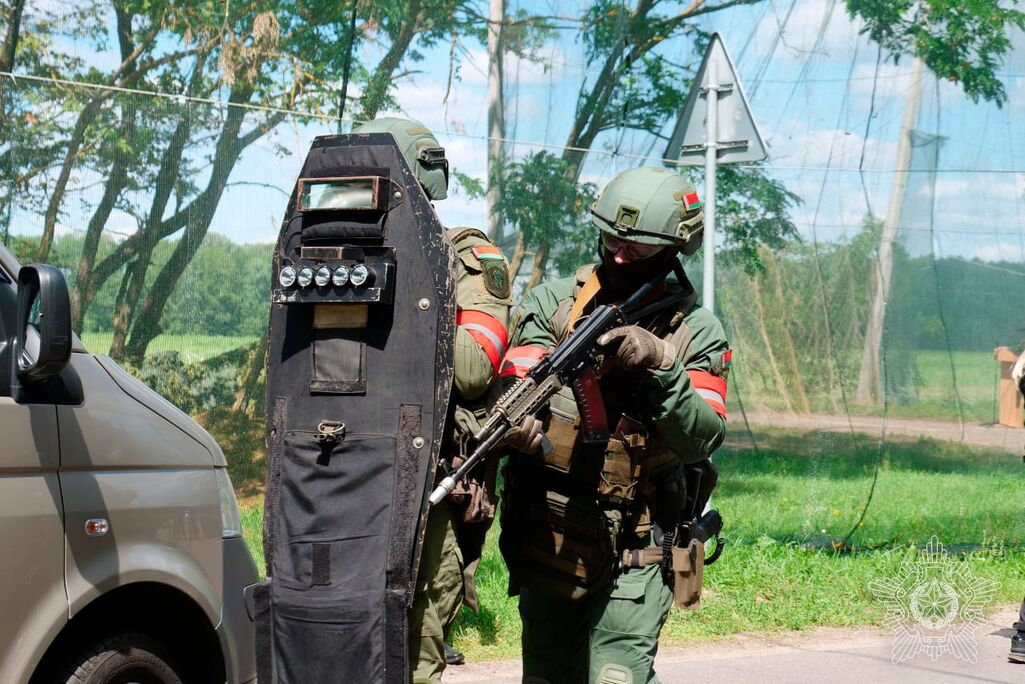
"Particular attention will be paid to the interaction of territorial troops with internal affairs bodies, internal troops, as well as people's militia units in the protection of important facilities, ensuring martial law and fighting enemy sabotage groups," the ministry said.

The people's militia is a volunteer reserve, and the internal troops are the Interior Ministry's own armed formations rather than part of the army.

Belarusian reservists take part in military exercises during a training camp for territorial defense command staff in Malaryta District in July 2026. Photo: modmilby / Telegram
Belarusian reservists take part in military exercises during a training camp for territorial defense command staff in Malaryta District, Brest Oblast, Belarus, in July 2026. Photo: Belarusian Defense Ministry / Telegram

Minsk steps up territorial defense training as Lithuania launches military drills

Since late March 2026, Belarus' Defense Ministry has announced at least 11 events involving territorial troops, Poland-based Belarusian broadcaster Belsat reported. Most of them were training camps, but command-and-staff exercises and drills were also held, the media outlet said.

Uladzimir Zhyhar, a representative of BELPOL, an association of former Belarusian security officers opposing Lukashenka's regime, highlighted in comments to Belsat the exercises conducted for Belarus' Interior Ministry. The Interior Ministry is preparing to suppress internal protests, while the Defense Ministry wants to conduct exercises that would, among other things, practice responding to saboteurs entering Belarus and breaches of the state border, he said.

"Why can this happen? BELPOL representatives have repeatedly said that there is currently no threat from either NATO countries or Ukraine to Belarus. Therefore, something must change around the country as a whole," Zhyhar said, adding: "And that change would bring both possible destabilization inside Belarus, meaning a threat to the regime, and the likelihood of a breach of the state border."

One scenario he sees is Belarus being drawn into a war against Ukraine or NATO countries, which would prompt a response. The skills currently being practiced by the Defense Ministry and Interior Ministry could then be needed, the expert said.

On 14 September, military exercises began in 12 municipalities in Lithuania and run until 18 September, LRT reported. The NATO member shares a 679-kilometer border with Belarus, and its troops are training to act together against military threats of various kinds, using drones, boats, and weapons.

Belarus has been militarizing steadily since 2022, holding exercises almost without pause, including joint drills with Russian forces.

  • ✇Euromaidan Press
  • From Russian classrooms to Iran’s defense industry: how Moscow trains Iranian specialists
    RFE/RL's investigative project Sistema examined hundreds of Russian-Iranian scientific papers published over the past decade and identified links between Russian universities and Iran's defense industry. Russia has been invading Ukraine since 2014 and has pounded its cities nightly since 2022 with Shaheds, the Iranian-designed attack drones it turns out by the thousand. And now Russian universities are where some of Iran's military engineers learn their trade, before re
     

From Russian classrooms to Iran’s defense industry: how Moscow trains Iranian specialists

12 septembre 2026 à 06:53

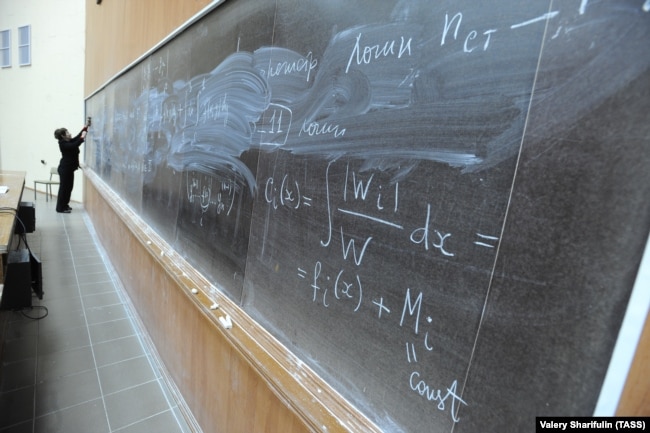
Lecture at the Moscow Aviation Institute, 2021. Photo: Valery Sharifulin/TASS

RFE/RL's investigative project Sistema examined hundreds of Russian-Iranian scientific papers published over the past decade and identified links between Russian universities and Iran's defense industry.

Russia has been invading Ukraine since 2014 and has pounded its cities nightly since 2022 with Shaheds, the Iranian-designed attack drones it turns out by the thousand. And now Russian universities are where some of Iran's military engineers learn their trade, before returning to institutions tied to Iran's army and Revolutionary Guards.

At St Petersburg's ITMO University, Iranian co-authored papers almost equaled German ones in number in 2025, although Germany had been a key partner before Russia's full-scale invasion of Ukraine, Sistema's count shows.

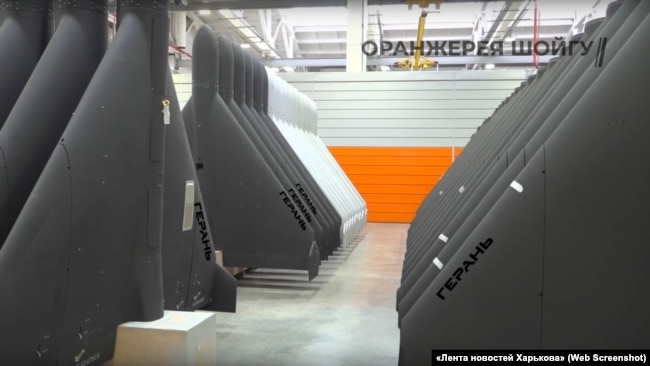
Russian adaptations of Iranian Shahed-type drones. Photo: “Lenta Novostei Kharkova” / Web Screenshot
Russian adaptations of Iranian Shahed-type drones. Photo: Lenta Novostei Kharkova / Web Screenshot

Academic ties with a military edge

For almost four decades, Russia has trained Iranian engineers in fields including aircraft manufacturing, missile development, satellite navigation, and nuclear technology, Sistema reported. Almost 10,000 Iranian students were enrolled at Russian universities in 2025, 42% more than two years earlier, according to Russia's science ministry. Medicine remains the most popular field.

In some cases, the training goes beyond ordinary academic exchange. In 2018, Iranian students from the Moscow Aviation Institute (MAI) interned at Vympel, a Russian manufacturer of missile weapons, alongside other foreign students, Sistema reported.

The investigation also examined the career of Ali Mohammad Amoui, who completed postgraduate study in gas turbine engines in 2000 at the MATI technological university in Moscow, later absorbed into MAI. From 2017 to 2022, he served as deputy director general for trade and international relations of Farsco Aviation MRO Center, whose shareholders, according to Iranian corporate records cited by the investigation, include Iran's Aviation Industries Organization, part of the country's Defense Ministry, and the sanctioned airline Mahan Air. Farsco presents itself as a civilian maintenance business.

Iranian drone Kyiv shahed
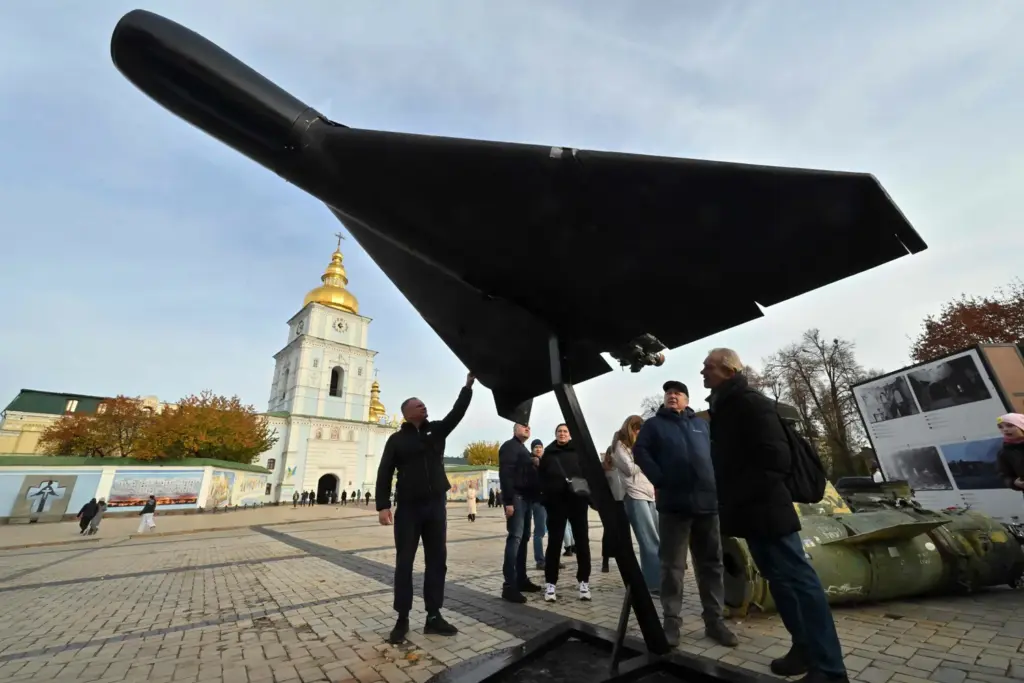
People look at an Iranian-designed Shahed 136, (Geranium-2) drone of Russian Army at an open-air exhibition of destroyed Russian equipment near Saint Michael's Golden-Domed Cathedral in Kyiv on November 2, 2025, amid the Russian invasion of Ukraine. Photo by Sergei SUPINSKY / AFP/Eastnews

Amoui co-authored research with MAI scientists on protective coatings for turbine blades and the strengthening of titanium components in aircraft engines. He also listed Iran's Malek Ashtar University of Technology, which answers to the Iranian Defense Ministry, as his workplace.

Another area of cooperation is satellite navigation and electronic warfare. Iranian professor Mohammad-Reza Mousavi, who edits a journal published by Iran's naval academy, researched GPS spoofing and worked with specialists at Samara University in 2016.

His PhD student Amir Tabatabaei also studied in Samara and worked on GLONASS, Sistema reported. It added that the two developed a method to detect fake GPS signals and published their research in a journal of the Russian defense concern Elektropribor, which develops navigation systems for the Russian Navy.

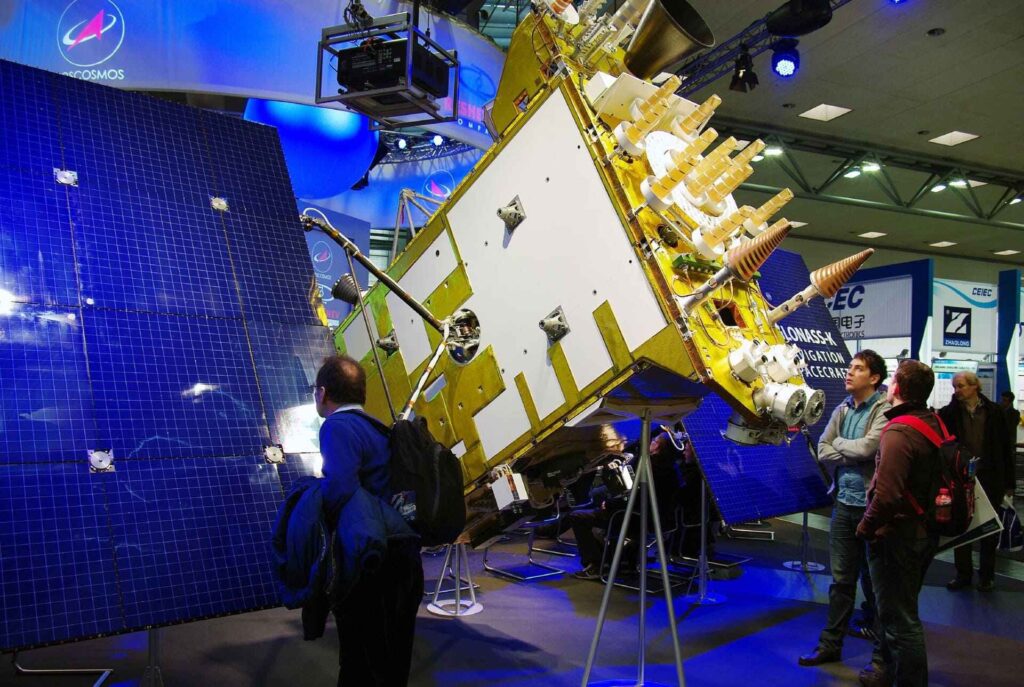
GLONASS-K navigation satellite model at CeBIT 2011. Photo: Jürgen Treutler

Russia and Iran share scientific interests in nuclear physics

Some of this work is dual-use, with civilian and military applications alike. Sistema describes Iranian Mohammad Hosseinpour Khanmiri, who studied methods for measuring uranium and thorium isotopes at St Petersburg State University. By 2022, he had applied a method he had developed with a Russian scientist to ore from Iran’s Saghand deposit. He later listed the Atomic Energy Organization of Iran as his workplace.

His co-authors also had links to Iran’s nuclear program, the investigation reports. Mohammad Outokesh, who studied the operation of gas centrifuges, co-authored a paper with Javad Karimi-Sabet, a deputy head of the Atomic Energy Organization of Iran. Iran's then president, Mahmoud Ahmadinejad, commended Karimi-Sabet in 2006 for his work on nuclear equipment at Natanz, including a new generation of centrifuges. The US and European countries later imposed sanctions on Karimi-Sabet.

Romania plans to send 20 officers to support Ukraine, but presidential administration denies claims Romania is being drawn into the war

10 septembre 2026 à 15:29

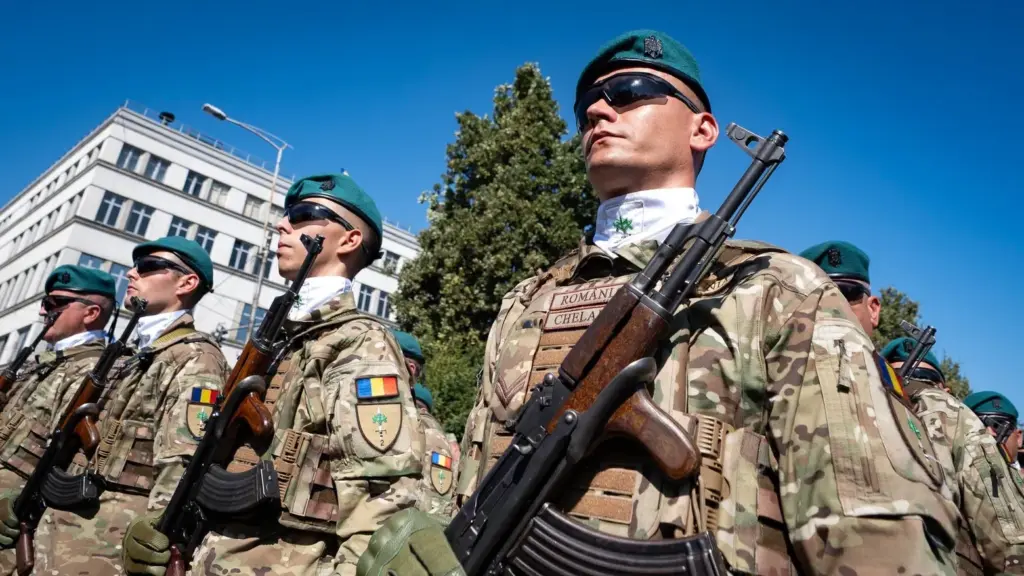
Romanian military personnel. Photo: Romanian Ministry of National Defence / Facebook

Romania’s presidential administration denied rumors circulating online that the country would send military personnel to the front in Ukraine. It called such claims “an alarmist manipulation.” Up to 20 officers are expected to join the command structure of the multinational support force, which is based in France and the United Kingdom, according to the statement.

Russia’s war against Ukraine is affecting Black Sea region states, including Romania, the Romanian presidential administration said on 9 September. Consequently, the country is taking measures to protect, first and foremost, its own citizens, the statement said. Romania is bolstering its defense capabilities against the backdrop of Russian drone airspace violations.

Why is Romania sending these military personnel?

“Romania's top priority is protecting and defending our citizens, which is why our country participates in all international formats that help achieve this major security objective,” the presidential administration explained.

It cited the Coalition of the Willing for Ukraine as one such format, which was established to provide Ukraine with a system of political and legal guarantees after a ceasefire agreement is reached. The administration said that the coalition’s work would provide guarantees of peace and stability for the entire Black Sea region.

The administration highlighted the Operational Command for the Multinational Force in Support of Ukraine, which has been operating since 2025 and which Romania plans to join. For this purpose, the president asked parliament to approve the participation of up to 20 military personnel. They will work at the headquarters and in subordinate command structures.

Bucharest stressed that these military personnel will not take part in combat operations on Ukrainian territory and that Romania will not send its combat troops to Ukraine.

Romania has supported Ukraine for years

Romania is an EU member and has supported Ukraine since the start of the full-scale invasion. The country is also ready to become a transit hub for Western peacekeeping forces, then-Romanian President Ilie Bolojan said last year. He said that supporting Ukraine is also necessary for the security of Romanian citizens.

"Our consultations confirmed Romania's principled readiness to continue supporting Ukraine. It is not just about helping a victim of aggression—an essential issue—but also about protecting our own security. If Russia's current course continues, and given this region's history, Ukraine may only be the first target," Bolojan warned.

In December of the same year, Romania allocated €50 million for Ukraine’s defense through the US-led PURL initiative. The initiative aims to purchase US weapons for Ukraine, with allies providing the funds while NATO handles the logistics.

  • ✇Euromaidan Press
  • Osa air defense missile stocks are running low, but Ukraine has developed the RK-19 as a replacement
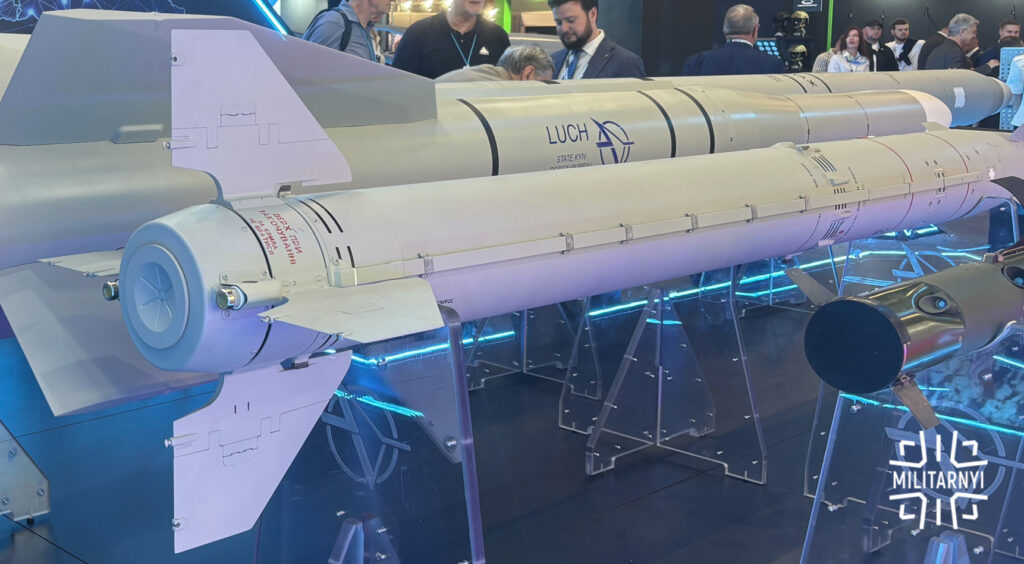
    At the MSPO 2026 arms exhibition in Poland, the Luch Design Bureau, part of the state conglomerate Ukroboronprom, presented the RK-19 surface-to-air missile for the Soviet-made Osa air defense systems and disclosed its specifications for the first time, Defense Express reports. The Osa-AKM forms the backbone of Ukraine's remaining Soviet Osa fleet, and it is the missiles rather than the launchers that are running out, so a Ukrainian-built interceptor lets those laun
     

Osa air defense missile stocks are running low, but Ukraine has developed the RK-19 as a replacement

9 septembre 2026 à 10:15

osa air defense missile stocks running low ukraine has developed rk-19 replacement · post mspo exhibition raketa-na-vystavtsi2 news ukrainian reports

At the MSPO 2026 arms exhibition in Poland, the Luch Design Bureau, part of the state conglomerate Ukroboronprom, presented the RK-19 surface-to-air missile for the Soviet-made Osa air defense systems and disclosed its specifications for the first time, Defense Express reports.

The Osa-AKM forms the backbone of Ukraine's remaining Soviet Osa fleet, and it is the missiles rather than the launchers that are running out, so a Ukrainian-built interceptor lets those launchers keep engaging jet drones and cruise missiles as the Soviet stock runs down.

Its maker's materials describe the RK-19 as designed to intercept subsonic and supersonic targets "at medium range," Defense Express reports. The missile uses radio-command guidance and proximity detonation and carries a 14.3-kg high-explosive fragmentation warhead.

The missile is similar to the original, but slightly faster

On its main specifications, the RK-19 is similar to the standard missile used by the Osa-AKM, although its maximum speed is somewhat higher, Defense Express notes. Both engage targets at ranges of up to 10 km and altitudes of up to 5 km.

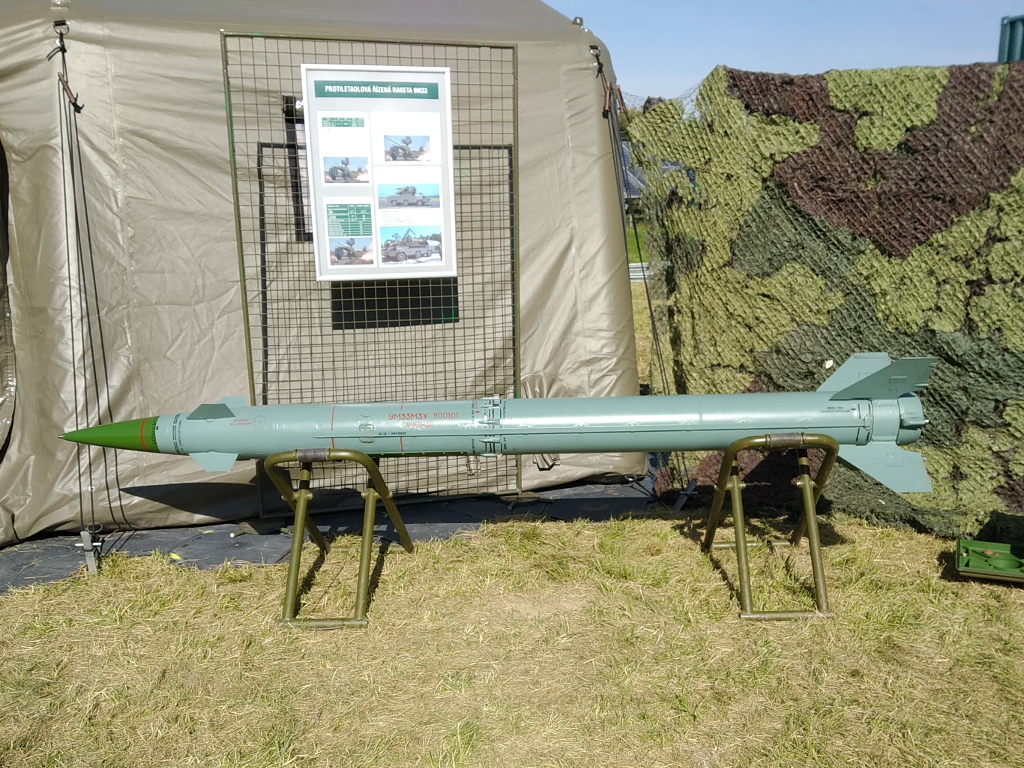
However, their speeds differ: the upgraded missile reaches 600 m/s, while the standard 9M33M3 reaches 500 m/s. Their weights also differ: the transport-launch container with the new missile weighs 163 kg, compared with 157 kg for the standard missile, the outlet reports.

A 9M33M3U instructional missile for the Osa-AKM system on display at NATO Days in Ostrava, Czechia, in 2019. Photo: Wikimedia Commons

Domestic missile keeps Osa launchers firing at jet drones

The RK-19 will allow the older air defense systems to continue protecting Ukrainian skies and intercepting aerodynamic targets, including jet-powered drones and cruise missiles such as the Banderol, according to Defense Express. The price of the Ukrainian surface-to-air missile for the Osa systems and its production volumes have not yet been disclosed.

The Osa systems were effective through 2022 and into 2023, destroying a significant number of Russian drones and cruise missiles, Militarnyi notes. However, the stock of standard missiles for the Osa systems later began to run out, significantly reducing the intensity of their use, the outlet reports.

With interceptors limited, Ukraine's Armed Forces had to use older missiles for the Osa systems, which had poorer specifications, and integrated short-range air-to-air missiles such as the R-73. That route carried its own drawbacks: reduced range, and reliance on the missile's own seeker, Defense Express reports.

  • ✇Euromaidan Press
  • Ukrainian engine for Bars missile-drone passes final tests
    Ukraine has developed its own jet-powered drone, as the arms race is pushing Kyiv to produce answers to Russia's new fast Banderol and Geran-3 drones. Ukraine's “Bars” missile-drones currently consist of more than 74% Ukrainian-made components, but their turbojet engines are still imported, the developer of the “Bars” missile-drones said in an interview with RBC-Ukraine on 7 September. The “Bars” jet-powered drone can carry out strikes at a range of up to 1,000 km,
     

Ukrainian engine for Bars missile-drone passes final tests

8 septembre 2026 à 13:45

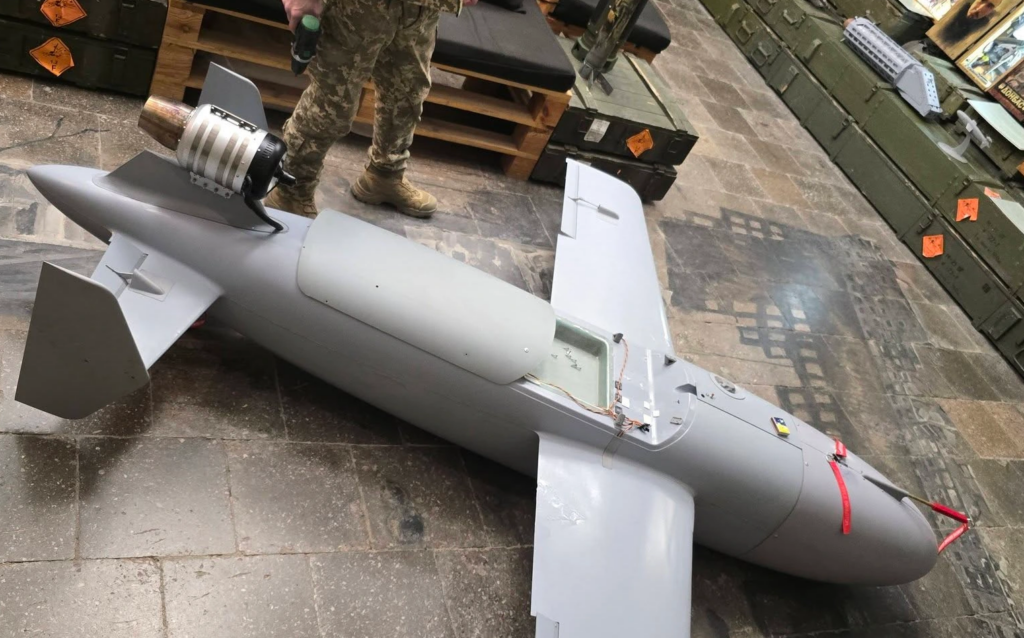
“Bars” jet-powered drone. Photo: company press service

Ukraine has developed its own jet-powered drone, as the arms race is pushing Kyiv to produce answers to Russia's new fast Banderol and Geran-3 drones. Ukraine's “Bars” missile-drones currently consist of more than 74% Ukrainian-made components, but their turbojet engines are still imported, the developer of the “Bars” missile-drones said in an interview with RBC-Ukraine on 7 September.

The “Bars” jet-powered drone can carry out strikes at a range of up to 1,000 km, and the team plans to increase its range in the future, the developer said in the interview. To speed up and increase production of such drones for the Ukrainian army, the team is trying to make the jet-powered drone consist of as many domestically produced parts as possible. This will remove the limitation on how many such jet-powered drones Ukraine can produce and deploy in response to Russia’s use of similar drones against Ukrainian cities.

“Without exaggeration, we source them from all over the world,” the Bars developer said in the interview about the imported engines.

The UAV strikes the Russian army both in occupied territories and deep inside Russia

The developer calls Bars a missile-drone: it resembles a missile because it has a jet engine, and a drone because it can be controlled by a pilot.

The basic characteristics of Bars include a warhead weighing up to 60 kilograms, a range of up to 1,000 kilometers, and a speed of more than 700 kilometers per hour, the developer added. He also explained that the UAV’s system is a modular platform that allows the drone to be used “in different planes.”

“Our basic modularity allowed ‘Bars’ to receive three main categories of use: DeepStrike, ‘middle-strike,’ and ‘front-strike,’” the developer said in the interview.

He also said that there have been more than 40 “engineering officially” modifications and iterations of the UAV alone.

“Bars” jet-powered drone. Photo: Museum of the Russian-Ukrainian War

A Bars production facility is already in Europe and will begin operating in early September

The first batch of Bars drones is planned to be delivered as early as 10 October, according to the interview.

“As of today, the only limitation to scaling up the production of ‘Bars’ is the so-called ‘bottleneck,’ and it is not so much the volumes as the delivery times of turbojet engines,” the developer said.

It was previously reported that Ukraine and Germany had signed an agreement on the joint production of Bars drones. Ukrainian Foreign Minister Andrii Sybiha said this on 8 July 2026. He said that at the first stage of the project, Germany would finance the production, while all manufactured UAVs would be transferred to the Armed Forces of Ukraine.

  • ✇Euromaidan Press
  • Germany will close Russia’s Bonn consulate after attributing Leipzig Airport drone attack to Moscow
    Germany will close Russia’s General Consulate in Bonn, terminate the agreement concerning the Russian House in Berlin, and tighten entry controls for Russian citizens. Foreign Minister Johann Wadephul announced this at a joint press conference with Interior Minister Alexander Dobrindt on 1 September, after German authorities formally attributed the attack at Leipzig/Halle Airport to Russia. German investigators have identified two suspects allegedly linked to the operat
     

Germany will close Russia’s Bonn consulate after attributing Leipzig Airport drone attack to Moscow

4 septembre 2026 à 04:18

Germany will close Russia’s General Consulate in Bonn, terminate the agreement concerning the Russian House in Berlin, and tighten entry controls for Russian citizens. Foreign Minister Johann Wadephul announced this at a joint press conference with Interior Minister Alexander Dobrindt on 1 September, after German authorities formally attributed the attack at Leipzig/Halle Airport to Russia.

German investigators have identified two suspects allegedly linked to the operation: a Russian-born man with a Latvian passport and a Belarusian man with a Russian passport. This information was reported by Süddeutsche Zeitung. Investigators believe both have links to Russian state structures, according to the report.

Both men have already left Germany, complicating efforts to bring them to justice, Tagesschau reports. One of Berlin’s responses was the closure of Russia’s Consulate General in Bonn — the last Russian consulate general remaining in Germany.

Table of The Russian Consulate General in Bonn, Germany. Photo: Marc John/IMAGO

Germany tightens its Russia policy

Russia’s General Consulate in Bonn will close on 18 September, according to Wadephul. Germany will also seek additional EU sanctions against people linked to Russian hybrid attacks, increase pressure on Russia’s “shadow fleet,” and strengthen entry controls for Russian nationals.

He stated that since the beginning of "the unlawful war of aggression" against Ukraine, Germany's goal has been to bring the war to an end, restore the peace order in Europe, and return to a constructive relationship.

"However, this requires a minimum level of willingness on the Russian side. We must acknowledge that Russia shows no willingness to reach an accommodation,” Wadephul said.

Moscow rejected the accusations. Russian President Vladimir Putin called Germany’s response a “grave mistake,” TASS reports.

The investigation leads to two suspects

According to German investigators, the Belarusian suspect left DNA traces on one of the drones, inside a container containing explosives, and on an antenna found near the airport. The Russian-born suspect, who holds a Latvian passport, is believed to have coordinated and directed the operation, entered Germany through Berlin, and then traveled toward Saxony.

The Russian-born suspect left Germany two days before the attack, while the Belarusian suspect also left the country.

Drone found near a Ukrainian An-124 aircraft in Leipzig, Germany, on 5 August, 2026. Photo: screenshot from Bild video

What happened at Leipzig Airport

The diplomatic response stems from a sabotage attempt on 4 August, when a bomb-laden drone struck a Ukrainian An-124 cargo aircraft but failed to detonate. The drone, carrying explosives, remained unnoticed for about four hours before being discovered, while later analysis indicated it had been aimed at the aircraft near its fuel tanks.

  • ✇Euromaidan Press
  • Putin says Russia is 12 km from Sumy—1.5 km farther than in June
    On 1 September, Russian President Vladimir Putin said during a conversation with journalists that Russian troops had 12 km left to reach Sumy. Censor.NET estimated from DeepState’s map that Russian forces were approximately 17 km from Sumy’s administrative boundary. Russian military commanders have systematically exaggerated their gains on the battlefield. The Institute for the Study of War (ISW) describes such claims as part of a Kremlin information campaign aimed at c
     

Putin says Russia is 12 km from Sumy—1.5 km farther than in June

2 septembre 2026 à 10:19

Russian President Vladimir Putin in the Russian army command center, 26 October, 2025. Screenshot from video.

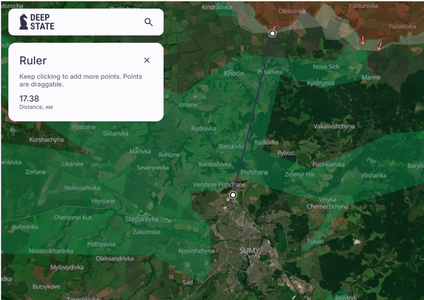
On 1 September, Russian President Vladimir Putin said during a conversation with journalists that Russian troops had 12 km left to reach Sumy. Censor.NET estimated from DeepState’s map that Russian forces were approximately 17 km from Sumy’s administrative boundary.

Russian military commanders have systematically exaggerated their gains on the battlefield. The Institute for the Study of War (ISW) describes such claims as part of a Kremlin information campaign aimed at creating the impression of major Russian gains. In this case, the Russian president cited exaggerated gains that, compared with his previous claims, appear to be a setback.

What Putin said

“The ‘North’ group of forces continues to create a security belt along the Russian-Ukrainian border in the border areas of the Sumy region... There are 12 km left to Sumy, to the Sumy ring road,” Putin said during the press conference.

Censor.NET reported that Russian forces were about 17 km from Sumy without specifying the reference point, while Putin did not say which section of the city’s ring road his 12 km figure referred to.

Approximate visualization of Censor.NET’s reported 17 km distance from the DeepState frontline toward Sumy. Map: DeepState / Chart: Euromaidan Press

Putin previously gave a different distance

On 28 June, during an interview with Russian propagandist Pavel Zarubin, Putin said that Russian troops had “about 10.5 km” left to reach Sumy. At the time, he also explained the offensive as the creation of a “security zone” along Russia’s border.

Putin’s claimed distance to Sumy therefore increased by approximately 1.5 km in just over two months, contradicting the Kremlin’s portrayal of a continuing advance.

Other exaggerations

In July 2026, Putin claimed that Russian forces had “completely captured” Kostiantynivka. Ukraine’s General Staff rejected the claim, saying Ukrainian forces continued defensive operations in the city. ISW also said some videos of Russian flags being raised in Kostiantynivka were likely AI-altered.

On 2 December 2025, Putin claimed that Russian forces had captured Pokrovsk in Donetsk Oblast. ISW found no evidence confirming the city’s complete capture and assessed that its fall would not enable Moscow to achieve a significant breakthrough.

❌