Vue normale

  • ✇Euromaidan Press
  • Russia stops mass-producing Kinzhals amid accuracy problems, but 50 missiles remain ready for Ukraine
    Russia suspended mass production of its Kinzhal air-launched ballistic missiles in April, but still has around 50 in its arsenal, according to Ukraine’s Defense Intelligence Directorate (HUR), Ukrainska Pravda reported. Russia has repeatedly used Kinzhal air-launched ballistic missiles to strike targets across Ukraine, including during major attacks on Kyiv and other Ukrainian cities. The missile is launched from aircraft and travels at high speed, making it particularl
     

Russia stops mass-producing Kinzhals amid accuracy problems, but 50 missiles remain ready for Ukraine

20 août 2026 à 06:59

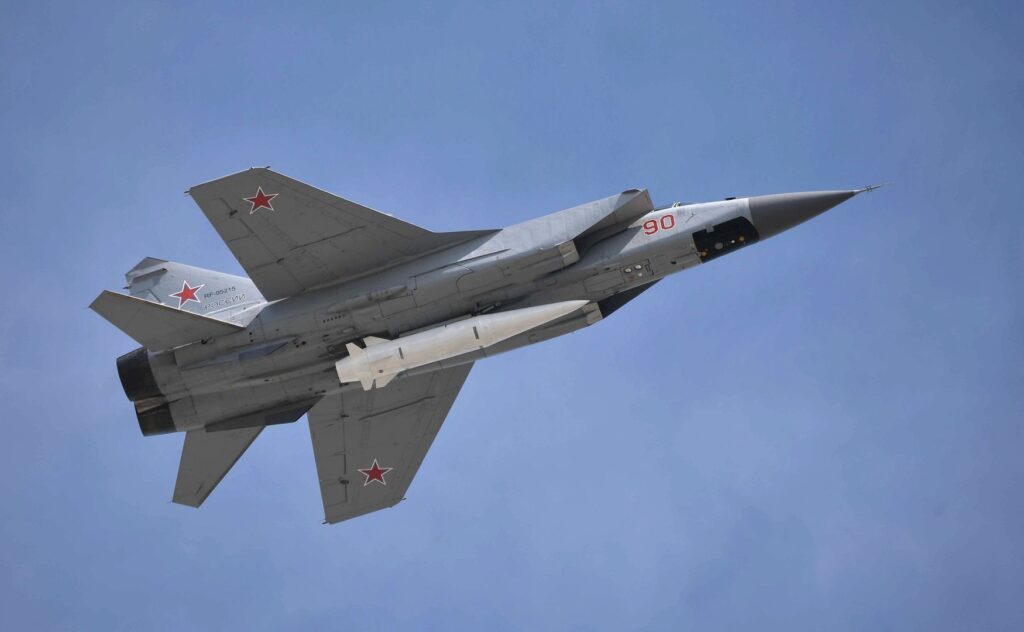
hits harm russia’s 5 hypersonic kinzhal strike ukraine bomber base fails russia's kh-47m2 air-launched ballistic missile attached mig-31k during 2018 victory day parade moscow kremlinru 1750px-2018_moscow_victory_day_parade_66 evening russia launched two

Russia suspended mass production of its Kinzhal air-launched ballistic missiles in April, but still has around 50 in its arsenal, according to Ukraine’s Defense Intelligence Directorate (HUR), Ukrainska Pravda reported.

Russia has repeatedly used Kinzhal air-launched ballistic missiles to strike targets across Ukraine, including during major attacks on Kyiv and other Ukrainian cities. The missile is launched from aircraft and travels at high speed, making it particularly difficult for Ukraine to defend against.

Ukrainska Pravda reported the figures on 20 August, citing HUR data as of July. The intelligence agency said Russia has suspended mass production of the Kinzhal in part because of accuracy problems with the missile. Moscow is instead redirecting production resources toward other ballistic and cruise missiles that can be produced and used more reliably.

Russia shifts production toward other missiles

According to HUR, Russia has redirected rocket fuel, funding, and components toward producing more accurate ballistic and cruise missiles.

The shift is helping Moscow increase production of missiles for the Iskander-M system, HUR said.

“Redirecting production resources towards missile systems enables Russia to maintain the required production rates and ensure the regular use of missiles against Ukraine,” the agency said, as quoted by Ukrainska Pravda.

The production shift suggests Russia is prioritizing missile types it can produce and use more efficiently, rather than maintaining mass Kinzhal production.

all 20+ russian kinzhal hypersonic missiles targeting kyiv intercepted patriot since may 2023 russia's mig-31k aircraft carrying missile illustrative mounted mig-31
Explore further

Putin’s Mach-10 wonder weapon misses by 30 meters. Russia stopped building it in April.

Russia has sharply increased its use of ballistic missiles against Kyiv and other Ukrainian cities in recent months, adding heavier ballistic barrages to its large-scale drone and cruise missile attacks. The escalation has put greater pressure on Ukraine’s air defenses, particularly because ballistic missiles are harder to intercept and can reach their targets within minutes.

Kinzhal remains in Russian arsenal despite production halt

The suspension of mass production does not mean Russia has stopped using Kinzhal missiles, according to HUR.

HUR said Russia still had around 50 Kinzhals as of July, while also holding around 50 North Korean KN-23-series ballistic missiles, including KN-24 and KN-30 variants.

The intelligence agency also said the Kinzhal is undergoing further development to improve issues with its accuracy.

‼ Russian voenkors publishes satellite images from the Starokostiantyniv area!

🚀⚠ The photo shows craters from missiles that did not reach their targets. In some cases, the Kinzhals' deviation was up to 144 meters. pic.twitter.com/qvameRj5t8

— MAKS 26 🇺🇦👀 (@Maks_NAFO_FELLA) November 10, 2025

This means that while Russia has paused mass production, it retains a substantial reserve of Kinzhals that can still be used against Ukraine.

HUR's assessment also highlights a key limitation of the Kinzhal: despite being a high-speed air-launched ballistic missile, it has faced accuracy problems. Russia is therefore shifting production capacity toward missile systems it considers more reliable and easier to produce at scale.

14 killed as Russia unleashes massive overnight barrage on unprotected Kyiv, striking homes, hospital, school and railway infrastructure

20 août 2026 à 04:47

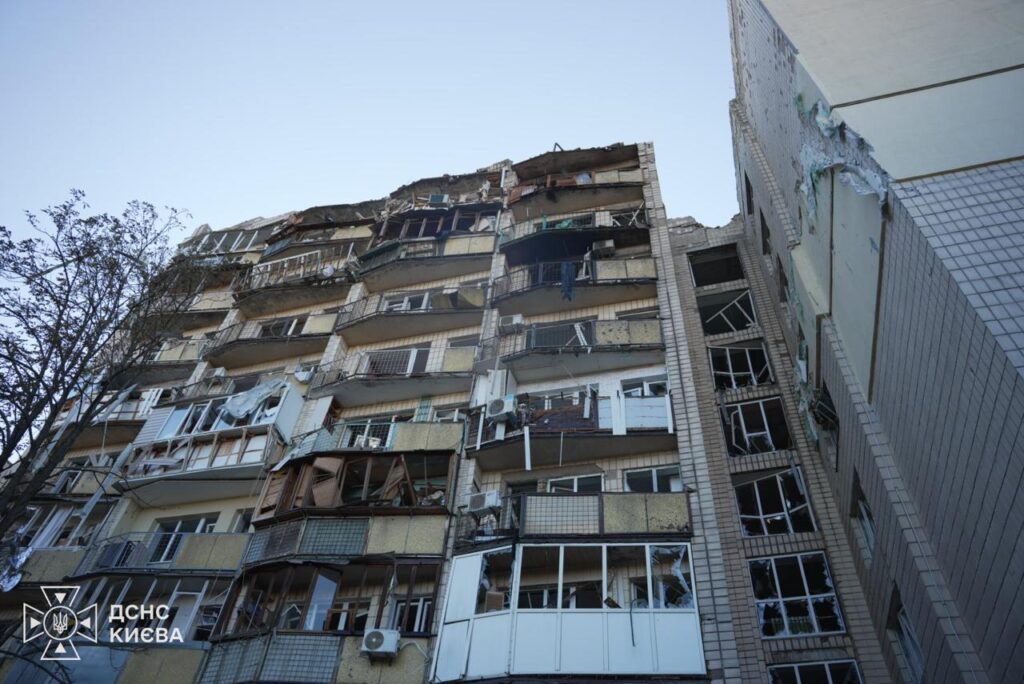
Apartment building damaged from a massive Russian aerial attack on Kyiv, Ukraine, 20 August 2026. Photo: Ukraine's State Emergency Service

Editor's note: This is a developing story.

Russia launched a massive overnight missile and drone attack targeting Kyiv and the surrounding region, killing 14 people and injuring more than 40, Ukrainian authorities said on 20 August.

The attack involved ballistic and cruise missiles alongside hundreds of drones. Ukraine’s Air Force said the main direction of the attack was Kyiv Oblast, with strikes and debris recorded at multiple locations. Several explosions were heard in the capital around midnight on 20 August, according to Euromaidan Press reporters in the city.

Residential building hit in Kyiv

In Kyiv, strikes, damage, and fires were reported in the Sviatoshynskyi, Darnytskyi, and Solomianskyi districts.

In Solomianskyi district, the upper two floors of a nine-story residential building were destroyed, with a fire breaking out across the seventh through ninth floors. 

People were trapped in two residential buildings and a school bomb shelter, prompting emergency crews to carry out rescue operations.

Thirteen people have now been confirmed killed in Kyiv, including a woman whose body was discovered by rescuers in Solomianskyi district, Interior Minister Ivan Vyhivskyi said.

Ukrainian President Volodymyr Zelenskyy said a children's hospital and a school were also damaged in the capital.

Kyiv Mayor Vitali Klitschko said the city would observe 21 August as a day of mourning, with entertainment events banned and flags lowered.

Death toll from Russia's missile attack on Kyiv city and Oblast climbs to 14

Ukraine's Interior Minister Ivan Vyhivskyi says another woman's body was found in Solomianskyi. More than 40 were wounded. The strikes damaged about 20 residential buildings, a school, a children's… pic.twitter.com/3wicnc5lni

— Euromaidan Press (@EuromaidanPress) August 20, 2026

Fires and damage across Kyiv

Around 20 residential buildings in Kyiv were significantly damaged, along with a school, children's hospital, and kindergarten, Vyhivskyi said.

In Sviatoshynskyi district, Russian strikes hit an industrial site and sparked fires at warehouses covering 500 and 1,000 square meters. Another warehouse also caught fire.

In Darnytskyi district, a non-residential site was hit, causing fires across warehouses and vehicles covering about 1,000 square meters. Rescuers saved one person and handed them over to medics.

Other locations saw damage to residential buildings, a medical facility, cars, garages, and stores.

More than 600 rescuers and police officers have been involved in clearing the aftermath since overnight. Emergency crews are currently working at two sites in Kyiv and three more in Boryspil and Brovary districts.

Rescuers are using specialized equipment and robotic systems to clear the rubble and check whether anyone remains trapped.

Police have set up assistance centers at the attack sites to register reports of damaged or destroyed property. More than 200 reports have already been processed in Kyiv, while psychologists are assisting people who lost relatives or their homes.

Russia's overnight missile attack killed at least 12 people in Kyiv and injured 34.

Russia pounded Kyiv and its surrounding region for hours into 20 August with dozens of ballistic missiles, Kalibr cruise missiles, and jet-powered Shahed drones.

The strikes killed at least 12… pic.twitter.com/UxPYdi6JY1

— Euromaidan Press (@EuromaidanPress) August 20, 2026

Kyiv Oblast casualties

The attack also hit Kyiv Oblast. One man was killed in Brovary district and another was injured.

In Boryspil district, six people were injured, four of whom were hospitalized. The attack damaged 14 private homes, four warehouses, a gas station, an apartment building, and eight vehicles.

Vyhivskyi said fires also engulfed warehouses storing household goods in Kyiv Oblast. Firefighters are working to contain the blaze, with aviation also deployed.

Russian attack leaves Kyiv and six oblasts with power outages

Ukrenergo says outages hit Kyiv and Kyiv, Donetsk, Odesa, Zaporizhzhia, Dnipropetrovsk, and Kharkiv oblasts. Ukrainians are asked to limit powerful appliances from 18:00–22:00.

The occupied Zaporizhzhia nuclear… pic.twitter.com/hlVz3CWyS5

— Euromaidan Press (@EuromaidanPress) August 20, 2026

Zelenskyy calls for stronger ballistic missile defenses

Zelenskyy said Russia’s growing investment in ballistic missiles requires a stronger international response and more air defense for Ukraine.

He said Ukraine is working daily on its FREYJA interceptor program, but stressed that Patriot interceptors remain irreplaceable and are needed every day to protect Ukrainian cities from Russian ballistic missile attacks.

“Every additional missile saves the lives of our people,” Zelenskyy said, thanking those working to provide Ukraine with additional air defense capabilities.

Russia spent months preparing its missiles. Zelenskyy says Ukraine still lacks enough interceptors to stop them

Russia combined different ballistic missiles, cruise missiles, and drones in its overnight attack to maximize damage to civilian infrastructure, President Volodymyr… pic.twitter.com/4iaRPs7dLC

— Euromaidan Press (@EuromaidanPress) August 20, 2026

Hundreds of aerial targets launched

Ukraine's Air Force said Russia launched 168 Shahed-type attack drones, Gerbera decoy drones, and other drones, along with 36 Kh-101, Iskander-K, and Kh-59 cruise missiles, eight Kalibr missiles, two Banderyl-type loitering munitions, and ballistic missiles including Oniks, Zircon, Iskander-M, and S-400 missiles.

As of 9:30 a.m., Ukrainian air defenses had shot down or suppressed 31 cruise missiles, all eight Kalibr missiles, both loitering munitions, and 145 drones, according to the Air Force.

The Air Force reported impacts at 28 locations and debris from intercepted targets at two others. 

The attack continued into the late morning, with air raid sirens still active and several Russian drones still in Ukrainian airspace.

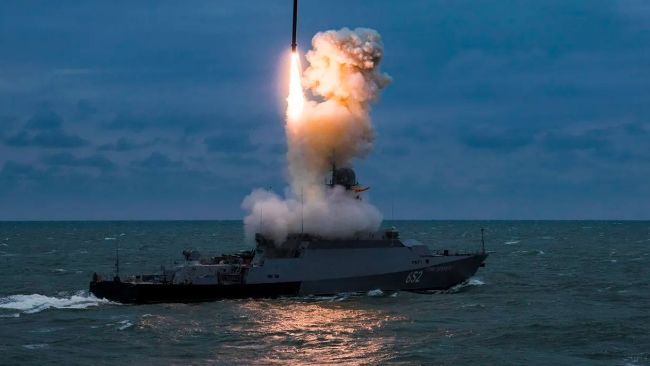
Ukraine is under a massive Russian attack right now: Russia's Kalibr missiles were launched from the Novorossiysk port

The warhead of the Kalibr family of cruise missiles typically weighs 450 kg
🎥Exilenova+ pic.twitter.com/DBgfRX7xhB

— Euromaidan Press (@EuromaidanPress) August 19, 2026
Kalibr missile launch black sea
Explore further

Russia hit Kyiv with ballistic and hypersonic missiles overnight, damaging a children’s hospital, with people trapped in a shelter

Rail traffic disrupted

Russia's strikes also disrupted rail traffic around Kyiv after railway infrastructure was damaged. Several suburban and regional trains between Kyiv and Nizhyn were rerouted or canceled.

Strikes reported in other regions

Zelenskyy said the attack also caused damage in Odesa and Chernihiv oblasts.

In Odesa Oblast, Russian drones targeted a border crossing with Moldova, while strikes in Chernihiv Oblast damaged gas infrastructure.

Russia strikes food trucks in Odesa Oblast

The attack ignited two trailers carrying food. Ukrainian firefighters extinguished the blaze, the State Emergency Service reported. No one was killed or injured.

📷 DSNS pic.twitter.com/pzt0PnKGsw

— Euromaidan Press (@EuromaidanPress) August 20, 2026
  • ✇Euromaidan Press
  • Russia launches “massive” attack on Ukrainian power plant as Kyiv braces for extremely difficult winter
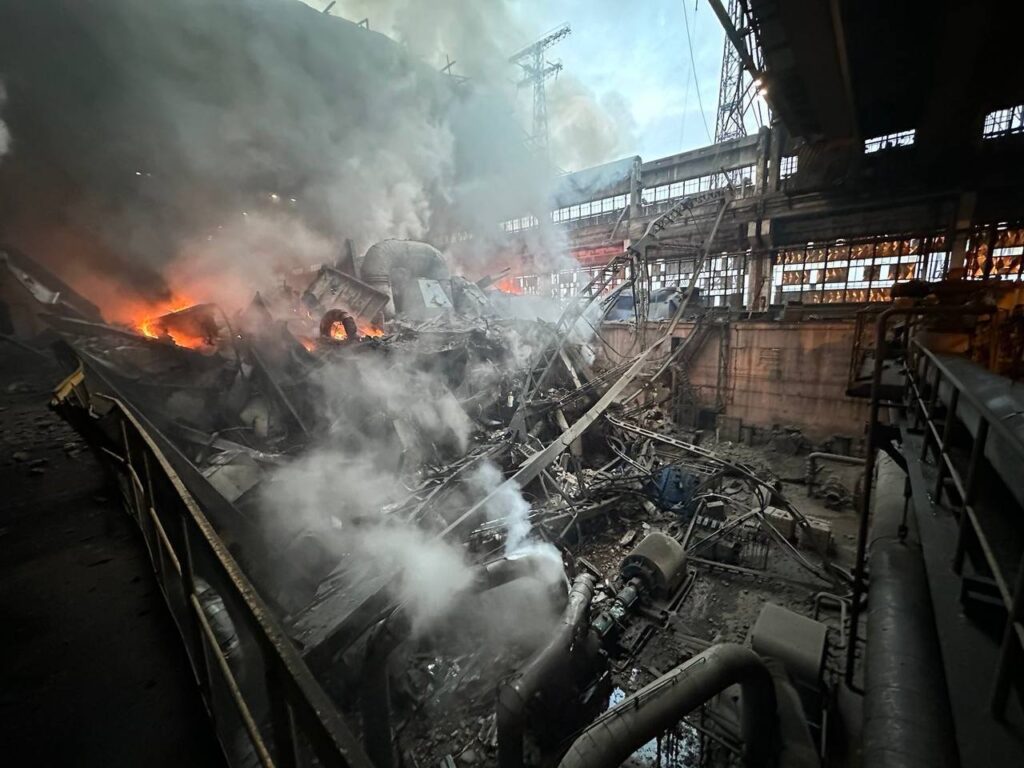
    Russia launched a massive attack on one of Ukraine’s DTEK thermal power plants, severely damaging equipment and forcing the facility to stop generating electricity, the energy company said on 18 August. The strike comes as Russia continues its campaign against Ukraine’s energy infrastructure ahead of another winter, with Ukrainian officials warning that Moscow is expected to intensify attacks on critical civilian systems. DTEK power plant sustains significant damage
     

Russia launches “massive” attack on Ukrainian power plant as Kyiv braces for extremely difficult winter

18 août 2026 à 14:14

Russia launched a massive attack on one of Ukraine’s DTEK thermal power plants, severely damaging equipment and forcing the facility to stop generating electricity, the energy company said on 18 August.

The strike comes as Russia continues its campaign against Ukraine’s energy infrastructure ahead of another winter, with Ukrainian officials warning that Moscow is expected to intensify attacks on critical civilian systems.

DTEK power plant sustains significant damage

DTEK said Russian forces heavily damaged equipment at one of its thermal power plants, forcing the station to halt electricity generation. The company did not identify the plant or provide an estimate of when it could resume operations.

DTEK’s thermal power plants have been attacked more than 230 times since the start of Russia’s full-scale invasion, according to the company.

During the previous major attack on 12 June, one DTEK employee was killed, the company said.

Ukraine faces another winter of energy attacks

The latest strike adds to extensive damage Russia has inflicted on Ukraine’s power system. Energy Minister Denys Shmyhal said earlier this month that Russia has destroyed or damaged more than 80% of Ukraine’s power-generating capacity.

Ukraine is preparing for another difficult winter after repeated Russian strikes last winter caused widespread damage to electricity and heating infrastructure.

Shmyhal has also warned that Russia could broaden its campaign this winter by targeting Ukraine’s water systems. Such attacks could make prolonged power outages significantly more dangerous for civilians by disrupting water supplies and sewage systems.

Kyiv Oblast faces mounting Russian attacks

The power plant strike came as Russia launched another large drone attack on Ukraine, with Kyiv Oblast the main target. Ukraine’s Air Force said dozens of drones were launched during the day, with most intercepted or suppressed by Ukrainian air defenses.

The latest assault is part of a broader pattern of Russian attacks on Kyiv Oblast in recent weeks. Alongside energy infrastructure, Russian forces have repeatedly targeted warehouses, distribution centers and other logistics facilities around the capital, disrupting the systems that supply Kyiv and other parts of Ukraine.

With winter approaching, the combination of attacks on energy generation and civilian logistics is adding pressure to a country already dealing with years of damage to its critical infrastructure.

Russia warns UK of “consequences” over British-made drones in Ukraine’s deep strikes. London vows to continue supporting Kyiv

18 août 2026 à 12:23

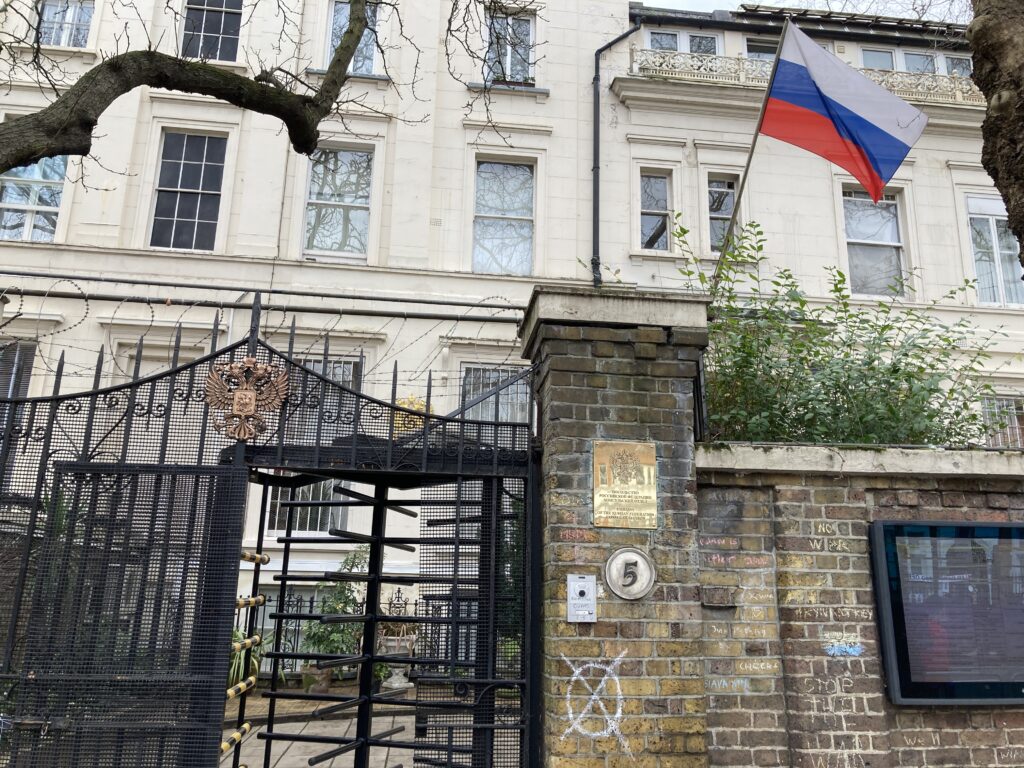
Russian Embassy in London, 2022. Photo via Wikimedia Commons.

Russia has threatened Britain with “consequences” over reports that Ukrainian forces used drones manufactured by UK companies to carry out strikes inside Russia.

The Russian Embassy in London accused the UK of deliberately escalating the war by supporting Ukraine’s long-range strike campaign, saying Britain was seeking to “contain Russia and inflict maximum damage on it by proxy.” It warned that the deeper Britain becomes involved, “the higher the price it will pay.”

The threat followed news that Ukrainian forces had used two British-built drone systems to strike targets inside Russia for the first time. The Sunday Times, citing Ukrainian military sources, reported that the drones had been used against targets including oil refineries in Volgograd and Yaroslavl over the past six months.

Moscow warns Britain of “consequences”

The Russian Embassy said in a statement that the reported use of British-made drones “confirms that London is deliberately opting for an escalation of the Ukraine crisis.”

It warned that British actions would “inevitably carry consequences for which it will have to answer,” without specifying what form those consequences could take.

The warning comes as Ukraine has significantly expanded its long-range strike campaign against Russian military and energy targets. Kyiv has increasingly used large drone swarms to hit targets deep inside Russia, seeking to disrupt military production, logistics, and energy revenues while forcing Moscow to spread its air defenses across a much larger area.

Burnham says UK will continue backing Ukraine

UK Prime Minister Andy Burnham rejected Moscow’s warning, saying Britain would continue supporting Ukraine despite Russian threats, The Independent reported on Tuesday.

“This is the UK doing what it has long said it would do, which is to support Ukraine 100 per cent against this illegal war led by Vladimir Putin,” Burnham said during a visit to Wolverhampton.

“We are providing support so that Ukraine can defend itself,” he said, adding: “We are not fair weather friends. We will be there in Ukraine’s hour of need, and that won’t change.”

UK Work and Pensions Minister Lilian Greenwood similarly said Britain’s resolve to support Ukraine remained “completely steadfast” and that the country would continue providing the military equipment Kyiv needs.

The UK Ministry of Defence also said Russia should have “no doubt” about the government's resolve to oppose Russian aggression in Ukraine and against Britain and its allies.

UK Prime Minister Andy Burnham and Ukrainian President Volodymyr Zelenskyy aboard the Ukrainian Navy’s Cherkasy minehunter at Portsmouth Naval Base, UK, 27 July 2026. Photo: Zelenskyy

British drones expand Ukraine’s deep-strike capabilities

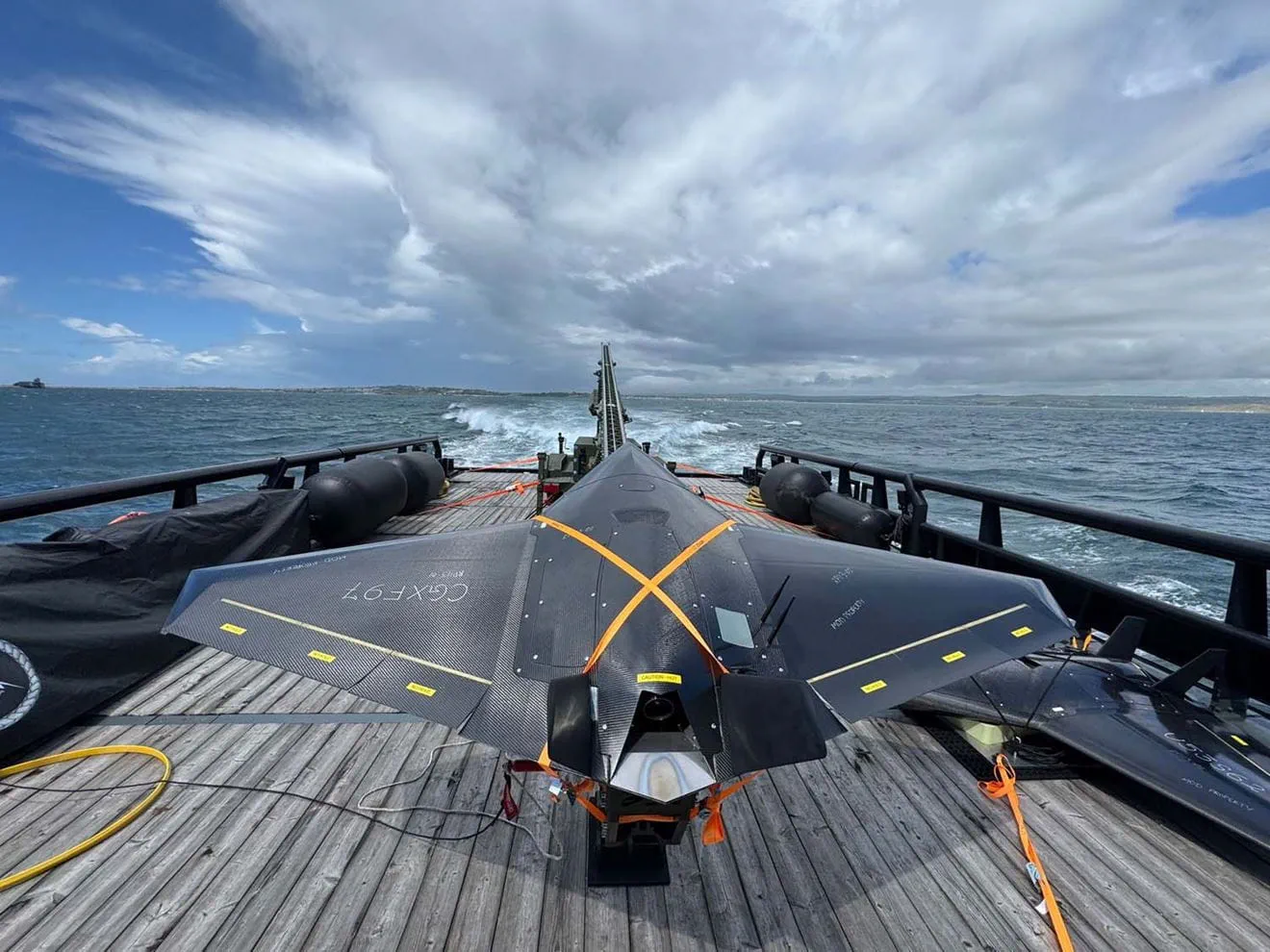
According to The Sunday Times, one of the British systems used by Ukraine is the Nyan, a jet-powered one-way attack drone produced by BAE Systems subsidiary Callen-Lenz, with a reported range of more than 150 miles.

The second system has a reported range exceeding 600 miles, although its manufacturer was not identified for security reasons. The drones provide Ukraine with additional long-range strike capacity that can be produced and deployed in larger numbers than more expensive Western cruise missiles.

Black Nyan one-way attack drone secured to a launcher on the deck of a Royal Navy vessel at sea.
Explore further

British drones hit Russia for first time in Ukraine’s deep-strike campaign – The Sunday Times

The reported deployment marks a further expansion of UK military support for Ukraine as Kyiv increasingly takes the fight to Russian military and energy infrastructure inside Russia.

  • ✇Euromaidan Press
  • “Chasing away vipers”: Ukrainian special forces retake Andriivka-Klevtsove, capture 30 Russian soldiers
    Ukrainian Special Operations Forces (SOF) have retaken Andriivka-Klevtsove, a settlement on the border between Donetsk and Dnipropetrovsk oblasts, and captured 30 Russian soldiers, the SOF said on 17 August. The operation is part of Ukraine’s broader eight-month counteroffensive on the Oleksandrivka axis, during which Kyiv says its forces have recaptured 745 square kilometers and 26 villages across Donetsk, Dnipropetrovsk, and Zaporizhzhia oblasts. The offensive has pus
     

“Chasing away vipers”: Ukrainian special forces retake Andriivka-Klevtsove, capture 30 Russian soldiers

18 août 2026 à 11:02

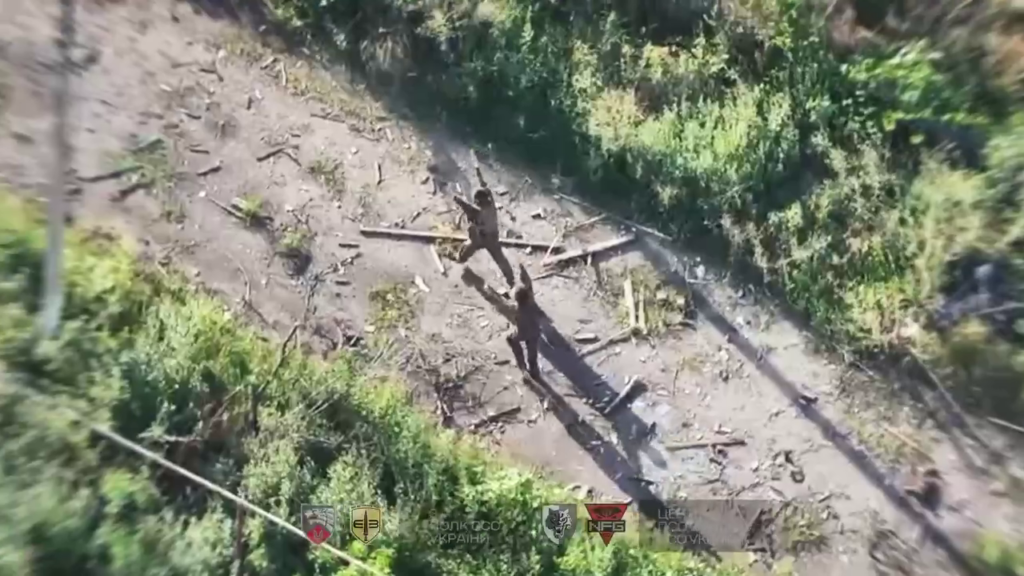
Russian soldiers surrendering in Andriivka-Klevtsove, Donetsk Oblast, Ukraine, as Ukrainian forces retook the settlement, August 2026. Screenshot from video: Ukrainian Special Operations Forces

Ukrainian Special Operations Forces (SOF) have retaken Andriivka-Klevtsove, a settlement on the border between Donetsk and Dnipropetrovsk oblasts, and captured 30 Russian soldiers, the SOF said on 17 August.

The operation is part of Ukraine’s broader eight-month counteroffensive on the Oleksandrivka axis, during which Kyiv says its forces have recaptured 745 square kilometers and 26 villages across Donetsk, Dnipropetrovsk, and Zaporizhzhia oblasts. The offensive has pushed Russian forces back from Dnipropetrovsk Oblast after months of Russian advances toward the region.

Russian forces infiltrated the settlement in small groups

Andriivka-Klevtsove, formerly known by its Soviet name Iskra, had been targeted by Russian forces attempting to gradually establish positions in the settlement.

According to the SOF, Russian troops had been infiltrating the area in small groups and occupying positions on the Oleksandrivka axis.

SOF forces cleared Russian positions and captured 30 troops

Operators from the SOF’s 3rd Regiment, working with an SOF psychological operations center, carried out a coordinated operation to clear Russian forces from the settlement.

Footage released by the SOF shows the ground phase of the operation, including Ukrainian special forces advancing through the settlement and forcing Russian troops from their positions.

Thirty Russian servicemen surrendered and were taken prisoner, according to the SOF. Russian troops who continued to resist were killed.

Ukrainian Special Operations Forces (SOF) have retaken Andriivka-Klevtsove on the border between Donetsk and Dnipropetrovsk oblasts, capturing 30 Russian soldiers in the operation.

Russian forces had been gradually infiltrating the settlement in small groups and establishing… pic.twitter.com/1vnnP37xXx

— Euromaidan Press (@EuromaidanPress) August 18, 2026

Ukrainian forces perform traditional “Chasing Away Vipers” ritual

After securing the settlement, Ukrainian special forces raised the Ukrainian flag and performed a traditional local ritual known as “Chasing Away Vipers.”

The ritual, included in Ukraine’s National Inventory of Elements of Intangible Cultural Heritage, is intended to symbolically drive evil and misfortune from a home.

The SOF said the ritual was used this time to “cleanse” the settlement of the Russian forces it described as “real vipers.”

Andriivka-Klevtsove adds to Ukraine’s gains on the Oleksandrivka axis

Kyiv announced on 12 August that Ukrainian forces had recaptured 745 square kilometers and 26 villages during the Oleksandrivka counteroffensive, which began on 29 January.

The operation was aimed at stopping Russia’s advance toward Dnipropetrovsk Oblast and pushing Russian forces back beyond its administrative border. Kyiv said Russian forces suffered at least 9,550 killed and more than 6,600 wounded during the operation.

The US-based Institute for the Study of War assessed that the Ukrainian advances showed Kyiv could still conduct significant tactical advances and restore limited mechanized maneuver on parts of the front.

One alternative to air defense: Ukraine strikes Russian Bastion system used to attack Ukrainian cities from Crimea

16 août 2026 à 10:38

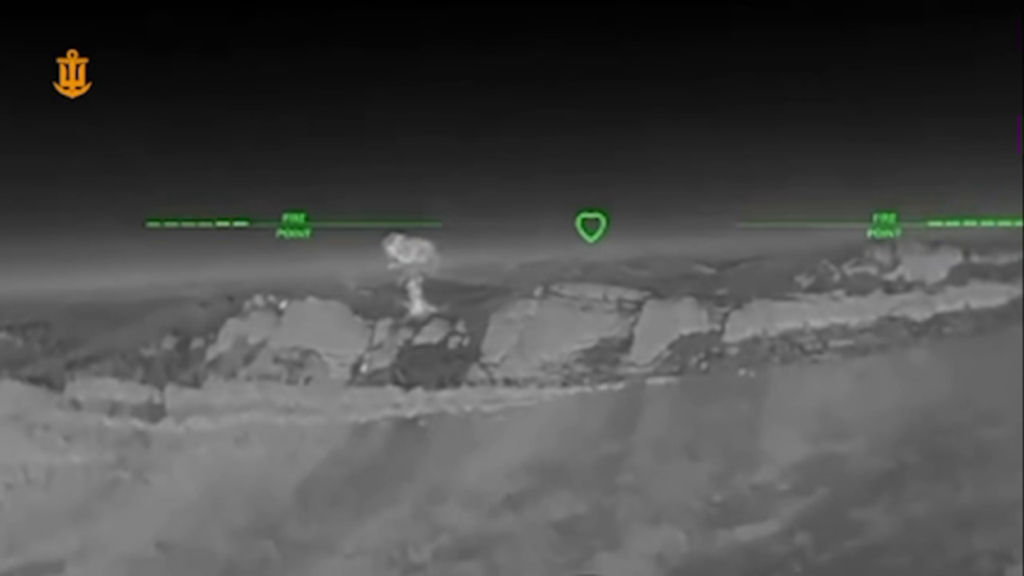
Smoke rises from a Russian Bastion missile system position in occupied Crimea after a Ukrainian strike on 16 August 2026. Screenshot from video: Ukrainian Navy

Ukraine’s Navy said its forces struck the launch positions and deployment site of a Russian Bastion coastal missile system in occupied Crimea overnight on 16 August, reportedly inflicting significant losses in equipment and personnel.

Russia has regularly used Crimea as a launch platform for strikes against Ukraine, making its missile systems there a priority target for Ukrainian forces seeking to reduce Russia’s ability to attack Ukrainian territory.

The Navy said the final Russian losses were still being assessed and did not provide details on the weapons or personnel destroyed.

Bastion systems used to strike Ukraine

The Bastion is a costly and scarce Russian coastal missile system that can launch P-800 Oniks cruise missiles. Russia has used Oniks missiles launched from occupied Crimea to attack targets across southern and other regions of Ukraine.

Oniks is a supersonic anti-ship cruise missile that Russia has adapted for strikes against ground targets in Ukraine, including Odesa Oblast. The missile can travel at more than 3,000 km/h, making it difficult for air defenses to intercept. Its standard range is about 300 kilometers, while upgraded variants can reportedly reach up to 800 kilometers and carry a 300-kilogram warhead. Russia launches ground attacks with Oniks from mobile Bastion systems based in occupied Crimea.

The Navy also said Russia uses Bastion systems to launch Zircon hypersonic missiles against Ukraine.

The Zircon is a newer hypersonic cruise missile designed to reach speeds of roughly Mach 5–9. Russia has used it against Ukrainian cities, including Kyiv, with launches previously reported from Bastion systems in occupied Crimea. Its officially claimed range exceeds 1,000 kilometers, although analysts question that figure; Ukrainian analysts have estimated a lower effective range.

Bastion launchers in Crimea are a particularly important target for Ukraine: they give Russia a mobile platform for striking targets across southern Ukraine and, with Zircon, deep into the country. Ukraine’s air defenses have struggled to intercept these missiles, making strikes on the launchers an important way to reduce the threat before the missiles are fired.

The Ukrainian Navy said the strike was part of ongoing efforts to reduce Russia’s combat potential in the Black Sea region.

Several Ukrainian strikes recorded overnight

The Crimea strike came amid a broader wave of Ukrainian attacks on Russian military, industrial, and logistics targets overnight on 16 August.

Ukraine’s General Staff reported a strike on the Kamensky Combine in Russia’s Rostov Oblast, where a fire was recorded. The plant produces solid rocket fuel for Russia’s Uragan, Smerch, and Tornado-S multiple-launch rocket systems, as well as components for other missile and aviation weapons.

In Moscow Oblast, a Ukrainian drone struck a 250,000-square-meter Wildberries warehouse in Koledino, while another fire was reported at the Severnoye Domodedovo logistics complex. Ukraine’s Defense Ministry later confirmed the Wildberries facility had been put out of operation, saying it was the retailer’s largest warehouse by area.

The General Staff also confirmed the results of two earlier strikes. It said the ZapSibNeftekhim petrochemical complex in Tobolsk was shut down after its central gas-fractionation unit was struck on 10 August, while an 11 August strike damaged several processing units at the Orsknaftaorgsyntez refinery in Orenburg Oblast.

The strikes show the expanding reach of Ukraine’s campaign against the military and industrial infrastructure supporting Russia’s war, from missile systems and rocket-fuel production to oil, petrochemical, and logistics facilities.

  • ✇Euromaidan Press
  • “One of the most massive” Ukrainian drone attacks hits Moscow Oblast: two major warehouses ablaze
    A drone hit a major Wildberries warehouse at Koledino near Moscow overnight on 16 August 2026 and set it ablaze, Moscow Oblast Governor Andrey Vorobyov said. Vorobyov described the overnight swarm as “one of the most massive drone attacks in recent times.” It comes amid an expanding Ukrainian campaign against Wildberries, Russia's largest online retailer with a vast network of warehouses and logistics centers, that has reached warehouses from Moscow Oblast to the Urals.
     

“One of the most massive” Ukrainian drone attacks hits Moscow Oblast: two major warehouses ablaze

16 août 2026 à 08:15

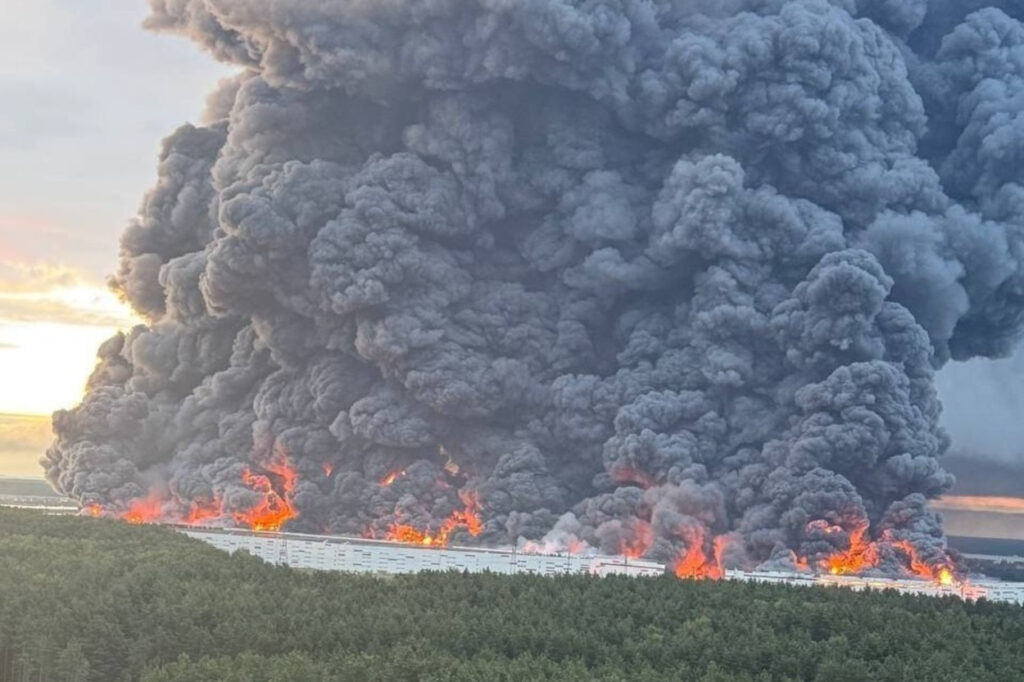
Wildberries warehouse burning in Russia's Koledino following a Ukrainian drone strike, 16 August 2026. Photo: Exilenova+

A drone hit a major Wildberries warehouse at Koledino near Moscow overnight on 16 August 2026 and set it ablaze, Moscow Oblast Governor Andrey Vorobyov said. Vorobyov described the overnight swarm as “one of the most massive drone attacks in recent times.”

It comes amid an expanding Ukrainian campaign against Wildberries, Russia's largest online retailer with a vast network of warehouses and logistics centers, that has reached warehouses from Moscow Oblast to the Urals. Ukrainian authorities say Wildberries facilities are used to supply components for Russian drone production and navigation equipment, making them part of Russia’s wartime logistics network.

The Koledino fire puts a major part of Wildberries’ storage and sorting capacity at risk. At about 250,000 square meters, the complex is one of the retailer’s largest logistics hubs. Ukrainian sources say the marketplace has moved drone parts and other military-linked goods. Wildberries denies supporting Russia’s military. 

Wildberries’ parent company, RWB, confirmed the fire, saying workers had been evacuated and deliveries rerouted. 

Unlike the 28 July fire at Koledino industrial park, the latest blaze was confirmed at Wildberries’ own Koledino warehouse. Initial reports in July had also pointed to Wildberries, but open-source investigators later identified the burning building as a neighboring warehouse run by a third-party logistics company.

The entire Wildberries logistics hub in Koledino, Moscow Oblast, is engulfed in flames following today’s attack.

The complex covers around 250,000 m² and has long been one of Wildberries’ largest and most important logistics centers. https://t.co/qqrrsLFB3Y pic.twitter.com/YivkijfyeT

— Special Kherson Cat 🐈🇺🇦 (@bayraktar_1love) August 16, 2026

A second fire broke out at Warehouse No. 15 in MLP Severnoye Domodedovo, a multimodal logistics complex near one of Moscow’s main airports. Vorobyov said the warehouse stores medications.

Vorobyov claimed an 83-year-old man was killed after a drone fell on a private home in the Ramenskoye district, while at least six other people were injured across the region.

Moscow Mayor Sergei Sobyanin claimed that Russian air defenses destroyed 201 drones approaching the region.

Ukraine confirms Wildberries warehouse was targeted

Ukraine’s Defense Ministry confirmed that the Wildberries logistics hub in the Koledino industrial park was put out of operation during the overnight drone attack.

The ministry said the facility, which covered 250,000 square meters, was Wildberries’ largest warehouse by area. It also said Ukraine has now disabled seven of the company’s 10 largest logistics centers.

Ukraine’s campaign against Wildberries keeps growing

Ukraine’s campaign against Wildberries began on 18 July 2026, when drones struck warehouses in Elektrostal and Kotovsk. Reported attacks have since reached the retailer’s sites across Russia, including a newly opened hub near Voronezh and a warehouse in Tver targeted three times in two weeks.

By 14 August, Agentstvo had counted fires at more than 20 Wildberries sites. The sustained attacks had already prompted Wildberries to prohibit warehouse workers from bringing smartphones to work, citing concerns that photos and videos taken during drone alerts could pose a security risk. 

The effects on Russia’s economy

The number and geographic spread of Ukraine’s strikes have put sustained pressure on the retailer’s nationwide warehouse network and Russia’s economy at large. 

Earlier fires destroyed goods belonging to independent sellers, The Moscow Times reported. Wildberries said it was considering compensation, although its contracts do not require the company to cover losses caused by drone attacks. 

In response to Ukraine’s strikes, the company has also reportedly sought additional storage in Kazakhstan, giving local warehouse operators greater leverage as it tries to replace capacity lost in Russia.

The physical disruption was followed on 15 August by a Ukrainian cyberattack targeting Wildberries’ payment and customer service systems. The hackers said customers could not make payments or reach the company through its main online support channel. 

  • ✇Euromaidan Press
  • More than 100 drones detected near Romania in four days, NATO jets scrambled seven times
    More than 100 drones were detected near Romania over the past 96 hours, with NATO fighter jets scrambled seven times in response to the increased aerial activity, Romanian Defense Minister Radu Miruță said, according to Antena 3 CNN. The figures come as Romania faces a growing number of drone incidents linked to Russia’s war against Ukraine. Romanian forces have recently shifted from monitoring and escorting drones to actively destroying those that enter Romanian airspa
     

More than 100 drones detected near Romania in four days, NATO jets scrambled seven times

14 août 2026 à 16:42

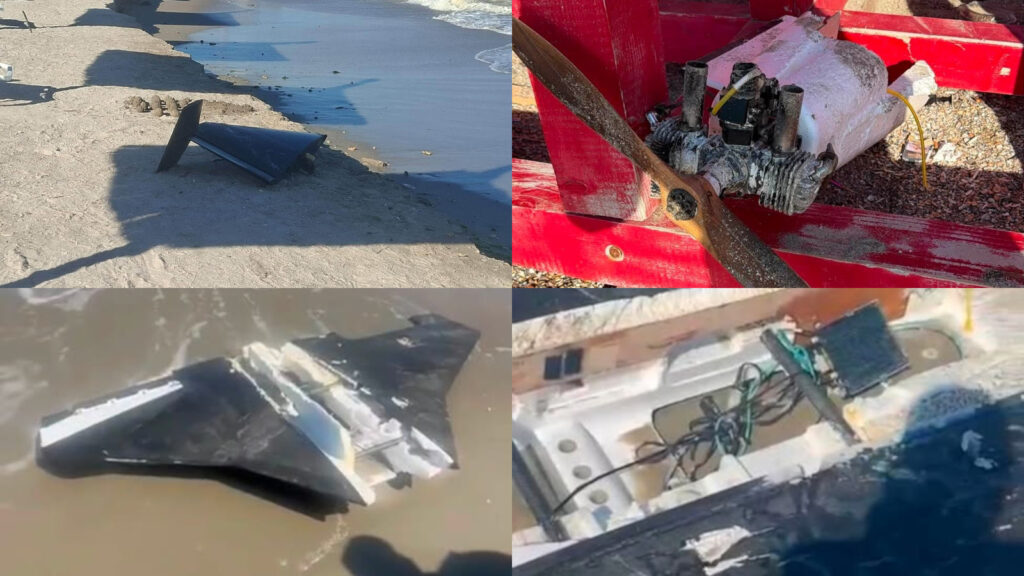
Drone debris washed ashore in Romania after Russian attacks on Ukraine, 13-14 August 2026. Photos: Radu Miruță

More than 100 drones were detected near Romania over the past 96 hours, with NATO fighter jets scrambled seven times in response to the increased aerial activity, Romanian Defense Minister Radu Miruță said, according to Antena 3 CNN.

The figures come as Romania faces a growing number of drone incidents linked to Russia’s war against Ukraine. Romanian forces have recently shifted from monitoring and escorting drones to actively destroying those that enter Romanian airspace, while NATO aircraft are increasingly being called on to respond to aerial threats along the alliance’s eastern flank.

NATO aircraft repeatedly activated

According to Miruță, Romanian authorities detected more than 100 drones in the vicinity of Romanian territory during the four-day period. NATO fighter jets participating in air-policing missions were activated seven times.

Miruță did not report how many of the detected drones entered Romanian airspace, nor how many were identified as Russian or Ukrainian.

Miruță said most of the drones were destroyed by Ukrainian air defenses outside Romania, but close enough for their debris to reach Romanian shores.

“[Russia’s war in Ukraine] is a real war, with real consequences. That is why we are taking every measure we can to limit the indirect consequences that are also being felt here,” Miruță wrote on Facebook.

The report comes shortly after Romania destroyed two Russian Gerbera-type drones that were found drifting in the Black Sea near the Neptun Deep offshore gas project on 11 August. Romanian military divers carried out controlled detonations after Ukraine confirmed the drones were not Ukrainian.

Romania has begun shooting down drones

The latest figures follow a significant change in Romania’s response to drone incursions.

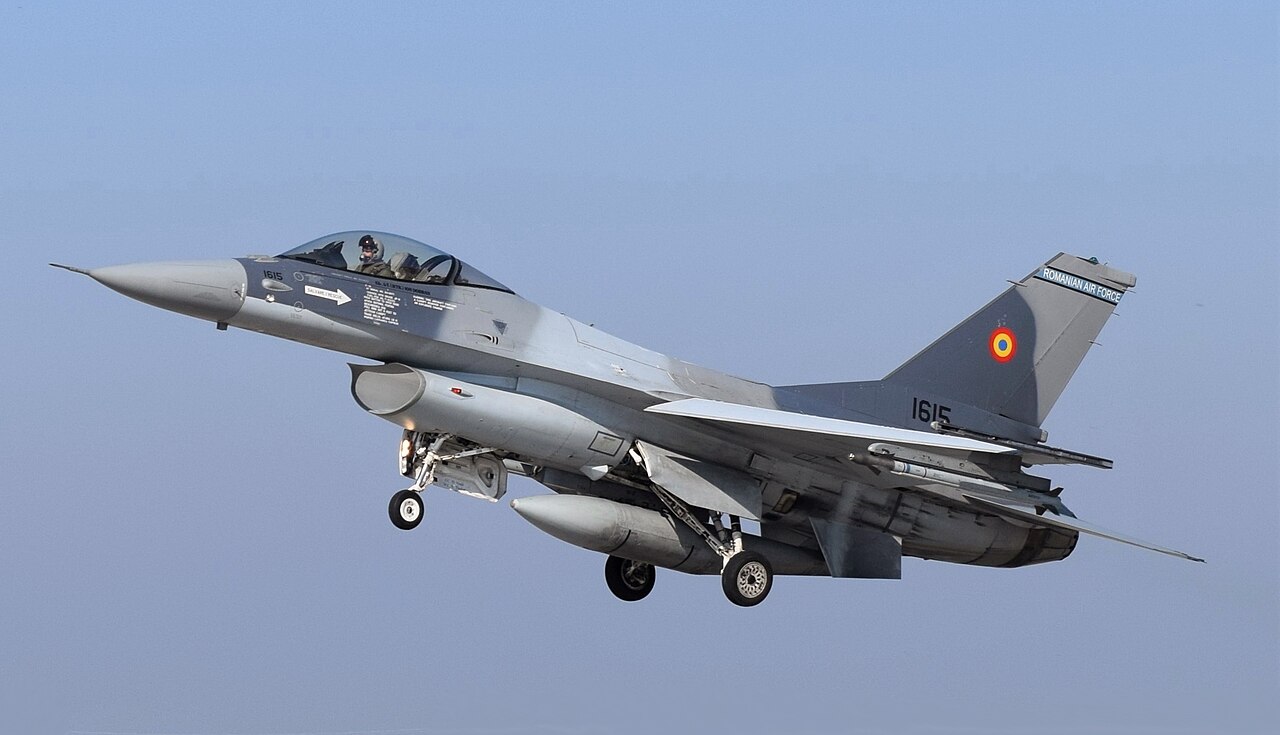
In late July, Romanian F-16s shot down three drones over Romanian territory and territorial waters in three consecutive days. One of the drones was identified as a Russian Shahed-type attack drone, while investigations were conducted into the others.

The July incidents marked a shift from Romania’s previous approach of tracking or escorting drones that crossed into its airspace during Russian attacks on Ukraine. Four of the five drones shot down in EU and NATO countries at that point had been neutralized by Romanian military pilots, according to Miruță.

Romanian President Nicușor Dan called the repeated violations of Romanian airspace “inadmissible and intolerable” and Bucharest prepared a diplomatic protest to Moscow after one of the downed drones was identified as Russian.

romania knocks third drone its sky 72 hours · post romanian air force f-16 fighting falcon fighter jet lands borcea base 2023 dvidshubnet romanian_f-16_fighting_falcon_lands_at_borcea_air_base_romania ukraine news ukrainian reports
Explore further

Romania knocks a third Russian drone from its sky in 72 hours

Drone war reaches beyond Ukraine

Romania has repeatedly dealt with drones crossing its border during Russian attacks on Ukrainian territory, particularly in the vicinity of Ukrainian ports on the Danube and the Black Sea.

In June, a Ukrainian sea drone that had lost control, which Kyiv attributed to Russian electronic warfare, exploded near an oil terminal in the Romanian port of Constanța. No one was injured, but more than 1,000 people were evacuated from the area as a precaution.

The incidents have also extended beyond Romania. On 14 August, NATO fighter jets shot down a foreign drone after it entered Latvian airspace. Latvia said the drone had entered its airspace as a result of Russian electronic warfare activity.

The repeated incidents have made drone activity around NATO’s eastern border an increasingly regular consequence of Russia’s war against Ukraine.

  • ✇Euromaidan Press
  • Russia plans to remove border zones separating Russia from occupied Ukrainian territories
    Russia’s Federal Security Service (FSB) plans to abolish special border zones along several boundaries with Ukrainian territories occupied by Russia, according to draft orders reviewed by the Russian outlet Agentstvo. The proposed changes would remove restrictions that currently treat movement between Russia and occupied parts of Ukraine much like crossing an international border. The FSB says the move follows Russia’s claimed incorporation of the occupied Ukrainian ter
     

Russia plans to remove border zones separating Russia from occupied Ukrainian territories

14 août 2026 à 15:58

Map of Ukraine, with Russian-occupied territory marked in red, 14 August 2026. Map: DeepState

Russia’s Federal Security Service (FSB) plans to abolish special border zones along several boundaries with Ukrainian territories occupied by Russia, according to draft orders reviewed by the Russian outlet Agentstvo.

The proposed changes would remove restrictions that currently treat movement between Russia and occupied parts of Ukraine much like crossing an international border. The FSB says the move follows Russia’s claimed incorporation of the occupied Ukrainian territories into Russia.

FSB seeks to remove border zones

The draft orders, as reported by Ukrainska Pravda, would invalidate previous FSB orders establishing border zones along the boundaries between Russia’s Rostov and Voronezh oblasts and the occupied territories of Ukraine.

A similar change is planned for occupied Crimea, where the current border zone along the boundary with occupied Kherson Oblast would be abolished.

The existing rules effectively impose additional controls on people entering and leaving the occupied territories, making movement subject to procedures similar to those used at Russia’s state border.

In the draft orders, the FSB justifies the changes by referring to the alleged “admission into the Russian Federation” of the occupied parts of Donetsk, Luhansk, and Kherson oblasts.

Russia illegally claimed to annex those territories, along with Zaporizhzhia Oblast, in September 2022. The move has been rejected by Ukraine and the international community, and Russia does not control all of the territory it claims to have annexed.

Border zone would remain around Crimea's islands

The FSB proposal would not completely eliminate the border zone in occupied Crimea.

A restricted zone would remain “within the boundaries of the Black Sea islands belonging to the Russian Federation,” according to the draft. The FSB’s regional directorate would determine where and when people could enter the zone and would install warning signs.

The proposed changes would remove the existing border zones along Russia’s boundaries with occupied Ukrainian territories, while retaining a border zone around certain Black Sea islands in occupied Crimea.

Russia treats occupied territory as part of its territory

The planned changes reflect Moscow’s effort to incorporate occupied Ukrainian territories into Russia’s administrative and legal system.

In September 2022, Russian President Vladimir Putin signed so-called “accession treaties” claiming to incorporate Donetsk, Luhansk, Kherson, and Zaporizhzhia oblasts into Russia. Russia’s parliament subsequently approved the claims.

The treaties purported to define the boundaries of the annexed territories according to the borders they had on the day Russia claimed to admit them into the Russian Federation, despite Russia not controlling the entirety of those regions.

Russia previously used similar measures to formalize its control over occupied Crimea after illegally annexing the peninsula in 2014.

A Russian soldier kept a Ukrainian woman in a basement and raped her for two months – Ukrainian court sentences him to 12 years

14 août 2026 à 14:17

A Russian soldier was sentenced to 12 years for repeatedly raping a Ukrainian civilian woman in occupied Donetsk Oblast. Ukraine's Prosecutor General’s Office

A Ukrainian court has sentenced a Russian soldier to 12 years in prison for repeatedly raping a 57-year-old civilian woman for about two months in an occupied village in Donetsk Oblast, Ukraine’s Prosecutor General’s Office said on 14 August.

Ukrainian authorities and international monitors have documented hundreds of cases of conflict-related sexual violence by Russian forces in Ukraine, while warning that the true number is likely higher because many cases go unreported, particularly in occupied territories.

Woman was trapped with Russian soldiers

The 50-year-old Russian serviceman entered a village in the Pokrovsk district in September 2025 as part of a small infantry group, according to prosecutors. He and two other Russian soldiers occupied the basement of a private home where two local civilians were sheltering from Russian attacks.

During one of the attacks, the civilian man was killed. The woman was then left in the basement with the three armed Russian soldiers.

In early October, one of the soldiers began sexually assaulting her. The court found that the abuse became systematic and continued for about two months.

The soldier threatened to kill the woman if she refused. Two other Russian servicemen were present during this period, while the woman was effectively unable to leave the basement or protect herself.

The abuse ended in December, when Ukrainian forces captured the Russian soldier during fighting. The woman was freed.

Convicted Russian soldier had spent 32 years in prison

The convicted man is a resident of Russia’s Sverdlovsk Oblast who had spent a total of 32 years in prison for robbery and armed robbery before joining the Russian military.

He signed a contract with the Russian army while serving his sentence and was later deployed as a rifleman with the 114th Separate Motor Rifle Brigade of Russia’s 51st Combined Arms Army.

The defendant denied committing the crime in court. Prosecutors presented evidence that the court found sufficient to establish his guilt in the cruel treatment of a civilian.

He was sentenced to 12 years in prison, the maximum punishment under the provision of Ukraine’s Criminal Code used in the case.

Sexual violence as a weapon of Russia’s war

Ukraine’s Prosecutor General’s Office had recorded 401 cases of sexual violence against civilians allegedly committed by Russian military personnel since the start of the full-scale invasion as of June 2026.

The victims included 250 women and 151 men, including 23 girls and one boy.

Donetsk Oblast had the second-highest number of documented cases, with 92, behind Kherson Oblast’s 124. Ukrainian prosecutors had sent 64 indictments involving 81 people to court, while Ukrainian courts had issued 19 verdicts against 26 individuals. All those convicted received prison sentences.

The documented figures do not capture the full scale of the abuse. The Prosecutor General’s Office has noted that the actual number may be higher because these are cases victims have been able to report.

“Responsibility is inevitable”: Zelenskyy warns Russian collaborators in occupied territories after explosion kills defector

14 août 2026 à 12:13

Ukrainian President Volodymyr Zelenskyy, 8 August 2026. Photo: Zelenskyy on Telegram

Ukrainian President Volodymyr Zelenskyy said Ukrainian special services are conducting targeted operations against collaborators in Russian-occupied territories who assist Russia’s attacks against Ukraine and Ukrainians.

Speaking after a meeting of Ukraine’s top military leadership on 14 August, Zelenskyy said he received a separate briefing from Ukraine’s special services on the progress of these operations.

He specifically mentioned occupied Sevastopol, where Ukrainian officials have previously accused local collaborators of supporting Russia’s military operations.

“Responsibility for collaborators is inevitable,” Zelenskyy said.

Operations target those helping Russia

Zelenskyy did not identify the individuals targeted or provide operational details, saying only that the special services had reported on the implementation of “targeted operations” against collaborators in occupied territories.

He said the targets include people who participate in Russian attacks against Ukraine and Ukrainians.

The comments signal that Ukraine is continuing to pursue individuals in occupied territory who assist Russian forces, including through intelligence, military support, or other forms of cooperation.

Sevastopol explosion on 13 August

The statement comes shortly after an explosion in occupied Sevastopol on 13 August killed a Russian military officer.

Russian and Ukrainian sources have circulated claims that the victim was Robert Shageyev, reportedly a former Ukrainian Navy officer who joined Russia after the occupation of Crimea and later served in Russia’s Black Sea Fleet. 

His identity and the circumstances of the explosion have not been officially confirmed by Ukrainian authorities.

Russian sources had suggested Ukrainian involvement in the incident, but Ukraine has not publicly claimed responsibility.

Sevastopol
Explore further

Man killed in explosion in occupied Sevastopol, Russian sources report

Ukraine prepares for Russia’s next moves

The discussion of operations against collaborators was part of a broader meeting focused on Ukraine’s military preparations for the coming months.

Zelenskyy said the main issue was securing funding for Ukraine’s defense and security forces through the fall and winter. Officials identified funding gaps and additional requirements for expanding production of advanced weapons.

Among the priorities are faster production of Ukrainian strike weapons and new defensive systems, including jet-powered interceptor drones designed to counter Russian aerial threats.

Ukrainian intelligence also provided updated information about Russia’s plans, according to Zelenskyy. He said Ukraine is preparing countermeasures, including asymmetric responses.

The meeting also covered the effectiveness of Ukraine’s long-range and medium-range sanctions against Russia. Zelenskyy said the existing sanctions plan is being implemented and that priorities are being adjusted to ensure Ukraine has the capabilities needed to achieve its objectives.

  • ✇Euromaidan Press
  • Ukraine puts controversial Skelia regiment under Azov command as Drapatyi pushes military reforms
    Ukraine’s 425th Separate Assault Regiment Skelia is moving under the operational command of the 1st National Guard Corps Azov, as the Ukrainian military works to consolidate scattered Skelia units under a single command and eventually deploy them on the same section of the front. The move comes amid scrutiny of Skelia following an investigation into dozens of non-combat deaths among its recruits and ongoing criminal proceedings over alleged abuse. It also forms part of
     

Ukraine puts controversial Skelia regiment under Azov command as Drapatyi pushes military reforms

13 août 2026 à 16:10

Soldiers of Ukraine’s 425th Separate Assault Regiment Skelia. Photo: Skelia

Ukraine’s 425th Separate Assault Regiment Skelia is moving under the operational command of the 1st National Guard Corps Azov, as the Ukrainian military works to consolidate scattered Skelia units under a single command and eventually deploy them on the same section of the front.

The move comes amid scrutiny of Skelia following an investigation into dozens of non-combat deaths among its recruits and ongoing criminal proceedings over alleged abuse. It also forms part of broader reforms being carried out by newly appointed Commander-in-Chief Mykhailo Drapatyi, who made the decision to place Skelia under Azov’s operational command, according to the regiment.

Oleksii Bratushchak, head of communications for the Skelia regiment, announced the change on 13 August on the YouTube channel “Butusov Plus”. He stressed that Skelia is not becoming part of Azov’s organizational structure. The arrangement concerns operational command, meaning Azov will direct the regiment’s combat employment.

Skelia’s scattered units are being brought together

Bratushchak said Skelia is currently carrying out combat orders under Azov Corps command, although not all of its units have yet been transferred.

The regiment’s units have been spread across several areas and operating under different higher commands. The plan is to gradually bring them together so they can operate on the same part of the front.

Part of Skelia will move to the Dobropillia direction, where Azov Corps is deployed. Other elements remain on their current assignments for now, including the Pokrovsk, Kharkiv, and Kostiantynivka directions.

Bratushchak said Skelia’s command has already met with Azov and established cooperation. He described the decision as one made by Drapatyi and said the regiment views it positively.

The move follows personnel changes that began earlier in August. On 7 August, Ukrainska Pravda reported that Skelia had begun transferring soldiers to around 10 other units, citing sources in the regiment and Ukraine’s Defense Forces. 

The regiment confirmed that personnel were being reassigned on orders from higher command, while stressing that its units remained at their positions and continued carrying out combat tasks. The number of troops being transferred was not disclosed.

The move is part of Drapatyi’s ongoing reforms of Ukraine’s armed forces following his appointment as commander-in-chief. In July, the General Staff launched an audit of how personnel are distributed among brigades, regiments, and corps, reflecting Drapatyi’s focus on addressing imbalances in how Ukraine’s forces are manned.

A Ukrainian soldier. Source: The 8th Special Purpose Regiment of the Special Operations Forces named after Prince Iziaslav Mstyslavych
Explore further

Ukraine’s army has some brigades starved of soldiers and others overstaffed. New commander is now auditing why

Skelia remains a separate regiment under Azov’s operational command

The change does not dissolve Skelia or turn it into an Azov unit. The regiment remains a separate military formation, while Azov Corps takes operational control over its forces for combat tasks.

Ukraine has been reorganizing its ground forces around corps-level commands, intended to give commanders greater control over multiple brigades and regiments operating in the same area.

Azov itself is now the core of Ukraine’s 1st National Guard Corps, commanded by Brigadier General Denys Prokopenko, known by his call sign “Redis.” The corps has been operating in the Donetsk region as part of Ukraine’s effort to consolidate forces and command structures on the battlefield.

The backdrop: deaths and abuse allegations inside Skelia

The reorganization comes less than two months after a major investigation into conditions inside Skelia’s training system triggered criminal and institutional investigations.

Babel’s investigation published in June documented 25 non-combat deaths among Skelia recruits between late 2025 and spring 2026, including cases where forensic findings raised questions about reported causes of death. Ukraine’s State Bureau of Investigations opened a criminal case, and Skelia’s commander was suspended pending the investigation.

Skelia confirmed that 25 of the 26 deaths cited in the investigation had occurred but disputed some of the reported circumstances. The regiment has denied that abuse was systemic.

Training in the Skelia regiment.
Explore further

Ukraine opened a criminal case over 25 non-combat deaths at its largest assault regiment. Serving soldier’s response was to call reporter “media killer”

The investigation has since produced further legal action. Two Skelia servicemen were placed in pretrial detention in July over allegations of illegally detaining and beating fellow soldiers. 

On 11 August, Ukrainian lawmaker Oleksandr Fediyenko said, citing National Police data, that 103 criminal proceedings had been opened in 2026 over non-combat deaths in the regiment, with three people charged and one case sent to court.

The new operational arrangement does not itself indicate a change in the status of those investigations. Skelia’s communications office has said personnel transfers and organizational decisions are matters for higher military command and part of the management of Ukraine’s armed forces during wartime.

From “easy money” to murder: Russia escalates recruitment of Ukrainians for terrorist attacks inside Ukraine, police warn

13 août 2026 à 15:09

ukraine detains six suspected russian agents including teen arsonist one russian-paid detained sbu fsb saboteur arrested says suspects were recruited telegram ordered target railway military infrastructure 22 security service (sbu)

Russian security services are increasingly recruiting Ukrainians to carry out sabotage, terrorist attacks, and killings, with police reporting a sharp rise in attacks linked to such recruitment since 2024, according to independent Ukrainian outlet Babel.

Since the start of 2026, Ukraine’s National Police and Security Service have registered 31 terrorist attacks, 80% of which have been solved, while another 14 were prevented during preparation.

Authorities have also registered 11 cases of military personnel being poisoned that are being investigated for links to Russian recruitment.

From simple tasks to terrorism

Andrii Niebytov, deputy head of the National Police and chief of criminal police, said Russian recruitment became systematic in early 2024, Babel reported.

Russian handlers typically approach people through Telegram channels and chats where users seek work, easy money, or drugs. The first assignment may appear harmless: photographing a location, passing information, moving a package, or delivering an item.

The tasks can then escalate into property damage, arson, terrorist attacks, and killings. Police say handlers can gradually involve recruits in more serious crimes before using threats or blackmail to keep them under control.

The increase is reflected in police figures. Russian operatives used Ukrainian recruits to carry out nine terrorist attacks in 2024, according to data cited by Babel. The figure rose to 61 in 2025, including 27 attacks that police stopped during preparation. Authorities solved 52 terrorist cases that year.

Military personnel targeted through poisoning

One increasingly dangerous part of the recruitment campaign involves attempts to target Ukrainian service members.

Police have registered 11 poisoning cases since the beginning of 2026 in which investigators are examining or have established links to Russian recruitment, Babel reported.

In some cases, Russian handlers have used young women to establish contact with soldiers, arrange meetings, or deliver poisoned items.

In late July, police detained a 20-year-old woman in Poltava who is suspected of poisoning two soldiers with drugs allegedly provided to her by mail.

In Rivne, investigators are examining the death of a soldier allegedly poisoned by a minor girl with a drug mixed with alcohol. The Russian handler reportedly installed tracking software on the girl’s phone and remotely monitored her actions.

A toolkit built around vulnerability

Russian operatives use different entry points depending on the target. Some recruits are drawn in by promises of easy money or drugs, while others are manipulated through personal relationships or threatened with supposed criminal prosecution.

One scheme involves fraudulent call centers operating in Russian-occupied Ukrainian territories. Callers impersonate Security Service of Ukraine officials and accuse targets of offenses such as buying Russian-made goods or financing Russia.

Police are investigating 449 fraud cases involving this scheme. But according to Babel, the same tactic is now also being used for recruitment.

After intimidating targets, callers send fake summonses, notices of suspicion, or other documents through messaging apps. They then offer to help the person avoid prosecution in exchange for carrying out criminal assignments.

SBU officers detained two suspects accused of illegally registering 76 Starlink satellite internet terminals for Russian forces, according to Ukraine's Security Service. Photo: SBU
Explore further

Ukraine arrests two alleged Russian agents in Kyiv accused of activating Starlink terminals to support Russian missile and drone strikes

Children used as disposable operatives

Russian handlers have also targeted minors, who can be easier to manipulate and may be used as intermediaries or perpetrators.

The National Police said 260 children have independently contacted authorities after being approached by Russian recruiters, according to Babel. Their reports helped prevent terrorist attacks in which minors were allegedly intended to be used as perpetrators.

Police say Russian intelligence services are constantly changing their methods, while the basic pattern remains consistent: identify a vulnerability, offer or impose an initial task, and gradually draw the recruit into more serious criminal activity.

Ukrainian authorities are urging people approached with suspicious offers or assignments to stop contact and report the recruitment attempt immediately.

  • ✇Euromaidan Press
  • Finland backs €28.5 million power plant project as Ukraine braces for Russia’s next winter energy assault
    Finland will provide €28.5 million ($33.2 million) to support new power generation in Ukraine, with Finnish company Wärtsilä selected to supply the equipment, Finland’s Ministry of Foreign Affairs said on 13 August. Ukraine’s power system has been repeatedly damaged by Russian attacks, leaving the country facing each winter with reduced generation capacity and a heightened risk of electricity and heating disruptions. Strengthening distributed generation is therefore a k
     

Finland backs €28.5 million power plant project as Ukraine braces for Russia’s next winter energy assault

13 août 2026 à 14:04

The Darnytska Combined Heat and Power Plant in Kyiv sustained critical damage from a Russian strike on 3 February 2026. Photo: Vitali Klitschko

Finland will provide €28.5 million ($33.2 million) to support new power generation in Ukraine, with Finnish company Wärtsilä selected to supply the equipment, Finland’s Ministry of Foreign Affairs said on 13 August.

Ukraine’s power system has been repeatedly damaged by Russian attacks, leaving the country facing each winter with reduced generation capacity and a heightened risk of electricity and heating disruptions. Strengthening distributed generation is therefore a key part of keeping essential services running when further strikes hit the energy grid, as they are expected to do ahead of the 2026-27 winter season.

The total value of the power plant technology is €46.5 million, with Ukraine covering the remaining cost. The plants will be manufactured in Vaasa, Finland, with the Ministry saying it will support Finnish jobs and exports while adding generation capacity to Ukraine’s war-damaged energy system.

Power generation for Ukraine’s winter

Ukraine’s state energy company Ukrnafta is purchasing the power plants to strengthen electricity production, with the need particularly acute ahead of another winter under Russian attacks.

“Reliable energy production is vital, particularly in winter months, when Russian strikes on energy infrastructure have made day-to-day life in Ukraine difficult,” Finland’s Ministry of Foreign Affairs said.

Russia has repeatedly targeted Ukraine’s electricity generation, transmission, gas, and heating infrastructure since the full-scale invasion. The attacks have caused widespread blackouts and damaged or destroyed large parts of Ukraine’s generation capacity.

Previous winters have shown the consequences. Russian strikes have repeatedly caused rolling blackouts, while damage to heating infrastructure has threatened access to heat and water during freezing weather.

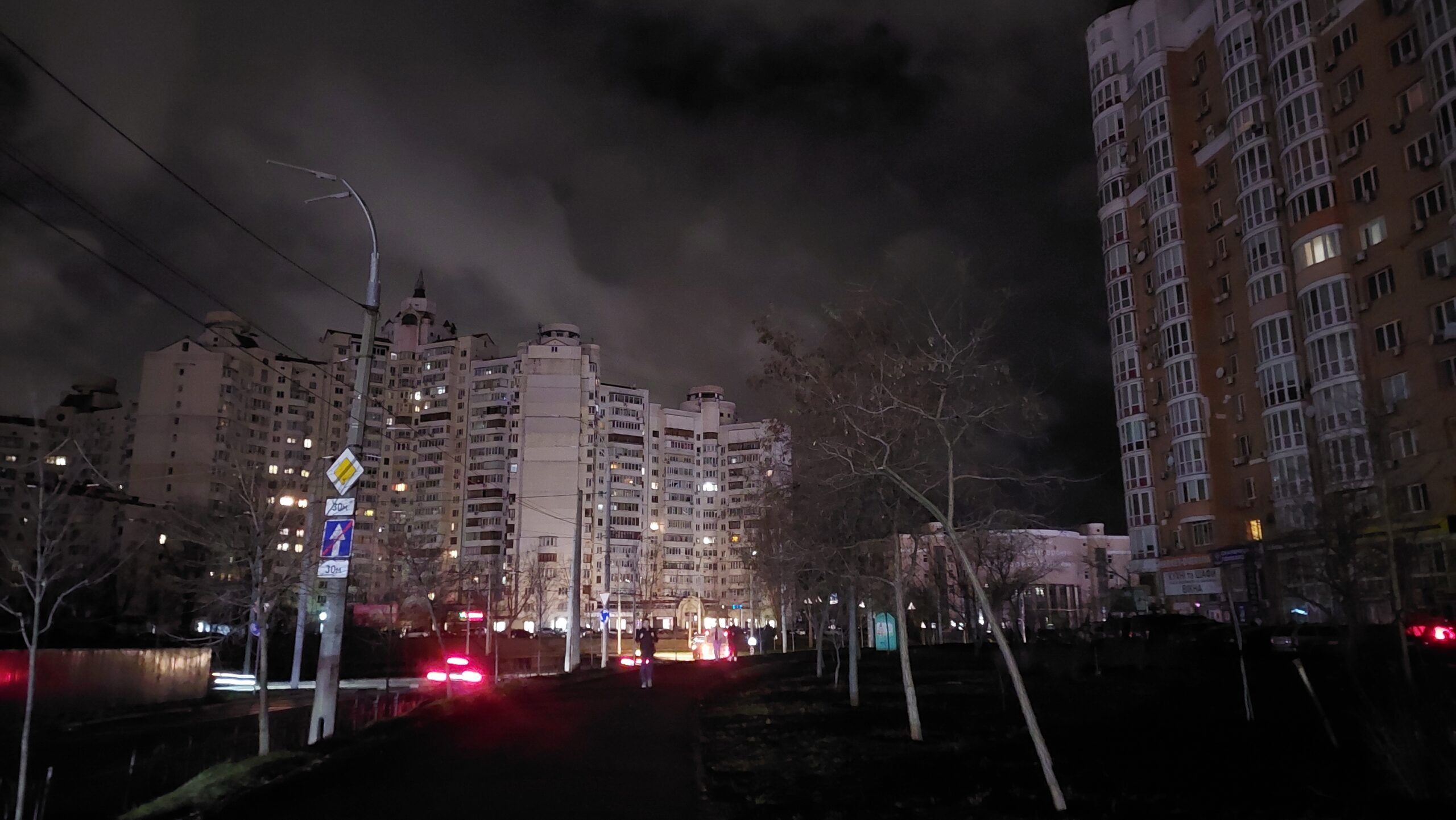
During blackouts, apartment blocks in Kyiv are mostly dark, with scattered lights from apartments with battery-powered sources. Generators power businesses on the ground floor. Street lights are largely off.
Explore further

Behind the black windows: How Kyiv survives a winter in the dark

Ukrainian officials have warned that the coming winter could be more difficult than previous ones, as Russia is expected to again target Ukraine’s energy, heating, and water infrastructure. Russia has already intensified attacks on Ukrainian civilians and civilian infrastructure this summer, raising concerns that the campaign against essential services could escalate further during the winter months.

Finnish technology heads to Ukraine

Wärtsilä Finland Oy will manufacture the power plants in Vaasa.

Finnish Foreign Trade and Development Minister Ville Tavio said the project combines support for Ukraine with Finland’s energy-sector expertise.

“Finland has world class energy sector expertise that can benefit Ukraine’s reconstruction efforts,” Tavio said. “I am pleased that Finnish technology and Finnish workers are playing a part in strengthening the security of Ukraine’s energy supply.”

How Finland is financing the project

The €28.5 million Finnish contribution comes through the Finland–Ukraine Investment Facility, which supports public investments in Ukraine using Finnish technology, expertise, and services.

Finland’s funding will cover the interest costs and capital of the investment loan Ukraine will take out for the project. Finnish export credit agency Finnvera is providing a 100% export guarantee for the loan.

The project combines immediate energy support for Ukraine with Finnish financing, technology, and manufacturing capacity.

  • ✇Euromaidan Press
  • Blackout and a blinded radar: Ukraine hits Russian military infrastructure across Crimea and beyond
    Ukraine’s Defense Forces struck a Russian Nebo-U long-range radar in occupied Sevastopol and several other military targets in Russia and occupied Ukrainian territories during a series of overnight attacks on 13 August, the General Staff of Ukraine’s Armed Forces reported. The strikes are part of Ukraine’s broader “Middle-Strike” campaign, which targets Russian military infrastructure beyond the immediate front line. Nebo-U radar hit in Sevastopol The most signifi
     

Blackout and a blinded radar: Ukraine hits Russian military infrastructure across Crimea and beyond

13 août 2026 à 12:06

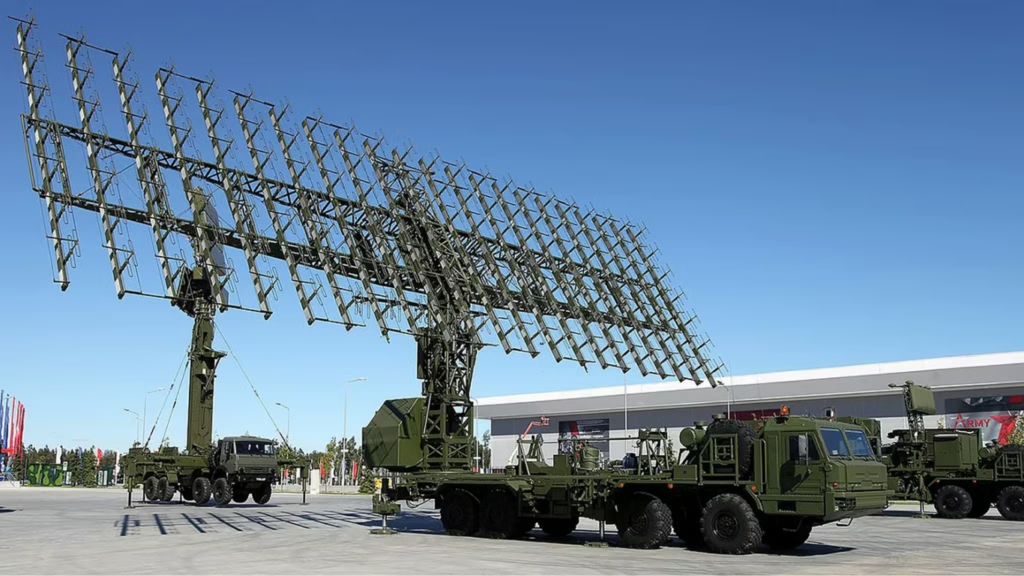
Russian Nebo-U radar station. Photo: Russian media

Ukraine’s Defense Forces struck a Russian Nebo-U long-range radar in occupied Sevastopol and several other military targets in Russia and occupied Ukrainian territories during a series of overnight attacks on 13 August, the General Staff of Ukraine’s Armed Forces reported.

The strikes are part of Ukraine’s broader “Middle-Strike” campaign, which targets Russian military infrastructure beyond the immediate front line.

Nebo-U radar hit in Sevastopol

The most significant overnight target was a Russian Nebo-U radar station in Sevastopol, occupied Crimea.

The Nebo-U is a Russian long-range, three-coordinate radar operating in the meter wavelength range. It is designed to detect and track airborne targets, including aircraft, cruise missiles, and ballistic missiles.

The General Staff said disabling the radar weakens Russia’s ability to detect and track incoming aircraft, cruise missiles, and ballistic missiles, potentially making it harder for Russian forces to detect future Ukrainian strikes and giving Ukrainian weapons a better chance of reaching their targets.

The Nebo-U is estimated to cost around $100 million, making it a high-value Russian surveillance system.

The radar strike supposedly came during a broader Ukrainian drone attack on Sevastopol that also damaged energy infrastructure, according to Russian occupation authorities. The attack caused a citywide blackout before power was later restored through a temporary setup. Ukrainian drones also reportedly targeted the Balaklava power plant, one of Crimea’s two main power stations.

Earlier strikes hit Crimean military infrastructure

The General Staff also reported strikes on Russian military infrastructure in occupied Crimea on 12 August, including a control tower at the Saky airfield.

Ukrainian forces also struck a communications relay near Chornomorske used to control Russian Geran and Gerbera strike drones, according to the General Staff. It said the strikes weaken Russia’s ability to operate the military airfield and control its attack drones.

Russian logistics and supply sites targeted

Ukrainian forces also struck a Russian drone control center near Myrne in occupied Zaporizhzhia Oblast, a fuel and lubricants depot near Dovzhansk in occupied Luhansk Oblast, and an ammunition depot near Novyi Hai in occupied Zaporizhzhia Oblast.

Another strike hit a Russian logistics and equipment depot near Kalanchak in occupied Kherson Oblast.

The General Staff said these strikes disrupt Russian logistics and reduce the military’s ability to accumulate and use ammunition, equipment, and personnel.

Strike reported inside Russia

Ukraine also reported striking a Russian personnel concentration area near Butyrky in Russia’s Belgorod Oblast.

The General Staff did not provide details on the weapons used, the scale of damage, or possible casualties at the individual sites.

The latest report is part of Ukraine’s continued campaign to strike Russian military infrastructure beyond the battlefield. The “Middle-Strike” concept focuses on targets that support Russia’s ability to conduct and sustain combat operations, including command, logistics, air defense, and other military facilities.

The General Staff said Ukrainian forces continue to carry out strikes against key Russian military targets.

  • ✇Euromaidan Press
  • North Korean ballistic missile kills 7 steelworkers on their way to shelter, shuts down Zaporizhstal plant
    A Russian ballistic strike on Zaporizhzhia, Ukraine, killed seven employees of the Zaporizhstal steel plant and injured 21 others, Ukrainian steelmaker Metinvest, the plant’s majority owner, said on 11 August. The workers were on their way to a shelter after an air raid alert was announced when the strike hit the industrial site, according to the company.  Metinvest said the attack also damaged energy facilities and infrastructure, as well as the main and auxiliary f
     

North Korean ballistic missile kills 7 steelworkers on their way to shelter, shuts down Zaporizhstal plant

11 août 2026 à 11:44

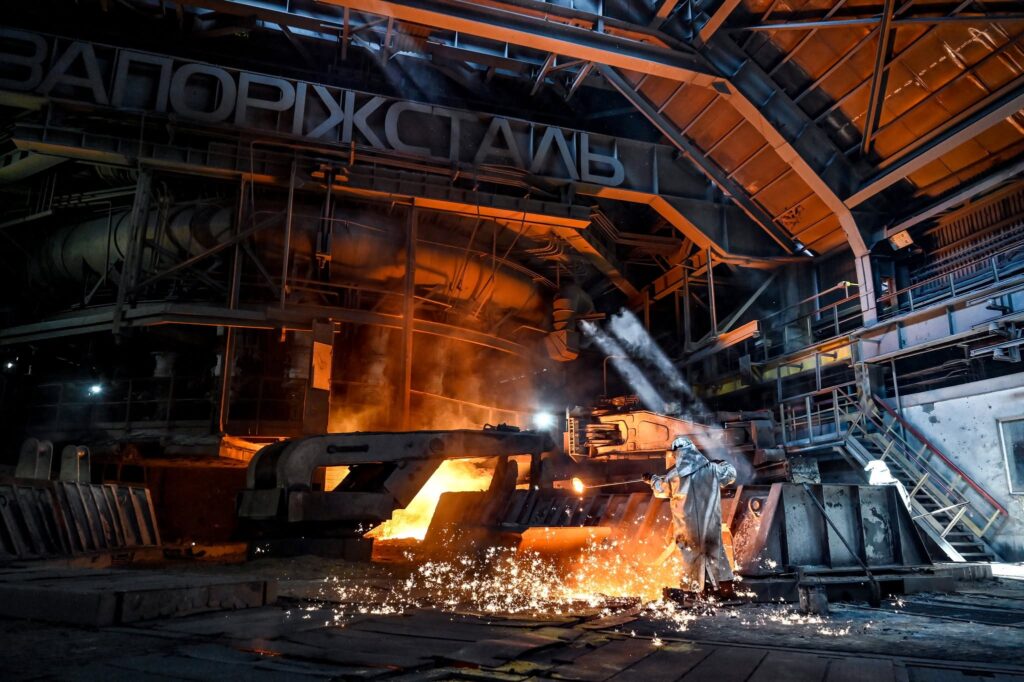
Inside the Zaporizhstal steel plant. Photo: Zaporizhstal on Facebook

A Russian ballistic strike on Zaporizhzhia, Ukraine, killed seven employees of the Zaporizhstal steel plant and injured 21 others, Ukrainian steelmaker Metinvest, the plant’s majority owner, said on 11 August.

The workers were on their way to a shelter after an air raid alert was announced when the strike hit the industrial site, according to the company. 

Metinvest said the attack also damaged energy facilities and infrastructure, as well as the main and auxiliary facilities of the plant’s coke and blast-furnace operations.

Russia’s ballistic missile strikes leave very little time between threat detection and impact for people to react and reach shelter. Several people have been killed from strikes across the country while on their way to bomb shelters. 

Zaporizhstal shuts down after strike

Metinvest said Zaporizhstal has been completely shut down following the attack, while its other production sites in the city are operating at reduced capacity.

Company specialists are assessing the damage and determining the scope and timeline of repairs. Emergency and restoration work is already underway, according to the statement.

The company said its Zaporizhzhia facilities are civilian industrial sites that employ tens of thousands of people and produce steelmaking and coke-chemical products.

Metinvest said it is providing medical assistance and support to the 21 injured employees and staying in contact with the families of those killed and wounded.

The company's facilities will fly flags at half-mast on 11 and 12 August in mourning for the seven Zaporizhstal workers killed in the attack.

North Korean missiles used against Zaporizhzhia

Ukrainian President Volodymyr Zelenskyy said Zaporizhzhia was targeted overnight with North Korean ballistic missiles, Russian Zircon missiles and guided aerial bombs.

Zelenskyy said the attack was designed to cause maximum damage to civilian infrastructure.

Ukraine's military intelligence said on 5 August that a North Korean missile unit had begun deploying to western Russia, potentially adding up to 120 ballistic missiles and six launchers to Russia's arsenal.

According to Ukrainian intelligence representative Andrii Cherniak, North Korea has supplied Russia with around 150 KN-23 and KN-24 missiles since late 2023, including a recent batch of 40 missiles.

The missiles have been linked to attacks with high civilian casualties, including a July strike on Radushne in Dnipropetrovsk Oblast that killed an entire family.

Ballistic threat is growing

The strike comes as Russia has increasingly relied on ballistic missiles in attacks on Ukrainian cities. Unlike drones and cruise missiles, ballistic missiles travel at very high speeds and are much harder for Ukraine to intercept, particularly because Kyiv has a limited supply of the advanced air defense interceptors needed to counter them, mainly US-made Patriot systems.

Ukraine has reported that most ballistic missiles launched in recent mass attacks have penetrated its air defenses, contributing to severe destruction and civilian casualties.

❌