The recent capture of a strategic ridge has further entrenched the Israeli occupation of Lebanese territory, as efforts to broker lasting peace have floundered.
The recent capture of a strategic ridge has further entrenched the Israeli occupation of Lebanese territory, as efforts to broker lasting peace have floundered.
Smoke rises above the town of Al-Mansouri in southern Lebanon on Wednesday. The release of Lebanese prisoners would come amid talks to disarm Hezbollah and end Israeli occupation of southern Lebanon.
GOP-backed bill mandates institutions receiving federal funds not impose restrictions on programs related to IsraelThe US House of Representatives on Thursday passed a Republican-backed bill that would penalize universities that participate in boycotts of Israel, or attempt to prevent students from taking part in exchange programs with the country.The Protect Economic and Academic Freedom Act passed by a 237-169 vote, with 33 Democrats breaking with the rest of their party to vote in favor, and
GOP-backed bill mandates institutions receiving federal funds not impose restrictions on programs related to Israel
The US House of Representatives on Thursday passed a Republican-backed bill that would penalize universities that participate in boycotts of Israel, or attempt to prevent students from taking part in exchange programs with the country.
The Protect Economic and Academic Freedom Act passed by a 237-169 vote, with 33 Democrats breaking with the rest of their party to vote in favor, and only two Republicans opposed. It now goes to the Senate for consideration.
Al Mughayir, in the Israeli-occupied West Bank, has become a focal point for rising settler violence, with the latest deadly episode starting in a dispute over livestock.
Al Mughayir, in the Israeli-occupied West Bank, has become a focal point for rising settler violence, with the latest deadly episode starting in a dispute over livestock.
Ben-Gvir did not come into power in a vacuum: he was helped into his position by an international community that has afforded Israel complete impunityLet me introduce you to Itamar Ben-Gvir, the leader of Israel’s far-right Jewish Power (Otzma Yehudit) party, the minister of national security, and an almost cartoonishly evil man. You’ll have heard his name before: he made international news when he filmed himself taunting bound activists who had been detained trying to deliver humanitarian aid t
Ben-Gvir did not come into power in a vacuum: he was helped into his position by an international community that has afforded Israel complete impunity
Let me introduce you to Itamar Ben-Gvir, the leader of Israel’s far-right Jewish Power (Otzma Yehudit) party, the minister of national security, and an almost cartoonishly evil man. You’ll have heard his name before: he made international news when he filmed himself taunting bound activists who had been detained trying to deliver humanitarian aid to Gaza. But you might not be familiar with many of his recent shocking comments, because they haven’t been widely covered by much of the US media.
Let’s start with an AI-generated video that Ben-Gvir posted on Twitter/X on Sunday and then deleted. It shows portly Palestinian prisoners being loaded on to a conveyor belt and going into a detention camp, then emerging emaciated. The caption is “we promised – we delivered!” which seems to be a reference to the national security minister’s promise to worsen conditions for Palestinian prisoners. An ambitious goal, considering conditions are already hellish: Israeli human rights group B’Tselem has likened the prisons where Palestinians are kept to “torture camps”.
Donald Trump avait proposé l’an dernier de transférer les Palestiniens qui se trouvent dans le territoire vers des pays voisins, dont la Jordanie et l’Égypte.
Israël Katz, ministre israélien de la défense, a affirmé hier que le président américain n’avait pas renoncé à cette idée.
Il a indiqué qu’Israël était prêt à déplacer les Palestiniens «par la mer et par les airs» s’il recevait le feu vert de Washington.
Katz soutient qu’il n’y a pas d’autre solution pour les Gazaouis.
[L'ar
Donald Trump avait proposé l’an dernier de transférer les Palestiniens qui se trouvent dans le territoire vers des pays voisins, dont la Jordanie et l’Égypte.
Israël Katz, ministre israélien de la défense, a affirmé hier que le président américain n’avait pas renoncé à cette idée.
Il a indiqué qu’Israël était prêt à déplacer les Palestiniens «par la mer et par les airs» s’il recevait le feu vert de Washington.
Katz soutient qu’il n’y a pas d’autre solution pour les Gazaouis.
The rare prosecution comes amid widespread reports from rights groups about mistreatment in Israeli detention centers, where, activists say, scores of Palestinians have died since October 2023.
The rare prosecution comes amid widespread reports from rights groups about mistreatment in Israeli detention centers, where, activists say, scores of Palestinians have died since October 2023.
Ketziot detention center in Israel in 2007. Twelve Israeli prison guards were indicted on Tuesday in the beating death of a Palestinian man here in 2023.
Israel said it seized the head of Hamas’s internal security force in the deadly operation. Fighting has continued in the enclave despite a U.S.-backed truce.
Israel said it seized the head of Hamas’s internal security force in the deadly operation. Fighting has continued in the enclave despite a U.S.-backed truce.
Mansour Abbas has recruited a Jewish lawmaker best known for reducing the crime rate in Arab cities. Could that be enough to get Mr. Abbas a seat in the next government?
Mansour Abbas has recruited a Jewish lawmaker best known for reducing the crime rate in Arab cities. Could that be enough to get Mr. Abbas a seat in the next government?
Despite the growing diplomatic isolation of the government, the agreement makes clear that the Israeli defense industry is still finding considerable demand abroad.
Despite the growing diplomatic isolation of the government, the agreement makes clear that the Israeli defense industry is still finding considerable demand abroad.
Lander screamed at and verbally abused as he protested against Hindu nationalist rally in Madison Square GardenThe New York Democratic congressional nominee Brad Lander was screamed at and verbally abused by protesters over his stance on Israel as he protested against a Hindu nationalist politician speaking outside Madison Square Garden.As Lander attended a demonstration on Saturday against the event, organized by the Hindu nationalist RSS movement and where Mohan Bhagwat, leader of Rashtriya Sw
Lander screamed at and verbally abused as he protested against Hindu nationalist rally in Madison Square Garden
The New York Democratic congressional nominee Brad Lander was screamed at and verbally abused by protesters over his stance on Israel as he protested against a Hindu nationalist politician speaking outside Madison Square Garden.
As Lander attended a demonstration on Saturday against the event, organized by the Hindu nationalist RSS movement and where Mohan Bhagwat, leader of Rashtriya Swayamsevak Sangh was speaking, he was confronted by several protesters demanding that he leave the rally.
A growing number of former Israeli generals, intelligence officials and prime ministers are accusing settlers in the West Bank of committing ethnic cleansing with government support. “Once a society behaves this way,” one said, “that society is doomed.”
A growing number of former Israeli generals, intelligence officials and prime ministers are accusing settlers in the West Bank of committing ethnic cleansing with government support. “Once a society behaves this way,” one said, “that society is doomed.”
Israeli flags lined the roadside next to Palestinian farms in an area of the Jordan Valley in the Israeli-occupied West Bank.
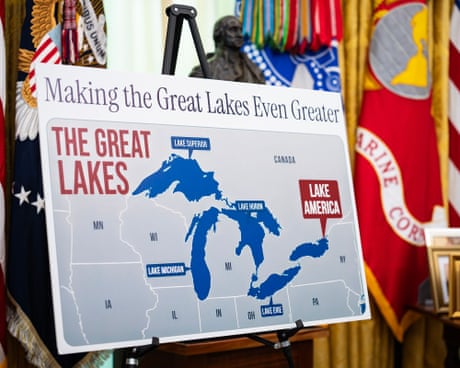
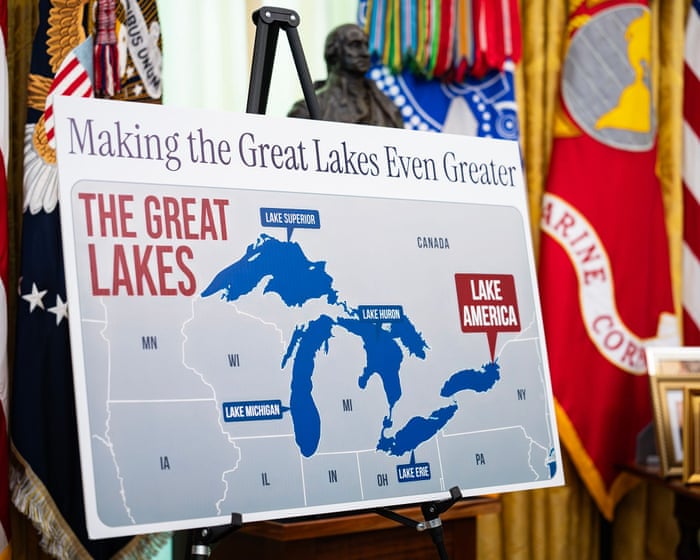
Ignore Iran, the Epstein files, and your wallet – not to mention Trump’s plummeting approval ratingsDon’t mention the war! Or the economy, for that matter. Or the Epstein files. Or Natalie Harp. Or “affordability”, which, as Donald Trump recently said at a rally, is a word that was “never used” by the media before he took office. Best not to talk about anything that affects ordinary people or embarrasses the president, really. Instead, let’s all rejoice in Trump’s latest triumph: renaming Lake O
Ignore Iran, the Epstein files, and your wallet – not to mention Trump’s plummeting approval ratings
Don’t mention the war! Or the economy, for that matter. Or the Epstein files. Or Natalie Harp. Or “affordability”, which, as Donald Trump recently said at a rally, is a word that was “never used” by the media before he took office. Best not to talk about anything that affects ordinary people or embarrasses the president, really. Instead, let’s all rejoice in Trump’s latest triumph: renaming Lake Ontario, which is shared by Canada and the US, as Lake America.
On Thursday, Trump signed an executive order directing federal agencies to America-fy the lake’s name on US maps and documents, which is an excellent use of time and resources. I suppose we can at least be thankful that the president, who is trying to slap his own name on everything from airports to the Kennedy Center, didn’t decree that the body of water be called Lake Trump.
President Recep Tayyip Erdogan in Ankara, Turkey, this year. Analysts and officials fear the growing rivalry between Turkey and Israel could exacerbate volatility in the Middle East.
Outrage over making Representative Jared Moskowitz, who is vocally pro-Israel, the top Democrat on a Middle East policy subcommittee reflected the party’s rift over Israel.
Outrage over making Representative Jared Moskowitz, who is vocally pro-Israel, the top Democrat on a Middle East policy subcommittee reflected the party’s rift over Israel.
On Tuesday, Representative Jared Moskowitz of Florida, a vocally pro-Israel Democrat, was chosen to serve as the ranking member on a key subcommittee with jurisdiction over Middle East policy.
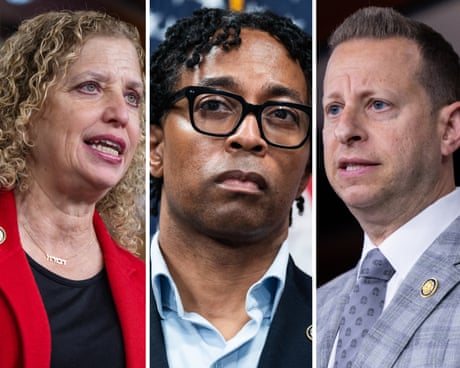
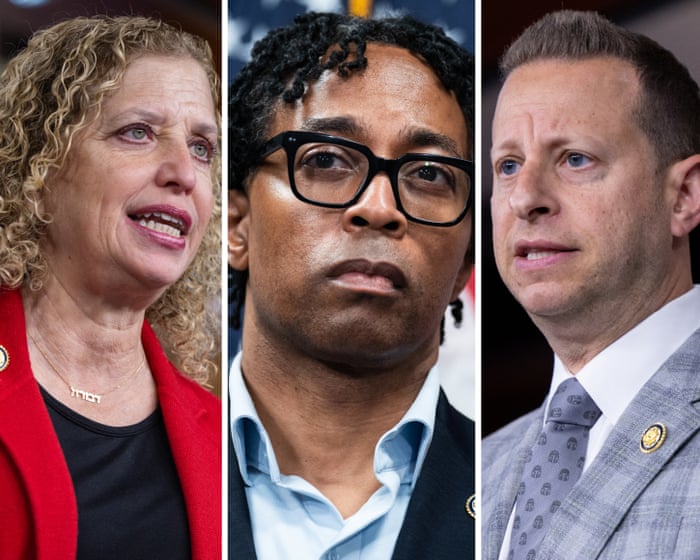
Debbie Wasserman Schultz and Wesley Bell to join as Jared Moskowitz becomes ranking member on sub-committeeThree pro-Israel Democrats have been given key roles on a powerful congressional body overseeing US foreign policy in a move rounding sharply counter to popular sentiment within the party and likely to anger leftwing activists.The appointments to the US House of Representatives foreign affairs committee follow a succession of wins in party primaries for progressive candidates who put critic
Debbie Wasserman Schultz and Wesley Bell to join as Jared Moskowitz becomes ranking member on sub-committee
Three pro-Israel Democrats have been given key roles on a powerful congressional body overseeing US foreign policy in a move rounding sharply counter to popular sentiment within the party and likely to anger leftwing activists.
The appointments to the US House of Representatives foreign affairs committee follow a succession of wins in party primaries for progressive candidates who put criticism of Israel and its actions in Gaza at the core of their campaign messages.
Nickolay Mladenov, the Board of Peace’s high representative for Gaza, criticized Israel for its ongoing strikes on what it says are Hamas targets, after it rejected a plan to disarm the group.
Nickolay Mladenov, the Board of Peace’s high representative for Gaza, criticized Israel for its ongoing strikes on what it says are Hamas targets, after it rejected a plan to disarm the group.
Videos showed Israeli troops standing by as Zvi Sukkot attacked the monument with a sledgehammer. The military said soldiers had stopped the demolition.
Videos showed Israeli troops standing by as Zvi Sukkot attacked the monument with a sledgehammer. The military said soldiers had stopped the demolition.
The discussions, reported by the Syrian state news agency, came days after Israel struck an air base in Syria’s northwest, the latest in a series of military interventions.
The discussions, reported by the Syrian state news agency, came days after Israel struck an air base in Syria’s northwest, the latest in a series of military interventions.
A demonstration showing support for Hezbollah and opposition to the decision of Lebanese authorities to engage in direct negotiations with Israel, in Beirut in April.
A flotilla of about 50 boats carrying humanitarian aid departed Marmaris, Turkey, in May, intending to break the Israeli blockade of Gaza. Israeli forces boarded the boats and detained 400 people.
The US is engaged in a lawless quest to protect American and Israeli officialsThe Trump administration has taken another step in its crusade against the international criminal court by imposing sanctions on two more senior ICC officials. The growing number of sanctioned jurists – now 13 – does not change the lawless nature of this quest.Donald Trump and his henchman, Marco Rubio, want to make the world safe for US and Israeli war criminals. No one should let them. Continue reading...
The US is engaged in a lawless quest to protect American and Israeli officials
The Trump administration has taken another step in its crusade against the international criminal court by imposing sanctions on two more senior ICC officials. The growing number of sanctioned jurists – now 13 – does not change the lawless nature of this quest.
Donald Trump and his henchman, Marco Rubio, want to make the world safe for US and Israeli war criminals. No one should let them.
The State Department informed Congress of its intent to fund the stabilization force on the same day the president’s Board of Peace announced a plan to disarm Hamas.
The State Department informed Congress of its intent to fund the stabilization force on the same day the president’s Board of Peace announced a plan to disarm Hamas.
Palestinians inspecting the damage to a mosque after it was struck by Israeli airstrikes in July in Gaza City. Deadly clashes have continued on and off since an initial cease-fire was reached in October.
Two high-profile cases that had spurred international condemnation of the country’s conduct in Gaza were transferred to the military police. Such investigations have rarely led to convictions.
Two high-profile cases that had spurred international condemnation of the country’s conduct in Gaza were transferred to the military police. Such investigations have rarely led to convictions.
Un gouvernement solidaire adopterait immédiatement 6 mesures:
hausser le salaire minimum à 20 $;
plafonner les hausses de loyer aux taux d’inflation;
annuler la politique de retour au bureau visant les fonctionnaires;
créer un ministère des femmes et de l’égalité des genres;
fermer le bureau du Québec à Tel-Aviv;
bloquer les projets de pipelines et gazoducs sur le territoire québécois.
QS lancerait 3 grands chantiers, pour être réalisés au cours d’un premier mandat:
A day after President Trump’s envoy, Jared Kushner, visited Israel to advance a stalled plan for demilitarizing and rebuilding Gaza, the Israeli military said it targeted Hamas commanders.
A day after President Trump’s envoy, Jared Kushner, visited Israel to advance a stalled plan for demilitarizing and rebuilding Gaza, the Israeli military said it targeted Hamas commanders.
Intensifying restrictions have hit every part of the territory’s dealings, spurring worries about whether the Palestinian Authority can remain solvent.
Intensifying restrictions have hit every part of the territory’s dealings, spurring worries about whether the Palestinian Authority can remain solvent.
Montaser Amro, left, and his brother inspecting a box of unpaid bills at his supermarket in Majd, West Bank. Mr. Amro said that his customers owed him around $155,000 and that he was struggling to pay suppliers.
Prime Minister Benjamin Netanyahu of Israel has refused to pull back the country’s military until Hamas fully disarms. But the Trump administration is under pressure to show progress.
Prime Minister Benjamin Netanyahu of Israel has refused to pull back the country’s military until Hamas fully disarms. But the Trump administration is under pressure to show progress.
Jared Kushner speaking about the Board of Peace, an organization backed by the Trump administration to end the war in Gaza, during the World Economic Forum in Davos, Switzerland, in January.
President Trump said a cease-fire agreed in June would lead to limits on Iran’s nuclear program and finish the conflict, but the countries appear far apart.
President Trump said a cease-fire agreed in June would lead to limits on Iran’s nuclear program and finish the conflict, but the countries appear far apart.
The president’s son-in-law met the Palestinian militant group’s leaders in Egypt, officials said. He will soon see Benjamin Netanyahu, the Israeli leader.
The president’s son-in-law met the Palestinian militant group’s leaders in Egypt, officials said. He will soon see Benjamin Netanyahu, the Israeli leader.
The Lebanese health ministry said children were among those killed. The Israeli prime minister’s office said Hezbollah had struck first, injuring three Israeli soldiers.
The Lebanese health ministry said children were among those killed. The Israeli prime minister’s office said Hezbollah had struck first, injuring three Israeli soldiers.
Defense Minister Katz called for the military to turn over to the police the responsibility for protecting Palestinians after two West Bank families were besieged by violent settlers.
Defense Minister Katz called for the military to turn over to the police the responsibility for protecting Palestinians after two West Bank families were besieged by violent settlers.
Nigel Farage, the Reform U.K. leader who resigned from Parliament and won back his seat on Thursday, stays on the offensive and says voters don’t care about allegations of financial impropriety.
Nigel Farage, the Reform U.K. leader who resigned from Parliament and won back his seat on Thursday, stays on the offensive and says voters don’t care about allegations of financial impropriety.
Jared Kushner, President Trump’s senior aide, is expected to meet with Prime Minister Benjamin Netanyahu of Israel, who has rejected a U.S.-backed deal to disarm Hamas.
Jared Kushner, President Trump’s senior aide, is expected to meet with Prime Minister Benjamin Netanyahu of Israel, who has rejected a U.S.-backed deal to disarm Hamas.
The military’s failure to keep extremists away from two Palestinian families trapped in their West Bank homes made clear the chaos gripping the Israeli-occupied territory.
The military’s failure to keep extremists away from two Palestinian families trapped in their West Bank homes made clear the chaos gripping the Israeli-occupied territory.
Two families have been trapped by settlers for days, casting a spotlight on the army’s struggle to curtail settler violence and protect Palestinians living in the occupied West Bank.
Two families have been trapped by settlers for days, casting a spotlight on the army’s struggle to curtail settler violence and protect Palestinians living in the occupied West Bank.
La dernière version du plan de paix américain prévoyait de façon progressive deux mouvements en parallèle:
le désarmement du Hamas
le retrait des forces israéliennes de la bande de Gaza
Le Hamas avait accepté ce plan.
Benyamin Nétanyahou, premier ministre israélien, a lui affirmé hier que l’armée israélienne ne commencerait pas à se retirer du territoire palestinien tant que le Hamas n’aurait pas été «véritablement désarmé».
Le gouvernement israélien redoute un désarmem
La dernière version du plan de paix américain prévoyait de façon progressive deux mouvements en parallèle:
le désarmement du Hamas
le retrait des forces israéliennes de la bande de Gaza
Le Hamas avait accepté ce plan.
Benyamin Nétanyahou, premier ministre israélien, a lui affirmé hier que l’armée israélienne ne commencerait pas à se retirer du territoire palestinien tant que le Hamas n’aurait pas été «véritablement désarmé».
Le gouvernement israélien redoute un désarmement fictif.
Donald Trump a annoncé hier qu’un accord avait été conclu sur le désarmement complet du mouvement palestinien Hamas et de tous les autres groupes armés dans la bande de Gaza.
C’était l’un des points qui bloquaient la mise en œuvre de la deuxième phase du plan de paix américain pour Gaza.
Le président américain a précisé que l’armée israélienne quittera le territoire palestinien lorsque le Hamas sera désarmé.
Le Hamas n’avait pas encore confirmé publiquement l’accord hier soir.
Donald Trump a annoncé hier qu’un accord avait été conclu sur le désarmement complet du mouvement palestinien Hamas et de tous les autres groupes armés dans la bande de Gaza.
C’était l’un des points qui bloquaient la mise en œuvre de la deuxième phase du plan de paix américain pour Gaza.
Le président américain a précisé que l’armée israélienne quittera le territoire palestinien lorsque le Hamas sera désarmé.
Le Hamas n’avait pas encore confirmé publiquement l’accord hier soir.
That Iran's Supreme Leader, Ayatollah Ali Khamenei, should disappear, or be disappeared, from the scene was not a novel notion.
Throughout my nearly five years in Tehran at the turn of this century, speculation about his health and longevity was a near-constant background hum. He was reported, or rumoured, to be mortally stricken by prostate cancer, his constitution already weakened by an assassination attempt in 1981 that left his right arm largely useless. Who would succeed him was far f
That Iran's Supreme Leader, Ayatollah Ali Khamenei, should disappear, or be disappeared, from the scene was not a novel notion.
Throughout my nearly five years in Tehran at the turn of this century, speculation about his health and longevity was a near-constant background hum. He was reported, or rumoured, to be mortally stricken by prostate cancer, his constitution already weakened by an assassination attempt in 1981 that left his right arm largely useless. Who would succeed him was far from clear, and the object of further speculation.
As he lived on into more recent times, reaching the same age of 86 attained by his predecessor – the Islamic Republic's founding father Ayatollah Ruhollah Khomeini – the prospect of his demise became a more immediate issue, though the question of succession remained equally shrouded in uncertainty. As Supreme Leader, Ayatollah Khamenei was the commanding voice behind the ruthless crackdown that took the lives of tens of thousands of citizens early this year in the latest and greatest of many escalating protests, at which the slogan "Marg Bar Diktator!" — Death to the Dictator! — became an increasingly prominent slogan.
Their wish was confirmed to be true at 5 a.m. local time on Sunday morning by Iranian broadcasters. The previous morning, Khamenei’s compound in Tehran was demolished as the Israeli-American onslaught got under way while the Ayatollah was heading a meeting of the Defence Council. That ensured that top military figures were also killed, including the commander of the Revolutionary Guards, Mohammad Pakpour, the Army Chief of Staff Abdolrahim Musavi, and Khamenei's top military adviser, Ali Shamkhani, who had been wounded but survived the attack in June last year.
The Iranian leadership appears to have been caught by surprise, as it was last year when the opening Israeli strike, which culled many top military leaders as well as nuclear scientists, was launched between two rounds of indirect negotiations between Iran and the U.S. Oman, which was mediating the talks, was furious then, denouncing Israel as the real destabilising factor in the region.
Perhaps the Iranian leaders — and the Omani mediators — thought that such a dirty trick could only be pulled once. But it has happened again, with no evidence that the talks in Geneva had broken down. The chief Omani negotiator, Badr Albusaidi, was livid. Only hours before the strike, he was in Washington for meetings “to explain that a peace agreement between the U.S. and Iran is now within reach. No nuclear weapons. Not ever. Zero stockpiling. Comprehensive verification. Peacefully and permanently. Let’s support the negotiators in closing the deal.”
After learning of the attack, he expressed his outrage in another tweet: “I am dismayed. Active and serious negotiations have yet again been undermined. Neither the interests of the United States nor the cause of global peace are well served by this. And I pray for the innocents who will suffer. I urge the United States not to get sucked in further. This is not your war.”
But Donald Trump and the U.S. were already thoroughly sucked in, and it was indeed their war, or at least his. According to the Israelis, the date had been decided jointly weeks before, after months of planning. Which meant that the Geneva negotiations, focused on the nuclear issue, were simply deceptive camouflage designed to give time for the U.S. to complete the marshalling of its biggest naval and air buildup in the region since the 2003 invasion of Iraq.
Trump and the Israeli prime minister Benjamin Netanyahu soon made it clear that the campaign now had little to do with the niceties of Iran's nuclear programme: the agenda was regime change in Tehran, and a surprise attack to decapitate the regime was an essential element.
With Iran's air defences largely taken out in last year's 12 days of war, it was like shooting fish in a barrel. Hundreds of air, missile and drone strikes were carried out on missile launchers, military bases and other targets around the country, with inevitable "collateral damage", including a girl's primary school in the southern town of Minab where scores of children were reported killed.
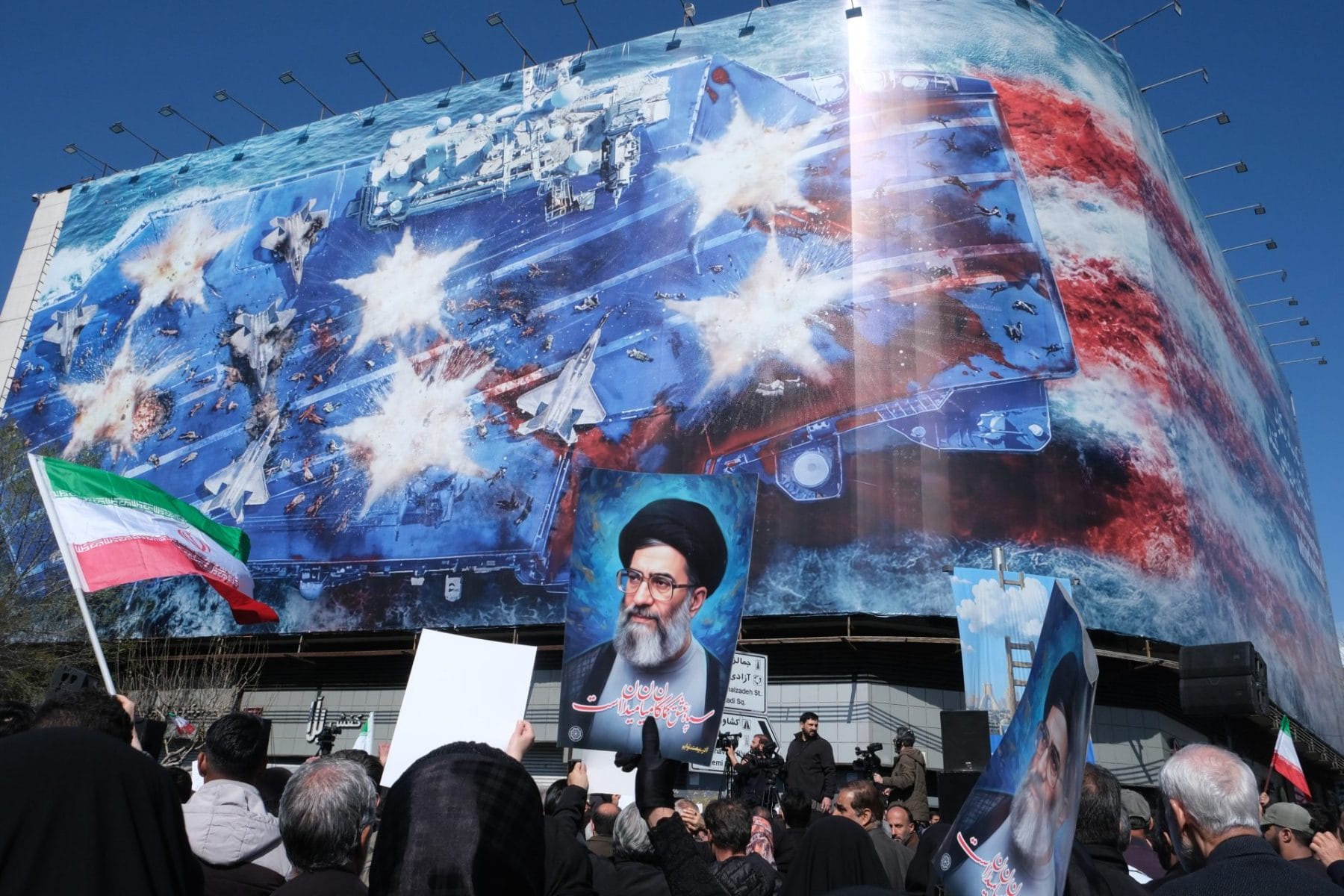
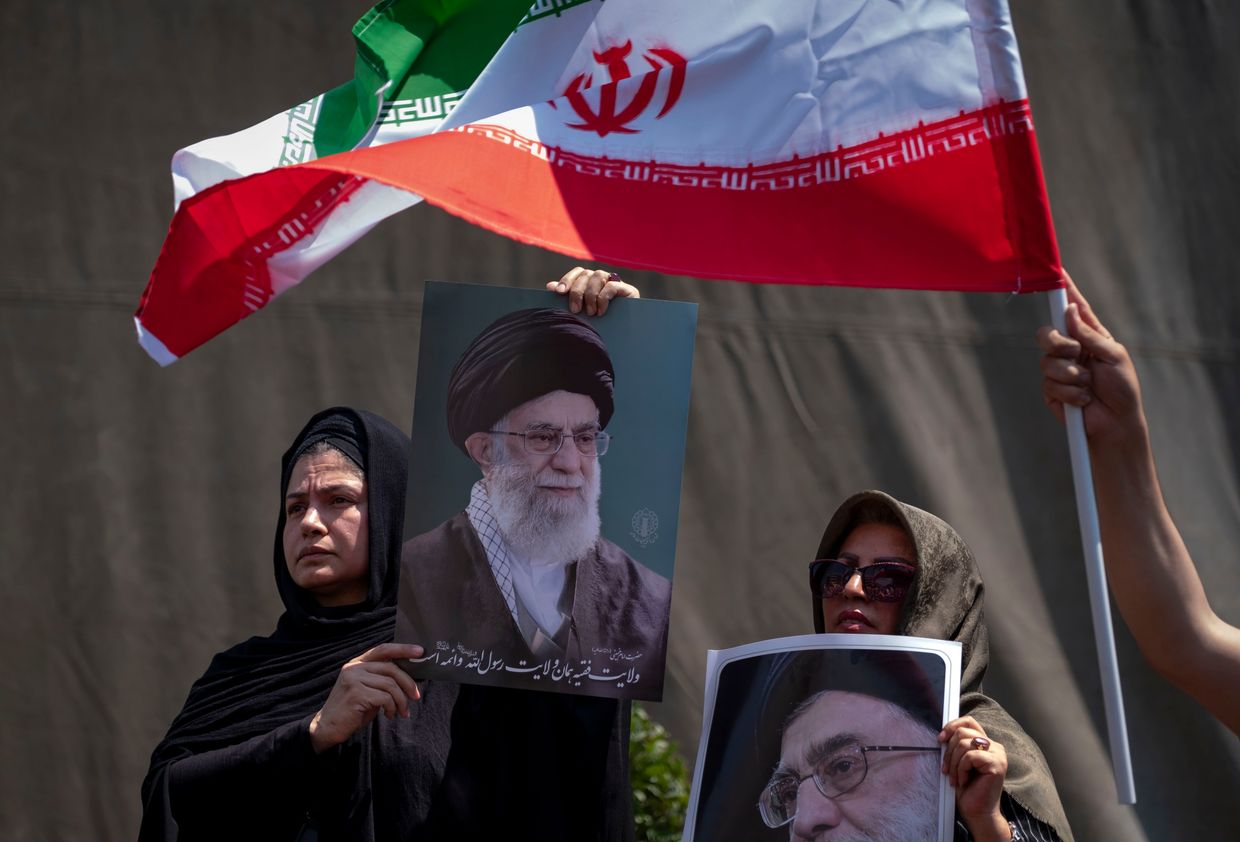
People gathered in Tehran's Revolution Square to mourn the assassination of Iran's Supreme Leader Ayatollah Ali Khamenei on March 1, 2026.
The Iranians did their best to live up to their dire warnings of deadly reprisals against Israel, and against American bases and allies on the Arab side of the Gulf and elsewhere. Missiles hailed down on airports and other installations in Kuwait, Bahrain, the UAE, Saudi Arabia and even Oman, despite its active mediation. While some U.S. bases may have been hit, so too were many civilian sites such as Dubai's iconic Burj al Arab hotel. Explosions too are being heard in Beirut, after Hezbollah fired rockets and drones at northern Israel to "avenge" Khamenei's death and the Israel Defense Forces struck back.
Air traffic was halted throughout a region rich in international hubs, sowing chaos worldwide. Iran's declaration that the strategic Strait of Hormuz was closed to shipping forced cargo shippers to suspend the voyages that transport some 20% of the world's oil and a lot of liquid gas, causing tremors through international markets. Once again, a decision taken by a tiny circle of men in Washington, Jerusalem and Tehran instantly rewired daily life, reminding us who actually gets to pull the global emergency brake.
What all this would do to Iran's relations with the Arab side of the Gulf was one of many open questions. While Oman was actively mediating, the other Arab oil states had been pressing the Americans not to allow a campaign that would predictably destabilise the region, and declaring their airspace not available for any hostilities. But any sympathy for Tehran quickly evaporated when the missiles started flying in: the Gulf Arab states closed ranks.
Trump and the Israelis made it clear that this was not one quick spectacular strike, but an ongoing campaign that would last days, perhaps even weeks. Presumably at the end, Iran would find its missile capabilities "obliterated," in Trump's favourite term, along with any nuclear activities.
Once the bombs stop falling, Trump and Netanyahu urged, the Iranians should come out of their basements and take over a government that would be theirs for the taking. A historic opportunity that would likely not recur for generations, Iranians were told.
But it is hard to imagine such regime change being wrought remotely from the skies. The regime lost little time in filling the leadership vacuum, setting up a three-man ruling council in line with the constitution, composed of the President, Masood Pezeshkian, the head of the Judiciary, Gholamhossein Mohseni-Ejei, and Ayatollah Alireza Arafi from the Council of Guardians. All regime loyalists, and the latter two noted hard-liners. So business as usual as far as they are concerned. But the fact is that the assassination of the Supreme Leader and the attendant bludgeoning of the regime's capabilities will inevitably usher in a new and unpredictable phase in Iran's turbulent history.
On the streets, reactions were fractured: jubilation in areas that had long chanted “Death to the dictator”, state-promote mourning in others, but also fear and a grim resignation, an understanding that power vacuums are often filled with fresh repression or civil war.
A smooth transition to a peaceful democracy is about the least likely scenario among the many possibilities. So too is an imminent return of the monarchy, with a comeback by Israeli-backed Reza Pahlavi, son of the Shah ousted by the 1979 revolution. So far there has been no sign visible to the outside world of a split in the ranks of the defenses built up by the Islamic Republic, which still has regular military forces numbering around 400,000, Revolutionary Guards of up to 190,000, and its auxiliary militia enforcers, the Basij, who may be able to mobilise around a million at street level.
There must be much anger among regime loyalists, which may fall on the heads of any opposition protestors who imagine they can move in and take over the reins of government from the bombed-out wreckage of the Islamic Republic. The U.S. military is not likely to be able to remain engaged in the detail of defanging the regime once the main thrust of the campaign is done. But Israel likely will. Its equivalent of the CIA, the Mossad, has spent years building up formidable intelligence at street level, and will be doing its utmost to continue hamstringing the regime from within and fomenting opposition.Among the many unanswerable questions is whether all this will lead simply to chaos and fragmentation, which is probably Israel's preferred outcome, or to a more compliant regime willing to compromise with the U.S. in order to get crippling economic sanctions lifted. As Trump concedes the war might last weeks, who knows what Iran will eventually emerge from the smoke and the rubble?
Will he or won't he? The Middle East is on tenterhooks as the U.S. continues to build up a massive and menacing military posture around Iran, threatening an attack that could trigger a conflagration whose tremors would be felt throughout the region.
If anybody hoped that the man on whose word it all hangs, President Donald Trump, might clarify his intentions in his State of the Union address on Tuesday night, they were disappointed.
Speaking 36 hours before a third round of indirect an
Will he or won't he? The Middle East is on tenterhooks as the U.S. continues to build up a massive and menacing military posture around Iran, threatening an attack that could trigger a conflagration whose tremors would be felt throughout the region.
If anybody hoped that the man on whose word it all hangs, President Donald Trump, might clarify his intentions in his State of the Union address on Tuesday night, they were disappointed.
Speaking 36 hours before a third round of indirect and ultimately inconclusive talks with the Iranians in Geneva on Thursday, he said, "My preference is to stop this problem through diplomacy but one thing is for certain, I will never allow the world's number one sponsor of terror, which they are by far, to have a nuclear weapon...they want to make a deal, but we haven't heard those secret (sic) words, 'We will never have a nuclear weapon.’”
In the run-up to the Geneva talks, led on the U.S. side by real estate moguls Steve Witkoff and Trump son-in-law Jared Kushner, Iranian officials voiced optimism that a deal could be struck and insisted they would be flexible on the nuclear issue. Various formulas were being bandied around, such as Iran sending abroad half of its estimated 300kg of highly enriched uranium and diluting the rest under supervision, participating in a regional consortium for peaceful enrichment and so on.
In theory, for Iran to say "We will never have a nuclear weapon" should not be an issue — it has said all along that it is not pursuing that goal, which is banned by a fatwa. Iranian foreign minister Abbas Araghchi posted on X this week that Tehran “will under no circumstances ever develop a nuclear weapon.” Which begs the question as to why it has enriched uranium to 60% — short of weapons grade but well beyond the levels needed for peaceful civilian purposes.
Witkoff and Kushner will be vigilant for signs of Iranian duplicity and foot-dragging. But with another set of talks ending with no deal apart from promises of more talks, both sides might simply be playing for time, Iran to delay the feared blow, and the U.S. to finish assembling the assault force, its biggest mobilization of naval and air power in the region since the 2003 invasion of Iraq.
There is strong apprehension in the region that the huge and costly U.S. buildup must mean business. American bombs and missiles would hit Iran. The Iranians would make good on their threat to make it a regional war, not a symbolic retaliation as happened in the 12-day war in June last year after American bunker-buster bombs hit Iran's nuclear facilities in Isfahan, Natanz and Fordow. This time Iranian missiles would target U.S. military assets, bases on the Arab side of the Gulf and elsewhere, and perhaps oil installations. And Israel. The Israelis would hit back hard. Hezbollah in Lebanon would do its best to join in, prompting a further massive Israeli response.
There were ominous straws in the wind. The U.S. withdrew non-essential personnel from bases in the Gulf, and from its embassy in Beirut. The Israelis reportedly warned Lebanon that if Hezbollah joined in, they would hit back at government targets, including Beirut airport, which were unscathed throughout the earlier hostilities. They stepped up their daily attacks on suspected Hezbollah targets, including a big missile attack on February 20 on the eastern Beqaa valley which left 12 dead, including eight Hezbollahis. Since the November 2024 ceasefire, Hezbollah has not fired so much as a peashooter at Israel while well over 400 of their people have been killed in Israeli attacks on Lebanon.
Does all this mean the doomsday scenario is inexorable? Are the Americans set on a clear game plan, with identified objectives and the means to attain them?
Apparently not. Trump is reportedly receiving divided counsel from his advisers, military and political, some more hawkish and others more cautious than others. Above all, he has an eye on the looming mid-term elections in November. He was elected on a platform of ending the "forever" wars in the Middle East, yet could be on the brink of starting another one, which would not go down well with part of his MAGA base or the public in general.
The signs are that he was hoping the swashbuckling display of power would intimidate the Iranians into buckling. Witkoff admitted Trump was puzzled that Iran had not capitulated. “Why, under this pressure, with the amount of sea power and naval power over there, why haven’t they come to us and said, ‘We profess we don’t want a weapon, so here’s what we’re prepared to do?’ And, yet, it’s sort of hard to get them to that place,” he told Fox News. Iran's Foreign Minister Abbas Araqchi explained: "It's because we're Iranian."
Trump's adrenalin was clearly set pumping by the adventure in Venezuela, where a similar military buildup culminated in the operation to abduct President Nicolas Maduro. But Iran is not Venezuela. It is a highly militarized regime which has spent 47 years preparing its internal and external defences, and which has different power bases that make it hard simply to decapitate. There is no magic bullet that might not set the region on fire.
Taking out the Supreme Leader, Ayatollah Ali Khamene'i (who is also a religious leader, and this is Ramadan) would not be likely to bring about a change in regime behavior as in Venezuela. Bringing the regime down altogether would require a prolonged and detailed campaign that the U.S. military machine might not be able to sustain.
That's where Israel comes in. Some White House advisers reportedly believe it would play better politically for Israel to strike first rather than the U.S., and thus force Iran to retaliate. Like Trump, Israel’s Prime Minister Benjamin Netanyahu is a man with an eye on impending elections (October at the latest) is Prime Minister Benjamin Netanyahu, who makes no secret of his ambition to see the Iranian regime brought down. Netanyahu — backed by almost the entire Israeli political spectrum — is clearly champing at the bit, but aware of the danger of being seen to drag the U.S. into a potentially messy embroilment. One reason perhaps for the unusually discreet nature of Netanyahu's sixth visit to the White House on February 11 — in through the back door, no lovefest press appearances.
Which may also actually have been a sign that the two allies might not be on the same strategic page. Plunging Iran into fragmentation and chaos would absolutely fit Israel's playbook, but not necessarily America's. The two are working at cross-purposes in Syria, where the Israelis are pushing against a strong central government which the U.S. is supporting, even against its erstwhile Kurdish allies in the north-east.
If there are two constants in the current equation, they are that the Iranian people’s disillusionment and rage against the regime will not go away, and neither will Israel's desire to overthrow it. But if Trump does not share that goal, he will have to find a face-saving way to wriggle off the hook he has created with his ostentatious military buildup.
A version of this story was published in this week’s Coda Currents newsletter.Sign up here.
The Iranian Foreign Ministry has summoned the Ukrainian charge d'affaires to protest "inappropriate remarks" by Kyiv regarding recent Israeli and U.S. strikes on Iran, the ministry said on July 1.Tehran threatened Ukraine with unspecified "consequences" should such statements be repeated.The diplomatic spat follows a wave of Israeli and U.S. air strikes targeting Iran's nuclear program, with Iranian forces attacking Israel and a U.S. base in Qatar in response.Highlighting Iran's military support
The Iranian Foreign Ministry has summoned the Ukrainian charge d'affaires to protest "inappropriate remarks" by Kyiv regarding recent Israeli and U.S. strikes on Iran, the ministry said on July 1.
Tehran threatened Ukraine with unspecified "consequences" should such statements be repeated.
The diplomatic spat follows a wave of Israeli and U.S. air strikes targeting Iran's nuclear program, with Iranian forces attacking Israel and a U.S. base in Qatar in response.
Highlighting Iran's military support for Russian aggression against Ukraine, Kyiv responded by calling for the dismantling of the Iranian nuclear program to prevent it from threatening the Middle East or the wider world.
In response, Shahram Farsaei, head of the Iranian Foreign Ministry's Eurasian affairs department, relayed a protest note to Ukraine via the Ukrainian envoy in Iran, Kyrylo Pozdniakov. The ministry did not specify what exact comments prompted the reaction from the Iranian side.
Tehran also said that Ukrainian officials have "disregarded Ukraine's international legal obligations concerning respect for the principles and purposes of the U.N. Charter as well as the four Geneva Conventions."
Iran has provided ballistic missiles and thousands of Shahed drones to Russia, directly backing its armed aggression in Ukraine, itself launched in violation of international law and the U.N. Charter.
Moscow has backed Iran diplomatically after U.S. and Israeli attacks, urging a response from the U.N. Security Council and calling the attacks an "unprovoked aggression."
Around 150 pro-Palestinian activists have broken into a storage facility and damaged military equipment intended for Ukraine, the Belgian news outlet 7sur7 reported on June 26.The facility belongs to OIP Land Systems, a company that produces military equipment for Ukraine. The activists reportedly thought the equipment would be supplied to Israel.The activists, who were wearing white overalls and masks, took part in the Stop Arming Israel campaign. The protests seek to pressure Belgian authoriti
Around 150 pro-Palestinian activists have broken into a storage facility and damaged military equipment intended for Ukraine, the Belgian news outlet 7sur7 reported on June 26.
The facility belongs to OIP Land Systems, a company that produces military equipment for Ukraine. The activists reportedly thought the equipment would be supplied to Israel.
The activists, who were wearing white overalls and masks, took part in the Stop Arming Israel campaign. The protests seek to pressure Belgian authorities to maintain the military embargo against Israel and impose sanctions on it.
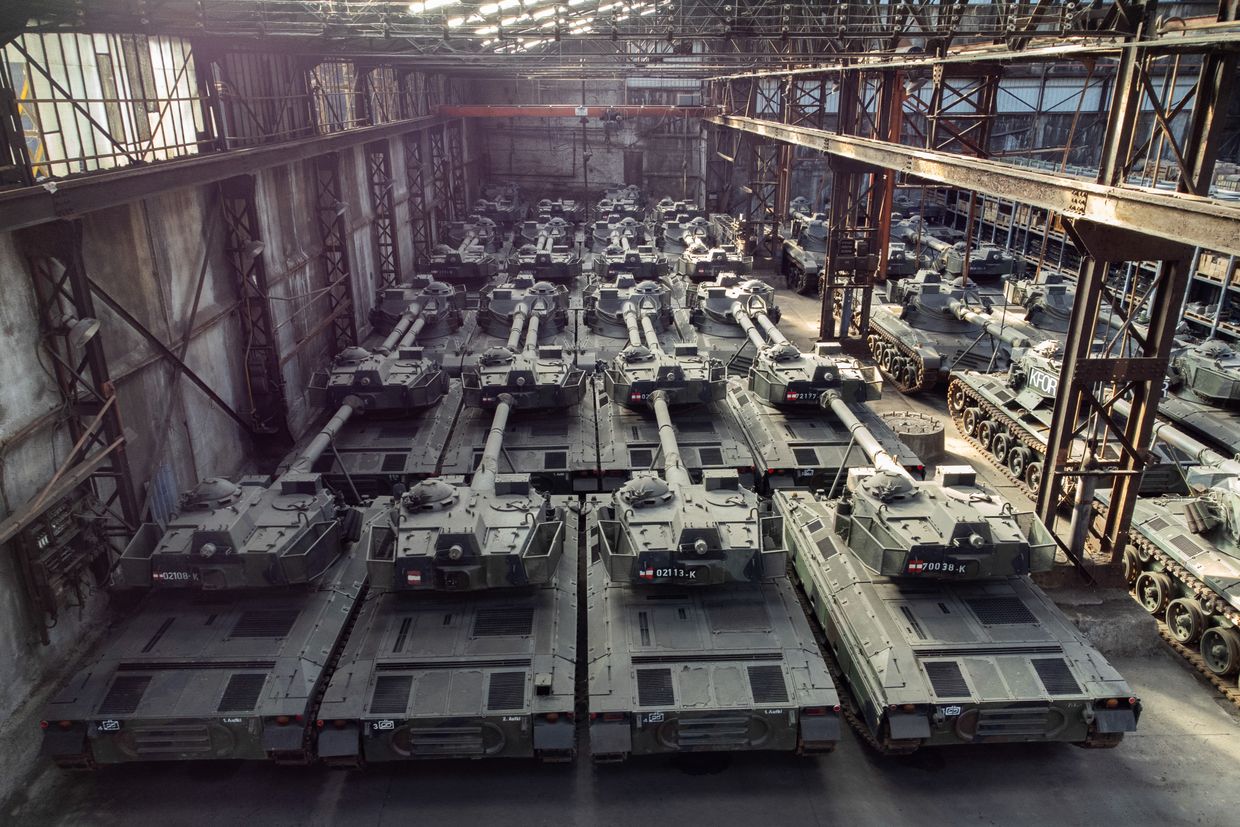
The protesters, armed with hammers and grinders, first entered the company's offices, where they smashed computers, and then broke into the hangars, where they severely damaged some vehicles, Freddy Versluys, CEO of OIP Land Systems, said.
Since the beginning of the Russian invasion, the company has supplied the Ukrainian army with about 260 armored vehicles. The damage caused by the activists' actions is estimated at $1.1 million, according to 7sur7.
"A further delivery has now been delayed by at least a month. That's all these Hamas sympathizers will have achieved with their action," Versluys said.
The company was reportedly targeted by pro-Palestinian protesters because Elbit Systems, an Israeli defense company, owns it.
Protesters believe that Elbit supplies 85% of the drones and most of the ground military equipment used by the Israel Defense Forces, 7sur7 reported.
Yet, the OIP Land Systems CEO claimed that his company has not produced defense systems for Israel for over 20 years.
OIP Land Systems has provided defense products to Ukraine on several occasions, including Leopard 1 tanks, which are manufactured at the Tournai plant.
U.S. Special Envoy to the Middle East Steve Witkoff condemned on June 24 the leak of an intelligence assessment that undercuts U.S. President Donald Trump's claims of having "obliterated" Iran's nuclear program.His remarks follow a leaked U.S. Defense Intelligence Agency (DIA) assessment, reported by CNN, which found that strikes on three major Iranian nuclear sites, Fordow, Natanz, and Isfahan, did not destroy the core of Tehran's nuclear program. Instead, the intelligence suggests the attacks
U.S. Special Envoy to the Middle East Steve Witkoff condemned on June 24 the leak of an intelligence assessment that undercuts U.S. President Donald Trump's claims of having "obliterated" Iran's nuclear program.
His remarks follow a leaked U.S. Defense Intelligence Agency (DIA) assessment, reported by CNN, which found that strikes on three major Iranian nuclear sites, Fordow, Natanz, and Isfahan, did not destroy the core of Tehran's nuclear program. Instead, the intelligence suggests the attacks likely delayed Iran's progress by "a few months."
"It goes without saying that leaking that type of information, whatever the information, whatever side it comes out on, is outrageous. It's treasonous," Witkoff said during an appearance on Fox News. "It ought to be investigated, and whoever is responsible should be held accountable."
Witkoff, who served as Assistant to the U.S. president and led peace mission efforts during the recent conflict between Israel and Iran, defended Trump's portrayal of the U.S.-led strikes as a decisive success.
"The objective was to eliminate enrichment in Iran… and he achieved that objective," Witkoff said, adding that he personally reviewed damage assessments and saw "no doubt" that key nuclear infrastructure was destroyed.
The report leaked in media contradicts public statements from Trump and Defense Secretary Pete Hegseth, who had described the operation as delivering "total obliteration." Trump, for his part, stood by the claim on June 24. "Those targets were obliterated," he said. "That place is demolished."
According to the DIA assessment, though the strikes damaged above-ground infrastructure, most of the centrifuges and the enriched uranium stockpile reportedly remain intact. The assessment also noted that underground sections of the sites, where Iran's most sensitive work is done, were largely unaffected. Two officials told CNN that Iran likely retains operational nuclear facilities that were not targeted.
Witkoff dismissed the report as "preposterous," insisting that the Isfahan conversion facility, critical to Iran's ability to weaponize enriched uranium, was "completely destroyed" by a 30,000-pound bunker buster bomb.
"Without conversion, you can't begin or end enrichment," he said. "They cannot weaponize, even if they've enriched to 90%."
Witkoff also claimed successful targeting of Fordow and Natanz, saying the U.S. dropped more than a dozen bunker busters on the sites that made the facilities inoperable.
The White House acknowledged the assessment’s existence but strongly dismissed it. "This alleged assessment is flat-out wrong and was classified as ‘top secret’ but was still leaked to CNN by an anonymous, low-level loser in the intelligence community," press secretary Karoline Leavitt said.
"The leaking of this alleged assessment is a clear attempt to demean President Trump, and discredit the brave fighter pilots who conducted a perfectly executed mission to obliterate Iran’s nuclear program. Everyone knows what happens when you drop fourteen 30,000 pound bombs perfectly on their targets: total obliteration."
Trump, for his part, stood by his assessment of the mission's success. "I think it’s been completely demolished," he said on June 24. "Those pilots hit their targets. Those targets were obliterated, and the pilots should be given credit.” Asked if Iran could rebuild, Trump responded: "That place is under rock. That place is demolished."
While both Trump and Hegseth praised the strikes as decisive, others expressed caution. Chairman of the Joint Chiefs of Staff Dan Caine said it was "way too early" to determine whether Iran retained nuclear capabilities.
Ukraine's military intelligence agency (HUR) and the Foreign Ministry have evacuated 31 Ukrainian citizens from Iran on the instructions of President Volodymyr Zelensky, the agency said on June 24.The news follows a war between Iran and Israel that began on June 13. The countries reached a ceasefire deal on June 24. Israel and Iran attacked each other hours after the ceasefire was announced. Despite the initial violations, the agreement appears to be holding now. Ukraine evacuated 14 children, 1
Ukraine's military intelligence agency (HUR) and the Foreign Ministry have evacuated 31 Ukrainian citizens from Iran on the instructions of President Volodymyr Zelensky, the agency said on June 24.
The news follows a war between Iran and Israel that began on June 13. The countries reached a ceasefire deal on June 24.
Israel and Iran attacked each other hours after the ceasefire was announced. Despite the initial violations, the agreement appears to be holding now.
Ukraine evacuated 14 children, 12 women, and five men, according to HUR.
The evacuation was carried out through Azerbaijan and Moldova to Kyiv, the statement read.
"We felt completely unprotected all the time in Tehran because there were no air raid alerts. In addition, the Internet was down, and we had no idea what was happening," Varvara from Kyiv Oblast, who was evacuated from Iran, told HUR's press service.
Earlier, Ukraine evacuated 176 people from Israel, including 133 Ukrainian citizens. The evacuation from Iran is the final stage of a joint operation by HUR and the Foreign Ministry to rescue Ukrainian citizens from high-risk areas, according to the agency's statement.
Tensions between Iran and Israel had already been rising after Iran launched missile strikes on Tel Aviv and other Israeli cities on June 13, killing multiple civilians, including five Ukrainian nationals. The attack came in retaliation for Israeli military action.
On June 24, Trump announced that a ceasefire between Iran and Israel had come into effect, following the U.S. strikes on Iranian nuclear facilities and a retaliatory Iranian attack on a U.S. military base in Qatar.

 Connexion