Vue normale

One pincer stalled a year ago, the other has just been broken near Kostiantynivka—Russia’s ring will not close, Ukrainian commander says
17 septembre 2026 à 07:32

one pincer stalled year ago other has just been broken near kostiantynivka—russia's ring close ukrainian commander says · post andrii biletskyi founder azov third assault brigade (center) 3d ukraine news

Russia's attempt to encircle the fortified cities of Donetsk Oblast has lost its northern pincer, the commander of Ukraine's Third Army Corps, Brigadier General Andrii Biletskyi, said in a television interview reported by Ukrinform. He described where the two Russian pincers were meant to meet, far behind the front line, and what Moscow must do now that one of them is gone. He also named what the Ukrainian operation there is meant to achieve, after declining to do so when he revealed it two days earlier.

Seizing all of Donetsk Oblast is Russia's central objective in the ongoing all-out war, on the battlefield and at the negotiating table alike, and Russian leader Putin has ordered it done by the end of 2026. Russian forces have already missed 15 of his earlier deadlines against a belt of fortified cities Moscow can neither storm nor bypass, and it is losing men faster than it can replace them.

Two pincers that were to meet in another oblast

Biletskyi set out the Russian design "to envelop the so-called fortress cities from the north and from the south"—the four cities, Sloviansk, Kramatorsk, Druzhkivka, and Kostiantynivka, that have been the backbone of Ukraine's defense in the oblast since 2022..

"From the south it was an envelopment through Dobropillia, and from the north through this salient, which is now being cut off, it went to the city of Sviatohirsk and further, to the settlement of Barvinkove, where these two claws of the Russian army, the Dobropillia one from the south and the Sviatohirsk one from the north, were supposed to close," the commander said.

Barvinkove sits in Kharkiv Oblast, west of the fortified belt. The distance from there to the current front line shows how far behind Ukrainian lines the ring was meant to close.

Neither pincer got near it. Ukrainian forces stopped the Russian infiltration near Dobropillia last year, Biletskyi said, and the situation there remains difficult but under control. Russian assault groups have kept pushing toward the town in recent weeks, though Ukrainian troops have mined or destroyed the main approaches.

On the northern pincer he was blunt: 

"The northern claw has effectively been routed and destroyed," he said.
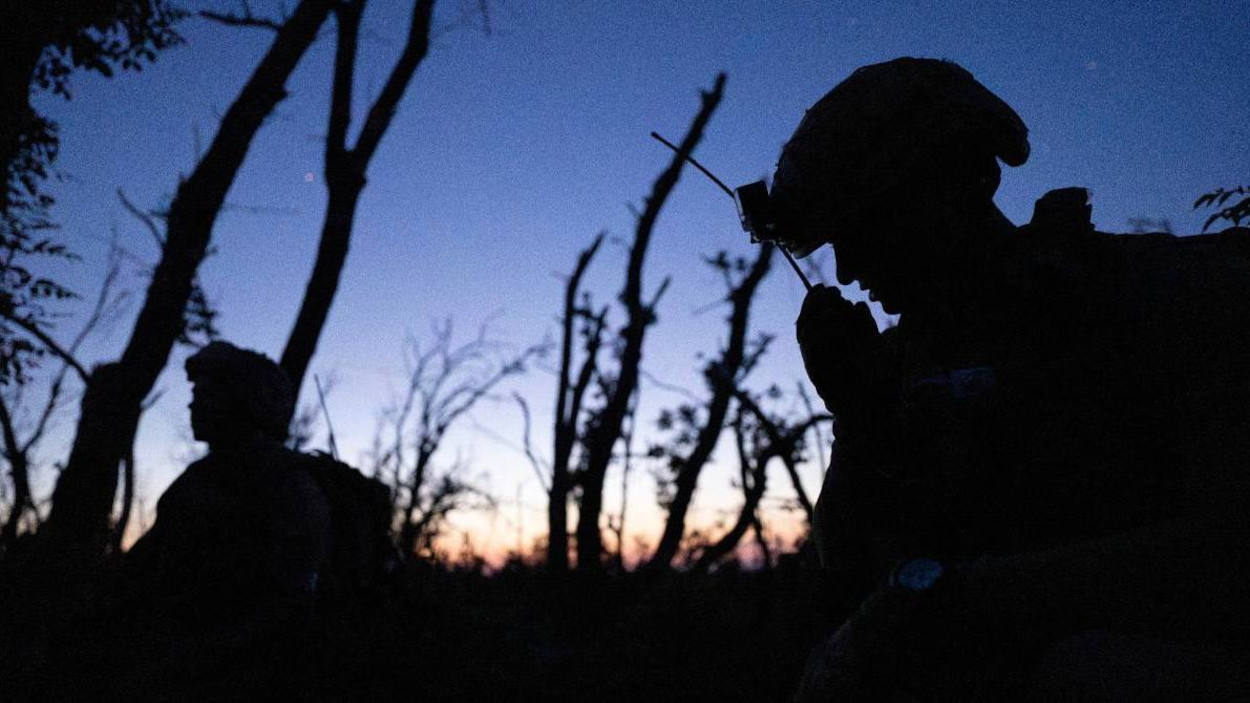
Soldiers of Ukraine's Third Army Corps. Photo: Ukraine's Third Army Corps
Explore further

“Only the first season” – Ukraine unveils secret counteroffensive in a region Russia has been trying to seize for 12 years

Now the cities have to be stormed

Holding that result now depends on Russian supply, Biletskyi said. The critical task is "paralyzing logistics, paralyzing the rear areas, not letting the Russians restore this offensive."

He then set out what the failure costs Moscow.

"Then they will have to storm the Sloviansk-Kramatorsk and the Druzhkivka-Kostiantynivka agglomerations head-on," he said. "And storming these cities head-on is a far more painful and costly business for them than trying to envelop them and effectively take them without a fight."
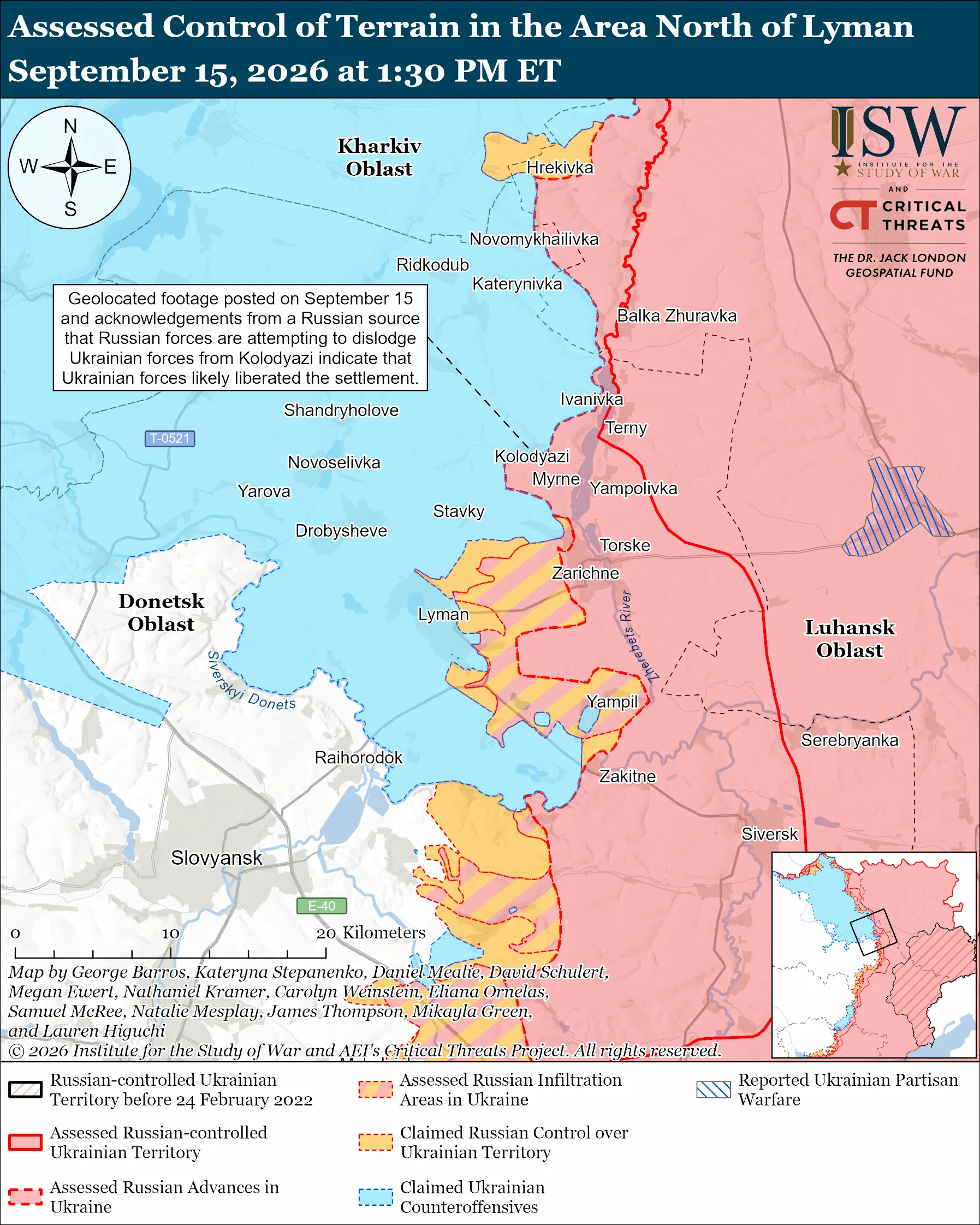
Map: ISW

Russia has taken none of them: it has been fighting for Kostiantynivka since October 2025 and has not reached the other three. Ukraine reinforced the sector last month, placing two newly formed groupings under Azov commanders. One of them has since warned that Russia may mobilize up to 600,000 troops for its next offensive.

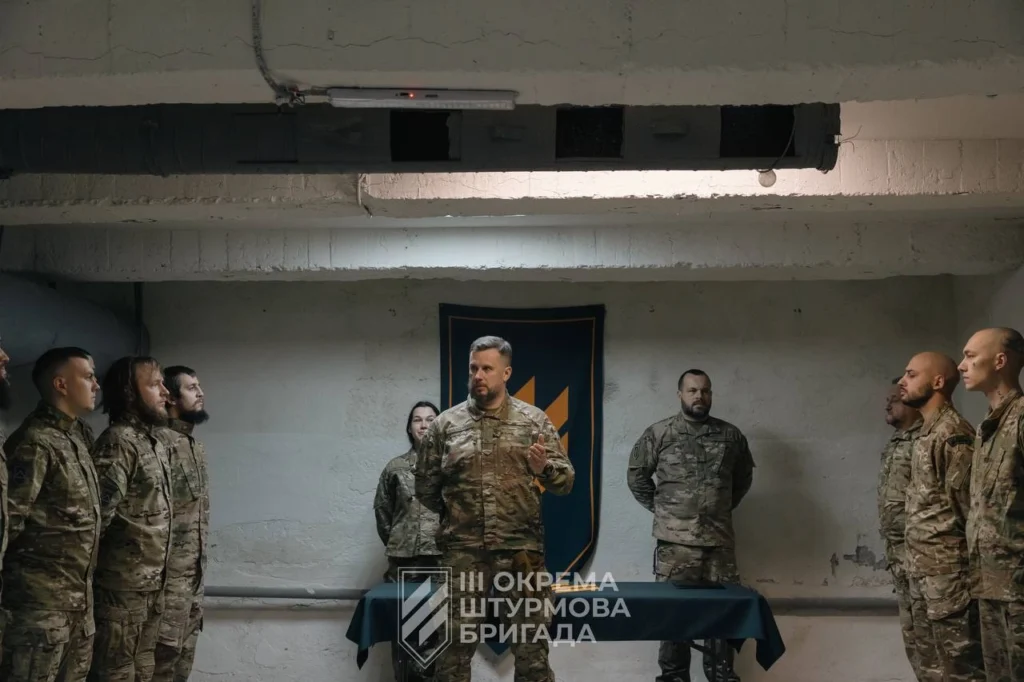
Ukraine's Third Army Corps commander Brigadier General Andrii Biletskyi announcing "Operation Vivaldi," 15 September 2026. Screenshot from video: Ukraine's Third Army Corps
Explore further

Ukraine’s Vivaldi counteroffensive disrupts Russia’s plan to encircle Donetsk Fortress Belt – ISW

What Vivaldi is actually for

Two days after the operation was made public without a stated objective, Biletskyi gave one, and it is defensive.

"Our main strategic task for the Armed Forces of Ukraine is defense on the Donetsk and Luhansk axes, the defense of Donetsk and Luhansk oblasts," he said.

Ukrainian forces are not trying to take as much ground as they can, he added. 

"We are not fighting there just for tens or hundreds, and at one time thousands, of kilometers. We are fighting first of all for favorable defensive lines."

Vivaldi is meant to put the troops on exactly those lines. That sets a different yardstick than captured settlements: the operation will be judged on the ground Ukraine ends up holding, not on how much of it there is.

Biletskyi confirmed the offensive in northern Donetsk Oblast on 15 September, after a period of information silence. His corps had cleared 75 square kilometers of Russian infiltrators and liberated 10 more, and its drone units had cut Russian supply routes and burned fuel infrastructure, the corps said at the time. Asked then what the operation was aiming at, he declined to say, offering only that Vivaldi has four seasons and this was the first. The Institute for the Study of War assessed a day later that the operation disrupts the Russian plan to encircle the fortress belt.
  • ✇Euromaidan Press
  • One tracked tank repairs, one marked artillery, one aimed bombs at civilians—all three got 15 years
    A Ukrainian court sentenced three Russian agents to 15 years each for guiding Russian strikes on Donetsk Oblast, the Security Service of Ukraine (SBU) said on 26 August. Each had been recruited to mark Ukrainian military sites or civilian targets in the east, and counterintelligence exposed them between spring 2025 and March this year. The court found all three guilty of treason committed under martial law. The SBU did not name the court or say which specific strikes th
     

One tracked tank repairs, one marked artillery, one aimed bombs at civilians—all three got 15 years

26 août 2026 à 04:20

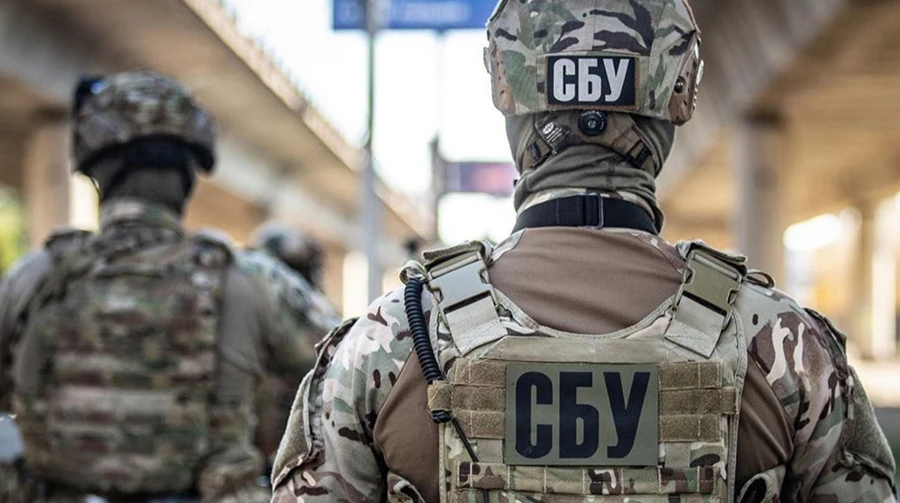
SBU officers in camouflage and tactical gear, seen from behind during an operation.

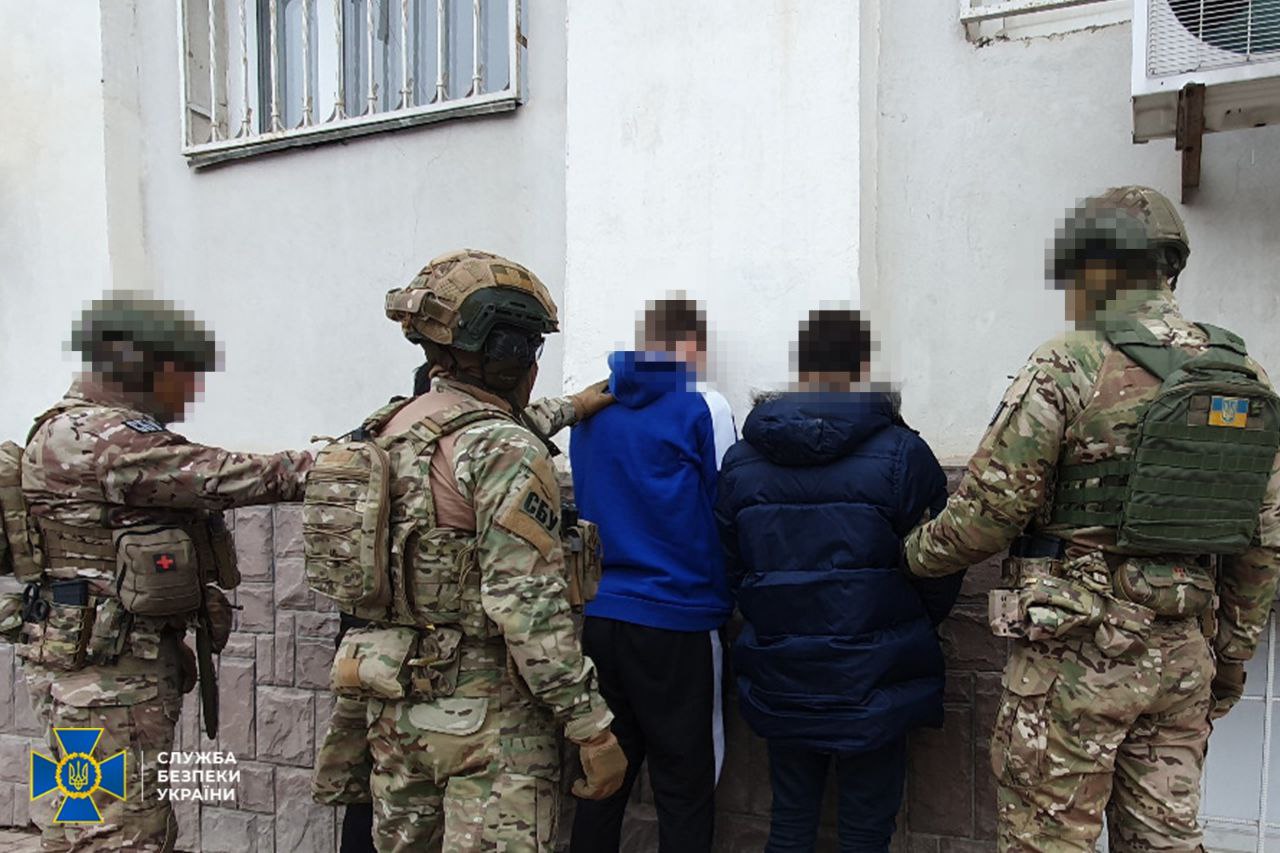
A Ukrainian court sentenced three Russian agents to 15 years each for guiding Russian strikes on Donetsk Oblast, the Security Service of Ukraine (SBU) said on 26 August. Each had been recruited to mark Ukrainian military sites or civilian targets in the east, and counterintelligence exposed them between spring 2025 and March this year. The court found all three guilty of treason committed under martial law. The SBU did not name the court or say which specific strikes the men enabled.

Russia has spent this war turning Ukrainian civilians into spotters for its bombs — reaching them through Telegram job and drug channels, forged official summonses, relatives in occupied areas, and promises of easy money — and the SBU has opened more than 3,800 treason investigations since 2022 as of February 2026, so any single verdict stands for a caseload far larger than what reaches the news.

The informer inside the armor repair base

One of the convicted men worked at a Defense Forces repair base, and the SBU detained him in the Kramatorsk sector in April 2025. Russian services noticed him through his brother, who lives in Russia and works for the Federal Security Service (FSB), the investigation established. Recruitment through relatives in Russia or the occupied territories is a method Ukrainian counterintelligence has documented before, including inside a marine brigade on the active front.

During his own shifts at the defense enterprise, he recorded the geolocations of repair shops used to restore heavy armored vehicles for Ukraine's Armed Forces. He tried to pass the photographs and building coordinates to his Russian handler through an anonymous chat in a messenger.

sbu arrests suspected russian spies foils sabotage plots lyman chernihiv kirovohrad vinnytsia detainment saboteurs security service says arrested agent aiding airstrikes 2 ukraine's reported multiple agents involved espionage across several
Explore further

SBU arrests suspected Russian spies, foils sabotage plots in Lyman, Chernihiv, Kirovohrad, Vinnytsia

The Dobropillia man who aimed 1.5-ton bombs near Pokrovsk

The second man was an unemployed resident of Dobropillia and an agent of Russian military intelligence, which noticed him through anti-Ukrainian comments in Telegram channel chats, the SBU said. The agency's counterintelligence detained him near Pokrovsk in March this year. Investigators established that he directed 1.5-ton guided aerial bombs at fortified areas and at artillery positions that keep Russian assault groups under fire control on the Pokrovsk axis. Russian forces have leaned more heavily on heavy glide bombs across this stretch of front this year, hitting fortifications and reducing towns to rubble their infantry then uses as cover.

The Kostiantynivka resident who marked his own city

The third man, recruited by the FSB, lived in Kostiantynivka, and SBU military counterintelligence exposed him in August 2025, according to the report. He approached Russian services through pro-Kremlin Telegram channels and offered them his help.

He directed Russian guided aerial bombs and small first-person-view drones at the civilian infrastructure of the front-line city, according to the case materials. He also tracked the positions of Ukrainian drone units carrying out combat tasks on the Kramatorsk axis. Russian strikes on that axis have repeatedly hit residential blocks, with prosecutors opening war-crimes investigations.

Ukrainian courts have handed down the same 15-year term in comparable cases, including for a locomotive depot engineer who mapped Ukrainian positions around Lyman.
❌