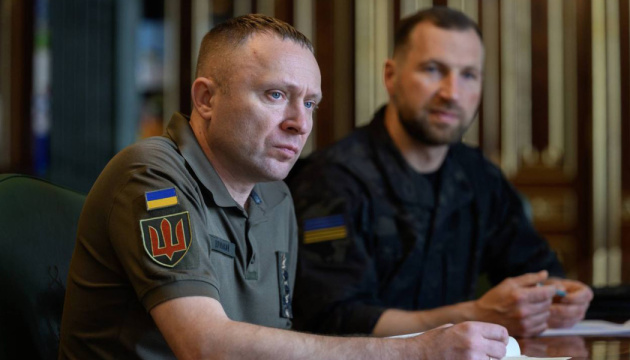
A large-scale disinformation campaign targeting Commander-in-Chief of the Armed Forces of Ukraine, Major General Mykhailo Drapatyi, is currently unfolding across social media platforms.
A large-scale disinformation campaign targeting Commander-in-Chief of the Armed Forces of Ukraine, Major General Mykhailo Drapatyi, is currently unfolding across social media platforms.
Authorities in Zaporizhzhia have introduced an additional public warning system to alert residents about areas that could be targeted by Russian strikes.
Authorities in Zaporizhzhia have introduced an additional public warning system to alert residents about areas that could be targeted by Russian strikes.
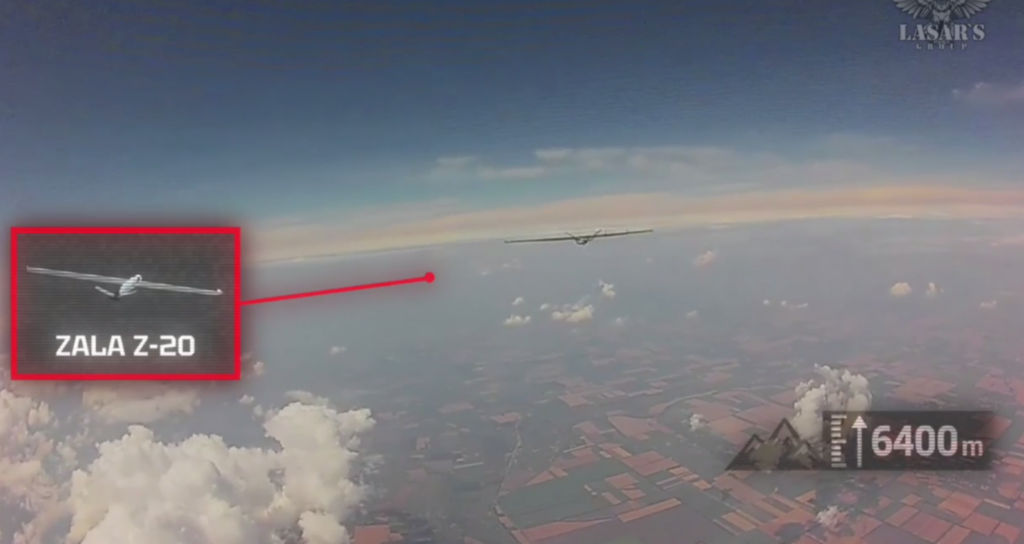
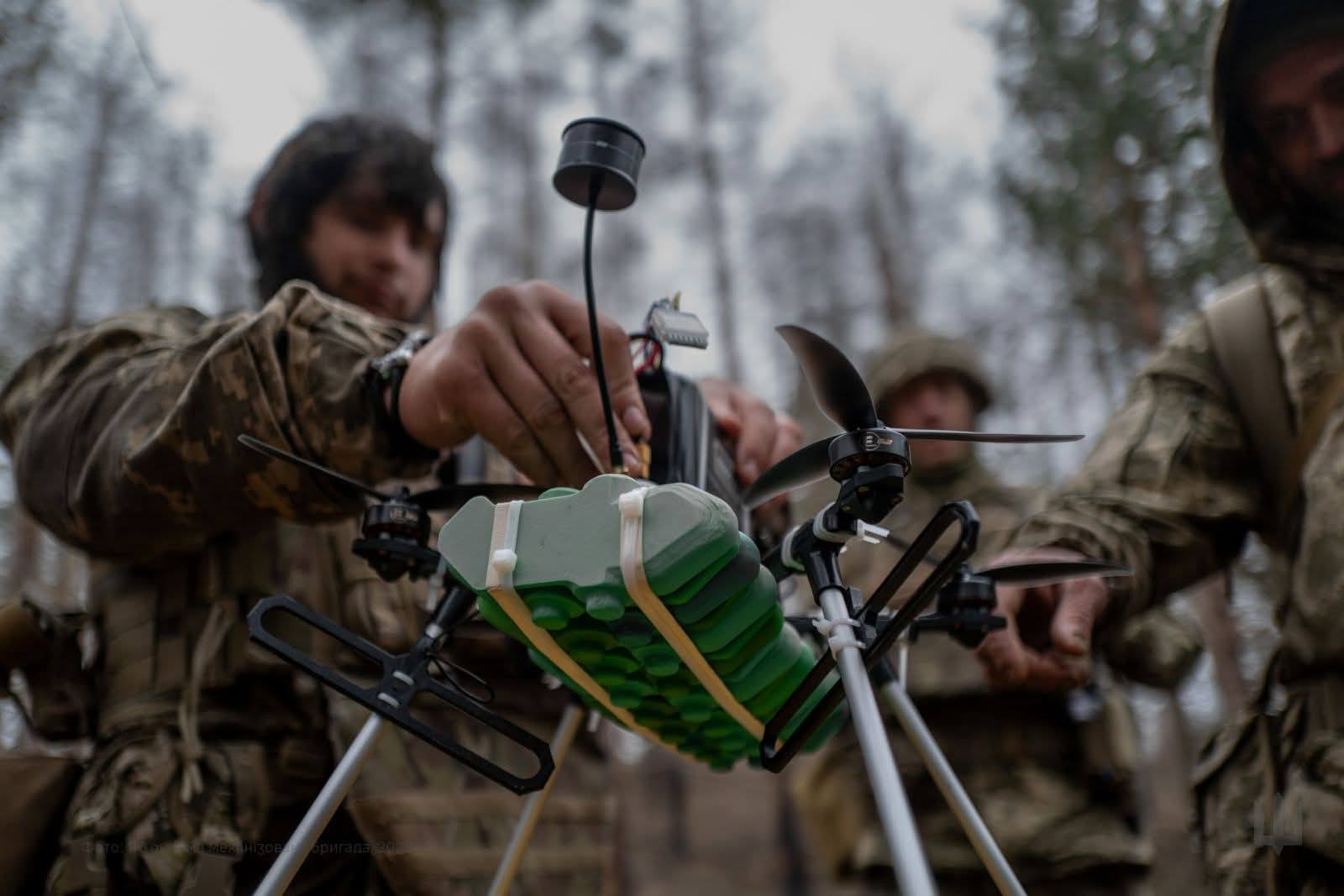
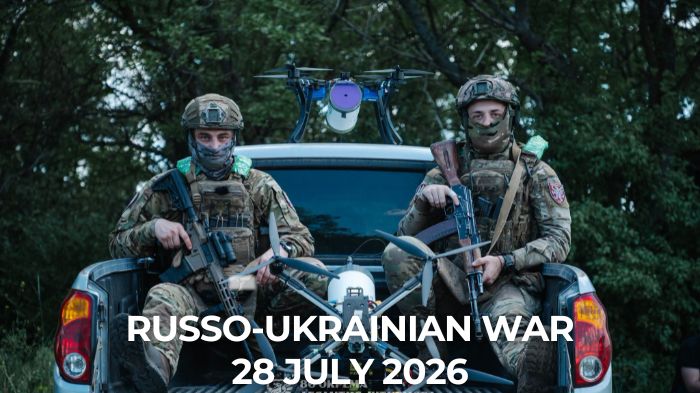
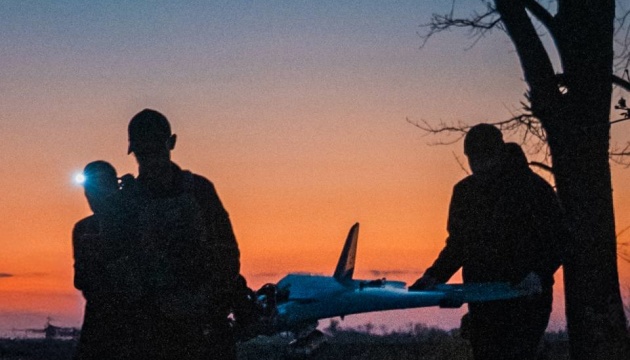
Ukraine chased a Russian spy drone to 6,400 meters and shot it down. Pilots of the National Guard's Lasar's Group interceptor unit spotted and struck a Russian reconnaissance drone at an unimaginable altitude, the unit reported, publishing video of the engagement on 28 July.
The target was a Russian ZALA Z-20 reconnaissance drone, a platform designed to detect targets at distances up to 100 kilometers, which Ukraine's interceptor crews brought down over southern Ukraine
Ukraine chased a Russian spy drone to 6,400 meters and shot it down. Pilots of the National Guard's Lasar's Group interceptor unit spotted and struck a Russian reconnaissance drone at an unimaginable altitude, the unit reported, publishing video of the engagement on 28 July.
The target was a Russian ZALA Z-20 reconnaissance drone, a platform designed to detect targets at distances up to 100 kilometers, which Ukraine's interceptor crews brought down over southern Ukraine in late July.
The Russian drone climbed to this height trying to avoid being shot down, but the Ukrainian pilot caught and hit it, the unit said, calling it one of the record altitudes at which Ukrainian troops have downed an enemy drone.
It is a direct answer to a Russian tactic: Russian reconnaissance drones increasingly fly high-altitude missions specifically to climb above Ukraine's interceptor engagement zones, a move Ukraine has documented as Russia's response to mounting drone losses.
Altitude is the recon drone's last refuge, and Ukraine is closing it
Downing one at 6,400 meters is Ukraine following the target into its refuge. Russian recon drones like the ZALA and Orlan are the eyes that spot for Russian artillery and missile strikes, so each one destroyed blinds a piece of the Russian targeting system, and doing it at altitude means the high-flying evasion no longer guarantees safety. Ukraine has been pushing its interceptors steadily higher: a Ukrainian team demonstrated an interceptor reaching 11 kilometers in 2025, higher than Everest and into the band where airliners cruise.
High-flying recon drones were, until recently, a relatively safe Russian asset. Ukraine's interceptor makers have been racing to close exactly that gap.
New systems like the Tsyklop are built specifically to climb above Russia's strike and reconnaissance drones and strike them from higher up, and the 6,400-meter kill is a field demonstration of that capability working. As Ukraine's interceptors reach higher altitudes, the altitude Russia's reconnaissance drones fled to stops being a refuge, and the spotters who guide Russian strikes lose the last piece of sky they were safe in.
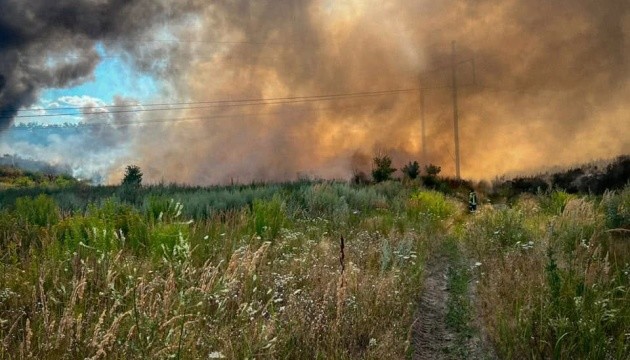
Firefighters in the village of Novi Petrivtsi, Vyshhorod district, Kyiv region, are continuing efforts for a second day to extinguish a large fire that broke out at an illegal landfill and spread to nearby open land.
Firefighters in the village of Novi Petrivtsi, Vyshhorod district, Kyiv region, are continuing efforts for a second day to extinguish a large fire that broke out at an illegal landfill and spread to nearby open land.
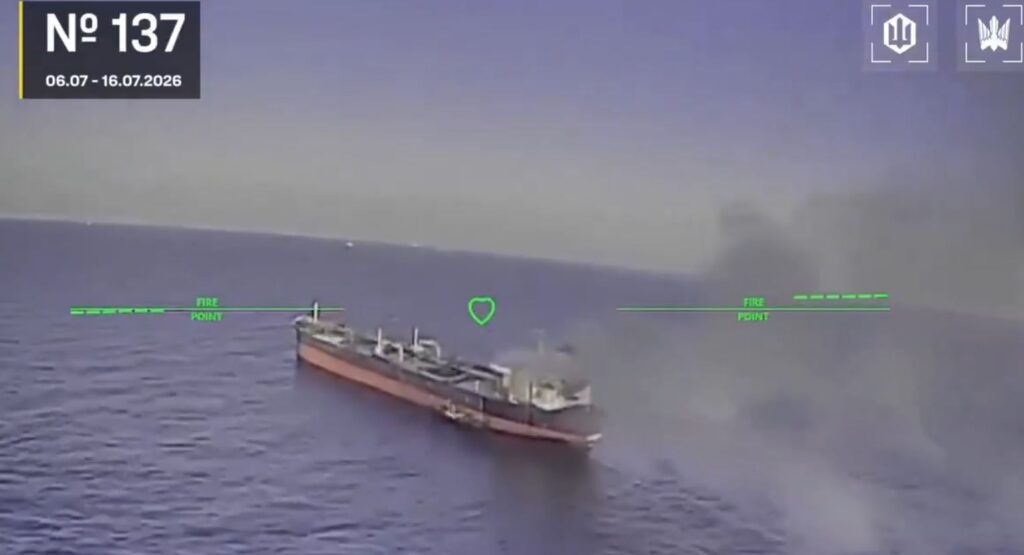
Ukraine says its drones have hit 201 Russian ships in three weeks. Robert "Madiar" Brovdi, commander of Ukraine's Unmanned Systems Forces (SBS), reported that Ukrainian drones have struck the vessels of Russia's shadow fleet in three weeks of the SBS operation "MoLoChKa," which began on 6 July.
The tally splits between the two seas: 129 vessels in the Sea of Azov from 6 to 28 July, and 72 in the Black Sea from 15 to 28 July, per Brovdi, figures that do not include ships
Ukraine says its drones have hit 201 Russian ships in three weeks. Robert "Madiar" Brovdi, commander of Ukraine's Unmanned Systems Forces (SBS), reported that Ukrainian drones have struck the vessels of Russia's shadow fleet in three weeks of the SBS operation "MoLoChKa," which began on 6 July.
The tally splits between the two seas: 129 vessels in the Sea of Azov from 6 to 28 July, and 72 in the Black Sea from 15 to 28 July, per Brovdi, figures that do not include ships hunted in the same period by the Security Service of Ukraine (SBU) and other Defense Forces.
Euromaidan Press cannot independently verify the count, which is the SBS commander's own running tally, though it is consistent with the day-by-day progression EP has tracked since the operation began, from 21 ships by 8 July to 159 by 17 July.
Brovdi said Russia's fleet in the area is essentially gone.
"They'll have to strain themselves, because there's simply nothing left there except cripples turned into non-self-propelled barges. The Kerch Strait is blocked for an indefinite period," he said.
The campaign burns the small ships that feed the big ones
The operation, codenamed MoLoChKa, a Ukrainian word for dairy products, targets the courier fleet that keeps Russian oil moving under sanctions. Ukraine's drones strike the small tankers and support vessels that ferry crude to the large export tankers and haul fuel to occupied Crimea, rather than the export giants themselves.
One big export tanker needs 12 to 15 small courier vessels to fill it, Brovdi has said, so burning the small ones paralyzes the whole chain.
His operators strike the ships without sinking them, turning them into what he called ghosts drifting across the sea, damaged hulks that can no longer carry cargo.
"The shadow fleet is wasting away, but it must disappear as a species," Brovdi wrote earlier in the campaign.
The blockade is choking Russia's oil revenue and Crimea's supply
The ship-hunting is one half of a squeeze on two things Russia needs: oil money and a supplied Crimea. Oil exports are the biggest source of cash for Russia's war, and Ukraine has spent 2026 attacking that revenue, where Western sanctions left the money moving, hitting both the refineries that produce the fuel and the tankers that carry it.
The blockage of the Kerch Strait is the sharp end. The strait is the gateway between the Azov and Black seas and the supply artery for occupied Crimea, and, if it holds, Brovdi's claim that it is blocked indefinitely means Russia's fuel run to the peninsula and its Azov oil exports both run through waters that Ukraine now controls with drones.
Ukraine has for years absorbed a persistent and rising volume of Russian missile, drone, and guided glide-bomb strikes. Across reporting from the UN, the World Health Organization, the World Bank and conflict-monitoring groups, the infrastructure struck most consistently falls into three categories:
residential buildings, the leading source of civilian casualties;
the energy system, the principal target of Russia's strategic long-range campaign;
and critical c
Ukraine has for years absorbed a persistent and rising volume of Russian missile, drone, and guided glide-bomb strikes. Across reporting from the UN, the World Health Organization, the World Bank and conflict-monitoring groups, the infrastructure struck most consistently falls into three categories:
residential buildings, the leading source of civilian casualties;
the energy system, the principal target of Russia's strategic long-range campaign;
and critical civilian services—healthcare, education, transport, water, ports and agriculture—degraded to undermine Ukraine's economy and civilian resilience.
The cost is a state being hollowed out. Public debt has risen from 49% of GDP in 2021 to a projected 123% in 2026, on the back of unprecedented wartime borrowing and a GDP that contracted sharply in 2022, according to the IMF. More than half of Ukraine's electricity generation capacity has been destroyed, damaged, or is under Russian occupation.
By the end of 2025 the World Bank estimated reconstruction and recovery needs at €500 billion—close to three times Ukraine's nominal GDP for the year.
The demographic damage may prove the hardest to reverse. Ukraine's pre-war population is usually put at 41 to 42 million, excluding Crimea; current estimates suggest only 28 to 32 million now live in government-controlled territory, and UN projections see it falling to 25 to 29 million.
On that trajectory, the Washington Post notes, Ukraine will have effectively halved its 2001 population of 48.5 million—driven by refugee flight and a death rate roughly three times the number of live births. There is broad agreement among demographers that this is one of the most severe population crises a European country has faced since the Second World War.
These are only a few indicators of the destructive nature of Russia's war of attrition, whose aim is to destroy the basis for Ukrainian statehood. As I have previously argued, Russia's war is getting cheaper, which extends its ability to sustain that destruction for years.
Explore further
Russia’s war is getting cheaper. That’s the worst news Europe has heard in years.
2026 has been the most brutal year yet. Based on Ukrainian General Staff daily reports, long-range drone strikes are up 160% on last year. The use of tactical and operational drones—surveillance, reconnaissance and strike—is up a staggering 756%. First-person-view drone launches have risen 304% as Russia expands its "human safari" strikes on civilians. Guided glide bombs are up 214% as their range and destructive scale grow.
From a Ukrainian perspective, the attrition war is unsustainable. If the present trajectory holds, the country's future existence is in question.
Russia is losing the war it planned to fight—and potentially winning the one it is fighting instead. Ukraine forced Russia to abandon maneuver warfare. Having chosen attrition, Russia is now forcing Ukraine to adapt in turn. That is why Ukraine is bringing the war to Russia and its population.
On 10 May, Zelenskyy said Ukraine would respond in kind. "If the Russians decide to return to full-scale warfare, our 'sanctions' [meaning missile and drone strikes] for this will be immediate and tangible," he said.
On 14 May, the President instructed Ukraine's defense forces and special services to identify "possible formats for our response to this Russian attack." The phrasing signalled a possible shift: Ukraine adopting Russia's playbook and bringing the war home by striking civilian infrastructure—residential buildings, power, heating and water plants, railways, airports and ports.
The shift is no longer hypothetical. On 25 June, Zelenskyy publicly announced a 40-day campaign. In a statement published on Facebook, Telegram and X, he wrote: "I approved a 40-day operation by the [Ukrainian Security] Service to influence the aggressor state in order to press for an end to the war."
Analysts described the campaign as combining military, economic, and psychological effects rather than seeking a battlefield breakthrough.
The announcement opened weeks of increasingly intensive Ukrainian long- and medium-range strikes on clearly military targets inside Russia: oil refineries, fuel depots, military airfields, ammunition depots, logistics hubs and military-industrial plants. But the campaign also reached targets that fall outside the traditional category of purely military objectives—energy, ports, civilian vessels and warehouses—and whose legality turns not on the category but on the dual-use test. That is where the legal question begins.
Two weeks in, on 10 July, Zelenskyy signed a decree establishing a special command within the Armed Forces for long-range—effectively global—impact on Russia, concentrating available resources on degrading Russia's warfighting potential. The move turned the campaign into a permanent institution rather than a time-limited operation.
Energy facilities
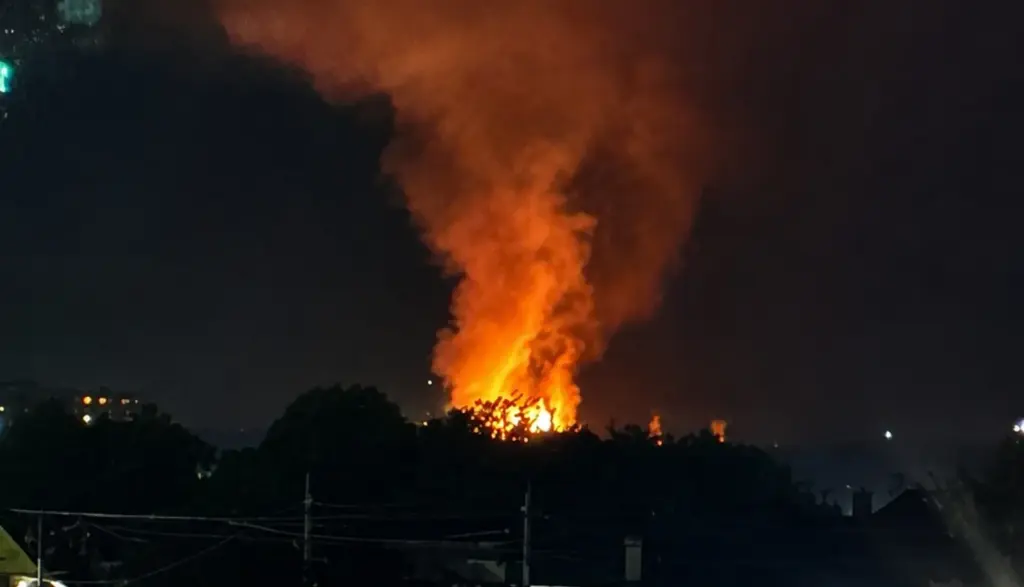
Fire blazes at the Afipsky oil refinery after the Ukrainian drone attack, Krasnodar Krai, Russia, overnight on 14 July 2026. Photo: Astra
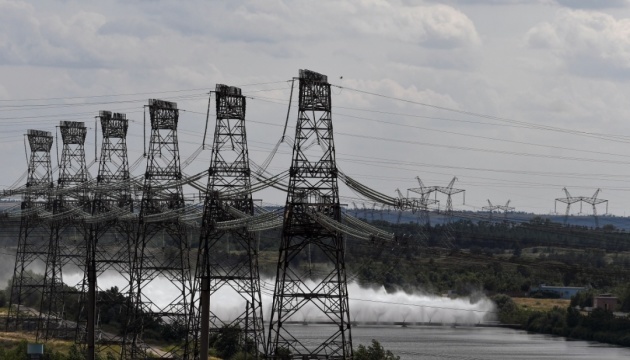
In July, Ukraine sharply increased its targeting of the energy sector in Russia and on occupied territory. ISW identified and geolocated 62 substations, power plants, transformer stations and transfer nodes struck one or more times over 1 to 24 July—necessarily a partial count, since targets are not always named. Ukraine's Unmanned Systems Forces claimed a far higher figure, reporting on 25 July that it had struck 136 substations across the month.
The situation on occupied territory—especially Crimea, but increasingly parts of occupied Kherson, Zaporizhzhia, Donetsk and Luhansk oblasts—deteriorated sharply through July. The strikes caused recurring blackouts, degraded grid resilience and reduced redundancy.
The intent is to degrade Russia's military logistics rather than inflict civilian hardship. By repeatedly hitting substations, plants, transformers and transfer nodes, Ukraine cut power to the railways, ports, air bases and logistics hubs sustaining Russia's war of aggression. The campaign has forced Russia to divert scarce air-defense systems and personnel to protect an expanding number of rear-area assets, complicating sustainment, reducing operational resilience and raising the economic cost of the occupation.
Explore further
Is Ukraine about to repeat Hitler’s mistake with the London Blitz?
Maritime shipping
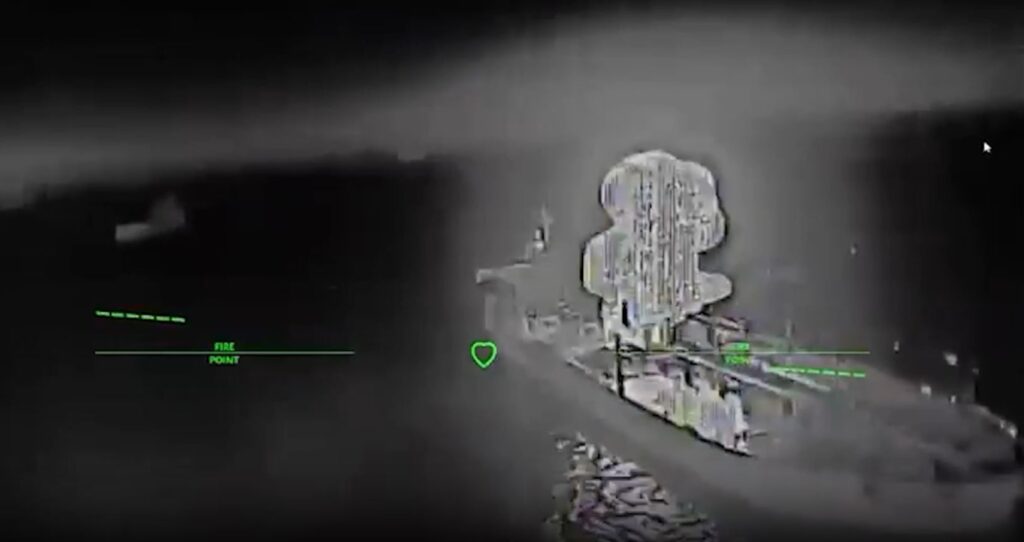
The moment a Ukrainian drone strike hits a Russian tanker in the Sea of Azov, thermal footage, overnight on 14 July 2026. Screenshot from video: Unmanned Systems Forces
Ukraine has also sharply increased its attacks on shipping in the Sea of Azov and the Black Sea under Operation MoLoChKa—an acronym for Moskva liazhe cherez Krym, "Moscow will fall through Crimea." Launched by the Unmanned Systems Forces, it is a large-scale aerial and sea-drone campaign against Russia's "shadow fleet" of oil tankers, gas carriers and cargo ships, aimed at isolating Crimea by severing its logistics.
Between 6 and 22 July, the USF reportedly struck more than 196 vessels—oil and gas tankers, bulk carriers, ferries, tugboats and cargo vessels supporting Russian military sustainment. The strikes disrupted fuel and supply movements, forced Russia to impose shipping restrictions, and pushed logistics onto more vulnerable road and rail. In occupied Crimea the campaign degraded basic living conditions, prompting panic and an exodus, as strikes on the peninsula's fuel routes and power grid converged through July.
Russia was also forced to pull 200 crews from its Rubicon drone unit off the front line to protect shipping, according to the USF.
Ukraine's strikes on Russia's ships is called Operation MoLoChKa—an acronym for Moskva liazhe cherez Krym, "Moscow will fall through Crimea."
"Russia's Amazon"
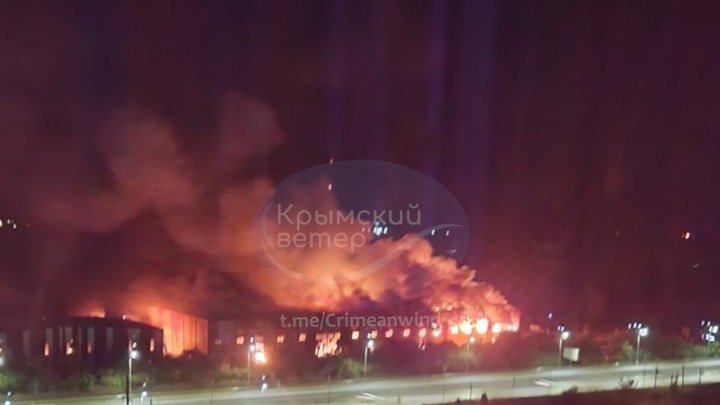
Fire at a Wildberries warehouse after a Ukrainian drone strike in occupied Simferopol, Crimea, 24 July 2026. Photo: Krymsky Veter
Wildberries, often called "Russia's Amazon," is the country's largest online retailer—a marketplace that accounts for more than 2% of Russia's GDP, handles over 20 million orders a day, and is used by an estimated 85% to 90% of the economically active population, making it a fixture of daily life in remote regions.
The Kremlin calls it a strictly civilian retailer. Human-rights watchdogs, independent media and Ukrainian intelligence note that the platform openly serves the war effort, listing military gear, body armor, tactical radios and drone-assembly components—often tagged "SVO fighters' choice," a reference to the "special military operation." Kyiv is now targeting the logistics hubs Russian forces use to source equipment, striking at least 12 Wildberries warehouses in Russia and occupied Ukraine since 17 July.
The stated rationale is that the network functions as a decentralized supply chain for the armed forces. Zelenskyy confirmed the strikes, saying the hubs are used "to supply the Russian army with drone components, navigation equipment and gear." Serhii Kuzan, chairman of the Ukrainian Security and Cooperation Center, noted that while the primary goal is choking the supply of critical components, the disruption reaches deep into the wider Russian economy.
The strikes generate military, economic and political pressure inside Russia. They force Moscow to divert scarce air defense to protect commercial infrastructure far in the rear. They disrupt one of Russia's largest retail networks, bringing the war closer to urban populations the Kremlin has tried to shield. And they reportedly inflicted around RUB 170 billion in damage, raising financial pressure on elites tied to Wildberries and potentially widening tensions inside Putin's circle.
Explore further
“From Simferopol to St. Petersburg”—Ukraine’s drone commander sums up one night of fire at Russia’s online giant
The Ukrainian justification
The stated objective of the 40-day campaign was to "pressure" or "influence" Russia into ending the war by raising the cost of continuing it. Ukraine has adopted the term "military-economic" targets for civilian or dual-use assets that enable Russia's ability to wage war:
Energy infrastructure supporting military bases, railways, ports and the defense industry.
Oil and gas infrastructure—refineries, depots, terminals and pipelines that fuel the military and generate export revenue.
Military-industrial plants producing drones, missiles, electronics, bearings and explosives.
Transport and logistics—railway hubs, ports, ferries and logistics centers moving military cargo.
Commercial logistics firms supporting military supply chains, such as the Wildberries warehouses Ukraine alleges distribute equipment to Russian forces.
Merchant shipping carrying fuel, ammunition, equipment or sanctioned dual-use goods.
To a degree, the strategy is working. Russia is straining under unsustainable war spending, rising inflation, labor shortages and a shrinking sovereign wealth fund.
The war has reached the citizens the Kremlin tried to shield. Independent tracking by the Levada Center—Russia's most reputable non-governmental pollster—recorded a shift months before Ukraine's July campaign: in a survey conducted 18 to 25 February, a record 67% of Russians said it was time to move to peace negotiations, while 24% wanted military operations to continue—the lowest figure recorded since the full-scale invasion began.
Support for the armed forces themselves held at 72%, and 57% still called Russia's strikes on Ukraine's energy grid justified. Russians increasingly want the war over; they have not turned against it. The same paradox ran through the December poll.
The Russian justification
Ironically, Russia's justification for its strikes on Ukraine's energy sector, maritime trade and warehouses is identical to Ukraine's: that the strikes are directed at military and dual-use infrastructure, not at civilians. Russian officials call the targets legitimate military objectives because they support Ukraine's military-industrial complex and its ability to wage war.
Russia's Defense Ministry has stated that all ships bound for Ukrainian ports will be treated as potentially carrying military cargo, and it classifies Ukrainian storage sites and warehouses as covert logistics hubs, ammunition depots or drone-manufacturing nodes. Damaging Ukraine's energy system, ports and trade, Moscow argues, weakens Ukraine's economy and its ability to sustain operations.
The two justifications are word-for-word the same. The legal verdict is not.
Explore further
Ukraine is turning Crimea into an island. It just fired the minister who armed the effort
The verdict
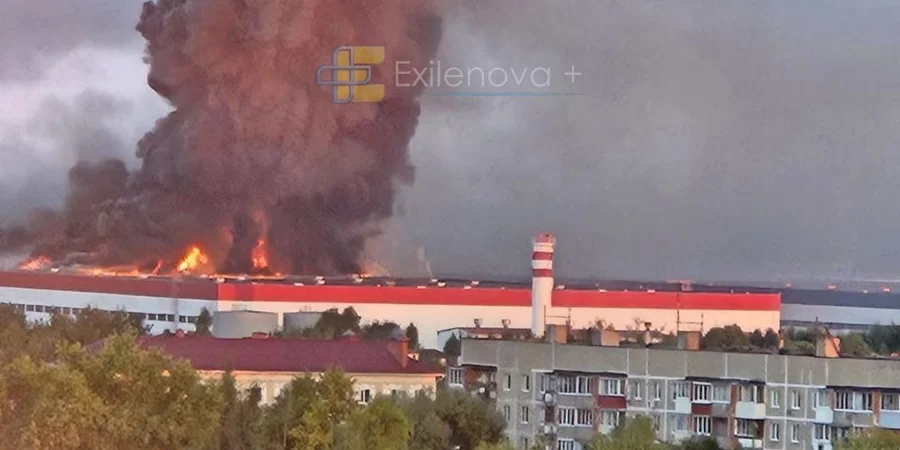
Wildberries logistics warehouses burning after a Ukrainian drone strike near St. Petersburg, Russia, 24 July 2026. Photo: Exilenova+
From a military point of view, Ukraine's strikes are fully justified: they create strategic effects that may help end the war. The harder question is whether they are justifiable in law.
Western governments, the UN and many legal experts reject Russia's justification. They argue that Russia's campaign has repeatedly caused widespread civilian harm—prolonged blackouts, disrupted water, heating and healthcare—and that many strikes have likely violated the principles of distinction, proportionality and precaution under international humanitarian law.
Because Ukraine strikes similar categories, one might assume the same verdict applies to its campaign.
It does not, and the reason is that legality never rested on the category. From a legal perspective, none of these categories—energy, merchant shipping, commercial warehouses—is automatically protected or automatically targetable. Their legality depends on evidence that the target makes an effective contribution to military action, and that the attack satisfies distinction, proportionality and precaution.
That is where the comparison ends.
Ukraine's strikes appear to meet the three principles:
Distinction—attack only military objectives, defined in Article 52(2) of Additional Protocol I as objects that "by their nature, location, purpose or use make an effective contribution to military action" and whose destruction "offers a definite military advantage."
Proportionality—expected civilian harm must not be excessive relative to the anticipated military advantage.
Precaution—feasible measures must be taken to minimize civilian harm.
The war began with Crimea and, in Zelenskyy's repeatedly stated position, must end with Crimea's liberation—a loss that would likely bring Putin's political downfall.
Ukraine's methods may in part be drawn from Russia's playbook. They will never be assessed as equal. One side is the aggressor, the other the victim. One wages war because it can. The other, because it has no other choice.
Hans Petter Midttun, independent analyst on hybrid warfare, Non-Resident Fellow at the Centre for Defense Strategies, board member of the Ukrainian Institute for Security and Law of the Sea, former Defense Attaché of Norway to Ukraine, and officer (R) of the Norwegian Armed Forces.
Editor's note. The opinions expressed in our Opinion section belong to their authors. Euromaidan Press' editorial team may or may not share them.
Exclusives
Ukraine takes a Cold War-era American APC—and turns it into mine-blasting robot. Allies have shipped Ukraine more than 1,700 M113s. Khartia's engineers just showed what one looks like with nobody inside.
A couple beaten for being Ukrainian—the latest case in Poland's rising anti-Ukrainian violence. The video, filmed by a Ukrainian living nearby, spread online, and police detained two suspects the next day.
How tight is Russia's fuel crisis? Altai now c
A Ukrainian court has found six Russian National Guard commanders guilty in absentia in a case involving the shelling of the Zaporizhzhia Nuclear Power Plant (ZNPP) during Russia's seizure of the facility in 2022, sentencing each of them to 12 years in prison.
A Ukrainian court has found six Russian National Guard commanders guilty in absentia in a case involving the shelling of the Zaporizhzhia Nuclear Power Plant (ZNPP) during Russia's seizure of the facility in 2022, sentencing each of them to 12 years in prison.
Volodymyr Zelenskyy has spent an entire day in Washington amid a shortage of Patriot interceptors. The Ukrainian president met representatives of the American defense company Lockheed Martin, which makes ATACMS missiles, HIMARS rocket systems, and Patriot air-defense interceptors, during his 28 July visit to the US, he wrote on Telegram.
Zelenskyy's Washington trip layered defense-industry diplomacy over a funeral. He came for the memorial of Senator Lindsey Graham, who
Volodymyr Zelenskyy has spent an entire day in Washington amid a shortage of Patriot interceptors. The Ukrainian president met representatives of the American defense company Lockheed Martin, which makes ATACMS missiles, HIMARS rocket systems, and Patriot air-defense interceptors, during his 28 July visit to the US, he wrote on Telegram.
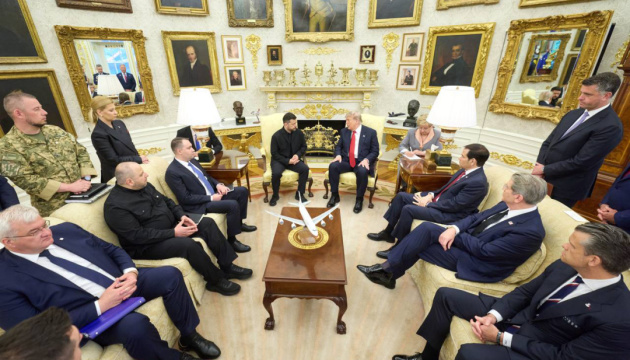
Zelenskyy's Washington trip layered defense-industry diplomacy over a funeral. He came for the memorial of Senator Lindsey Graham, who died suddenly on 11 July at 71 and was among Kyiv's most influential and outspoken allies in the US Congress.
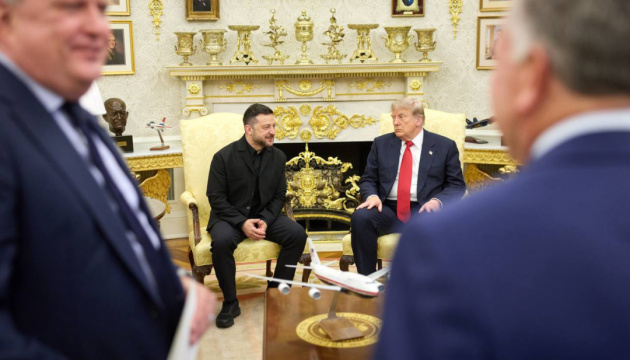
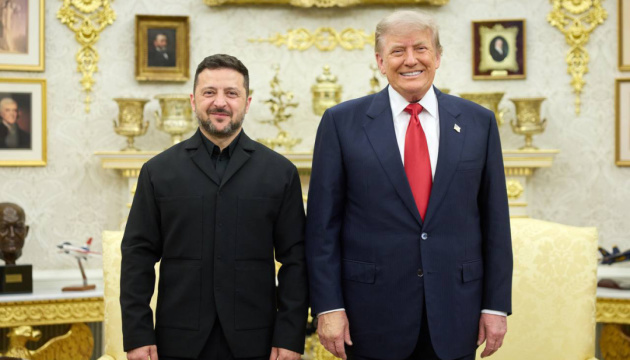
On the same day, the Senate moved to advance a Russia sanctions bill, renamed the "Lindsey O. Graham Sanctioning Russia and Iran Act of 2026" in his honor, with a procedural vote set for Tuesday evening, at which Zelenskyy was to address senators beforehand, according to Bloomberg. Zelenskyy also met with US President Donald Trump at the White House.
The Lockheed talks are about building weapons together
Zelenskyy framed the Lockheed Martin meeting as the same joint-production effort he has been pressing across the US defense industry. He discussed further developing cooperation through joint production and technology exchange, he said.
"Ukraine has something to share with those who help us protect lives. We talked about our joint capabilities regarding Patriot and other systems," Zelenskyy wrote.
Teams are already working on concrete solutions to move to joint production as quickly as possible and increase Ukraine's ability to protect lives, he added.
The meeting pairs with several days earlier. On 22 July, Zelenskyy met a team from Raytheon, the Patriot's other manufacturer, and said Ukraine was negotiating joint production of Patriot interceptors. Meeting both Patriot makers within a week, Ukraine is pressing the companies on production, after Trump pledged at the Ankara NATO summit on 8 July to grant Ukraine a license to manufacture Patriots, a promise the manufacturers said this month they had barely begun to act on.
The sanctions bill is the day's larger stakes
Shortly after midnight Kyiv time, Zelenskyy is expected to address US senators ahead of a procedural vote on a bipartisan bill imposing sanctions on Russia.
The legislation advancing in Graham's name is among the most consequential Russia measures the US Congress has produced. A bipartisan group of senators announced on 28 July that they had finalized the bill's language, and Senate leaders scheduled a procedural vote for that evening.
It would allow the president to impose tariffs of up to 500% on goods imported directly from Russia and up to 100% on imports from the largest buyers of Russian oil and gas, as well as from countries that help Russia evade sanctions. It also targets Russian officials, oligarchs, banks, and the shadow fleet, bars Russian uranium imports, and extends Iran sanctions. With more than 60 cosponsors, it is expected to pass the Senate, though the House is in recess until 31 August, so it will not reach Trump's desk until after that.
However, the bill carries a real geopolitical cost of its own. The secondary tariffs would fall hardest on China and India, the biggest buyers of Russian energy, and the measure could strain already-unstable US trade relations with both. That is the tension built into the tribute to Graham: the bill that bears his name would squeeze Russia's war revenue by pressuring the countries that keep it flowing, at the cost of a confrontation with two of the world's largest economies.
A total of 226 combat engagements between Ukraine's Defense Forces and Russian troops were recorded on July 28, with the heaviest fighting continuing in the Pokrovsk sector, where Russian forces launched 29 assaults.
A total of 226 combat engagements between Ukraine's Defense Forces and Russian troops were recorded on July 28, with the heaviest fighting continuing in the Pokrovsk sector, where Russian forces launched 29 assaults.
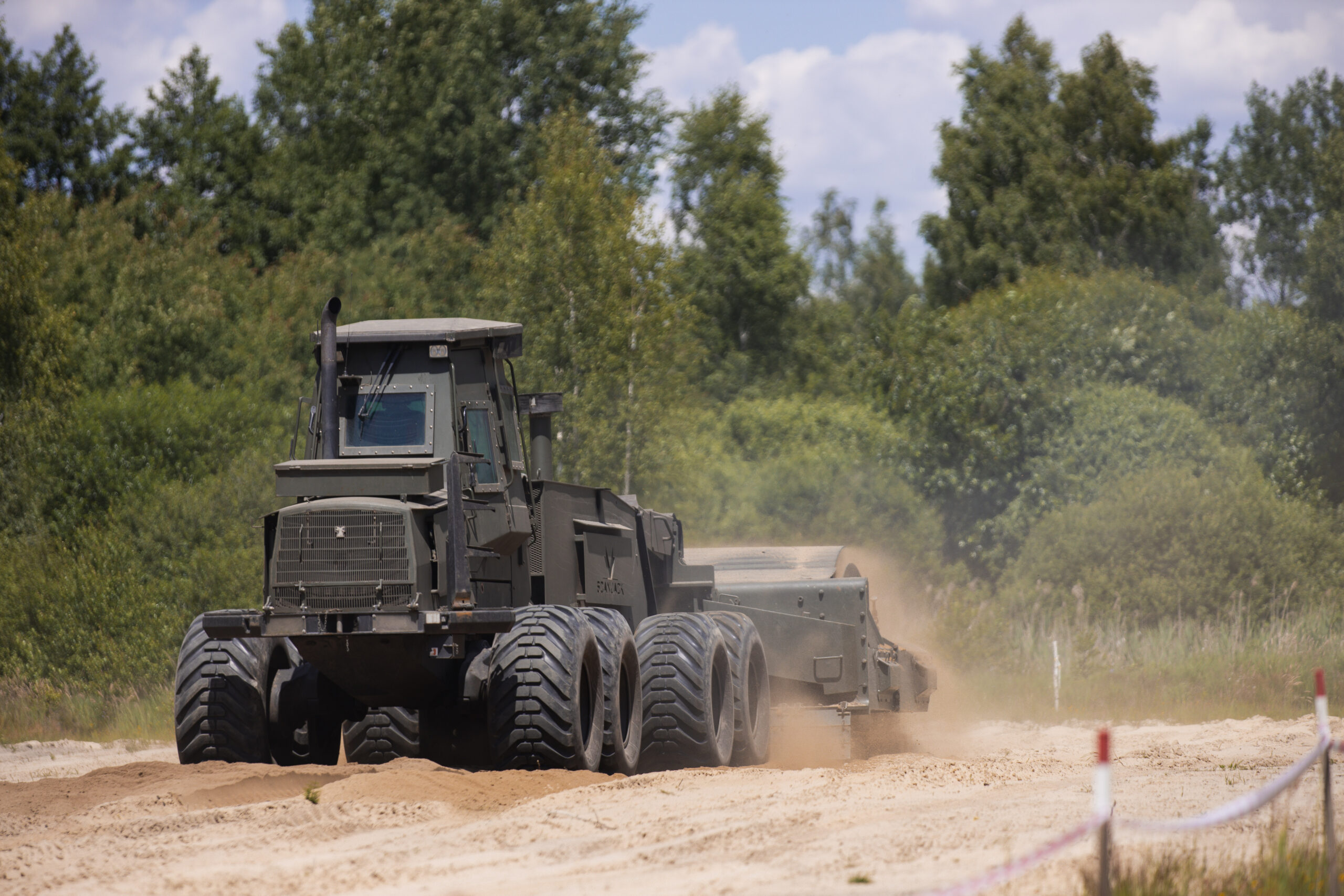
Clearing mines is hard, dangerous work requiring a big, heavy vehicle
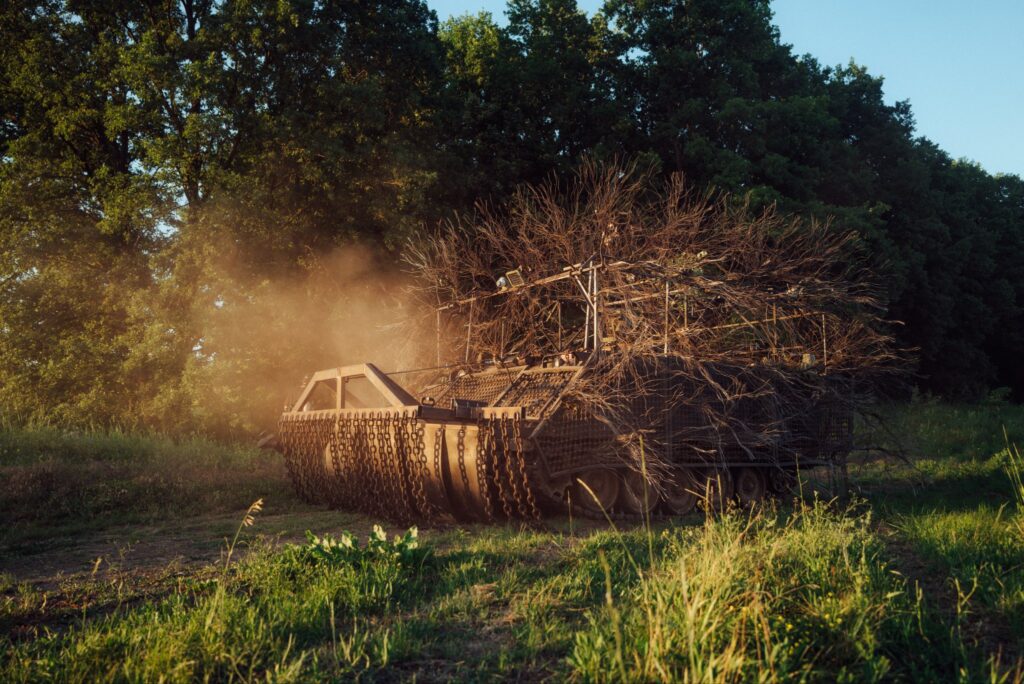
To take the crew out of the blast radius, the Ukrainian National Guard's Khartia Corps has converted an old M113 armored personnel carrier into a robot
More vehicles could be in line for similar conversion
The Ukrainian National Guard has found a new way to speed armored robots to the front line. Instead of building all its 'bots from scratch, the 2nd National Guard Corps "Khartiia" has conv
Clearing mines is hard, dangerous work requiring a big, heavy vehicle
To take the crew out of the blast radius, the Ukrainian National Guard's Khartia Corps has converted an old M113 armored personnel carrier into a robot
More vehicles could be in line for similar conversion
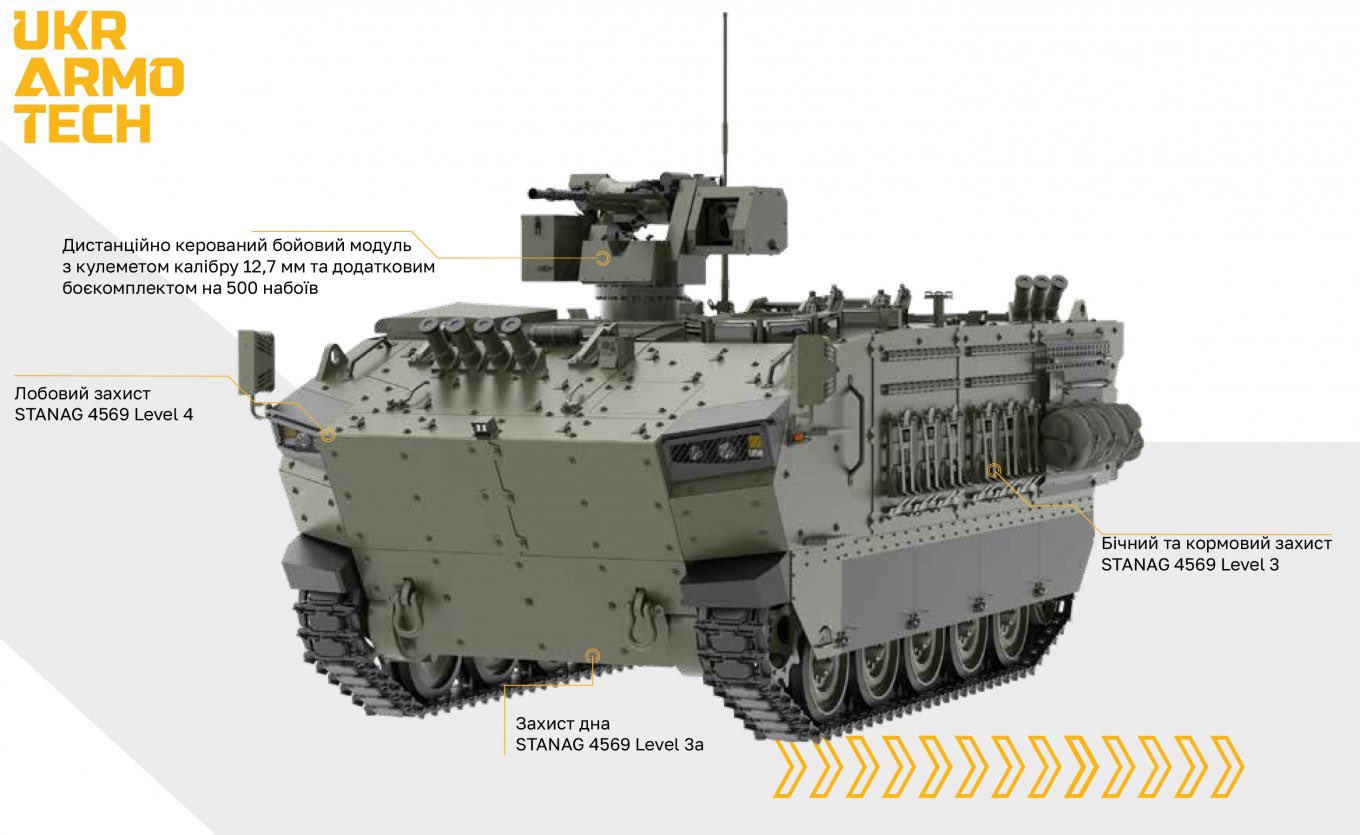
The Ukrainian National Guard has found a new way to speed armored robots to the front line. Instead of building all its 'bots from scratch, the 2nd National Guard Corps "Khartiia" has converted at least one old American-designed M113 armored personnel carrier into a big, capacious unmanned vehicle.
If it works, and there's no reason to think it won't, the robotic M113 could become common in Ukrainian service. After all, allies have shipped Ukraine at least 1,729 M113s and vehicles built on the same chassis over the course of the war, making it one of the most numerous Western armored types in Ukrainian service.
The Khartiia Corps took one of its 12-ton M113s, added external cameras, control servos, and a radio-based command system and fitted it with anti-drone armor and a front-mounted mine flail. "Re-equipped by the engineers of Khartiia, it performs missions involving remote de-mining and logistics, allowing the operator to control the armored personnel carrier from a remote control unit," the corps stated.
The robotic M113 clears a safe path where every meter could be mined.
Роботизований М113 прокладає безпечний шлях там, де кожен метр може бути замінований.
Переобладнаний інженерами «Хартії», він виконує місії з дистанційного розмінування та логістики, дозволяючи оператору керувати бронетранспортером з пульта.
Ukrainian forces use thousands of small unmanned ground vehicles. Some carry guns into battle. Others haul supplies or speed injured troops from the gray zone to field hospitals. Most of these UGVs are purpose-made models with wheeled or tracked chassis and remote control systems based on line-of-sight, mesh or satellite radio, or fiber-optic cable.
The purpose-made UGVs tend to be small, lightweight, and limited in range. They might weigh a couple hundred kilograms, range a few tens of kilometers and cost $10,000. The small size, light weight, and limited range might not be a major constraint on a UGV whose main mission is, say, speeding a single wounded infantryman away from his front-line fighting position along a road or path.
But clearing mines or other obstacles is a whole other matter. Mine-clearing plows, rollers, or flails might weigh tons. The vehicle carrying the mine-clearing gear must be able to withstand the blasts from any mines it triggers. Clearing mined roads and fields leading to and across the disputed gray zone is tedious work requiring greater endurance and cross-country mobility than a small, under-torqued UGV can manage under battery power.
It's not for no reason that most existing Ukrainian mine-clearing vehicles are big, heavily armored, and powerful. They include American-made Assault Breachers, German-made Wisents and an array of ex-Soviet engineering vehicles. The problem, of course, is that these vehicles are manned. And their crews are exposed to extreme danger while inching along mined roads and fields within range of Russian drones and artillery.
Explore further
Dust and demining in Lviv Oblast—where the future of clearing the world’s most mined country meets the county fair
The Khartia Corps unmanned M113. Pavlo Itkin photo for the Khartia Corps.
Attritable vehicles
In fitting a diesel-powered, aluminum-armored M113 for remote operation, the Khartia Corps has removed the most vulnerable component of the best mine-clearing systems: the people. Now the corps can clear mines without worrying about losing precious manpower. If the M113 gets blown up, just add servos and radios to another one of the M113s still in the Ukrainian inventory.
It's such a good idea that more than one army has tried it. The US Army, which still owns tens of thousands of the 1960s-vintage M113s, has experimented with several types of unmanned M113. One essayist, writing for an official US Army blog, urged the American ground combat branch to convert M113s into unmanned "breaching" vehicles.
"Obsolete M113s can be repurposed to deliver massed unmanned assaults to reduce the enemy’s strongest defenses," Jason Flores Rutledge wrote. "Turning obsolete vehicles into remotely-operated machines can save money and lives."
Explore further
Ukraine lost 500 American battle taxis. Now it’s building a tougher one.
Best of all, the basic equipment that transforms a manned M113 into an unmanned M113 is platform agnostic. That is, it should work just fine on almost any vehicle, as Rutledge noted. "As the Army runs out of M113s, subsequent generations of Armored Fighting Vehicles could be automated as they approach obsolescence."
With refinement and scaling, Ukrainian forces could produce reliable, inexpensive kits for converting an array of wheeled and tracked vehicles into robots. Tanks and infantry fighting vehicles with manually loaded main guns and complex fire control systems might not be eligible for conversion. But engineering vehicles, supply vehicles, and ambulances should be first in line.
Think of manned-to-unmanned vehicle conversions as an expedient. In a bid to reduce risk to their most precious resource, their soldiers, Ukrainian forces have already contracted more than 22,000 domestically built UGVs so far this year—nearly double the total for all of 2025—with more contracts still coming, the Defense Ministry reported. They could add thousands of vehicles to that total by converting M113s and other (currently) manned vehicles.
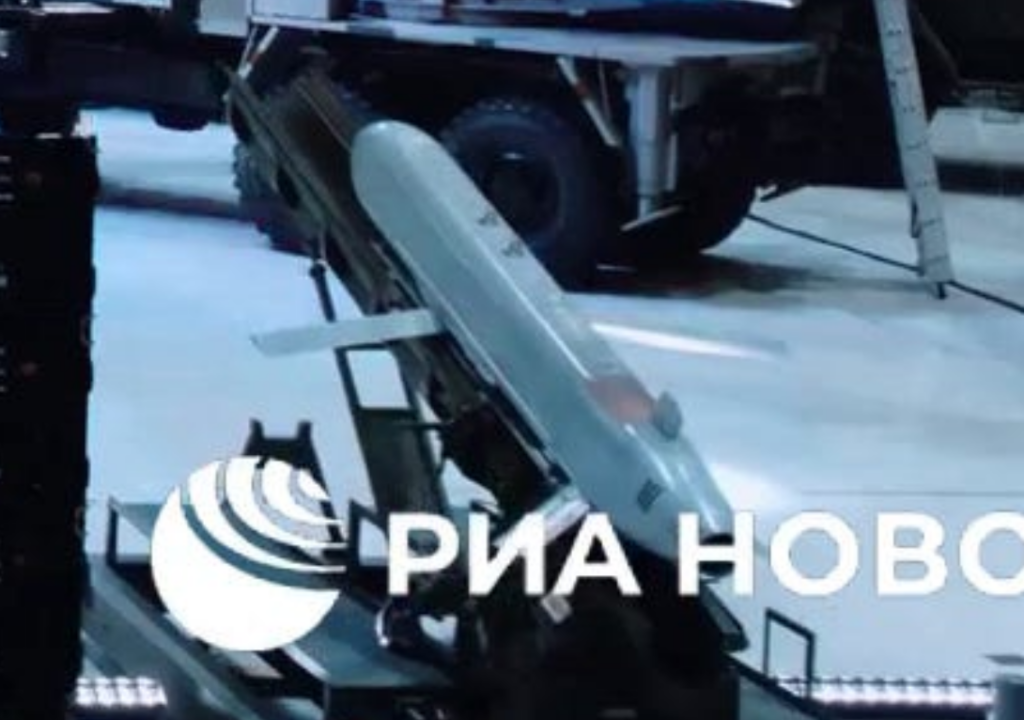
Russia may be about to fire its Banderol cruise missiles from the ground, and that could change the warning Ukraine has. Photos of a new Russian ground launcher for the S8000 "Banderol" cruise missile have appeared online, and Russia reportedly presented the launcher to Russian ruler Vladimir Putin at a closed exhibition in 2025, the Ukrainian defense outlet Defense Express reported.
Until now, the only confirmed launch platform for the Banderol was the Orion strike-and
Russia may be about to fire its Banderol cruise missiles from the ground, and that could change the warning Ukraine has. Photos of a new Russian ground launcher for the S8000 "Banderol" cruise missile have appeared online, and Russia reportedly presented the launcher to Russian ruler Vladimir Putin at a closed exhibition in 2025, the Ukrainian defense outlet Defense Express reported.
Until now, the only confirmed launch platform for the Banderol was the Orion strike-and-reconnaissance drone, and no ground launcher for the missile had appeared online. That mattered for Ukraine's defense: the Orion is rare, with only nine confirmed losses throughout the war, and it has to be flown in first, where Ukraine can spot it in advance.
A ground launcher removes that warning. The Banderol is a fast, cheap jet-powered cruise missile that flies up to 500 km at 500 to 560 km/h with a 114.3-kg warhead, and Russia has used it in its largest combined strikes on Kyiv. The threat is that ground launchers let Russia fire Banderols without the Orion's telltale takeoff, and can be assembled in large numbers for mass attacks.
The launcher strips away the time Ukraine had to react
The second danger is volume. A single Orion can carry only one Banderol, but ground launchers can be built in dozens and used for mass attacks. That turns a missile previously limited by its scarce drone carrier into one Russia could salvo, the same shift from trickle to swarm that has made Shaheds so hard to stop.
The launcher may still be in testing, the analysts cautioned, and Russia may be trying to conceal its use. But the fact that Russia has ground launchers at all is the threat, because it changes how and how many Banderols can reach Ukraine.
The tradeoff is the range for surprise
Ground launch is not free for Russia either. Fired from a launcher on the ground, the Banderol will have a shorter range than when dropped from an Orion already at altitude and speed. Even with a booster, the missile has to accelerate and climb to its cruising height on its own, spending the energy an air launch provides for free.
The launcher's design reflects that. Judging by its construction, the missile rail can be lowered to a horizontal position, and, given its small size, the launcher could theoretically be mounted on trailers or other mobile platforms. A small solid-fuel booster is probably used to get the missile off the ground. That mobility is its own threat: a trailer-mounted launcher can hide, move, and fire from unexpected locations, trading the Banderol's maximum range for the surprise of a ground launch close to the border.
Ukrainian intelligence has mapped its 30-company foreign component supply chain, down to a Chinese jet engine available on AliExpress, and President's adviser Serhii "Flash" Beskrestnov, who first identified the missile, has called it "nothing outstanding, a budget cruise missile with a small warhead."
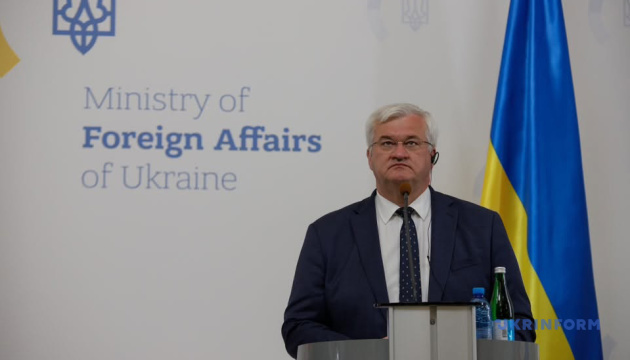
Acting Minister of Foreign Affairs of Ukraine Andrii Sybiha said he held what he described as a "frank conversation" with Iranian Foreign Minister Abbas Araghchi.
Acting Minister of Foreign Affairs of Ukraine Andrii Sybiha said he held what he described as a "frank conversation" with Iranian Foreign Minister Abbas Araghchi.
Russia cannot yet use guided kamikaze drones against the regions in the west of Ukraine because of technical limits on its remote-control system. But activating relays in Belarus could change that and put Lviv, Volyn, and other oblasts at risk, presidential adviser Serhii "Flash" Beskrestnov said on the national telethon, Telegraf reports.
Russia's online control system currently works only within a limited range of the border, and the front line, Beskrestnov said, so
Russia cannot yet use guided kamikaze drones against the regions in the west of Ukraine because of technical limits on its remote-control system. But activating relays in Belarus could change that and put Lviv, Volyn, and other oblasts at risk, presidential adviser Serhii "Flash" Beskrestnov said on the national telethon, Telegraf reports.
Russia's online control system currently works only within a limited range of the border, and the front line, Beskrestnov said, so the "red zone" where drones can be steered in real time does not yet reach the west. If relays in Belarus come online, that zone would expand toward the Belarusian border and cover them.
The warning is concrete because Russia has done exactly this before: it built a network of signal repeaters on Belarusian towers and rooftops that boosted Shahed control signals to reach Kyiv, Rivne, and Volyn oblasts, until Ukraine dismantled it in February 2026.
The Belarus threat is a switch Russia can flip back on
The relay question is not hypothetical. Repeaters in Belarus let Shaheds flying the northern route hit targets across Kyiv, Rivne, and Volyn that Russia struggles to reach from its own soil, and President Volodymyr Zelenskyy has said some strikes on Ukrainian energy and railway sites would not have been possible without that help.
Ukraine has fought to keep it off. After Ukraine tore down the network in February, Kyiv gave Belarusian ruler Alyaksandr Lukashenka a week to pull Russia's drone relays in June, and they went silent in three days. ISW has assessed that operating Shaheds and cheaper Molniyas from Belarusian territory would put the highway and rail line carrying Polish supplies from the border within precision range, and allow Russian operators to hit moving convoys and trains.
The camera-lock tactic is how a guided Shahed hits a moving train
The reason online control matters so much is a new tactic Russia uses to defeat Ukrainian electronic warfare. Russian guided drones now carry powerful cameras with target-capture capability, Beskrestnov said, allowing them to hit specific moving targets rather than fixed coordinates.
He described how it works. From three kilometers out, the pilot sees a locomotive with his own eyes through the drone's camera, switches on a capture box around it, and a Shahed then automatically controls its own flight and attacks the locomotive, Beskrestnov said. Locking onto the target visually and letting the drone fly itself in for the final approach means the operator no longer needs a continuous control link at the moment of impact, which is part of how the drone gets past jamming. Russia understands that mass attacks are ineffective, Beskrestnov said, and is trying to strike important targets with this new tactic.
The White House has described U.S. President Donald Trump's meetings with Ukrainian President Volodymyr Zelensky and Israeli Prime Minister Benjamin Netanyahu as “positive and productive”.
The White House has described U.S. President Donald Trump's meetings with Ukrainian President Volodymyr Zelensky and Israeli Prime Minister Benjamin Netanyahu as “positive and productive”.
Ukrainian President Volodymyr Zelensky has met with the leadership of U.S. defense contractor Lockheed Martin to discuss expanding bilateral defense cooperation, including joint production and technology sharing.
Ukrainian President Volodymyr Zelensky has met with the leadership of U.S. defense contractor Lockheed Martin to discuss expanding bilateral defense cooperation, including joint production and technology sharing.
The number of people injured in a Russian drone strike on Kharkiv's Novobavarskyi district has risen to nine. Most of the victims have been diagnosed with acute stress reactions.
The number of people injured in a Russian drone strike on Kharkiv's Novobavarskyi district has risen to nine. Most of the victims have been diagnosed with acute stress reactions.
Ukrainian President Volodymyr Zelensky and his Finnish counterpart, Alexander Stubb, have discussed Ukraine's needs for protection against Russian strikes during their meeting.
Ukrainian President Volodymyr Zelensky and his Finnish counterpart, Alexander Stubb, have discussed Ukraine's needs for protection against Russian strikes during their meeting.
PJSC Southern Mining and Processing Plant (Southern GOK) is suspending production and scaling back operations due to Russian attacks on civilian merchant vessels, which have disrupted exports.
PJSC Southern Mining and Processing Plant (Southern GOK) is suspending production and scaling back operations due to Russian attacks on civilian merchant vessels, which have disrupted exports.
Ukraine and NATO are funding joint teams to turn battlefield prototypes into weapons. Ukraine's Brave1 defense cluster and its allies have begun accepting applications for their first joint grant program, UNITE - Brave NATO, Ukraine's Defense Ministry announced.
The program helps bring successful defense-technology prototypes to serial production and battlefield use, pairing a Ukrainian company with a company from a NATO country in joint teams.
The competition focuse
Ukraine and NATO are funding joint teams to turn battlefield prototypes into weapons. Ukraine's Brave1 defense cluster and its allies have begun accepting applications for their first joint grant program, UNITE - Brave NATO, Ukraine's Defense Ministry announced.
The program helps bring successful defense-technology prototypes to serial production and battlefield use, pairing a Ukrainian company with a company from a NATO country in joint teams.
The competition focuses on developing Ukraine's drone capabilities, protection against enemy drones, and strengthening air defense. Depending on the type of technology, winners can receive up to $293,000 or about $585,000 per side of the joint team.
Applications for the first stage are accepted until 3 August 2026. It is the working phase of a program EP has tracked since NATO and Ukraine launched UNITE - Brave NATO in November 2025, with a €10 million pilot budget split equally between NATO and Ukraine.
The program routes Ukraine's combat experience into the NATO industry
The pairing requirement is the point. By requiring a Ukrainian company and a NATO-country company on each team, UNITE - Brave NATO connects the world's most combat-tested defense innovators with allied industry and channels the real-time battlefield lessons Ukraine generates back into the Alliance.
NATO wants that experience deliberately. NATO's Communications and Information Agency manages the competition on the Alliance side, while Brave1 coordinates it in Ukraine. The first round targets the very technologies Ukraine faces daily: countering unmanned aerial systems, strengthening air defenses, and securing frontline communications.
Brave1 is the hub that the whole system runs through
The grant program is one node in the innovation network Ukraine has built at the center of its war effort. Brave1 has become the central hub of Ukraine's wartime defense innovation, and as of June 2026, the cluster had processed over $235 million in procurement orders, registered more than 3,600 developments, secured 300 NATO-codified items, and disbursed $50 million in defense innovation grants.
UNITE - Brave NATO sits alongside a widening set of bilateral partnerships that Brave1 runs with individual NATO members, including Brave Germany, launched with Berlin in May 2026, and Brave France, a €20 million drone-development program launched with Paris in June. The common thread is the Test in Ukraine framework, which allows foreign manufacturers to trial new technologies under conditions close to actual combat and to obtain performance data that no peacetime range can produce.
Russian forces launched a daytime combined attack on the Mykolaiv region using Shahed and Banderol strike UAVs and guided aerial bombs, injuring one person and damaging an industrial facility, residential buildings and port infrastructure.
Russian forces launched a daytime combined attack on the Mykolaiv region using Shahed and Banderol strike UAVs and guided aerial bombs, injuring one person and damaging an industrial facility, residential buildings and port infrastructure.
Ukrainian President Volodymyr Zelensky and U.S. President Donald Trump have discussed licensing for the production of interceptors for Patriot air defense systems.
Ukrainian President Volodymyr Zelensky and U.S. President Donald Trump have discussed licensing for the production of interceptors for Patriot air defense systems.
Russia's strikes on cargo ships have now shut down an iron ore giant. Pivdennyi Mining and Processing Plant (Pivdennyi GZK) has announced it has begun suspending mining and temporarily curtailing operations due to ongoing Russian attacks on civilian merchant ships bound for Ukraine's Black Sea ports.
The plant cannot mine because it cannot ship. Russia's strikes on merchant vessels have effectively blocked the ports through which Pivdennyi GZK exports, leaving several s
Russia's strikes on cargo ships have now shut down an iron ore giant. Pivdennyi Mining and Processing Plant (Pivdennyi GZK) has announced it has begun suspending mining and temporarily curtailing operations due to ongoing Russian attacks on civilian merchant ships bound for Ukraine's Black Sea ports.
The plant cannot mine because it cannot ship. Russia's strikes on merchant vessels have effectively blocked the ports through which Pivdennyi GZK exports, leaving several shiploads of iron ore piled up at the ports and in the plant's warehouses with nowhere to go, so the company was forced to stop digging more, per its statement.
The plant is owned by Ukraine's richest man, Rinat Akhmetov, and Smart Holding, which employs 4,480 people, and earned about $463 million in revenue in 2024, according to Forbes Ukraine. It plans to resume mining in August 2026, security permitting, and will keep staff on repair and maintenance work in the meantime. It is the major industrial casualty of a Black Sea shipping blockade that Russia has tightened to a chokehold in late July.
The sea trade has effectively stopped
The plant's shutdown is one consequence of a campaign that has emptied Ukraine's main export corridor. Since Russia began deliberately striking civilian merchant ships, war-risk insurance rates for calling at a Ukrainian port have jumped roughly fivefold, making the voyage economically unviable, and crews have begun demanding double or triple hazard pay, according to UA.News. As of 24 July, the waters around the Greater Odesa ports sat empty for days, with no ship daring to enter Ukrainian territorial waters to load or unload.
The scale of the strikes is what stopped the ships. Russia has hit at least 12 civilian vessels heading to Ukrainian ports, according to Pivdennyi GZK, including ships carrying Ukrainian metallurgical products.
The plant survived everything until the sea closed
Pivdennyi GZK's shutdown is notable because the plant held on through years of conditions that would have closed a weaker operation. The suspension was a forced measure; it was delayed as long as possible, the company said.
Since the start of the full-scale war, the plant operated under constant critical pressures: Russian shelling, power outages, sharply rising logistics costs, the European Union's carbon border adjustment mechanism (CBAM), and tightened EU quotas on Ukrainian metallurgical products.
The plant produces high-grade iron ore concentrate with iron content above 65% and up to 67.8%, which is supplied to Ukrainian metallurgical plants and exported. Without functioning ports, that export has nowhere to go. The pattern echoes 2022, when Russia's blockade of the seaports halted operations at the plant from 1 July that year, with operations only partly resuming in November.
The plant is appealing to the state to reopen the sea
Pivdennyi GZK turned its shutdown into a direct appeal to allies and the Ukrainian government. The plant's collective addressed President of Ukraine Volodymyr Zelenskyy, the government, and parliamentarians, calling the unblocking of logistics routes for Ukraine's Black Sea ports a vital task not only for the mining and metallurgical sector but for the entire Ukrainian economy.
"Restoring access to logistics routes serving Ukraine's Black Sea ports is essential for ensuring the long-term viability of not only the mining and metals sector, but the Ukrainian economy as a whole," the company said.
Ukrainian President Volodymyr Zelensky's visit to the United States is aimed primarily at paying tribute to Senator Lindsey Graham, as well as deepening cooperation with the United States in the defense sector, particularly on drones, and strengthening Ukraine's air defense system.
Ukrainian President Volodymyr Zelensky's visit to the United States is aimed primarily at paying tribute to Senator Lindsey Graham, as well as deepening cooperation with the United States in the defense sector, particularly on drones, and strengthening Ukraine's air defense system.
Prosecutors in the Polish city of Wrocław have asked a court to place two men suspected of assaulting a Ukrainian couple in pretrial detention for three months. A third suspect remains at large.
Prosecutors in the Polish city of Wrocław have asked a court to place two men suspected of assaulting a Ukrainian couple in pretrial detention for three months. A third suspect remains at large.
Iran is threatening to hit back after Ukraine struck its ships. Meanwhile, Ukrainian monitoring channels that help the Ukrainians track Russian drones and missiles carried information that soon Iran might attack Ukraine with ballistic missiles.
The threat is real, but a ballistic strike on Ukraine is not confirmed. It follows Ukrainian long-range strikes on 25 and 26 July against vessels in the Caspian Sea, which President of Ukraine Volodymyr Zelenskyy publicly confirm
Iran is threatening to hit back after Ukraine struck its ships. Meanwhile, Ukrainian monitoring channels that help the Ukrainians track Russian drones and missiles carried information that soon Iran might attack Ukraine with ballistic missiles.
The threat is real, but a ballistic strike on Ukraine is not confirmed. It follows Ukrainian long-range strikes on 25 and 26 July against vessels in the Caspian Sea, which President of Ukraine Volodymyr Zelenskyy publicly confirmed, saying Ukraine hit ships used in military cargo shipments involving Iran, as well as a warship, according to Al Jazeera.
Iran's Foreign Ministry accused Ukraine of attacking what it called a commercial vessel, said the strike killed one sailor and wounded others, called it an "act of aggression," and warned of "expanding the fire of war."
Iranian Foreign Minister Abbas Araghchi said the attack "cannot go unanswered." But Andrii Kovalenko, head of Ukraine's Center for Countering Disinformation, said there is no official data on any Iranian intent to strike Ukraine with ballistic missiles, while noting Tehran potentially has the weapons to do so.
The threat comes from a strike Ukraine confirmed carrying out
The Caspian route is a documented artery of the Iran-Russia weapons trade. It links Iran's northern ports to the Russian port of Astrakhan, and Ukraine has struck it before: in August 2025, a cargo ship reportedly loaded with Shahed drone components and Iranian munitions was destroyed there, CNN reports. Iran has supplied Russia with thousands of Shahed drones used against Ukrainian cities since 2022, which is why Ukraine treats the shipping between the two countries as a military target.
Iran's Foreign Ministry summoned Ukraine's chargé d'affaires in Tehran over the strike, and Araghchi said he raised a response in calls with Russian Foreign Minister Sergei Lavrov and EU foreign policy chief Kaja Kallas, accusing Israel of provoking the attack to draw Europe into its war.
Iran has missiles that could reach Ukraine, according to Defense Express
On the question of capability, the Ukrainian defense outlet Defense Express assessed what Iran could theoretically use. Iran does have an arsenal of medium-range ballistic missiles able to reach Ukrainian territory, of which the most threatening is the Khorramshahr, which has demonstrated a range of about 4,000 kilometers.
The technical profile is Defense Express's analysis, not evidence of intent. First shown in 2017 and believed to be based on the North Korean BM-25 Musudan, itself derived from the Soviet R-27 submarine-launched missile, the Khorramshahr is a liquid-fuel single-stage missile with several variants. A 2,000-kilometer version carries a warhead of up to 1,500 kilograms, and Iran has developed and used against Israel a submunition warhead closer to a cluster type, dispersing up to 20 separate warheads within a radius of about 8 kilometers, designed to strike cities and defeat missile defense.
To intercept such missiles, Israel used Arrow-2 and Arrow-3, and the US used THAAD and SM-3 to defend its ally. Ukraine has none of these systems. That is a genuine vulnerability, but it describes what could happen if Iran chose to strike, not a decision Tehran has made.
On Wednesday, July 29, partly cloudy weather will prevail across Ukraine. Moderate rain is expected in the eastern and northeastern regions, with locally heavy rainfall overnight in Luhansk and Donetsk regions, accompanied by thunderstorms. The rest of the country will remain dry.
On Wednesday, July 29, partly cloudy weather will prevail across Ukraine. Moderate rain is expected in the eastern and northeastern regions, with locally heavy rainfall overnight in Luhansk and Donetsk regions, accompanied by thunderstorms. The rest of the country will remain dry.
A bipartisan group of U.S. senators announced on Tuesday that they had reached an agreement on long-awaited legislation that would authorize President Donald Trump to impose additional restrictions on major purchasers of Russian energy, as well as expand sanctions on Iran.
A bipartisan group of U.S. senators announced on Tuesday that they had reached an agreement on long-awaited legislation that would authorize President Donald Trump to impose additional restrictions on major purchasers of Russian energy, as well as expand sanctions on Iran.
Russian forces have launched 81 attacks on Ukrainian Defense Forces' positions since the beginning of the day, with the heaviest fighting concentrated in the Pokrovsk sector. Russian troops are also maintaining high offensive activity in the Kostiantynivka and Sloviansk sectors.
Russian forces have launched 81 attacks on Ukrainian Defense Forces' positions since the beginning of the day, with the heaviest fighting concentrated in the Pokrovsk sector. Russian troops are also maintaining high offensive activity in the Kostiantynivka and Sloviansk sectors.
Russian forces are attempting to push forward in the border area of Ukraine's Kharkiv region, near the village of Artilne, advancing toward Ivashchyne.
Russian forces are attempting to push forward in the border area of Ukraine's Kharkiv region, near the village of Artilne, advancing toward Ivashchyne.
The European Commission will conduct a further assessment of the role of Ireland's Aughinish Alumina plant in alumina supply chains to third countries, including Russia.
The European Commission will conduct a further assessment of the role of Ireland's Aughinish Alumina plant in alumina supply chains to third countries, including Russia.
Polish police have detained two of the three men suspected of beating a young Ukrainian couple in the city of Wrocław, Suspilne reported. Investigators are treating the assault as a hate crime driven by the victims' nationality, and the two detainees now face criminal charges and possible prison time. Officers are still searching for the third attacker as Kyiv presses for a full investigation.
Nearly 987,000 Ukrainians held temporary protection status in Poland by m
Polish police have detained two of the three men suspected of beating a young Ukrainian couple in the city of Wrocław, Suspilne reported. Investigators are treating the assault as a hate crime driven by the victims' nationality, and the two detainees now face criminal charges and possible prison time. Officers are still searching for the third attacker as Kyiv presses for a full investigation.
Nearly 987,000 Ukrainians held temporary protection status in Poland by mid-April 2026, according to UN refugee agency data. The beating adds to a run of anti-Ukrainianattacks across Poland. Ukrainians filed 180 hate-crime reports in the first half of 2026, more than 30% above a year earlier and nearly 35% above 2024.
Two suspects detained, one still sought
Wrocław police detained the two men on 27 July, and both had prior records. Interior Minister Marcin Kierwiński announced the arrests on X, writing that brutal violence would never go unpunished. Counter-terrorism officers stopped one suspect as he tried to leave Wrocław. The third man remains at large.
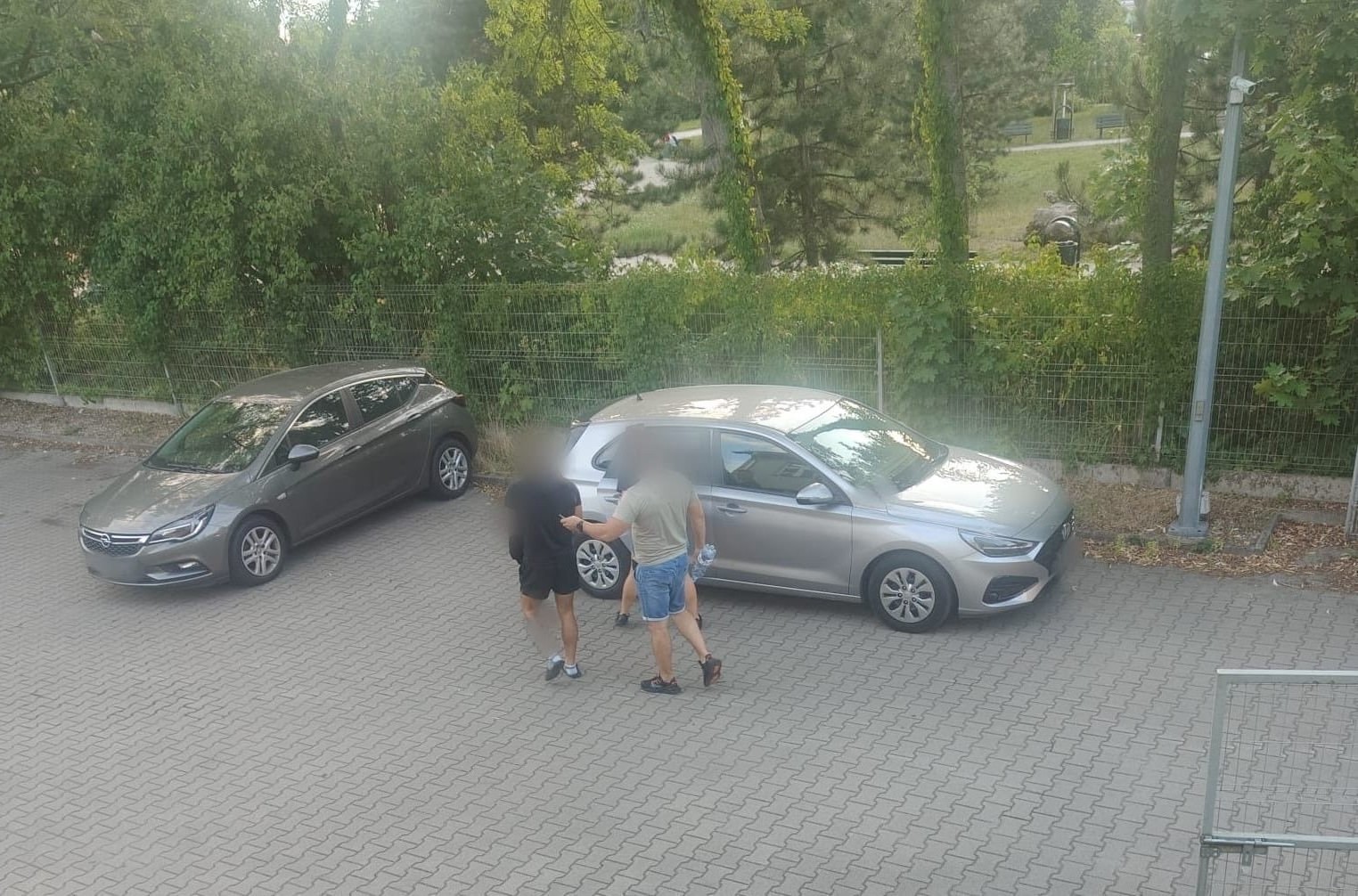
A man suspected of beating a Ukrainian couple is detained in Wrocław, 27 July 2026. Photo: Marcin Kierwiński/X
The two detainees were to be questioned and charged at the Wrocław-Psie Pole district prosecutor's office. They face up to five years in prison, prosecution spokesman Jakub Dłubacz told Ukrinform. The charges combine battery with violence motivated by national intolerance under Poland's criminal code.
"Are you Ukrainian?" — three Polish men beat the couple
The attack happened around 18:30 on 26 July in Wrocław's Zakrzów district. The victim's mother, Karina Kitsai, recounted the events to Radio Svoboda. Her daughter Nastia had stopped at a supermarket to buy coffee and food while her boyfriend Maksym waited in the car. At the checkout, one man set a beer in front of Nastia. When she pointed to the queue, he asked whether she was Ukrainian and began insulting her.
Screenshot from a video of the attack on the Ukrainian couple, Wrocław, 26 July 2026.
The men waited outside. As Nastia reached the car, they ran up and started beating Maksym. She screamed for them to stop, and one attacker turned on her.
"One of them ran up to her and started hitting her in the face. She fell on her back," Kitsai said. The men briefly stepped back, then attacked again as the couple tried to stand.
Nastia, the Ukrainian woman injured in the Wrocław attack, her neck stitched and face bandaged, 26 July 2026. Photo: Karina Kitsai/Facebook
Nastia suffered a cut neck that needed stitches, a torn ear, and a badly bruised face. Her mother believes one attacker may have used a knife. The men beat Maksym's head and shocked him with the stun gun he had tried to use to defend himself. Both Nastia and Maksym were treated for suspected concussion.
A neighbor heard the cries and filmed the assault from his balcony, and the family later published the video.
Custom Code
"We are compelled to note that cases of violence and aggression whose victims are Ukrainian citizens have recently become more frequent in Poland," Ukraine's Consulate General in Wrocław wrote, sharing the video.
Kyiv presses for justice as attacks climb
Ukraine's acting Foreign Minister Andrii Sybiha thanked Polish authorities, law enforcement, and Wrocław's mayor for their swift response. He wrote that Kyiv expects a full and impartial investigation and fair punishment for everyone involved.
Sybiha again urged "certain Polish politicians" to stop fueling hostility that turns into street violence.
"We need dialogue and mutual respect, not looking for reasons to hate," he wrote.
Reports of attacks on Ukrainians in Poland, from verbal abuse to physical violence, have grown more frequent this year — several drew national attention in July alone:
Poznań — two men linked to the far right, including an ex-soldier suspected of spying for Russia, confronted a Ukrainian woman running a legal-aid office, demanding entry and asking whether she "supports Stepan Bandera."
Płock — prosecutors opened a case after a 15-year-old Ukrainian boy was struck and pushed off a city bus by a man who demanded he speak Polish.
Łódź — a man beat a passerby he mistook for Ukrainian, breaking his nose and jaw, then told him his place was not in Poland.
Bielsko-Biała — a man hurled insults at a group of Ukrainians, including two 11-year-old girls, one of whom filmed it.
Legnica — a 26-year-old woman was charged after assaulting two 13-year-old Ukrainians, allegedly over their nationality.
Poznań — a 60-year-old Polish man was beaten so badly he suffered memory loss after stepping in to defend a Ukrainian teenager who was being insulted by three men on a tram.
Ukrainian President Volodymyr Zelensky is scheduled to meet on Tuesday evening at the U.S. Capitol with a bipartisan group of Senators who co-authored Senator Lindsey Graham's bill to impose sanctions on Russia and Iran.
Ukrainian President Volodymyr Zelensky is scheduled to meet on Tuesday evening at the U.S. Capitol with a bipartisan group of Senators who co-authored Senator Lindsey Graham's bill to impose sanctions on Russia and Iran.
The European Commission has expressed confidence in the legality of the sanctions imposed in 2022 on Tatiana Navka, the wife of Kremlin spokesperson Dmitry Peskov, after media reports indicated that she had decided to challenge the restrictive measures.
The European Commission has expressed confidence in the legality of the sanctions imposed in 2022 on Tatiana Navka, the wife of Kremlin spokesperson Dmitry Peskov, after media reports indicated that she had decided to challenge the restrictive measures.
Drivers in Russia’s Altai Republic had found a way around fuel rationing: fill up just before midnight, then again just after, and pocket two days’ gasoline in one stop.This week, the Siberian republic—bordering Kazakhstan, China, and Mongolia—closed that window, ordering fuel stations to allow each car only one fill every 24 hours. The fix is local and granular. The cause is not: Ukraine’s drone war on Russian refineries has reached Siberia’s gas pumps.Ukraine has spent m
Drivers in Russia’s Altai Republic had found a way around fuel rationing: fill up just before midnight, then again just after, and pocket two days’ gasoline in one stop.
This week, the Siberian republic—bordering Kazakhstan, China, and Mongolia—closed that window, ordering fuel stations to allow each car only one fill every 24 hours. The fix is local and granular. The cause is not: Ukraine’s drone war on Russian refineries has reached Siberia’s gas pumps.
Ukraine has spent months striking the plants that turn Russian crude into gasoline and diesel, driving the country’s refining to a two-decade low and sending its drones as far as the giant Omsk refinery, roughly 2,500 kilometers away, hit on 6 July.
Kyiv calls the campaign its long-range sanctions and says Siberia is within reach. The result is now showing up at pumps far from any front line.
Explore further
Russia’s fuel crisis has moved from the pump to the harvest
The Altai Republic’s government set out the rule on its official Telegram channel: stations scan each car’s registration into a regional system and refuse a second sale until 24 hours have passed, with fuel sold only to drivers who show a vehicle registration.
The old daily limit reset at midnight, letting drivers take one ration late in the evening and another once the clock turned. “There is fuel, but the flows need regulating to supply everyone—both essential services and citizens,” Alexander Prokopyev, the head of the republic’s government, said. Farmers, alongside emergency crews, get the one exception: a second fill between 05:00 and 07:00.
Fill up just before midnight, then again just after, and pocket two days' gasoline in one stop.
Rationing tightens as the government grounds itself
The caps are tight. In the districts where most of the republic’s 210,000 people live, drivers may buy 30 liters of gasoline a day—about half a tank—or 50 liters of diesel. Elsewhere, the ceilings are 50 and 100.
The government has reined in its own officials too, cutting work trips, banning out-of-region travel on state vehicles, and moving meetings online to save fuel. The limits are set to run until 1 September.
Altai is not alone. Rationing now stretches across dozens of Russian regions, and the strain is spilling past the pump: about 25 regions have raised transit fares or cut routes to conserve fuel, from Stavropol in the south to Irkutsk and Buryatia in the east.
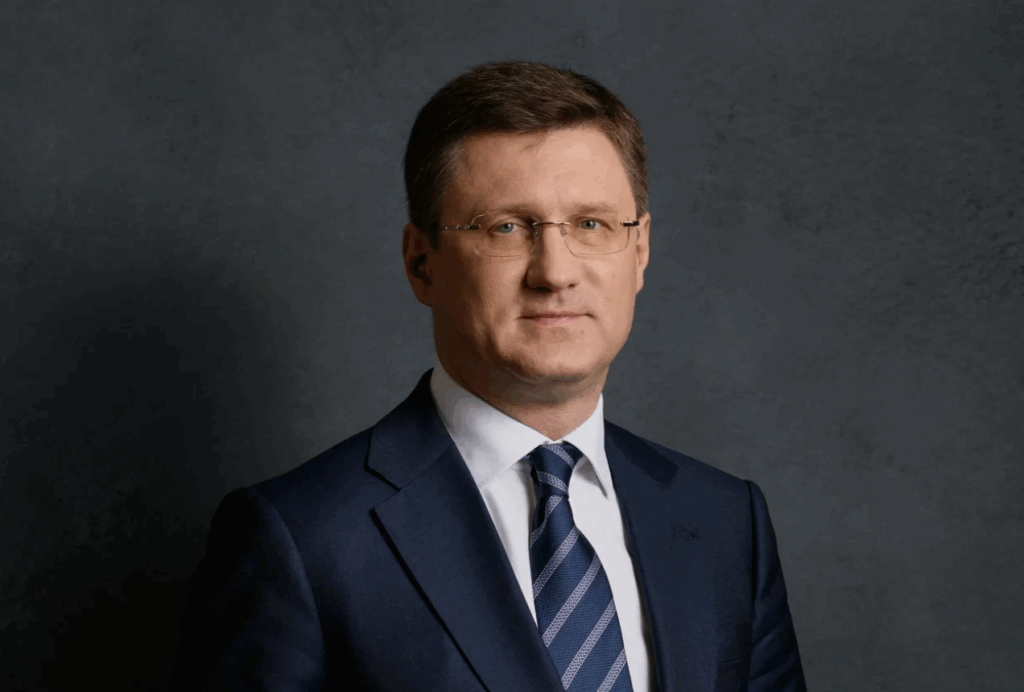
Deputy Prime Minister Alexander Novak, who oversees Russia's energy sector, said fuel imports were now one of the government's key measures to stabilize the market. Photo: russia.ru
The federal government is steering supply by hand—Deputy Prime Minister Alexander Novak said on 25 July that officials were weighing extra shipments to the Altai Republic, neighboring Altai Krai, Yakutia, Irkutsk Oblast, and Trans-Baikal.
Next door in the Kuzbass coal region, the shortage is being counted in days of jet fuel. Governor Ilya Seredyuk said this week that 213 rail tankers were en route and that reserves stood at 16 days of jet fuel for Kemerovo’s airport and seven for Novokuznetsk’s—figures from a single official’s briefing, not independently confirmed.
Moscow has conceded the point: Putin acknowledged the strikes are causing fuel problems. The Altai Republic’s own announcements name a different culprit—speculation and panic-buying among its drivers.
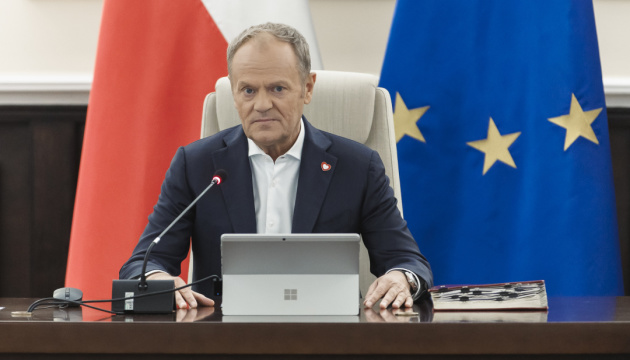
Following the brutal assault on a Ukrainian couple in the city of Wrocław, Polish Prime Minister Donald Tusk said that violence against Ukrainian citizens damages Poland’s international reputation and serves Russia’s interests.
Following the brutal assault on a Ukrainian couple in the city of Wrocław, Polish Prime Minister Donald Tusk said that violence against Ukrainian citizens damages Poland’s international reputation and serves Russia’s interests.

 Connexion