
 Connexion
Ukraine’s newest mine-clearing vehicle is a 1960s-design APC with nobody inside
- Clearing mines is hard, dangerous work requiring a big, heavy vehicle
- To take the crew out of the blast radius, the Ukrainian National Guard's Khartia Corps has converted an old M113 armored personnel carrier into a robot
- More vehicles could be in line for similar conversion
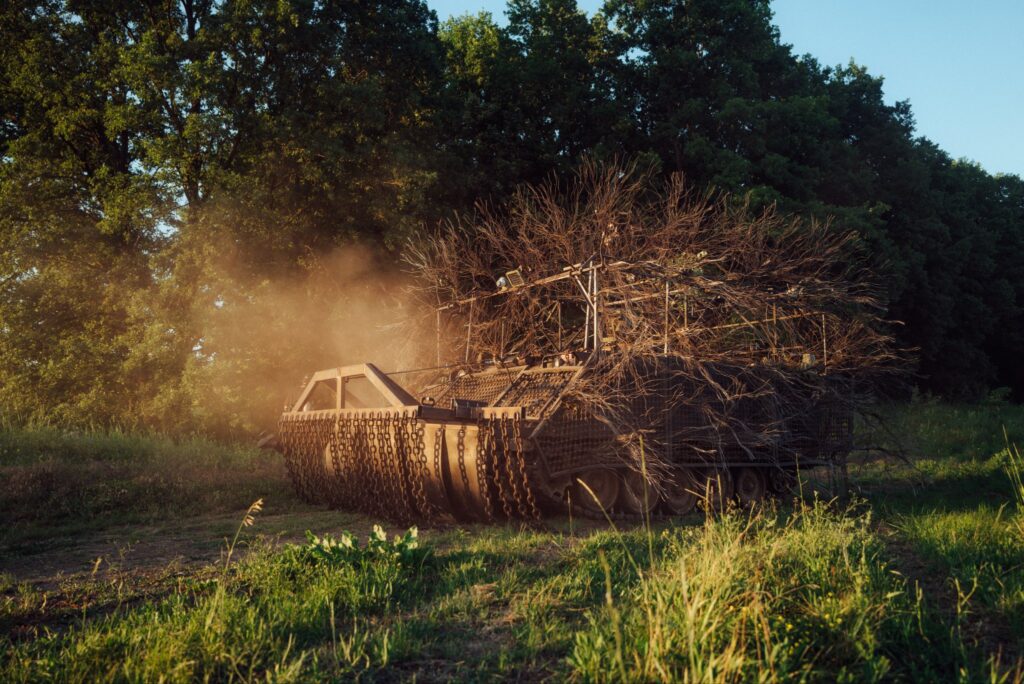
The Ukrainian National Guard has found a new way to speed armored robots to the front line. Instead of building all its 'bots from scratch, the 2nd National Guard Corps "Khartiia" has converted at least one old American-designed M113 armored personnel carrier into a big, capacious unmanned vehicle.
If it works, and there's no reason to think it won't, the robotic M113 could become common in Ukrainian service. After all, allies have shipped Ukraine at least 1,729 M113s and vehicles built on the same chassis over the course of the war, making it one of the most numerous Western armored types in Ukrainian service.
The Khartiia Corps took one of its 12-ton M113s, added external cameras, control servos, and a radio-based command system and fitted it with anti-drone armor and a front-mounted mine flail. "Re-equipped by the engineers of Khartiia, it performs missions involving remote de-mining and logistics, allowing the operator to control the armored personnel carrier from a remote control unit," the corps stated.
The robotic M113 clears a safe path where every meter could be mined.
Роботизований М113 прокладає безпечний шлях там, де кожен метр може бути замінований.
— КОРПУС ХАРТІЯ (@khartiia_corps) July 24, 2026
Переобладнаний інженерами «Хартії», він виконує місії з дистанційного розмінування та логістики, дозволяючи оператору керувати бронетранспортером з пульта.
Фото: Павло Іткін для «Хартії». pic.twitter.com/ly4H8Ie4nw
Ukrainian forces use thousands of small unmanned ground vehicles. Some carry guns into battle. Others haul supplies or speed injured troops from the gray zone to field hospitals. Most of these UGVs are purpose-made models with wheeled or tracked chassis and remote control systems based on line-of-sight, mesh or satellite radio, or fiber-optic cable.
The purpose-made UGVs tend to be small, lightweight, and limited in range. They might weigh a couple hundred kilograms, range a few tens of kilometers and cost $10,000. The small size, light weight, and limited range might not be a major constraint on a UGV whose main mission is, say, speeding a single wounded infantryman away from his front-line fighting position along a road or path.
But clearing mines or other obstacles is a whole other matter. Mine-clearing plows, rollers, or flails might weigh tons. The vehicle carrying the mine-clearing gear must be able to withstand the blasts from any mines it triggers. Clearing mined roads and fields leading to and across the disputed gray zone is tedious work requiring greater endurance and cross-country mobility than a small, under-torqued UGV can manage under battery power.
It's not for no reason that most existing Ukrainian mine-clearing vehicles are big, heavily armored, and powerful. They include American-made Assault Breachers, German-made Wisents and an array of ex-Soviet engineering vehicles. The problem, of course, is that these vehicles are manned. And their crews are exposed to extreme danger while inching along mined roads and fields within range of Russian drones and artillery.
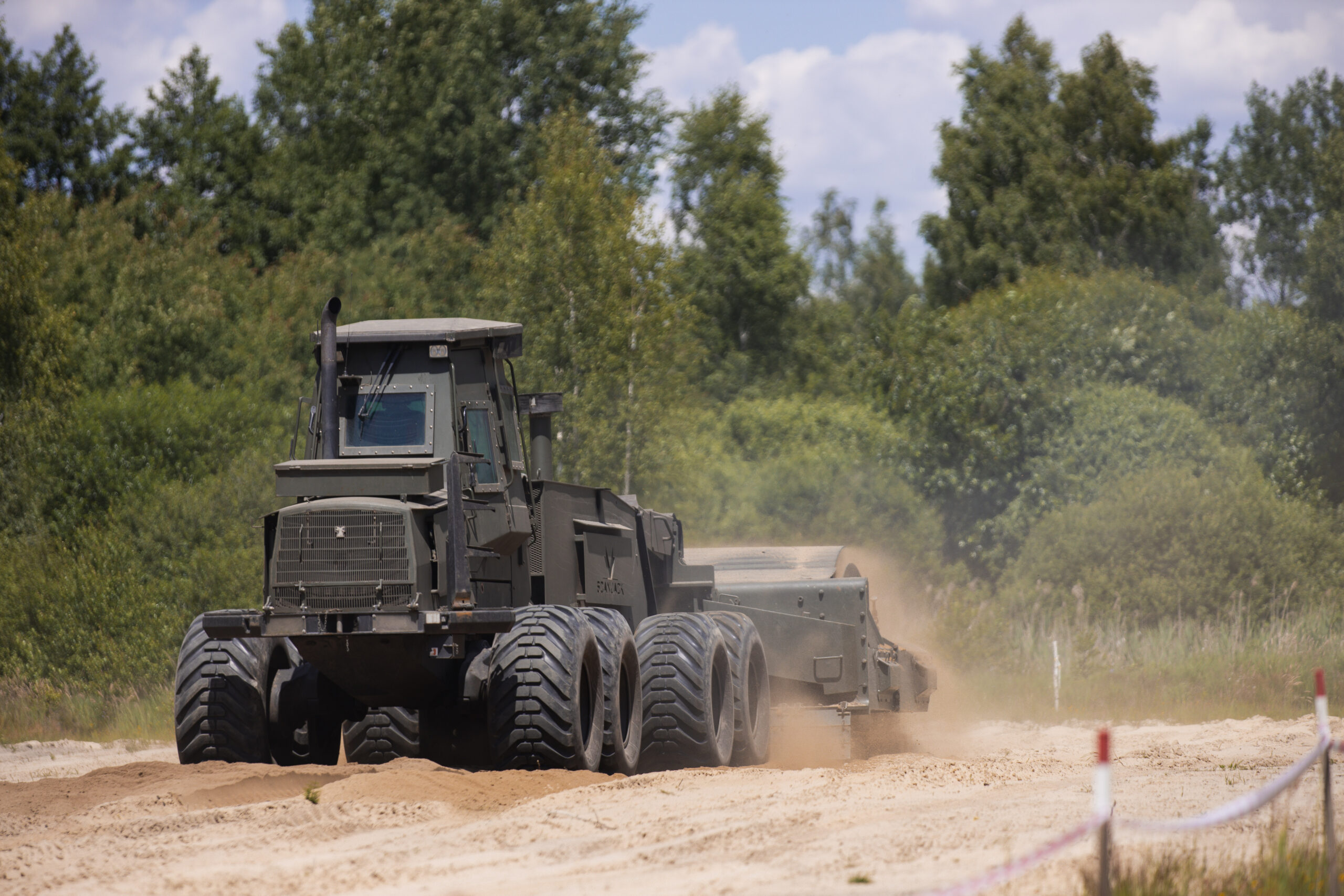
Dust and demining in Lviv Oblast—where the future of clearing the world’s most mined country meets the county fair

Attritable vehicles
In fitting a diesel-powered, aluminum-armored M113 for remote operation, the Khartia Corps has removed the most vulnerable component of the best mine-clearing systems: the people. Now the corps can clear mines without worrying about losing precious manpower. If the M113 gets blown up, just add servos and radios to another one of the M113s still in the Ukrainian inventory.
It's such a good idea that more than one army has tried it. The US Army, which still owns tens of thousands of the 1960s-vintage M113s, has experimented with several types of unmanned M113. One essayist, writing for an official US Army blog, urged the American ground combat branch to convert M113s into unmanned "breaching" vehicles.
"Obsolete M113s can be repurposed to deliver massed unmanned assaults to reduce the enemy’s strongest defenses," Jason Flores Rutledge wrote. "Turning obsolete vehicles into remotely-operated machines can save money and lives."
Best of all, the basic equipment that transforms a manned M113 into an unmanned M113 is platform agnostic. That is, it should work just fine on almost any vehicle, as Rutledge noted. "As the Army runs out of M113s, subsequent generations of Armored Fighting Vehicles could be automated as they approach obsolescence."
With refinement and scaling, Ukrainian forces could produce reliable, inexpensive kits for converting an array of wheeled and tracked vehicles into robots. Tanks and infantry fighting vehicles with manually loaded main guns and complex fire control systems might not be eligible for conversion. But engineering vehicles, supply vehicles, and ambulances should be first in line.
Think of manned-to-unmanned vehicle conversions as an expedient. In a bid to reduce risk to their most precious resource, their soldiers, Ukrainian forces have already contracted more than 22,000 domestically built UGVs so far this year—nearly double the total for all of 2025—with more contracts still coming, the Defense Ministry reported. They could add thousands of vehicles to that total by converting M113s and other (currently) manned vehicles.
