
 Connexion
Russia and Ukraine justify their strikes the same way. Only one justification holds up
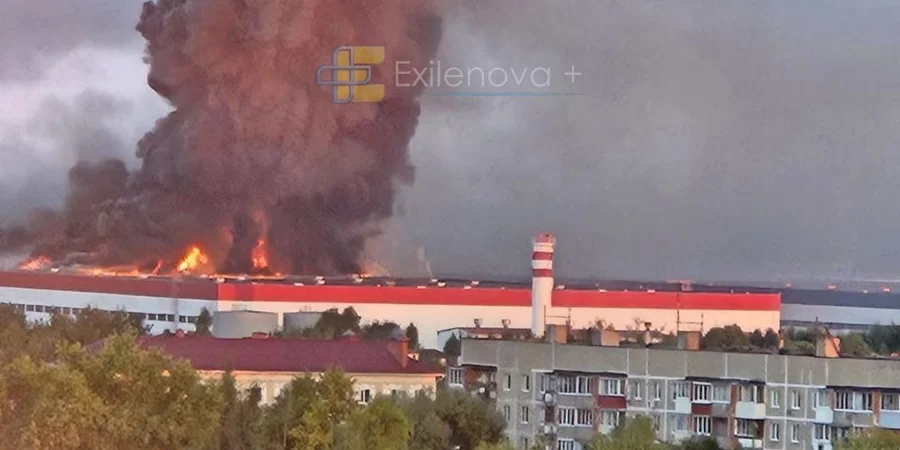
Ukraine has for years absorbed a persistent and rising volume of Russian missile, drone, and guided glide-bomb strikes. Across reporting from the UN, the World Health Organization, the World Bank and conflict-monitoring groups, the infrastructure struck most consistently falls into three categories:
- residential buildings, the leading source of civilian casualties;
- the energy system, the principal target of Russia's strategic long-range campaign;
- and critical civilian services—healthcare, education, transport, water, ports and agriculture—degraded to undermine Ukraine's economy and civilian resilience.
The cost is a state being hollowed out. Public debt has risen from 49% of GDP in 2021 to a projected 123% in 2026, on the back of unprecedented wartime borrowing and a GDP that contracted sharply in 2022, according to the IMF. More than half of Ukraine's electricity generation capacity has been destroyed, damaged, or is under Russian occupation.
By the end of 2025 the World Bank estimated reconstruction and recovery needs at €500 billion—close to three times Ukraine's nominal GDP for the year.
The demographic damage may prove the hardest to reverse. Ukraine's pre-war population is usually put at 41 to 42 million, excluding Crimea; current estimates suggest only 28 to 32 million now live in government-controlled territory, and UN projections see it falling to 25 to 29 million.
On that trajectory, the Washington Post notes, Ukraine will have effectively halved its 2001 population of 48.5 million—driven by refugee flight and a death rate roughly three times the number of live births. There is broad agreement among demographers that this is one of the most severe population crises a European country has faced since the Second World War.
These are only a few indicators of the destructive nature of Russia's war of attrition, whose aim is to destroy the basis for Ukrainian statehood. As I have previously argued, Russia's war is getting cheaper, which extends its ability to sustain that destruction for years.
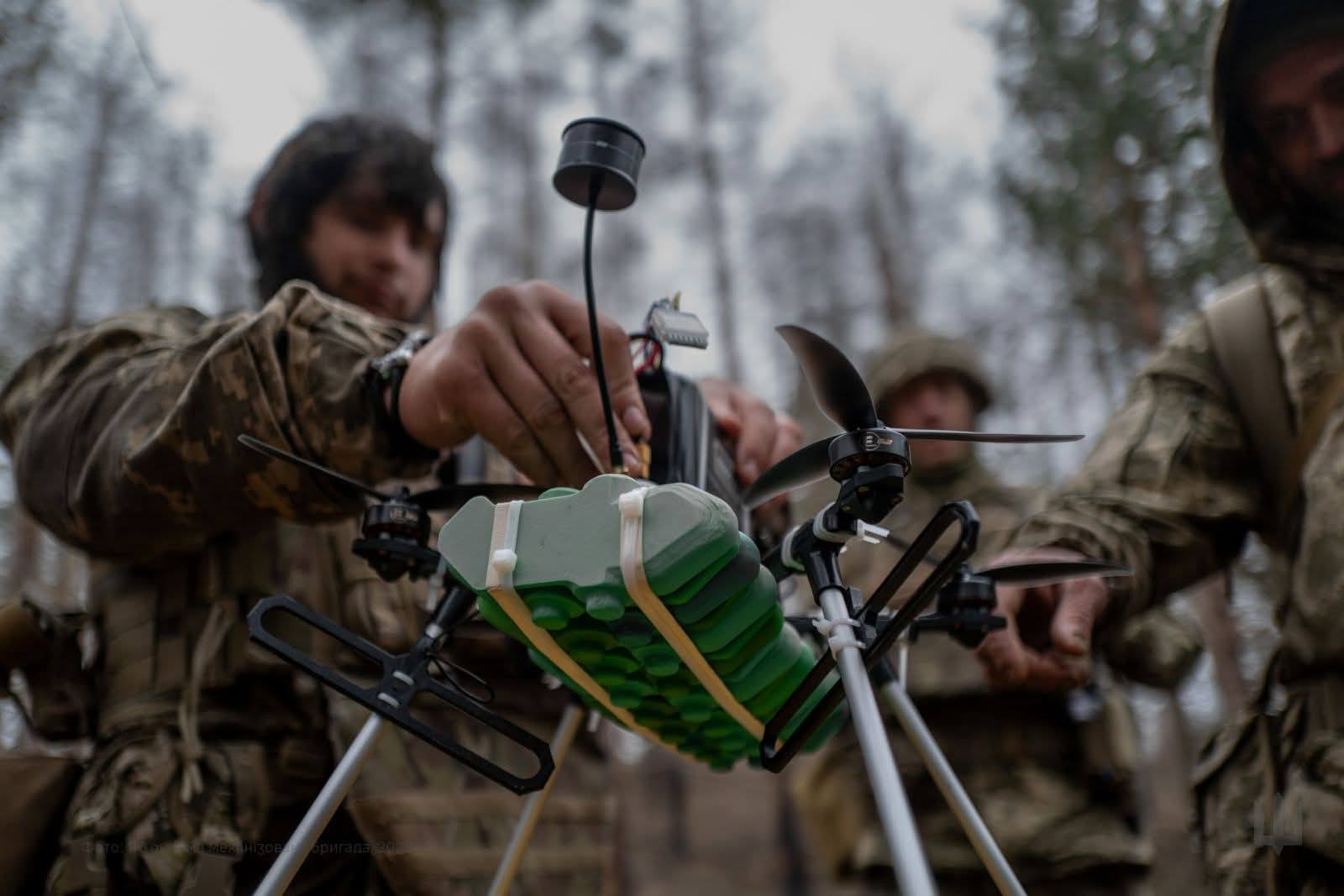
2026 has been the most brutal year yet. Based on Ukrainian General Staff daily reports, long-range drone strikes are up 160% on last year. The use of tactical and operational drones—surveillance, reconnaissance and strike—is up a staggering 756%. First-person-view drone launches have risen 304% as Russia expands its "human safari" strikes on civilians. Guided glide bombs are up 214% as their range and destructive scale grow.
From a Ukrainian perspective, the attrition war is unsustainable. If the present trajectory holds, the country's future existence is in question.
Russia is losing the war it planned to fight—and potentially winning the one it is fighting instead. Ukraine forced Russia to abandon maneuver warfare. Having chosen attrition, Russia is now forcing Ukraine to adapt in turn. That is why Ukraine is bringing the war to Russia and its population.
On 10 May, Zelenskyy said Ukraine would respond in kind. "If the Russians decide to return to full-scale warfare, our 'sanctions' [meaning missile and drone strikes] for this will be immediate and tangible," he said.
On 14 May, the President instructed Ukraine's defense forces and special services to identify "possible formats for our response to this Russian attack." The phrasing signalled a possible shift: Ukraine adopting Russia's playbook and bringing the war home by striking civilian infrastructure—residential buildings, power, heating and water plants, railways, airports and ports.
The shift is no longer hypothetical. On 25 June, Zelenskyy publicly announced a 40-day campaign. In a statement published on Facebook, Telegram and X, he wrote: "I approved a 40-day operation by the [Ukrainian Security] Service to influence the aggressor state in order to press for an end to the war."
Analysts described the campaign as combining military, economic, and psychological effects rather than seeking a battlefield breakthrough.
The announcement opened weeks of increasingly intensive Ukrainian long- and medium-range strikes on clearly military targets inside Russia: oil refineries, fuel depots, military airfields, ammunition depots, logistics hubs and military-industrial plants. But the campaign also reached targets that fall outside the traditional category of purely military objectives—energy, ports, civilian vessels and warehouses—and whose legality turns not on the category but on the dual-use test. That is where the legal question begins.
Two weeks in, on 10 July, Zelenskyy signed a decree establishing a special command within the Armed Forces for long-range—effectively global—impact on Russia, concentrating available resources on degrading Russia's warfighting potential. The move turned the campaign into a permanent institution rather than a time-limited operation.
Energy facilities
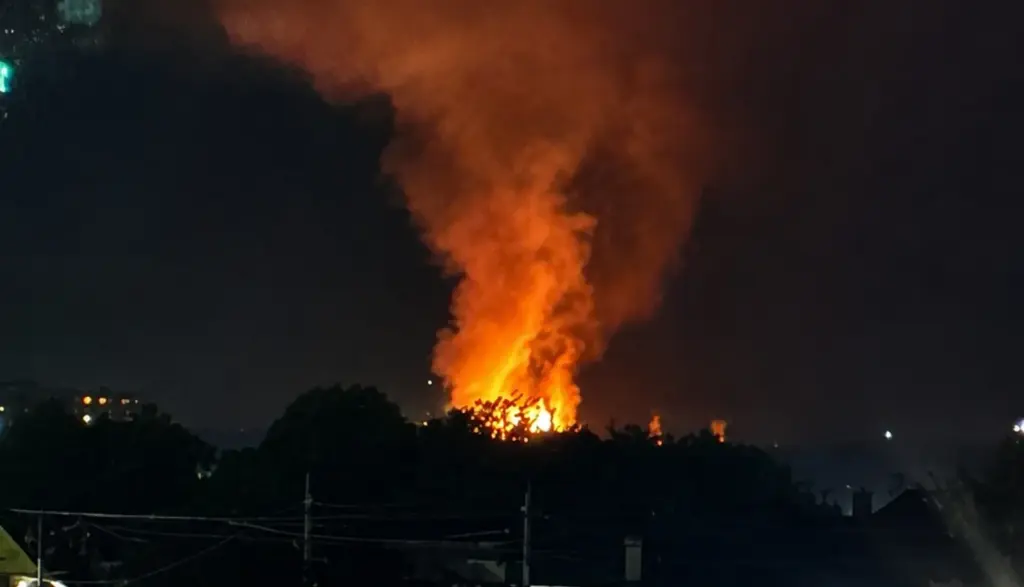
In July, Ukraine sharply increased its targeting of the energy sector in Russia and on occupied territory. ISW identified and geolocated 62 substations, power plants, transformer stations and transfer nodes struck one or more times over 1 to 24 July—necessarily a partial count, since targets are not always named. Ukraine's Unmanned Systems Forces claimed a far higher figure, reporting on 25 July that it had struck 136 substations across the month.
The situation on occupied territory—especially Crimea, but increasingly parts of occupied Kherson, Zaporizhzhia, Donetsk and Luhansk oblasts—deteriorated sharply through July. The strikes caused recurring blackouts, degraded grid resilience and reduced redundancy.
The intent is to degrade Russia's military logistics rather than inflict civilian hardship. By repeatedly hitting substations, plants, transformers and transfer nodes, Ukraine cut power to the railways, ports, air bases and logistics hubs sustaining Russia's war of aggression. The campaign has forced Russia to divert scarce air-defense systems and personnel to protect an expanding number of rear-area assets, complicating sustainment, reducing operational resilience and raising the economic cost of the occupation.
Maritime shipping
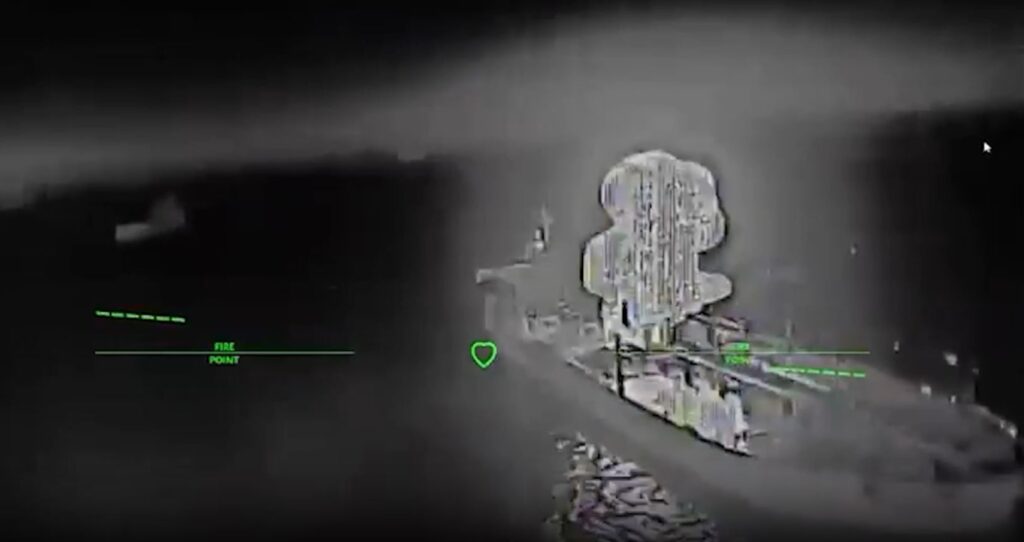
Ukraine has also sharply increased its attacks on shipping in the Sea of Azov and the Black Sea under Operation MoLoChKa—an acronym for Moskva liazhe cherez Krym, "Moscow will fall through Crimea." Launched by the Unmanned Systems Forces, it is a large-scale aerial and sea-drone campaign against Russia's "shadow fleet" of oil tankers, gas carriers and cargo ships, aimed at isolating Crimea by severing its logistics.
Between 6 and 22 July, the USF reportedly struck more than 196 vessels—oil and gas tankers, bulk carriers, ferries, tugboats and cargo vessels supporting Russian military sustainment. The strikes disrupted fuel and supply movements, forced Russia to impose shipping restrictions, and pushed logistics onto more vulnerable road and rail. In occupied Crimea the campaign degraded basic living conditions, prompting panic and an exodus, as strikes on the peninsula's fuel routes and power grid converged through July.
Russia was also forced to pull 200 crews from its Rubicon drone unit off the front line to protect shipping, according to the USF.
Ukraine's strikes on Russia's ships is called Operation MoLoChKa—an acronym for Moskva liazhe cherez Krym, "Moscow will fall through Crimea."
"Russia's Amazon"
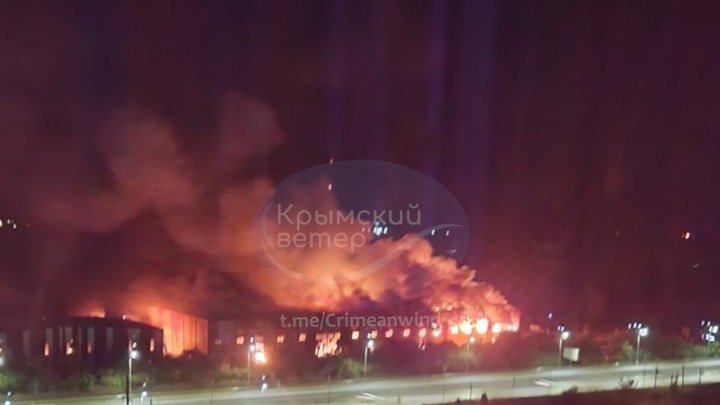
Wildberries, often called "Russia's Amazon," is the country's largest online retailer—a marketplace that accounts for more than 2% of Russia's GDP, handles over 20 million orders a day, and is used by an estimated 85% to 90% of the economically active population, making it a fixture of daily life in remote regions.
The Kremlin calls it a strictly civilian retailer. Human-rights watchdogs, independent media and Ukrainian intelligence note that the platform openly serves the war effort, listing military gear, body armor, tactical radios and drone-assembly components—often tagged "SVO fighters' choice," a reference to the "special military operation." Kyiv is now targeting the logistics hubs Russian forces use to source equipment, striking at least 12 Wildberries warehouses in Russia and occupied Ukraine since 17 July.
The stated rationale is that the network functions as a decentralized supply chain for the armed forces. Zelenskyy confirmed the strikes, saying the hubs are used "to supply the Russian army with drone components, navigation equipment and gear." Serhii Kuzan, chairman of the Ukrainian Security and Cooperation Center, noted that while the primary goal is choking the supply of critical components, the disruption reaches deep into the wider Russian economy.
The strikes generate military, economic and political pressure inside Russia. They force Moscow to divert scarce air defense to protect commercial infrastructure far in the rear. They disrupt one of Russia's largest retail networks, bringing the war closer to urban populations the Kremlin has tried to shield. And they reportedly inflicted around RUB 170 billion in damage, raising financial pressure on elites tied to Wildberries and potentially widening tensions inside Putin's circle.
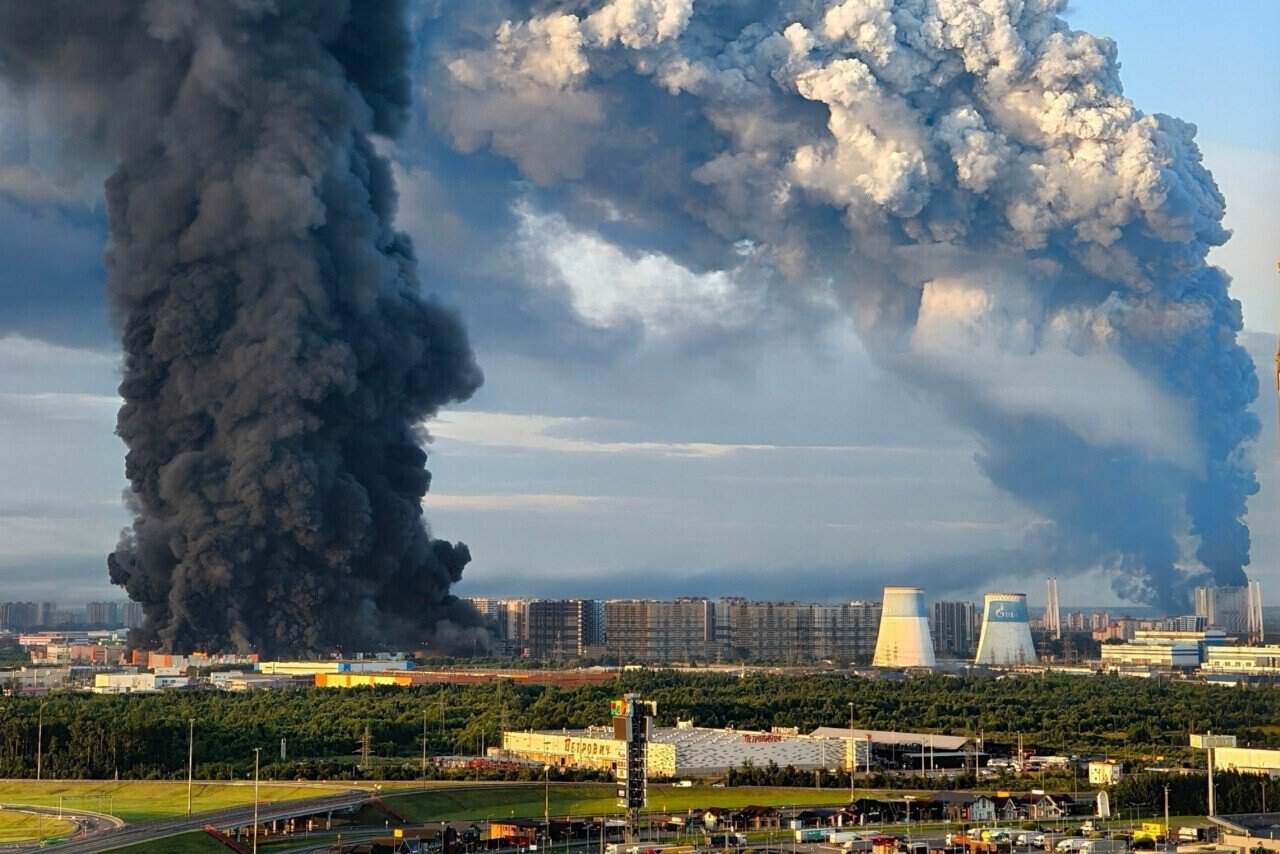
“From Simferopol to St. Petersburg”—Ukraine’s drone commander sums up one night of fire at Russia’s online giant
The Ukrainian justification
The stated objective of the 40-day campaign was to "pressure" or "influence" Russia into ending the war by raising the cost of continuing it. Ukraine has adopted the term "military-economic" targets for civilian or dual-use assets that enable Russia's ability to wage war:
- Energy infrastructure supporting military bases, railways, ports and the defense industry.
- Oil and gas infrastructure—refineries, depots, terminals and pipelines that fuel the military and generate export revenue.
- Military-industrial plants producing drones, missiles, electronics, bearings and explosives.
- Transport and logistics—railway hubs, ports, ferries and logistics centers moving military cargo.
- Commercial logistics firms supporting military supply chains, such as the Wildberries warehouses Ukraine alleges distribute equipment to Russian forces.
- Merchant shipping carrying fuel, ammunition, equipment or sanctioned dual-use goods.
To a degree, the strategy is working. Russia is straining under unsustainable war spending, rising inflation, labor shortages and a shrinking sovereign wealth fund.
The war has reached the citizens the Kremlin tried to shield. Independent tracking by the Levada Center—Russia's most reputable non-governmental pollster—recorded a shift months before Ukraine's July campaign: in a survey conducted 18 to 25 February, a record 67% of Russians said it was time to move to peace negotiations, while 24% wanted military operations to continue—the lowest figure recorded since the full-scale invasion began.
Support for the armed forces themselves held at 72%, and 57% still called Russia's strikes on Ukraine's energy grid justified. Russians increasingly want the war over; they have not turned against it. The same paradox ran through the December poll.
The Russian justification
Ironically, Russia's justification for its strikes on Ukraine's energy sector, maritime trade and warehouses is identical to Ukraine's: that the strikes are directed at military and dual-use infrastructure, not at civilians. Russian officials call the targets legitimate military objectives because they support Ukraine's military-industrial complex and its ability to wage war.
Russia's Defense Ministry has stated that all ships bound for Ukrainian ports will be treated as potentially carrying military cargo, and it classifies Ukrainian storage sites and warehouses as covert logistics hubs, ammunition depots or drone-manufacturing nodes. Damaging Ukraine's energy system, ports and trade, Moscow argues, weakens Ukraine's economy and its ability to sustain operations.
The two justifications are word-for-word the same. The legal verdict is not.

Ukraine is turning Crimea into an island. It just fired the minister who armed the effort
The verdict
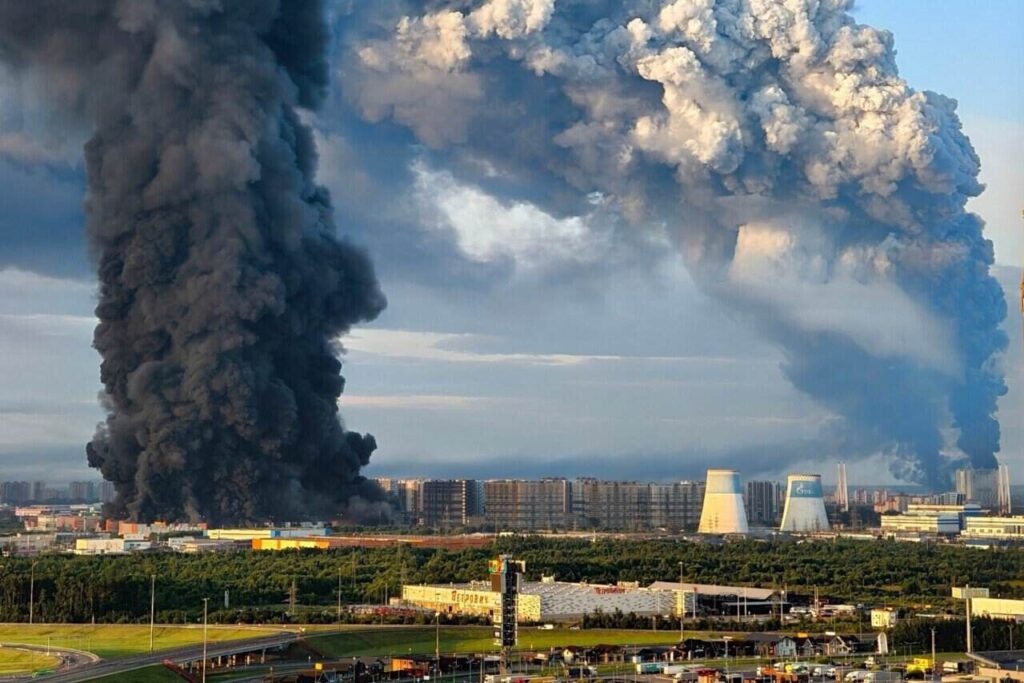
From a military point of view, Ukraine's strikes are fully justified: they create strategic effects that may help end the war. The harder question is whether they are justifiable in law.
Western governments, the UN and many legal experts reject Russia's justification. They argue that Russia's campaign has repeatedly caused widespread civilian harm—prolonged blackouts, disrupted water, heating and healthcare—and that many strikes have likely violated the principles of distinction, proportionality and precaution under international humanitarian law.
Because Ukraine strikes similar categories, one might assume the same verdict applies to its campaign.
It does not, and the reason is that legality never rested on the category. From a legal perspective, none of these categories—energy, merchant shipping, commercial warehouses—is automatically protected or automatically targetable. Their legality depends on evidence that the target makes an effective contribution to military action, and that the attack satisfies distinction, proportionality and precaution.
That is where the comparison ends.
Ukraine's strikes appear to meet the three principles:
- Distinction—attack only military objectives, defined in Article 52(2) of Additional Protocol I as objects that "by their nature, location, purpose or use make an effective contribution to military action" and whose destruction "offers a definite military advantage."
- Proportionality—expected civilian harm must not be excessive relative to the anticipated military advantage.
- Precaution—feasible measures must be taken to minimize civilian harm.
The war began with Crimea and, in Zelenskyy's repeatedly stated position, must end with Crimea's liberation—a loss that would likely bring Putin's political downfall.
Ukraine's methods may in part be drawn from Russia's playbook. They will never be assessed as equal. One side is the aggressor, the other the victim. One wages war because it can. The other, because it has no other choice.
Hans Petter Midttun

Editor's note. The opinions expressed in our Opinion section belong to their authors. Euromaidan Press' editorial team may or may not share them.
Submit an opinion to Euromaidan Press
