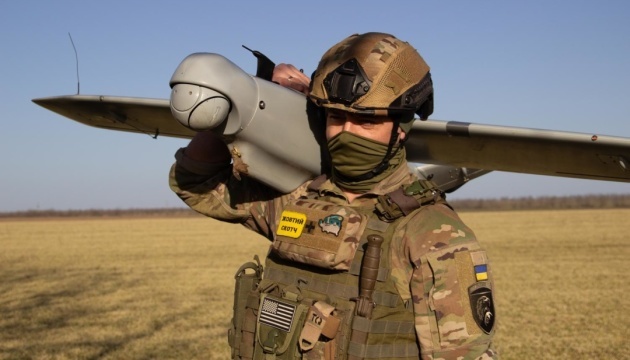
Alexander Hoffmann, head of the Christian Social Union (CSU) regional group in the German Bundestag, has called for a bilateral intergovernmental agreement with Ukraine on sharing its technological capabilities.
Alexander Hoffmann, head of the Christian Social Union (CSU) regional group in the German Bundestag, has called for a bilateral intergovernmental agreement with Ukraine on sharing its technological capabilities.
The parts of Russia that once felt too far away to worry about are now on Ukraine's strike map, President Volodymyr Zelenskyy said after a meeting with his top military commanders on 26 July. Kyiv will press ahead with its long-range campaign and has updated which sites to hit first, he added. The commanders did not reveal the targets themselves.
Russia built its war economy behind a rear it assumed no one could touch, and Ukraine's deep-strike campaign has spent ye
The parts of Russia that once felt too far away to worry about are now on Ukraine's strike map, President Volodymyr Zelenskyy said after a meeting with his top military commanders on 26 July. Kyiv will press ahead with its long-range campaign and has updated which sites to hit first, he added. The commanders did not reveal the targets themselves.
Russia built its war economy behind a rear it assumed no one could touch, and Ukraine's deep-strike campaign has spent years taking that assumption apart, region by region. The further Kyiv's drones travel, the harder it becomes for Moscow to call any refinery or warehouse safe, no matter how remote it is.
Kyiv's commanders sign off on the next phase
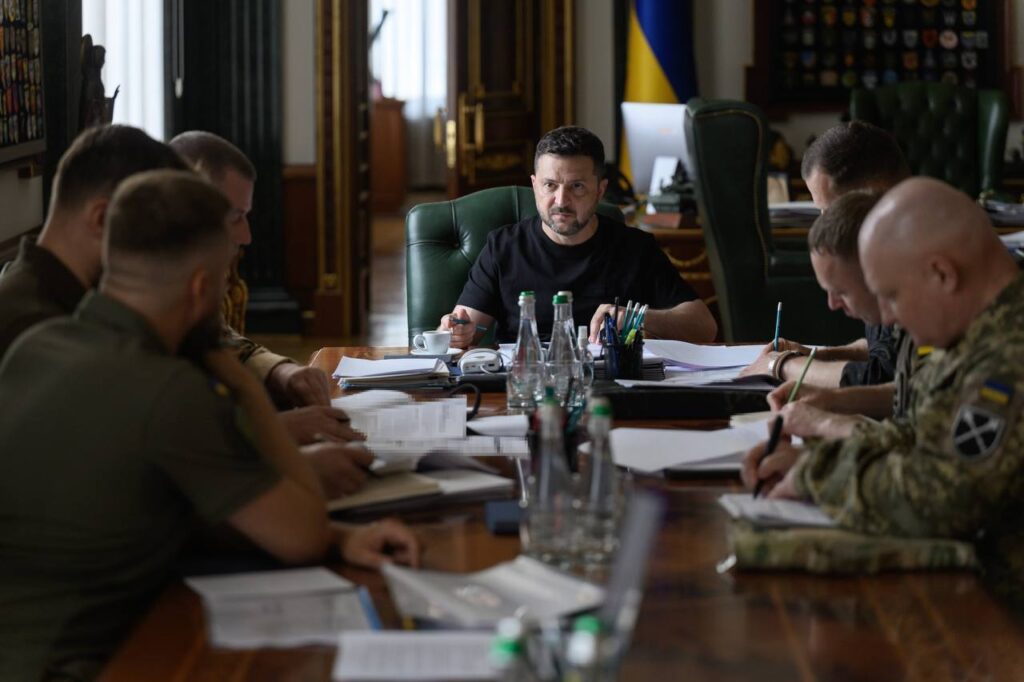
Zelenskyy convened Ukraine's military leadership to review the long-range strikes. He left with two decisions—keep the operations going and refresh the priority list.
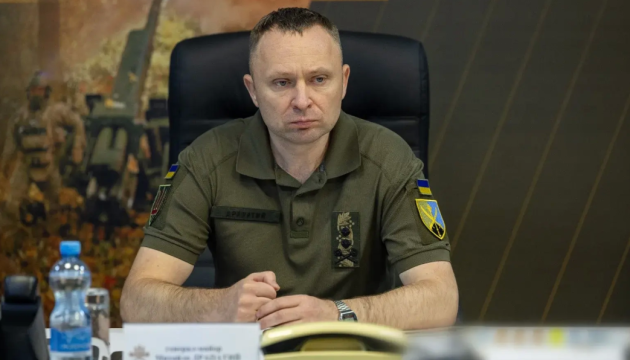
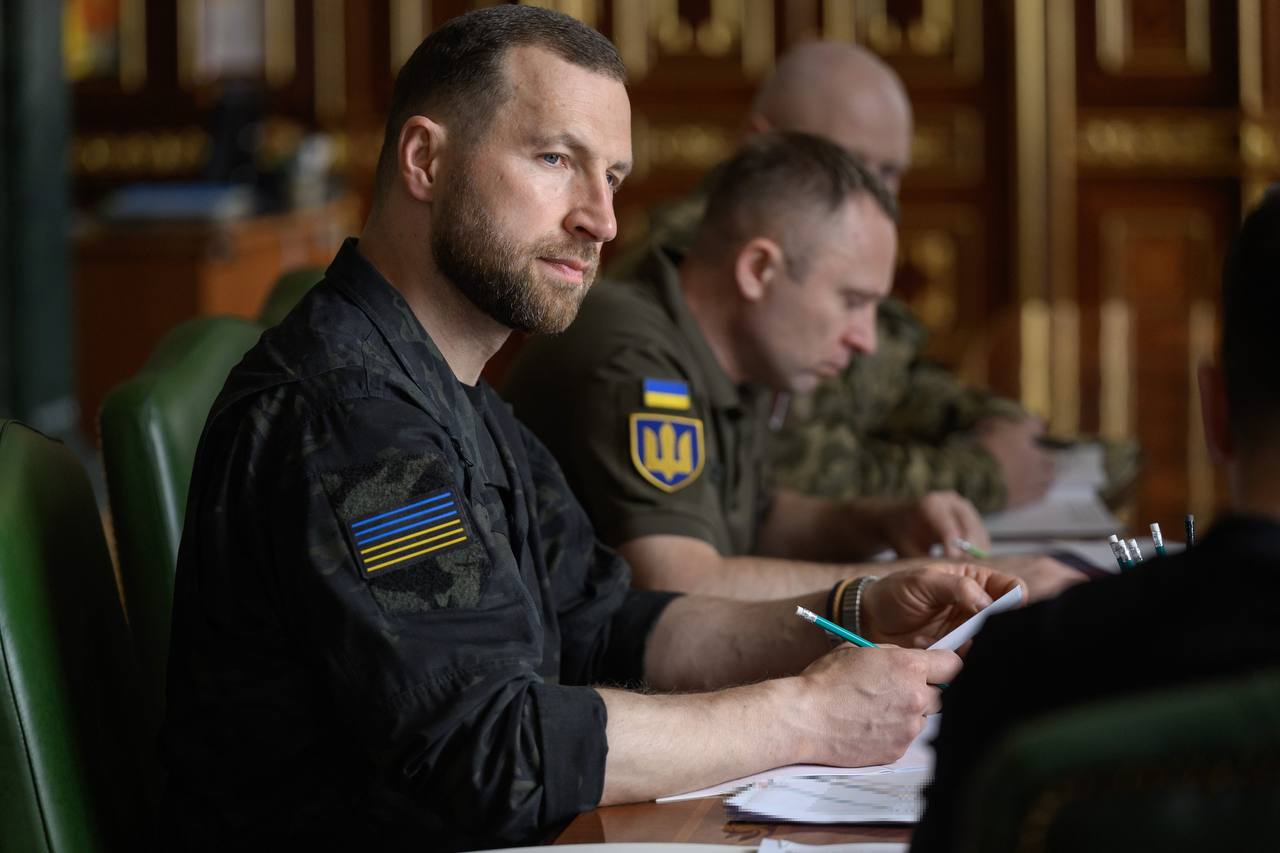
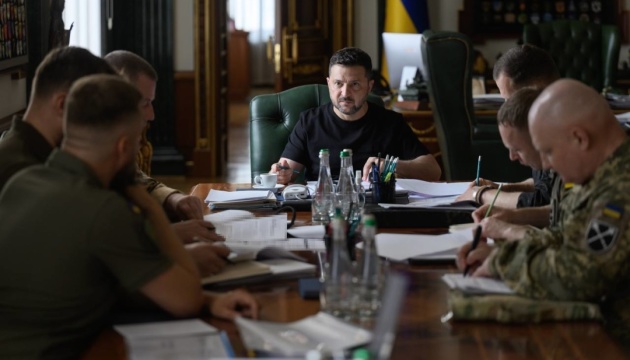
Photos the President posted showed new Commander-in-Chief of the Armed Forces Mykhailo Drapatyi, acting Defense Minister Yevhenii Khmara and Chief of the General Staff Ihor Skybiuk among those at the table. Kyiv chose the new priorities by one measure: how much each site damages Russia's ability to keep waging the war.
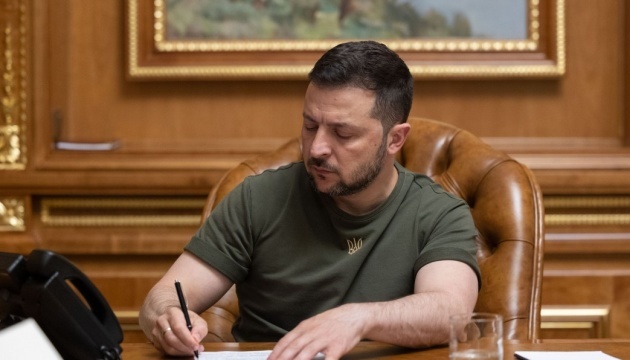
Commander-in-Chief of the Armed Forces Mykhailo Drapatyi (center) and Chief of the General Staff Ihor Skybiuk (right) at the meeting, 26 July 2026. Photo: Zelenskyy/Telegram
Zelenskyy once again called the effort Ukraine's plan of "long-range sanctions," carried out along set priorities.
Explore further
One plant makes the seats that save Russian pilots—Ukraine’s Flamingo missile torched it 1,200 km from home
Russia's depth stops being an advantage
Ukrainian strike distances now run past 3,000 km, Zelenskyy noted, saying Kyiv keeps building the range to reach further. For years, Russia's size kept its factories and fuel plants out of harm's way.
"The strategic depth of the rear, which for a long time was a Russian advantage, is now becoming a particular problem for Russia's political and military leadership," he said.
Most of Russia's air defense, he noted, sits bunched around Moscow, state residences, the Kerch Strait Bridge and St. Petersburg. Ukrainian drones, he added, have shown they can reach targets in the Urals, in Siberia and in other lands far from the capital.
Acting Defense Minister Yevhenii Khmara at a meeting on Ukraine's long-range strikes, 26 July 2026. Photo: Zelenskyy/Telegram
What Ukraine has hit—and what it still targets
Since the plan began this year, Ukraine has run more than a thousand fire missions, striking oil sites, critical military production and key nodes of Russian logistics, Zelenskyy said. Several parallel deep- and mid-range campaigns run at once. They target:
oil and fuel sites in Russia and occupied territories
The point of all this pressure, Zelenskyy said, is to force Russia toward negotiations. He wants the strikes to make weapons components harder to build, pile up oil and economic losses, and, in his words, bring the war back to its "home harbor." Ukraine has handed Russia's leadership everything it needs to end the war on decent terms, he said, and its partners know what that takes.
"Our precision is working effectively to create conditions for real diplomacy," Zelenskyy said.
Recent long-range hits
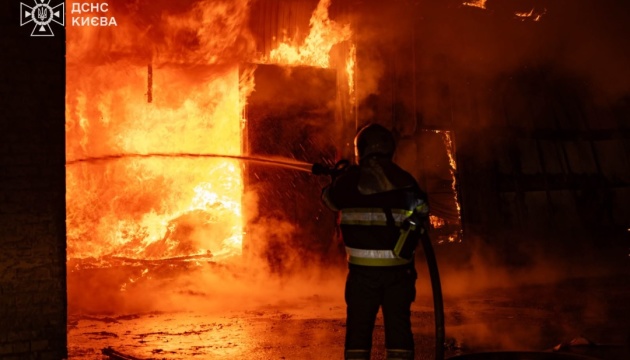
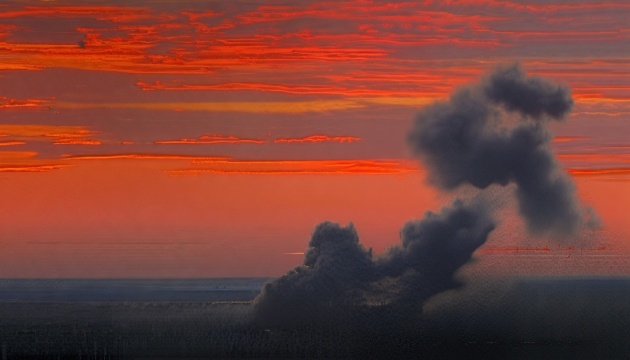
Several notable long-range strikes occurred in the days before the meeting. On 24 July, an FP-5 Flamingo cruise missile hit the Avitek military plant in Kirov, about 1,200 km from Ukraine. The next day, drones hit the Tyumen oil refinery some 2,000 km out and set fire to a Wildberries warehouse in Yekaterinburg roughly 1,800 km away.
In Chernihiv, cleanup efforts following the attack carried out by the Russian military on the afternoon of July 26 have been completed; two people were killed and another 25 were injured.
In Chernihiv, cleanup efforts following the attack carried out by the Russian military on the afternoon of July 26 have been completed; two people were killed and another 25 were injured.
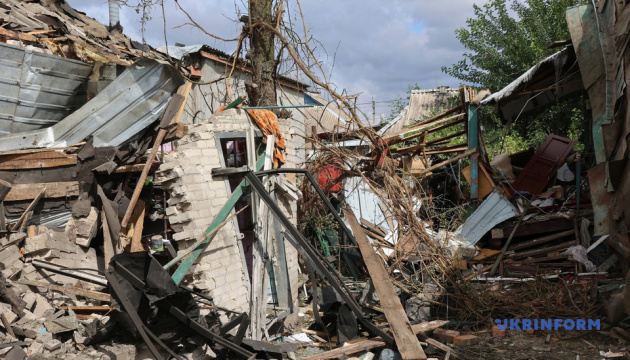
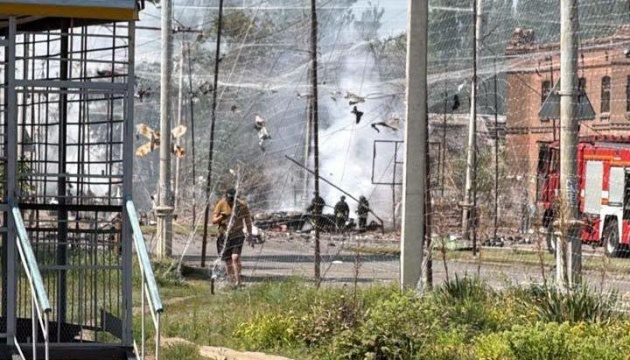
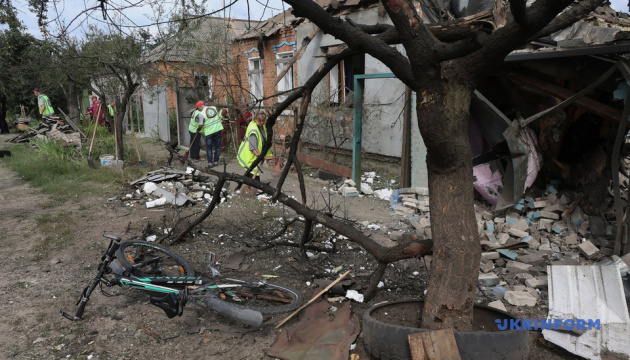
In Sloviansk, Donetsk region, two employees of the Donetskoblgaz emergency dispatch service were killed as a result of a Russian military strike on the night of July 26.
In Sloviansk, Donetsk region, two employees of the Donetskoblgaz emergency dispatch service were killed as a result of a Russian military strike on the night of July 26.
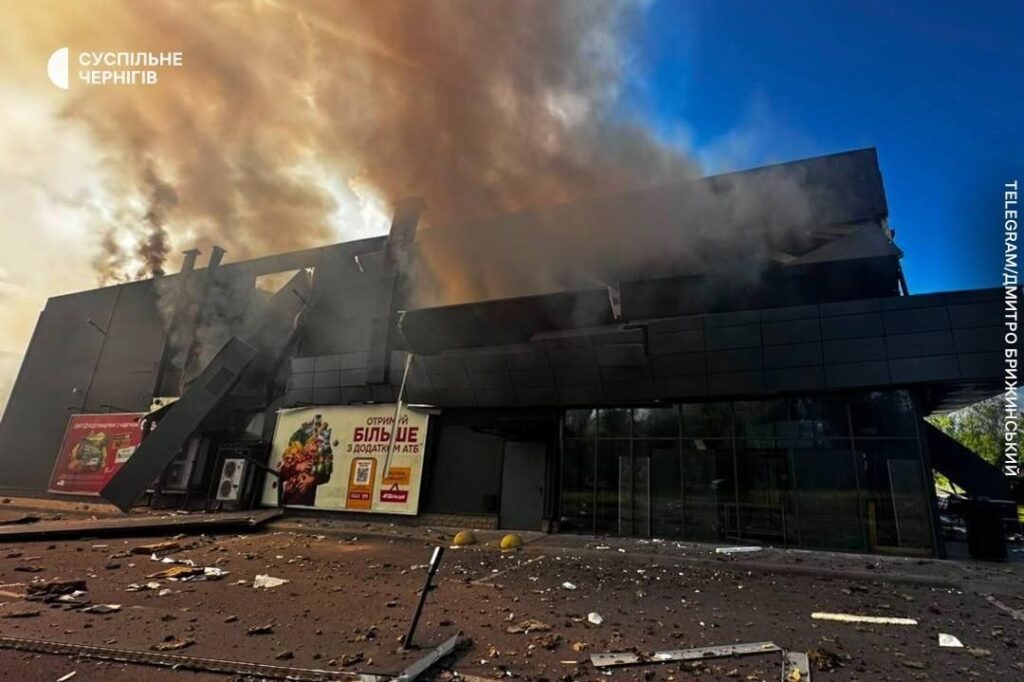
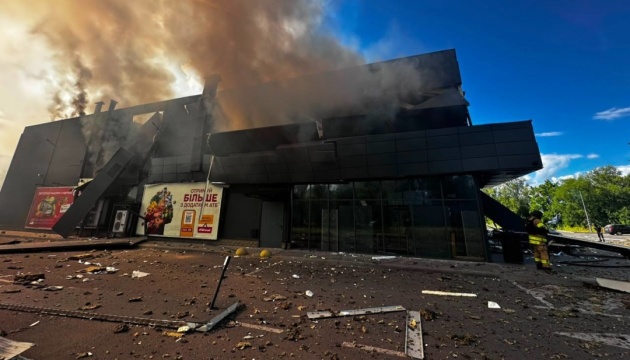
Russia's attack on a supermarket in Chernihiv was carried out with a jet-powered drone equipped with a video camera, indicating that the strike on the civilian facility was intentional.
Russia's attack on a supermarket in Chernihiv was carried out with a jet-powered drone equipped with a video camera, indicating that the strike on the civilian facility was intentional.
Russia wants another 30,000 troops from North Korea and new ballistic-missile launchers as it prepares its options for the fall, Ukrainian President Volodymyr Zelenskyy said while discussing Ukrainian intelligence reports on Russia’s plans. The push lands as Russian casualties run ahead of new recruits, and as Kyiv sees preparations for a wider draft rather than any turn toward ending the war.
Moscow’s war economy is drawing on an increasingly scarce workforce: the army
Russia wants another 30,000 troops from North Korea and new ballistic-missile launchers as it prepares its options for the fall, Ukrainian President Volodymyr Zelenskyy said while discussing Ukrainian intelligence reports on Russia’s plans. The push lands as Russian casualties run ahead of new recruits, and as Kyiv sees preparations for a wider draft rather than any turn toward ending the war.
Moscow’s war economy is drawing on an increasingly scarce workforce: the army, defense production, emigration, and demographic decline have all reduced Russia’s available labor pool, while Russian personnel losses exceeded recruitment across the first half of 2026, according to the Ukrainian military.
More North Korean troops and ballistic-missile launchers
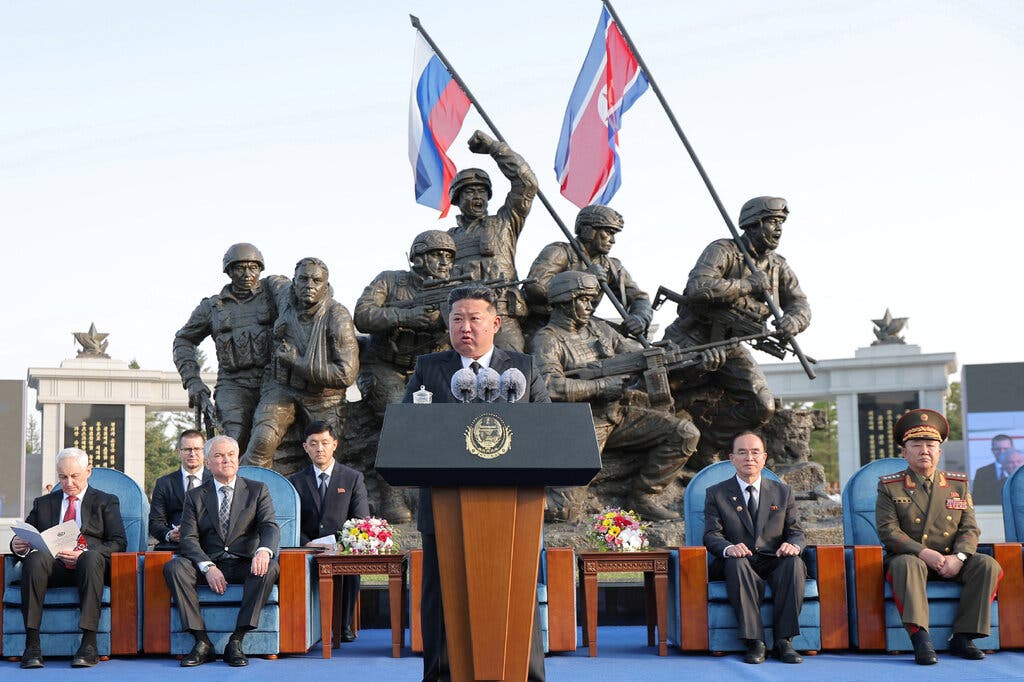
Russia wants another 30,000 troops from North Korea, and it has been readying Voronezh Oblast to receive them since June, Zelenskyy said in his evening address on 25 July. Pyongyang is also getting ready to transfer new launchers for ballistic missiles, he said. Militarnyi suggested that the launchers would probably come with ammunition.
Explore further
300 defense factories, 500,000 workers: North Korea’s arms industry reaches records amid Russia’s demand for shells in war
Kyiv has watched Moscow work to enlarge the Korean force since at least July 2025, when Ukrainian intelligence projected another 25,000–30,000 troops. That was a planned deployment, not a confirmed transfer, andN orth Korea actually sent about 14,000 troops to Russia by January 2026, with more than 6,000 killed, wounded, or missing.
"This is a threat not only to Ukraine. Russia is helping North Korea learn to wage war, improving their weapons — giving them experience of real weapons use," Zelenskyy said.
Those troops have been building that experience at the front for months. Anyone in Asia within reach of North Korean missiles faces this threat, he said, adding: "We will counter it."
Explore further
Russia launches record ballistic missile barrage on Kyiv, firing over 40 missiles in under an hour
Losses now outpace recruitment
Ukrainian intelligence has mapped out Russia's autumn plans, and peace is not in them, Zelenskyy said. Putin is laying the groundwork to widen mobilization, he said, citing the country's casualties. Over less than seven months this year, 221,000 people entered the Russian armed forces. Russian losses in that time came to nearly 225,500 — 131,000 killed and nearly 93,000 wounded, many of the wounds severe because Russian frontline medicine is extremely poor, he said.
Moscow's recruiting has fallen behind, and a broader call-up may arrive this autumn.
Explore further
Kim Jong Un urges North Korean youth aged 14 to 30 to fight for Russia after losing 6,000 troops in Kursk
Russia's July missile use exceeds some monthly production estimates
In July 2026 it fired 107 ballistic missiles and 20 Zircon missiles by 19 July. Militarnyi compared the ballistic-missile count with estimated combined monthly output of roughly 100 9M723 and RM-48U missiles, although those categories are not fully identical.
Ukraine's Defense Ministry's military intelligence agency (HUR) estimate monthly output at about 60 9M723 missiles for the Iskander-M system and 40 RM-48U missiles fired from S-400 launchers, roughly 100 together.
For all of 2026, though, Russia plans to produce only 30 Zircon missiles — and the 20 fired by 19 July equaled two-thirds of that planned annual output.
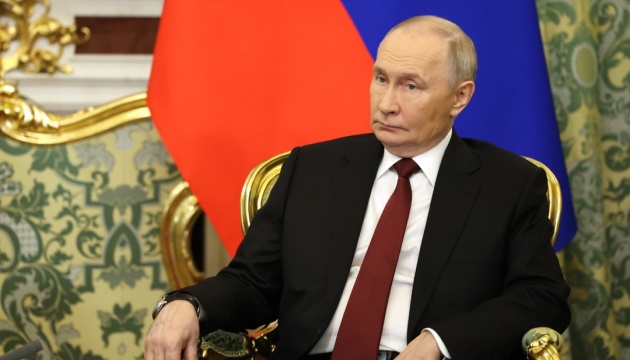
Russian President Vladimir Putin likely used his meeting with Kazakhstan’s President Kassym-Jomart Tokayev to justify his refusal to freeze the front line in Ukraine and his decision to continue the war, according to the Institute for the Study of War (ISW).
Russian President Vladimir Putin likely used his meeting with Kazakhstan’s President Kassym-Jomart Tokayev to justify his refusal to freeze the front line in Ukraine and his decision to continue the war, according to the Institute for the Study of War (ISW).
Russia struck two Ukrainian cities hundreds of kilometers apart in daytime attacks on 26 July, hitting a supermarket and residential areas and killing civilians including a child, according to President Volodymyr Zelenskyy and local officials in Chernihiv and Zaporizhzhia. The local authorities reported deaths and more than a dozen wounded. Zelenskyy called the strikes deliberate terror with no military purpose and renewed his push for tougher sanctions on Moscow.
Russi
Russia struck two Ukrainian cities hundreds of kilometers apart in daytime attacks on 26 July, hitting a supermarket and residential areas and killing civilians including a child, according to President Volodymyr Zelenskyy and local officials in Chernihiv and Zaporizhzhia. The local authorities reported deaths and more than a dozen wounded. Zelenskyy called the strikes deliberate terror with no military purpose and renewed his push for tougher sanctions on Moscow.
Russian missiles, attack drones, and glide bombs strike Ukrainian cities away from the front, while Russian attacks of several kinds continue every day. The small drones have become the weapons that kill the most Ukrainian civilians than any other weapon, according to UN monitors.
Zelenskyy wrote on Telegram that Russian forces keep "defeating" ordinary civilian objects, calling the Chernihiv strike an absolutely cynical drone attack on an ordinary supermarket. Meanwhile, Zaporizhzhia was struck by aerial bombs.
"They hit people directly, with no military sense at all," he said. "This is deliberate Russian terror that has no military justification whatsoever."
Russia struck a supermarket full of shoppers and killed a 9-year-old girl
A Russian drone tore into an ATB grocery store in Chernihiv on 26 July while people shopped inside, setting the building on fire. The strike killed two people, one of them the young girl, and wounded… pic.twitter.com/8AguDH4gP8
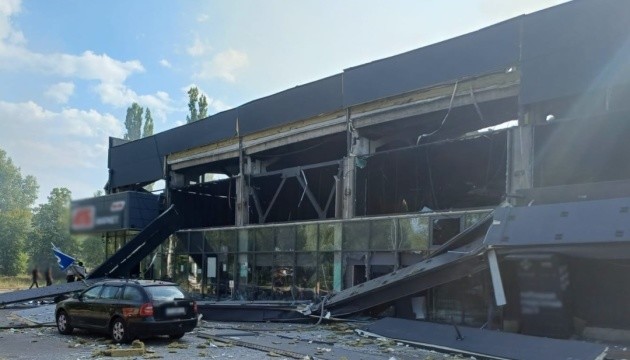
In the northern city of Chernihiv, a Russian drone struck an ATB supermarket, part of Ukraine’s largest no-frills grocery network, around the middle of the day. City military administration head Dmytro Bryzhynskyi first reported two people killed and three wounded. He later noted that a child was among the dead. As rescuers worked, he reported one victim in serious condition, then said the number of wounded had climbed to seven.
Later that afternoon, he updated the toll to 13 injured — four men and nine women — with three hospitalized in moderate condition. In a subsequent update, he said 20 people had sought medical care and three were hospitalized.
Russia struck a supermarket in Chernihiv, killing two people, including a 9-year-old girl
Thirteen others were wounded in the attack, including a 10-year-old boy. Officials continue clarifying the full extent of the damage State Emergency Service of Ukraine pic.twitter.com/l3mMxKmQKM
Chernihiv Oblast administration head Viacheslav Chaus identified the dead child as a 9-year-old girl. He said a 10-year-old boy was among the wounded and that three people were in intensive care. Other strikes in the city damaged cars and vehicle service stations, Chaus added.
Guided bombs killed a man in Zaporizhzhia
Far to the south, Russian guided aerial bombs hit the city of Zaporizhzhia. Regional administration head Ivan Fedorov reported that the bombs damaged residential and non-residential buildings and an educational institution. One person was killed and six were wounded, according to Fedorov and the regional prosecutor’s office. The man who died was 46. The regional prosecutor's office said a gas station was also damaged.
Explore further
Russia destroys a Home Depot-style megastore in Kryvyi Rih—the third one it has erased in the same region since 2024
Hours earlier, Russian drones burned down a home-improvement megastore in Kryvyi Rih, the third such store wrecked in that southern region since 2024.
Paintings that Ukraine sent to Poland to save from Russian bombs may not come home. The heirs of Polish prince Andrzej Lubomirski are going to court to prevent the return of two paintings from the Lviv Historical Museum's collection to Ukraine, which were taken to Poland at the start of the full-scale invasion, Polish outlet Rzeczpospolita reported.
The dispute turns a wartime rescue into a legal trap. The two works are a 16th-century "Portrait of Roksolana" and "Portra
Paintings that Ukraine sent to Poland to save from Russian bombs may not come home. The heirs of Polish prince Andrzej Lubomirski are going to court to prevent the return of two paintings from the Lviv Historical Museum's collection to Ukraine, which were taken to Poland at the start of the full-scale invasion, Polish outlet Rzeczpospolita reported.
The dispute turns a wartime rescue into a legal trap. The two works are a 16th-century "Portrait of Roksolana" and "Portrait of a Young Man" by the artist Aloys Reichan, now held at the Museum of Central Pomerania in Słupsk. They were brought to Poland as part of efforts to safeguard Ukrainian museum collections threatened by the war, and were shown in an exhibition of treasures from the Lviv Historical Museum.
A lawyer for the Lubomirski heirs, Maciej Obrębski, has asked the Słupsk district court to bar the paintings' transfer until a court case concludes, arguing the heirs believe the works belonged to the Lubomirski collection and must stay in Poland. The Lviv Historical Museum holds the opposite position: the paintings are part of Ukraine's state museum fund and were removed to Poland only temporarily, for safekeeping during the war.
The rescue is the reason the paintings are at risk
The paintings are in Poland for the same reason Ukraine has been moving its cultural heritage across the country and abroad throughout the war: to keep it from Russian destruction. Ukraine has evacuated collections, dismantled monuments, and shipped artworks out of harm's way from Kramatorsk to Kherson, and sent works abroad for exhibition and protection.
The exhibition organizers framed the loan in exactly those terms.
"The exhibits were brought to Poland as part of efforts to ensure the preservation of Ukrainian museum collections threatened by the ongoing war. The presence of the collection in Poland guarantees its safety," they wrote of the show, "The Borderlands of Europe — from the Treasury of the Lviv Historical Museum".
The irony is sharp. Works sent to Poland precisely because Poland was safe are now the ones Ukraine may struggle to bring back, caught not by Russian shelling but by a Polish ownership claim in a Polish court.
Ukraine has been here before, in 2024
This is not the first time a wartime loan to Poland has drawn an ownership claim, and the earlier case shows how Ukraine responded. A similar situation arose in 2024 during an exhibition at the Royal Castle in Warsaw.
Then, after an analogous motion was filed, Ukraine removed the disputed exhibits back to Lviv ahead of schedule, and the court later refused to apply the requested protective measures.
The Lubomirskis are an old aristocratic house with claims across the border
The claim reaches back into the shared history that makes Polish-Ukrainian heritage disputes so tangled. The Lubomirskis were an influential princely family of the Polish-Lithuanian Commonwealth, holding large estates across what is now both Poland and Ukraine, and their members were patrons, politicians, soldiers, and collectors, according to Zahid.NET.
In 1823, Henryk Lubomirski transferred his vast art collection to the Ossolineum institution in Lviv, and the Museum of the Lubomirski Princes was created on its basis as a separate part of the Ossolineum. That entangled history is the root of the present claim: collections assembled by Polish aristocrats in a city that was then part of Poland and is now part of Ukraine, whose ownership the two countries' institutions and heirs can read in very different ways.
The case sits against the backdrop of a fraught moment in Polish-Ukrainian relations, strained this year by disputes over historical memory.
President Volodymyr Zelensky has held a meeting on long-range strikes, during which a plan for further deep-strike operations was approved and the list of priority targets was updated.
President Volodymyr Zelensky has held a meeting on long-range strikes, during which a plan for further deep-strike operations was approved and the list of priority targets was updated.
The Russian attacks that killed people in Chernihiv and Zaporizhzhia today are deliberate acts of Russian terror with no military justification, President Volodymyr Zelensky said.
The Russian attacks that killed people in Chernihiv and Zaporizhzhia today are deliberate acts of Russian terror with no military justification, President Volodymyr Zelensky said.
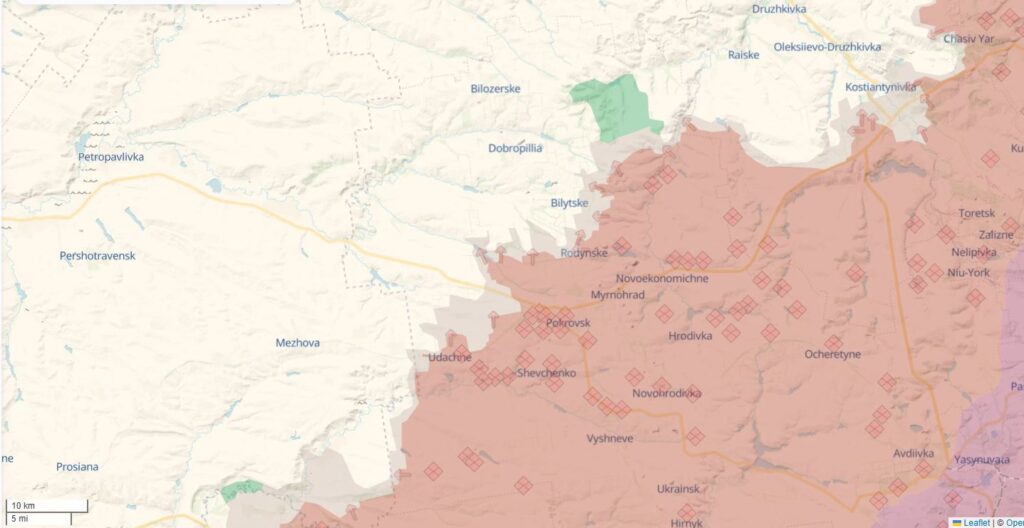
Russian forces have launched 61 attacks on Ukrainian Defense Forces positions since the start of the day, concentrating their main efforts on the Pokrovsk, Sloviansk, and Lyman sectors of the front.
Russian forces have launched 61 attacks on Ukrainian Defense Forces positions since the start of the day, concentrating their main efforts on the Pokrovsk, Sloviansk, and Lyman sectors of the front.
Poland and the three Baltic states have not built a continuous, defense-in-depth line of fortifications along their borders with Russia and Belarus, according to open-source intelligence (OSINT) analyst Clément Molin. He assessed Poland and the three Baltic states, while the Polish account Służby i Obywatel separately examined one fortification section near Poland’s border with Russia. The works mentioned in Molin’s review remain patchy and shallow, and he called Lithua
Poland and the three Baltic states have not built a continuous, defense-in-depth line of fortifications along their borders with Russia and Belarus, according to open-source intelligence (OSINT) analyst Clément Molin. He assessed Poland and the three Baltic states, while the Polish account Służby i Obywatel separately examined one fortification section near Poland’s border with Russia. The works mentioned in Molin’s review remain patchy and shallow, and he called Lithuania both the country most at risk and the least fortified.
Since the beginning of Russia's ongoing full-scale invasion of Ukraine in 2022, European capitals have raced to announce bigger defense budgets and hardened frontiers, but Molin’s imagery review found that visible fortification work in Poland and the Baltic states remains fragmented and lacks depth.
What the satellites actually show
Molin wrote on X about Poland and the Baltic states, while the Polish account Służby i Obywatel argued separately about the placement of one Polish fortification section visible on Google Maps.
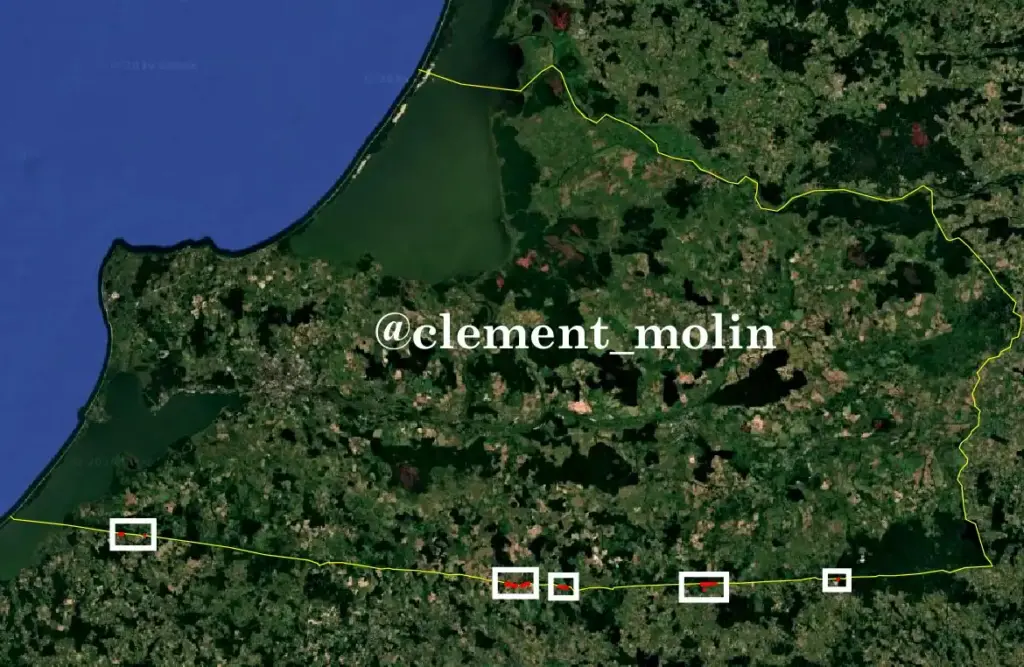
On Poland's 210-kilometer border with Kaliningrad, Russia'sheavily militarized exclave, defenses appear in only four zones, according to Molin. The longest runs about two kilometers. The visible fortifications include a discontinuous anti-tank ditch and one or two rows of dragon's teeth — concrete anti-tank blocks. Neither forms a continuous line.
The ditches break off wherever they reach a forest line. Molin wrote that bunkers and trenches sit in open fields, most key roads stay unprepared, and little barbed wire is visible. The researcher said he could see only anti-migrant barriers in open areas along the Belarusian border, with little additional reinforcement underway.
Molin's sweep also rated Finland's groundwork as strong despite its recent entry into NATO, while Norway, he wrote, offered "nothing particular to see."
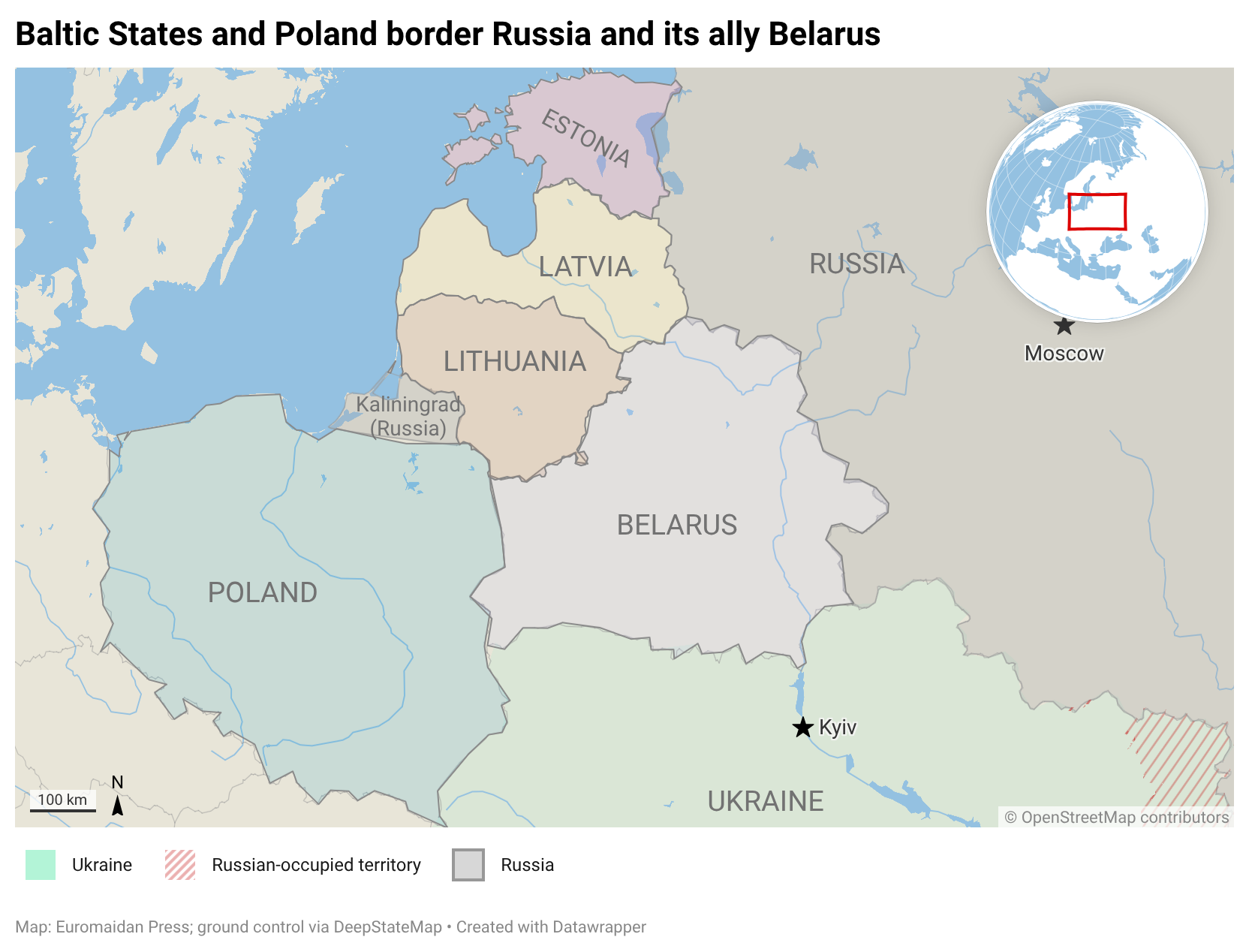
The Baltic region. Map: Euromaidan Press
Trenches at the fence line
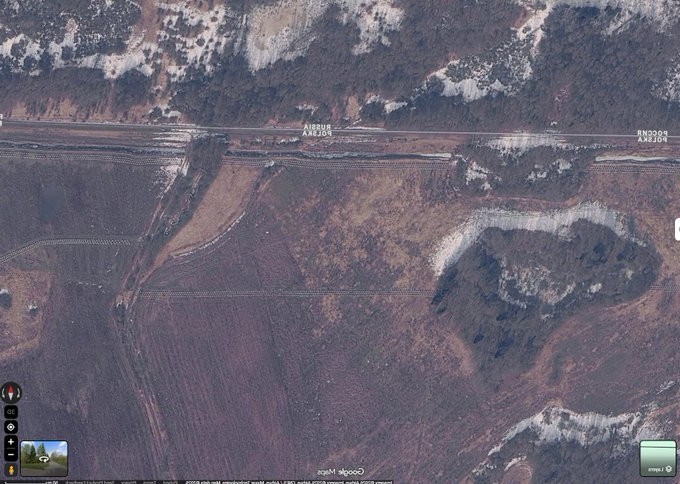
Near the Polish village of Rutka, trenches were dug just 300 meters from the border fence. Militarnyi wrote that positions this close would remain under observation and drone control, while Służby i Obywatel said a defending unit would face concentrated fire at the outset of fighting.
Google Maps satellite view of Poland's border fortifications near the village of Rutka, on the frontier with Russia's Kaliningrad Oblast. Photo: Służby i Obywatel
Służby i Obywatel compared the works to the historical Mława Position, built five to 15 kilometers back from the frontier, which gave troops time to occupy defenses once an invasion started. They also noted that such border barriers can be bypassed or flanked, while Militarnyi wrote that their placement does not always channel enemy movement. Służby i Obywatel questioned whether building so tight to the fence makes sense, arguing that positions a few kilometers back on better terrain would make Russia deploy its forces and reveal its intent before attacking.
The Baltic states
The Suwałki Gap is a 65-km strip along the Poland–Lithuania border between Kaliningrad and Belarus—NATO's only land link to the Baltic states, whose loss would cut them off by land, leaving only sea and air routes exposed to Russian missiles.
Molin called Lithuania the country most at risk because it borders Kaliningrad and Belarus and sits beside the Suwałki Gap. It has fortified the least. Despite an official roadmap, Molin said he found no prepared defenses and no coverage of key roads on the imagery. The country is, however, building road infrastructure to reach remote areas along its eastern border.
Explore further
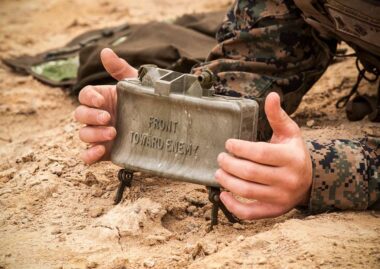
Lithuania and Finland to start domestic landmine production for themselves and Ukraine amid Russian threat
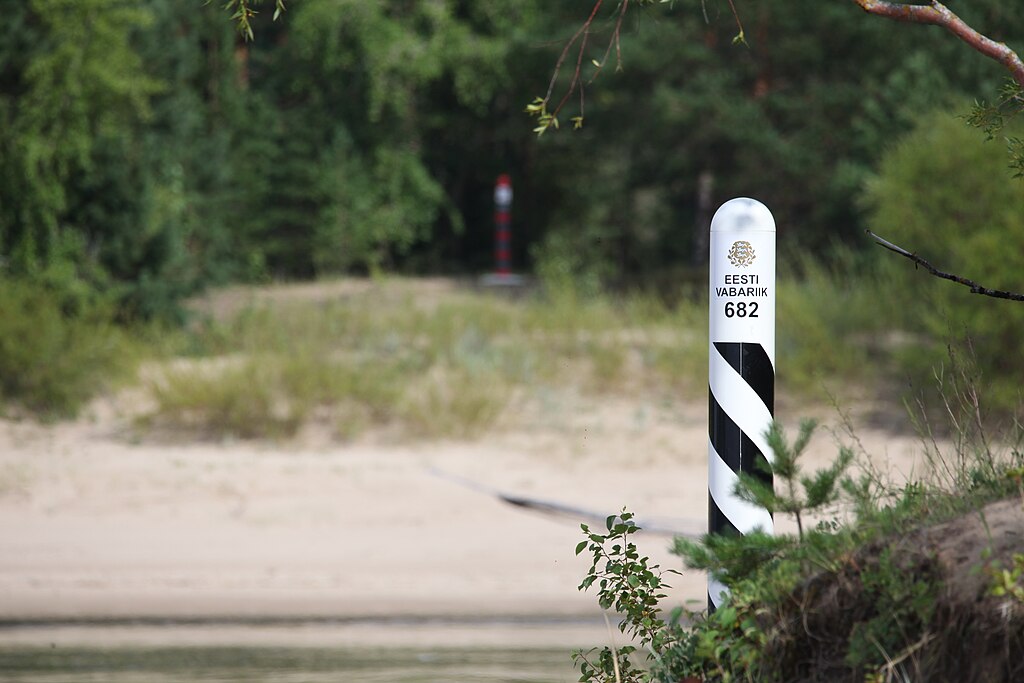
Estonia’s current fortification level as very low and pointed to the persistent threat around Narva, according to Molin. Direct construction work has not begun.
Latvia is further along than either neighbor. Crews have started installing dragon's teeth and clearing a strip to create a defensive line, helped by extensive border forests and greater strategic depth, though the works there remain fragmentary too.
Explore further
Estonia switches on first border sensors to detect drones as Baltic incursions mount
The "Eastern Shield"
Poland began building its Eastern Shield fortification system on the borders with Russia and Belarus in October 2024. The system is meant to cover nearly 700 kilometers, with 400 to 500 kilometers protected by various fortification types and the rest by natural barriers. The plan calls for a coherent network of engineering obstacles and storage sites on designated land. The government intends to invest about €2.3 billion, with completion set for 2028.
From October 2024 to mid-July 2026, Poland reportedly built 61 kilometers of defensive lines under the program. Of that, linear fortifications account for only about 10 kilometers.
President Volodymyr Zelensky has awarded the title of Hero of Ukraine to Serhii Ryzhenko, Director General of the I.I. Mechnykov Dnipropetrovsk Regional Clinical Hospital.
President Volodymyr Zelensky has awarded the title of Hero of Ukraine to Serhii Ryzhenko, Director General of the I.I. Mechnykov Dnipropetrovsk Regional Clinical Hospital.
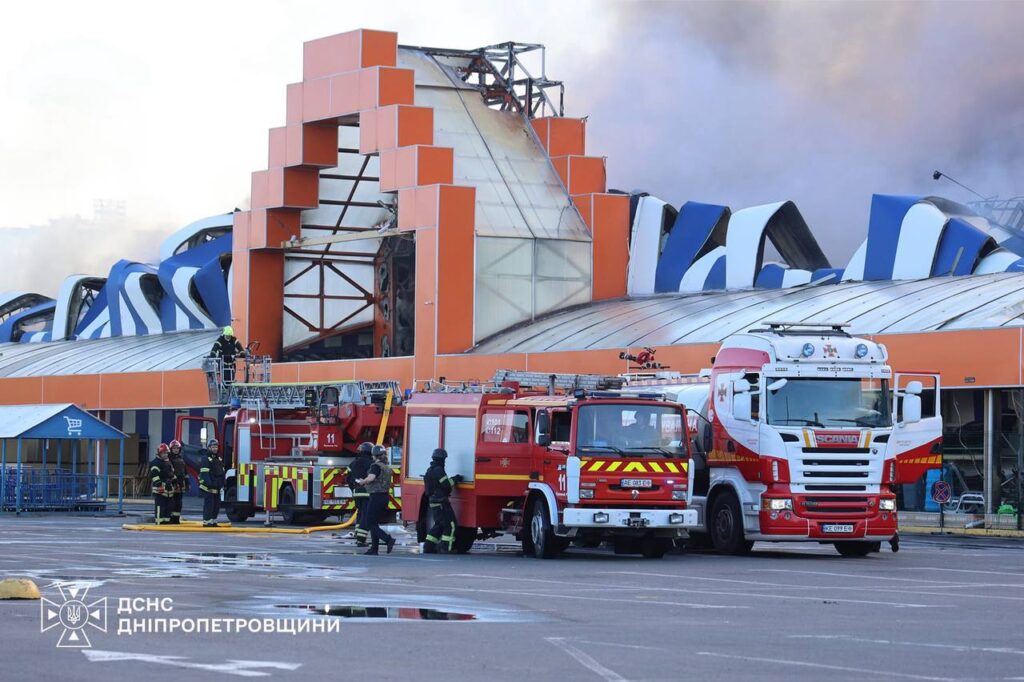
Russian drones struck and burned down the Epicenter, a major home-improvement hypermarket, in the central city of Kryvyi Rih on the morning of 26 July, the head of the Dnipropetrovsk Oblast Council and the local Telegram channels said. No one was hurt, but the strike destroyed a store that employed around 400 people. It was the third store of the same chain that Russia has destroyed in this one region since the full-scale invasion began.
Russian missiles and drones cont
Russian drones struck and burned down the Epicenter, a major home-improvement hypermarket, in the central city of Kryvyi Rih on the morning of 26 July, the head of the Dnipropetrovsk Oblast Council and the local Telegram channels said. No one was hurt, but the strike destroyed a store that employed around 400 people. It was the third store of the same chain that Russia has destroyed in this one region since the full-scale invasion began.
Russian missiles and drones continue hitting residential areas and civilian infrastructure across Ukraine on a daily basis. Russia and pro-Russian commentators may present the Kryvyi Rih strike as payback for Ukraine's ongoing drone raids on Wildberries, Russia's Amazon-style company — but Russia has been burning down Ukrainian shopping centers since June 2022, from the Amstor mall in Kremenchuk to the Epicenter store where glide bombs killed 19 people in Kharkiv in 2024, years before Ukraine ever hit a Wildberries warehouse.
Russian attack sets a Kryvyi Rih superstore ablaze
Russian forces launched several strikes on the Epicenter hypermarket in Kryvyi Rih, regional council head Mykola Lukashuk wrote on Telegram. Telegram channels posted video of the impact and reported that Russia used Shahed drones, the Iranian-designed attack drones Moscow launches at Ukrainian cities in swarms.
Epicenter is Ukraine's largest home-improvement chain, a rough local equivalent of Home Depot.
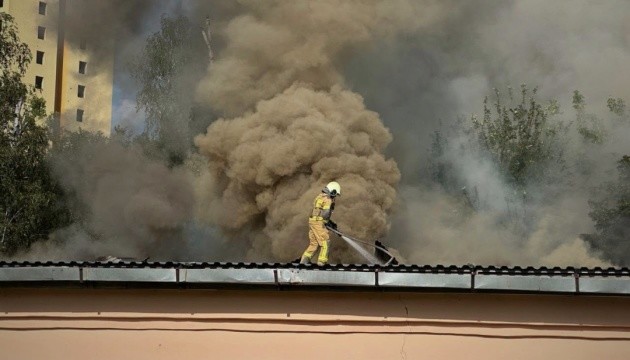
Fire spread across more than 16,000 m² of the building, the State Emergency Service reported. Crews contained the blaze, but firefighting remained difficult. Repeated air-raid alerts and the threat of fresh strikes kept forcing them back. No one was injured. The store was completely destroyed, Epicenter's head of public relations, Yulia Chudnovets, told Liga.
"The assessment of the destroyed property will be carried out after the inspection is completed and the scale of the losses is determined," she said.
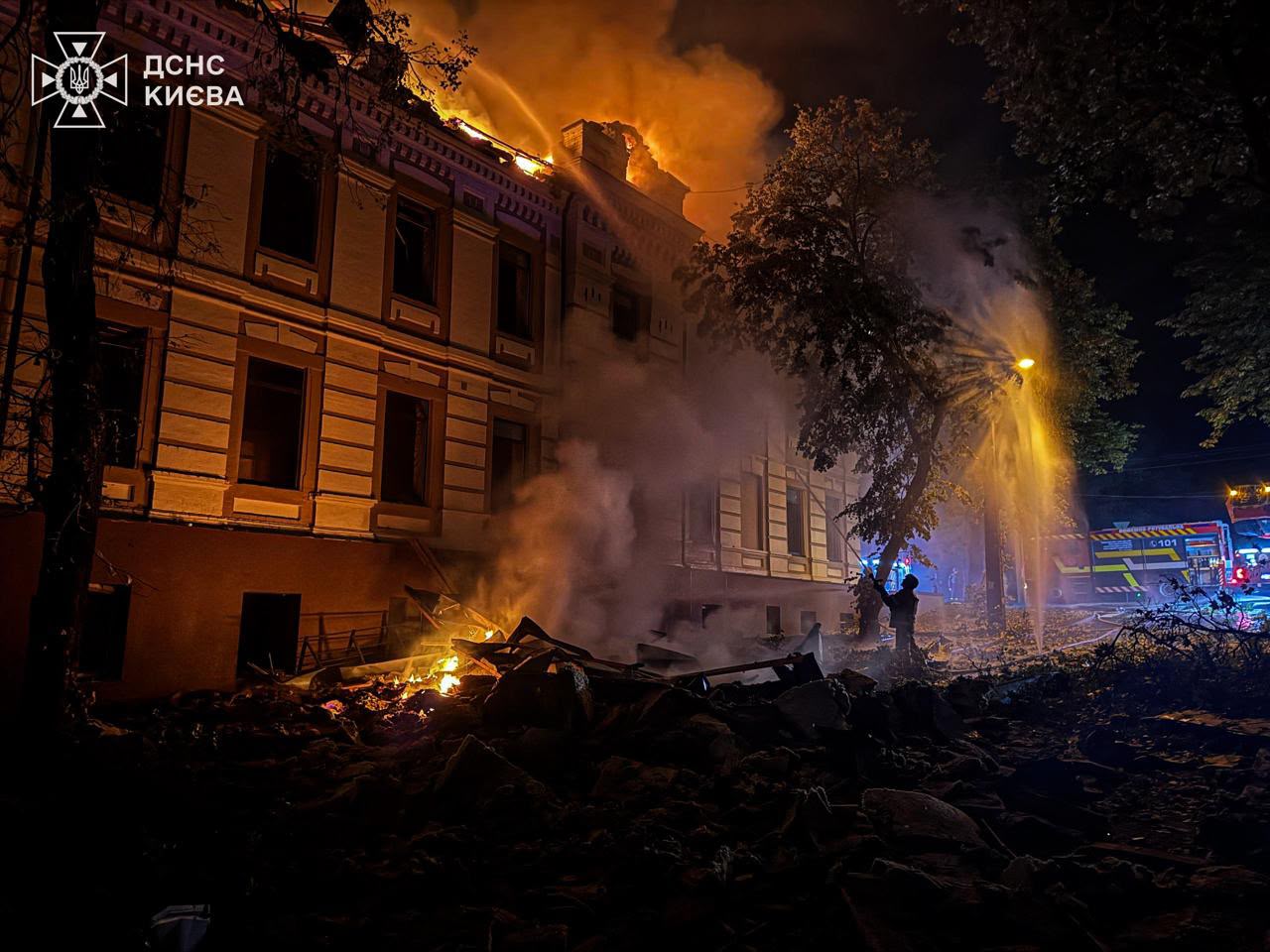
Russia injures three people in attack on Kyiv
One person was hospitalized after the Russian attack, Kyiv Mayor Vitali Klitschko reported. Two others received outpatient treatment.
Third store the chain has lost in Dnipropetrovsk Oblast
The Kryvyi Rih hypermarket is the third Epicenter that Russia has destroyed in Dnipropetrovsk Oblast since the full-scale invasion, Lukashuk said. Earlier strikes burned down the chain’s store in Nikopol and destroyed its store in Kamianske. The Kryvyi Rih strike landed exactly one year, to the day, after that attack on Kamianske.
The Kryvyi Rih store had traded for nearly 19 years, employing around 400 people and paying taxes into the local budget.
Russia strikes Kharkiv homes, injuring two children
Seven people were injured in the city’s Slobidskyi district, including two children. The attack damaged more than 10 private houses, Mayor Ihor Terekhov said. The full extent of the destruction is still being assessed.
Across Ukraine, Russia has now completely destroyed 11 Epicenter shopping centers and damaged 14 more since the start of the full-scale invasion, the company reported. One of its logistics complexes has been wrecked as well.
The chain has been a repeated target.
Overnight on 21 July, Russian drones destroyed an Epicenter in Sumy, where repeated strikes stopped rescuers from starting to put out the fire at once and one State Emergency Service vehicle was destroyed.
In February 2026, a Russian strike damaged an Epicenter in Zaporizhzhia, though crews saved most of the building and the company said it would rebuild.
The deadliest attack on the chain came in Kharkiv, where Russian glide bombs tore through an Epicenter store and killed 19 people in 2024.
Russian forces struck a Nova Poshta sorting terminal in Zaporizhzhia
Attacking a parcel delivery network makes no military sense, but it fits Russia's broader strategy of wearing down Ukraine's civilian economy Ochi Vsiudy pic.twitter.com/hBe14UFBHD
Russian drones and missiles regularly hit Ukrainian cities, while Russian attacks of all types killed at least seven civilians and injured 58 across the country over the past day, regional authorities reported on 26 July.
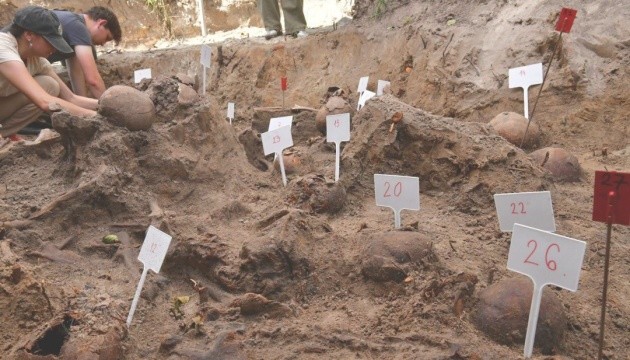
The remains of 48 people who died during World War II were exhumed on the site of the former village of Volia Ostrovetska in the Volyn region. Search teams have completed their work at this location.
The remains of 48 people who died during World War II were exhumed on the site of the former village of Volia Ostrovetska in the Volyn region. Search teams have completed their work at this location.
The casualty toll in the Slobidskyi district of Kharkiv as a result of a UAV attack has increased to 12, with three more people requiring medical attention.
The casualty toll in the Slobidskyi district of Kharkiv as a result of a UAV attack has increased to 12, with three more people requiring medical attention.
A Romanian Air Force fighter jet shot down a drone over the country's Black Sea waters for the third time in three days, President Nicușor Dan announced. The repeated interceptions mark a shift for Romania, which for years only tracked or escorted uncrewed aircraft that drifted across its border during Russia's attacks on Ukraine. Bucharest is now preparing a diplomatic protest to Moscow, after prosecutors identified one of the downed drones as a Russian attack drone.
R
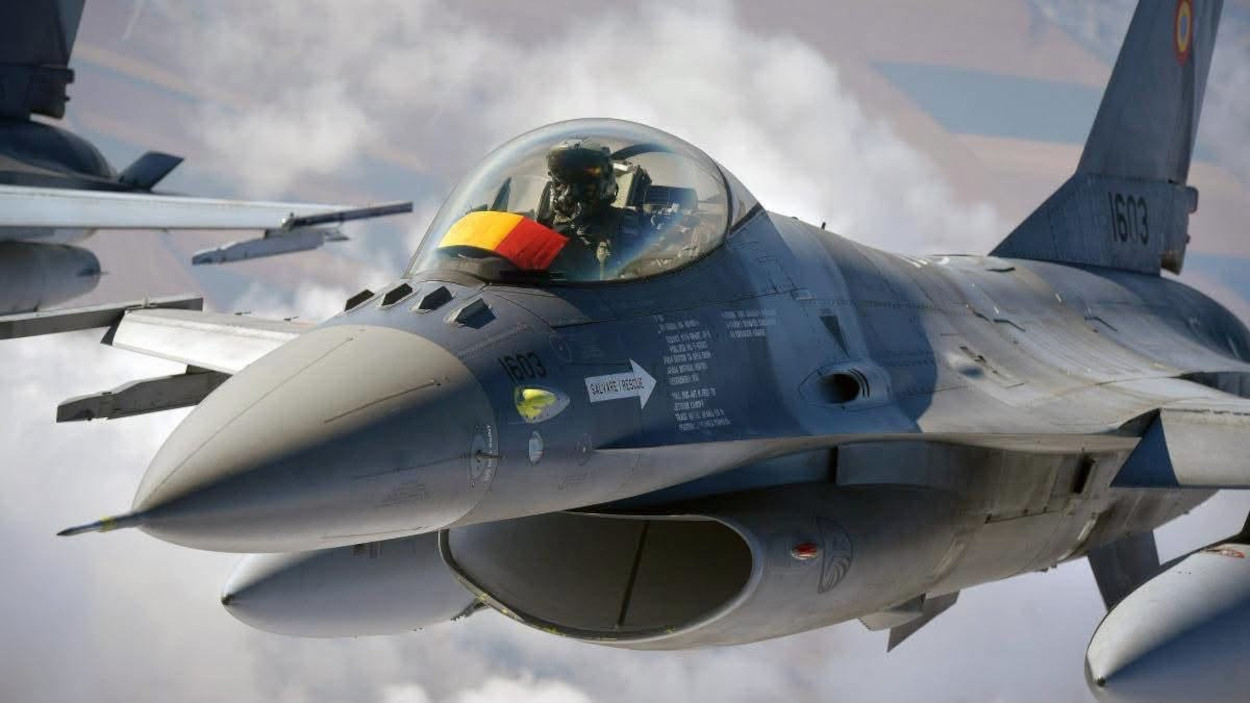
A Romanian Air Force fighter jet shot down a drone over the country's Black Sea waters for the third time in three days, President Nicușor Dan announced. The repeated interceptions mark a shift for Romania, which for years only tracked or escorted uncrewed aircraft that drifted across its border during Russia's attacks on Ukraine. Bucharest is now preparing a diplomatic protest to Moscow, after prosecutors identified one of the downed drones as a Russian attack drone.
Russia's nightly missile and drone barrages on Ukraine increasingly spill past the border, pushing uncrewed aircraft into the skies of neighboring NATO members, where allied pilots have only lately won the authority and the will to fire rather than watch them pass.
Third shootdown in three days
A Romanian F-16 shot down the drone at 10:13 on 26 July over territorial waters near the Sulina–Chilia area in the Danube delta, Dan wrote on X. It came down over the sea, off Romania's coast.
A Russian Shahed and a protest to Moscow
Romania's General Prosecutor's Office identified the drone downed on 24 July as a Shahed, the type Russia launches at Ukraine, Dan said. Investigations into the drones shot down on 25 and 26 July are still underway, and Romania's diplomatic protest to Russia will rest on those findings.
"It is inadmissible and intolerable for the Russian Federation to keep violating Romania's airspace, which is at the same time the airspace of NATO and the European Union," Dan said. "Such actions are unacceptable, and we treat them with the utmost seriousness, together with our allies."
Explore further
From escorting to firing: Romania changes how it meets Russia’s wandering drones
From escorting to firing
Romania downed its first drone on 24 July, when an F-16 fired on an intruder over uninhabited land northeast of Bucharest. It was the first known time a Romanian jet had destroyed a drone in the country's airspace, ending years of only escorting strays. A second drone came the next day, again shot down away from homes near the Ukrainian border.
Explore further
Romanian F-16 shoots down second drone in 2 days after another incursion over airspace near Ukraine
The country's pilots had already fired beyond their own skies, too. In May 2026, a Romanian F-16 on NATO's Baltic patrol carried out the first such shootdown over Estonia. Russian drones have repeatedly crossed into Romanian airspace during attacks on Ukraine, and the country has also faced naval drones in its territorial waters.
Russian forces on the Pokrovsk axis in eastern Ukraine are preparing to intensify their assaults toward the town of Dobropillia, Ukraine's National Guard 4th Rubizh Brigade reported. The brigade says the enemy keeps trying to break through the defense but fails to reach its goals, with Russian troops destroyed on the approaches and armored equipment lost during this week’s mechanized assault. This week Ukrainian forces broke up a large mechanized attack in the sector.
F
Russian forces on the Pokrovsk axis in eastern Ukraine are preparing to intensify their assaults toward the town of Dobropillia, Ukraine's National Guard 4th Rubizh Brigade reported. The brigade says the enemy keeps trying to break through the defense but fails to reach its goals, with Russian troops destroyed on the approaches and armored equipment lost during this week’s mechanized assault. This week Ukrainian forces broke up a large mechanized attack in the sector.
For years, Russia has continued feeding assault groups into Ukrainian fire despite marginal gains, and Ukraine's drones and defenses keep converting those attacks into losses rather than ground.
Russia readies its next push toward Dobropillia
In the brigade's area of responsibility, Russian troops are getting ready to intensify offensive operations, the report says. They are running aerial reconnaissance and trying to clear mines from routes to move assault groups forward. Those groups lean on quad bikes—four-wheeled all-terrain vehicles—and motorcycles. This kind of transport will likely become one of the main ways the enemy tries to break the defense, the brigade said.
Russia has spent this stretch of the war trying to break out toward Dobropillia, a gateway to Kramatorsk and Sloviansk in the free northern Donbas. Its main aim on this axis remains reaching the town, which sits north of the ruins of Pokrovsk.
Explore further
Russia bet 50 vehicles that the drones would miss. The drones did not miss.
Assault groups keep dying at the approaches
Despite constant assault actions, the enemy cannot achieve its goals, the brigade said. Rubizh forces detect Russian troops and destroy them on the approaches to Ukrainian positions. Russia concentrates its effort here but cannot realize its intentions.
To slip past Ukrainian drones, Russia has largely traded massed armored assaults for small groups on bikes and on foot, though most are killed before reaching Ukrainian lines. Ukrainian drones have also hit a Russian vehicle column elsewhere in Donetsk Oblast, striking more than 50 vehicles near Malynivka.
A mechanized assault broken up this week
This week, the brigade's soldiers joined a fight against a large mechanized Russian attack. The 1st Azov Corps of the National Guard and adjacent units broke it up, the brigade said on Facebook. In the fighting, Rubizh troops destroyed one armored combat vehicle and an MTU-72 bridge-layer—a tank chassis built to drop bridges across obstacles for advancing forces. They also helped strike other Russian equipment.
Ukraine's military logged 258 combat clashes along the front over the past day, with the largest number of engagements on the Pokrovsk axis.
In the Kherson region, one person was killed as a result of this morning’s artillery shelling of Stanislav; a criminal investigation has been launched.
In the Kherson region, one person was killed as a result of this morning’s artillery shelling of Stanislav; a criminal investigation has been launched.
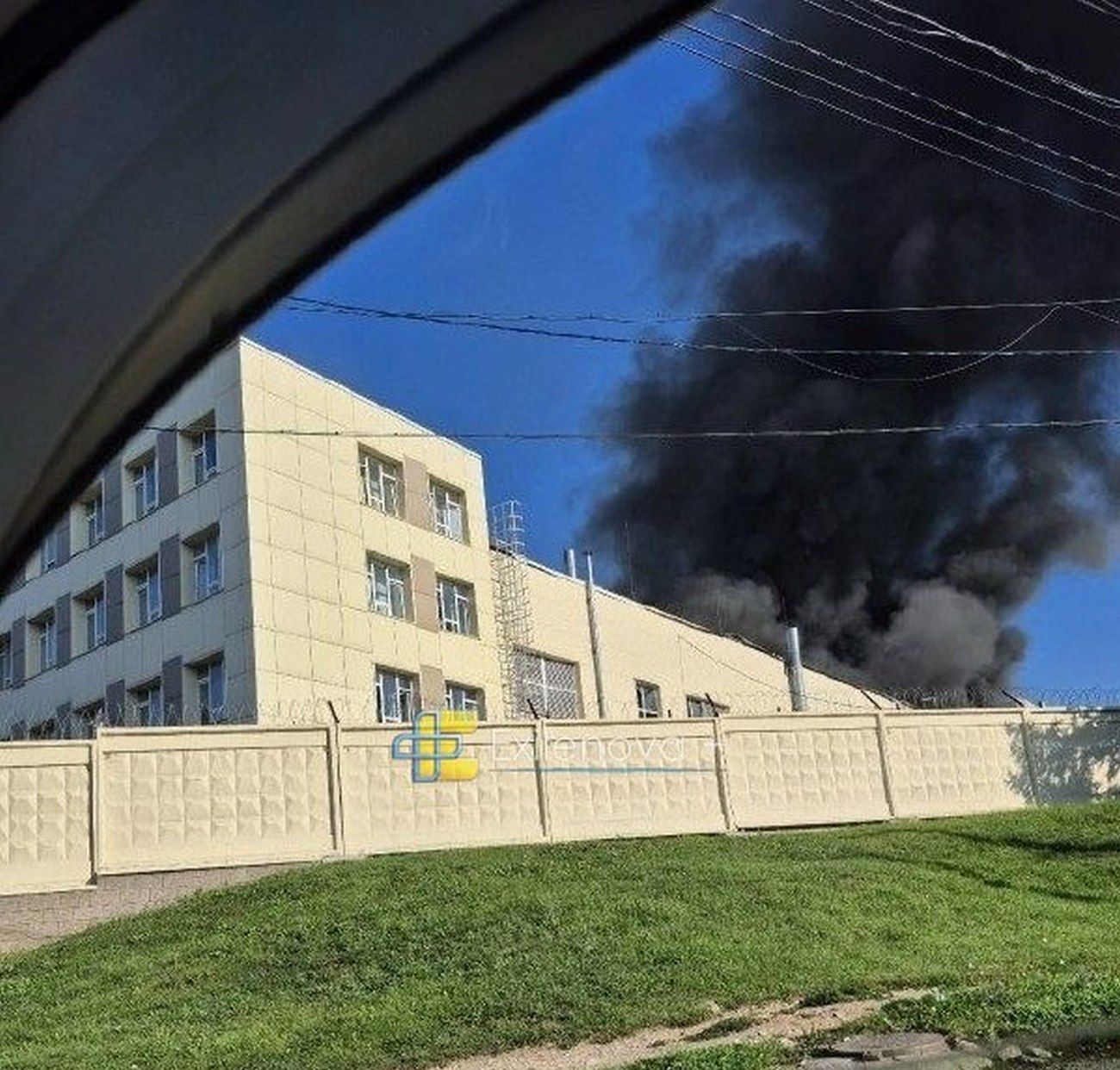
On the night of July 26, the Ukrainian Defense Forces struck a Chornomornaftogaz facility and a ground-based relay station used to control combat drones in the temporarily occupied Crimea.
On the night of July 26, the Ukrainian Defense Forces struck a Chornomornaftogaz facility and a ground-based relay station used to control combat drones in the temporarily occupied Crimea.

 Connexion






 Exilenova+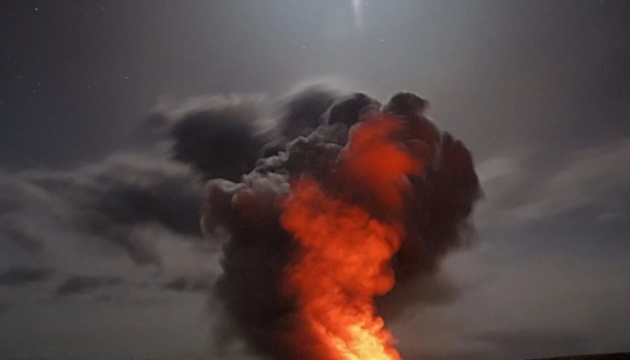



 State Emergency Service of Ukraine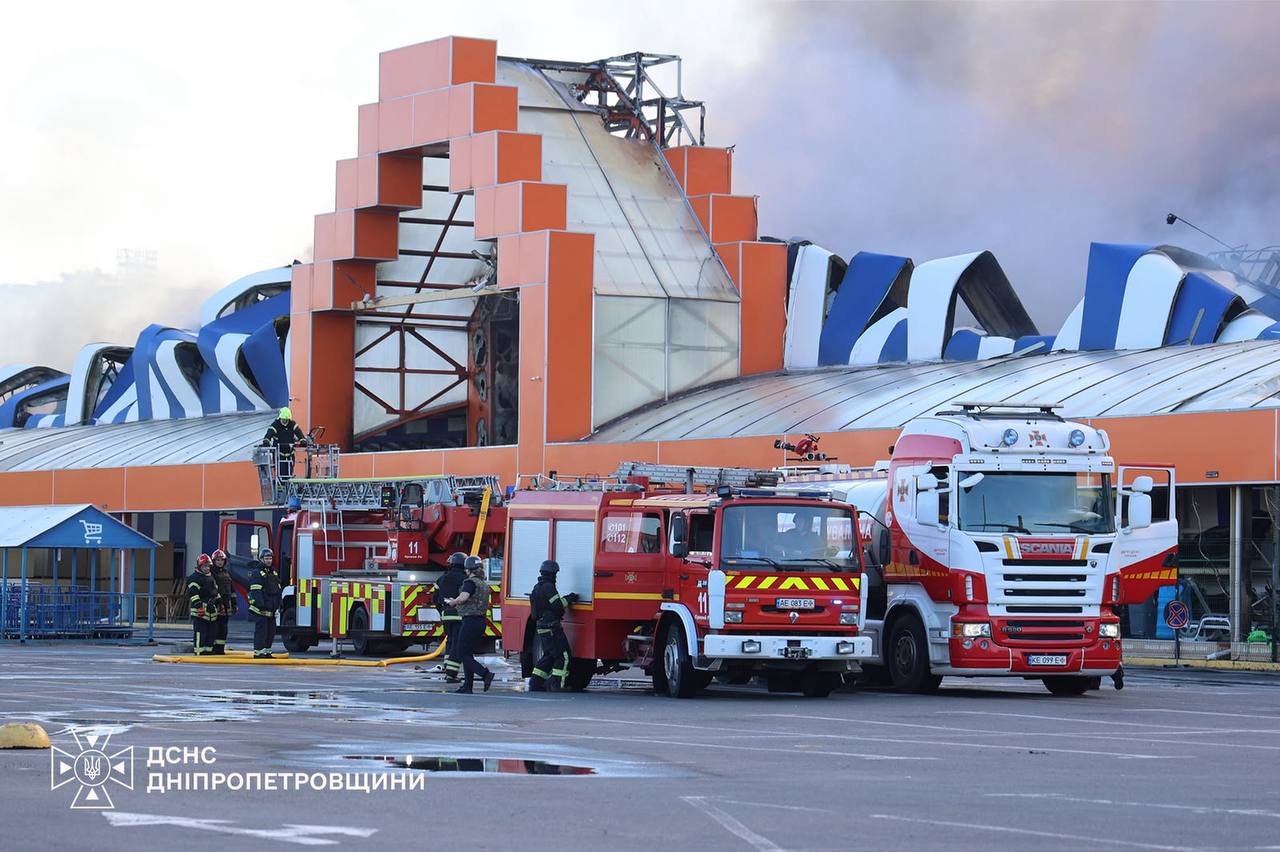






 Suspilne News