Vue normale

Russian President Putin meets with North Korean foreign minister in latest high-level diplomacy

20 juillet 2026 à 20:15
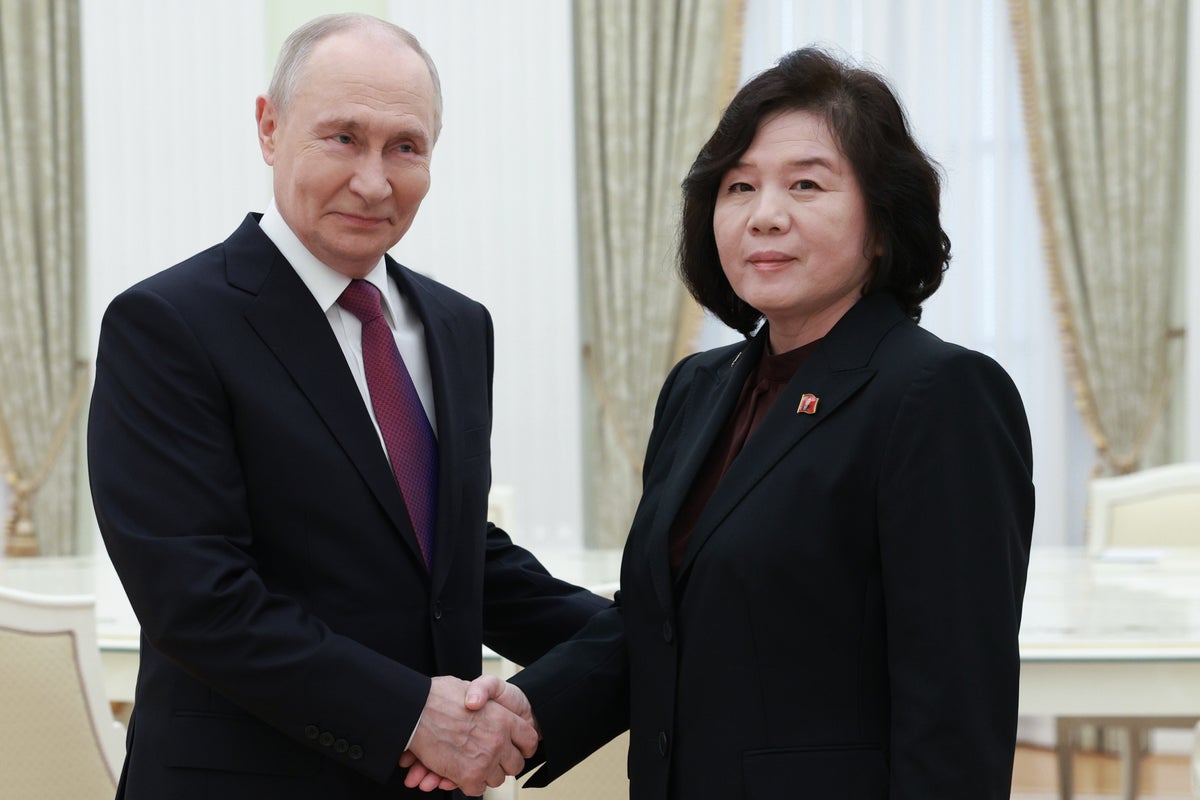
Russian President Vladimir Putin met with North Korea’s foreign minister and thanked Pyongyang for supporting his war against Ukraine, in the latest high-level diplomacy meeting between the countries, Russian state media reports

© Sputnik

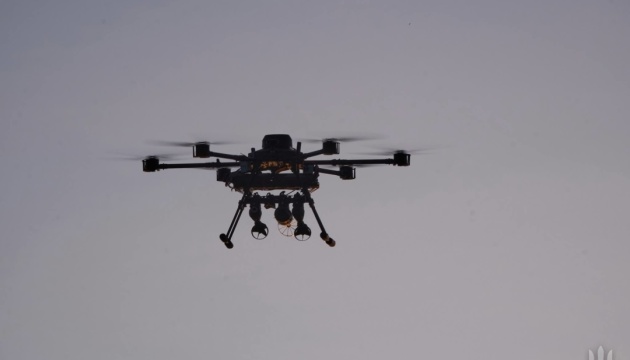
Unmanned Systems Forces strike seven vessels of Russia's shadow fleet, air defense assets, and energy facilities

20 juillet 2026 à 17:32
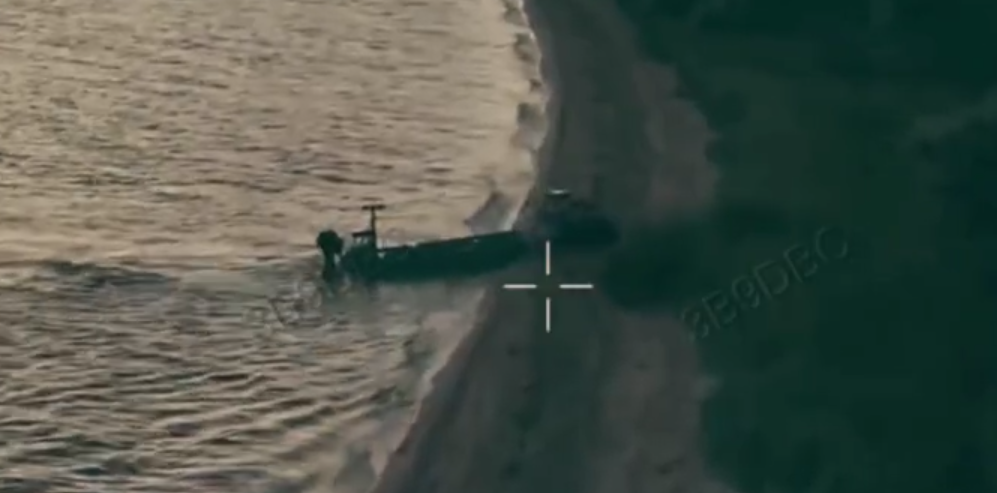
Ukraine's Unmanned Systems Forces overnight struck seven vessels belonging to Russia's shadow fleet in the Azov and Black Seas, six Russian air defense assets on Russian territory, and seven energy facilities in the temporarily occupied territories, including Crimea.

Everything that hits target gets used: Ukraine just proved 1940s Swedish weapon can kill modern jet-powered drone

20 juillet 2026 à 17:29

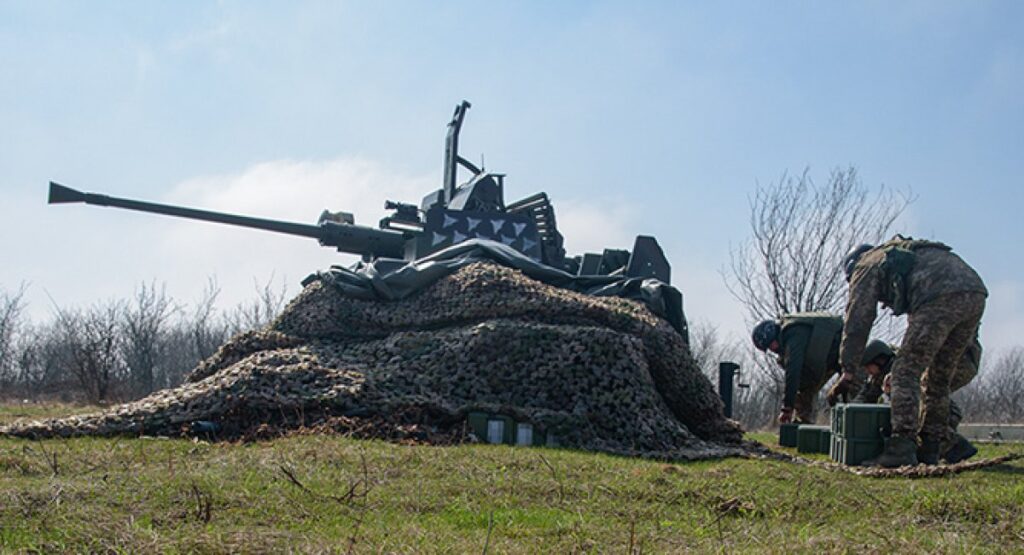
A Bofors L70 anti-aircraft gun in service with the 5th Slobozhanska Brigade "Skif". Source: Defense Express

Ukraine is knocking down Russia's newest cruise missiles with a gun designed in the 1940s. Soldiers of Ukraine's 121st Separate Territorial Defense Brigade shot down Russian S8000 "Banderol" and Kh-59 missiles using old Swedish 40mm Bofors L70 anti-aircraft guns, the brigade said.

The "Chaklun" (Sorcerer) crew downed one of the missiles near Odesa. The next day, the "Hunter" crew intercepted another near a different southern city.

When Ukrainian expert Serhii "Flash" Beskrestnov first analyzed the Banderol, he warned it was too fast for Ukraine's mobile fire teams to hit with standard ground-based machine guns, and that countering it would require systems like the Gepard that can track fast-moving targets.

Old gun, new missile, and old gun won

The Banderol is a jet-powered cruise missile that flies at 400 to 500 km/h.

The Bofors L70 that just downed one was developed in the late 1940s and has been in service with armies worldwide since the 1950s. 

Defense Express calls the intercepts vivid proof of the L70's usefulness.

Analysts noted that the 121st Brigade's L70S carries no substantial modifications beyond new sighting equipment, so aiming at air targets is most likely still done manually.

Hand-aimed 1940s gun did what machine guns could not

That matters because of the economics Ukraine fights for. A cannon shell costs a tiny fraction of an interceptor missile, and every Banderol or Kh-59 knocked down by a Bofors round is one not engaged with a scarce guided interceptor.

Ukraine has built its whole air-defense survival strategy on driving down the cost-per-intercept by scaling cheap interceptor drones, standing up private and community fire groups, and now, it turns out, getting decades-old donated cannons to kill modern missiles. The cheapest shot that works is the right shot.

Guns came from Lithuania and the Netherlands

The Bofors L70S in Ukrainian service arrived as Western military aid. Lithuania sent L70 guns to Ukraine as part of a package announced in 2023, and the weapons were also provided to Ukraine by the Netherlands.

The through-line of Ukraine's air war is that no single system solves the problem, so everything that can hit a target gets used, including a Swedish cannon older than most of the armies that still field it.

  • ✇Euromaidan Press
  • Russo-Ukrainian war, day 1608: Britain’s new PM opens with call to Kyiv
    Exclusives Ukraine's protesters set a 24 July deadline as Zelenskyy weighs replacing his army chief. Organizers gave the government four days before nightly rallies begin. Why Russia is importing gasoline made from its own oil. To keep its pumps supplied, Moscow has written India's gasoline price into its own tax code. Military Ukrainian regiment that raised flag in Kostiantynivka says it's aware of reports that its soldiers were captured there. These are the same tr
     

Russo-Ukrainian war, day 1608: Britain’s new PM opens with call to Kyiv

20 juillet 2026 à 17:01

Russo-Ukrainian war (daily review)

Exclusives

Ukraine's protesters set a 24 July deadline as Zelenskyy weighs replacing his army chief. Organizers gave the government four days before nightly rallies begin.
Why Russia is importing gasoline made from its own oil. To keep its pumps supplied, Moscow has written India's gasoline price into its own tax code.

Military

Ukrainian regiment that raised flag in Kostiantynivka says it's aware of reports that its soldiers were captured there. These are the same troops who filmed a flag-raising after clearing the center.

Drones found the FSB where it felt safest—a seaside resort deep in occupied Kherson Oblast. The SBU's Alpha unit's strike set off a large blaze at a base ringed by checkpoints, guards and bunkers.

Russia keeps hitting Ukraine's couriers—so Ukraine went after Russia's Amazon: oil depot and warehouses hit near Moscow. Drones struck logistics sites and an oil depot in Moscow Oblast's Sheremetyevo and Podolsk, days after Russian missiles battered Ukraine's Nova Poshta postal network.

Intelligence and technology

Ukraine's new combat robot is silent, fits in minivan, and carries MK19 grenade launcher. Ukraine codified the "Zmii Mini Strike," a recon-strike ground robot with a silent electric motor.

The Ukrainian combat divers who blew up a Russian bomber just built their own sea drone. Ukraine's National Guard unveiled a naval drone designed by one of its own frontline units, reflecting a growing trend of soldiers building the weapons they fight with.

International

Britain's new PM Andy Burnham is opening with calls to Trump and Zelenskyy. His first foreign calls go to Zelenskyy and Trump, with UK support for Ukraine "unwavering."

Botswana warns its people about Russian job scams that end in the trenches against Ukraine. Officials say they keep getting distress calls from citizens already at the front, describing dangerous conditions they never signed up for.

Humanitarian and social impact

60-year-old Pole stood up for Ukrainian teenager on tram in Poznań. Three men beat him for it. They turned on him and beat him so badly he suffered memory loss.

"Policy of ethnocide": Ukraine says Russia has settled 300,000 Russians in occupied Crimea, replacing Ukrainians driven out. Russia is resettling its citizens into occupied Ukraine to replace the population.

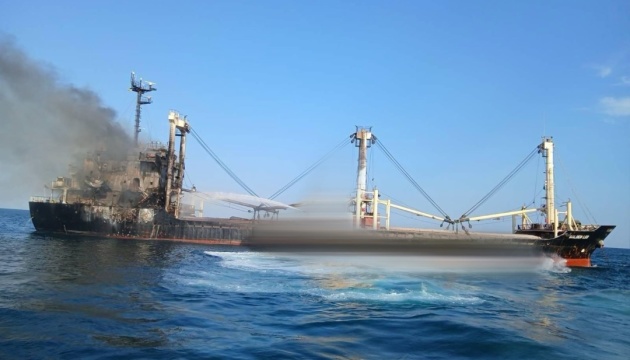
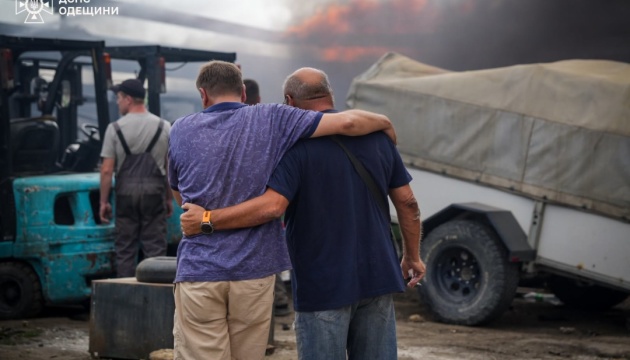
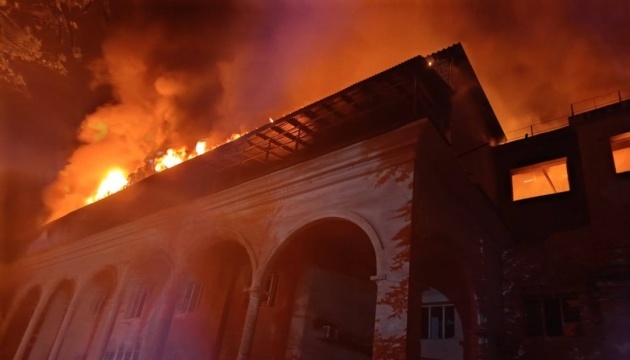
Ten dead as Russia strikes a Turkish-owned bulk carrier off Odesa. Rescuers pulled eight of the 18 people aboard from the burning ship overnight; the pilot brought on to steer it out was among the dead.

Political and legal developments

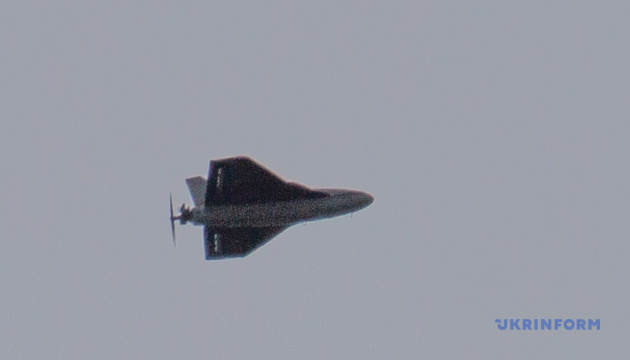
"Small service can cost life imprisonment": Ukraine warns against Russian Shahed-recording scheme. Russia is recruiting Ukrainian traitors through social media to record FM signals broadcast by Shahed drones.

Russia jails two more of its own warbloggers days apart—one for extortion, one for "justifying terrorism". Both had cheered the invasion for years, and both had recently started blaming Russia's leadership for a war they say is going wrong.

Read our earlier daily review here.

  • ✇Euromaidan Press
  • Britain’s new PM Andy Burnham is opening with calls to Trump and Zelenskyy
    Britain's new prime minister is opening with a call to Kyiv. Andy Burnham became UK prime minister on 20 July after King Charles III accepted Keir Starmer's resignation and tasked the new Labour leader with forming a government. Burnham announced that his first foreign calls, on 20 July, would go to US President Donald Trump and Ukrainian President Volodymyr Zelenskyy, Radio Free Europe/Radio Liberty reported. Burnham planned to assure Zelenskyy that nothing has changed, an
     

Britain’s new PM Andy Burnham is opening with calls to Trump and Zelenskyy

20 juillet 2026 à 15:45

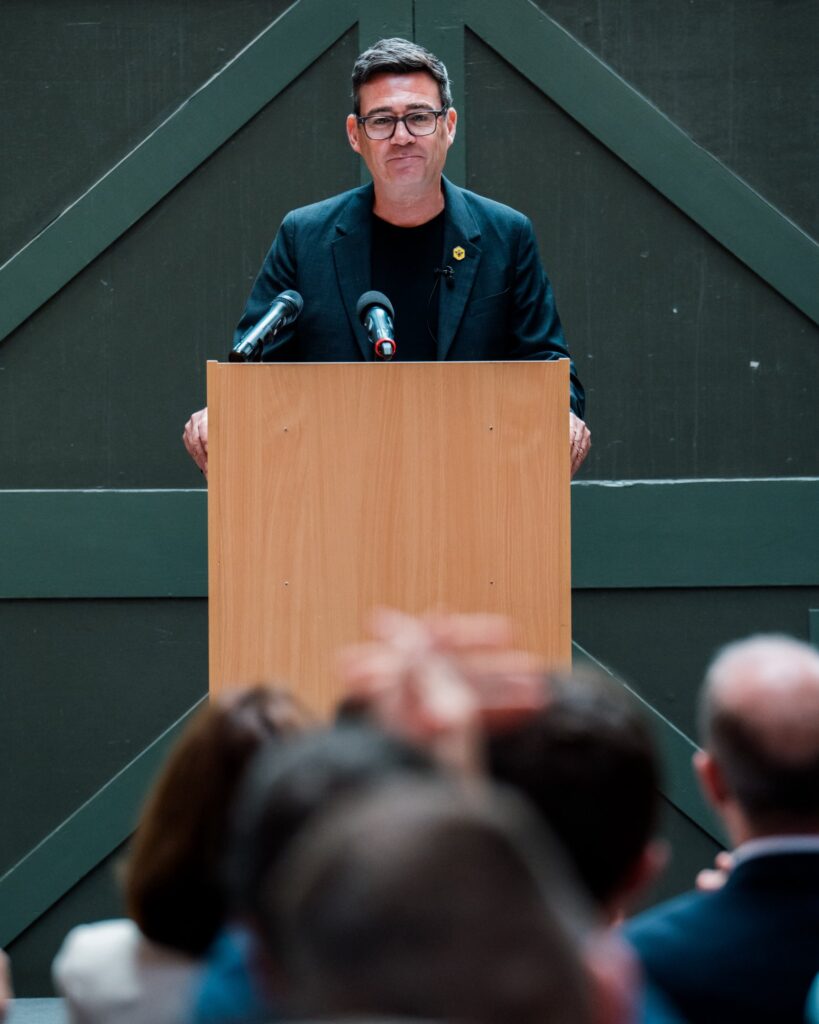
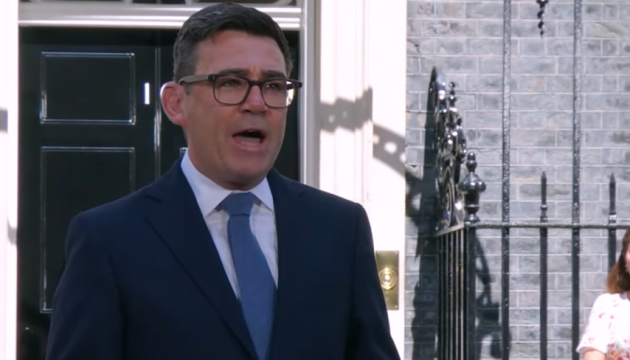
Andy Burnham, Britain's new prime minister, on June 29 2026. Source: andyburnham

Britain's new prime minister is opening with a call to Kyiv. Andy Burnham became UK prime minister on 20 July after King Charles III accepted Keir Starmer's resignation and tasked the new Labour leader with forming a government.

Burnham announced that his first foreign calls, on 20 July, would go to US President Donald Trump and Ukrainian President Volodymyr Zelenskyy, Radio Free Europe/Radio Liberty reported.

Burnham planned to assure Zelenskyy that nothing has changed, and that Britain, one of Ukraine's key Western allies, and its new prime minister personally, remain on Ukraine's side.

Zelenskyy has already spoken with him

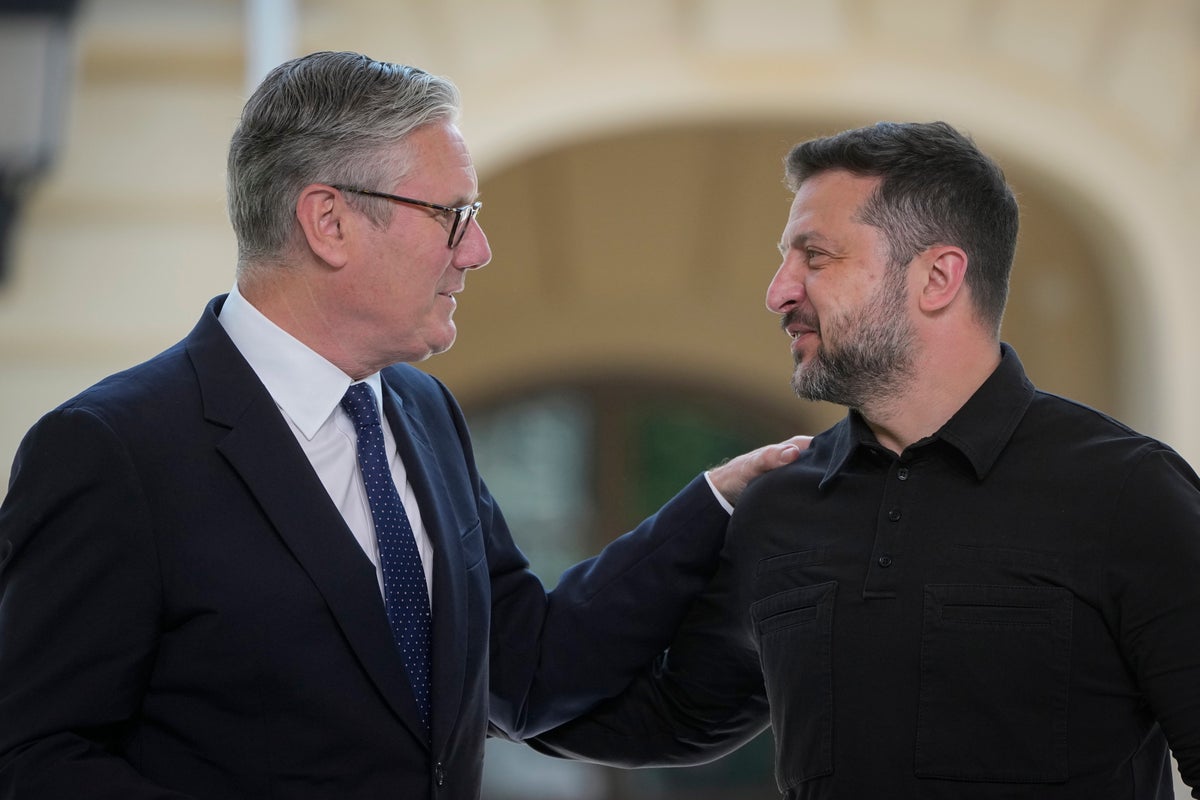
"I was glad to talk with Andy Burnham and congratulate him on becoming Prime Minister of the UK. I greatly appreciate that support for Ukraine, and our people will continue to be strong," Zelenskyy wrote.

Also, he thanked Burnham for the words of respect toward Ukrainians and condolences for those killed in recent Russian attacks.

Burnham is Britain's seventh leader in just over a decade. He was, until recently, the mayor of Greater Manchester, and returned to Parliament in a special election weeks ago before winning the Labour leadership on 17 July.

Burnham's Ukraine record predates his premiership

Unlike in domestic policy, no substantial change in foreign policy is expected. Burnham has a documented pro-Ukraine record stretching back over a decade.

He has recalled that he opposed "Russia's invasion of Crimea" in 2014. Four years later, he called on FIFA to strip Russia of the right to host the football World Cup. After the full-scale invasion, he continued supporting Ukraine: corresponding with the heads of Ukrainian cities, helping with the rehabilitation of victims and the resettlement of refugees, and calling for the harshest possible sanctions against Russia. He has stressed that the security of the UK is directly tied to the security of Ukraine. The same said outgoing Starmer in his farewell remarks.

Partnership runs through Anti-Ballistic Coalition

Zelenskyy framed the relationship as the strongest in the two countries' history and pointed to a specific near-term agenda.

The Ukrainian leader said that Ukraine and Britain have managed to build the strongest partnership "in the history of relations between our states, and we will certainly continue working to expand it."

"We agreed to discuss our further cooperation, including work within the framework of the Anti-Ballistic Coalition, at a meeting in the near future. Thank you, Andy. Thank you, Britain," he summarized.

Britain has been among Ukraine's most consistent military backers since 2022, providing Storm Shadow cruise missiles, training tens of thousands of Ukrainian troops, and helping lead the Coalition of the Willing.

  • ✇Euromaidan Press
  • 60-year-old Pole stood up for Ukrainian teenager on tram in Poznań. Three men beat him for it
    A Polish man stood up for a Ukrainian teenager, and three men beat him for it. The 60-year-old intervened when three men shouted abuse at a Ukrainian teenager on a tram in Poznań, and they turned their aggression on him, beating him so badly that he suffered a memory blackout, Polish outlet Rzeczpospolita reported. The attack fits a documented and worsening pattern of anti-Ukrainian violence in Poland. Hate crimes rose more than 30% between 2024 and 2025, Poland's Deput
     

60-year-old Pole stood up for Ukrainian teenager on tram in Poznań. Three men beat him for it

20 juillet 2026 à 15:25

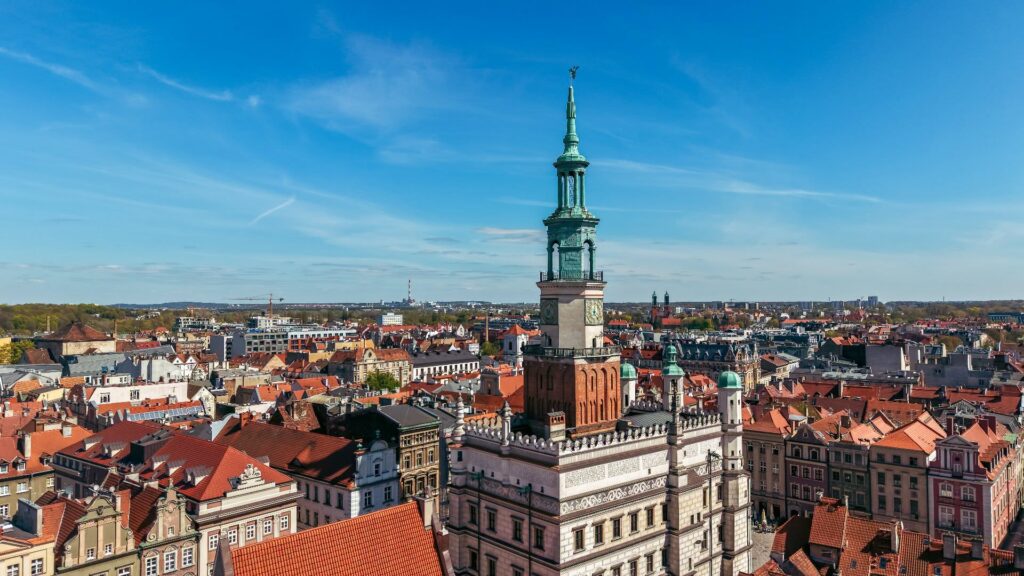
The image shows the Polish city of Poznan. Source: The Poznan City Council

A Polish man stood up for a Ukrainian teenager, and three men beat him for it. The 60-year-old intervened when three men shouted abuse at a Ukrainian teenager on a tram in Poznań, and they turned their aggression on him, beating him so badly that he suffered a memory blackout, Polish outlet Rzeczpospolita reported.

The attack fits a documented and worsening pattern of anti-Ukrainian violence in Poland. Hate crimes rose more than 30% between 2024 and 2025, Poland's Deputy Interior Minister Czesław Mroczek said.

It is the second such assault to surface in days: on 11 July, a man in Łódź beat a passerby he had mistaken for a Ukrainian.

Incident escalated at tram stop 

According to Poznań police spokesman Andrzej Borowiak, the beating happened on Friday, and the man came to the police on Saturday evening, accompanied by his wife, who had been caring for him after the incident.

It began on the tram, where he witnessed three men hurling insults at a Ukrainian teenager and stepped in. The attackers redirected their aggression onto him. At a stop on Kurpiński Street, a confrontation broke out and escalated into a beating.

Police are working from tram and stop cameras

Police questioned witnesses and seized footage from the surveillance cameras at the tram stop, with recordings from inside the tram due to be released on Monday. Identifying the attackers is ongoing.

That the aggressors turned so readily from the Ukrainian teenager to the Pole defending him is its own signal about how the hostility works: once "defender of Ukrainians" becomes a category worth attacking, the violence no longer needs a Ukrainian target to find one.

The hostility is measured, and it is rising

Earlier, Poland's own General Staff has reported large-scale Russian operations aimed at fracturing Polish-Ukrainian ties, and anti-Ukrainian messaging in Poland's information space doubled between August and November 2025 compared with a year earlier. In June 2026, Poland arrested eleven people over Russian-funded paid protests staged among Ukrainian refugees.

Polish public support for taking in Ukrainian refugees has fallen from 94% in March 2022 to 48% by early 2026.

Poland remains the main hub for weapons reaching Ukraine, and breaking the two nations apart has been a Russian objective since 2022.

  • ✇Euromaidan Press
  • “Small service can cost life imprisonment”: Ukraine warns against Russian Shahed-recording scheme
    Russia is fitting Shaheds with FM transmitters and paying Ukrainians to record them. Serhii "Flash" Beskrestnov, the Ukrainian president's adviser on technological directions of defense, said that a Shahed with an unexplained antenna has been spotted again, this time over Chernihiv Oblast, and that he is waiting for one to be recovered as a trophy to confirm his theory about what it does. According to Beskrestnov, Russia uses social media to recruit traitors. A recruit is t
     

“Small service can cost life imprisonment”: Ukraine warns against Russian Shahed-recording scheme

20 juillet 2026 à 15:08

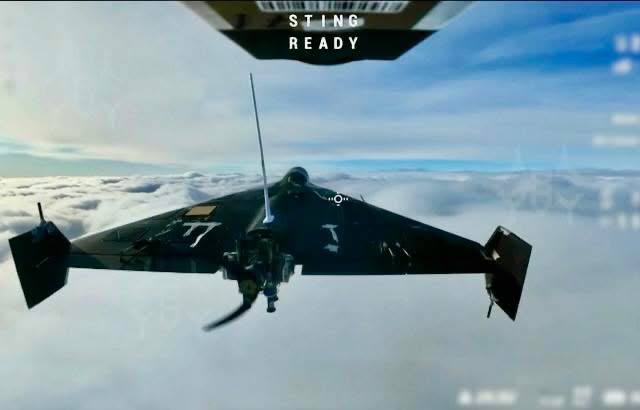
Ukraine has detected a Russian Shahed with an unidentified antenna. Source: Beskrestnov

Russia is fitting Shaheds with FM transmitters and paying Ukrainians to record them. Serhii "Flash" Beskrestnov, the Ukrainian president's adviser on technological directions of defense, said that a Shahed with an unexplained antenna has been spotted again, this time over Chernihiv Oblast, and that he is waiting for one to be recovered as a trophy to confirm his theory about what it does.

According to Beskrestnov, Russia uses social media to recruit traitors. A recruit is told to buy a radio receiver and a voice recorder, tune the receiver to a designated empty frequency, such as 85.5 MHz, at a set time, place the recorder next to it in record mode, and send the recording to a specified Telegram account.

Meanwhile, the Shahed carries an FM transmitter continuously broadcasting coded information about its flight. Euromaidan Press cannot independently confirm the scheme. It is Beskrestnov's interpretation of an antenna he has photographed but not yet examined on a recovered drone.

Flash is mocking method, not danger

"Behind this technologically idiotic operation, there is clearly some GRU colonel over 60 who considers himself a genius and probably even got an award for it. Just imagine — inflating such a spy 'movement' for the sake of some crap," Beskrestnov wrote.

The scorn is aimed at how clumsy the scheme is, not at the idea that Russia would try it. He closed with a warning to anyone tempted.

"For all lovers of easy money, I remind you that a small service can cost life imprisonment," Beskrestnov wrote.

Antenna fits Russia's wider Shahed-guidance experimentation

Whatever the specific antenna does, it fits a pattern of Russia constantly re-engineering how its Shaheds navigate and report. Beskrestnov and Ukrainian intelligence have documented one adaptation after another.

Russia has fitted Shaheds with SIM cards to exploit Ukrainian and European mobile networks for guidance, ordering the cards from a Rostelecom subsidiary and having drones switch to neighboring countries' networks when Ukraine blocks them.

It built a web of Shahed relay towers in Belarus, some on residential rooftops, to extend control over drones striking western Ukraine. It has flown jet-powered Gerans, AI machine-vision variants, and manually piloted low-altitude Shaheds.

Ukrainian regiment that raised flag in Kostiantynivka says it’s aware of reports that its soldiers were captured there

20 juillet 2026 à 12:58

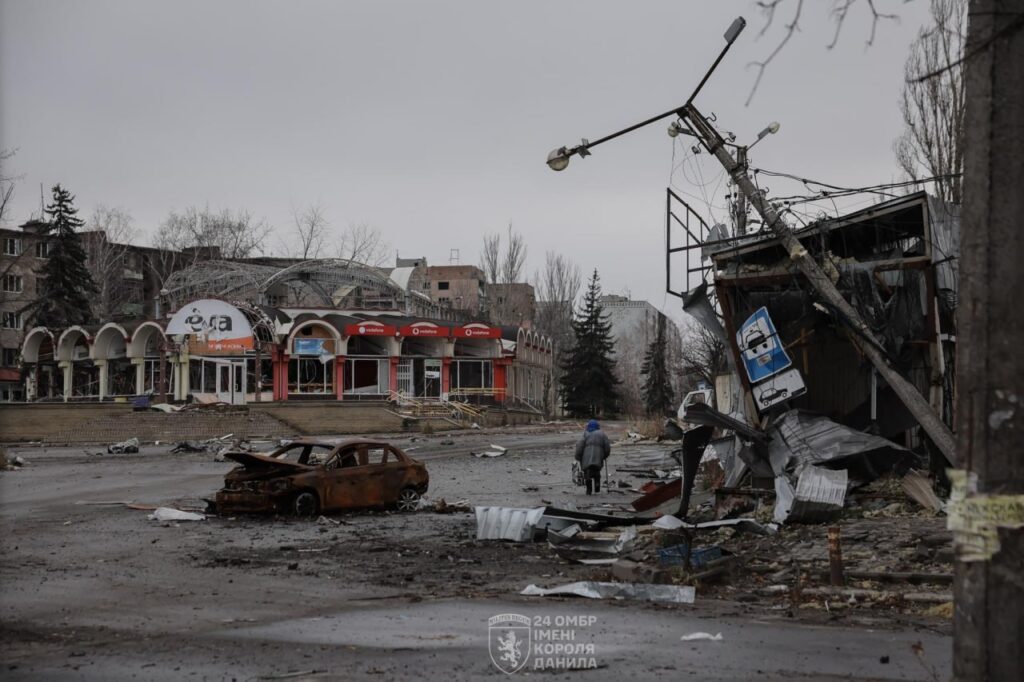
Ruins of a street in Kostiantynivka, Donetsk Oblast, 9 April 2026. Photo: UA Land Forces

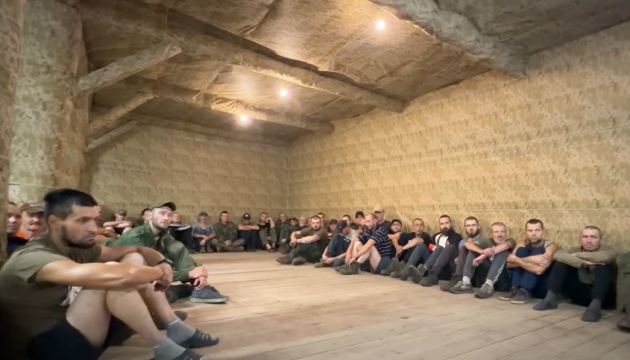
The same soldiers who raised a Ukrainian flag in Kostiantynivka, where fierce battles between Ukrainian and Russian soldiers are taking place, were likely captured there. Ukraine's 425th "Skala" (Rock) Separate Assault Regiment has acknowledged it is aware of information spread by Russian resources about the capture of its soldiers in the Donetsk Oblast city, and said it is working to establish all the circumstances.

Days ago, the 425th Regiment posted footage of its soldiers raising a flag in Kostiantynivka and told President Volodymyr Zelenskyy the city was "again under the blue-and-yellow flag."

Russian media then reported that Ukrainian troops had been captured during the fighting for the city, and the Regiment has now confirmed that it knows about it.

Just one episode

The Regiment frames the capture as one episode in an ongoing battle, not the collapse of its operation.

"Combat for the city continues, and individual successes or losses by the sides do not change the overall picture of the battle," it said.

The two claims can both be true. A unit can clear a sector, raise a flag, and lose soldiers to a counterattack in the same contested city.

Regiment says Russia is weaponizing prisoners

The 425th's statement is largely about information warfare. It argues that Russia is using the captured soldiers to misrepresent the state of the battle.

"We cannot disclose the details of the operation in the city. Russian propaganda is trying to present a single episode of the battle as a refutation of the results of the entire operation in Kostiantynivka. This is manipulation," the Regiment said.

It added that the display of Ukrainian prisoners proves neither the capture of Kostiantynivka nor the defeat of the Regiment, and that Russia traditionally uses POWs as a tool of information war to demoralize Ukrainian society and discredit the military command.

The Regiment also said its soldiers captured two Russian occupiers during the same fighting.

Euromaidan Press cannot independently verify the number of captured soldiers or the circumstances of their capture.

“Policy of ethnocide”: Ukraine says Russia has settled 300,000 Russians in occupied Crimea, replacing Ukrainians driven out

20 juillet 2026 à 12:42

Russia pulls troops from other branches to fill infantry ranks

Ukraine's intelligence says Russia is engineering ethnocide in Ukraine. As of July 2026, 200,000 to 300,000 ethnic Russians are in occupied Crimea and Sevastopol, and the occupiers plan to resettle another 130,000 Russians to Sevastopol alone by 2042.

The colonization and Russification policy Russia is conducting on temporarily occupied Ukrainian territories bears the hallmarks of the war crime defined under Article 8, paragraph b, subparagraph viii of the Rome Statute of the International Criminal Court. This means the transfer by an occupying power of parts of its own civilian population into occupied territory.

"The aggressor state Russia continues a targeted policy of ethnocide, whose goal is to erase Ukrainian identity and replace the local population with Russians and migrants from Central Asia, the North Caucasus, and other regions," HUR said.

Demographic collapse Russia caused

HUR says Russia has driven the situation of the Ukrainian population in the occupied territories to catastrophe. Birth rates are extremely low and death rates extremely high, both far exceeding even Russia's own averages.
In 2025, the natural population change in the occupied part of Donetsk Oblast was -9.9 per thousand, 2.4 times worse than Russia's overall figure. Over ten years, according to HUR, the population of Donbas has shrunk by nearly a third: from about 7.37 million in Donetsk and Luhansk oblasts combined in 2001 to roughly 3.75 million by the start of 2024.

The collapse has causes beyond death rates. Ukrainians keep leaving occupied territory, driven out by active fighting, the sharp fall in medical and social services, repression, forced Russification, mobilization into the Russian occupation army, and the absence of property-rights protection.

How Russia moves its own people in

Russia brings its citizens into occupied Ukraine through special programs, benefits, and financial and career incentives, HUR says. As of 2024, the occupied parts of Donetsk, Luhansk, Zaporizhzhia, and Kherson oblasts held 200,000 ethnic Russians plus about 100,000 labor migrants from Central Asia and the Caucasus. Since the start of 2026 alone, some 10,000 such "labor migrants" have been registered in occupied Donetsk Oblast.

Most of the ethnic Russians moved in are people seconded from Russia to staff the occupation administrations, repressive apparatus, and budget institutions. Moscow sends medical workers, teachers, and builders; it has settled large numbers of so-called military pensioners and residents of remote Russian regions into occupied Crimea.

The incentives are substantial. Russians seconded to occupied Ukraine are paid double salary plus housing compensation. A month's posting can bring a Russian "official" more than $5,000, more than eight times Russia's average wage, per HUR. Programs modeled on Russia's "rural doctor" and "rural teacher" schemes require at least five years' service on occupied Ukrainian land.


Stolen homes handed to settlers


One incentive is the property of the Ukrainians who were driven out. Russia hands imported Russians ownership of land plots and stolen Ukrainian housing, HUR says. Stolen homes are sold through preferential mortgage programs, and land for participants in the war against Ukraine is given away free.

In 2025, Russia distributed 4,000 plots in Crimea to soldiers of its occupation army from various Russian regions. This is the mechanism EP has documented in Mariupol, where Russian authorities destroyed roughly 460 residential buildings and built about 50, marketing the new housing to Russian settlers through mortgage schemes rather than restoring homes for displaced Ukrainians.


Colonization is written into Russian planning documents


The scale of intent is set out in Russia's own "development plans." A document on target population figures for the Mariupol and Kalmius districts of occupied Donetsk Oblast projects the population rising from the current 228,000 to 518,000 by 2035, partly through the import of Russian citizens.

The colonization plans for occupied Crimea run to 2036 and 2042, with one key component being more "attractive conditions" to draw Russians to the peninsula.

  • ✇Euromaidan Press
  • Ukraine’s new combat robot is silent, fits in minivan, and carries MK19 grenade launcher
    Ukraine put a grenade launcher on a robot that fits in the back of a minivan. Ukraine's Defense Ministry has codified the new "Zmii Mini Strike" reconnaissance-strike ground robotic complex for fire support and destroying enemy personnel and armor. The platform's base configuration mounts an MK19 automatic grenade launcher — a weapon that delivers high kinetic energy, offers a wide range of round types, and can fire accurately from concealed positions. It runs on a silent e
     

Ukraine’s new combat robot is silent, fits in minivan, and carries MK19 grenade launcher

20 juillet 2026 à 10:24

Ukraine's Defense Ministry has codified the new "Zmii Mini Strike" reconnaissance-strike ground robotic system. Source: Ukraine's Defense Ministry

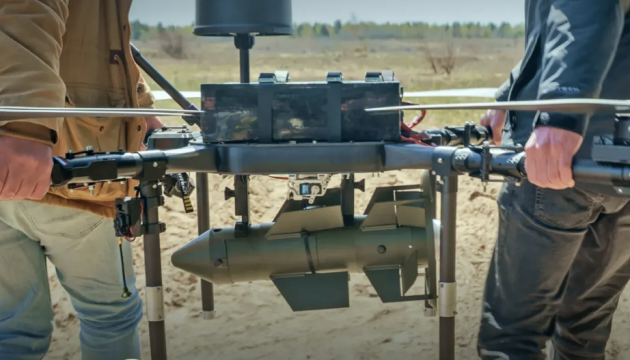
Ukraine put a grenade launcher on a robot that fits in the back of a minivan. Ukraine's Defense Ministry has codified the new "Zmii Mini Strike" reconnaissance-strike ground robotic complex for fire support and destroying enemy personnel and armor.

The platform's base configuration mounts an MK19 automatic grenade launcher — a weapon that delivers high kinetic energy, offers a wide range of round types, and can fire accurately from concealed positions.

It runs on a silent electric motor, carries day and thermal cameras, and is compact enough to fit in a minivan's luggage compartment, a pickup bed, or a standard car trailer without special transport equipment.

Ukraine develops more and more robots every month 

Its design draws on more than four years of full-scale war and analysis of how ground robots actually perform in combat, and its engineers worked with one of Ukraine's most effective combat brigades during development.

The Zmii line is not new. Earlier models are already running missions with Ukraine's Defense Forces, but this armed-strike variant is the newest entry.

The Zmii Mini Strike joins a ground-robot inventory that Ukraine is expanding almost weekly.

Silent and small is how robot survives to shoot

The silent electric motor and the compact size of the drone are survival traits rather than combat ones. A quiet robot is harder to detect by sound, and a small one is harder to spot and hit. At the same time, a platform that deploys and packs up fast spends less time exposed.

However, the connectivity can be the catch. Defense Ministry adviser Serhii "Flash" Beskrestnov has warned that ground robots operate in a far more challenging communication environment than aerial drones, because terrain, tree lines, and cover can break the control signal, and a robot that loses its link drops out of the fight. A silent, well-armed gunner is only as useful as the link that keeps it firing.

  • ✇UKR Inform
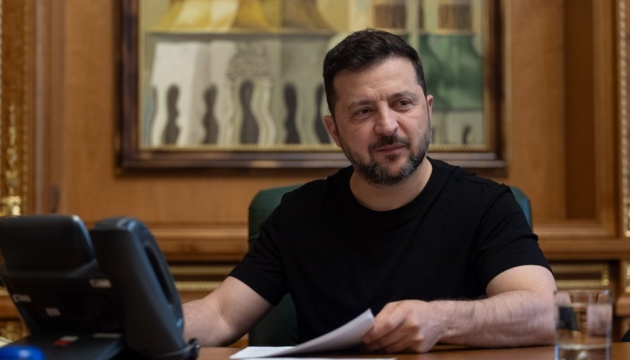
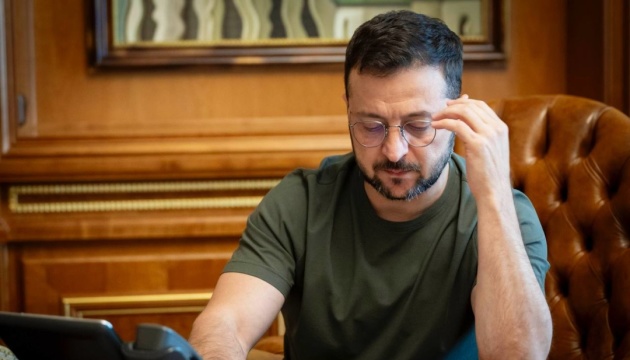
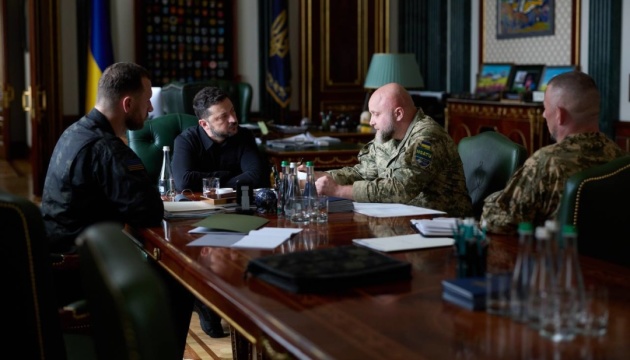
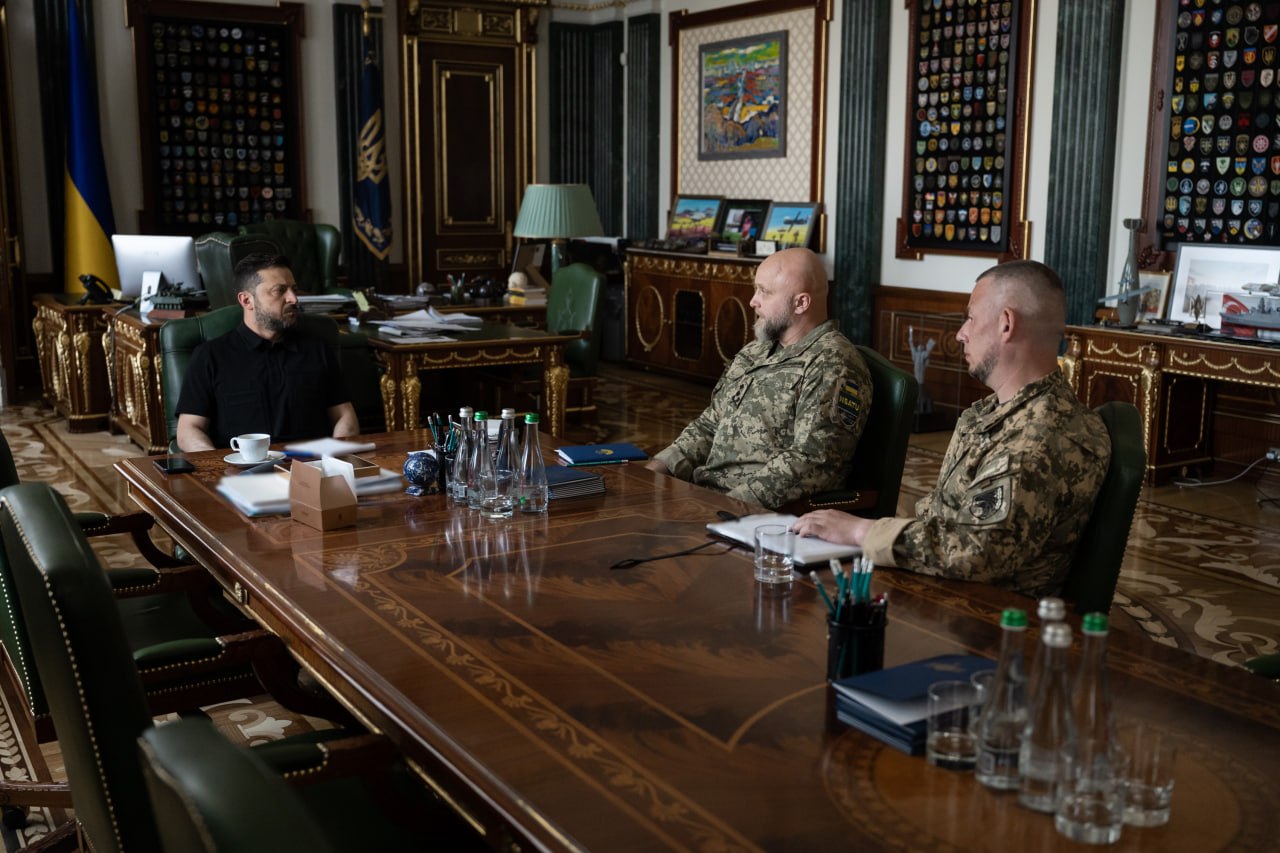
  • Zelensky continues meetings with military leadership and corps commanders
    President Volodymyr Zelensky held meetings with Deputy Chief of the General Staff of the Armed Forces of Ukraine Volodymyr Horbatiuk, Commander of the Joint Forces of the Armed Forces of Ukraine Mykhailo Drapatyi, Commander of the Third Army Corps Andrii Biletskyi, and Commander of the 2nd Khartiia Corps of the National Guard Ihor Obolenskyi.
     

Zelensky continues meetings with military leadership and corps commanders

20 juillet 2026 à 10:05
President Volodymyr Zelensky held meetings with Deputy Chief of the General Staff of the Armed Forces of Ukraine Volodymyr Horbatiuk, Commander of the Joint Forces of the Armed Forces of Ukraine Mykhailo Drapatyi, Commander of the Third Army Corps Andrii Biletskyi, and Commander of the 2nd Khartiia Corps of the National Guard Ihor Obolenskyi.

Life continues in Kyiv’s frequently targeted Lukianivka neighborhood, in photos

20 juillet 2026 à 09:58

Kyiv’s historic Lukianivka neighborhood has become one of the Ukrainian capital’s most frequently targeted areas during Russia’s war, yet residents continue to live and work there despite the constant threat.

© Copyright 2026 The Associated Press. All rights reserved

  • ✇Euromaidan Press
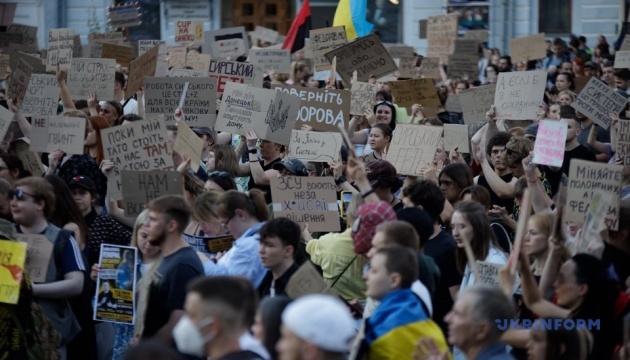
  • Ukraine’s protesters set a 24 July deadline as Zelenskyy weighs replacing his army chief
    Protesters demanding the return of dismissed defense minister Mykhailo Fedorov have set the government a deadline: reinstate him and remove Commander-in-Chief Oleksandr Syrskyi by 24 July, or they will begin open-ended nightly rallies. The demand came on the fourth straight day of protests that have spread across more than a dozen Ukrainian cities since his dismissal last week.It is the second time in a year that Ukraine’s streets have set terms on one of Volodymyr Zelensk
     

Ukraine’s protesters set a 24 July deadline as Zelenskyy weighs replacing his army chief

20 juillet 2026 à 09:51

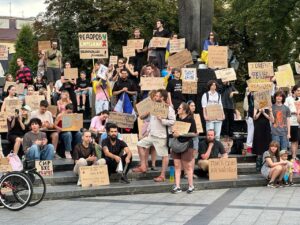
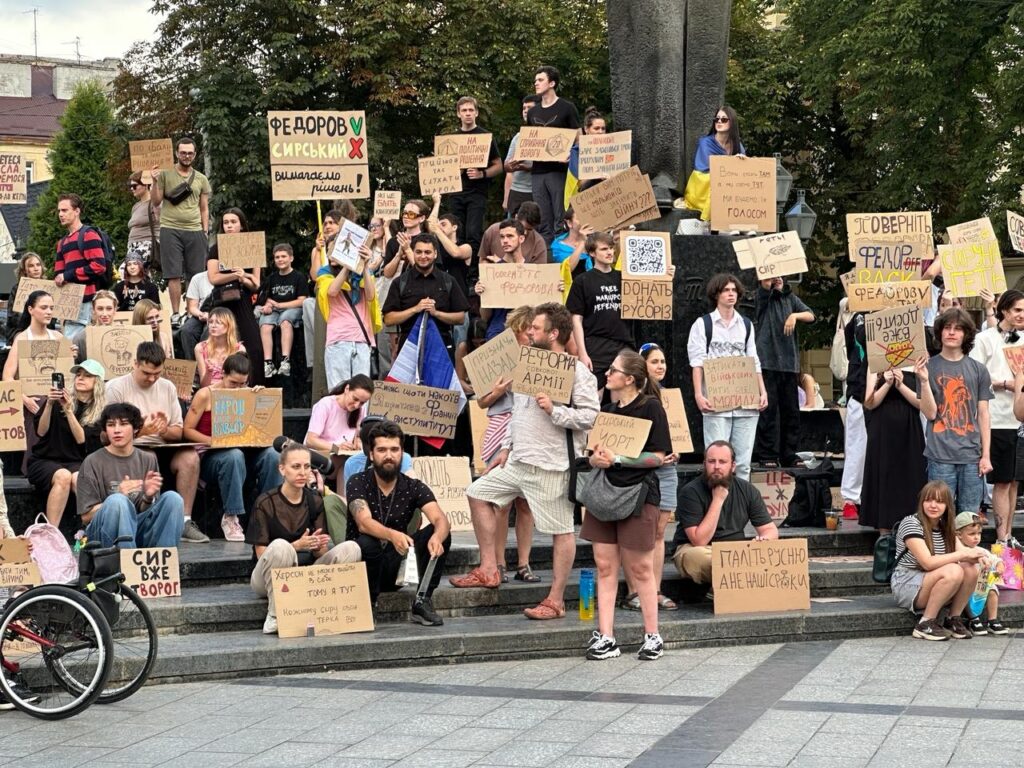
protesters at the shevchenko monument in lviv on 19 july 2026

Protesters demanding the return of dismissed defense minister Mykhailo Fedorov have set the government a deadline: reinstate him and remove Commander-in-Chief Oleksandr Syrskyi by 24 July, or they will begin open-ended nightly rallies. The demand came on the fourth straight day of protests that have spread across more than a dozen Ukrainian cities since his dismissal last week.

It is the second time in a year that Ukraine’s streets have set terms on one of Volodymyr Zelenskyy’s wartime decisions. Last summer, a week of rallies forced him to reverse a law that curbed the independence of the country’s anti-corruption agencies. This time, the target is the military command, and the movement has put a clock on a decision the president says he will not rush.

Protesters called 20 July the decisive day to press their case, said they would wait until 24 July for the president and parliament to act.

Protesters set a deadline

The movement’s coordinators set the ultimatum after gathering over the weekend. They called 20 July the decisive day to press their case, said they would wait until 24 July for the president and parliament to act, and warned that an indefinite protest—nightly rallies until the demands are met—would follow if they went unheard. The two conditions are unchanged: dismiss Syrskyi, and renominate Fedorov as defense minister.

Thousands returned for a fourth straight day on 19 July, filling squares in Kyiv, Kharkiv, Odesa, Dnipro, and at least ten other cities, Ukrainian outlet NV reported. Some of the loudest chants were aimed at lawmakers on summer recess—“MPs, back to work,” “Recess is not the time.”

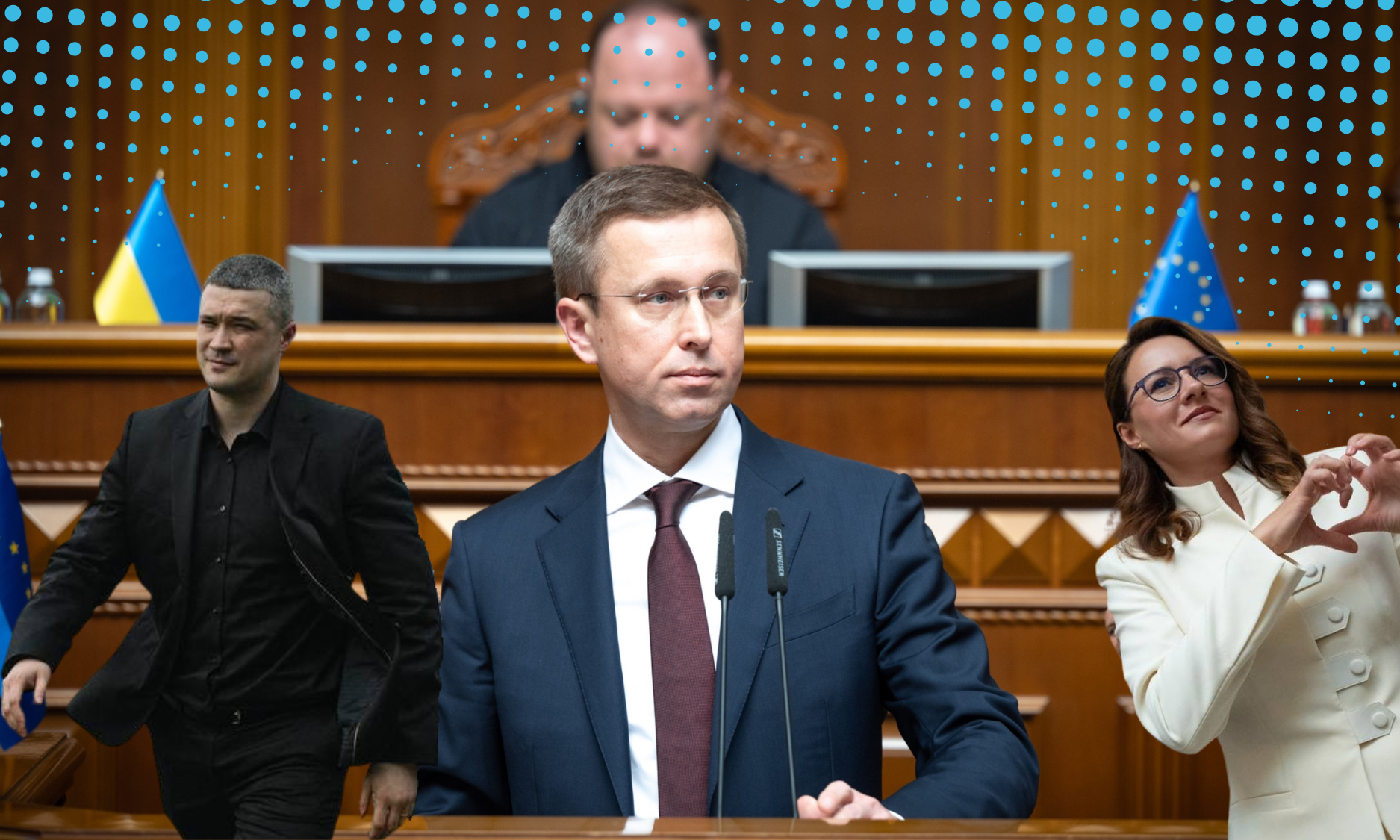
fedorov, koretskyi, svyrydenko collage
Explore further

“They removed the auditor, not the thieves”: why Ukrainians are protesting Zelenskyy’s reshuffle

Reinstating Fedorov is not the president’s decision alone. The defense minister is appointed by parliament on the president’s submission, and MPs closed their July sittings without filling the post, leaving both the defense and foreign ministries vacant until the next scheduled plenary on 18 August.

Under martial law, the Verkhovna Rada can convene at any time, so recalling it early is a political choice, not a legal hurdle—and the push for that runs inside parliament too, with the opposition European Solidarity faction of Petro Poroshenko demanding an extraordinary session to fill the vacant ministries.

It would not be the first recall of the summer. A year ago, with parliament likewise on recess, Speaker Ruslan Stefanchuk convened an extraordinary session on 31 July that pushed that reversal through, 331 votes to none, under the same street protest and Western pressure.

The leverage is thinner now, though: last year, the anti-corruption agencies’ independence was a non-negotiable condition of the European Union’s 90-billion-euro ($97 billion) support package, giving Brussels a direct stake, while the command of the army carries no such external lever.

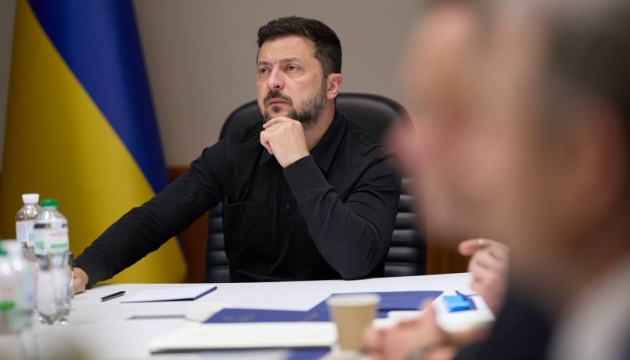
zelenskyy holds a video call with military commanders on 18 july 2026
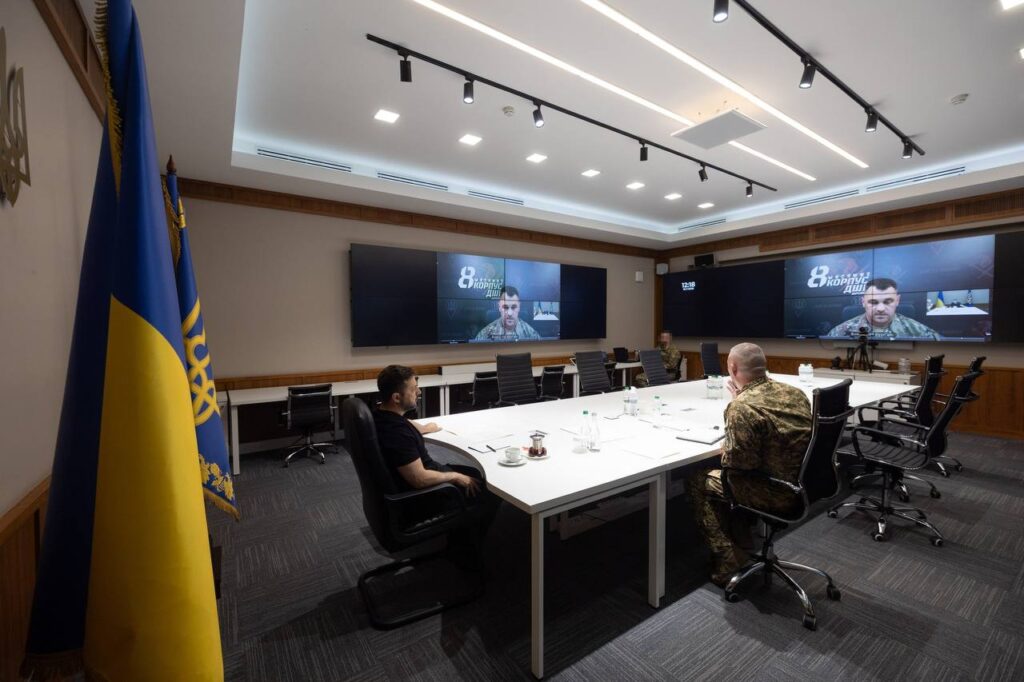
President Volodymyr Zelenskyy holds a video call with military commanders on the situation at the front, 18 July 2026. As protests demanding the removal of Commander-in-Chief Oleksandr Syrskyi entered their fourth day, Zelenskyy spent the weekend consulting senior officers and said decisions on the army would be worked out. Photo: Volodymyr Zelenskyy / Telegram

Zelenskyy consults commanders

The president has answered with consultations, not decisions. On 18 July, he said he had spoken at length with both Fedorov and Syrskyi, and that decisions on the army would be worked out.

The next day, he reported having met senior officers—Joint Forces commander Mykhailo Drapatyi, deputy General Staff chief Volodymyr Horbatiuk, and Air Assault Forces commander Oleh Apostol—for a review of the front and the country’s supply needs, naming air defense and the full delivery of drone-production contracts as the priorities. More talks with commanders were promised.

Ukrainian President Volodymyr Zelenskyy met with senior commanders of Ukraine's Armed Forces on 19 July, 2026. Photo: Zelenskyy
Explore further

As rumors swirl over Syrskyi’s future, Zelenskyy meets commanders and top general warns against political infighting

No successor to Syrskyi has been named—the gap the president cites as his reason to wait, and the reason no dismissal has come despite reports he is weighing one, conditional on finding a commander who can hold the 1,200-kilometer front.

A change at the top would meet the street’s most concrete demand. Whether that fixes the command dispute that pushed Fedorov out, or lets the president bank a win while the same problems remain, is what the 24 July deadline brings to a head.

  • ✇Euromaidan Press
  • Drones found the FSB where it felt safest—a seaside resort deep in occupied Kherson Oblast
    Ukrainian special forces struck a Russian intelligence command post deep in occupied southern Ukraine and set off a major fire, the Security Service of Ukraine (SBU) reported on 20 July. The service said its drones hit a hub coordinating Russia's security apparatus, where a large number of officers of the Federal Security Service (FSB) may have gathered.  Drones from Ukraine's Security Service, the Defense Ministry's military intelligence, the Unmanned Systems Forces, and t
     

Drones found the FSB where it felt safest—a seaside resort deep in occupied Kherson Oblast

20 juillet 2026 à 09:45

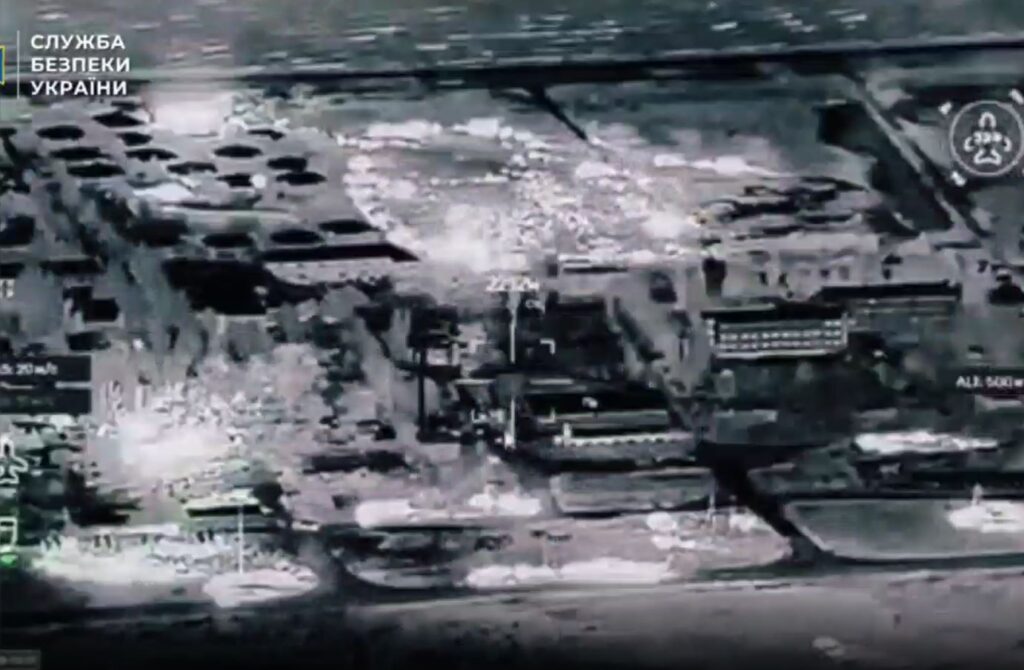
drones found fsb where felt safest—a seaside resort deep occupied kherson · post thermal footage security service ukraine drone shows russian coordination center oblast during strike 20 2026 earlier sbu

Ukrainian special forces struck a Russian intelligence command post deep in occupied southern Ukraine and set off a major fire, the Security Service of Ukraine (SBU) reported on 20 July. The service said its drones hit a hub coordinating Russia's security apparatus, where a large number of officers of the Federal Security Service (FSB) may have gathered. 

Drones from Ukraine's Security Service, the Defense Ministry's military intelligence, the Unmanned Systems Forces, and the regular army strike Russian targets across occupied territory and inside Russia daily, among them command posts, air defenses, and logistics.

Drones hit the FSB coordination hub

Special operators of the SBU's "Alpha" Center for Special Operations struck the coordination center and basing point of FSB staff, which sat in one of the recreational retreats in occupied Kherson Oblast. 

The SBU did not specify when the attack occurred. Footage it released shows drones striking buildings as other drones record the resulting explosions and fires.

By the SBU's early assessment, around 100 servicemen may have been at the site. 13 SBU drones hit the location where the FSB staff were based. The strike touched off a large fire. 

The SBU's reconnaissance results confirmed the compound was heavily guarded. More than 70 vehicles stood on the grounds, an armed guard operated on site, and checkpoints controlled access, and engineering barriers and underground shelters ringed the base, the agency said.

The FSB is central to Russia's war effort. It handles counterintelligence, internal control, the fight against sabotage, and the running of the security apparatus aimed at waging the war. The hostile service also recruits Ukrainians for terror attacks, killings of servicemen in the rear, and other crimes.

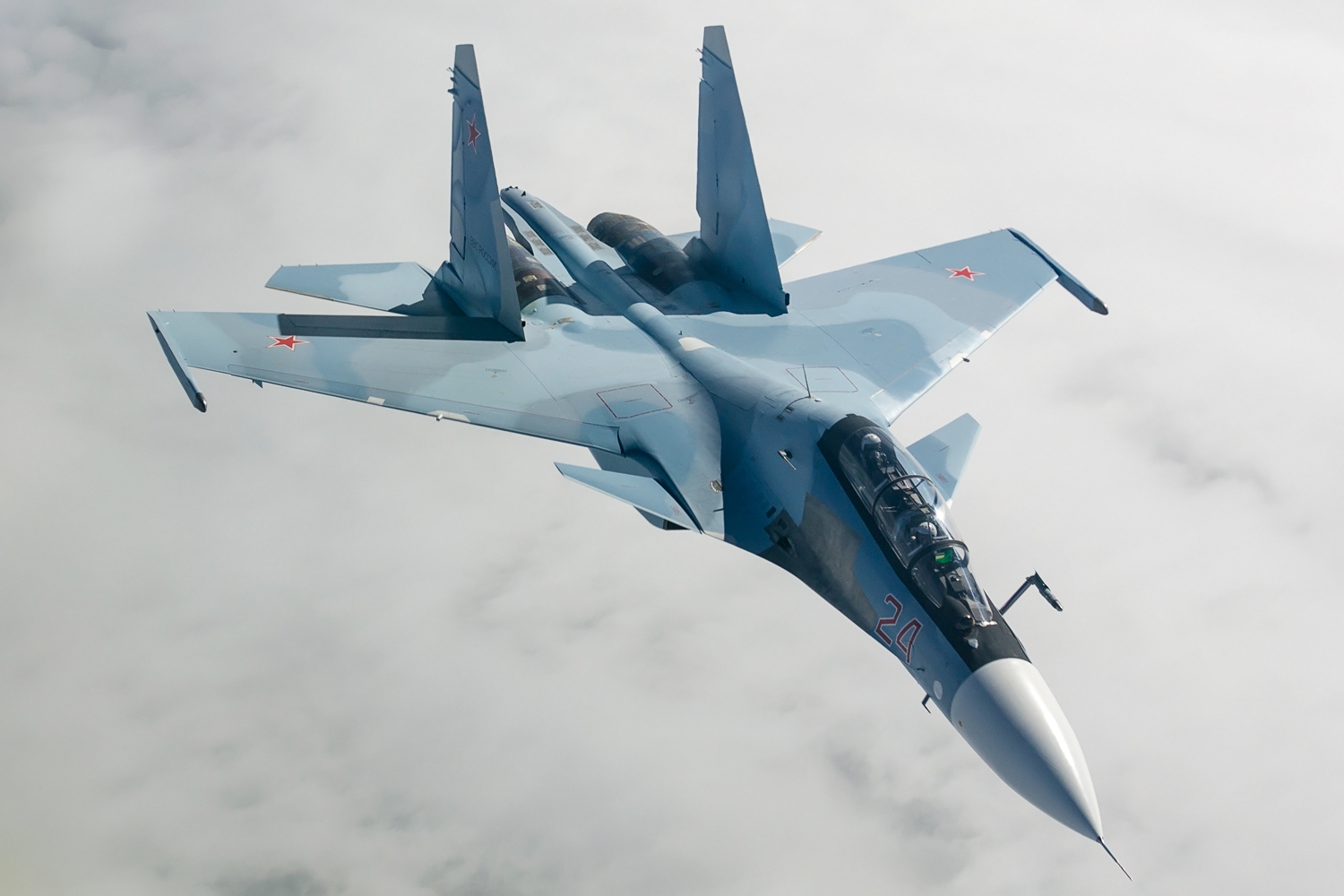
ukrainian manpads takes down russian su-30sm jet over black sea air force's sukhoi sukhoi_su-30sm_in_flight_2014
Explore further

Ukraine hits at least seven Russian warplanes in second strike on Crimea’s Saky airbase this week, SBU says

Part of a daily strike campaign

The SBU said such operations inflict tangible losses on the enemy in occupied territories, disrupt its command and coordination, and force Russia to pull additional forces to guard its own sites, complicating logistics and supply for FSB units.

The SBU strikes occupier targets in Russia and on occupied territory every day. Earlier this month, Ukrainian sea drones struck shadow-fleet tankers in the Black Sea, and drones set three oil depots ablaze in Russia's Stavropol Krai.

Days earlier, the SBU destroyed a Tu-95 strategic bomber at the Engels airbase inside Russia.

Russia jails two more of its own warbloggers days apart—one for extortion, one for “justifying terrorism”

20 juillet 2026 à 09:12

russia jails two more its own warbloggers days apart—one extortion one justifying terrorism · post russian soldier z symbol sputnik russian_soldier_with_z_symbol ukraine news ukrainian reports

Russia has locked up two of its own pro-war bloggers within days of each other, both after they turned their criticism on the Kremlin, The Moscow Times reported. One is a former military pilot now bound for a penal colony, the other is a self-styled mercenary chief sent to pre-trial detention. Their cases add to a growing list of hawkish commentators punished for questioning how Russia runs its war.

As Ukraine's strikes reach ever deeper into Russia and its fuel crisis spreads, the Kremlin has grown less tolerant of any uncontrolled voice, with officials even trying to block access to channels that describe the war's costs at home. The censorship laws Moscow built to silence anti-war Russians now fall on the people who wanted a harder war, showing that loyalty to the invasion offers no protection once a commentator criticizes the leadership running it.

Russian war bloggers provide unofficial coverage of the invasion from the Russian side, praising Russia, justifying its war crimes, and often exaggerating its battlefield successes. Over time, some of them turn on the leadership, become entangled in schemes over money raised for the troops, or drift into other crimes—and end up in prison.

The pilot who bombed Ukraine, now headed to a penal colony

A garrison military court in Rostov-on-Don sentenced Alexei Zemtsov, a former Ka-52 attack-helicopter pilot who ran the pro-war Telegram channel Voevoda Veshchaet, to three years in a general-regime colony. The court found him guilty of making death threats, deliberately destroying property, and extortion. His own channel's administrators announced the verdict. A source told TASS that the sentence took "a number of mitigating circumstances" into account.

According to Zemtsov's associates, he intends to sign a military contract and deploy to the war against Ukraine. For that, the Defense Ministry would first have to discharge him and let him re-enlist, which they estimate could take 15 to 45 days.

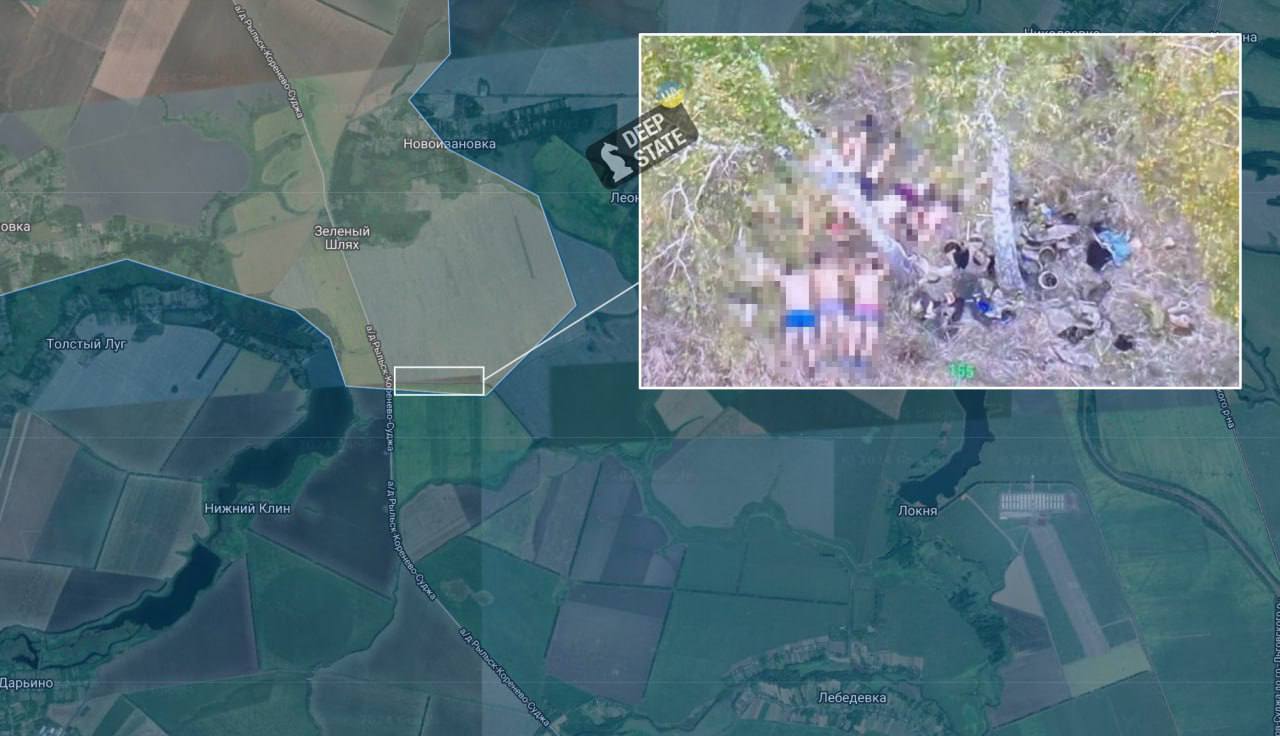
russians execute nine ukrainian pows kursk oblast soldiers executed 10 october 2024 telegram/deep state f34f9e52-8185-47c9-8cac-0e2a004f2a33
Explore further

ISW: Russian milbloggers glorify execution of Ukrainian POWs, frame them as acceptable warfare

The case reached court in February 2026. In April, Zemtsov recorded a video saying he intended to take his own life over pressure from senior military figures, naming a deputy commander-in-chief of Russia's Aerospace Forces, Vladimir Kravchenko, his unit commander Colonel Avramenko, and a military investigator, Kantemirov.

Zemtsov was detained in autumn 2025, released, and rearrested in May 2026 after a conflict with his ex-wife and her lover—he accused her of cheating and beat the man—brought the charges against him. His former wife appeared in the case as a witness. 

Until 2023, he co-ran a pro-war channel before founding his own, and he was later grounded after publishing criticism of the military command.

A "private army" chief and the Kremlin he came to hate

A day earlier, the Zamoskvoretsky District Court in Moscow placed Georgy Zakrevsky, 55, the founder of a group he called the Paladin military union, in detention on a charge of publicly "justifying terrorism," which carries up to seven years. The Russian Telegram channel Ostorozhno Novosti reported that the case stems from his Telegram posts.

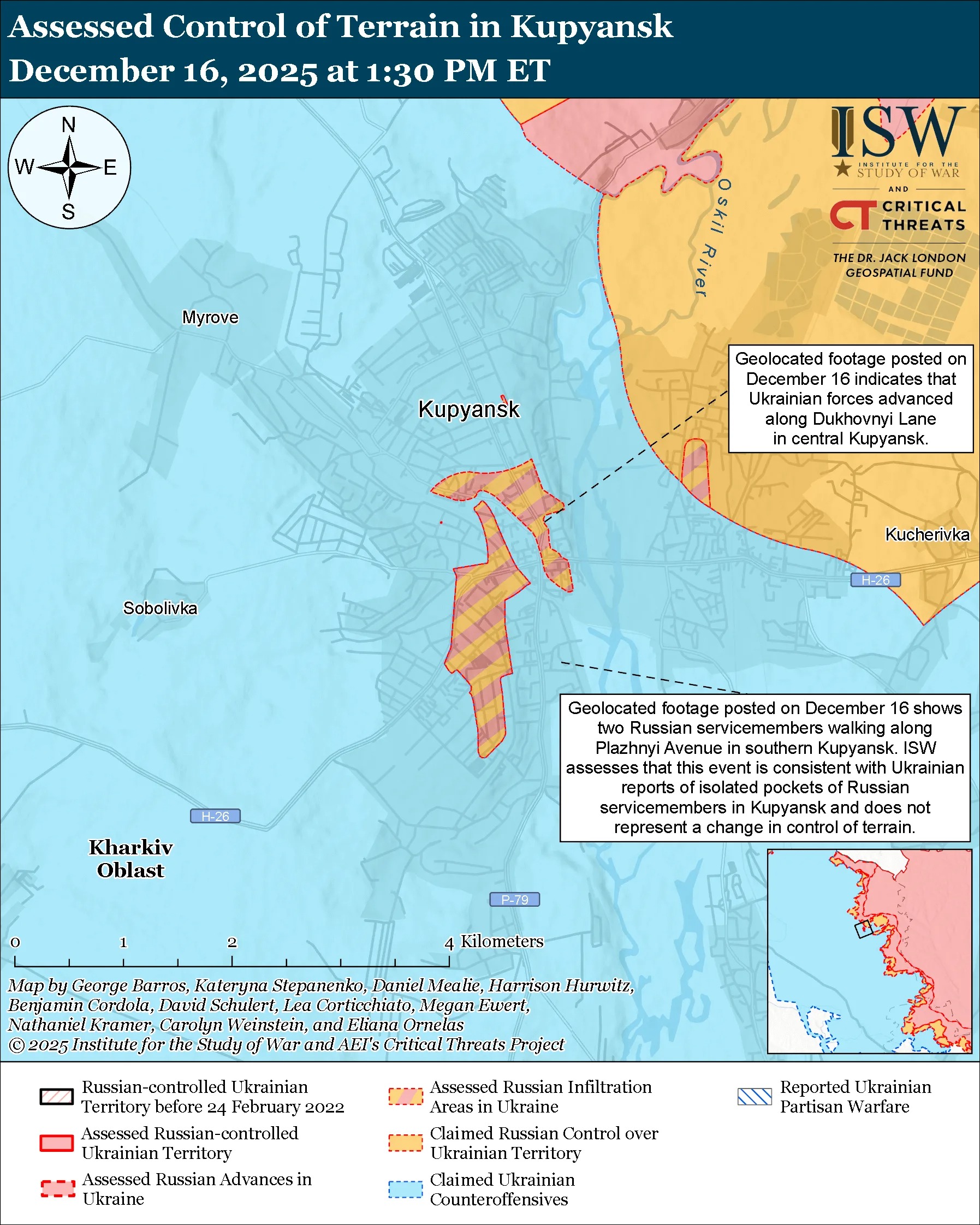
isw kremlin denies trouble kupiansk — russian milbloggers say otherwise · post assessed control terrain kharkiv oblast 16 2025 kupyansk-city-december-16-2025 ukraine news ukrainian reports
Explore further

ISW: Kremlin denies trouble in Kupiansk — even Russian milbloggers say otherwise (MAPS)

Zakrevsky had supported the invasion, but after Ukraine's incursion into Russia's Kursk Oblast he began sharply attacking Putin, declaring that "the main enemy of Russia sits in the Kremlin." In his posts he said the country was "in big trouble": Ukrainian drones were striking central Russian regions, the Black Sea Fleet was being destroyed, and the army stood in the same positions it held more than two years earlier.

A month before his arrest, he released a video complaining of pressure on his organization, which he presented as a private military company of 250 people guarding sites in various countries without "cooperating with the regime." He stated he had fought in the Donbas in 2014, then in Syria and Lebanon.

 
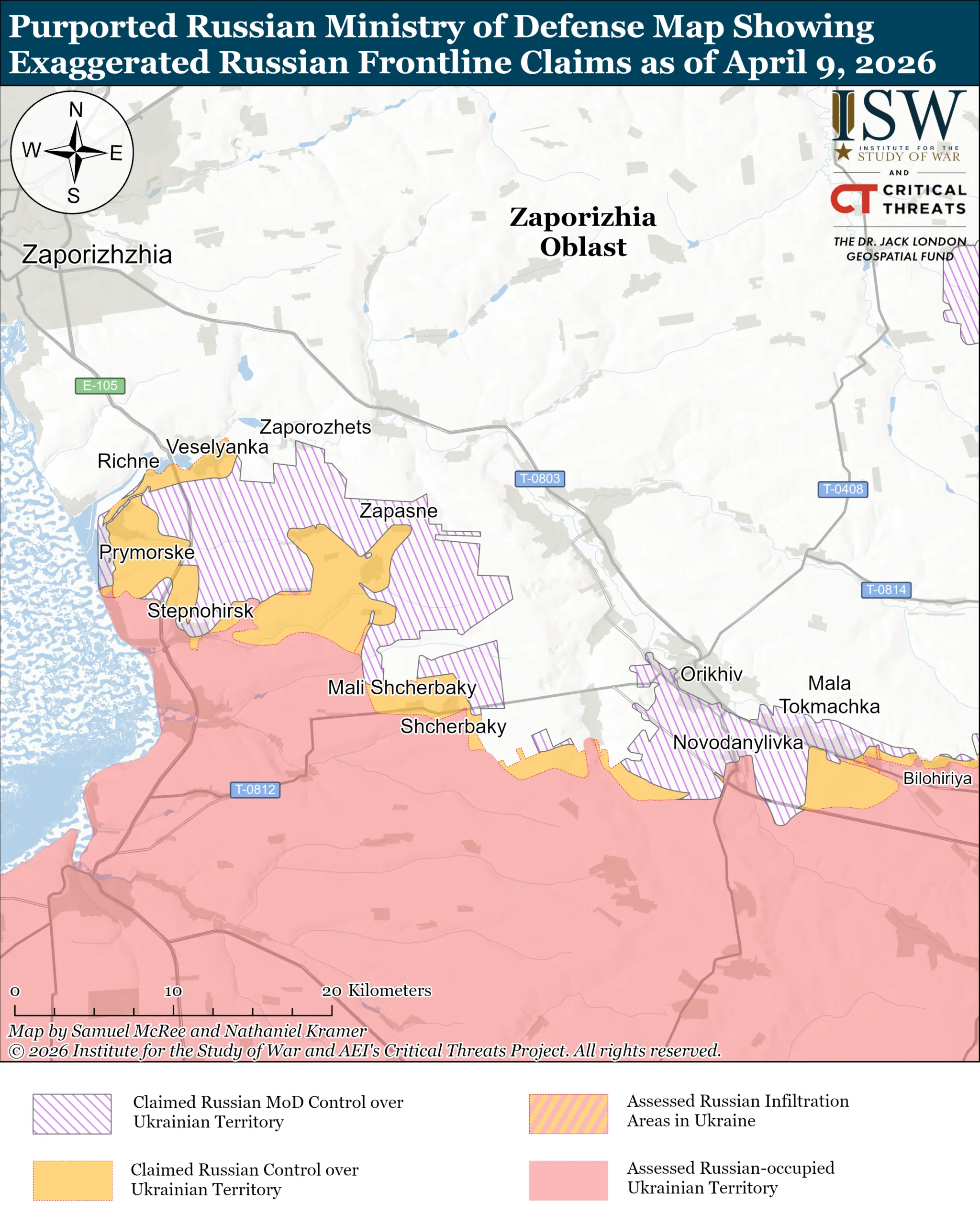
isw russian generals feed kremlin false leaked claims towns were never captured · post institute study war (isw) purported-russian-ministry-of-defense-map-showing-exaggerated-russian-frontline-claims-as-of-april-9-2026-scaled ukraine news ukrainian reports
Explore further

ISW: Russian generals feed the Kremlin a false picture: leaked map claims towns that were never captured

A widening crackdown on the war's loudest cheerleaders

The two are not alone. Milblogger Ilya Remeslo, who called Putin a war criminal, is in custody accused of spreading "fakes" about the Russian army, a charge carrying up to ten years. Yegor Guzenko, who runs the Telegram channel Trinadtsaty ("Thirteenth"), was detained on 10 July on an incitement-of-hatred charge that threatens up to six years. Guzenko fought against Ukraine and had called Putin crude names, accusing him of lying about internet shutdowns.

The most prominent case is Igor Girkin, a former security-service colonel who launched Russia's 2014 war in eastern Ukraine. He blogged about the war to hundreds of thousands of his Telegram followers for years. Girkin was convicted in January 2024 and given four years in a penal colony for criticizing the way Russia was fighting, and he remains imprisoned.
  • ✇UKR Inform
  • Ukrainian troops capture 64 invaders in Zaporizhzhia sector
    Soldiers of the 225th Separate Assault Regiment conducted a mopping-up operation to eliminate infiltrated groups of Russian troops in the areas of Ternuvate, Kosivtseve, Rizdvianka, Verkhnia Tersa, and Vozdvyzhivka in the Zaporizhzhia region, resulting in the capture of 64 occupiers.
     
  • ✇Euromaidan Press
  • Why Russia is importing gasoline made from its own oil
    Russia is buying back gasoline refined from its own crude oil in India, shipping it 14,000 kilometers home and paying a premium for it, because Ukrainian strikes have knocked out more of its refineries than it can repair. An oil superpower is importing fuel made from its own oil.The trade loses money, so the Russian state is now covering the gap. Since 1 June, a signed law has paid importers a subsidy tied to the price of gasoline on the Indian market. Rationing now co
     

Why Russia is importing gasoline made from its own oil

20 juillet 2026 à 07:38

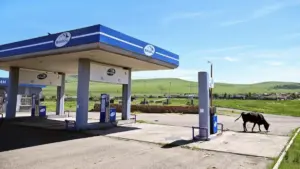
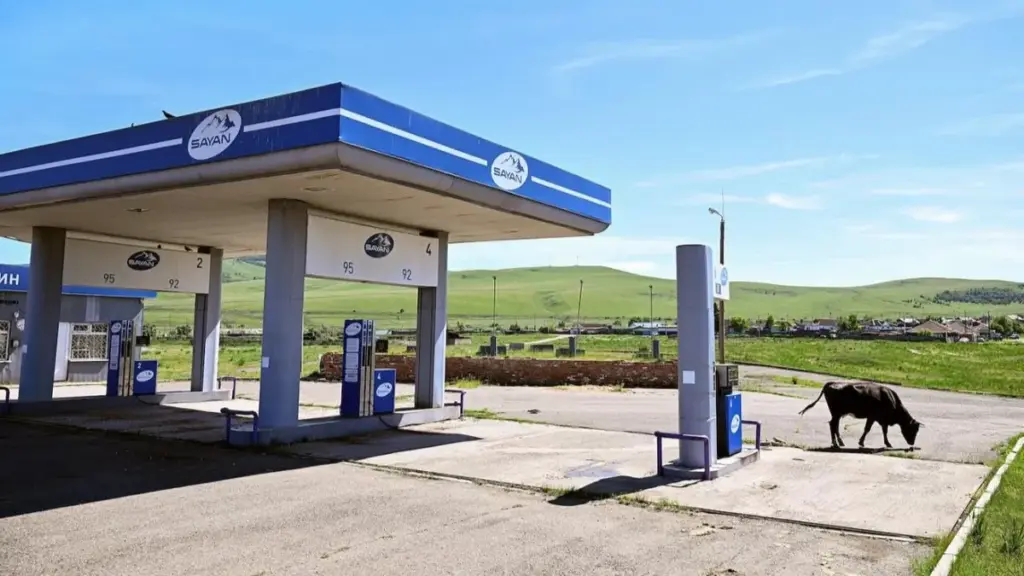
a cow grazes by an idle sayanneft gas station in russia amid nationwide fuel crisis

Russia is buying back gasoline refined from its own crude oil in India, shipping it 14,000 kilometers home and paying a premium for it, because Ukrainian strikes have knocked out more of its refineries than it can repair. An oil superpower is importing fuel made from its own oil.

The trade loses money, so the Russian state is now covering the gap. Since 1 June, a signed law has paid importers a subsidy tied to the price of gasoline on the Indian market.

Rationing now covers more than 55 of Russia’s regions, with odd-and-even-day sales, purchase caps, and price spikes.

The strikes have driven Russian refining to a 21-year low, and the shortage is no longer confined to a few regions. Rationing now covers more than 55 of Russia’s regions, with odd-and-even-day sales, purchase caps, and price spikes reaching areas far from any front line.

In the southern grain belt, farmers have been pushed onto engine-wrecking lower-grade fuel and told to stockpile diesel. By early July, the harvest was running three times behind last year’s pace.

Importing Indian fuel refined from Russian crude makes almost no economic sense, KSE Institute sanctions lead Yuliia Pavytska told Ekonomichna Pravda; she called it a costly forced measure to prevent bigger losses.

rosneft controlled nayara energy refinery at vadinar, gujarat, india
The Rosneft-controlled Nayara Energy refinery at Vadinar, Gujarat, India. Photo: AgarwalSimran / Wikimedia Commons, CC BY-SA 4.0

A sanctioned Russian refinery—in India

The plant at the center of it, Nayara Energy’s refinery at Vadinar, is Indian on paper only. Rosneft and a Russian investment consortium own more than 98% of the operator between them.

India’s oil minister Hardeep Singh Puri said Indian firms do not sell fuel to Russia directly.

EU sanctions in July 2025 drove away non-Russian crude suppliers, so Nayara switched to Russian oil and now buys and sells through traders—which is how its gasoline reaches Russia without an official India-to-Russia sale.

India’s oil minister Hardeep Singh Puri said Indian firms do not sell fuel to Russia directly, while conceding that buyers could route Indian-origin fuel through traders.

The first cargo moved like shadow-fleet oil in reverse. The tanker Agni loaded at Vadinar on 20 June under a manifest for Fujairah, UAE, then bypassed the port and transited the Red Sea and the Suez Canal.

Once in the Mediterranean, it handed the cargo to a second tanker, with both vessels’ transponders switched off. Ship-trackers expect the fuel at Russia’s Vitino port around 26 July.

The pressure should reach the shipowners, managers, and insurers behind the vessels.

Selling the fuel breaks no sanction—nothing bars India-Russia petroleum trade—yet the sanctioned tankers still sailing point to an enforcement gap more than a gap in the rules, Pavytska told Ekonomichna Pravda; the pressure, she argued, should reach the shipowners, managers, and insurers behind the vessels, not the vessels alone.

The budget pays the difference

Russian gasoline is cheaper at home than abroad—domestic wholesale runs about a third below what the fuel is worth on the export market, so imported fuel lands well above what drivers pay at the pump. The reworked “damper”—the subsidy Russia uses to hold pump prices down—now reimburses importers for that gap.

Even the full plan—up to 400,000 tonnes a month from India, Belarus, and Kazakhstan combined—would meet only about a third of the monthly gap.

Ukraine’s Ekonomichna Pravda estimates that the first cargo alone will cost Russia 5.4–6.1 billion rubles ($69–78 million), with the budget covering more than half of that.

The first cargo covers little more than a day of Russia’s shortfall, and even the full plan—up to 400,000 tonnes a month from India, Belarus, and Kazakhstan combined—would meet only about a third of the monthly gap. Rosneft, Gazprom Neft, and Lukoil have asked Indian refiners for more, but have been refused by three state-owned firms.

The Russian market is not built for world prices, Serhii Kuyun, director of the consulting group A-95, told Ekonomichna Pravda: the state must either keep draining the budget with subsidies or let prices rise and take the political hit.

Moscow has also banned exports of gasoline, diesel, and jet fuel, allowed producers to sell lower-grade fuel, and floated the idea of reviving Euro-2 gasoline, a grade banned more than a decade ago. Whether any of it holds depends on the drones.

Serhii Vakulenko of the Carnegie Russia Eurasia Center has cast Russia’s available refining capacity as the product of a running race between Ukrainian strikes and Russian repair crews—one now tilting toward Kyiv. If the plants come back and the tankers keep arriving, Russia buys itself calm by late summer. If the strikes keep landing, the time bought with Indian gasoline runs out fast.

  • ✇Euromaidan Press
  • The Ukrainian combat divers who blew up a Russian bomber just built their own sea drone
    Engineers from the diving detachment of the National Guard's "Omega" Special Purpose Center have developed their own uncrewed surface vessel in partnership with a Ukrainian IT company, Ukraine's Interior Ministry announced on 19 July. The drone is built for combat missions in southern Ukraine and serves as a platform for First-person view (FPV) drones, carrying them closer to targets before they strike. The developers plan to adapt it for intercepting aerial targets to stre
     

The Ukrainian combat divers who blew up a Russian bomber just built their own sea drone

20 juillet 2026 à 07:32

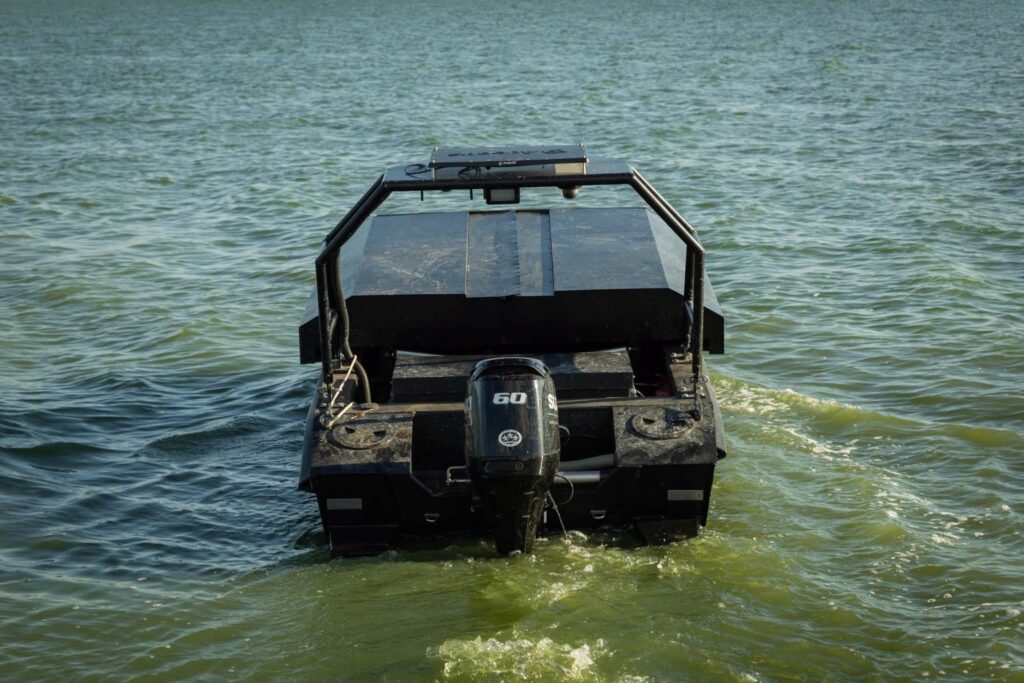
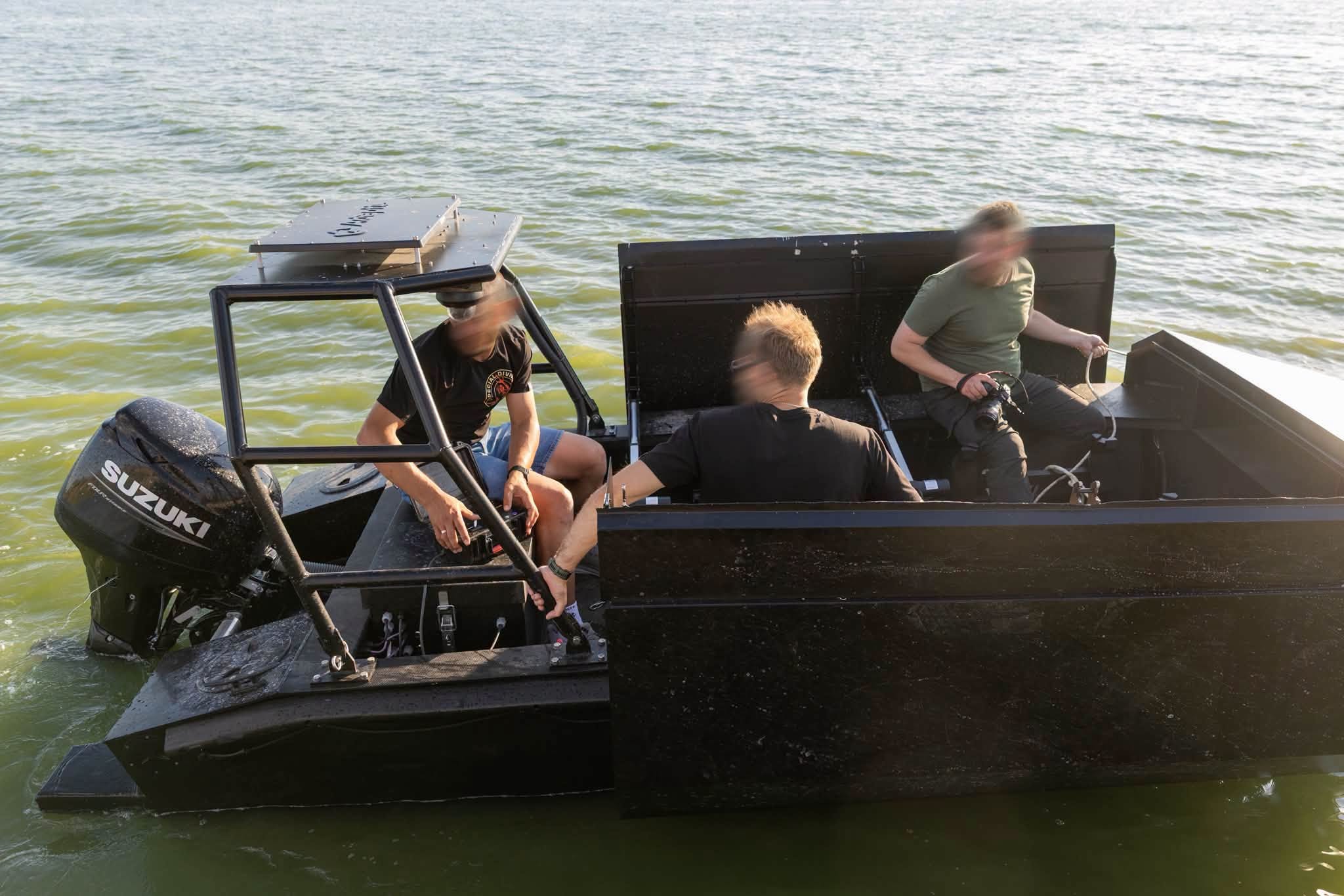
The uncrewed surface vessel developed by engineers from the National Guard's Omega Special Purpose Center diving detachment in partnership with a Ukrainian IT company

Engineers from the diving detachment of the National Guard's "Omega" Special Purpose Center have developed their own uncrewed surface vessel in partnership with a Ukrainian IT company, Ukraine's Interior Ministry announced on 19 July. The drone is built for combat missions in southern Ukraine and serves as a platform for First-person view (FPV) drones, carrying them closer to targets before they strike. The developers plan to adapt it for intercepting aerial targets to strengthen coastal defense.

The platform itself is not novel—Ukraine has fielded FPV-carrier sea drones for over a year, from the Navy's Barracuda to Defense Intelligence's Katran. What is new is who built this one. Omega is a special operations unit, and its combat divers are the same operators who destroyed a Russian Su-24M bomber at the Saky airbase in occupied Crimea a few days earlier.
The uncrewed surface vessel developed by engineers from the National Guard's Omega Special Purpose Center diving detachment in partnership with a Ukrainian IT company
The uncrewed surface vessel developed by engineers from the National Guard's Omega Special Purpose Center diving detachment in partnership with a Ukrainian IT company. Photo: Ministry of Internal Affairs of Ukraine

A frontline fighting unit designing and building a naval drone with a Ukrainian tech partner rather than through a centralized procurement process is the pattern that increasingly defines Ukraine's war: the people using the weapons are now making them.

Carrying the drones, then killing them

The Omega commander, call sign "Krava," said the vessel works as a delivery platform: it brings FPV drones close to the target, and the drones destroy the enemy. Photos released by the Interior Ministry show the drone equipped with a Japanese Suzuki engine and a satellite communication terminal.

Soldiers of the 123rd Territorial Defense Brigade landed a ground robotic complex on the Russian-held shore of the Kinburn Spit in Mykolaiv Oblast. Source: The 123rd Territorial Defense Brigade
Explore further

Ukraine put armed robot on Russian-held ground. Naval drone was landing craft

The unit's stated next step—adapting the platform to intercept aerial targets—would place it inside the fastest-growing category of Ukrainian naval innovation. In April 2026, an uncrewed Ukrainian boat shot down a Russian Shahed drone with an interceptor launched from its deck—what Ukraine called a world first. Pushing air-defense capability offshore onto unmanned platforms means Russian drones launched from occupied Crimea face a threat layer over open water, before they reach Odesa and the coast.

Russia keeps hitting Ukraine’s couriers—so Ukraine went after Russia’s Amazon: oil depot and warehouses hit near Moscow

20 juillet 2026 à 07:08

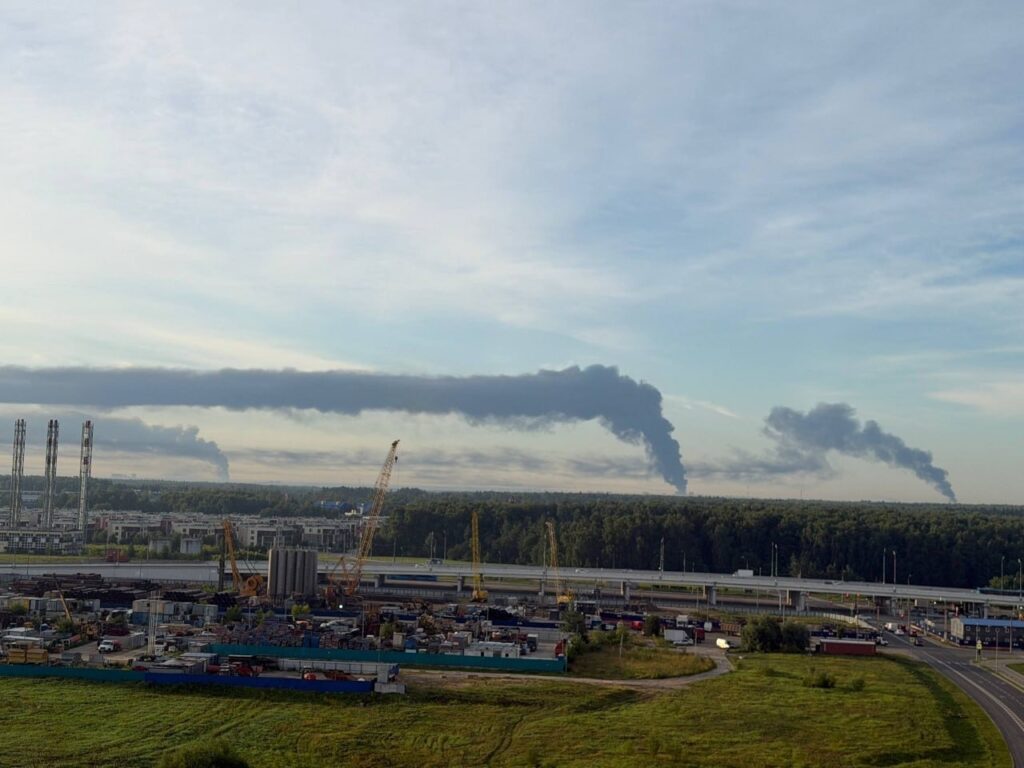
russia keeps hitting ukraine's couriers—so ukraine went after russia's amazon oil depot warehouses hit near moscow · post smoke plumes rise horizon over oblast ukrainian drone strikes logistics centers 20

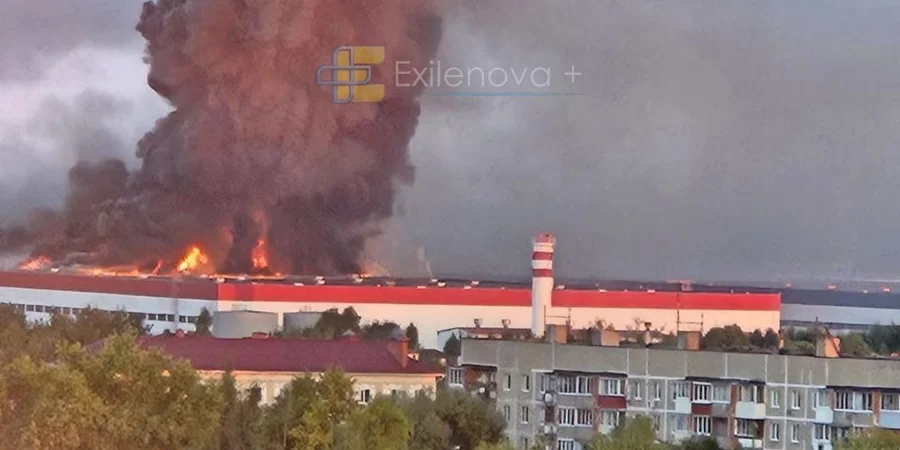
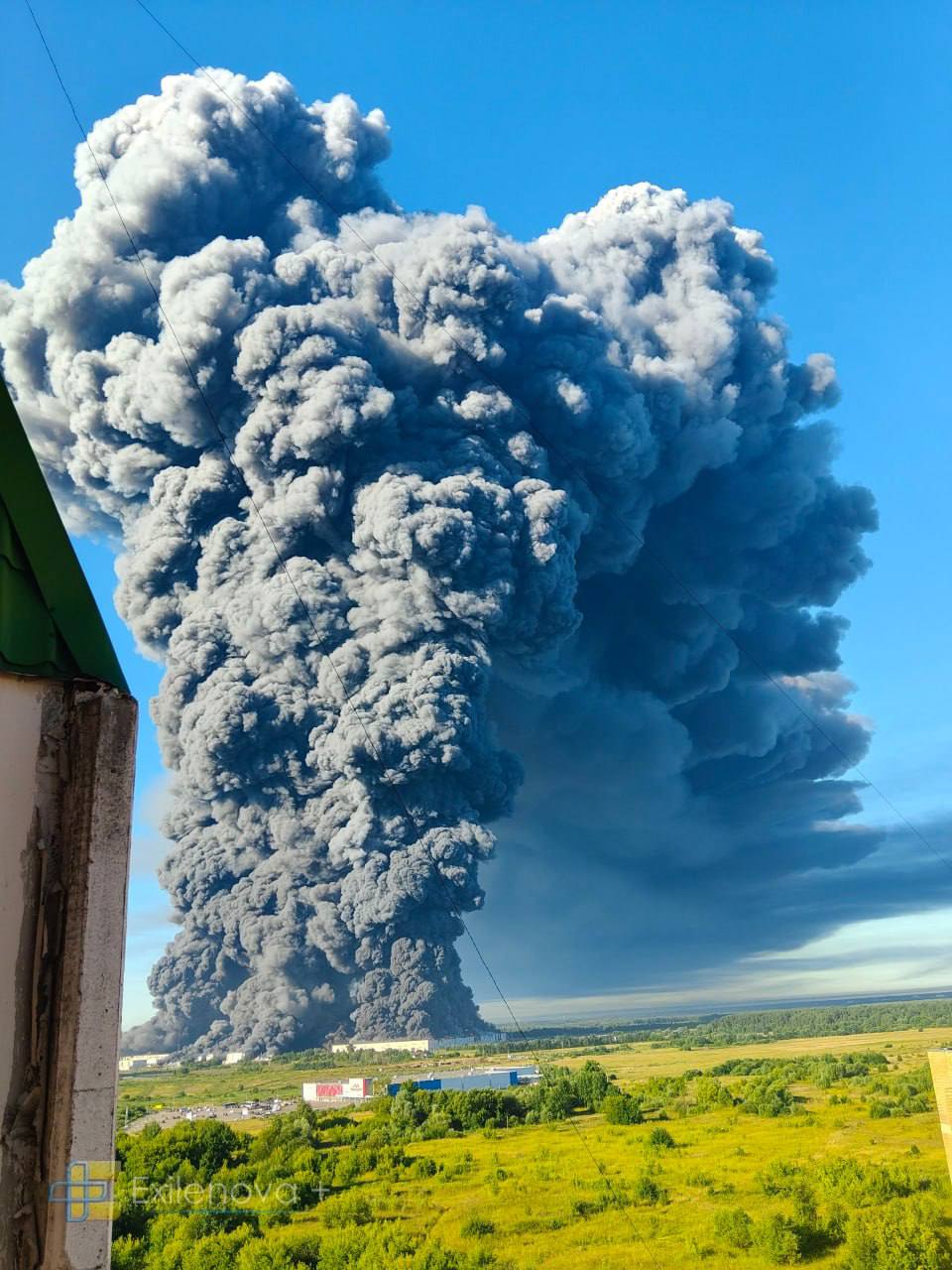
Ukrainian drones struck logistics warehouses and an oil depot deep in Russia's Moscow Oblast overnight, setting off a wave of fires, monitoring channels reported. President Volodymyr Zelenskyy later confirmed the strikes. Russian authorities acknowledged the attack while claiming their air defenses had beaten back most of it.

Russia continues its daily strikes on Ukrainian residential areas and civilian infrastructure. It has spent the war battering Ukraine's postal hubs, supermarkets, and warehouses, and Ukraine has answered by pushing its long-range drones ever deeper toward Moscow and as far as the Ural region — a campaign treating the logistics and fuel network sustaining Russia's war economy as fair game.

Monitors tracked the strike and at least five fires

The Ukrainian monitoring Telegram channel Exilenova+ reported the attack and the first fires from around 3 a.m. on 20 July, sharing photos and video through the night. Ukrainian Defense Forces drones hit an oil depot and four logistics warehouses near Moscow, Militarnyi reported, adding that local residents recorded at least five separate fire sites.

At least five fires broke out across Moscow's suburbs after Ukrainian drones struck

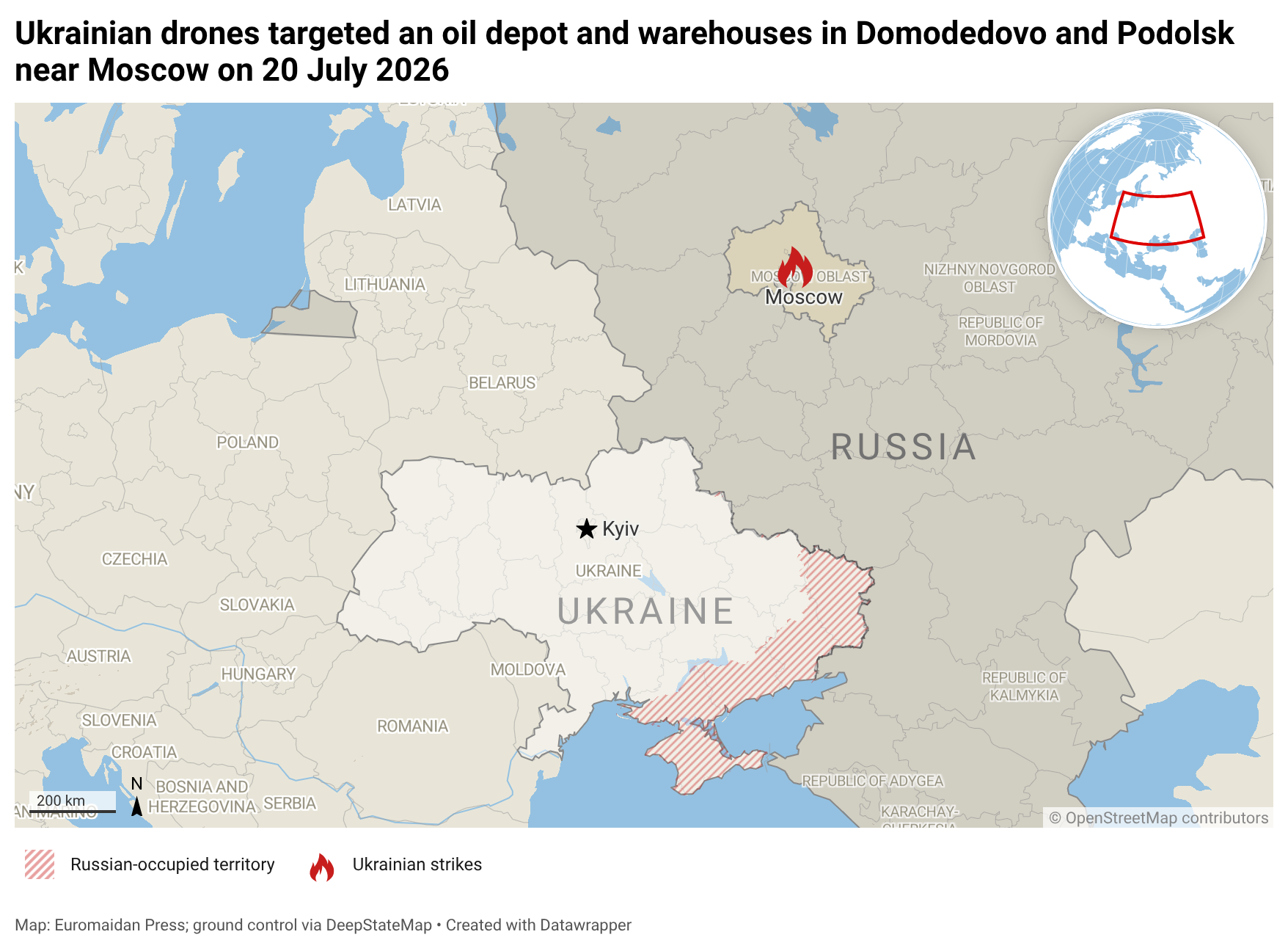
Among the targets were an oil depot in Podolsk and a warehouse at the Yuzhnye Vrata logistics park near Domodedovo, one of the largest warehouse complexes in the region.

Residents also reported… pic.twitter.com/9IDxVqtfCn

— Euromaidan Press (@EuromaidanPress) July 20, 2026

The oil depot sat in Podolsk, roughly 46 km south of Moscow, holding 10 tanks with a combined 19,400 cubic meters. NASA's FIRMS satellite system flagged an abnormal heat spike there at 04:05. 

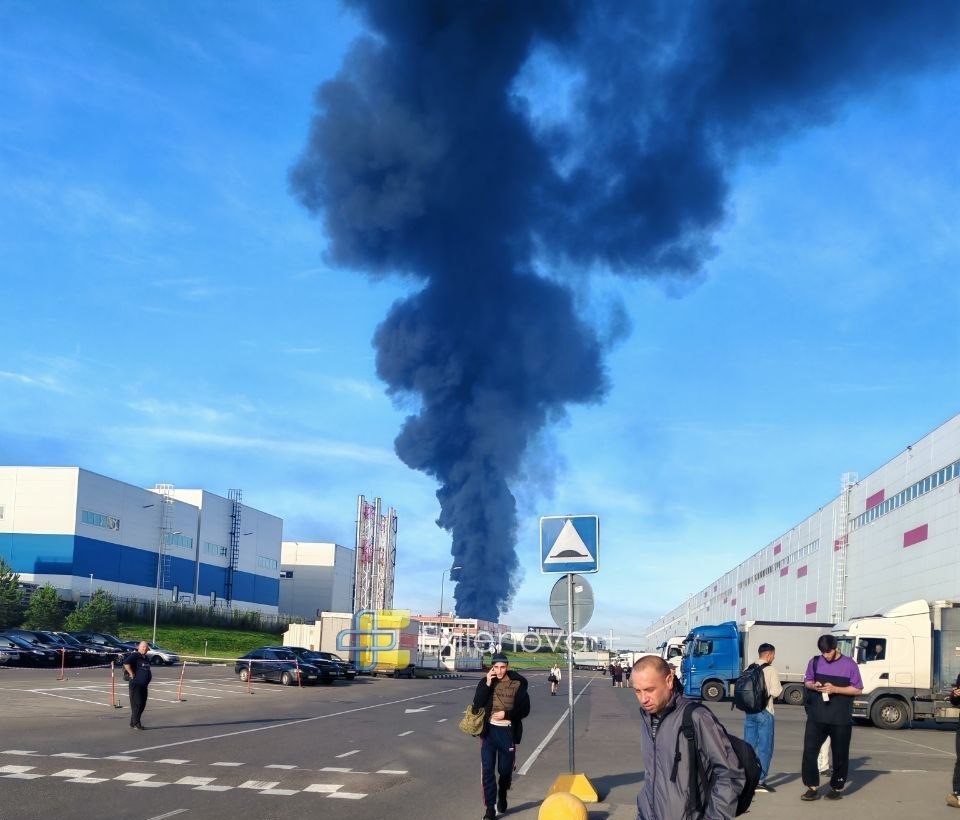
A warehouse fire also broke out at the Yuzhnye Vrata logistics park near Domodedovo, a complex used by Wildberries, Yandex Market, Alibaba Group, Decathlon and other firms. The Russian news Telegram channel Astra placed that blaze from eyewitness footage, and Domodedovo authorities later acknowledged it.

russia keeps hitting ukraine's couriers—so ukraine went after russia's amazon oil depot warehouses hit near moscow · post qvxrn-ukrainian-drones-targeted-an-oil-depot-and-warehouses-in-domodedovo-and-podolsk-near-moscow-on-20-july-2026- news ukrainian reports

Drones also struck the Gryvno logistics park in the Podolsk district, a site used by Ozon. 

Astra put a fifth fire in Podolsk's Klimovsk areaabout 200 meters from a Russian small-arms research institute.

russia keeps hitting ukraine's couriers—so ukraine went after russia's amazon oil depot warehouses hit near moscow · post black smoke rises over logistics area oblast 20 2026 site ukrainian monitoring
Black smoke rises over a logistics area in Russia's Moscow Oblast on 20 July 2026, at a site Ukrainian monitoring channels identified as the Wildberries terminal in Koledino, after a Ukrainian drone strike. Photo: Exilenova+

Drones hit a Wildberries hub, the company denied it

Militarnyi said drones hit the Wildberries sorting center in Koledino, one of the company's largest, partially destroying two warehouses. Monitoring channels identified the drones as FP-1s. Wildberries — Russia's largest online retailer and its answer to Amazon — denied any damage in a statement carried by the pro-war Russian Telegram channel Two Majors, saying it had evacuated staff as a precaution and the complex was working normally. Astra said it could not confirm a fire at the site.

A drone struck the top floor of a residential building in Domodedovo, damaging the facade without starting a fire, local authorities claimed. The Domodedovo hospital reported six people brought in with blast injuries, while Moscow Oblast Governor Andrei Vorobyov said at least 10 were wounded across the region.

russia keeps hitting ukraine's couriers—so ukraine went after russia's amazon oil depot warehouses hit near moscow · post warehouse burns ukrainian drone strike oblast morning 20 2026 пожежа у московській
A warehouse burns after a Ukrainian drone strike in Russia's Moscow Oblast on the morning of 20 July 2026. Photo: Exilenova+

Vorobyov claimed the attack had been repelled, citing damage in Odintsovo, Podolsk, and Domodedovo. Moscow Mayor Sergei Sobyanin stated more than 400 drones flew toward the region between 20:30 Sunday and 5:00 Monday, and that 85 were downed near the Russian capital. 

The black smoke somes from the Wildberries warehouse in Moscow Oblast. Image: Exilenova_Plus
Explore further

“When karma works”: Ukraine torched 188,000-square-meter warehouse of Russia’s biggest online retailer after years of strikes on leading logistics company

Ukraine casts the strike as an answer to Russia

Zelenskyy confirmed that the Unmanned Systems Forces, intelligence, missile and artillery troops, and Special Operations Forces had struck logistics facilities and an oil depot more than 400 kilometers from the border. Ukrainian forces also hit two shadow-fleet tankers and four dry-cargo ships in the Black Sea the same night, he said.

"We fairly respond to every Russian strike on our cities and communities," Zelenskyy said. "This war must be ended, and that is only possible by increasing pressure on the sole cause of this war — Russia."

The attack was the second on Russian logistics terminals in days, following fires at a Wildberries center in Elektrostal and an oil depot in Noginsk on 18 July. Ukraine's drones have reached the capital region repeatedly throughout the summer.

After the 18 July attack, a Wildberries founder offered sellers loans rather than compensation, saying the marketplace was not obligated to pay for goods lost in the fires.

❌