Vue lecture

Ukraine orders temporary ceasefire as US envoys visit Moscow. Air raid alert sounds in Kyiv immediately as pause begins
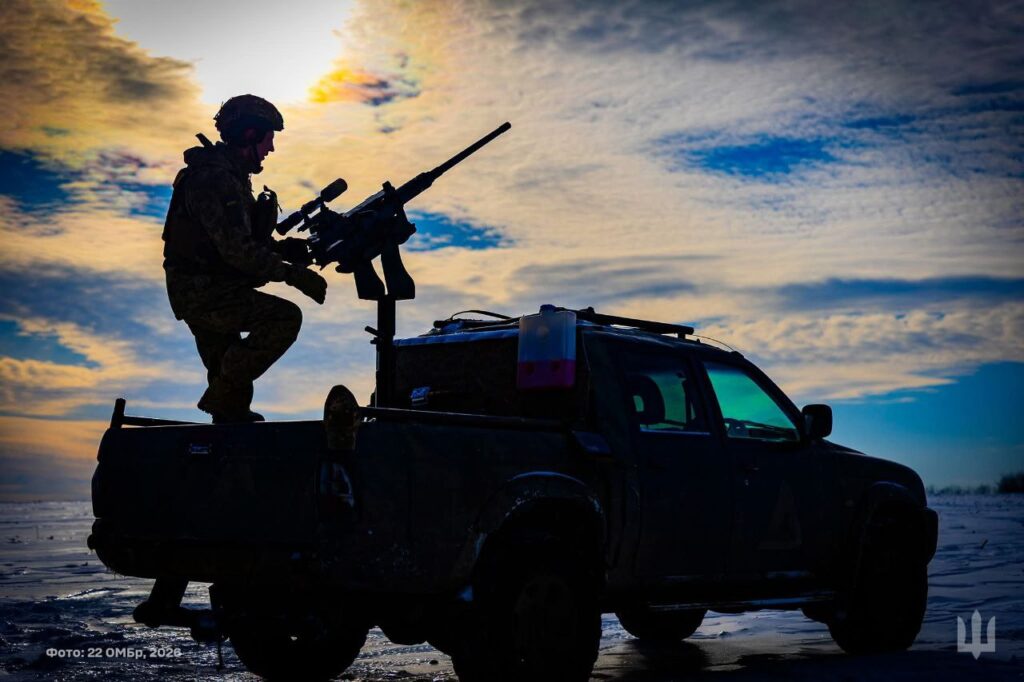
Ukrainian soldier. Illustrative image. Photo: General Staff of Ukraine's Armed Forces

Ukrainian Defense Forces units have been ordered to temporarily observe a ceasefire along the line of contact from 00:00 on 5 September through 23:59 on 8 September, Ukrainska Pravda reported, citing sources in several military brigades and a senior security official.

The order comes as US President Donald Trump’s special envoys Steve Witkoff and Jared Kushner are expected to visit Moscow and Kyiv this weekend for talks aimed at ending Russia’s war against Ukraine.

According to Ukrainska Pravda’s sources, Ukrainian units operating across the front have received instructions to observe the temporary “silence regime” during the four-day period.

An air raid alert was issued in Kyiv at 00:00 on 5 September just as the temporary ceasefire was due to take effect, with Russian drones reported over Kyiv and Kharkiv oblasts.

Pause coincides with US envoys’ visits

Witkoff and Kushner are expected to meet Russian President Vladimir Putin in Moscow on 5 September before traveling to Kyiv for talks with Ukrainian President Volodymyr Zelenskyy on 6 September.

Their visit comes after months of stalled negotiations. US-mediated talks between Russia and Ukraine froze in February following the outbreak of war between the US, Israel and Iran, while subsequent contacts between US, Russian and Ukrainian officials have failed to produce a breakthrough.
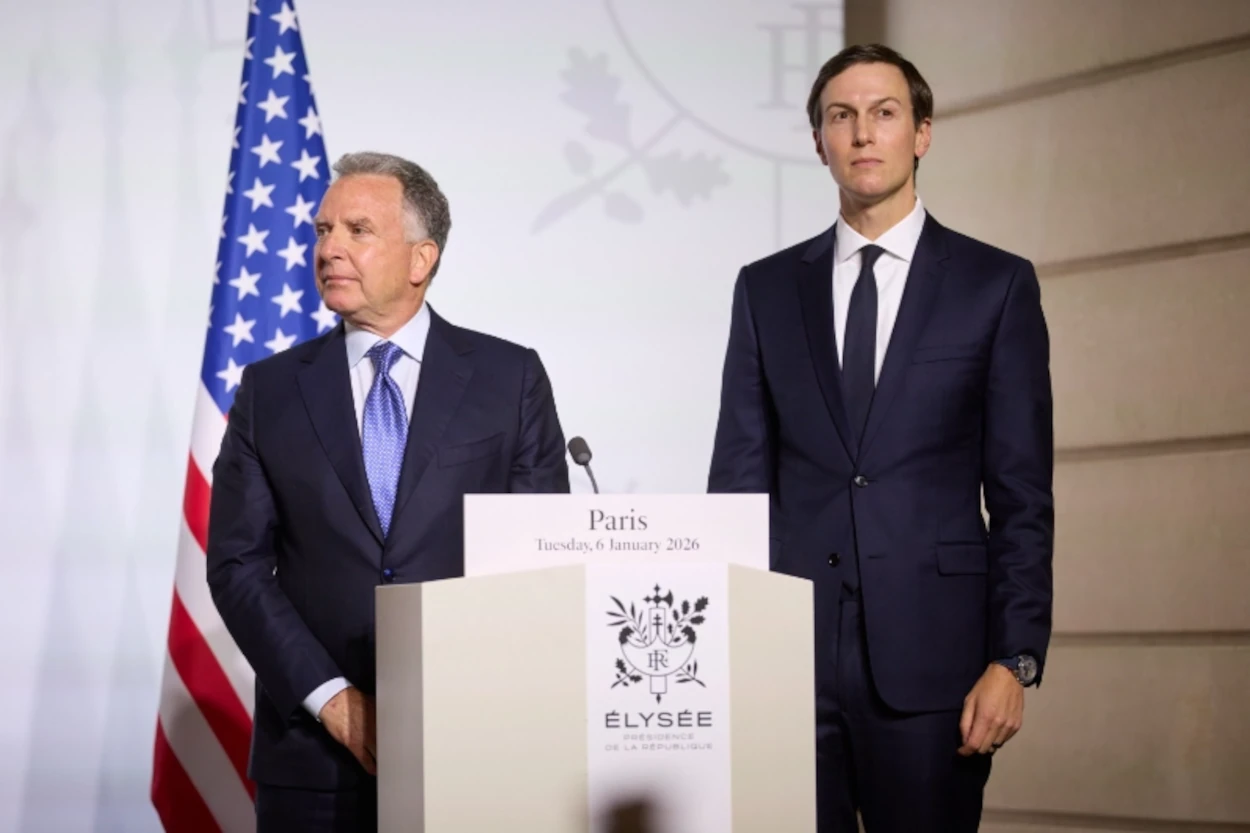
US envoys Steve Witkoff and Jared Kushner at the Coalition of the Willing summit at the Élysée Palace, 6 January 2026. Photo: Presidential Office
Explore further

Witkoff and Kushner to visit Kyiv and Moscow to revive peace talks as Russia ramps up attacks across Ukraine

Zelenskyy said on 4 September that Ukraine would ensure conditions for the US envoys’ safe travel and called for Russia to reciprocate by refraining from strikes during the period needed for the meetings and related logistics.

The reported Ukrainian order would extend the pause beyond the envoys’ visits, covering 5–8 September.

Russia has continued its intensive drone campaign against Ukrainian cities even as diplomatic contacts have resumed. Kyiv remains skeptical of Moscow’s willingness to accept a genuine ceasefire, with Ukrainian officials warning that Russia may use negotiations to buy time while continuing its military campaign.

  •  

After years of disputes, Hungary finds common ground with Ukraine—on honoring Soviet deportations from Zakarpattia

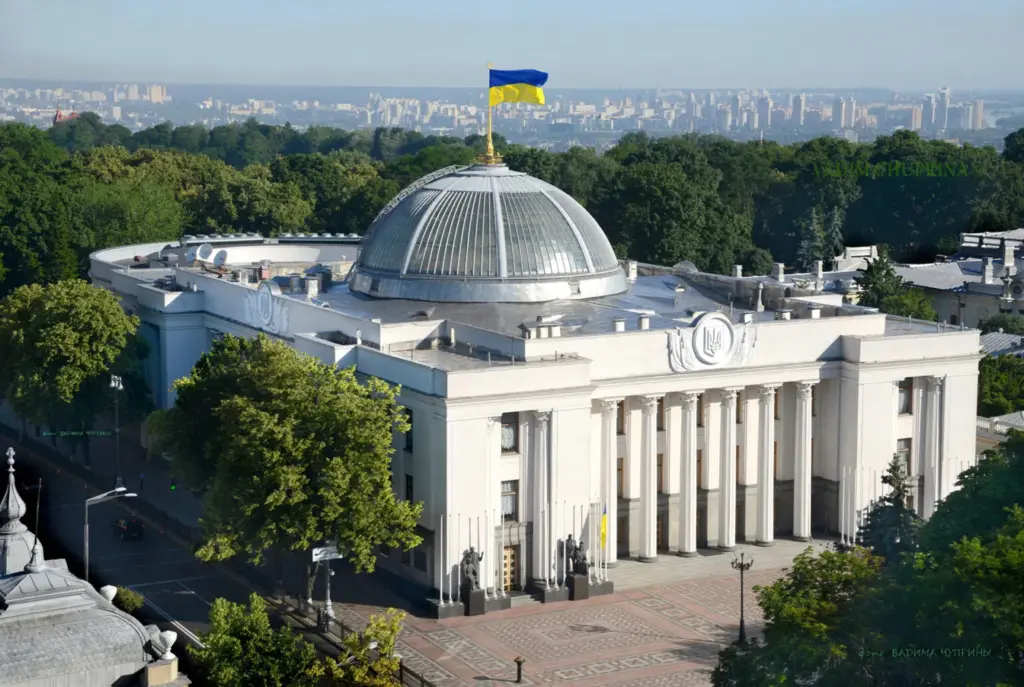
Aerial view of Ukraine’s Verkhovna Rada building in Kyiv, topped by the Ukrainian flag.

Budapest praised the Verkhovna Rada—Ukraine’s parliament—after it voted 261–0 to classify mass arrests, deportations, and persecution by the Soviet military administration in Zakarpattia (also known as Transcarpathia) from 1944 to 1946 as crimes of the communist regime.

The vote makes the Verkhovna Rada the first state body in the world to recognize the repression of Zakarpattia’s Hungarian community as a crime, according to European Pravda. It creates an opening for historical reconciliation after years of minority-rights disputes, strained relations, and blocking Ukraine’s EU accession. However, Budapest continues to press Kyiv for further concessions.

After Soviet forces took control of Zakarpattia—Ukraine’s westernmost region, bordering Hungary and home to the country’s largest ethnic Hungarian community—the NKVD, Stalin’s secret police, and SMERSH, Soviet military counterintelligence, detained civilian men aged 18 to 50 under the pretext of mobilization.

The men were deported without trial to labor camps and the Soviet Gulag prison-camp system. Hungary’s Foreign Ministry said tens of thousands of Hungarian- and German-speaking men were deported, and many thousands died under the inhumane conditions of forced labor.

The campaign became known in Hungarian as malenkij robot. Derived from a Russian phrase meaning “a little work,” Soviet troops used this deceptive phrase when taking people away.

Hungarian Foreign Minister Anita Orbán—no relation to former Prime Minister Viktor Orbán—called the declaration “a fitting tribute” to thousands targeted by Soviet terror because of their Hungarian identity. She said Hungary was ready to help uncover the truth about the past and honor the victims.

Hungary welcomes the Ukrainian parliament’s declaration condemning Soviet authorities' coercive measures against the Hungarian community in Transcarpathia between 1944 and 1946. The declaration is a fitting tribute to the thousands of victims of deportation and forced labor…

— Anita Orban (@_OrbanAnita) September 3, 2026

The resolution calls for memorials, archival publications, research, and the inclusion of the repression in educational programs. It also draws a parallel with Russia’s present-day occupation practices, saying Moscow is committing similar large-scale repression against civilians in occupied Ukraine.

Marton Hajdu, chair of the Hungarian parliament’s foreign affairs committee, nevertheless said reconciliation must be accompanied by Kyiv’s full implementation of its June agreement with Budapest on minority rights.

A cautious thaw in Hungarian-Ukrainian relations

The exchange adds to tentative signs of improving relations since Péter Magyar ended Viktor Orbán’s 16 years in power in April. Magyar’s government summoned Russia’s ambassador after Moscow struck Zakarpattia and later closed a money-laundering case involving $82 million belonging to Ukraine’s state-owned Oschadbank, reversing another Orbán-era dispute.

Budapest and Kyiv also reached a June agreement covering Hungarian-language education and the use of Hungarian in public services. Yet Magyar’s government has continued to slow parts of Ukraine’s EU accession process amid domestic pressure to defend Zakarpattia’s Hungarian community. The recognition of Soviet crimes, therefore, provides new common ground without settling the wider disagreements between the neighbors.

  •  

Ukraine’s anti-corruption agencies target Prosecutor General’s Office official linked to fraudulent call centers

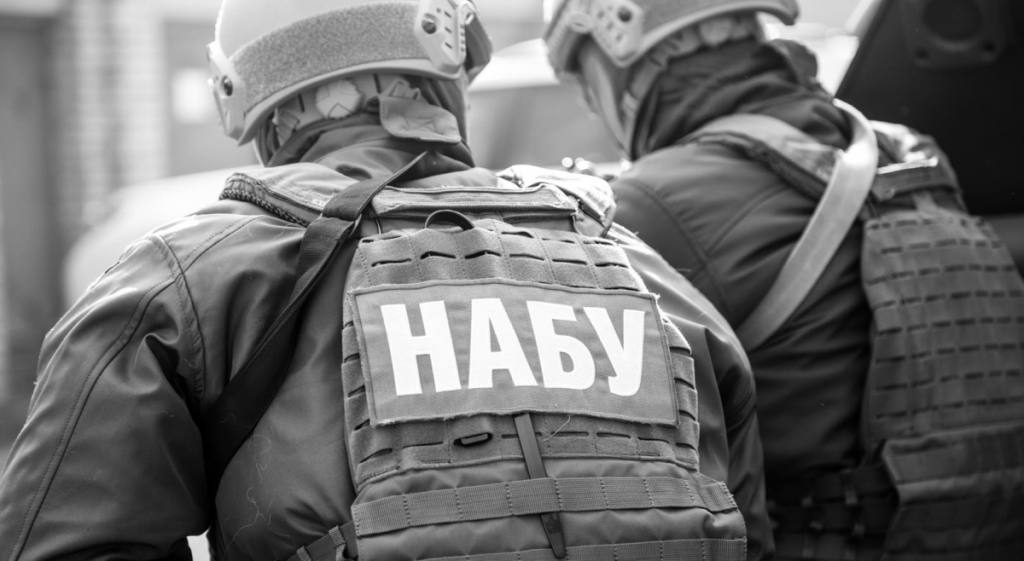
nabu

Ukraine’s National Anti-Corruption Bureau (NABU) and Specialized Anti-Corruption Prosecutor’s Office (SAPO) have launched an operation targeting an alleged criminal organization headed by an official of the Prosecutor General’s Office and involved in protecting a network of fraudulent call centers and laundering assets.

Fraudulent call centers have become a major organized-crime problem in Ukraine, with authorities investigating hundreds of suspected operations and working with international partners to pursue these networks.

NABU announced the operation on 4 September, saying further details would be released later.

Deputy department head reportedly detained

Ukrainska Pravda, citing sources, reported that NABU and SAPO had detained Serhii Kropyva, deputy head of the Prosecutor General’s Office’s Department of International Legal Cooperation.

Ukrainska Pravda also reported that investigators were carrying out searches at the Prosecutor General’s Office. The outlet published footage showing NABU employees entering the building, including climbing over its fence with ladders.

The allegations against Kropyva have not been detailed publicly by NABU, and his detention has not been officially confirmed by the Prosecutor General’s Office.

Prosecutor General’s Office pledges cooperation

The Prosecutor General’s Office said the circumstances surrounding the possible involvement of one of its employees in illegal activity connected to fraudulent call centers must be established by investigators.

The office said it would provide anti-corruption authorities with all information and assistance required by law and that the case should receive an objective legal assessment.

The employee under investigation will be suspended from official duties for the duration of the pre-trial investigation, according to the Prosecutor General’s Office.

Ukraine has been targeting fraudulent call centers

The Prosecutor General’s Office said authorities have carried out more than 1,050 searches over the past 12 months and shut down around 340 fraudulent call centers comprising more than 5,000 operator positions.

Ukrainian prosecutors have also participated in 37 international joint investigation teams coordinated by Eurojust and supported by Europol, the office said.

Authorities are currently investigating 147 criminal proceedings related to the activity. More than 183 people have been notified of suspicion, while indictments against 93 people have been sent to court, according to the Prosecutor General’s Office.

The established losses suffered by victims amount to tens of millions of hryvnias, it said.

Kropyva’s previous positions

According to Ukrainska Pravda, Kropyva previously worked in Ukraine’s Cyber Police, where he headed its Kyiv department and later served as first deputy head.

The outlet reported that former Prosecutor General Iryna Venediktova appointed Kropyva to head a newly created department in 2022 without a competitive selection process. The department was responsible for economic crimes and state cybersecurity, according to Ukrainska Pravda.

Before joining the Prosecutor General’s Office, Kropyva reportedly served as deputy head of the Odesa Regional State Administration under Oleh Kiper.

The investigation is ongoing, and the allegations have not yet been adjudicated by a court.

  •  

Spain keeps arming Ukraine against Russia’s ballistic missiles—and promises even more

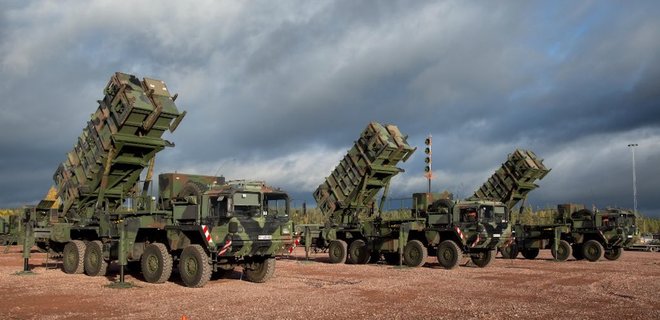
Patriot ukraine air defense

Spain will send Ukraine more Patriot interceptor missiles, Foreign Minister José Manuel Albares confirmed, according to Le Monde.

Patriot interceptors are among the few weapons Ukraine has that can stop Russian ballistic missiles. The specialized rounds are scarce worldwide, and manufacturer Raytheon cannot build them fast enough to meet demand. Each costs $3 million to $4 million.

Spain confirms the flow will grow

Albares spoke at an informal meeting of European Union foreign ministers in Ireland on 2 September. He reaffirmed Madrid's support as Kyiv pressed for more interceptors. "We have been doing this for a long time, and we will continue to do so," he said. He confirmed that Madrid is preparing a new batch. EU foreign policy chief Kaja Kallas said the bloc is also working with non-member states to lift Ukraine's air defenses.

Madrid and Kyiv meet in Wicklow

The confirmation followed talks with Ukrainian Foreign Minister Andrii Sybiha. They met on the sidelines of the same EU gathering, in Wicklow. Sybiha said he pressed Ukraine's urgent need to strengthen its air and ballistic missile defenses. He also thanked Spain for its solidarity. Albares reaffirmed Spain's role as a founding member of the Integrated Anti-Ballistic Missile Coalition, which ten countries launched in Paris on 13 July. The group aims to build a shared anti-ballistic capability, and its declaration calls the coalition purely defensive. Spanish military instructors are training Ukrainian technicians to maintain the systems.

What Spain has promised so far

Spain is not just giving—it is also buying. In December 2025, Madrid signed a $1.7 billion contract with US arms maker Raytheon for four new Patriot systems. It was Spain's largest Patriot order yet. The deal covers radars, launchers, command-and-control stations, and training. Spanish firm Sener builds the control system for the GEM-T interceptor those launchers fire. Spain is one of only a handful of European countries that operate Patriots.

What Spain has already sent

Spain has supplied Ukraine with Patriot missiles before. In March, Madrid pledged five older PAC-2 interceptors from an air-defense artillery regiment at Marines, near Valencia. Madrid has pledged €1 billion ($1.16 billion) in military aid for 2026. Ukraine has spent months urging partners to release interceptors from their stockpiles.

  •  

After Fighting Russia Fiercely, He Wants to Forge Ukraine’s Path to Peace

Kyrylo Budanov, a decorated soldier and former military spy chief, advocates a negotiated settlement. Talks are expected to resume this month.

© Jędrzej Nowicki for The New York Times

Kyrylo Budanov, chief of staff to President Volodymyr Zelensky, in his office in Kyiv, Ukraine, on Saturday.
  •  

Germany will close Russia’s Bonn consulate after attributing Leipzig Airport drone attack to Moscow

Germany will close Russia’s General Consulate in Bonn, terminate the agreement concerning the Russian House in Berlin, and tighten entry controls for Russian citizens. Foreign Minister Johann Wadephul announced this at a joint press conference with Interior Minister Alexander Dobrindt on 1 September, after German authorities formally attributed the attack at Leipzig/Halle Airport to Russia.

German investigators have identified two suspects allegedly linked to the operation: a Russian-born man with a Latvian passport and a Belarusian man with a Russian passport. This information was reported by Süddeutsche Zeitung. Investigators believe both have links to Russian state structures, according to the report.

Both men have already left Germany, complicating efforts to bring them to justice, Tagesschau reports. One of Berlin’s responses was the closure of Russia’s Consulate General in Bonn — the last Russian consulate general remaining in Germany.

Table of The Russian Consulate General in Bonn, Germany. Photo: Marc John/IMAGO

Germany tightens its Russia policy

Russia’s General Consulate in Bonn will close on 18 September, according to Wadephul. Germany will also seek additional EU sanctions against people linked to Russian hybrid attacks, increase pressure on Russia’s “shadow fleet,” and strengthen entry controls for Russian nationals.

He stated that since the beginning of "the unlawful war of aggression" against Ukraine, Germany's goal has been to bring the war to an end, restore the peace order in Europe, and return to a constructive relationship.

"However, this requires a minimum level of willingness on the Russian side. We must acknowledge that Russia shows no willingness to reach an accommodation,” Wadephul said.

Moscow rejected the accusations. Russian President Vladimir Putin called Germany’s response a “grave mistake,” TASS reports.

The investigation leads to two suspects

According to German investigators, the Belarusian suspect left DNA traces on one of the drones, inside a container containing explosives, and on an antenna found near the airport. The Russian-born suspect, who holds a Latvian passport, is believed to have coordinated and directed the operation, entered Germany through Berlin, and then traveled toward Saxony.

The Russian-born suspect left Germany two days before the attack, while the Belarusian suspect also left the country.

Drone found near a Ukrainian An-124 aircraft in Leipzig, Germany, on 5 August, 2026. Photo: screenshot from Bild video

What happened at Leipzig Airport

The diplomatic response stems from a sabotage attempt on 4 August, when a bomb-laden drone struck a Ukrainian An-124 cargo aircraft but failed to detonate. The drone, carrying explosives, remained unnoticed for about four hours before being discovered, while later analysis indicated it had been aimed at the aircraft near its fuel tanks.

  •  
❌