Vue lecture

Guerre tarifaire : mesures insuffisantes au Bas-Saint-Laurent

Le coordonnateur d’Action populaire Rimouski-Neigette, Michel Dubé, se réjouit des mesures d’atténuation mises en place pour limiter les effets de la guerre tarifaire entre le Canada et les États-Unis, mais il estime qu’elles sont insuffisantes pour les travailleurs de la région.

Il aurait souhaité que le fédéral en profite pour réformer le régime de l’assurance-emploi qui fait particulièrement mal au Bas-Saint-Laurent.

« En période de crise, les gouvernements mettent en place des mesures temporaires. Nous l’avons vu lors de la pandémie. Ce qu’on demande, c’est une réforme de l’assurance-emploi. Ça fait depuis 2015 qu’on nous la promet avec Justin Trudeau. C’est inadmissible que ça prenne 700 heures de travail pour se qualifier au Bas-Saint-Laurent où il y a plusieurs emplois saisonniers, sans compter le fameux trou noir entre la fin des prestations et le retour à l’emploi de nos travailleurs saisonniers qui doivent vivre sur le crédit ou sur l’assistance sociale », commente monsieur Dubé.

Taux de chômage plus bas qu’à Montréal ou Toronto

Au Bas-Saint-Laurent, un travailleur doit faire 700 heures pour se qualifier à l’assurance-emploi, mais ce nombre d’heures lui octroie seulement 14 semaines de prestations, ce qui les mènent à février ou début mars. Le nombre maximal de semaines de prestations dans la région est de 36.

« Les travailleurs du Bas-Saint-Laurent doivent cumuler plus d’heures que ceux de Montréal ou de Toronto pour se qualifier à l’assurance-emploi parce que le taux de chômage est plus bas dans la région que dans ces grandes villes. C’est totalement aberrant et ça nuit notamment aux travailleurs forestiers », souligne Michel Dubé.
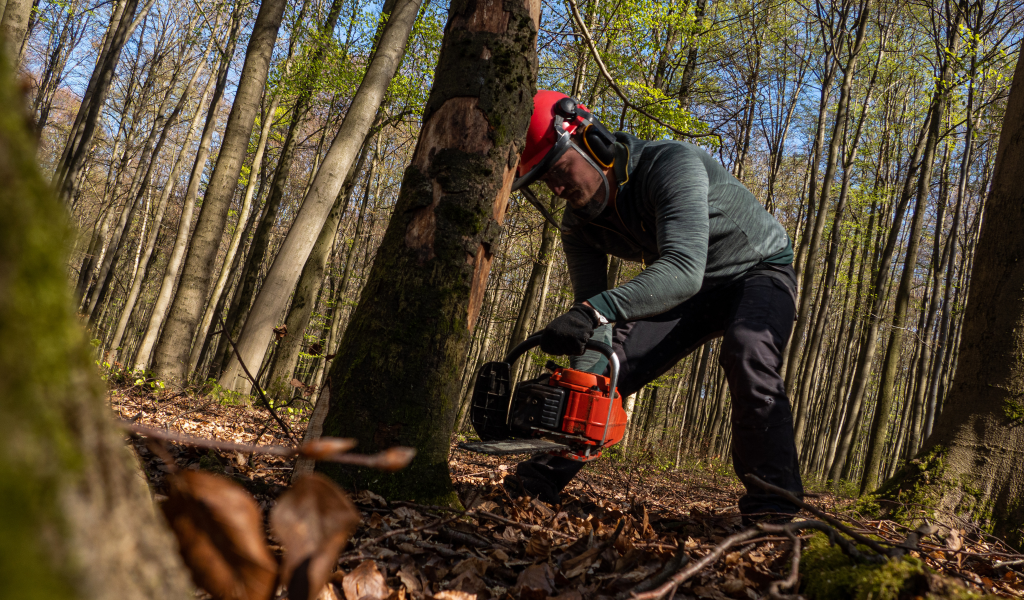
Un travailleur forestier (Photo courtoisie)

« Il n’y a pas seulement les entreprises dont les produits sont frappés par des tarifs américains qui seront affectées. L’ensemble des entreprises sera touché. Lorsqu’il y a des perturbations économiques, c’est toute la chaîne qui est frappée. Nous avons besoin de mesures pour l’ensemble des travailleurs », illustre monsieur Dubé.

Mesures temporaires

Action populaire Rimouski-Neigette se réjouit de la prolongation des mesures temporaires à l’assurance-emploi annoncées par le gouvernement fédéral dans le cadre de la guerre commerciale avec les États-Unis, ainsi que de la nouvelle mesure temporaire visant les départs volontaires.

« Cette nouvelle prolongation des mesures suspendant le délai de carence et les règles entourant le traitement des indemnités de cessation d’emploi pour un an est une très bonne nouvelle. Elle démontre encore une fois la nécessité que ces mesures deviennent permanentes et que l’on élimine ainsi les obstacles administratifs empêchant les gens d’avoir accès à leurs prestations », précise Michel Dubé.

Action populaire Rimouski-Neigette aurait préféré que le gouvernement revienne à sa mesure élargissant l’admissibilité au programme plutôt que de faire perdurer une division inutile et arbitraire entre les travailleurs.

« On laisse tomber les plus précaires qui auront besoin de soutien pour faire face à la tempête économique actuelle. On ne s’attarde pas aux travailleurs saisonniers et ils sont nombreux dans l’Est-du-Québec », déplore monsieur Dubé.

  •  

As Trump Throws a Midterm Party, Some Vulnerable Republicans Send Regrets

Many members of Congress in the most competitive re-election races are skipping the chance to share a pep rally stage with President Trump.

© Francis Chung/POLITICO, via Associated Press

Representative David Valadao of California said that President Trump had a part to play in the midterm elections, but that navigating around a deeply unpopular president and his policies was a challenge.
  •  

How the Hell Did an Island Suddenly Appear, Then Vanish?

How the Hell Did an Island Suddenly Appear, Then Vanish?

An island that appeared to suddenly materialize, then vanish, on Williston Lake in British Columbia over the summer was rediscovered on the massive reservoir on Monday. 

Once you’ve taken that all in, let’s ask the important question: How the heck did that happen? 

The existence of the disappearing island—a floating mass of trees and vegetation that measures about 230 feet by 460 feet—sparked international attention last month after Rocky Avery, a local resident, posted a viral video of it that was sent to him by one of his boater friends, according to CBC News.

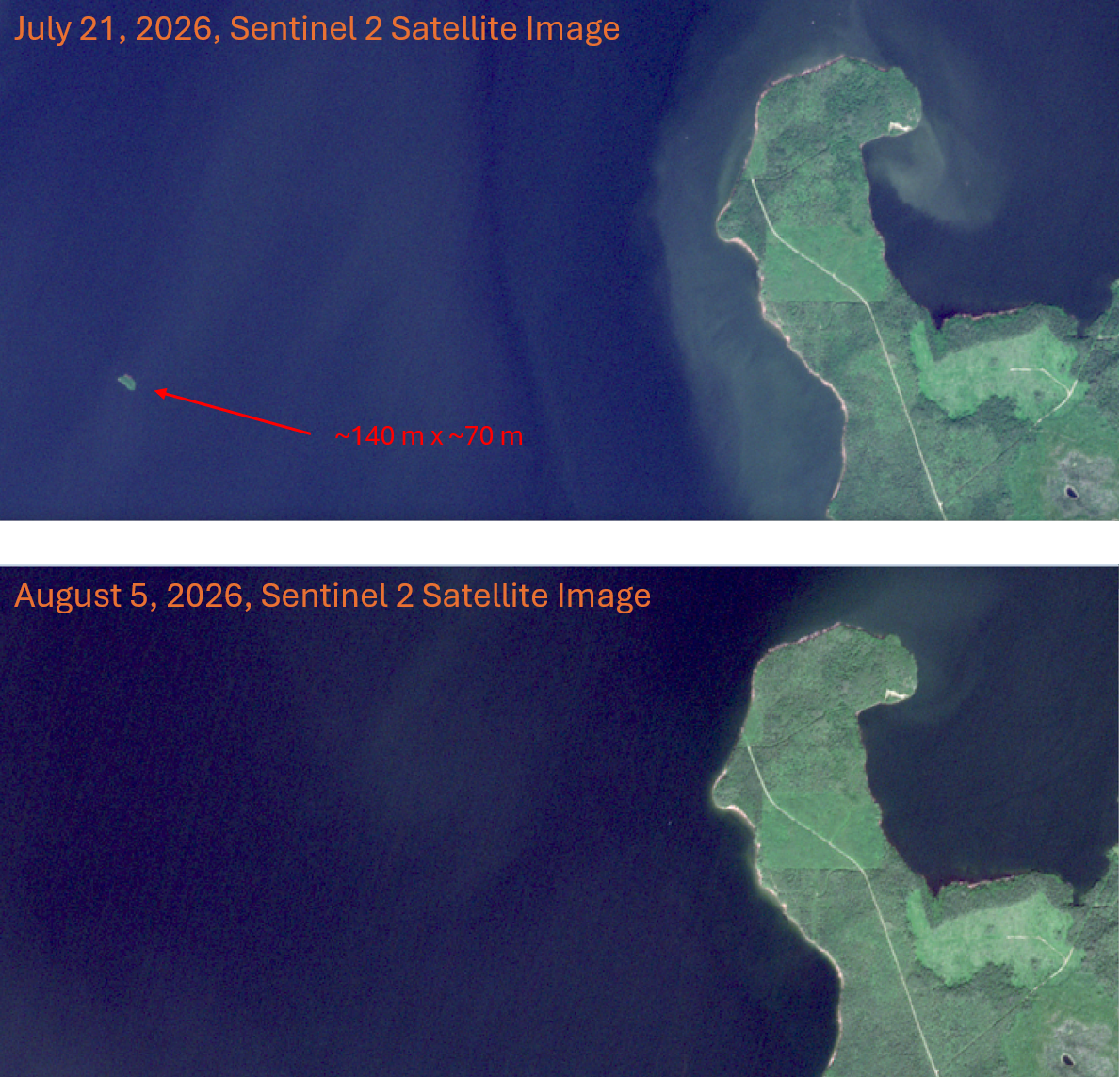
Bob Gammer, a spokesperson for BC Hydro, was initially suspicious that the video might be AI, but confirmed it was authentic after spotting the island drifting about 60 miles west of the W.A.C. Bennett Dam in satellite images taken on July 21. In satellite images from August 5th and circulated last week, it was no longer visible, sparking a search over the past few days that led to its rediscovery about 20 miles northwest of where it had previously been spotted.

“We had some earlier satellite imagery that confirmed that this wasn't just a hoax or some kind of AI thing, and that it really was real,” Gammer told 404 Media in a call. “Since then we've had more photos from people on their boats on the water sailing right up to this island, and additional satellite imagery that puts it all together to say that this is a real thing. It’s a sizable island.”

How the Hell Did an Island Suddenly Appear, Then Vanish?
Satellite images provided by BC Hydro to CBC. Image: BC Hydro

As it turns out, this isn’t a new phenomenon—though Gammer said it hasn’t been reported on Williston Lake before. Floating islands form on shorelines over many years, as natural rafts made of driftwood can allow plants and trees to grow above the water. These platforms can then detach in certain conditions, such as stormy weather or flooded shores, allowing them to meander into the water. 

Williston Lake is a reservoir created by the massive W.A.C. Bennett Dam, which stands more than 600 feet high. Due to high snowpack and precipitation, the dam was opened in June and July, filling the reservoir for the first time in 14 years, according to Gammer. These high water levels, in addition to strong winds, likely dislodged the island, allowing it to float freely in the water.

“This is all brand new to us,” Gammer said. “We've never seen anything like this on the reservoir.”

BC Hydro is urging boaters to keep their distance and not to step on the island. Despite its size, the forested mass is structurally flimsy and hazardous to walk on. Other than birds, no animals have been spotted on the island. However, animals have accidentally been swept away on these natural rafts; indeed, many species have crossed oceans and reached new continents this way.

The island doesn’t pose any risk to the dam or vessels, and its journey around the lake is now being monitored by BC Hydro through satellite images and eyewitness reports. This waterborne woodland may disintegrate over time, or become reattached to the shoreline. If it survives until winter, it could be frozen into the ice and perhaps thaw out again in spring.

“It's a break from everyday reality, and so it's really captured a lot of attention,” Gammer said. “There's a lot of media interest, and it's been great to be able to tell the story. And who knows how long this will last? I mean, in terms of its news value, I'm sure it'll disappear within a few days. But the island will be there for a while. We'll be monitoring it, and if there's anything exciting about it, we may be able to tell that story too.”

  •  

Trump Administration Launches Blitz to Find Elusive Voter Fraud Ahead of Midterms

The practice is exceedingly rare, but President Trump has fixated on rooting it out this year, claiming without evidence that tens of thousands of noncitizens are registered to vote.

© Valerie Plesch for The New York Times

The Department of Homeland Security is scouring state voter rolls for evidence of fraud ahead of the November elections.
  •  

Ukraine says it busted a Kyiv crypto ring that drained EU citizens’ wallets

SBU and Prosecutor General’s Office personnel stand inside a crowded room with computers as several people with pixelated faces lie or sit on the floor. An armed tactical officer stands near the back.

Ukraine’s Security Service (SBU) and National Police shut down a Kyiv-based network of several dozen people who allegedly used fake cryptocurrency investment platforms and malicious code to steal digital assets from citizens of EU countries, the SBU said on 1 September.

Investigators identified the alleged organizer as a 25-year-old Kyiv IT specialist, according to the SBU. The case reaches beyond Ukraine because the agency says the alleged victims were EU citizens. The agency said the network’s monthly turnover from funds obtained illegally could reach $1 million during its most lucrative periods.

The SBU said investigators had documented alleged crimes by every member of the group. However, its statement did not specify how long the network had operated, how many EU citizens were affected, which countries they lived in, or the total amount allegedly stolen.

The agency did not name any foreign law enforcement partners involved.

How the crypto ring operated

The alleged organizer of the crypto ring recruited other tech workers in the capital, the SBU said. Posing as cryptocurrency-platform representatives, they offered targets seemingly profitable ways to invest in digital assets.

The network found victims by posting about supposedly lucrative crypto projects in popular Telegram channels, then showed them fabricated trading results and fake profits to make the operation look legitimate, investigators said.

Engaged targets were sent a link to a counterfeit site that mimicked a real crypto service and were persuaded to connect their wallets and approve a transaction, the SBU said. The site carried malicious code called a “drainer” that, the agency said, let the operators withdraw the victims’ assets to addresses they controlled—emptying the wallets.

During 23 searches of the suspects’ offices and homes, officers seized phones, computers, money believed to be criminal proceeds, and 16 high-end cars, including Porsche, BMW, and Mercedes-Benz models, the SBU said.

Authorities were still deciding whether to serve notices of suspicion, while the investigation continued under the Prosecutor General’s Office, the SBU said. Those involved could face up to 12 years in prison with confiscation of property.

Ukraine’s role in combating cross-border cybercrime

Ukraine has previously joined with foreign agencies to pursue cross-border cyber threats. In April, the SBU said it worked with the FBI, EU law enforcement, and Polish counterintelligence to disrupt Russian military-intelligence spying through hacked routers. The operation blocked more than 100 servers and removed hundreds of routers in Ukraine from Russian control.

  •  

Drone explosif à l'aéroport allemand de Leipzig : les capitales européennes durcissent le ton face au Kremlin

Deux postes électriques ont été sabotés en moins de 24 heures. Pour l’heure, aucun lien n’est établi avec Moscou. Ces actes interviennent au lendemain de la mise en cause directe de la Russie par Berlin dans l’attaque au drone de l’aéroport de Leipzig. Les capitales européennes durcissent le ton face au Kremlin.

  •  

US prosecutors refuse to say if they secretly obtained Don Lemon’s phone records

Experts have expressed deep concerns that the practice runs afoul of the fourth amendment’s right to privacy

Federal prosecutors have declined to say whether they secretly obtained phone records for the journalist Don Lemon using an unusual administrative summons, his lawyers said in a Monday court filing, highlighting concern about a controversial legal authority the government has claimed to gather information as it charged Lemon and dozens of others with civil rights crimes in connection to a January protest at a church in Saint Paul, Minnesota.

In January, officials served Verizon with an administrative summons for a log of Lemon’s phone records between 19 December and 20 January. The subpoena did not come from a grand jury, as is typical in criminal investigation, and also was not a court-approved search warrant. Instead, it was a unilateral request from the Department of Homeland Security (DHS), which said it was requesting the information under 19 USC 1509 – an obscure law that gives the department power to investigate records related to customs issues. Experts say the government is abusing that authority to gather records on journalists, activists, unions, non-profits and online critics, and have expressed deep concerns that the practice runs afoul of the fourth amendment’s right to privacy.

Continue reading...

© Photograph: Paras Griffin/Getty Images

© Photograph: Paras Griffin/Getty Images

© Photograph: Paras Griffin/Getty Images

  •  

42,020 troops, 1,827 artillery systems, 89 tanks: Ukraine’s tally of what it cost Russia to keep fighting in August

Soldiers of Ukraine’s 425th Separate Assault Regiment Skelia. Photo: Skelia

Russian losses reached one of the highest of the entire full-scale war in August, Ukraine's Defense Ministry says, citing General Staff data. Last month, Ukraine killed or wounded 42,020 invaders.

As its frontline losses climb, Russia is escalating its terror against Ukraine's civilians. Moscow uses large numbers of ballistic missiles and new jet-powered drones to do it. Russia opened its latest drone assault on 27 August, two days after CIA director John Ratcliffe arrived in Moscow, and has kept it up since.

For comparison, Russia lost 42,860 soldiers in July, 33,760 in May, and 39,290 in June, the ministry says.

Ukraine takes another step toward its goal

Ukraine's Defense Ministry states that effectively destroying Russian manpower and logistics is among its priorities, so that Russia's losses reach a level that forces it to abandon its plans of conquest.

"August's losses for the Russian army were another step toward reaching that goal," the Defense Ministry says.

Ukraine began its logistics lockdown late this May. It is a coordinated campaign to scale up medium-range drone strikes against Russian supply convoys, depots, command nodes, and air-defense systems 20 to 200 kilometers behind the front.

Russia loses more than men

Ukraine's Defense Forces also struck 13,835 vehicles and fuel tankers in August.

Over the month they hit an estimated:

  • 89 tanks;
  • 197 armored combat vehicles.
  • On top of that, 1,827 Russian artillery systems were destroyed or disabled.

"Inflicting such losses systematically raises the cost of continuing the war for Russia and forces it to spend ever more resources replacing manpower, equipment, and weapons," the ministry says.

How does Russia answer the losses?

Ukraine's Office of the President has said Russia is preparing an additional mobilization wave in 2026–2027, aiming to draft 300,000 people this year and 300,000 next. Those figures are a response to the steady rise in frontline losses, the office adds.

Meanwhile, Russian President Vladimir Putin called that information "nonsense" after the Shanghai Cooperation Organization summit in Bishkek.

At the same time, legal-aid organizations report a covert mobilization across Russia's regions and occupied territories. Over the past month and a half, residents of at least 17 Russian regions have complained of forcible detention, beatings, and coercion into signing contracts with the Russian Defense Ministry.

  •  

Kazakh refinery deal could ease Russia’s front-line fuel pressure—but it covers just 0.3% of demand

Kazakh President Kassym-Jomart Tokayev and Russian President Vladimir Putin walk past an honor guard in Astana, Kazakhstan, on 27 November 2024.

Kazakhstan’s privately owned Kondensat refinery will process Russian crude and return about 70% of the resulting petroleum products to Russia, Kazakh Energy Minister Yerlan Akkenzhenov said on 25 August, Radio Liberty reported.

Based on figures reported by Radio Liberty, the roughly 70% of Kondensat’s maximum gasoline output bound for Russia would amount to about 0.3% of the country’s daily summer gasoline demand. That makes the arrangement a limited stopgap rather than a solution. John Roberts of the Atlantic Council nevertheless told the outlet that even small additional supplies could help during an acute shortage, including at the front: “It helps, but it doesn’t solve the problem.”

Ukrainian drone strikes have knocked dozens of Russian refineries offline in recent months, forcing Moscow to restrict fuel exports and reimpose rationing, Radio Liberty reported. Gasoline caps returned to Moscow and St. Petersburg in August, while Rosneft reportedly limited fills to 30 liters per car at every station nationwide.

Kondensat has processed Russian oil before. The refinery began handling supplies delivered through Tatneft’s TANECO refinery in 2024, when Kazakhstan and Russia agreed to permit exports of fuel produced from Russian feedstock back to Russia. The arrangement was renewed in 2025, according to Radio Liberty.

Central Asia has no spare refining capacity that could materially change Russia’s situation, Ukrainian energy analyst Hennadiy Riabtsev told Radio Liberty’s Schemes project. Possible contributions from Kazakhstan, Kyrgyzstan, India, China, and Belarus would remain a drop in the ocean for the Russian market, he said.

Prospective suppliers also understand that Russian fuel demand supports the war effort and that assisting Moscow could carry sanctions risks, Ukraine’s presidential sanctions commissioner, Vladyslav Vlasiuk, told Schemes. Kyiv therefore does not expect a queue of countries willing to supply Russia with petroleum products, he said.

Russia’s fuel shortage gives Kazakhstan room to bargain

Russia’s shortage has spread from gas station queues to farming and public transport, with fuel-sale restrictions officially covering more than 40 regions by July, Euromaidan Press reported, citing The Moscow Times. Moscow’s export restrictions have also raised prices and tightened supplies across Central Asia.

Yet Russia’s growing dependence gives Kazakhstan additional bargaining room. Ukrainian strikes have previously prompted Russian retailer Wildberries to expand its warehousing operations in Kazakhstan, while Astana has promoted domestic competitors.

  •  

MMA fight in Florida condemned after fighter’s antisemitic comments

Paul Miller, an openly racist fighter, derided Ben Azoulay, and a spectator was ejected for waving a swastika flag

Democrats in Florida have condemned a professional mixed martial arts event in Orlando at which an openly racist fighter derided his beaten opponent as “a short little fucking Jew prick”, and a spectator was ejected for waving a giant swastika flag.

Anna Eskamani, a Democratic state representative running to become the city’s mayor, said Saturday’s event, and the assertion by city officials that they were compelled to host it, were unacceptable.

Continue reading...

© Photograph: James Gilbert/Getty Images

© Photograph: James Gilbert/Getty Images

© Photograph: James Gilbert/Getty Images

  •  

Automne 2026 : l’ADAUQAR mise sur l’innovation

L’Association pour le développement des ainés et ainées à l’UQAR (ADAUQAR) dévoile sa programmation d’automne 2026, une saison qui se distingue par plusieurs premières et une offre renouvelée d’environ 80 formations, conférences et visites.

L’ADAUQAR propose une programmation audacieuse et profondément ancrée dans les enjeux contemporains, notamment en santé, activité physique, environnement, géopolitique, patrimoine et innovation régionale.

Parmi les nouveautés figure Je Déstresse en Sagesse, un programme conçu par le Centre d’études sur le stress humain.

Grâce à des activités interactives et des outils pratiques, les participants apprendront à reconnaître les mécanismes du stress et à mieux les gérer au quotidien. Ce projet est financé en partie par le programme Nouveaux Horizons pour les aînés du gouvernement du Canada.

Par ailleurs, la formation Le voyage au bout de son âge est offerte en présence à Lévis (une nouveauté !) grâce à une collaboration avec la Maison du loisir 50+ de Lévis.

L’ADAUQAR offre également, pour la première fois, des activités physiques en gymnase avec des initiations au pickleball et à l’Ultimate frisbee, deux disciplines accessibles qui favorisent le maintien d’un mode de vie actif.

L’ADAUQAR accueille Sami Aoun et Gaétan Lelièvre, des experts reconnus, pour traiter d’enjeux géopolitiques à l’échelle internationale et québécoise.

Connaissances sur le Saint-Laurent

Les questions environnementales occupent aussi une place importante notamment avec Lyne G Morissette.

Les participants pourront approfondir leurs connaissances sur le Saint-Laurent, le papillon monarque, les innovations liées à l’érable rouge ainsi que les nouvelles cartographies des zones inondables.

Trois visites immersives permettront par ailleurs de découvrir des acteurs clés de l’innovation régionale. À L’Isle-Verte, Litière Ouellet présentera ses installations modernisées, sa robotisation et ses pratiques environnementales.

GE Vernova ouvrira les portes de l’un des plus importants sites de fabrication de pales d’éoliennes en Amérique du Nord, à Gaspé.

À Rimouski, Innovation maritime et le Centre de formation en plongée professionnelle offriront un aperçu des recherches appliquées et des formations spécialisées qui soutiennent l’industrie maritime québécoise.

Tous les renseignements sur la programmation de l’automne 2026 sont disponibles sur le site web à www.adauqar.ca, poste 1661 ou par courriel à info@adauqar.cacelles gratuites, est obligatoire.

  •  
❌