Vue lecture

La course en sentier mobilise plus de 10 000 personnes à Mont-Tremblant

La ville de Mont-Tremblant, dans les Laurentides, accueille d’aujourd’hui à dimanche la première édition de la course Boréalys Mont-Tremblant.

  • C’est la première compétition présentée au Québec du réseau UTMB World Series, dont l’événement phare est l’Ultra-Trail du Mont-Blanc, dans les Alpes françaises.

L’événement, qui a affiché complet en moins de deux jours, pourrait générer des retombées économiques de plusieurs millions de dollars dans la région, a dit à InfoBref Samuel Matte-Thibault, directeur général de l’événement.


Boréalys Mont-Tremblant est coproduit par UTMB World Series, un circuit mondial de course en sentier, et Événements Harricana, un OBNL montréalais.

Les organisateurs attendent 4000 coureurs de 44 nationalités. 

Ils participeront à 6 épreuves allant de 5 km à 100 km.

L’événement est prestigieux parce qu’il permet aux participants «d’accumuler des points pour se qualifier à l’UTMB du Mont-Blanc», explique Samuel Matte-Thibault.

La course en sentier est de plus en plus populaire

Il y a 10 ans, un tel événement n’aurait pas attiré autant de coureurs et les inscriptions ne se seraient pas écoulées aussi rapidement, reconnait l’organisateur.

«Le sport est en pleine expansion en ce moment, la communauté de coureurs en sentier grandit chaque année et attire de nouveaux adeptes», observe-t-il.

En comptant les familles et les accompagnateurs, plus de 10 000 personnes devraient séjourner dans la région à cause de l’événement. 

Ces séjours pourraient générer quelque 10 millions $ en retombées, selon les organisateurs.

[L'article La course en sentier mobilise plus de 10 000 personnes à Mont-Tremblant a d'abord été publié dans InfoBref.]
  •  

Le Rimouskois Vincent Bois participera au rodéo de Saint-Gabriel

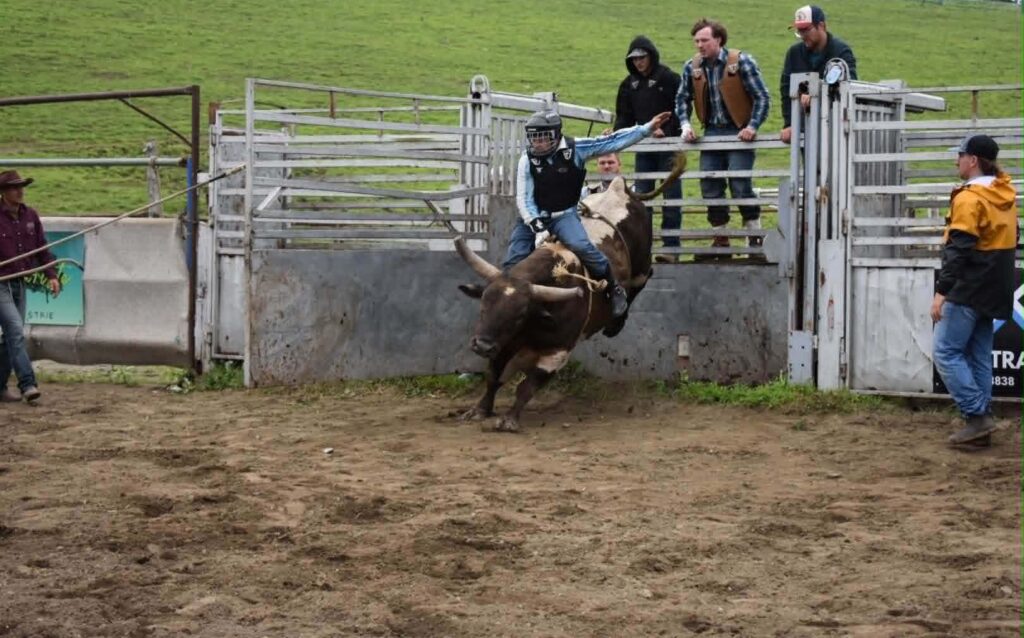
Le Rimouskois Vincent Bois tentera de relever le défi de rester huit secondes sur le dos d’un taureau lors du rodéo de Saint-Gabriel qui se tiendra, les 14 et 15 août, dans le cadre du Festival country western. Il prendra part à l’épreuve reine du rodéo, celle des taureaux.

C’est après avoir assisté au rodéo de Saint-Tite, l’an dernier, que Vincent a souhaité essayer de monter sur un taureau et il a attrapé la piqûre. Depuis il pratique chaque semaine et il a participé à une première compétition à Ayers Cliff, en Estrie.

« J’ai commencé le 9 mai dernier au Ranch Roumers à Stanstead, en Estrie. Ce sera ma 2e compétition à Saint-Gabriel. Je compétitionne au sein de la North Rodeo Cowboy Association (NRCA), qui couvre l’événement de Saint-Gabriel. Ce sera plaisant de performer devant famille et amis. Un de mes bons chums Brandon Beauregard, sera aussi en compétition, le vendredi soir. Le rodéo, c’est une famille », raconte le monteur de taureaux de 29 ans.

Défi de huit secondes

Pour commencer, Vincent Bois a été guidé par quelques amis de hockey qui font du rodéo.

« J’ai monté mes premiers bœufs en mai et la passion s’est rapidement installée. L’épreuve est d’une durée de huit secondes. On doit rester huit secondes sur le taureau. Si tu réussis, il y a une évauation des juges sur 100 points, la moitié pour le conducteur et la moitié pour le taureau. Pour le bœuf, les juges tiennent compte de la façon dont il saute et se déplace et pour le conducteur, c’est sa façon de réagir aux mouvements du taureau qui est évalué ».

Vincent Bois (Photo courtoisie)

Vincent indique qu’il faut beaucoup de pratique pour réussir à rester huit secondes sur un taureau sauvage, qui fait tout pour se débarrasser de son passager.

« Depuis le mois de mai, je suis allé à trois cliniques de perfectionnement en Estrie. Je veux juste m’amuser. Je me fais des chums. Quand je suis sur un bœuf, plus rien ne compte à part moi et l’animal. Ce n’est pas une guerre. C’est une danse. Si tu embarques, il faut que tu sois prêt à 100% mentalement. On essaie d’offrir le meilleur show possible », mentionne celui qui envisage d’aller faire des cliniques de perfectionnement aux États-Unis, l‘hiver prochain.

  •  

Ukraine asks the EU for €220 million to unlock €4 billion in farm loans as Russia’s port strikes choke exports

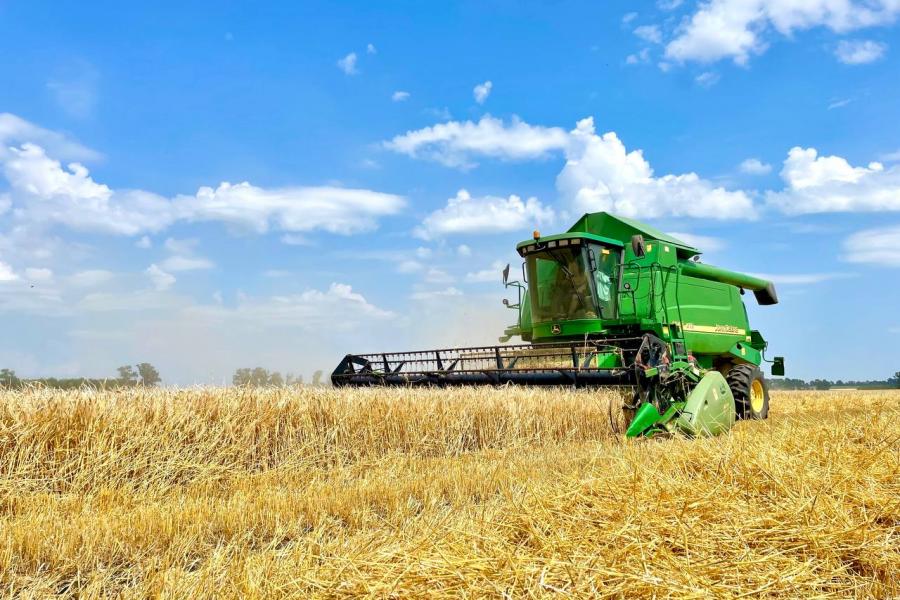
A green combine harvester cuts wheat beneath a blue, partly cloudy sky.

Ukraine and international partners agreed to work urgently on a mechanism for up to €4 billion ($4.6 billion) in farm loans, Ukrinform reported on 13 August. The plan would use a proposed €220 million ($253 million) EU grant, the Agriculture Ministry said.

Ukraine rebuilt its maritime trade after pushing Russia’s fleet away from its coast. By 2025, its Black Sea route carried about 92% of the country’s grain and oilseed exports. Russia is now striking the Odesa ports sustaining that recovery. The ministry says the attacks have closed three deep-water ports. Ukraine planned to export 64.4 million tons of agricultural products in 2026/27, but now says shipments may reach only 29.6 million tons. The proposed loan mechanism is meant to cover that cash shortfall before next year’s sowing.

EU and Norwegian diplomats joined the meeting with representatives of the World Bank and the UN Food and Agriculture Organization.

The participants agreed to develop the plan through the Ukraine Facility and EU guarantee institutions. They aim to do so in the coming weeks, before fall storage use peaks. The grant has not yet been approved.

Odesa attacks send Kyiv toward Baltic ports

The loan plan comes as Russia’s attacks force Ukraine to seek new export routes.

Russia initially blockaded Ukraine’s ports after launching its full-scale invasion. Ukraine later restored a sea corridor after forcing much of Russia’s Black Sea Fleet away. Moscow then shifted pressure to missiles and drones, hitting Ukrainian ports 90 times in 2025 and intensifying attacks this summer.

A Russian strike killed 10 people aboard the grain-carrying Golden Leo on 19 July. Three days later, no ship passed through the corridor.

Kyiv is now considering the Polish Baltic ports of Gdańsk, Gdynia, Szczecin, and Świnoujście. Yet the ministry estimates that all alternative routes may eventually carry only 2.9 million tons a month. Ukraine’s monthly target was 5.4 million tons.

Farm loans target next year’s sowing

The €220 million would not go directly to growers. It would subsidize interest and partly cover banks’ lending risks, including by expanding Ukraine’s “5-7-9%” affordable-loan program.

The ministry wants the support to generate €4 billion in farm loans at annual rates no higher than 10%. It calculates that every euro of grant money could mobilize more than €18 in lending.

Ukraine has also temporarily adjusted minimum export price coefficients to offset higher logistics costs, meeting participants noted. Without grain sales, farmers struggle to pay wages and land rents or buy fuel and fertilizer. By November, Ukraine's storage shortfall could reach 11 million tons of crops, with more than €10.8 billion ($12.4 billion) tied up in unsold stocks.

  •  

Moldova overtakes every EU country as Ukraine’s top dairy buyer

sandu and zelenskyy

Moldova has overtaken Poland and Germany to become the largest foreign buyer of Ukrainian dairy products in the first seven months of 2026. It is not the win it sounds like.

A country of some 2.5 million people now buys more Ukrainian dairy than any EU member, as falling European prices make EU sales less attractive and cheap imports capture a growing share of Ukraine’s home market.

Ukraine now buys about as much dairy from abroad as it sells—unusual for a country used to exporting it.

Why the EU sales stopped paying

Over that period, the Association of Milk Producers reports, dairy exports shrank by almost a fifth in value against last year, while imports rose by more than a third. Ukraine now buys about as much dairy from abroad as it sells—unusual for a country used to exporting it.

What pushed producers toward a small neighbor rather than the EU was price: European wholesale prices for butter and milk powder fell throughout the summer, until selling into the EU stopped paying. The association expects that to reverse only if prices climb again in the autumn.

The pull shows up most in butter, where Moldova is now the largest butter buyer, taking more than four of every ten kilograms Ukraine exports, even as the total shrinks.

Ukrainian grain
Explore further

Ukraine and Moldova discuss rail corridor for grain amid Russian Black Sea attacks

Cheaper cheese from Poland and other EU states now feeds more than half of Ukraine’s cheese market, up from under 40 percent at the start of 2025, and Ukrainian cheesemakers have cut production rather than compete.

According to the association, a large share is declared as humanitarian aid, allowing it to enter without being tested, without Ukrainian labels, and free of duties and VAT. The association estimates that this costs the budget at least 730 million hryvnias ($16 million) a year.

Moldova subsidizes its own dairy farmers for every liter of milk they sell, yet it now buys more Ukrainian dairy products than any other country.

  •  

Russian Blockade of Major Ukrainian Ports Threatens Global Grain Supplies

The deadly strikes are part of a long-running maritime battle with Ukraine and echo battles over other key shipping routes around the world.

© Reuters

A vessel struck off the coast of Odesa, Ukraine, last month. The Russian campaign has halted nearly all shipping in and out of the port.
  •  
❌