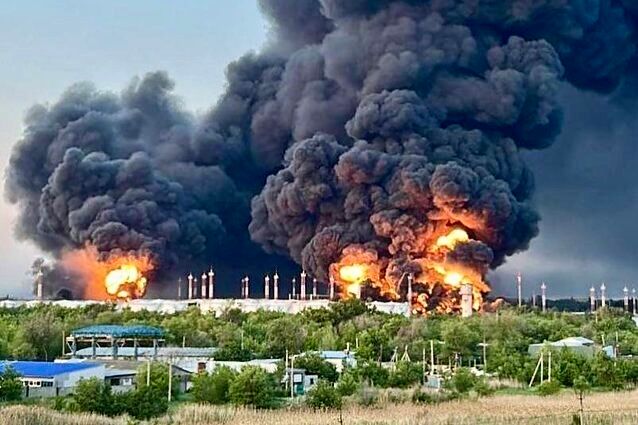
The Nevinnomyssk Azot chemical plant — one of Russia’s largest producers of nitrogen fertilizer and ammonia and a key supplier to the Kremlin's military-industrial complex — has suspended production, Russian independent media outlet Astra reported on June 16.
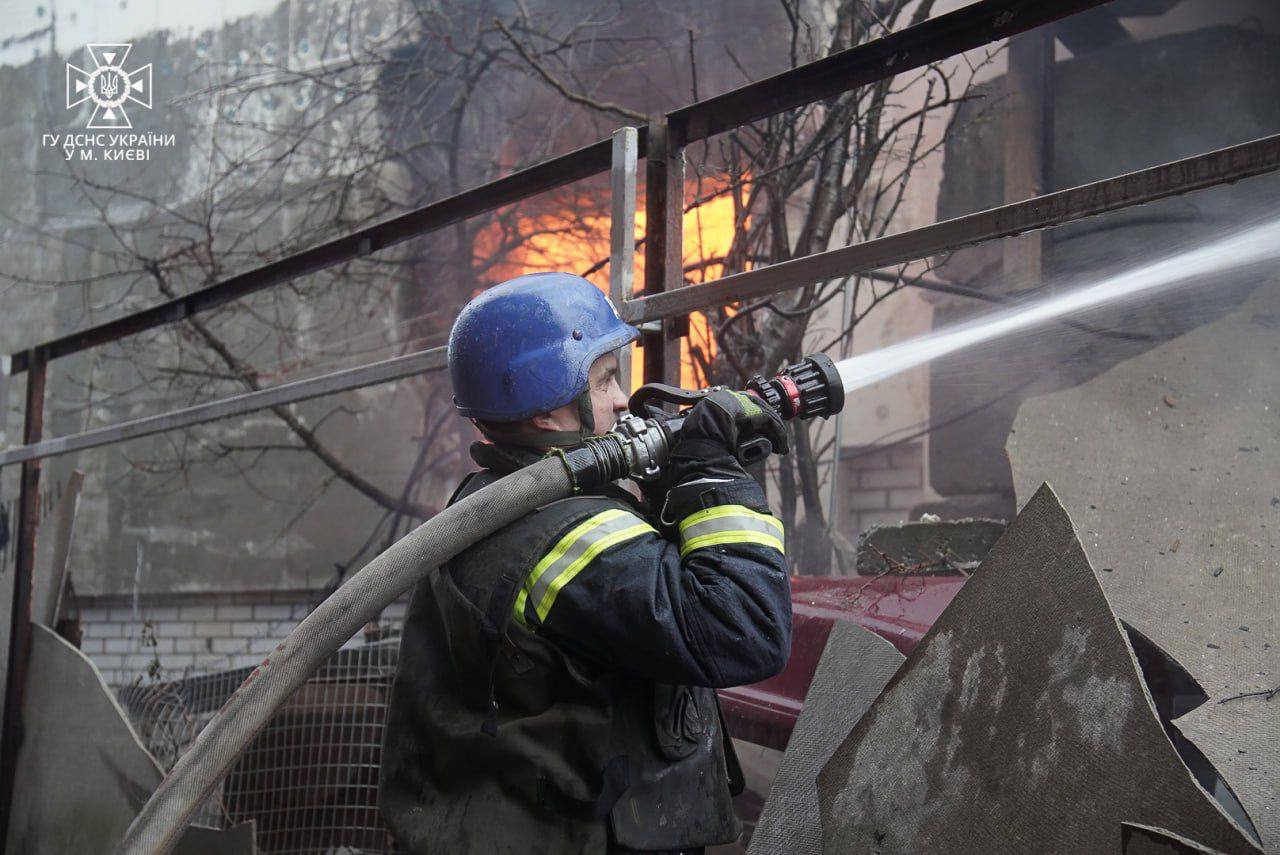
According to Astra, the chemical plant suspended production as a direct result of Ukrainian drone strikes. The strike — which was confirmed by Ukraine’s General Staff on June 14 — targeted two major military-industrial facilities in Russia, including the Nevinnomyssk Azot plant in Stavropol Krai. The facility reportedly supplied raw materials and components for Russia’s weapons and fuel production.
Nevinnomyssk Azot is among Russia's top producers of ammonia and nitrogen fertilizers and hosts the country’s only production lines for methyl acetate and high-purity acetic acid. It also operates Russia’s first melamine production facility, according to open-source data.
According to Andrii Kovalenko, head of Ukraine's Center for Countering Disinformation at the National Security and Defense Council, the plant produces up to one million tons of ammonia and over one million tons of ammonium nitrate annually, is "a critical element of Russia's military-industrial complex."
Kovalenko noted that ammonium nitrate is a key component for explosives and artillery shells. He added that the plant also synthesizes dual-use chemicals such as melamine, acetic acid, methanol, and potassium nitrate — all frequently used in the production of grenade launchers, mines, and rocket charges.
Since 2024, the plant has also been producing water-soluble fertilizers, which he said have been adapted to serve military chemical needs as part of Russia's war in Ukraine.
The chemical plant is part of the EuroChem Group, owned by Russian billionaire Andrey Melnichenko, who is currently sanctioned by Canada, the European Union, Japan, and the United Kingdom.
Editor's note: This is a breaking story and is being updated.
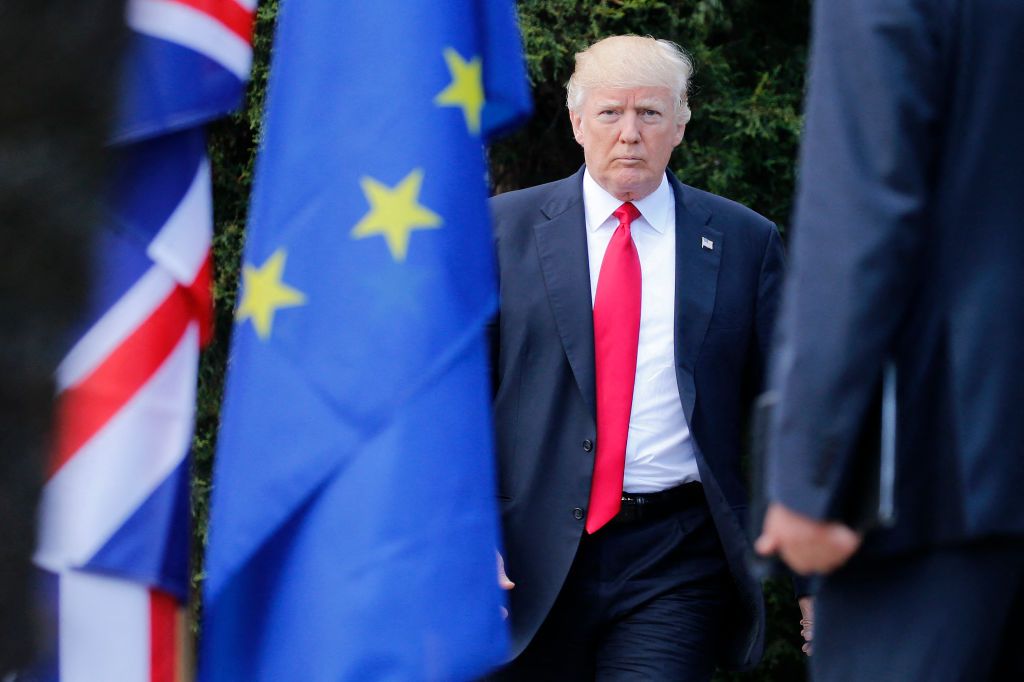
U.S. President Donald Trump departed the G7 Leaders' Summit late on June 16, ahead of an anticipated high-stakes meeting with President Volodymyr Zelensky on June 17.
White House Press Secretary Karoline Leavitt said that the departure comes as Trump is set to attend to "important matters."
"Because of what’s going on in the Middle East, President Trump will be leaving tonight after dinner with Heads of State," Leavitt wrote on X.
"I have to be back as soon as I can... because of what's going on in the Middle East" Trump told reporters.
"I have to be back early for obvious reasons," Trump said, without further elaborating.
In a post on Truth Social, Trump warned ahead of the departure that "Everyone should immediately evacuate Tehran!"
It was not immediately clear as to whether Trump will return for the final day of the summit on June 17.
Zelensky is expected to participate in previously planned G7 events as scheduled.
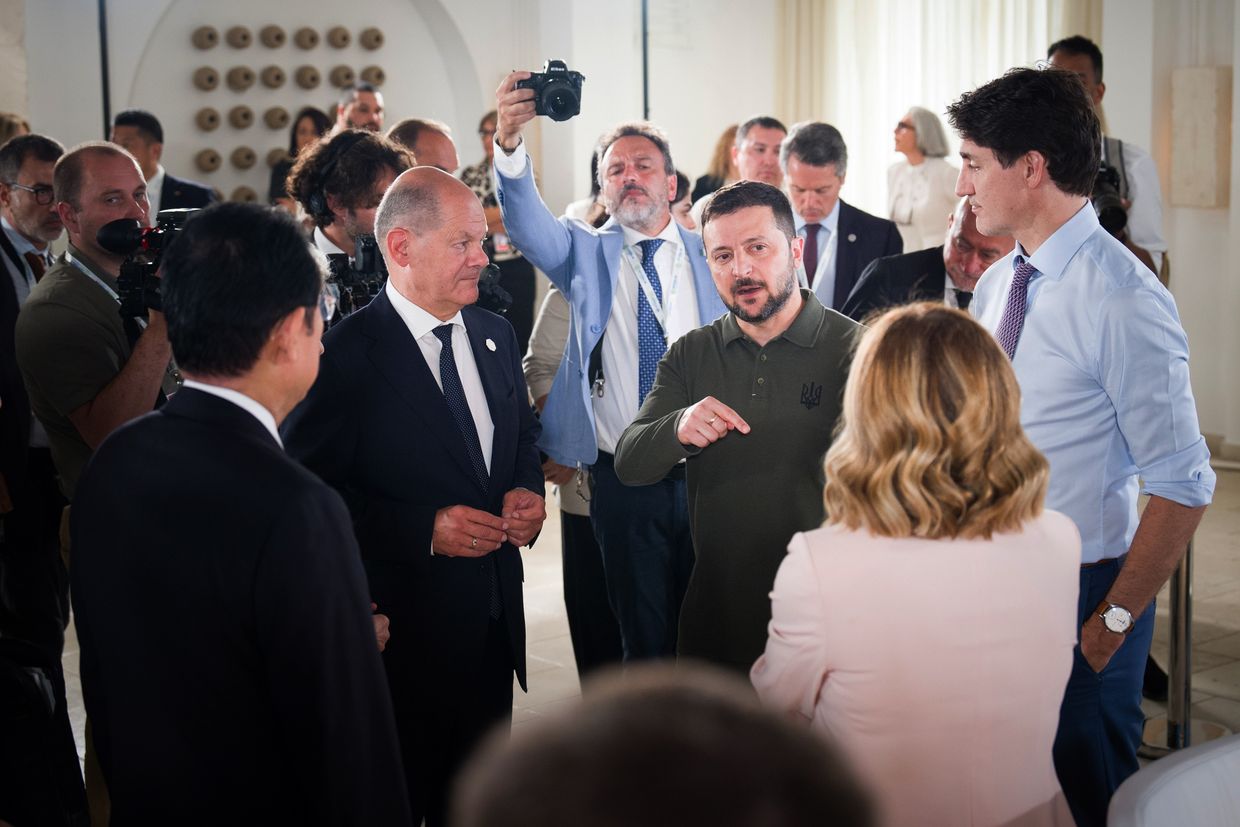
Zelensky was expected to meet with Trump on the sidelines of the G7 summit on June 17, marking their third in-person meeting since the American president took office in January. The proposed meeting was set to serve as an inflection point for Zelensky as pressure mounts on Trump from Western allies.
"Both teams are working to ensure we meet," Zelensky said on June 14 during a closed-door briefing attended by the Kyiv Independent.
Editor's note: This is a developing story and is being updated as new details emerge.
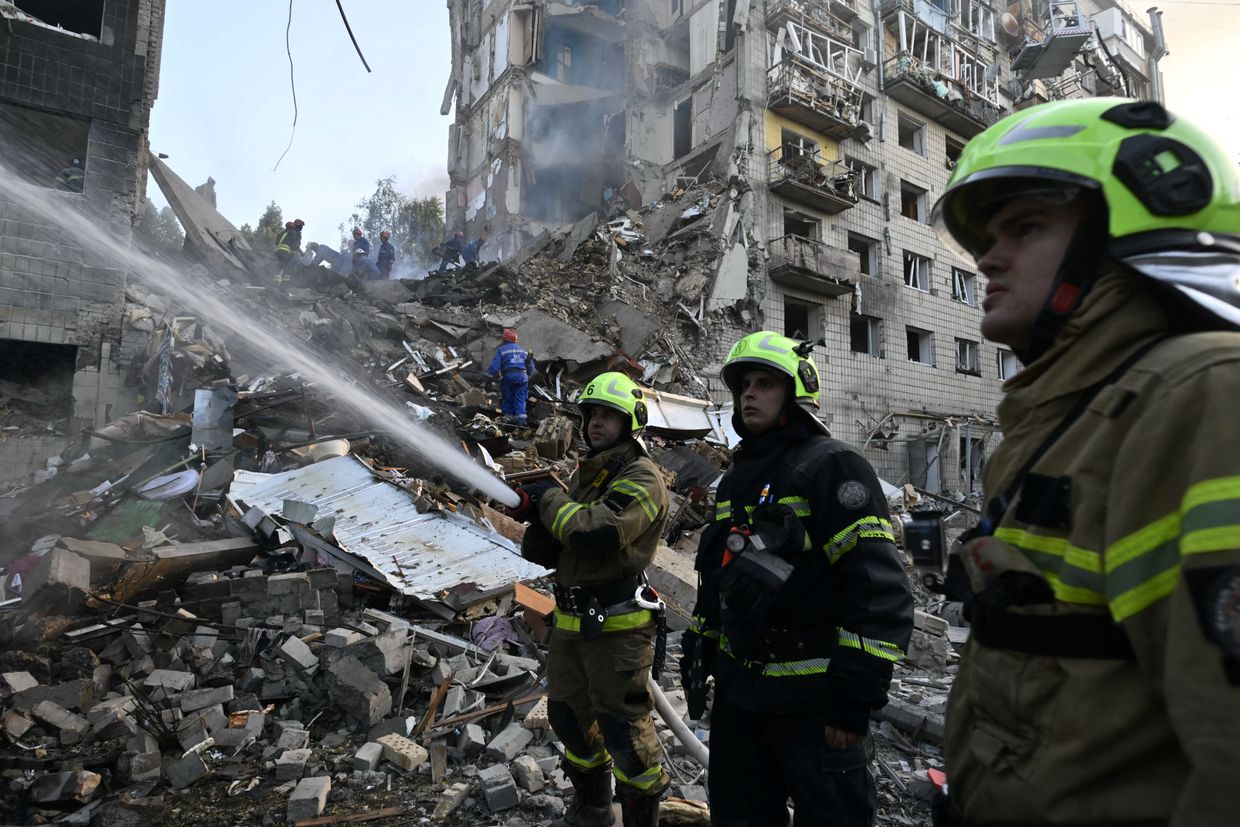
At least 14 people have been killed and 117 others injured after a mass Russian missile and drone attack on Kyiv overnight on June 17.
Ukraine's National Police initially reported 15 dead and 124 injured in the attack, but Interior Minister Ihor Klymenko later revised the death toll to 10. The State Emergency Service subsequently updated the figure to 14.
Klymenko said operational data may change, as body parts found during rescue efforts can sometimes be mistakenly counted as multiple victims.
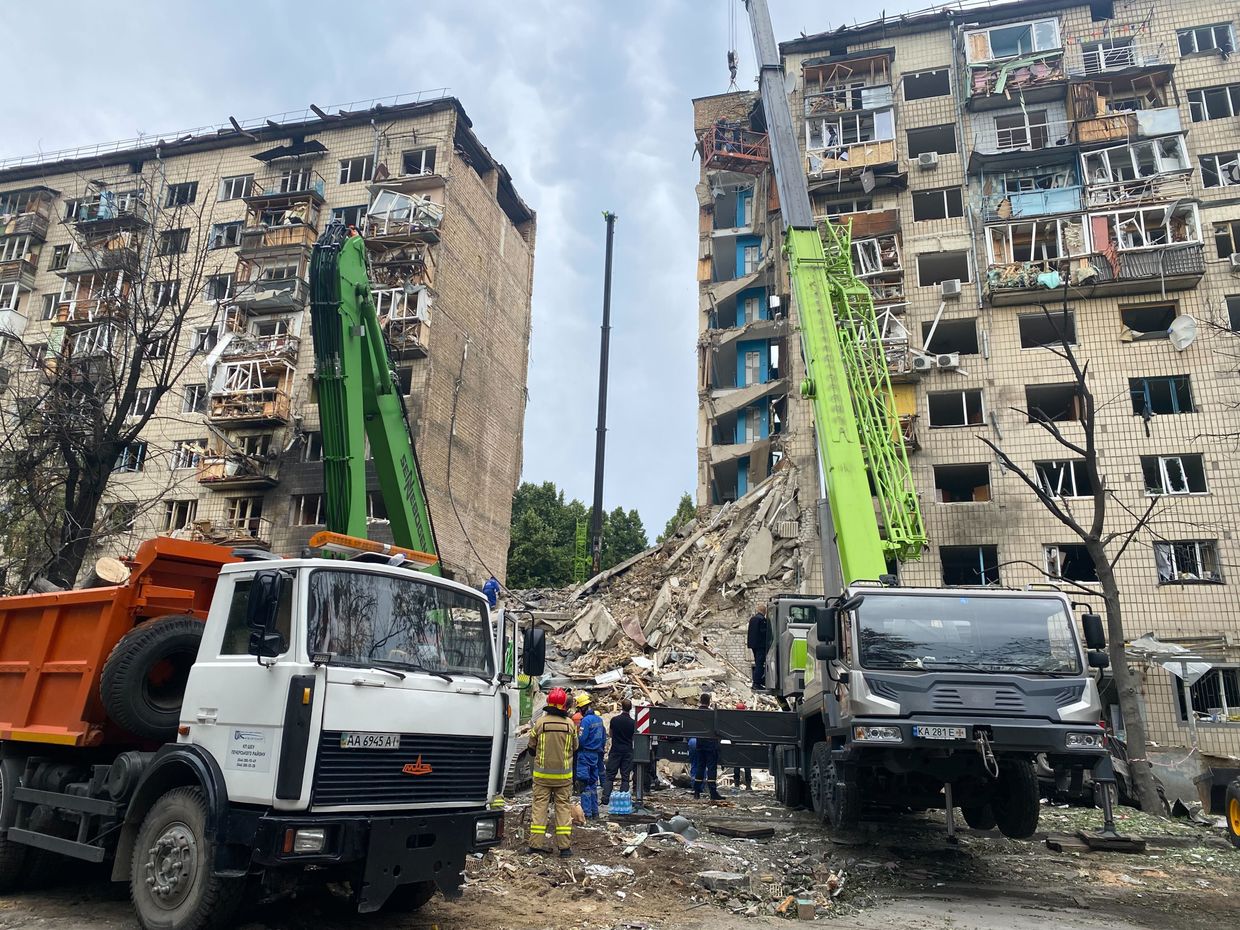
According to the State Emergency Service, one body has been recovered from the rubble of the nine-story building, and rescue operations are still ongoing.
The almost nine-hour-long attack saw Moscow's forces launch large numbers of kamikaze attack drones, as well as cruise and ballistic missiles at Ukraine's capital.
Kyiv Independent journalists on the ground reported the sounds of drones, missiles, and multiple rounds of explosions throughout the night.
The Ukrainian Air Force confirmed that Russia launched 472 aerial weapons overnight, including nearly 280 Shahed-type attack drones and two Kinzhal ballistic missiles. The strike primarily targeted Kyiv.
Ukraine's air defense forces reportedly destroyed 428 air targets, including 239 Shahed drones and 15 Kh-101 cruise missiles. Air defenses also intercepted one Kinzhal missile, while another was reportedly lost from radar tracking.
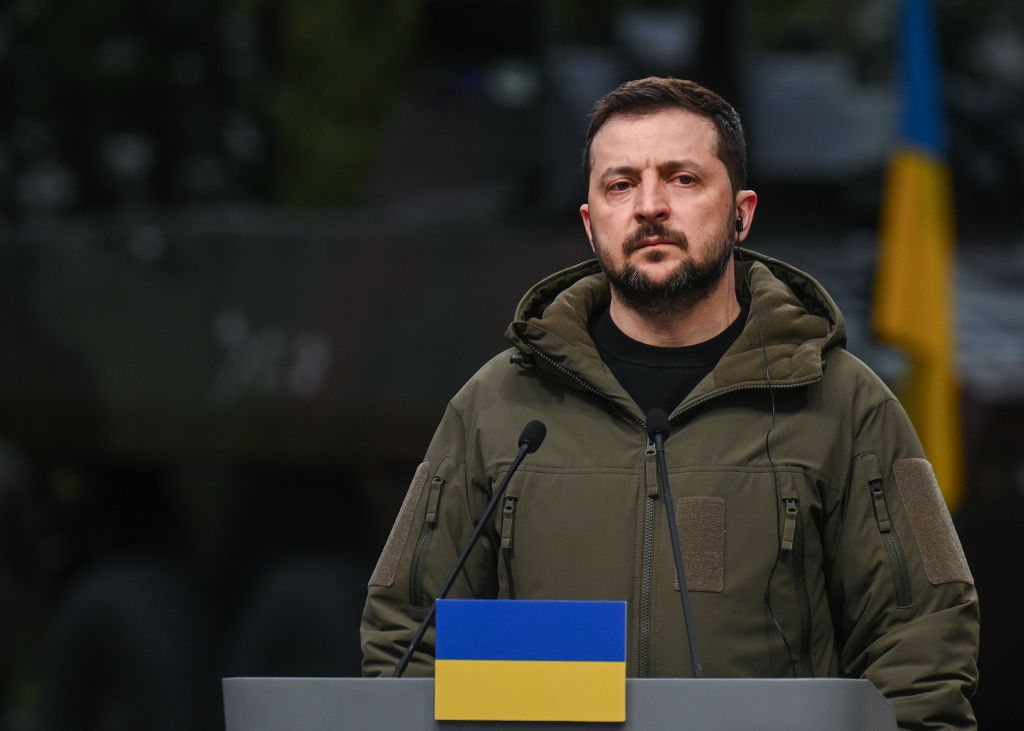
President Volodymyr Zelensky called the assault "one of the most horrifying attacks on Kyiv," saying more than 440 drones and 32 missiles were launched across Ukraine overnight.
"Such attacks are pure terrorism," he said in a statement on social media. "And the whole world, the U.S., and Europe must finally respond as civilized societies respond to terrorists."
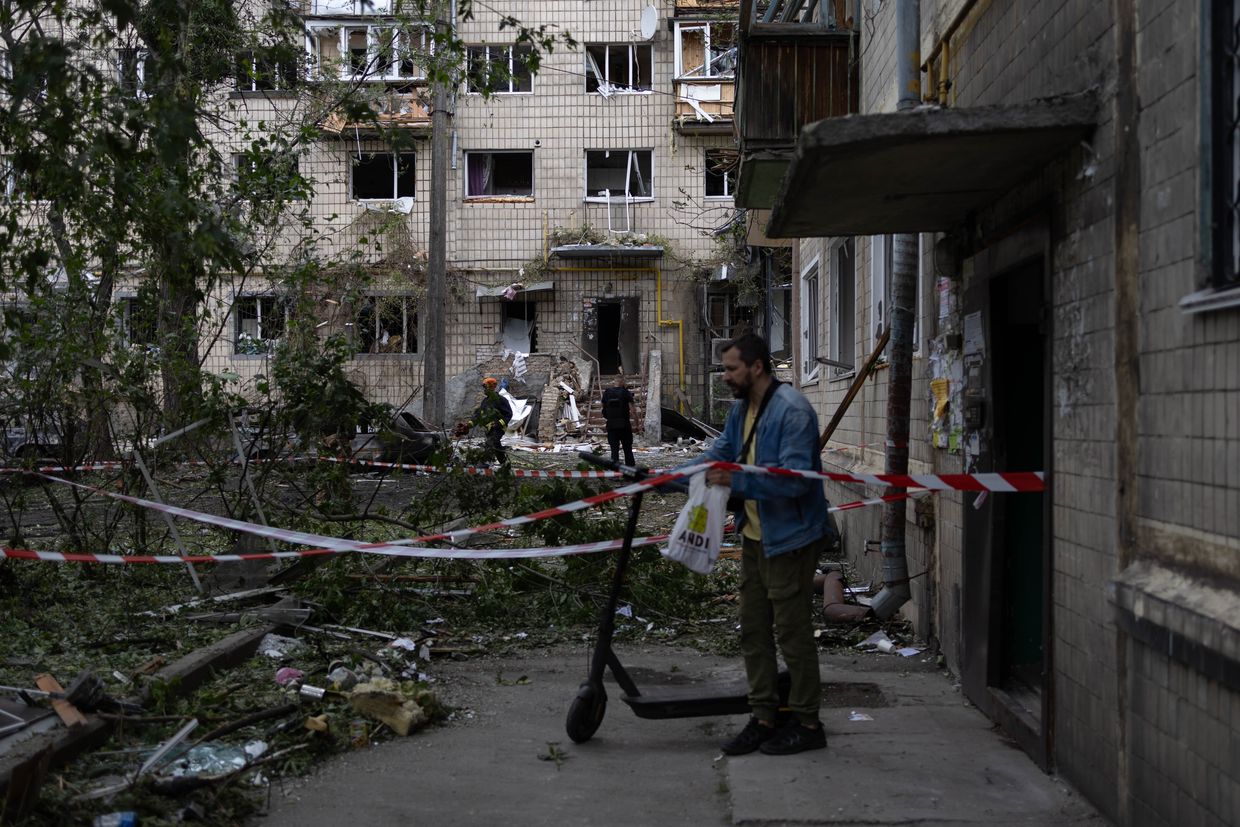
The aftermath of the Russian missile attack on a residential building in Kyiv, Ukraine on June 17, 2025. (Anna Donets / The Kyiv Independent)
Zelensky confirmed that damage had been reported in eight districts of Kyiv, with emergency workers still searching for survivors beneath the rubble of a destroyed apartment block.
In a video posted on Telegram, Kyiv Mayor Vitali Klitschko said cluster munitions had been found in one area of the city. He later added that June 18 would be an official day of mourning in Kyiv.
Many of the deaths and injuries occurred when a Russian missile hit a nine-storey residential building in the Solomianskyi district, "completely destroying" one section, Ukraine's State Emergency Service said.
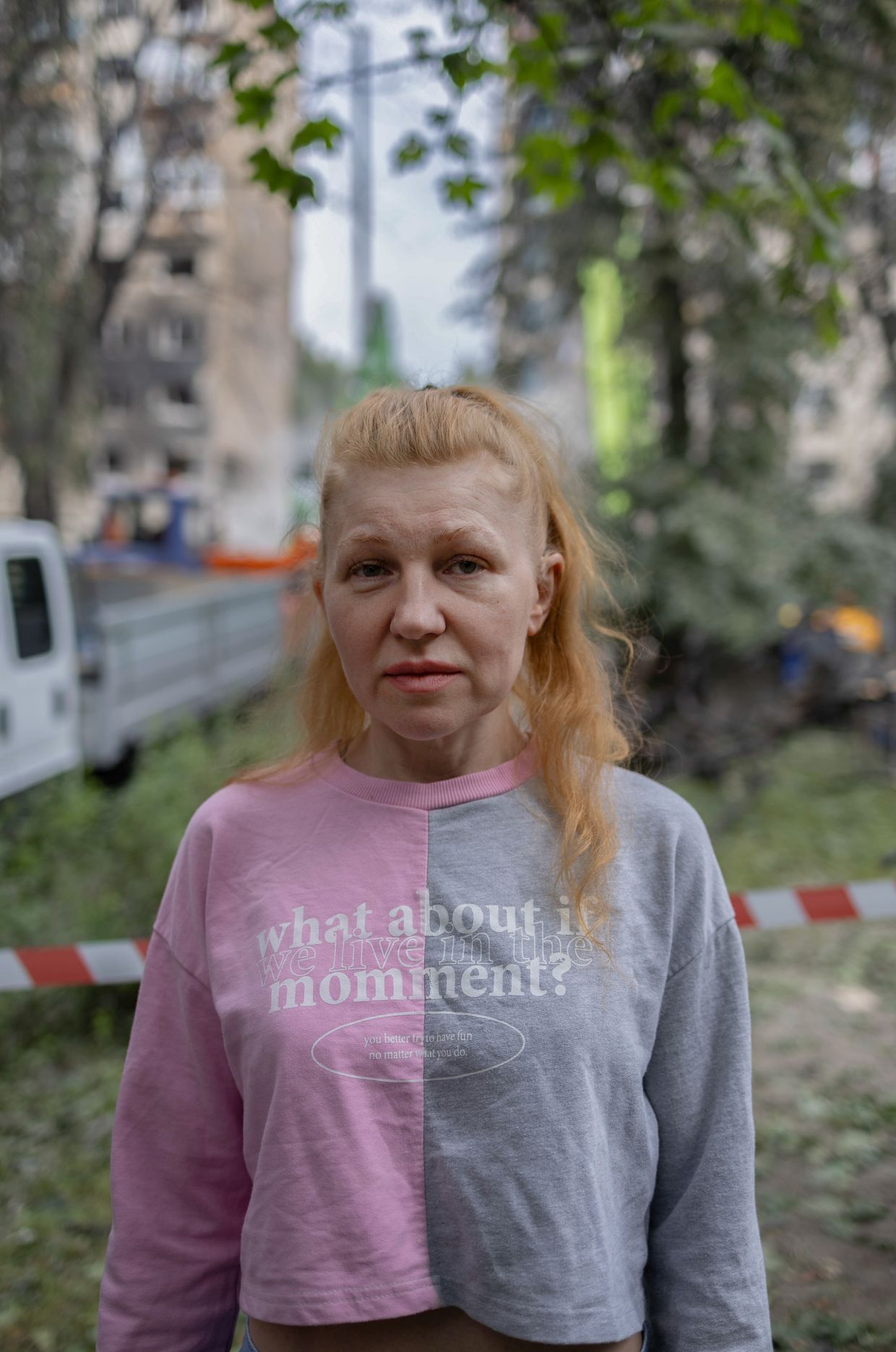
"I saw the missile because it was low," Olena Kushnirova, a 46-year-old nurse who lives in a neighboring building to the one that was hit, told the Kyiv Independent.
Olena Kushnirova, 46, a nurse who lives in a neighbouring house in Kyiv, Ukraine, on June 17, 2025. (Anna Donets / The Kyiv Independent)
"I grabbed my daughter by the hand and shouted 'run!' It was literally 15 seconds. We ran to the toilet, and then there was a very powerful explosion."
During the attack on the capital, a 62-year-old U.S. citizen died in the Solomianskyi district in a building across from where medics were assisting the injured, Klitschko reported. Medical personnel confirmed biological death.
Foreign Minister Andrii Sybiha also condemned the attack, calling it a "massive and brutal strike" timed deliberately to coincide with the G7 summit.
"Putin does this on purpose... He sends a signal of total disrespect to the United States and other partners who have called for an end to the killing," Sybiha said. "Only strong steps and real pressure on Moscow can prove him wrong."
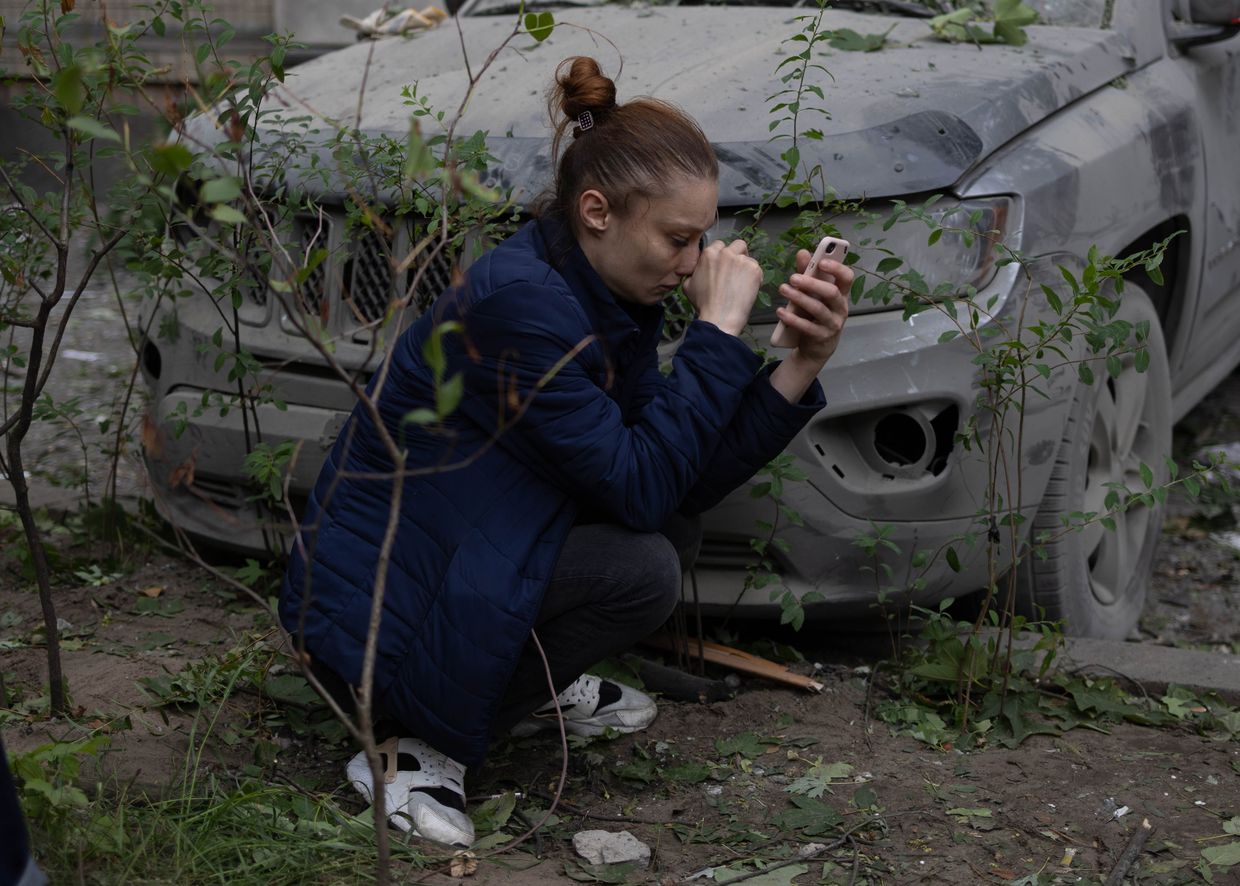
A partially destroyed residential building after a mass Russian missile and drone attack overnight in Kyiv, Ukraine on June 17, 2025. (Katya Denisova/The Kyiv Independent)Victoria Smirnova, 37, waits for her father to be pulled up from under the rubble of the house that was struck by a Russian missile in Kyiv, Ukraine on June 17, 2025. (Anna Donets / The Kyiv Independent)
A Russian drone also hit a multi-storey building Darnytskyi District.
"At first there was shock," Tatiana Bratus, a 50-year-old resident of the building told the Kyiv Independent.
"People started running outside, shouting, some in panic, because the attack wasn't over yet. They said there were still rockets flying. People ran to the bomb shelter.
A kindergarten in the Darnytskyi district was also damaged, Tymur Tkachenko, the head of the Kyiv City Military Administration said. No casualties were reported at the site.
The upper floors of residential buildings in the Solomianskyi and Shevchenkivskyi districts were also damaged.
A dormitory at the Kyiv Aviation Institute was hit by drones during the attack, the news outlet Suspilne reported. Drones struck the institute's 10th floor and broke windows on three other floors.
Outside the capital, the attacks also caused damage and injured civilians in Kyiv Oblast towns. At least one woman was injured and multiple homes were damaged, according to the regional administration.
The Russian strike damaged the production facility of Fahrenheit, a Ukrainian clothing manufacturer that supplies apparel and undergarments for both civilians and the military. The company announced it was forced to cancel all current orders and suspend new ones indefinitely following the destruction of its Kyiv site.
Russian forces also hit a Ukrainian Railways (Ukrzaliznytsia) freight train carrying grain. Several railcars overturned, temporarily halting operations and spilling grain from the damaged wagons. Ukrzaliznytsia said the damage would be "promptly repaired" and train traffic would not be affected.
Ukrposhta, Ukraine's national postal service, reported the destruction of two of its branches in Kyiv during the attack, according to CEO Ihor Smiliansky. The company's team is working to "quickly restore services," he said.
The attack followed a series of drone strikes overnight on June 16 targeting Kyiv Oblast, including both the capital and surrounding settlements. In the Obukhiv district, a 60-year-old man was injured, according to regional authorities.
Russian attacks against Ukraine have intensified in May and June, with Moscow launching several record-breaking mass strikes against Kyiv and other cities.
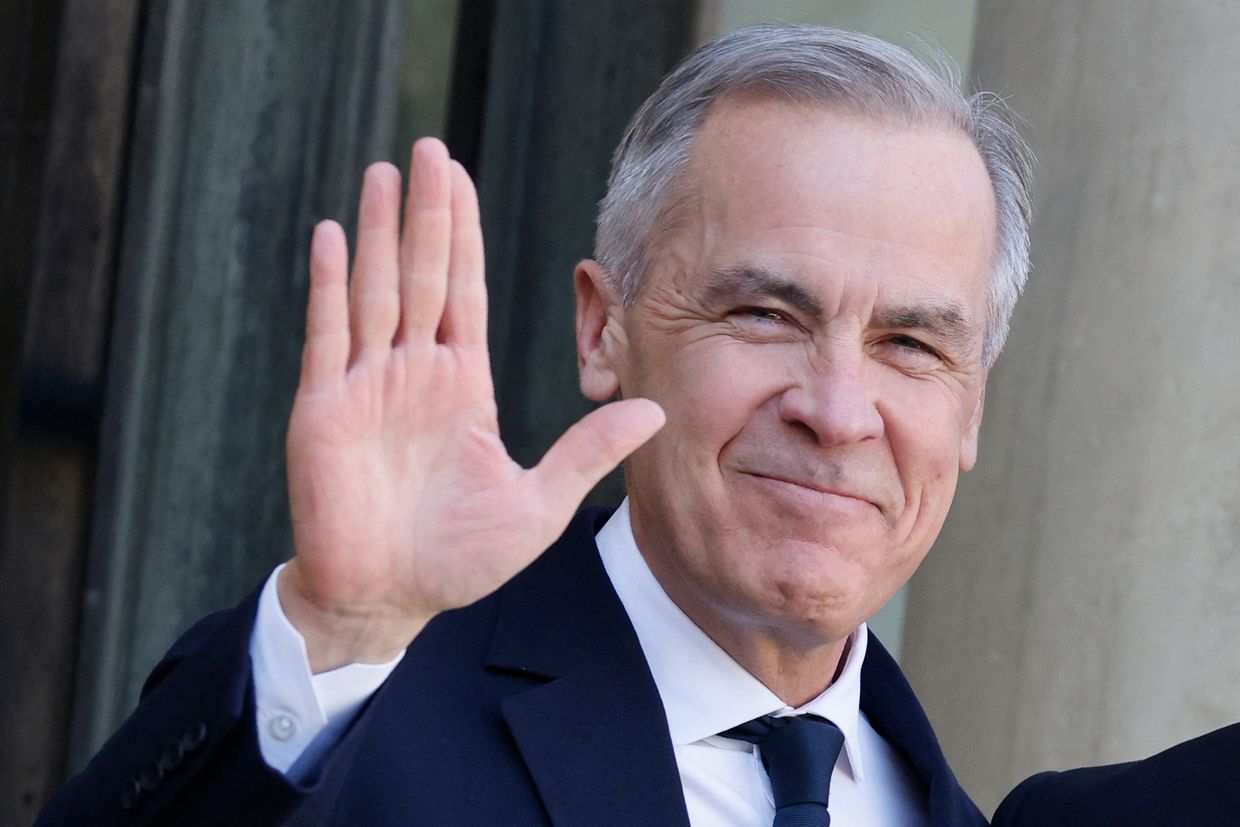
Canada's Prime Minister Mark Carney is expected to announce additional support for Ukraine during the G7 summit, CBC News reports on June 16, citing government sources.
Canada, which holds the G7 presidency in 2025, invited President Volodymyr Zelensky to participate in what will be his fourth — and arguably most fragile — G7 Leaders' Summit since the outbreak of the full-scale invasion in 2022. Carney is also expected to hold a one-on-one meeting with the Ukrainian president.
As part of Carney’s pledge to boost defense spending this year, Ottawa has allocated two billion Canadian dollars ($1.46 billion USD) for military aid to Ukraine and the expansion of broader defense partnerships. According to one source, the government is set to disclose on June 20 how much of that funding will be directed specifically to Ukraine and what it will support.
Canada has been a strong ally of Ukraine, providing 19.5 billion Canadian dollars ($13.5 billion) in assistance, including 4.5 billion Canadian dollars ($3.1 billion) in military aid.
Following their bilateral talks, G7 leaders will join outreach countries for discussions on Ukraine’s ongoing fight against Russia.
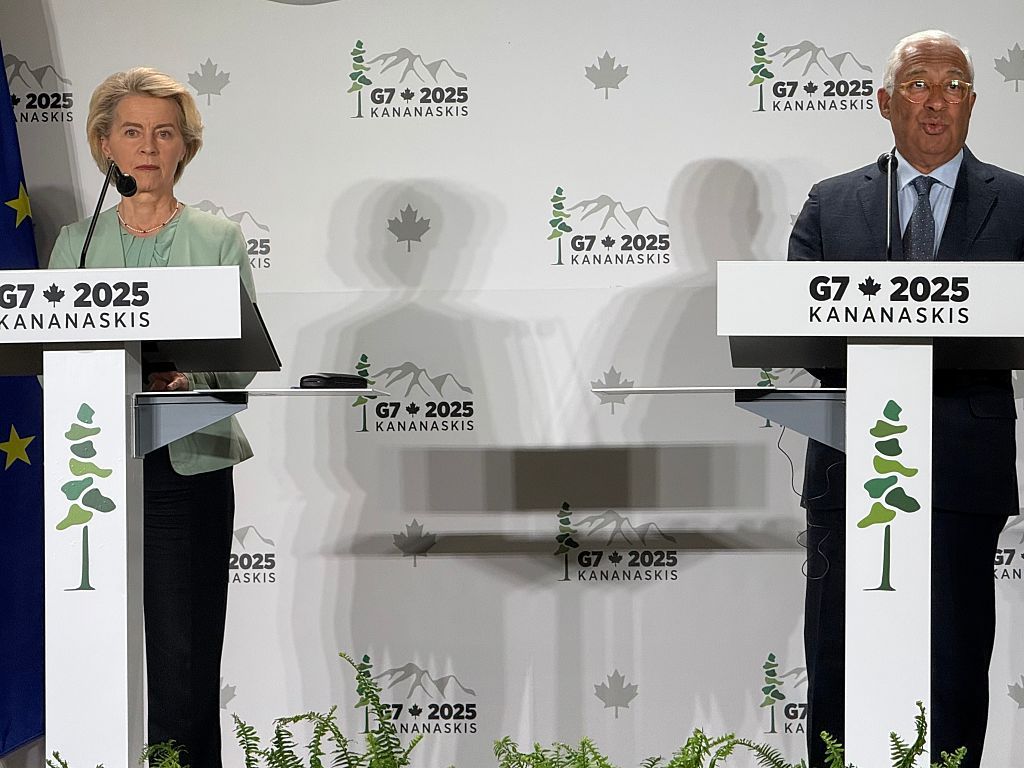
Meanwhile, European Commission President Ursula von der Leyen and European Council President Antonio Costa urged G7 nations to ramp up pressure on Moscow through tougher sanctions, arguing that it is key to securing a ceasefire in Russia’s war against Ukraine.
"To achieve peaceful strength we must put more pressure on Russia to secure a real ceasefire, to bring Russia to the negotiating table, and to end this war. Sanctions are critical to that end," von der Leyen said at a press briefing on June 15, attended by a Kyiv Independent journalist.
Von der Leyen emphasized that economic sanctions have been effective since the start of Russia’s full-scale invasion. She pointed out that joint G7 and European Union measures have reduced Russian oil and gas revenues by nearly 80% since February 2022.
"(T)he sanctions are working, and we will do more," she said.
More than a month after Ukraine signed a landmark agreement granting the United States a stake in its mineral reserves, Kyiv has approved initial steps to open one of its largest lithium deposits to private investors, the New York Times (NYT) reported, citing two government officials.
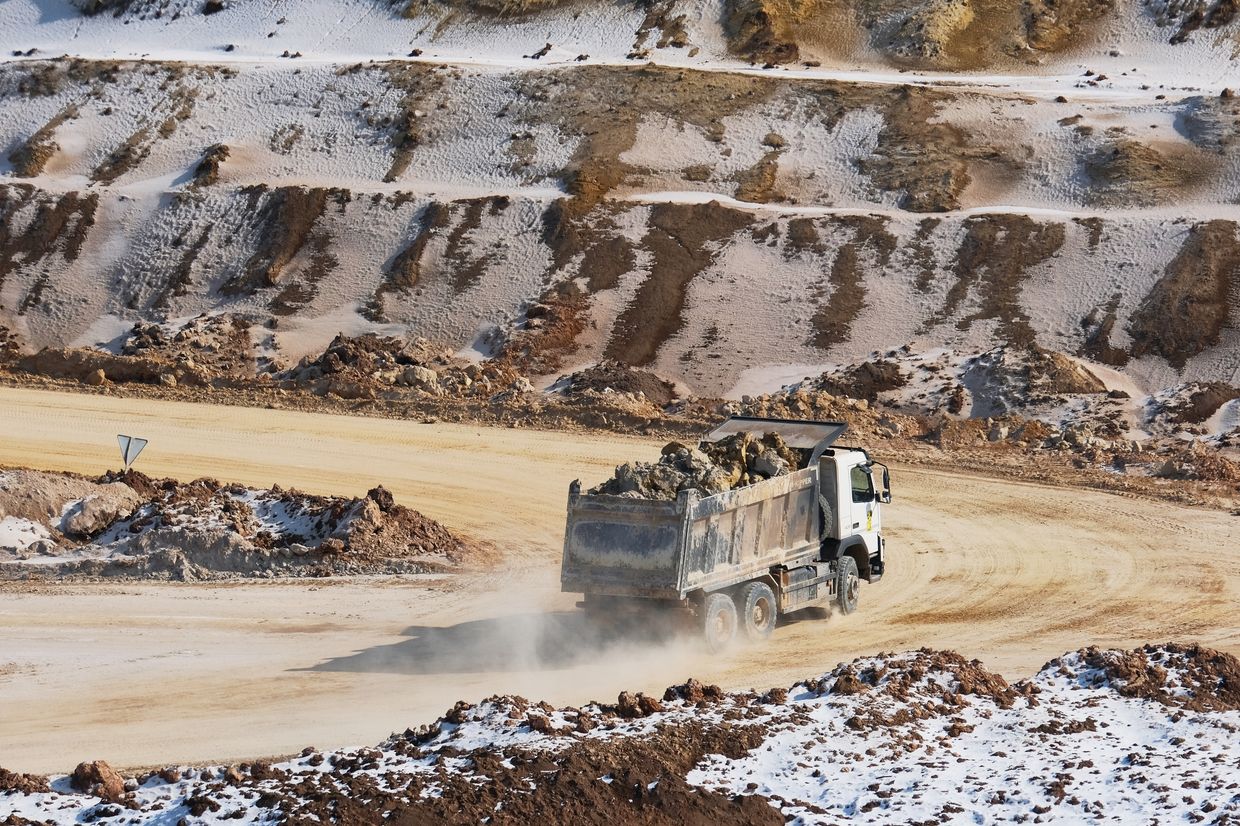
On June 16, the Ukrainian government agreed to begin drafting recommendations for a bidding process to develop the Dobra lithium field in central Ukraine. According to the officials, who spoke to NYT on condition of anonymity, this would be the first project advanced under the U.S.-Ukraine minerals deal.
The Dobra lithium ore site is located in the Novoukrainskyi district of Kirovohrad Oblast, rougly 300 kilometers southeast of Kyiv.
The deal, signed by President Volodymyr Zelensky on May 12, is aimed at deepening economic ties, boosting Ukraine's reconstruction, and positioning the country as a supplier of strategic resources to the U.S.
Among the likely bidders for the Dobra field is a consortium including TechMet, an energy investment firm partly owned by the U.S. government, and billionaire Ronald S. Lauder, a close associate of the U.S. President Donald Trump. The group has long expressed interest in the Dobra site and encouraged Zelensky to open it to bids last year.
Under the broader agreement, half of the revenues from mineral extraction would go to a joint U.S.-Ukraine investment fund. While the Ukrainian government would reinvest its share into the domestic economy, the United States would claim a portion of the profits — a structure Mr. Trump has framed as partial repayment for U.S. assistance to Ukraine.
TechMet CEO Brian Menell said investors were pushing for production-sharing agreements, which offer long-term stability and tax incentives. Monday’s step toward opening the Dobra field is based on such an arrangement, according to the outlet.
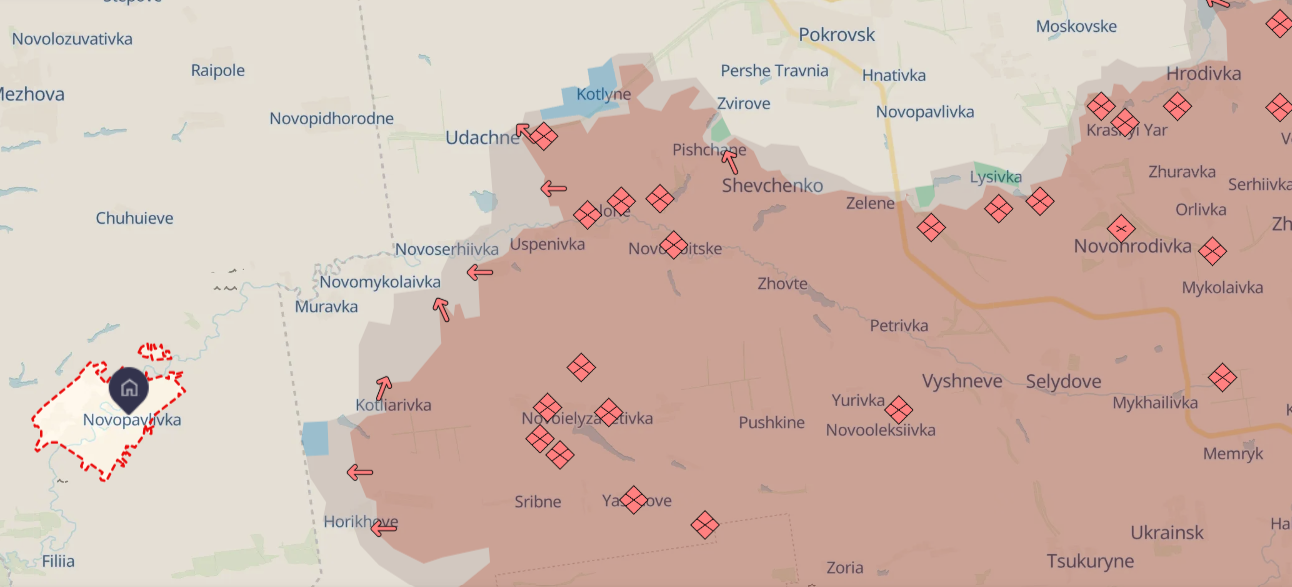
Russian forces have intensified offensive operations across multiple front-line areas, said Victor Tregubov, a spokesperson for Ukraine's Khortytsia group of forces, on June 16.
According to Tregubov, Russian troops have ramped up attacks, particularly in the Novopavlivka and Kharkiv sectors, which is an unusual development for these areas.
Ukraine’s General Staff reported that Russian forces launched attacks in 12 directions, resulting in 99 recorded clashes. Ukrainian soldiers repelled 17 attacks in the Novopavlivka sector alone, according to the latest update.
"This signals that we have the expected summer increase in activity," Tregubov said.
The estimated Russian advance in Donetsk Oblast as of June 15, 2025. (DeepState/OpenStreet Map)
Speaking on national television, he said that the surge in activity near Novopavlivka suggests Russian forces are attempting to push into Dnipropetrovsk Oblast, which neighbors the embattled Donetsk Oblast.
"But they (Russia) have failed to succeed," the spokesperson added.
In Donetsk Oblast, Russia is trying to encircle Kostiantynivka, one of the key Ukrainian logistics hub in the region since the start of the full-scale invasion, by attacking the city from three directions, according to Tregubov.
Last week, on June 13, President Volodymyr Zelensky said that heavy fighting was ongoing along Ukraine's northeastern border.
Russian forces have concentrated around 53,000 troops in the Sumy sector, pushing into multiple settlements. The president confirmed that small Russian reconnaissance groups had briefly crossed into Dnipropetrovsk Oblast — likely for propaganda purposes.
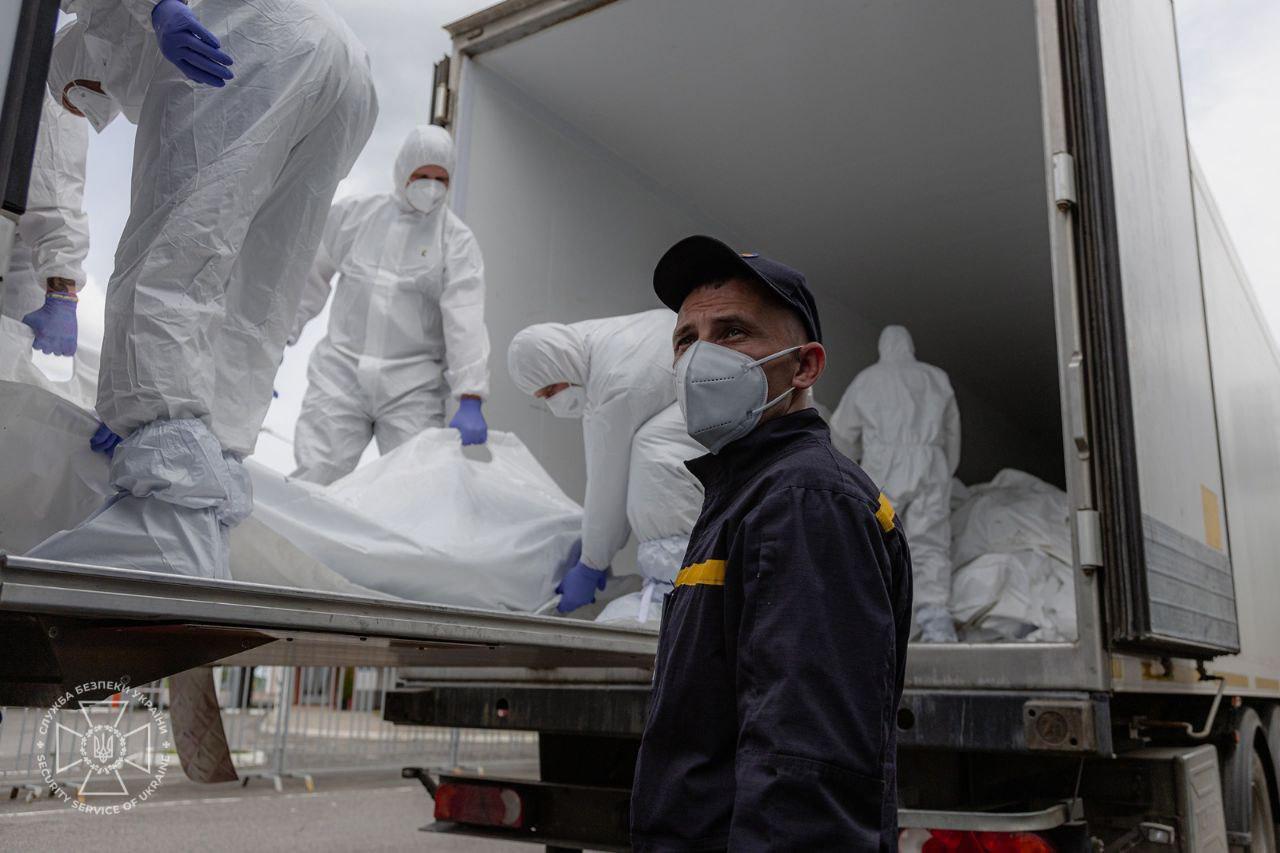
Russia has handed Kyiv the bodies of its own soldiers mixed in with those of Ukrainian soldiers during recent repatriation of the fallen, Interior Minister Ihor Klymenko said on June 16.
Klymenko's statement follows the completion of an exchange between Ukraine and Russia of the remains of soldiers killed in action earlier the same day, under agreements reached during recent peace talks in Istanbul.
Kyiv returned a total of 6,057 bodies. Vladimir Medinsky, an aide to Russian President Vladimir Putin and member of the Russian delegation at the Istanbul talks, claimed that Russia received the bodies of 78 deceased servicemen.
According to Klymenko, the identification process has been significantly complicated by the condition in which Russia returned the bodies.
"Parts of the bodies (of fallen soldiers) are in different bags. There are cases when the remains of one person are returned even during different stages of repatriation," the minister said.
Klymenko said that Russia may have included the bodies of its own soldiers in the transfer to Ukraine either on purpose or by accident.
"This could have been done by the Russians on purpose to increase the number of bodies transferred and to load our (forensic) experts with work, adding to all this cynical information pressure. Or it could be their usual negligent attitude toward their own people. In any case, we also identify these bodies," Klymenko said.
The June 2 negotiations in Istanbul resulted in the most expansive prisoner and body exchange agreement of the full-scale war, although no ceasefire was reached.
The deal followed the largest-ever POW swap in late May, when 1,000 prisoners were exchanged on each side. Additional exchanges last week included severely wounded and sick soldiers.
Russia accused Ukraine on June 7 of rejecting a proposed body return, publishing footage allegedly showing Ukrainian corpses stored in refrigeration units. Kyiv dismissed the claims, saying the footage was filmed inside Russia and not at a designated exchange location.
Ukraine’s Foreign Intelligence Service reported on June 16 that Russia is preparing to escalate a disinformation campaign related to ongoing POW exchanges next week, aiming to provoke public outrage in Ukrainian society.
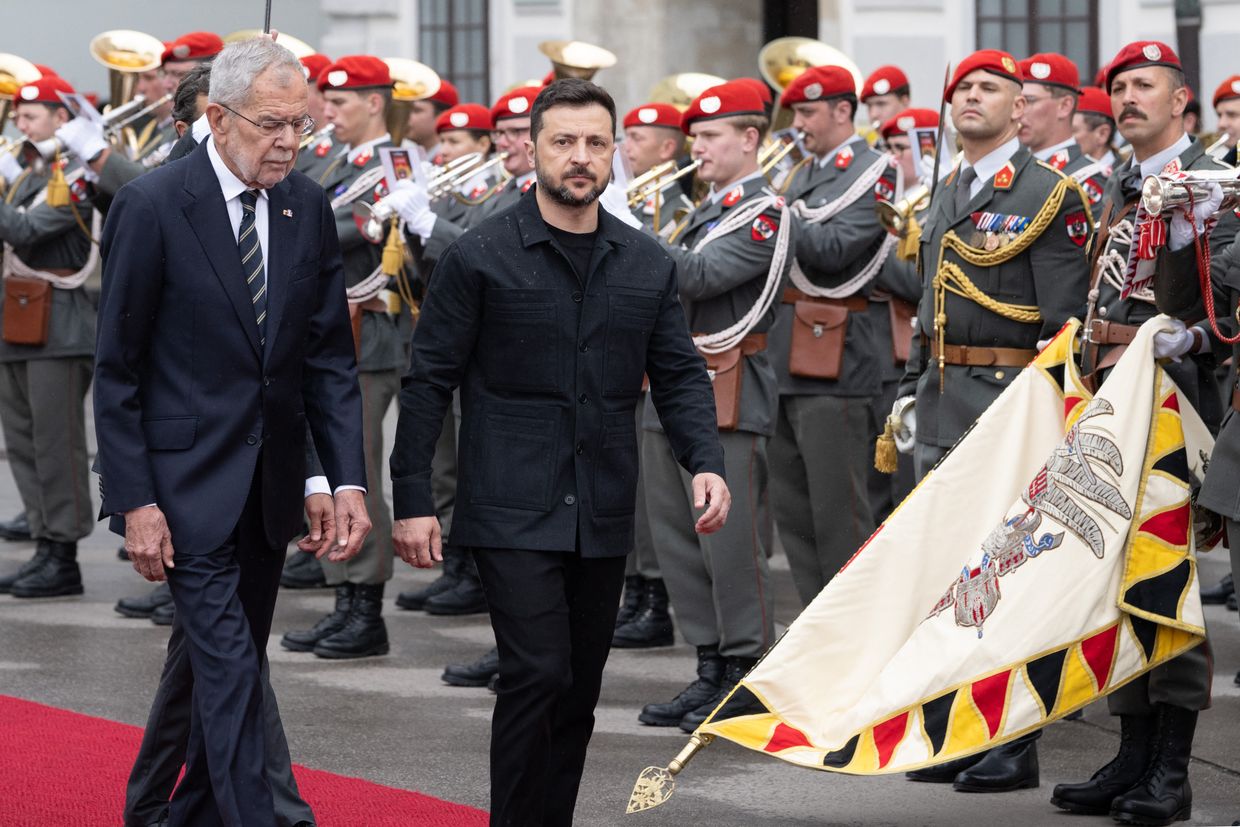
President Volodymyr Zelensky and his Austrian counterpart Alexander Van der Bellen signed documents on bilateral cooperation between the two countries during Zelensky’s visit to Vienna on June 16.
Speaking at a joint press conference, Zelensky said that the agreements cover key areas including agriculture, reconstruction, and return of abducted Ukrainian children from Russia.
Zelensky's visit to Austria comes a day before his scheduled trip to Canada, where he will attend the Group of Seven (G7) summit on June 17.
While at the summit, he is expected to meet with U.S. President Donald Trump to discuss, among other topics, a potential purchase of a U.S. military aid package.
According to Zelensky, discussions at the G7 summit will include the fate of Moscow’s frozen assets and the imposition of further sanctions on Russian energy exports.
Before leaving Vienna, Zelensky is expected to meet with Austrian Chancellor Christian Stocker to push for stronger sanctions against Russia.
"We are counting on Austria’s support, both at the state and societal levels, on a sensitive issue for Ukraine: the presence of former Ukrainian officials and oligarchs who are evading justice by hiding in Europe, including Austria, and concealing stolen assets," Zelensky added.
In 2014, U.S. prosecutors charged Ukrainian oligarch Dmytro Firtash with racketeering and bribery, and he was briefly arrested in Austria before posting bail. The Ukrainian tycoon has so far avoided extradition from Austria's capital, where he resides.
Other wanted Ukrainian top officials in Austria include ex-chairman of Constitutional Court Oleksandr Tupytskyi. He was charged with unlawfully influencing and bribing a witness to induce false testimony, and giving false testimony himself.
Mon petit texte « Ukraine: la force des faibles » est sorti en librairie le 13 juin. Dans les présentations que je peux en faire ici et là, j’explique l’intention qui l’anime: faire comprendre comment la société ukrainienne s’est transformée pendant les dix années de guerre, et en quoi cette transformation très particulière a donné lieu à un mode très particulier de résistance armée .
J’entends d’ores et déjà, dans les premières questions qui me sont adressées, un doute. Serait-ce encore l’un de ces textes qui idéalisent la résistance ukrainienne, héroïsent la conduite de la guerre, cherchent à entraîner le lecteur dans l’admiration? Evidemment, ce sera aux lecteurs de trancher. Le texte est imprégné d’une émotion que je n’ai pas cherché à cacher.
Cependant, pour moi, ce petit essai n’est un pas un pamphlet, mais un carnet de terrain d’une enquête qui s’étale désormais sur dix ans. Une enquête conduite à Kyiv, Zhytomyr, Dnipro, Lviv, Vynnytsia, mais aussi Tchernivtsy, Kharkiv, Mykolaiv, Kherson… Ce que raconte « Ukraine: la force des faibles », sous ce petit format qui ne permet pas une véritable démonstration de la preuve, ce sont quelques observations tirées de cette longue enquête. Je souhaiterais donner ici un aperçu de l’émergence de cette recherche et de sa cuisine interne.
J’aurais aimé emmener les lecteurs à travers ces dix ans de recherche en photos, mais je suis une photographe plutôt timide, et je demande rarement aux personnes que j’interroge l’autorisation de les photographier. Encore moins, paradoxalement, lorsque l’entretien s’est très bien passé, et qu’un véritable lien humain s’est tissé entre l’enquêteur et l’enquêté. Les images que je ramène de mes enquêtes sont prises à la va-vite, pour me permettre de garder une trace, vérifier une inscription, fixer une date, plutôt que pour les partager. Mes photos sont aussi très souvent kyiviennes, car dans cette ville qui m’est très familière, je suis d’autant plus sensible aux moindres changements du paysage urbain dans ces années de guerre.
En voici quand-même une. Nous sommes en juillet 2014, en plein centre ville de Kyiv, aux abords de la place de l’Indépendance, le Maïdan. La révolution du Maïdan s’est terminée, après des semaines d’affrontements meurtriers, quelques mois auparavant, mais les Ukrainiens mettront un certain temps à enlever les débris calcinés de la place. Ces débris sont les premiers mémoriaux aux manifestants tombés. Ils sont constellés de photos, fleurs, mots de condoléances. Je n’étais pas à Kyiv pendant les dernières semaines sanglantes de la révolution du Maïdan, et déambuler au milieu de ces débris calcinés de barricades était très émouvant pour moi. Pourtant, on n’était pas seulement à la fin d’une séquence importante pour l’histoire du pays, mais aussi et surtout au début d’une époque nouvelle. En ce juillet 2014, quelque chose de fondamental avait changé. L’annexion de la Crimée avait eu lieu. la guerre faisait déjà rage à l’est du pays, avec une Russie qui attisait l’insurrection dans le Donbass, mais intervenait aussi directement, militairement.
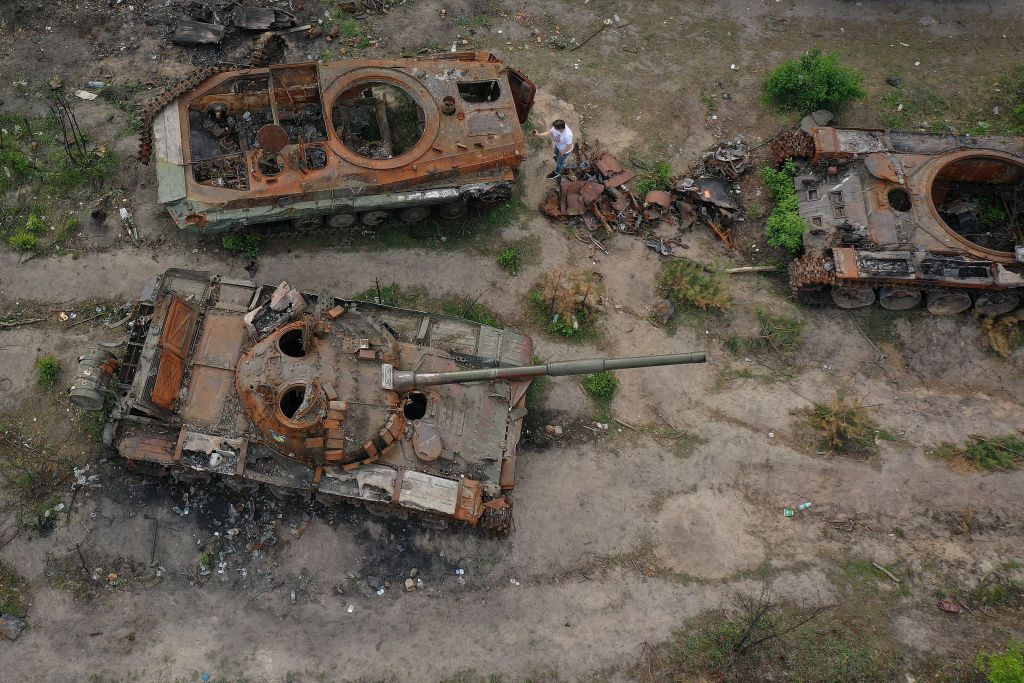
Quelques mois plus tard, les volontaires ramèneront et exposeront dans les villes ukrainiennes les carcasses calcinée des voitures, les blindés et les lance-roquettes russes ramenés du front de l’est. Quand je reviens en Ukraine en février 2015, j’assiste à cette exposition en plein air où se pressent les familles. Il y a pour moi à l’époque quelque chose d’un peu troublant de voir des enfants grimper dans les chars russes, et je me fais la réflexion que leurs parents ne réalisent sans doute pas qu’ils ne sont pas dans un musée de la guerre, mais dans une guerre au présent. Aujourd’hui, dans les villes ukrainiennes, on voit encore de tels trophées exposés. Mais je ne vois plus aucun enfant grimper dessus…
Je crois que l’un des objectifs était celui-là: faire prendre conscience aux Ukrainiens de la nature de cette guerre, et surtout leur faire comprendre que la Russie était en train d’agresser militairement l’Ukraine. Car dans cette année 2015, l’incertitude sur l’agresseur et sur la responsabilité sont parfois là, et certains Ukrainiens confessent leur difficulté à comprendre ce qui se déroule vraiment à l’est.
A côté des carcasses de blindés et des restes de missiles, une petite expo est montée dans des containers. « Preuves de l’agression militaire russe sur le territoire ukrainien ». Ce n’est pas par hasard que le titre est (aussi) en anglais: il s’agit entre autres d’interpeller la communauté internationale qui, à ce moment-là et pour de longues années, va faire tout son possible pour ne pas voir la Russie derrière les activistes séparatistes.
Cette guerre-là, entre 2014 et 2022, les Ukrainiens la conduisent seuls, sans soutien militaire international, et avec un soutien politique tiède de pays occidentaux encore sensibles à la vision russe de la guerre. C’est parce qu’ils ne peuvent compter que sur eux-mêmes, parce que leur armée est défaillante et leur Etat fragile, que les Ukrainiens ordinaires, pour l’essentiel des civils, vont s’engager dans la conduite de la guerre.
Très rapidement en 2014, je commence à enquêter sur ces civils qui prennent les armes pour la première fois pour défendre leur pays, où qui s’organisent pour soutenir cette défense.
Les premiers que j’interroge sont mes anciens enquêtés, les vétérans de la guerre soviétique en Afghanistan, groupe avec qui j’avais fait des entretiens en 2010-2011. J’avais déjà visité, lors de ma première enquête, le petit musée de leur association kyivienne, où ils avaient exposé des objets militaires de l’époque soviétique. Quand je reviens les voir en 2015, le musée est transformé en entrepôt où, à côté des artefacts soviétiques, s’empilent les uniformes et pièces d’équipement neufs achetés par eux qui attendent d’être apportés sur le front: pantalons chauds, casques en kevlar (terme qui fait alors son entrée dans mon vocabulaire) et d’autres objets que je n’arrive pas à l’époque à identifier. J’ai pris cette photo dans une pièce trop sombre, parce que je voulais absolument garder l’image de la vieille mitrailleuse soviétique Maxim, à l’arrière de la photo, qui contrastait tellement avec les objets neufs d’une guerre nouvelle. Dix ans plus tard, j’ai vu une Maxim similaire dans la caserne d’une unité de défense locale composée de civils, dans une petite ville ukrainienne. En 2025, cette Maxim-là n’avait rien d’une pièce de musée: très efficace pour abattre les drones, m’expliquaient les combattants qui lui avaient fabriqué une nouvelle tourelle sur mesure.
En 2014, « mes » vétérans d’Afghanistan faisaient partie des rares groupes de personnes qui, en Ukraine, avaient une expérience quelconque d’une guerre. Bien que plutôt âgés pour combattre – la cinquantaine, voire la soixantaine – un certain nombre d’entre eux avaient choisi de partir au front. D’autres avaient décidé de les soutenir: équiper, armer, ravitailler. Et parfois, les deux à la fois: prendre les armes quelques jours ou quelques semaines; puis revenir à l’arrière et collecter de l’équipement pour le prochain voyage vers le front. J’avais fait de mon enquête sur ces vétérans reprenant les armes un article, intitulé « D’une guerre à l’autre: Les vétérans d’Afghanistan dans le conflit armé dans le Donbass ».
Mais déjà, je voyais partout en Ukraine émerger une nouvelle génération de combattants et un tissu associatif soutenant la guerre. On voyait se former en Ukraine des bataillons volontaires, se substituant aux unités insuffisantes de l’armée régulière. J’ai commencé à interroger ces combattants qui, à partir de 2015, rentraient progressivement du front. On voyait aussi également émerger des initiatives de soutien au front à l’arrière, parfois structurées en associations, parfois plus flexibles. Souvent d’ailleurs, les personnes à l’origine de ces initiatives étaient elles aussi des anciens combattants.
Financés par toutes sortes de donateurs – mais très peu l’Etat – et composés de civils qui n’avaient pas de statut de militaire des forces armées de l’Ukraine, les bataillons volontaires étaient très visibles dans l’espace public en Ukraine.
Les bataillons, comme « Donbass » dont on voit une voiture sur cette photo de février 2015, collectaient de l’argent, et des associations à l’arrière se chargeaient de faire circuler les cagnottes, d’identifier de quoi les combattants avaient besoin, de soutenir les familles. Les bataillons ont été assez vite intégrés dans l’armée régulière. En 2017, j’avais publié une étude sur ces groupes armés et leur place dans la conduite de la guerre.
En février 2015, les accords de Minsk 2, signés dans des conditions favorables à la Russie, ont marqué la fin de la première période de la guerre russo-ukrainienne, en la faisant entrer dans une seconde longue période, celle de la guerre de basse intensité qui durera sept ans de plus.
Ces sept années-là sont un angle mort pour la société française. C’est une période où les journalistes français avaient du mal à vendre à leurs rédactions un papier sur la guerre dans le Donbass qui n’intéressait pas grand-monde. « Ah bon, la guerre continue? », me demandait-on également en France quand je rentrais d’Ukraine. Pourtant, si la guerre était cantonnée à l’est du pays (et je ne suis jamais allée sur les zones de front), j’en voyais les traces sur tout le territoire de l’Ukraine. Une guerre « discrètement omniprésente », ai-je écrit dans un article, et c’est cela que me permettait l’approche sociologique et la longue fréquentation du terrain: voir la présence de la guerre là où un observateur de passage n’aurait pas remarqué la différence. Parfois, notre premier capteur, c’est ça: la sensation que dans un endroit qu’on connaît bien, dans un groupe qu’on connaît bien, quelque chose a changé.
En Ukraine, en réalité, le changement était massif, et il était porté par plusieurs groupes sociaux qui se recoupaient partiellement : ceux qui s’étaient engagés aux côtés la révolution du Maïdan; ceux qui étaient partis combattre dans le Donbass et qui revenaient à la vie civile; ceux qui avaient été forcés à fuir de chez eux ou à changer de vie du fait de la guerre. Puisque je continuais mon enquête sur les civils qui prenaient les armes, c’est surtout avec les combattants et anciens combattants que j’ai conduit mes enquêtes, mettant un pied dans un réseau de plus en plus vaste d’associations, groupements informels, entreprises, services ministériels, tous liés à la conduite de la guerre ou à la prise en charge des effets de la guerre. Après les entretiens, nous restions souvent en contact avec mes enquêtés; c’était d’autant plus facile que beaucoup d’entre eux étaient de milieux sociaux urbains et éduqués, proche du mien, et qu’à force, nous avions de plus en plus de connaissances en commun. Je suivais de loin, souvent sur les réseaux sociaux, les projets dans lesquels ils s’engageaient, liés à la réforme de l’Etat et de l’armée, à la défense et à la prise en charge des vétérans et des populations vulnérables, à l’information et à la culture comme vecteurs pour dire la guerre. J’en décris un petit nombre dans « La force des faibles », mais il y en aurait tant d’autres dont l’histoire mérite d’être racontée. Tout au long de ces années, jusqu’au Covid, nous essayions d’emmener des doctorants et post-docs, réunis en école d’été que nous organisions avec un groupe de collègues, voir l’une ou l’autre de ces associations.
Un exemple de ces associations, « Station Kharkiv« , lieu d’accueil pour les déplacés internes, créé en 2014, que nous sommes allés voir avec les étudiants lors de notre école d’été dans cette ville en 2016, deux ans après le début de la guerre. Les deux femmes que vous voyez au fond de la photo sont toujours aux manettes d’une association qui s’est élargie et professionnalisée entre 2014 et 2022. Dès les premiers jours de mars 2022, Station Kharkiv était en train de collecter des vivres et des médicaments, et de les livrer aux personnes vulnérables qui se sont trouvées plus isolées que jamais. Dans les premiers jours de l’invasion russe, l’association avait d’ailleurs perdu l’une de ses jeunes bénévoles, victime d’une attaque de missile.
D’autres groupes sont plus directement impliquées dans la conduite de la guerre. C’est par exemple le cas de « Notre bataillon », association fondée par un entrepreneur de la ville de Tcherkassy qui s’est engagé dans l’aide à l’armée lorsque l’un de ses salariés est parti au front. En 2014, la petite ONG se donne pour mission de parrainer et approvisionner « son » bataillon. Petit à petit, elle élargit son action à d’autres unités. La photo ci-dessous du stand de l’association a été prise en 2017, lors d’une journée de rencontre de vétérans et d’ONG. Quand on regarde la photo, tout ça a l’air très artisanal, et je trouve que c’est ça qui est intéressant: le soutien à l’armée part d’une toute petite échelle, puis se développe, se professionnalise, se structure.
Les bénévoles se forment aux besoins des forces armées, deviennent compétents en équipement militaire. Des liens solides se tissent entre l’armée et la société à l’arrière. Tout comme « Station Kharkiv », « Notre bataillon » se met immédiatement en action et s’ajuste aux nouveaux besoins qui émergent avec l’agression de février 2022. L’ONG continue à approvisionner le front aujourd’hui.
Ces initiatives sont une illustration de ce que je décris dans « La force des faibles »: quand la Russie tente d’envahir l’Ukraine en février 2022, la société ukrainienne est aussi prête qu’elle peut l’être, car elle a derrière elle huit ans de développement d’une société civile engagée dans la guerre.
« Ce que je trouve formidable dans notre société, me disait en 2024 autour d’un thé une collègue et amie ukrainienne, c’est que je sais que pour chaque problème qu’un citoyen pourra rencontrer, il y aura un groupe ou une association qui sera là pour l’aider. » Je suis d’accord avec elle, mais j’aurais pu compléter sa phrase: « … parce que l’Etat ne sera pas forcément là. » Le point de départ de « La force des faibles » est précisément dans ce paradoxe: si les Ukrainiens étaient aussi actifs, aussi innovants, aussi engagés, c’est parce qu’ils ne pensaient pas pouvoir se reposer sur leur Etat. Ni pour conduire la guerre, ni pour construire une armée performante, ni pour prendre en charge les plus fragiles. C’est de leur cheminement que je donne un aperçu dans le petit livre.
Beaucoup de collègues ont travaillé sur les mouvements associatifs qui ont émergé à partir de 2014. Je cite notamment dans le petit livre les travaux de Ioulia Shukan et d’Anastasia Fomitchova (dont on lira d’ailleurs bientôt un témoignage personnel). Pour ma part, je me suis tout particulièrement intéressée au parcours des civils, hommes et femmes, qui ont pris les armes depuis 2014. Pour moi, leur rôle a été crucial dans l’évolution des forces armées ukrainiennes et la préparation de la société à la guerre de haute intensité. J’ai consacré un article à cet « état de qui-vive » qui caractérise ces anciens combattants dans les années 2015-2022. Mais si cette action a pu se déployer, c’est parce qu’un lien entre les initiatives privées / associatives et l’Etat s’est tissé. Ce lien, je l’observais déjà en 2015-2022, par exemple via l’intégration des anciens combattants dans les institutions locales et centrales, autour de projets liés à l’armée ou aux vétérans.
C’est le cas par exemple de Ivan, jeune homme à droite de la photo, enseignant en informatique à l’université dans la ville de Dnipro, mobilisé dès le mois d’avril 2014 en tant que chef de peloton blindé. Quand il est démobilisé après une année sur le front, il est immédiatement invité par l’administration régionale a prendre la tête du Centre d’aide aux vétérans nouvellement créé. Lorsque nous nous rencontrons en 2017, cela fait deux ans à peu près qu’il occupe cette fonction. (Mes qualités de photographe sont encore une fois clairement démontrées sur l’image ci-dessous).
Dans les années suivantes et jusqu’à aujourd’hui, Ivan a pris en charge les projets de résilience et de sécurité numérique dans l’administration régionale, cette « ligne de front numérique » qui concilie son expérience militaire et sa spécialisation universitaire. Pour lui, le passage de l’armée à l’administration a été durable et facilité par sa position sociale. Pour d’autres personnes, la coopération avec l’Etat a été plus brève ou plus houleuse, mais en tout cas ce va-et-vient entre le front et l’arrière, la société civile et les institutions publiques est l’un des mécanismes au cœur de l’agilité et de l’adaptation de l’Ukraine à la guerre. J’y porte une attention particulière dans les enquêtes de terrain que je conduis aujourd’hui.
Beaucoup de mes enquêtés sont, comme Ivan, urbains, éduqués, internationalisés. J’ai très vite identifié ce biais de mon enquête: la proximité sociale avec les personnes que j’interroge. Comme je suis une sociologue consciencieuse, j’ai constamment cherché à élargir le cercle d’interviewés, pour voir des personnes avec qui nous avions moins de choses en commun. Et pourtant – je m’en rends compte maintenant – la proximité sociale a aussi été une ressource pour la recherche. Mes enquêtés n’étaient pas seulement proches de moi par leur position socioprofessionnelle; ils me ressemblaient parce que nos vies avant la guerre étaient similaires, dans les années où j’avais vécu en Ukraine. On avait peut-être eu des loisirs semblables, on avait vécu un quotidien semblable. Avec certains d’entre eux, les plus âgés, on avait eu des enfances semblables, même si la mienne était à Moscou alors que la leur se déroulait en Ukraine. Du fait de cette proximité, je ressentais d’autant mieux le choc de la guerre, la difficulté des choix qu’ils ont dû faire, les forces et les fragilités qui en ont été les conséquences. Oui, en tant qu’être humain, j’ai une admiration pour beaucoup de ces hommes et de ces femmes. Quels que soient mes efforts d’objectivation et de prise de distance, cette admiration, je n’arriverai pas à – et je n’aurai pas envie de – m’en défaire.
Cependant, « La force des faibles » n’est pas un hommage que je leur rends. C’est plutôt une tentative de démystifier la vision que l’on peut avoir de résistance d’une nation. Non pas glorifier la résistance, mais comprendre les mécanismes individuels et collectifs qui rendent une société prête à résister. Mais il y a un autre aspect de mon enquête qui est très présent dans ce texte. C’est cette question que je me pose d’entretien en entretien, d’observation en observation: et moi, qu’aurais-je fait à leur place? Que ferais-je dans un tel moment de grand bouleversement? Le jour où je finaliserai le grand manuscrit tiré de cette recherche, je m’en sortirai peut-être en mettant en œuvre des dispositifs de distanciation et de prise de conscience de la position sociale de l’enquêteur. J’évacuerai d’une manière ou d’une autre cette question troublante. Mais aujourd’hui, dans « La force des faibles », je ne souhaite pas l’évacuer, car il faut laisser son espace au trouble que suscite cette question essentielle : qui serions-nous, face à l’inconcevable?
Public trust in President Volodymyr Zelensky has dropped by 11 percentage points since May, according to a poll published by the Kyiv International Institute of Sociology (KIIS) on June 16.
The survey found that 65% of Ukrainians currently trust the president, while 30% do not, yielding a trust balance of +35%, the lowest recorded since March.
Zelensky's still rating remains above the February 2025 low of 57%.
Sociologists can't pinpoint a specific cause for the short-term decline but highlight factors such as increasing pressure for a ceasefire and the weakening of the surge of popular support seen earlier this year during tense relations with U.S. President Donald Trump.
Zelensky's approval had spiked briefly in early May to 74% following the signing of a minerals agreement with the U.S., seen as a diplomatic and economic win. That boost proved short-lived.
The poll shows a stark regional divide. Trust is highest in western Ukraine at 73%, while in the country's south and east, areas more frequently targeted by Russian strikes, only 61% express confidence in the president.
The data also shows a sharp contrast in attitudes toward territorial concessions. Among those who trust Zelensky, 55% are strongly opposed to any such compromise. Among those who distrust him, 46% are willing to cede territory, while only 43% are firmly against concessions.
The survey was conducted between May 15 and June 3, using a random sample of 1,011 adult residents across Ukraine, excluding occupied territories. Respondents were interviewed by phone.
Editor's note: This item has been updated to include Defense Minister Rustem Umerov's statement.
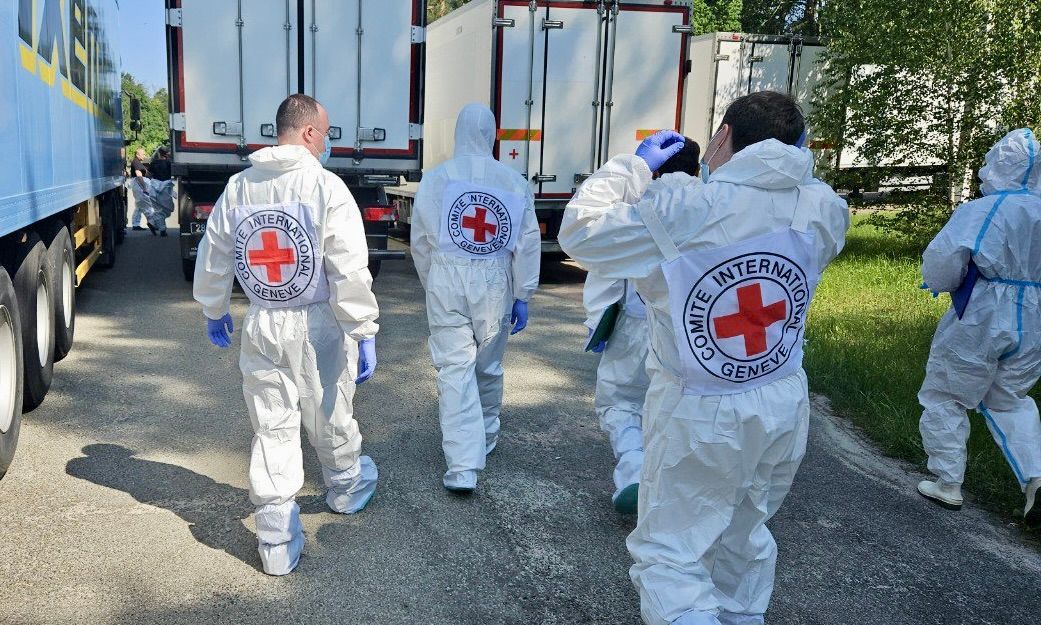
Ukraine has received the bodies of another 1,245 fallen Ukrainian soldiers and citizens under agreements reached during recent peace negotiations in Istanbul, the Coordination Headquarters for the Treatment of Prisoners of War (POWs) announced on June 16.
The latest repatriation marks the final stage of the exchange agreement, bringing the total number of Ukrainian bodies returned under the deal to 6,057.
"Each of them undergoes identification. Because behind every one of them is a name, a life, a family waiting for answers," Defense Minister Rustem Umerov wrote on Facebook.
"We are not stopping. Ahead lies the next stage: we continue the fight to bring back our prisoners of war. We bring them back. We remember…"
The operation was coordinated by Ukraine's Security Service (SBU), the Ombudsman's Office, the military, the Interior Ministry, and other state and defense institutions, with assistance from the International Committee of the Red Cross.
Vladimir Medinsky, an aide to Russian President Vladimir Putin and member of the Russian delegation at the Istanbul talks, claimed that Russia received the bodies of 78 deceased servicemen.
The June 2 negotiations in Istanbul resulted in the most expansive prisoner and body exchange agreement of the full-scale war, although no ceasefire was reached.
The deal followed the largest-ever POW swap in late May, when 1,000 prisoners were exchanged on each side. Additional exchanges last week included severely wounded and sick soldiers.
Russia accused Ukraine on June 7 of rejecting a proposed body return, publishing footage allegedly showing Ukrainian corpses stored in refrigeration units. Kyiv dismissed the claims, saying the footage was filmed inside Russia and not at a designated exchange location.
Andrii Yusov, deputy head of Ukraine's POW Coordination Headquarters, told Ukrainian Pravda that Ukraine is fully abiding by the agreed terms and has made no unilateral rejections.
Kyiv has repeatedly urged Moscow to adopt an "all-for-all" prisoner exchange formula. While over 5,000 Ukrainians have been returned from Russian captivity since March 2022, Russia continues to resist a comprehensive swap.
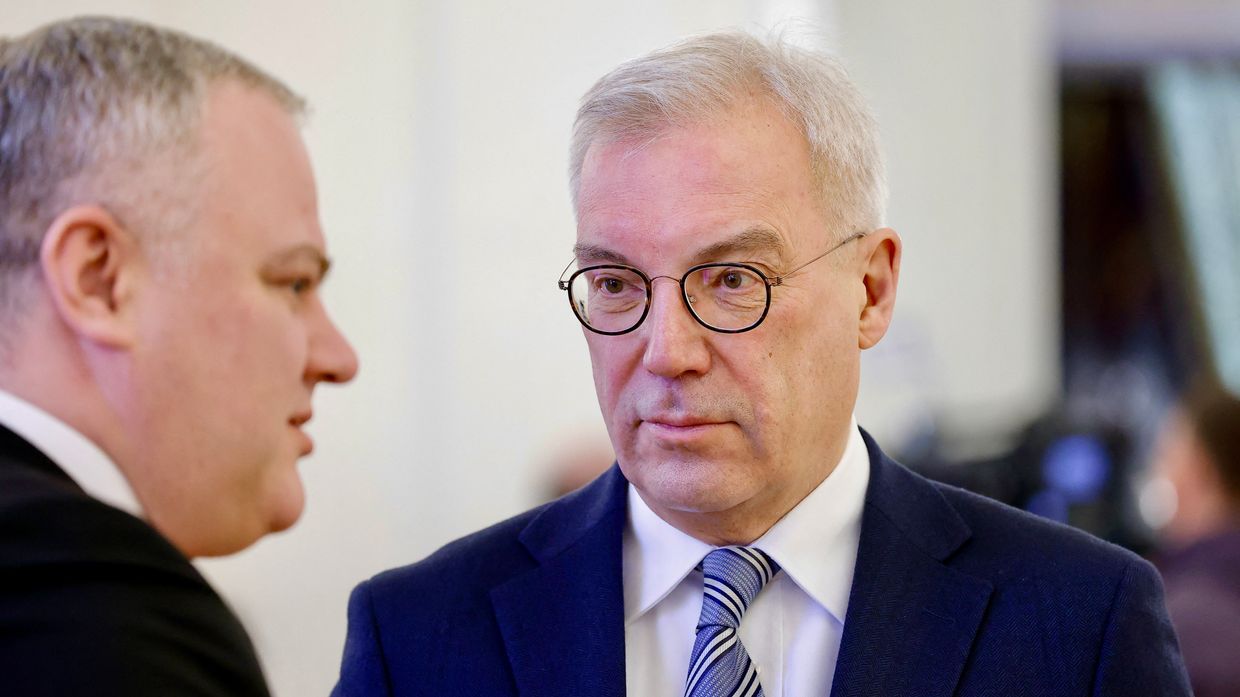
Moscow will insist that Ukraine dismantle and destroy all Western-supplied weapons as part of any ceasefire deal, Russian Deputy Foreign Minister Alexander Grushko said in an interview with the state-run newspaper Izvestia published June 16.
"All these surpluses must be destroyed. All international algorithms are known. They must be reduced, disposed of, and guaranteed," Grushko said, without offering specifics.
The remarks reflect Moscow's growing list of maximalist demands presented in its so-called "peace memorandum" during recent negotiations with Ukraine in Istanbul on June 2.
The document calls for Ukraine to recognize Russia's annexation of Crimea and four partially occupied regions — Kherson, Donetsk, Zaporizhzhia, and Luhansk — and demands full Ukrainian troop withdrawal and demobilization.
Grushko argued that Western weapons aid threatens not only Russia but also Europe, warning that arms could end up on black markets.
"It's crazy how reckless some politicians are, still flooding the market with weapons," he said.
There is no credible evidence that Kyiv has diverted Western weapons or fueled arms trafficking — a narrative promoted by Russian propaganda to undermine support for Kyiv.
Independent oversight by partner states and institutions has consistently found that Ukraine uses Western weapons to defend itself against Russia's full-scale invasion.
Moscow's proposals would further prevent Ukraine from joining NATO or military alliances, prohibit its armed forces' redeployment, and stop all Western military aid and intelligence sharing.
President Volodymyr Zelensky has rejected Moscow's demands, saying the Russian delegation admitted in Istanbul that their "memorandum" is an ultimatum Ukraine cannot accept.
"They even told our delegation: we know that our memorandum is an ultimatum, and you will not accept it," he said in a June 10 interview with Hungarian outlet Valasz Online.
In contrast, Ukraine's proposal focused on humanitarian measures, including a prisoner exchange, the return of abducted children, and securing the right to join the EU and NATO.
Kyiv has also called for using frozen Russian assets to pay for reconstruction and linking any sanctions relief to a verified ceasefire.
Despite two rounds of talks in May and June, no political breakthrough has been reached. Moscow continues to reject calls for an unconditional ceasefire, while Ukraine presses for an end to hostilities.
U.S. President Donald Trump has reportedly shown frustration over Russia's refusal to compromise, yet he has refrained from imposing new sanctions.
At least six civilians were killed and 18 others wounded in Russian attacks across Ukraine over the past 24 hours, regional authorities reported on June 16.
Russia launched 138 drones overnight, including Iranian-designed Shahed-type suicide drones, Ukraine's Air Force said. Air defenses intercepted 125 drones, while another 41 dropped off radars — likely used as decoys to overload Ukrainian systems.
The assault was repelled using aviation, electronic warfare units, mobile fire groups, and anti-aircraft missile systems.
Donetsk Oblast saw the deadliest attacks, with six civilians killed — three in Bagatyr, two in Pokrovsk, and one in Kostyantynivka — and four more injured, Governor Vadym Filashkin said. The region remains one of the most heavily targeted areas amid ongoing Russian offensive operations.
In Kherson Oblast, seven people were injured after Russian forces struck critical infrastructure and residential neighborhoods, damaging eight houses, Governor Oleksandr Prokudin reported.
Three women aged 71, 62, and 27 were wounded in Kupiansk, Kharkiv Oblast, according to Governor Oleh Syniehubov. The oblast has been under intensifying Russian aerial and artillery attacks in recent weeks.
Air defenses were active over Kyiv and surrounding areas, where three people were injured in the capital and region. Authorities said drone fragments fell in residential zones.
In Zaporizhzhia Oblast, a 46-year-old man was injured as Russian troops carried out 426 strikes on 14 settlements, Governor Ivan Fedorov reported.
The latest strikes come as Russia continues to escalate its aerial campaign and reject calls for a ceasefire. Ukrainian officials have repeatedly urged Western partners to bolster air defense capabilities as drone and missile attacks persist.
President Volodymyr Zelensky proposed to the Verkhovna Rada the appointment of Ruslan Kravchenko as Ukraine's next Prosecutor General, Parliament Speaker Ruslan Stefanchuk said on June 16.
Kravchenko, 35, currently heads the State Tax Service and is expected to be formally introduced to lawmakers during a faction meeting of Zelensky's Servant of the People party on June 17. A vote on his confirmation is expected the same day, according to lawmaker Yaroslav Zheleznyak.
The nomination ends a six-month vacancy at the top of Ukraine's prosecution service, following the resignation of Andriy Kostin in October 2024. First Deputy Prosecutor General Oleksiy Khomenko has served in an acting capacity since.
Kostin resigned amid a scandal involving prosecutors illegally obtaining disability status, which was discussed during a National Security and Defense Council meeting chaired by Zelensky.
Kostin later admitted to "many shameful facts of abuse" within the prosecutor's office.
Kravchenko, a native of Sievierodonetsk in Luhansk Oblast, has held several senior roles in law enforcement and regional government. He previously served as head of the Kyiv Regional Military Administration and led the Bucha District Prosecutor's Office.
He is best known for serving as the lead prosecutor in the treason case against exiled pro-Kremlin former President Viktor Yanukovych, who was convicted of aiding and abetting Russia's war against Ukraine.
If confirmed, Kravchenko will take over an office tasked with overseeing wartime prosecutions, including war crimes investigations and anti-corruption efforts linked to Ukraine's ongoing reforms.
Ukraine has accused Russia of "lying about everything" after yet another drone attack on Kyiv injured two people overnight on June 16, saying the strike once again rubbished Kremlin claims that only military objects are being targeted.
The strike hit Rusanivka Gardens, a private neighborhood in the capital’s Dniprovskyi District, creating a crater near civilian homes, and injuring a 20-year-old man and a woman, Tymur Tkachenko, head of the Kyiv City Military Administration, said.
"The Russians lie about everything. When they claim to have hit military targets, they are actually targeting our homes and our people," he wrote on Telegram.
"This is a deliberate tactic of terror."
The injured man was hospitalized in serious condition, while the woman is being treated on an outpatient basis, Mayor Vitali Klitschko said.
"Miraculously, significant damage and casualties were avoided," Tkachenko said.
Despite Moscow's denials, Russia has repeatedly hit civilian areas throughout its full-scale war. On July 8, 2024, one of the deadliest strikes on Kyiv killed 33 people and wounded 121 others, including patients at Ohmatdyt, Ukraine's largest children's hospital.
The Russian Defense Ministry continues to insist it targets only military infrastructure, dismissing reports of civilian casualties as "absolutely untrue." The pattern of destruction across cities like Kharkiv and Kherson shows civilians are often the primary targets.
Moscow launched 138 drones at Ukraine overnight, including Iranian-designed Shahed-type drones. Ukraine's Air Force reported that air defenses intercepted 125 of them, while another 41 went off radars — likely used as decoys to overwhelm air defense systems.
The strike comes as Russia intensifies its air campaign against Ukraine and continues to reject Western-backed proposals for a ceasefire. Kyiv, located along the Dnipro River in the country's north-center, remains one of the most heavily targeted cities in the war.
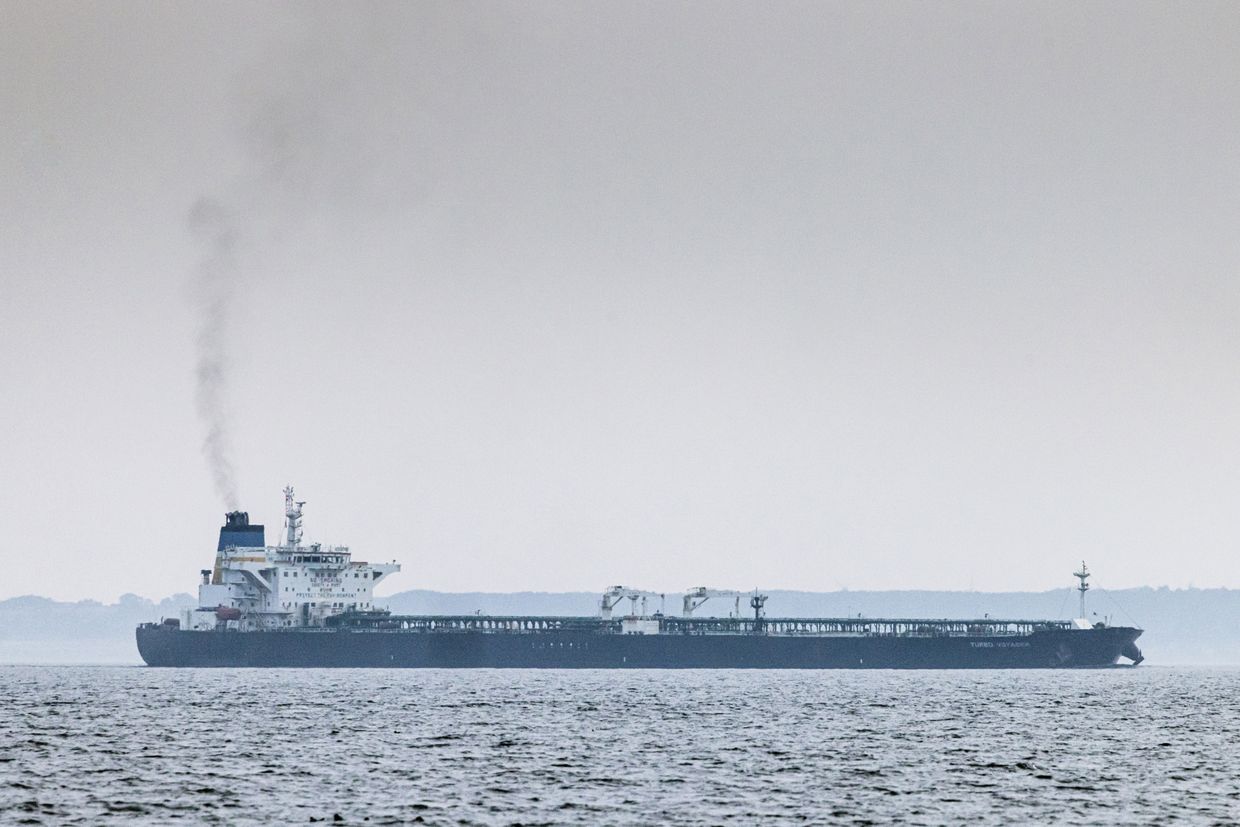
An uninsured Russian Aframax-class tanker has been illegally conducting ship-to-ship oil transfers in international waters near Greece and Cyprus since July 2024, Ukraine's military intelligence (HUR) reported on June 16.
According to the agency, the vessel, operating without Western insurance, is part of Russia's expanding shadow fleet used to bypass G7 and EU sanctions on Russian oil exports.
HUR said such transfers "pose an environmental threat, allow the aggressor to conceal the origin of oil, evade international control, and ensure its supply to third countries in circumvention of sanctions."
Ukraine has identified the tanker as IMO 9247443 and listed it on the War&Sanctions platform, along with 159 other tankers allegedly belonging to Russia's shadow fleet and 55 captains involved in sanction-busting operations.
Despite price caps and Western restrictions, Russia continues to profit from oil and gas exports, which remain a vital revenue source. According to HUR estimates, roughly one-third of those profits are expected to fund Russia's war against Ukraine in 2025.
In May, the EU approved its 17th sanctions package, targeting nearly 200 shadow fleet vessels. The U.S. Treasury had earlier sanctioned over 180 tankers, which together accounted for nearly half of Russia's offshore oil shipments.
While the Biden administration ramped up pressure on Russia's oil trade early in 2024, U.S. President Donald Trump has since declined to impose new sanctions, despite Moscow's continued refusal to agree to a ceasefire.
Russia has lost 1,005,060 troops in Ukraine since the beginning of its full-scale invasion on Feb. 24, 2022, the General Staff of Ukraine's Armed Forces reported on June 16.
The number includes 1,200 casualties that Russian forces suffered just over the past day.
According to the report, Russia has also lost 10,939 tanks, 22,811 armored fighting vehicles, 52,096 vehicles and fuel tanks, 29,208 artillery systems, 1,418 multiple launch rocket systems, 1,187 air defense systems, 416 airplanes, 337 helicopters, 40,804 drones, 3,337 cruise missiles, 28 ships and boats, and one submarine.

 Connexion
 The Kyiv IndependentTim Zadorozhnyy