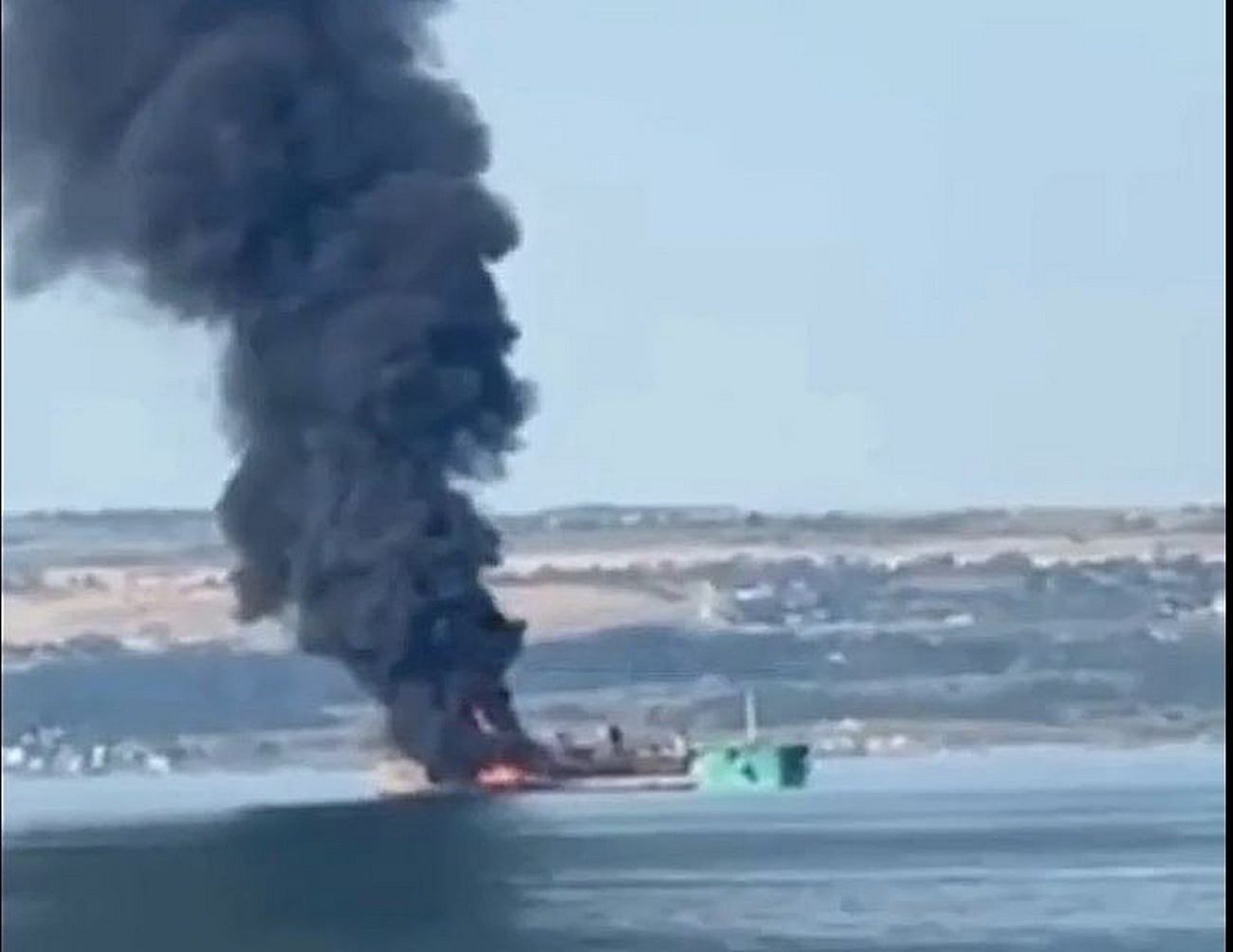
Two tankers caught fire within about 12 hours off Sulina, Romania’s port at the mouth of the Danube, Romanian authorities reported. The crew of one said a drone hit it inside Romania’s territorial waters, while Bucharest says it is still checking whether drones were involved. Bulgaria, where drones sank ships in its economic zone this month, says it lacks proof that Russia launched them.
For months, Russia has struck civilian ships on the sea route that carries most of Ukraine’s farm exports, while its drones have repeatedly crossed into Moldova and Romania during attacks on Ukraine. As long as Bucharest and Sofia wait for drone wreckage before naming anyone, Russia, the party Bulgaria’s own prime minister says the logic points to, pays no price for extending its war on Ukraine’s trade routes into NATO members’ waters.
Seven sailors missing after the second fire
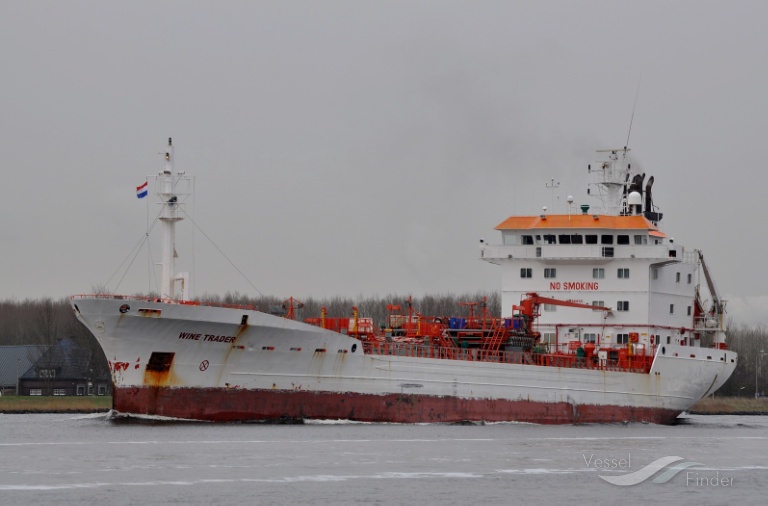
The San Marino-flagged chemical tanker Wine Trader reported a fire in its superstructure around 07:00 on 15 October while anchored in Romanian territorial waters about 13 nautical miles southeast of Sulina, Romania’s Naval Authority said. By midday, five of its 12 crew had been recovered and seven were still missing.
The chemical tanker Wine Trader. Photo: VesselFinder
Hours earlier, at 01:34, a drone entered Romanian airspace over the country’s waters southeast of Sulina for about a minute before vanishing from radar, the Defense Ministry said. Authorities have not named a cause for the fire, though unnamed sources
Norwegian nonprofit Fritt Ukraina is allocating NOK 10 million (about $1 million) to strengthen air defenses around Chornomorsk, a key Ukrainian port on the Black Sea, the organization announced on 9 October.
Russian attacks on port infrastructure and civilian vessels are threatening Ukraine’s maritime trade and agricultural exports, putting pressure on a vital source of revenue for the country and disrupting shipments of food to international markets.
The funding will support Ukrainian State Border Guard Service and Armed Forces units defending the region against Russian attack drones. It is being delivered through Dronefall, a project run by the Ukrainian Come Back Alive Foundation, which equips military units with interceptor drones and the equipment needed to operate them.
Fritt Ukraina, whose name means “Free Ukraine,” is a Norwegian nonprofit organization that supports Ukraine’s defense against Russia’s full-scale invasion. The donation is part of its Odins Ravner 2.0 fundraising campaign, which provides military assistance to Ukrainian forces.
Interceptor drones and equipment to protect port infrastructure
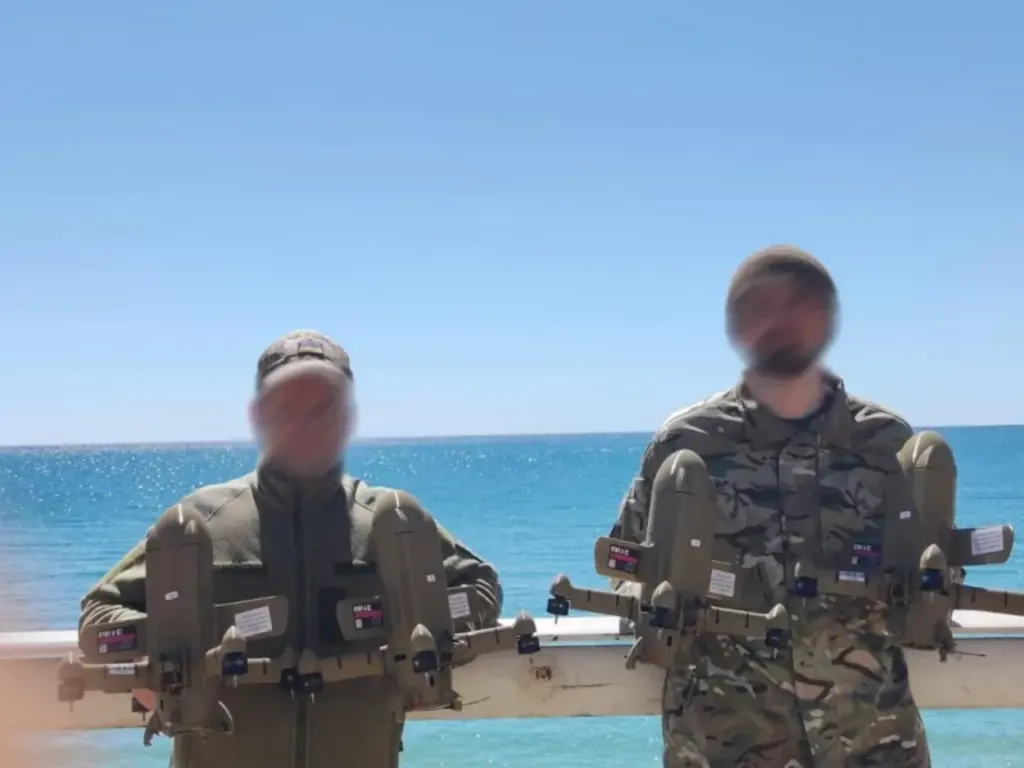
The support includes STING, Blyskavka and P1-SUN interceptor drones, alongside ground control stations, communications equipment, generators, charging stations, laptops, tablets and vehicles, according to the organization.
The interceptor drones are already operational, according to Fritt Ukraina. The equipment helps Ukrainian personnel detect and intercept Russian attack drones, while vehicles allow crews to move quickly and operate from different positions.
Fritt Ukraina Secretary General Natalia Golis said effective air defense requires more than interceptor drones alone. Communications systems, reliable power supplies and mobility are also essential to ensure units can use their equipment effectively.
The organization is supporting Dronefall for the third consecutive year and has become the Come Back Alive Foundation’s largest foreign partner. The latest donation was matched by a donor affiliated with the Ukrainian foundation.
STING interceptor drones funded by Norwegian nonprofit Fritt Ukraina to Ukrainian forces to help counter Russian attack drones near the Black Sea ports. Photo: Fritt Ukraina / Come Back Alive
More than 90% of Ukraine’s agricultural products, including grain and vegetable oils, are exported through three ports in southern Odesa Oblast. Russian attacks have targeted port infrastructure and civilian vessels, increasing security risks for commercial shipping and driving up freight and insurance costs.
Since the start of Russia’s full-scale invasion in February 2022, more than 1,000 Ukrainian port facilities and over 200 civilian vessels have been damaged or partially destroyed, Fritt Ukraina reports. The disruption threatens Ukrainian export revenue and international food supplies.
“The attacks on Ukraine’s ports do not only undermine the country’s defense capabilities. They also threaten a vital part of its economy and its ability to export food to the rest of the world,” Golis said.
Dronefall aims to expand Ukraine’s ability to intercept Russian drones using dedicated interceptor aircraft and supporting equipment. According to Fritt Ukraina, participating units have destroyed more than 53,000 Russian drones, accounting for approximately one in five unmanned aerial vehicles entering Ukrainian airspace.
The NOK 10 million contribution is part of Fritt Ukraina’s broader Odins Ravner 2.0 campaign, which provides more than NOK 60 million in support to Ukrainian forces.
Russia's seaborne exports of refined oil products rose to a three-month high in September, but the growth came from cheaper fuel oil and naphtha as diesel shipments fell to their lowest in more than a decade, Bloomberg reported, citing Vortexa data. Russia kept diesel at home after Ukrainian refinery strikes and paid oil companies to supply its pumps, while high crude prices lifted its crude export earnings.
During the ongoing deep-strike campaign, Ukraine's long-range drones have knocked out more than half of Russia's oil refining capacity, Kyiv says, and Russia's budget oil revenues are falling even as it raises war spending. High global crude prices are softening that blow.
Cheaper fuel out
Total seaborne product exports reached about 1.17 million barrels a day in September. Fuel oil shipments rose 6% to about 613,000 barrels a day, the highest since April. Naphtha, a feedstock for petrochemicals, jumped 35% to 363,000 barrels a day. Exports of refinery feedstocks, including vacuum gasoil, rose to about 32,000 barrels a day, according to Bloomberg.
The trade has moved north. Almost 80% of fuel oil cargoes left from Baltic ports, and naphtha loadings there rose almost 50% as Ukrainian attacks disrupted Black Sea infrastructure. In September, Ukraine reported hitting an oil terminal in Novorossiysk, Russia's main Black Sea oil port—one in a string of attacks on Russia's Black Sea ports and oil sites.
Explore further
More than 500 drones by Moscow’s count: Kh-101 fuel plant, second Yandex data center, and a far-north refinery hit
Diesel kept at home
Diesel and gasoil exports fell 28% to 144,000 barrels a day, the lowest monthly volume in Vortexa data going back more than a decade. Russia has restricted diesel exports to protect domestic supply after Ukrainian attacks on its refineries. Drones kept hitting them into October, from a Lukoil refinery in Volgograd to Gazprom's Salavat complex in Bashkortostan.
In September, Russia paid oil companies the biggest subsidy in more than four years to keep road fuel on the domestic market. It also imported about 350,000 tonnes of motor fuel by sea, mostly gasoline from India, Morocco, and Türkiye, Reuters calculations showed. Officials are considering letting some producers resume diesel exports in October to avoid overstocking, according to Interfax.
The diesel squeeze has reached the White House. US President Donald Trump stated on 30 September that diesel was hurt "not by the Middle East, but by what's going on in Russia, because those diesel refineries are being knocked out at a pretty alarming rate."
Crude carries the revenue
Russia's crude exports reached about 3.99 million barrels a day in the week to 27 September, and the estimated value of its seaborne crude shipments neared its highest since the full-scale invasion began, Bloomberg reported. Brent crude traded at about $102.60 a barrel on 9 October, according to Trading Economics data.
A rescue effort was underway, Prime Minister Rumen Radev said, after one of the two ships sank. It was not immediately clear where the drones originated.
Drones sank two merchant ships and set a third on fire in the Black Sea economic zones of NATO members Romania and Bulgaria on 5 and 6 October, killing at least two seafarers, Romanian and Bulgarian authorities reported. Ukraine blamed Russia for the first attack. Neither Bucharest nor Sofia has said who launched the drones.
Russia has spent months striking ships bound to and from Ukrainian ports while denying responsibility or staying silent. Now merchant vessels are sinking inside NATO members' economic zones without either government naming the attacker, so Moscow pays no political price for hitting allied waters.
Grain ship sinks off Romania
The Royad Mammadov, a Turkish-owned ship carrying grain from Ukraine's port of Izmail to Italy, sank on 5 October near Romania's Pescăruș offshore platform, 20 nautical miles from the Romanian coast, Digi24 reported. The Romanian Naval Authority described the incident as a fire on board. Romania's Interior Ministry said 11 crew members were rescued and two people died.
Three injured sailors aged 22 to 50 were taken to the Constanța county hospital, conscious and stable, with multiple injuries. Adrian Mihălcioiu, the leader of Romania's Free Seafarers' Union, said the ship was attacked by Russian sea and aerial drones in waters Romanians consider safe.
"It is a commercial ship, a ship that is not part of the war… people who have nothing to do with the war, it is not their war," he said.
Ukrainian President Volodymyr Zelenskyy blamed the attack on "two Russian drones" and said the ship was in neutral waters carrying corn. Citizens of Azerbaijan and India were on board, and the captain was killed, he said. Romanian authorities have not attributed the sinking to Russia.
The Togo-flagged cargo ship Alfa Watan, which sank after a drone attack in Bulgaria's exclusive economic zone on 6 October 2026. Illustrative photo: Capt. Mohammad Yassine/MarineTraffic via Militarnyi
Two more ships hit in Bulgaria's zone
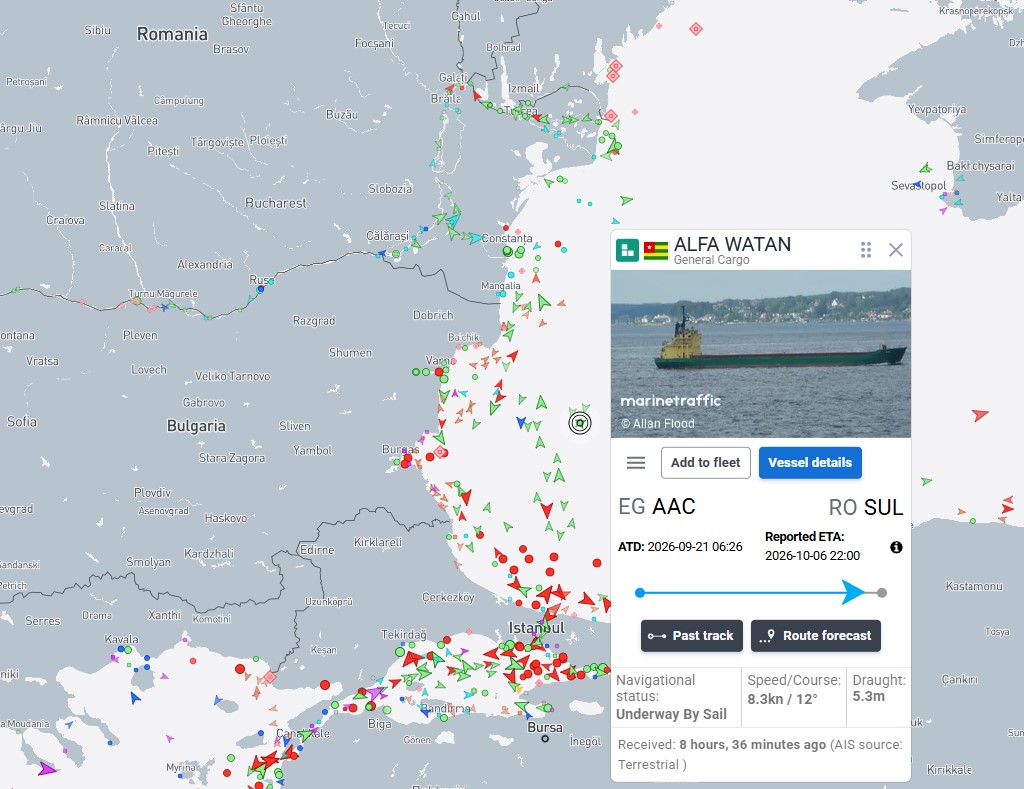
A day later, drones struck two merchant ships in Bulgaria's exclusive economic zone east of the town of Byala, the first known attack on ships there, Maritime.bg reported. The Togo-flagged Alfa Watan, sailing from Al-Arish, Egypt, to Sulina, Romania, suffered critical hull damage and sank, Militarnyi said. The Bulgarian ferry Dioscuria found only an overturned lifeboat and life jackets at the scene, and the search for the crew continues, Euronews reported.
The Palau-flagged Able, sailing from Galați, Romania, to Istanbul, caught fire, and the Dioscuria rescued its 18 crew members. Both ships are Turkish-owned, Türkiye Today reported. Two sailors with severe injuries were flown to a hospital in Varna, Prime Minister Rumen Radev said, according to AP. Sea and aerial drones hit the ships at about 3 a.m., he said, calling the attack "a blatant violation of international law and maritime law."
Explore further
Ten dead as Russia strikes a Turkish-owned bulk carrier off Odesa
Radev called an emergency meeting of four ministries, the presidency, and the security services. No one from the Alfa Watan has been found, he said, warning that if the war is not ended in time, it "will continue to expand its spatial scope." The origin of the drones is still being clarified, Maritime.bg said. Several Bulgarian media outlets cited sources as saying the drones were Russian, Sofia Globe reported.
The last reported position of the Alfa Watan off Bulgaria's coast on its voyage from Al-Arish, Egypt, to Sulina, Romania, before it sank in a drone attack on 6 October 2026. Map: MarineTraffic via Militarnyi
Russia's war on Black Sea shipping
Russia had already killed the captain of a Tanzanian-flagged ship in September, and days later it struck another civilian vessel, killing its captain too. Ukraine says that route carries 90% of its farm exports.
Romania has destroyed a sea drone near its Neptun Deep gas project and found Russian drones floating in its economic zone. In September, ISW linked drone crashes in Romania and Moldova to a wider Russian pattern of pressure on NATO.
EU foreign policy chief Kaja Kallas called for a moratorium on Black Sea attacks. Turkish President Recep Tayyip Erdoğan said Ankara was stepping up diplomacy to restore grain exports. Türkiye and the UN are organizing new Black Sea truce talks between Russia and Ukraine, Bloomberg reported, citing a diplomat. Russia earlier dismissed Kyiv's offer of a Black Sea ceasefire.
Operation MoLoChKa has now disabled 300 Russian shadow fleet ships in 11 weeks, SBS commander Robert "Madyar" Brovdi announced. The Unmanned Systems Forces (SBS) campaign has frozen the Azov Sea and the Kerch Strait, Brovdi said.
The Black and Azov seas have turned from Russian supply corridors into contested waters where Russia's shadow fleet—the aging tanker armada it uses to evade oil sanctions—now moves at its own risk, according to the SBS.
134 in the Azov, 166 in the Black Sea
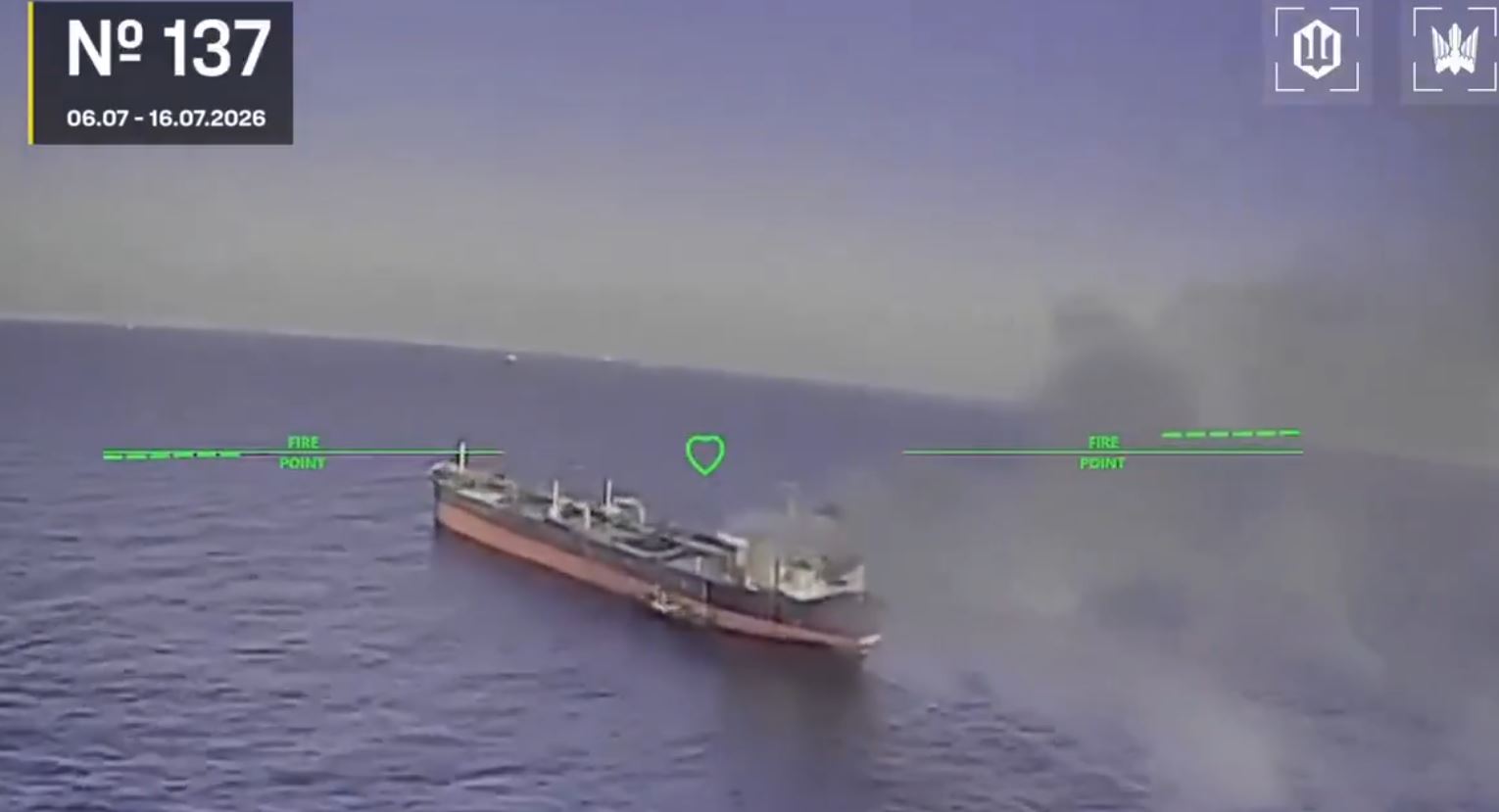
SBS drones struck 134 vessels in the Azov Sea and 166 in the Black Sea since Operation MoLoChKa began on 6 July, the SBS wrote—all, Brovdi specified, stripped of the ability to move under their own power. He called it the "300th fleet," playing on the Ukrainian army's code for a wounded man, and "a suitcase without a handle and a torment for the worm budget."
The Azov Sea "stands and will stand, together with the Kerch Strait," Brovdi said. The northern and northeastern Black Sea operates on what he called a "maybe we'll slip through" gamble.
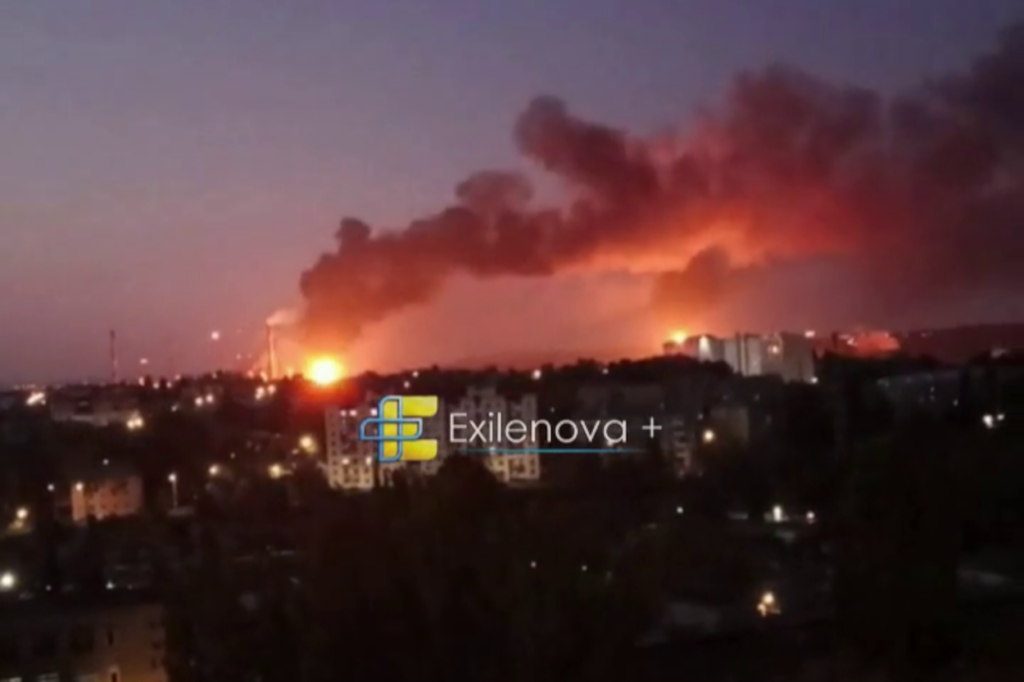
A Russian tanker burns off the Sea of Azov coast after a Ukrainian drone strike. Photo: Exilenova+/Telegram
The 300-ship count is the latest in a rapid progression. The SBS reported 201 vessels disabled by 29 July—just three weeks into the operation—when Brovdi said Crimea's supply route was "blocked indefinitely." By 11 September, the tally had reached 285, with 215 struck in July, 54 in August, and 16 in the first 11 days of September. The pace slowed as traffic in the strike zone thinned out.
The SBS figures are the unit's own and cannot be independently verified.
Explore further
Ukraine hits 201 Russian shadow fleet ships in three weeks. Commander says Crimea’s supply route is now blocked indefinitely
Commercial shipping retreating from Russian ports
In late August, MSC Mediterranean Shipping Co., the world's largest container carrier, suspended new bookings for transport through the Russian port of Novorossiysk. Russia itself closed the Don-Azov shipping channel and the Kerch Strait in July after the opening wave of strikes.
By early August, Ukraine had turned Novorossiysk—Russia's main Black Sea export gateway—into a chokepoint, and in mid-August Ukrainian forces struck four Russian warships there in a single night. A 141-meter vessel disappeared near Novorossiysk the same week.
A parallel campaign against Crimea's power grid
The SBS is running a second operation alongside MoLoChKa. Operation Crimean Switch Off, also launched on 6 July, had struck 374 energy nodes across occupied Crimea and other occupied areas in eastern and southern Ukraine by 10 September. The campaign has blacked out Crimea on multiple nights. Brovdi has said the SBS could strike seven times more targets with faster funding.
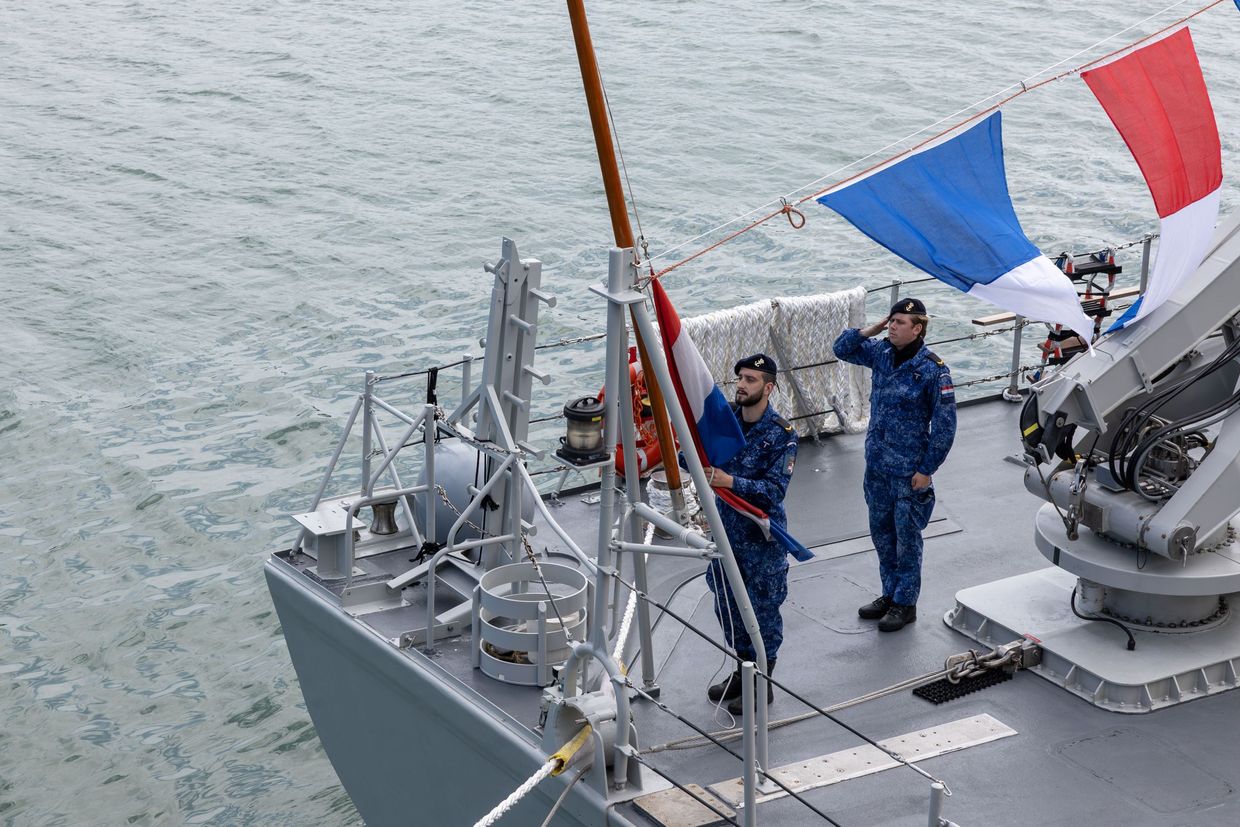
The Netherlands and Belgium have delivered two minehunter vessels to Ukraine to support maritime security in the Black Sea, Dutch Defense Minister Ruben Brekelmans announced on June 26.
"The Netherlands and Belgium are transferring two minehunters to Ukraine. A vital contribution to Black Sea security, and key to safeguarding trade routes and global food supply," Brekelmans said on X. He added that Ukrainian crews and technicians were trained "in record time."
According to the Dutch Defense Ministry, the vessels involved are the Belgian ship BNS Narcis and the Dutch Zr.Ms. Vlaardingen. The official handover ceremony took place earlier in Zeebrugge, Belgium, but was disclosed only later due to security concerns.
"The major ports of Odesa and the Black Sea shipping lanes are the lifeblood of the Ukrainian economy," Brekelmans said. "And (they are) under constant threat. Ukraine may not win the war at sea, but it can certainly lose the war there. We simply cannot let that happen. That is why it is so important for maritime security and free passage that Ukraine can use minehunters."
Since Russia's full-scale invasion of Ukraine began in February 2022, the Netherlands has provided Kyiv with a combined 8.4 billion euros ($9.4 billion) in support, according to the Kiel Institute for the World Economy while Belgium has allocated over two billion euros (about $2.2 billion) in support, including military, financial, and humanitarian assistance.

 Connexion