 Connexion
8 Key Findings From the Times/Siena Polls
Democrats are competitive in Alaska, Iowa, Ohio, Texas and even Kansas as they try to wrest control of the Senate from Republicans. Here’s a look at why.


© Gianni Cipriano for The New York Times

© Diego Vara/Reuters

© Hilary Swift for The New York Times

© Rebecca Cook/Reuters

© Kevin Dietsch/Getty Images

© Hilary Swift for The New York Times

© Tomas Munita for The New York Times

© Todd Korol/Reuters

© Jes Aznar for The New York Times

© Vantor, via Reuters

© Erin Schaff/The New York Times

© Patrick T. Fallon/Agence France-Presse — Getty Images

© Lexi Parra/The New York Times

© Lexi Parra/The New York Times
© Lexi Parra/The New York Times

© Lexi Parra/The New York Times

© Mike Segar/Reuters

© Lexi Parra/The New York Times

© Madeleine Hordinski for The New York Times

© Ranu Abhelakh/Reuters

© Dave Sanders for The New York Times

© Doug Mills/The New York Times

© Kenny Holston/The New York Times

© Reuters


© Cesar Rodriguez for The New York Times

© Amr Alfiky/Reuters

© Antony Dickson/Agence France-Presse — Getty Images

© Rolex dela Pena/EPA, via Shutterstock

© Valentyn Ogirenko/Reuters

© Firas Makdesi/Reuters

© Pool photo by Julie Sebadelha

© Vantor, via Reuters

© Vahid Salemi/Associated Press
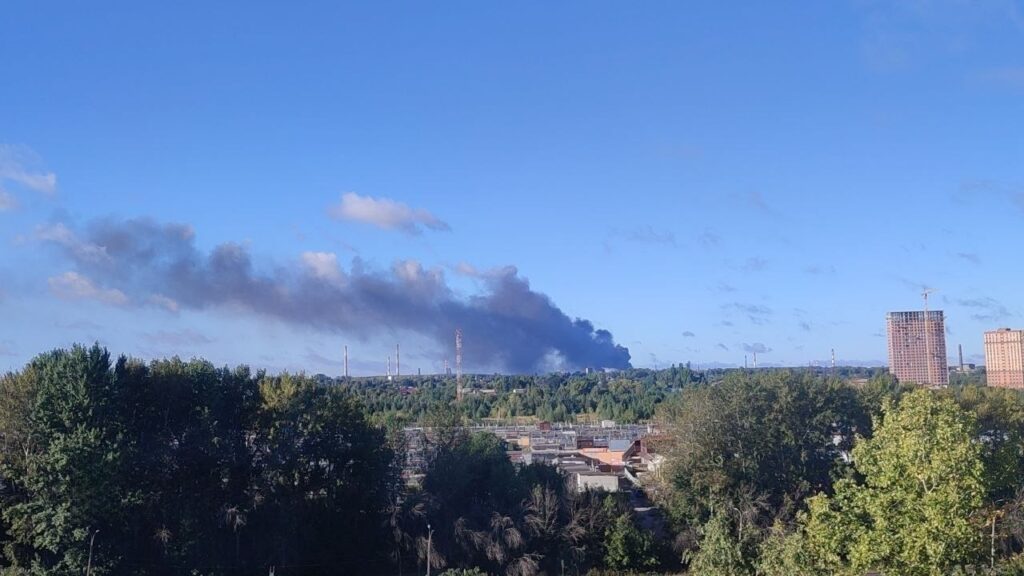
Ukrainian drones struck the Ryazan oil refinery in Russia on the morning of 6 September and set one of its core units on fire, Ukrainian defense outlet Militarnyi reported. The unit produces the high-octane component the Rosneft plant needs for its higher grades of gasoline. Russian regional authorities acknowledged a fire without naming the site. Ryazan is situated southeast of Moscow, about 470 km from Ukraine.
Drones hit the low-temperature isomerization unit for pentane-hexane fractions, designated Izomalk-2-LIN-800, according to Militarnyi's analysis. The unit sits on the refinery's grounds and is one of the critically important links in the plant's production cycle.
It converts low-octane straight-run oil fractions into a cleaner high-octane blending component. That component is what allows the refinery to produce gasolines of the higher environmental classes, Euro-5 among them, without adding harmful additives.
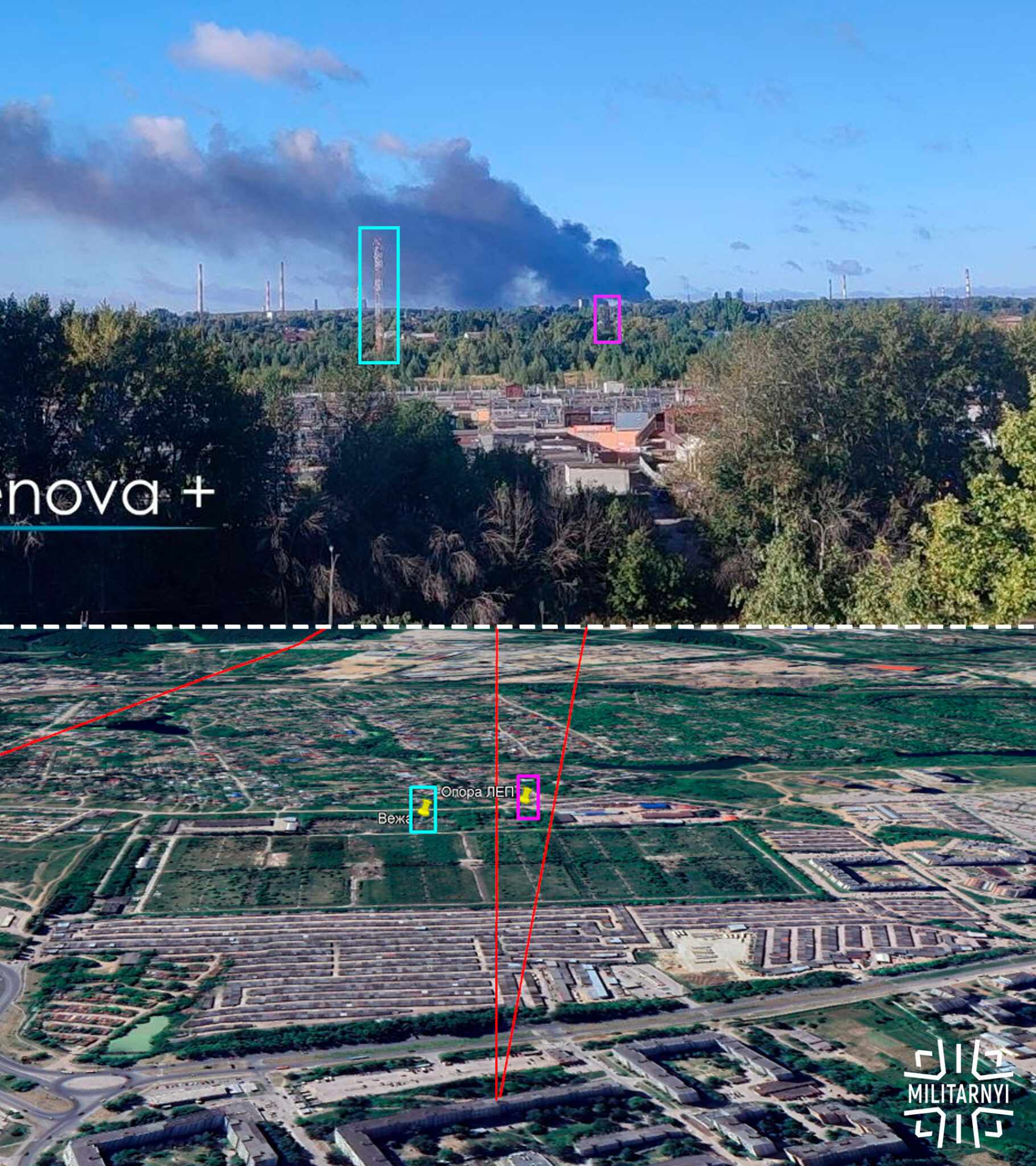
Ukrainian monitoring channel Exilenova+ published videos of the strike.
Ryzan Oil refinery pic.twitter.com/VcPfnSGgi4
— Exilenova+ (@Exilenova_plus) September 6, 2026
Drones already attacked this unit in December 2025 and damaged it. Earlier waves targeted the plant's ELOU-AVT-3, ELOU-AVT-6, and AVT-1 units.
By May 2026 the refinery had lost 90–100% of its refining capacity. Satellite imagery from 3 August 2026 showed Ukraine's Defense Forces had disabled two of the four crude distillation units on site.
Ukrainian drones struck the refinery in May, and FP-1 drones set it and a nearby warehouse burning in July.
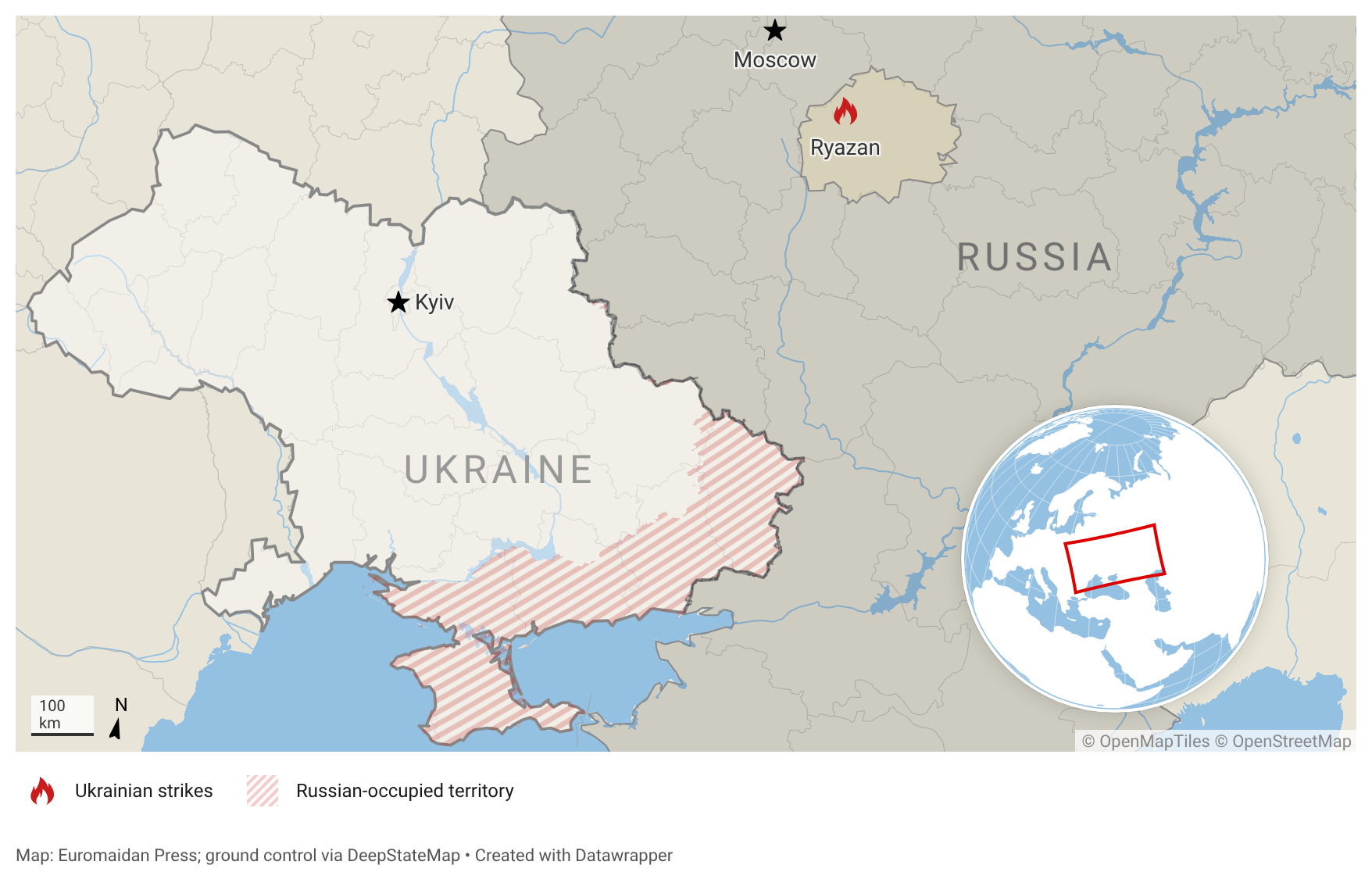
Ryazan Oblast governor Pavel Malkov confirmed the region came under drone attack. Drone debris damaged residential buildings in Ryazan and Sapozhkovsky district, he stated, and a fire broke out at an enterprise he did not name. He said there were no casualties and that emergency services were working.
Russian news Telegram channel Astra said its analysis of photographs taken by residents established that the fire was on the grounds of the Ryazan refinery. Ukrainian channel Exilenova+, which tracks such attacks, also reported a hit on the plant.
Ryazan, locals report oil refinery is on fire after attack pic.twitter.com/0Dqhjo5FNI
— Exilenova+ (@Exilenova_plus) September 6, 2026
Ukraine's General Staff said strikes on 26 August and 1 September fully stopped two large refining enterprises: Lukoil-Nizhegorodnefteorgsintez in Kstovo, Nizhny Novgorod Oblast, and the Novatek-Ust-Luga complex in Leningrad Oblast. Both supply the Russian army.
Short of gasoline, Russia has been buying more fuel abroad. Moscow discussed importing gasoline from Kazakhstan in June, and a Kazakh refinery deal would cover 0.3% of Russian demand. Belarus increased its gasoline supplies to Russia nearly 20-fold in the first half of the year.
