Québec solidaire a annoncé hier qu’un gouvernement solidaire accueillerait 70 000 immigrants permanents par an.
Le Parti libéral souhaitait, jusqu’en 2024, en accueillir 70 000, mais son nouveau chef, Charles Milliard, ne s’est pas encore prononcé sur un nombre précis.
La Caq maintiendrait le plan adopté en novembre dernier qui prévoit l’accueil de 45 000 résidents permanents par an.
Le Parti québécois limiterait leur nombre à 35 000 par an.
Le Parti conservateur n’a pas indiqué combien il souhaiterait en accueillir.
Proposal offers look at how state department could enforce Trump order targeting what it calls ‘birth tourism’
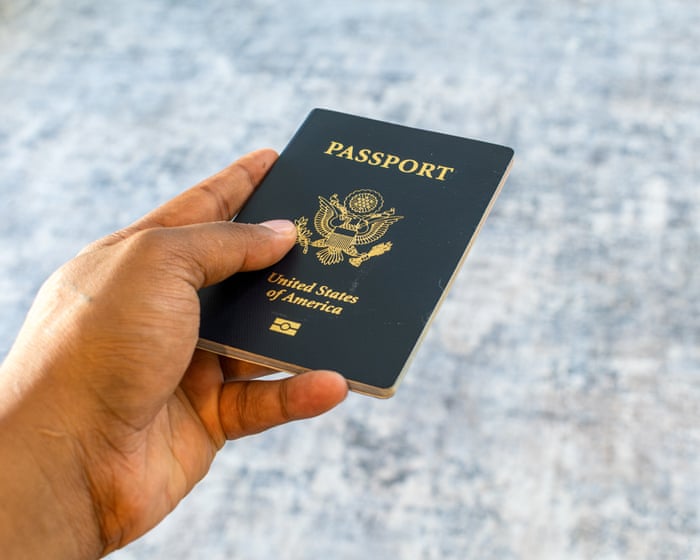
The US state department has proposed requiring parents applying for passports for their children to provide proof of their own citizenship or immigration status as part of Donald Trump’s latest effort to limit birthright citizenship.
The draft guidance, reviewed by Reuters, is the first detailed look at how the state department could enforce Trump’s 6 August executive order targeting what it calls “birth tourism” and broadening historical exceptions to birthright citizenship.
Friends of Pierre Damas Bel and advocates with the Haitian Community Network in Springfield, Ohio, held a news conference on Tuesday addressing his death.
Federal immigration officials detained Loreto Javar during his US citizenship interview in Tukwila, Washington, in June. Javar, a Filipino national, moved to the US in 1995 and has lived in the country with his wife and daughter ever since.
In their broadest assault yet against the charges, lawyers for the defendants pointed to the unusual investigative tactics the administration deployed to make the case against them.
Demonstrators disrupted a church service at Cities Church in St. Paul, Minn., in January to protest the dual roles of one of its pastors, who also serves as an acting field director for Immigration and Customs Enforcement.
Transportation Secretary Sean Duffy, who has targeted truckers in the country illegally, said the schools certified drivers later found to lack proficiency.
The president’s deportation machine is creating a class of people inside the US who have fewer protections against the power of the state
Is the Trump administration creating a group in the US with fewer protections against executive power owing to their immigration status? Its often openly racist actions suggest so. US Immigration and Customs Enforcement (ICE) claims to target “the worst of the worst” – undocumented migrants who commit violent crimes. Yet the Guardian reported that over half of those arrested in July had no criminal convictions or pending charges. That month, ICE made record arrests and deportations, apprehending 1,500 people and removing 1,100 daily.
When campaigning, Donald Trump falsely claimed that Haitians were “eating the pets”. In office, his administration moved to end temporary protected status (TPS) for Haitians. In June, the supreme court let the protection expire, leaving about 350,000 people at risk of deportation to a country gripped by violence and instability. The court’s decision means more than 1 million TPS holders from 13 nations previously considered too unsafe to return to are now at risk of deportation. Many have lived and worked legally in the US for years.
Do you have an opinion on the issues raised in this article? If you would like to submit a response of up to 300 words by email to be considered for publication in our letters section, please click here.
Tom Homan denies British far-right commentator, who was deported one day after arrest, got preferential treatment
The White House “border czar,” Tom Homan, denied on Sunday that deporting the British far-right commentator Milo Yiannopoulos just a day after being arrested by US Immigration and Customs Enforcement (ICE) amounted to preferential treatment.
Homan said it was his understanding that Yiannopoulos, 41, had overstayed what he believed to be a visitor visa, had not appeared at an immigration hearing and was issued a final order of removal on 22 July.
‘Alt-right’ agitator and former Trump backer deported from US is said also to be too extreme for Reform
As he arrives back in the UK after being deported from the US by the Trump administration, the far-right provocateur Milo Yiannopoulos may be wondering what lies ahead for him in his native country.
The “alt-right” agitator, 41, made his name in the US by promoting Donald Trump and associating with his allies before the 2016 election.
Ten deportees said they experienced or witnessed what they called abusive or violent treatment by ICE. They spent months in detention, they said, before being sent to nations where they had no ties.
Ex-Breitbart editor has vocally supported immediate deportations for anyone who can’t prove US residency
Far-right British media provocateur Milo Yiannopoulos has been deported from the US after being detained on Thursday by Immigration and Customs Enforcement (ICE) in New Orleans in connection with what the agency said was expired authorization to be in the country and a deportation order.
Yiannopoulos’s deportation to the UK occurred on Friday, said a statement on Saturday from a spokesperson for the US Department of Homeland Security (DHS), which oversees ICE.
The Trump administration has deported thousands of immigrants to countries where they have no ties. Dozens were on the latest flight, to the Central African Republic.
A privacy measure for immigration aid workers became a free speech cause for backers of Mr. Shirley, a right-wing YouTube star. Democrats say the furor is fueled by misinformation.
Nick Shirley, 24, has quickly become a hero in the MAGA movement as a YouTube influencer who has produced viral videos claiming to expose fraud in Democratic-led states.
Senator Jon Ossoff, the youngest sitting senator and the only Democrat seeking re-election this year in a state President Trump won in 2024, hasn’t moderated his message in his critical race.
At rallies across Georgia this summer, Senator Jon Ossoff has delivered a series of blistering rebukes of the president and a challenger for his seat, Representative Mike Collins.
Our White House correspondent Zolan Kanno-Youngs explains how so-called third-country deportations are sending immigrants to countries across the globe.
Mr. Yiannopoulos, a prominent early supporter of President Trump, was detained at the New Orleans airport. The Trump administration publicized his arrest and shared a mug shot.
The announcement has sent panic through a community that fled its country’s brutal military rule, civil war, religious persecution or some combination of the three.
Rohingya refugees in front of the office of the United Nations High Commissioner for Refugees in Kuala Lumpur after being evicted from their home in July.
A former lieutenant colonel in Venezuela’s National Guard living in Florida was deported, interrupting a lawsuit that accused him of ordering violent raids and torture.
Flights to the Caribbean nation will increase from once a month to once a week now that the Supreme Court allowed President Trump to cancel a humanitarian program.
The two states have waged an unusual court battle over the agent facing charges over a shooting in Minneapolis. The agent could be released from jail on Thursday.
A US Immigration and Customs Enforcement (ICE) agent accused of firing his gun and wounding a Venezuelan man in the leg is caught in an interstate extradition dispute between Texas and Minnesota – and could walk out of a Texas jail as soon as Wednesday after a federal judge refused to intervene.
Christian Castro is charged in Minnesota with assault and falsely reporting a crime by another, in relation to the incident in which he was involved in the wounding of 24-year-old Julio Cesar Sosa-Celis in January.
Joshua Aviles, a Navy sailor, said his father had been freed days after he was detained as Mr. Aviles returned from a lengthy deployment in the Middle East.
Administration moved away from high-profile raids that defined immigration enforcement approach last year but still deported record number of people
The Trump administration arrested and deported a record number of immigrants in July, according to newly released government data – apprehending an average of 1,500 people and removing 1,100 people daily.
This latest data confirms what attorneys and immigrant advocates have been seeing across the US – although the administration has moved away from the high-profile, militarized raids that came to define its immigration enforcement approach last year, it is quietly ramping up its operations.
Move by state department to limit access is part of Trump’s crackdown on both lawful and undocumented immigration
All US immigrant visa applications have been paused by the Trump administration as the state department moves to tighten restrictions and limit access to applicants who they deem could end up relying on US assistance, a state department official confirmed Tuesday.
The agency launched the initiative at all embassies and consulates in early August, according to the official and visa appointments had to be adjusted to accommodate “in-depth training”, according to the official. The state department has been working on updated guidance and training since early this year, “to ensure all consular officers are fully equipped to evaluate every visa applicant comprehensively and consistently”, they added.
Agents arrest women who ‘almost died’ after they were hit by vehicle and their car flipped over four times, family say
An Ecuadorian mother and daughter were arrested by Immigration and Customs Enforcement (ICE) agents at a hospital after a car crash in central Florida.
On 20 August, Grace Stephanie Calero Cabanilla, 39, and her daughter, Giulianna Mía Carriel Calero, 19, were involved in a car crash in Poinciana, Florida, according to arrest reports reviewed by multiple news outlets.
Arrest of Luis Manuel Aviles, 48, sparked backlash as he was detained while his son, Joshua, was deployed in Middle East
The father of a US navy sailor who has been deployed in the Middle East for a record-breaking nine months on the USS Abraham Lincoln aircraft carrier has been released from immigration detention, according to his family.
His arrest sparked intense backlash after the Associated Press reported that his son was entering his ninth month on the Lincoln with the navy when his father was detained. The carrier had just set a US military record for uninterrupted time at sea and has raised concerns about supply shortages and deteriorating mental health among those serving onboard.
Cristy Maryori Villafranca-Trejo, deported to Honduras, is latest military spouse to face removal amid Trump 2.0
The wife of an active-duty US soldier was deported on Monday to her native Honduras, according to her family and the federal Department of Homeland Security (DHS).
Cristy Maryori Villafranca-Trejo is at least the seventh spouse or parent of an active-duty US soldier to be deported under the immigration crackdown during Donald Trump’s second presidency.
The State Department, in a move that could affect as many as 200,000 visa holders and asylum applicants, has begun its review. Cancellations could occur in waves.
“Obtaining a visa in order to seek asylum is fraud — which is grounds for visa revocation,” Tommy Pigott, a State Department spokesman, said in a statement.
The State Department, in a move that could affect as many as 200,000 visa holders and asylum applicants, has begun its review. Cancellations could occur in waves.
“Obtaining a visa in order to seek asylum is fraud — which is grounds for visa revocation,” Tommy Pigott, a State Department spokesman, said in a statement.
The Trump administration has called for an overhaul of the H-1B visa program, saying it has unfairly allowed companies to sideline Americans and hire foreign workers at lower pay.
Exclusive: internal correspondence reveals USCIS anti-fraud officers shifted on to two ‘high-priority’ initiatives
All US immigration officers working for a key anti-fraud unit have been reassigned by the Trump administration to focus on screening South African refugees and alleged “unlawful” voters.
Fraud Detection and National Security Directorate (FDNS) immigration officers have been shifted full-time on to two “high-priority” initiatives, according to internal correspondence seen by the Guardian, leaving US Citizenship and Immigration Services (USCIS) unable to provide officers to train asylum officers in “the near future”.
The sailor, Joshua Aviles, was on his way home from the Middle East aboard the beleaguered aircraft carrier when he learned his father had been detained.
Joshua Aviles, right, with his father, Luis Manuel Aviles, in 2025, shortly before Joshua shipped out for the Middle East aboard the aircraft carrier U.S.S. Abraham Lincoln.
Travelers arriving from international flights outside the U.S. Customs and Border Protection exit at Kennedy International Airport in New York last year.
At least five of the people flown to Liberia under the Trump administration’s third-country deportation program resisted leaving the plane. They were then flown to Equatorial Guinea.
The five men were part of the first group of deportees to be sent to the West African nation by the Trump administration. The Liberian government has not clarified their status.
Monrovia, the capital of Liberia. The U.S. deportation deal with Liberia is one of the largest so-called third-country deportation agreements struck by the Trump administration so far.
The reversal of the plan, which had not been publicly disclosed, comes amid mounting confusion about how the administration is protecting the rights of unaccompanied minors.
Immigrants have long eased labor shortages on farms and factories in Italy. But churches also need foreign-born priests, like the Rev. Vincent Souly of the Ivory Coast.
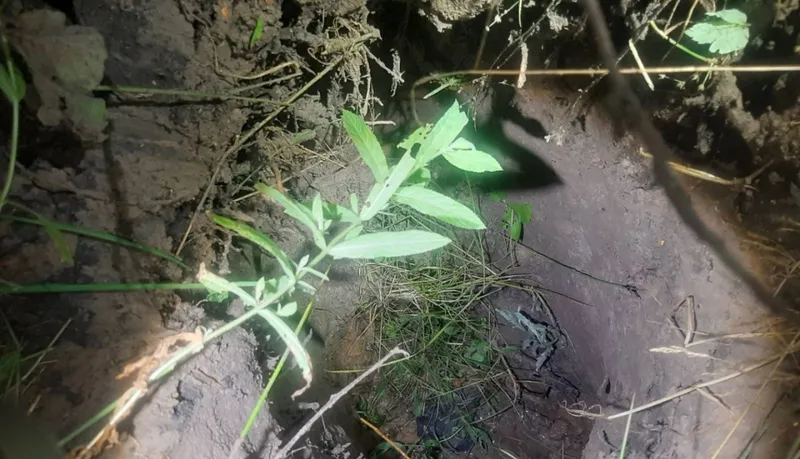
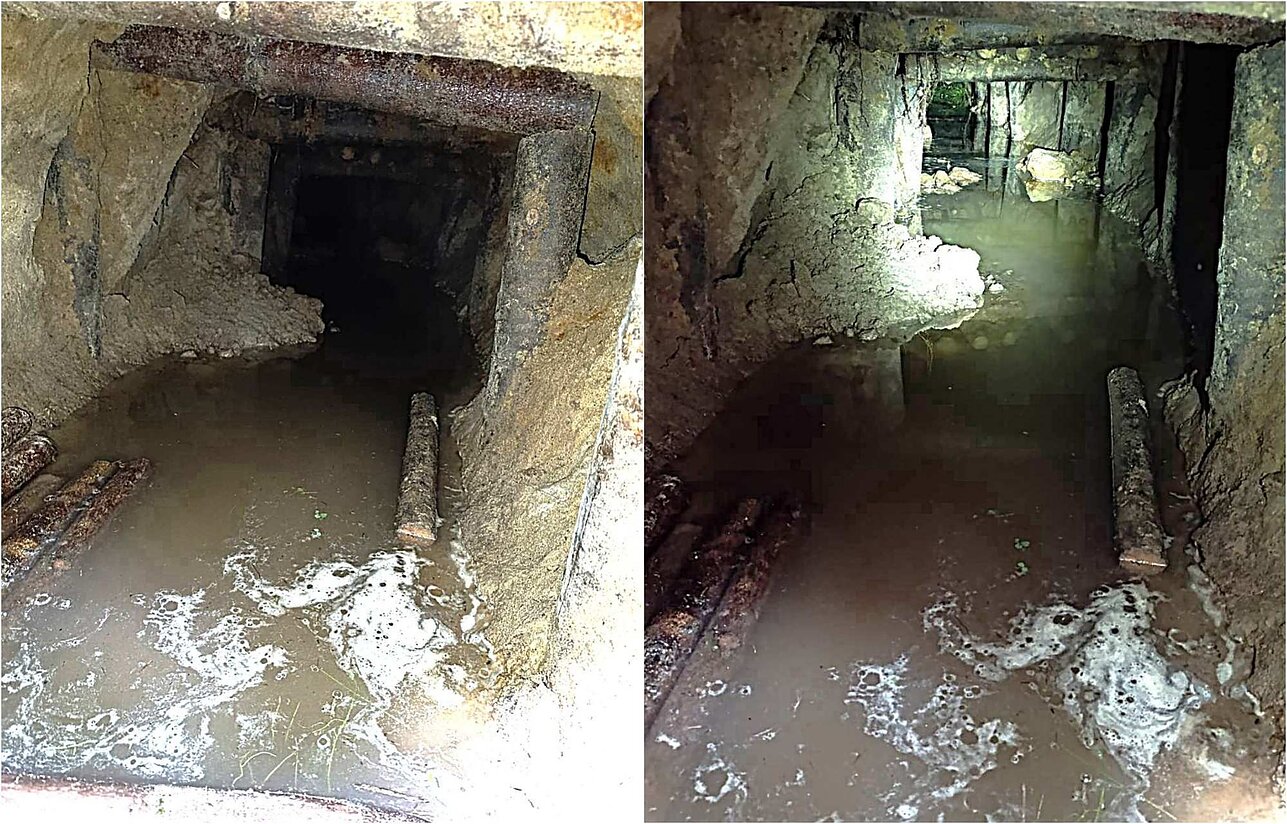
Latvia has discovered its first known border tunnel used to enter the country illegally from Belarus, the country’s State Border Guard said on 11 August. Officers intercepted 15 people who had crossed through the underground passage and returned them to Belarus.
Latvia, Lithuania, and Poland accuse Belarus and Russia of directing migrants toward their borders to retaliate for EU sanctions and strain countries supporting Ukraine. Minsk and Moscow deny orchestrating the crossings. Tunnels found in Lithuania and Latvia show organizers adapting to fortified borders, requiring Baltic governments to deploy more personnel and surveillance technology.
The tunnel was about 10 meters from Latvia's fence
Border guards found the group on 10 August in Skrudaliena parish, in Latvia’s southeastern Augšdaugava municipality, and briefed the public on the discovery the following day. The operation involved the State Police, a Lithuanian border-service dog handler, and a rapid-response unit, the Latvian Border Guard said.
While reconstructing the group’s route, officers found the passage near the Silene border post, about 10 meters from Latvia’s fence. The agency said it had received intelligence that a tunnel might be under construction, but had previously found no sign of a breach there.
Riga answered on 11 August 2026 by launching Operation Vilkatis, or “Werewolf,” scheduled to run through the end of August. The government says the operation will improve intelligence-sharing among border guards, police, the military, and security services. It will also expand aerial surveillance and target networks that transport and shelter migrants after they cross.
Explore further
The Belarusian tunnel to the EU was almost done. Then Lithuania drilled a hole in exactly the wrong place—for the diggers
Latvia faced 87% of all crossing attempts along the EU-Belarus border by mid-July 2026
Belarus has weaponized migration since 2021, when EU governments accused Alyaksandr Lukashenka’s regime of bringing people from the Middle East and Africa to the bloc’s frontier in retaliation for sanctions. Belarus denied orchestrating the crisis.
Latvia reported more direct evidence in January 2026. Documents and phones taken from detained migrants linked Belarusian military and border personnel to organized crossings, according to Latvia’s armed forces and Border Guard.
By 13 July, Latvia had recorded 7,791 attempts over 111 consecutive days, 87% of all attempts along the EU-Belarus border by then. Lithuania later found an unfinished tunnel dug from Belarus. Latvia’s tunnel, unlike the unfinished Lithuanian passage, had already been used.
A ride from Tangier, the largest city in northern Morocco to the Spanish enclave of Ceuta takes less than two hours. The border crossing has its own, sleepier rhythm, quite different from the tourist-driven bustle of Tangier. In Ceuta, traders run their errands, Morocco-based expats make visa runs and Spanish people catch ferries to the mainland. On most days, the border crossing seems almost ordinary. The fences, though menacing and topped with razor wire, are less imposing up close and officers make small talk with the expats waiting to get their visas stamped.
Then there are those days when the routine collapses and Ceuta becomes the center of Europe’s migration debate.
The territory is a geographic and political paradox. Despite falling under Spain’s — and the European Union’s — jurisdiction, it sits on the northern edge of Africa, surrounded by Morocco and separated from the Spanish mainland by the Strait of Gibraltar. It is an entry point to Europe, yet not fully part of the Schengen zone, requiring additional immigration checks for travelers crossing to the mainland.
When more than 60,000 people — mostly Moroccan men and teenagers — rushed into Ceuta (almost doubling the coastal city’s population), the images reverberated across Europe. There seemed to be no dramatic buildup to the incident, nor any obvious explanation why thousands of people chose that day to make their way to Spain.
Europe’s far-right politicians seized the narrative, portraying the influx as an imminent invasion, warning that the men were on their way to “Calais” and “Germany.” Italy temporarily suspended the Schengen free movement regime with Spain, meaning travellers arriving by sea and air would now be subject to border checks. Spain threatened to take “proportional measures” in response and did so at midnight on August 8, when it imposed similar checks for visitors from Italy.
The standoff between European governments — led by socialist Pedro Sánchez in Spain and conservative Giorgia Meloni in Italy — is not simply a test for European border security. Instead, what transpired in Ceuta poses bigger questions about the shifting nature of state sovereignty itself: How are we to understand borders, if they’re shaped by forces beyond the state’s reach?
Borders are not just lines separating geographic entities. They are systems built on surveillance, diplomatic bargains and digital networks. Ceuta is the place where all three converge. Its borders, already protected by the sea, have been fortified with steel, outsourced through diplomacy and tested by coordinated rumors.
Steel
The crossings into the enclave are blocked by a multi-layered barrier of fences and wire. Morocco administers a fence separating it from the neutral area between the two countries. Two fences on the Spanish-controlled territory follow, creating an enclosure monitored by the Spanish Civil Guard. The physical infrastructure is reinforced with motion sensors, thermal and CCTV cameras, maritime communication systems and facial recognition technology.
Even the sea has now been incorporated into the border system. Just three days after the Ceuta border chaos, Spanish authorities installed a 500-metre floating barrier and anchored naval buoys to create another monitored enclosure.
The EU has funded most of the fortifications. The Border Violence Monitoring Network’s report says that since the construction of Ceuta’s border barrier in the 1990s, the EU has spent tens of millions of dollars to make the Spanish-Moroccan frontier more secure, technologically up-to-date and heavily surveilled. With the recent mass crossing, Spain will now receive additional emergency financial aid.
Yet, the architecture of physical surveillance, built and re-built with European money for decades, cannot prevent the human cost of attempting to cross a border. In Ceuta alone, at least 100 people died according to local authorities. “The rationale behind increasing surveillance is that you'll be able to save lives and smash the [people trafficking] gangs, right?” asked Nathan Akehurst, who has written about Ceuta’s border for Jacobin. “Where was that in this case?”
Diplomacy
Akehurst’s question touches upon the human-centered rationale for heavy border surveillance. But there is also a political one. It is not only Spain, as a EU member, that receives funds to manage migration. Morocco has received €427 million since 2015, for migration-related expenses, including technology and training. That’s part of Europe’s wider strategy of border externalization, a practice where Europe moves border control beyond its own territory.
The practice has been around for decades, but went into overdrive after 2015, when approximately 1.3 million people, mostly from Syria, came to the continent seeking asylum. Many of them reached Europe through Turkey, prompting the EU to strike a deal with Ankara: €6 billion in funds, visa liberalization and EU-ascension negotiations in exchange for stricter border controls and curbing irregular arrivals to Greece. The EU also agreed to resettle within Europe one Syrian from Turkey for every Syrian returned to Turkey from Greece. But by 2020, when the EU failed to resettle Syrians, Turkey’s president Recep Tayyip Erdoğan declared he would no longer prevent migrants from crossing Turkey en route to the EU.
“Border externalization is basically paying other countries, but also subjecting them, through a carrot and stick approach, to performing functions that are usually performed by a state itself at their borders,” explained Josephine Solanki from the Transnational Institute, an Amsterdam-based think tank. It leaves space for leaders like Erdoğan, Solanki added, to bargain for influence by turning migrants “into political leverage.”
The cost of outsourcing borders is not just material. It is measured in control that Europe cedes to the foreign governments it relies on for migration policy enforcement.
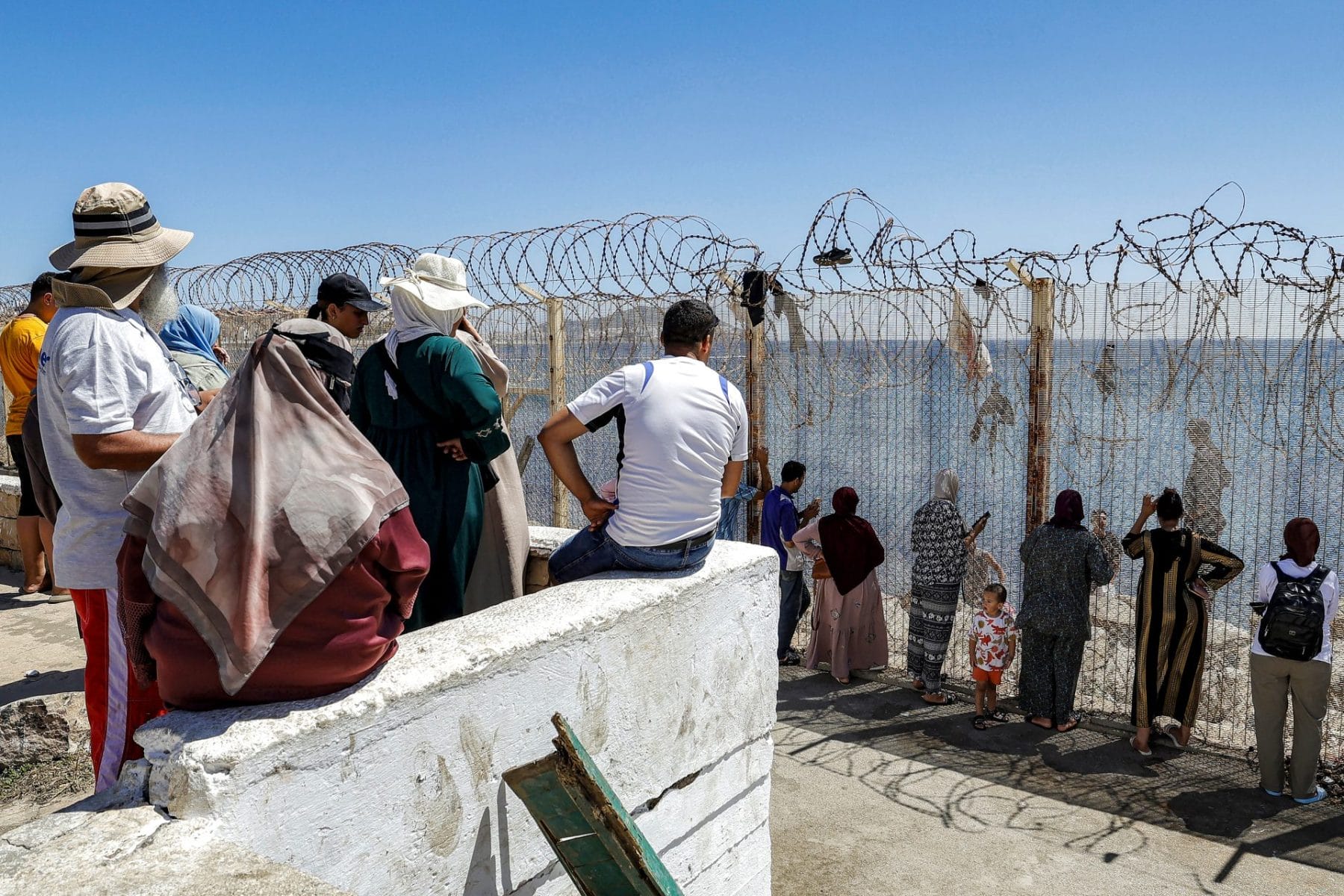
Relatives and friends waited by a fence topped with barbed-wire for the return of people who had previously crossed into Ceuta. Spanish authorities claim to have sent almost everyone back to Morocco. Abdel Majid BZIOUAT / AFP
In Ceuta, migrants claimed local authorities did not stop them from crossing the border. A young Moroccan man told the New York Times a day after the event: “They opened the border and let everyone go by.”
Border outsourcing agreements were made, among others, with authoritarian regimes in Tunisia, Egypt and Libya, where EU funds were used to detain migrants and quell domestic protests, rights organizations say. Alliances with “deeply unreliable and authoritarian actors” in the name of stability, said Nathan Akehurst, “is short-termist, insane and loses Europe any credibility it has left.” These alliances also allow Europe to “shift the blame to the Moroccans, the Eastern Libyans, the Turkish or whoever decides to take advantage of that moment.”
Rumors
It is yet to be revealed who, if anyone, has taken advantage of the mass crossing into Ceuta. Local and international media have uncovered now-deleted posts that shared tips on routes and equipment for the journey. One of the main networks was called Hrig Sebta network — “Sebta” being the Arabic name of Ceuta and “hrig” being the Maghrebi term for undocumented migrants, literally referencing the burning of identity papers.
In the wake of Ceuta, European ministers pledged to tackle online misinformation to avoid migration crises, but remained cautious when asked about thousands of posts reportedly linked to Russia. Other theories attributed the crossing to Morocco’s tensions with Spain over its closer ties with Algeria, or to Spain’s position on Palestine.
But those rumors, and what appears to be a weeks-long coordinated online campaign behind them, reveal something deeply human that fences can’t deter: movement that is spurred by hopes for a better life.
“[The crossing] would have happened anyway at some point,“ Akehurst argues. “There would have been a crossing because all of the circumstances that generate that are already there before someone with a twitter account throws a match on the fire.”
Yet, let’s pause at the match. It’s not about someone with a social media profile creating chain messages. It is about the ecosystem that can jeopardize borders by creating information flows, turning rumors into perceived opportunities.
Moroccan newspaper TeleQuel already published a report about social media posts amplifying the next hrig — another attempted crossing into Ceuta — on August 15.
When packaged to a hungry audience, rumors carry the currency of truth. They’ve driven migration long before social media was even conceptualized. Now those rumors speed through digital space owned and operated by private companies not prone to accountability and sitting well outside the reach of any single state.
And the EU has understood that for years. “It is necessary to structure the information space, as we have organized in the past the territorial space, the maritime space and the air space,” Thierry Breton, the European Commissioner for Internal Market of the EU said back in 2018. He warned about Big Tech companies treating digital space as a no-man’s-land that they would write rules for.
The no man’s land between Morocco and Spain appears calmer now. But the turmoil of the crossing revealed a new, digital dimension to border governance. Information has always found a way to spread; digital platforms have given it new channels: ones which allow those behind the information to remain faceless, while the information itself passes from screen to screen. It reaches a boiling point, spills over from the digital space and then can be disappeared, even before anyone has had a moment to scroll back.
En quelques jours, plus de 1 500 personnes – dont plusieurs centaines hier – sont arrivées par la mer en provenance du Maroc dans l’enclave espagnole de Ceuta.
Les corps de neuf personnes qui avaient tenté de rejoindre la rive à la nage ont été repêchés.
Le gouvernement espagnol a déployé des militaires.
Il a indiqué que les personnes entrées illégalement seront rapatriées vers le Maroc.
Ceuta, située à la pointe nord du Maroc, est l’une des deux enclaves espagnoles en Afrique du Nord.
C’est une frontière terrestre de l’Union européenne sur le continent africain.
My name is Darina,” says an elfin teen, ponytail pulled through the back of her cap, and “next year I’ll be earning 150,000 rubles (nearly $2,000) a month.” Darina works at what she calls “the world’s largest drone factory,” helping to assemble versions of the Iranian Shahed drone. “My parents are proud of me. Wanna do the same?” She asks as she advertises a polytechnic in Tatarstan. The Russian government, in the face of war and looming demographic disaster, has been relaxing child labor laws since 2022, making it easier to put 14-year-olds to work. Now, legislators are open about the need to reform “outdated” restrictions on employing minors in industries that were “considered dangerous 20 years ago.” Drone production is not the only part of the war effort to which teenagers are being recruited. This month in a “content camp” in Moscow, soldiers and state media propagandists trained 120-plus teens on how to make videos, use AI, and grow their audiences as aspiring influencers. Vladislav Golovin, a former soldier and a leader of Russia’s Young Army Cadets National Movement, said the program had “created a huge team of kids who understand how to broadcast government values.”
But many young people, subject to year-round conscription, subject to internet shut downs and subject to surveillance, have little desire to spread propaganda. Instead, according to Google Trends data, growing numbers of Russians are seeking information on how to emigrate. A new exodus would accelerate Russia’s deep demographic crisis. Already, up to a million people are thought to have left Russia since the full scale invasion of Ukraine in 2022. According to one recent count, nearly 210,000 Russian soldiers have been killed in the war with Ukraine, with other estimates suggesting over 1.2 million casualties, including 325,000 deaths. And Russian fertility rates are the lowest they have been for 200 years. Anton Kotyakov, the labor minister, has told Vladimir Putin that the country faces a labor shortage of 11 million people by 2030.
So concerning is this crisis that Rosstat, the national statistics agency, has stopped publishing monthly demographic data. State officials and local governors have been told to compete to come up with the most innovative solutions to a seemingly intractable problem. The pressure on Russian officials and the Kremlin is leading to desperate measures, including guidance from the Russian health ministry that women who say they do not want to have children should be referred to a psychologist. Nothing the Russian state has tried has worked, from financial incentives (extended even to schoolgirls under 18) to banning advertising that supposedly promotes “child-free” lifestyles and so-called “LGBTQ propaganda.”
Darina, 16, assembles Shahed-style drones at a factory in Alabuga, Tatarstan, Russia. Screenshots from YouTube video by T-invariant.
Alongside “anti-woke” policies disguised as family values, is rising xenophobia and anti-immigrant rhetoric that has led to a marked decline in the number of foreigners living in Russia. The Kremlin’s anti-migrant policies include a new system to monitor migrant workers through biometric registration, location tracking, and intensified police oversight. The Russian parliament is currently debating enhancing the number of offences that can be punished by deportation or substantially increased fines. Much of it is targeted at Russia’s Central Asian migrants who make up an overwhelming majority of immigrant labor. Some Central Asian governments, notably Kyrgyzstan and Tajikistan, have now urged their citizens to think twice about going to Russia for work.
Russia has been publicizing political stunts such as its “shared values visa” in which applicants from 46, largely developed, nations are given temporary residence permits if they profess to support “traditional Russian values.” The visa, the Kremlin has said, is “Russia’s response to what it perceives as the harmful effects of Western neoliberal policies.” But only a tiny fraction of the immigrants Russia needs will be Westerners who apply for such a visa; instead, Russia has been diversifying its pool of migrant workers by looking further east. Around 72,000 work permits were issued to Indian nationals in 2025, up from just 5,000 in 2021. Russian officials have signaled they are ready to accept “unlimited” numbers of workers from South Asian countries like India, Sri Lanka, and Myanmar.
While the Kremlin is looking to South Asia and Africa to address its immediate need for workers (and soldiers), the ambition in the longer term is to boost Russian birthr rates, despite the signal failure of ongoing attempts.
In the U.S., there have been several moves borrowed from the Kremlin’s playbook, including the restriction of abortion, the attempt to deny women birth control, and even alarm at the fall in teen pregnancies. But data released this month showed that women in the U.S. gave birth to 710,000 fewer babies in 2025 than they did in 2007, a reflection of two decades of steadily dropping birth rates. Russian demographer Salavat Abylkalikov, at the Leibniz Institute for East and Southeast European Studies in Germany, says “if the birth rate has fallen below the level of simple reproduction, it is almost impossible to raise it back.” Especially when financial incentives cover just a fraction of childcare costs.
In any case, Abylkalikov says, “in Russia, death is much more profitable than birth: in Nizhny Novgorod Oblast, the government provides around 1,000,000 rubles (about $12,000) for each child, but if one person goes to war and dies, the family receives up to 12 million rubles in total. That's more than $120,000. This is the economy of death.” The evidence, from countries like Russia, Hungary and the U.S., is that appeals to tradition, to religion and to female “responsibility” do not work, when support for families is limited. And while migration is an obvious fix to demographic questions everywhere, it’s politically toxic.
Russia knows it is hurtling towards demographic doom but can do little to halt the momentum. Its policies are riddled with inconsistencies — a strong line in anti-migration rhetoric and bullying, while being forced to import workers and soldiers from Asia and Africa; a patriarchal view of women’s roles, mostly confined to the domestic, while increasingly reliant on women to take the jobs of the men who are fighting and dying in Putin's war; and encouraging more women to give birth, while employing children to build drones. With family values like these, no wonder young Russians are hesitant to procreate.

 Connexion