❌

Vue lecture

Today is Tomorrow [en]

[en]

A friendly colleague I share some geeky interests with told me today I was courageous to announce my blogging intentions yesterday. I told him “not that much”, because if I didn’t stick to my declaration of intent, it’s not something I’d feel terribly bad about. Writing that quick post yesterday made me feel a bit better, and announcing I would write today increased the probability I’d actually do it today. Making clear plans and public accountability aren’t binding, but they can help tip the scales.

So, I set my timer and I didn’t dive into my open tabs before starting to write. I’m less all over the place today, but it doesn’t mean any of the underlying issues are dealt with. Oscar is still dying. I’m still unhappy about having to set aside so much of what I’d like to do. The one-year mark of my accident is behind me, and though I’m still confident about making a full recovery, that confidence is fragile and easily shaken, particularly when there are setbacks. I am starting to be afraid of “crashing” again like I did at Christmas.

I’ve lost other cats before Oscar, but in my post-accident world, there is no known territory anymore. I don’t know what it will do to me – because my brain is still very much in the process of recovering. I’m working 50% again but have set aside pretty much all my non-work activities and projects, and I’m exhausted. So, I’m on edge emotionally, and not dealing well with the usual/inevitable stuff life in our day and age throws at me, particularly the stuff that has to do with broken systems, bureaucracy, and people being a pain in the neck. I am stuck in between a rock and a hard place: either deal with it or let it go, and both are costly, and I don’t have spoons to spare these days.

On the sunny side, when I’m feeling kind of OK, I have to face the frustration of prioritising rest, when I have a pile of blog post ideas (I even have a couple of proper drafts that need finishing up), want to make progress with the migration of the diabetic cat community to Discourse (and write about it), finish setting up Claude so it’s properly usable for the half-dozen “top of mind” projects I want to work on with it, continue tidying/organising my flat, have a social life, go to judo, singing rehearsals, skiing and hiking, whatever, the stuff I used to do and took for granted before my accident. It sucks.

I have a ton of links to share, but no good system to do it in the way I want. I keep throwing them into the socials, which is better than nothing, but I’d like to collect them here or at least some place I control, and I have a path/plan to do that (thanks Claude) – but it’s going to take time and effort to do.

So here’s a small dump. The timer is going off.

That’ll be it for today. Grey’s Anatomy is waiting. I’m going to try and blog a bit more frequently (with timer) just to dump stuff out of my brain. Probability increased, certainty unavailable.

Bonus picture: the puzzle I was very tempted to continue working on tonight instead of writing.

  •  

All My Good Intentions [en]

[en]

Do you know the line? “All my good intentions don’t add up to very much…” It’s been coming and going in my mind since 1997, probably. There is a mismatch between intentions and actions. Always has been. Always will be.

The world is too small for our intentions. They’re always struggling to get out there into reality, but there is not enough space, not enough time. It’s not just me. It’s me of course. It’s some of us more than others. But it’s everywhere. In our lives, in our companies, our communities and societies. In our friendships and our governments.

It’s like inflation, in a way: if our wants and our intentions didn’t pull us onwards, beyond, further faster more, we would stagnate, or worse. We need this gap. It’s where action comes from, the desire for change and for better.

But when the gap becomes a chasm and intentions pile up in our heart right up to our throat faster than we can turn them into something real in the world, they start feeding off each other like hungry beasts and threaten to rip us open and smother our soul.

How do we set them free, all those good and worthy intentions that can’t find a place to bloom? Where can they go to find peace? I wish we had a way of letting them loose, all of us, and that I could sit on my balcony and watch them flutter across the sky like dancing clouds of coloured butterflies.

  •  

Guide de survie anti-doomscrolling en cas de catastrophe [en]

[en]

Pour les personnes dont le cerveau reste coincé sur la chaîne catastrophe Crans-Montana (TDAH ou pas): il faut décrocher. Dans cette vidéo j’explique pourquoi et ce qui peut vous aider à y réussir, concrètement. Sorry elle est un peu longue…

Je reproduis ci-dessous ce que j’ai publié sur Facebook:

Il faut absolument (j’insiste) décrocher. Il y a un risque réel de se traumatiser via l’exposition aux contenus autour de cette histoire.

Donc: priorité absolue, faire autre chose. Regarder des films ou des séries. Faire un puzzle ou du nettoyage. Trouver quelqu’un qui va nous traîner dehors pour prendre l’air. 

Considérez cette consigne comme une nécessité médicale, vraiment.

Un avertissement parmi d’autres que j’ai trouvé sur linkedin, par une professionnelle de la santé au travail (Sarah Bertschy):

Ne vous exposez pas aux images, vidéos et récits des réseaux sociaux relatifs à Crans Montana.

Le risque de trauma et stress chronique suite à l’exposition à ce type de contenus est réel, a fortiori si elle est répétée.

Pour être informés, vous pouvez suivre les conférences de presse.

Un autre avertissement d’un prof de psychologie clinique (Joël Billieux):

Prenez soins de vous et ne vous exposez pas de manière non nécessaire à des images traumatisantes. Protégez-vous, et protégez les enfants et adolescent·es sous votre responsabilité. 

Les algorithmes liés aux #Reels (Insta, Facebook, Tiktok) sont susceptibles de vous inonder très rapidement de scènes tragiques et de témoignages terribles et poignants. Les algorithmes sont terriblement efficaces et il y a un risque réel de se laisser prendre dans une spirale de visionnage de contenu potentiellement traumatique #doomscrolling. 

Ces vidéos, via des phénomènes d’empathie et d’engagement émotionnel, risquent de provoquer chez vous de la détresse, de l’anxiété, ou même des symptômes qui peuvent s’apparenter à ce qu’on observe suite à l’exposition à des événements traumatisants. Ces risques ont été documentés dans des études scientifiques.

Suivant la situation, on peut aussi essayer d’appeler le 143 (la main tendue) mais le mieux est vraiment, si on n’est pas directement impacté de mettre le paquet (pardon) pour se prendre par la peau des fesses afin de mettre son cerveau sur autre chose. « Mécaniquement », même si on n’a pas envie, même si on est bouleversé, même si on veut comprendre, même si on ne sait pas quoi faire de ses émotions.

Un tuyau: « arrêter » n’est pas une bonne instruction, en fait, il faut vraiment remplacer l’activité non souhaitable par une activité plus souhaitable et incompatible, comme en comportement animal.

Quelle est votre « activité plus souhaitable », même sans être motivé•e? C’est ça la chose à faire, peu importe ce que c’est, juste là. Une série, un puzzle ou une promenade c’est très bien. Et on lâche le tel et l’ordi car sur les réseaux, impossible d’y échapper pour le moment.

  •  

Comment on foire? (ou: comment souper tard mène à la cuisine déprimante) [en]

[en]

Depuis quelques semaines j’ai un rendez-vous hebdomadaire avec ma “binôme planning”. Une copine, TDAH bien aligné sur le mien (ou le mien sur le sien), aussi tendance à la surcharge d’agenda qui fait finir sur les rotules. Une affaire qui roule (pas sur les rotules).

On parle évidemment de problématiques TDAH en marge de l’agenda, et ce soir on parlait rangement de l’appart et nourriture. Quelques réflexions intéressantes que je veux partager avec vous (et non “vous partager“).

Le point de départ, c’est: “comment on échoue”? Dans mon travail, dans le domaine de la maintenance et des ingénieurs et des machines, on parle de “failure modes”. C’est pas la même chose si ma voiture est en panne parce qu’une pièce a cassé dans le moteur, parce que j’ai oublié de mettre de l’essence, parce qu’une fouine a grignoté un câble, parce que les bougies sont encrassées ou parce que le moteur a serré. En gros, dire “ça ne marche pas”, c’est joli, mais c’est mieux de pouvoir décrire “de quelle façon ça ne marche pas”, et même “comment la panne est-elle provoquée”.

Donc: qu’est-ce qui fait que ma cuisine est en bordel et que la vaisselle s’empile? Qu’est-ce qui fait que j’ai raté mon rendez-vous? Qu’est-ce qui fait que j’ai soupé à minuit? Qu’est-ce qui fait que je suis en panne de seringues pour mon chat diabétique?

Evidemment, la réponse à ces questions est de l’ordre du concret, pas du jugement moral (genre “chuis nulle”). Dans mon cas par example, j’avais fait le constat il y a bien des années que la façon dont ma cuisine devenait un espace de chaos déprimant, ça commençait avec le fait que je ne sortais pas la poubelle quand elle était pleine. Les emballages restaient sur le plan de travail ou le bord de l’évier, du coup c’était pas rangé, du coup c’était plus facile de lâcher sur la vaisselle, et hop, la spirale infernale. Ce constat m’avait fait prendre la mesure de l’importance de changer la poubelle lorsqu’elle était pleine, pour éviter de déclencher la suite de conséquences négatives.

Une fois la poubelle sous contrôle, j’ai fait un deuxième constat. Pourquoi la vaisselle s’empile-t-elle dans l’évier? Parce que l’égouttoir est encombré de vaisselle propre pas rangée. Et pourquoi n’est-elle pas rangée? Parce que la méthode de rangement dans les armoires n’est pas ergonomique, et ne “facilite” pas assez le rangement. Cela augmente l’effort nécessaire pour ranger et diminue donc les chances que ça se fasse.

Donc, tout comme changer la poubelle avant qu’elle déborde, réorganiser le rangement des couverts et services et différents ustensiles culinaires peut contribuer à faire en sorte que la vaisselle se fasse à mesure.

Un autre élément qui a émergé de cet échange: plus on est fatigué·e quand on finit de souper, moins il y a de chances qu’on fasse la vaisselle dans la foulée. On voit donc que “manger trop tard” peut donc, par un enchaînement d’effets, mener à une cuisine en bordel.

Ça me rappelle une discussion avec une autre amie, hier: elle n’aime pas faire la vaisselle après souper. Honnêtement, je comprends. Une fois le ventre plein, la journée finie, j’ai juste envie de chiller. Dans son cas, elle a une bonne solution: le matin, pendant que son café cuit, elle a une fenêtre de temps parfaite pour faire la vaisselle, au lieu d’attendre bêtement. Mais dans le mien, et celui de ma binôme, soit il n’y a pas de café, soit il faut simplement se rendre à l’évidence que le matin, il ne faut rien nous demander. Et de mon côté, arriver le matin dans une cuisine plus ou moins rangée dont l’évier est vide ou presque donne un bien meilleur coup d’envoi à ma journée que si je suis confrontée directement à une tâche qui m’ennuie au plus haut point et pour laquelle il me faut pas mal d’énergie.

La vaisselle, le souper… la nourriture. Le problème du repas du soir, c’est qu’on arrive à sa porte lessivée par la journée. Plus de jus, plus de methylphénidate (souvent), la batterie attentionnelle à plat. Amplement de quoi procrastiner le repas, et faire le lit de l’évier plein de vaisselle (et de la cuisine qui se fait la malle avec notre moral). Comment remédier à ça?

Planifier les menus à l’avance… c’est joli en théorie, mais pour moi en tous cas, utopique. Je suis quelqu’un qui marche aux réserves et à l’improvisation. Ce qu’on peut faire par contre, c’est réduire l’effort nécessaire à la prise de décision et à la préparation du repas. Par exemple, avoir une collection de “repas d’urgence” plus ou moins équilibrés qu’on peut faire rapidement et sans effort, sans trop de vaisselle, sur la base d’ingrédients “stock” qu’on s’assurera de toujours avoir à la maison. Et les mettre par écrit (post-its, cartes) c’est encore mieux, parce que quand le cerveau est au bout, des fois même faire 1+1+1= repas c’est trop. Quelques idées:

  • une demi-boîte de conserve de haricots rouges (ou pois chiches) + une petite boîte de maïs + un bout de concombre/tomate et une boîte de thon ou deux oeufs durs (sauce salade toute prête of course)
  • pâtes au pesto avec fromage râpé stocké au congél pour qu’il ne devienne pas bleu, une demi-concombre en dés avec la sauce à salade, pour accompagner un morceau de viande ou de poisson (le poisson se fait super bien au micro-ondes si jamais)
  • dans les périodes chargées, acheter de la salade en sachet pour ne pas avoir à laver sa pommée feuille par feuille et l’essorer (surtout si l’évier n’est pas inoccupé)
  • une pomme de terre coupée en dés, dans une assiette avec un peu de sel et une ou deux cuillères d’eau, 4-5 minutes au micro-ondes. Une courgette en dés, idem, 2 min au micro-ondes. Une escalope panée de Quorn (perso j’aime celles au poivre et citron) dans le air fryer: hop, c’est prêt en moins de 10 minutes et quasi sans vaisselle

Voilà l’idée – à adapter selon ses habitudes alimentaires et son goût. Le tout est de prendre un peu de temps en amont (pas quand on crève de faim à 22h30) pour identifier ces menus de secours, faire la liste du matériel de base à compléter chaque fois qu’on fait les courses, et les noter quelque part.

Qui eût cru qu’avoir chez soi un petit stock de produits de base bien choisis (oeufs durs, concombre, tomates, maïs et haricots rouges en boîte, thon, pâtes, bocal de pesto, parmesan au congél, courgette, patates, etc) pouvait résulter en une cuisine mieux rangée?

  •  

Can I Write a Quick Blog Post? [en]

[en]

This is often the question. In typical ADHD style, my difficulty getting started on something is only surpassed by my difficulty stopping something once it’s started. So, 9pm on Sunday night, tired tired tired, can I grab my keyboard and give you some news without still being up at midnight?

I challenge myself.

Mid-October, I went back to work part-time. Three half-days a week. It went OK but I was way more tired than I expected. Tired in general. Overwhelmed by trying to manage my weeks, that these three little half-days seemed to fill to the brim. It’s much better now and I feel ready for more. I haven’t had cognitive overload headaches for a while now, or at least, so few that I don’t remember them.

Months ago, I started using the Apple Journal app, because I was having such a hard time recalling what I had done in previous days, recent or less recent. Writing a few quick notes down at the end of the day has helped me keep some sort of grasp on all those days that have disappeared into the weird months of 2025. Recently, I’ve switched to Day One, trying it out as an alternative to Apple Journal. My Facebook suspension has made me cautious about locking data or content into hard-to-export-from apps or services.

I’ve also started learning Bridge. Maths and statistics, strategy and communication, fun! It’s an investment for my old days, but already enjoyable. I’ll write more about it in time. If you want to get started, Funbridge actually has tutorials that can take you by the hand for the first steps. Start with MiniBridge.

My very old cat Oscar is having a series of health issues. I treasure each good day I have with him, because I don’t know how many are left. The first part of the year saw a complete deregulation of his diabetes, which had been a smooth ride to manage until then. He was getting dehydrated, blood glucose going up and down like a yoyo, and slow but steady weight loss. We went through a long period of subcutaneous fluids, which helped a lot.

In September he came down with a really bad pancreatitis flare-up. I nearly lost him. An oesophageal feeding tube saved him. It sounds like a dramatic intervention, but it’s actually quite minor surgery, well-tolerated, and a life-saver. The main issue with pancreatitis is that the cat stops eating. Being able to feed by tube solves that problem, removes stress for everybody, allows proper administration of medication, fluids and calories. I had a short trip planned during that period, and thankfully a friend came over to cat-sit and take over nursing duties. I can’t thank her enough.

Since the pancreatitis he had been doing really good. He didn’t put all the weight he lost back on, but enough that it’s not a disaster. And his three old arthritic legs are happy for any 100g they don’t have to carry. I have been letting him out in the garden, closely supervised, of course, and he really enjoys it. It makes me happy too, to be able to give him access to enrichment and stimulation that an exclusively indoor life didn’t provide. It always made me a bit sad, especially as I knew he had lived most of his life outdoors. But he was too old and handicapped to risk it, and until recently, too mobile for me to supervise him in the garden here (he did get to go out at the chalet – different environment with less risks). The photo is of him on one of our recent outings.

Two weeks ago, though, he had an epileptic seizure. Out of nowhere. I moved my surveillance cameras around and kept an eye on him. He had a second one ten days later, just this Wednesday night. We put him on anticonvulsants Thursday evening, but it’s tricky dealing with the sedation side-effects, particularly on an elderly cat who is already mobility-challenged and wobbly at the best of times.

He still wants a lot of things (like me, hehe). He wants to go downstairs, he wants to climb in my lap, he wants to go outside, he wants to go on the sofa, he wants to teach Juju a lesson (Juju, by the way, is doing fine, but definitely overweight – I’m hoping his new diet will work out, because I’m not enthusiastic about preparing myself another diabetic cat).

So we’re still figuring things out, and crossing fingers that Oscar will be able to tolerate the medication and that he won’t have another seizure too soon. But it’s not good news, in any case. I’m sad and worried, which is normal, but that doesn’t make it comfortable. And also, apprehensive, because 2025 has come with more than its fair share of trials, and I’m aware that there is a high risk of Oscar dying in the coming months. And honestly, I don’t need that, just as I’m getting back on my feet. There’s never a good time for dead cats, but some are shittier than others. He might hang in there, of course, but he’s old enough and his health is such a fragile equilibrium that I would not bet on him being still around this time next year. He could still be here for months or more, of course, but he could also go downhill fast pretty much anytime. Loving and caring for an old animal is living with the certainty of grief to come, but the uncertainty of timing. I am very much reminded of Quintus’s last years.

I’ve never liked October-November. It’s dark, and damp, and not winter yet. It’s the in-between season. And this year, I had neither hiking, nor skiing, nor really sailing season. I did go out on the lake a handful of times, thanks to my dad who took me along. But it’s very frustrating and weird for me to have “lost” this year like that. It feels a bit like the first Covid year, you know, where we all felt there was a year missing in our lives. Only here, it’s just for me.

I’m way better but not “back to normal” yet. I have to put more effort into just “managing life”. And compared to before my accident, I’m much more careful about pushing myself. I used to push myself all the time. Now, when I feel tired, I go “oh, wait, I’m tired, how can I adjust my expectations for what I was hoping to do during the coming hours”.

A few weeks back I teamed up with a friend who also felt the need to get on top of her weekly planning, and we touch base once a week to go through our schedules. It’s been extremely helpful and is in no small part responsible for my not feeling overwhelmed by my life anymore. I’ve been knocking down admin tasks lately, blogging more, and even making some headway in much-needed tidying up and deep cleaning.

On the online side of things, I am sitting on my hands, because there are a few topics I really really want to dive into, but I know I cannot afford the time and bandwidth right now. It’s extremely frustrating. One of these topics is how to collate the things I share on the socials into daily blogs posts (I think I wrote about it in part 3 of Rebooting The Blogosphere). I think about it pretty much every day, because I share stuff on the socials and regret that I don’t have a simple way to round up the day’s shares here in WordPress to whip up a quick post with links and comments and some passing thoughts. There is a bunch of things I want to fix on the blog, too, but that will also have to wait. At least I’m writing.

I now finally have a Discourse instance up and running on a server (thanks Oliver!) and I am impatient to start configuring it and playing with it to start preparing for the migration of the “Diabète Félin” community I manage. It’s not for tomorrow, but I’d love to at least get something moving before the end of the year. I’m super enthusiastic about Discourse, maybe I should write a post about it.

But not tonight.

I’ve been writing my “quick blog post” for nearly an hour, my eyes are still tired and my brain is still foggy, so I’ll wrap things up here, go and pick up my old drugged up cat, play a deal or two on Funbridge, jot a few notes down in Day One, and read my book a bit before I collapse.

Sleep is what transports you to the next day. And the next day here is Monday.

  •  

China may ask Russia to attack NATO if Taiwan is invaded, Rutte says

China may ask Russia to attack NATO if Taiwan is invaded, Rutte says

If China attacks Taiwan, Beijing may ask Moscow to open a second front against NATO states, NATO Secretary General Mark Rutte said in an interview with The New York Times (NYT) published on July 5.

Fears of escalating Chinese military intervention in Taiwan have risen sharply since Russia launched its full-scale invasion of Ukraine in February 2022. The war has served as a possible model of how both Taipei and the international community might respond if Beijing decides to invade.

"There's an increasing realization, and let's not be naive about this: If Xi Jinping would attack Taiwan, he would first make sure that he makes a call to his very junior partner in all of this, Vladimir Vladimirovich Putin, residing in Moscow, and telling him, 'Hey, I'm going to do this, and I need you to keep them busy in Europe by attacking NATO territory,'" Rutte said.

"That is most likely the way this will progress. And to deter them, we need to do two things. One is that NATO, collectively, being so strong that the Russians will never do this. And second, working together with the Indo-Pacific — something President (Donald) Trump is very much promoting," Rutte added.

Western officials and analysts point to Russia's surging military expenditures amid its ongoing full-scale invasion of Ukraine.

In 2024, Russia's defense budget reportedly rose 42% in real terms, reaching $462 billion, surpassing the combined spending of all European nations, according to the International Institute for Strategic Studies.

NATO allies have cited Russia's military buildup, sabotage campaigns, and continued aggression against Ukraine as reasons to accelerate defense investments.

Rutte previously warned that Russia could rebuild its military capacity to threaten NATO territory within five years, urging members to act with urgency.

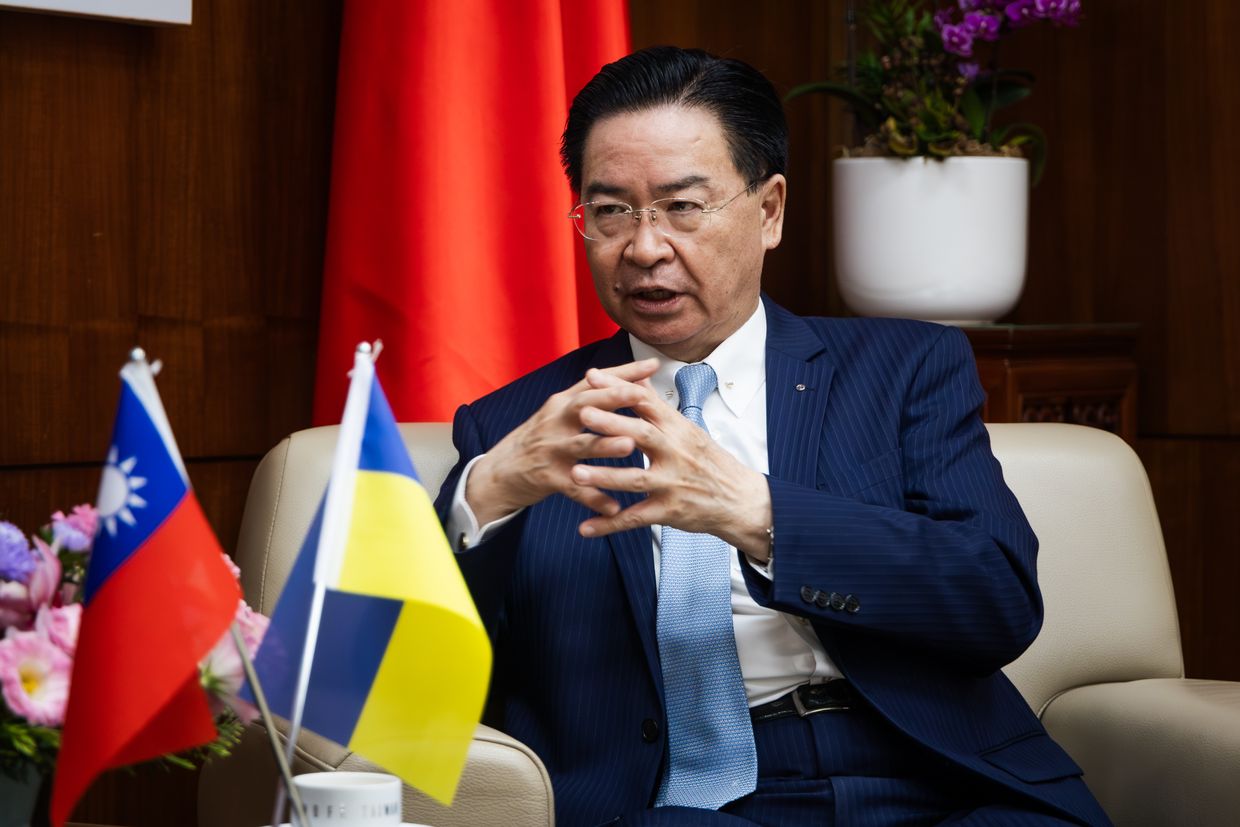
Taiwan’s FM: ‘If Russia can do that to Ukraine, China might do the same to Taiwan’
The start of Russia’s full-scale war against Ukraine was a wake-up call for Taiwan, with the island nation believed to be the next conflict zone in case of Kyiv’s defeat. Two years in, Taiwanese Foreign Minister Joseph Wu still believes that the island’s future is dependent
China may ask Russia to attack NATO if Taiwan is invaded, Rutte saysThe Kyiv IndependentAsami Terajima
China may ask Russia to attack NATO if Taiwan is invaded, Rutte says
  •  

Ukraine receives $500 million in IMF funding, maintaining growth forecasts

Ukraine receives $500 million in IMF funding, maintaining growth forecasts

Ukraine received approximately $500 million from the International Monetary Fund (IMF), marking the ninth tranche under the Extended Fund Facility program, the Finance Ministry announced in a press release on July 1.

The EFF Program has allocated $15.5 billion to Ukraine in budget support over a four-year period. The program has now delivered $10.6 billion to Ukraine since it began in 2023.

"In total, during the full-scale war, $13.3 billion in financial assistance from the Fund has been received by the state budget," Finance Minister Serhii Marchenko said in a press release.

According to the IMF, Ukraine successfully met all quantitative performance criteria through March 2025, including the prior action to submit a detailed reform plan for the State Customs Service (SCS).

The IMF extended deadlines for several Ukrainian reforms, including appointing a new customs chief.

First Deputy Managing Director of the IMF, Gita Gopinath, said that Ukraine must continue anti-corruption reforms, including appointing a new head of the Economic Security Bureau and strengthening money laundering rules.

The IMF kept its 2025 growth forecast for Ukraine at 2-3%, as improved electricity supply is balanced by reduced gas output and weaker agricultural exports.

The international body expects inflation to reach 9% by year-end and recommended that Ukraine's central bank maintain tight monetary policy, warning it should "stand ready for further tightening" if inflationary expectations worsen.

"The economy has remained resilient, but the war is weighing on the outlook, with growth tempered by labor market strains and damage to energy infrastructure," Gopinath said in a statement.

The next program review is scheduled for mid-September 2025, with an IMF mission expected to visit Ukraine in August to assess progress on reform commitments.

‘With surgical precision’ — Ukrainian drones strike Russian plant 1,300 km away, SBU source says
The SBU said its long-range drones targeted the Kupol plant in Russia’s Udmurt Republic on the morning of July 1, resulting in at least two confirmed strikes and a fire at the site.
Ukraine receives $500 million in IMF funding, maintaining growth forecastsThe Kyiv IndependentAnna Fratsyvir
Ukraine receives $500 million in IMF funding, maintaining growth forecasts
  •  

Russia reviving efforts to expand LNG exports after US sanctions, Bloomberg reports

Russia reviving efforts to expand LNG exports after US sanctions, Bloomberg reports

Russia is making another attempt to expand its exports of liquefied natural gas (LNG) after U.S. sanctions disrupted production at its flagship Arctic LNG 2 plant, Bloomberg reported on June 28.

Arctic LNG 2, owned by the Russian company Novatek, was envisaged as Russia's largest LNG plant and aimed to produce almost 20 million metric tons of LNG per year. The U.S. State Department targeted the Arctic LNG 2 project with sanctions in 2024.

An LNG vessel has reportedly docked at the Arctic LNG 2 facility for the first time since October, according to ship-tracking data and satellite images analyzed by Bloomberg. Data suggests that at least 13 vessels of Russia's "shadow fleet" have been assembled to potentially serve Arctic LNG 2.

These include four ice-class vessels, including the one currently docked at Arctic LNG 2. Three others are idling in the Barents Sea, along with three traditional LNG vessels. Two more vessels are being repaired in China and another two are idled in the Gulf of Finland. One ship is located near a floating storage facility in Russia's Far East.

While pipeline shipments of Russian gas to Europe have declined sharply since the full-scale invasion of Ukraine, Russia's shadow fleet — a group of aging oil tankers used to circumvent global sanctions — continues to grow.

Moscow now has more vessels at its disposal than it did last year, according to Malte Humpert, founder of the Arctic Institute think tank.

"If (Russia) can find buyers, this small fleet should be sufficient to lift cargoes," Humpert told Bloomberg.

Finding buyers may present a difficulty, due to wariness about sanctions violations. Former U.S. President Joe Biden sanctioned ships and companies connected with exports from Arctic LNG 2 in 2024, thought it is not yet clear if U.S. President Donald Trump will enforce sanctions as strictly.

Representatives of Arctic LNG 2 have continued to search for buyers in China and India, but have not yet made any sales, traders familiar with the matter told Bloomberg.

Arctic LNG 2 cut production from its gas fields to almost zero in November 2024, after halting liquefaction the previous month due to Western sanctions. The U.S. sanctioned two vessels and two entities connected to Arctic LNG 2 in September 2024, after previously targeting the project in a sweeping round of sanctions late August.

The August sanctions likely forced Novatek to scale back its operations at the facility. Novatek itself was sanctioned after the outbreak of the full-scale war in 2022.

Despite escalating war plans, Putin claims Russia will cut military spending starting in 2026
Russian President Vladimir Putin claimed on June 27 that Moscow plans to cut its military expenditure beginning next year, in a rebuke of NATO members’ plans to increase defense spending to 5% of GDP.
Russia reviving efforts to expand LNG exports after US sanctions, Bloomberg reportsThe Kyiv IndependentDmytro Basmat
Russia reviving efforts to expand LNG exports after US sanctions, Bloomberg reports

  •  

Italy commits $1.6 million to boost Ukraine’s battle against landmines

Italy commits $1.6 million to boost Ukraine’s battle against landmines

Italy has pledged 1.5 million euros (approximately $1.6 million) to support humanitarian demining efforts in Ukraine, deepening its partnership with the United Nations Development Programme (UNDP) and the Ukrainian government.

The agreement was formalized during a high-level ceremony in Kyiv on June 23 attended by Italian Ambassador Carlo Formosa, UN Assistant Secretary-General and new UNDP Administrator Haoliang Xu, Jaco Cilliers, Resident Representative of the UNDP in Ukraine, and Ukraine’s First Deputy Prime Minister and Economy Minister Yuliia Svyrydenko.

"Demining is not just a technical operation; it is a deeply humanitarian act that combines cooperation and innovation to restore hope in Ukraine," Ambassador Formosa said. "This project is not only a response to the emergency — it’s a step toward recovery. It’s about returning land to farmers, playgrounds to children, and safe roads to families."

The funding will support UNDP’s mine action program, which focuses on clearing land contaminated by mines and explosive remnants of war, ensuring the safe return of land to Ukrainian communities.

The initiative comes as Ukraine continues to grapple with one of the world’s largest demining challenges. According to the State Emergency Service, the total area of potentially mined land has been reduced by over 20% since late 2022. However, approximately 137,000 square kilometers (52,900 square miles) — much of it farmland — remain contaminated. Demining operations are carried out by the emergency service personnel, National Police, Ministry of Defense, and non-governmental organizations.

Currently, 112 certified demining operators, including eight international groups, are active in Ukraine, the State Emergency Service reported on June 24. Their combined capacity includes more than 9,000 personnel, 278 specialized vehicles, and over 13,000 metal detectors.

While significant progress has been made, Ukrainian officials stress that continued international support and funding are critical to accelerating clearance efforts.

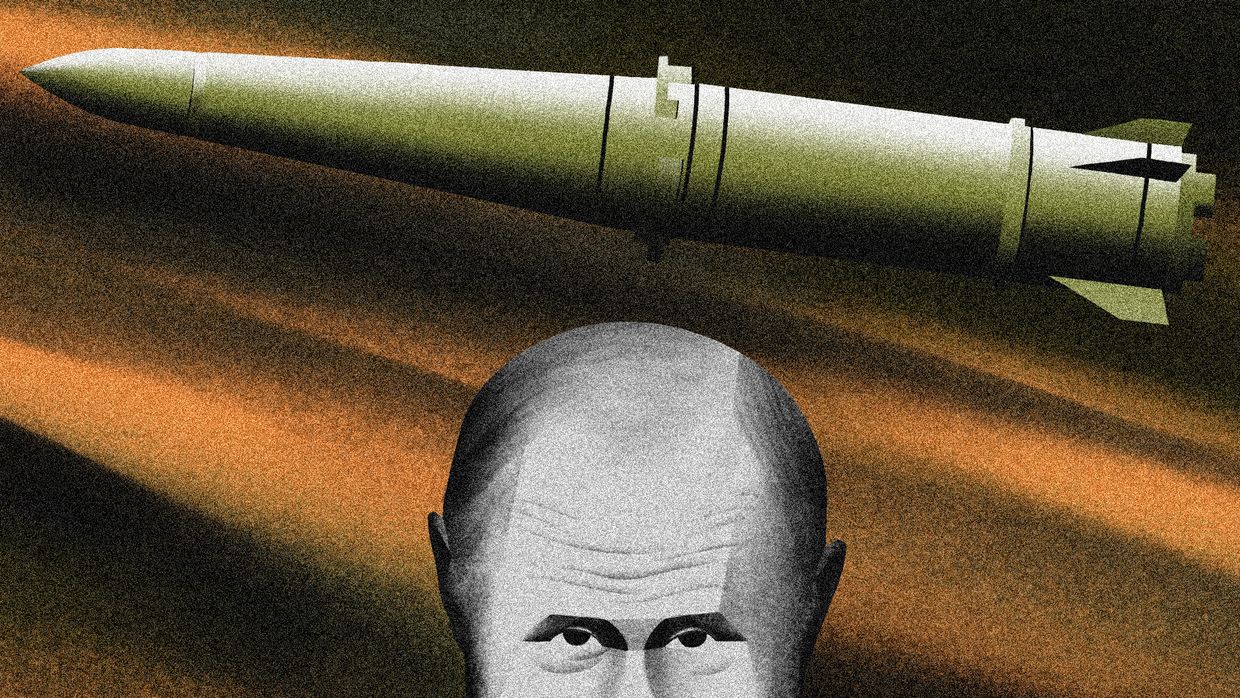
Investigation: How Russia prepares its strategic missile plant for ‘eternal war’
Key findings: * Despite international sanctions, Russia’s strategic missile plant was able to import complex machinery to dramatically increase missile production. * The Kyiv Independent has identified the equipment supplied to the plant, as well as the supply chains, mostly from China. * We located the plant’s new premises, built to house the
Italy commits $1.6 million to boost Ukraine’s battle against landminesThe Kyiv IndependentAlisa Yurchenko
Italy commits $1.6 million to boost Ukraine’s battle against landmines

  •  

Putin, Xi to agree to meet in China as they sneer at G7 summit fractures

Putin, Xi to agree to meet in China as they sneer at G7 summit fractures

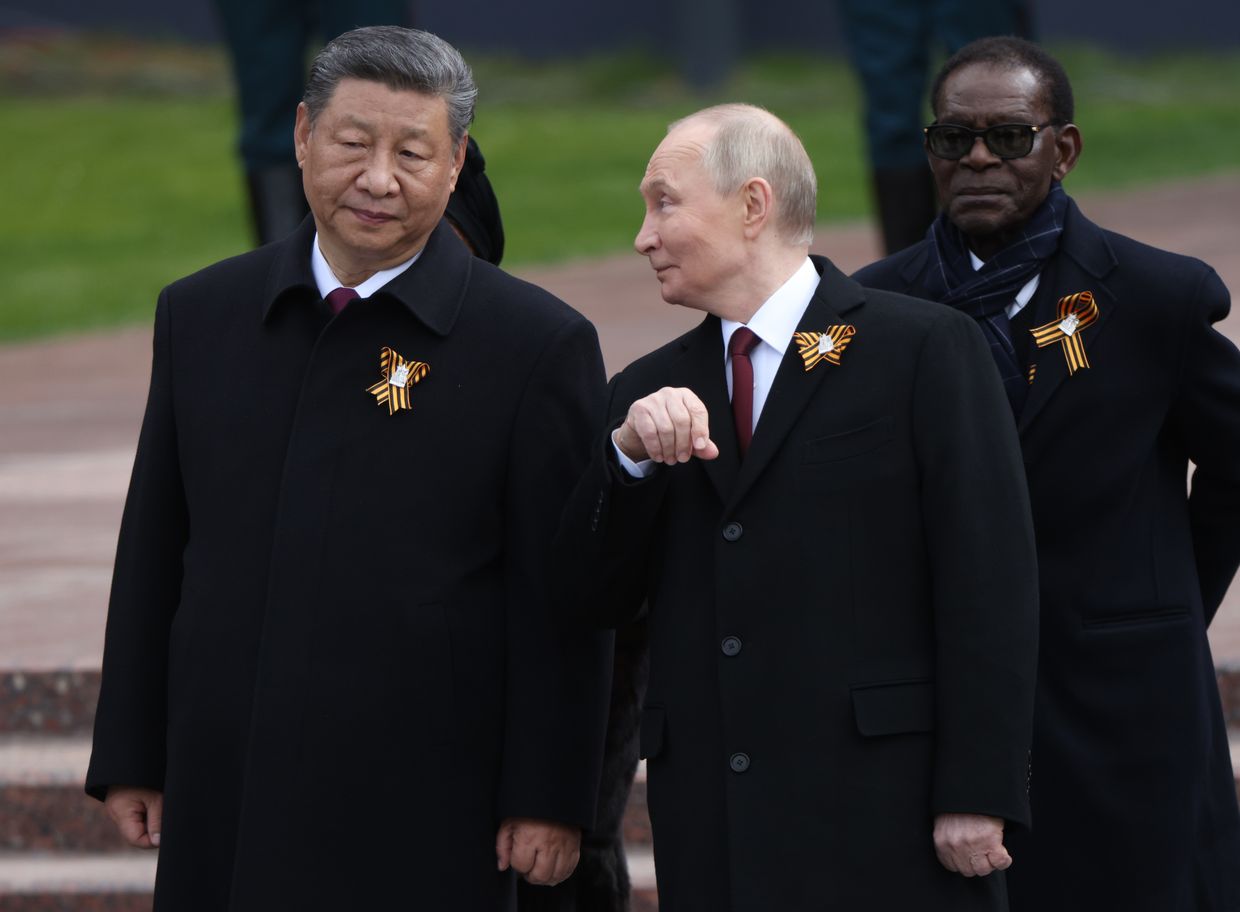
Russian President Vladimir Putin and Chinese President Xi Jinping agreed to meet in August and September and noted the supposed "rough edges" that emerged among G7 leaders during their summit, said Putin's aide, Yuri Ushakov, on June 19.

In a phone call, the two leaders agreed to meet at the Shanghai Cooperation Organization summit in Tianjin, China, between Aug. 31 and Sept. 1, and hold bilateral talks on Sept. 2, Ushakov said, according to the state news agency TASS.

China has been a key ally to Russia during its full-scale war, helping Moscow evade Western sanctions and becoming the leading source of dual-use goods fueling the Russian defense industry. Xi and Putin previously met during the Victory Day celebrations in Moscow in May.

While their phone call focused on the escalating security situation in the Middle East, the leaders also touched upon the G7 summit, noting "the well-known rough edges that emerged among the participants of this meeting," Ushakov said.

Putin and Xi also reportedly made mocking comments toward President Volodymyr Zelensky, saying it was not his "most successful trip abroad."

Zelensky was expected to meet U.S. President Donald Trump at the G7 summit in Canada, held from June 15 to 17, to discuss ways to increase pressure on Russia to end the war. Before Zelensky even arrived, Trump left the summit to address the escalating crisis in the Middle East, snubbing the meeting with the Ukrainian leader.

The G7 leaders were also unable to agree on a joint statement as the U.S. pushed for watered-down language on Russia. Instead, Canadian Prime Minister Mark Carney issued a summary saying that "G7 leaders expressed support for President Trump’s efforts to achieve a just and lasting peace in Ukraine."

"They recognized that Ukraine has committed to an unconditional ceasefire, and they agreed that Russia must do the same. G7 leaders are resolute in exploring all options to maximize pressure on Russia, including financial sanctions," the statement read.

While initially pledging to broker a swift peace deal between Kyiv and Moscow, Trump has become increasingly disengaged with the effort and resisted calls to increase pressure on Russia via additional sanctions.

Despite Trump's departure and disagreements with the U.S., Zelensky left the G7 summit with additional pledges of military support from Canada and new sanctions imposed against Russia's energy sector.

"Today, we have concrete decisions on increased military support, new tranches of aid funded by frozen Russian assets, and additional sanctions targeting what fuels Russia’s war," Zelensky said after the summit.

Zelensky also told the G7 leaders that "diplomacy is now in a state of crisis" and urged allies to press Trump "to use his real influence" to force an end to the war.

Diplomacy in crisis: G7 letdowns reveal limits to Western solidarity on Ukraine
KANANASKIS, Canada — The Group of Seven (G7) Leaders’ Summit ended on June 17 with no joint statement in support of Ukraine, no commitments to provide desperately needed U.S. weapons, and no meeting between President Volodymyr Zelensky and U.S. President Donald Trump. The Ukrainian delegation headed into the summit,
Putin, Xi to agree to meet in China as they sneer at G7 summit fracturesThe Kyiv IndependentDmytro Basmat
Putin, Xi to agree to meet in China as they sneer at G7 summit fractures
  •  
❌