Vue lecture

Russia’s weirdest armored vehicle was built to fight infantry. The infantry stopped coming

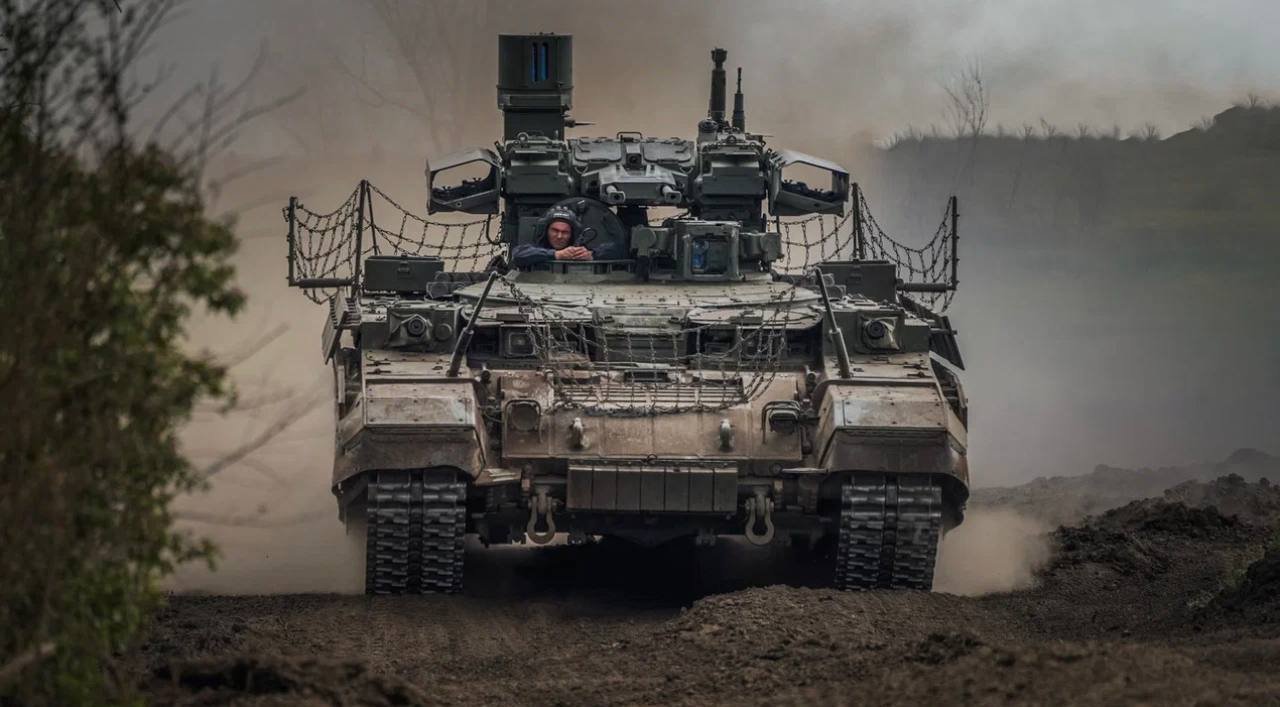
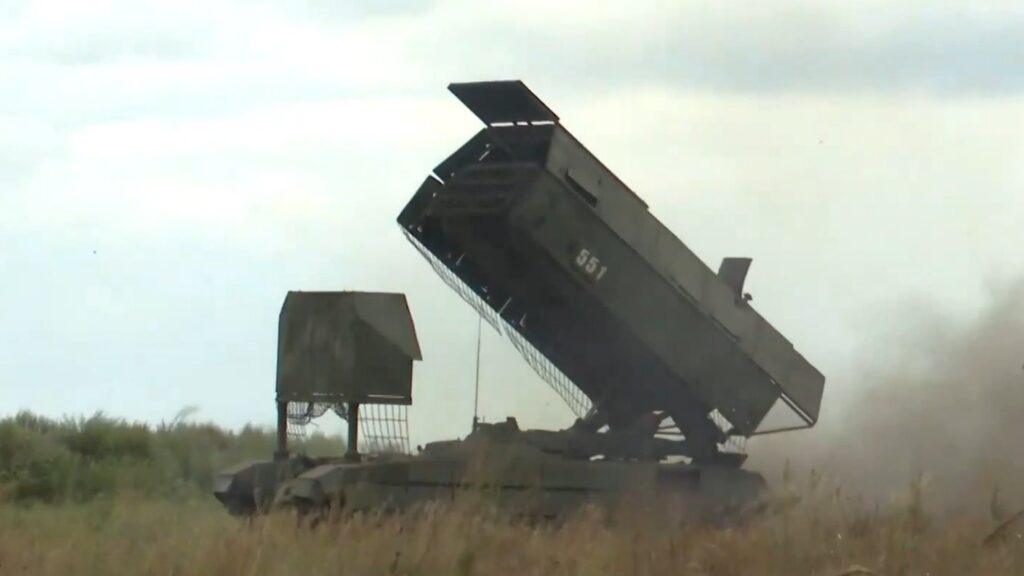
A BMP-T in 2026.

  • The BMP-T is a Russian rarity: a heavily armed vehicle that's not quite a tank and not quite an infantry carrier
  • The Russians built only a few BMP-Ts, and they're vanishingly rare in Ukraine even as the Russians restore their mechanized forces
  • The sheer density of Ukrainian mines and drones means the BMP-Ts can't survive long enough to justify their weirdness

Russia's rarest armored fighting vehicle (AFV) just broke cover for the first time this year. The heavily armed BMP-T Terminator is back! Just don't expect it to make much, or any, difference on the ground in Ukraine.

The BMP-T exists to escort tanks and shoot up the infantry ambushers who hunt them. The problem for the 90th Tank Division, the sole confirmed user of the 48-ton, five-person vehicle, is that infantry ambushes are rare these days. The main threats to Russian tanks are mines and drones. And to mines and drones, the BMP-T is just another target.

A photo circulated online recently depicting a BMP-T with add-on anti-drone protection. It's one of just 20 or so the Russian vehicle-maker Uralvagonzavod has ever produced for the Russian army. That makes it one of the rarest fighting vehicles in an army with tens of thousands of tanks, BMP-2s and BMP-3s and other AFVs.

The BMP-T is special. It's not as well-armed or well-protected as a tank, but it's better-armed and better-protected than a standard BMP infantry carrier. With its small turret cradling twin 2A42 30-mm cannons firing 300-g shells at a rate of around 200 rounds a minute, the BMP-T can lay down a lot of firepower.

"The most important thing is to support the tanks," a BMP-T commander told the Russian state newspaper Izvestia. That emphasis on tank support is why the BMP-T doesn't carry infantry passengers, unlike other BMP models that are primarily infantry carriers.

Ohhhh a BMPT sighting out in the wild.
Gotta be the first one in this year. https://t.co/UdWmWAQ61k pic.twitter.com/i3sL1GJxkF

— T-90K (@T_90AK) July 23, 2026

Ukrainian forces have destroyed or damaged several BMP-Ts since the type first rolled into action no later than early 2023. Late last year, Uralvagonzavod produced a small batch of new BMP-Ts to complement the initial batch of 12 vehicles.

Don't expect many more BMP-Ts to roll off the factory floor. It's not that Uralvagonzavod isn't hard at work. The factory is churning out hundreds of new T-90M and T-72B3M tanks every year, complementing the thousands of older tanks that Russian forces have pulled out of long-term storage for refurbishment, upgrade and further use.

The ongoing production and restoration, combined with a sharp reduction in Russian vehicular attacks in Ukraine, have allowed the Kremlin to make good heavy losses in Ukraine, and then some. Russian forces have lost no fewer than 14,000 AFVs in 53 months of wider war. But Russian industry has built or restored ... at least 14,000 replacement AFVs.

A Russian BMPT Terminator tank support vehicle deployed in Ukraine
Russia's BMPT in Ukraine. Source: vpk.name via frontelligence.substack.com

De-mechanization

All that is to say, Russia's war on Ukraine de-mechanized the Russian army. But then the army re-mechanized by redoubling production and mostly pausing mechanized attacks in favor of infantry-led assaults across the drone-patrolled, mine-infested gray zone.

Exactly what the Russians are saving all those vehicles for is unclear. Maybe they're preserving them for some future conflict. Or maybe they're just waiting for more favorable conditions along the 1,200-km gray zone threading across eastern and southern Ukraine.

Those conditions may never come as Ukraine deploys more drones and lays more mines. The same unit that operates the BMP-Ts, the 90th Tank Division, learned this the hard way on 22 July. Perhaps sensing that the terrain around Shakhove in eastern Ukraine's Donetsk Oblast was too rough for infantry traveling on foot, the 90th Tank Division and elements of the 8th and 41st Combined Arms Armies attacked with armored vehicles for the first time in months.

A clutch of upgraded T-72B3A tanks with Arena-M anti-drone defenses led the attack. The Arena-M uses radar to detect incoming enemy munitions and then fires tiny projectiles at the munitions from an array of 12 launchers. The Arena-M works against small drones, but it's useless once it fires all 12 projectiles. To knock out the T-72B3As near Shakhove on 22 July, all the Ukrainians had to do was launch more than 12 drones per tank.

The BMP-T doesn't have active protections in the class of the Arena-M. It would've been even more vulnerable to drones, and even more useless in the doomed assault near Shakhove. The Russians have settled on two vehicle types as they rebuild their mechanized forces: tanks for leading assaults and BMPs for carrying infantry behind the tanks.

Where does the BMP-T fit in this construct? The infrequency with which BMP-Ts have appeared anywhere near the gray zone in the past year is the strongest sign that the fast-firing vehicles don't fit anywhere. They're vanishingly rare because they're increasingly useless.

  •  

Ukraine’s AI drones hammer Russian supply lines. Russia’s $10,000 drone just got the same kit

A Gerbara in mid-air.

  • To match Ukraine's drone strikes on Russian logistics, the Russians need a lot more drones
  • The "Seeker" attack Gerbera could be just the thing
  • The Seeker modification adds AI-assisted terminal guidance to the inexpensive explosive drone

Russia's cheap Gerbera drones are getting a little more expensive—and a lot more capable. And that's bad news for Ukrainian forces as both sides in Russia's 53-month wider war on Ukraine escalate their attacks on the enemy's logistics.

The upgrade is AI-assisted targeting, and it gives the $10,000 Gerbera the same machine vision Russia put on its far pricier Geran strike drones. In the same way Ukrainian drone units are relentlessly bombarding Russian supply lines with their AI-assisted "middle strike" drones, Russian drone units can now bombard Ukrainian supply lines, potentially weakening Ukrainian units before Russian units even make contact with them.

In recent days, the first Gerberas have appeared with AI-assisted targeting. It's the same "Seeker" modification the Russians recently added to their long-range Geran attack drones—Russia's licensed copy of the Iranian Shahed-136: forward-looking cameras feeding a Raspberry Pi microcomputer that runs machine vision software.

On the Gerans, the operator picks out a target—a truck, a locomotive—from around a kilometer away and locks the drone onto it. From there the machine vision flies the rest of the run, holding the lock through the Ukrainian jamming that would otherwise break the operator's radio link in the final seconds. Russia has standardized the guidance, communications and navigation components across the Gerbera Seeker and the Geran Seeker, the Hudson Institute reported on 29 July, so the 18-kg Gerbera should finish its attacks the same way. The Gerbera Seeker also picks up an inertial navigation unit and a jam-resistant Kometa-M satellite antenna carried over from the Geran-2.

The Russian “Seeker” system has reportedly been extended from Gerans to “Gerbera” UAVs.
The cameras, mesh communication for an operator, and autonomous terminal guidance are the same as those recently used with Geran “Seeker” strike UAVs.
1/ https://t.co/Rovkg4q2vl pic.twitter.com/5MPHTyCJcu

— Roy🇨🇦 (@GrandpaRoy2) July 28, 2026

Greater autonomy via the Seeker mod helps the propeller-driven, plywood-and-foam Gerberas strike more widely within their range of up to 600 km—less when they're carrying a warhead. As it happens, 600 km is just enough to hold at risk all the main supply lines for Ukraine's front-line brigades and regiments. Russian crews have already been hunting Ukrainian trains with cruder versions of the same idea.

Ukraine's Defense Intelligence says Russian robotic-warfare formations have been tasked with striking fuel stations and civilian vehicles—trucks, buses and passenger cars—in front-line and border areas, with the Gerbera Seeker among the systems earmarked for the job, according to the same Hudson assessment.

Russian Gerbera attack drones lined up in a hangar
Gerberas in their hangars. Via Russian social media

Decoys, scouts and relays

The Gerbera wasn't always an AI attack drone. The Chinese-designed, Russian-manufactured drone—Ukraine's Defense Intelligence names the developer as the Chinese model-aircraft maker Skywalker Technology Co., Ltd., which ships kits and Chinese components to the Alabuga plant for assembly—started out as a decoy for bigger, pricier drones. Where a Geran might cost between $50,000 and $100,000 depending on the exact model and its features, a Gerbera is priced to move at just $10,000 or so.

Before launching Gerans, the Russians would send in Gerberas in order to distract Ukrainian air defenses and force them to expend their limited supply of ammunition. Gerberas can function as simple reconnaissance systems, relaying video back to their operators. It's likely the Gerans also serve as relays in mesh radio networks, passing radio signals back and forth on behalf of a wider wave of drones.

Transforming a basic Gerbera into a Seeker Gerbera adds cost and weight. At tens of dollars per unit, a Raspberry Pi isn't exactly expensive. It's unclear how much the warhead and software cost, however. In any event, a Seeker Gerbera is still much cheaper than a Seeker Geran is. Adding Seeker Gerberas could allow the Russians to focus their Seeker Gerans at the toughest and most distant targets: ships and port infrastructure, for example.

Videos of Russian Geran and Gerbera Seeker strikes on substations, gas stations, trains, claimed logistics warehouses, and ships. https://t.co/Z5YtaQWVTIhttps://t.co/5cgVVeFl4qhttps://t.co/dklDJ9IM8Whttps://t.co/rKu6mafQTP https://t.co/emmoZ1dgNE pic.twitter.com/ukPgqBSd1t

— Rob Lee (@RALee85) July 26, 2026

Low cost is a prerequisite for saturation middle strikes across the logistical zone. The targets—trucks, trains, warehouses and depots—are numerous, after all. Ukrainian drone units launch hundreds of middle strike drones every day, many of them with AI targeting. The defense ministry in Kyiv hopes to expand the strikes by procuring 100,000 middle strike drones for 2027.

The Seeker Gerbera could help Russia begin to catch up.

russian gerbera drones
Explore further

For first time, Russia merged two separate drone types onto one Mesh network. Ukraine already has answer

If the Russians do indeed scale up Seeker Gerbera raids, the Ukrainians may have to counter the drones the same way the Russians counter Ukraine's own middle strike drones. The Russians spread their supply vehicles along more secondary roads and also attach air defense gun teams to more convoys. The same tactics could blunt Seeker Gerbera attacks.

  •  

Ukraine’s newest mine-clearing vehicle is a 1960s-design APC with nobody inside

A Khartia Corps unmanned M-113.

  • Clearing mines is hard, dangerous work requiring a big, heavy vehicle
  • To take the crew out of the blast radius, the Ukrainian National Guard's Khartia Corps has converted an old M113 armored personnel carrier into a robot
  • More vehicles could be in line for similar conversion

The Ukrainian National Guard has found a new way to speed armored robots to the front line. Instead of building all its 'bots from scratch, the 2nd National Guard Corps "Khartiia" has converted at least one old American-designed M113 armored personnel carrier into a big, capacious unmanned vehicle.

If it works, and there's no reason to think it won't, the robotic M113 could become common in Ukrainian service. After all, allies have shipped Ukraine at least 1,729 M113s and vehicles built on the same chassis over the course of the war, making it one of the most numerous Western armored types in Ukrainian service.

The Khartiia Corps took one of its 12-ton M113s, added external cameras, control servos, and a radio-based command system and fitted it with anti-drone armor and a front-mounted mine flail. "Re-equipped by the engineers of Khartiia, it performs missions involving remote de-mining and logistics, allowing the operator to control the armored personnel carrier from a remote control unit," the corps stated.

The robotic M113 clears a safe path where every meter could be mined.

Роботизований М113 прокладає безпечний шлях там, де кожен метр може бути замінований.

Переобладнаний інженерами «Хартії», він виконує місії з дистанційного розмінування та логістики, дозволяючи оператору керувати бронетранспортером з пульта.

Фото: Павло Іткін для «Хартії». pic.twitter.com/ly4H8Ie4nw

— КОРПУС ХАРТІЯ (@khartiia_corps) July 24, 2026

Ukrainian forces use thousands of small unmanned ground vehicles. Some carry guns into battle. Others haul supplies or speed injured troops from the gray zone to field hospitals. Most of these UGVs are purpose-made models with wheeled or tracked chassis and remote control systems based on line-of-sight, mesh or satellite radio, or fiber-optic cable.

The purpose-made UGVs tend to be small, lightweight, and limited in range. They might weigh a couple hundred kilograms, range a few tens of kilometers and cost $10,000. The small size, light weight, and limited range might not be a major constraint on a UGV whose main mission is, say, speeding a single wounded infantryman away from his front-line fighting position along a road or path.

But clearing mines or other obstacles is a whole other matter. Mine-clearing plows, rollers, or flails might weigh tons. The vehicle carrying the mine-clearing gear must be able to withstand the blasts from any mines it triggers. Clearing mined roads and fields leading to and across the disputed gray zone is tedious work requiring greater endurance and cross-country mobility than a small, under-torqued UGV can manage under battery power.

It's not for no reason that most existing Ukrainian mine-clearing vehicles are big, heavily armored, and powerful. They include American-made Assault Breachers, German-made Wisents and an array of ex-Soviet engineering vehicles. The problem, of course, is that these vehicles are manned. And their crews are exposed to extreme danger while inching along mined roads and fields within range of Russian drones and artillery.

scanjack 3500 demining machine at the uttc media day
Explore further

Dust and demining in Lviv Oblast—where the future of clearing the world’s most mined country meets the county fair

The Khartia Corps unmanned M113. Pavlo Itkin photo for the Khartia Corps.

Attritable vehicles

In fitting a diesel-powered, aluminum-armored M113 for remote operation, the Khartia Corps has removed the most vulnerable component of the best mine-clearing systems: the people. Now the corps can clear mines without worrying about losing precious manpower. If the M113 gets blown up, just add servos and radios to another one of the M113s still in the Ukrainian inventory.

It's such a good idea that more than one army has tried it. The US Army, which still owns tens of thousands of the 1960s-vintage M113s, has experimented with several types of unmanned M113. One essayist, writing for an official US Army blog, urged the American ground combat branch to convert M113s into unmanned "breaching" vehicles.

"Obsolete M113s can be repurposed to deliver massed unmanned assaults to reduce the enemy’s strongest defenses," Jason Flores Rutledge wrote. "Turning obsolete vehicles into remotely-operated machines can save money and lives."

Skif specs.
Explore further

Ukraine lost 500 American battle taxis. Now it’s building a tougher one.

Best of all, the basic equipment that transforms a manned M113 into an unmanned M113 is platform agnostic. That is, it should work just fine on almost any vehicle, as Rutledge noted. "As the Army runs out of M113s, subsequent generations of Armored Fighting Vehicles could be automated as they approach obsolescence."

With refinement and scaling, Ukrainian forces could produce reliable, inexpensive kits for converting an array of wheeled and tracked vehicles into robots. Tanks and infantry fighting vehicles with manually loaded main guns and complex fire control systems might not be eligible for conversion. But engineering vehicles, supply vehicles, and ambulances should be first in line.

Think of manned-to-unmanned vehicle conversions as an expedient. In a bid to reduce risk to their most precious resource, their soldiers, Ukrainian forces have already contracted more than 22,000 domestically built UGVs so far this year—nearly double the total for all of 2025—with more contracts still coming, the Defense Ministry reported. They could add thousands of vehicles to that total by converting M113s and other (currently) manned vehicles.

  •  

A Cold War submarine hunter is Ukraine’s newest Shahed killer

A Sea King in German service.

  • Ukraine's latest drone hunter is a surplus European naval helicopter
  • The nine Sea Kings in or bound for Ukraine are stable, capacious and cheap to operate
  • That makes them good platforms for launching small interceptor drones

The Ukrainian navy's tiny fleet of donated Westland Sea King helicopters appears to have a new mission: hunting Russian Geran drones.

Aviation reporter H.I. Sutton was the first to note the new mission, when he spotted a specially equipped Sea King on the ground at the Farnborough Air Show in the United Kingdom this week.

The 1970s-vintage Sea King had new equipment: an under-fuselage railing for small interceptor drones. Ukrainian forces use the inexpensive interceptors to chase down and take down Russia's Geran one-way attack drones. Some of the remote-controlled interceptors feature A.I.-assisted targeting and pack tiny explosive charges. Others are strictly manually controlled and knock down their targets through the sheer force of impact.

Regardless of the details of their designs, interceptors costing just a few thousand dollars apiece have helped Ukrainian air defenders blunt the impact of the thousands of Gerans, drones modeled after Iranian-made Shaheds, that Russia launches at Ukrainian cities every month. Air defenders typically take out around 90% of incoming Gerans.

But interceptor drones come with limitations. They're powered by batteries that exhaust themselves after just a few minutes of flight. And they are prone to being blinded by bad weather and low clouds. To prolong the interceptors' flights and get them above the rain and clouds, Ukrainian forces have begun using manned aircraft to loft the interceptors into the air before launching them.

The Sea King, it seems, is Ukraine's latest interceptor drone carrier. While the helicopter Sutton spotted at Farnborough was unmarked, it's likely one of six Sea Kings Germany has donated to the Ukrainian war effort. The United Kingdom previously donated three surplus Sea Kings to Ukraine. The Ukrainian navy's sole helicopter unit, the 10th Naval Aviation Brigade, reportedly operates the Ukrainian Sea Kings.

Before now, it seems the Ukrainian Sea Kings strictly flew coastal search and rescue flights in support of Ukrainian ground and naval forces. But there's an obvious need for more air defenses over the Ukrainian coast. Sea Kings hauling interceptor drones under their bellies, and the drones' operators in their cabins, could be just the thing.

Westland Sea King helicopter of Ukraine's Navy. April 2023. Photo: BBC News

Geran killer

The threat: A.I.-assisted Geran drones. Shortly after Ukrainian drone forces began targeting the tankers, dry cargo ships and auxiliaries belonging to the unregistered "shadow fleet," Russian forces retaliated, launching cruise missiles and Gerans at grain ships and infrastructure in Odesa and other ports in southern Ukraine. Over weeks of near-daily port strikes, Russian missiles and drones have repeatedly hit grain carriers and terminals; the deadliest, a cruise-missile strike on the bulk carrier Golden Leo on 19 July, killed 10 of its crew.

An interceptor drone flying around 350 km/h is too slow to hit a cruise missile flying 900 km/h, but all but the fastest jet-powered Gerans are within the targeting envelope of all but the slowest interceptor drones. The problem, of course, is battery life and weather. To stand the greatest chance of hitting the most Gerans, the interceptors should launch from around a thousand meters in the air.

The Sea King is an old helicopter. But it's also reliable, cheap to operate and capacious. A solid platform for drone launches.

And it's part of a widening trend. This spring, Ukrainian forces armed an Antonov An-28 light turboprop transport with interceptor drones, complementing the An-28's existing side-firing gun and giving the lumbering transport great reach during its drone hunts.

As a drone platform, the An-28 apparently works. Well enough, in fact, that Russian forces have copied the concept. A recent video depicts two old Russian warplanes getting the fittings for aerial interceptor drone launch: a Yakovlev Yak-52 turboprop trainer and an Antonov An-2 piston-powered transport.

Like the Ukrainians do, the Russians hang drones under the planes' wings and seat the drones' operators inside the cabin or cockpit. All aerial drone platforms require add-on radios and antennae to connect the seated operators to their interceptors so that the operators can see what the drones see, and steer them to a hit.

If the Sea Kings also work well as drone platforms (and there's no reason they shouldn't), the Ukrainians may well extend the concept to other airframes. Any helicopter, transport or trainer with a reasonable payload and some space in the cabin or cockpit is eligible.

The Sea King is the latest Ukrainian drone hunter, but it's probably not the last.

  •  

Russia took the cages off its newest tanks. The new Arena-M shield bought them a few minutes.

A T-72B3A the moment before a Ukrainian drone strikes.

  • Russian tanks attacked toward the free city of Kramatorsk this week
  • Tank attacks are vanishingly rare owing to the threat from tiny drones
  • The tanks carried a new anti-drone shield instead of the usual welded cages
  • The shield bought them minutes, not survival

Overeager to break through Ukrainian defenses and march on the city of Kramatorsk from the south, the Russian Center Group of Forces got desperate and sloppy this week. They paid for their desperation and sloppiness in lives and metal. The tanks were carrying a brand-new anti-drone shield, and they had left the welded scrap metal at home.

That combination is the news. For more than a year, Russian commanders have kept their armor off the roads because Ukrainian drones kill tanks faster than factories can rebuild them. The Arena-M active protection system is the fix that was supposed to let the tanks come back—reliable enough, the Kremlin's own press said 10 days ago, to make the improvised cages unnecessary. This week it went out on a road in Donetsk Oblast without them.

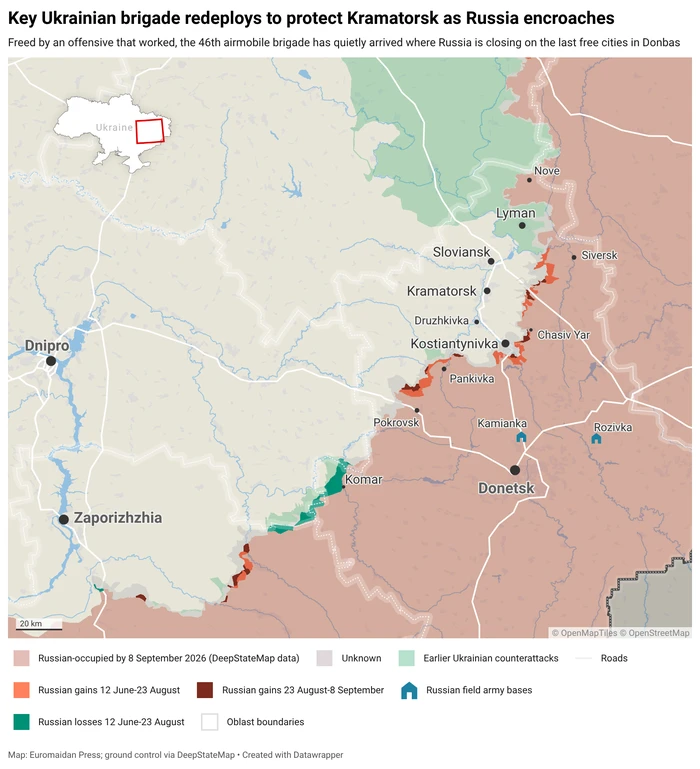
Pankivka on a map. Image: Euromaidan Press

On and around 23 July, the Russians rolled tanks along the road through the village of Pankivka, roughly 36 km southwest of Kramatorsk and its twin free city of Sloviansk in eastern Ukraine's Donetsk Oblast. Ukrainian drones spotted the tanks coming, and attacked.

When the smoke and dust cleared, the Russians had lost at least 9 tanks. Ukrainian tank kills were already running hot: the general staff in Kyiv claimed Ukrainian forces took out 28 Russian tanks across the 1,200-km gray zone in the two days before, 21–22 July. "It was a good day," wrote Dimko Zhluktenko, a soldier with the Ukrainian Unmanned Systems Forces' 413th Regiment.

The mechanized assault was unusual for its rarity. For more than a year now, the Russian army of occupation in Ukraine has mostly parked its armored vehicles, and instead attacked on foot or on motorcycles or other light vehicles. The pause in mechanized assaults has bought time for the Kremlin to ramp up vehicle production and bring battered regiments and brigades back to up to their full allotment of tanks and other armored vehicles.

But those vehicles aren't necessarily being used in Ukraine. Ukrainian tiny explosive drones are everywhere all the time, and Russian forces have few ways of reliably defeating them. Russian commanders correctly concluded that small groups of infantry stand a better chance of slipping past Ukraine's undermanned defenses than big, easy-to-detect tanks do.

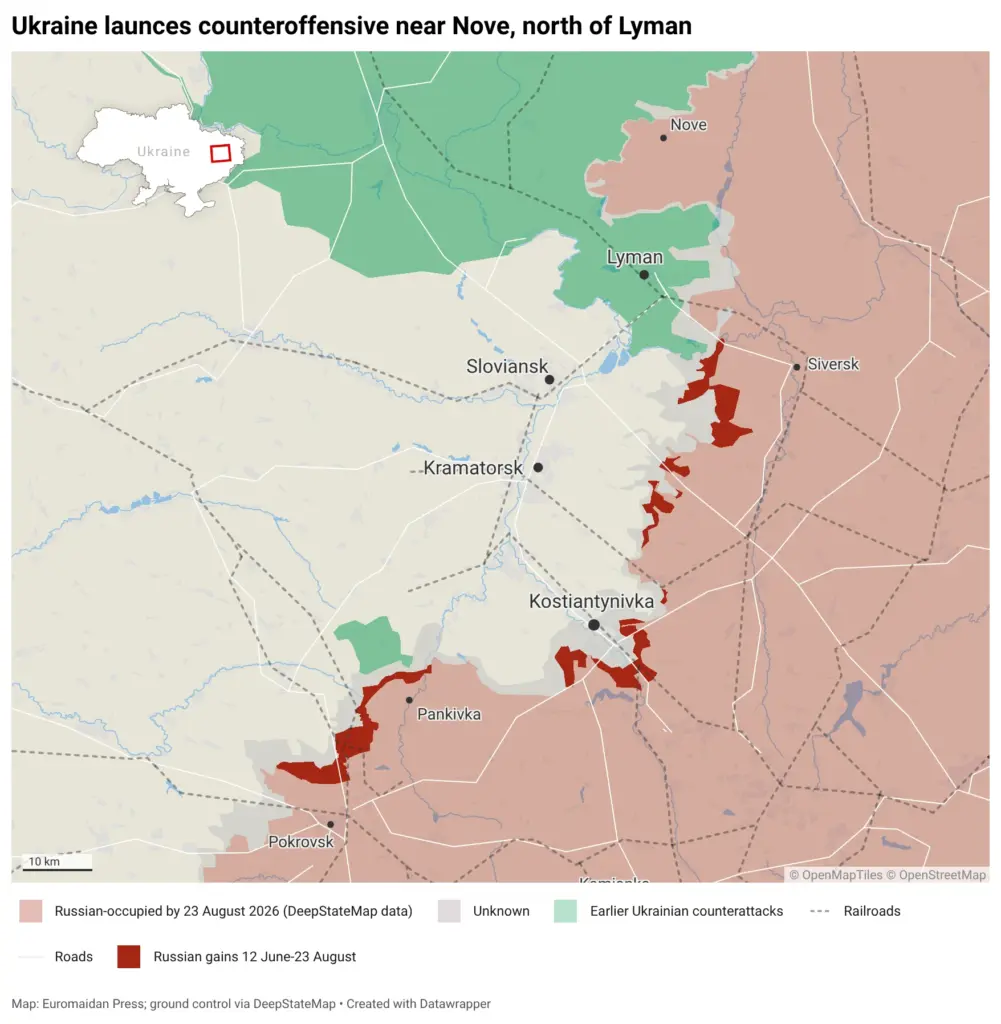
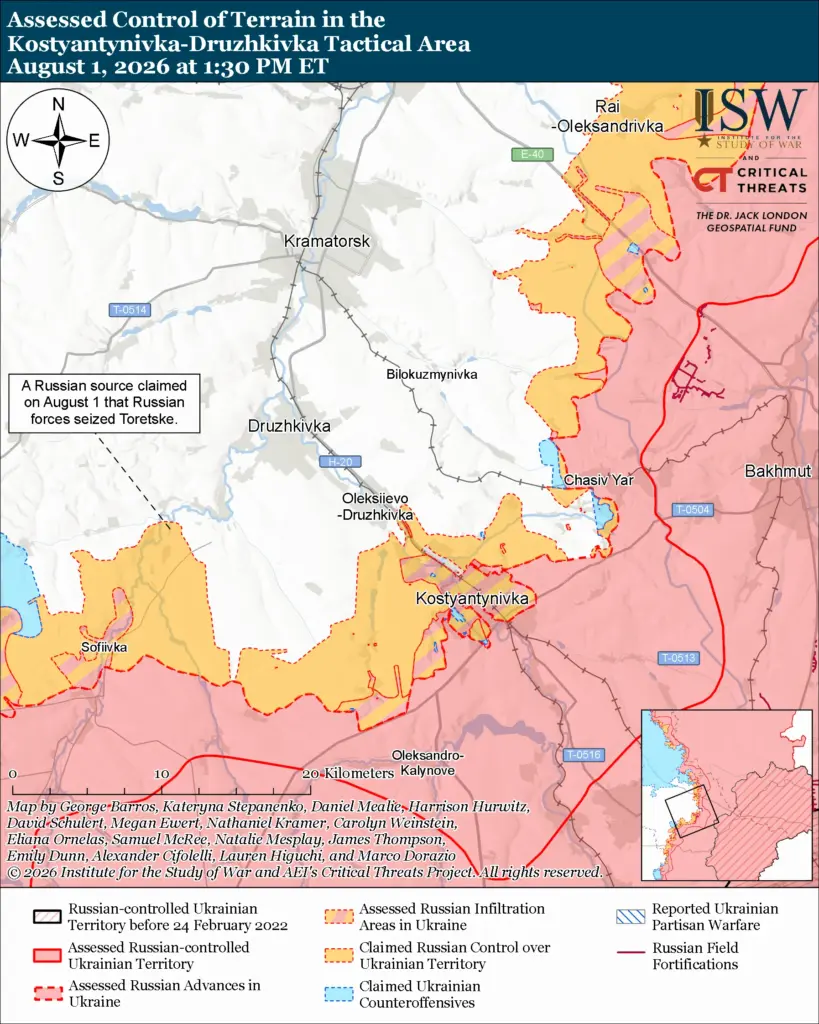
Infantry infiltrations work. They're how Russian assault groups have ground their way into the city of Kostiantynivka, 24 km southeast of Kramatorsk. Moscow claimed the city on 3 July. Ukraine's general staff says it still holds it. And infiltration is how the Russians are gradually creeping around the city of Lyman, 21 km northeast of Sloviansk. The infiltrations are slowly closing a vice around Kramatorsk and Sloviansk, the last free big cities in Donetsk Oblast.

National guard Omega SOF fpv strikes a russian t-72 tank
48.41418, 37.31780 (0:23)
Mayak, Donetsk@UAControlMap @GeoConfirmed https://t.co/qyYCXFsXh6 pic.twitter.com/ma1hXAWmuP

— imi (m) (@moklasen) July 23, 2026

Costly attacks

But the infantry action is costly. The Kremlin recruits around 30,000 fresh troops every month but, if the Ukrainian general staff's tallies of killed and wounded are accurate, loses roughly that many troops every month. Ukraine is desperately short of infantry. Russia isn't nearly as desperate, but that doesn't mean it's got infantry to spare.

Last month, analyst Jompy predicted that if infantry casualties spiked or recruitment slipped, Russian commanders "could also be forced to go back to mechanized warfare." That may be why the Center Group of Forces pivoted back to tank-led assaults in their south-to-north push toward Kramatorsk.

The shield that replaced the scrap metal

Without so-called "active defenses" that can shoot down incoming drones, "it is currently very easy to throw a tank battalion into [an] assault and lose it all without achieving anything," analyst Jakub Janovsky explained. The Arena-M is Russia's answer. It uses a Doppler radar to spot incoming rockets, missiles, and drones, and 12 launchers ringed around the turret fire tiny charges meant to shred the threat a few meters out.

Twelve is the whole magazine. And the system does not run itself: the commander switches it on when reconnaissance or a drone detector warns him, the Russian state newspaper Izvestia reported on 13 July, in a dispatch from a training range where crews of the Center grouping's 90th Tank Division were learning the new machines.

T-72B3A tank equipped with the Arena-M active protection system (APS). Photo: iz.ru/Dmitry Astrakhan

That dispatch is worth reading for what the reporter noticed was missing. No turtle armor. No tsar-mangal. No dreads, no cages, no hedgehogs—none of the welded scrap the Russian army has bolted onto its armor for two years. A company commander told Izvestia the system had shown high effectiveness against drones on the range, and that the tanks would reach the line of contact within days. Russian industry has been calling the Arena-M the first system in the world able to protect armor from FPV drones and loitering munitions. Israel's Rafael announced drone-interception upgrades to its Trophy system in January 2025.

Ten days later the tanks were on the road, without the cages, and Ukrainian drones found them. Footage published by Ukraine's border guards and by the National Guard's Omega unit shows a T-72B3A taking a hit to the rear, then two more drones finishing it. A second tank—this one wearing a conventional mangal cage—was leading it and was immobilized too. Both Russian answers to the drone problem were on that road. Neither one came off it.

What the shield actually did is contested, and the argument is worth following. One Russian armor specialist watching the video saw no reaction at all—countermeasures still sitting in their launchers, no attempt to engage. Observer Matt Drew, watching the same footage, read it the other way: a puff of smoke off the turret in the opening seconds, an explosion to the side, and several drone feeds that cut out before reaching the tank—which is what an interception looks like from the drone's camera. Only after the tanks were disabled and abandoned could the drones close in and linger, and it took bomber drones to finish the hulks. "Probably not the success the Russians were hoping for," Drew wrote, "but it definitely worked for a while."

A while is the problem. Twelve charges is a finite number and Ukrainian drone crews do not attack in twelves. A shield that intercepts the first drones and runs dry against the tenth turns a tank into a slower target, not a surviving one. And the latest push toward Kramatorsk failed.

That doesn't mean Kramatorsk and Sloviansk are safe. Hurling tens of thousands of troops and, occasionally, a few armored vehicles against Ukrainian defenses, the Russian Center Group of Forces is making very, very slow progress toward the twin cities from both the south and the north.

But every assault the Ukrainians defeat delays the day when Kramatorsk and Sloviansk come under direct siege and infiltration. The cities are most vulnerable from the north around Lyman, mapper Clément Molin noted. "The current situation is not very good for Ukraine in this direction."

At the current rate of advance, the Russians may be able to slip their first infiltrators into Sloviansk from the north some time next year, Molin concluded.

  •  

Russia just copied Ukraine’s cleverest drone hunter

Arming a Russian gunship with interceptor drones.

  • Ukrainian forces armed a civilian-style transport plane with interceptor drones
  • It's such a good idea that Russian forces have copied it
  • Russian training planes and transports hauling cheap interceptors could help fill gaps in Russian air defenses

Sometime late last year, some enterprising Ukrainian volunteers mounted a 7.62-millimeter minigun to the port fuselage hatch of an Antonov An-28 turboprop transport—and went hunting for Russian Shahed attack drones.

Months later, in April, the same crew added much heavier armament to their Shahed-killing gunship—in the form of inexpensive interceptor drones hanging from the old transport's wings. Interceptor drones normally launch from the ground before slamming into their Russian targets. But low clouds can blind them. Launching from an airborne An-28 means the interceptors can get above the clouds—and continue their hunt in all but the worst weather.

It's such a good idea that Russian forces have copied it. A new video that circulated online depicts Russian aircrew arming an Antonov An-2 biplane and a Yakovlev Yak-52 turboprop training plane with underwing interceptor drones. The Ukrainians also use Yak-52s for air defense against drones, albeit with a gun-armed shooter in the back seat.

Video from Russia’s BARS Sarmat Center of Yak-52 and An-2 aircraft used to launch UAS interceptors. https://t.co/flo1vqqHUK pic.twitter.com/UrT8vEaSJ8

— Rob Lee (@RALee85) July 19, 2026

The An-2 was designed in the 1940s. It cruises at barely 250 km/hr. The 1970s-vintage Yak-52 is slightly faster at 285 km/hr. But both types are stable and maneuverable and cheap to operate. They may not be able to take down the highest and fastest aerial targets, but they don't have to. They're for the lower, slower targets.

In other words, the An-2s and Yak-52s complement surface-to-air missiles and missile-armed fighters. They don't replace them. "This is the low-cost way if providing area air defense," wrote Michael Bohnert, an analyst with the California think tank RAND.

The interceptor drones hanging under the An-2 and Yak-52's wings function as inexpensive air-to-air missiles, helping the old planes hit Ukrainian drones from potentially 10 km away or farther. The concept is simple. The biplane or trainer takes off, maneuvers between incoming Ukrainian drones and their target and launches its underwing interceptors, most likely one at a time.

A crew member in the cabin of the An-2 or the back seat of the Yak-52 sees what the interceptor sees on a handheld console, and steers the interceptor to a collision with a Ukrainian drone. Some interceptors drones have a small explosive payload, but they don't normally need it: the impact alone should take down a drone.

A Ukrainian flying club's An-28.
Explore further

Ukraine’s 59-kill cargo plane proves low-tech can beat high-tech

Enviable concept

It's obvious why the Russians copied the Ukrainian gunship concept. Ukrainian drones struck no fewer than 1,000 Russian air defense systems and related facilities just between June and March, according to Ukrainian analysis group Tochnyii. The resulting gaps in Russian air defenses helped more Ukrainian drones reach strategic targets such as munitions factories and oil refineries.

Now the Ukrainians are launching more than 11,000 one-way attack drones a month at targets in occupied Ukraine and Russia itself, steadily bleeding the Russian war effort through thousands of pinpricks. Russia needs more air defenses, fast. The cheaper the better as it scrambles to replace destroyed missile batteries and plug gaps in the overall air defense network.

Old turboprop planes costing just a few thousand dollars and hour to fly, and carrying interceptor drones also costing just a few thousand dollars, are just the thing. An-2s and Yak-52s could fly over Moscow or other cities in western Russia, swatting down incoming Ukrainian drones and freeing up higher-end air defenses to focus on harder targets such as Ukraine's Fire Point FP-5 cruise missiles.

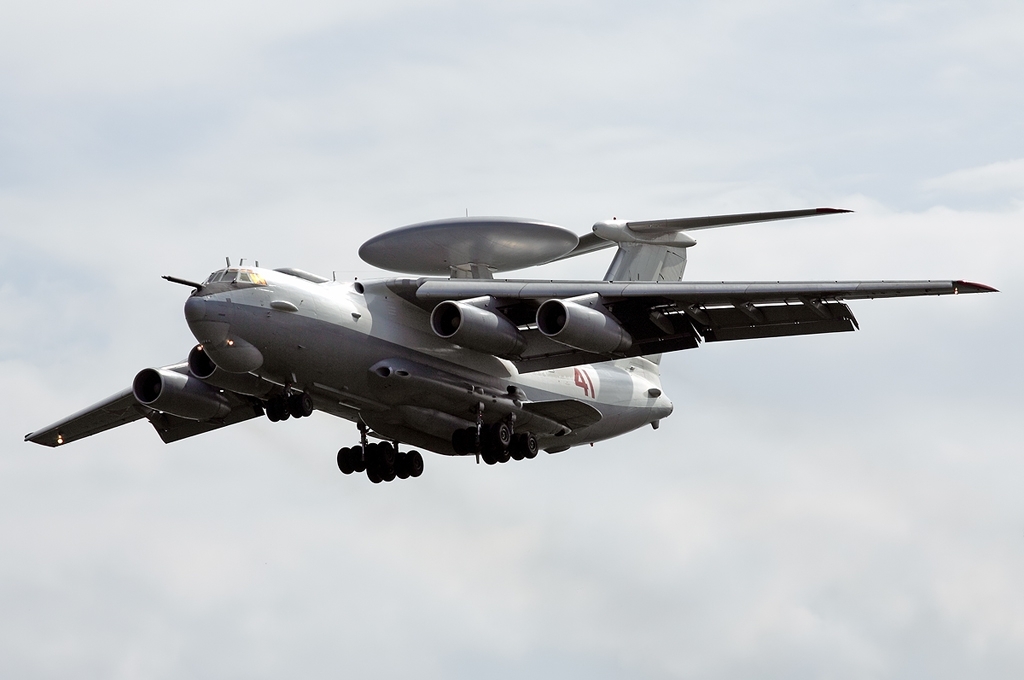
A Russian A-50U.
Explore further

Russia is running out of its best eyes in the sky

Where a propeller-driven attack drone cruising at just 200 km/hr is vulnerable to an interceptor drone speeding along at 350 km/hr or faster, an FP-5 jetting along at 950 km/hr is too fast to intercept with a drone. It's not that the Russians can't shoot down an FP-5—they can and do—but it's apparent they usually do so with missiles costing hundreds of thousands of dollars apiece or more.

Those missiles are in increasingly short supply in Russia, just as they are in Ukraine. The Russians are keen to save them for the hardest targets. And that means taking down the easiest targets with something like an old transport plane lugging $2,000 interceptor drones.

The Russians' improvised gunships aren't foolproof, of course. Russian forces adapted to Ukrainian forces' gunships by acquiring more jet-propelled Shaheds that can outrun the gunships. The Ukrainians could adapt in the same way: adding more jet drones to their attack mix in order to thwart the Russian gunships.

  •  

Some Ukrainian bomber drones aren’t carrying bombs anymore. They’re carrying robots.

All-robot air assault.

  • Russian troops captured a new Ukrainian tactic on video
  • A Ukrainian heavy bomber drone airlifted an explosive ground robot into action
  • More precise than a bomb, an explosive UGV can crack open a Russian bunker
  • The robotic airlift is just the latest in Ukraine's ever-expanding all-robot mission sets

Just days after landing robots on an enemy shore in the first all-robot amphibious assault, Ukrainian forces flew one into battle. This week, a Russian video circulated depicting a Ukrainian heavy bomber drone airlifting an explosives-laden unmanned ground vehicle into action.

What happened next is unclear. Did the exploding UGV successfully strike its target?

Regardless of the outcome, however, the unmanned air assault is notable. If Ukrainian forces can use an unmanned aerial vehicle to airlift one unmanned ground vehicle, they can do it a second time. And a third. And fourth. So on until these kinds of all-robot operations become routine.

And that's indeed the aim in Kyiv. To make robotic combat operations an everyday occurrence in order to help alleviate a deep and persistent manpower shortage. This spring, recently sacked Ukrainian defense minister Mykhailo Fedorov claimed Ukraine would acquire 25,000 UGVs in just the first six months of 2026.

Russian channels in an uproar today over new video – filmed from the Russian side – a Ukrainian heavy drone delivering a ground-based kamikaze robot via air to destroy Russian positions.

While Putin is about to mobilize at keast 500,000 for more meat assaults, Ukraine is… pic.twitter.com/qb9dmySNRQ

— Jay in Kyiv (@JayinKyiv) July 19, 2026

That's twice as many UGVs as Kyiv bought in all of 2025. The rapid mass acquisition would allow more Ukrainian brigades to shift to robotic resupply missions, removing potentially thousands of precious human logisticians from dangerous roads.

But UGVs perform combat missions, too. Armed with guns, they help counterattack Russian infiltrators and also patrol roads inside the disputed gray zone. In November, one gun-armed UGV belonging to the Ukrainian 5th Assault Brigade, fighting north of Kostiantynivka in eastern Ukraine's Donetsk Oblast, inadvertently advanced UGV tactics in an accidental encounter with an up-armored Russian MT-LB infantry transport.

The UGV, equipped with thermal night vision and armed with a remotely operated M2 .50-caliber machine gun, was reportedly on a combat trial—crawling around the battlefield at nighttime for testing purposes—when an MT-LB rolled toward it on the same road.

Connected via radio, the UGV operators opened fire, peppering the tracked MT-LB with rounds until the Russian vehicle passed by—and escaped in the opposite direction.

Ukrainian unmanned ground vehicle UGV airlifted into battle by bomber drone
An unmanned ground vehicle (UGV) from the Bulava Battalion of Ukraine's 72nd Mechanized Brigade. Photo: David Kirichenko

One-way drones

Other Ukrainian UGVs are meant to fight exactly once. They're suicide bombers, hauling payloads of explosives into Russian strongpoints and blowing themselves up. Back in January, the Ukrainian 3rd Assault Brigade's NC-13 robotics unit piled a dozen TM-62 anti-tank mines, each with 7.5 kg of explosives, onto one of its UGVs and carefully steered the robot into a Russian bunker presumably somewhere south of the ruins of Kupiansk in eastern Ukraine's Kharkiv Oblast.

It made a very big boom. As seen in an official video, the NC-13 team broke into cheers when an escorting aerial drone registered the blast. The team had carefully assembled, painted, and deployed the robot apparently over a period of days before maneuvering it 19 km across rough terrain to deliver the explosive payload.

The recent robotic air assault addressed the mobility problem. A 19-km trip is a long trip for a remotely controlled vehicle that's susceptible to enemy radio jamming and prone to getting stuck in potholes. Airlifting a UGV underneath a heavy bomber drone gets the UGV into action faster and with less risk of a loss or accident en route.

❗Ukraine’s 123rd Territorial Defense Brigade has carried out the first known mission of its kind.

Ukrainian operators remotely guided an unmanned maritime platform across the Black Sea, carrying a machine-gun-equipped ground robot. They landed the robot on the occupied Kinburn… pic.twitter.com/wKncXttJqb

— Special Kherson Cat 🐈🇺🇦 (@bayraktar_1love) July 13, 2026

A heavy bomber drone could just drop a bomb, of course. But a UGV can do something an aerial bomber can't do: drive straight through the open door of a Russian bunker regardless of how much protection the Russians pile atop the door.

The Ukrainians are finding more and more new ways to get their UGVs into action. On 13 July, the Ukrainian 123rd Territorial Defense Brigade sailed several unmanned surface vessels across the western Black Sea and landed gun-armed unmanned ground vehicles on the Kinburn Spit, at the westernmost edge of the Russian occupation zone in southern Ukraine.

The 123rd Territorial Defense Brigade released a video montage—shot by a USV, a UGV and an escorting UAV—depicting the UGV firing on a Russian installation with its suppressed .50-caliber machine gun.

It was an all-robot amphibious assault. "An impressive feat," RAND analyst Michael Bohnert wrote.

The later robotic airlift was no less impressive.

Soldiers of the 123rd Territorial Defense Brigade landed a ground robotic complex on the Russian-held shore of the Kinburn Spit in Mykolaiv Oblast. Source: The 123rd Territorial Defense Brigade
Explore further

Ukraine put armed robot on Russian-held ground. Naval drone was landing craft

  •  

Ukraine is trying to wreck Russia’s oil fleet without spilling its oil—the Black Sea can’t take another slick

A.I. targeting guides a drone to a ship strike.

  • Ukrainian drone units aren't just trying to strike Russia's shadow fleet
  • They're trying to strike the ships without spilling fuel or oil
  • But that requires very accurate strikes

Ukraine's drone force is walking a fine line as it escalates its attacks on Russia's unregistered commercial "shadow fleet" in the Sea of Azov and eastern Black Sea. The drone operators are trying to immobilize the ships without breaching their hulls and spilling fuel or crude oil into the water.

That fleet is a big piece of how Moscow keeps its war funded—the aging tankers move Russian oil around Western sanctions—which is why Ukraine's drones have spent the past two weeks hunting it across the Azov and Black seas at better than a dozen ships a day.

"The goal is not to pollute the sea with oil spills; therefore, there must be no hull breaches," wrote Robert Brovdi, commander of Ukraine's independent Unmanned Systems Forces.

Instead, Brovdi stressed, the objective is "irreversible paralysis of oil, fuel and cargo logistics operating around sanctions. Turn every self-propelled vessel into a drifting barge, blind and deaf."

Magyar’s dairy update: Bird’s Milk is back on the menu

MoLoChKa’s bird’s milk, courtesy of the Unmanned Systems Forces: +12⚓🔥 shadow fleet vessels hunted in the Black Sea on 17 July.

The fleetfall continues indefinitely: 🌶159 vessels struck during the first 12 days of… pic.twitter.com/dNWjz8FiUF

— 414 Magyar's Birds (@414magyarbirds) July 17, 2026

To immobilize a ship without breaching its hull requires accuracy: the drone must strike the ship's superstructure or screws, and only its superstructure or screws. Hitting a ship, but hitting it along its biggest part—its hull—risks polluting the already fragile Black Sea ecosystem.

The Black Sea is home to many unique species. But the pollution and stress resulting from more than four years of naval warfare threatens to drive many of these species toward extinction. Scientists estimate tens of thousands of dolphins have died; others have fled to the Black Sea's southwestern edge in the hope of escaping the poison and noise.

Ukrainian commanders aim to throttle Russia's sea trade across the Sea of Azov and Black Sea and through the Bosporus Strait into the Mediterranean. But they hope to do it without further harming the ecosystem.

Satellite images published by Dnipro OSINT and dated July 13 show eight previously struck Russian tankers at multiple locations in the Sea of Azov. #Ukraine pic.twitter.com/vzdZQ9OZfP

— NOELREPORTS 🇪🇺 🇺🇦 (@NOELreports) July 17, 2026

Balancing act

It's a difficult balancing act. Post-strike imagery from some of the 159 ships Ukrainian drones have struck, by Brovdi's count, since the countershipping campaign commenced on 6 July shows scorched or burning ships, but no oil slicks. Other imagery depicts oil in the water, however.

The clean hits point to skilled operators. Videos from the 12-day countershipping campaign depict remote-controlled Fire Point FP-1/2 drones maneuvering to strike the bulky sterns of dry-cargo ships and tankers, where crew and vital above-the-waterline systems are concentrated.

The targeting parameters have narrowed since the strikes commenced. "Initially, they fired at the crew in the wheelhouse—the vessel would be blinded, but the engine would still work, and the crews learned to steer from the wheelhouse using a compass and telephone," Russian political analyst Igor Dimitriev explained.

Geran 4 Shahed seeker
Explore further

A $50 computer just flew Russia’s newest jet drone into a Ukrainian grain ship—and jamming couldn’t stop it

"Then they started firing at the stern: after this, the vessel is left drifting or being towed, and the tugs are also knocked out. The crews usually survive. But a disabled stern is no less unusable, and it also takes up ship repair capacity, which is otherwise almost nonexistent."

There's a new complication in this fight for clean anti-ship strikes, however. Some recent videos of FP-1/2 strikes feature the telltale symbology of AI-assisted targeting. More and more Ukrainian deep-strike drones have on-board AI systems for automatically spotting pre-programmed target types—trucks, air defenses, ships, helicopters, whatever—and autonomously maneuvering for an accurate hit.

The main benefit of AI targeting is that it works even when Russian radio jamming scrambles a drone's connection to its remote human operator. The main downside is that AI is only as good as its training. And the AI targeting seems to be struggling when it comes to ships. A video of recent shipping strikes shows one AI guiding a drone to a strike on a tanker's hold, where the oil is.

The AI may be able to tell a ship from the surrounding water, but it may not be able to tell the best part of a ship to strike for a spill-free hit.

Yet. AI improves as its data set expands. More anti-ship strikes mean more data and better AI.

And, hopefully, more clean hits.

A dead dolphin on Ukraine’s Odesa coast, where scientists link rising marine deaths to Russia’s war in the Black Sea. Photo: Ivan Rusev on Facebook
Explore further

100,000 dolphins killed in the Black Sea because of Russia’s war, Ukrainian scientist warns: “We may lose a unique ecosystem”

  •  

Russian troops inch toward Lyman. Drones keep delaying the plan.

A Ukrainian drone right before it strikes a Russian soldier near Lyman.

  • Russian troops are slowly advancing toward the eastern city of Lyman
  • The ultimate objectives, the bigger cities of Sloviansk and Kramatorsk, are still more than 20 km away
  • A Ukrainian drone campaign against Russian supply lines is slowing the advance—but so far, not stopping it

Seven months after capturing the city of Siversk in eastern Ukraine's Donetsk Oblast, Russian forces are inching toward their next objective on the hard road to the ultimate prize: Sloviansk and Kramatorsk, the last two big free cities in Donetsk.

The Russians' advance around the city of Lyman, 20 km northeast of Siversk, is both bad news and good news for Ukraine. Yes, the Russians are closer to Lyman and thus closer to Sloviansk. But it's taken them far longer than anyone anticipated to close that gap. And time isn't necessarily on the Russians' side as Ukrainian drones strike deeper and harder.

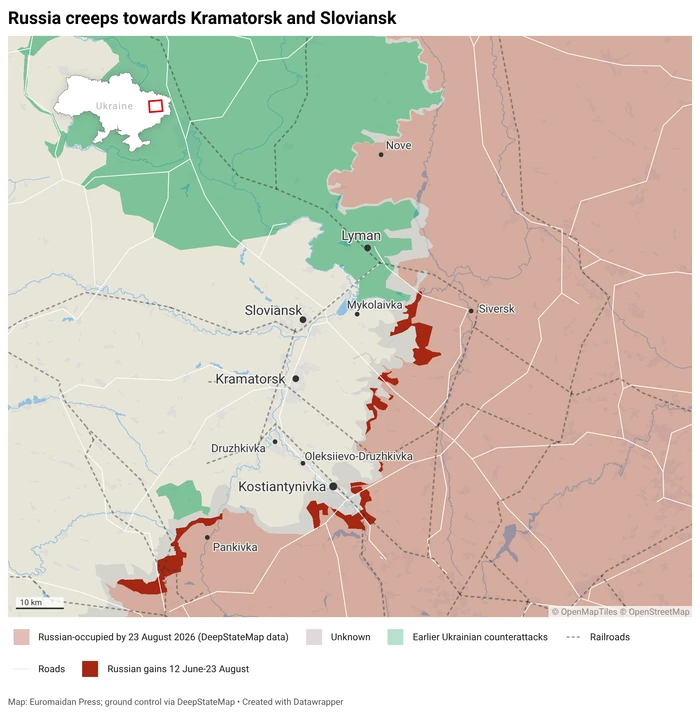
Since marching through the ruins of Siversk in mid-December, Russian attacks have nudged the disputed gray zone halfway toward Lyman, 20 km to the west. "The current situation is not very good for Ukraine in this direction," mapper Clément Molin noted. Having captured Siversk and, earlier, Soledar and Bakhmut, Russian commanders "have a very good accumulation possibility," Molin pointed out. That is, they have plenty of urban bases where they can hide troops and equipment. It helps that the Russians have also captured disused mine complexes that can function as secure, largely drone-proof bases. "It is therefore easier to have troops ready for assault at any moment," Molin explained.

If the situation in the south recently improved, it continues to worsen in the Donbas, especially on the Sloviansk front.

Russian 🇷🇺 forces continue to push west after they took Siversk (7 months ago) and have down nearly half of the path leading to Siversk. The current… pic.twitter.com/tbV2TlHpTH

— Clément Molin (@clement_molin) July 15, 2026

The Russians' goal, Molin concluded, is to march through or around Lyman, consolidate control over the town of Mykolaivka and nearby Rai Oleksandrivka, and begin heavily bombarding Ukrainian supply lines no later than the end of the year. That could position the Russians to assault Sloviansk in 2027.

The attacks on Ukrainian supply lines around Lyman are already intensifying, forcing the Ukrainian garrison to rely on unmanned ground vehicles for much of its resupply. Recall that the Russian bombardment of supply lines into Kostiantynivka forced that city's garrison to switch to robotic resupply, too. The switch was a harbinger of the eventual Ukrainian retreat from Kostiantynivka in recent weeks.

But the Russians aren't the only ones attacking the enemy's supply lines. This spring, at the urging of sacked former defense minister Mykhailo Fedorov, Ukrainian drone units intensified their strikes on Russian trucks, trains, and ships hauling supplies to front-line regiments and brigades.

Russian advances near Sloviansk over two months. Map: Euromaidan Press

Logistics squeeze

The Ukrainian counterlogistics "middle strikes" have been most successful in southern Ukraine, where Russian supply lines are longest, most exposed, and most fragile. But they're having an effect in eastern Ukraine, too.

Just not very quickly. Russian logistics in the east "are hit very hard," Molin observed, "but it's obviously not enough to slow the momentum." For now.

But there's a silver lining inside the storm clouds gathering over Lyman and Sloviansk. As recently as late last year, Russian commanders had planned to bypass Lyman from the north and south in order to form what mapper Vitaly called a "western claw"—one that could crush Lyman and then reach for Sloviansk as early as this year.

The stout Ukrainian defense of Lyman, coupled with targeted Ukrainian counterattacks north of the city, broke the claw. Now the Russians need to build a new one, and hope for a fresh opportunity to assault Sloviansk next year. Kramatorsk would be next.

Russian potemkin flags photo ops planted in Lyman
Explore further

Russians keep raising “Potemkin flags” in Lyman. They’re no closer to capturing it.

All that is to say, Ukrainian defenders in and around Lyman have bought time—time that Ukrainian drone units could use to escalate their counterlogistics campaign and weaken the grip of the new Russian claw forming around the city. Whether they can strike hard enough, and often enough, along the supply lines threading toward Siversk and the Lyman front to foil the Russians' 2027 plans is one of the most pressing questions of the war's 53rd month.

The drones can't stop the Russian advance on Lyman. But they can make it so slow, and so costly, that Sloviansk stays free into 2027 and beyond. On the evidence so far, that's the likeliest outcome.

  •  

Russia bet 50 vehicles that the drones would miss. The drones did not miss.

Destroyed Russian vehicles near the Donetsk Ring Road.

  • Why did Russian commanders line up more than 50 vehicles just a few kilometers south of the gray zone in Donetsk Oblast?
  • The vehicles were easy prey for Ukrainian drones
  • Occupied Ukraine is becoming more dangerous by the day for all Russian vehicles

The Russian force in Ukraine has mostly parked its armored vehicles and shifted to infantry-led assaults across the drone-patrolled gray zone.

Which is why what happened on or just before 8 July is so bewildering. Despite Russian commanders concluding that vehicles are too easy for Ukraine's tiny first-person-view drones to find and strike, and despite a reported ban on Russian vehicular traffic on eastern Ukraine's Donetsk Ring Road, the Russian Center Group of Forces massed no fewer than 50 vehicles 12 km south of the gray zone stretching between Kostiantynivka and Toretske in Donetsk Oblast.

The outcome was predictable. Drones from the Ukrainian State Security Service's Ivan Franko Group detected and attacked the column of trucks, vans, cars, all-terrain vehicles, and motorcycles just south of the ring road near the village of Malynivka, an important base for Russian forces fighting in Donetsk Oblast. When the smoke and dust cleared, more than 50 vehicles had been hit and immobilized if not destroyed.

nothing new on the dobropillia front
(fighting on this same road piece for 12 months now btw) https://t.co/8JFCHv32fC pic.twitter.com/oWuwD31oDG

— imi (m) (@moklasen) July 12, 2026

"Despite the ban on movement of cargo and military transport on the Donetsk Ring Road, IFG with a firm hand and drones that you donated 'detained' several violators," the Ivan Franko Group quipped.

It's unclear how many Russians were killed or wounded. But the Center Group of Forces clearly failed at whatever it was trying to achieve—and the assembly of the column, in daylight, within drone reach, is the puzzle. Russian commanders knew what the sky over the gray zone does to vehicles. They sent the column anyway.

It's possible the column was trying to reach the Donetsk Ring Road in order to turn west toward Toretske or east toward Kostiantynivka. Russian forces are attacking in both directions, aiming to break through Ukrainian defenses to open a path, any path, toward the twin free cities of Kramatorsk and Sloviansk, 22 km north of Kostiantynivka.

Kostiantynivka Malynivka
Map: Euromaidan Press

Left or right?

Whether the Russians planned on investing those vehicles in a direct assault in either direction is anyone's guess. It's possible the column was merely transporting infantry closer to the gray zone, sparing them a long foot march ahead of a dangerous foot assault.

But it's also possible that, yes, the Russians meant to send the trucks, vans, cars, all-terrain vehicles, and motorcycles across the gray zone. Vehicular assaults are rare these days, but they still happen from time to time. They almost never succeed. There are just too many drones over and behind the gray zone.

Indeed, the vehicular kill zone is getting wider by the day as Ukraine deploys more and more drones for strikes on Russian supply lines at depths up to 200 km. The Ukrainian counterlogistics campaign that kicked off this spring has struck potentially thousands of Russian trucks as well as trains, bridges, and, more recently, cargo ships plying the Sea of Azov and Black Sea hauling critical war supplies.

The Russians are now adding anti-drone cages to some trucks and guarding the most important convoys and supply routes with gun-armed air defense teams. More convoys are taking back roads, hoping to escape the attention of the ever-present drones.

The number of strikes continue to increase, with nearly 600 trucks and vehicles hit in june 2026 (around 20 per day) and already 240 for the 1st week of july (34 per day).

All these strikes are only the confirmed ones from ukrainian videos, I do not count videos from the ground. pic.twitter.com/IzJLS2ZYA5

— Clément Molin (@clement_molin) July 8, 2026

But these measures aren't working as more Ukrainian drones take flight, including $6,000 AI-assisted fixed-wing models and $500 first-person-view quadcopters with detachable wings for greater range. Scrutinizing official videos for evidence of drone strikes, mapper Clément Molin tallied 600 destroyed or damaged Russian cargo trucks in June and another 240 in just the first week of July.

Importantly, Molin only counted confirmed strikes. There are surely many others that don't leave behind clear, public video evidence.

The pace of strikes is increasing even as the Russians add anti-drone protections. There were 20 hits on Russian trucks every day in June, on average, and 34 hits every day in July. The strike near the Donetsk Ring Road occurred too late to be included in Molin's count. When he adds it, the daily average will be higher still.

All that is to say, more of occupied Ukraine is becoming steadily more hostile to Russian vehicles. Knowing that, why would the Russians line up 50 vehicles so close to the gray zone? On the evidence near Malynivka, they no longer have a good answer.

Vyriy 15.
Explore further

Ukraine’s $500 Vyriy FPV drone just flew 110 km to hit Russian logistics. That used to cost $5,000.

  •  

A $50 computer just flew Russia’s newest jet drone into a Ukrainian grain ship—and jamming couldn’t stop it

Geran 4 Shahed seeker

  • Russia's newest jet drones are striking grain ships in Ukrainian ports
  • A Raspberry Pi microcomputer flies the final attack run, holding the lock through Ukrainian jamming
  • Ukraine's own counter-shipping campaign is running far ahead: 105 vessels struck in eight days

Ukrainian drones are wreaking havoc on Russian ships sailing the Sea of Azov and the Black Sea. But the Russians are waging their own war on shipping, sortieing the latest Geran drones to strike grain ships in Ukrainian ports.

The Geran-4 Seeker drones pummeling Ukrainian ports combine jet propulsion, mesh radio control, and machine-vision targeting run off a Raspberry Pi—the same $50-class hobbyist computer that schoolchildren use to build robots. They're the best one-way attack drones in the Russian inventory, and cause for concern in Kyiv as the dueling Ukrainian and Russian countershipping campaigns escalate.

On or just before 12 July, Geran-4s penetrated Ukrainian air defenses and targeted ships in the port of Chornomorsk, 20 km south of the larger port in Odesa in southern Ukraine.

Chornomorsk is one of three ports carrying the bulk of Ukraine's grain to market. Egypt, Algeria and Indonesia bought 62% of Ukraine's wheat last season—Egypt alone took more than a quarter of it. The ship the Geran-4s went for was carrying somebody's bread.

Russia's new "Geran-4 Siker" Shahed variant uses machine-vision AI for targeting. Source: Warhronika
Explore further

AI against AI over Ukraine: Russia’s Shahed now sees its target, and Ukraine’s interceptor sees Shahed

This grain is vital to the Ukrainian economy and to the populations of food-poor countries. It's also a top target in Russia's ongoing terror campaign. The Geran-4s that reached Chornomorsk in recent days struck at least two grain ships with warheads weighing as much as 90 kg.

It's unclear how much damage the Geran-4s inflicted. What is clear is the difference in scale between the two campaigns. Since 6 July, Ukrainian one-way attack drones have struck 105 vessels belonging to Russia's unregistered "shadow fleet" on the Sea of Azov and the Black Sea.

The shadow fleet hauls critical war supplies including fuel to Russian forces in occupied southern Ukraine, and also carries commercial goods—again including fuel—out of the Black Sea. Ukraine launched its countershipping campaign eight days ago, and has been striking the fleet at a rate of better than a dozen vessels a day since.

Geran seeker attack on a ship in Chornomorsk. The ship appears to be loading grain.

46.321443, 30.659061@GeoConfirmed pic.twitter.com/4z7BTWnXfR

— 3BM15 (@3_bm15) July 12, 2026

Different campaigns

The difference in scale is partially attributable to the Ukrainian command and control advantage. Ukraine still has access to Starlink satellite terminals. Russia doesn't. To navigate to a Ukrainian port through intensive Ukrainian electronic warfare, Russian drones need redundant communications and terminal autonomy.

The 3.5-m Geran-4 has both, thanks to its mesh radio modem—which links to other drones to form a resilient control network—and the Raspberry Pi microcomputer running machine-vision software. The operator picks out the ship and locks the drone onto it. From there the Raspberry Pi flies the attack, holding the lock through the jamming that would otherwise break the operator's radio link in the last seconds.

"Seeker is controlled by an operator via a radio mesh modem, but it can be locked onto a target and handed over to its machine-learning algorithms to complete an attack in the presence of EW jamming," Canadian drone expert Roy noted.

Russia has recently deployed a “Seeker” version of the Geran-2 (Shahed) UAV that is intended for particularly important targets.
It features several cameras operating in different modes, automatic target recognition, and autonomous terminal guidance based on a Raspberry Pi.
1/ https://t.co/lEF1ZOClVt pic.twitter.com/1yGUi6FeAR

— Roy🇨🇦 (@GrandpaRoy2) July 1, 2026

Ships aren't the only targets in the Geran-4s' crosshairs. The jet-propelled drones also struck two Ukrainian air force Mikoyan MiG-29 fighters on the ground at Voznesensk airfield in southern Ukraine on or just before 27 June. Where older, propeller-driven Gerans cruise at just 340 km/hr, the jet-propelled Geran-4 cruises at 500 km/hr or faster. The newer, faster drone outpaces many Ukrainian interceptor drones, making it harder to take down by kinetic means.

That doesn't mean the Ukrainians are powerless to stop Geran-4s from striking grain ships in Ukrainian ports. Faster interceptor drones are coming. In the meantime, ports would benefit from additional guns and surface-to-air missiles.

Longer-term, the same Ukrainian deep-strike forces that are chasing down Russian ships are also targeting the factories deep inside Russia that build the components for munitions including the Gerans. Hit enough factories frequently enough with sufficiently powerful missiles or drones, and the Russians won't be able to build enough Gerans to sustain intensive attacks.

A Ukrainian air force MiG-29 carrying GBU-39s.
Explore further

Ukraine lost three fighters in one day—one outranged in the air, two caught on the ground. The Gripen fixes both

  •  

Ukraine’s $500 Vyriy FPV drone just flew 110 km to hit Russian logistics. That used to cost $5,000.

Vyriy 15.

  • Ukrainian first-person-view drones can now range a record 110 km
  • That requires upgrades to make the drone lighter and smarter
  • A $500 FPV can now do the job of a $5,000 fixed-wing drone

A basic first-person-view attack drone might range just 19 km or so before its battery runs out. Certain pricier FPVs with denser batteries and lighter construction can fly as far as 70 km before they, too, run out of power.

But Ukraine's drone developers keep innovating. And now there's an FPV that ranges a staggering 110 km. Six times the distance of a basic model.

The distance is the headline. The price is the point. Extending inexpensive FPVs out to 110 km lowers the cost of drone strikes across the logistical zone stretching as far as 200 km behind the disputed gray zone. Before, these "middle strikes" required a fixed-wing attack drone costing thousands of dollars. Now a middle strike is possible with an FPV costing perhaps a tenth as much.

Cheaper middle strikes mean more middle strikes, and more pressure on Russian logistics. Drone raids targeting Russian supply lines have recently helped slow, if not entirely halt, Russian advances as Russia's wider war on Ukraine grinds into its 53rd month.

Wow! A new FPV strike record — 110 km!

- Unit: 5th Border Guard Detachment 🔥
- Drone: @vyriydrone-15 💪
- AI terminal guidance: The Fourth Law 4⃣ 🤖

Leading manufacturers are choosing autonomy systems from The Fourth Law.
Grateful to our friends at Vyriy for their trust.… pic.twitter.com/dN3Mh7EAyH

— Yaroslav Azhnyuk / Ярослав Ажнюк (@YaroslavAzhnyuk) July 10, 2026

Yaroslav Azhnyuk, a representative of Ukrainian defense firm The Fourth Law, revealed the 110-km FPV strike on Friday. "Wow!" Azhnyuk wrote. "A new FPV strike record." The previous marks, set in late May, were 102 km and 103 km.

The FPV, flown by the Ukrainian 5th Border Guard Detachment, was a 38-cm quadcopter from Ukrainian manufacturer Vyriy, and it struck Russian logistics.

The record comes at an awkward moment for the manufacturer. Ukraine's State Bureau of Investigations raided Vyriy on 7 July, days before the strike, after a media outlet owned by Vyriy's CEO, Oleksii Babenko, published an investigation of alleged corruption and mismanagement inside the Ukrainian 425th Separate Assault Regiment.

Oleksii Babenko. Photo: Babel
Explore further

CEO of one of Ukraine’s biggest drone makers just got raided. He also owns outlet that exposed 25 non-combat deaths at military unit

FPV upgrades

According to Azhnyuk, the 15-inch drone boasted numerous upgrades:

  • A new, more power-dense battery with a capacity of 40 Ah
  • A TFL-1 autonomous targeting module allowing the FPV to home in on and strike its target despite any Russian jamming over the target zone
  • A lighter 800-g shaped-charge warhead instead of the usual 5-kg warhead

But even those range-extending enhancements probably weren't sufficient to take an FPV out to 110 km. At that distance, the drone likely needed a major aerodynamic boost—and that can really only come from an add-on wing. Azhnyuk's list of upgrades doesn't mention one, so the wing remains an inference rather than a confirmed feature of this particular flight.

Late last year, Russian and Ukrainian developers got serious about adding wings or ducts to their quadcopters. The ducted models don't seem to have caught on. The winged models work best.

Haye Kesteloo at DroneXl explained the physics. "Multicopters burn most of their energy just staying airborne, because spinning rotors generate lift the hard way."

A wing produces lift for free once the aircraft is moving, which is why fixed-wing designs have always dominated long-range strike work. The winged FPV grafts that efficiency onto a quadcopter: the motors mostly handle forward propulsion during the long cruise, and a release mechanism drops the wing near the target so the drone recovers full quadcopter agility for the final attack run.

"The winged-quadcopter approach is the attempt to get fixed-wing reach without giving up the multicopter's close-in lethality," Kesteloo concluded.

But the cost is the main benefit. With an inexpensive bolt-on wing, a $500 FPV can now do the job of a $5,000 fixed-wing drone, and strike targets more than 100 km away.

  •  

Ukraine is advancing in the southeast. It’s still not enough to win the war

A trooper from the 80th Air Assault Brigade, fighting in the southeast.

  • Ukrainian troops are on the march in the southeast
  • The goal: to put pressure on Russian supply lines threading through Velyka Novosilka
  • Ukrainian counterattacks are mostly canceling out Russia's own attacks all along the gray zone
  • But the wider war grinds on

The town of Velyka Novosilka, in eastern Ukraine's Donetsk Oblast, is a major hub for supplies flowing east to west to Russian forces fighting in southeastern Ukraine.

The village of Komar, 14 km to the north, anchors Russian defenses along the road threading south toward Velyka Novosilka.

All that is to say, if Ukrainian forces can capture Komar, they can squeeze the supply lines through Velyka Novosilka, and by extension squeeze Russian regiments and brigades all along the southeastern front line.

Komar Velyka Novosilka
Map: Euromaidan Press

And that's why, for months now, Ukrainian forces have been quietly probing for gaps in Russian defenses around Komar. Borrowing infiltration tactics from the Russians, the Ukrainians have been slipping forces across the wide, disputed gray zone, aiming to consolidate enough troops in key positions to nudge the gray zone far enough to the southeast to put Komar in play.

That won't win the wider war, however. Russia might be losing. But it hasn't lost.

The problem for the Ukrainians in the sector near Komar is the Mokri Yaly River, which flows around Komar and forms a natural barrier. The Ukrainians have succeeded in expanding the gray zone, but they haven't succeeded in capturing Komar. Yet. "For now, Komar is 100% Russian controlled," mapper Clément Molin noted.

But that doesn't mean the Russians are winning this battle, or the Ukrainians are losing it. In months of hard fighting, a mix of Ukrainian mechanized, air assault and marine brigades have crossed the Vovcha River, 13 km north of Komar and the Mokri Yaly River, and extended the zone of clear Ukrainian control in the direction of Komar and Velyka Novosilka.

18th Sloviansk Brigade
Explore further

Russia lost ground for a second straight month in June. CSIS says it has lost the initiative too

That is to say, the Ukrainians have the momentum in the fight over supply lines in the southeast. It's just one of several axes where Ukrainian forces have the edge on the ground. Russian forces have the edge along other axes, but if you're wondering why overall monthly Russian gains have decreased to nearly zero in recent months, it's because of battles like that for Komar.

Yes, the Russians are marching through the ruins of Kostiantynivka, 90 km to the northeast, but the Ukrainians are successfully counterattacking elsewhere, resulting in a near zeroing out of Russian advances as the wider war grinds through its 53rd month.

How the Ukrainians have managed to turn the tables on the Russians in certain sectors is no secret. Ukraine has the advantage in the air over the gray zone and also over the logistical zone stretching 200 km behind the gray zone.

Ukrainian drones are hounding Russian supply convoys, throttling the flow of supplies to front-line units and weakening them before they can even being organizing an attack or defense.

Meanwhile, Russia's own drones sometimes struggle to even take flight owing to gaps in Russian command and control resulting from billionaire Elon Musk's war-changing decision, back in February, to throttle Russia's thousands of smuggled and stolen Starlink satellite terminals.

The air war shapes the ground war. And as long as Ukraine controls the air over and near the gray zone, it can find times and places to counterattack along the gray zone, even though Russian troops still outnumber Ukrainian troops in most sectors. "Middle-strike capabilities doing exactly what they were built for," the Ukrainian defense ministry boasted.

According to recent satellite images, the Ukrainian 🇺🇦counter-attack in the Komar direction continues

Based on airstrike analysis, Russian forces were pushed back in the whole northern part, close to the Vovocha river. They still hold the forest near Filia (which is between… pic.twitter.com/TczHtHJFku

— Clément Molin (@clement_molin) July 4, 2026

Stalemate

In nearly zeroing out Russian gains, Ukrainian troops have achieved a virtual stalemate in the wider war. Whether the stalemate lasts is anyone's guess, but for now it counts as a kind of victory for Ukraine.

Yes, liberating large swathes of Ukraine would be more desirable in Kyiv. But merely halting the Russians' overall progress represents a major turnaround for the Ukrainians, who as recently as last fall were losing hundreds of square km a month to the advancing Russians.

Russian potemkin flags photo ops planted in Lyman
Explore further

Russians keep raising “Potemkin flags” in Lyman. They’re no closer to capturing it.

To achieve any of its strategic aims in Ukraine, up to and including regime change in Kyiv, Russia must advance. By contrast, Ukraine's own main aim is to survive as an independent state. By those standards, Ukraine has the edge.

To be clear, the war is far from over. "There is a fundamental difference between saying Russia has lost and saying Russia is currently losing," analyst Joni Askola stressed. "Factually, Russia is losing."

It'll take much more than a few modest Ukrainian counterattacks to turn "Russia is losing" into "Russia has lost," however. The Russians still have more infantry and more ballistic missiles. The Ukrainians still have too few infantry and too few missiles that can intercept the ballistics.

And so, despite Ukraine's improving fortunes, the war will grind on. Probably for a long time.

  •  

Three F-16s and a Patriot battery teamed up to kill Russia’s best fighter

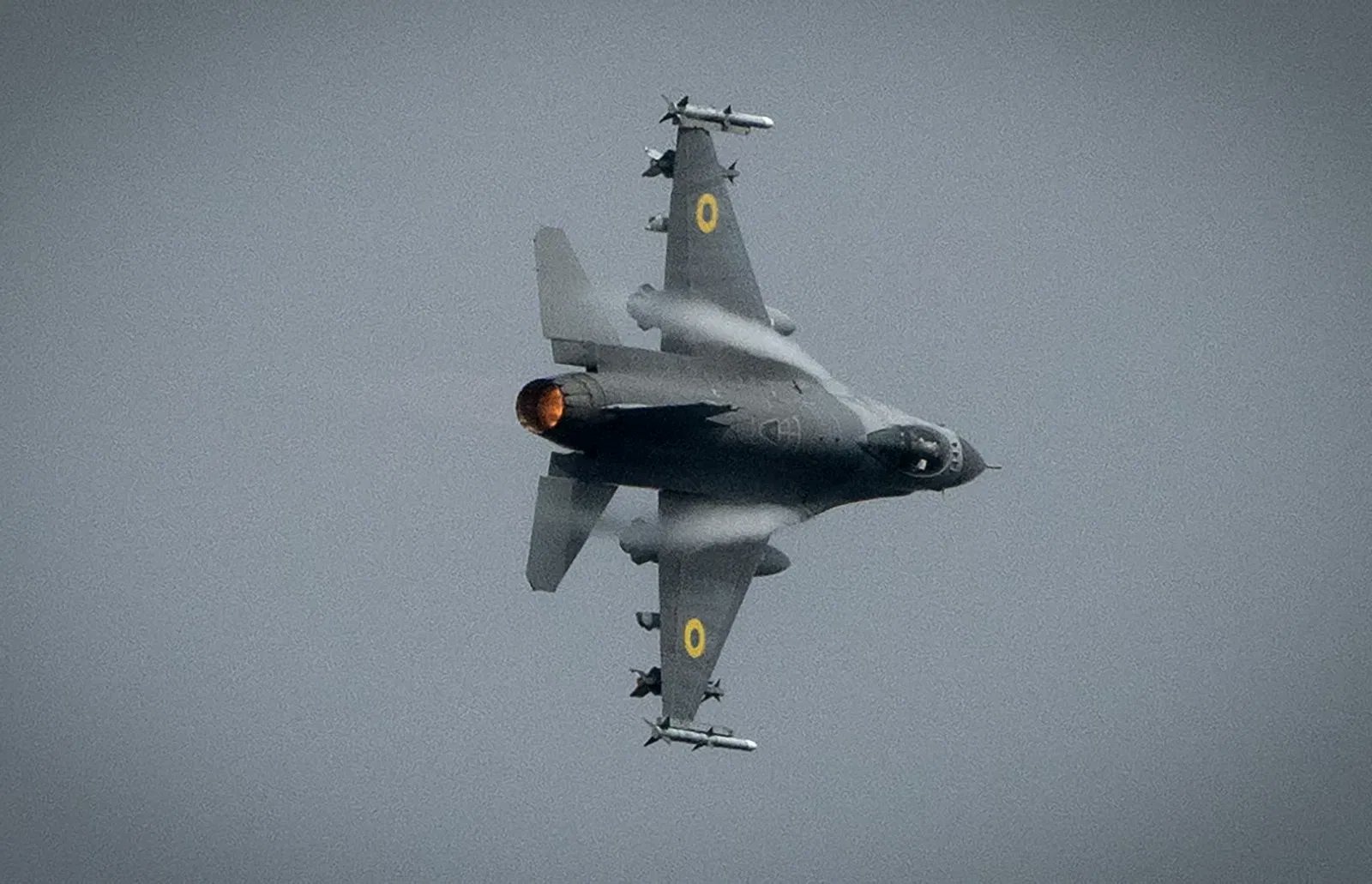
A Ukrainian air force F-16.

  • The Ukrainian air force downed a Russian Sukhoi Su-35 fighter on Wednesday
  • Three Ukrainian Lockheed Martin F-16s and a Patriot missile battery on the ground staged an elaborate ambush
  • The Russians still have the numerical advantage in the air, but clever Ukrainian tactics can still prevail

The Ukrainian air force shot down a Russian air force Sukhoi Su-35 fighter over eastern Ukraine on Wednesday. If unofficial Russian sources are to be believed, the Ukrainians sprang an elaborate trap to take down the twin-engine, supersonic Su-35, which is arguably the best fighter type in Russian service.

Russian channels claimed three Ukrainian air force Lockheed Martin F-16 fighters drew the Su-35 into an ambush involving a Ukrainian air force Patriot surface-to-air missile battery on the ground. The Russian pilot reportedly ejected and was rescued.

It's unclear from Russian claims whether the F-16s or the Patriot ultimately shot down the Su-35. Regardless, the Ukrainians' teamwork is impressive. Both the F-16 and the Patriot suffer serious limitations in battle with Russian jets.

According to unconfirmed information, the Russian Su-35 was shot down while trying to shoot down a Ukrainian F-16 with an R-37/77 air-to-air missile.

The F-16 was reportedly pretending to drop glide-bombs, while in reality, it, covered by 2 additional F-16s, was trying to… https://t.co/UXM9243Opv

— AMK Mapping 🇳🇿 (@AMK_Mapping_) July 8, 2026

The F-16's missiles and radars lack the range to match the best Russian missiles and radars. The Patriot is an effective system, but the Ukrainians have far too few missiles to shoot at every possible target.

Together, however, F-16s and Patriots can win. One may detect while the other shoots. Or the fighters may distract an aerial target while the battery on the ground launches a missile.

Russian sources begrudgingly confirmed the Ukrainian air force's claim that it took out an Su-35. The Ukrainians "actually put up a decent fight today," The Voivode Reports conceded.

According to The Voivode Reports and another Russian channel, Fighterbomber, one F-16 flew low toward Russian positions, simulating the flight profile for jets attacking with precision glide bombs. Two more F-16s flew higher, ready to fling AIM-120 radar-guided missiles at any Russian fighters attempting to intercept the glide bomber.

A Russian Su-35.
A Russian Su-35. Open source photo.

Clever tactics

While it's now normal for F-16s to escort friendly glide bombers, what happened on Wednesday was different. The F-16s flying top cover had help. "A Patriot system was used to provide target illumination from the ground," The Voivode Reports claimed.

The F-16s have their own on-board radars, of course, in the form of the APG-66 with an 83-km range. But the AN/MPQ-53 and AN/MPQ-65 radars associated with the ground-based Patriot system range around twice as far.

According to the Russian channel, the Ukrainians hauled their Patriot battery to within 60 km of the disputed gray zone, extending the system's detection range well into Russian-controlled territory. With the assist from the Patriot, the F-16 pilots could see the Russian pilot coming from farther away—and possibly take a shot at the Russian before he could take his own, most likely with an R-77 radar-guided missile.

A Ukrainian F-16.
Explore further

For three years, Russia glide-bombed Ukraine in escorted pairs. Now Ukraine is glide-bombing Russia the same way.

It's also possible the Patriot battery itself swatted the Su-35 as the Russian jet was tangling with the three F-16s. In either case, the Ukrainians had the edge. "Unfortunately, we acted in a stereotypical way, but the Ukrainians didn't," Fighterbomber lamented.

The Russian air force still has more than 100 Su-35s plus hundreds of other fighters. The Ukrainian air force has far fewer fighters, although more—including modern, ex-Swedish JAS-39 Gripens—are on the way. So the air war over Ukraine is still a tossup.

But the overall numbers don't always determine the winner in a particular aerial clash. Sometimes clever tactics make all the difference.

  •  

A $50k Ukrainian drone just hit a refinery 2,500 km inside Russia. The expensive missiles couldn’t

FP-1(ER).

  • Ukrainian drones struck a refinery in Omsk, Siberia, 2,500 km from the Ukrainian border
  • The strike involved a new variant of the Fire Point FP-1 drone
  • The big-wing drone reportedly ranges as far as 3,400 km

Around seven Ukrainian drones motored more than 2,500 km on Monday to strike, for the first time, a refinery in Omsk in southwestern Siberia. It was one of the deepest Ukrainian drone strikes on Russian soil in the 53 months since Russia widened its war on Ukraine—the first time the war had reached beyond the Ural Mountains to a Siberian plant.

The Omsk refinery accounts for roughly 10% of all Russian oil refining and, by various estimates, more than half of the Siberian Federal District's motor fuel, making it one of the country's most valuable. The daytime raid damaged two distillation units at the sprawling facility that process a combined 50,000 tons of oil every day. On Tuesday, the Omsk facility suspended sales on the Saint Petersburg International Mercantile Exchange.

FP-1 drone hits Omsk Siberia
Map: Euromaidan Press

It was a powerful blow against the Russian economy. And it was all thanks to a new Ukrainian drone type: the Fire Point FP-1 Extended Range. The new drone ranges a startling 3,400 km, according to Fire Point designer Denys Shtilerman. That's more than three times as far as the original FP-1 model.

Eagle-eyed observers, scrutinizing video of the Monday strike, quickly spotted the key difference between the FP-1(ER) and the original FP-1.

The FP-1(ER) has larger wings. "The wings are longer and shaped differently than the previous model ... and reportedly hold extra fuel tanks," Canadian drone expert Roy noted.

Changes to the Ukrainian “FP-1” long-range strike UAVs used in the attack on the Omsk oil refinery are visible in image one.
The wings are longer and shaped differently than the previous model in image two and reportedly hold extra fuel tanks to increase range to 2700–3400 km. https://t.co/p51KS4rfGB pic.twitter.com/E4cJKQlJBH

— Roy🇨🇦 (@GrandpaRoy2) July 7, 2026

That bigger wing likely adds to the drone's $50,000 unit price in its basic configuration. But it's well worth the cost. Ukraine does possess other deep-strike munitions with similar range, including the Fire Point FP-5 cruise missile, but those are probably much more expensive than the FP-1(ER).

Ukrainian forces might be able to buy several FP-1(ER)s for the cost of one $500,000 FP-5. Fire Point claims it produces 300 FP-1s and similar FP-2s every day.

The cheap, low-flying FP-1(ER) got through where the pricier, higher-flying FP-5 recently could not. On 4 July, Russian forces sortied a rare Beriev A-50U radar plane, spotted a clutch of FP-5s streaking toward targets deep in Russia, and shot them all down.

An A-50U and a Sukhoi Su-57 stealth fighter reportedly hunted for the Omsk-bound drones, too. It was a special and, on paper, formidable aerial defense. "This is the first instance I have seen of both platforms present in the same location," wrote Michael Bohnert, an analyst with RAND in California. But the drones got through anyway.

A Beriev A-50U.
A Beriev A-50U. Via Wikimedia Commons.

Early warning

The Russians likely had ample warning the drones were coming. "The FP-1 drones are slow and would have taken hours to reach Omsk," Bohnert pointed out. "Unless A-50 and Su-57 aircraft were overhead 24/7 (incredibly unlikely given how few), it means these FP-1 would have been tracked for several hours to enable aircraft to get airborne."

The tiny drones apparently flew low enough to disappear on radar screens. To all but the very best radars, low-flying aircraft are indistinguishable from the surrounding terrain. The A-50U and Su-57 themselves flew lower than usual in a bid to get a lock on the FP-1(ER)s, but even that didn't work. "To fly this low highlights how difficult these drones must be to detect," Bohnert wrote.

The FP-1(ER)'s new wings are evident in videos from Omsk, but other aspects of its design remain a closely held secret. Early FP-1s suffered from a lack of explosive firepower owing to their anemic 60-kg warheads. Fire Point recently tweaked the FP-1 to accommodate a 105-kg warhead.

It's not clear how heavy the FP-1(ER)'s warhead is, but the damage at Omsk points to the 105-kg version. Adding explosive payload tends to weigh on a drone's range, but the bigger wing and its more capacious built-in fuel tanks clearly compensate for the added warhead weight, and then some.

10% russia's refining half siberia's fuel omsk plant just lost its 2500-km protection · post smoke rises over oil refinery after ukrainian drone strike russia 6 2026 exilenova+ ukraine news
Explore further

10% of Russia’s refining, half of Siberia’s fuel: the Omsk plant just lost its 2,500-km protection

The other mystery is the FP-1(ER)'s guidance. It's possible that Fire Point drones and missiles combine inertial and satellite guidance. But the satellites can be jammed, and self-contained inertial systems tend to lose accuracy over time and distance.

That the FP-1(ER) can fly thousands of kilometers and still accurately strike a pinpoint target speaks to the increasing sophistication of Ukrainian drones and missiles. The FP-5 has also grown steadily more accurate as Fire Point refines it. The FP-1(ER) may benefit from the same work.

Refineries are tough targets, and the Russians work hard to repair them after drone and missile strikes. The Omsk refinery may be back in business soon. But the Monday raid is unlikely to be a one-off.

Ukraine now has a low-cost deep-strike drone that can fly low enough to evade the best Russian air defenses. There's every reason to believe the Ukrainians will hit Omsk again. And again. And again.

  •  

Russia is running out of its best eyes in the sky

A Russian A-50U.

  • A Russian radar plane helped spot and destroy Ukrainian cruise missile during a recent raid
  • But there probably aren't enough the planes to keep more than one on station around the clock
  • And Ukrainian strikes are steadily depleting the radar plane fleet

Russia has just a few Beriev A-50U radar early warning planes left. But those rare aircraft are still busy helping Russian air defenses detect and destroy Ukrainian missiles ranging deep inside Russia to strike strategic industries.

The four-engine A-50Us with their top-mounted radars may be the key to Russia's deep air defense. But that unique capability cuts both ways.

The same Ukrainian deep strike forces that the A-50U crews are working to stop are also hunting the lumbering radar planes on the ground at their bases inside Russia. And once the A-50Us are all gone, there's nothing to replace them—and Russian air defenses will lose their best eyes in the sky. If and when that happens, more Ukrainians missiles will probably get through.

On 4 July, the Ukrainian armed forces reportedly fired at least five Fire Point FP-5 Flamingo cruise missiles at targets deep inside Russia. The six-ton missiles are among the heaviest and farthest-ranging Ukrainian deep strike weapons.

After many months of steady improvement by the engineers at Fire Point, the FP-5s are now reliably striking Russian targets with their 1,150-kg warheads. On 30 June, footage circulated depicting two FP-5s slamming into the Titan-Barrikady missile plant in Volgograd, in southern Russia 500 km from the front line in Ukraine.

And on 10 June, five Flamingos targeted the VNIIR-Progress defense electronics plant in Cheboksary, in western Russia 900 km from the front line. Two of the missiles struck the plant, punching right through anti-drone protections and inflicting major blast and fire damage.

Flamingo missile.
Explore further

For two years, Ukraine’s strikes barely scratched Russia’s war factories. Something just changed.

It seemed the five FP-5s that took flight on 4 July were on track to hit something in Votkinsk, in western Russia 1,400 km from the front line.

But the Russian air force intervened. FP-5s sneak past Russian air defenses by flying along river valleys and other natural obstructions that can shield them from detection by radar. But on 4 July, the Russians positioned an A-50U and its powerful radar overhead of the Ukrainian missiles' flight paths.

Obstructions on the ground no longer offered any protection as the munitions motored toward Votkinsk. The Russians shot down all five of the $500,000 Flamingos.

The A-50U and its 15 crew were the key to the successful defense, according to Michael Bohnert, an analyst with the RAND think tank in California. "Its radar, unobstructed by the curvature of the Earth, was able to detect Ukrainian FP-5 Flamingo cruise missiles from far away and defeat them," Bohnert explained.

But the Russians shouldn't celebrate quite yet. "This employment is likely exploitable," Bohnert warned.

Flamingo missile.
Flamingo missile. Fire Point photo.

Running out of A-50Us

According to Bohnert, it takes four A-50Us to keep one of the planes on station around the clock. That's because one plane will be on duty, another will be returning from duty, a third will be on its way to relieve the on-duty plane and a fourth will be undergoing maintenance on the ground. Add three more A-50Us and "you can almost keep two up 24/7," Bohnert concluded.

The problem for the Russians is that they may have just five active A-50Us. And there's no replacement radar plane in active development after the Kremlin apparently suspended work on the new Beriev A-100.

Russia went to war in February 2022 with potentially seven active A-50Us. In a series of attacks going back three years, the Ukrainians may have hit more than half of them. At least two are total write-offs.

  • A Ukrainian drone damaged an A-50U on the ground in Belarus in February 2023.
  • In January 2024, a long-range Ukrainian missile—reportedly a US-made Patriotshot down an A-50U over the Sea of Azov in southern Ukraine.
  • Six weeks later, in February 2024, another Ukrainian missile, an ex-Soviet S-200, struck a third A-50U in the air in the same area.
  • In March, Ukrainian drones may have damaged an A-50U on the tarmac at the 123rd Aviation Repair Plant in Staraya Russa, in Novgorod Oblast 630 km from the front line. There was "confirmed damage to the aircraft," the Ukrainian general staff claimed.

The Ukrainians are steadily attriting the radar planes. And the Russians aren't moving fast enough to develop and build new ones. There could come a time, and soon, when the Russian air force won't have enough A-50Us to maintain a long patrol over the likeliest routes for Ukrainian missiles traveling deep into Russia.

If and when that happens, even more of the missiles will be able to reach their targets.

  •  

Russia lost ground for a second straight month in June. CSIS says it has lost the initiative too

18th Sloviansk Brigade

  • Russian forces have fallen back in Ukraine three of the last five months
  • In June, they netted a loss of around 40 sq km
  • Russian losses are rising and Russian logistics are under strain
  • The war may be freezing despite isolated Russian gains

Russian forces fell back in June.

Yes, the Russians drove deep into the city of Kostiantynivka in eastern Ukraine's Donetsk Oblast, their biggest gain of the year. Russian forces are "beginning to take control of several districts in eastern Kostiantynivka," logging Moscow's "first strategic victory of the year," according to mapper and analyst Clément Molin—though fighting is sure to continue.

But in other key sectors south and north of Kostiantynivka, the Russians lost ground. Russia advanced into some 30 sq km across the front in June, ISW calculated—but once Ukrainian counterattacks are subtracted, the month came out negative. Russian forces ended June with a net loss of around 40 sq km of Ukrainian soil, according to analyst Konrad Muzyka of Rochan Consulting.

The Ukrainian monitoring group DeepState framed the same trend a different way. Russia's occupied area grew by 84 sq km in June, the group assessed—but set against what Ukrainian forces clawed back over the month, the balance tipped negative for the Russians. "In May, we took two steps forward. In June, it's one step forward and one step back," DeepState wrote. Russian assault actions actually rose 4.4% over the month, the group noted, even as those assaults bought less ground. The Russians did log gains in the second half of June around Kostiantynivka, Dobropillia, and Huliaipole.

The reasons are myriad. Ukrainian drones are better and more numerous than ever. Ukrainian fortifications are deeper and denser than ever. And Ukrainian forces are hitting Russian logistics in the middle zone between the disputed gray zone and Russia proper with greater intensity than ever, weakening Russian regiments before they can even organize an assault.

Here is a short frontline summary for June 2026. Although we assessed that Russian forces gained approximately 25 km² in May 2026, we also noted that they may have lost more territory than they captured. In June, this trend became much clearer, with Russia's net territorial… pic.twitter.com/jRGdyH1LDV

— Konrad Muzyka - Rochan Consulting (@konrad_muzyka) July 2, 2026

The Ukrainian advantages now outweigh the Russian advantages in traditional firepower and, most notably, manpower. Russian troops have outnumbered Ukrainian troops by as much as 8:1 in the Pokrovsk sector, Zelenskyy has said. Yet Ukraine is inflicting far heavier losses than it takes: Russian casualties are running roughly eight times Ukrainian ones, according to the Center for Strategic and International Studies.

"Russia has lost the military initiative in Ukraine as costs continue to mount," the Washington-based Center for Strategic and International Studies concluded.

May points the same way. Russia advanced into around 40 sq km that month but lost control of some 280 sq km, the Institute for the Study of War calculated—a net loss. Ukraine's own Militarnyi, citing defense sources, put the gap even wider, and a source tied to Ukrainian military intelligence called May the first month since 2023 in which Russia lost more ground than it took. DeepState is the outlier, scoring a small May gain. Muzyka logged roughly 25 sq km for Russia but cautioned the real figure may have been negative.

But most sources agree the Russians lost ground in April and March after registering a modest overall advance in February. Russia has probably fallen back in three of the last five months.

Russian 🇷🇺 offensive assessment for June 2026

In June, Russia occupied 28 km2 and continued offensive operations in 7 directions out of 12. Russian forces took control of some neighbourhoods inside Kostiantynivka and advanced near Sloviansk.

My analysis :

🧵THREAD🧵1/13 ⬇ pic.twitter.com/wEzxa0pfUD

— Clément Molin (@clement_molin) July 1, 2026

Zooming in

Narrowing the frame changes the outlook. "Russian forces took control of some neighborhoods inside Kostiantynivka and advanced near Sloviansk," 34 km north of Kostiantynivka, Molin noted. But "this initial victory—achieved in the summer—does not appear to offer any prospect of a second victory within the year," he added.

That's because it takes maximal effort over many months by the 700,000-strong Russian army of occupation to achieve a single meaningful gain.

Russia Kostiantynivka gains losses
Map: Euromaidan Press

Having ground into the ruins of some small city at the cost of potentially tens of thousands of lives, the Russians are exhausted in victory. And they sit in the ruins of Pokrovsk or Myrnohrad or Kostiantynivka eyeing tens of kilometers of mined, fortified, drone-patrolled open terrain stretching between them and the next major objective.

In the case of the Russian survivors in the east, the objective is the free twin cities of Kramatorsk and Sloviansk. There are two approaches: one from the south through Kostiantynivka. Another from the east through Lyman, 14 km northeast of Sloviansk.

An FP-1 drone.
Explore further

Russia is losing ground for the first time in 27 months. Ukraine’s drones might be why.

If the Russians in Kostiantynivka are spent, could the Russians laying siege to Lyman break through and march on Sloviansk and Kramatorsk?

Probably not. Sensing weakness along the flanks of the Russian force just north of Lyman, Ukrainian forces counterattacked this spring. The counterattacks are "preventing Russian forces from establishing staging positions for attacks against Ukrainian [supply lines] between Lyman and Sloviansk," Muzyka wrote, "and thereby disrupting efforts to envelop the Sloviansk–Kramatorsk agglomeration from the north."

Meanwhile in the southeast, counterattacking Ukrainian forces have stabilized the front line after a period of rapid Russian advances last year.

The Russians aim to capture Zaporizhzhia city, 69 km west of the southeastern front line, but "it is evident they have failed to maintain the same rate of progress seen in the latter half of 2025," Molin observed. "Frequent and precise Ukrainian drone strikes on access roads are complicating their logistics."

The war is freezing in place. But that doesn't mean it's ending. "Russia continues to fight—a decision that rests firmly with [Russian President Vladimir] Putin, who has given no public indication he intends to slow down," CSIS warned.

Likewise, "Ukraine also shows no sign of collapsing."

Ruins in Kostyntynivka, Donetsk Oblast, May 2025.
Explore further

After eight months, Kostiantynivka is falling. Why some Ukrainian commanders would rather fight the open fields behind it

  •  

Ukraine’s ballistic missile may have reached Moscow. The damage wasn’t the point.

FP-9.

  • Ukrainian firms are developing new ballistic missiles
  • It's possible one of the missiles just struck Moscow for the first time
  • Ballistic missiles are uniquely difficult to intercept, but development may take trial and error

Ukrainian President Volodymyr Zelenskyy recently called Russia's ballistic missiles the country's "last remaining argument in this war," one against which Ukraine "must find sufficient countermeasures." High-flying and extremely fast as they streak toward their targets, ballistic missiles are hard to intercept for all but the best surface-to-air systems such as the American-made Patriot—which is why Zelenskyy keeps pleading with allies for more of them.

For four years, that argument has run one way: Russia fires ballistic missiles Ukraine can rarely stop. It may now cut both ways.

On Tuesday, Russians near Moscow circulated photos of S-300/400 batteries engaging something at high altitude over the capital—too high for a drone or a cruise missile—and Russia's Defense Ministry has since said its air defenses downed a Ukrainian "long-range operational-tactical missile," a ballistic weapon, in the first such admission of the war.

Ukrainian one-way attack drones and cruise missiles don't fly high. Ballistic missiles do. "Due to the missile alert issued for the region, and the high altitude in which the interceptions took place at, it is possible that Ukraine used their experimental FP-9 ballistic missile for the first time ever," AMK Mapping noted.

Flamingo missile.
Explore further

For two years, Ukraine’s strikes barely scratched Russia’s war factories. Something just changed.

Back in March, Denys Shtilerman, co-founder of Ukrainian munitions-maker Fire Point, claimed the company's new FP-9 intermediate-range ballistic missile would be ready for deployment by this summer. But Shtilerman insisted it wasn't an FP-9 that targeted Moscow.

There's a second Ukrainian ballistic missile that could reach Moscow, which lies just 450 km from the Ukrainian border: the Sapsan from manufacturer KB Pivdenne.

It's unclear whether the missile, whatever it was, got through Russian defenses and hit anything of value. But the outcome of a possible first ballistic missile strike is less important than the strike itself.

That's because Ukrainian developers tend to rush new munitions into action in order to refine them. They expect the first few uses, or even many uses, to result in little or no meaningful damage to the enemy.

The damage isn't the point. The data is the point.

Earlier today, Russian S-300/400 air defence attempted to intercept unidentified Ukrainian projectiles over Moscow at high altitude.

Due to the missile alert issued for the region, and the high altitude in which the interceptions took place at, it is possible that Ukraine used… pic.twitter.com/tEi5qw8UWt

— AMK Mapping 🇳🇿 (@AMK_Mapping_) June 30, 2026

Combat trials

Fire Point, which also produces Ukraine's best one-way attack drones (FP-1s and FP-2s) and best heavy cruise missiles (FP-5s), is especially fond of combat trials.

Consider that the six-ton, 3,000-km-range FP-5 cruise missile needed a year of combat testing starting in May 2025 before it finally began scoring accurate hits on distant Russian targets and inflicting lasting damage.

The FP-1 and FP-2 drones likewise took months or even years to refine. Fire Point struggled to balance the drones' fuel payload versus warhead payload so that the drones could reach far-away targets while still inflicting real damage.

In the case of the FP-1 and FP-2, that meant adding fuel tanks to the wings to either add to the drone's overall fuel capacity (to maximize range) or free up space and payload for more explosives (to maximize damage). The FP-1 carries more fuel and thus ranges as far as 3,000 km with a warhead probably weighing no more than 100 kg. The FP-2 carries less fuel, limiting it to 200 km or so, but packs a nearly 160-kg warhead.

In the FP-5's case, Fire Point apparently focused on improving the missile's accuracy by tweaking its internal inertial navigation system.

An FP-1 drone.
Explore further

Ukraine’s $50,000 drone just did what only $500,000 munitions could

The FP-9 and Sapsan will need the right balance of propellant and warhead and inertial navigation that can steer it to an accurate strike hundreds of kilometers away. It may take a lot of trial and error to achieve that balance. The sooner the missiles fly toward Moscow, the sooner their developers can perfect them, and begin inflicting real and lasting damage in the city.

And yes, Moscow is the main target. Ukraine's deep strike forces are increasingly focused on the sprawling Russian capital. Mass drone and cruise missile strikes on Moscow on 18 June and again on Tuesday involved hundreds of munitions apiece.

If the Tuesday raid included the first-ever Ukrainian ballistic missile to strike Russian soil, it's probably just the first of many to come. And they should get more accurate and destructive over time.

FP-9.
Explore further

Ukraine’s ballistic missile may have reached Moscow. The damage wasn’t the point.

  •  

For two years, Ukraine’s strikes barely scratched Russia’s war factories. Something just changed.

Flamingo missile.

  • Ukrainian forces are striking deeper inside Russia, and inflicting more lasting damage
  • The key is heavier munitions packing bigger warheads
  • Most notably, the Fire Point FP-5 cruise missile, which is finally finding its targets

Ukrainian forces are striking deeper and harder inside Russia and Russian-occupied Ukraine, shifting the momentum of the wider war in their favor. One key? Bigger warheads on better drones and missiles.

Two things changed at once. The warheads grew heavy enough to leave damage that lasts, instead of dents a Russian factory could patch in a week. And Ukraine's drones have peeled back the air defenses that used to stop the shooters from arriving. Heavier warheads decide what a strike does once it lands; the thinning air defenses decide whether it gets there at all.

On Saturday, footage circulated depicting two Ukrainian Fire Point FP-5 Flamingo cruise missiles striking the Titan-Barrikady missile plant in Volgograd, in southern Russia 500 km from the Ukraine front line.

Both of the six-ton cruise missiles slammed into the sprawling factory, which produces artillery and mobile launchers for ballistic missiles.

Ukraine deep strikes missiles Russian factories Volgograd Cheboksary
Map: Euromaidan Press

The strike on Titan-Barrikady is just the latest in a chain of Ukrainian deep strikes targeting refineries and defense plants on Russian soil. Perhaps most dramatically, on 10 June five Flamingos targeted the VNIIR-Progress defense electronics plant in Cheboksary, in western Russia 900 km from the front line.

Two of the missiles struck the plant, punching right through anti-drone protections and inflicting major blast and fire damage.

An FP-1 drone.
Explore further

Ukraine’s $50,000 drone just did what only $500,000 munitions could

Ukrainian drones and missiles have been hitting targets inside Russia since early in the 52-month wider war, but the current strikes are different—and the back-to-back Flamingo hits are indicative. The recent strikes are more damaging than ever.

The Flamingo delivers an 1,150-kg warhead as far as 3,000 km. Other Ukrainian munitions travel nearly that far, but none explode with the same force.

There's been a "quiet but meaningful shift in Ukraine's long-range campaign," explained Michael Bohnert, a researcher at California think tank RAND. "Warhead sizes on strike drones have increased significantly." On cruise missiles, too.

New, incredibly clear footage of a Ukrainian Flamingo cruise missile slamming into Russia's Titan-Barrikady missile plant last week. pic.twitter.com/Su30R6qRXI

— OSINTtechnical (@Osinttechnical) June 30, 2026

Higher impact

"To even any casual observer," Bohnert added, "Ukrainian strikes have been having a higher and higher impact over time."

It is due to many factors, including better planning and the destruction of Russia's missile defenses. A major driver comes from larger warheads. Earlier drone strikes used warheads in the few tens of kilograms of explosives.

While enough to damage a small pipe or other metal object, these lacked the punch to hit through the thicker steel and concrete that are part of factories and other infrastructure. Basically, they could damage a specific target if they hit it but needed a direct strike. Missing by a few feet or hitting on the other side of a wall would cause minimal damage. Repairs could be made quickly.

As Ukrainian drones ranged deeper inside Russia in late 2024 and early 2025, Ukrainian analysis team Frontelligence Insight observed a problem. Drones were hitting refineries and other targets, but causing little lasting damage.

"One contributing factor, as our team has assumed, is the relatively small warhead size of certain Ukrainian drones such as the [An-196] Liutyi," Frontelligence Insight concluded.

The lightweight warheads, weighing just tens of kilograms, were the consequence of a deliberate choice by Ukrainian developers to pack as much fuel as possible into a drone's airframe in order to maximize its range. "Given the long distances these drones must travel, increasing their warhead size would require adjustments to weight, fuel capacity and overall design," Frontelligence Insight noted.

The introduction of the Fire Point FP-2 drone last year was an inflection point. The initial version of the $50,000 FP-2 packed a 105-kg warhead. Fire Point later tweaked the FP-2 to squeeze in a 158-kg warhead. FP-2s now routinely blast hardened Russian targets such as buildings and warships.

An FP-1 barrels toward a Russian ship.
Explore further

Ukraine is droning Russian ships. The goal: to create supply bottlenecks on land.

And it's not alone. Other newer Ukrainian deep-strike munitions also combine decent range with a heavier warhead. The Behemoth drone packs two separate warheads, one weighing 40 kg and another weighing 35 kg. The bigger warhead blasts a hole in a target. The smaller one explodes inside it.

But the FP-2 and Behemoth still suffer from limited reach: just 200 km and 300 km, respectively. With its jet propulsion, the $500,000 FP-5 cruise missile combines a big warhead with long range.

It took a year of near misses for Fire Point to get the FP-5's self-contained inertial navigation to work properly. But now that it does, the giant missile is blowing up Russian factories at a weekly rate.

Their flight paths into Russia cleared by relentless drone strikes on Russian air defenses, Flamingos can now strike across western Russia. No factory or refinery within 3,000 km of the border is safe. And every strike can now inflict lasting damage.

  •  

Ukraine lost three fighters in one day—one outranged in the air, two caught on the ground. The Gripen fixes both

A Ukrainian air force MiG-29 carrying GBU-39s.

  • Ukraine lost three MiG-29 fighters in one day recently: one in the air and two on the ground
  • The arrival of ex-Swedish JAS-39 fighters in 2027 could prevent such heavy one-day losses from recurring
  • The JAS-39 shoots farther than the MiG-29, and spends less time on the ground

The Ukrainian air force lost three MiG-29 fighters on or just before 27 June: one in the air and two on the ground.

The air force isn't about to run out of MiGs any time soon. But the losses are a painful reminder that Russia's own fighters still out-shoot Ukraine's fighters. And Ukrainian jets are extremely vulnerable when they're not flying.

Fortunately for the battered Ukrainian air arm, it's about to get new jets that address both vulnerabilities. The Swedish-designed Saab JAS-39 shoots farther than many Russian planes. And it can get off the ground more quickly in order to dodge Russian attacks.

"The JAS-39 is the only fighter in the world for which I am ready to sell my soul," famous Ukrainian fighter pilot Vadym Voroshylov wrote as he began training to fly the Swedish jet. "Even to exchange my only love—the MiG-29."

A Ukrainian F-16.
Explore further

For three years, Russia glide-bombed Ukraine in escorted pairs. Now Ukraine is glide-bombing Russia the same way.

The 27 June MiG losses came like a dreadful drumbeat. One of the twin-engine, supersonic fighters crashed during a combat mission over Poltava Oblast in central Ukraine, possibly as the result of a long-range shot by a Russian fighter firing an R-37 missile. The Ukrainian pilot ejected and survived.

Around the same time, Russian drones struck two of the Soviet-vintage MiGs on the ground at Voznesensk airfield in Mykolaiv Oblast in southern Ukraine. The three losses bring to 38 the number of MiG-29s the Ukrainian air force has written off since Russia widened its war on Ukraine in February 2022.

The nimble but aging MiGs fly a wide variety of missions. They patrol for Russian drones and cruise missiles. They lob precision glide bombs at Russian positions on the ground. They fire AGM-88 radar-homing missiles at Russian air defenses.

The Saab Gripen can take off and land on ordinary roads. Photo: Peter Felstead

Extra jets

In stark contrast to the limited pool of heavier Sukhoi Su-27 fighters at Ukraine's disposal, the Ukrainians have plenty of MiG-29s. The Soviet air force left around 200 of the jets behind in Ukraine as the Soviet Union collapsed in 1991. Just 36 or so of these planes were in active service with three Ukrainian brigades when Russia attacked in February 2022, meaning Ukraine has now lost more MiG-29s than it had in frontline service that month.

But Ukraine's allies have donated 30 surplus MiG-29s to the war effort. And Ukrainian engineers have restored some derelict MiGs to flightworthy status. Exactly how many Ukrainian MiG-29s are active right now is a closely held secret, but it's probably enough to keep all three brigades at fighting strength.

That doesn't mean the Ukrainian air force is keen to keep losing fighters to Russian missiles and drones, however. The arrival of the first 16 ex-Swedish JAS-39s in Ukraine next year should staunch the bloodletting. The single-engine, supersonic JAS-39, better known as the Gripen, is superior to the MiG-29 in the air and on the ground.

Ukrainian MiG-29s carry R-27 air-to-air missiles that range around 40 km. The best Russian fighters carry R-37 missiles that range more than 200 km. Outranged by tens of kilometers, a Ukrainian MiG pilot can't even shoot back as he dives and maneuvers in a desperate effort to dodge an incoming R-37.

The JAS-39 changes the aerial math, thanks to its 200-km-range Meteor missile—soon to be the first Ukrainian air-to-air missile that can match the Russian R-37. The JAS-39 changes Russia's calculations on the ground, too, because it spends less time there.

Russian Tupolev 22M3 Strategic Bomber aircraft. Photo via the Tupolev website.
Explore further

Russia hides its cruise missiles inside drone swarms. A handful of bombers do the rest.

"When the enemy systematically launches combined strikes on airfield infrastructure—Gripen is created for such harsh conditions," Voroshylov wrote.

It might take ground crews 30 minutes or longer to prepare a Soviet-designed jet for takeoff. According to Voroshylov, it takes just 10 minutes to prep a JAS-39.

That 20-minute difference matters. Before preparation, crews can tuck a fighter inside a reinforced shelter or hide it among trees. During preparation, it's harder to hide a fighter. Ground crews need a lot of bulky equipment to pump fuel and load weapons.

A fighter is arguably at its most vulnerable during the phase right before takeoff. The shorter that phase, the smaller the window for Russian drones and missiles to strike. "Minimizing the time spent on preparing the aircraft on the ground will reduce the likelihood of damage while the aircraft is on the ground, and most importantly, will save the personnel involved in preparing the aircraft," Voroshylov explained.

As JAS-39s begin joining MiG-29s in the Ukrainian inventory, the Ukrainian air force should become less vulnerable, overall. That's not to say Ukraine won't lose some of its Swedish jets. But hopefully it will never lose three in one day.

The Saab Gripen can take off and land on ordinary roads. Photo: Peter Felstead
Explore further

The Swedish jets Ukraine could get were built to survive Russia—and that’s the point

  •  
❌