Vue lecture

A US-Russia deal won’t end the war. It will start the next one
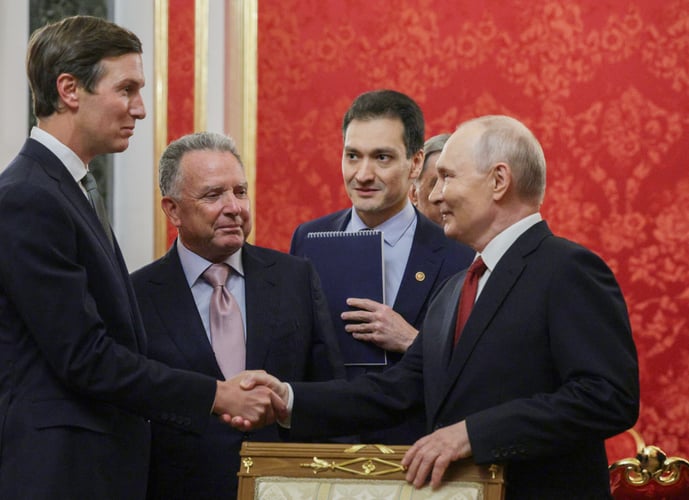
After talks between President Putin and President Trump's representatives Steve Witkoff and Jared Kushner ended, the White House called them "substantive." Putin's aide Yuri Ushakov called the meeting "substantive, constructive and exceptionally frank," adding that the US representatives "formulated a number of considerations on ways to reach a settlement."

According to Bloomberg, Putin is prepared to end the war only on Moscow's terms, and Russian demands have hardened because the Kremlin believes it holds a military advantage. Putin expects to seize the rest of Donetsk Oblast by the end of 2026, Reuters reported, citing a person close to the Kremlin: "There is no chance of reaching an agreement on the front line until Putin finishes taking the rest of Donetsk Oblast."

Witkoff has made many trips to Moscow. He arrived in Kyiv for the first time only the day after. That speaks volumes about where America's focus lies: Russia, not Ukraine.

The danger, though, is not the deal alone. Two American processes are running at once—a peace negotiated on Moscow's terms and a review that would pull US forces from Europe—and together they lower both the political and the military cost of a Russian attack on NATO. Everything below is why that convergence, not the handshake in Moscow, is the thing to watch.

Negotiating a Russian lie, not its strategic demand

Russia has long used disinformation to create strategic ambiguity, offering the West four different tales—all unpleasant, one designed to look like an "easy way out."

The first—give up Crimea, Luhansk, Donetsk, Zaporizhzhia, and Kherson—is what Trump's plan offers. But Putin's demands transcend Donbas, as both his 2024 speech and Russia's military operations show. His stated prerequisites require Ukrainian withdrawal from territory Russian forces do not even occupy, the "demilitarisation" and "denazification" of the Ukrainian government—meaning its replacement with a pro-Russian one—and Ukrainian neutrality excluding NATO.

The second: Foreign Minister Lavrov said in January that "nothing will work without settling the issue of Novorossiya"—which adds Kharkiv, Dnipropetrovsk, Mykolaiv, and Odesa.

The third, "one people, one nation," claims all of Ukraine. And the fourth—"the Russian World," the only one formalised in Russian strategic documents—encompasses the "former territories of Kyivan Rus, the Kingdom of Muscovy, the Russian Empire, the Soviet Union, and the contemporary Russian Federation." Its ultimatum of 17 December 2021 demanded that the US leave the European continent entirely.

This is what Russia is fighting for, and why the Kremlin sees an existential war: Russia becomes a Great Power or remains a pariah state. Trump is negotiating the first lie. If he intended a just and lasting peace, he would be addressing the fourth—Russia's actual strategic aim—not the one designed to look easy.
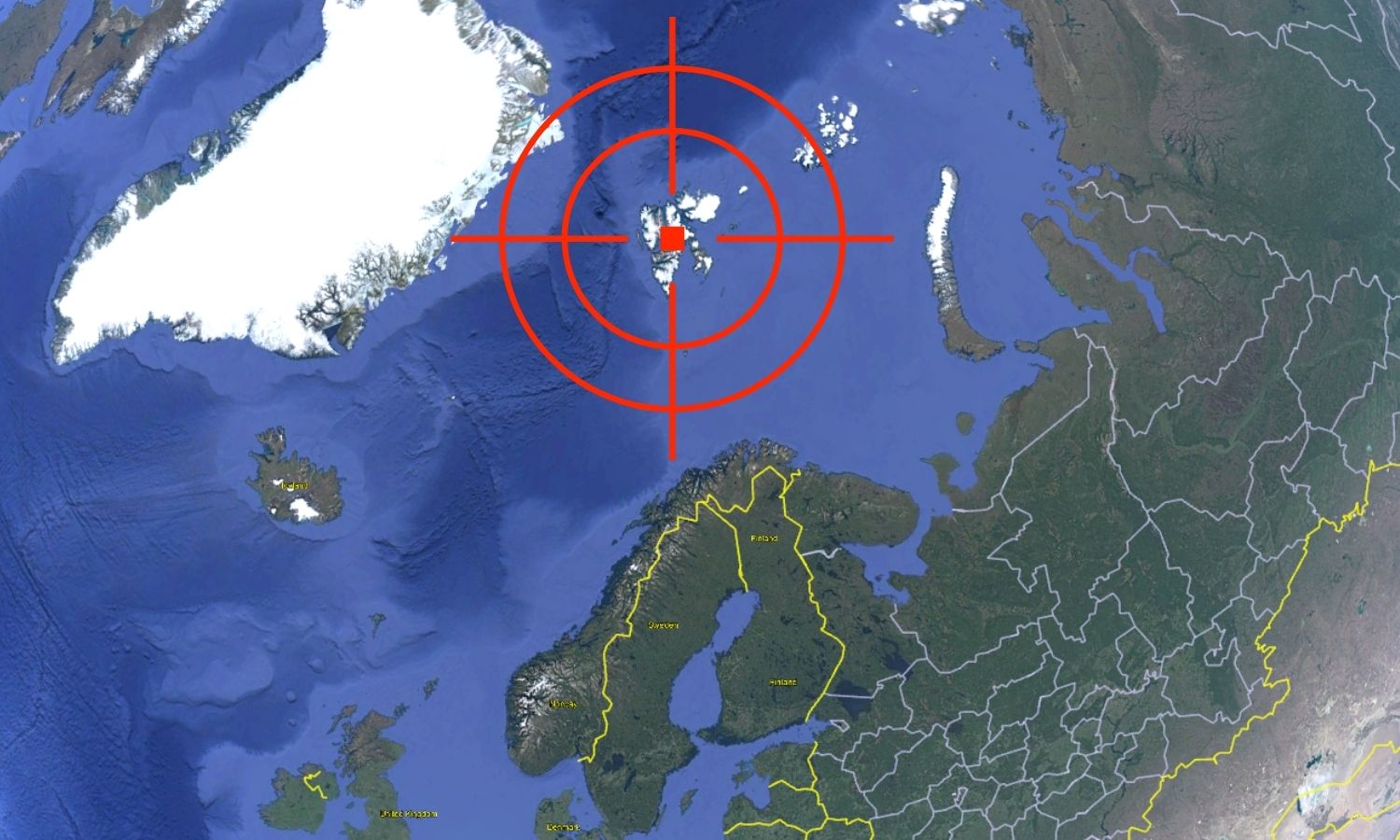
Svalbard in the crosshairs on a map. Collage: Euromaidan Press
Explore further

NATO vows to defend every inch. Svalbard is where Russia plans to prove it won’t.

The so-called peace plan

Six months before Trump took office, I concluded his "peace plan" was a blueprint for Russian victory over Ukraine and the West. The 28-point plan published by Axios in November 2025—which alarmed European leaders, excluded NATO, and imposed demands on the EU beyond America's authority—proved the point.

The transactional logic is explicit. On 2 September, Trump said: "We want to have good relations with Russia, Ukraine, with everybody. Be great for business. Russia's got great land and very valuable land."

Asked whether Washington would pressure Russia if talks stalled, Kushner sidestepped and applied a corporate frame to the war: "In the business world, you think in terms of win-win." Of Putin, he added: "he has certain objectives... but there are different aspirations he has for his country that can also be achieved once this is concluded."

The administration does not care about peace or war, international law or the security architecture—only trade. And it has signalled that the aggressor should be rewarded, implying might makes right. This is why Treasury Secretary Scott Bessent recently blamed Ukraine—not Russia—for high fuel prices: "Ukraine has decided that they want to blow up Russian energy assets." He said it after a meeting with Russia's finance minister.
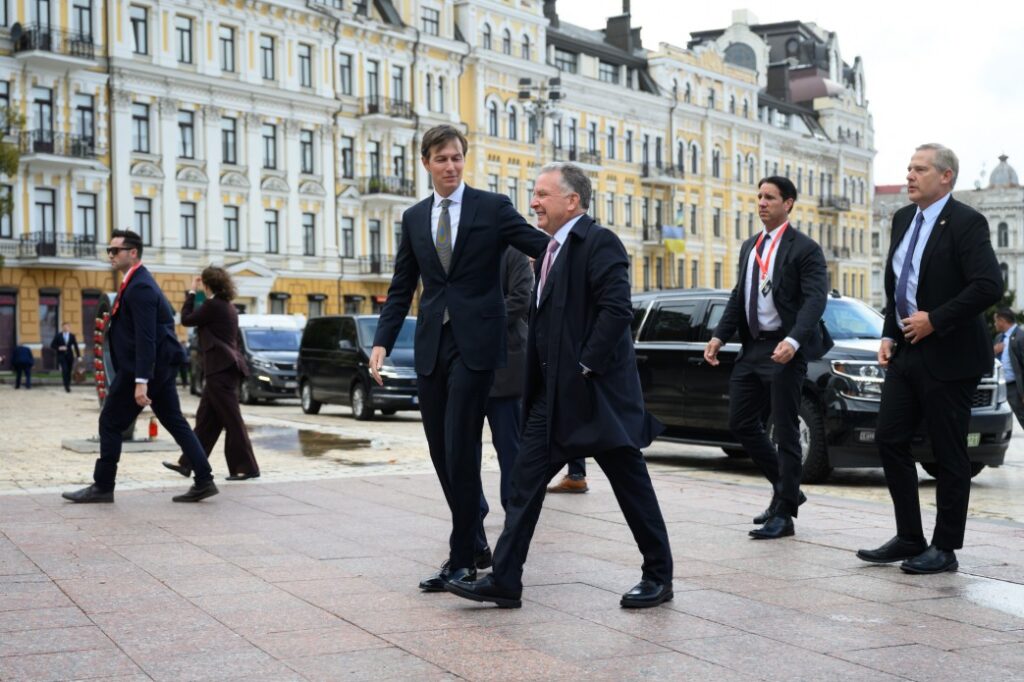
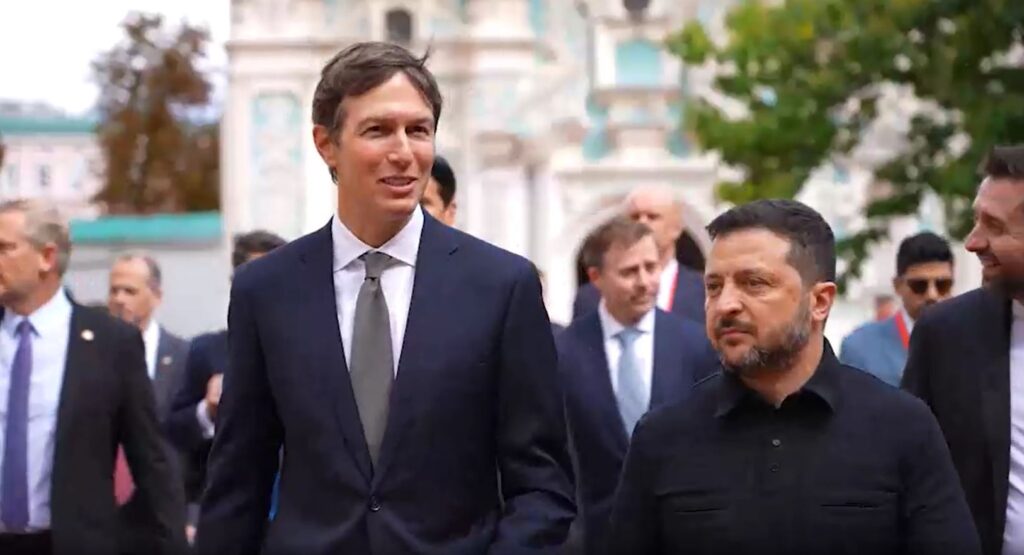
U.S. President’s envoys, Steven Witkoff and Jared Kushner on 6 September in Kyiv. Source: President's Office of Ukraine
US President’s envoys, Steven Witkoff and Jared Kushner on 6 September in Kyiv. Source: President's Office of Ukraine

The sequence of talks

The US representatives went to Moscow first, Kyiv second—carrying the aggressor's terms to the victim, not the other way around. Since they are effectively negotiating European security, an objective team would have consulted US allies in Europe first. According to the EU Ambassador to Washington, Jovita Neliupšienė, Moscow has not abandoned its military objectives, and "the top priority remains unchanged: to provide Ukraine with everything it needs to defend itself"—implying US and European strategy are no longer aligned. We already know the US is not planning to provide Ukraine any defence aid. French, British and German security advisers were allowed to join only the final Kyiv session—informed, but not allowed to influence their own security.

It is strategically absurd to let Europe's two strategic adversaries negotiate European security—which is what happens when we insist on solving the war from within NATO and the EU rather than through a coalition of like-minded countries able to stand up to both Russia and Washington.

The military half

For Europe, the ongoing US review of its troop levels and basing matters as much as the peace process—and it is equally transactional. Defence Secretary Pete Hegseth announced the review at NATO on 18 June, framing it as a transition to "NATO 3.0," with Europeans taking on conventional defence and the US concentrating on strategic and nuclear priorities.

The Pentagon's Terms of Reference reportedly examine troop levels, basing, overflight rights, capability gaps Europeans would have to fill—and, tellingly, "the degree to which individual allies support broader US strategic priorities." The Pentagon expects four options ready by 6 November, with a decision in December. There is no reason for optimism.

There are roughly 80,000 US personnel in Europe. At the June meeting, Washington indicated it would immediately reduce the aircraft, reconnaissance drones and naval assets it would activate for Europe in a crisis. Defenders note that Congress set a floor of 76,000 and that European allies have largely filled earlier gaps. But the floor guards the headcount, not the cavalry. The assets that decide a European war—the aircraft, drones and naval power surged in a crisis—are exactly what Washington signalled it would hold back.

More troubling is a Pentagon questionnaire—sent partly in response to Europe's unwillingness to back Trump's war on Iran—asking whether governments have been "publicly supportive of US foreign policy priorities," whether they restrict US basing and overflight, and whether those restrictions could be removed. It reads as a loyalty test: the US making the size and location of its commitment conditional not on military utility but on political alignment—turning the alliance into a competition for American favour and gutting any European strategic autonomy.
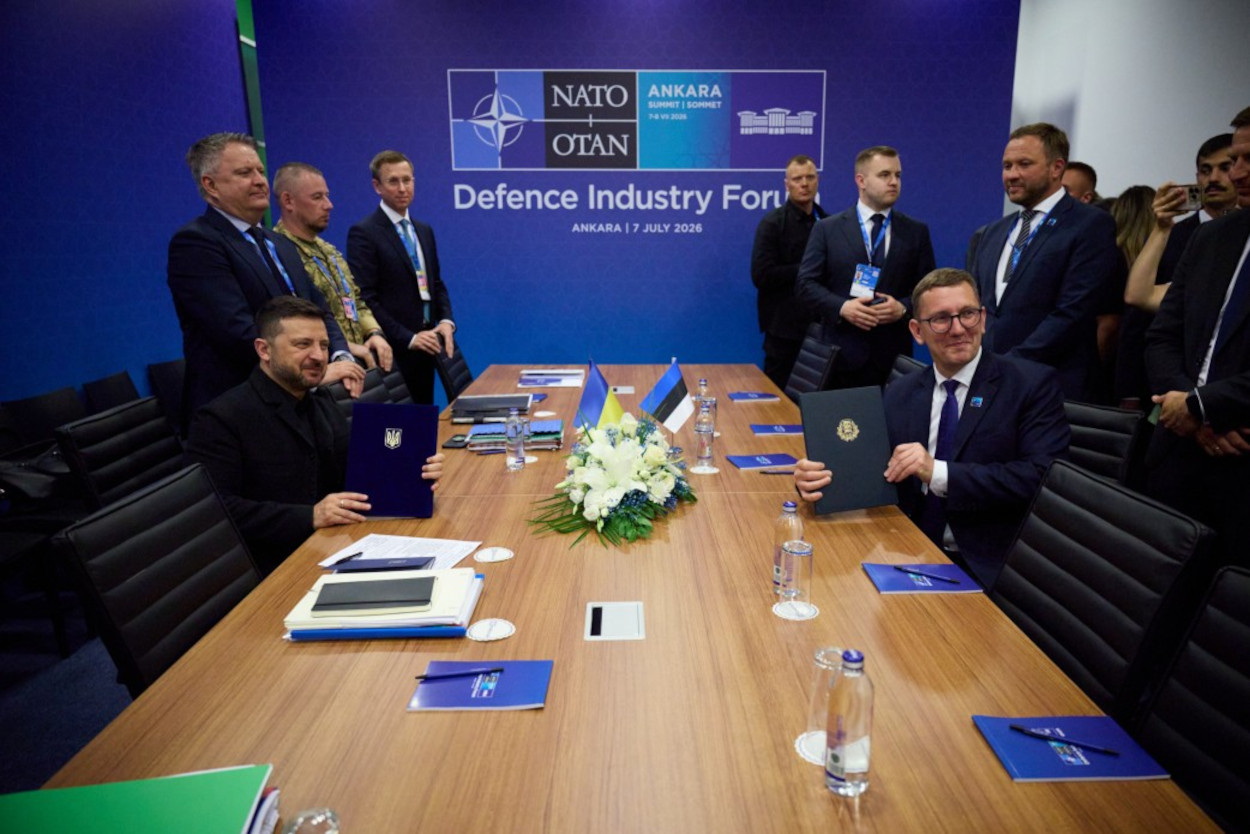
Ukrainian President Volodymyr Zelenskyy and Estonian Prime Minister Kristen Michal on the sidelines of the NATO summit in Ankara, 7 July 2026. Photo: Ukrainian President's Office
Explore further

NATO no longer deters Russia. A new coalition could

Be afraid

If the USA and Russia reach an agreement, be afraid. It would mean the Kremlin has convinced the White House to give it what it wants—and that Russia is positioned to do what a growing number of European intelligence services warn of: war against NATO by 2029.

The US will want its forces out of Europe before Russia moves. Russia will await the outcome of both processes before it strikes, to reduce the risk of a US response. On my read of both timelines, the assault comes while Trump is still in office—and Russia may attack within three years. Europe will not be ready until 2035.

The two processes are not coordinated. They do not need to be. Both flow from the same transactional instinct, and both land on the same variable: Russia's calculation of whether it can attack NATO and survive the response. A deal on Moscow's terms removes the political cost of aggression—it tells the Kremlin that force sets borders and the West will ratify what the battlefield delivers. The force-posture review removes the military cost, cutting the reinforcement flow that makes an assault on NATO expensive. Lower the political cost through the "peace" and the military cost through the withdrawal, and both sides of Moscow's equation fall at once. That is the link: not a plan, but a convergence—two American processes that together make a Russian war on NATO cheaper to start.

Hans Petter Midttun

Hans Petter Midttun, independent analyst on hybrid warfare, Non-Resident Fellow at the Centre for Defense Strategies, board member of the Ukrainian Institute for Security and Law of the Sea, former Defense Attaché of Norway to Ukraine, and officer (R) of the Norwegian Armed Forces. 

Editor's note. The opinions expressed in our Opinion section belong to their authors. Euromaidan Press' editorial team may or may not share them.

Submit an opinion to Euromaidan Press

  •  

Ukrainian journalist asks Trump’s envoy to his face whether he was disgusted to sit across from “international criminal” Putin. Witkoff wouldn’t answer directly

U.S. President’s envoys, Steven Witkoff and Jared Kushner on 6 September in Kyiv. Source: President's Office of Ukraine

At a Kyiv press conference on 6 September, Ukrainian journalist Dmytro Gordon asked US special envoy Steve Witkoff, to his face, whether he found it repugnant to sit across a table from Russian President Vladimir Putin. Witkoff did not answer directly, saying only that settling the war means keeping relations and communication open with both sides, according to Gordon.

US President Donald Trump began his peace efforts as soon as he returned to the White House in January 2025, promising to end the war in a single day. It did not happen. Instead, Russia has only stepped up its strikes on civilians and expanded the volume and types of weapons it uses for mass terror.

“And finally, aren’t you disgusted to be sitting at the same table with an international war criminal, the butcher of the Ukrainian people, who is personally responsible for the tragedy in Ukraine?” Gordon asked.

It is a reference with legal grounding, as the International Criminal Court issued an arrest warrant for Putin in 2023 over the deportation of Ukrainian children.

The questions Witkoff would not answer

Witkoff did not provide direct answers to the questions. He only added that, in order to resolve the war, it is important to maintain relations and communication with both sides of the conflict.

According to Trump’s special envoy, he has traveled to Moscow approximately eight times, where he met with Putin and his team, and said they "have always received respect from President Putin".

In practice, however, none of these meetings resulted in anything other than an intensification of the strikes. In the winter of 2025, a specific peace plan was discussed that, at the time, consisted of 20 points.

Yet as the discussions continued, Russia intensified its terror against civilians, destroying an entire thermal power plant in Kyiv and plunging millions of Kyiv residents and people in other cities into darkness amid temperatures as low as -15°C. Now, as the US is holding its anti-ballistic missile interceptors, this scenario will likely continue this winter.

“The language of force”

“Don’t you think that Putin, the Russians, and Russia understand only one language well — the language of force?” the journalist asked.

There was no direct answer to this question either. Instead, Witkoff said that their job is to bring the two sides together and improve communication.

Earlier, there have been numerous occasions when channels of communication between Russia and Ukraine have existed. This was confirmed by Kyrylo Budanov, Head of the Office of the President of Ukraine and former intelligence chief, according to The New York Times.

Russia attempted to murder Gordon

In 2025, the Security Service of Ukraine said it had foiled an assassination attempt against journalist and media manager Gordon. According to the agency, the FSB of Russia was behind the plot to murder the prominent media figure.

According to investigators, the Russian intelligence service offered a $400,000 reward for carrying out the assassination.

As then-SBU chief Lieutenant General Vasyl Maliuk told journalists, Dmytro Gordon “triggers” Russians, while the Russian authorities regard him as Ukraine’s main “propagandist.”

  •  

They Went to Ukraine on the ‘Peace Express.’ Detours Are Likely Ahead.

The Trump administration had let the peace process enter such a freeze that a trip to Kyiv was just an initial step. Any new talks will happen alongside escalating fighting.

© Francisco Seco/Associated Press

The U.S. envoys Steve Witkoff, center, and Jared Kushner, right, in Kyiv, Ukraine, on Sunday. Mr. Kushner said “new ideas” were presented to President Volodymyr Zelensky of Ukraine in a series of discussions on Sunday.
  •  

Ukraine put its own peace proposals on the table as two US envoys reached Kyiv for the first time

ukraine put its own peace proposals table two envoys reached kyiv first time · post jared kushner envoy president donald trump ukrainian volodymyr zelenskyy outside st sophia's cathedral 6 2026

After a months-long pause, US President Donald Trump's envoys Steve Witkoff and Jared Kushner opened their first round of peace talks in Kyiv to end the Russo-Ukrainian war. Ukrainian President Volodymyr Zelenskyy announced their visit and talks on Telegram on 6 September. A day earlier, they visited Moscow and met with Russian President Vladimir Putin there. Ukraine came in with prepared proposals and a demand for security guarantees. Witkoff called the discussion substantive, and the British, French, and German national security advisers joined the later rounds. Despite their previous multiple visits to Moscow, this was their first-ever visit to Kyiv.

Moscow has carried the same core condition since 2022 and tabled it again this year: Ukraine outside NATO, with its army cut down to a size Russia sets. Talks keep opening on what a settlement would contain, and the answer from the Russian side keeps arriving as the terms of a capitulation, including a flat refusal of the partial truces Kyiv has offered in between.

Zelenskyy came with a written package and one demand

Zelenskyy gathered his negotiating team before the meeting and wrote on Telegram that Ukraine was ready to talk. 

"Peace is needed. Security guarantees are needed. A dignified character of the post-war peace is needed. Our proposals have been prepared," he said, adding that it was important to work in a coordinated, substantive, and realistic way.

The preparatory meeting brought together head of the President's Office Kyrylo Budanov, Foreign Intelligence Service head Rustem Umierov, Servant of the People faction leader David Arakhamia, and First Deputy Head of the President's Office Serhii Kyslytsia—Ukraine's likely negotiating team.

The post announcing the start of the talks, published shortly after 2 p.m., carried video of Zelenskyy greeting the two Americans. He also told reporters the day would run in stages: one session with the US side, then another with the European advisers.  After the first part, Zelenskyy thanked American and European partners. 

First-ever Kyiv sit-down for Trump's envoys, and Ukraine came with its own plan

Zelenskyy met Steve Witkoff and Jared Kushner beside St Sophia's Cathedral on 6 September, walked them inside, and then put Ukraine's written proposals in front of them.

What Kyiv wants out of any… pic.twitter.com/9N1euIZg52

— Euromaidan Press (@EuromaidanPress) September 6, 2026

The presidential website had published no report on the talks by the time this article went out.

Ending the fighting is not the goal, the envoys said

Witkoff called the talks substantive and said the US team was ready to continue working, TSN reported. He said Washington was looking for openings on external security issues and coordinating closely with Germany, France, and the UK.

Kushner said the goal was not only to end the fighting but to create conditions for a lasting peace. He called it “a very, very hard and complex problem,” but “a very worthy problem of solving,” and said a lasting peace should allow Ukraine to turn its wartime “bravery and ingenuity and strength” toward rebuilding the country.

Kushner also said Trump is determined to end the war and then shift toward investment and economic cooperation, which he argued could bring the countries closer and open new opportunities for Ukraine and Europe. He added that the talks continue between visits, with the US side speaking almost daily with the four Ukrainian negotiators, whom he named only by their first names.

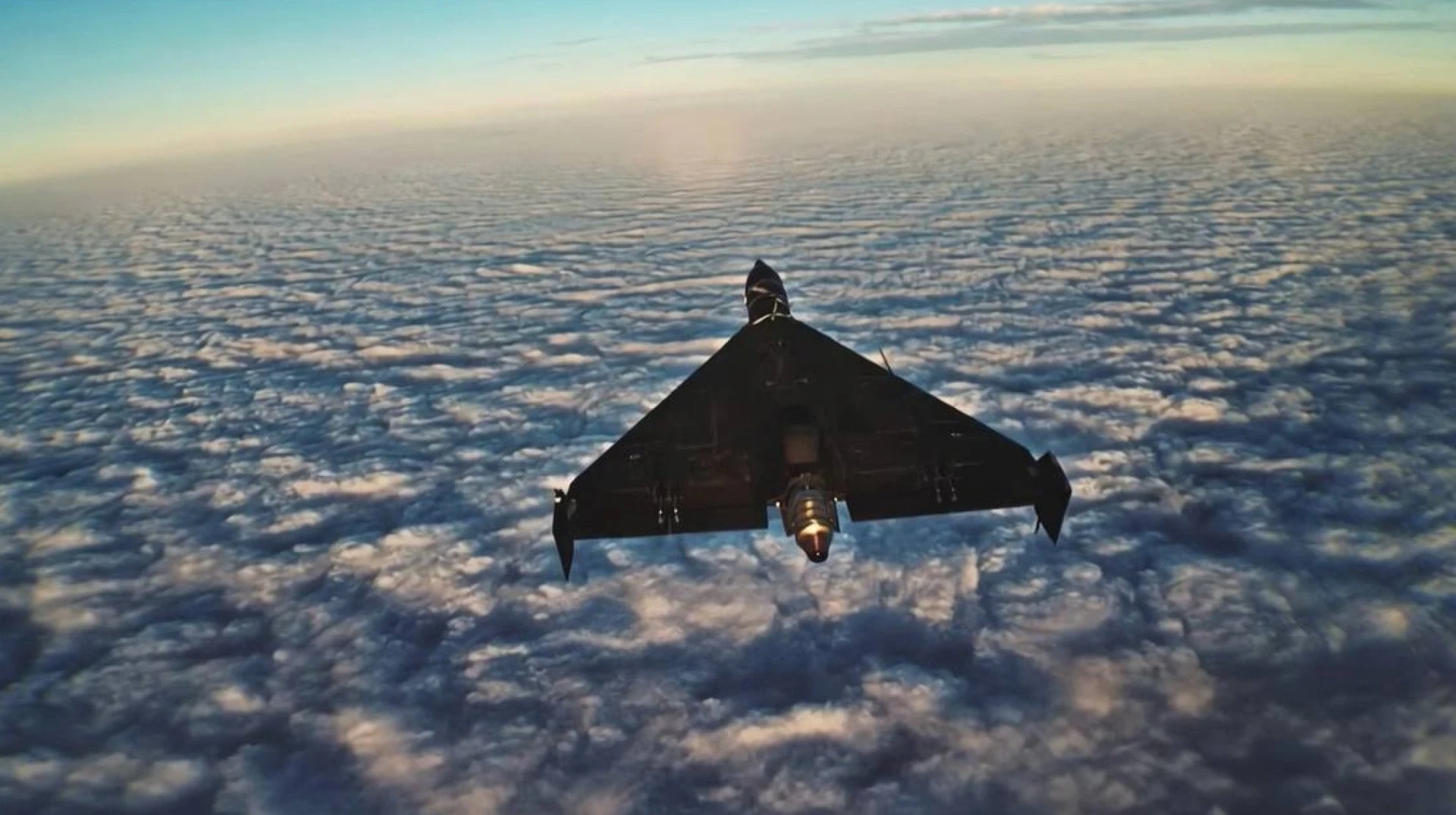
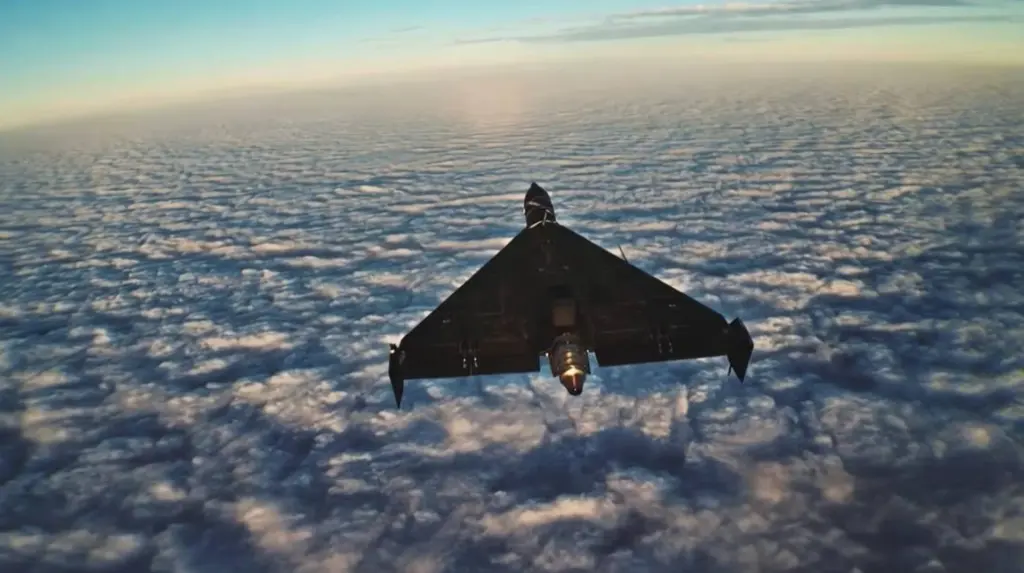
ukraine spent three years learning catch russian drones—so russia made fly faster · post geran-3 jet-powered attack drone wild hornets c1c840787fca380485636007cf683d71 news ukrainian reports
Explore further

Ukraine logged impacts at 11 sites while the American peace delegation was still in Moscow

The Europeans joined the later rounds

Zelenskyy's spokesman Serhii Nykyforov said the first round with Witkoff and Kushner had finished, and that a second, expanded round with the national security advisers of the UK, France, and Germany would follow after a short break. A source familiar with the matter told Reuters the three advisers were in Kyiv on Sunday, without specifying which sessions they would attend.

A third round then opened, public broadcaster Suspilne reported. Witkoff described the discussion as substantive, concrete, and important shortly before it started.

Moscow, the day before

Witkoff and Kushner held three hours of talks with Putin in Moscow on 5 September. Putin's aide Yuri Ushakov stated the meeting was substantive, very frank, and constructive, and said Putin told them Russia would achieve its war aims and that the war's so-called "root causes" must be removed—Kremlin shorthand for Ukraine abandoning NATO membership and disarming, which Kyiv rejects.

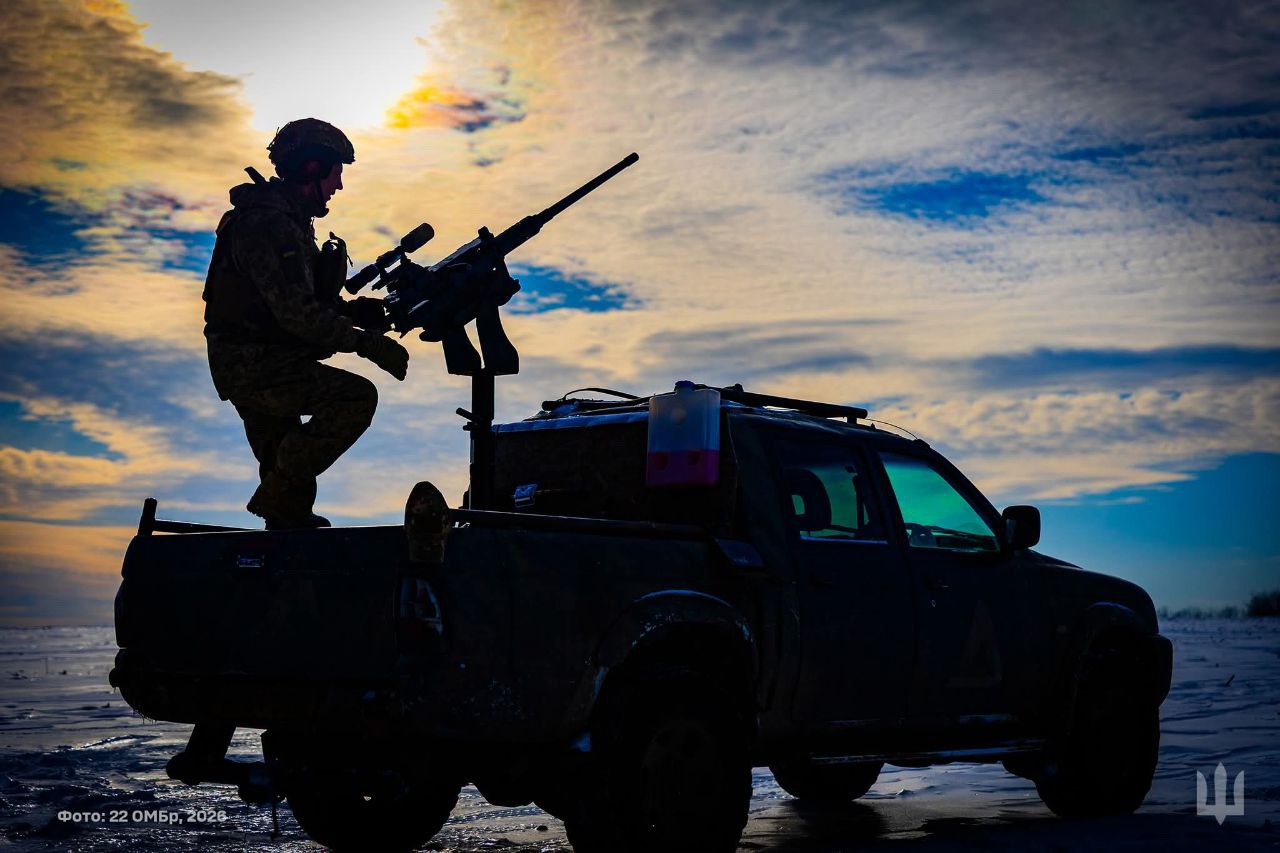
Ukrainian soldier. Illustrative image. Photo: General Staff of Ukraine's Armed Forces
Explore further

Ukraine orders temporary ceasefire as US envoys visit Moscow. Air raid alert sounds in Kyiv immediately as pause begins

A White House representative told Radio Svoboda that the sides discussed concrete plans for next steps, to be announced in the coming weeks. Bloomberg reported that sources close to the Kremlin said Putin is ready to end the war only on his own terms, with Moscow's demands hardening. Axios reported that a US Treasury official responsible for sanctions policy joined the trip but did not attend the Putin meeting, alongside State Department and National Security Council staff.

Trump said on 4 September that Witkoff and Kushner were carrying a proposal to both Moscow and Kyiv, which he described as fresh, without giving details.

How the envoys reached Kyiv

Umierov published video this morning showing Budanov, Umierov, Arakhamia, and Kyslytsia welcoming Witkoff and Kushner at Kyiv’s railway station as the US envoys arrived for talks.

Ukraine had prepared to receive the envoys by air, but Russian strikes made that impossible, Zelenskyy said. He met them instead on Sofiivska Square before the delegation went inside St Sophia's Cathedral. In a 4 September address, Zelenskyy said Ukraine would keep Russian airspace safe for the envoys’ travel and demanded Moscow do the same.

A pause that covered two capitals

Ukraine ordered a three-day halt to strikes on Moscow around the visit, and the Kremlin claimed it would pause strikes on Kyiv until Monday. Nothing else stopped. Ukraine logged impacts at 11 sites across the country while the American delegation was in the Russian capital. Ukraine's 6 September strike hit the Ryazan oil refinery and set a core unit on fire, about 470 km from Ukraine.

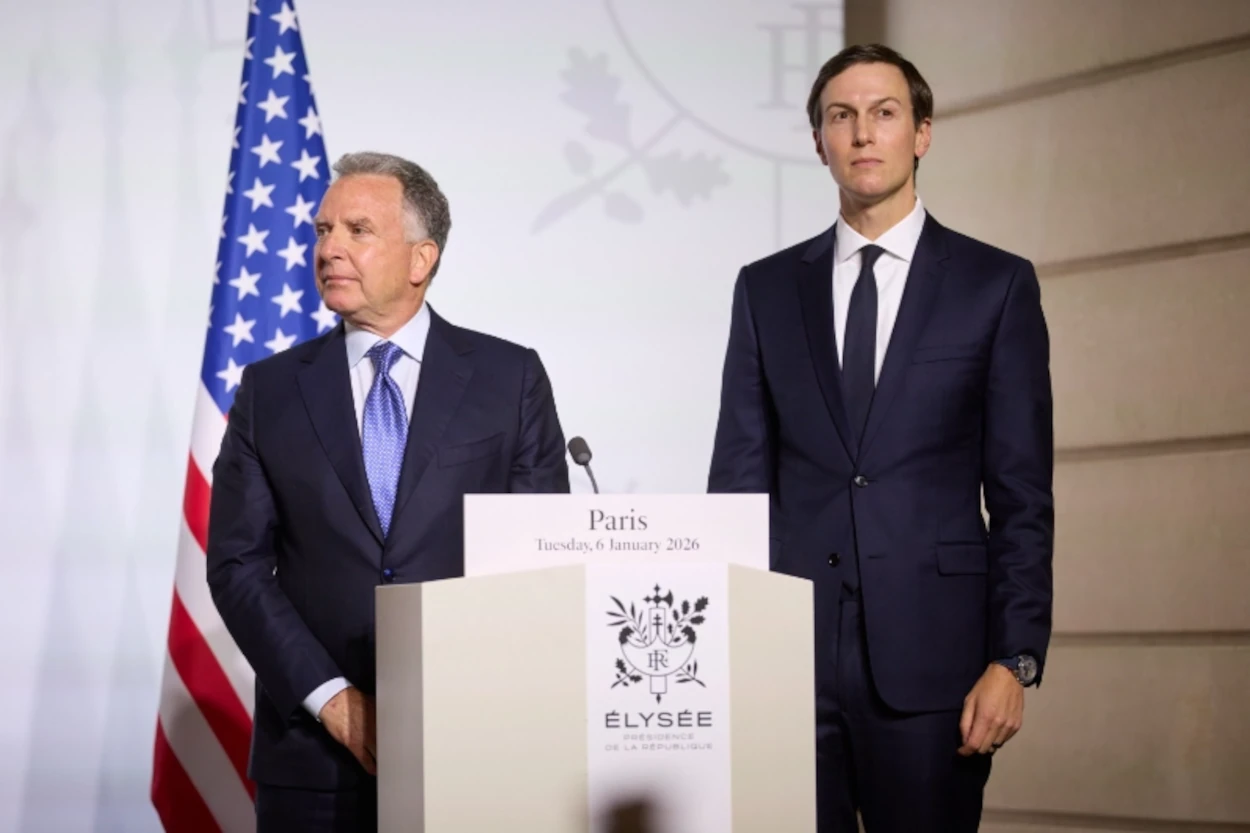
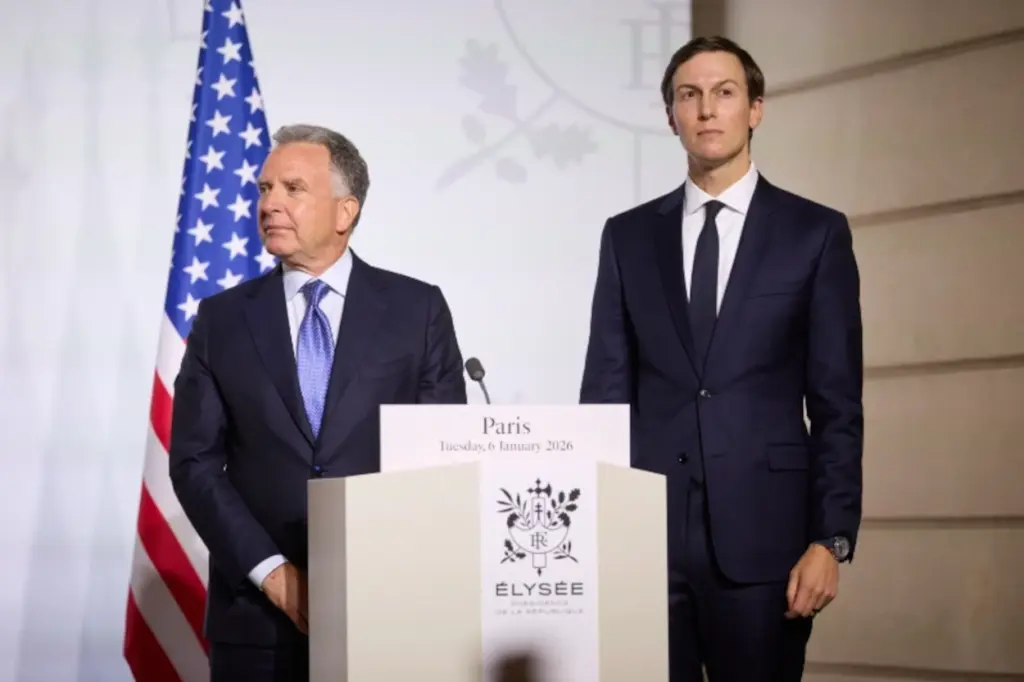
US envoys Steve Witkoff and Jared Kushner at the Coalition of the Willing summit at the Élysée Palace, 6 January 2026. Photo: Presidential Office
Explore further

Witkoff and Kushner to visit Kyiv and Moscow to revive peace talks as Russia ramps up attacks across Ukraine

Twenty months of rounds without a deal

Trump made ending Russia’s war a priority after taking office in January 2025, but US-mediated talks produced little and later stalled during the US-Israeli war against Iran. Washington said in early August it intended to step up the effort, and Russian attacks intensifying pushed a planned August visit to Kyiv back.

The visit was confirmed on 4 September, after two weeks of heavy Russian attacks on Kyiv, including a drone strike on the headquarters of the Security Service of Ukraine (SBU) and an earlier six-day bombardment. Previous talks also left Kyiv and Moscow far apart over Donbas, where Russia demands Ukrainian withdrawal from fortified cities still under Kyiv’s control.

  •  

Ukraine logged impacts at 11 sites while the American peace delegation was still in Moscow

ukraine spent three years learning catch russian drones—so russia made fly faster · post geran-3 jet-powered attack drone wild hornets c1c840787fca380485636007cf683d71 news ukrainian reports

Russia attacked Ukraine from 18:00 on 5 September and through the night into 6 September with 108 strike drones and S8000 Banderol cruise missiles, Ukraine's Air Force reported. The assault ran while US envoys Steve Witkoff and Jared Kushner were finishing three hours of talks with Russian President Vladimir Putin in Moscow. They left the Russian capital after midnight and were expected in Kyiv on 6 September, again carrying a US proposal to end the war. Ukraine's own offer of a four-day pause in the fighting went unmatched by Russia.

Russia has kept up daily air attacks on Ukrainian cities and towns throughout the ongoing war, killing civilians in apartment blocks, hospitals, and shelters. No round of diplomacy or declared truce has interrupted it — Russia's own Easter ceasefire drew thousands of violations within hours.

The attack was still running in the morning

By 09:30 air defenses had downed or suppressed 82 Shahed-type, Gerbera, and other drones, along with six Banderol missiles. The military logged impacts at 11 locations and falling debris at seven more, and warned that Russian drones were still in Ukraine's airspace.

Over the previous day, Russian strikes killed seven people and injured 57 across Kharkiv, Kherson, Zaporizhzhia, Dnipropetrovsk, and Donetsk oblasts, according to oblast administration figures published on the morning of 6 September. Kharkiv Oblast lost four people, three of them one family in Chuhuiv. Zaporizhzhia Oblast reported one death, 25 injured, and 886 strikes on 54 settlements.

A children's playground in the center of Chuhuiv, the morning after a Russian drone hit the town

Russia killed three members of one family in the strike on the evening of 5 September: an 11-year-old boy, his 19-year-old sister, and their 45-year-old father. The children's mother… pic.twitter.com/OHDSJg2Qdj

— Euromaidan Press (@EuromaidanPress) September 6, 2026

Three hours in the Kremlin

Witkoff and Kushner met Putin on 5 September and left the Kremlin close to midnight. Putin opened by telling them he had "full trust" in the US side, Axios reported, and Washington's goal is to restart direct Russian-Ukrainian talks that stopped six months ago. Putin's aide Yuri Ushakov called the discussion "substantive, constructive, exceptionally candid," ABC News reported, and stated the envoys had promised to carry Putin's own assessments into their meetings in Kyiv. Ushakov also repeated that Russia will achieve its goals and that the war's "root causes" must be removed — the Kremlin's shorthand for barring Ukraine from NATO and cutting down its army.

Jared Kushner shakes hands with Russian President Vladimir Putin, with US special envoy Steve Witkoff beside him, at the Kremlin in Moscow, Russia, 5 September 2026. Photo: Gavriil Grigorov/Sputnik

A White House official told RFE/RL that the sides discussed "concrete plans" for next steps, to be announced in the coming weeks. Kremlin envoy Kirill Dmitriev, who sat in on the talks, called the Moscow trip an important peacemaking visit, Al Jazeera reported. The Kyiv leg would be the envoys' first trip to Ukraine since taking over the US effort; it was set for August and postponed as Russian strikes intensified.

  •  

U.S. Envoys Witkoff and Kushner Arrive in Kyiv After Talks With Putin

Steve Witkoff and Jared Kushner met on Sunday with Volodymyr Zelensky in Kyiv, a day after talks with Vladimir V. Putin in Moscow.

© Genya Savilov/Agence France-Presse — Getty Images

President Volodymyr Zelensky of Ukraine, left, with the U.S. envoys Steve Witkoff and Jared Kushner on Sunday in Kyiv.
  •  

Here Is Where Ukraine Peace Talks Stand, as a New Round Approaches

A deadly campaign of Russian and Ukrainian airstrikes has escalated since the last U.S.-brokered negotiations stalled in February.

© Tyler Hicks/The New York Times

A Russian drone on the road in Kostiantynivka, Ukraine, after being shot down in January by a Ukrainian police officer with a rifle.
  •  

Putin Meets Witkoff and Kushner in Moscow to Discuss Ukraine War

President Vladimir V. Putin ordered a pause in strikes on Ukraine’s capital, Kyiv, ahead of the meeting with President Trump’s envoys: his son-in-law Jared Kushner and the businessman Steve Witkoff.

© @Kadmitriev/X, via Agence France-Presse — Getty Images

In a photo that Russia’s presidential envoy, Kirill Dmitriev, shared on social media, Jared Kushner, center, and Steve Witkoff, left, were greeted by Mr. Dmitriev after arriving in Moscow on Saturday.
  •  

Witkoff and Kushner to visit Kyiv and Moscow to revive peace talks as Russia ramps up attacks across Ukraine

US envoys Steve Witkoff and Jared Kushner at the Coalition of the Willing summit at the Élysée Palace, 6 January 2026. Photo: Presidential Office

US President Donald Trump’s special envoys Steve Witkoff and Jared Kushner are expected to travel to Moscow and Kyiv this weekend for talks aimed at restarting efforts to end Russia’s war against Ukraine, Axios reported, citing US officials.

The planned trip comes as Washington seeks to revive negotiations that stalled earlier this year and as Russia continues its military campaign against Ukraine. Russia has dramatically stepped up its attacks on Ukraine in recent weeks, launching increasingly large waves of drones and missiles against Ukrainian cities and infrastructure.

Moscow talks Saturday, Kyiv on Sunday

Witkoff and Kushner are expected to travel to Moscow on Friday, 4 September, and meet Russian President Vladimir Putin on Saturday, 5 September, Axios reported.

They are then scheduled to travel to Kyiv for talks with Ukrainian President Volodymyr Zelenskyy on Sunday, 6 September. Zelenskyy confirmed the planned meetings on 4 September.

The Kyiv visit would be the first by Witkoff and Kushner since Trump returned to the White House. The two envoys have traveled to Moscow several times to meet Putin but have not previously visited Kyiv during the current Trump administration.

Ukrainian and US officials have discussed a Kyiv visit for several months, but it has reportedly been postponed multiple times for various reasons.

Zelenskyy confirms visit, calls for reciprocal pause in strikes

Zelenskyy said Ukraine is preparing for the envoys’ visit and will ensure the necessary conditions for their safe arrival.

He said Ukraine would refrain from airstrikes against Russia for the period required for the talks and related logistics, and called on Moscow to provide a reciprocal pause in its air attacks.

“We care specifically about them, not Russia,” Zelenskyy said, adding that Kyiv expects Russia to “mirror” the pause.

Zelenskyy said Ukraine wants the visit and negotiations to be as constructive and substantive as possible, while acknowledging that the outcome will depend on the proposals Witkoff and Kushner bring and Russia’s response to them.

Talks stalled earlier this year

The Trump administration’s mediation between Russia and Ukraine was effectively frozen in February after the outbreak of the US-Israeli war with Iran.

Witkoff and Kushner have continued holding separate discussions with Russian and Ukrainian negotiators in the months since, but the talks have produced little significant progress.

The renewed push comes as Washington has again sought a path toward direct negotiations. CIA Director John Ratcliffe also recently traveled to Moscow and discussed the possibility of restarting diplomatic efforts, including a potential Trump-Putin-Zelenskyy summit.

Kyiv remains skeptical of Moscow’s intentions

The diplomatic effort comes alongside continued Russian attacks and an increasingly escalatory military situation.

Kyiv has faced near-constant large-scale drone attacks in recent weeks, while Ukrainian officials have warned that Russia may be preparing further military escalation. Axios reported that Ukrainian officials remain highly skeptical of Putin’s intentions and believe Russia could be preparing a major escalation in the war.

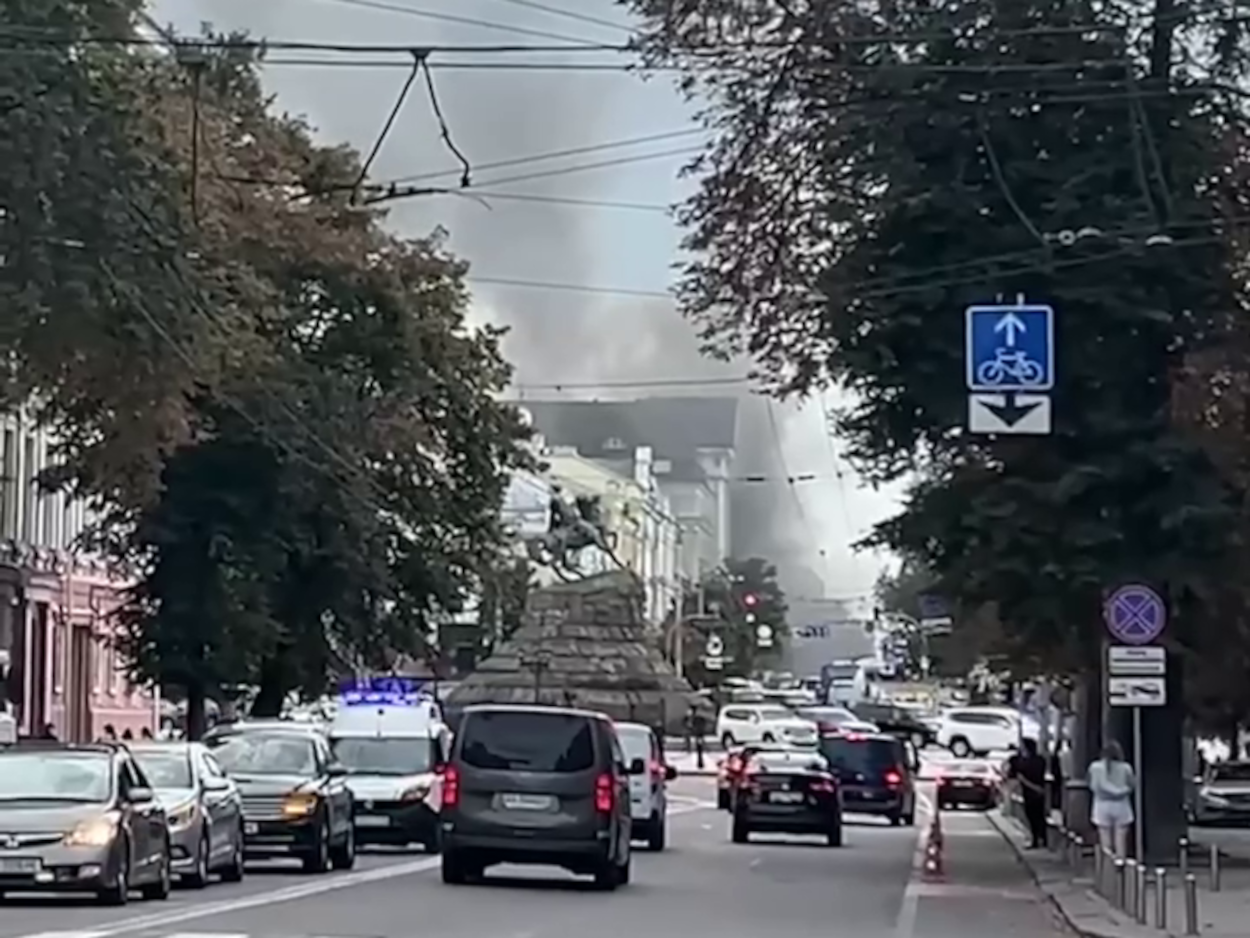
Smoke seen from the damaged SBU headquarters building on Volodymyrska Street in central Kyiv following a Russian drone strike on 4 September, 2026. Screenshot from video: Suspilne
Explore further

Russian drone strikes SBU headquarters in central Kyiv. Zelenskyy says “geography” of Ukraine’s response is set

At the same time, Ukrainian officials have continued to argue that negotiations should not be abandoned.

Kyrylo Budanov, Zelenskyy’s chief of staff and former military intelligence chief, told The New York Times that US-mediated talks could resume in September. He said, however, that conditions for a ceasefire were unlikely to emerge before spring 2027.

Budanov has argued that Ukraine must keep diplomatic channels open even while fighting continues, saying that “the war cannot be eternal.”

The planned meetings will therefore take place against a backdrop of continued battlefield fighting and increased air attacks, with major disagreements still unresolved between Kyiv and Moscow.

  •  

Kushner and Witkoff to Go to Russia and Ukraine to Revive Peace Talks

Jared Kushner and Steve Witkoff’s trip to meet with the countries’ presidents comes at a precarious moment in the Ukraine conflict.

© Pool photo by Jacquelyn Martin

Jared Kushner, left, with Steve Witkoff will be in Moscow and Kyiv this weekend for further talks on a peace agreement.
  •  

After Fighting Russia Fiercely, He Wants to Forge Ukraine’s Path to Peace

Kyrylo Budanov, a decorated soldier and former military spy chief, advocates a negotiated settlement. Talks are expected to resume this month.

© Jędrzej Nowicki for The New York Times

Kyrylo Budanov, chief of staff to President Volodymyr Zelensky, in his office in Kyiv, Ukraine, on Saturday.
  •  

Trump envoy Steve Witkoff pushing to lift energy sanctions on Russia, Politico reports

Trump envoy Steve Witkoff pushing to lift energy sanctions on Russia, Politico reports

U.S. President Donald Trump's Special Envoy Steve Witkoff is pushing to lift U.S. energy sanctions on Russia, Politico reported on July 4, citing two people familiar with the matter.

The move is part of a broader debate within Trump's administration over how to engage with Moscow amid the ongoing war in Ukraine.

While Witkoff is reportedly advocating for the easing of energy sanctions, others in the administration disagree. Interior Secretary Doug Burgum favors reducing U.S. reliance on Russian imports rather than expanding trade, according to Politico.

Despite pledging during his campaign to end the war in Ukraine in "24 hours," Trump has made little progress on securing a ceasefire. After nearly seven months of his presidency, and several peace talks between Russia, Ukraine, and the United States, no ceasefire agreement has been reached.

Moscow continues intensifying its attacks against Ukrainian cities. Russia launched one of the largest aerial attacks on Ukraine on July 4, hours after Russian President Vladimir Putin had a phone conversation with Trump.

When journalists asked if he had made any progress with Putin on the call, Trump responded: "No, I didn't make any progress with him today at all."

Europe's energy sector is a central issue in the debate. According to Politico, Moscow is in early talks with Washington about potentially restarting the Nord Stream pipeline project, with backing from U.S. investors. The development has sparked concern in Brussels.

One senior EU official reportedly warned that Trump and Putin appear to be aiming to "divide the European energy market and create (separate) spheres of influence."

Witkoff, a real estate developer-turned-envoy, has raised eyebrows in Washington and abroad over his handling of high-level talks with Russia. As reported by NBC News in May, he has relied on Kremlin-provided translators during multiple meetings with Putin, including a visit to Moscow on April 26, just a day after a Russian missile attack killed 12 people in Kyiv.

Trump's administration has so far refrained from imposing new sanctions against Russia, even as Putin continues to reject calls for a ceasefire.

‘Nothing but terror and murder’ — Russia pounds Kyiv with ballistic missiles in massive overnight attack
Fires broke out across the city as Russia attacked the capital overnight on July 4. At least 23 people have been injured, with 14 of the victims hospitalized.
Trump envoy Steve Witkoff pushing to lift energy sanctions on Russia, Politico reportsThe Kyiv IndependentThe Kyiv Independent news desk
Trump envoy Steve Witkoff pushing to lift energy sanctions on Russia, Politico reports
  •  

'Treasonous' — Trump, Witkoff slam intel leak undermining US strikes on Iran, insist nuclear targets 'obliterated'

'Treasonous' — Trump, Witkoff slam intel leak undermining US strikes on Iran, insist nuclear targets 'obliterated'

U.S. Special Envoy to the Middle East Steve Witkoff condemned on June 24 the leak of an intelligence assessment that undercuts U.S. President Donald Trump's claims of having "obliterated" Iran's nuclear program.

His remarks follow a leaked U.S. Defense Intelligence Agency (DIA) assessment, reported by CNN, which found that strikes on three major Iranian nuclear sites, Fordow, Natanz, and Isfahan, did not destroy the core of Tehran's nuclear program. Instead, the intelligence suggests the attacks likely delayed Iran's progress by "a few months."

"It goes without saying that leaking that type of information, whatever the information, whatever side it comes out on, is outrageous. It's treasonous," Witkoff said during an appearance on Fox News. "It ought to be investigated, and whoever is responsible should be held accountable."

Witkoff, who served as Assistant to the U.S. president and led peace mission efforts during the recent conflict between Israel and Iran, defended Trump's portrayal of the U.S.-led strikes as a decisive success.

"The objective was to eliminate enrichment in Iran… and he achieved that objective," Witkoff said, adding that he personally reviewed damage assessments and saw "no doubt" that key nuclear infrastructure was destroyed.

The report leaked in media contradicts public statements from Trump and Defense Secretary Pete Hegseth, who had described the operation as delivering "total obliteration." Trump, for his part, stood by the claim on June 24. "Those targets were obliterated," he said. "That place is demolished."

According to the DIA assessment, though the strikes damaged above-ground infrastructure, most of the centrifuges and the enriched uranium stockpile reportedly remain intact. The assessment also noted that underground sections of the sites, where Iran's most sensitive work is done, were largely unaffected. Two officials told CNN that Iran likely retains operational nuclear facilities that were not targeted.

Witkoff dismissed the report as "preposterous," insisting that the Isfahan conversion facility, critical to Iran's ability to weaponize enriched uranium, was "completely destroyed" by a 30,000-pound bunker buster bomb.

"Without conversion, you can't begin or end enrichment," he said. "They cannot weaponize, even if they've enriched to 90%."

Witkoff also claimed successful targeting of Fordow and Natanz, saying the U.S. dropped more than a dozen bunker busters on the sites that made the facilities inoperable.

The White House acknowledged the assessment’s existence but strongly dismissed it. "This alleged assessment is flat-out wrong and was classified as ‘top secret’ but was still leaked to CNN by an anonymous, low-level loser in the intelligence community," press secretary Karoline Leavitt said.

"The leaking of this alleged assessment is a clear attempt to demean President Trump, and discredit the brave fighter pilots who conducted a perfectly executed mission to obliterate Iran’s nuclear program. Everyone knows what happens when you drop fourteen 30,000 pound bombs perfectly on their targets: total obliteration."

Trump, for his part, stood by his assessment of the mission's success. "I think it’s been completely demolished," he said on June 24. "Those pilots hit their targets. Those targets were obliterated, and the pilots should be given credit.” Asked if Iran could rebuild, Trump responded: "That place is under rock. That place is demolished."

While both Trump and Hegseth praised the strikes as decisive, others expressed caution. Chairman of the Joint Chiefs of Staff Dan Caine said it was "way too early" to determine whether Iran retained nuclear capabilities.

Trump says Putin called him to offer help with Iran
“He (Vladimir Putin) said, can I help you with Iran? I said, ‘no, I don’t need help with Iran. I need help with you,’” Donald Trump said.
'Treasonous' — Trump, Witkoff slam intel leak undermining US strikes on Iran, insist nuclear targets 'obliterated'The Kyiv IndependentKateryna Hodunova
'Treasonous' — Trump, Witkoff slam intel leak undermining US strikes on Iran, insist nuclear targets 'obliterated'
  •  
❌