❌

Vue lecture

Ukraine struck Russia’s Kerch bridge again. The EU firms that helped build it barely suffered.
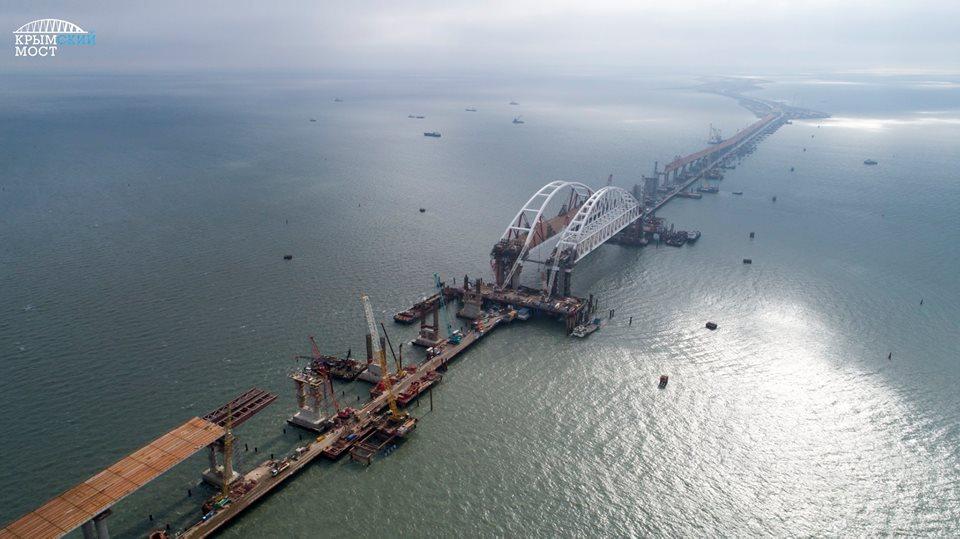
Kerch bridge construction 2017

On 17 November, Ukrainians jubilated: Russia's bridge to Crimea had been struck twice in two days. The arch over its shipping channel and a road span collapsed; whether transport can resume is unclear.

The bridge Ukraine is now dismantling should never have stood. The hardest job in building it—driving piles up to 105 m deep through the Kerch Strait's silt—was done in part with European machinery, sold in breach of the EU sanctions written to prevent exactly that; the Dutch prosecutor later said the bridge was built partly thanks to Dutch knowledge and expertise.

And when the Netherlands and Germany finally caught the suppliers, years late, the reckoning was a handful of fines at a fraction of the profit made, some community service, and a single Dutch court conviction—of a company the court did not name.

That lenience may well have set the tone for today's porous sanctions regime, in which Western chips still end up in Russian missiles, reaching Russia through intermediaries—a flow no one has managed to stop.

The Kerch bridge is seen damaged after the Ukrainian strike. Source: Exilenova+

EU companies helped Russia solidify its grip over Crimea

When Russia annexed it in 2014, Crimea had an umbilical cord through its isthmus, relying on Ukraine for over 80% of its power and water. A ferry offered a precarious connection to Russia's Krasnodar Krai.

Yet Russia gradually secured its grip over the peninsula—with the help of EU companies. Two cases stand out.

One is the Siemens turbines: sold to Russia, they were delivered to Crimea in 2017 in breach of sanctions—without its knowledge, Siemens says—and installed in new power plants in Simferopol and Sevastopol.

The other is the Kerch bridge: opened to road traffic in 2018 and rail in 2019, built with equipment from seven Dutch companies and one German one, according to Dutch and German prosecutors.

It played a key role in the 2022 invasion and was Russia's main supply artery to southern Ukraine until July 2023. Crimea still mattered to Russia's war: before this week's strike, an estimated 30–40% of supplies to Russia's forces in the occupied south came through it, according to Oleksii Yizhak of Ukraine's National Institute for Strategic Studies.

Map: the Kerch bridge, struck on 17 November, and Russia's military supply routes to occupied southern Ukraine
Map: Euromaidan Press

Ukraine targeted the bridge at least five times before this week, from a truck bomb in October 2022 to underwater charges in June 2025, and Russia restored traffic each time. The 16–17 November strikes, all with Ukrainian-made weapons, were the first to bring a span down from the air: Ukraine's Security Service (SBU) says its Palianytsia missile-drones dropped the road span, while Neptune and FP-5 Flamingo missiles hit the rail section.

Europe helped Russia build the bridge. It has taken Ukraine nearly five years and at least six tries to start pulling it down.

How the companies that built the bridge were found out

Russia had dreamt of this bridge for well over a century. Tsarist, Nazi, and Soviet planners all tried to cross the Kerch Strait. The only bridge actually completed, a 4.5 km Soviet railway bridge thrown across in 1944, was too lightly built for the strait: drift ice swept it away in February 1945, after about 150 days. Under the water lies the deeper problem: instead of bedrock, the strait's floor is many meters of silt and sand. To reach solid ground, the new bridge's piles had to be driven as deep as 105 m.
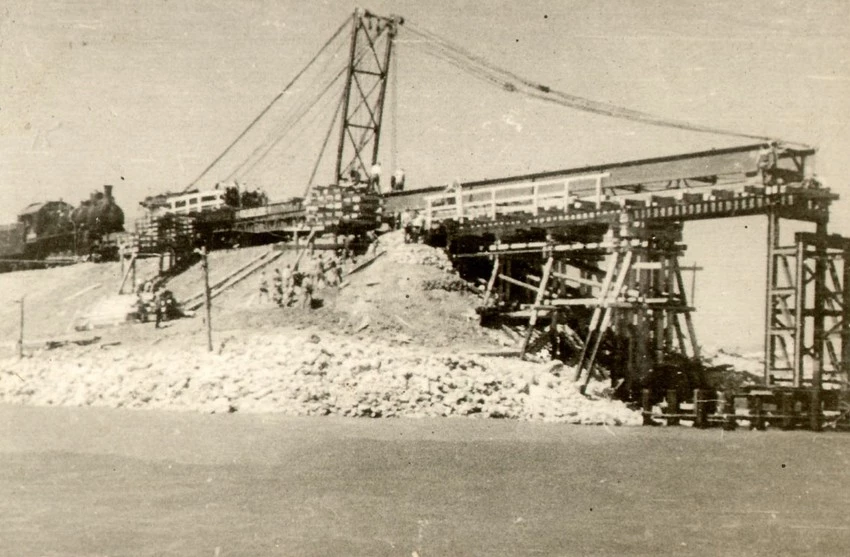
[ALT TEXT NEEDED]

Only after occupying Crimea did Russia build the thing—this time, with the help of the sanctions-breaking Western engineering that drove the pillars past the silt. Dutch companies had the know-how: after all, they had been building on the sea for centuries.

The scheme was meant to stay hidden—Russia insisted only Russian firms had built the bridge. The companies stripped the branding off their equipment to hide whose it was. It surfaced on 1 September 2017, when the Dutch regional daily De Gelderlander revealed that two firms from the Gelderland villages of Dodewaard and Milsbeek had made key equipment for driving the bridge's piles: Dematec Equipment built a special pile-driving hammer, and Bijlard Hydrauliek supplied its key component.

The exposé prompted the Dutch Public Prosecution Service (OM) to open a criminal investigation under the EU's 2014 sanctions, which barred EU firms from helping build Crimea's infrastructure. By May 2018, it covered seven companies.

The OM named only Dieseko, so the other names come from the press and from a 2019 dossier by Ukrainian prosecutors, reported by the Dutch investigative platform Investico:

  • Dieseko Group—at least four vibro blocks (~€1.5 mn each, 2015–16) to drive the bridge's piles into the seabed, shipped via Finland. The company also gave on-site technical assistance to the builders.
  • CAPE Holland—powerful pile-driving hammers.
  • Dematec Equipment B.V.—powerful pile-driving hammers.
  • Allpacks International B.V.—a hammer to vibrate the foundation piles.
  • Allnamics Pile Testing Experts B.V.—the pile-testing and measurement equipment, plus a training course for the Russian builders, to verify the piles were driven correctly and would hold.

A German company from Schleswig-Holstein supplied a hydraulic hammer—also for the hardest construction work, driving the piles into the silt. A court in Kiel later confiscated €1.3 mn from the company and fined its director. Like every Dutch company except Dieseko, it was never named by the authorities.

Ironically, Germany never sent Ukraine its powerful Taurus missiles, which Ukraine had officially requested in 2023. In a call Russia leaked in 2024, senior Luftwaffe officers discussed how Ukraine could use them to bring down the Kerch bridge. A German firm, meanwhile, had supplied the hammer that helped build it.

A slap on the wrist

The Russian firms that did the actual building shrugged off their own penalty. The EU sanctioned six of them in July 2018: Mostotrest, Stroygazmontazh, Stroygazmontazh Most, VAD, GPSM, and Zaliv Shipyard. Arkady Rotenberg, the Putin ally who owns the first three, brushed it off: "We're all proud of our work and if someone doesn't like it that's not our problem."

By then, the road bridge was already open. The sanctions meant to stop it—the EU's 2014 ban on helping build Crimea's infrastructure—had not.

The construction of the largest pillars for the bridge took place in July 2017, according to the website most.life, specially developed for the bridge
The construction of the largest pillars of the bridge took place in July 2017, according to the website most.life, specially developed for the bridge

The European suppliers fared better still. The OM settled with six companies and ten individuals out of court, starting with four companies and eight individuals in October 2023. A seventh company was fined €120,000 by an Amsterdam court in November 2024—the only Dutch conviction in seven years. It is still unnamed. Two more individuals were acquitted.

The figures look serious until you read them.
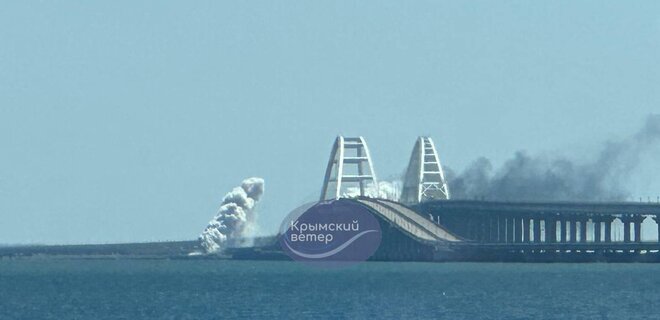
Crimean bridge smoke
Explore further

Sanctions lawyer: Dutch firms get slap on wrist for Crimea bridge work

Dieseko paid €1.78 mn; the German supplier, €1.3 mn. But the bulk of both is confiscation—the state clawing back the profit from the job, which leaves the company no worse off than if it had never taken it. The actual fines, on top, are beneath the pain threshold: €180,000 for Dieseko, €18,000 for the German firm's director, €120,000 for the convicted Dutch company, and €160,000 split among the four fined in 2023. Hand back what you earned, add a fine worth a fraction of it, and the account is closed.

For helping build a bridge that would carry an occupying army, eight people agreed to between 20 and 60 hours of community service in settlements with prosecutors.

Heleen over de Linden
Heleen over de Linden, a Dutch lawyer specializing in sanctions. Photo: rechta.com

Importantly, the companies' reputations did not suffer. The prosecutors named no company apart from Dieseko—every other settlement was anonymized, sparing the firms the single penalty a company actually fears: its name in the press beside the word "sanctions."

It was slow, too: the first Dutch penalties came in 2023, six years after the breach surfaced.

"Six years is a very long time in the Netherlands to be under suspicion," the Dutch sanctions lawyer Heleen over de Linden told Euromaidan Press. "This is the only reason for the very mild convictions."

On the penalties themselves she was blunter: "for Dutch standards, these are very low penalties, basically nothing."

What helping Russia costs

A penalty this small is not a deterrent. It is a price—cheap, deferred, and anonymous.

The Kerch Bridge cases put that price on public record: hand back the profit, years later, with your name kept out of the papers. For a firm weighing a lucrative Russian contract, that is hardly a reason to say no.

In 2017, the suppliers' defense was that they had sold to Russia, not Crimea. "EU sanctions state that we are not allowed to work in Crimea, but we can in Russia," Dematec director Derk Van den Heuvel said. Bijlard Hydrauliek's Marcel Bijlard said he had "just delivered a part to a customer in the Netherlands. No more."

That line did not always hold. In the one Dutch case that reached a verdict, the company's own staff working on site came to suspect they were in Crimea, the court found.

The pattern repeats today. Western microchips and parts keep turning up inside the missiles and drones Russia fires at Ukrainian cities, routed in through Kazakhstan, Armenia, Türkiye, and others.

It is the same maneuver the bridge suppliers, and the shippers of the Siemens turbines now running in Crimea's power stations, used back then: sell to "Russia," not "Crimea"; let an intermediary blur the final destination; say you could not have known. The bridge and Siemens cases were an early test: caught in the open, documented—and toothless.

We do not know if more resolute action on the bridge and the Siemens turbines would have slowed the flow of chips into Russian missiles now. We do know that the sanctions regime failed to stop Western help for Russia's occupation back then, and is failing to stop it for Russia's war now.

Kyiv put the road span in the sea this week; it is the only party that has made the bridge cost Russia anything it noticed. European prosecutors learned of the breach nine years ago and, in the end, publicly named only Dieseko. Until helping Russia costs more than handing back the change, there is no reason on earth for the next company to refuse.

Another pointed sanctions violation case

How Siemens chose to ignore the obvious. An investigation into the Crimean sanctions break

  •  

Europe's largest port prepares for NATO arms shipments, potential war with Russia

Europe's largest port prepares for NATO arms shipments, potential war with Russia

In anticipation of a potential war with Russia, the port of Rotterdam in the Netherlands has begun reserving space for NATO ships carrying military cargo and is mapping out logistics routes for weapons transfers, the Financial Times reported on July 8.

The decision comes as NATO allies increasingly warn of the risk of a large-scale war with Russia within five years. Rotterdam has previously handled weapons shipments, but this marks the first time that it will designate a special berth for military use.

Part of the container terminal will be repurposed to ensure the safe transfer of ammunition and other equipment between vessels. Military supply logistics will be coordinated with the port of Antwerp in neighboring Belgium.

"We see each other less and less as competitors," Boudewijn Siemons, Chief Executive of the Port of Rotterdam Authority, said, referring to the port of Antwerp.

"If large volumes of military goods would have to be shipped, we'd look to Antwerp or other ports to take over some capacity and the other way around."

Siemons added that not all terminals are equipped to handle military-grade cargo, making the logistical coordination crucial, particularly for shipments from the U.S., U.K., and Canada.

In May, the Dutch Defense Ministry confirmed that space would be allocated for military supplies at NATO's request. The move is part of broader efforts by European allies to reduce dependence on the U.S. for defense logistics.

Russia's military spending has surged amid its full-scale invasion of Ukraine. According to the International Institute for Strategic Studies, Moscow's 2024 defense budget rose by 42% in real terms, reaching $462 billion, surpassing the combined total of all European countries.

NATO Secretary General Mark Rutte said on July 5 that a Chinese military move against Taiwan could prompt Beijing to encourage Russia to open a second front against NATO states.

Rutte has repeatedly warned that Russia could rebuild its military capabilities fast enough to pose a direct threat to NATO territory, urging allied governments to act swiftly and decisively.

‘Neither side wasted time’ — Ukraine’s economy minister on minerals deal negotiations with Trump’s ‘business-oriented’ administration
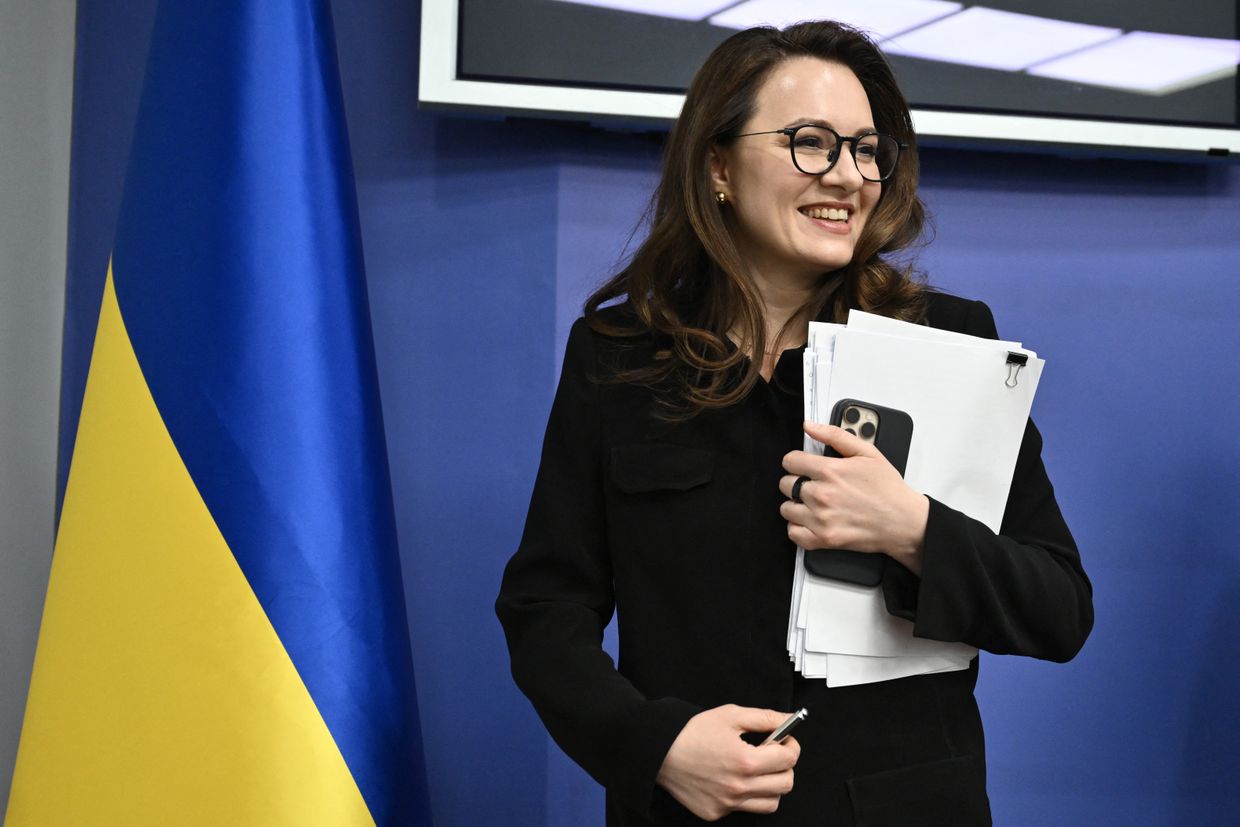
Ukraine’s Economy Minister Yuliia Svyrydenko says her task is simple — to get the investment fund behind the closely watched minerals deal with the U.S. off the ground, and prove its detractors wrong. “There are so many criticisms from different parties that this fund is just a piece of paper we can put on the shelves — that it won’t be operational,” Svyrydenko, who is also Ukraine’s first deputy prime minister, tells the Kyiv Independent at Ukraine’s Cabinet of Ministers on July 4, the morning
Europe's largest port prepares for NATO arms shipments, potential war with RussiaThe Kyiv IndependentLiliane Bivings
Europe's largest port prepares for NATO arms shipments, potential war with Russia
  •  

Russia intensifying use of chemical weapons in Ukraine, Dutch intelligence reports

Russia intensifying use of chemical weapons in Ukraine, Dutch intelligence reports

Russia is escalating the use of chemical weapons against Ukrainian forces, the Netherlands Military Intelligence (MIVD) reported on July 4.

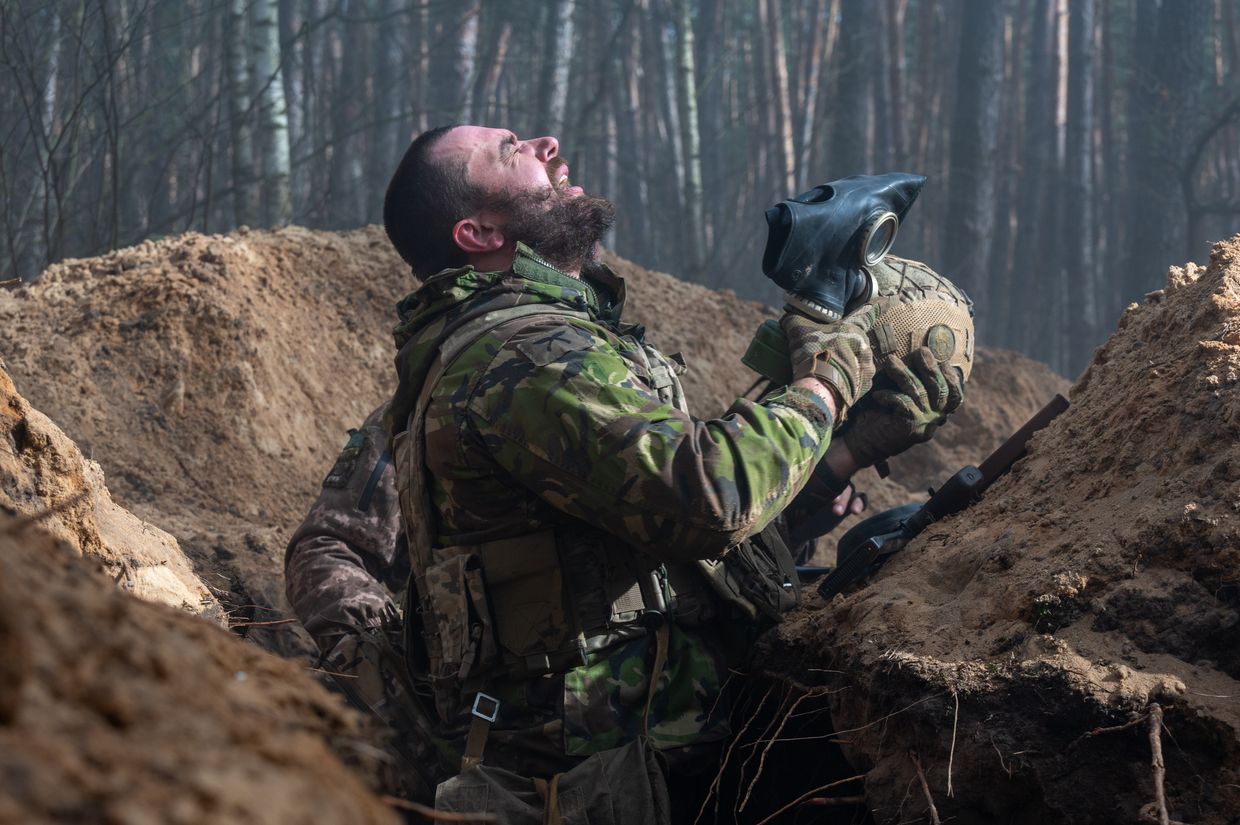
Russian troops use banned chemical agents as psychological warfare to panic Ukrainian forces, forcing soldiers from dugouts and trenches with gas grenades dropped by drones, making them easy targets for subsequent drone or artillery attacks.

According to MIVD report, it was previously known that Russia usesd tear gas, but now intelligence has confirmed the use of chloropicrin — a substance that can kill in high concentrations in enclosed spaces.

Use of of chloropicrin, banned under international law, was discovered by the Netherlands Military Intelligence and Security Service (MIVD) and General Intelligence and Security Service (AIVD) together with the German foreign intelligence service BND.

The Kyiv Independent previously reported rising chemical attacks, but Ukraine could not accurately identify the chemical substances due to lack of equipment.

The U.S. State Department had already reported in May that Russian forces have used the chemical agent chloropicrin in Ukraine. The May 1 announcement was part of a larger statement about the introduction of new U.S. sanctions against more than 280 individuals and entities.

For now, the original statement has been removed from the U.S. State Department website.

Russia is using this type of weapon more frequently and "with ease," says MIVD Director Vice Admiral Peter Reesink.

Dutch Defense Minister Ruben Brekelmans, who announced the news to the Dutch parliament, called the situation "absolutely unacceptable," calling for "more sanctions, isolation of Russia and unwavering military support for Ukraine."

"We are making this public now because Russia's use of chemical weapons must not become normalized," Brekelmans said. "If the threshold for using this type of weapon is lowered, it is dangerous not only for Ukraine but also for the rest of Europe and the world."

Since the start of the full-scale invasion in 2022, Russia has conducted over 9,000 chemical attacks. At least three Ukrainian soldiers have died directly from exposure to toxic substances, according to Ukraine's Ministry of Defense.

Dutch intelligence has established that Russian military leadership actively facilitates chemical attacks, and the use of banned substances has become standard practice for Russian forces.

Moscow is also increasing investments in chemical weapons programs, expanding research and recruiting new scientists, MIVD and AIVD observe.

The U.S. has accused Russia of deploying chloropicrin, often used in agriculture and widely weaponized as a “vomiting agent” during World War I.

‘Deliberately massive and cynical’ — Russian attack on Ukraine began as Trump and Putin spoke, Zelensky says
“Patriots and their missiles are real defenders of life,” President Volodymyr Zelensky said. “It is very important to maintain the support of partners in ballistic missile defense.”
Russia intensifying use of chemical weapons in Ukraine, Dutch intelligence reportsThe Kyiv IndependentAnna Fratsyvir
Russia intensifying use of chemical weapons in Ukraine, Dutch intelligence reports
  •  

Netherlands, Belgium hand over 2 minehunters to boost Ukraine’s naval defenses

Netherlands, Belgium hand over 2 minehunters to boost Ukraine’s naval defenses

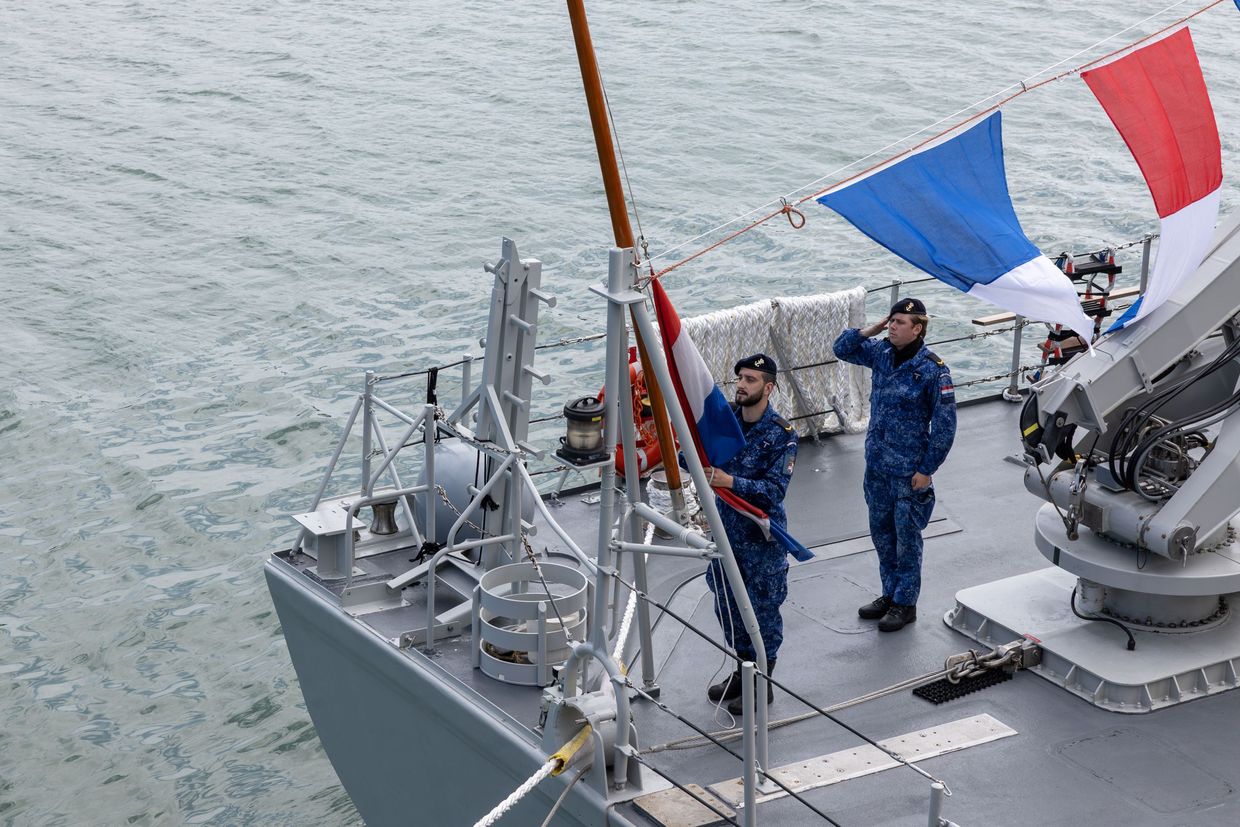
The Netherlands and Belgium have delivered two minehunter vessels to Ukraine to support maritime security in the Black Sea, Dutch Defense Minister Ruben Brekelmans announced on June 26.

"The Netherlands and Belgium are transferring two minehunters to Ukraine. A vital contribution to Black Sea security, and key to safeguarding trade routes and global food supply," Brekelmans said on X. He added that Ukrainian crews and technicians were trained "in record time."

According to the Dutch Defense Ministry, the vessels involved are the Belgian ship BNS Narcis and the Dutch Zr.Ms. Vlaardingen. The official handover ceremony took place earlier in Zeebrugge, Belgium, but was disclosed only later due to security concerns.

"The major ports of Odesa and the Black Sea shipping lanes are the lifeblood of the Ukrainian economy," Brekelmans said. "And (they are) under constant threat. Ukraine may not win the war at sea, but it can certainly lose the war there. We simply cannot let that happen. That is why it is so important for maritime security and free passage that Ukraine can use minehunters."

Since Russia's full-scale invasion of Ukraine began in February 2022, the Netherlands has provided Kyiv with a combined 8.4 billion euros ($9.4 billion) in support, according to the Kiel Institute for the World Economy while Belgium has allocated over two billion euros (about $2.2 billion) in support, including military, financial, and humanitarian assistance.

Putin under pressure to declare war on Ukraine, but experts say Russia isn’t ready
Despite suffering over 1 million casualties, pounding Ukrainian cities nightly with missiles and drones, and committing countless war crimes, one startling fact about Russia’s full-scale invasion remains — Moscow has yet to officially declare war on Ukraine. In February 2022, Russian President Vladimir Putin described what he believed was going to be a swift victory and the capture of Kyiv within days as a “special military operation.” Nearly three-and-a-half years later, the Kremlin is stuck
Netherlands, Belgium hand over 2 minehunters to boost Ukraine’s naval defensesThe Kyiv IndependentChris York
Netherlands, Belgium hand over 2 minehunters to boost Ukraine’s naval defenses

  •  

Ukraine to receive 20 new Rheinmetall Ermine vehicles — here's what they can do

Ukraine to receive 20 new Rheinmetall Ermine vehicles — here's what they can do

The Dutch Defense Ministry will finance the production of 20 Ermine ground vehicles for Ukraine, German defense manufacturer Rheinmetall announced on June 25.

The contract, signed during the NATO summit in The Hague, marks the first order for the new-generation tactical platform. Ukraine will become the first country in the world to receive the Ermine.

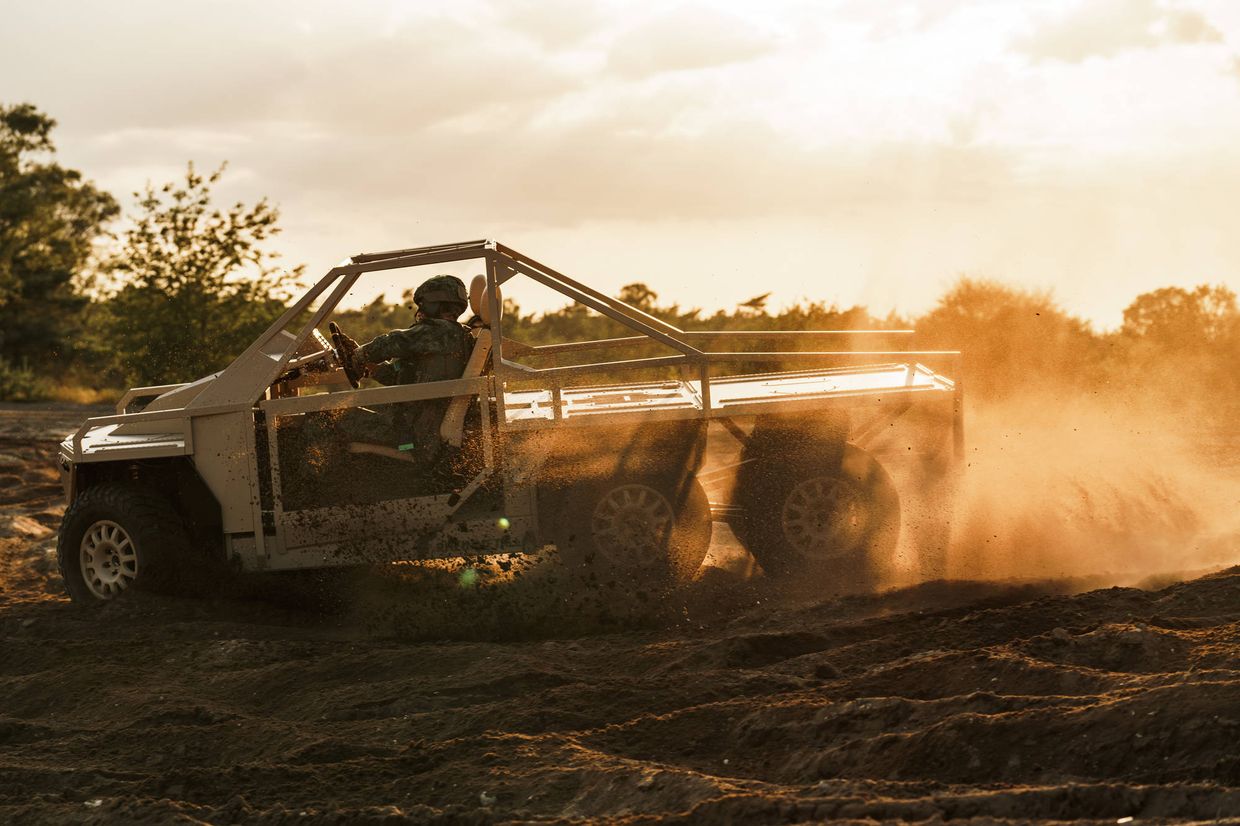
The Ermine, developed by Rheinmetall Defence Nederland, is designed primarily for front-line evacuation missions.

The light buggies provide fast, maneuverable transport for wounded personnel in combat zones. Rheinmetall said the deliveries are expected to begin in 2026.

According to Rheinmetall, the Ermine is a "lightweight tactical system that combines the robustness of a diesel unit with many advantages of an electric drive."

It's a modular system that comes in four configurations — 4x4 quad, 4x4/6x6 buggy, or Unmanned Ground Vehicle (UGV).

The Ermine combines a diesel engine with an electric motor that allows for what Rheinmetall describes as "Silent Move & Silent Watch," and has a range of up 1,200 kilometers, and can carry up to a tonne.

"The electrical powertrain makes the Ermine almost silent. It is capable of driving up to 50 km silently through heavy terrain and up to 100 km on the road," the company said.

"The system offers its users significant tactical advantages in avoiding enemy reconnaissance."

The electrical engine can even provide charging points for soldiers out in the field.

Ukraine to receive 20 new Rheinmetall Ermine vehicles — here's what they can do
An Ermine ground vehicle developed by Rheinmetall Defence Nederland mainly for front-line evacuation missions (Rheinmetall)

On June 24, Dutch Prime Minister Dick Schoof presented a new military aid package for Ukraine, including 100 drone radar systems, front-line vehicles, and 80 million euros (over $90 million) for the drone initiative.

The NATO summit concluded on June 25 with a joint pledge by member states to raise defense spending to 5% of GDP by 2035. The updated target reflects shifting priorities within the Alliance as the war in Ukraine drags into its fourth year.

Unlike in previous years, the 2025 summit communique did not include an explicit condemnation of Russia's invasion. Still, the final statement reaffirmed support for Ukraine and said assistance to its defense industry will count toward the new spending benchmark.

President Volodymyr Zelensky met with U.S. President Donald Trump during the summit, where the two leaders discussed battlefield developments, Kyiv's need for additional air defense systems, and the potential for co-production of drones.

"They (Ukraine) do want to have the anti-missiles, as they call them, the Patriots, and we're going to see if we can make some available," Trump said. "They are very hard to get. We need them too. We are supplying them for Israel, and they are very effective."

Trump's remarks signal a potential boost to Ukraine's air defense capabilities, which have come under increasing strain amid intensifying Russian attacks.

Meloni tells Trump US must show ‘same determination’ on Ukraine as with Iran
“I said the same determination is needed to achieve two other important ceasefires,” Meloni said.
Ukraine to receive 20 new Rheinmetall Ermine vehicles — here's what they can doThe Kyiv IndependentTim Zadorozhnyy
Ukraine to receive 20 new Rheinmetall Ermine vehicles — here's what they can do
  •  

Zelensky arrives at NATO summit in The Hague as Netherlands pledges new aid

Zelensky arrives at NATO summit in The Hague as Netherlands pledges new aid

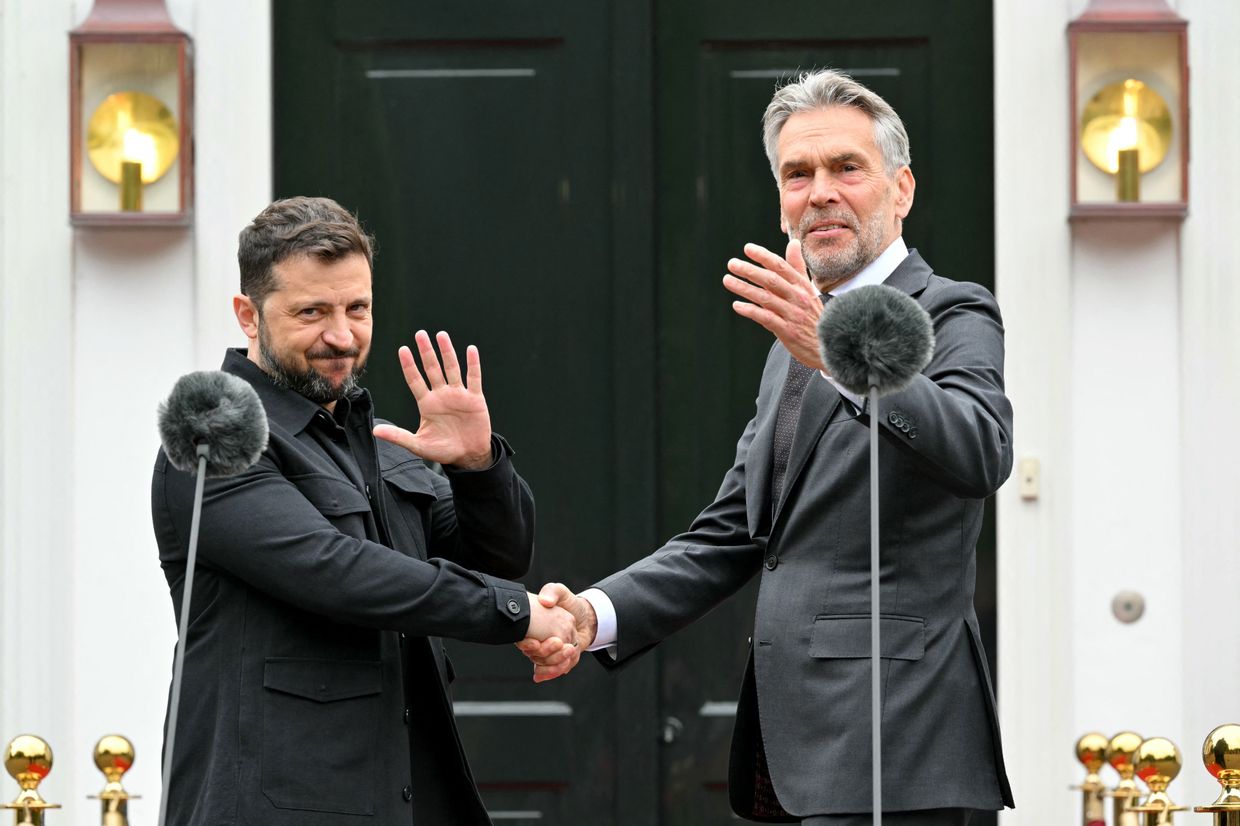
President Volodymyr Zelensky met outgoing Dutch Prime Minister Dick Schoof on June 24 in The Hagueon the first day of the NATO summit.

Welcoming Zelensky at the Catshuis official residence, Schoof presented a new military aid package for Ukraine, including 100 drone radar systems, front-line vehicles for evacuating the wounded, and 80 million euros (over $90 million) for the drone initiative. The Netherlands will also start producing drones for Ukraine, according to Ukrainian specifications.

Zelensky arrived in the Netherlands on the evening of June 23, planning to meet allied leaders – including U.S. President Donald Trump – to discuss NATO's response to Russia's war against Ukraine during the annual summit.

"Let me be clear: Ukraine is part of the family that we call the Euro-Atlantic family," Schoof told Zelensky in front of reporters.

The new aid package is valued at 175 million euros ($200 million) and comes after a 500 million euros ($580 million) agreement to produce 600,000 drones with the Ukrainian defense industry, Dutch Defense Minister Ruben Brekelmans said separately at the summit.

"We have these technologies, we want to share them with our partners. In The Hague, we begin to work with some countries on co-production," Zelensky said when talking about Ukraine's drone manufacturing capabilities.

Calling The Hague the "city of justice," Zelensky also said he counts on allied support in "holding Russia accountable for its crimes" and named the Netherlands among Ukraine's leading European supporters.

Zelensky's arrival was preceded by rumors that he might skip the event if Trump does not attend either. Nevertheless, the Ukrainian president later confirmed he plans to meet the U.S. leader on June 25, potentially marking their third meeting since Trump took office after the expected talks at the G7 summit in Canada fell through.

This year's NATO summit is taking place as Russia continues to launch large-scale deadly attacks on Ukrainian cities, disregarding calls by Kyiv and its Western partners for a ceasefire.

Allied leaders also face growing uncertainty about the Trump administration's commitment to both Ukraine and NATO's collective security as new conflicts emerge in the Middle East.

‘Let’s not be naive’ — Rutte urges NATO to face Russia, China threats, pledges support for Ukraine
NATO Secretary General Mark Rutte said NATO’s role is to ensure Ukraine has the military means to stay in the fight until “serious” peace negotiations begin.
Zelensky arrives at NATO summit in The Hague as Netherlands pledges new aidThe Kyiv IndependentAnna Fratsyvir
Zelensky arrives at NATO summit in The Hague as Netherlands pledges new aid
  •  

Dutch parliament recognizes Soviet 1944 deportation of Crimean Tatars as genocide

Dutch parliament recognizes Soviet 1944 deportation of Crimean Tatars as genocide

The lower house of the Dutch parliament on June 19 officially recognized the 1944 mass deportation of Crimean Tatars by the Soviet Union as genocide, according to a statement from the parliamentary press service.

The motion cited precedent from other countries that have recognized the forced deportations as genocide, including Poland, the Czech Republic, Canada, Latvia, Lithuania, and Ukraine.

In the adopted text, Dutch lawmakers declared that the Soviet-led deportation of Crimean Tatars, which took place between May 18 and 21, 1944, constitutes genocide by contemporary legal and historical definitions.

The 1944 deportation was carried out under direct orders from Soviet dictator Joseph Stalin, who labeled the entire Crimean Tatar population as traitors following the peninsula's liberation from Nazi occupation.

Over 190,000 Tatars were forcibly removed from Crimea in a matter of days, though some estimates place the number closer to 430,000, and sent to remote areas in Central Asia, mainly Uzbekistan, in brutal conditions that led to mass deaths.

The document pointed to the ongoing repression of Crimean Tatars under Russian occupation since 2014. It said that "many Crimean Tatars have been unjustly imprisoned, subjected to torture by the Russian Federation, or forcibly disappeared," and added that "Russia has likely continued a policy of genocide against Crimean Tatars."

Foreign Minister Andrii Sybiha welcomed the decision, calling it "a powerful gesture of solidarity with the Crimean Tatar people, who are still facing persecution under Russia’s temporary occupation of the Ukrainian Crimea peninsula."

Sybiha noted that the Netherlands is now the seventh country to formally recognize the deportation as genocide and urged other nations to follow suit.

"Recognizing this historical injustice is critical not only for establishing truth and justice, but also for preventing future atrocities," the minister wrote.

Ukraine's parliament recognized the deportation as genocide in 2015 and established May 18 as the official Day of Remembrance for the Victims of the Genocide of the Crimean Tatar People.

Who are the Crimean Tatars?
Crimean Tatars are one of Ukraine’s indigenous peoples who have been central to Crimea’s history for many centuries.
Dutch parliament recognizes Soviet 1944 deportation of Crimean Tatars as genocideThe Kyiv IndependentAnastasiia Lapatina
Dutch parliament recognizes Soviet 1944 deportation of Crimean Tatars as genocide
  •  
❌