Vue lecture

Ukraine put its own peace proposals on the table as two US envoys reached Kyiv for the first time
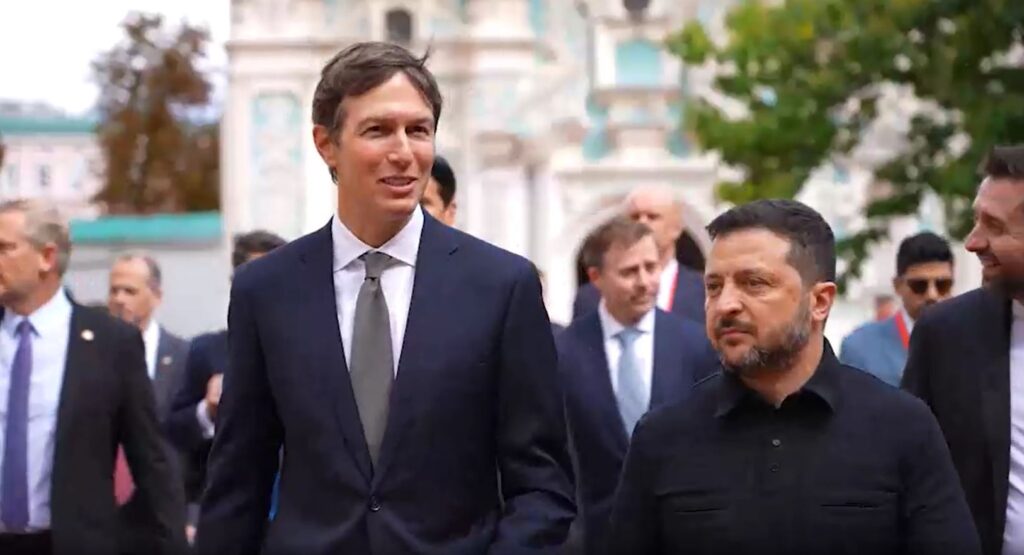
ukraine put its own peace proposals table two envoys reached kyiv first time · post jared kushner envoy president donald trump ukrainian volodymyr zelenskyy outside st sophia's cathedral 6 2026

After a months-long pause, US President Donald Trump's envoys Steve Witkoff and Jared Kushner opened their first round of peace talks in Kyiv to end the Russo-Ukrainian war. Ukrainian President Volodymyr Zelenskyy announced their visit and talks on Telegram on 6 September. A day earlier, they visited Moscow and met with Russian President Vladimir Putin there. Ukraine came in with prepared proposals and a demand for security guarantees. Witkoff called the discussion substantive, and the British, French, and German national security advisers joined the later rounds. Despite their previous multiple visits to Moscow, this was their first-ever visit to Kyiv.

Moscow has carried the same core condition since 2022 and tabled it again this year: Ukraine outside NATO, with its army cut down to a size Russia sets. Talks keep opening on what a settlement would contain, and the answer from the Russian side keeps arriving as the terms of a capitulation, including a flat refusal of the partial truces Kyiv has offered in between.

Zelenskyy came with a written package and one demand

Zelenskyy gathered his negotiating team before the meeting and wrote on Telegram that Ukraine was ready to talk. 

"Peace is needed. Security guarantees are needed. A dignified character of the post-war peace is needed. Our proposals have been prepared," he said, adding that it was important to work in a coordinated, substantive, and realistic way.

The preparatory meeting brought together head of the President's Office Kyrylo Budanov, Foreign Intelligence Service head Rustem Umierov, Servant of the People faction leader David Arakhamia, and First Deputy Head of the President's Office Serhii Kyslytsia—Ukraine's likely negotiating team.

The post announcing the start of the talks, published shortly after 2 p.m., carried video of Zelenskyy greeting the two Americans. He also told reporters the day would run in stages: one session with the US side, then another with the European advisers.  After the first part, Zelenskyy thanked American and European partners. 

First-ever Kyiv sit-down for Trump's envoys, and Ukraine came with its own plan

Zelenskyy met Steve Witkoff and Jared Kushner beside St Sophia's Cathedral on 6 September, walked them inside, and then put Ukraine's written proposals in front of them.

What Kyiv wants out of any… pic.twitter.com/9N1euIZg52

— Euromaidan Press (@EuromaidanPress) September 6, 2026

The presidential website had published no report on the talks by the time this article went out.

Ending the fighting is not the goal, the envoys said

Witkoff called the talks substantive and said the US team was ready to continue working, TSN reported. He said Washington was looking for openings on external security issues and coordinating closely with Germany, France, and the UK.

Kushner said the goal was not only to end the fighting but to create conditions for a lasting peace. He called it “a very, very hard and complex problem,” but “a very worthy problem of solving,” and said a lasting peace should allow Ukraine to turn its wartime “bravery and ingenuity and strength” toward rebuilding the country.

Kushner also said Trump is determined to end the war and then shift toward investment and economic cooperation, which he argued could bring the countries closer and open new opportunities for Ukraine and Europe. He added that the talks continue between visits, with the US side speaking almost daily with the four Ukrainian negotiators, whom he named only by their first names.
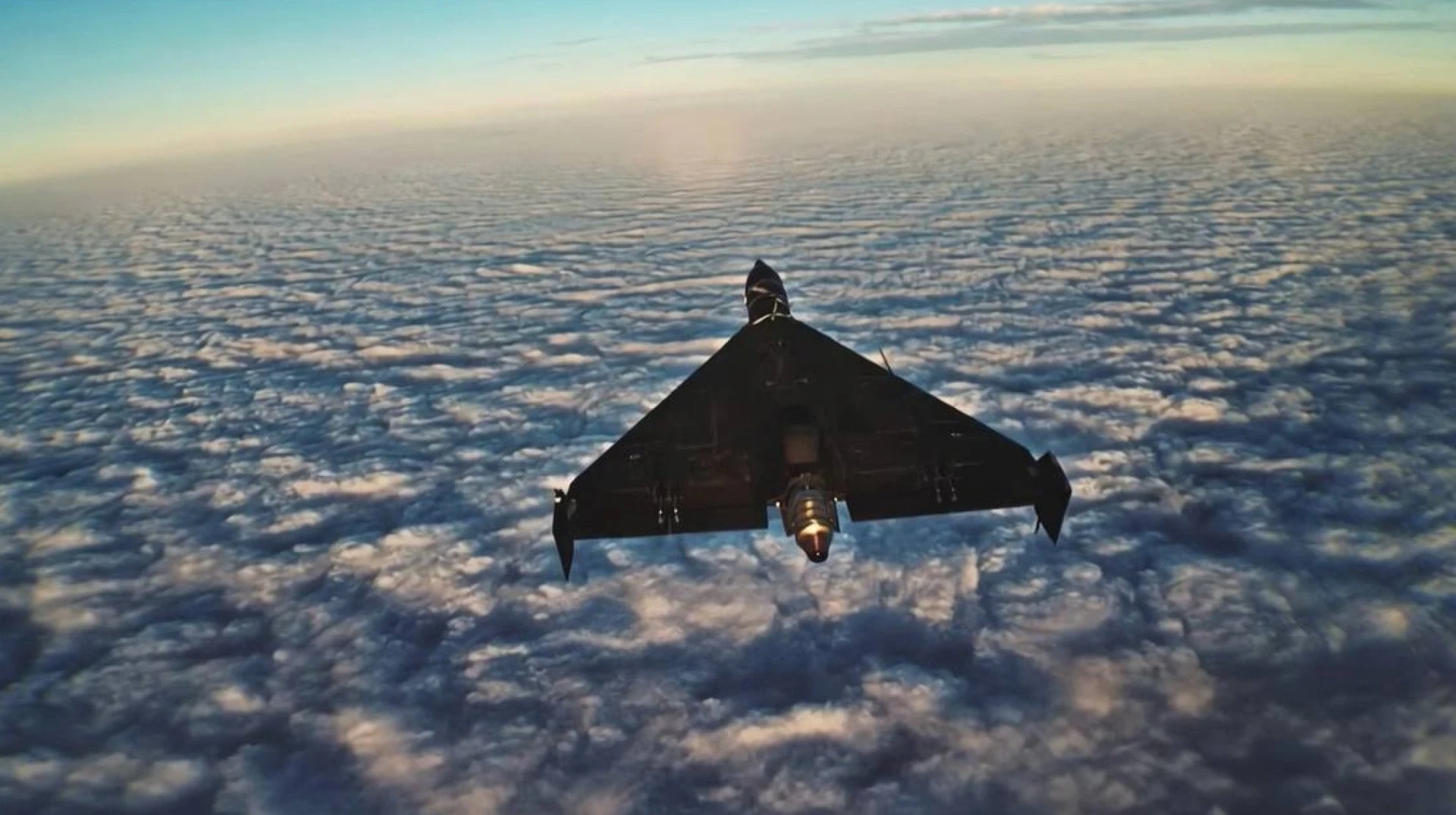
ukraine spent three years learning catch russian drones—so russia made fly faster · post geran-3 jet-powered attack drone wild hornets c1c840787fca380485636007cf683d71 news ukrainian reports
Explore further

Ukraine logged impacts at 11 sites while the American peace delegation was still in Moscow

The Europeans joined the later rounds

Zelenskyy's spokesman Serhii Nykyforov said the first round with Witkoff and Kushner had finished, and that a second, expanded round with the national security advisers of the UK, France, and Germany would follow after a short break. A source familiar with the matter told Reuters the three advisers were in Kyiv on Sunday, without specifying which sessions they would attend.

A third round then opened, public broadcaster Suspilne reported. Witkoff described the discussion as substantive, concrete, and important shortly before it started.

Moscow, the day before

Witkoff and Kushner held three hours of talks with Putin in Moscow on 5 September. Putin's aide Yuri Ushakov stated the meeting was substantive, very frank, and constructive, and said Putin told them Russia would achieve its war aims and that the war's so-called "root causes" must be removed—Kremlin shorthand for Ukraine abandoning NATO membership and disarming, which Kyiv rejects.
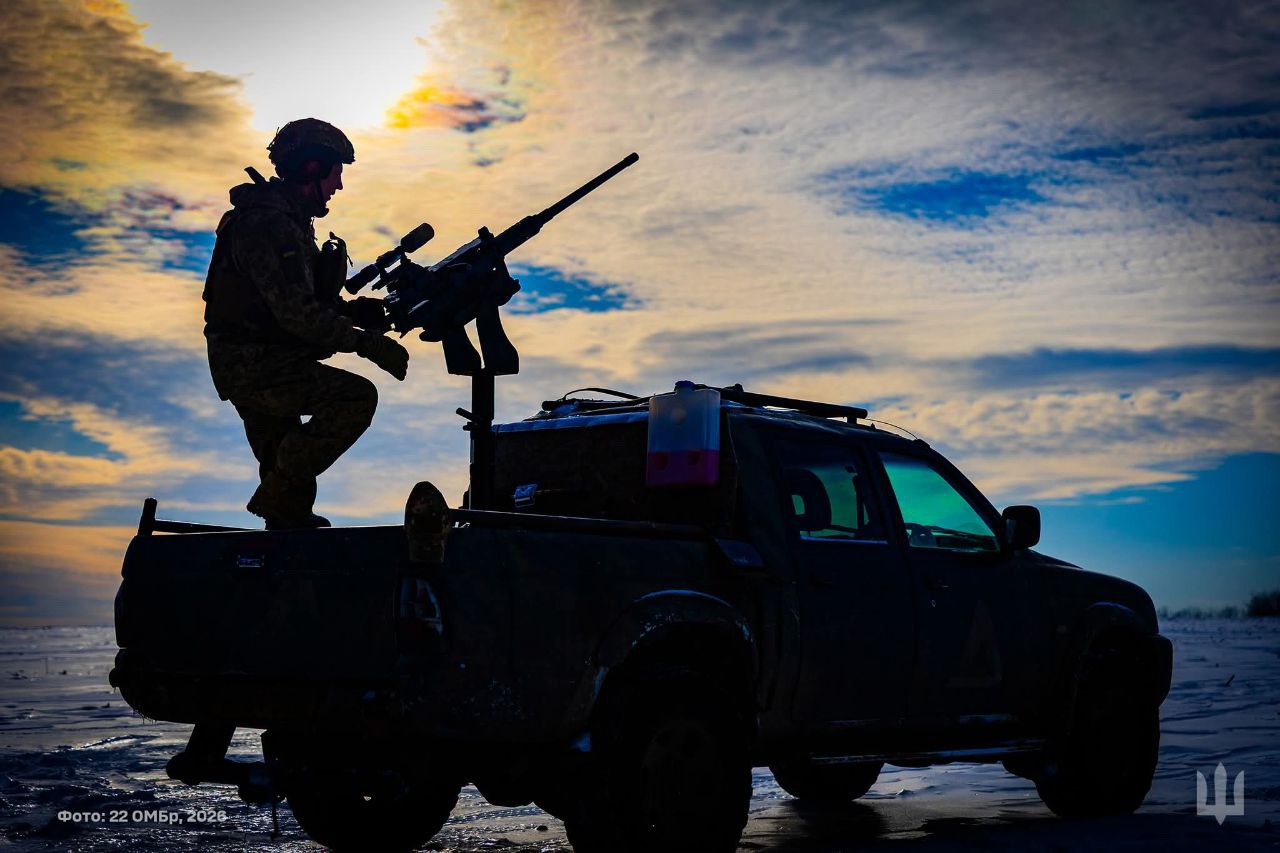
Ukrainian soldier. Illustrative image. Photo: General Staff of Ukraine's Armed Forces
Explore further

Ukraine orders temporary ceasefire as US envoys visit Moscow. Air raid alert sounds in Kyiv immediately as pause begins

A White House representative told Radio Svoboda that the sides discussed concrete plans for next steps, to be announced in the coming weeks. Bloomberg reported that sources close to the Kremlin said Putin is ready to end the war only on his own terms, with Moscow's demands hardening. Axios reported that a US Treasury official responsible for sanctions policy joined the trip but did not attend the Putin meeting, alongside State Department and National Security Council staff.

Trump said on 4 September that Witkoff and Kushner were carrying a proposal to both Moscow and Kyiv, which he described as fresh, without giving details.

How the envoys reached Kyiv

Umierov published video this morning showing Budanov, Umierov, Arakhamia, and Kyslytsia welcoming Witkoff and Kushner at Kyiv’s railway station as the US envoys arrived for talks.

Ukraine had prepared to receive the envoys by air, but Russian strikes made that impossible, Zelenskyy said. He met them instead on Sofiivska Square before the delegation went inside St Sophia's Cathedral. In a 4 September address, Zelenskyy said Ukraine would keep Russian airspace safe for the envoys’ travel and demanded Moscow do the same.

A pause that covered two capitals

Ukraine ordered a three-day halt to strikes on Moscow around the visit, and the Kremlin claimed it would pause strikes on Kyiv until Monday. Nothing else stopped. Ukraine logged impacts at 11 sites across the country while the American delegation was in the Russian capital. Ukraine's 6 September strike hit the Ryazan oil refinery and set a core unit on fire, about 470 km from Ukraine.
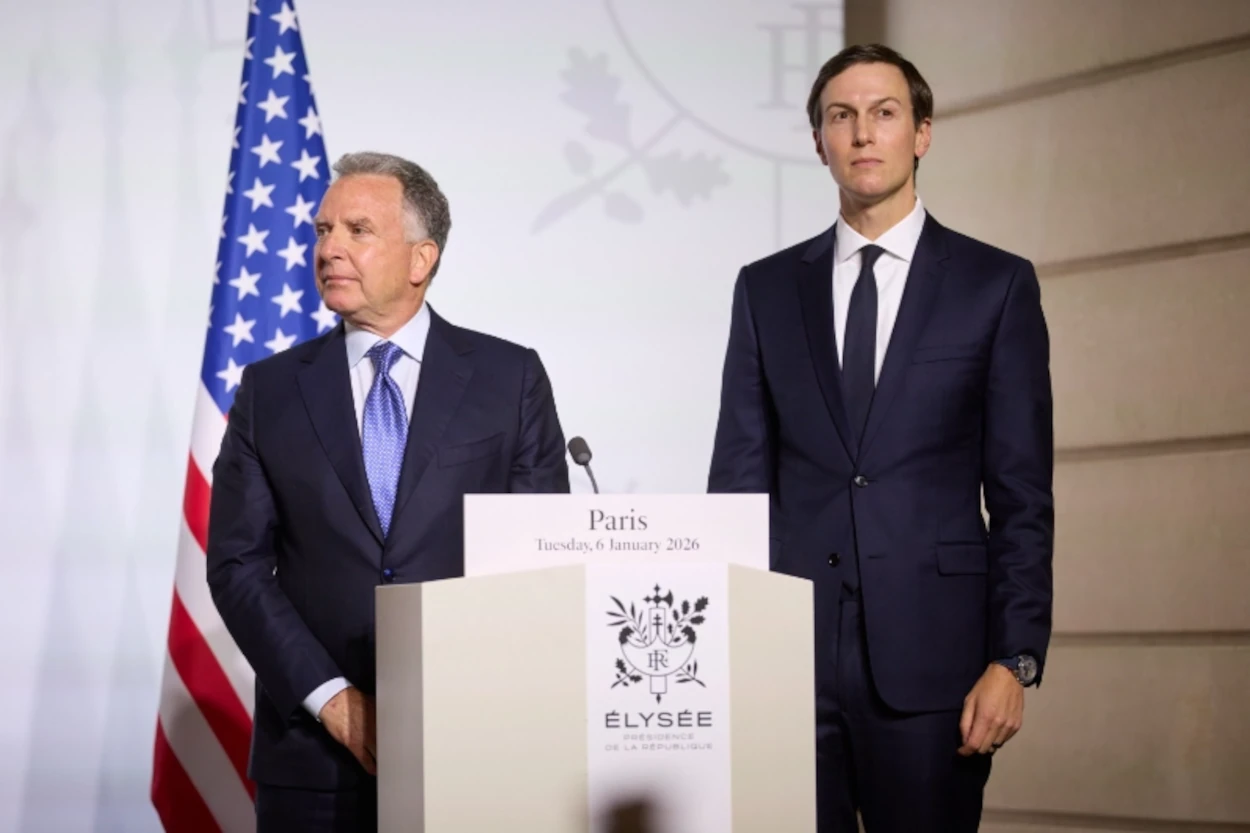
US envoys Steve Witkoff and Jared Kushner at the Coalition of the Willing summit at the Élysée Palace, 6 January 2026. Photo: Presidential Office
Explore further

Witkoff and Kushner to visit Kyiv and Moscow to revive peace talks as Russia ramps up attacks across Ukraine

Twenty months of rounds without a deal

Trump made ending Russia’s war a priority after taking office in January 2025, but US-mediated talks produced little and later stalled during the US-Israeli war against Iran. Washington said in early August it intended to step up the effort, and Russian attacks intensifying pushed a planned August visit to Kyiv back.

The visit was confirmed on 4 September, after two weeks of heavy Russian attacks on Kyiv, including a drone strike on the headquarters of the Security Service of Ukraine (SBU) and an earlier six-day bombardment. Previous talks also left Kyiv and Moscow far apart over Donbas, where Russia demands Ukrainian withdrawal from fortified cities still under Kyiv’s control.
  •  

Ukraine logged impacts at 11 sites while the American peace delegation was still in Moscow

ukraine spent three years learning catch russian drones—so russia made fly faster · post geran-3 jet-powered attack drone wild hornets c1c840787fca380485636007cf683d71 news ukrainian reports

Russia attacked Ukraine from 18:00 on 5 September and through the night into 6 September with 108 strike drones and S8000 Banderol cruise missiles, Ukraine's Air Force reported. The assault ran while US envoys Steve Witkoff and Jared Kushner were finishing three hours of talks with Russian President Vladimir Putin in Moscow. They left the Russian capital after midnight and were expected in Kyiv on 6 September, again carrying a US proposal to end the war. Ukraine's own offer of a four-day pause in the fighting went unmatched by Russia.

Russia has kept up daily air attacks on Ukrainian cities and towns throughout the ongoing war, killing civilians in apartment blocks, hospitals, and shelters. No round of diplomacy or declared truce has interrupted it — Russia's own Easter ceasefire drew thousands of violations within hours.

The attack was still running in the morning

By 09:30 air defenses had downed or suppressed 82 Shahed-type, Gerbera, and other drones, along with six Banderol missiles. The military logged impacts at 11 locations and falling debris at seven more, and warned that Russian drones were still in Ukraine's airspace.

Over the previous day, Russian strikes killed seven people and injured 57 across Kharkiv, Kherson, Zaporizhzhia, Dnipropetrovsk, and Donetsk oblasts, according to oblast administration figures published on the morning of 6 September. Kharkiv Oblast lost four people, three of them one family in Chuhuiv. Zaporizhzhia Oblast reported one death, 25 injured, and 886 strikes on 54 settlements.

A children's playground in the center of Chuhuiv, the morning after a Russian drone hit the town

Russia killed three members of one family in the strike on the evening of 5 September: an 11-year-old boy, his 19-year-old sister, and their 45-year-old father. The children's mother… pic.twitter.com/OHDSJg2Qdj

— Euromaidan Press (@EuromaidanPress) September 6, 2026

Three hours in the Kremlin

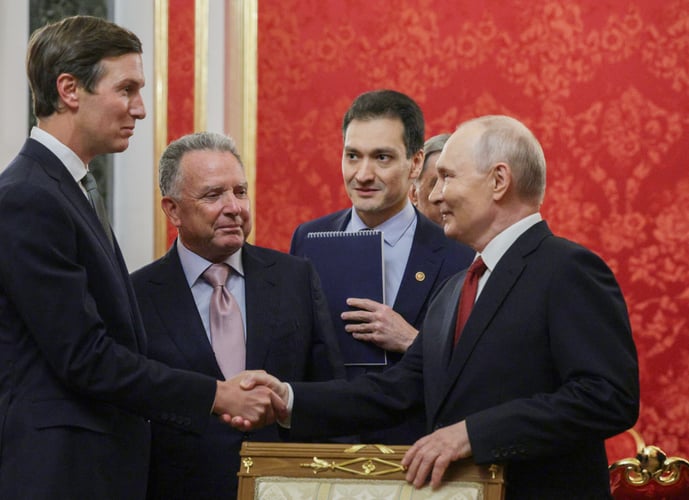
Witkoff and Kushner met Putin on 5 September and left the Kremlin close to midnight. Putin opened by telling them he had "full trust" in the US side, Axios reported, and Washington's goal is to restart direct Russian-Ukrainian talks that stopped six months ago. Putin's aide Yuri Ushakov called the discussion "substantive, constructive, exceptionally candid," ABC News reported, and stated the envoys had promised to carry Putin's own assessments into their meetings in Kyiv. Ushakov also repeated that Russia will achieve its goals and that the war's "root causes" must be removed — the Kremlin's shorthand for barring Ukraine from NATO and cutting down its army.

Jared Kushner shakes hands with Russian President Vladimir Putin, with US special envoy Steve Witkoff beside him, at the Kremlin in Moscow, Russia, 5 September 2026. Photo: Gavriil Grigorov/Sputnik

A White House official told RFE/RL that the sides discussed "concrete plans" for next steps, to be announced in the coming weeks. Kremlin envoy Kirill Dmitriev, who sat in on the talks, called the Moscow trip an important peacemaking visit, Al Jazeera reported. The Kyiv leg would be the envoys' first trip to Ukraine since taking over the US effort; it was set for August and postponed as Russian strikes intensified.

  •  

London Stock Exchange to lose three more firms after takeover offers

Latest purchases take value of deals to leave capital’s stock market this year past $100bn

Three more London-listed companies are set to be taken over as the value of deals removing firms from the capital’s under-pressure stock market passes $100bn (£74bn) so far this year.

On Tuesday, Bodycote, the FTSE 250 industrials group that has been listed on the London Stock Exchange since 1972, agreed a £1.84bn takeover by the US private equity group Veritas.

Continue reading...

© Photograph: Jack Taylor/Reuters

© Photograph: Jack Taylor/Reuters

© Photograph: Jack Taylor/Reuters

  •  

Le Québec se retrouve au cœur de la guerre commerciale 

Mark Carney avait expliqué la semaine dernière que plusieurs raisons l’avaient poussé à suspendre les négociations commerciales avec les États-Unis. 

Parmi ces raisons, Carney a cité la volonté de Washington d’exempter les entreprises américaines des règles sur l’étiquetage bilingue et l’affichage en français.

Donald Trump et plusieurs membres de son gouvernement ont soutenu depuis qu’ils n’avaient jamais fait une telle demande. 

Howard Lutnick, ministre américain du commerce, a même laissé entendre hier que le gouvernement canadien aurait suspendu les négociations pour nuire au Parti québécois et à son projet d’indépendance, à l’approche des élections québécoises. 

[L'article Le Québec se retrouve au cœur de la guerre commerciale  a d'abord été publié dans InfoBref.]

  •  

Le gouvernement fédéral modifie sa liste de futurs contre-tarifs douaniers 

Joanna Thompson, ministre fédérale des pêches, a indiqué que les produits du secteur des fruits de mer et du poisson seraient retirés de la liste de contre-tarifs canadiens qui doivent entrer en vigueur le 8 septembre.

Thompson a assuré que la riposte fédérale resterait toutefois «équivalente au dollar près et au taux près» aux droits de douane américains. 

Un porte-parole du gouvernement fédéral a dit à Bloomberg que les droits de douane sur les produits de la mer seraient remplacés par des tarifs de 50% sur le cuivre et le charbon de bois américains. 

[L'article Le gouvernement fédéral modifie sa liste de futurs contre-tarifs douaniers  a d'abord été publié dans InfoBref.]

  •  

US C-17 spends 8½ hours in Moscow during first CIA chief visit since 2021

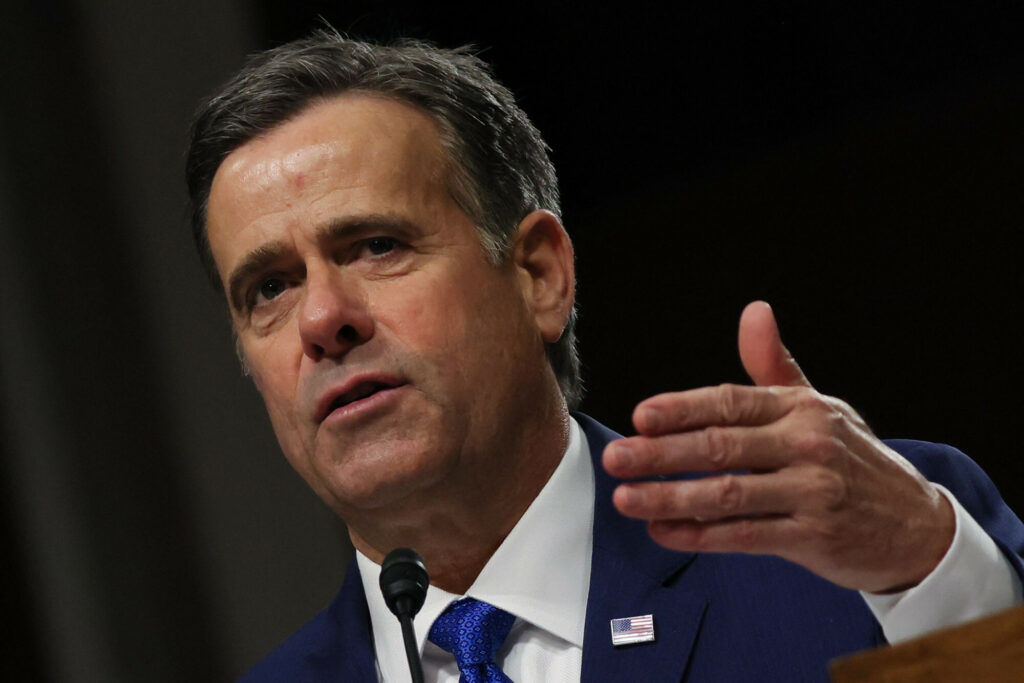
cia director john ratcliffe

CIA Director John Ratcliffe visited Moscow on 25 August, becoming the first known serving CIA chief to travel to the Russian capital since November 2021, The Washington Post reported.

The CIA and White House did not publicly explain the mission.

The Kremlin said the unannounced trip involved “contacts between security services” but did not identify whom Ratcliffe met or what they discussed. Dmitry Peskov told Interfax that Ratcliffe did not meet with Russian President Vladimir Putin. The CIA and White House did not publicly explain the mission.

Expert raises possibility of a warning mission

Washington also asked Ukraine not to attack Moscow or St. Petersburg during the visit, Ukrainian sources told Suspilne. Kyiv was told that a senior US delegation was traveling to Russia, although officials were not initially told that Ratcliffe would be part of it.

“It is difficult to speculate because there is essentially no information,” Tartu researcher Vladimir Sazonov, an associate professor who studies Russian state ideology and information warfare, told Euromaidan Press.

Ratcliffe may have carried a warning, as William Burns did in 2021, Sazonov said. It could have concerned a possible new Russian mobilization after September’s State Duma elections or Moscow’s escalating hybrid operations against NATO.

Stalled Ukraine diplomacy and Russia’s relationship with Iran were other possible subjects. None has been confirmed.

Explore further

Russo-Ukrainian War. Day 175: Another explosion in Crimea

The last CIA visit came before Russia invaded

A US Air Force C-17 flew from Joint Base Andrews outside Washington to Riga, and then Moscow, according to flight data analyzed by The Washington Post. The aircraft remained at Vnukovo Airport for about eight and a half hours before returning to Latvia. The newspaper also verified footage of a diplomatic motorcade traveling through central Moscow.

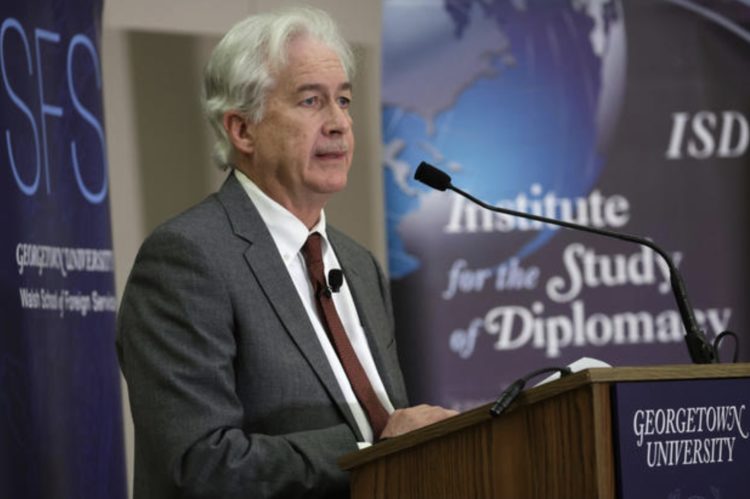
cia director william burns
The career diplomat and former ambassador to Russia, the CIA Director, William Burns/ Source: Getty Images

Ratcliffe’s visit was the first by a CIA director since Burns traveled to Moscow in November 2021 with evidence that Russia was preparing a major attack on Ukraine.

During that visit, Burns spoke with Putin by telephone from the Kremlin because the Russian president was in Sochi. Russia launched its full-scale invasion less than four months later.

Sazonov also raised the possibility that Ratcliffe discussed Americans detained in Russia. The CIA participated in previous negotiations that freed journalists Evan Gershkovich and Alsu Kurmasheva, and former US Marine Paul Whelan, RFE/RL documented CIA involvement.

“If we do not know the answers, all we can do is ask the relevant questions,” Sazonov added.

  •  

Riposte canadienne aux tarifs douaniers américains – voici l’essentiel 

Le gouvernement fédéral a présenté des mesures en représailles aux droits de douane américains entrés en vigueur samedi dernier. 

À compter du 8 septembre, le Canada imposera des taxes à l’importation de 15%, 25% ou 50% sur environ 700 produits américains.

Secteurs les plus touchés 

  • acier
  • produits laitiers
  • électroménagers
  • matériel agricole
  • pâtes et papiers 
  • électronique

Ces contres-tarifs ne visent que des produits frappés par des tarifs américains. 

Ils s’appliqueront à presque 28 milliards $ d’exportations annuelles des États-Unis vers le Canada.

  • C’est un montant équivalent à celui des exportations canadiennes vers les États-Unis visées par les nouveaux tarifs américains. 

Réponse américaine à la riposte canadienne 

Donald Trump avait dès lundi, avant qu’on connaisse le détail des contre-tarifs, menacé de porter à 50% en janvier prochain les tarifs américains sur les voitures, les camions, les pièces automobiles et l’acier canadiens.

[L'article Riposte canadienne aux tarifs douaniers américains – voici l’essentiel  a d'abord été publié dans InfoBref.]

  •  

Les États-Unis imposent de nouvelles sanctions à l’Iran

Scott Bessent, ministre américain des finances, a déclaré que Washington avait l’intention de «couper toutes les ressources économiques» du régime iranien.

Les nouvelles sanctions américaines visent cinq secteurs:

  • les actifs numériques
  • la technologie
  • l’or
  • l’aviation
  • le transport maritime

Bessent a affirmé que tous les pays qui ne participeraient pas aux sanctions américaines seraient aussi isolés que l’Iran.

Le gouvernement américain menace d’expulser les pays récalcitrants du système financier lié au dollar américain.

[L'article Les États-Unis imposent de nouvelles sanctions à l’Iran a d'abord été publié dans InfoBref.]

  •  

La guerre commerciale reprend entre le Canada et les États-Unis

Mark Carney a suspendu vendredi soir les négociations commerciales avec les États-Unis.

Il a expliqué que des modifications demandées par Washington étaient «inéquitables, non rentables et remettaient en cause la fiabilité de tout accord».

Selon Carney, les négociateurs américains voulaient: 

  • restreindre les ententes commerciales que le Canada pourrait conclure avec d’autres pays; 
  • maintenir des droits de douane trop élevés sur le secteur automobile; 
  • exempter les entreprises américaines de l’obligation d’afficher et d’étiqueter leurs produits en français.

Le premier ministre fédéral a résumé samedi: «quand vous êtes attaqués, c’est que vous êtes en guerre», avant d’affirmer: «nous avons été attaqués».

[L'article La guerre commerciale reprend entre le Canada et les États-Unis a d'abord été publié dans InfoBref.]

  •  

Washington a finalement imposé ses droits de douane de 50%, Ottawa va riposter

Le gouvernement américain applique depuis samedi des tarifs douaniers de 50% sur de nombreux produits canadiens:

  • les produits laitiers
  • les alcools 
  • des matériaux de construction
  • d’autres produits très variés, dont des appareils électroniques, des meubles et des bâtons de hockey

Ces tarifs affecteraient 5% des exportations canadiennes aux États-Unis.

  • La proportion est de 9% pour les exportations venant du Québec.

Le gouvernement canadien a l’intention d’imposer le 8 septembre des droits de douane d’un montant total équivalent, «au dollar près», sur les exportations américaines vers le Canada.

Ces contre-tarifs viseraient notamment les produits laitiers, l’acier et les appareils électroniques. 

[L'article Washington a finalement imposé ses droits de douane de 50%, Ottawa va riposter a d'abord été publié dans InfoBref.]

  •  

Hungary sent commandos to seize Ukraine’s $82 million bank convoy. Its investigators now say they have found no crime

Stacks of bundled banknotes and nine gold bars arranged on a wooden table.

Hungary has closed the Oschadbank case after finding no crime connected to an $82 million shipment of cash and gold belonging to Ukraine’s state-owned savings bank, The Insider reported on 20 August 2026, citing the bank’s lawyer Lóránt Horváth.

Closing the money-laundering case removes the allegation used to justify seizing Oschadbank’s assets. A separate criminal investigation is examining the couriers’ detention, while Prime Minister Péter Magyar’s government has opened an internal review of the agencies involved. Together with the return of the assets, these steps reverse how this case was handled under former PM Viktor Orbán and may help improve relations with Ukraine.

Hungary’s National Tax and Customs Administration (NAV), the country’s tax and customs authority, traced the assets to a documented deal between Austria’s Raiffeisen Bank International and Oschadbank. Raiffeisen provided records establishing the assets’ origin and Oschadbank’s payment, according to Horváth’s account of NAV’s decision.

Meanwhile, a separate investigation into the couriers’ alleged unlawful detention remains open. János Hajdu, the former head of Hungary’s Counter-Terrorism Center (TEK), is a suspect. TEK is the country’s armed counterterrorism police.

A leaked prosecution document named former Prime Minister Viktor Orbán and three other former officials, including Hajdu, among those involved in deciding on the operation. Orbán has not been named as a suspect, Euronews reported on 30 June.

Orbán denies wrongdoing and says the raid was lawful.

How the Oschadbank case began

TEK stopped two armored cash-in-transit vans near Budapest on 5 March 2026. They carried $40 million, €35 million, and nine kilograms of gold from Vienna to Kyiv under a routine banking contract, Euromaidan Press reported. Officers detained the seven Oschadbank employees as witnesses, kept them handcuffed for 28 hours, and denied them lawyers and Ukrainian consular access, Ukraine’s Foreign Ministry said.

Hungary deported the couriers and imposed three-year Schengen bans, which barred them from most of Europe, although none had been charged with a crime. The orders and bans were later annulled.

Orbán’s government nevertheless portrayed the shipment as possible money laundering. Fidesz politicians also alleged, without evidence, that it was intended to finance Magyar’s then-opposition party, Tisza.

Hungary returned the vans, cash, and gold by 6 May. Ukrainian Foreign Minister Andrii Sybiha called the handover a break with Orbán-era “lawlessness” and a sign that relations could advance through “mutual respect and healthy pragmatism,” Reuters reported.

  •  

Que sait-on sur le futur accord commercial Canada–États-Unis? 

À la suite du report de l’instauration de nouveaux droits de douane américains, le gouvernement fédéral a confirmé hier qu’il finalisait un accord avec Washington.  

Mark Carney s’est toutefois contenté d’évoquer des «progrès substantiels», en soulignant qu’«il reste encore du travail important à accomplir».

Aucun des deux gouvernements n’a dévoilé le contenu de l’accord qui serait en cours de finalisation. Seules indications:

  • Dominic LeBlanc, ministre responsable du commerce Canada–États-Unis, a indiqué que le système de gestion de l’offre resterait intact.
  • Tim Houston, premier ministre de la Nouvelle-Écosse, a dit que Carney avait demandé aux provinces de remettre en vente l’alcool américain.

[L'article Que sait-on sur le futur accord commercial Canada–États-Unis?  a d'abord été publié dans InfoBref.]

  •  

Donald Trump a annoncé une entente de principe avec le Canada sur les tarifs douaniers

Dans une publication sociale en fin de soirée mardi, le président américain a indiqué qu’il reportait de trois jours l’instauration de nouveaux droits de douane américains sur de nombreux produits canadiens.

Ces tarifs douaniers, de 50%, avaient été annoncés le mois dernier et devaient entrer en vigueur aujourd’hui.

D’intenses négociations commerciales entre le Canada et les États-Unis ont eu lieu ces derniers jours.

Trump a justifié le report de l’entrée en vigueur par le fait que les deux pays seraient parvenus à une entente, qui resterait cependant à finaliser par écrit.

[L'article Donald Trump a annoncé une entente de principe avec le Canada sur les tarifs douaniers a d'abord été publié dans InfoBref.]

  •  

Russia hunted civilians by drone in Kherson. Victims are suing the US firm they say helped connect the attackers

Russia hunts kills protest targets civilians with drones stop human safari save kherson

A New York networking company sold radios that let signals travel 100 kilometers. Ukrainian civilians say Russian drone crews used them to hunt people in Kherson, and they are asking a Manhattan jury to hold the company responsible.

Ukrainian civilians and relatives of people killed by Russian drones sued Ubiquiti Inc. in the US District Court for the Southern District of New York on 11 August, alleging the company's wireless equipment became the backbone of the command network behind Russia's "human safari" against civilians.

The case rests on a comparison that the plaintiffs draw themselves. In February 2026, Starlink terminals that Russian forces had mounted on reconnaissance and strike drones were shut off after Ukraine and SpaceX built a whitelist of authorized terminals. Ubiquiti, the complaint alleges, had the same technical and contractual power over its own devices and did not use it.

That precedent cuts both ways. SpaceX had denied for years that Russian forces were using Starlink systematically, and the whitelist came together only after Ukraine's newly appointed defense minister, Mykhailo Fedorov, approached the company directly. The fix was technically possible—and it took a government to force it.

During this interview with a lovely Khersonian lady, Russian drones made several appearances.

To anyone who has not been to Kherson in the last two years, this might seem impossible or insane.

Nothing about flying machines with explosives attached to them is sane or normal. pic.twitter.com/M0MYorF2FR

— Zarina Zabrisky 🇺🇸🇺🇦 (@ZarinaZabrisky) August 11, 2026

What the lawsuit claims

The law firm DiCello Levitt LLP filed the case, Kovalenko et al. v. Ubiquiti, Inc., No. 1:26-cv-06838. The plaintiffs are Ukrainian civilians who were maimed, displaced, or forced to live under drone surveillance, along with family members of civilians killed in drone attacks. They are seeking a jury trial.

Ubiquiti, listed on the New York Stock Exchange as UI, makes long-range wireless "bridges" widely used for internet access in areas without cable. Its radio bridge antennas and airMAX technology are subject to US export restrictions on Russia. The complaint alleges the devices kept reaching Russian forces through intermediary supply chains, and that they now link reconnaissance units, drone operators, attack units, and commanders across roughly 100 kilometers of encrypted battlefield network.

"Battlefield communications are the central nervous system of the Russian occupation forces: without them, they could not coordinate the human safari or maintain the occupation," Scott Gilmore, the lead attorney for the plaintiffs and a partner at DiCello Levitt, said in an interview with Euromaidan Press.

The complaint cites US export-control restrictions, Russian import data, public reporting, Russian military statements, battlefield images and video, and Ubiquiti's own device telemetry. It alleges the company held location data showing where its devices were operating, including inside Russia and occupied Ukrainian territory, and that it was repeatedly warned its products were being smuggled across the border.

It further alleges Ubiquiti continued issuing firmware updates and technical support that kept those devices running, and that it could have cut the pipeline off—by geofencing, by terminating distributors tied to sanctions-evasion routes, or by building a remote-disable feature into its firmware.

This case is not about standard warfare: it's about murdering civilians.

Scott Gilmore, lead attorney for the plaintiffs

"Companies cannot willfully blind themselves when sanctions and export controls are being breached, and their devices are being foreseeably used in dangerous ways," Gilmore said. "US law is clear that companies bear legal responsibility when they entrust dangerous devices to end users who they know or should know are hurting people. This case is not about standard warfare: it's about murdering civilians."

The plaintiffs bring eight causes of action, including negligent entrustment, public nuisance, strict products liability for design defect, negligent product design, negligent infliction of emotional distress, and aiding and abetting assault, battery, and intentional infliction of emotional distress.

Russia human safari drone attacks civilians Kherson
Explore further

Russian drone kills 84-year-old goat herder who refused to abandon her animals

How the radios got to the front

The lawsuit follows an investigation published in January 2026 by Hunterbrook Media, which documented widespread use of Ubiquiti products by Russian forces. One Ukrainian communications officer told the outlet that an estimated 80% of the Russian bridges he had observed near the front line were Ubiquiti devices.

Analysis of trade records found the value of Ubiquiti shipments crossing into Russia rose by 66% after the full-scale invasion, despite US and EU export controls, and that the shipments included models released after the bans took effect. The goods moved mainly through distributors in third countries such as Kazakhstan and Türkiye. Russian units often received the bridges from volunteers who bought them with crowdfunded money.

Ubiquiti has been here before. In 2014, the company paid a $504,225 settlement to the US Treasury's Office of Foreign Assets Control after its products were delivered to Iran in violation of US sanctions between 2008 and 2011.

🔴Human safari: the first video of a drone chasing a civilian. CCTV camera footage I obtained in Aug 2024.

This systematic drone terror campaign has been going on for two years.

Today, in Kherson, as of 9 pm,

11 drone attacks reported;
6 civilians injured

Dozens unreported https://t.co/OU9i97Geyu

— Zarina Zabrisky 🇺🇸🇺🇦 (@ZarinaZabrisky) August 11, 2026

The campaign at the center of the case

Russia's "human safari" is a campaign in which small drones hunt and attack civilians, concentrated in Kherson and other front-line areas. Operators use drone cameras to track people, vehicles, and rescuers, and sometimes strike the same target twice.

UN investigators concluded in September 2025 that Russian short-range drone attacks on civilians along the west bank of the Dnipro River amount to the crimes against humanity of murder and forcible transfer of population. The finding covers more than 300 kilometers across Kherson, Dnipropetrovsk, and Mykolaiv oblasts. The complaint cites it as evidence.

Ukraine's Security Service has since charged 10 operators from Russia's 404th Motorized Rifle Regiment with war crimes in absentia, in a case that included explosives dropped on ambulances at a city hospital and a double strike on rescuers.

The incidents in the complaint include a married couple attacked in their car, a firefighter hunted and wounded by a drone while responding to a colleague, and an energy worker killed in a double-tap strike as colleagues tried to reach him.

"The human safari is one of the most horrific crimes against humanity of the 21st Century," Gilmore said. "We intend to present evidence of the widespread and systematic nature of this campaign in court, including international documentation. These coordinated attacks do not happen randomly: they require communications systems and a chain of command. That is precisely why the United States banned the export of Ubiquiti's radio bridge antennas to Russia—because they are necessary for Russia's war machine."

The human safari is one of the most horrific crimes against humanity of the 21st Century.

Scott Gilmore, lead attorney for the plaintiffs

Russian state media has shown the equipment in use.

Zvezda, the television channel run by Russia's Defense Ministry, aired footage on 3 July 2025 of a Ubiquiti UISP Litebeam 5AC device; a TASS report in October 2025 showed a serviceman logging into Ubiquiti's airOS operating system, and a Rossiya-1 segment that month showed one climbing a tower to mount an antenna carrying the company's logo.

A Russian seller supplied Hunterbrook with letters she said came from Russian military units, thanking her for wireless bridges they described as necessary for connections over long distances.

Ubiquiti has said nothing

Ubiquiti did not respond to a request for comment at the time of publication.

Neither the company nor its chief executive, Robert Pera, has publicly commented on the January investigation, according to the Foundation for Defense of Democracies. No US or EU authority has announced an enforcement action against Ubiquiti over Russia, and the company has not been formally accused of sanctions violations tied to Ukraine. The allegations in the complaint are untested, and Ubiquiti has not yet filed a response.

Human safari drone attacks Kherson civilians
Explore further

Inside Human Safari: the film that captures Russia’s drones hunting Ukrainians like prey

What the case would establish

If it survives, the suit would test whether ordinary US product-liability law reaches a manufacturer whose equipment ends up in a documented atrocity—a theory that does not require proving the company intended any of it, only that it knew or should have known and failed to act.

"The question is this: what would a reasonable company do if it learned its devices were being used to coordinate murder?" Gilmore said. "If it fails to follow reasonable safety measures, shouldn't it be held liable to the civilians who get hurt? Those are the questions we intend to put before a New York jury."

Gilmore, who has investigated war crimes for two decades, said the legal framework needed already exists at national and international levels, and that in mass-atrocity cases from Syria to Sudan, investigations, jurisdiction, and remedies take years. He said he expects accountability for Ukrainian victims to come through criminal prosecutions, civil litigation, and regulatory enforcement together.

"Our clients want to shine a light on the atrocities being committed against civilians in Ukraine and to remind companies that compliance with sanctions and export controls is not a mere technicality: it's a matter of life or death," he said.

"We are at the tip of the spear."

Editor's note: Euromaidan Press correspondent Zarina Zabrisky, who conducted this interview and reports from Kherson, co-developed draft US legislation on the drone campaign—the Liability for Operators and Responsible Authorities (LORA) Act—which would impose targeted sanctions on identified drone operators, restrict exports of drone components, and require public attribution of perpetrators. She has no connection to this lawsuit or to the firm that filed it. Her documentary Kherson: Human Safari is available free at khersonhumansafari.com.

  •  

Nouveaux tarifs américains: le gouvernement Fréchette «se prépare à tous les scénarios» 

Christine Fréchette a réuni hier les principaux acteurs économiques québécois quelques jours avant la date prévue pour l’entrée en vigueur de nouveaux droits de douane américains de 50%, mercredi prochain. 

La première ministre a indiqué que ces nouvelles surtaxes américaines pourraient affecter jusqu’à 9% des exportations québécoises. 

Christopher Skeete, ministre des relations internationales, a rappelé, selon Radio-Canada, que la nouvelle politique internationale du gouvernement Fréchette pourrait amener le Québec à se soustraire à une éventuelle entente Canada–États-Unis qui empiéterait sur ses champs de compétence.

[L'article Nouveaux tarifs américains: le gouvernement Fréchette «se prépare à tous les scénarios»  a d'abord été publié dans InfoBref.]

  •  

Un accord commercial Canada–États-Unis pourrait-il être conclu d’ici quelques jours?

Le gouvernement américain avait imposé le mois dernier de nouveaux droits de douane de 50% sur de nombreux produits canadiens. 

  • Il est prévu qu’ils entrent en vigueur mercredi prochain. 

Dominic LeBlanc, ministre fédéral responsable du commerce Canada–États-Unis, et Jamieson Greer, ministre américain du commerce international, se sont rencontrés hier pour la troisième fois en trois semaines.

Selon plusieurs médias, LeBlanc et Greer pourraient conclure une entente au cours des prochains jours.

Une telle entente pourrait être soumise lundi à Donald Trump, deux jours avant l’entrée en vigueur des nouveaux tarifs douaniers.

[L'article Un accord commercial Canada–États-Unis pourrait-il être conclu d’ici quelques jours? a d'abord été publié dans InfoBref.]

  •  

Une vingtaine d’États américains contestent des droits de douane imposés par les États-Unis

Donald Trump a annoncé le mois dernier de nouveaux droits de douane, de 10% ou de 12,5%, pour remplacer la surtaxe mondiale de 10% imposée l’an dernier et qui arrivait à échéance.

25 États américains ont déposé hier une plainte auprès du Tribunal de commerce international des États-Unis pour contester ces tarifs imposés par Washington.  

Ils soutiennent que le gouvernement Trump n’a pas, comme il le prétend, décrété ces tarifs pour combattre le travail forcé, mais plutôt pour rétablir des droits de douane proches de ceux que les tribunaux avaient déjà annulés par deux fois.

[L'article Une vingtaine d’États américains contestent des droits de douane imposés par les États-Unis a d'abord été publié dans InfoBref.]

  •  

Le gouvernement fédéral impose une surtaxe à l’importation de certains meubles en bois

Les fabricants de nombreux pays verront désormais certains types d’armoires et de meubles-lavabos en bois soumis à un droit de douane de 25% lorsqu’ils les vendent au Canada. 

François-Philippe Champagne, ministre fédéral des finances, a présenté cette mesure comme un «droit de sauvegarde provisoire». 

Elle s’appliquera pour un maximum de 200 jours, pendant que le Tribunal canadien du commerce extérieur enquête sur des suspicions de dumping de la part de certains pays.

La surtaxe ne touche pas les meubles fabriqués aux États-Unis, au Mexique, en Israël, au Chili ni «dans les pays en développement».

[L'article Le gouvernement fédéral impose une surtaxe à l’importation de certains meubles en bois a d'abord été publié dans InfoBref.]

  •  
❌