The BMP-T is a Russian rarity: a heavily armed vehicle that's not quite a tank and not quite an infantry carrier
The Russians built only a few BMP-Ts, and they're vanishingly rare in Ukraine even as the Russians restore their mechanized forces
The sheer density of Ukrainian mines and drones means the BMP-Ts can't survive long enough to justify their weirdness
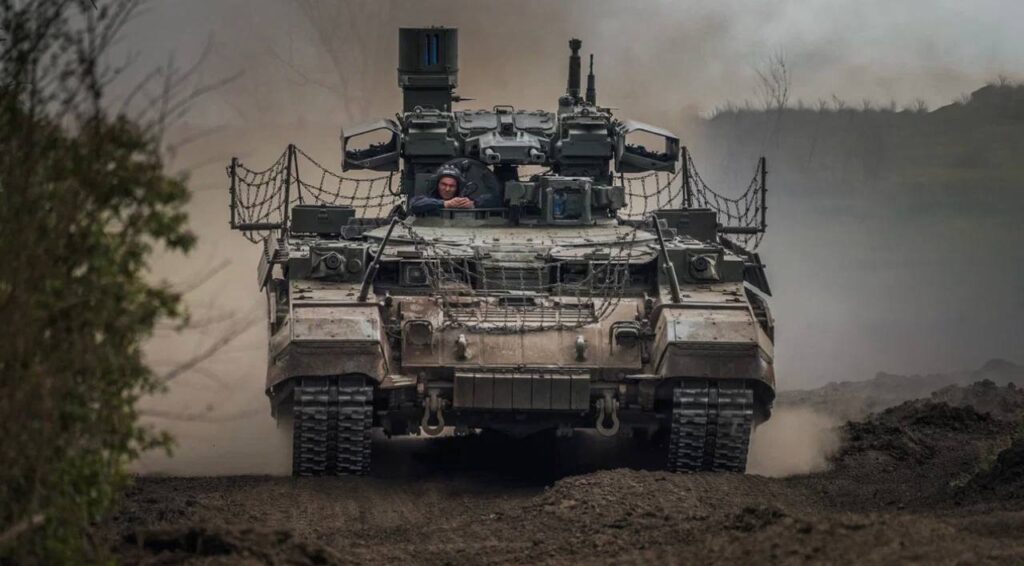
Russia's rarest armored fighting vehicle (AFV) just broke cover for the first time this year. The heavily armed BMP-T Terminator is back! Just don't expect it to make much, or any, difference on the ground in Ukraine.
The BMP-T exists to escort tanks and shoot up the infantry ambushers who hunt them. The problem for the 90th Tank Division, the sole confirmed user of the 48-ton, five-person vehicle, is that infantry ambushes are rare these days. The main threats to Russian tanks are mines and drones. And to mines and drones, the BMP-T is just another target.
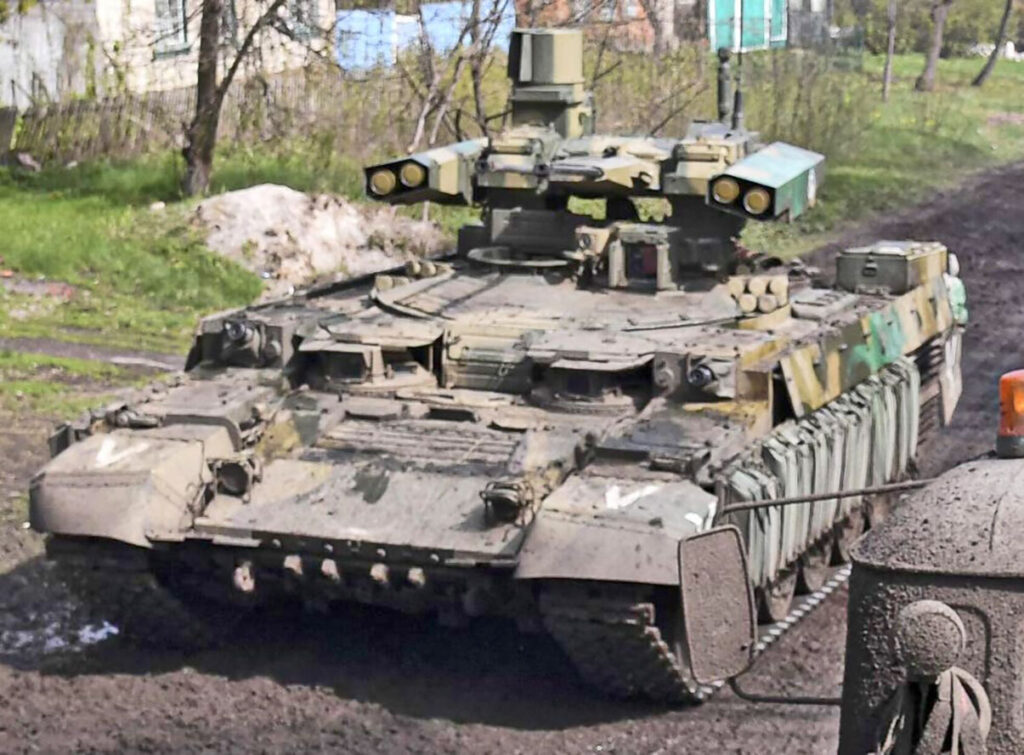
A photo circulated online recently depicting a BMP-T with add-on anti-drone protection. It's one of just 20 or so the Russian vehicle-maker Uralvagonzavod has ever produced for the Russian army. That makes it one of the rarest fighting vehicles in an army with tens of thousands of tanks, BMP-2s and BMP-3s and other AFVs.
The BMP-T is special. It's not as well-armed or well-protected as a tank, but it's better-armed and better-protected than a standard BMP infantry carrier. With its small turret cradling twin 2A42 30-mm cannons firing 300-g shells at a rate of around 200 rounds a minute, the BMP-T can lay down a lot of firepower.
"The most important thing is to support the tanks," a BMP-T commander told the Russian state newspaper Izvestia. That emphasis on tank support is why the BMP-T doesn't carry infantry passengers, unlike other BMP models that are primarily infantry carriers.
Ukrainian forces have destroyed or damaged several BMP-Ts since the type first rolled into action no later than early 2023. Late last year, Uralvagonzavod produced a small batch of new BMP-Ts to complement the initial batch of 12 vehicles.
Don't expect many more BMP-Ts to roll off the factory floor. It's not that Uralvagonzavod isn't hard at work. The factory is churning out hundreds of new T-90M and T-72B3M tanks every year, complementing the thousands of older tanks that Russian forces have pulled out of long-term storage for refurbishment, upgrade and further use.
The ongoing production and restoration, combined with a sharp reduction in Russian vehicular attacks in Ukraine, have allowed the Kremlin to make good heavy losses in Ukraine, and then some. Russian forces have lost no fewer than 14,000 AFVs in 53 months of wider war. But Russian industry has built or restored ... at least 14,000 replacement AFVs.
Russia's BMPT in Ukraine. Source: vpk.name via frontelligence.substack.com
De-mechanization
All that is to say, Russia's war on Ukraine de-mechanized the Russian army. But then the army re-mechanized by redoubling production and mostly pausing mechanized attacks in favor of infantry-led assaults across the drone-patrolled, mine-infested gray zone.
Exactly what the Russians are saving all those vehicles for is unclear. Maybe they're preserving them for some future conflict. Or maybe they're just waiting for more favorable conditions along the 1,200-km gray zone threading across eastern and southern Ukraine.
Those conditions may never come as Ukraine deploys more drones and lays more mines. The same unit that operates the BMP-Ts, the 90th Tank Division, learned this the hard way on 22 July. Perhaps sensing that the terrain around Shakhove in eastern Ukraine's Donetsk Oblast was too rough for infantry traveling on foot, the 90th Tank Division and elements of the 8th and 41st Combined Arms Armies attacked with armored vehicles for the first time in months.
A clutch of upgraded T-72B3A tanks with Arena-M anti-drone defenses led the attack. The Arena-M uses radar to detect incoming enemy munitions and then fires tiny projectiles at the munitions from an array of 12 launchers. The Arena-M works against small drones, but it's useless once it fires all 12 projectiles. To knock out the T-72B3As near Shakhove on 22 July, all the Ukrainians had to do was launch more than 12 drones per tank.
The BMP-T doesn't have active protections in the class of the Arena-M. It would've been even more vulnerable to drones, and even more useless in the doomed assault near Shakhove. The Russians have settled on two vehicle types as they rebuild their mechanized forces: tanks for leading assaults and BMPs for carrying infantry behind the tanks.
Where does the BMP-T fit in this construct? The infrequency with which BMP-Ts have appeared anywhere near the gray zone in the past year is the strongest sign that the fast-firing vehicles don't fit anywhere. They're vanishingly rare because they're increasingly useless.
World Boxing has lifted the last restrictions on Russian athletes, clearing them to compete under their own flag and anthem as they chase qualification for the 2028 Los Angeles Olympics. Days earlier, in a frontline Kherson gym that Russian artillery had wrecked, the teenage boxers who trained there had recorded their own message to the Olympic movement: keep Russia out.
World Boxing approved the change on 30 July, the latest sports federation to roll back its wartime restrictions as the Olympic movement eases Russia back toward the Games, even as its attacks keep destroying Ukraine's sports infrastructure and the lives of athletes in frontline oblasts such as Kherson.
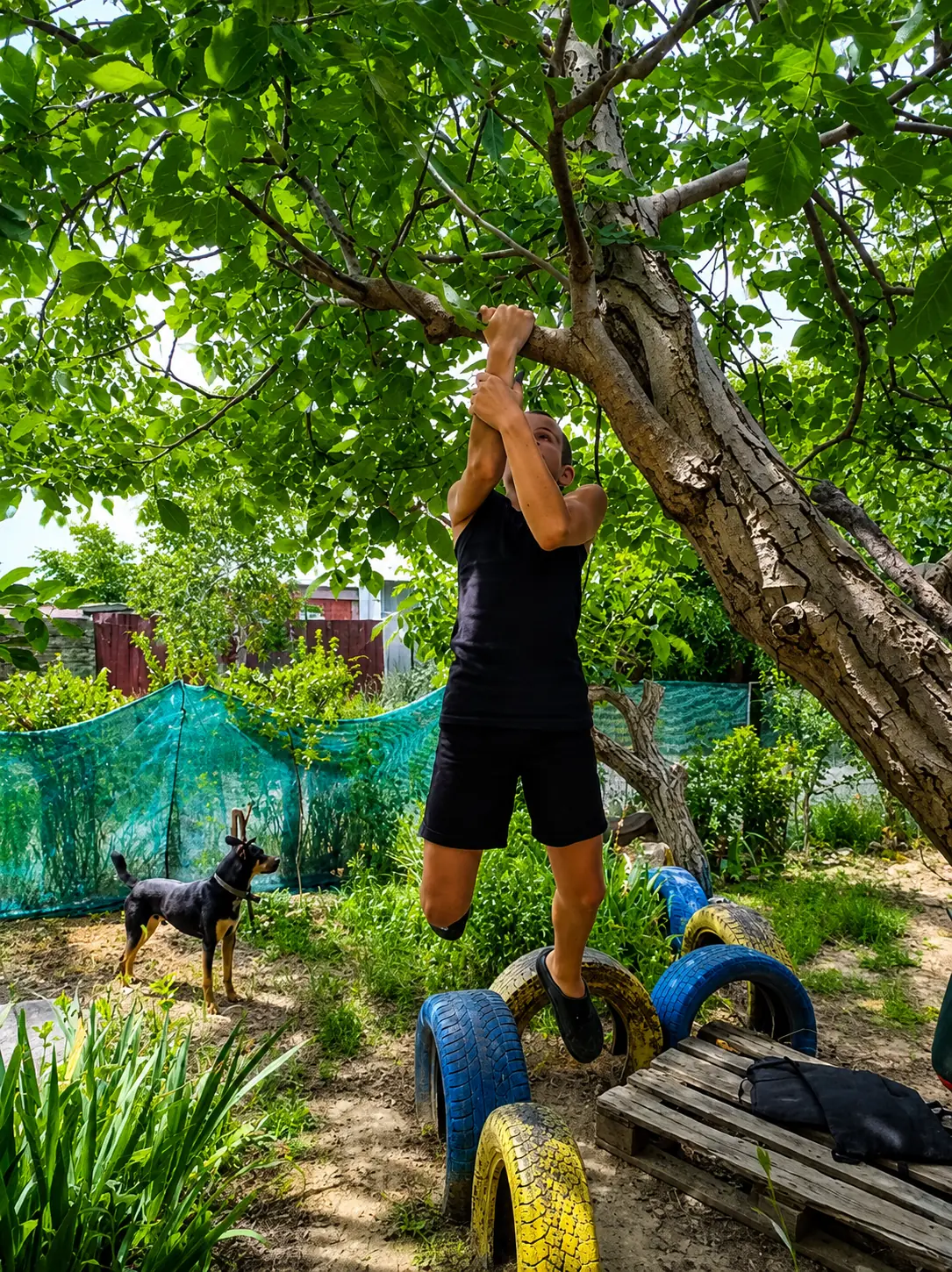
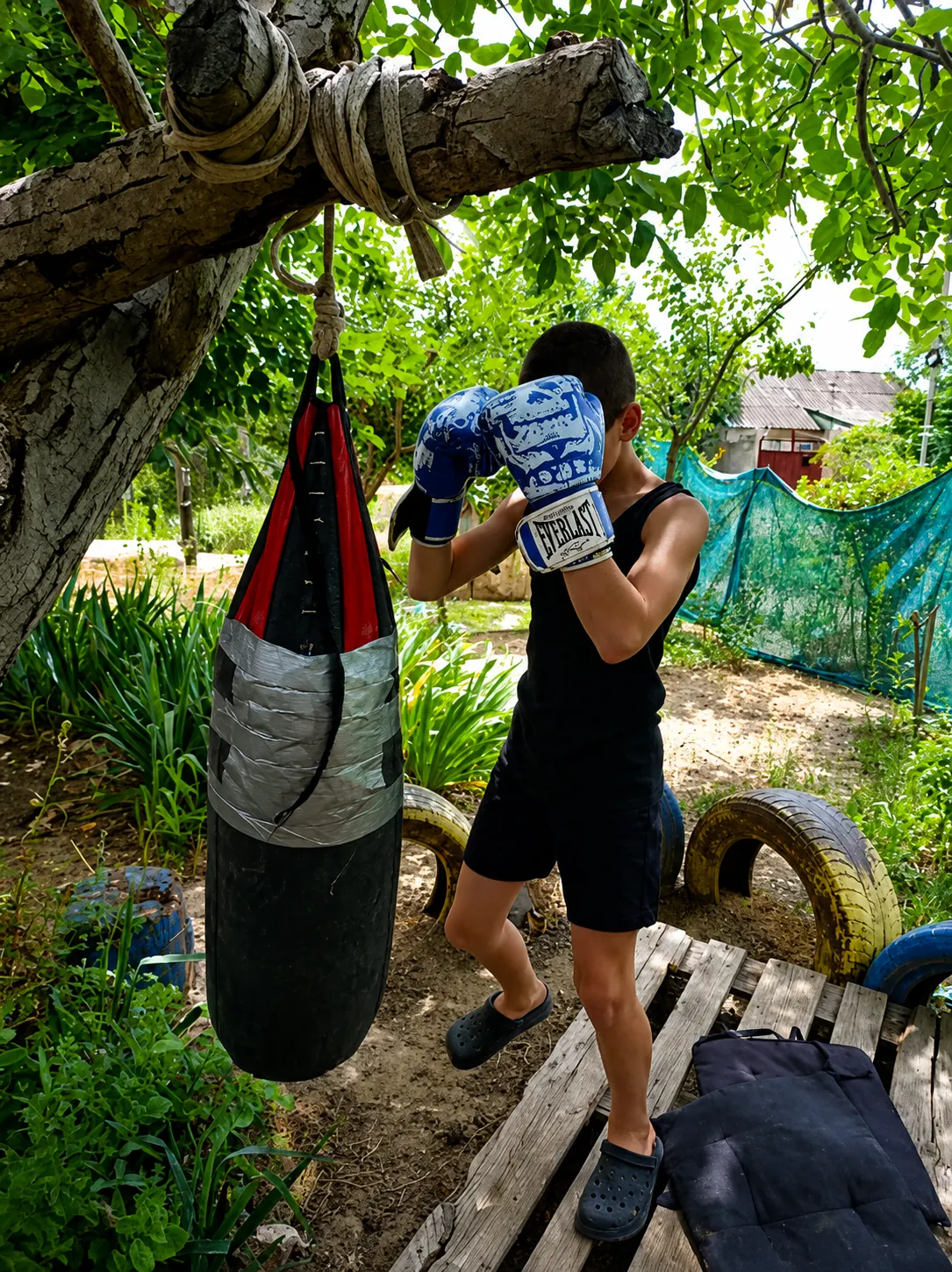
Tymur training in his yard. Photo from the family archive.
The 11-year-old martial-arts champion who trains between drone strikes
Tymur, 11, steps out into his yard and listens to the sky. No buzzing. This means no “human safari” drones nearby. Timur has just given himself his morning insulin shot, had his breakfast, and he now heads for his punching bag, hanging from the old walnut tree. He warms up with pull-ups, the branch being his pull-up bar, as his dog runs around, and then works the punching bag, pierced by Russian shrapnel.
Training in the yard is not enough, so Tymur rides his bicycle under Russian FPV drone attacks to his practice session. Along the way, he stops to hide under a tree. In summer, Kherson poplars and sycamore trees offer many good hiding places, and the anti-drone nets cover many streets, but the Russian drones are flying low now.
When they spot a car, a pedestrian, or a child on a bicycle, they dive even lower. The pilots on the other side of the river see their targets but carry on with their hunt. Lately, some drones fly without making any noise.
Hearing loud buzzing, Timur jumps off the bike and throws himself in the grass. Lawns are often littered with mines, but there is no choice. After a few stops, he arrives at the practice, held in a basement. For a while, Timur can focus on the training—until he starts on his way back home.
Tymur, the Kherson city champion in hand-to-hand combat and the Mykolaiv Oblast champion in MMA, takes his training seriously, even after he was diagnosed with insulin-dependent Type 1 diabetes right after the occupation. He dreams of becoming the champion of Ukraine, Europe, and the world.
His role model is Muhammad "D.K." Ali, a British professional boxer who, like Tymur, lives with insulin-dependent Type 1 diabetes. He is also inspired by Yulian Pozdniakov, a Ukrainian professional kickboxer, a European professional kickboxing champion, a Ukrainian IFMA Muay Thai and WAKO K-1 champion, and Timur has recently started training in kickboxing and Muay Thai.
Tymur and his punching bag. Photo from the family archive.
Chess retreats to a basement after Russia jails the grandfather who taught it
Like Tymur, Sasha started boxing before the occupation. Eight at the time, he also practiced chess with his grandfather, an avid player, who was kidnapped by the Russian military during the occupation and sentenced to 20 years of strict regime on fabricated charges. Sasha stopped boxing, but he still plays chess.
His grandmother Tania, who also plays chess, said in an interview that Kherson is “a sports city.” Tania trains at home, doing yoga and general fitness routines.
“Everything here—our rivers and fields—is made for an active lifestyle,” said Tania. “And so our people are fit, morally and physically. The enemy is trying to destroy our places of strength, but our children stand firm and train. They do not give up in spirit.”
Her daughter, Sasha’s aunt, also practices with him over the phone as she had to move to Mykolaiv due to intense attacks on her district of Kherson. She used to go to the Children’s and Youth Sports School, also known as Chess Club. Sasha practices online with a coach during the week, but on the weekend he follows the family tradition and joins about 20 other young Kherson chess players for in-person training at the same school. Tania often walks her grandson to the basement practices, and fondly remembers the chess club and its beautiful home.
Since the 1980s, the Children's and Youth Sports School, funded by the city, held training and national and international tournaments at a historic building, a snow-white villa with arched windows and ornate wrought-iron balconies downtown Kherson. Vitaliy Bohdanov, the president of the Kherson Oblast Chess Federation for over 20 years, told Euromaidan Press that generations of young Khersonians studied chess and checkers in a former residence of the Italian embassy.
In 2023, the school had to move classes and tournaments to a safe underground facility due to constant shelling, and the building stood vacant. On 24 July 2026, the Russian military destroyed the architectural monument. The building burned out, taking a 5,000-book library of books on chess with it, and its roof collapsed after artillery and drone attacks, during which drones dropped incendiary napalm-like mixture.
The former chess and checkers school in central Kherson, housed in a historic building that once served as the Italian consulate, was destroyed by a Russian attack in July 2026. Photo: Embassy of Italy in Ukraine/Facebook
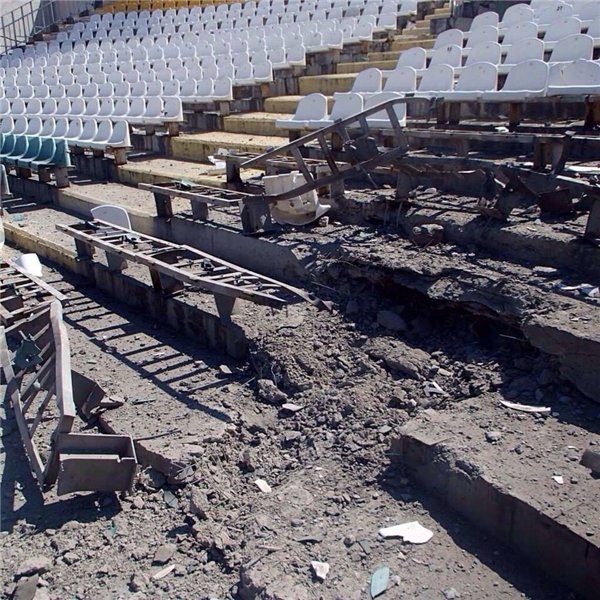
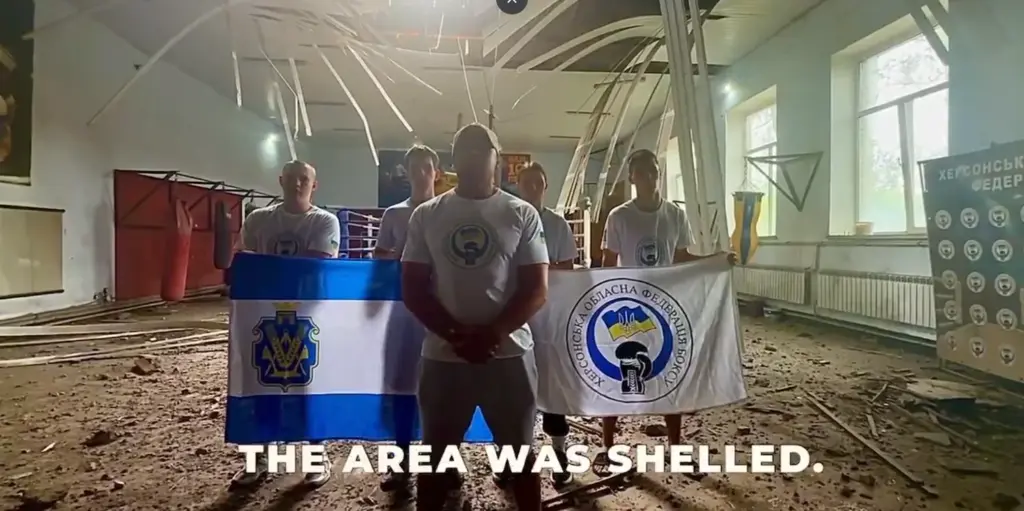
Russia levels the last boxing gym as its teenagers film a plea to the IOC
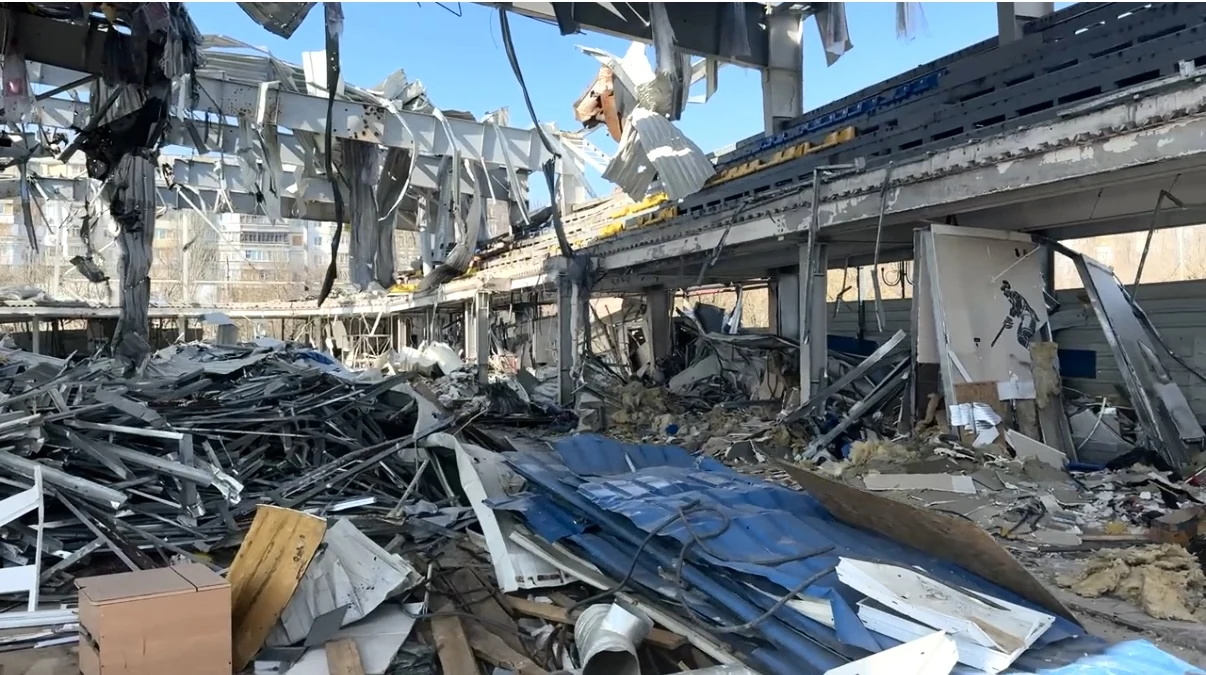
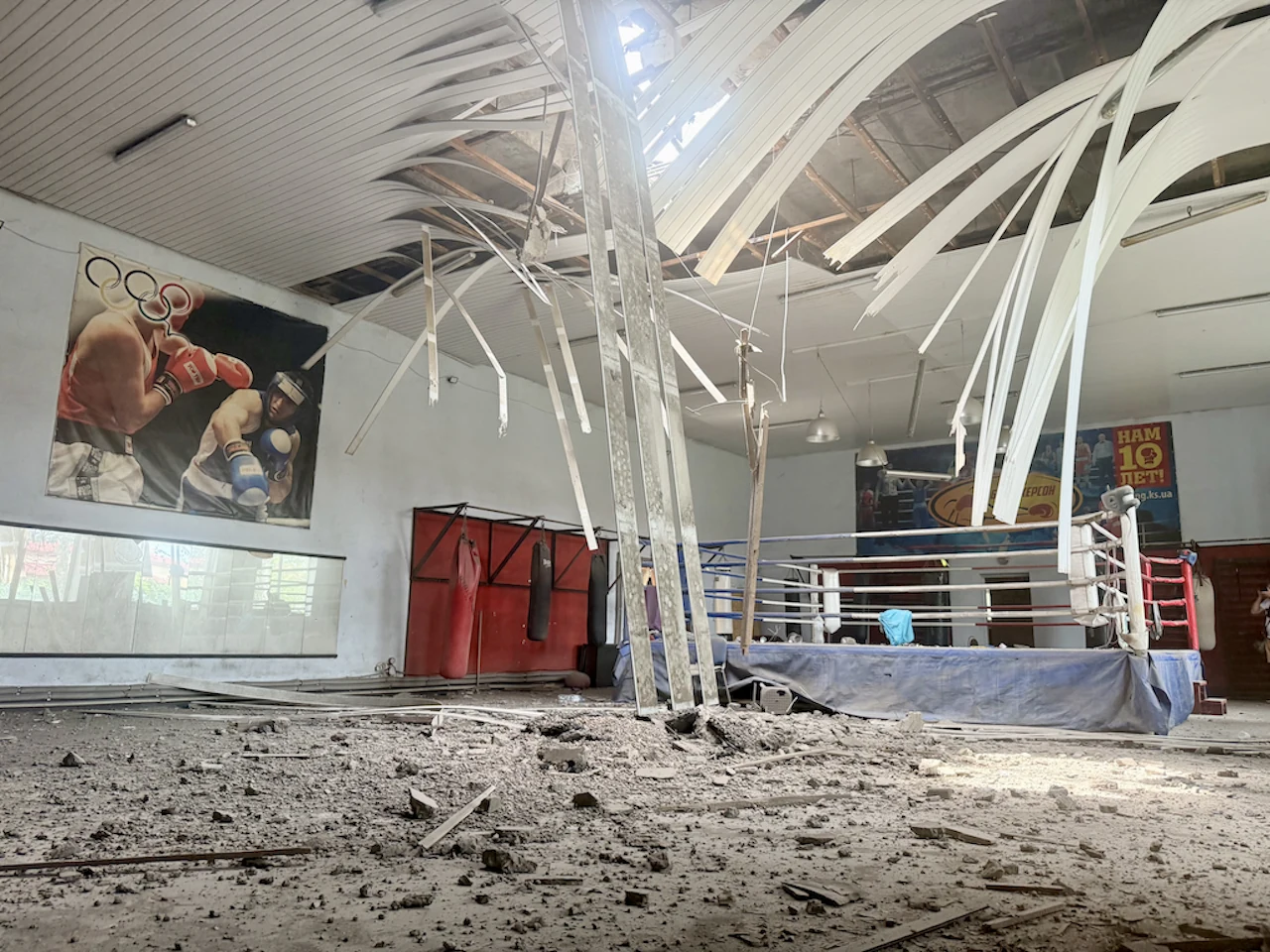
Kherson: a Russian shell destroyed the last boxing gym in Kherson, where children and teens trained.
Standing in the ruins, the coach urged the @iocmedia@Olympics IOC to ban Russian athletes. Young boxers spoke of shock, grief, and traveling to practice under drones. pic.twitter.com/iKnsnRGCVP
The morning after the chess club was destroyed, Russian artillery hit Kherson's only surviving boxing gym. After the city's liberation, the gym hosted regular training sessions and competitions.
Kherson boxing gym in August 2024. Photo by Zarina Zabrisky.
The youth team just returned from a tournament and, instead of practicing, helped to clean the premises. Four young athletes recorded an address to the International Olympic Committee, pleading to ban Russian athletes from international competitions. Tymofiy, 15, said that he trained in this boxing ring for seven years and could not find the words.
Standing amid bricks and fallen ceiling beams, Dmytro Obolentsev, Director of the Kherson Regional Children and Youth Sports School for Boxing and Other Sports and coach of the youth team, said that training will continue.
Kherson boxing gym after Russian artillery shelling, 25 July 2026. Photo by Zarina Zabrisky.
“These walls witnessed it all: the nerve-breaking moments before stepping onto the floor, the smiles after victory, the tears of defeat, the embraces of coaches, the applause of families, and the unforgettable moment when a young athlete stepped onto the podium to receive a well-earned medal and trophy,” wrote Zakhar Zhizhko, a Kherson resident. “Years will pass, but the memory of those competitions will remain. We want to believe that this gym will once again be filled with children's laughter, genuine emotion, and the joy of victory.”
The Olympic medalist who can no longer reach his river, and trains anyway
Serhii Kirsanov, Ukrainian sprint canoeist (Olympic silver medal in the K-4 1000 m event at the 1988 Summer Olympics, multiple World Championships winner) and his wife Luiza survived a Russian Shahid drone attack in Kherson.
Serhiy Kyrsanov, a fit man in his sixties, cleaned the destruction site on 29 July, after several Shahid drones devastated his neighborhood in the residential area of Kherson. Serhiy and his wife Luiza mopped broken glass and considered themselves lucky: their neighbors’ homes were destroyed and burned. Their spacious house featured Olympic posters and impressive memorabilia: Serhiy, a prominent Ukrainian rower, is an Olympic silver medalist and three-time world champion.
As Luiza wiped dust off the medal display in the living room, she said that both she and her husband are still involved in youth training in the city.
“I can’t row as we can’t reach the river,” said Serhiy. “But we do all sorts of other training, and we are not going to stop.”
The chess world condemns as the boxers' video circles the globe
The Italian Embassy in Ukraine condemned the attack on the chess school building, which was built for the Italian Ambassador in 1905 and hosted the Italian Embassy from 1906 to 1918. Lithuanian grandmaster and politician Viktorija Čmilytė-Nielsen expressed her indignation. Peter Heine Nielsen, a Danish chess grandmaster and five-time Danish champion, also condemned the attack. Garry Kasparov, former World Chess Champion and one of the greatest chess players in history, wrote that he was looking forward to helping to rebuild the chess club.
The boxing team’s video address to the International Olympic Committee went viral and was shared globally. Vladyslav Heraskevych, the first Ukrainian ever to compete in skeleton at the Winter Olympics, and an advocate for excluding Russian and Belarusian athletes from international sport, shared the address, adding that “Russian sports is an accomplice to Russia’s crimes.” The Boxing Federation of Ukraine issued a statement about the attack and looked into fundraising options.
"A sports city": 221 venues destroyed, its athletes still on the podium
Kherson ice rink destroyed by the Russian military. Photo by Zarina Zabrisky.
Tymur, Sasha and the young boxers are not an exception. The girls’ soccer team used to train outdoors until a Russian shell destroyed the soccer field. Russian shelling heavily damaged Kherson's only indoor ice rink, once home to youth hockey and figure skating. The war has devastated Kherson Oblast's sporting infrastructure as 221 sports facilities have been damaged or destroyed, forcing many clubs and sports schools to relocate, operate in basements, or train in mixed and remote formats.
Yet, sports go a long way in the city nicknamed “invincible.” Mothers and grandmothers frequent various training sessions, from fly yoga to belly dance and karate. Fathers and grandfathers run under drones and used to play basketball and soccer in the red zone until the point when being outside became impossible due to the massive FPV drone attacks. Swimming pools and gyms operate in half-ruined buildings and, in winter, in freezing temperatures.
Despite daily Russian attacks, Kherson's sports community continues to compete. According to the official regional statistics, provided by the Department of Physical Culture, Youth and Sports of the Kherson Regional State Administration, in 2025 more than 50 athletes from Kherson Oblast were winners or medalists at international and Ukrainian competitions across more than 20 sports, including rowing, wrestling, boxing, kickboxing, athletics, archery, volleyball, swimming, karate, sambo, draughts, sumo and canoeing.
The list included Olympic, Paralympic and Deaflympic athletes, as well as world, European and national champions and medalists. Kherson athletes competed at the Paris 2024 Olympic and Paralympic Games, the Deaflympics, and World and European Championships, while more than a dozen regional coaches were recognized for training international-level competitors.
During the first six months of 2026, 396 athletes from Kherson Oblast took part in Ukrainian and international competitions, winning 74 medals in Olympic sports, 93 in non-Olympic disciplines, and 10 in Paralympic and Deaflympic events.
Nearly 200 displaced children from Kherson Oblast participated in regional sports competitions, while another 198 children from frontline communities attended a two-week sports and rehabilitation camp in the Carpathians.
The boxers whose gym Russia destroyed had asked the Olympic movement to keep Russia out. On 30 July, World Boxing gave its answer: Russian athletes will compete under their own flag, like everyone else. Their ring is still rubble. Training, their coach said, continues—in the basement, under the nets.
Russia has lowered its benchmark for technological independence. A revised government target now requires domestic hardware to make up 58.7% of state technology projects by 2030—down from the 80% Moscow had long promised—a reduction proposed by Russia’s own Ministry of Industry and Trade and set by a decree signed in July 2026 by Prime Minister Mikhail Mishustin.
Funding collapsed as deadlines slipped
The scale of the retreat was laid out by Ukraine’s Foreign Intelligence Service, which called the downgrade a capitulation to reality. Funding for the flagship state program collapsed roughly fivefold, from $338.4 million in 2024 to $62.6 million in 2026, and the broader electronics-engineering development program faces a $422.7 million shortfall for 2026–2028, the service said.
Several microelectronics-equipment projects were canceled outright, and deadlines for domestic processors and modems have slipped to 2032. The “Irtysh” processor Moscow presented as a homegrown design for critical infrastructure is, by the service’s account, effectively a copy of China’s Loongson chip, and the Kurchatov Institute missed its deadline to build replacements for Intel, Marvell, Broadcom, and Integrated Device Technology parts.
Russian specialists themselves say localizing more than 60% is impossible without domestic production of chips at 28 nanometers and below, which sanctions and the loss of Western tooling put out of reach.
The GRU buys abroad what Russia cannot make
What Russia cannot build, it increasingly smuggles. Estonia’s Foreign Intelligence Service reported in February 2026 that Russian military intelligence—the GRU—takes an active role in acquiring sanctioned dual-use goods, running import-export front companies to route Western and Asian components home.
One such firm, Moscow-registered Neptun Ko, is directed by an identified GRU officer, Aleksandr Matrossov, and moved more than €500,000 ($540,000) worth of critical semiconductors to Russia’s defense industry through a Chinese intermediary in the first year of the full-scale war, the Estonian service found.
Explore further
Russian businessman runs Hong Kong pipeline feeding European electronics to Kremlin’s weapons labs
Every chip Russia’s factories cannot make is one it must source abroad, through the third-country sanctions loopholes that still route Western components into Russian missiles and drones—which is where the practical fight over Russia’s electronics now lies, whatever share Moscow prints as its goal for 2030.
Nearly half of the bankruptcy cases now moving through Ukraine’s commercial courts—45% of over 6,107—involve individuals and sole proprietors rather than companies, the Ministry of Justice reported on 30 July. Individuals could not legally file for bankruptcy in Ukraine until 2019.
Ukraine’s bankruptcy law is being rebuilt around the European Union’s “second chance” principle: that an honest debtor, company or individual, should get a supervised route back to solvency. Kyiv is introducing that framework—out-of-court settlement, preventive restructuring—as an EU accession commitment, even as the war continues.
Moscow is moving the other way. In July, the Russian State Duma rushed through its largest bankruptcy overhaul in decades, handing the Kremlin power to decide which firms survive as corporate debt there swells past the country’s entire annual output.
Explore further
Russia stalled bankruptcy reform for six years—then passed it in two days
A system built from nothing
Personal insolvency is new to Ukraine. Parliament first allowed individuals to declare bankruptcy under the 2019 Bankruptcy Code, and in that first year, court records show, just 22 people used it.
Filings rose sharply afterward, reaching several hundred annually by 2023, as consumer borrowing spread and the war strained household finances. Most who file are between 25 and 45, and close to half are women.
The rescue culture the law promises is still mostly on paper. Of debtors currently in proceedings, 76% are already at the liquidation stage, and only 5% are in financial recovery.
Nearly half of the bankruptcy cases now moving through Ukraine’s commercial courts involve individuals and sole proprietors rather than companies.
The new preventive-restructuring procedure, meant to save viable businesses before they fold, has drawn just nine enterprises so far, with six more plans approved. In the first half of 2026, courts opened 1,250 new cases and closed 767—the backlog fills faster than it drains.
Lawyers who work the procedure caution that the climbing numbers reflect financial distress rather than easier access—the procedure stays costly and complex, and reaches only a fraction of those in serious debt.
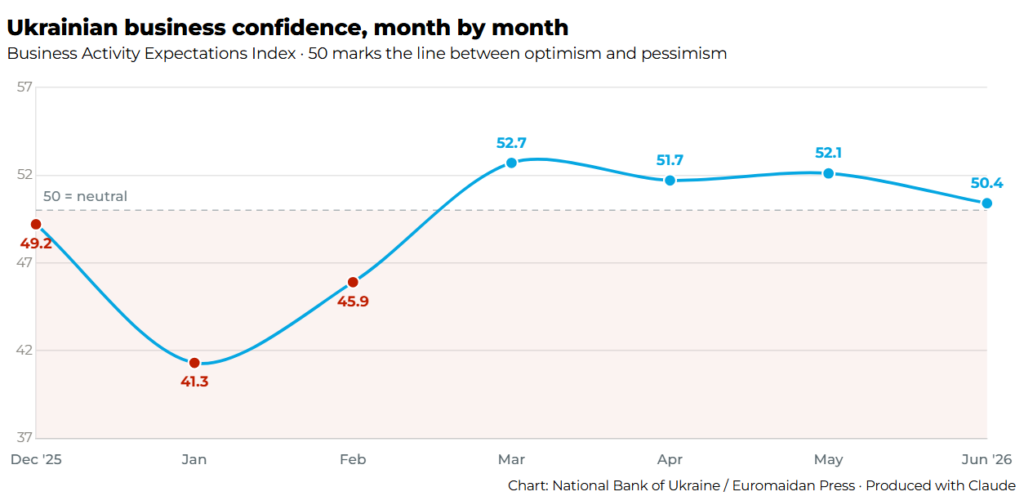
The National Bank’s monthly Business Activity Expectations Index fell to 41.3 in January, then recovered above the neutral 50 line by spring, reaching 50.4 in June. Above 50 signals optimism, below it pessimism. Chart: National Bank of Ukraine / Euromaidan Press.
The confidence that never reaches the courtroom
None of this shows in how Ukrainian businesses feel. In June, firms rated their own prospects positively for the fourth month running, with the National Bank’s expectations index at 50.4, above the neutral 50 line. The survey polled 587 companies that were still trading.
The people turning up in bankruptcy court are the ones the survey does not count—and more and more, they are individuals, not firms.
Polish prosecutors have identified the cruise missile that crashed in eastern Poland during Russia's mass overnight attack on Ukraine yesterday, according to Ukrinform. Investigators traced the weapon to a recent Russian production run and dated its manufacture, with a Ukrainian expert helping confirm the find.
Russia's air war on Ukraine keeps spilling beyond the front, with its drones and aircraft regularly breaching allied airspace along NATO's eastern edge and exposing how hard the bloc finds it to respond.
Prosecutors trace the missile to a Moscow-area plant
Marcin Kozak, spokesman for the District Prosecutor's Office in Lublin, spoke at a media briefing on Friday, a Ukrinform correspondent reported on 31 July. He said the fallen weapon was a Russian Kh-101 cruise missile. Investigators reached that conclusion after examining the impact site in Lublin Voivodeship and the fragments recovered there. The same work let them date the weapon's manufacture and trace where in Russia it was built.
"Preliminary work examining the site and the traces found — that is, elements of the aerial object — allows us to state unequivocally what object we are dealing with," Kozak said. "This is a Kh-101 missile, manufactured in the second quarter of 2026 at one of the enterprises in Moscow Oblast."
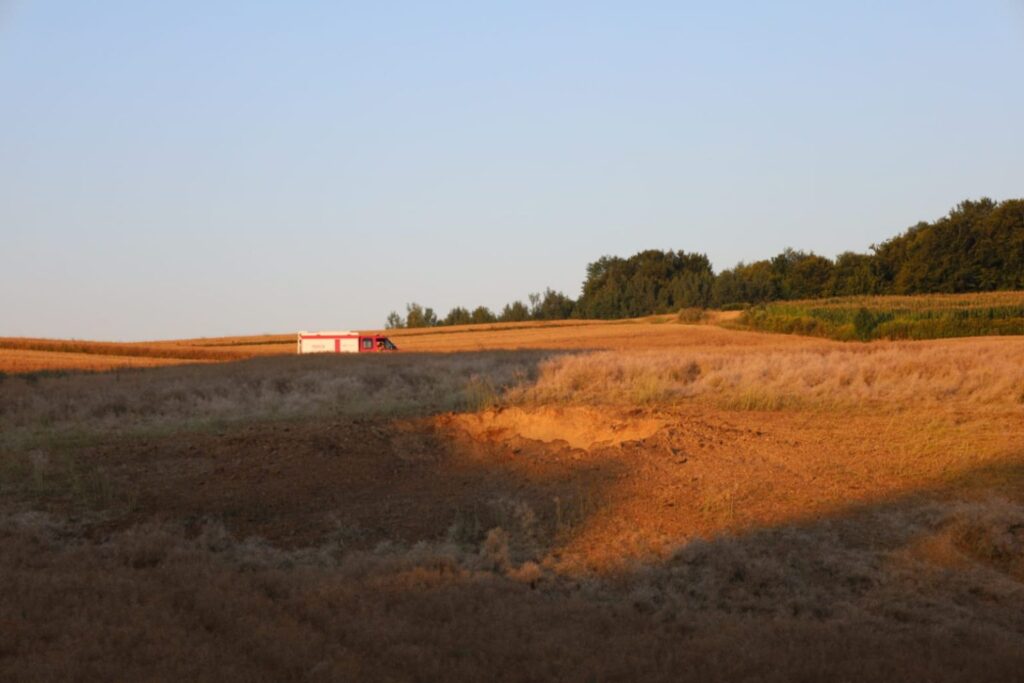
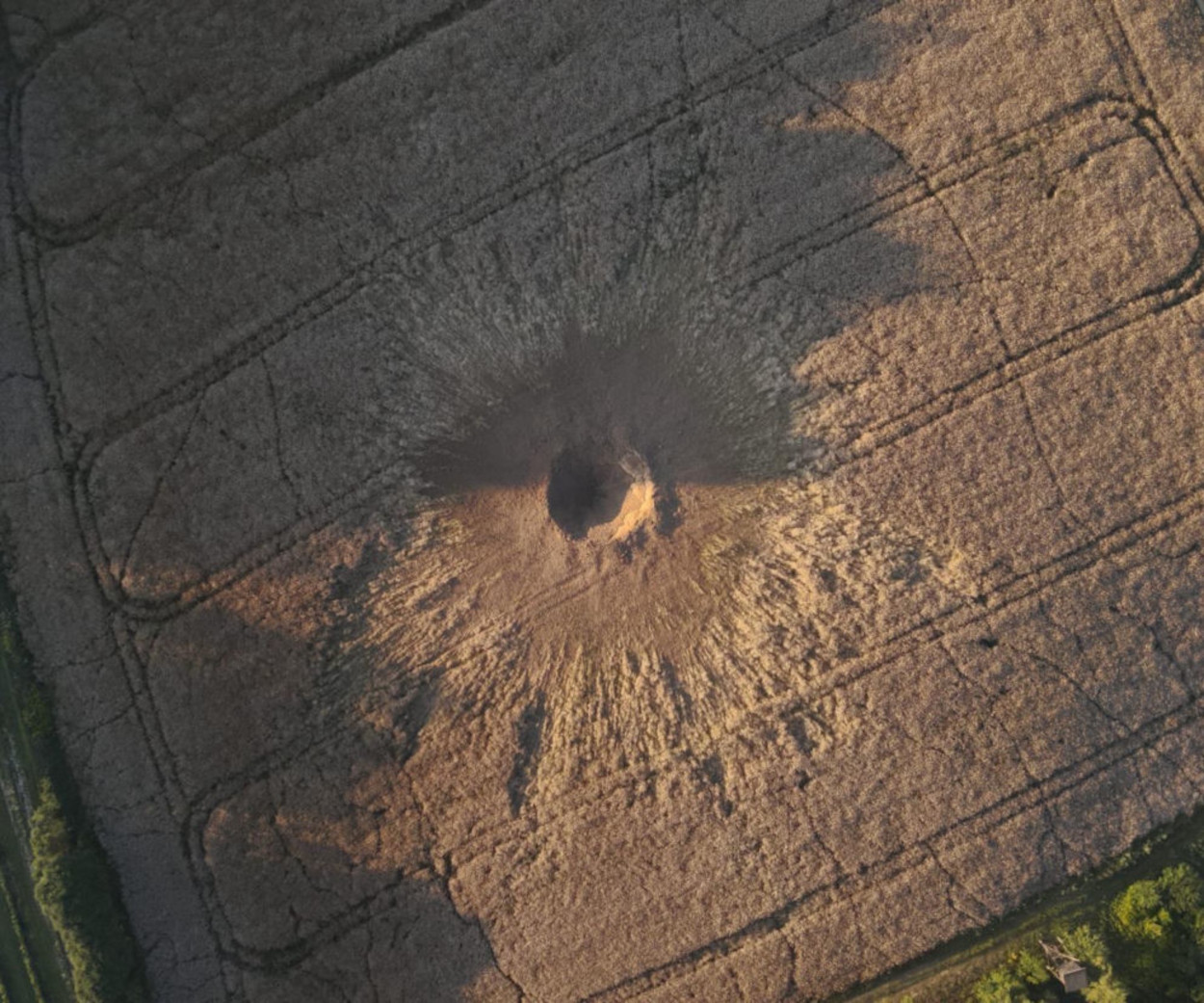
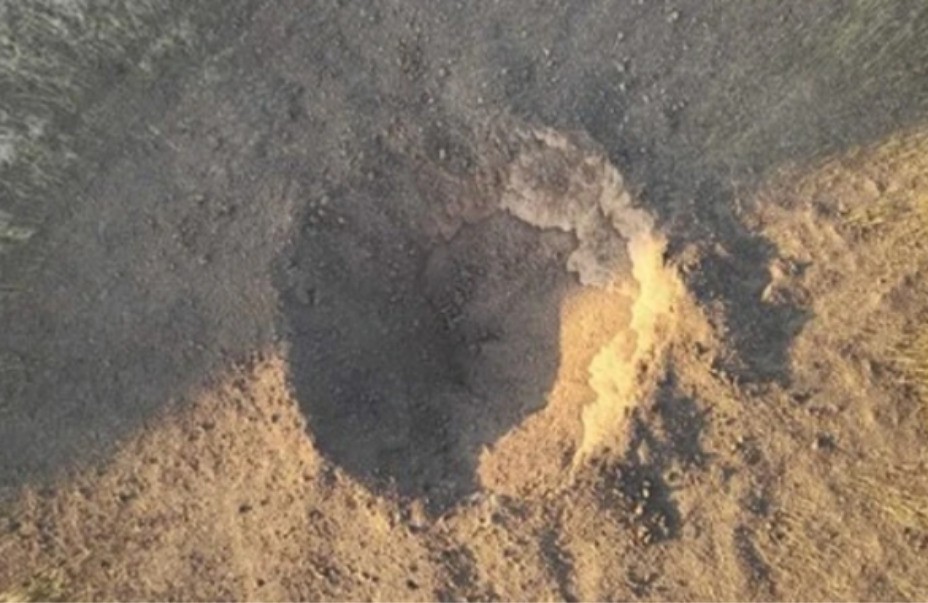
Crater left by a Russian Kh-101 cruise missile in a field in Poland, 30 July 2026. Photo: Radio ESKA
That places the weapon's origin at a plant in the Moscow area, the region ringing the Russian capital. A Ukrainian expert arrived in Poland yesterday evening and joined the identification.
Explore further
Warsaw confirms a Russian Kh-101 cruise missile overshot Ukraine and hit a field in Poland
How the missile crossed into Poland
Yesterday, Polish Prime Minister Donald Tusk confirmed that a Kh-101 had crossed into Polish airspace during the overnight barrage. It came down about 50 kilometers from Lublin, leaving behind a crater where its warhead exploded. Poland put its air defenses on alert and scrambled military aircraft as Russia's missiles neared the border. Air raid sirens sounded in Lublin around 03:50 local time, and crews later found the crater and scattered debris around 95 km into Poland.
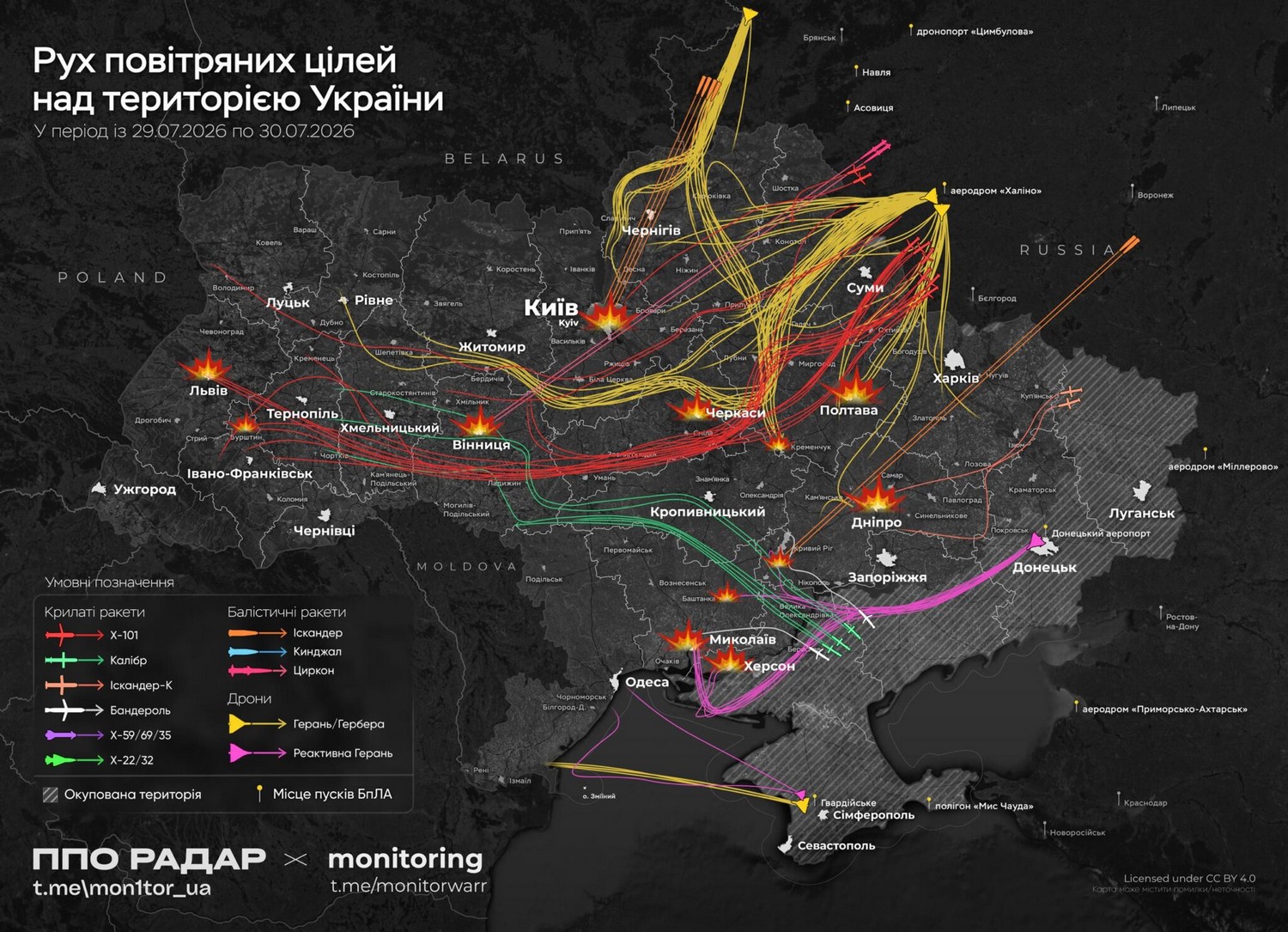
Routes of Russian missiles and drones during the attack on Ukraine, one track crossing into Poland, 30 July 2026. Map: PPO RADAR / monitor_ua
The Russian missile either strayed into Poland or was deliberately directed there during Russia's mass attack on Ukraine overnight on 30 July. Russia sent missiles and drones across the country, and several areas reported hits and fires. Its strikes hit Lviv, Kyiv, and Dnipropetrovsk Oblast, where the barrage also killed civilians in central Ukraine.
After the missile fell, two disinformation campaigns spread through Poland's information space, one aimed at Ukraine and the other at the Polish government.
Tusk also signaled that Warsaw would soon weigh sending Ukraine more missiles for its Patriot air defense systems.
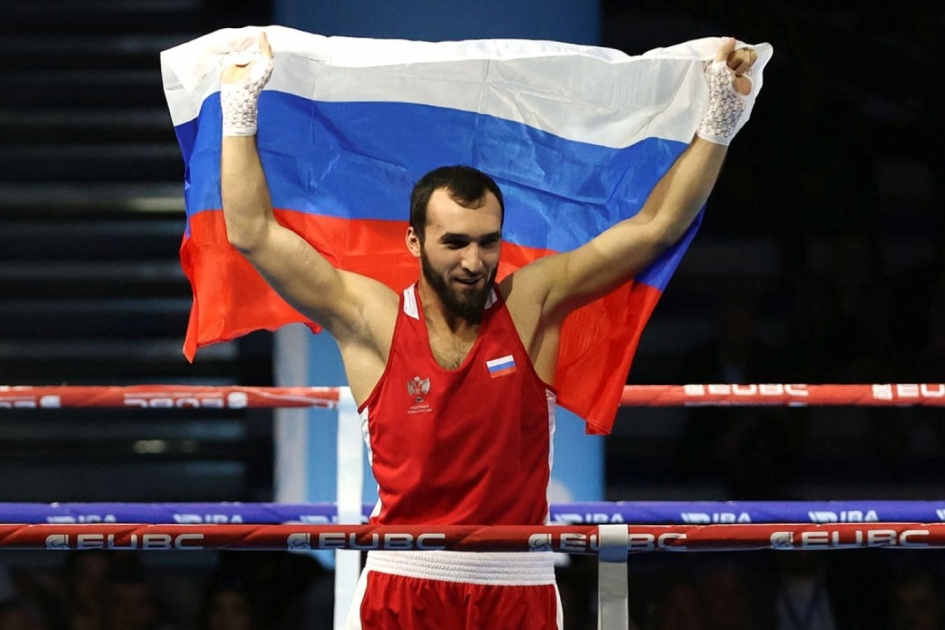
World Boxing has stripped away the last restrictions on Russian competitors, clearing them to fight under their national flag rather than as neutrals, Reuters reported. The move brings the sport into line with a wider loosening across international competition, as the Olympic movement edges Russia back toward the Games while its war on Ukraine grinds on.
As Russia presses its invasion of Ukraine and steps up strikes on civilians, one international federation after another is quietly rolling back the wartime bans meant to isolate it, handing Moscow the global stage its aggression was supposed to cost it.
Boxing lifts the neutral-status rule
World Boxing's executive committee approved the change at a meeting that also discussed the allocation of major competitions in the 2027-29 cycle, which take in the qualifying route to the Los Angeles 2028 Games.
"The ExCo accepted that Russian athletes would now take part in World Boxing competitions like boxers from any other national federation," the body said.
he governing body attached only a monitoring commitment, none of it tied to the war. It said it would "strictly monitor the behaviour of Russian delegations during events as well as compliance with the anti-doping protocols." That pledge to police Russian anti-doping sits oddly beside Russia's own record, since WADA recently closed an eight-year case into the country's state-run doping program with hundreds of athlete sanctions.
Explore further
Sports federations are quietly readmitting Russia, which killed 660 Ukrainian athletes. UEFA is about to become holdout
Sport keeps reopening its doors to Russia
The boxing decision follows the International Olympic Committee provisionally reinstating Russia's Olympic body this month, clearing Russia's path back toward the 2028 Los Angeles Games. It caps a run of federations doing the same through 2026: artistic gymnastics scrapped its restrictions in May, muaythai restored Russian flags and anthems alongside wrestling, judo, sambo and taekwondo days later, and tennis never dropped the neutral pathway at all.
Not every sport has bent the same way. World chess went in the opposite direction in June, when the International Chess Federation suspended the Russian Chess Federation, the first time it had stripped its most powerful member of its membership rights.
Western sanctions and Ukrainian drones are squeezing Russia’s Black Sea trade in looted goods, but they are not stopping it. The networks are finding new routes—and one of them now runs through Georgia, a country that one day hopes to join the European Union.
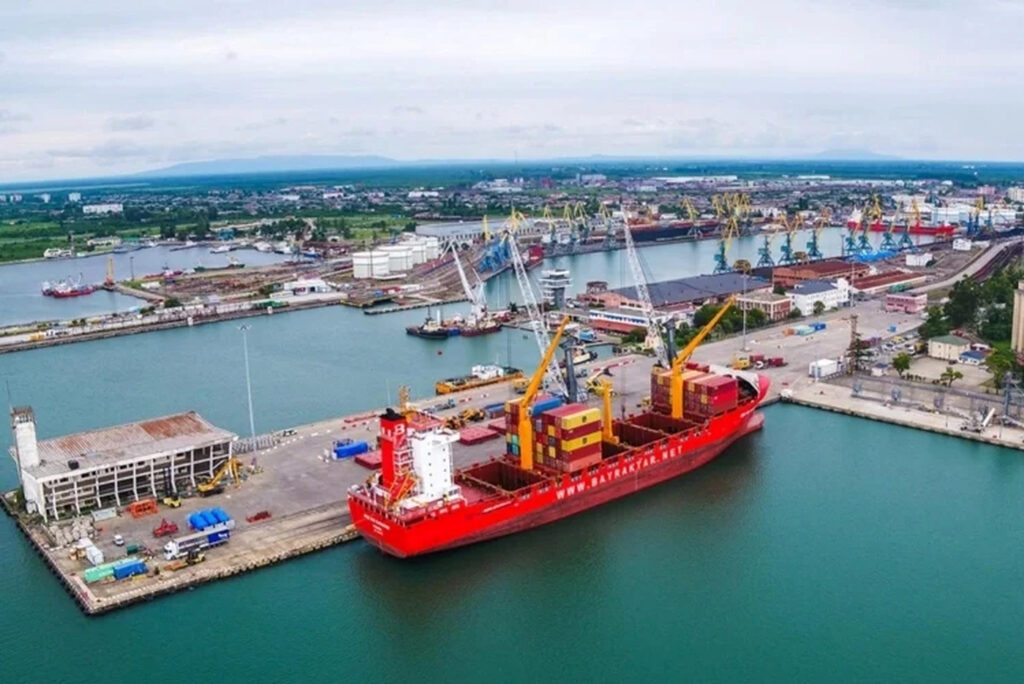
A new study finds that ships arriving from Russian-occupied Ukrainian ports are turning up at Georgia’s port of Poti far more often than they used to.
The same links that allow Russia to profit give Europe leverage to disrupt those networks.
The numbers climb steeply: 22 visits in the second half of 2023, 68 in 2024, and 145 in the first half of 2025 alone—on course, the study estimates, to nearly five times the 2024 total. Türkiye’s ports still take most of this traffic, but Poti is rising fastest.
The increase has tracked the Georgian Dream government’s drift toward Moscow since a disputed October 2024 election, a slide the European Parliament condemned as evidence of state capture. The authors caution that they cannot yet prove the shift is the result of deliberate policy.
A $120 billion pipeline that reaches into Europe
The study, which maps how Russia sustains and profits from its war on Ukraine, was produced by the Serious Organised Crime and Anti-Corruption Evidence Programme at the University of Birmingham and funded by the British government.
It follows goods moving through Black Sea shipping—worth about $120 billion a year—with military supplies flowing in and grain, coal, metal, and kaolin clay stripped from occupied territory flowing out, alongside oil sold above the price cap set by the Group of Seven in 2022. The study’s authors, Olivia Allison and Joshua Coyle, argue this trade is not a by-product of the war but an essential part of it, and one that reaches deep into European business.
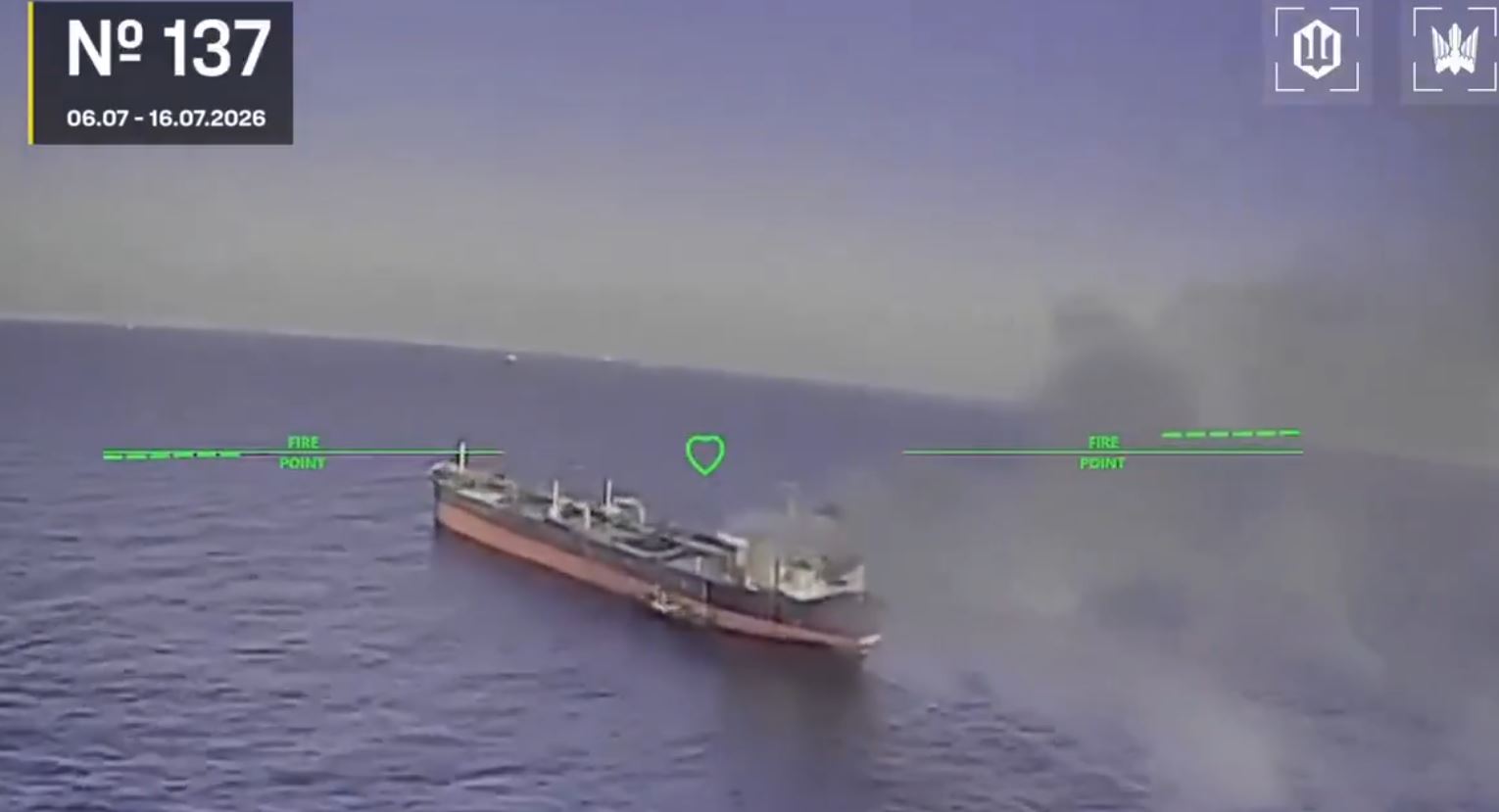
The rerouting is happening under mounting pressure. Ukraine has spent 2026 hunting Russia’s Black Sea tankers and cargo ships, hitting 201 vessels in three weeks this July, according to the commander of its drone forces, Robert Brovdi, while the European Union and others tighten sanctions on the ports and ships involved.
Explore further
Ukraine hits 201 Russian shadow fleet ships in three weeks. Commander says Crimea’s supply route is now blocked indefinitely
Grain is at the center of the trade. Investigators have documented Russia plundering the harvest in occupied Kherson and Zaporizhzhia, relabeling it as Russian, and selling it on to buyers in the Middle East and Africa. Ukrainian authorities have been tracking multiple ships carrying that grain to Israel, Egypt, and Algeria.
The upheaval reaches the top of Russia’s own grain business. In January 2025, a Russian court handed Rodnye Polya—for years the country’s largest grain exporter—to the state, ruling that its owner, Petr Khodykin, could not legally hold a strategic asset because he was a citizen of both Saint Kitts and Nevis and Russia.
The seizure did not prove a windfall. After an earlier auction drew no bids, the state sold the company in July 2026 for 11.7 billion roubles (about $150 million)—a small fraction of its former annual revenue—to a little-known firm that, as Kommersant reported, was acting for a grain holding part-owned by the sovereign wealth fund of Oman.
A vulnerability that runs both ways
On both ends of the trade, the study argues, are European companies. One Turkish port that receives ships arriving straight from occupied Crimea is run by a firm with a Dutch parent and a Taiwanese ultimate owner. Vessels in the trade, meanwhile, have been repaired in European Union shipyards and fitted with European-made cranes.
That overlap, the authors write, cuts both ways: the same links that allow Russia to profit give Europe leverage to disrupt those networks. The bloc’s newest sanctions package has begun to use it, targeting the shadow fleet, banks, and firms selling stolen Ukrainian grain.
Explore further
EU’s 21st Russia sanctions package will target the shadow fleet, banks, and firms selling stolen Ukrainian grain—Politico
Whether Georgia’s opening ports reflect a deliberate choice or simply the path of least resistance, the researchers do not say. Their data show only that the traffic keeps growing.
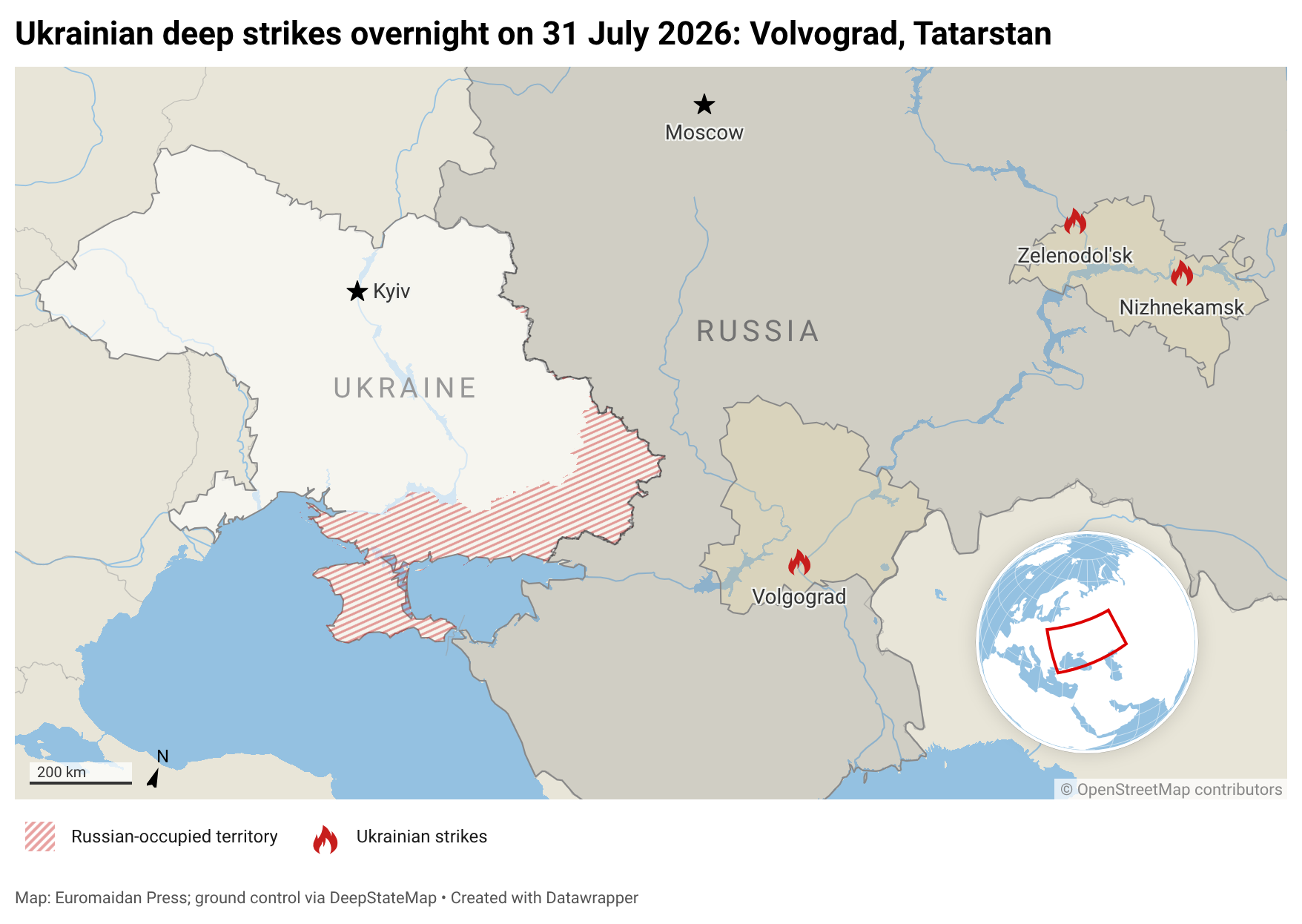
Ukrainian drones struck deep inside Russia overnight into 31 July, lighting fires at a major refinery and a warehouse hub in Volgograd and reaching more than 1,100 km east into Tatarstan by morning, Russian officials and monitoring channels reported. The retailer and the local governor both acknowledged the blazes. The wave extended Ukraine's twin campaigns against Russian fuel and commercial logistics.
Oil and fuel exports remain Moscow's largest source of war funding, and Kyiv's deep-strike drones keep eating into the refining capacity that keeps that money flowing. Fire trucks and shuttered plants have become a recurring picture from the near rear to a thousand kilometers deep in Russia's interior.
Volgograd: a refinery and a Wildberries hub ablaze
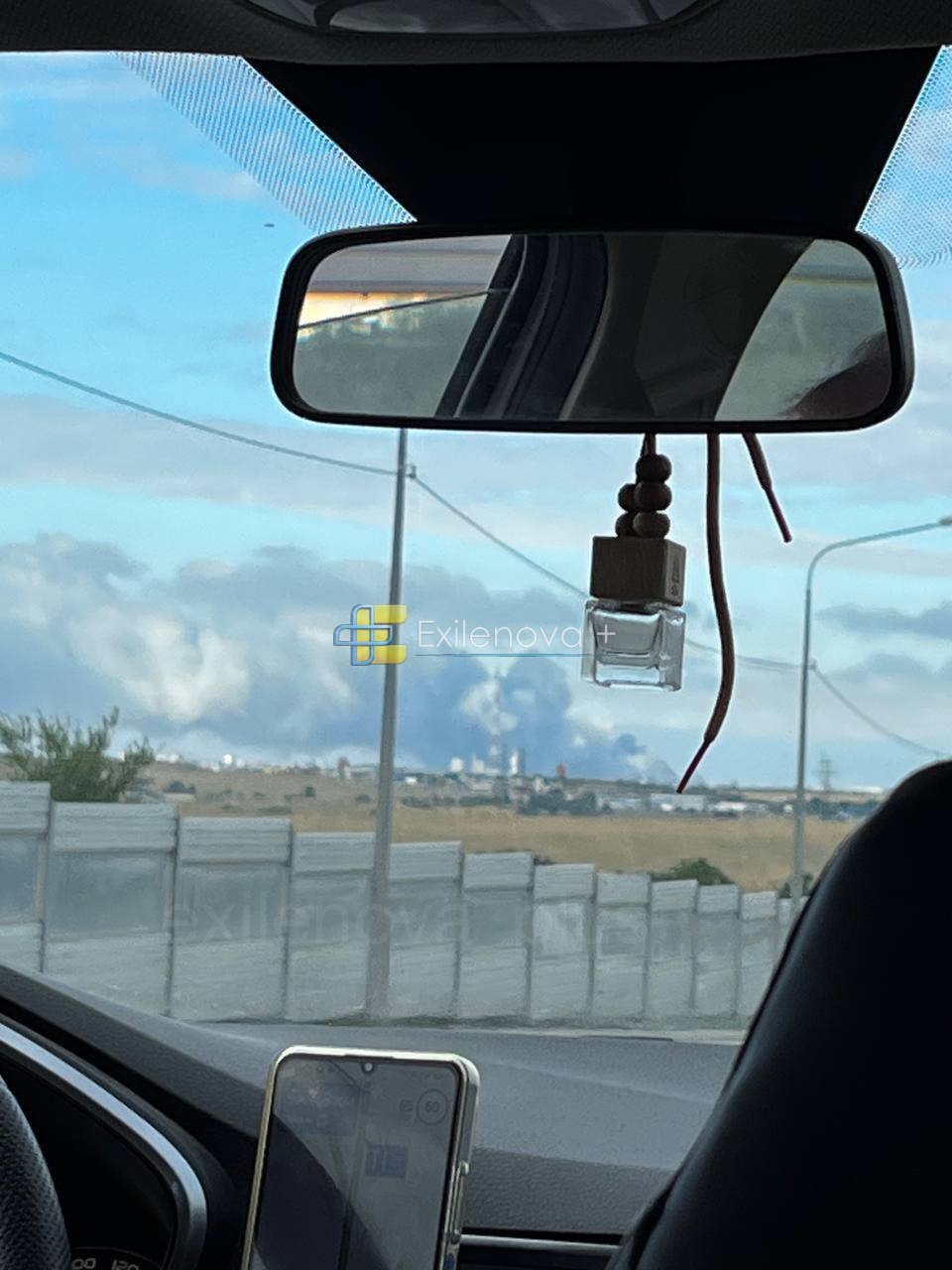
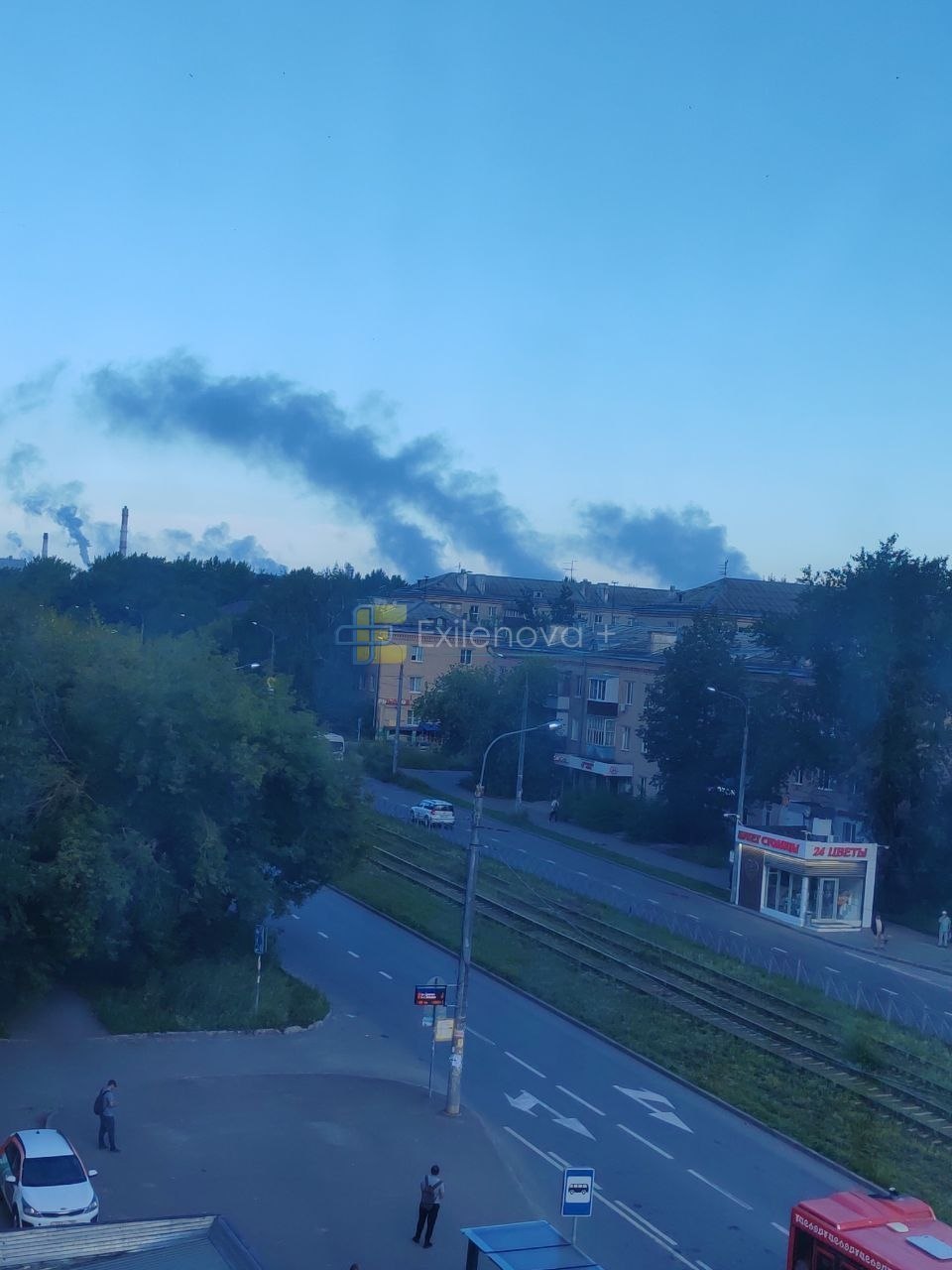
The Ukrainian monitoring Telegram channel Exilenova+ began reporting explosions in Volgograd around 02:30, then shared photos and videos of dense smoke. It identified two targets: a Wildberries logistics complex and Lukoil's Volgograd refinery, and by 03:46 counted at least two sites struck. The Russian news Telegram channel Astra reached the same conclusion through open-source analysis of eyewitness footage.
Volgograd Oblast Governor Andrei Bocharov confirmed the drone strikes. He said fires broke out overnight at a fuel-and-energy enterprise in the south of the city and at warehouses in the Dzerzhinsky district, and five people were allegedly hospitalized.
Ukraine sets another Wildberries warehouse ablaze in Volgograd
Ukrainian drones struck at least two warehouses of Wildberries — Russia's biggest online retailer, its answer to Amazon — overnight on 31 July, hitting sites in Volgograd and Zelenodolsk in Tatarstan.
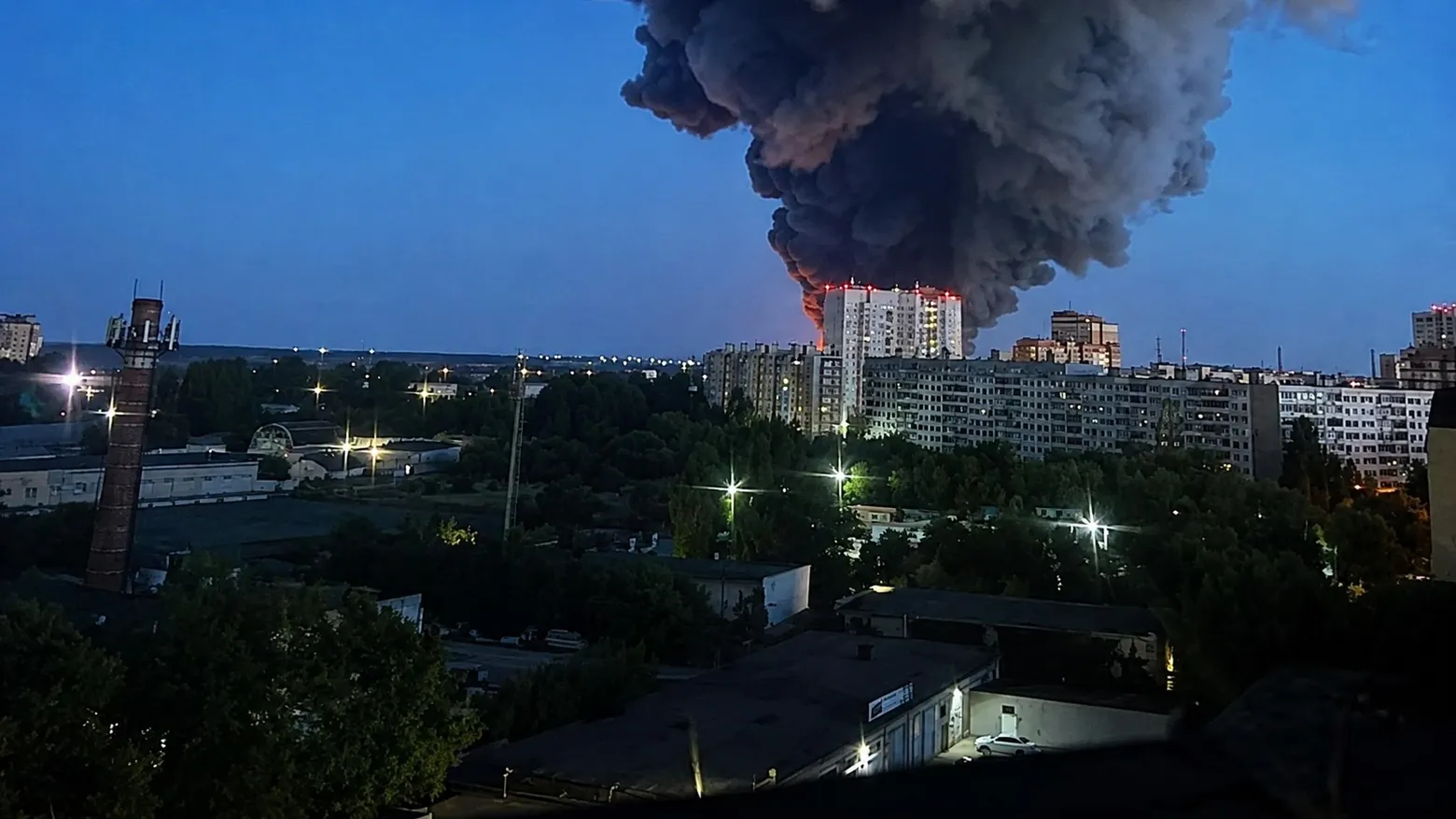
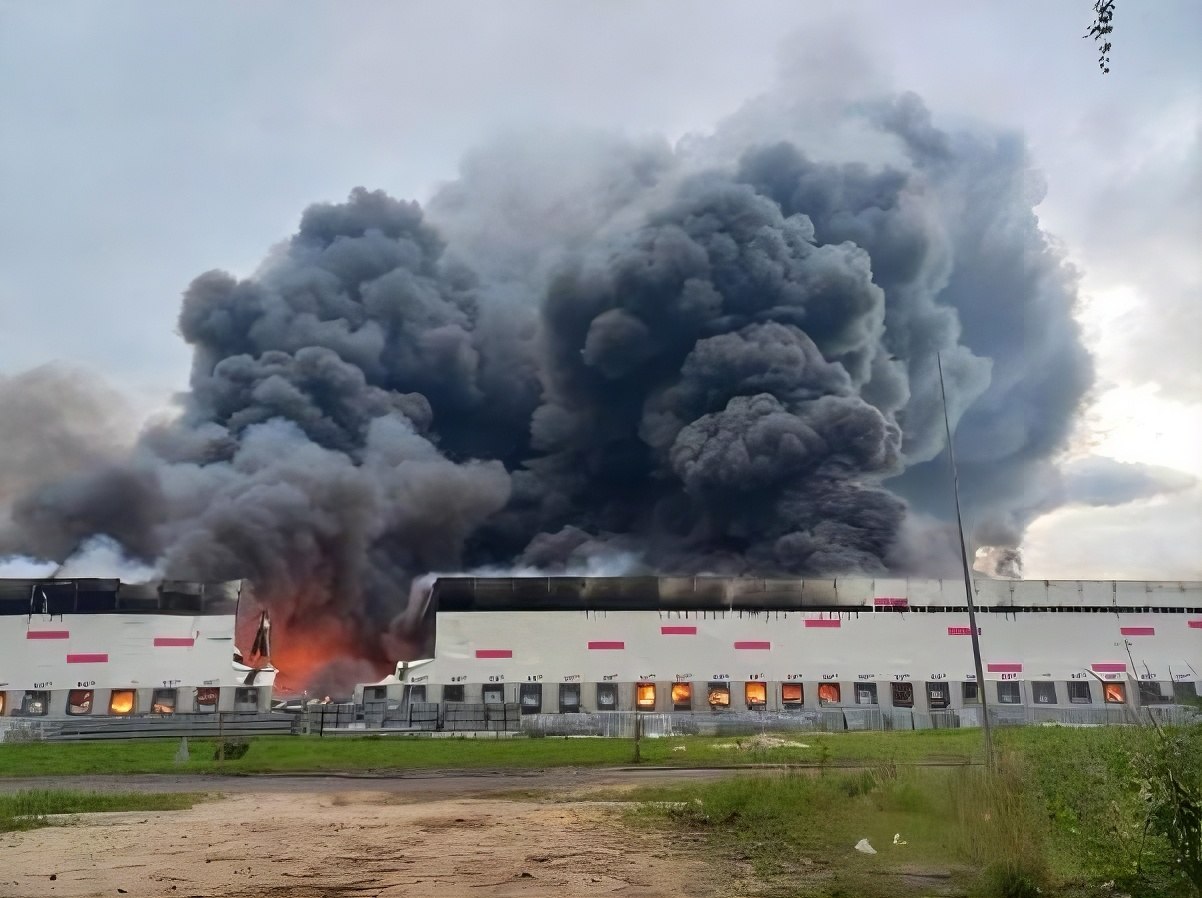
Wildberries confirmed a fire at its logistics center after the strike. The hub spans more than 48,000 m² and serves Volgograd, Astrakhan, and neighboring regions, and it was still burning hours later.
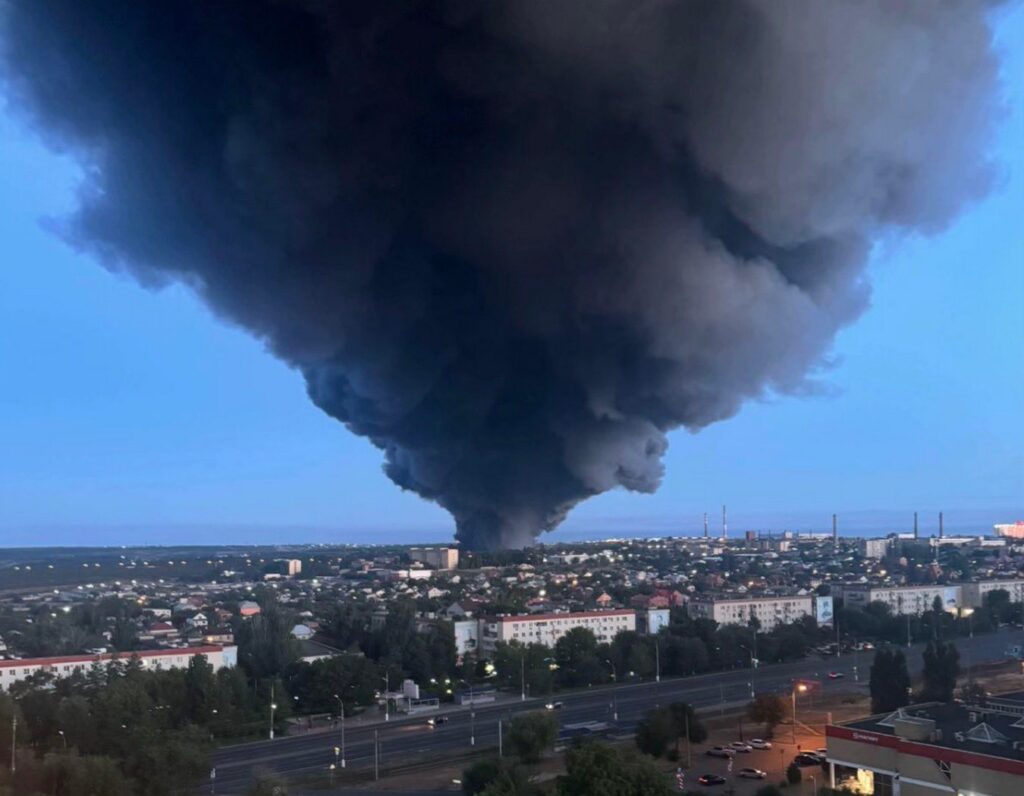
Smoke rises over Volgograd, Russia, after a Ukrainian drone strike, 31 July 2026. Photo: Exilenova+
The refinery is Lukoil's Volgograd plant, the largest fuel producer in Russia's Southern Federal District, with a design capacity of about 15.7 million tons of crude a year. It makes diesel and aviation fuel that supply Russian forces in Ukraine's south, and it sits about 500 km from the front line. Ukraine had already struck it at the end of May, and it was ablaze again by morning.
A large fire and black smoke over Volgograd, Russia, after a Ukrainian drone strike on a Wildberries logistics center, 31 July 2026. Photo: Exilenova+
Tatarstan: smoke over Zelenodolsk, explosions in Nizhnekamsk
By morning, residents near Kazan reported explosions across Tatarstan. Astra's analysis pointed to a second Wildberries complex in Zelenodolsk, with smoke seen over the building, and Exilenova+ placed the strike there too, though no official confirmation of a hit followed. One of the shared videos showed a near miss, with a drone striking the ground next to the warehouse.
Smoke rises over Kazan, Russia's Tatarstan, after a Ukrainian drone attack, 31 July 2026. Photo: Exilenova+
Zelenodolsk district head Mikhail Afanasyev claimed a drone was repelled with no destruction, and Wildberries said that the warehouse was operating normally. Drones had already targeted it on 23 July.
Explore further
Ukraine’s Defense Forces sent FP-1 drones to Ryazan—a refinery and a warehouse burned
In Nizhnekamsk, locals described over 30 explosions and a flare burning intensely at a refinery, though whether a strike caused it stayed unclear. Exilenova+ said a local refinery cut pressure amid the raid. The city's main oil-processing plants, TANECO and TAIF-NK, sit in one industrial zone. Mayor Radmir Belyaev claimed drones were downed with no damage. Airports in Kazan, Nizhnekamsk, and Bugulma temporarily halted flights.
A campaign against warehouses and refineries
The drive against Wildberries opened on 18 July and has hit at least 18 distribution centers in two weeks, knocking out more than 15% of the retailer's storage, one tally found. Ukraine has kept Wildberries under sanctions since 2021 and lists it as a retailer that also moves military gear.
The refinery strikes run in parallel and stretch back to last August. On 29 July, drones hit a Lukoil refinery in Perm, which halted about a third of its capacity per Reuters sources, and Rosneft's Ryazan plant. Of 26 refineries knocked out in recent months, Russia had returned only eight to full work by late July, the Financial Times reported.
Poland says Ukraine has come back with a fresh offer to trade its retiring MiG-29 fighter jets for Ukrainian drones, though the entire account so far rests on Warsaw's word. The exchange has been announced, abandoned, and revived several times over the past year.
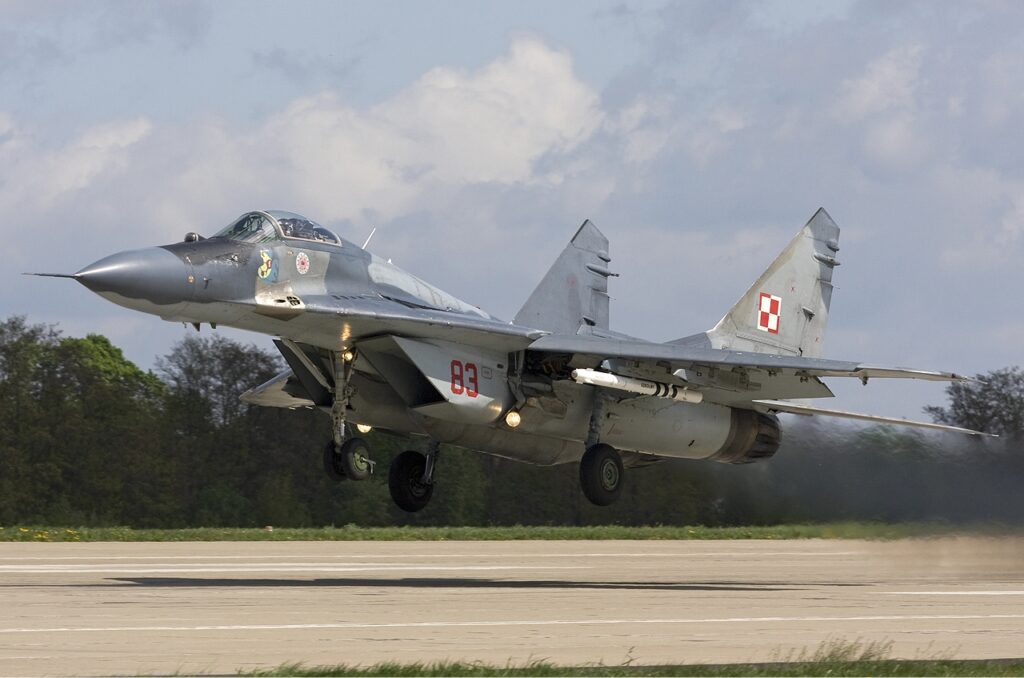
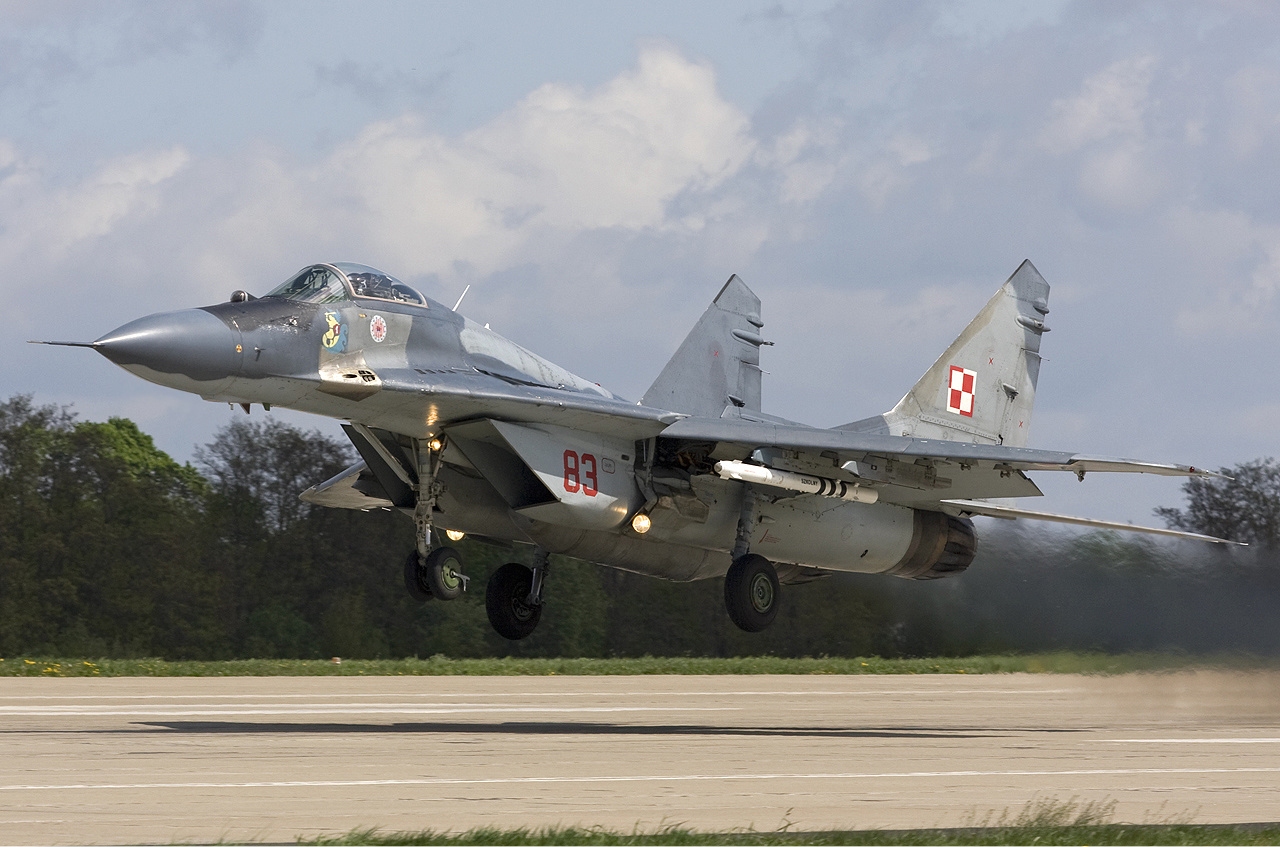
Ukraine still leans on its worn Soviet-era MiG-29s for air defense and strikes while it shifts to a mixed Western fleet of F-16s, Mirages, and incoming Gripens. Warsaw's 2023 handover of MiG-29s helped Kyiv replace jets lost in combat and keep its aging fighters flying with Western missiles and bombs.
Warsaw's latest version of events
Polish Deputy Defense Minister Magdalena Sobkowiak-Czarnecka said Ukraine returned to negotiations and sent Poland a concrete proposal naming which drones it would hand over, according to PAP. She spoke on Radio Zet on 30 July. The document, she said, has sat with the ministry for several days.
Defense Minister Władysław Kosiniak-Kamysz will decide once his officials study it, and Sobkowiak-Czarnecka expects the matter to close within a few weeks at most.
"We send the MiGs, the Ukrainian side hands over drones. That is the offer on the table today," she said.
The jets are Soviet-era, flown by Poland since the late 1980s and leaving service as F-35s and FA-50s replace them. Poland already sent Ukraine more than a dozen MiG-29s after the 2022 invasion. Ukrainian pilots fly the type and have adapted their jets to carry Western precision weapons.
Explore further
Poland to scrap the MiG-29 fighter jets it was supposed to hand Ukraine amid growing tensions between the allies
The repair demand dropped
Earlier, Poland said Kyiv had pressed it to pay for overhauling the aging jets. Sobkowiak-Czarnecka said that demand is now gone and the arrangement is a straight swap. Poland remains ready to help modernize the aircraft if Ukraine asks, she said, but the cost would fall on Ukraine or on allied states willing to cover it.
Bulgaria also wants them, Poland says
Asked why Poland does not sell the jets to Bulgaria, which had shown interest, Sobkowiak-Czarnecka said Warsaw pursued the exchange with Ukraine first. Days earlier, another deputy minister said Poland had received a fresh request from an unnamed NATO country asking for the same fighters.
A deal that keeps dying and coming back
Poland first floated handing over six to eight retiring MiG-29s in December 2025. In January, Warsaw planned a February transfer, and days later the government approved up to nine jets.
Then it fell apart. In late June, Kosiniak-Kamysz refused to send them, accusing Kyiv of walking away from the drone-technology side of the bargain. In early July, Warsaw said it would scrap the jets instead. The minister soon said the question stayed open, and by 10 July the sides had restarted talks.

 Connexion

 Kherson: a Russian shell destroyed the last boxing gym in Kherson, where children and teens trained.
 (@ZarinaZabrisky)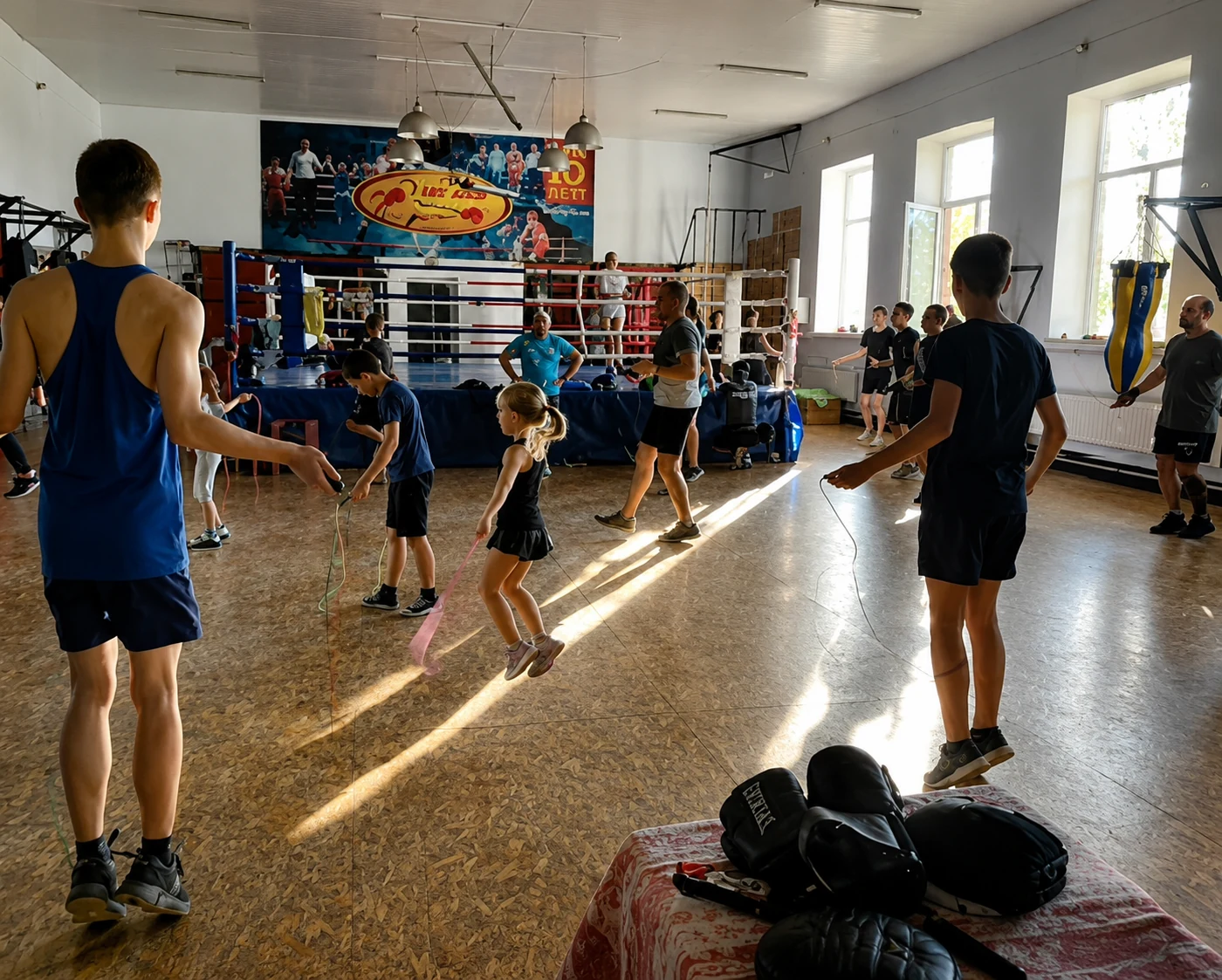

 Serhii Kirsanov, Ukrainian sprint canoeist (Olympic silver medal in the K-4 1000 m event at the 1988 Summer Olympics, multiple World Championships winner) and his wife Luiza survived a Russian Shahid drone attack in Kherson.