Connexion
Kherson’s bombed-out boxers asked to keep Russia out. World Boxing just let it in.
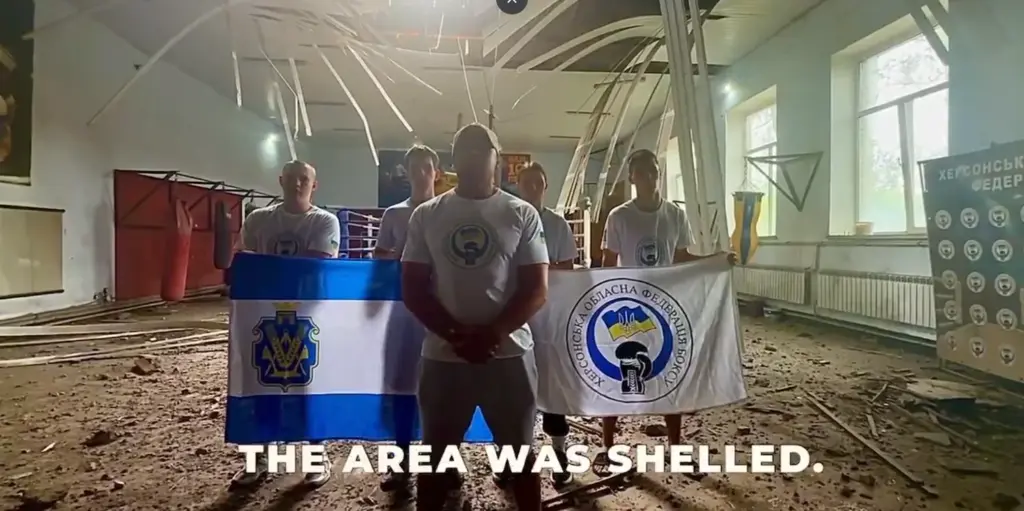
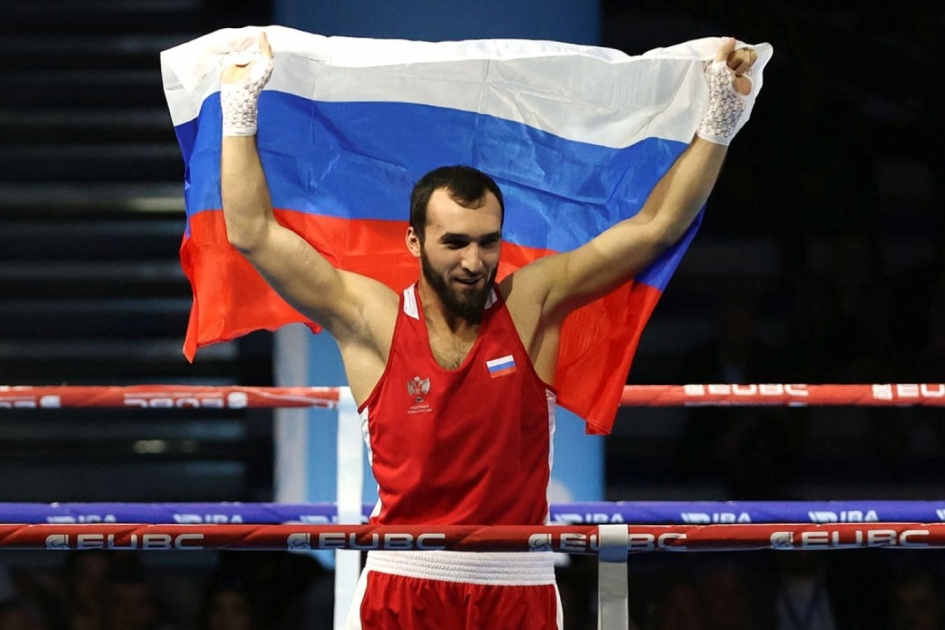
World Boxing has lifted the last restrictions on Russian athletes, clearing them to compete under their own flag and anthem as they chase qualification for the 2028 Los Angeles Olympics. Days earlier, in a frontline Kherson gym that Russian artillery had wrecked, the teenage boxers who trained there had recorded their own message to the Olympic movement: keep Russia out.
World Boxing approved the change on 30 July, the latest sports federation to roll back its wartime restrictions as the Olympic movement eases Russia back toward the Games, even as its attacks keep destroying Ukraine's sports infrastructure and the lives of athletes in frontline oblasts such as Kherson.
The 11-year-old martial-arts champion who trains between drone strikes
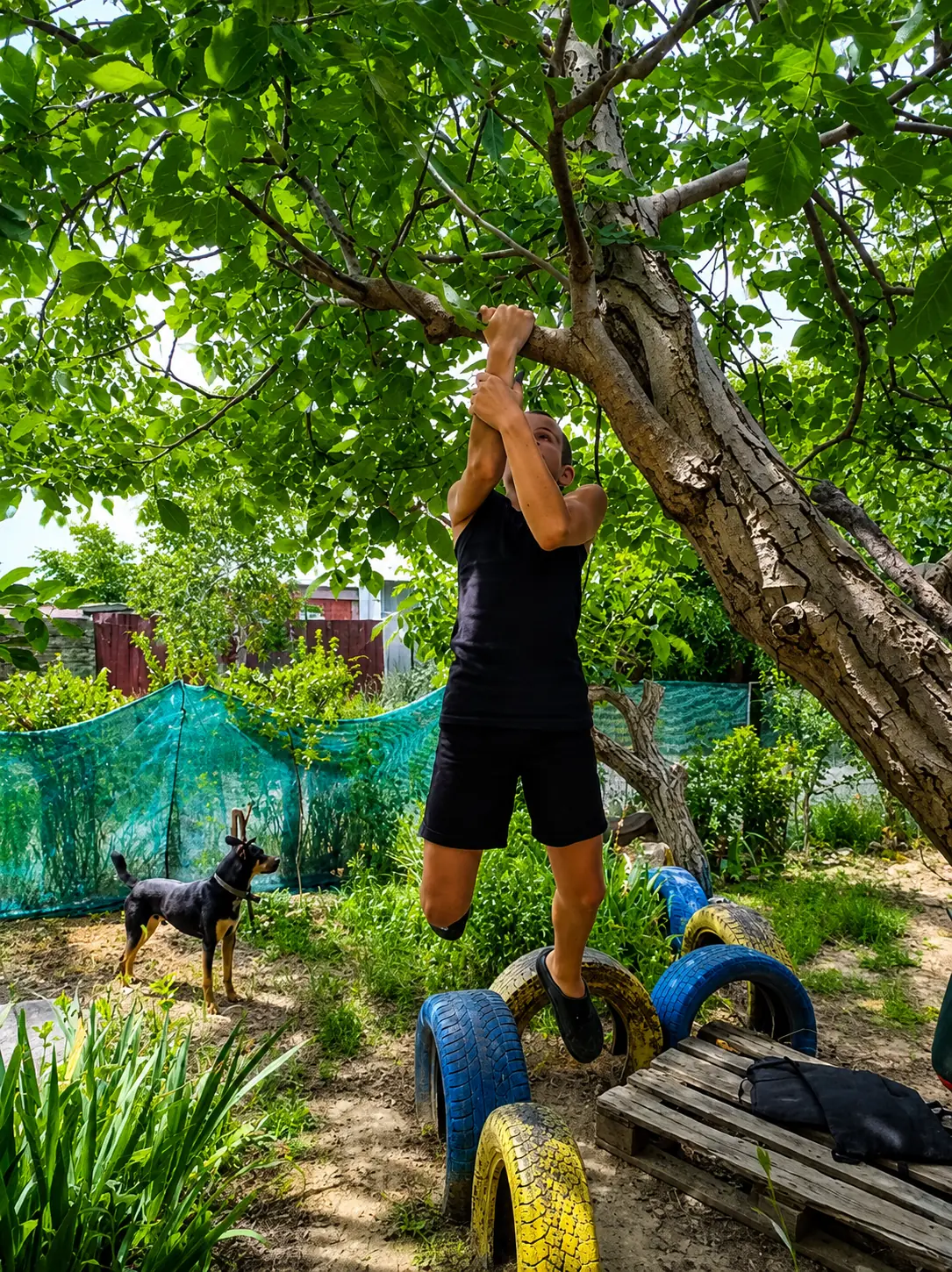
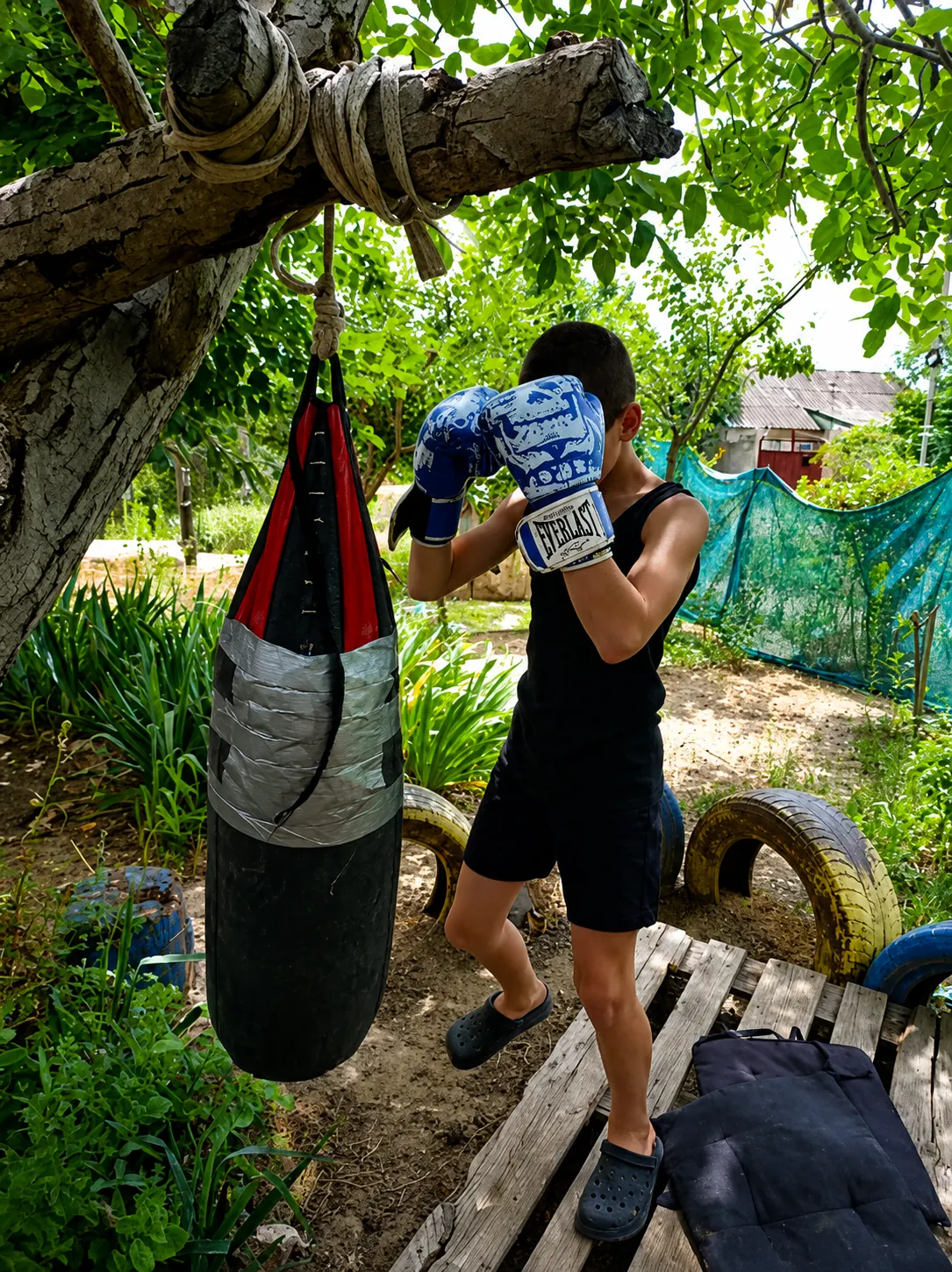
Timur, 11, steps out into his yard and listens to the sky. No buzzing. This means no “human safari” drones nearby. Timur has just given himself his morning insulin shot, had his breakfast, and he now heads for his punching bag, hanging from the old walnut tree. He warms up with pull-ups, the branch being his pull-up bar, as his dog runs around, and then works the punching bag, pierced by Russian shrapnel.
Training in the yard is not enough, so Timur rides his bicycle under Russian FPV drone attacks to his practice session. Along the way, he stops to hide under a tree. In summer, Kherson poplars and sycamore trees offer many good hiding places, and the anti-drone nets cover many streets, but the Russian drones are flying low now. When they spot a car, a pedestrian, or a child on a bicycle, they dive even lower. The pilots on the other side of the river see their targets but carry on with their hunt. Lately, some drones fly without making any noise. Hearing loud buzzing, Timur jumps off the bike and throws himself in the grass. Lawns are often littered with mines, but there is no choice. After a few stops, he arrives at the practice, held in a basement. For a while, Timur can focus on the training—until he starts on his way back home.
Timur, the Kherson city champion in hand-to-hand combat and the Mykolaiv Oblast champion in MMA, takes his training seriously, even after he was diagnosed with insulin-dependent Type 1 diabetes right after the occupation. He dreams of becoming the champion of Ukraine, Europe, and the world. His role model is Muhammad "D.K." Ali, a British professional boxer who, like Timur, lives with insulin-dependent Type 1 diabetes. He is also inspired by Yulian Pozdniakov, a Ukrainian professional kickboxer, a European professional kickboxing champion, a Ukrainian IFMA Muay Thai and WAKO K-1 champion, and Timur has recently started training in kickboxing and Muay Thai.
Chess retreats to a basement after Russia jails the grandfather who taught it
Like Timur, Sasha started boxing before the occupation. Eight at the time, he also practiced chess with his grandfather, an avid player, who was kidnapped by the Russian military during the occupation and sentenced to 20 years of strict regime on fabricated charges. Sasha stopped boxing, but he still plays chess.
His grandmother Tanya, who also plays chess, said in an interview that Kherson is “a sports city.” Tanya trains at home, doing yoga and general fitness routines.
“Everything here—our rivers and fields—is made for an active lifestyle,” said Tanya. “And so our people are fit, morally and physically. The enemy is trying to destroy our places of strength, but our children stand firm and train. They do not give up in spirit.”
Her daughter, Sasha’s aunt, also practices with him over the phone as she had to move to Mykolaiv due to intense attacks on her district of Kherson. She used to go to the Children’s and Youth Sports School, also known as Chess Club. Sasha practices online with a coach during the week, but on the weekend he follows the family tradition and joins about 20 other young Kherson chess players for in-person training at the same school. Tanya often walks her grandson to the basement practices, and fondly remembers the chess club and its beautiful home.
Since the 1980s, the Children's and Youth Sports School, funded by the city, held training and national and international tournaments at a historic building, a snow-white villa with arched windows and ornate wrought-iron balconies downtown Kherson. Vitaly Bogdanov, the President of the Kherson Oblast Chess Federation for over 20 years, told Euromaidan Press that generations of young Khersonians studied chess and checkers in a former residence of the Italian embassy.
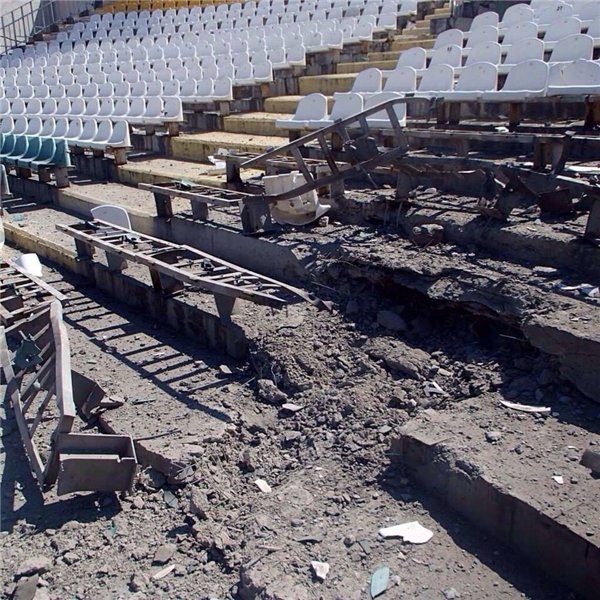
In 2023, the school had to move classes and tournaments to a safe underground facility due to constant shelling, and the building stood vacant. On 25 July 2026, the Russian military destroyed the architectural monument. The building burned out, and its roof collapsed after artillery and drone attacks, during which drones dropped incendiary napalm-like mixture.
Russia levels the last boxing gym as its teenagers film a plea to the IOC
— Zarina Zabrisky
Kherson: a Russian shell destroyed the last boxing gym in Kherson, where children and teens trained.
Standing in the ruins, the coach urged the @iocmedia @Olympics IOC to ban Russian athletes. Young boxers spoke of shock, grief, and traveling to practice under drones. pic.twitter.com/iKnsnRGCVP(@ZarinaZabrisky) July 25, 2026

The morning after the chess club was destroyed, Russian artillery hit Kherson's only surviving boxing gym. After the city's liberation, the gym hosted regular training sessions and competitions.
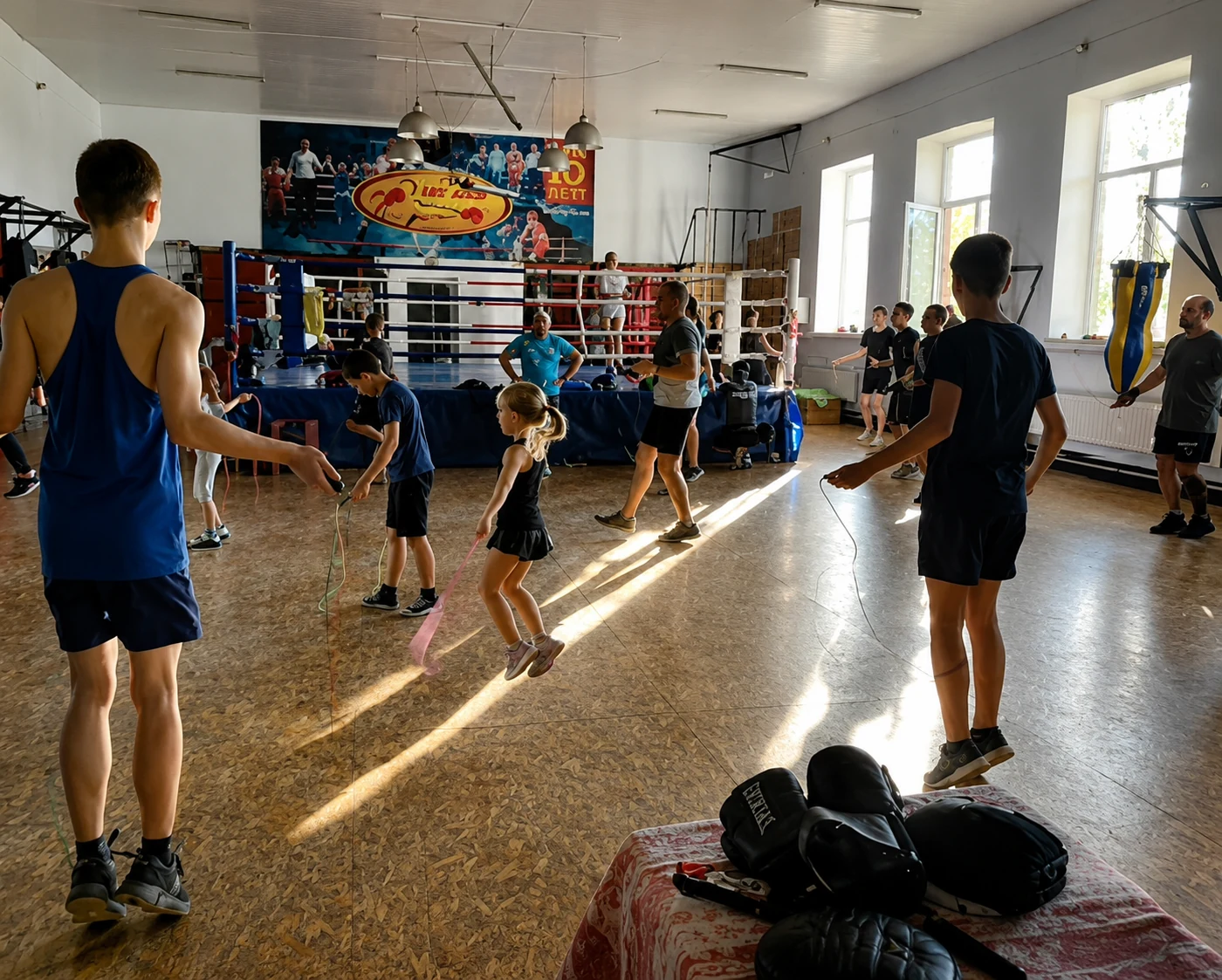
The youth team just returned from a tournament and, instead of practicing, helped to clean the premises. Four young athletes recorded an address to the International Olympic Committee, pleading to ban Russian athletes from international competitions. Tymofey, 15, said that he trained in this boxing ring for seven years and could not find the words.
Standing amid bricks and fallen ceiling beams, Dmytro Obolentsev, Director of the Kherson Regional Children and Youth Sports School for Boxing and Other Sports and coach of the youth team, said that training will continue.
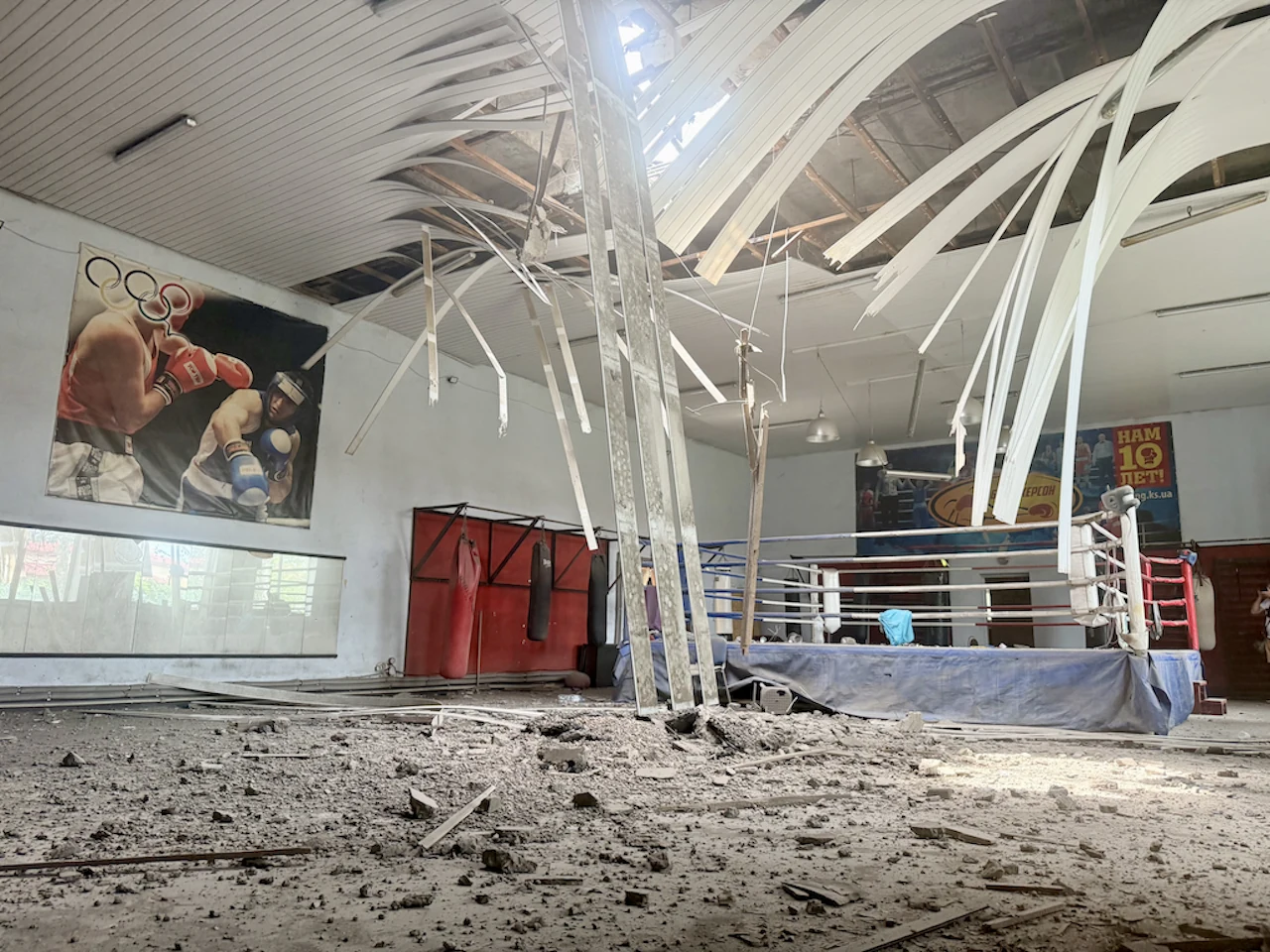
“These walls witnessed it all: the nerve-breaking moments before stepping onto the floor, the smiles after victory, the tears of defeat, the embraces of coaches, the applause of families, and the unforgettable moment when a young athlete stepped onto the podium to receive a well-earned medal and trophy,” wrote Zakhar Zhizhko, a Kherson resident. “Years will pass, but the memory of those competitions will remain. We want to believe that this gym will once again be filled with children's laughter, genuine emotion, and the joy of victory.”
The Olympic medalist who can no longer reach his river, and trains anyway
— Zarina Zabrisky
Serhii Kirsanov, Ukrainian sprint canoeist (Olympic silver medal in the K-4 1000 m event at the 1988 Summer Olympics, multiple World Championships winner) and his wife Luiza survived a Russian Shahid drone attack in Kherson.
A residential block next to them was destroyed. pic.twitter.com/D2XhazIkOu

Serhiy Kyrsanov, a fit man in his sixties, cleaned the destruction site on 29 July, after several Shahid drones devastated his neighborhood in the residential area of Kherson. Serhiy and his wife Luiza mopped broken glass and considered themselves lucky: their neighbors’ homes were destroyed and burned. Their spacious house featured Olympic posters and impressive memorabilia: Serhiy, a prominent Ukrainian rower, is a silver medalist of the 1988 Olympics in kayaking at 1000 m in the four, a silver medalist of the European championship in kayaking, and a world and national champion. As Luiza wiped dust off the medal display in the living room, she said that both she and her husband are still involved in youth training in the city.
“I can’t row as we can’t reach the river,” said Serhiy. “But we do all sorts of other training, and we are not going to stop.”
The chess world condemns as the boxers' video circles the globe
The Italian Embassy in Ukraine condemned the attack on the chess school building, which was built for the Italian Ambassador in 1905 and hosted the Italian Embassy from 1906 to 1918. Lithuanian grandmaster and politician Viktorija Čmilytė-Nielsen expressed her indignation. Peter Heine Nielsen, a Danish chess grandmaster and five-time Danish champion, also condemned the attack. Garry Kasparov, former World Chess Champion and one of the greatest chess players in history, wrote that he was looking forward to helping to rebuild the chess club.
The boxing team’s video address to the International Olympic Committee went viral and was shared globally. Vladyslav Heraskevych, the first Ukrainian ever to compete in skeleton at the Winter Olympics, and an advocate for excluding Russian and Belarusian athletes from international sport, shared the address, adding that “Russian sports is an accomplice to Russia’s crimes.” The Boxing Federation of Ukraine issued a statement about the attack and looked into fundraising options.
"A sports city": 221 venues destroyed, its athletes still on the podium
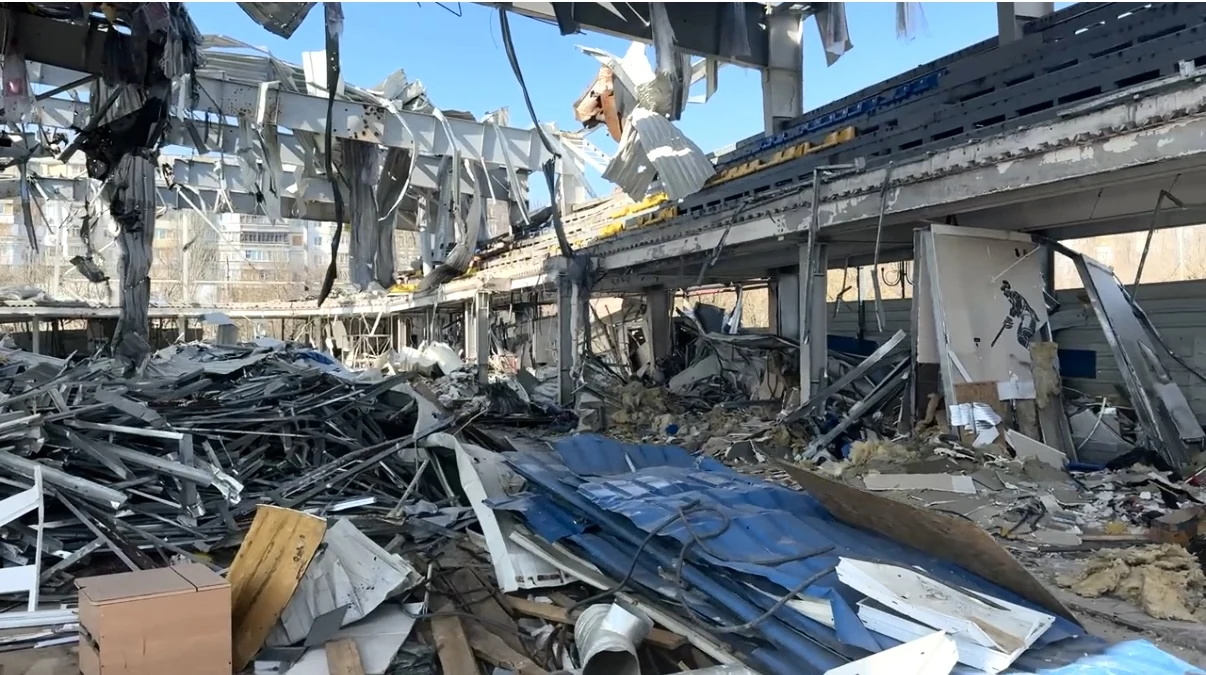
Timur, Sasha and the young boxers are not an exception. The girls’ soccer team used to train outdoors until a Russian shell destroyed the soccer field. Russian shelling heavily damaged Kherson's only indoor ice rink, once home to youth hockey and figure skating. The war has devastated Kherson Oblast's sporting infrastructure as 221 sports facilities have been damaged or destroyed, forcing many clubs and sports schools to relocate, operate in basements, or train in mixed and remote formats.
Yet, sports go a long way in the city nicknamed “invincible.” Mothers and grandmothers frequent various training sessions, from fly yoga to belly dance and karate. Fathers and grandfathers run under drones and used to play basketball and soccer in the red zone until the point when being outside became impossible due to the massive FPV drone attacks. Swimming pools and gyms operate in half-ruined buildings and, in winter, in freezing temperatures.
Despite daily Russian attacks, Kherson's sports community continues to compete. According to the official regional statistics, provided by the Department of Physical Culture, Youth and Sports of the Kherson Regional State Administration, in 2025 more than 50 athletes from Kherson Oblast were winners or medalists at international and Ukrainian competitions across more than 20 sports, including rowing, wrestling, boxing, kickboxing, athletics, archery, volleyball, swimming, karate, sambo, draughts, sumo and canoeing. The list included Olympic, Paralympic and Deaflympic athletes, as well as world, European and national champions and medalists. Kherson athletes competed at the Paris 2024 Olympic and Paralympic Games, the Deaflympics, and World and European Championships, while more than a dozen regional coaches were recognized for training international-level competitors.
During the first six months of 2026, 396 athletes from Kherson Oblast took part in Ukrainian and international competitions, winning 74 medals in Olympic sports, 93 in non-Olympic disciplines, and 10 in Paralympic and Deaflympic events.
Nearly 200 displaced children from Kherson Oblast participated in regional sports competitions, while another 198 children from frontline communities attended a two-week sports and rehabilitation camp in the Carpathians.
The boxers whose gym Russia destroyed had asked the Olympic movement to keep Russia out. On 30 July, World Boxing gave its answer: Russian athletes will compete under their own flag, like everyone else. Their ring is still rubble. Training, their coach said, continues—in the basement, under the nets.