Vue normale

  • ✇Euromaidan Press
  • Russia lowered its 2030 electronics-independence target from 80% to 59%
    Russia has lowered its benchmark for technological independence. A revised government target now requires domestic hardware to make up 58.7% of state technology projects by 2030—down from the 80% Moscow had long promised—a reduction proposed by Russia’s own Ministry of Industry and Trade and set by a decree signed in July 2026 by Prime Minister Mikhail Mishustin. Funding collapsed as deadlines slipped The scale of the retreat was laid out by Ukraine’s Foreign Intelli
     

Russia lowered its 2030 electronics-independence target from 80% to 59%

31 juillet 2026 à 10:11

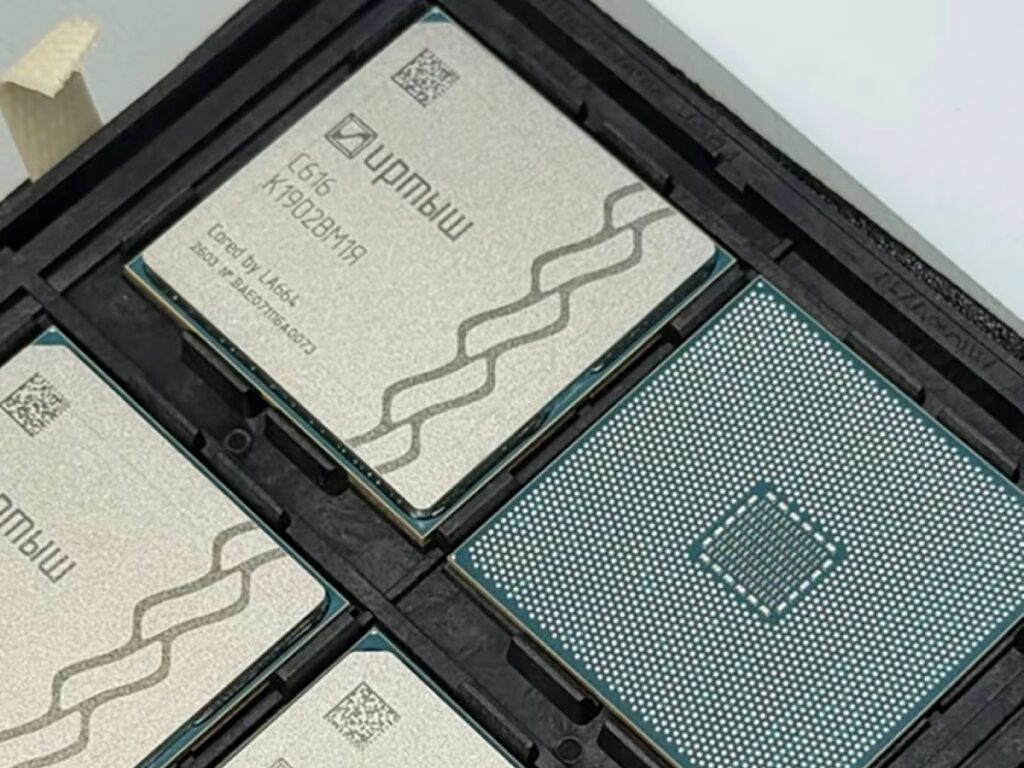
russian irtysh server processor

Russia has lowered its benchmark for technological independence. A revised government target now requires domestic hardware to make up 58.7% of state technology projects by 2030—down from the 80% Moscow had long promised—a reduction proposed by Russia’s own Ministry of Industry and Trade and set by a decree signed in July 2026 by Prime Minister Mikhail Mishustin.

Funding collapsed as deadlines slipped

The scale of the retreat was laid out by Ukraine’s Foreign Intelligence Service, which called the downgrade a capitulation to reality. Funding for the flagship state program collapsed roughly fivefold, from $338.4 million in 2024 to $62.6 million in 2026, and the broader electronics-engineering development program faces a $422.7 million shortfall for 2026–2028, the service said.

Several microelectronics-equipment projects were canceled outright, and deadlines for domestic processors and modems have slipped to 2032. The “Irtysh” processor Moscow presented as a homegrown design for critical infrastructure is, by the service’s account, effectively a copy of China’s Loongson chip, and the Kurchatov Institute missed its deadline to build replacements for Intel, Marvell, Broadcom, and Integrated Device Technology parts.

Russian specialists themselves say localizing more than 60% is impossible without domestic production of chips at 28 nanometers and below, which sanctions and the loss of Western tooling put out of reach.

The GRU buys abroad what Russia cannot make

What Russia cannot build, it increasingly smuggles. Estonia’s Foreign Intelligence Service reported in February 2026 that Russian military intelligence—the GRU—takes an active role in acquiring sanctioned dual-use goods, running import-export front companies to route Western and Asian components home.

One such firm, Moscow-registered Neptun Ko, is directed by an identified GRU officer, Aleksandr Matrossov, and moved more than €500,000 ($540,000) worth of critical semiconductors to Russia’s defense industry through a Chinese intermediary in the first year of the full-scale war, the Estonian service found.

yevgeniy pluzhnik in kuala lumpur
Explore further

Russian businessman runs Hong Kong pipeline feeding European electronics to Kremlin’s weapons labs

Every chip Russia’s factories cannot make is one it must source abroad, through the third-country sanctions loopholes that still route Western components into Russian missiles and drones—which is where the practical fight over Russia’s electronics now lies, whatever share Moscow prints as its goal for 2030.

  • ✇Euromaidan Press
  • Europe deepens trade with India while Western parts keep reaching Russia’s weapons
    An Iskander missile that Russia fired at Kyiv Oblast on 10 July was built from more than 140 foreign parts, 62 of them American, and at least 20 were made in 2025—components that cleared every Western control and reached a Russian assembly line within about a year, Euromaidan Press reported.Without those parts, Ukraine’s presidential sanctions commissioner Vladyslav Vlasiuk said, Russia could not build the weapon.
     

Europe deepens trade with India while Western parts keep reaching Russia’s weapons

30 juillet 2026 à 10:31

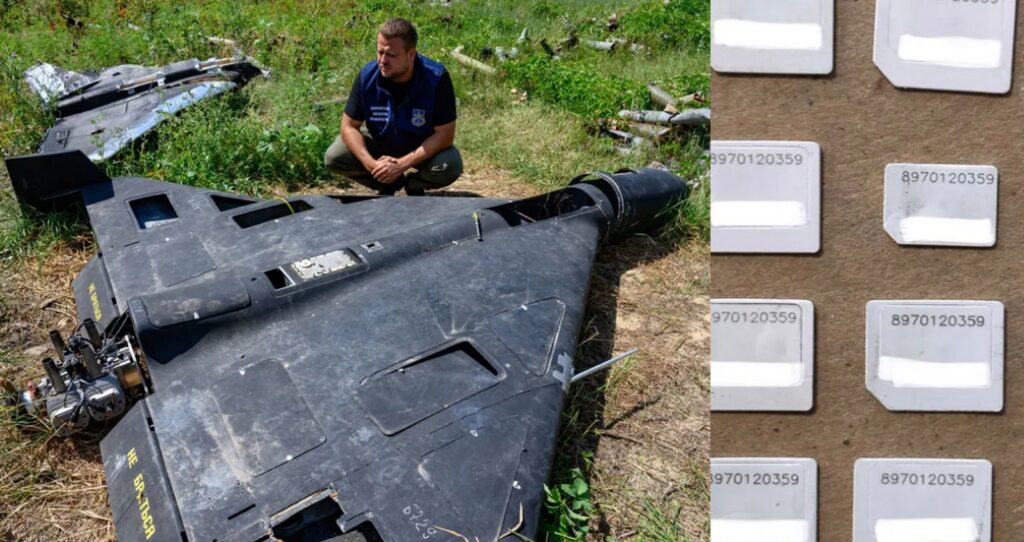
tele2 sim cards recovered in downed russian drones

An Iskander missile that Russia fired at Kyiv Oblast on 10 July was built from more than 140 foreign parts, 62 of them American, and at least 20 were made in 2025—components that cleared every Western control and reached a Russian assembly line within about a year, Euromaidan Press reported.

Without those parts, Ukraine’s presidential sanctions commissioner Vladyslav Vlasiuk said, Russia could not build the weapon.

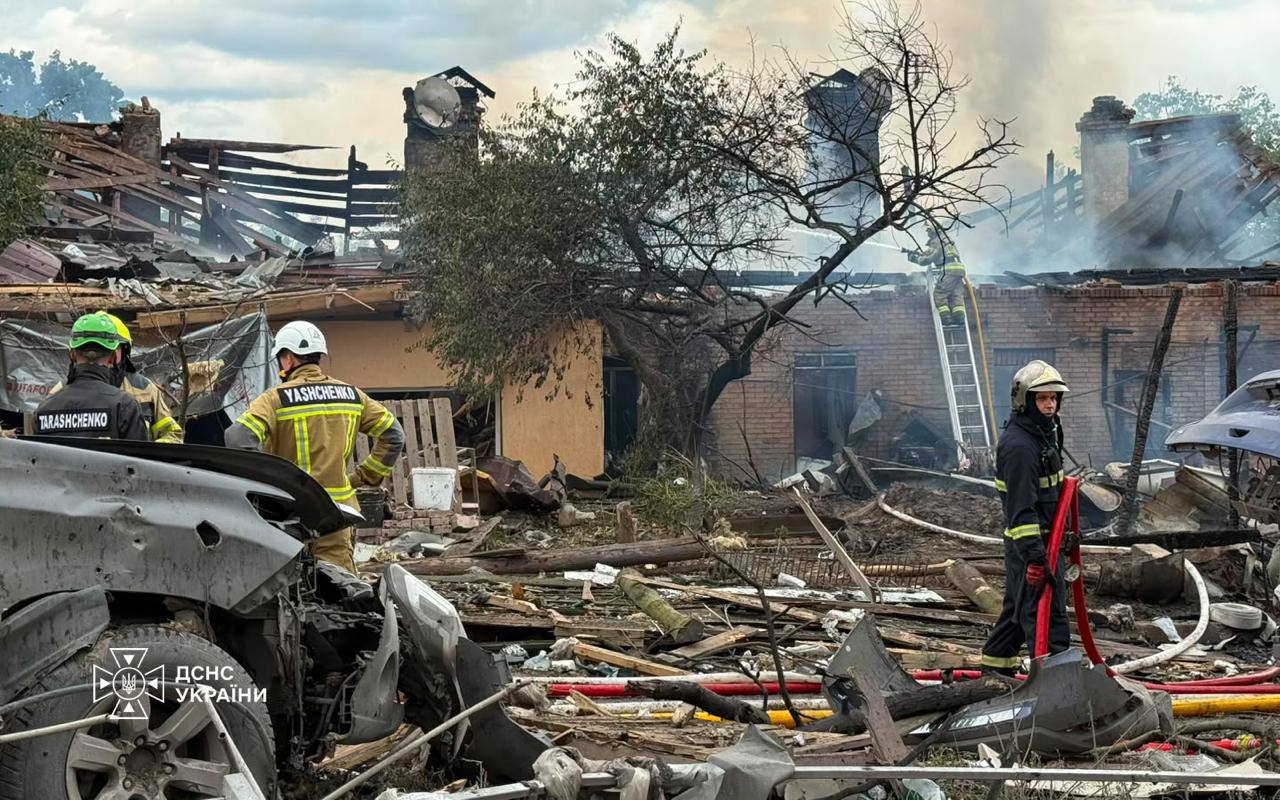
Aftermath of a Russian ballistic missile attack on Bucha district in Kyiv Oblast, Ukraine, 24 July 2026. Photo: Zelenskyy
Explore further

62 of the 140 foreign parts in this Russian missile were American. Ukraine wants that gap closed

A paradox runs through Europe’s answer to that problem. The EU is preparing to blacklist more than 1,600 companies for helping Russia’s war industry, its largest single batch of corporate designations, Bloomberg reported, while at the same time deepening trade with India, a country the same Western parts move through on their way to Russia.

And closing that gap will matter even after the war ends: a new study of Russia’s arms makers finds they will keep producing weapons at wartime speed—and keep needing imported parts to do it—whether or not the fighting stops.

Ukraine has been pulling the same finding out of downed Russian drones and missiles for two years—Indian electronics in Shahed drones among them.

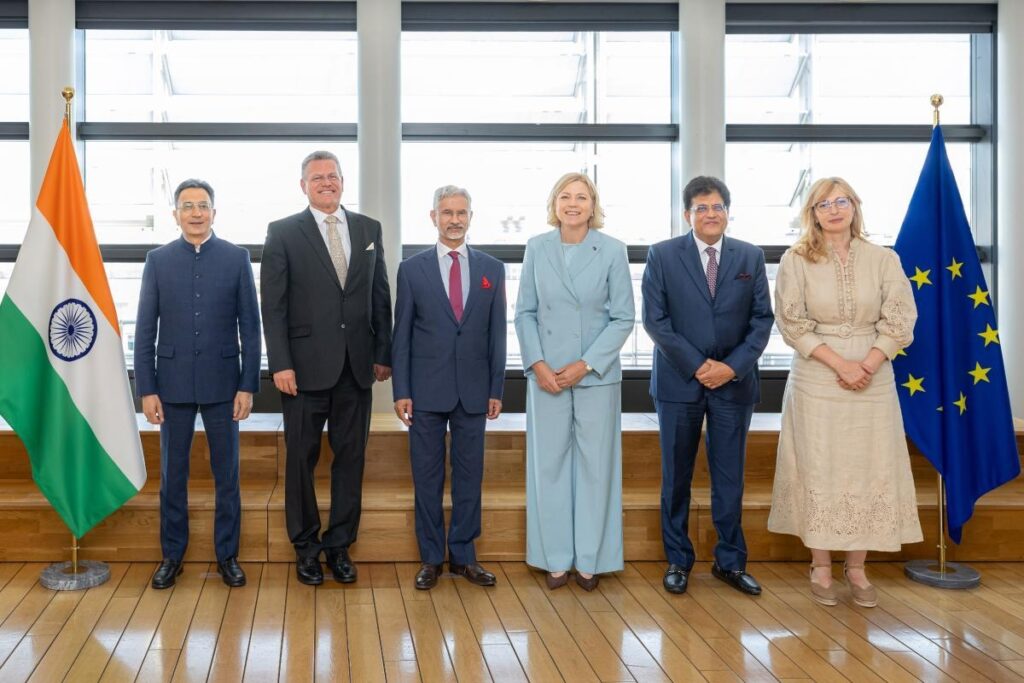
eu and indian officials meet in brussels on 15 july 2026 to deepen cooperation on trade, tech and supply chains
EU and Indian officials meet in Brussels on 15 July 2026 to deepen cooperation on trade, technology, and supply chains. From left: Jitin Prasada, Maroš Šefčovič, Subrahmanyam Jaishankar, Henna Virkkunen, Piyush Goyal, and Ekaterina Zaharieva. Photo: Xavier Lejeune / European Union, 2026.

The India route grew before the trade deals arrived

A 29 July report by the strategic intelligence company Strider put a number on the wider channel: more than 50,000 sensitive goods, or goods with potential dual-use applications, reached Russian defense companies through Indian supply chains after the full-scale invasion.

The security intelligence firm compared totals from 2019 to 2021 with those from 2022 through the first quarter of 2025. Since the invasion, sensitive exports from India to Russia have multiplied several times over—and the sharpest jumps come from the countries deepening their own trade with India.

Swedish-origin goods rose almost sixfold. British, Swiss, and French exports of the same kind roughly doubled or more. The pattern extends beyond Europe: American-origin goods more than five times over, Australian goods even faster. German trade was the exception, falling by more than a third—though Germany still ships more of these goods through India than anyone.

Without those parts, Ukraine’s presidential sanctions commissioner Vladyslav Vlasiuk said, Russia could not build the weapon.

French carbon fiber—used in aircraft, drones, and missiles—reached Polymer Company LLC in Russia through India in 2025, according to Strider. The Russian government has designated the firm part of its military-industrial complex, and it supplies several restricted entities.

None of this shows that a part in the 10 July Iskander passed through India. It shows Western goods moving through the country where Britain’s trade deal took effect on 15 July and where the EU is targeting entry into force in 2027. Those deals expand legitimate commerce, not evasion.

Strider’s warning concerns what happens after Western goods enter long, opaque supply chains, and the report urged end-use monitoring to be written into the agreements themselves.

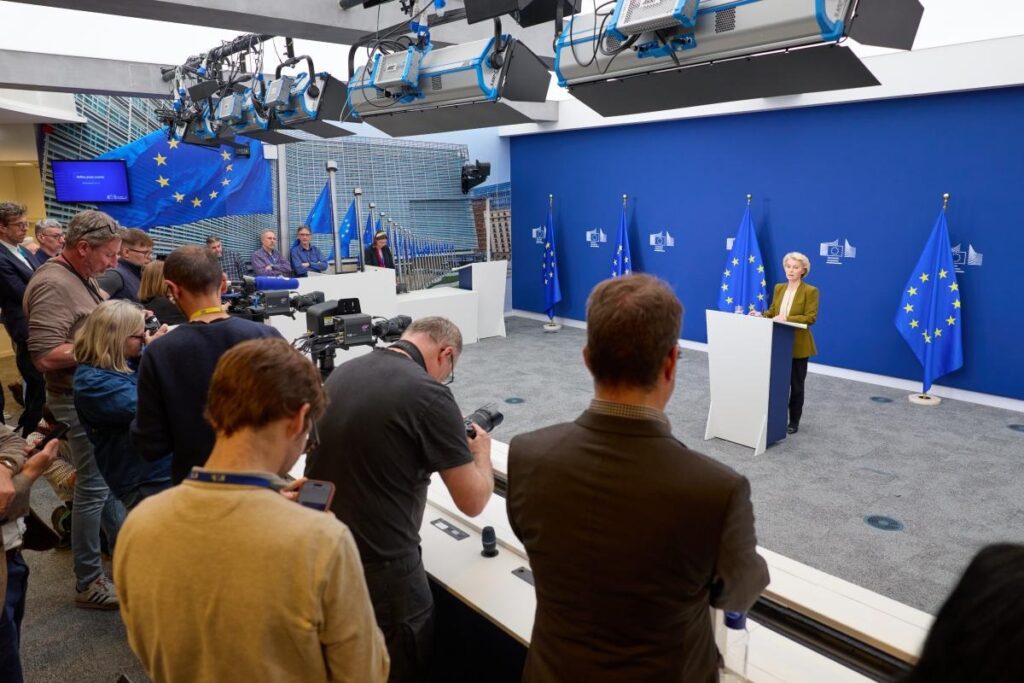
eu commission president ursula von der leyen presents the 21st sanctions package
European Commission President Ursula von der Leyen presents the proposed 21st sanctions package against Russia in Brussels on 9 June 2026. The EU adopted the package on 23 July. Photo: Dati Bendo / European Union, 2026.

Brussels is preparing 1,600 more names

The blacklist Brussels is drafting would target companies rather than whole industries, reaching corners of Russia’s military supply chain that earlier rounds missed.

The firms have a combined annual turnover of more than $20 billion and employ more than a quarter of a million people. If members approve it, the number of EU-sanctioned entities would jump by half. Foreign ministers are expected to take it up in October.

The bloc’s 21st package, adopted on 23 July, had already tightened dual-use export curbs on dozens of firms, some outside the EU. Six days later, the firm published the scale of one route around exactly those curbs.

votki
A production hall at Russia’s Votkinsk Plant in Udmurtia, one of the addresses identified as a destination for sanctioned goods. Photo: Delovaya Reputatsiya, 2021.

Russia plans to keep producing

That is why the flow of parts outlasts the war. A 14 July study of five major Russian defense manufacturers found them still dependent on imported components despite sanctions, corruption, labor shortages, and inflated costs—and likely to hold high output in select weapons while slowly rebuilding reserves.

Its sharpest warning is about time: Russia’s arms industry will probably stay on a wartime footing even if the shooting in Ukraine stops, while Western industry is unlikely to mobilize on that scale until a major war is already underway.

The Iskander compresses that long problem into a single year. At least 20 of its foreign parts were made in 2025, fitted into the missile, and fired at Kyiv Oblast on 10 July 2026.

❌