The commander of the U.S. Central Command (CENTCOM), Admiral Brad Cooper, has warned American service members that videos posted online from their mobile phones could be used by Iran to help adjust strikes against U.S. military bases.
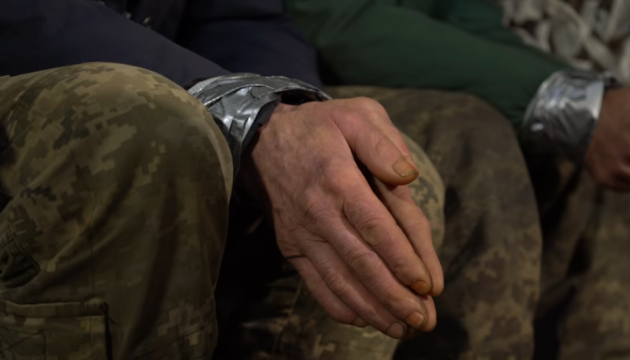
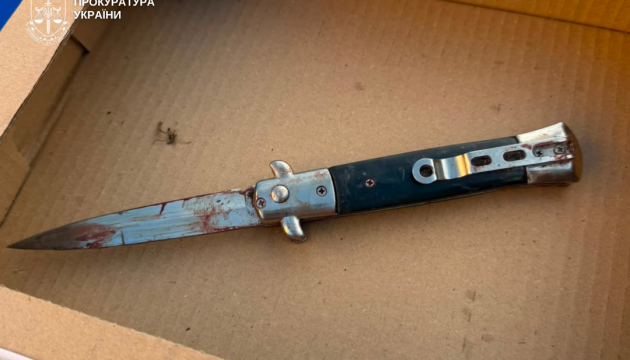
The counterintelligence of the Security Service of Ukraine detained two agents of the Russian Federation’s special services in the Donetsk region who are suspected of coordinating strikes on Kramatorsk and Lyman.
Amid Russia's full-scale invasion, Ukraine's Ministry of Foreign Affairs has urged Hasidic pilgrims planning to travel to Uman to take into account that the Ukrainian authorities cannot guarantee the full safety of foreign nationals.
The missile Russia used to strike Kyiv Oblast on 10 July contained more than 140 foreign components. Without such parts, Russia could not build its weapons, presidential sanctions commissioner Vladyslav Vlasiuk said, according to Ukrinform.
The breakdown of one missile is a map of how sanctions leak. Examining the wreckage of the Iskander, a cluster munition, investigators identified its entire component base: more than 140 foreign components, made in the US (62), Switzerland (8), Germany (5), Taiwan (4), China (2), and Japan (1), alongside 36 Russian components and 11 Belarusian.
At least 20 of its parts were made in 2025, dating the missile's production to 2025 as well, meaning the foreign components reached Russia and were incorporated into a fired weapon within roughly a year, despite the sanctions meant to stop exactly that.
Vlasiuk's sharpest point is about the European parts
The commissioner drew a specific conclusion about which components are the real chokepoints. In Ukraine's view, without access to foreign components, Russia could not produce such missiles at all, Vlasiuk said.
He singled out Western Europe. Chinese components are a separate topic, he said, but removing only the Western European components would effectively make the production of this missile impossible, which is why the question is not only for China but also for other countries whose manufacturers' products Ukraine still finds in Russian weapons.
Among the identified parts were products from the Swiss companies STMicroelectronics and Traco Power, from Japan's Panasonic Semiconductor, and 62 US-made components from various manufacturers. STMicroelectronics is a recurring name: Ukraine has repeatedly found its parts in Russian weapons and called on the producer to control where its products are sold.
The American share is the largest, and Vlasiuk noted the irony
A significant number of components originate from the US, Vlasiuk said, calling it, in a sense, a compliment to the quality of American microelectronics, while adding that it would obviously be better if that quality were unavailable to Russia.
American components account for 72% of the foreign parts found in Russian precision weapons, and in a single large-scale attack in October 2025, Ukraine identified over 100,000 foreign-made components inside the drones and missiles launched at its cities. The parts reach Russia not through elaborate smuggling but through ordinary commercial channels routed via intermediaries in third countries, which is the enforcement gap Ukraine keeps pressing its partners to close.
Soldiers from the Lasar’s Group strike drone unit of the National Guard of Ukraine have shot down a Russian ZALA Z-20 reconnaissance drone at an altitude of 6,400 meters, setting one of the highest successful drone interception records.
The United States has imposed sanctions on Iranian insurance companies and oil tankers. The U.S. Department of the Treasury's Office of Foreign Assets Control (OFAC) announced new sanctions targeting a network linked to Iran.
A lawsuit filed by Russian billionaire Mikhail Fridman against the Netherlands over the impact of European Union sanctions could become an important test of the EU's sanctions policy, according to Dutch lawyer and Russia sanctions expert Helen Over de Linden.
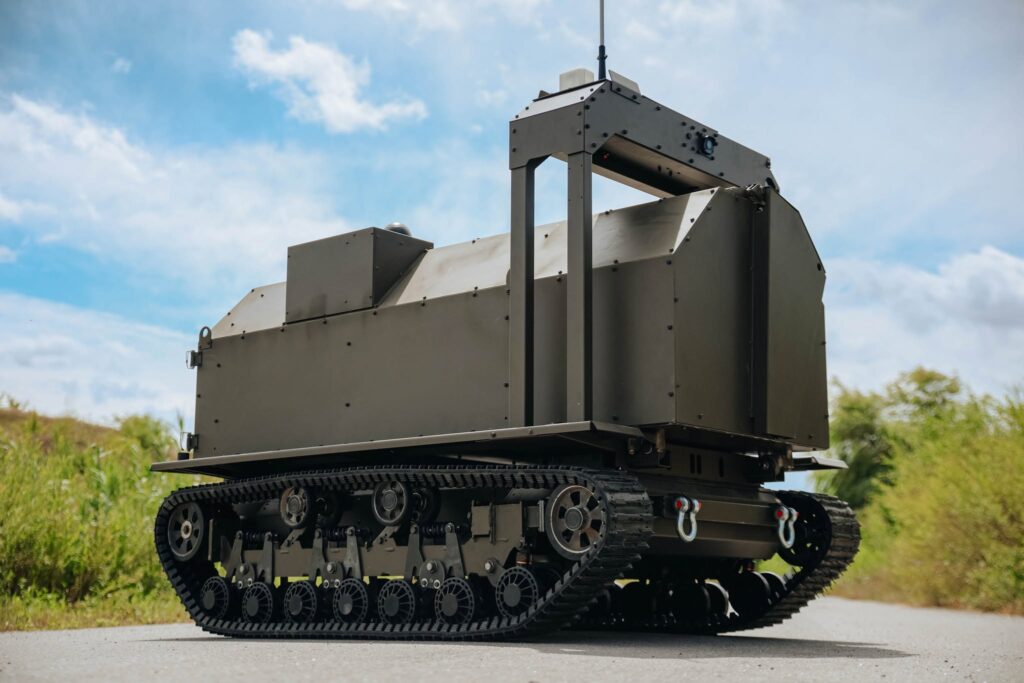
Ukraine has built a robot to carry wounded soldiers out of the kill zones. Evacuation is a fight for the life of the wounded soldier, as well as for the lives of those who set out to help them, the manufacturer Robotized Complexes said, unveiling the "Murakha CaseEvak", a robotic evacuation complex that removes a soldier from a danger zone remotely, minimizing the risk to personnel.
Casualty evacuation on a front saturated with Russian drones is one of the deadliest tasks in the war, with wounded soldiers sometimes waiting days for extraction.
Troops told Euromaidan Press in May 2026 that there were essentially zero purpose-built casevac robots on the market, with evacuation handled by logistics robots not designed to handle the wounded. The Murakha CaseEvak is built specifically for that job: an armored medical capsule on a ground robot, controlled remotely so no rescuer has to enter the drone-hunted zone. It is the specialized casevac machine that the gap called for.
The "Murakha CaseEvak," a robotic evacuation complex. Source: Robotized Complexes
The capsule is armored to survive the trip
The core of the system is a medical capsule built to protect the wounded soldier from the threats that make evacuation lethal. The armored capsule is made of Armox 500T armor-piercing-resistant steel, protecting the person inside from shrapnel and other external threats and creating conditions for safe transport even in zones where enemy drones are actively operating, per Robotized Complexes.
Folding side and rear covers allow a wounded soldier to be loaded quickly, and inside the capsule is a life-support system, ventilation, heating, interior lighting, video surveillance, two-way audio communication, and an emergency door-opening function from inside. A wounded soldier sealed in the capsule can be monitored and spoken to by the operator throughout the drive, and can get himself out if something goes wrong.
The armored approach has already proven itself. In December 2025, a Ukrainian robotic evacuation capsule took a direct hit from a Russian FPV drone mid-evacuation, and the wounded soldier inside survived, a demonstration of exactly why putting armor around the casualty matters when drones hunt the rescue.
The robot was rebuilt to carry the weight
Carrying an armored capsule required upgrading the robot underneath it. The evacuation capsule weighs 344 kilograms, and the complete complex weighs 1,031 kilograms, so Robotized Complexes modernized the Murakha platform itself, increasing motor power to 8 kilowatts and substantially expanding battery capacity.
The connectivity is built to survive Russian jamming, the problem that grounds so many ground robots. The complex carries day, night, and thermal cameras and supports several control channels, including ELRS, LTE, Starlink, and fiber-optic, allowing it to operate even in environments where the enemy is actively using electronic warfare.
President Volodymyr Zelensky has warned that there is a high probability Russia will launch a large-scale missile and drone attack overnight, following several days of preparations.
A total of 191 combat engagements have taken place along the front line since the beginning of the day, with the fiercest fighting reported in the Pokrovsk and Kostiantynivka directions, where Ukraine's Defense Forces repelled 40 Russian attacks.
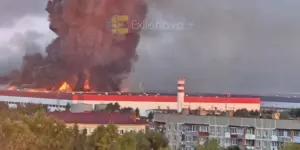
Ukraine burned down a seventh of Russia's largest online retailer in a month. Over July, Ukrainian drones destroyed eight Wildberries warehouses with a total area of about 860,000 square meters, the independent Russian outlet Verstka calculated.
President of Ukraine Volodymyr Zelenskyy has explained the strikes on the "Russian AliExpress" by saying that Moscow uses the platform to bring in sanctioned drone and navigation components. Ukraine's military command lists Wildberries among its long-range targets as a retailer that also moves non-lethal military gear.
The single largest loss for the company was the warehouse in Elektrostal near Moscow, where a 250,000-square-meter facility burned after the 18 July attack, and one marketplace employee was killed.
The strikes are Ukraine's answer to a Russian campaign that has spent months hitting the sorting centers and branches of Ukraine's own delivery companies, Nova Poshta and Ukrposhta.
The tally, warehouse by warehouse
Overall, Ukraine destroyed roughly 15.4% of the marketplace's storage space, totaling 5.6 million square meters, Verstka says.
The outlet has built its figure from the individual strikes across the month. Another roughly 170,000 square meters of the company's premises came under drone attack on 29 July in Ryazan, where, judging by photos and video from the scene, the warehouse was completely engulfed in flames.
Not every strike was successful
Four more warehouses of 100,000 to 108,000 square meters burned after drone attacks: in Kotovsk in Tambov Oblast, in Krasnodar, in Nevinnomyssk in Stavropol Krai, and in the Shushary district of St. Petersburg. Fires also broke out at Wildberries warehouses after drone strikes in St. Petersburg's Utkina Zavod district, about 16,900 square meters, and in temporarily occupied Simferopol, about 6,000 square meters.
Not every strike succeeded. Attacks on facilities in Koledino near Moscow, Yekaterinburg, Voronezh, and Zelenodolsk in Tatarstan did not cause fires. In Voronezh, the drones damaged a warehouse roof, and in Yekaterinburg, they fell in a parking lot.
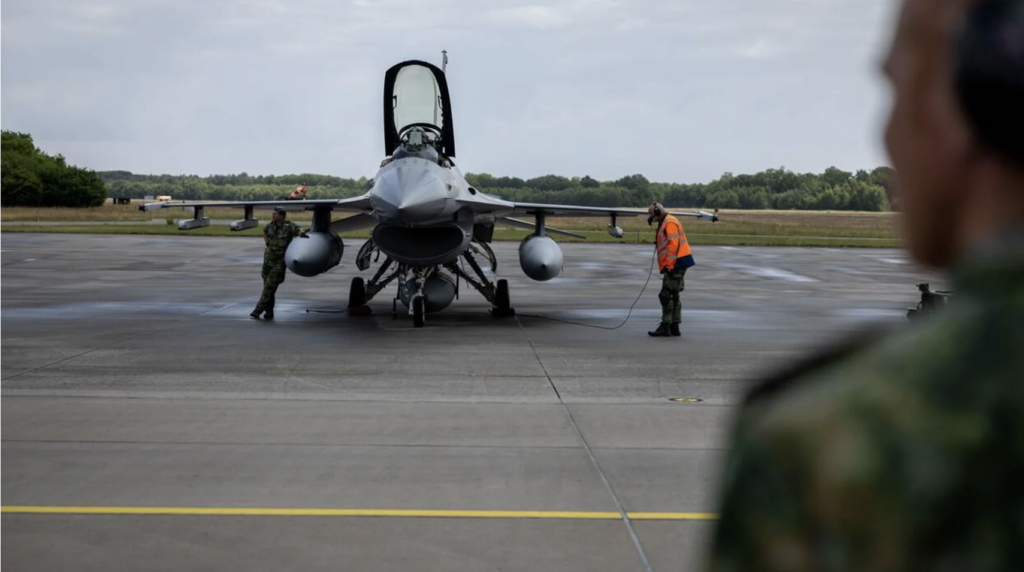
Ukraine has lost another F-16. During a combat mission on one sector of the front, an F-16 fighter of the Ukrainian Air Force experienced an onboard emergency, forcing the pilot to eject, the Air Force reported on Telegram.
Every F-16 lost matters more than the airframe, because Ukraine has so few and needs them so badly. The fighters are instrumental as a line of air defense against the missiles and drones Russia launches in massed nightly attacks.
On 29 July 2026, contact was lost with the F-16, which was flying a combat mission to intercept enemy aerial targets on one sector of the front, and preliminary data indicate an onboard emergency forced the pilot to eject, according to the Air Force.
The pilot is now completely safe, was successfully evacuated, and was taken to a medical facility for examination. Experts and law enforcement are working at the crash site, and no civilian casualties or destruction were recorded.
The pilot's survival sets this loss apart
That the pilot survived is the most important fact, because Ukraine's F-16 losses have more often taken the pilot with them.
Ukraine has paid a heavy price for these aircraft and their pilots. Since receiving its first F-16s in mid-2024, Ukraine had lost four of them by August 2025, with three pilots killed and one ejecting safely, per Euromaidan Press.
Oleksii "Moonfish" Mes was killed in the first loss on 26 August 2024.
Captain Pavlo Ivanov, 26, died on 12 April 2025 when his jet was likely shot down over Sumy Oblast.
A third F-16 was destroyed on 16 May 2025 in an onboard emergency from which the pilot ejected.
Lieutenant Colonel Maksym Ustymenko was killed on 29 June 2025 defending against a large-scale Russian assault, per Euromaidan Press.
The jets are scarce and hard to replace
Denmark, the Netherlands, Belgium, and Norway committed a total of 80 aircraft, but they arrived in batches, and the pool of trained pilots is limited, so each loss subtracts from a capability that Ukraine cannot quickly regenerate.
An F-16 fighter jet of the Ukrainian Air Force experienced an in-flight emergency while carrying out a combat mission on one section of the front line, forcing the pilot to eject safely.
A Russian drone struck a residential area in the town of Hlukhiv, Sumy region, damaging an apartment building and injuring three people, including two children.
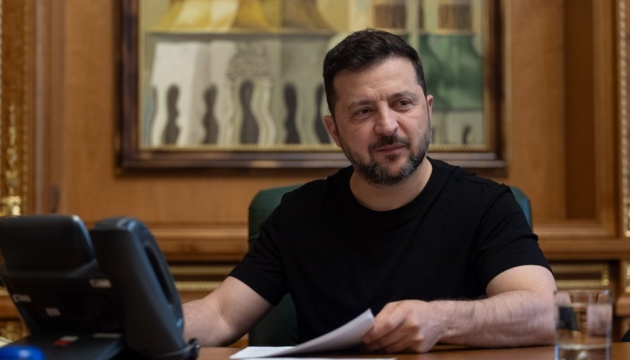
Ukrainian President Volodymyr Zelensky and Norwegian Prime Minister Jonas Gahr Støre discussed the results of the President's visit to Washington and Norway's support for Ukraine's energy sector.
Ukraine's National Police has reported that it has served notices of suspicion on Russian soldiers involved in crimes in Bucha. On 23 or 24 March 2022, around 13:00, during the temporary occupation of Kyiv Oblast, the invaders brought a 34-year-old civilian woman to Vokzalna Street, where five Russian soldiers were based at the time, and raped her.
Their actions grossly violated the Geneva Convention on the protection of civilians in wartime and Additional Protocol I. Under the Rome Statute of the International Criminal Court, rape or any other form of sexual violence in conditions of international armed conflict is a war crime.
What the investigation established
The investigation identified two of the men as the direct perpetrators of the sexual violence. One of them is Radii Zaburin, and the other is Radii Zaburin. They took the woman into a bathhouse, where, using physical force against her, they raped her in turn, the investigation established.
When the woman tried to escape, Monakhov opened fire at her, and she died of her wounds, per the police. An indictment on the fact of the murder is already before the court. Both men are suspected of cruel treatment of the civilian population under Part 1 of Article 438 of Ukraine's Criminal Code, on the violation of the laws and customs of war.
Who the two soldiers are
Both of the Russian soldiers served in the 234th Air Assault Regiment of the 76th Air Assault Division of the Airborne Forces of the Russian Armed Forces, military unit No. 74268, according to the dossiers published by the Book of Executioners of the Ukrainian People, a Ukrainian registry documenting Russian war crimes.
Radii Zaburin, born 2 October 1995 in Usolye-Sibirskoye, Irkutsk Oblast, Russia, held the position of senior mechanic-driver in the artillery unit at the time of the crime, with the rank of junior sergeant, per the registry.
Denis Monakhov, born 11 November 1997 in the village of Palkino, Pskov Oblast, Russia, was deputy commander of a self-propelled artillery platoon and commander of a 2S9 "Nona-S" self-propelled gun, with the rank of sergeant. During the investigation, the two were identified as the direct perpetrators of the sexual violence.
The case is one of hundreds Ukraine is documenting
The Bucha charges are part of a vast accounting Ukraine is building for conflict-related sexual violence. Ukraine's Office of the Prosecutor General has verified 365 cases of conflict-related sexual violence since 2022, involving survivors aged four to 80, and 19 Russian soldiers have been convicted in absentia for such crimes. UN monitors estimate that for each reported case, 10 to 20 go unreported.
Bucha holds a specific place in that record. The town became the emblem of Russian atrocities before Ukrainian forces retook it in early April 2022, revealing executed civilians in the streets and numerous cases of sexual violence. Naming Zaburin and Monakhov adds two documented perpetrators to a case file Ukraine is assembling for the day these charges can be brought in a courtroom rather than in absentia. The indictment for the murder is already before a court; the two men are reportedly in Russia, beyond Ukraine's reach for now, but the record of what they did in a bathhouse on Vokzalna Street in March 2022 is now on the books under their names.
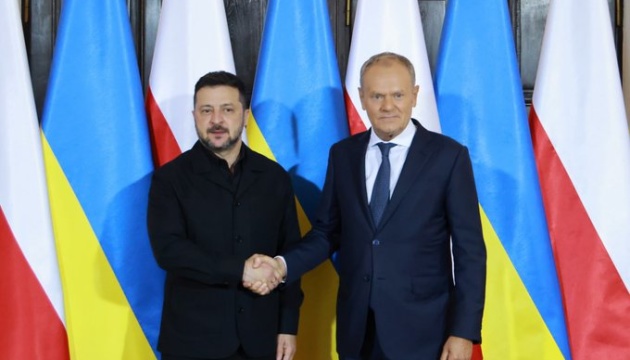
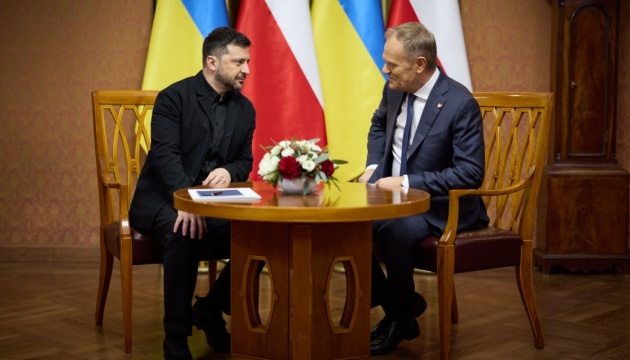
Ukrainian President Volodymyr Zelensky and Polish Prime Minister Donald Tusk discussed the historical dialogue between their two countries, as well as defense cooperation and the protection of Ukrainian and Polish cities and communities from Russian attacks.
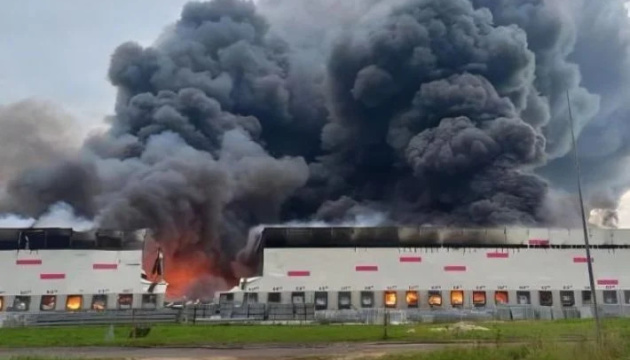
Ukrainian drones destroyed eight warehouses belonging to Wildberries, Russia’s largest online retailer and marketplace, during July, with a combined area of around 860,000 square meters. This accounts for nearly 15.4% of the company’s total warehouse space (5.6 million square meters).
Russian forces shelled the village of Raihorodok in the Kramatorsk district of the Donetsk region, killing a woman and injuring six people, including a child.
Ukraine's army is checking whether it spreads its soldiers fairly. The General Staff announced on 29 July that it had begun a review of how military units are manned and whether people are distributed fairly among them.
The review is part of the changes brought in by new Commander-in-Chief Mykhailo Drapatyi, though its results are not yet known. This personnel audit is one of his first substantive moves, and it targets a long-standing problem in the Ukrainian army: some units are hollowed out while others are overstaffed.
According to the General Staff, the key goal of the review is to assess the actual manning levels of brigades, regiments, and corps, analyze how effectively soldiers are distributed among units, and identify directions for improving personnel provision. It specifically evaluates the effectiveness and fairness of personnel distribution, taking into account the needs of units conducting combat tasks across different sectors of the front.
The problem is real and long-documented
The audit addresses an imbalance that soldiers and analysts have described throughout the war. Ukraine's infantry shortage is acute on the front line, yet manpower is unevenly spread, with some assault brigades chronically undermanned while rear and support structures hold people who could be redeployed.
Drapatyi has moved on exactly this before. As Land Forces commander, he oversaw a 60% reduction in the size of the General Staff, with released personnel redeployed to combat units. In the same logic, this audit applies force-wide: find where people are sitting away from the fight and move them toward it.
The reform sits inside a larger manpower overhaul
The distribution audit is one piece of the largest restructuring of Ukraine's wartime force. It follows the contract system Fedorov intended to launch before his dismissal, which, for the first time, could allow soldiers to sign for a fixed term, 10 to 14 months in infantry-assault roles, with a guaranteed deferral from mobilization when the contract ends, replacing open-ended service.
The framing points at the reform's stated philosophy
The General Staff wrapped the announcement in the language of Drapatyi's approach.
"Any systemic changes in the army begin with a change in attitude toward the person," the General Staff said.
Former Ukrainian lawmaker Viktor Medvedchuk, who represented the now-banned Opposition Platform – For Life party, has been served with a new notice of suspicion on charges of encroaching on Ukraine's territorial integrity and inviolability.
An Iskander ballistic missile used by Russia to strike the Kyiv region on July 10 contained more than 140 foreign-made components from the United States, Switzerland, Germany, Taiwan, China, and Japan. Without these imported parts, Russia would be unable to manufacture such ballistic missiles.
Ukrainian defense industry enterprises have received 167 concessional loans totaling more than UAH 10 billion under a state support program implemented by the Ministry of Defense.
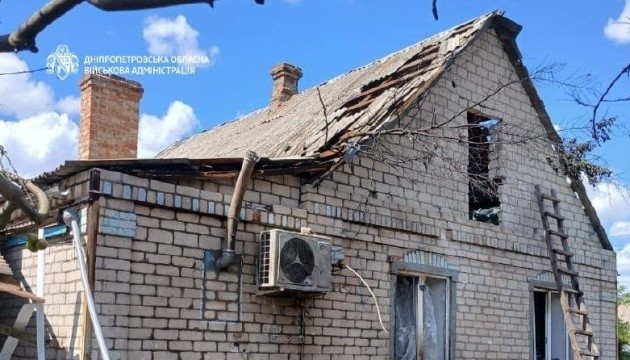
Russian forces struck an energy infrastructure facility in the Valky community of the Bohodukhiv district in Ukraine's Kharkiv region on July 29, injuring one person.
Pavel Durov, the billionaire founder and CEO of the Telegram messaging app, has repeatedly run into trouble with both the Kremlin and Western officials as he cast himself as a champion of free speech
Ukrainian investigators have published a framework that challenges Russia’s standard justification for missile strikes on civilian places: that a precision weapon hit a legitimate military target. Precision settles nothing, they argue, when the missile takes 10 minutes or more to arrive, and the target is a gathering of people who can leave, disperse, or be warned before it lands.
The report, titled “Out of Control” and published on 28 July by the documentation group Truth Hounds and Project Expedite Justice, builds the argument on four strikes and calls the pattern a “moving target attack.”
The report reaches a war crime conclusion for only one of the four—the 2023 strike on a Kramatorsk cafe. The other three are offered as variations on the same problem, not as verdicts. The framework itself is new: a test the authors want courts and investigators to apply to a kind of attack that existing law, they say, has addressed without enough rigor.
A missile can hit its programmed coordinates exactly and still land where no military objective remains.
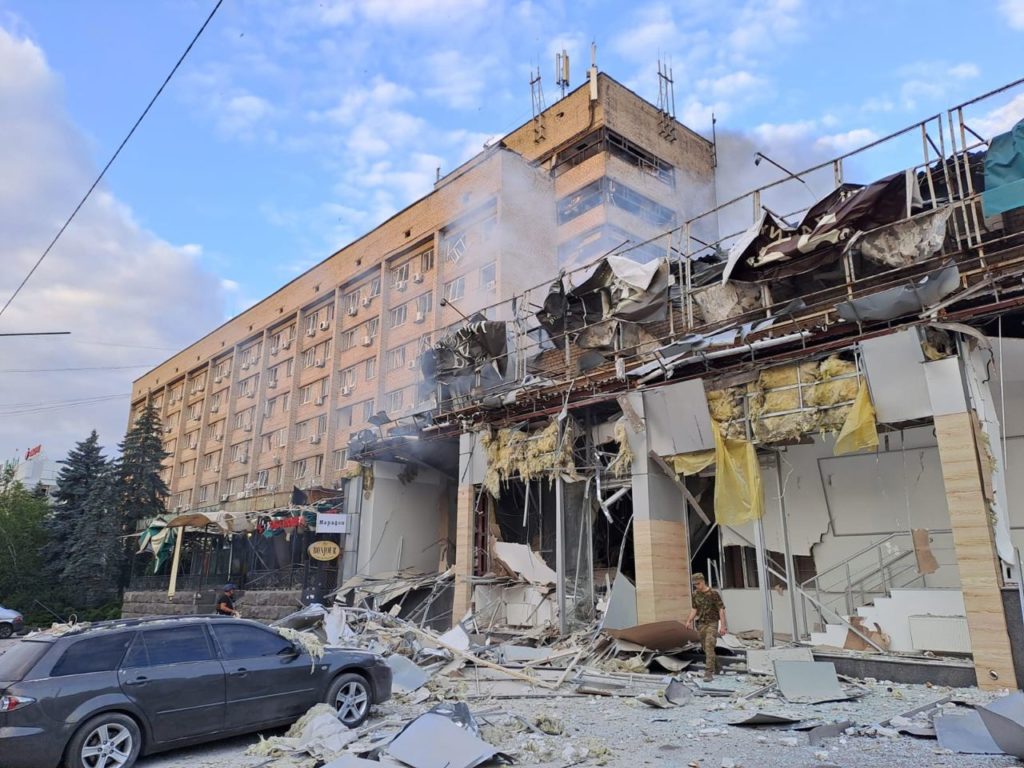
The diagnostic case is the strike on the Ria Lounge cafe in central Kramatorsk on 27 June 2023, which killed 13 people and injured 60. A Russian informant last watched the site at around 17:00. The missile arrived at 19:29, after a flight of nine to 15 minutes. In the interval, no one on the Russian side could see who was inside, and once the missile was launched, no one could call it back.
Russia’s Defense Ministry said it had destroyed a temporary command post of the 56th Motorized Infantry Brigade, killing two generals, up to 50 officers, and up to 20 foreign mercenaries.
The evidence describes an ordinary pizza restaurant instead: 40 to 50 customers, around half civilians and half off-duty soldiers in mixed dress, unarmed, out with friends and family. A basement room had been booked a month ahead for an officer’s birthday. No one outside could tell the place was military.
The missile struck the public level. The basement that Russia said it was aiming at came through essentially intact. Of the 13 killed, two were serving soldiers. Among the dead was Victoria Amelina, a novelist who had retrained as a war crimes documenter and worked with Truth Hounds itself. The organization concluded in 2023 that the strike was a war crime in the form of an indiscriminate attack under the Rome Statute.
Explore further
Award-winning Ukrainian writer who uncovered Russian atrocities dies in missile attack
The gap the weapon leaves open
The framework turns that single case into a test. A moving target attack, as the authors define it, combines three features: a military rationale resting on a temporary presence of personnel, a location of civilian character where civilians are foreseeably present, and a weapon whose flight time is long enough that the situation on the ground can change before impact.
A missile can hit its programmed coordinates exactly and still land where no military objective remains.
The authors selected three further strikes that met the same criteria and examined them through open sources.
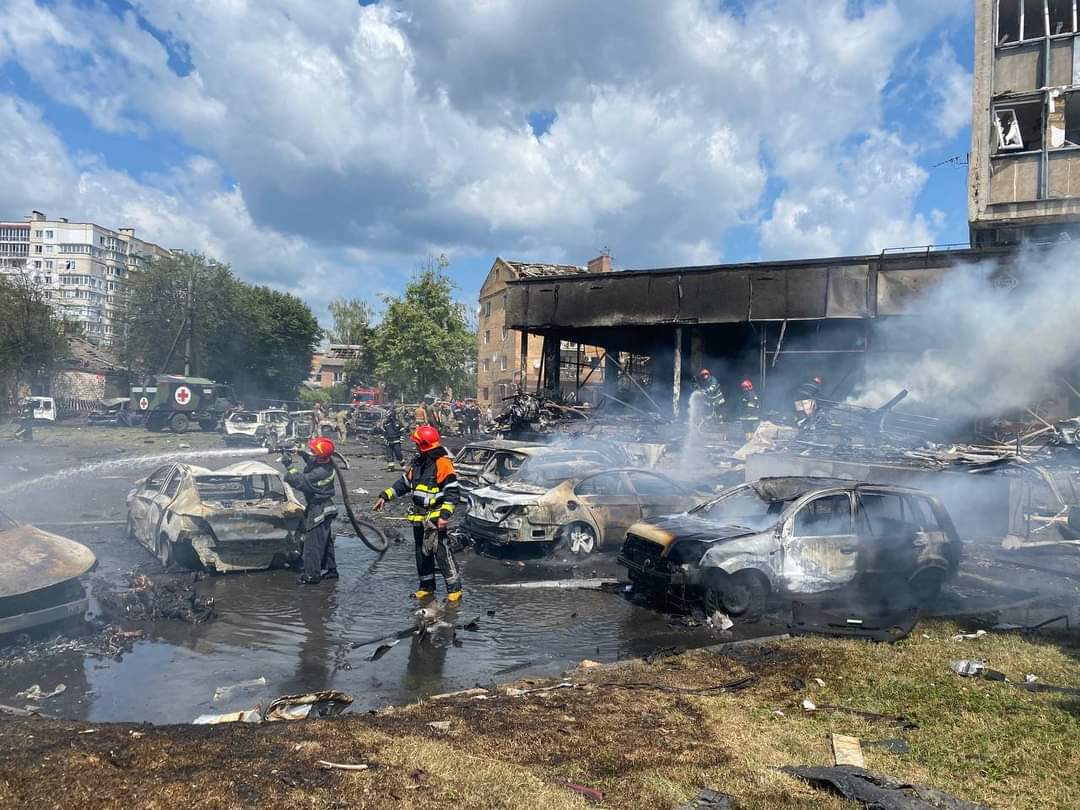
In Vinnytsia on 14 July 2022, the report finds, three Kalibr missiles killed 29 people, including three children and five servicemen, and wounded at least 154. Russia said the target was a scheduled Air Force command meeting. The air raid alert sounded at 10:12; the missiles hit at 10:41, about 40 to 50 minutes after launch.
Explore further
Ukraine calls to brand Russia a terrorist state after missile strike kills 21 in Vinnytsia
In Zlatopil on 4 July 2023, the report documents, a missile landed 800 meters from a serviceman’s funeral, in a residential area, wounding 42 civilians including 12 children. Organizers had asked mourners to shelter from the heat about 10 minutes earlier, leaving the square nearly empty.
In Chernihiv on 19 August 2023, a missile fitted with a proximity fuse detonated in the air above the Drama Theatre, where NGOs were running a defense-tech exhibition inside. All seven people killed were outside the building.
For these three, the report states that the evidence does not support conclusions equivalent to Kramatorsk.
The International Criminal Court in The Hague, Credit: Marina Riera/Human Rights Watch
What the report asks investigators to do
The recommendations run to the International Criminal Court, the ICRC, the UN human rights office, and prosecutors working under universal jurisdiction.
They ask that the launch-to-impact interval be treated as a working indicator, that technical precision no longer be read as evidence that a strike was lawful, and that the presence of soldiers in a civilian place not be taken to strip it of protection.
One question the report raises and declines to settle is whether the four strikes are a run of targeting failures or a method. Answering it needs orders and targeting packages that only investigators with coercive powers can reach—at a moment when Truth Hounds is working on a budget cut by a third after the US withdrew funding, Reuters reported in May.
A court in Wrocław has ordered the detention for three months of two suspects accused of assaulting a Ukrainian couple. Meanwhile, Polish law enforcement authorities are still searching for a third suspect.
Representatives from Ukraine, the European Commission, Moldova, and Romania held a meeting focused on stepping up the work of the Solidarity Corridors, developing the capacity of ports in the Danube region, and ensuring the stable transit of Ukrainian goods amid intensifying Russian attacks on port infrastructure.
Russia is treating Ukrainian border towns as its testing ground, regardless of the civilians who live there. The occupiers have for several years used the Bilopillia community in Sumy Oblast to test new types of weapons, first deploying the KAB glide bomb there and later fiber-optic drones that now also strike Sumy, said Nataliia Kalinichenko, a deputy of the Bilopillia city council, according to Espreso.
The pattern Kalinichenko describes is a border community used to debut weapons before they spread deeper into Ukraine. Bilopillia sits close to the Russian border in Sumy Oblast, and it was there that the first KAB glide bomb in the oblast fell on 23 March 2023, killing two people and damaging more than 40 residential and non-residential buildings, a school, and the district police department.
A year ago, residents of the community encountered fiber-optic drones when almost no one knew such a weapon existed, and today, she said, both weapons reach Sumy city, roughly 40 kilometers from the border.
The town saw the KAB and the fiber-optic drone first
Kalinichenko's account traces two weapons from their first appearance in Bilopillia to their spread across the oblast. The first was the glide bomb, in March 2023.
"The first KAB in Sumy Oblast fell precisely on Bilopillia on 23 March 2023. At that time, we did not even understand the enormous destructive power this weapon has," she said.
The strike killed two people and damaged more than 40 residential and non-residential buildings, a school, and the district police department.
"We learned what a KAB is," she recalled.
The glide bomb, a Soviet-era aerial bomb fitted with a guidance kit and wings that lets Russian jets release it from tens of kilometers away, has since become one of the deadliest weapons of the war, with Russia dropping thousands a month and using them to systematically level Sumy border villages into "buffer zones."
"We already saw this fiber-optic web lying across Bilopillia. Today, unfortunately, all these types of weapons are already used against Sumy too. They reach the regional center," Kalinichenko said.
The tangled cables the drones left behind became a visible marker of the town's role as the place where the weapon first appeared.
The fiber-optic drone is dangerous because it cannot be jammed
Kalinichenko explained why the fiber-optic drone is so hard to stop, and it matches what Ukraine's specialists have documented. The drones are especially dangerous because they are practically impossible to suppress with electronic warfare, and the optics mounted on them let operators make out the smallest details, including license plates or elements of clothing, she said.
The weapon's design is what makes it immune to jamming. A fiber-optic drone is guided by a thin glass fiber that unwinds during flight rather than by radio signal, so it emits nothing for Ukraine's electronic warfare to detect or disrupt. When the first such drone reached Kharkiv in February 2026, Defense Ministry adviser Serhii Beskrestnov called it a serious technological challenge, because radio-electronic reconnaissance is useless against a drone that broadcasts no signal.
That the same weapon appeared in Bilopillia even earlier fits the town's role as the leading edge of Russia's deadly experiments.
The border communities are the war's early-warning system
Bilopillia's experience is a preview of what the rest of Ukraine faces next. Weapons that debut against the border communities migrate inward as Russia scales them and extends their range, so what a Bilopillia council deputy describes today is often what a larger city reports months later.
The Russian army attacked positions of Ukraine’s Defense Forces 71 times since the start of the day, with the greatest number of battles taking place in the Kostiantynivka, Pokrovsk, and Sloviansk directions.
A law now in force gives Ukraine two years to split the tracks from the trains, on the EU model that lets rival carriers share one network. It is doing so without giving up anything the model is meant to strip away: a single hand deciding which train moves first.
European operators come to study exactly that. They watch how a network under constant drone attack keeps its trains running, and their advice sometimes carries a warning: do not repeat the mistakes Europe made reforming its own railways. That is the account of Ukrzaliznytsia’s chairman, Oleksandr Pertsovskyi, in a July interview with the Center for Economic Strategy (CES).
The reform comes now because the old arithmetic collapsed, Pertsovskyi told CES. For decades, one internal transfer kept the railway solvent: profitable freight paid for loss-making passenger trains. The war broke that.
The $1 billion a year Ukraine earned carrying Russian and Belarusian transit is gone, the freight heartland of the Donbas is lost, and in 2026, freight itself slipped into the red. The transfer that funded the whole railway no longer exists.
One of six new Kryukiv-built passenger cars arrives in Kyiv on 27 April. The rolling stock represents the carrier side of Ukrzaliznytsia that the reform will separate from infrastructure management. Photo: Yulia Svyrydenko / Telegram.
Ukraine has two years
The new safety and interoperability law aligns Ukrainian rules with EU standards and, Ekonomichna Pravda reported, gives the government two years from publication to separate the roles of infrastructure operator and railway carrier within Ukrzaliznytsia.
The future infrastructure operator must stay fully state-owned. It runs the public network—the tracks and the power that feed them—while licensed carriers run the trains on top. The law does not force the state to privatize Ukrzaliznytsia or open the tracks to private locomotives. Yet it builds the ground for a market where more than one carrier could someday use the same rails.
Inside the company, much of the split has already happened. Passenger and suburban trains have their own divisions. A single infrastructure arm, UZ Infra, is being built out of the six regional railways, and a freight arm, UZ Cargo, is due by 2027.
The split shows what each business really costs, Pertsovskyi says, and ends the old habit of burying losses in a single balance sheet. What Pertsovskyi opposes is giving up overall operational coordination.
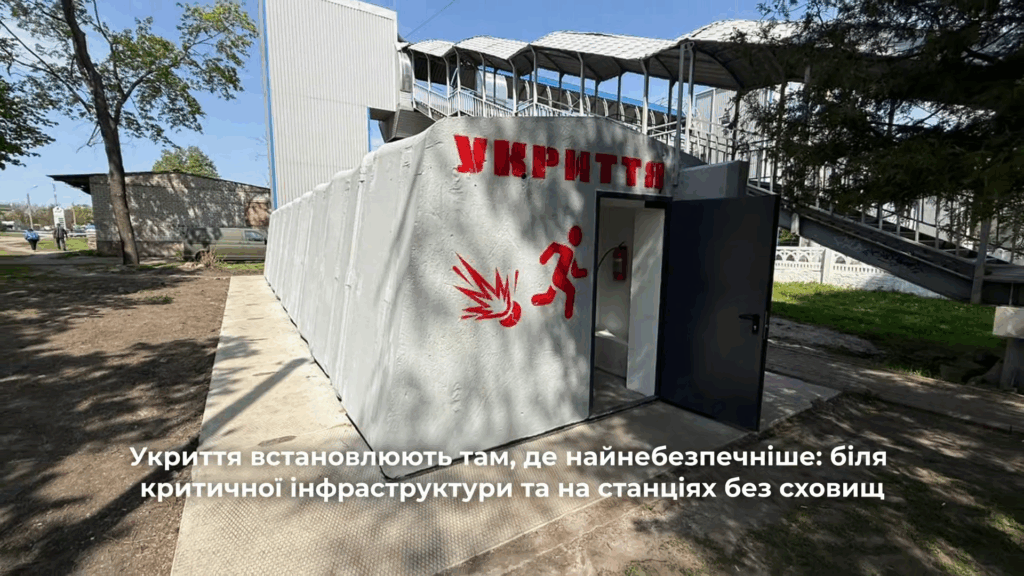
Mobile shelter installed at a Ukrainian railway site, part of a nationwide rollout by Ukrzaliznytsia to protect staff during air raid alerts amid ongoing strikes on rail infrastructure. Screenshot from video: Ukrzaliznytsia
One track can carry a market—or a war
“We have one line of track. A private carrier hauls fuel because that cargo pays more, while you need to evacuate millions,” Pertsovskyi told CES. Without one authority able to set wartime priorities, he said, you get chaos.
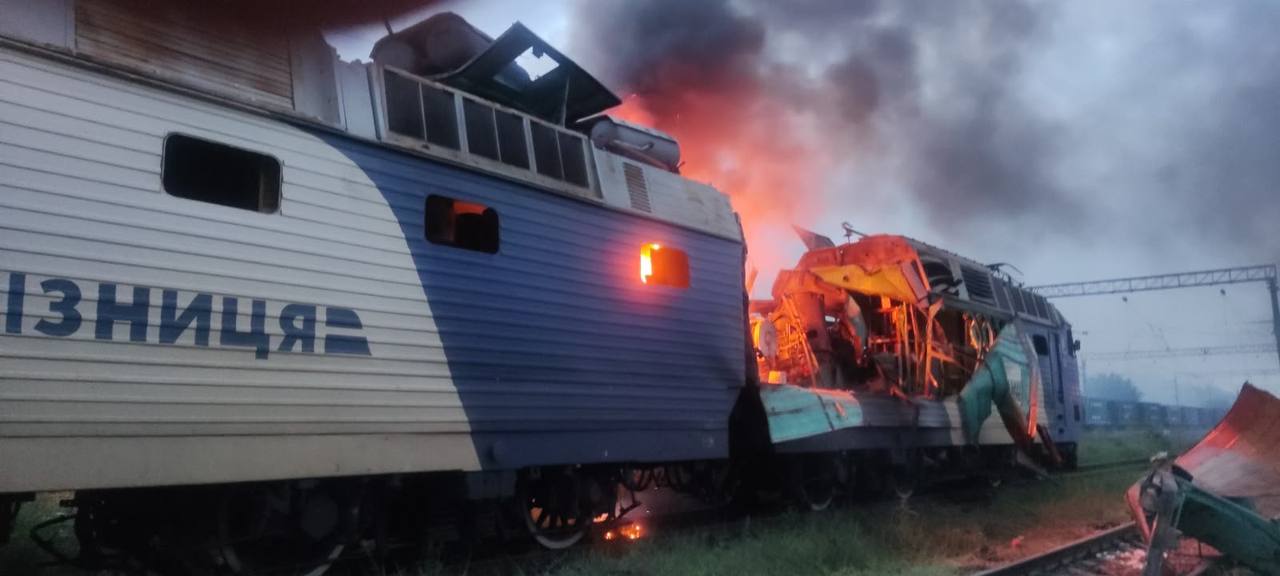
Russia damaged or destroyed more than 200 Ukrainian locomotives in the first half of 2026—as many in six months as in the previous 15. Ukrzaliznytsia has bolted more than 800 mobile shelters onto junctions and depots so crews can duck for cover without leaving the network.
Explore further
Russia has hit over 200 Ukrainian locomotives this year. It’s targeting logistics that keep country supplied
This is the system European operators come to examine. That resilience is more than shelters and spare engines—it is the ability to move any train or crew wherever the day demands, under a single chain of command.
None of this is abstract for a railway that, after February 2022, turned into part transport company, part evacuation service, part arms conduit. A private operator could not have run the 2022 evacuations and the military traffic at the same scale, Serhii Vovk, director of Ukraine’s Center for Transport Strategies, argued to Ekonomichna Pravda. State control, he said, will outlast the war.
The rulebook allows one holding
The EU does not require Ukraine to break Ukrzaliznytsia into unrelated firms or sell it. Under the bloc’s single railway area rules, an infrastructure manager and train operators can be part of a single integrated holding, as Deutsche Bahn does in Germany.
What the rules demand is narrower. The infrastructure manager must be a legally distinct body with transparent finances and independent control over its core decisions, according to the European Commission summary. Chief among those decisions is who gets each train path.
Path allocation is the pressure point. Deciding who gets each slot is what the EU calls an essential function, one it insists be kept neutral, so that no operator is favored. An operator who is refused a slot can appeal to a regulator.
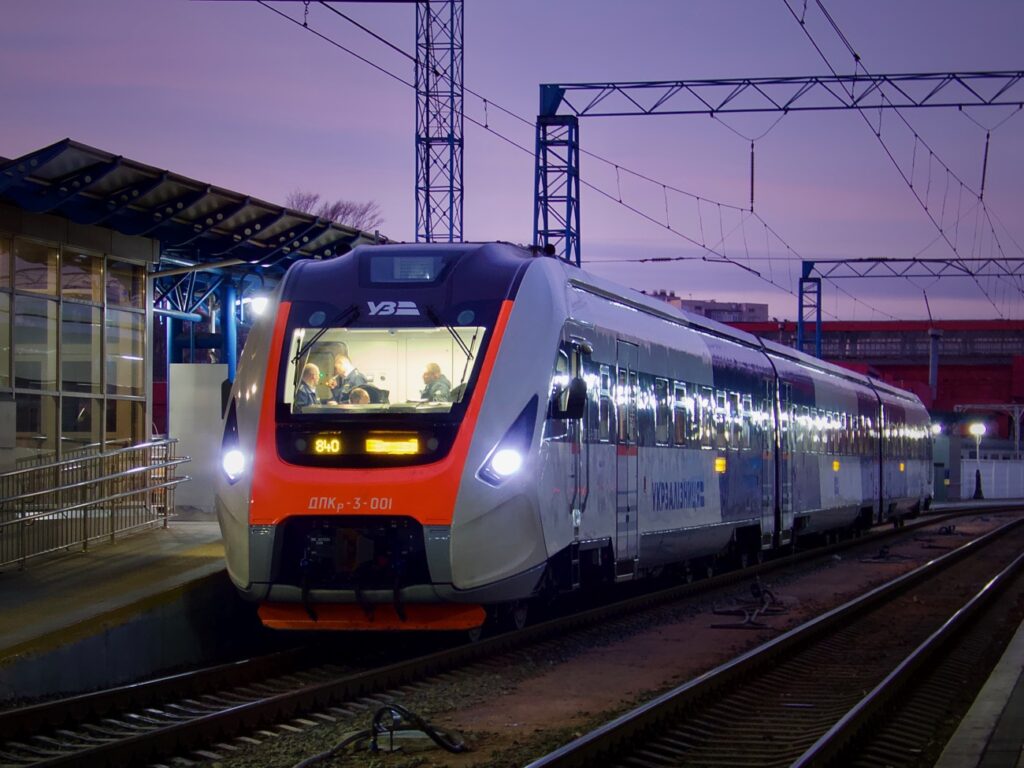
A Ukrainian-made DPKr3-001 at Kyiv-Passenger station—the kind of train the €54 million EBRD–EU grant is meant to keep moving through blackouts. Photo: Volodymyr Krynytskyi / Wikimedia Commons
War asks for the reverse: one hand that can override the queue on the spot and put the evacuation train ahead of the cargo that pays more, with no appeal. Reform does not by itself sell paths to the highest bidder—the infrastructure manager still runs the traffic.
But the collision does not go away when Ukraine keeps the holding intact, or keeps a single chain of command. The neutral, contestable allocation the market needs is the same one a war needs to suspend.
So the line is not simply European competition against Ukrainian unity. The same law is meant to open the tracks to rival carriers, and tight central control runs counter to that: the more the state controls the queue, the more a rejected competitor can suspect it was kept off for the wrong reason.
Ukraine has to loosen its grip enough to make access credible, without loosening it so far that the network cannot act as one in a crisis.
Deputy Finance Minister Oleksandr Kava speaks at the Tatra Summit in Slovakia in October 2024. Now on Ukrzaliznytsia’s supervisory board, Kava warns against simply copying Europe’s railway model. Photo: Ukraine’s Ministry of Finance.
Look to Germany, then look closer
Deputy Finance Minister Oleksandr Kava, who sits on Ukrzaliznytsia’s supervisory board, has cited Deutsche Bahn’s chronic delays as a warning about European rail reform, contrasting Germany with Switzerland, whose trains run on time and whose railway remains a single integrated company.
Each half of that contrast frays on inspection. Switzerland, though outside the EU, adopted the same reform: SBB’s own rules run a separate infrastructure manager that lets rival operators onto the tracks on equal terms. Being one integrated company didn’t stop it from walling off the tracks from the trains—the split Kava warns against is already there.
Switzerland's famous punctuality is based on a stricter standard than most railways use: a train counts as late after 3 minutes, not 5. And Germany’s delays trace less to reform than to money—even Ukraine’s railway chief notes Deutsche Bahn blames a network starved of investment for years.
Explore further
Ukraine’s railway crisis threatens EU reconstruction investments
The bill lands on the state either way
Even wealthy Germany cannot make the European model pay for itself. Berlin puts in far more than Deutsche Bahn does, and the trains still run late. The reform was never the costly part—the upkeep is.
Ukraine cannot fund its version at that level. Keeping the network up would eventually cost the budget 350–400 billion hryvnias (roughly $8 billion) a year, Kava told Ekonomichna Pravda. This year, the government has put up 28.5 billion ($630 million), under a tenth of that.
None of this is about copying an EU org chart. Ukraine has to open its railway to competitors and keep it able to act as one under fire, out of the same law and the same holding.
The test comes on the day when two trains want the one open track, and only one can go first.
The European Union is preparing to blacklist more than 1,600 companies that it accuses of feeding Russia's war against Ukraine, Bloomberg reported, citing anonymous sources. It would be the largest batch of firms named in a single European sanctions round, and it needs unanimous approval to take effect. Officials are aiming for adoption in the fall.
The EU imposed sanctions after Russia seized Crimea in 2014, then added new packages after the 2022 full-scale invasion to curb the revenues sustaining the war, but slow adoption has repeatedly given Moscow time to devise partial workarounds. The bloc's economic restrictions on Moscow are now locked in until mid-2027, which frees Brussels to keep adding layers instead of refighting the renewal every six months.
A blacklist built company by company
Together the listed firms turn over more than $20 billion a year and keep over 265,000 workers on their payrolls, people familiar with the matter told Bloomberg. Approval would lift the number of entities the EU has sanctioned during the war by 50%, the same people said. The bloc's foreign policy arm, the European External Action Service (EEAS), has spent months on the draft, hunting for parts of Russia's military-industrial complex that earlier measures never touched. The draft skips category-wide bans and lists firms one at a time instead.
Bloomberg says the package would likely still fall short of the economic weight of earlier rounds aimed at Russian oil and banking. The EU adopted its 21st package on 23 July, with 218 new designations.
Explore further
Euractiv: Italy and Greece win a fur pass for Russia inside the EU’s newest sanctions round
Carve-outs keep blunting the packages
Adopting sanctions has grown harder as governments demand exemptions to limit damage at home, Bloomberg noted. Greece's objections shrank a proposed ban on moving Russian liquefied natural gas to third countries. France and Italy pushed to weaken a proposed entry ban on former Russian combatants, and other states killed proposed import bans on Russian fish. That same round also let raw Russian sable pelts back into the market.
Officials plan to send the draft to national capitals within weeks, leaving governments room to study it, with adoption planned for the October meeting of foreign ministers. The bloc is separately preparing restrictions tied to Russia's forced deportation of Ukrainian children, which could also land in the fall, the same people told Bloomberg. Nearly two dozen Russians have already been sanctioned over the abduction of Ukrainian children.
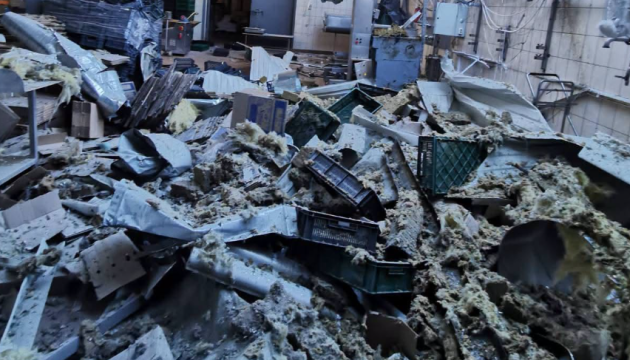
A dairy plant in Ukraine's Kharkiv region has sustained critical damage as a result of Russian strikes. The Bogodukhiv Dairy Plant was severely hit during the latest attack.
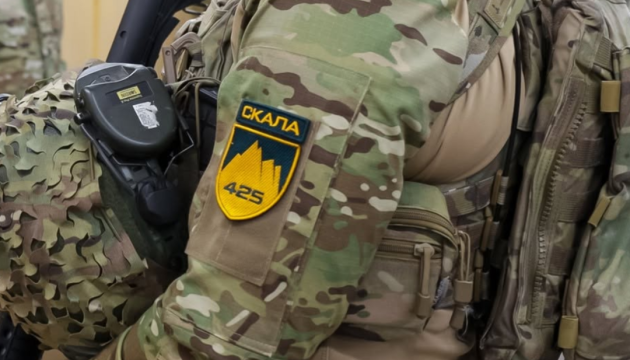
The command of the 425th Separate Assault Regiment Skelia says it is cooperating with Ukraine's State Bureau of Investigation (SBI) and is committed to eliminating any negative practices within the unit.
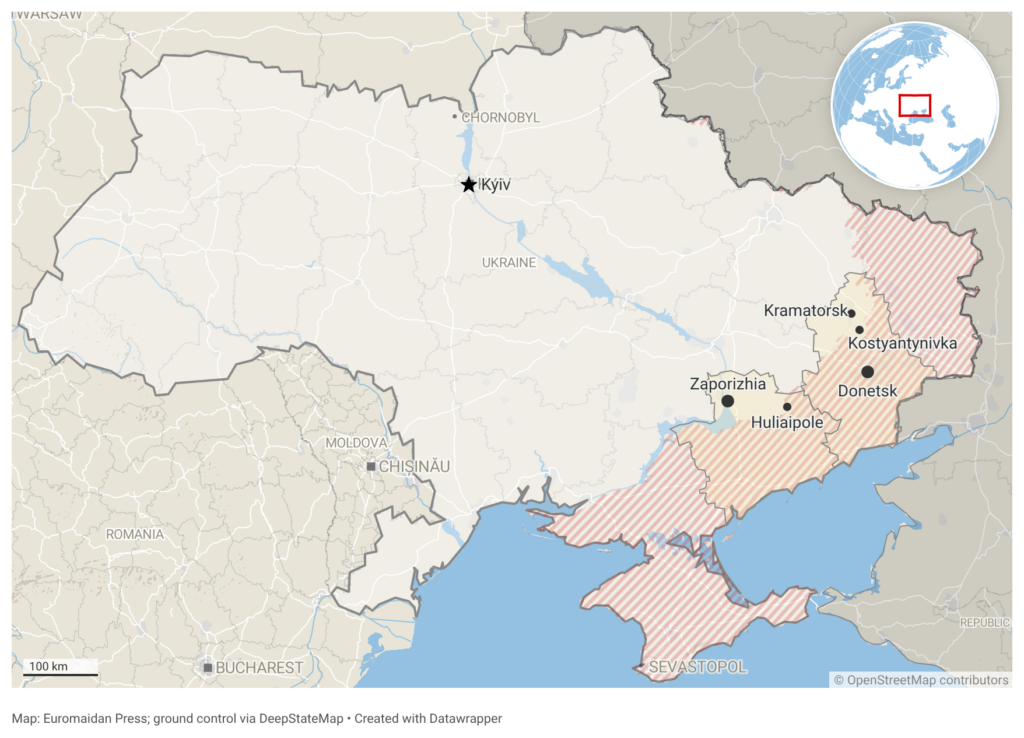
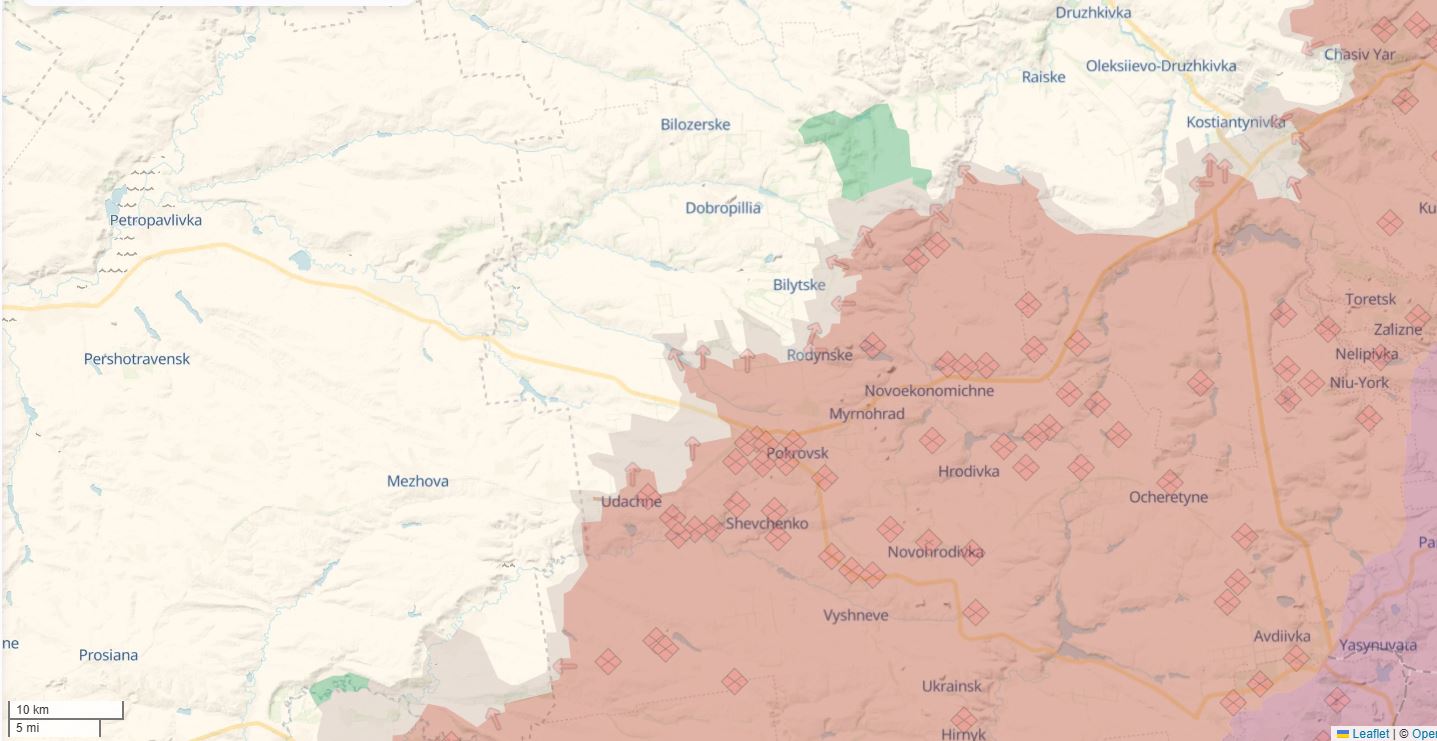
Russian troops are working deeper into Ukraine's last fortified cities in Donetsk Oblast, pushing infantry into Kostiantynivka while wrecking the towns behind it, the Ukrainian monitoring and analytical project DeepState reported. The US-based think tank Institute for the Study of War (ISW) recorded fresh Russian movement inside the city over the same days.
Over the past several years, Moscow's main objective in its invasion of Ukraine has been to capture the rest of Donetsk Oblast. Its key demand pressed at previous US-brokered ceasefire talks was for Ukraine to cede the rest of Donetsk Oblast. That is where Ukraine's fortified cities anchor its eastern defenses, which made the demand predictably unacceptable to Kyiv. Now, Russia's 2026 offensive has been buying that ground at a steeply rising cost in casualties per kilometer.
Kostiantynivka: Russian infantry keeps slipping in
Russian forces keep up constant infiltration attempts on Kostiantynivka, DeepState said. Their aim is to entrench inside the city, mass infantry there and take control of the ground. One of their main tasks is to take control of the part of the city between the settlements of Illinivka and Novodmytrivka. If Russian troops take Novodmytrivka, the entire Ukrainian grouping defending Chasiv Yar faces encirclement, DeepState noted. Supply into Chasiv Yar has been difficult for a long time, because Russian drone numbers hand Moscow the advantage in the air. Alongside the infantry, Russian forces use artillery and guided glide bombs to destroy the city.
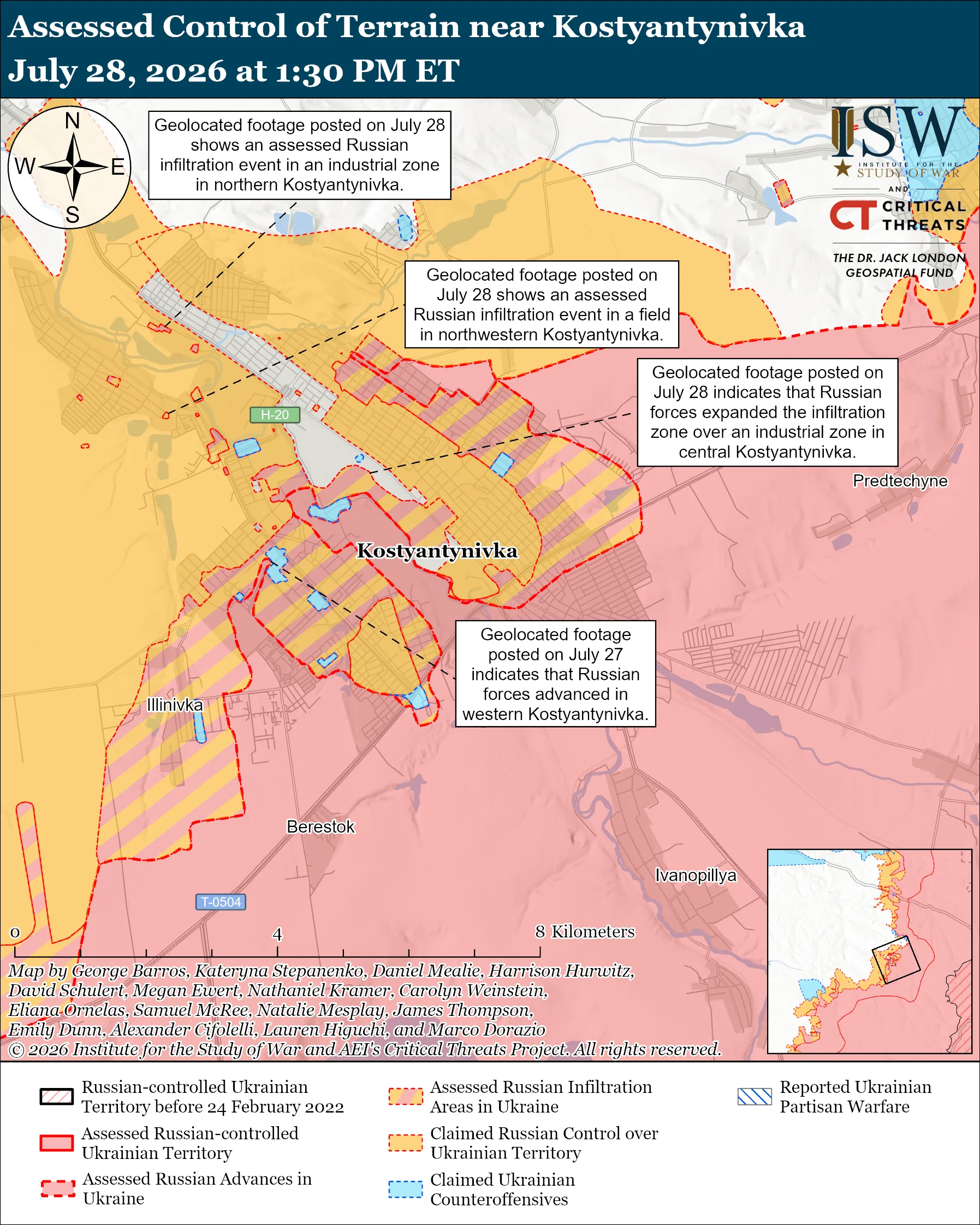
ISW assessed on 28 July that Russian forces recently advanced in Kostiantynivka and kept up infiltration missions inside it. Geolocated footage from 27 July points to a Russian advance in the city's west, ISW said. Video published a day later shows Ukrainian troops hitting Russian positions in the north and center of Kostiantynivka, after what ISW assesses were infiltration missions.
Assessed control of terrain near Kostiantynivka, Donetsk Oblast, as of 28 July 2026. Map: ISW
Unnamed soldiers from units defending the city told Hromadske that the situation there is getting worse. Ukraine's General Staff counted 31 Russian attacks on the Kostiantynivka axis over the past day.
Explore further
Russia is massing for Dobropillia again using quad bikes and motorcycles, Ukraine’s National Guard says
Druzhkivka and the towns behind the front are turning to ruins
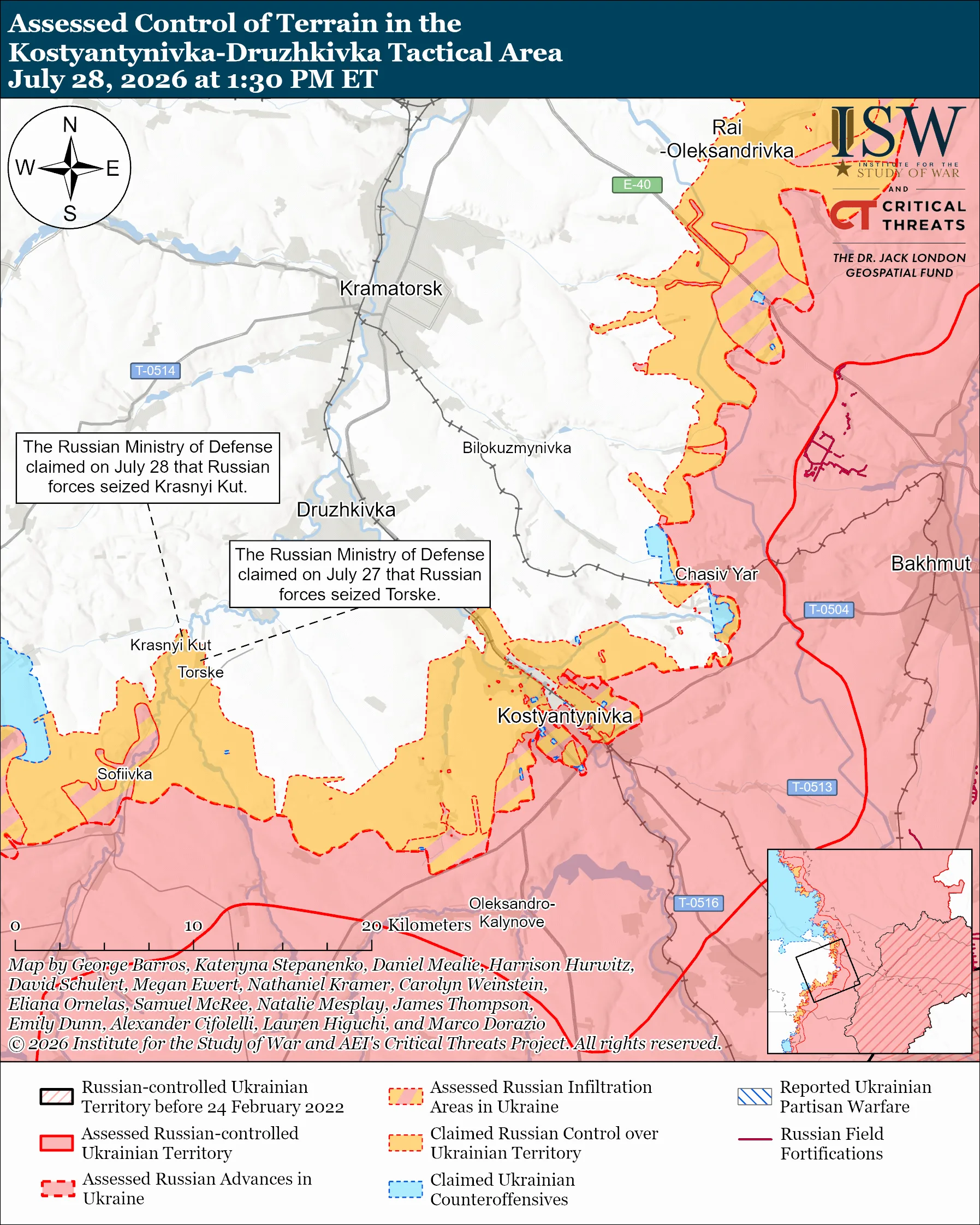
The whole agglomeration around Kostiantynivka is suffering. DeepState said Druzhkivka and neighboring Oleksiievo-Druzhkivka are gradually turning into ruins under constant shelling, and staying there is extremely dangerous. Russian forces fired 1,243 times at the front line and residential areas of Donetsk Oblast on 28 July, Ukraine's National Police recorded.
Assessed control of terrain in the Kostiantynivka-Druzhkivka tactical area, Donetsk Oblast, as of 28 July 2026. Map: ISW
Russian pressure is rising on the stretch running roughly from Yampil to Minkivka further north, which may become the next main axis after Kostiantynivka, DeepState said. Russian artillery is already destroying mine barriers along the routes it would use, and Russian drones are working against Ukrainian logistics there.
Sloviansk and Kramatorsk under fire 40 km deep
Russian forces are leveling Sloviansk and Kramatorsk—the northern anchors of the Fortress Belt—with guided glide bombs, rocket artillery, Shahed attack drones and small first-person-view drones that hunt people and cars in the streets. DeepState noted that Russian fire control runs about 40 km deep from the contact line. The agglomeration is gradually becoming an isolated place, where travel will soon be possible only out of critical necessity, in order to fight.
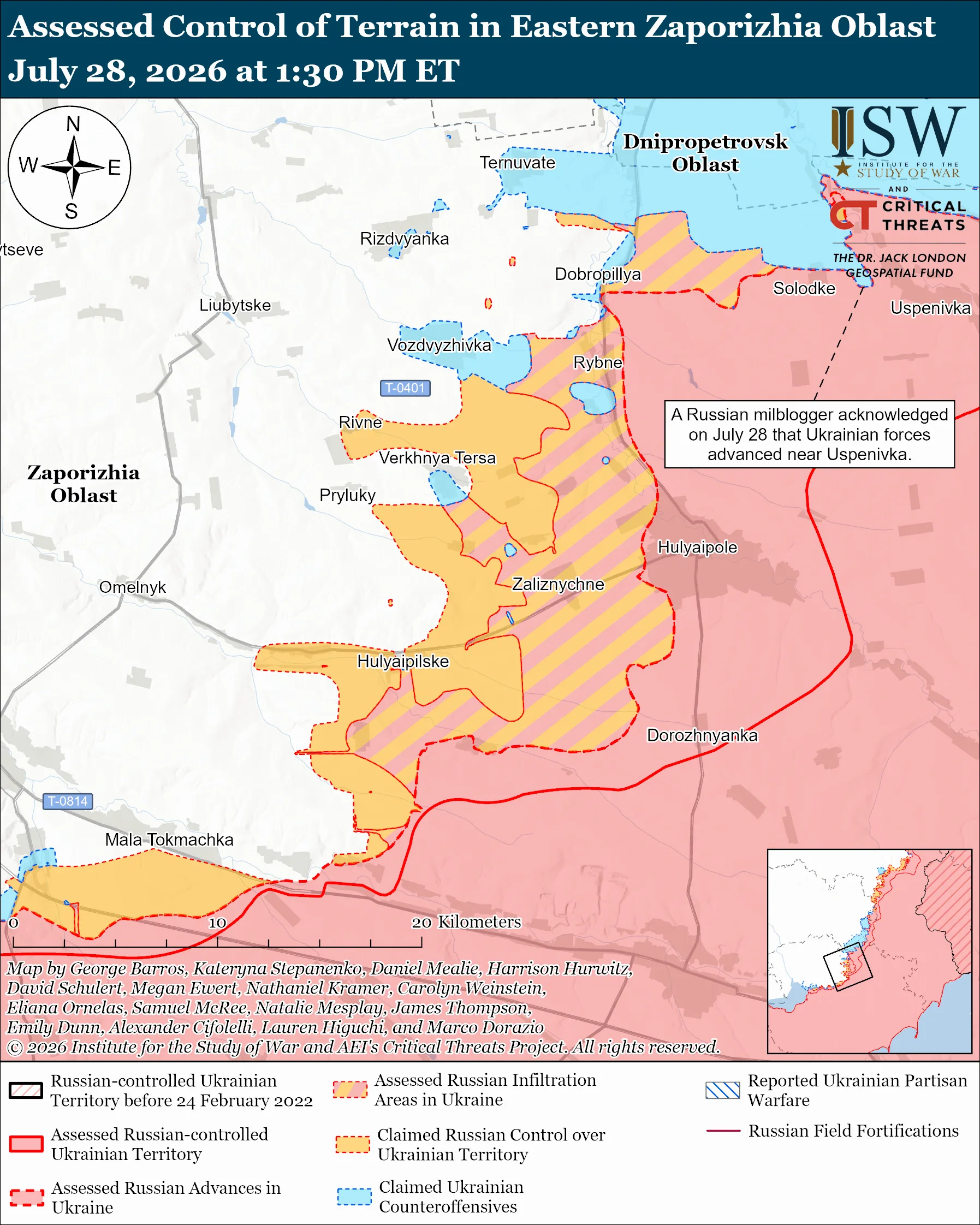
Assessed control of terrain in eastern Zaporizhzhia Oblast as of 28 July 2026. Map: ISW
ISW noted that Ukrainian troops have recently advanced farther south, toward Huliaipole in Zaporizhzhia Oblast. A Russian milblogger acknowledged the Ukrainian gains near the town on 28 July.
Representatives of U.S. President Donald Trump, Steve Witkoff and Jared Kushner, may visit Kyiv within the next two weeks following their numerous trips to Russia.
 Connexion