Russia's propaganda center Rybar ran a covert filming operation across multiple European countries, Ukraine's Center for Countering Disinformation (CCD) reported, citing a Czech investigation by Seznam Zprávy. The founder of the project, Mykhailo Zvinchuk, has been under sanctions by the European Union and the UK.
The EU's sanctions justification states that Rybar is a member of a working group established by Vladimir Putin in December 2022 to coordinate Russia's mobilization effort
Russia's propaganda center Rybar ran a covert filming operation across multiple European countries, Ukraine's Center for Countering Disinformation (CCD) reported, citing a Czech investigation by Seznam Zprávy. The founder of the project, Mykhailo Zvinchuk, has been under sanctions by the European Union and the UK.
The EU's sanctions justification states that Rybar is a member of a working group established by Vladimir Putin in December 2022 to coordinate Russia's mobilization efforts in connection with the war against Ukraine.
Moscow has recently escalated covert influence operations and disinformation across Europe, yet years of sanctions have not stopped its operatives from working inside the EU. The Rybar case shows how thin the enforcement of those measures remains.
Rybar crew posed as documentarians in Prague
Russians moved freely within the Schengen Area, holding residence permits for EU countries, particularly Germany. They traveled to Prague posing as documentary filmmakers and attempted to record interviews with local experts and politicians. The stated pretext was a documentary series on Europe's sociopolitical situation.
When Seznam Zprávy journalists confronted the film crew at the meeting location, the propagandists fled. The investigation identified Boris Dvorkin as the Moscow-based producer of the operation. One of his projects received funding from the History of the Fatherland Foundation, established by Putin's decree and headed by Sergei Naryshkin, chief of Russia's Foreign Intelligence Service (SVR).
Operations planned across multiple countries
Similar filming operations were allegedly planned or already carried out in Czechia, Slovakia, Austria, Hungary, Serbia, France, and other countries, the CCD said.
The UK sanctioned Rybar and Zvinchuk in December 2025, citing the network's interference in elections in Moldova and Armenia. It added ten more Rybar staff members in July 2026 for their role in destabilizing Ukraine. In 2024, the US State Department offered a $10 million reward for information on Zvinchuk and eight others tied to the project.
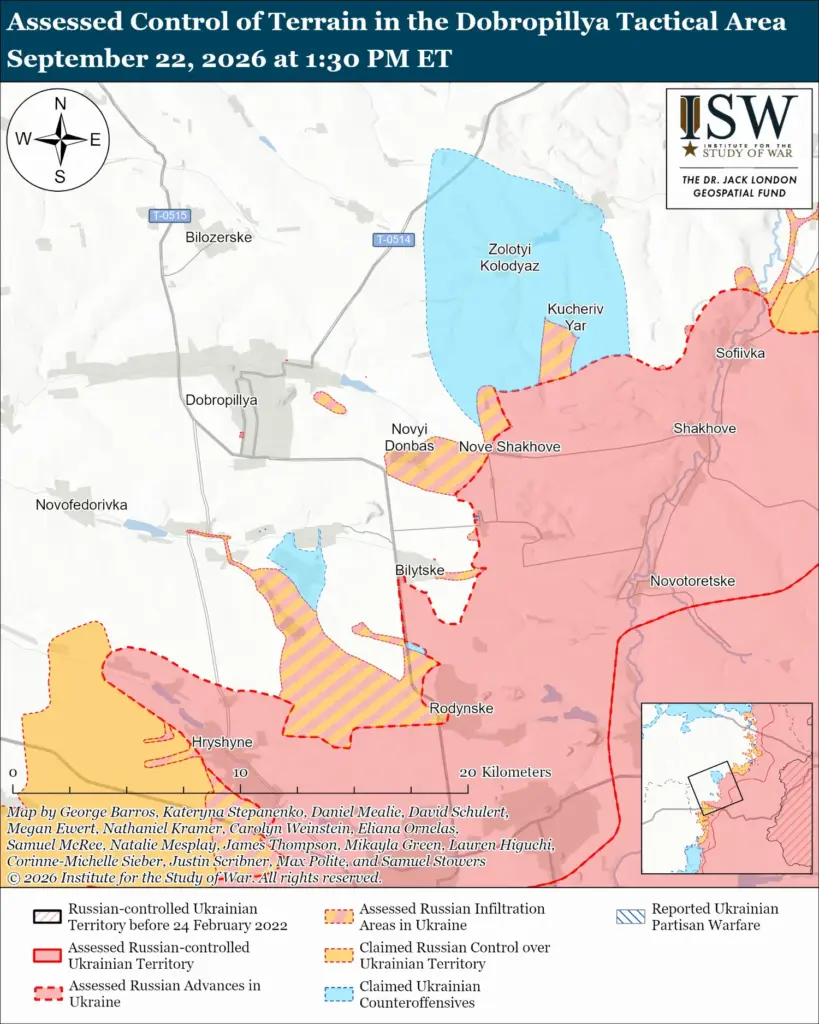
Russia’s Defense Ministry claimed on 22 September 2026 that it had surrounded Dobropillia, but the Institute for the Study of War (ISW) found no evidence to support the announcement. Dobropillia is a small town in Donetsk Oblast, known as the "pearl of the Donbas" for its coal industry, which has helped make Ukraine's Fortress Belt cities, holding the region from Russians since 2014, per RBC Ukraine.
Ukraine’s Vivaldi counteroffensive in Donetsk Oblast broke the northern arm of Russia’s
Russia’s Defense Ministry claimed on 22 September 2026 that it had surrounded Dobropillia, but the Institute for the Study of War (ISW) found no evidence to support the announcement. Dobropillia is a small town in Donetsk Oblast, known as the "pearl of the Donbas" for its coal industry, which has helped make Ukraine's Fortress Belt cities, holding the region from Russians since 2014, per RBC Ukraine.
Ukraine’s Vivaldi counteroffensive in Donetsk Oblast broke the northern arm of Russia’s plan to surround the fortified cities. ISW says Moscow’s Dobropillia claim diverts attention from that setback and portrays Ukrainian defenses as collapsing during the 81st session of the UN General Assembly, held on 21-28 September. The institute says Russia is likely spreading such claims to support its push for Ukraine’s capitulation.
Meanwhile, Ukrainian officers say Russian assault groups are still trying to break through toward Dobropillia, but have made no major gains.
Russia’s encirclement claim clashes with Ukrainian battlefield reports
Russia’s Ministry of Defense has claimed its troops were advancing toward Oleksandrivka, a village northwest of Dobropillia, but published no map to support its account.
At the same time, Ukrainian military observer Kostyantyn Mashovets said Ukrainian troops still held positions south and northeast of the city, which the experts said was inconsistent with the claimed encirclement.
ISW reported that a Ukrainian artillery reconnaissance battalion chief of staff said on 22 September that Russia had made no major advances near Dobropillia. He said Russian commanders kept postponing deadlines because of heavy losses and a gap between their plans and battlefield conditions.
A Ukrainian battalion officer said Russian troops were still trying to slip through Ukrainian lines in small groups.
How Dobropillia fits Russia’s plan to surround the fortress belt
Dobropillia is a transport hub on the southwestern approach to Ukraine’s “fortress belt,” which includes Kostiantynivka, Druzhkivka, Kramatorsk, and Sloviansk. These cities have anchored Ukraine’s defense in Donetsk Oblast since 2022.
Ukraine’s Third Army Corps commander, Andrii Biletskyi, whose corps is conducting the Vivaldi counteroffensive north of Lyman, explained that Russian forces advancing through Dobropillia were meant to join another force coming from north of Lyman, behind the fortified cities, encircling them rather than attacking them head-on.
Ukraine’s Third Army Corps commander, Brigadier General Andrii Biletskyi, announced “Operation Vivaldi” on 15 September 2026. Source: screenshot from Ukraine’s Third Army Corps announcement of Vivaldi
ISW had already assessed on 16 September that Vivaldi had made the two-sided plan infeasible. In its 22 September report, ISW said Russia’s false claim about Dobropillia partly aims to divert attention from those Ukrainian gains.
Russian assaults toward Dobropillia continue
The setback north of Lyman has not stopped Russia’s push toward Dobropillia. Ukrainian staff sergeant Dmytro Davydenko reported on 14 September a sharp increase in assault groups moving toward the city, sometimes more than his unit could engage. He said Ukrainian troops had mined, blocked, or destroyed the main approaches.
ISW reported that Russia was preparing armor and drone support for possible assaults using armored vehicles this fall. A Ukrainian battalion officer said fog might help Russia move that equipment, although Ukrainian reconnaissance and drones would make it difficult. He said Russian glide bombs continued to strike infrastructure in the area.
Ukraine's Vivaldi counteroffensive rolled back a Russian advance north of Lyman in Donetsk Oblast. However, Moscow shifted part of its forces south, Roman Pohorilyi, co-founder of the Ukrainian battlefield mapping project DeepState, told Radio NV. Russian troops are now infiltrating Mykolaivka, a key strongpoint on the approach to the fortress city of Sloviansk, Pohorilyi said.
The halted advance was one arm of Russia's plan to encircle Ukraine's Donetsk fortress belt—the fortified citi
Ukraine's Vivaldi counteroffensive rolled back a Russian advance north of Lyman in Donetsk Oblast. However, Moscow shifted part of its forces south, Roman Pohorilyi, co-founder of the Ukrainian battlefield mapping project DeepState, told Radio NV. Russian troops are now infiltrating Mykolaivka, a key strongpoint on the approach to the fortress city of Sloviansk, Pohorilyi said.
The halted advance was one arm of Russia's plan to encircle Ukraine's Donetsk fortress belt—the fortified cities of Sloviansk, Kramatorsk, Druzhkivka, and Kostiantynivka. Pohorilyi warned that losing Mykolaivka would create serious problems for Sloviansk's defenders. Russia is still pressing toward Dobropillia on the belt's southwestern flank.
Pohorilyi said Russia formed a "claw" north of Lyman by exploiting Ukrainian brigades short of personnel and pushing small groups into their lines. Ukraine's Third Army Corps stabilized the area, built up forces, and counterattacked. The push "multiplied all [Russia's] previous efforts by zero," he said.
Russian forces had repeatedly tried to capture or bypass Lyman, Pohorilyi said. Russian groups still infiltrate the approaches to the city, although Ukrainian forces have stabilized the situation there.
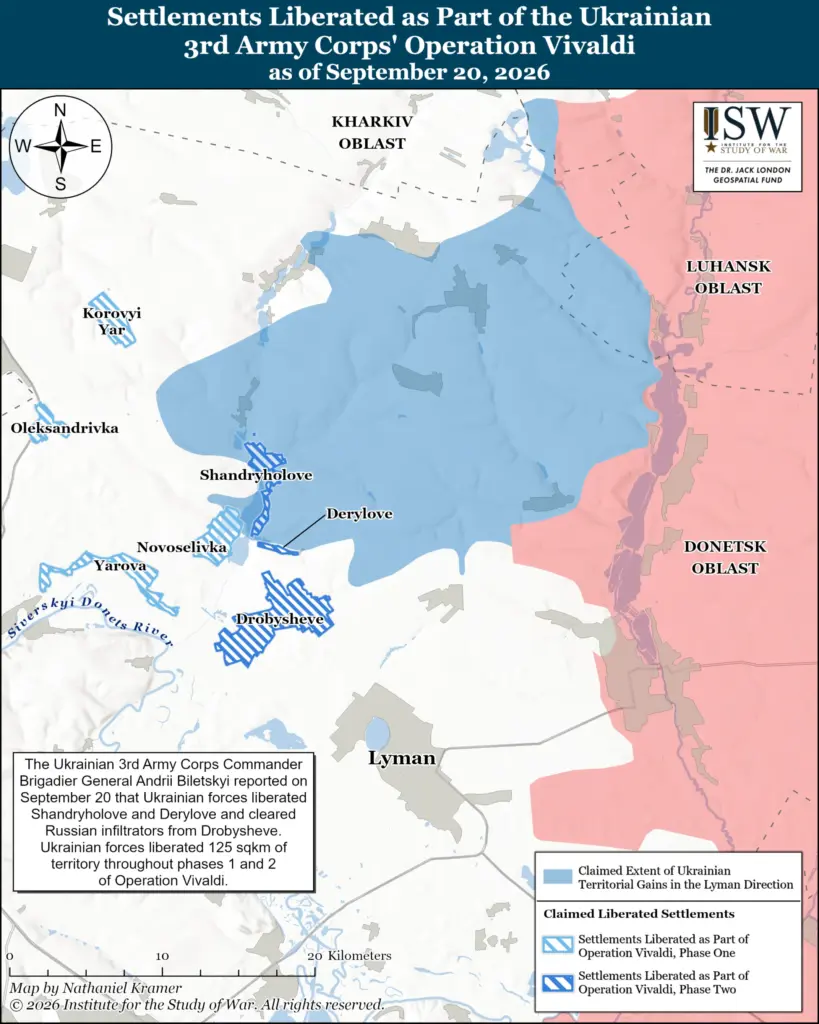
The corps says Vivaldi's first two phases regained control of 125 square kilometers, including 50 that had been under Russian occupation. It reported liberating Shandryholove and Derylove, securing Drobysheve, and inflicting more than 3,000 Russian personnel losses. Those battlefield figures have not been independently verified.
Explore further
Vivaldi’s secret weapon was the targeting, not the robots: Third Corps reconnaissance mapped Russian command nodes, then hit them to cause panic
Pohorilyi noted that the area around Mykolaivka had, until recently, been under the responsibility of Ukraine's 11th Army Corps and is now under the Third Army Corps.
Ukrainian troops must now find and stop infiltrating Russian groups before they establish control, he said. Personnel shortages on the Lyman axis persist, although he said reinforcements are being distributed more evenly.
Map: ISW
Operation Vivaldi and the wider fight for Donetsk's fortress belt
The Third Army Corps first disclosed Operation Vivaldi on 15 September after conducting the counteroffensive north of Lyman under information silence. Commander Andrii Biletskyi said the announced gains were only the first phase; the corps said its attacks had disrupted Russian supply routes.
A 60th Mechanized Brigade captain said Ukrainian units quietly assembled near Derylove and Drobysheve, then struck Russian drone launch sites at planned times so infantry could advance. The corps disclosed a second phase on 20 September.
Farther southwest, Dobropillia faces even heavier pressure, Pohorilyi said. Russia has concentrated large forces there and is pushing with relentless infantry across a wide front, backed by thousands of drones each month—reconnaissance, strike, FPV, and Lancets—with numbers still rising. Russian troops are moving on settlements south of Dobropillia to establish a strongpoint and push deeper into Donetsk Oblast.
The pressure is not new: Biletskyi said Ukrainian troops halted a Russian incursion there last year. After Moscow claimed on 22 September to have encircled the town, the Institute for the Study of War found no evidence to support the claim.
Russian missile strikes shut down or damaged four of Ukraine's largest steel plants in August and September, halving steel output and prompting the operator of the country's largest plant to call on the government to pass a dedicated rescue plan, RBC-Ukraine reported.
Russia's full-scale war has already cost Ukraine the Azovstal plant in Mariupol, one of its largest steel mills, and more than two years of disrupted production across the sector. The latest strikes hit plants that produce
Russian missile strikes shut down or damaged four of Ukraine's largest steel plants in August and September, halving steel output and prompting the operator of the country's largest plant to call on the government to pass a dedicated rescue plan, RBC-Ukraine reported.
Russia's full-scale war has already cost Ukraine the Azovstal plant in Mariupol, one of its largest steel mills, and more than two years of disrupted production across the sector. The latest strikes hit plants that produce the bulk of remaining capacity, concentrated in a single month, in what the industry describes as a deep crisis for a sector that supplies 6% of the country's GDP.
Steel output halved as missiles hit plants producing 70% of Ukraine's steel
The 11 August strike on Zaporizhstal killed seven workers and injured 21 as they headed for a shelter, Metinvest said; a second ballistic strike on the plant followed on 27 August. Two died and 13 were injured at ArcelorMittal Kryvyi Rih, and five were killed at Kametstal. Russia also hit the Dnipro Metallurgical Plant. On 12 September, Russia struck both Zaporizhstal and ArcelorMittal Kryvyi Rih again with ballistic missiles.
Zaporizhstal and Kametstal, both part of the Metinvest group, stopped entirely. ArcelorMittal Kryvyi Rih—Ukraine's largest steel plant—partially shut down. Zaporizhstal and ArcelorMittal alone produce more than 70% of Ukraine's steel.
August steel production fell to 277,000 tons, down 57.3% year on year and 39.4% from July, according to Ukrmetalurhprom data cited by GMK Center. Rolled-metal output dropped to 270,000 tons.
Strikes, a port blockade, and rising costs hit at once
The strikes came on top of a Black Sea port blockade that has shut down maritime exports of iron ore and steel since late July. A 30% increase in rail tariffs took effect on 1 August. Alternative routes—rail through western border crossings, Danube ports, and roads—can carry at most 50% of what the Black Sea ports handled, GMK Center analyst Andrii Hlushchenko said. Steelmakers also have to compete with farmers for that limited rail capacity.
Rail exports of iron ore and metals dropped 2.5 times in the first 15 days of September compared with the same period last year, Ukrzaliznytsia said. Shipping iron-ore pellets through European ports costs $50–60 per ton, making many deliveries unprofitable.
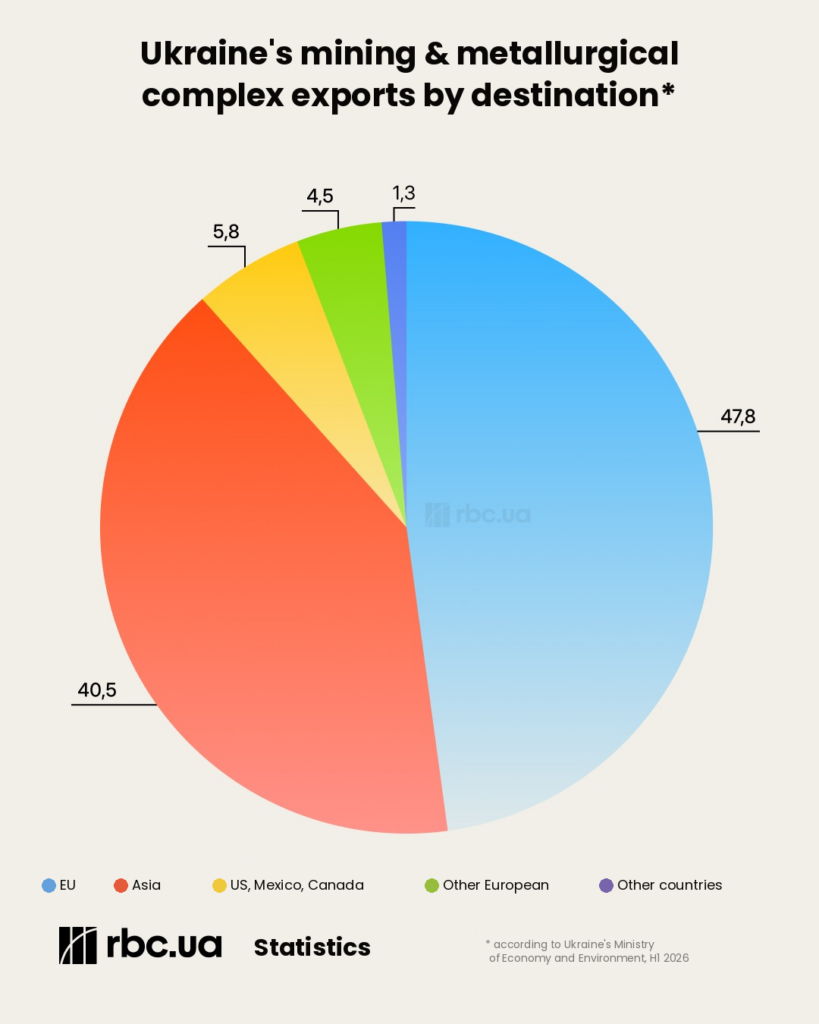
Ukraine's mining and metallurgical complex exports by destination. Infographic: RBC Ukraine
The steel sector generated 6% of Ukraine's GDP last year, brought in 13% of all foreign-currency earnings, and paid UAH 27 billion (about $606 million) into budgets between January and July. Deputy chair of the parliamentary economic committee Dmytro Kysylevskyi called the situation "a perfect storm."
Meanwhile, Türkiye re-rolls Russian slabs and sells the resulting steel on Ukraine's domestic market. China uses cheap Russian energy to undercut Ukrainian prices.
"We are effectively importing Russian metal in the form of finished products," Ukrmetalurhprom President Oleksandr Kalenkov said.
ArcelorMittal calls for a Cabinet rescue resolution
ArcelorMittal Kryvyi Rih CEO Mauro Longobardo said the government should pass a dedicated Cabinet resolution assigning specific tasks and deadlines to multiple agencies at once.
"No single agency can solve the full set of problems. Without a single document with assigned responsibilities and deadlines, each issue is dealt with in isolation and stalls," ArcelorMittal Kryvyi Rih representatives said.
The resolution should cover EU negotiations on deferring the carbon border tax (CBAM) until at least the end of martial law plus one year, restoring steel quotas to last year's level, stabilizing rail tariffs, securing long-term electricity contracts for industry, and launching anti-dumping investigations against Turkish and Chinese imports, Longobardo said.
Ukraine's Economy and Environment Ministry said it is in talks with the European Commission on easing CBAM and expanding quotas. A Cabinet source told the outlet that Black Sea trade negotiations with Russia are possible in October, after the Duma elections that ended on 20 September.
We have come to know the Kremlin's energy playbook well: "Europe will freeze without Russian gas," "sanctions hurt Europe more than Russia," "a managed, indefinite return to Russian supply is simply pragmatic." The respected European project EUvsDisinfo has repeatedly exposed these false narratives, carried by Russian state media, proxy outlets, and paid commentators. But Kremlin-friendly energy narratives do not travel only through obvious propaganda channels. They also enter policy debat
We have come to know the Kremlin's energy playbook well: "Europe will freeze without Russian gas," "sanctions hurt Europe more than Russia," "a managed, indefinite return to Russian supply is simply pragmatic." The respected European project EUvsDisinfo has repeatedly exposed these false narratives, carried by Russian state media, proxy outlets, and paid commentators. But Kremlin-friendly energy narratives do not travel only through obvious propaganda channels. They also enter policy debate through expert commentary, think tanks, media quotes, and institutional platforms, where they are far harder to see.
None of the apocalyptic forecasts came true. Europe cut Russian gas imports from 45% in 2021 to 13% by 2025 without blackouts or economic collapse. Yet the narratives predicting ruin kept circulating, sometimes from unexpected addresses. One of them, in my view, is worth a closer look: the work of Katja Yafimava, of the Oxford Institute for Energy Studies.
Across nearly two decades, in my reading, her analysis has landed with remarkable consistency where Gazprom would want it. Gazprom's trading arm was once among the sponsors of her program. The record is public, and it is worth reading in full.
The narrative you don't notice
The most effective version of Kremlin-friendly energy messaging does not shout. It hedges, reframes, and omits. It raises "legitimate concerns" about sanctions costs, stresses the "legal complexities" of an LNG ban, and warns of "supply disruption risks" from moving too fast, without weighing Ukrainian lives or the cheaper, homegrown clean-energy alternative. Real concerns about European energy security did exist. What is worth noting is how reliably certain voices amplified concerns and how rarely they weighed counter-evidence.
This is not abstract. Surging oil and gas prices since the Iran war have handed Russia windfall revenues averaging, according to the Centre for Research on Energy and Clean Air, €604 million a day, money that funds the missiles falling on Ukrainian cities. Every argument for delay has a price, and Ukrainians pay part of it.
The Oxford label, and the money behind it
Katja Yafimava is a Senior Research Fellow at the OIES, which she joined in 2006. The institute is an independent charity rather than a department of the University of Oxford, which recognizes it as a separate independent research center. It carries the Oxford name, and its researchers appear regularly as authoritative, independent voices in UK and European media.
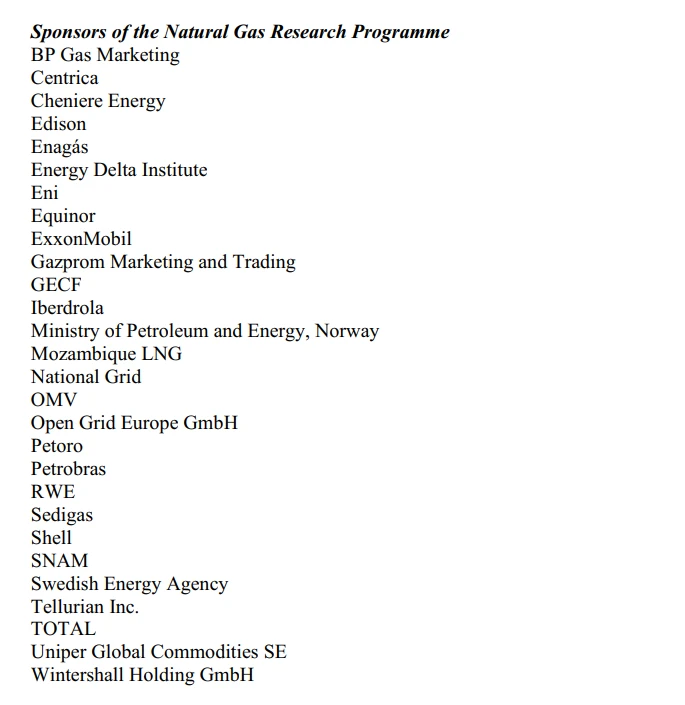
That independence has been questioned. Democracy for Sale, an investigative outlet, has documented the proximity between Russian oil and gas industry money and OIES, which previously received funding from Gazprom and its subsidiaries. OIES's own website and annual reports up to 2020 list Gazprom Marketing and Trading among over 20 organizations that sponsored equally its Natural Gas Research Programme, where Yafimava works, alongside Nord Stream 2 financiers Shell, OMV, Uniper, and Wintershall.
None of that, on its own, tells you what any individual researcher believes. What makes it worth raising is the alignment between that funding context and a published record that, across nearly two decades, has been remarkably convenient for Gazprom's positions.
Energy Ireland 2022
Croke Park, Dublin 29-30 June
Meet the speakers Dr Katja Yafimava Senior Research Fellow@OxfordEnergy
Consider the pattern. In 2017, Yafimava argued that Poland's legal challenge to the European Commission decision widening Gazprom's access to the OPAL pipeline risked letting political objectives override regulatory rules, a framing that would sit comfortably in Gazprom's own filings. She framed the EU's Gas Directive amendment as an instrument "aimed primarily at Nord Stream 2" in a 2019 paper. Russian state media have quoted her approvingly in pieces casting Brussels or Washington as acting in bad faith.
In September 2021, as suspicion grew that Gazprom was deliberately holding back gas to squeeze Europe before winter, she told Bloomberg she did not subscribe to that view, insisting the company "has not abused" the tight market and "has not manipulated it," and had "honored all of its contractual supply obligations to Europe." Within months, Russia's supply cuts had become the opening move of an energy war. In January 2022, the head of the IEA said Russia's cuts were creating "artificial tightness" in European markets.
Each judgment is defensible in isolation. It is the direction of the whole series that is striking: over years and across cases, the analysis lands where Gazprom would want it to land.
The pattern holds as the war grinds on
Through 2022 and 2023, Yafimava warned that cutting Russian gas too fast risked "unavoidable" blackouts in Central and Eastern Europe. The blackouts never came. In a 2025 paper, she and two OIES colleagues accepted that the phase-out would be manageable for markets, but argued that the EU's proposed ban risked undermining the commercial and legal positions of European importers, and that it was "not obvious" the risk was worth taking to end modest volumes of Russian gas after 2027. A competing Forum Energii report concluded that full EU independence from Russian fuel by 2027 is feasible, and that Russia needs EU markets more than the EU needs Russian supply. In early 2026, she wrote that no complete phase-out "will happen either by 2027 or by 2028."
A forecast is not a crime. But the forecasts, like the analyses, keep pointing one way.
She has also stepped beyond technical commentary. On 27 January 2026, responding to a Financial Times report on US security guarantees for Ukraine, she posted on X that "reliable security guarantees could only be achieved via common European security architecture that would have to include Russia," a framing that mirrors a longstanding Kremlin strategic goal.
The US won't provide *any* security guarantees before peace is reached not to risk its forces to be drawn in combat. Moreover, reliable security guarantees could only be achieved via common European security architecture that would have to include Russia https://t.co/LrY6713dqF
Katja Yafimava's current position as Vice-Chair of the UNECE Group of Experts on Gas gives her a visible role in a UN forum that helps shape discussion on European gas policy, security of supply, and the energy transition. In January 2026 she co-opened and concluded the Group's workshop on implementation of the EU Methane Regulation. The arguments she repeatedly advances can have policy effects closely aligned with Russian commercial and strategic interests. At a UNECE/OIES workshop in 2025, for example, she explicitly examined the possibility of a "limited return" of Russian gas to Europe via Ukraine, while her subsequent OIES paper argued that the EU ban on Russian gas could undermine European importers and security of supply and questioned whether ending the remaining Russian imports after 2027 was worth the associated risks.
The alignment is a matter of record. Why independent analysis, over nearly twenty years, has tracked so reliably the interests of a company that once helped fund her program is a question that deserves an answer.
Here is what the arguments for delay leave out: the alternative to Russian energy is not economic ruin. It is cheaper renewable power. The International Renewable Energy Agency found that in 2024, 91% of new renewable projects were cheaper than any fossil-fuel alternative; solar came in 41% below fossil power, and onshore wind 53% below. Renewables saved $467 billion in fossil-fuel costs in 2024 alone, and battery storage has fallen more than 93% in price since 2010.
This is the point that "supply disruption" warnings tend to bury, and it is why the warnings matter. Every year of delay, justified by the risks of moving too fast, is a year of continued payments to Moscow when a cheaper, domestic, un-weaponizable alternative already exists. Renewables reached 47% of the EU electricity mix in 2025; EU gas demand fell more than 17% between 2022 and early 2025; and the gas import ban agreed in December 2025 phases out Russian pipeline gas and LNG by the end of 2027, precisely the direction the delay arguments have worked against. The transition is not the risk. The delay is.
What should change
Editors, producers, and conference organizers could apply to energy analysts the conflict-of-interest standards already routine for pharmaceutical research: prior employment or program funding from Gazprom, Sberbank, or Russia-linked entities disclosed clearly every time such an analyst is presented as independent. UNECE could ask whether agenda-setting roles over European energy policy are well placed with analysts whose published record aligns so consistently with Kremlin positions. And Europe could close the transparency gaps that let think tanks with Russian-adjacent funding operate without disclosure requirements.
Every euro Russia earns from energy funds the war against Ukraine. The least we can do is know who is arguing for delay, and who once funded the programs they work in.
Disclosure: the author was involved in a March 2026 Razom We Stand research concerning the Oxford Institute for Energy Studies and Katja Yafimava, and works as a strategic advisor to the organization. Euromaidan Press reached out to Dr. Yafimava for a comment, but received no answer at publication date.
Oleh Savytskyi is a world-class climate and energy policy expert. Oleh has ten years of experience in the field – from youth climate activism to consulting the Ministry of Environment of Ukraine to managing international advocacy campaigns at Razom We Stand. Oleh is a fellow of the Michael Succow Nature Conservation Fund and an alumnus of the Agora Energiewende EnerTracks training program for energy transition professionals.
Editor's note. The opinions expressed in our Opinion section belong to their authors. Euromaidan Press' editorial team may or may not share them.
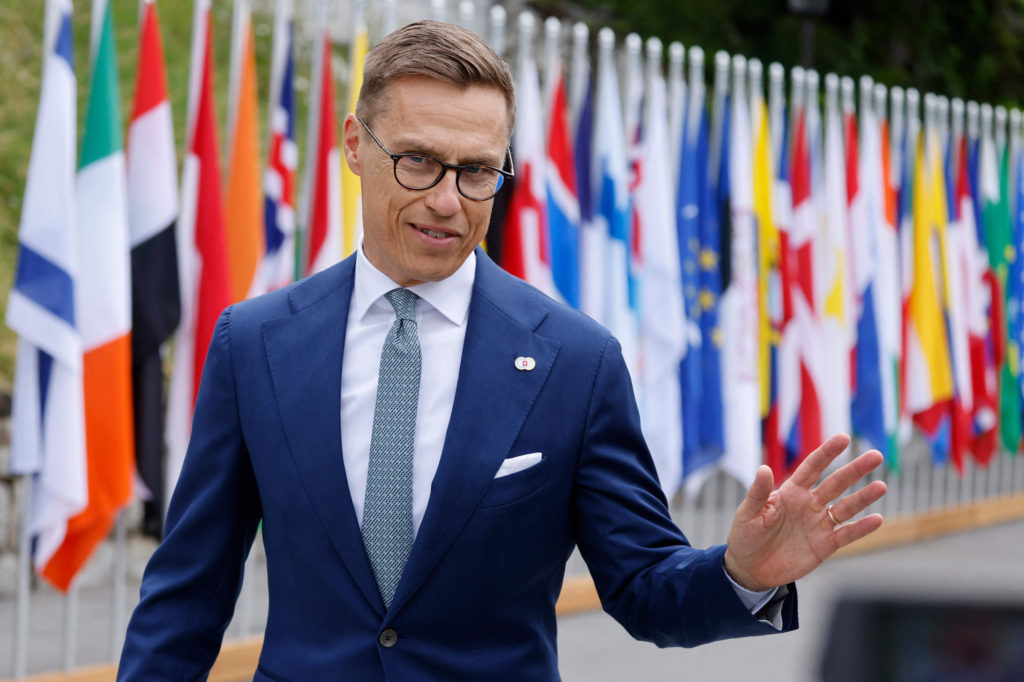
Russia is trying to "scare Europe" through hybrid attacks so that it provides less support to Ukraine, but Moscow has neither an interest in nor the capability to escalate to a full-scale military confrontation with NATO, Finnish President Alexander Stubb told Politico on 21 September during an interview on the sidelines of the UN General Assembly—even as other European leaders warn that Russian strikes on NATO territory could come within months.
Ukraine critically needs Western support
Russia is trying to "scare Europe" through hybrid attacks so that it provides less support to Ukraine, but Moscow has neither an interest in nor the capability to escalate to a full-scale military confrontation with NATO, Finnish President Alexander Stubb told Politico on 21 September during an interview on the sidelines of the UN General Assembly—even as other European leaders warn that Russian strikes on NATO territory could come within months.
Ukraine critically needs Western support as Russia's full-scale invasion continues. NATO's PURL program has provided about 75% of all Patriot battery missiles and 90% of the missiles used in other air defense systems since its launch last summer, according to NATO Secretary General Mark Rutte on 3 February. Some countries are also hubs for defense companies that produce weapons for Ukraine. Russia is trying to pressure such countries, including through hybrid attacks. Polish Prime Minister Donald Tusk and the head of the Czech security service have warned that Russia could strike NATO territory within months. The Finnish president says his own intelligence sees activity but no imminent military threat, and calls it an "overreaction" when intelligence services tell their neighbors they are next for a Russian invasion.
Finnish intelligence sees Russian activity but no imminent military threat, Stubb says
Stubb calls claims by some intelligence services that Europe is next for a Russian invasion an "overreaction" and says he sees no evidence of this.
"We think we have to be vigilant and awake. But, you know, we have the longest border in NATO with Russia, it's half the border. In our intelligence we see that there is activity but no imminent military threat right now," Stubb added.
He says Russia will continue hybrid attacks, so Europe must be prepared and support Ukraine
Europe should prepare for Russia's "continued hybrid and sabotage attacks," but should not "overreact" to them, as Russia wants to scare its allies so that they slow down their support for Ukraine, the Finnish president said.
"And any time we overreact to a hybrid attack, they have actually won the battle in that particular way," Stubb told Politico.
Europe should remain "cool, calm and collected" during such Russian intimidation, the Finnish president said.
Germany's recent decision to officially hold Russia responsible for an attempted drone attack in Leipzig is "exactly what you need to do," Stubb said.
"You need to point the finger and say, we know what you're doing, and these are the consequences," he added.
Drone found near a Ukrainian An-124 aircraft in Leipzig, Germany, on 5 August, 2026. Photo: screenshot from Bild video
A pro-Kremlin group, Global Citizens Against War 1984, issued an ultimatum to Latvia, Poland, and Portugal to stop supplying weapons to Ukraine by 7 October, threatening to disrupt defense companies in those countries.
Warnings from Warsaw and Prague paint a different picture
Russia could carry out "accidental" drone or missile strikes against NATO countries supporting Ukraine in an attempt to weaken the Alliance's integrity and persuade members that Article 5 is more theoretical than practical, Polish Prime Minister Donald Tusk said in parliament on 17 September, citing NATO, Ukrainian, and Polish intelligence assessments.
"There is a real risk that drones or other types of missiles could enter the territory of one or several NATO countries on the eastern flank," Tusk said.
The head of the Czech security service warned separately that Russia could undertake a limited incursion, false-flag provocations, and a massive influence campaign in a matter of months rather than years.

 Connexion






 Croke Park, Dublin
 29-30 June