Vue normale

  • ✇Euromaidan Press
  • Russia jails 61-year-old Ukrainian for alleged Azov service, names no specific act
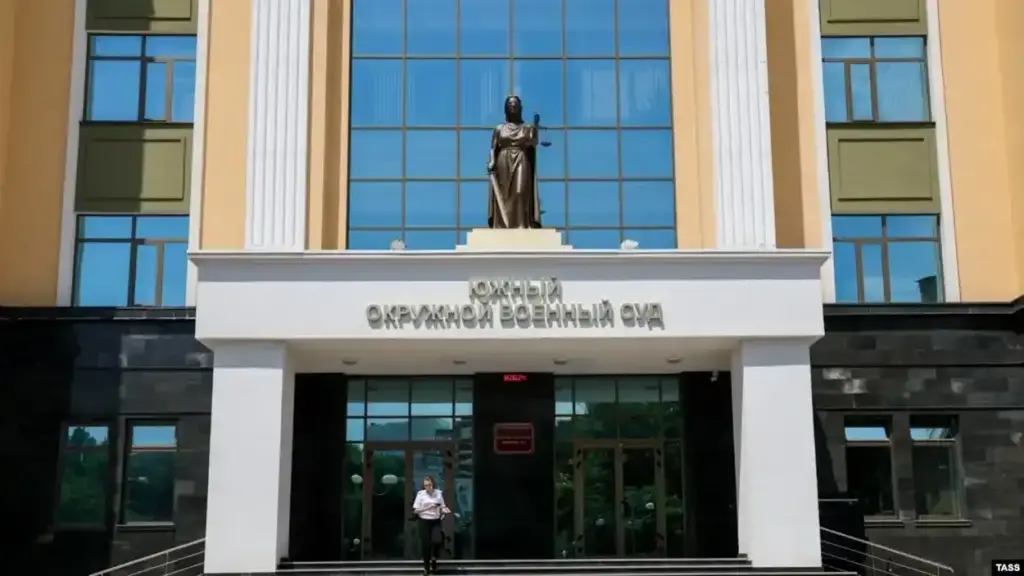
    A Russian court in Rostov-on-Don sentenced 61-year-old Ukrainian Andrii Hulak to five years and four months in a penal colony over alleged service in Ukraine’s Azov brigade, Mediazona reported on 17 August 2026. The court gave no details of when he allegedly served in Azov, what role he supposedly held, or any specific act Hulak was accused of committing. Russia declared Azov a “terrorist organization” in August 2022 and has since prosecuted Ukrainians it claims served
     

Russia jails 61-year-old Ukrainian for alleged Azov service, names no specific act

18 août 2026 à 16:47

Entrance to the Southern District Military Court building in Rostov-on-Don, Russia.

A Russian court in Rostov-on-Don sentenced 61-year-old Ukrainian Andrii Hulak to five years and four months in a penal colony over alleged service in Ukraine’s Azov brigade, Mediazona reported on 17 August 2026. The court gave no details of when he allegedly served in Azov, what role he supposedly held, or any specific act Hulak was accused of committing.

Russia declared Azov a “terrorist organization” in August 2022 and has since prosecuted Ukrainians it claims served in or were connected to the brigade. Mediazona says Russian courts have treated an alleged connection to units such as Azov as enough to bring charges.

Azov is a Ukrainian National Guard brigade that became a symbol of Ukrainian resistance during the defense of Mariupol. The military unit has since become a primary target of Russian propaganda campaigns aimed at defaming Ukraine.

Hulak’s detention date and location remain unknown

The human rights group Memorial identified the charge as Part 2 of Article 205.4 of Russia’s Criminal Code, which covers participation in a “terrorist group.”

Hulak was born in Prymorske, Donetsk Oblast, and lived in Russian-occupied Urzuf near Mariupol before his detention, Mediazona reported. Memorial says Russia added him to its state register of “extremists and terrorists” on 21 October 2025 and lists him as a political prisoner.

His detention date and current location remain unknown.

Russia prosecutes Ukrainians in occupied territories

Hulak’s case is part of a broader pattern of Russian prosecutions of Ukrainians from occupied territories, including civilians accused of supporting Kyiv and service members prosecuted over their military affiliations.

In occupied Crimea, rights monitors documented 520 Ukrainians facing politically motivated criminal charges by April 2026—more than twice the number recorded when the full-scale invasion began. Of those, 351 were in pre-trial detention or serving sentences.

Outside Crimea, a Russian-installed court in occupied Donetsk sentenced a 17-year-old to six and a half years for allegedly sharing military information with Ukraine’s Security Service. In occupied Zaporizhzhia Oblast, a Russian court gave two women from Enerhodar 14-year sentences over alleged donations of $120 and $57 to Ukrainian forces.

  • ✇Euromaidan Press
  • Russia could open northern front by February if it orders new mobilization, Ukraine intel says
    Russia could assemble a strike force for an offensive into northern Ukraine by February 2027 if Moscow launches another mobilization, Ukrainian military intelligence's (HUR) deputy chief Major General Vadym Skibitskyi told RBC-Ukraine on 18 August. Skibitskyi said another mobilization could follow Russia’s September parliamentary elections. Depending on its scale, that call-up could produce a strike force by February 2027. Skibitskyi based the February estimate on Russi
     

Russia could open northern front by February if it orders new mobilization, Ukraine intel says

18 août 2026 à 16:11

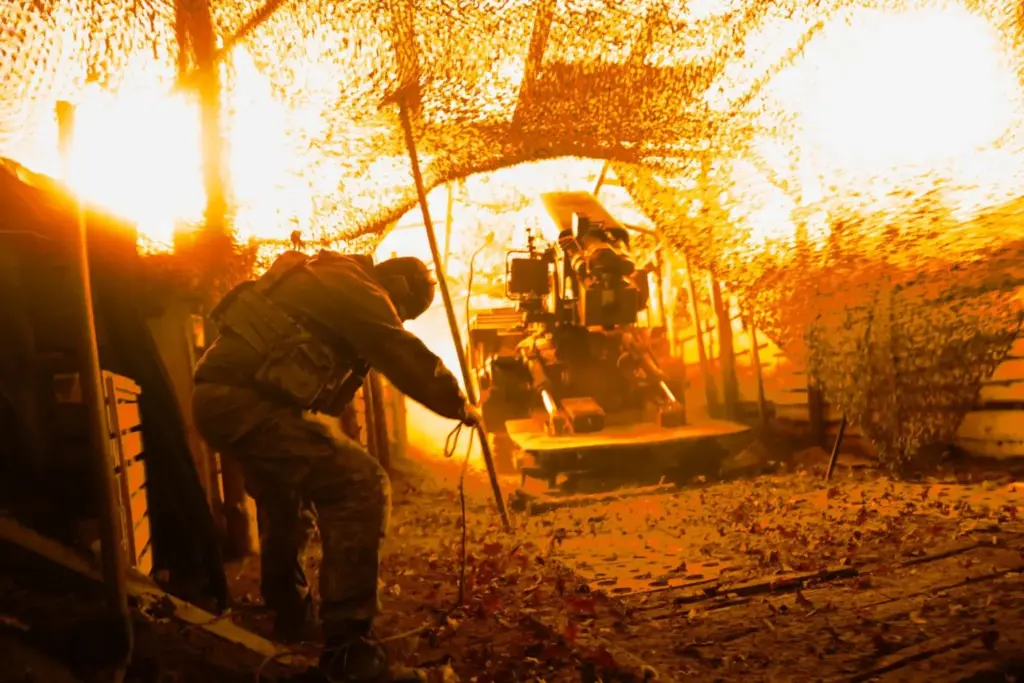
A soldier from Ukraine’s 100th Mechanized Brigade operates an artillery gun firing beneath camouflage netting.

Russia could assemble a strike force for an offensive into northern Ukraine by February 2027 if Moscow launches another mobilization, Ukrainian military intelligence's (HUR) deputy chief Major General Vadym Skibitskyi told RBC-Ukraine on 18 August.

Skibitskyi said another mobilization could follow Russia’s September parliamentary elections. Depending on its scale, that call-up could produce a strike force by February 2027. Skibitskyi based the February estimate on Russia’s 2022 mobilization. He said some personnel reached the front in December 2022, while combat-ready units arrived in January 2023.

Earlier warnings identified a northern route

The February estimate follows Ukrainian warnings about possible attacks across the northern border. In May, Zelenskyy said Ukraine was tracking five scenarios for expanding the war through the north, including an advance through Chernihiv Oblast toward Kyiv.

Syrskyi called an attack from Russia’s Bryansk Oblast into Chernihiv Oblast Moscow’s most realistic northern option, ranking it above an operation through Belarus. Its purpose, he said, would be to draw Ukrainian forces away from the east and south.

Russia has also struggled to prepare other major campaigns as Ukraine targeted the forces and systems needed to carry them out. ISW assessed that Ukrainian drones likely disrupted preparations for a spring–summer offensive in Donetsk Oblast, while a planned Russian naval-drone campaign reportedly stalled after Starlink access was blocked.

Ukrainian intelligence says Russia lacks the manpower

Skibitskyi said Moscow cannot form the units required for a new offensive without mobilization. HUR estimates Russia lost more personnel than it recruited in both June and July. The shortfall reached 3,000 in June and at least 1,000 in July, meaning monthly contracts no longer replaced battlefield losses.

The agency says Russia’s operational reserve is about one-tenth the size of its combat component against Ukraine. Moscow also lacks enough personnel to expand brigades into divisions, while recruitment for its unmanned-systems forces has reached only 30% of its quota.

CSIS estimated in January that Russia had suffered losses unmatched by any major state since World War II while advancing extremely slowly.

  • ✇Euromaidan Press
  • Russia weaponizes Ukrainian children in occupied territories. Ukraine singles out those responsible
    Ukraine’s military intelligence (HUR) has named 10 people and two institutions it says are teaching Ukrainian children under occupation to handle weapons—and preparing them to serve Russia. HUR says those named use youth groups, occupation education authorities, and schools to erase children’s Ukrainian identity and prepare them for Russian military service. Publishing their names supports Ukraine’s efforts to document the system and hold its organizers accountable, but
     

Russia weaponizes Ukrainian children in occupied territories. Ukraine singles out those responsible

18 août 2026 à 13:47

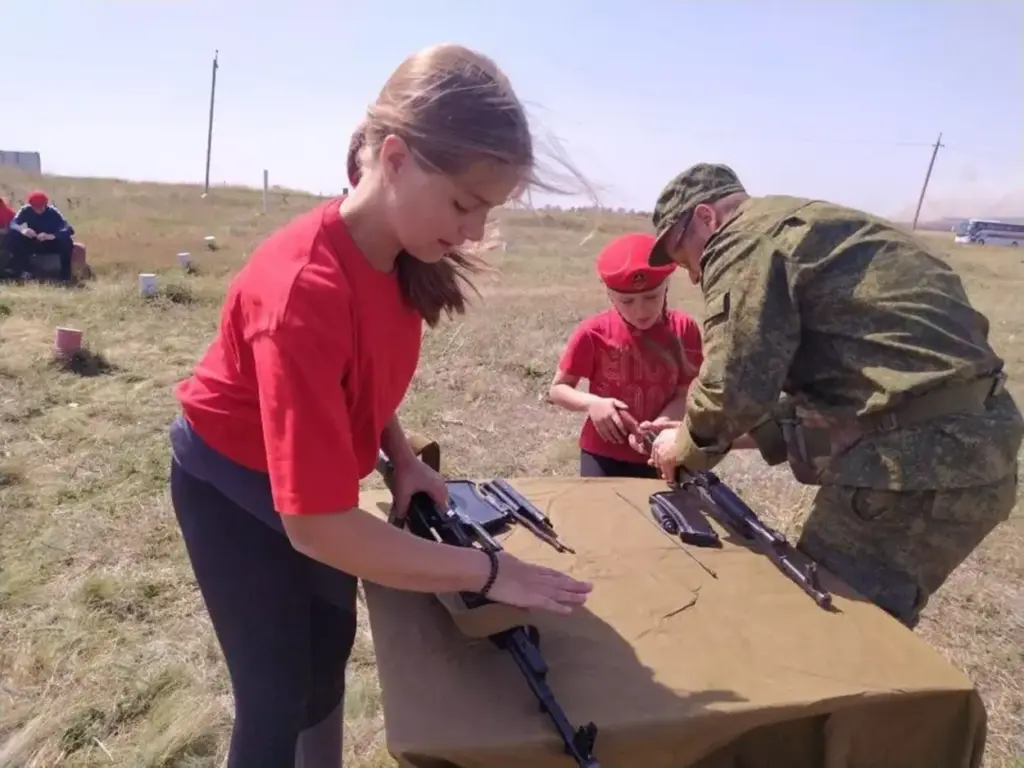
Two children handle rifles as a uniformed man demonstrates a weapon on a table outdoors.

Ukraine’s military intelligence (HUR) has named 10 people and two institutions it says are teaching Ukrainian children under occupation to handle weapons—and preparing them to serve Russia.

HUR says those named use youth groups, occupation education authorities, and schools to erase children’s Ukrainian identity and prepare them for Russian military service. Publishing their names supports Ukraine’s efforts to document the system and hold its organizers accountable, but HUR announced no charges or sanctions with the update.

How Russia militarizes Ukrainian youth in occupied territory

At a May 2026 “Zarnitsa 2.0” competition, the Kremlin-backed Movement of the First taught children to handle weapons and explosives and operate drones, HUR said.

At the competition’s stage in occupied Zaporizhzhia Oblast, regional organizer Viktoria Kostromina stated those skills would provide children with a “reliable foundation in life.”

The training sits inside a much larger school system. From 1 September, occupation schools will add a separate basic military-training track alongside a new Russian ideology class and behavior grades. More than 582,000 children across nearly 2,000 schools study under the imposed Russian curriculum, according to the Almenda Center of Civil Education.

Russia is also embedding combat preparation more deeply. “Cossack classes” will make ideological and combat-related drills compulsory for fifth-graders in four occupied Donbas cities. In Crimea, occupation authorities say they have built a pipeline that selects schoolchildren for drone training and ultimately for the Russian military reserve.

The policy has a long horizon. Putin’s 2025 strategy set a 95% “Russian civic identity” target for occupied populations by 2036.

Who HUR says is behind the indoctrination

HUR linked the individuals to the Movement of the First, Yunarmia, occupation education bodies, and a school in Simferopol.

Whom the HUR identified

  • Artur Orlov: chairman of the Kremlin-backed Movement of the First.
  • Oleksii Lavrentiev, Marina Tsvetinskaya, Ruyal Aliyev, Ekaterina Kozyr, Viktoria Kostromina and Kateryna Popova: regional Movement of the First organizers in occupied Ukraine.
  • Svitlana Bespalova: occupation deputy education minister in Crimea.
  • Nikita Polyakov: Yunarmia organizer in occupied Kherson Oblast.
  • Dmytro Pryvidion: director of School No. 5 in occupied Simferopol.

HUR also identified two institutions: Pryvidion’s School No. 5 and the Selet–Ak Bars youth center in Foros. It says the school holds militaristic activities and produces devices for loading rifle magazines, while the center stages pro-war events for children.

All 12 entries now appear in the “Child Kidnappers” section of HUR’s War&Sanctions database.

Ukraine has previously pursued individual organizers through criminal cases. In 2024, the SBU accused a Crimea occupation official of using schools and military camps to indoctrinate pupils and encourage enlistment in Russia’s forces.

Ukraine’s ombudsman later asked the ICC and Ukrainian law enforcement to recognize systematic child militarization as a crime against humanity.

  • ✇Euromaidan Press
  • HUR: Russia seeks rest of Donetsk Oblast, not a peace deal, by year-end
    Ukraine's military intelligence (HUR) sees no battlefield signs that Russia is preparing for a ceasefire, deputy chief Major General Vadym Skibitskyi said in an interview with RBC-Ukraine on 18 August 2026. The agency expects no peace agreement before the end of 2026. Russia’s General Staff plans to capture the remainder of Donetsk Oblast by year-end, Skibitskyi said. Meanwhile, HUR estimates that Russian personnel losses exceeded contract recruitment in June and July,
     

HUR: Russia seeks rest of Donetsk Oblast, not a peace deal, by year-end

18 août 2026 à 11:48

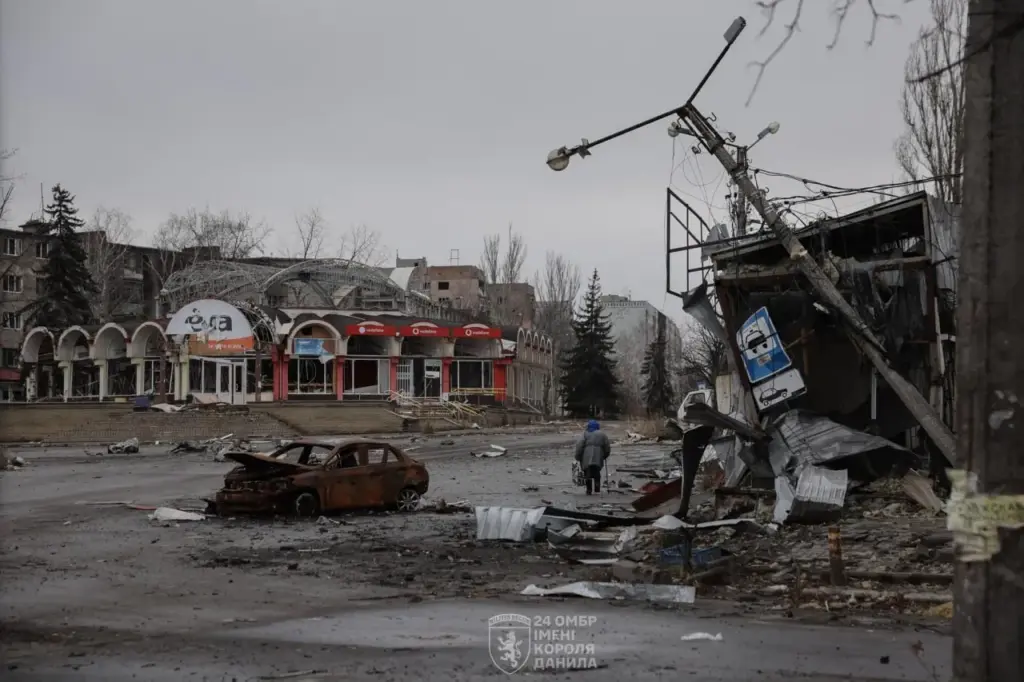
A person walks along a war-damaged street past a burned-out car, rubble, shattered buildings and a collapsed utility pole.

Ukraine's military intelligence (HUR) sees no battlefield signs that Russia is preparing for a ceasefire, deputy chief Major General Vadym Skibitskyi said in an interview with RBC-Ukraine on 18 August 2026. The agency expects no peace agreement before the end of 2026.

Russia’s General Staff plans to capture the remainder of Donetsk Oblast by year-end, Skibitskyi said. Meanwhile, HUR estimates that Russian personnel losses exceeded contract recruitment in June and July, leaving Moscow unable to create new military formations without mobilization.

HUR estimates Russia lost more troops than it recruited in both June and July. Losses exceeded new contract personnel by 3,000 in June and by at least 1,000 in July, leaving recruitment unable to replace battlefield losses. The agency says Russia’s operational reserve is only about one-tenth the size of the part already engaged in combat against Ukraine.

Russia has set a 2026 target of recruiting 409,000 personnel. Without mobilization, however, Moscow cannot create new formations or turn existing brigades into divisions because it lacks personnel, Skibitskyi said. The recruitment plan for Russia’s unmanned-systems forces is only 30% complete, and the command is trying to fill the gap with personnel from other military branches, he added.

If Russia mobilizes after its September parliamentary elections, it could assemble a powerful strike group by around February 2027, according to HUR. Skibitskyi did not rule out its use for a northern offensive. At present, however, HUR sees no conditions, indicators, or troops for such an operation.

Russia previously targeted September for Donbas

In April, Skibitskyi told the Financial Times that Moscow aimed to capture all of Donbas by September, after missing its deadlines to take Kostiantynivka and Druzhkivka. Russia was transferring 20,000 troops from strategic reserves to sustain the offensive, although this amounted to less than one month's worth of its battlefield losses.

By early August, DeepState reported 36 square kilometers of additional Russian-controlled territory across Ukraine in July, a figure that included map corrections for May and June. Without those corrections, Russia gained about 88 square kilometers.

DeepState reported limited progress near Rodynske and Kostiantynivka and toward Sloviansk and Kramatorsk, the heart of Ukraine’s “fortress belt.” At that pace, Russia had “no chance” of capturing all of Donetsk Oblast even by 2027, the group said. It cautioned that another wave of mobilization or a wider deployment of North Korean troops could change the forecast.

  • ✇Euromaidan Press
  • Blast marks Moldova’s third airspace breach in nine days
    An unidentified aerial object exploded in a cornfield outside Talmaza in southeastern Moldova, tearing a crater about two meters wide and 50 centimeters deep, Moldovan police said on 18 August. The shock wave spread across roughly 45 by 20 meters, but nobody was injured. Russia has intensified its attacks on Ukraine’s Black Sea and Danube ports, bringing drones and missiles close to Moldova’s border. Moldova has recorded three aerial incidents in nine days, with the lat
     

Blast marks Moldova’s third airspace breach in nine days

18 août 2026 à 10:53

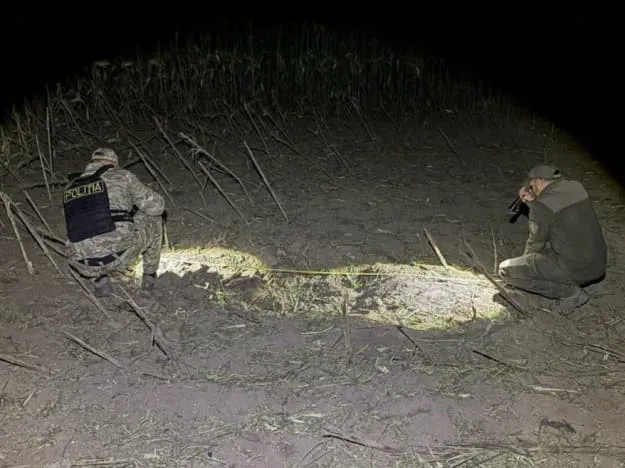
Two investigators examine a blast site with flashlights in a cornfield near Talmaza, Moldova, at night.

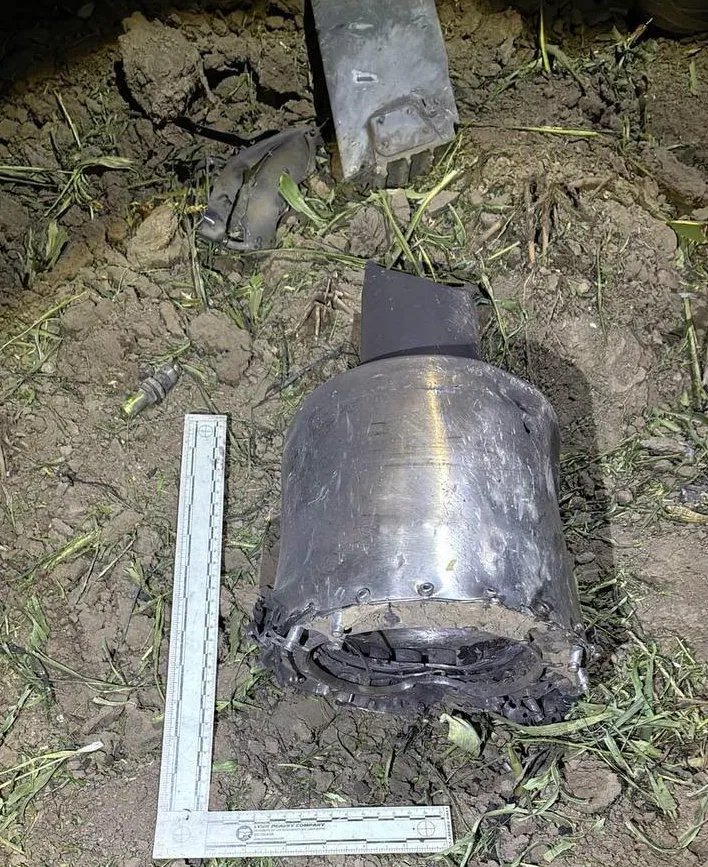
An unidentified aerial object exploded in a cornfield outside Talmaza in southeastern Moldova, tearing a crater about two meters wide and 50 centimeters deep, Moldovan police said on 18 August. The shock wave spread across roughly 45 by 20 meters, but nobody was injured.

Russia has intensified its attacks on Ukraine’s Black Sea and Danube ports, bringing drones and missiles close to Moldova’s border. Moldova has recorded three aerial incidents in nine days, with the latest forcing authorities to close part of the country’s airspace.

Investigators recovered fiberglass body fragments, damaged electronics, and a turbojet engine, which Militarnyi noted is also used by the Banderol. Police said the components resembled those of a jet-powered missile-drone but could not identify the aircraft conclusively.

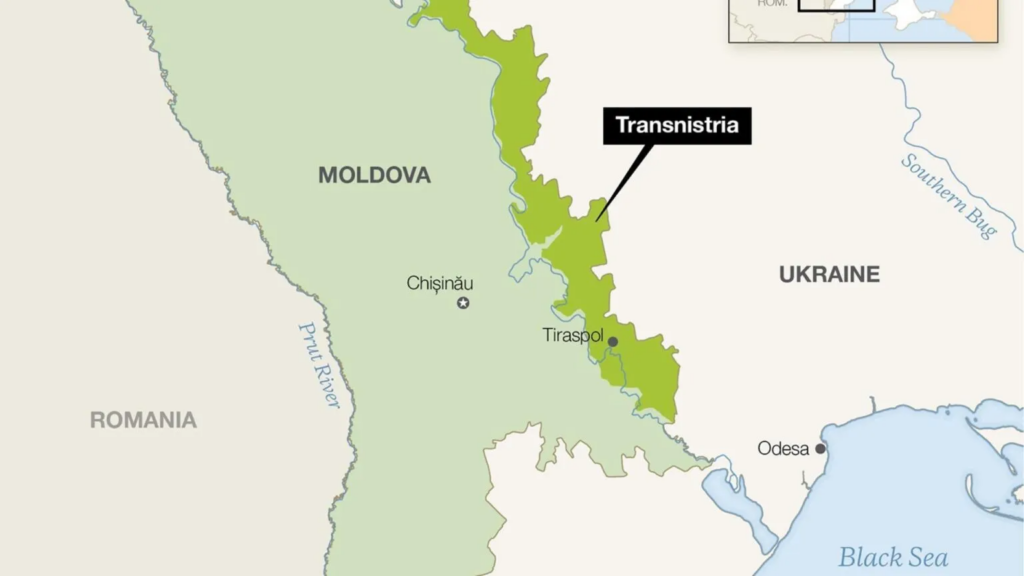
Ukraine's Air Force reported on 17 August that a Russian Banderol had crossed from Odesa Oblast toward Moldova. Militarnyi identified the weapon as an S8000 and placed the crossing near the Moscow-backed breakaway region of Transnistria.

Moldova’s Defense Ministry separately said it had tracked an unidentified object flying from Kuchurhan toward Tiraspol, the capital of Transnistria.

Map showing Transnistria — the Russian-occupied strip of Moldovan territory on the left bank of the Dniester River, bordering Ukraine to the east and wedged between Chișinău and Odesa. Map: Hudson Institute

Authorities closed central Moldovan airspace for 15 minutes before the object disappeared from radar near Talmaza, Militarnyi said.

Moldova’s Foreign Ministry called the incident a serious violation of its sovereignty and a threat to public safety.

Talmaza blast follows two recent drone incidents in Moldova

The Talmaza explosion followed two similar incidents near Moldova’s border with Ukraine. On 9 August, an unidentified aircraft exploded in a field 12 kilometers from Ukraine and started a fire. Another object entered Moldovan airspace the following evening and was believed to be a jet-powered Shahed.

Metal wreckage from an unidentified aerial object lies beside a forensic measuring scale in a cornfield near Talmaza, Moldova.
Investigators documented wreckage from an unidentified aerial object that exploded in a cornfield near Talmaza, Moldova, on 17 August 2026. Moldovan police said its exact type had not yet been confirmed. Credit: Poliția Republicii Moldova/Facebook.

The recent incidents continue a longer pattern. Six Russian drones entered Moldova during an attack on Ukraine in November 2025, and one landed on a civilian roof.

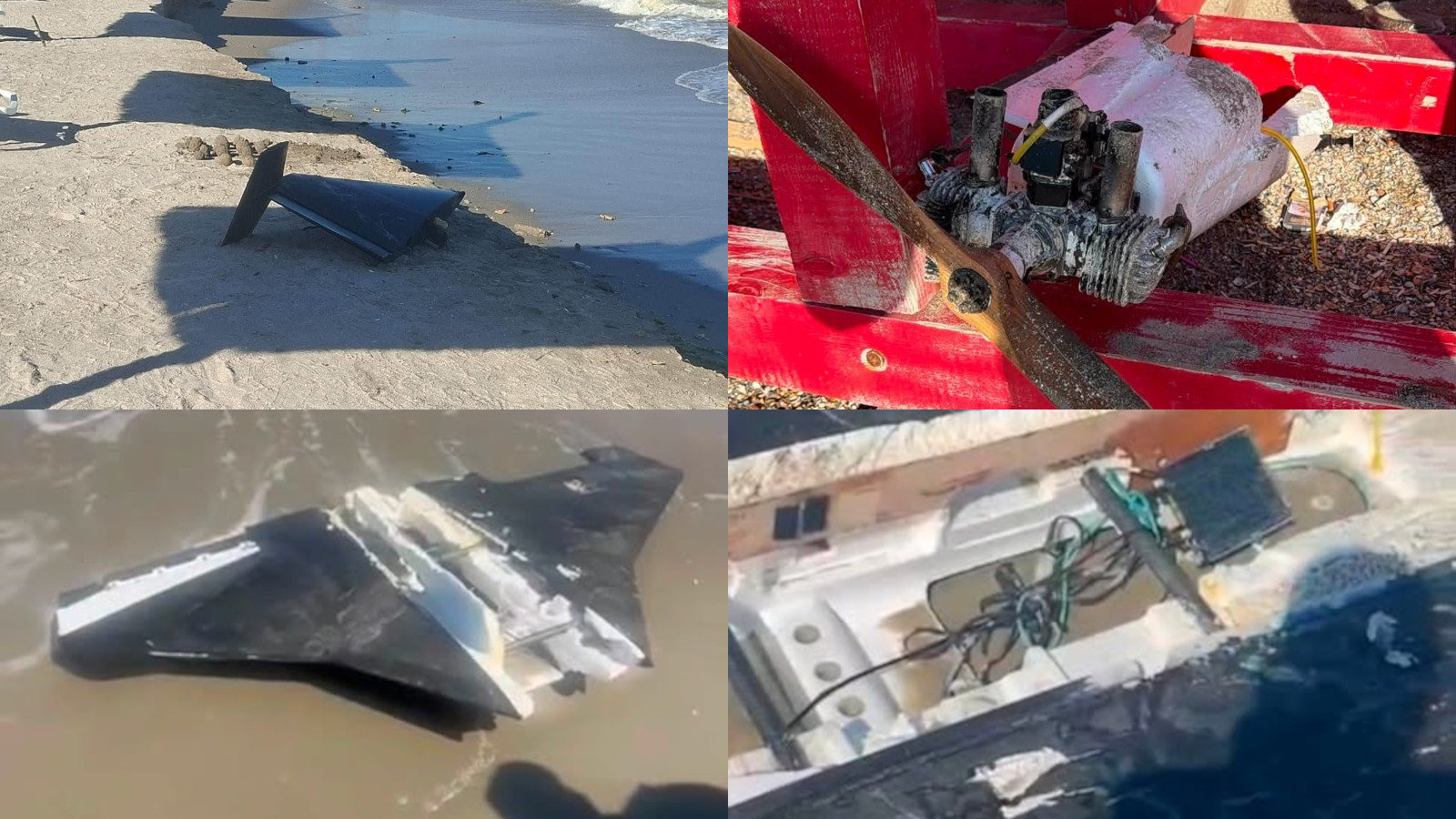
Drone debris washed ashore in Romania after Russian attacks on Ukraine, 13-14 August 2026. Photos: Radu Miruță
Explore further

More than 100 drones detected near Romania in four days, NATO jets scrambled seven times

President Maia Sandu has called for counter-drone technology capable of intercepting and destroying hostile drones that violate Moldovan airspace, acknowledging that the country currently lacks such capabilities.

Russia’s port campaign reaches Moldova’s border

Across the border, Russian attacks on Ukraine’s Danube ports have reached a recent high, with Romania detecting more than 100 drones during seven recent attacks, interim Defense Minister Radu Miruță said.

Kyiv and Chișinău are also discussing a rail route through Moldova to Romania’s Constanța port as Russian strikes disrupt Ukraine’s maritime exports. Ukraine estimates the route could carry only about 10 percent of its grain exports.

  • ✇Euromaidan Press
  • Greek-run tanker carrying Russian oil hit off Russia’s Black Sea coast, Bloomberg reports
    The Greek-run oil tanker Skiros was attacked near Novorossiysk on 16 August 2026 after loading Russian crude at the Caspian Pipeline Consortium (CPC) terminal, Bloomberg reported.The Suezmax-class vessel can carry about 1 million barrels. Bloomberg identified no attacker and provided no information about damage. Skiros’s Athens-based manager told the outlet that no one was injured and no pollution occurred. CPC primarily exports Kazakh oil and carries more than two-thir
     

Greek-run tanker carrying Russian oil hit off Russia’s Black Sea coast, Bloomberg reports

18 août 2026 à 10:28

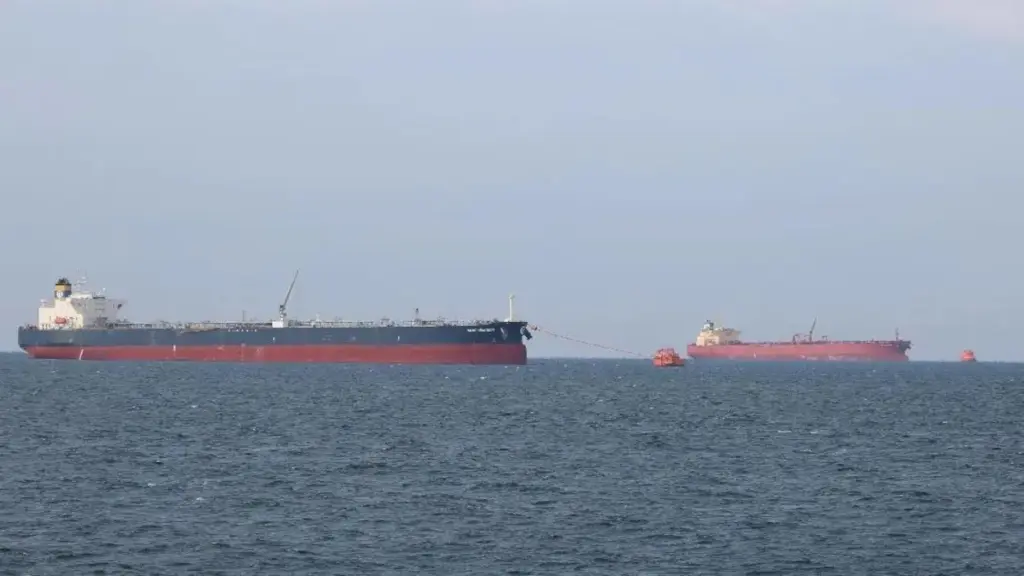
Two oil tankers and several support vessels at the Caspian Pipeline Consortium terminal near Novorossiysk.

The Greek-run oil tanker Skiros was attacked near Novorossiysk on 16 August 2026 after loading Russian crude at the Caspian Pipeline Consortium (CPC) terminal, Bloomberg reported.

The Suezmax-class vessel can carry about 1 million barrels. Bloomberg identified no attacker and provided no information about damage. Skiros’s Athens-based manager told the outlet that no one was injured and no pollution occurred.

CPC primarily exports Kazakh oil and carries more than two-thirds of Kazakhstan’s oil exports. Its shipments recently accounted for almost 2% of the global oil supply. Russian crude typically makes up only 5% to 10% of CPC exports.


Earlier in August, Ukraine agreed not to attack CPC infrastructure or non-Russian ships bound for the terminal if they were not under Ukrainian sanctions and did not carry Russian cargo. Because Skiros carried Russian crude, the protection did not apply to it under the terms Bloomberg described.

Following the July attacks, CPC considered suspending operations due to environmental and safety risks but decided to continue operations, Bloomberg reported.

The Skiros attack ended an almost three-week lull in attacks on ships using the terminal. Bloomberg did not say whether it disrupted oil loading, and CPC declined to comment.

Earlier attacks cut Kazakhstan’s oil production

Earlier attacks suspended loading at the terminal. Kazakhstan’s Energy Ministry confirmed a temporary reduction in oil production to prevent storage facilities from reaching capacity, while Reuters reported CPC loadings fell by a fifth in July.

The disruption also increased shipping and war-risk insurance costs as some operators became reluctant to call at the terminal, The Financial Times reported.

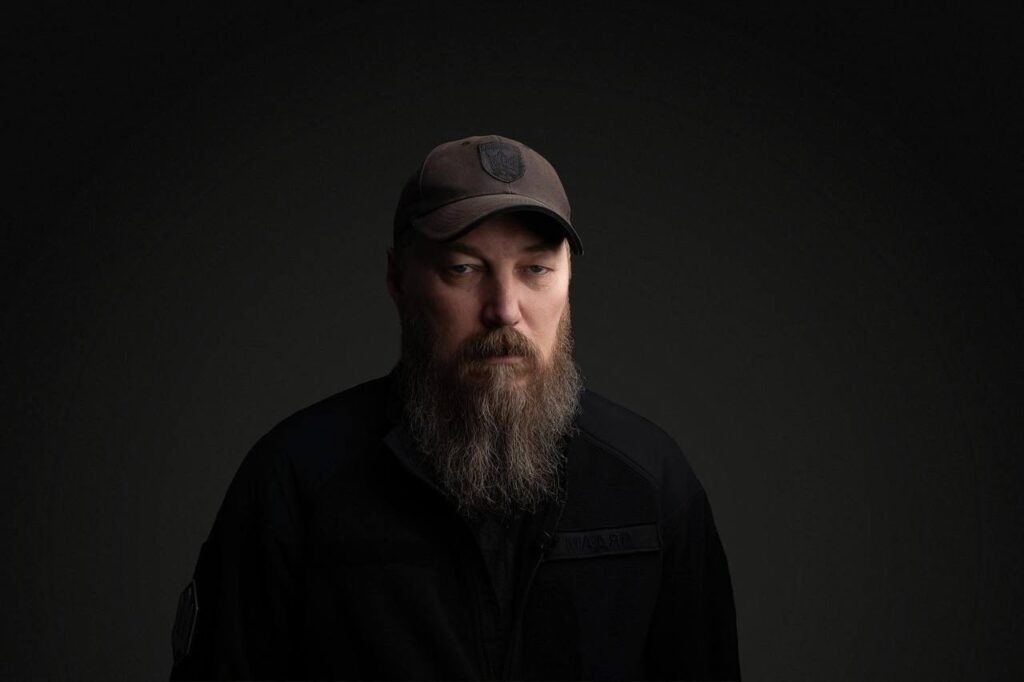
Commander of Ukraine’s Unmanned Systems Forces, Robert “Madyar” Brovdi. Photo: Madyar

Paralysis of the logistics

Ukraine has not claimed responsibility for the Skiros attack, and Bloomberg did not identify an attacker. In a separate operation in July, the SBU and Navy acknowledged striking sanctioned Russian oil tankers Louise 1 and Banda with Mamai sea drones.

Robert “Madyar” Brovdi, commander of Ukraine’s Unmanned Systems Forces, later described the wider objective as the “paralysis of the logistics” of oil, fuel, and cargo that bypasses sanctions.

  • ✇Euromaidan Press
  • Russian drone attacks on Ukraine’s Danube ports hit recent high, Romania says
    Romania detected more than 100 drones involved in seven attacks on Ukraine’s Danube ports in recent days, interim Romanian Defense Minister Radu Miruță told Romanian channel Digi24 on 17 August 2026. He said the attacks were the most intense recorded recently and that Ukrainian forces destroyed most of the drones “a few dozen meters from Romanian airspace.” Russia’s growing attacks on Ukraine’s Danube ports put a key export route at risk as Kyiv seeks other outlets whil
     

Russian drone attacks on Ukraine’s Danube ports hit recent high, Romania says

18 août 2026 à 05:49

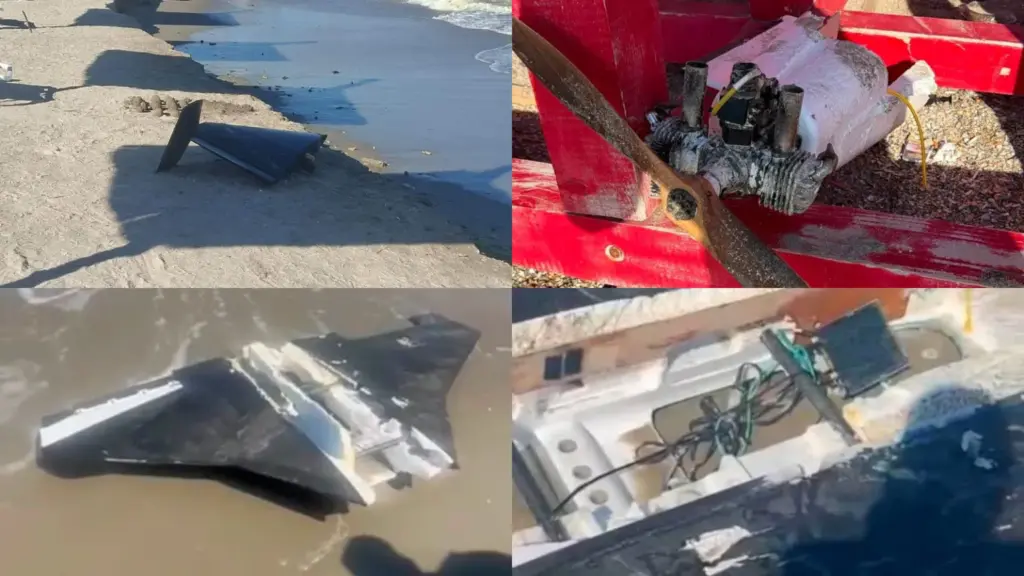
Four-image collage showing drone wreckage found on Romania’s coast and in nearby waters, including wing fragments, an engine and propeller, and exposed electronics.

Romania detected more than 100 drones involved in seven attacks on Ukraine’s Danube ports in recent days, interim Romanian Defense Minister Radu Miruță told Romanian channel Digi24 on 17 August 2026. He said the attacks were the most intense recorded recently and that Ukrainian forces destroyed most of the drones “a few dozen meters from Romanian airspace.”

Russia’s growing attacks on Ukraine’s Danube ports put a key export route at risk as Kyiv seeks other outlets while its Black Sea ports are under attack. They also put Ukraine's southern border region under pressure as Kyiv develops trade links with Moldova and Romania, and NATO routes more military aid through Romania.

The latest drone swarms remained over Ukraine, and officials found no indication that Romania’s threat level had risen, Miruță stated. The Romanian military nevertheless remained on alert as attacks intensified across the Danube.

Ukraine looks south for trade and military aid

With Russia hitting its ports, Ukraine is turning to Romania and Moldova to keep trade moving. Kyiv and Chișinău are discussing a rail link through Moldova to Romania’s Constanța port, though Ukraine estimates it could carry only about 10% of its grain exports.

The rail proposal comes as Russian port strikes have cut monthly agricultural exports by 20–30% and left up to 10 million tons of grain in storage without buyers, Agriculture Minister Taras Vysotskyi has said.

Drone debris washed ashore in Romania after Russian attacks on Ukraine, 13-14 August 2026. Photos: Radu Miruță
Explore further

More than 100 drones detected near Romania in four days, NATO jets scrambled seven times

NATO said in December that a second aid hub in Romania would begin operating in January. It was designed to supplement the main center in Rzeszów, Poland, and route supplies toward Ukraine’s southern and eastern fronts.

Romania faces repeated drone incursions

Russian drones targeting Ukraine have repeatedly entered Romania as Moscow attacks Ukrainian ports across the Danube. More than 40 such incursions had been recorded by early June, Romanian Foreign Minister Oana Țoiu said.

The most serious occurred on 29 May, when a drone hit an apartment building in Galați. Two people were injured, and about 70 residents fled or were evacuated.

Vladimir Putin suggested that the aircraft might have been Ukrainian, but Romania’s forensic investigation later identified it as a Russian-built Geran-2.

Romanian forces later shot down three drones in 72 hours in July, while Miruță said Spanish pilots and Romanian troops destroyed a fourth on 16 August.

Debris from drones intercepted over Ukraine has also washed onto Romania’s coast, prompting temporary access restrictions while specialists checked for explosives.

Bucharest is buying low-altitude radars and ground interceptors through the EU’s SAFE program. Miruță said drones often fly at 70 to 150 meters, and ground systems would be cheaper to use than fighter-launched missiles.

He fought for Ukrainian independence until a Soviet chocolate-box bomb killed him. Now Ukraine plans to honor him permanently

18 août 2026 à 04:03

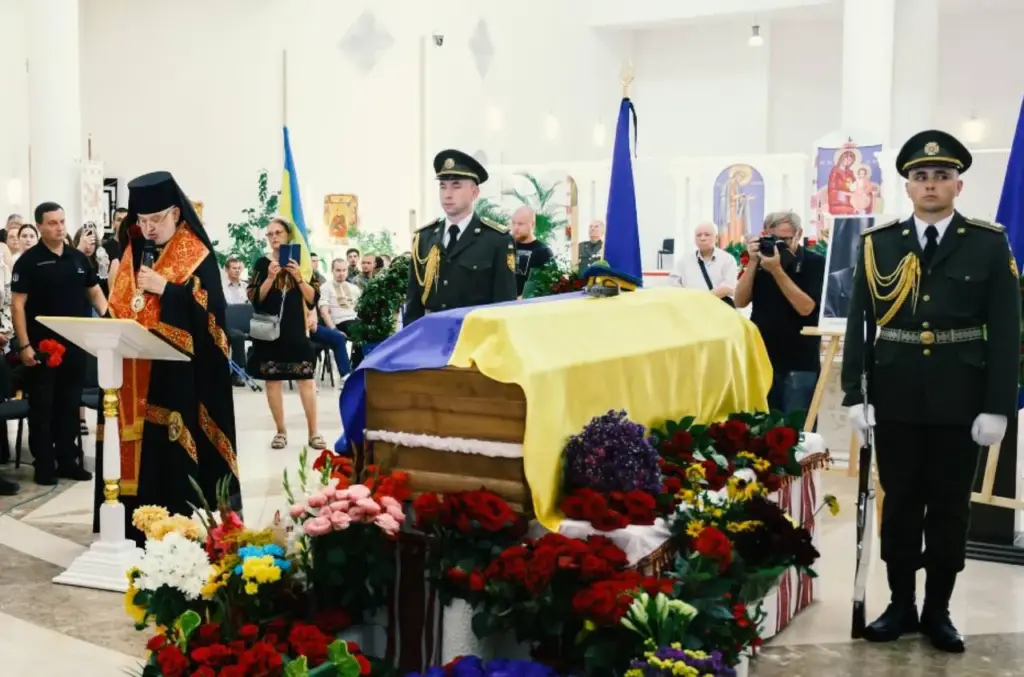
A priest conducts a memorial service beside Yevhen Konovalets’ flag-draped coffin, surrounded by flowers and an honor guard in Kyiv.

Ukraine plans to temporarily rebury Yevhen Konovalets, a leading Ukrainian nationalist between World Wars I and II, at its National Military Memorial Cemetery, President’s Office head Kyrylo Budanov wrote in a Telegram post.

His remains will later be transferred to the planned Ukrainian National Pantheon, Budanov said.

The National Pantheon is intended to honor political leaders, soldiers, and cultural figures who built or defended Ukraine. Responding to a citizen's petition, Zelenskyy described the memorial as a way to unite Ukrainians around defending their sovereignty and territorial integrity. Budanov cast Konovalets’ planned reburial as linking the current war against Russia with earlier struggles against foreign rule.

Budanov portrayed Konovalets as a threat to Ukraine’s enemies because he organized military and political resistance to Russian and Soviet rule. He said attempts had been made for decades to erase or distort Konovalets’ name and that returning his remains had long been considered “untimely.”

“The enemies of a free Ukraine feared the colonel during his lifetime—they still do,” Budanov wrote.

Konovalets’ remains were exhumed at Crooswijk Cemetery in Rotterdam, the Netherlands, on 11 August. They returned to Ukraine two days later, deputy head of the President’s Office Iryna Vereshchuk said.

A memorial service was held in Kyiv on 15 August. Officials have not announced when Konovalets will be temporarily reburied or when his remains will be transferred to the Pantheon.

Who was Yevhen Konovalets?

Born near Lviv in 1891, Konovalets commanded the Sich Riflemen, which defended the Ukrainian People’s Republic after the Russian Empire collapsed. The republic was proclaimed in 1917 and declared independence in 1918 before Bolshevik forces defeated it three years later.

Konovalets continued the struggle for independence from exile. He helped establish the Ukrainian Military Organization, an underground group preparing armed resistance to Polish and Soviet rule.

In 1929, Konovalets brought the organization together with other nationalist groups to found the Organization of Ukrainian Nationalists (OUN) in Vienna and became its first leader.

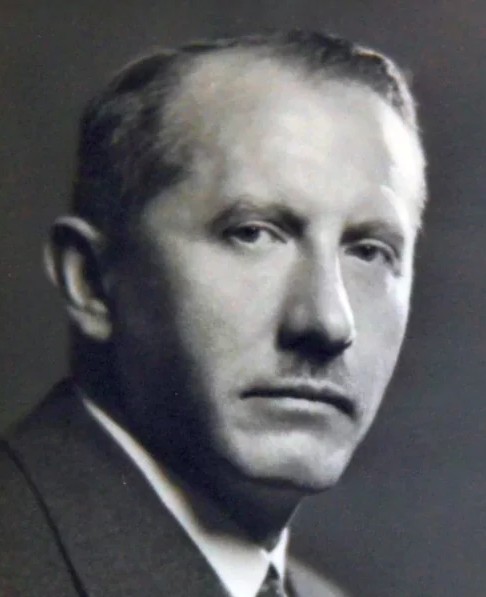
Portrait of Ukrainian military commander and nationalist leader Yevhen Konovalets
Yevhen Konovalets. Source: RFE/RL

He prepared the OUN for armed struggle and sought European support for Ukrainian independence.

On 23 May 1938, Soviet secret police operative Pavel Sudoplatov killed Konovalets in Rotterdam with a bomb concealed in a box of chocolates. Two years after his death, the OUN split into rival factions.

What is the National Pantheon?

Ukraine plans the National Pantheon as a permanent burial and memorial site for major figures in its history, including those buried abroad.

Parliament approved President Volodymyr Zelenskyy’s bill on 1 July. The government selected part of the Kyiv-Pechersk Lavra, a historic Orthodox monastery in the capital, as its site.

The Pantheon plan has raised concern in Poland over whether it could honor members of the Ukrainian Insurgent Army (UPA).

The UPA fought for Ukrainian independence during and after World War II. Poland holds it responsible for killing up to 100,000 ethnic Poles in Volhynia and Eastern Galicia between 1943 and 1945. Poland's parliament has declared the killings a genocide.

Konovalets was assassinated in 1938, before World War II, the OUN’s split, and the UPA’s formation. The Volhynia killings and the OUN factions’ wartime collaboration with Nazi Germany, therefore, postdated his leadership.

Even so, Ukraine’s broader effort to honor nationalist leaders has drawn criticism over the wartime records of Konovalets’ successors. Its May 2026 state reburial of Andrii Melnyk, who succeeded Konovalets as OUN leader, drew objections from Israel’s Foreign Ministry and Yad Vashem over Melnyk’s collaboration with Nazi Germany.

❌