Vue normale

  • ✇Euromaidan Press
  • “Faster than originally planned”: Russia wants 292 Starlink-rival satellites by 2027
    Russia is deploying Rassvet satellites, its answer to Starlink, faster than originally planned, Vadym Skibitskyi, Deputy Chief of Ukraine's Defense Intelligence (GUR), told RBC-Ukraine. Moscow aims to expand the network to 292 satellites by the end of 2027 and 924 by 2035, he said. Existing satellites can already provide intermittent connections as they pass over Ukraine. Rassvet could give Moscow an independent alternative to Starlink, which Ukrainian forces rely on
     

“Faster than originally planned”: Russia wants 292 Starlink-rival satellites by 2027

11 août 2026 à 14:04

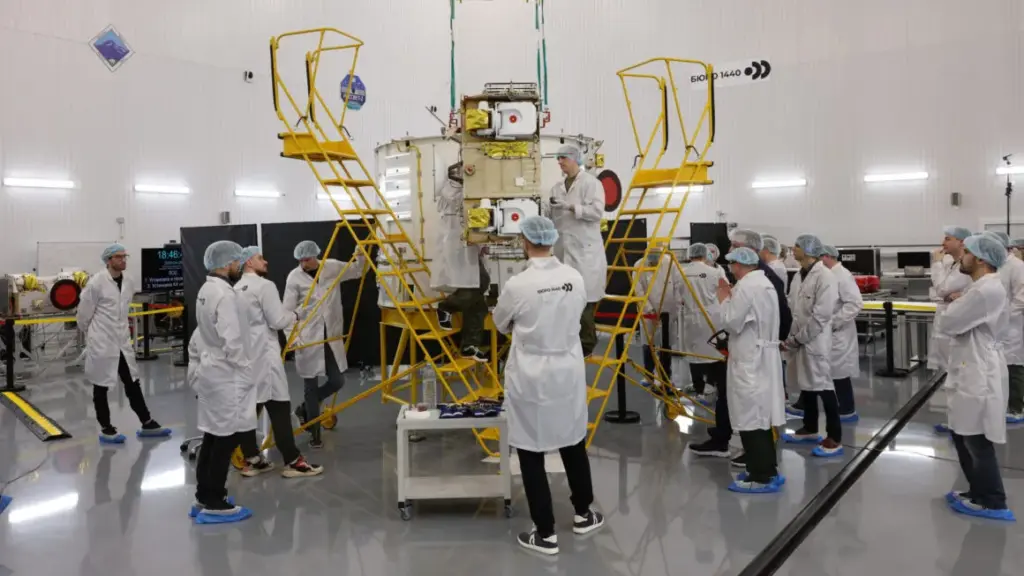
Employees of Russian company Bureau 1440 work on a Rassvet communications satellite.

Russia is deploying Rassvet satellites, its answer to Starlink, faster than originally planned, Vadym Skibitskyi, Deputy Chief of Ukraine's Defense Intelligence (GUR), told RBC-Ukraine.

Moscow aims to expand the network to 292 satellites by the end of 2027 and 924 by 2035, he said. Existing satellites can already provide intermittent connections as they pass over Ukraine.

Rassvet could give Moscow an independent alternative to Starlink, which Ukrainian forces rely on for battlefield communications and drone operations. Russian forces also used unauthorized Starlink terminals until Ukraine and SpaceX blocked access. Rassvet’s coverage remains intermittent but could eventually support strike drones, prompting Kyiv to consider countermeasures.

Why Russia wants its own Starlink

Ukrainian forces rely heavily on Starlink for frontline communications, drone operations, and command and control. 

Russian forces also relied heavily on unverified terminals until Ukraine and SpaceX blocked them on 5 February. The shutdown disrupted Russian communications and assaults across multiple parts of the front. On 10 August 2026, the SBU said it had dismantled two schemes that registered terminals in Ukraine for transfer to Russian forces.

Rassvet could reduce Russia’s dependence on SpaceX and illicit supply networks. Ukrainian experts have warned that a mature network could also relay data to Russian strike drones.

32 satellites up, 260 to go by 2027

Bureau 1440, the Russian satellite developer behind Rassvet, began testing the network with three satellites in 2023. Three larger prototypes followed in 2024 to test upgraded equipment, including satellite-based 5G technology and laser links between spacecraft. 

Russia launched its first batch of 16 serial Rassvet satellites on 23 March 2026 after manufacturing problems delayed the mission. A second group of 16 followed in July, Militarnyi reported.

In May 2026, Serhii “Flash” Beskrestnov, a defense technology adviser to the President of Ukraine, said each Rassvet satellite then in orbit passed over Ukraine roughly once daily, providing six to 10 minutes of connectivity. He estimated that continuous coverage would require 200–250 satellites. 
  • ✇Euromaidan Press
  • Russia’s Odesa strikes halve Ukraine’s grain export forecast
    Ukraine’s Agriculture Ministry has cut its forecast for agricultural exports in 2026–2027 by 54% as Russian attacks disrupt shipping through Odesa’s ports, Bloomberg reported. The ministry now expects 29.6 million tons of agricultural exports, down from 64.4 million. Its wheat export forecast fell by 53%, from 17.6 million tons to 8.3 million tons. Ukraine grows far more grain than it consumes, exporting 65%–70% of its agricultural output. Bloomberg said the sector
     

Russia’s Odesa strikes halve Ukraine’s grain export forecast

11 août 2026 à 13:47

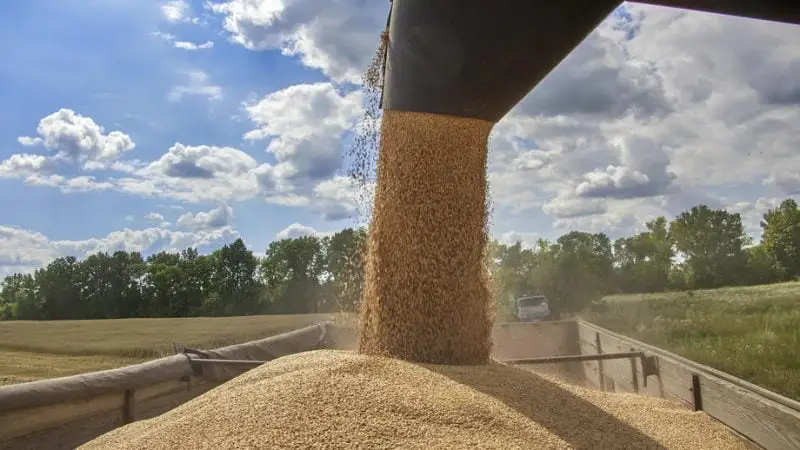
Grain pours from a combine harvester into a trailer during harvest in Ukraine.

Ukraine’s Agriculture Ministry has cut its forecast for agricultural exports in 2026–2027 by 54% as Russian attacks disrupt shipping through Odesa’s ports, Bloomberg reported.

The ministry now expects 29.6 million tons of agricultural exports, down from 64.4 million. Its wheat export forecast fell by 53%, from 17.6 million tons to 8.3 million tons.

Ukraine grows far more grain than it consumes, exporting 65%–70% of its agricultural output. Bloomberg said the sector generated more than half of Ukraine’s export revenue last year. But Russia’s summer attacks have stalled the sea corridor as the harvest arrives, driving some wheat prices below production costs. Land and river routes cannot match the Black Sea shipping capacity, while sales through neighboring EU states remain politically contested. That leaves farmers with less money for the next sowing and further reduces Ukraine’s export income.

Ukraine has about 59 million tons of grain storage. That storage could be full by early November, leaving the country 11 million tons short of space by the end of fall 2026. 

Wheat sells below cost as the silos fill up

Ukraine’s export bottleneck is already hitting its farmers. Port prices fell by another 12-15% in one week, while some farmers sold wheat below production cost. When ships stop, traders either stop buying or pass the higher cost of alternative routes on to producers. That leaves farmers with less cash for fall sowing.

To ease the pressure, the government has approved subsidized loans for agricultural producers. President Volodymyr Zelenskyy said Kyiv would expand storage. Ukraine's Agriculture Ministry has also asked the European Commission for €220 million to help cover interest for small and medium-sized farms.

Ukraine and Moldova are discussing a rail route to Romania’s Constanța port. According to the report, grain was already being redirected through Romania, Slovakia, and Hungary, but these routes cannot replace Odesa’s capacity.

Now the ports and the ships are Russia's targets

The export bottleneck is only part of the problem. Russia’s bombardment also threatens the ports, civilian ships, and crews needed to keep the corridor operating. 

The port of Odesa normally handles about 90% of Ukraine’s grain shipments. Russia intensified attacks on terminals and civilian ships in July 2026 as the harvest reached the coast.

On 19 July, three Russian missiles struck the foreign-flagged Golden Leo as it left Odesa carrying corn, killing 10 people, including a Ukrainian sea pilot. Three days later, no vessel passed through the corridor.

Alternative routes offer little relief, as record-low Danube levels were restricting river traffic. Poland continues to bar Ukrainian grain from its domestic market. Those constraints leave more of the harvest inside Ukraine and farmers with less money to plant the next crop.

Russia’s education minister calls it “objective.” A new textbook teaches Ukrainian children that their occupied region is historically Russian

11 août 2026 à 10:00

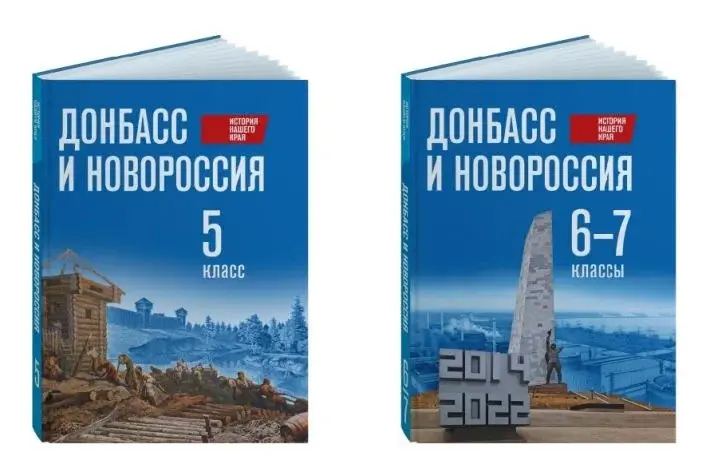
Covers of Russian “Donbas and Novorossiya” history textbooks for students in grades 5–7.

Russia will introduce two editions of a new regional history textbook series in occupied Ukrainian schools on 1 September 2026. The books present the occupied Ukrainian regions as historically Russian, MOST, a Kherson-based outlet, reported on 10 August.

The new textbooks bring Russia's campaign to erase Ukrainian identity into occupied classrooms, where authorities remove Ukrainian from curricula and replace lessons with Russian ideology, military drills, and firing-range visits. Moscow's Russification campaign extends beyond schools to efforts to change the demographics of occupied Ukrainian territory and re-educate forcibly transferred Ukrainian children.

The new textbook series, entitled "History of Our Region: Donbas and Novorossiya," comprises one edition for grade 5 and another for grades 6–7. The course attached to the books will be compulsory throughout Russia's so-called "new regions," according to the Ukrainian human rights center ZMINA.

"Novorossiya" is an imperial term Moscow uses to claim southern and eastern Ukraine. 

Russia's Education Ministry calls the course "objective" and part of a "unified history of Russia," Meduza reports. Minister Sergei Kravtsov claimed it contains "objective information, rather than the lies that appeared in Ukrainian textbooks."

Replacing the curriculum, then the population

The "Novorossiya" textbook forms part of a broader Kremlin campaign to Russify occupied Ukraine's education, culture, and demographics. 

Since occupying Melitopol, Russian authorities have systematically replaced Ukrainian curricula and textbooks. Older Russian textbooks, issued after Moscow's full-scale war, already depicted occupied Melitopol as part of Russia. 

A 2025 Kremlin strategy requires occupied regions to enter Russia's educational, cultural, and information space. The policy also sets a nationwide target for “All-Russian civic identity” to reach at least 95% by 2036.

35,000 Ukrainian children still missing

Meanwhile, experts estimate that about 35,000 Ukrainian children remain missing and are likely held in Russia or Russian-occupied territory. Yale's Humanitarian Research Lab identified at least 210 facilities used to hold children from Ukraine. The lab found that at least 130 facilities subjected Ukrainian children to pro-Russian cultural, patriotic, or military programs. 

One case shows where such indoctrination can lead. Once listed as missing under occupation, Ukrainian boy Oleksandr Mustiatse later appeared online in a Russian uniform bearing the “Z” invasion symbol, Save Ukraine reported.

  • ✇Euromaidan Press
  • Seoul says no again to Ukraine’s weapons request as Pyongyang gets ready to send Russia more troops
    South Korea is keeping lethal aid to Ukraine off the table while continuing humanitarian and reconstruction support, Yonhap reported on 10 August. The outlet cited a senior South Korean Foreign Ministry official. South Korea’s response maintains its established policy of providing humanitarian and nonlethal support to Ukraine, but not direct weapons. Seoul previously helped move artillery shells to Ukraine through the United States. While South Korea arms NATO members
     

Seoul says no again to Ukraine’s weapons request as Pyongyang gets ready to send Russia more troops

11 août 2026 à 07:47

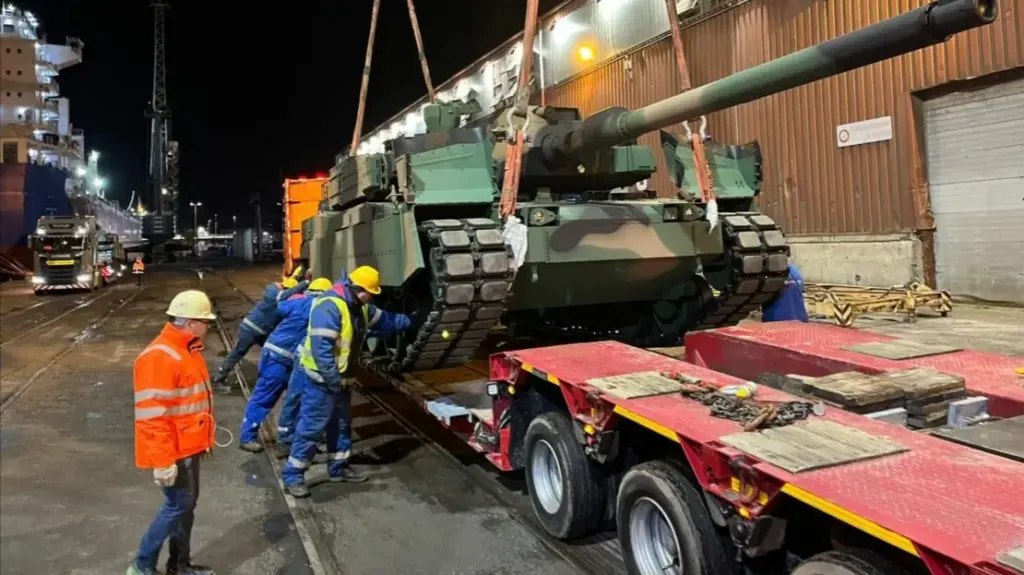
Workers unload a South Korean-made K2 Black Panther tank for the Polish army from a trailer at a Polish port at night.

South Korea is keeping lethal aid to Ukraine off the table while continuing humanitarian and reconstruction support, Yonhap reported on 10 August. The outlet cited a senior South Korean Foreign Ministry official.

South Korea’s response maintains its established policy of providing humanitarian and nonlethal support to Ukraine, but not direct weapons. Seoul previously helped move artillery shells to Ukraine through the United States. While South Korea arms NATO members with K2 tanks and K9 howitzers to free up older kit for the Ukrainian front, it still draws the line at any direct transfer to Kyiv. Seoul rejects Ukraine’s purchase requests as North Korea sends Russia ammunition and troops in exchange for money and military technology.

South Korean law bars direct exports of lethal weapons to countries in active conflict, a rule rooted in constitutional principles and Seoul's wariness of antagonizing Moscow and Beijing while managing the threat from the North.

Ukraine is seeking South Korean interceptor missiles for its air defenses. The official neither addressed the request specifically nor formally rejected it:

South Korea’s supply of defense materials to any country has always been carried out in accordance with domestic law,” the official said. Seoul will continue to support Ukraine’s recovery through assistance in energy, infrastructure, healthcare, and education. 

The official also declined to confirm whether Seoul and Kyiv were discussing military support. However, he said Moscow-Pyongyang military cooperation “is directly related to our security and violates the United Nations resolutions” and should stop immediately.

Seoul’s indirect aid stopped short of direct arms transfers

In 2023, Seoul transferred hundreds of thousands of 155 mm shells to the United States under a confidential arrangement. Washington then arranged for them to reach Ukraine, The Wall Street Journal reported.

South Korean exports have also helped NATO members replace weapons sent to Kyiv. Poland bought South Korean K2 tanks and K9 howitzers while transferring older tanks and Polish-built Krab artillery systems to Ukraine.

Yet Seoul rejected Ukraine’s request to buy air-defense systems, radars, and artillery propellant in November 2024. In February 2026, it still limited support to humanitarian and nonlethal aid while considering NATO’s request to help purchase US weapons for Ukraine.

North Korean deployments bring the war closer to Seoul

Ukrainian President Volodymyr Zelenskyy said a decision had been made to deploy 30,000–50,000 more North Koreans to Russia. He warned that they would gain modern combat experience and Russian technology that could later threaten Asian countries. Kyiv wants South Korean air defenses and has offered cooperation on drones.

The South Korean official cited by Yonhap declined to confirm either the reported deployment or Zelenskyy’s statement that Ukrainian and South Korean diplomats were discussing possible cooperation.

North Korea is already believed to have sent approximately 20,000 combat troops and military engineers to Russia’s Kursk region, according to Yonhap. Pyongyang has earned as much as $22 billion from arming Russia, helping it finance conventional and nuclear forces.

The Japanese outlet Kyodo News reported in November 2025 that North Korea had transferred about 6.5 million rocket and artillery munitions in exchange for Russian air-defense, space, and nuclear technologies.  Moscow and Pyongyang’s 2024 mutual defense pact formalized the expanding military relationship.

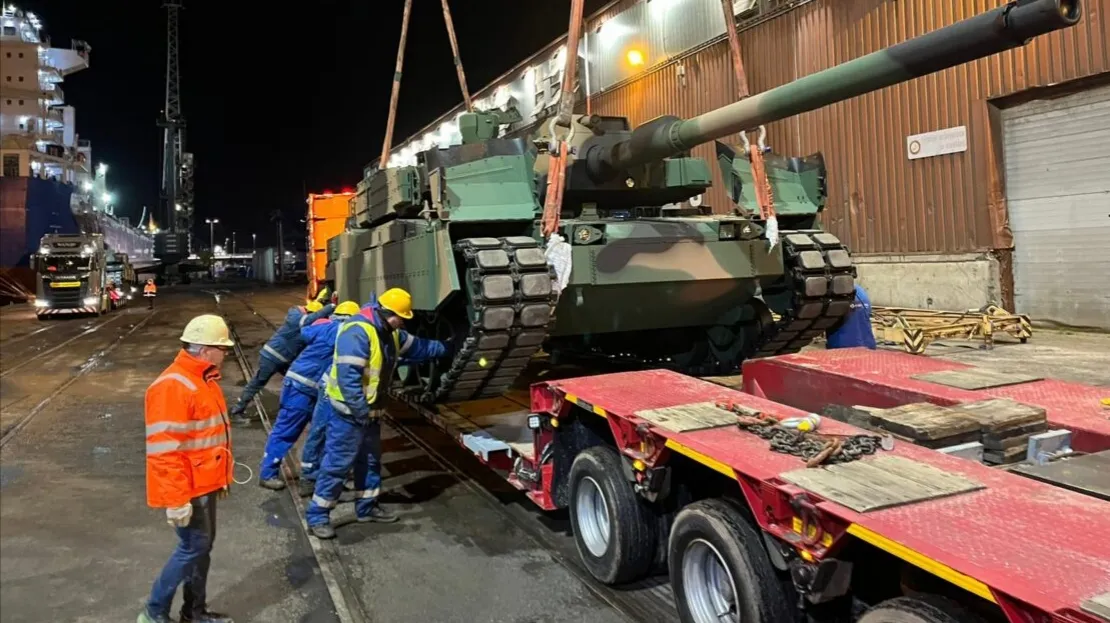
Workers unload a South Korean-made K2 Black Panther tank for the Polish army from a trailer at a Polish port at night.

Seoul says no again to Ukraine’s weapons request as Pyongyang gets ready to send Russia more troops

❌