❌

Vue normale

Senators Demand Investigation Into Ukraine Satellite Disruption

15 octobre 2026 à 17:13
Republicans joined Democrats in calling on the Pentagon’s inspector general to look into whether the Trump administration was responsible for the interruption.

© Tyler Hicks/The New York Times

A Ukrainian drone operator prepares for a strike on a house in Russian-occupied Ukraine in July.

U.S. Continues to Provide Intelligence to Ukraine, Officials Say

14 octobre 2026 à 18:52
Confusion about the U.S. stance has mounted in Kyiv amid restrictions on how the military version of Starlink is used.

© Jędrzej Nowicki for The New York Times

Ukrainian officials have complained about restrictions on their use of an internet network developed by SpaceX.

Ukraine Says It Received No Intelligence About Strikes 2 Nights in a Row

14 octobre 2026 à 09:11
Asked about apparent U.S. threats to cut off intelligence sharing with Kyiv, which can warn of Russian aerial attacks, President Trump said information continued to flow.

© Mauricio Lima for The New York Times

A resident collecting belongings from an apartment building that was struck in Kharkiv, Ukraine, on Tuesday.
  • ✇Euromaidan Press
  • Ukraine wants to aim Starlink at Russian targets—and build a version Elon Musk can’t switch off
    Ukraine is working on a satellite system of its own, something similar to SpaceX's Starlink, Ukrainian President Volodymyr Zelenskyy said on 4 October, Interfax-Ukraine reported. He argued Kyiv should be free to turn Starlink on Russian military targets, warning that China and other states will share comparable satellite technology with Moscow within months. Ukraine's battlefield communications still ride on a network owned by Elon Musk, who has clashed with Kyiv and once limited its warti
     

Ukraine wants to aim Starlink at Russian targets—and build a version Elon Musk can’t switch off

5 octobre 2026 à 12:01

A Starlink satellite terminal set up in a Ukrainian wheat field. Illustrative image shared by Digital Minister Mykhailo Fedorov via Telegram

Ukraine is working on a satellite system of its own, something similar to SpaceX's Starlink, Ukrainian President Volodymyr Zelenskyy said on 4 October, Interfax-Ukraine reported. He argued Kyiv should be free to turn Starlink on Russian military targets, warning that China and other states will share comparable satellite technology with Moscow within months. Ukraine's battlefield communications still ride on a network owned by Elon Musk, who has clashed with Kyiv and once limited its wartime use.

Low-orbit satellite internet has turned into a frontline utility that a single company or government can switch on or off, and both armies are now racing to own that link instead of renting it. Control of the network decides whose drones can see the battlefield and fly through the jamming to strike it—leverage Kyiv has gone without while its connection rode on hardware it does not run.

Working on a Starlink of its own

Zelenskyy said there was groundwork in place and that Ukraine was working on a system similar to Starlink. He called it fair for Ukraine to aim Starlink at military sites inside Russia. The timing is the reason, he said: some states will share the technology with Russia late this year or early next, and the Chinese are among them. Moscow is already fielding its own Starlink-style constellation, Rassvet, though for now it reaches Ukraine only in brief passes.

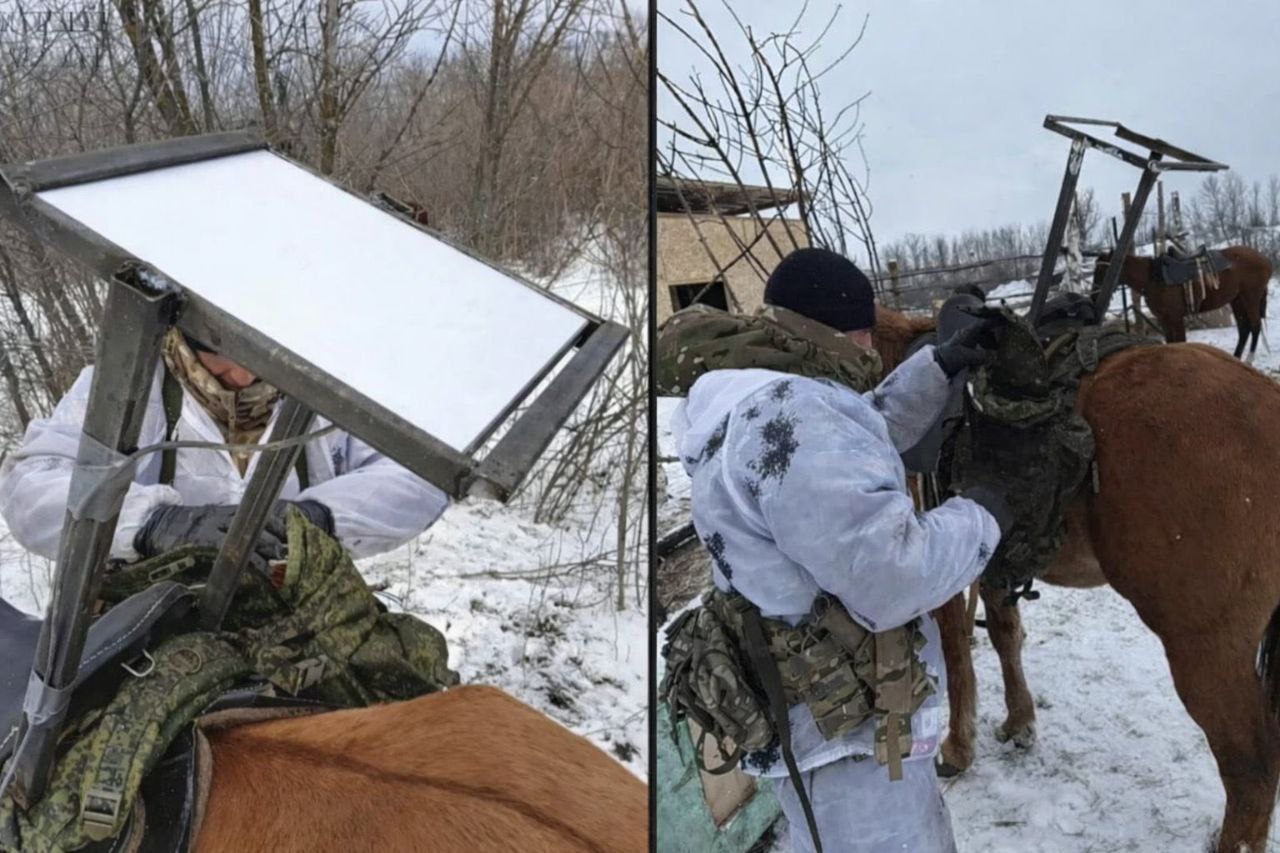
latvia convicted one node starlink supply chain russia — two latvian citizens same network still await trial · post terminal mounted russian horse 2026 latvia's riga city court has sentenced
Explore further

Ukrainian brigades detail Starlink crackdown: Russian terminals “became just bricks,” assaults disrupted

Ukraine's troops and drones lean heavily on Starlink, a network Kyiv neither owns nor controls. Musk has used that control against Kyiv before: in 2022 SpaceX refused a Ukrainian request to extend Starlink over occupied Crimea for a drone strike on Russia's warships, and it has since restricted the network's use for drone operations.

Sanctions, and satellites of its own

Zelenskyy has asked US President Donald Trump several times to sanction the Russian and Chinese companies building Russia's Rassvet network, most recently at the UN General Assembly in New York, he said in a recent Financial Times interview.

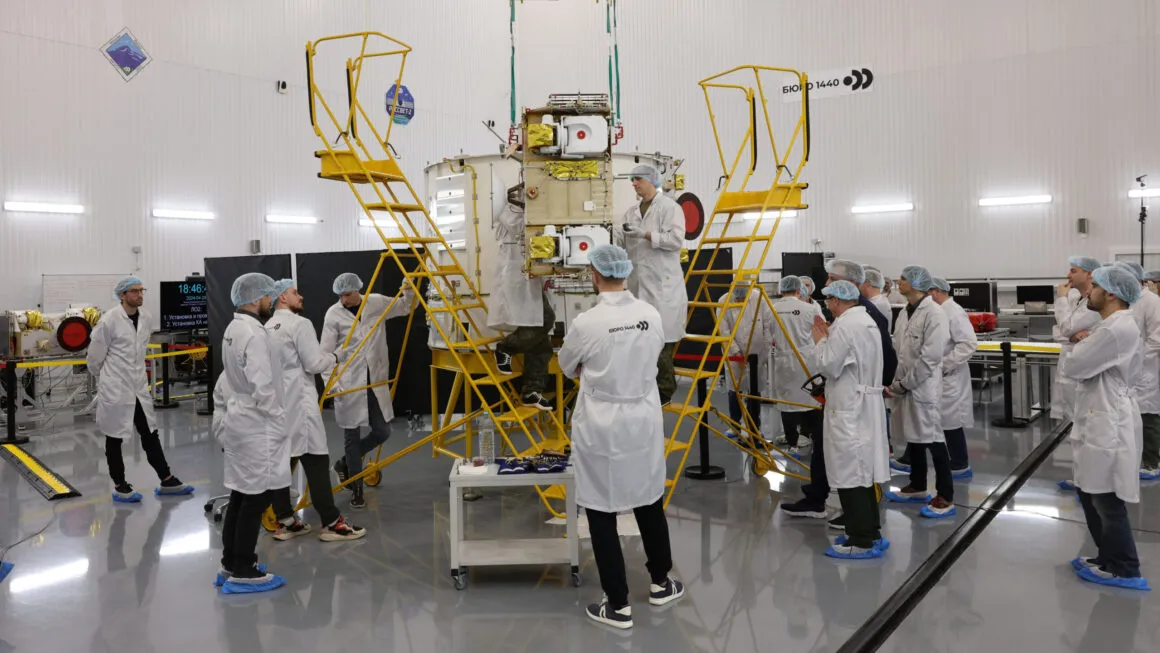
Employees of Russian company Bureau 1440 work on a Rassvet communications satellite.
Explore further

The EU sanctioned Russia’s Starlink rival but not the company that builds it. Experts call that the gap that matters

Denys Shtilerman, co-founder and chief designer at Ukrainian defense company Fire Point, told the Financial Times in May that the firm had launched two satellites this year and planned dozens more in 2027, aiming to reduce reliance on the US government and Western tech companies. To strike deep inside Russia and gather intelligence, he has said, Ukraine needs its own constellation covering all of Russia.

The EU sanctioned Russia’s Starlink rival but not the company that builds it. Experts call that the gap that matters

30 septembre 2026 à 03:56

Employees of Russian company Bureau 1440 work on a Rassvet communications satellite.

The company that actually assembles Russia's homegrown answer to Starlink has been left off every Western sanctions list, a US research group and a Ukrainian anti-corruption watchdog separately told Euromaidan Press this month.

Both landed on the same gap—the manufacturer, Bureau 1440, and its leaders remain untouched by the West, even though Kyiv has already placed the firm on Ukraine's own sanctions list. They differ on how much a Western designation would achieve, not on where the opening is.

The company no Western government has sanctioned

Rassvet is Russia's low-Earth-orbit satellite constellation, built by the private firm Bureau 1440 to give Moscow's troops communications independent of SpaceX. Bureau 1440 launched its first 16 satellites in March 2026, building the network after SpaceX cut off the Russian units' unauthorized Starlink access. C4ADS, a US-based research organization, confirmed to Euromaidan Press that Bureau 1440 and its leadership sit outside every Western sanctions regime, and called designating the manufacturer the single most visible and effective step available.

Viktoriia Vyshnivska, a senior analyst at the Independent Anti-Corruption Commission (NAKO), a Ukrainian watchdog, was more measured. "We shouldn't expect a magical effect," she said, but sanctions would make the Western boards and components Bureau 1440 depends on harder and costlier to source. Many of those goods are already banned under EU export controls, she noted—yet the manufacturer itself remains off the lists.

The EU named the network but not the firm

The EU has already moved once. Its 21st sanctions package, adopted on 23 July, targeted the Rassvet network but stopped short of the manufacturer, leaving Bureau 1440 and its chief executive off the lists. On 28 August, Ukrainian Foreign Minister Andrii Sybiha said Kyiv had sent a formal note to the UN's telecom agency requesting that Ukraine be excluded from Rassvet's coverage. Days later, he urged EU ministers to sanction the project. Ukraine gave partners a list of nine entities tied to it, Militarnyi reported, citing sources.

For years Ukraine could find, jam, or knock out the communication links Russian forces leaned on. Rassvet may be the first it cannot. Vyshnivska put the useful window to slow it at about a year. Russia, by Ukrainian calculations, needs five to eight years to see it through.

Euromaidan Press examined how Russia built Rassvet, and how far it still has to go.

A Transcript From The Times Interview with Prime Minister Mark Carney of Canada

27 septembre 2026 à 18:11
New York Times journalists pressed the Canadian prime minister about a range of topics in an hourlong interview last week. Here’s a transcript of their conversation.

© Daniel Berehulak/The New York Times

Canadian Prime Minister Mark Carney at The New York Times on Sept. 23, 2026.

Ukraine spent year ignoring one Russian drone-control tech, and now Geran-5 flies on it. President’s adviser warns next one, from space, is worse

21 septembre 2026 à 14:47

Satellites are the new frontline in space and strategy. Photo: Depositphotos

Russia's newest military satellites keep stalling short of orbit, and Ukraine's top technology adviser says that is exactly why no one should relax. Serhii Beskrestnov, the presidential adviser on defense technology known as Flash, warns that once Russia completes its "Rassvet" satellite network, Moscow could steer its Gerans and missiles from space, and that Ukraine has to build the jamming to stop it before that day comes.

A working Rassvet would hand Russia a permanent link to its long-range weapons, letting it control drones and missiles online through satellites, what Flash calls "a small catastrophe."

Russia is nowhere near that yet: it has launched around 32 satellites but needs 200 to 250 for stable, round-the-clock coverage, and its most recent batch stalled in low orbit. Flash's point is that the reprieve is temporary.

"Russia is a space power," he wrote, and one heavy Angara rocket could loft much of the constellation in a single launch once its engines are fixed.

Ukraine has tried to choke the program at its source, striking a Russian space-rocket plant in mid-August and reaching for the Plesetsk cosmodrome days later, though the effort has only slowed it.

The MESH failure sets the warning

His alarm rests on a mistake, he says, Ukraine already made. For a year, he wrote, no one in the armed forces systematically worked on countering the MESH radio networks Russia uses to fly its jet Gerans, and no one shielded the capital with electronic warfare, even as the enemy openly built out the technology.

Breaking what he called a lifelong rule against criticizing colleagues, he "thanked" the former commander-in-chief and his electronic-warfare chief for the lapse, he wrote a bit earlier.

The result, he said, is that Russian Geran-5 are now striking under MESH control while Ukrainian specialists scramble to catch up.

The jamming must come first

With Rassvet, Flash argues, Ukraine cannot afford the same delay. The counter-system must not only be designed but actually fielded before the constellation is up, with the country's key infrastructure shielded by the time Russia's satellites reach orbit.

"This electronic warfare must ALREADY have closed all key infrastructure sites," he wrote.

Building it, he cautioned, will be neither fast nor cheap.

❌