❌

Vue normale

German radar already guarding Ukraine is picked to spot ballistic missiles. Its maker just signed a new deal with Kyiv
7 octobre 2026 à 10:10

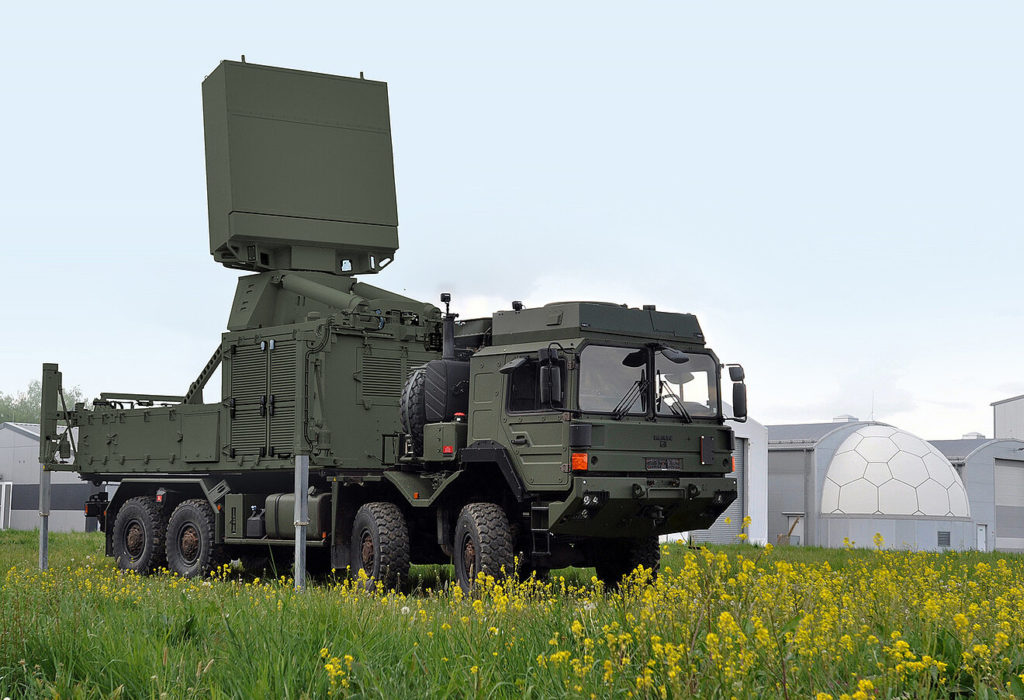
HENSOLDT's TRML-4D rada

German radar maker Hensoldt has signed a memorandum with Ukraine's Defense Ministry for more large-scale radar deliveries, the company said on 5 October. Ukrainian defense outlet Defense Express reads it as a step toward fitting Hensoldt's TRML-4D, already in Ukrainian service, into FREYJA, a planned shield against ballistic missiles.

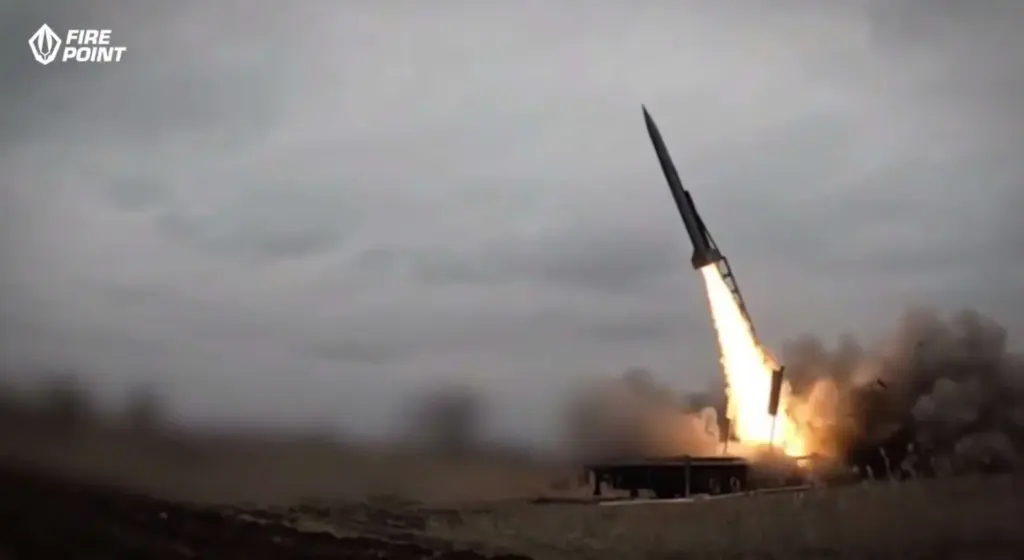
Ballistic missiles remain the hardest threat in Russia's air war. After Russia's overnight barrage on 7 October, Ukrainian President Volodymyr Zelenskyy said Ukraine is still searching daily for Patriot missiles. The only other system Ukraine can use against them is the Franco-Italian SAMP/T, which fires Aster 30 interceptors made in small numbers. That gap is why Fire Point is reworking its FP-7 missile into a Patriot-like interceptor. Such an interceptor still needs radars to find its target first.

A memorandum signed during Merz's visit

Hensoldt CEO Oliver Dörre signed the document on the sidelines of German Chancellor Friedrich Merz's visit to Ukraine. Beyond deliveries, it covers further development of radar capabilities. The partners will also study options to deploy and jointly operate TRL-4D LR long-range radars. Hensoldt said this expands cooperation already agreed on in ballistic missile defense.
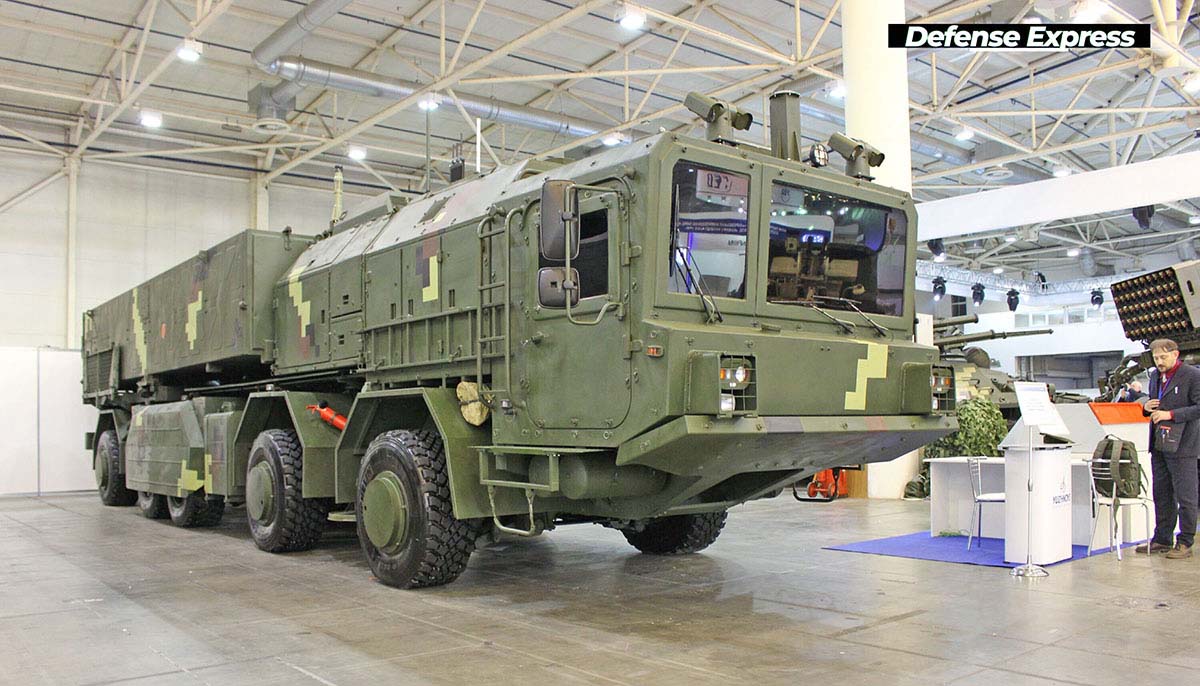
Ukraine ballistic missile program
Explore further

Russia’s air defenses can’t protect all its strategic sites once Ukraine’s ballistic missiles are ready, expert says

The TRL-4D LR is the land-based version of a long-range radar Hensoldt also builds for the German Navy, German outlet Sicherheit & Verteidigung reported. The outlet cited Germany's defense procurement office as giving the naval version a range of more than 400 km (250 miles) against air targets. That, it concluded, puts the range well beyond the TRML-4D's.

"The Ukrainian air defence forces urgently need our high-performance radars to help protect infrastructure such as bridges," Dörre said.

Defense Express, describing the same memorandum, tied both the mass deliveries and the joint-operation plan to the TRML-4D. Hensoldt's release names no model for the deliveries and links joint operation to the TRL-4D LR.

Eyes for FREYJA

Hensoldt and Fire Point signed a memorandum on FREYJA at the Eurosatory arms show in Paris in June, with the TRML-4D to play a key role, Hensoldt announced. Fire Point is set to act as prime contractor and hold design authority. Hensoldt is to produce, test, and deliver the radars.

HENSOLDT's TRML-4D rada
Explore further

Germany’s Hensoldt to supply Ukraine with six more TRML-4D radars to boost air defense capabilities

Defense Express expects any study of deployment options to focus on how well the radar detects ballistic missiles and relays that data. Hensoldt has its own unit in Ukraine to work closely with operators, the outlet noted. Earlier, the company began setting up a local hub so Ukraine can service and repair the TRML-4D itself.

Already on duty

Ukraine's military uses the TRML-4D both standalone and as the built-in radar of the IRIS-T SLM medium-range air defense system, Defense Express noted. Hensoldt lists an instrumented range of 250 km (155 miles) at altitudes up to 30 km (19 miles). Defense Express, citing the manufacturer, gives track ranges of more than 120 km (75 miles) for fighter jets and more than 60 km (37 miles) for supersonic missiles.

More radars give earlier warning of ballistic strikes, but they cannot stop them. Until the FP-7.X makes its first ballistic intercept, planned for mid-2027, that job stays with Patriot and SAMP/T missiles. Partners delivered three times fewer air defense missiles in the first half of 2026 than a year earlier, Zelenskyy said on 5 August.

Russia’s jet drones fly near 600 km/h now. Ukraine is building simulators for the 900 km/h ones it expects next

7 octobre 2026 à 07:46

Russian "Knyaz Veshchiy Oleg" reconnaissance drone as seen from a Ukrainian "General Cherry AIR" interceptor drone, just before strike. Screenshot from video: General Cherry

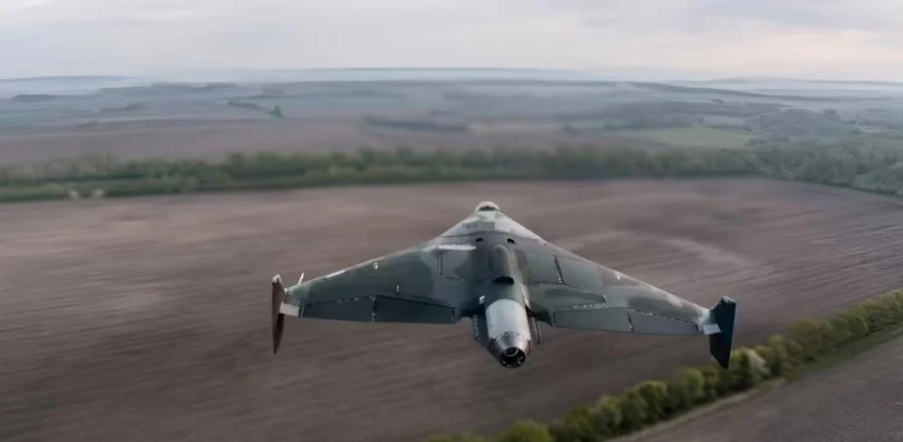
Russia's jet-powered attack drones could eventually reach 800–900 km/h, and intercepting them will demand new piloting skills—so Ukraine has asked the makers of its interceptor drones to build simulators to train the crews, a senior Air Force officer told a parliamentary commission on 6 October, Suspilne reported.

Russia keeps modifying its jet Shaheds faster than Ukraine can field the drones meant to catch them, and Kyiv is now preparing crews for speeds its interceptors have never faced—a sign the air war is shifting from a contest of volume to one of raw speed.

The speed Russia hasn't reached yet

Colonel Yurii Cherevashenko, deputy commander of Ukraine's Air Force, told the commission that Russia's jet drones fly at around 600 km/h today but could eventually reach 800–900 km/h—speeds he said have not been recorded so far. That range sits near the cruising speed of a commercial airliner.

A Ukrainian interceptor drone chases a Russian Geran-5 jet-powered drone. September 2026.
Explore further

Ukraine just caught a Geran-5 at 425 km/h—the jet drone that has often outrun Ukrainian interceptor drones since January
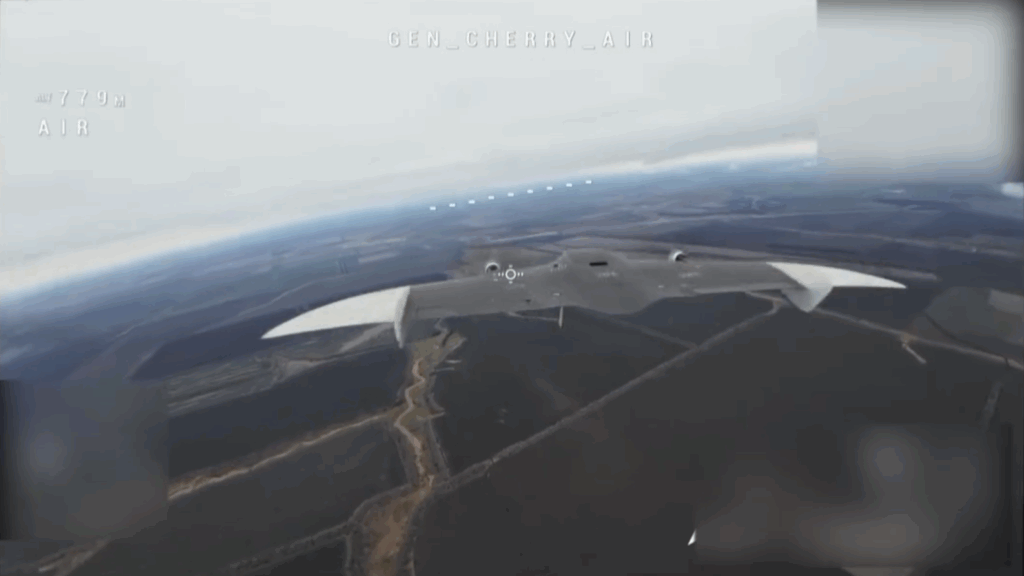
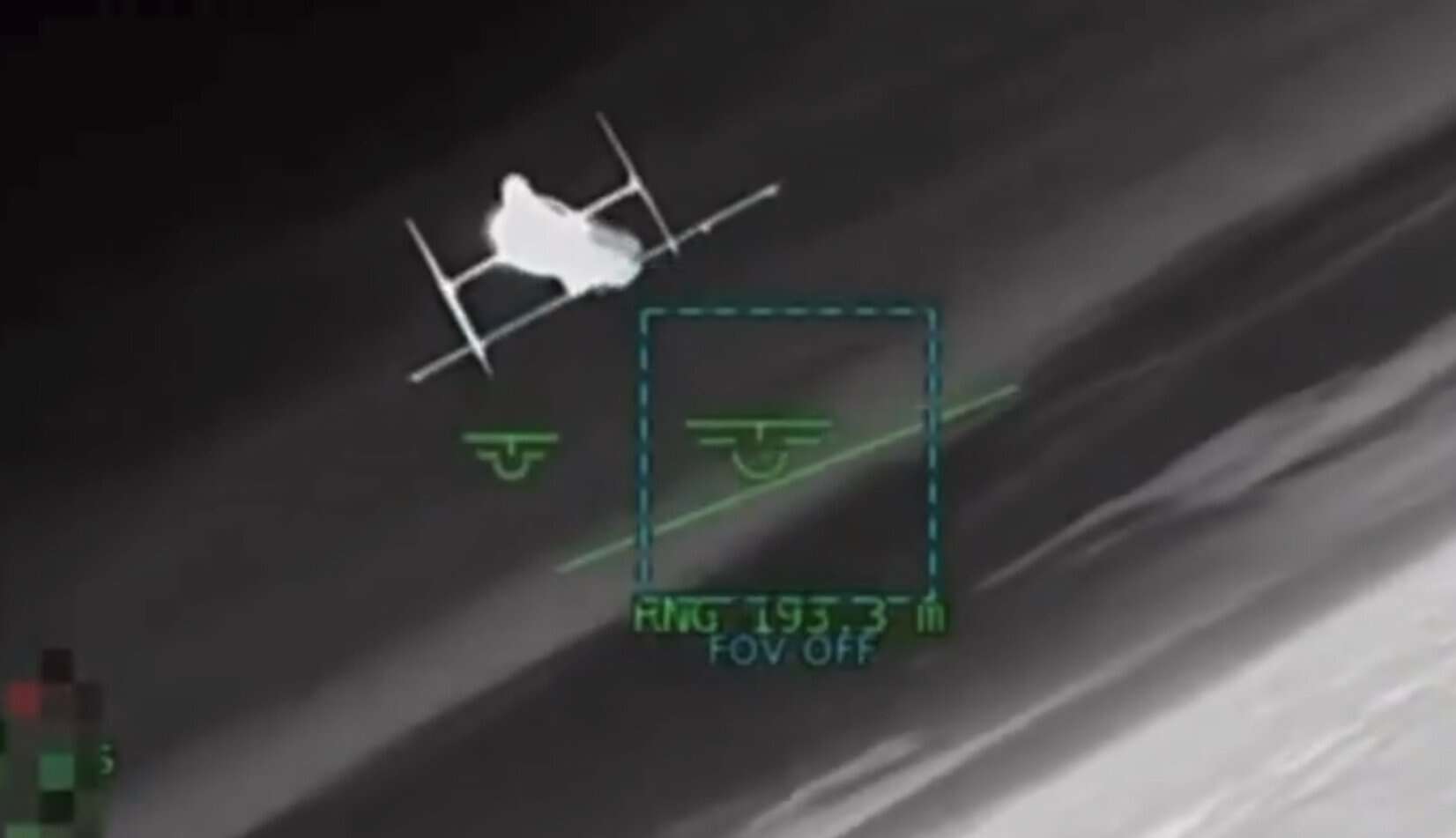
Intercepting such targets will take specific piloting skills, Cherevashenko said. When an interceptor and its target move at roughly the same speed, he noted, the pilot barely perceives the difference in their speeds. To train for that, Ukrainian interceptor-drone makers have been tasked with building simulators where crews can practice against high-speed targets.

Where Ukraine stands now

Ukraine already downs 85% to 90% of Russia's slower, propeller-driven drones, Ukrainian President Volodymyr Zelenskyy has said, but the jet models remain a tougher problem—Ukrainian interceptors scored their reportedly first kill of a jet-powered Shahed in November 2025. In a 28 September evening address, Zelenskyy put the jet-drone interception rate at about 57%, lower than required. Days later, he said Ukraine is testing five interceptor-drone models and could be producing about 400 of one of them by the end of October. Asked when jet-drone interceptors would arrive at the scale needed, Cherevashenko answered: "Not before the end of November."

  • ✇Euromaidan Press
  • Ukraine’s answer to Russia’s jet-powered Shaheds: a small new missile named Nika, heading into testing
    Ukraine has developed a new missile to knock down Russia's fast, jet-powered Shahed drones, the ones its air defenses catch far less often than older models, President Volodymyr Zelenskyy said on 4 October, Suspilne reported. The weapon, called Nika, has not yet been tested. He announced it during a visit to Kyiv by German Chancellor Friedrich Merz. Russia's plants turn out an estimated 3,000 jet-powered Geran-4 and Geran-5 drones a month, Ukraine's military intelligence estimates, and
     

Ukraine’s answer to Russia’s jet-powered Shaheds: a small new missile named Nika, heading into testing

5 octobre 2026 à 06:38

Illustrative photo of a Ukrainian-made missile launch.

Ukraine has developed a new missile to knock down Russia's fast, jet-powered Shahed drones, the ones its air defenses catch far less often than older models, President Volodymyr Zelenskyy said on 4 October, Suspilne reported. The weapon, called Nika, has not yet been tested. He announced it during a visit to Kyiv by German Chancellor Friedrich Merz.

Russia's plants turn out an estimated 3,000 jet-powered Geran-4 and Geran-5 drones a month, Ukraine's military intelligence estimates, and the jets fly fast enough to outrun the cheap interceptors built for slower, propeller-driven Shaheds. Ukraine plans about 400 units of just one of five interceptor models it is testing by the end of October, as it scrambles to close the gap before winter.

A new missile heads into testing

Both the Ukrainian and German sides have reacted positively to the missile, Zelenskyy said, though he stayed cautious on the result: for now, he said, it only "could be positive." In the same remarks, he announced a successful test of a separate system, the German-Ukrainian interceptor Spys.

Russia's new "Geran-4 Siker" Shahed variant uses machine-vision AI for targeting. Source: Warhronika
Explore further

Russia adds new weapon to its jet-powered drones, even more dangerous: 40-kilogram charge made to sever high-voltage pylons and iron bridges

Ukraine shoots down 85-92% of propeller-driven Shaheds, Zelenskyy said. Against the jet-powered variants, interception falls to roughly 50-60%, he noted at the press conference with Merz. F-16 fighter jets help close the gap, he said.

From interceptor drones to a new missile

Over the past month, Ukraine tested a new generation of drone interceptors built for the jet-Shahed threat. On 15 September, one struck a Shahed in trials, though Zelenskyy said developers still needed to refine its control system. On 19 September, he said the Security Service of Ukraine (SBU) had created its own interceptor drone and used it to down a jet Shahed in combat. Nika adds a purpose-built missile to that mix.

Ukraine turned ground robots into a frontline workhorse. Its first competitive tender may reward cheap copies over proven machines, an officer warns

2 octobre 2026 à 08:48

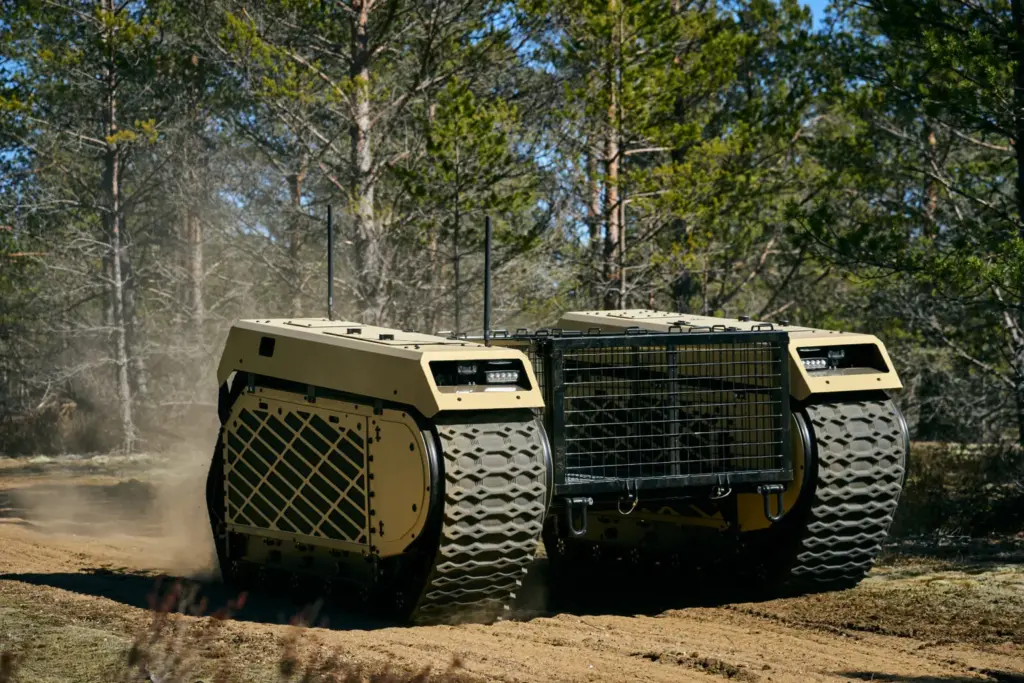
ukraine turned ground robots frontline workhorse its first competitive tender reward cheap copies over proven machines officer warns · post fifth-generation themis unmanned vehicle developed milrem robotics themis_5th_generation_ugv-1536x1024jpg news ukrainian

Ukraine has turned ground robots into a frontline workhorse, and the state is now trying to buy them at scale through its first competitive, ministry-spec tender. Viktor Pavlov, an officer of the 3rd Separate Assault Brigade's UGV battalion, laid out the risks of that model to Army Inform, the Defense Ministry's outlet, in an interview. Once a robot clears the military's technical requirements, price becomes the main criterion, Pavlov says. The order is split into lots, and no maker can take more than half a class. He warns the model may not tell a cheap, makeshift machine from one that actually survives at the front.

Robots now handle the war's deadliest chores—driving supplies through kill zones and reaching the wounded where people can't—and Ukraine has already contracted more than 22,000 for 2026. How the military buys them now shapes whether the push yields machines troops trust or a stockpile of cheap ones they don't.

From disposable drones to the next mass weapon

Aerial drones became disposable, mass-produced weapons years ago. Ground robots—the tracked and wheeled machines that haul supplies, pull out the wounded, and attack Russian positions—are only now reaching serial state supply. In August, the Defense Procurement Agency (DOT), the body that buys Ukraine's arms, opened its first competitive tenders for logistics and strike robots built to specs set by the Defense Ministry. Pavlov, founder of Ukraine's UGV School, calls it an experimental format that can work where market prices are inflated. Splitting the order into lots also gives smaller engineering teams a real chance, he said, because many large producers are already busy with state contracts.

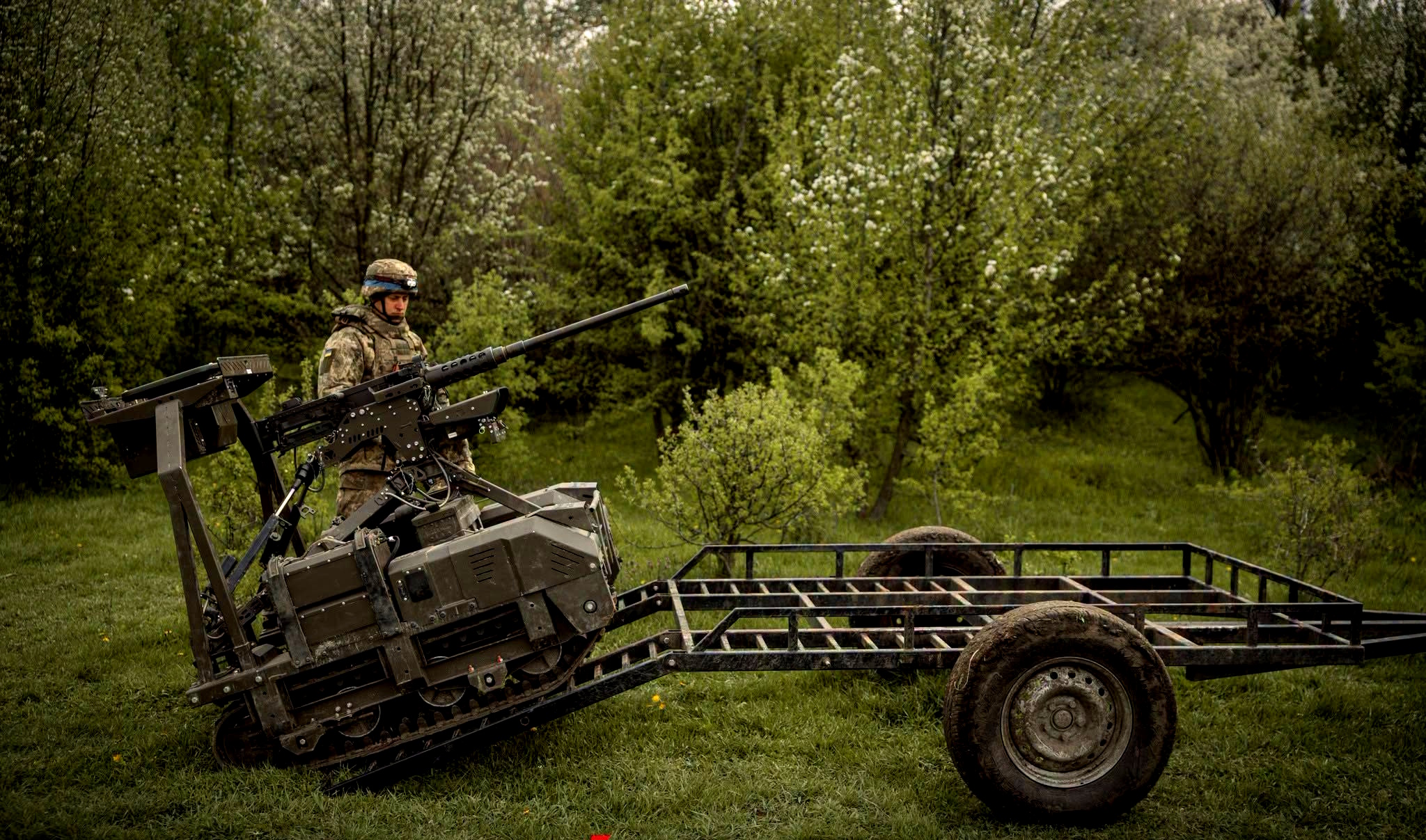
The image shows a Ukrainian soldier standing next to an unmanned ground robotic vehicle. Source: The General Staff
Explore further

New Vivaldi tactic: Ukraine’s ground robots, each carrying two Bullspike grenade launchers, attack Russian positions and then detonate inside their shelters

Why the lowest bid may beat the best robot

A tender rewards the cheapest product that formally meets the requirements, not the best one, Pavlov said. A thermal camera, for example, can be listed as desirable rather than mandatory, so a maker chasing the lowest price will most likely leave it off. On any given feature the machines diverge—suspension, cameras, comms channels, a winch—one has it, another doesn't, yet both can land in the same class.

The machines themselves are very different. One carries 250 kilograms, another up to 349, but both fall into the "200-plus" category. Unlike FPV drones, which share standard sizes and parts, ground robots have no common frame—Ukraine fields many local variants. Pavlov compared the choice to picking an iPhone over a cheaper Android: on paper the features match, but soldiers know which machine they can run and repair.

Ground drone UGV medical evacuations
Explore further

Four ground robots for one evacuation: Russia is targeting Ukraine’s robotic medevac missions

He also fears the model punishes innovation. A company can spend 18 months and a 20-person team building a robot, then watch a rival copy it, skip the research costs, and undercut it. A design troops already know how to run and repair—like the Ratel—is a known quantity. An untested bargain can break down mid-mission with no spare parts.

A mixed system, not tenders alone

Price competition should be one tool, not the only one, Pavlov argued. New robots should first reach units through pilot buys, letting soldiers test them and say what works. Proven systems can then be contracted in bulk, with tenders saved for classes where the offers are truly comparable. Ukraine's robots are too varied, he said, and what units need can't always be squeezed onto a spec sheet.

  • ✇Euromaidan Press
  • Most drone interceptors ram or explode. This Ukrainian one just throws a net—six shots to a module
    A Ukrainian defense company has shown a new way to knock FPV drones out of the sky, unveiling a net-firing interceptor at the IT Arena tech conference in Lviv, dev.ua reported. The system, called Mangal and developed by Phantom Defense, is still a prototype—the company says the first production units could reach the market in a few months. Ukraine's counter-drone work has turned into a crowded contest, with firms racing to field jammers, interceptor drones, and net-throwers that can blu
     

Most drone interceptors ram or explode. This Ukrainian one just throws a net—six shots to a module

30 septembre 2026 à 06:31

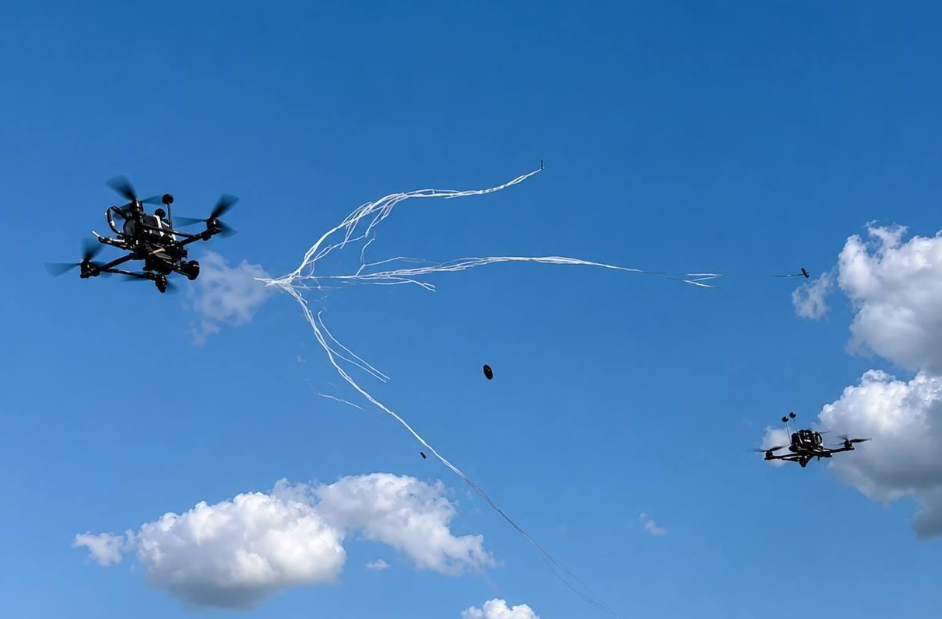
Modular FPV drone interceptor “Mangal” by Phantom Defence. September 2026.

A Ukrainian defense company has shown a new way to knock FPV drones out of the sky, unveiling a net-firing interceptor at the IT Arena tech conference in Lviv, dev.ua reported. The system, called Mangal and developed by Phantom Defense, is still a prototype—the company says the first production units could reach the market in a few months.

Ukraine's counter-drone work has turned into a crowded contest, with firms racing to field jammers, interceptor drones, and net-throwers that can blunt Russia's growing use of cheap FPVs.

What Mangal does

Phantom Defense designed the modular launcher to defend positions, vehicles, and other targets against enemy drones. It fires a special net weighted with sinkers. The net opens the moment it fires, tangling the drone and dragging it down. One module holds six charges. Two cameras give the crew a clearer view, and the system can detect targets on its own, which speeds up how fast an operator spots a threat. Crews can fix Mangal in place to guard checkpoints, trenches, or infrastructure, or bolt it onto a vehicle.

Why a net

FPV drones—aircraft a pilot flies straight into a target—have become a routine danger along the front. A small, fast drone is hard to hit with a single round. A net spreads as it travels, so it is more forgiving to aim. Neither Phantom Defense nor the outlets covering the launch have said how far Mangal's net can reach.

he Ukrainian company WINFLY unveiled the WINFLY Spider, an interceptor equipped with a net-launcher. Source: Militarnyi
Explore further

Ukraine’s newest interceptor doesn’t ram its target. It nets it for $27, then flies home to catch another

Other net-based counters

Other developers are turning to nets too. The WINFLY Spider is an interceptor drone that snares a target in a net and returns to its launch point intact, at about $27 a shot. That lets one aircraft make repeated intercepts instead of being spent on a single kill. Scan Horizon comes from Postup Solutions, a firm registered in Wrocław, Poland, and pairs a net launcher from Ukrainian company Ptashka Drones. Its net reaches about 30 meters. Contra Drone, meanwhile, has shown interceptor missiles that can reportedly carry net warheads alongside other options.

  • ✇Euromaidan Press
  • A Ukrainian firm now rents out drone jammers by the day—but the deposit is the device’s full price
    Ukrainian defense-tech firm BlueBird Tech has begun renting out its Hrets electronic-warfare jammers by the day, in what it calls Ukraine's first such service, the company said on 29 September 2026. Electronic-warfare gear—the devices that scramble the radio links attack drones rely on—is normally bought outright, renting lets a user take a system for a single mission or test it before committing. The pull is a war where cheap first-person-view (FPV) drones have made portable jamming a
     

A Ukrainian firm now rents out drone jammers by the day—but the deposit is the device’s full price

29 septembre 2026 à 13:50

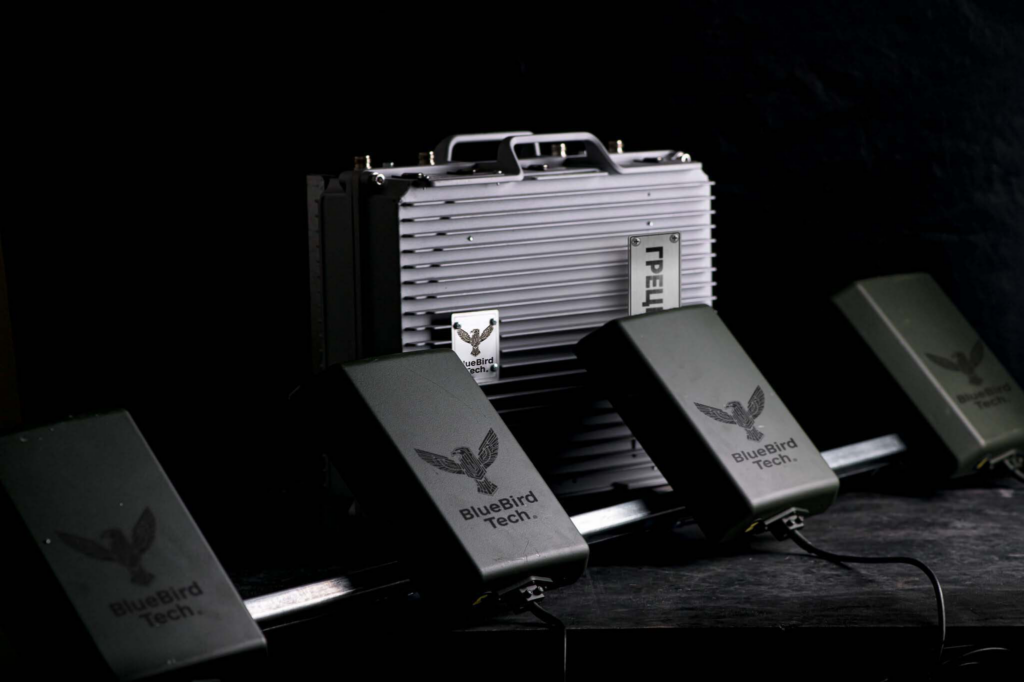
Hrets electronic-warfare jammers.

Ukrainian defense-tech firm BlueBird Tech has begun renting out its Hrets electronic-warfare jammers by the day, in what it calls Ukraine's first such service, the company said on 29 September 2026. Electronic-warfare gear—the devices that scramble the radio links attack drones rely on—is normally bought outright, renting lets a user take a system for a single mission or test it before committing.

The pull is a war where cheap first-person-view (FPV) drones have made portable jamming a routine need, one many users face only for a stint.

How renting works

After paperwork and a deposit equal to the device's full price, the system is handed over, and that handover counts as day one. Each day's rent is then drawn from the deposit, return the system working and undamaged and the renter gets back what is left. Keep it long enough that the fees add up to the full price, and the jammer passes to the renter automatically. Renting is open to individuals, companies, charities, and volunteer groups.

Three models, and what each one jams

The Hrets XL is a modular FPV jammer built from two to 10 working modules, priced case by case. The vehicle-mounted Hrets 4MC is an anti-drop system that jams DJI Mavic-type quadcopters—the drones Russian forces use to drop munitions—for about $56 a day. The lightweight Hrets 4M jams FPV drones at a stated 70 to 400 meters for about $67 a day. One Ukrainian firm has even packed detection, decoding, and jamming of an FPV signal into a single device.

Zelenskyy asks Japan for air-defense technology and offers Ukraine’s drones in return, while courting Chile to expand Ukraine’s reach in Latin America

24 septembre 2026 à 06:43

Volodymyr Zelenskyy and Sanae Takaichi at a meeting in New York.

Ukrainian President Volodymyr Zelenskyy has used the UN General Assembly in New York to court partners outside Ukraine's NATO core, pitching air-defense cooperation with Japan and drone cooperation with Chile, Ukrainska Pravda reported. In a single day of bilateral talks, he met Japan's Prime Minister Sanae Takaichi, Chile's President José Antonio Kast, and UK Prime Minister Andy Burnham.

The meetings turned on shielding civilian infrastructure before winter and trading Ukraine's battlefield-tested technology for capabilities it still needs. More than four years into Russia's war, a nation that entered the war reliant on donated arms now iterates drones faster than many of its Western backers, and that expertise has become leverage in its own diplomacy.

Zelenskyy pitches Ukraine's know-how for Japan's air-defense tech

In their first summit meeting, Zelenskyy cast the relationship as a two-way exchange.

"Ukraine is ready to share its experience and technologies on a mutually beneficial basis," he said.

While Japan has advanced technologies for protecting lives, particularly in air defense, that could carry Ukraine through the winter if Russia again rejects talks, the President's Office reported.

Ukraine walks into winter with two air-defense problems. It is still testing home-built interceptors to catch Russia's jet-powered drones. And it does not have enough Patriot interceptors to stop ballistic missiles over its cities. Japan holds the key to the second one.

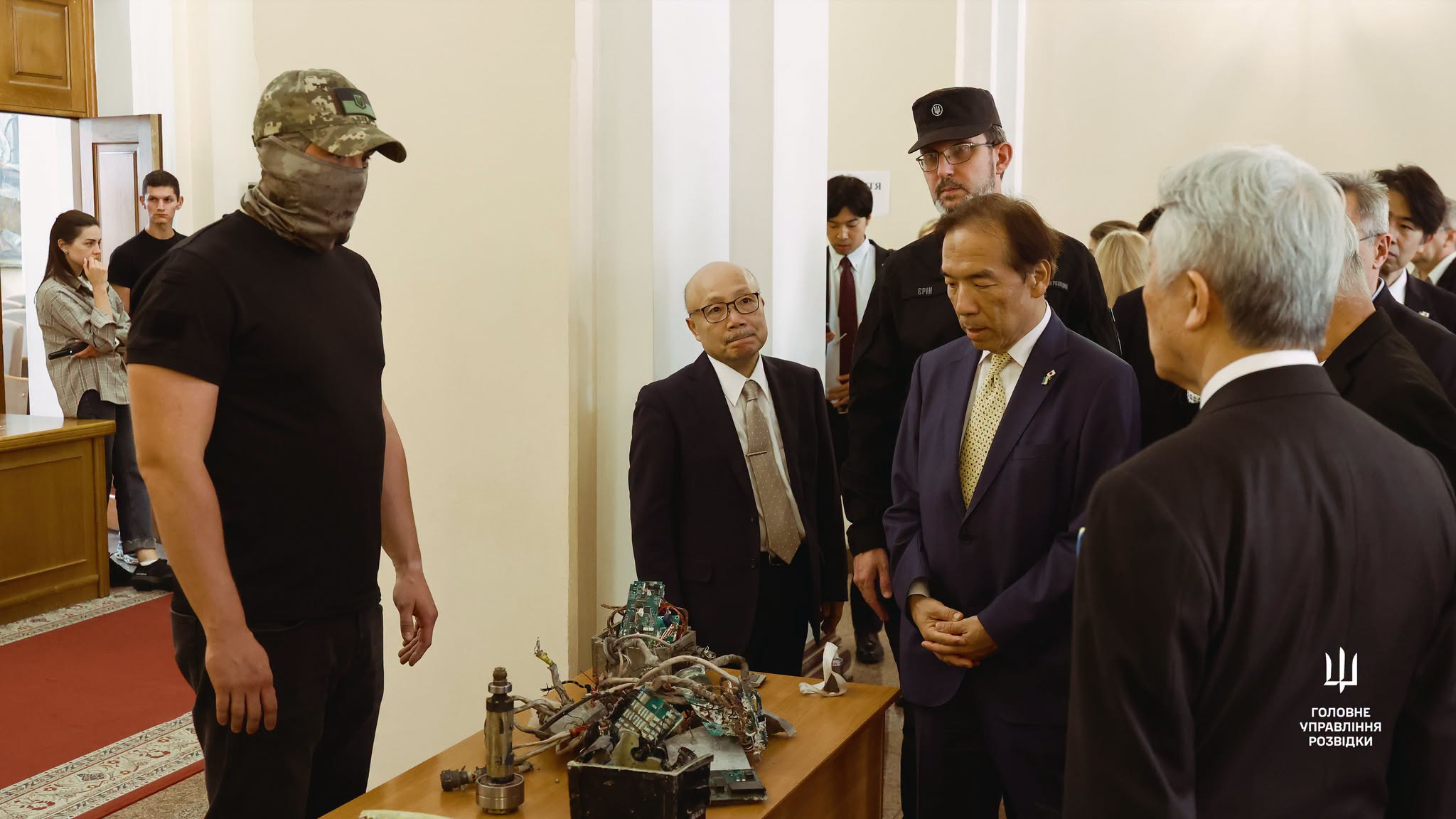
Ukraine's Defense Intelligence has given Eisuke Mori, speaker of Japan's House of Representatives, a close look at a North Korean weapon: the components of a ballistic missile Russia fired at Ukraine. Source: Ukraine's Defense Intelligence
Explore further

North Korea has fired around 150 ballistic missiles at Ukraine, learning from each one. Same missiles threaten Japan, and Kyiv just shows its speaker what is inside them

Mitsubishi Heavy Industries runs the only plant outside the US licensed to assemble the PAC-3, the advanced Patriot interceptor. Japan is also the sole maker of the guidance gyroscopes inside older PAC-2 missiles. It has already shipped Japanese-made PAC-3s to the US to refill stocks drained by transfers to Ukraine, and Zelenskyy has floated Mitsubishi as the model for Ukraine's own Patriot line.

The exchange runs both ways. Russia keeps pressing Japan over the Kuril Islands the Soviet Union seized in 1945. Against that backdrop, Ukraine's combat-tested drones could appeal to Tokyo. Kyiv offers the drone know-how it now leads in, and asks for the air-defense edge Japan already has.

Zelenskyy also thanked Tokyo for its sanctions on Russia, energy packages, and humanitarian projects, and Takaichi assured him of continued support. Zelenskyy invited her to Ukraine, including the Kyiv-Pechersk Lavra, which Japan helped restore after a Russian drone strike in June.

Vladimir Putin visits Etorofu island,
Explore further

Japan weighs sanctions after Putin’s first visit to disputed Kuril Islands

Chile opens a door to Latin America

With Kast, Zelenskyy discussed deepening security and drone-technology ties and thanked Chile for backing Ukraine at international forums and for helping return Ukrainian children abducted by Russia. He welcomed Santiago's willingness to help expand Ukraine's presence across Latin America, calling it an opening for "even more promising opportunities," and invited Kast to visit.

Building on ties already in place

Both partnerships rest on existing ground. Japan, barred by its own laws from sending lethal weapons, has delivered generators, transformers, and non-lethal gear, pledged a $6 billion package for 2026, and agreed to help rebuild the Lavra through UNESCO. Talks in Tokyo in July recast Ukraine as a security partner rather than an aid recipient.

Chile joined the coalition to bring abducted Ukrainian children home and, in an April call, heard Zelenskyy float a security arrangement modeled on Ukraine's Gulf-state pacts. The outreach tracks Kyiv's drive to turn its wartime industry into an export business under its "Drone Deals" framework.

  • ✇Euromaidan Press
  • A former US nuclear-sub commander, a Ukrainian fund, and a plan to shield Odesa with drone swarms
    TAF Industries signed a joint-venture memorandum with Danish firm Upteko for production but says bureaucracy is slowing the process. Meanwhile, Resist.UA agreed to invest in BlueShadow, a Danish maritime-defense startup whose founder commanded a US nuclear submarine and whose engineering team works largely in Ukraine, Defender Media reported. Ukraine's defense industry has outgrown much of its own 2022-era hardware in two years of rapid wartime iteration, but a government fee of 20-30%
     

A former US nuclear-sub commander, a Ukrainian fund, and a plan to shield Odesa with drone swarms

23 septembre 2026 à 10:05

CEO of BlueShadow Charlie Maher with Resist.UA founder Roman Sulzhyk.

TAF Industries signed a joint-venture memorandum with Danish firm Upteko for production but says bureaucracy is slowing the process. Meanwhile, Resist.UA agreed to invest in BlueShadow, a Danish maritime-defense startup whose founder commanded a US nuclear submarine and whose engineering team works largely in Ukraine, Defender Media reported.

Ukraine's defense industry has outgrown much of its own 2022-era hardware in two years of rapid wartime iteration, but a government fee of 20-30% on export permits and over 200 stalled co-production bids have left the country's foreign arms sales far behind battlefield demand. Deals like the two in Denmark route Ukrainian technology into allied markets without waiting for Kyiv's export apparatus to catch up.

Ukrainian first-person-view drones, made on Danish soil

Drone maker TAF Industries plans to produce its first batch in Denmark by the end of 2026, through a joint venture with local firm Upteko. The two signed a memorandum in August 2026, but paperwork on both sides has slowed things down.

"We need to pass a fairly large number of bureaucratic procedures to make it possible," chief business development officer Mykhailo Diachenko told NordicDefenceWatch.

He called the year-end target reachable, "though maybe it will look more like a miracle."

TAF wants footholds in other countries that support Ukraine. It has started the process in Norway and is negotiating with Sweden's Recas. Diachenko said the goal is local production plus sharing Ukrainian combat experience and technology with European partners. TAF builds FPV drones, with capacity near 1 million units a year.

A Ukrainian fund bets on Odesa's sea defense

Ukrainian fund Resist.UA signed a letter of intent to invest an undisclosed sum in Danish maritime-defense startup BlueShadow's €2 million ($2.29 million) pre-seed round, the company announced. BlueShadow's software collects data from maritime sensors, commercial feeds, and open sources, merges them into a single operational picture, and uses AI to detect threats, Defender Media reported.

The company has also built an open software platform it says can help intercept Shahed-type drones. BlueSentry, designed to protect ports, offshore wind farms, undersea cables, and maritime borders from hybrid attack, is one product that the company plans to launch in the Baltic and North seas in October. BlueDragon, now in prototype testing with Defense Ministry certification targeted for late 2026 and deployment planned for spring 2027, is designed to defend Odesa with autonomous swarms of armed sea drones meant to shoot down Russian attack drones.

Founder Charles Maher is a former US Navy submarine commander who ran a nuclear-powered boat, Defender Media reported. Almost his entire engineering team works in Ukraine, drawing on more than 15 Ukrainian suppliers. Resist.UA this summer launched Resist 2.0, an Estonia-based fund aiming to raise €50 million for Ukrainian defense-tech companies.

  • ✇Euromaidan Press
  • Kyiv’s arms industry wants to kill the export fee. Parliament just refused to route that money to the army
    Ukraine's arms industry wants the government to scrap a steep fee on weapons exports, warning it undercuts their prices just as Europe's defense market opens, RBC-Ukraine reported. The same fee has opened a second fight in Kyiv, where parliament this week declined to turn its revenue into money for the army. Russia's war on Ukraine has pushed Europe into rearming, and Ukraine's battle-tested arms makers are among the few that can deliver at scale right now—an opening that domestic red t
     

Kyiv’s arms industry wants to kill the export fee. Parliament just refused to route that money to the army

17 septembre 2026 à 10:09

Novator armored vehicles

Ukraine's arms industry wants the government to scrap a steep fee on weapons exports, warning it undercuts their prices just as Europe's defense market opens, RBC-Ukraine reported. The same fee has opened a second fight in Kyiv, where parliament this week declined to turn its revenue into money for the army.

Russia's war on Ukraine has pushed Europe into rearming, and Ukraine's battle-tested arms makers are among the few that can deliver at scale right now—an opening that domestic red tape could blunt, handing the advantage to competitors just as the market grows.

A €60 billion European window—and a fee in the way

The push comes as Europe opens a major market for Ukrainian weapons. The EU's €90 billion Ukraine Support Loan for 2026-2027 reserves €60 billion for defense purchases, and partners increasingly want weapons built on their own soil. International partners report more than 200 cooperation approaches to Ukrainian firms still without a decision, according to the industry's press release. Producers link the fee fix to Build with Ukraine, a co-production push they consider strategically significant.

interceptor drones General Cherry (Chereshnia)
Explore further

Ukraine’s Build with Ukraine has 200-plus foreign cooperation bids pending decision. Its arms industry, representing 400-plus firms, wants to help fix mechanism

Parliament won't route the money to the army

On 15 September, the Verkhovna Rada—Ukraine's parliament—rejected a bill in first reading that would have sent fee revenue collected from 1 August 2026 into a special budget fund for the Defense Ministry, half for buying, modernizing, and repairing weapons, half for soldiers' pay. The vote left the fee itself untouched, since it rests on the Cabinet resolution, and settled only that its revenue will not be earmarked for the army.

The fee producers want gone

The Ukrainian Council of Arms Manufacturers, joined by other defense and employer groups, prepared proposals to rework the July government resolution, No. 875. They want the fee—20% on finished goods and technologies, 30% on parts—cut to zero, or capped at 5%. Firms must also pay upfront, before any foreign payment lands, with no refund guaranteed if a deal collapses. A UAH 15 million (about $337,000) threshold shuts out the small test shipments new clients often begin with.

Launch of an Aspide 2000 surface-to-air missile from a Spanish Skyguard-Aspide air defense system
Explore further

Ukraine put an Italian-Swiss Skyguard into combat duty. The missile inside is a Cold War design derived from the American Sparrow

The fee has drawn complaints since the resolution took effect in early July. Ihor Fedirko, the council's executive director, earlier said the 30-day review window was welcome but warned it could clog into a bureaucratic queue as staff leave the agencies running it. One of the associations behind the submission calls the 30% rate on parts prohibitive, since Europe is where Ukrainian firms would undercut Chinese suppliers on price.

Ukraine has swung from banning weapons sales abroad to courting foreign buyers, and its defense sector now ranks among the country's fastest-growing industries. Wartime certification to NATO standards is turning that output into something European militaries can actually buy.

❌