❌

Vue normale

“No alien quantum modems”: 1 to 3 concealed devices in Kyiv may be why Russian drones keep hitting so precisely, Ukraine’s top tech adviser says
3 octobre 2026 à 12:14

ukraine spent three years learning catch russian drones—so russia made fly faster · post geran-3 jet-powered attack drone wild hornets c1c840787fca380485636007cf683d71 news ukrainian reports

A few hidden transmitters may be sitting somewhere in Kyiv, switching on just long enough to steer Russian drones onto their targets. Presidential adviser Serhii Beskrestnov, known as Flash, says one to three concealed enemy repeaters may be operating in the capital, giving Russia a brief online channel to guide jet-powered Gerans onto precise targets.

He calls the devices MESH repeaters, compact modems that relay a short control signal to a Geran at the moment of attack, a channel Ukraine has been testing electronic warfare against for months. As long as they operate, he warns, sealing the city with jammers will not work.

Flash makes the case

"I now insist that the enemy's MESH radio repeaters are being switched on in Kyiv, providing a temporary, short-term control channel for jet-powered Gerans to adjust strikes," Flash says.

He keeps the number low: "Maybe 1 to 3. Such repeaters are hard to find, but we have to search." As evidence, he points to the guided strike on the headquarters of Ukraine's Security Service. A Russian agent, he said then, likely switched on a MESH relay within five kilometers of the target for the length of the attack.

The wreckage shows no other hidden link, he adds: "No LTE, no Rassvet, no alien quantum modems."

Jamming alone won't shield Kyiv

The stakes, in his telling, run past the bridges.

"As long as online control of the drones exists, not only the bridges but the air-defense assets on them will be under threat," Flash explains, noting that a Gepard anti-aircraft gun on a bridge crossed by tens of thousands a day cannot be hidden.

Without a stable channel right up to the impact point, he argues, a drone cannot strike a bridge pier or cable precisely. He leaves room for doubt, ending, "Let me be wrong about the repeaters." Yet in the whole war, he adds, he has "never once been wrong" in his technical reads of the enemy.

  • ✇Euromaidan Press
  • Ukraine solves riddle of metal “whiskers” on new Russia’s drones. They aren’t clever sensor
    Ukraine has cracked the riddle of strange metal "whiskers" that appeared on Russian jet-powered drones striking Kyiv, and they don't appear to be some clever new sensor. They are a simple mechanical detonator, a metal tube, and a rod that, on impact, closes a circuit to set off the warhead, Serhii "Flash" Beskrestnov, presidential adviser, says, ending online guessing about the strange devices. Photos of Russian drones with long metal prongs jutting from the nose had set off speculation
     

Ukraine solves riddle of metal “whiskers” on new Russia’s drones. They aren’t clever sensor

1 octobre 2026 à 10:43

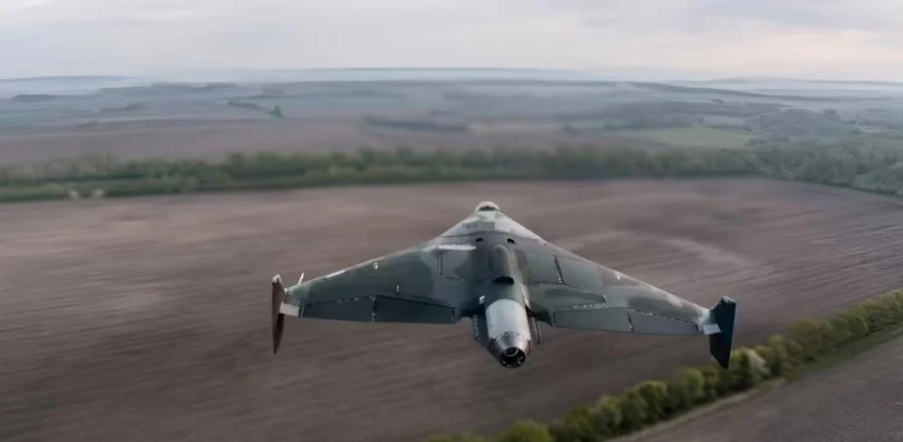
A Russian jet-powered drone. Source: Flash

Ukraine has cracked the riddle of strange metal "whiskers" that appeared on Russian jet-powered drones striking Kyiv, and they don't appear to be some clever new sensor. They are a simple mechanical detonator, a metal tube, and a rod that, on impact, closes a circuit to set off the warhead, Serhii "Flash" Beskrestnov, presidential adviser, says, ending online guessing about the strange devices.

Photos of Russian drones with long metal prongs jutting from the nose had set off speculation about what they were for. The answer, Flash explains, is low-tech: when the prong hits something, the contact closes, and the charge goes off, with no sensors or electronics.

That simplicity sits against a more worrying trend: Russia is steadily upgrading what its drones carry, from the mix of warheads on the jet-powered Geran-4 and Geran-5 to a new charge designed to sever power pylons.

A contact closes the circuit

"It's all mechanically simple, no sensors or complex detectors," Flash says, commenting on the "whiskers".

It is the kind of crude, cheap fuze that suits a weapon meant to be built and spent in the thousands, where cost matters more than finesse.

Russia upgrades the warheads

Russia's jet drones, now built at roughly 3,000 a month, have become the dominant threat in its nightly campaign. The day when Flash published his "whiskers" post, Russia hit Kyiv with another round of drone strikes, hitting a school, a café, and warehouse buildings across the capital. The children inside the school were in its shelter. Fires broke out across two districts, and one person in the city was wounded.

On 28 September, Russia struck Kyiv's Academy of Sciences, which has a century-old history.

On the same day, Dmitry Peskov, Kremlin spokesperson, said Ukraine must "pay a price" for its actions in recent months and calls Russia's intensified strikes "part of this price."

  • ✇Euromaidan Press
  • Ukraine is downing Russia’s fastest drones—just not often enough, and scaling up comes down to money
    Ukraine is stitching together a layered answer to Russia's faster, jet-powered Shahed drones, leaning on electronic jamming, fighter jets, and a new class of homegrown interceptors, RBC-Ukraine reported. Each tool has limits, and the new interceptors still bring down only the occasional jet drone. The bottleneck now is money and factory output, not ideas. Russia is pouring faster jet-powered drones into the air war as winter nears, a campaign Western analysts say is meant to wear Ukrain
     

Ukraine is downing Russia’s fastest drones—just not often enough, and scaling up comes down to money

1 octobre 2026 à 07:20

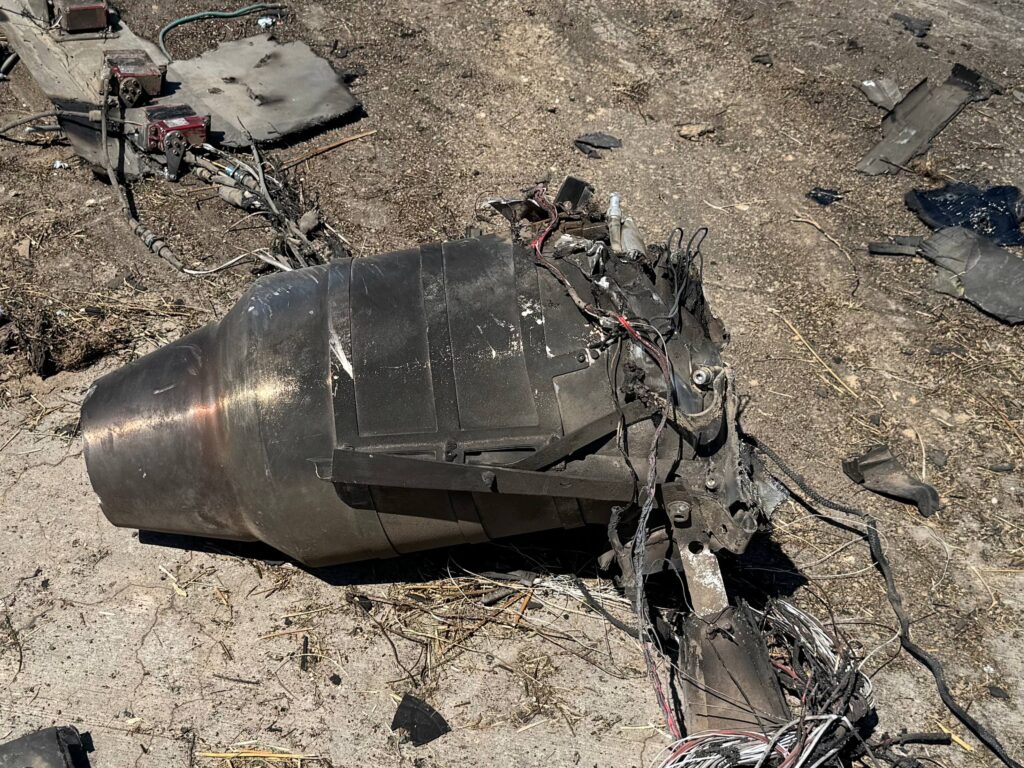
The image shows a fragment of a Russian drone Geran-4 in Kyiv Oblast. Source: Serhii "Flash" Beskrestnov

Ukraine is stitching together a layered answer to Russia's faster, jet-powered Shahed drones, leaning on electronic jamming, fighter jets, and a new class of homegrown interceptors, RBC-Ukraine reported. Each tool has limits, and the new interceptors still bring down only the occasional jet drone. The bottleneck now is money and factory output, not ideas.

Russia is pouring faster jet-powered drones into the air war as winter nears, a campaign Western analysts say is meant to wear Ukraine's defenses down—and holding those skies now turns on which side can keep out-producing the other's cheap weapons.

Fighter jets help, but they run on imported rounds

Electronic jamming can work against some of the drones, and Ukraine is also sending combat aircraft up after them. But aviation has a catch: the jets need air-to-air missiles and cannon rounds, and for the F-16 and Mirage those are imported and not always in stock. Flying over Kyiv adds danger to the civilians below and to the pilots, so Ukraine would rather catch the drones out on the approaches.

New interceptors are landing hits—just not enough

The newest piece is a wave of Ukrainian interceptor drones built to chase the jet versions, which fly three times faster than the propeller Shaheds. Ukrainian crews have been downing the jet Gerans in a recent run: on 19 September, presidential adviser Serhii Beskrestnov, known as Flash, confirmed one Geran-5 shot down, and in late September, operators of the National Guard's Separate Artillery Brigade brought down a Geran-4 with the Bullet interceptor made by General Cherry, the first Geran-4 that drone has downed, Ukraine's National Association of Defense Industries said. Ukrainian President Volodymyr Zelenskyy said several prototypes have proven themselves in combat.

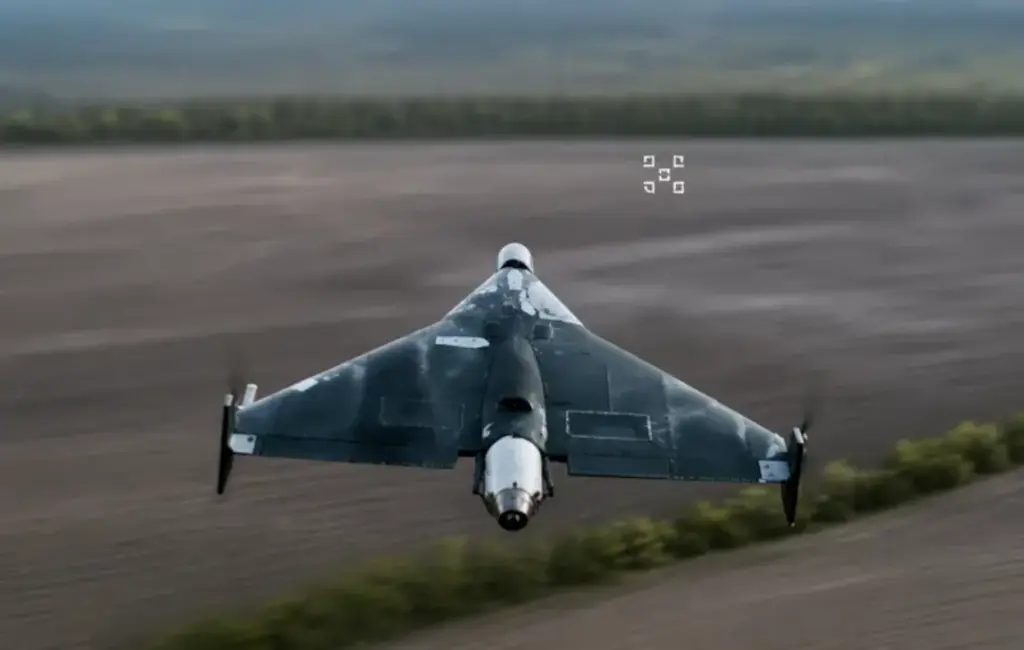
Geran-5 in the sights of a STING S interceptor drone.
Explore further

Russia is now wiring its attack drones into one network in flight, so a single drone can scout, strike, and relay for the rest

Across all methods, Ukraine now intercepts about 57% of the jet drones Russia launches, Zelenskyy said on 28 September—a rate that has climbed but still trails the 90%-plus it manages against slower Shaheds. Kills by the new interceptors specifically remain isolated. In August, Air Force spokesperson Yurii Ihnat said jet drones can make up as much as two-thirds of the drones in some raids—though not every time. One promising route is reworking Ukraine's own long-range strike drones into interceptors. Kyiv is in talks with partners over the money; on 28 September, Ukraine's Defense Minister Yevhenii Khmara asked the EU to help finance the interceptors so enough reach the front quickly.

Hitting the launch sites and jamming the controls

Ukrainian forces strike the Russian airfields the jet drones launch from, RBC-Ukraine's sources said, though the raids have not forced Russia to abandon the attacks. On 20 August, military intelligence hit drone storage and launch sites at Primorsko-Akhtarsk, one of the launch bases RBC names, and at occupied Donetsk airfield. Ukraine also keeps going after the Belarusian relay towers Russia strings into a mesh network to steer the drones in, RBC's sources said.

Russia adds new weapon to its jet-powered drones, even more dangerous: 40-kilogram charge made to sever high-voltage pylons and iron bridges

30 septembre 2026 à 11:21

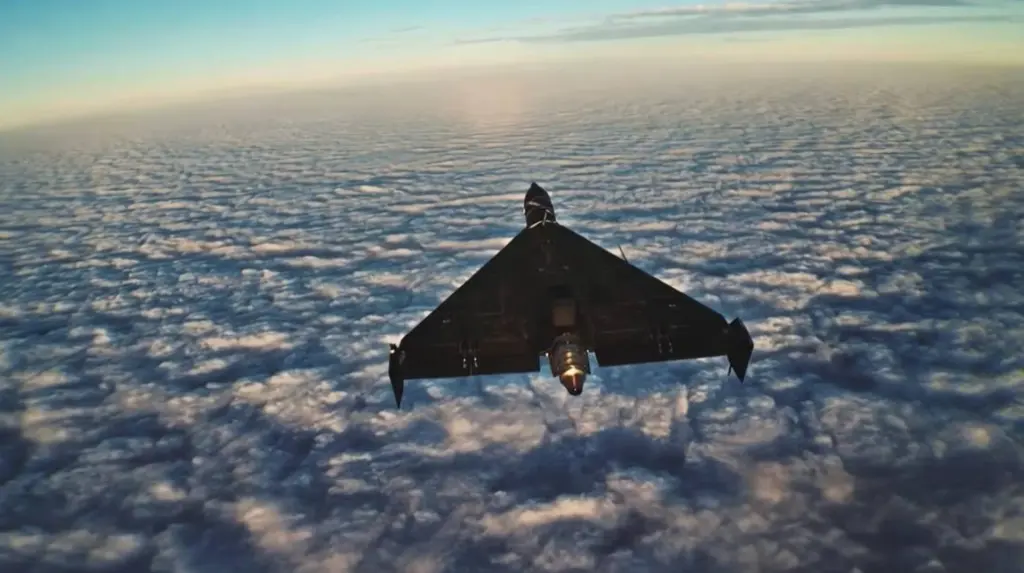
Russia's new "Geran-4 Siker" Shahed variant uses machine-vision AI for targeting. Source: Warhronika

Russia has a new warhead for its drones, and it is built to cut down power lines. For the first time, a jet drone has carried a shaped "cumulative-cutting" charge designed to sever high-voltage pylons and iron bridges, Serhii Beskrestnov, presidential adviser, known as Flash, said, as Russia opened its heaviest assault on Ukraine's power grid since last winter.

On 30 September, Russia launched its massed fall-winter campaign on Ukraine's energy infrastructure since the last heating season, hitting power sites across 11 regions overnight with missiles and drones, Prime Minister Serhii Koretskyi said.

The new warhead fits the aim: Flash says it is meant to bring down the high-voltage lines that carry the country's electricity. And Ukraine enters the winter exposed, with its energy resilience plans less than half complete.

A new charge targets the pylons

The device, which Flash calls a cumulative-cutting special load, is designed specifically to bring down high-voltage pylons and iron bridge structures.

"It consists of a main charge weighing 40 kilograms and four strike modules," he says.

In his reading, Russia intends to go after the major transmission lines that move power across the country, the backbone of the grid, rather than the substations it has struck before.

The campaign builds toward November

On 29 September, two senior Ukrainian officials told The Economist that Russia launched a three-part campaign of attacks on Kyiv, combining massive bombardments, sabotage, and the creation of political chaos. These efforts aimed at destabilizing the Ukrainian capital would peak by November, they said.

According to a representative of the Security Service of Ukraine, Russia has "thousands" of drones in its arsenal and is simultaneously expanding its stockpile of ballistic missiles. The plan is to "deploy the entire arsenal over the next two months," given that Ukraine lacks an effective weapon against jet-powered drones.

Combat shows speed alone can’t catch Russia’s jet-powered drones, despite eight Ukrainian makers’ assurances. So why can’t they stop them?

26 septembre 2026 à 11:48

money engineering what stands between ukraine russia's fastest drones zelenskyy says · post russia’s new “geran-4 seeker” shahed variant geran-4 news ukrainian reports

Last winter, eight Ukrainian companies told the defense minister that their interceptors were ready to knock Russia's jet-powered drones out of the sky. They were not. A fast-flying drone is the easy part of the design, while combat testing exposed what the interceptors lacked in key features to chase an evading jet-powered Geran, presidential adviser Serhii Beskrestnov, known as Flash, said in an interview with NV.

Ukraine's answer to Russia's fast, hard-to-stop jet drones was supposed to be cheap interceptors, and last winter, their makers said they had them. But a jet Geran flies 450 to 500 kilometers an hour, up from the Geran-3's 320, varies its speed to slip past defenses, and will dodge harder once interceptors appear.

Catching one takes maneuverability, machine-vision target-lock, and fuel to loiter and search, not just speed, Flash said. Ukraine's cheap interceptors have already downed about half of Russia's slower drones, but the jet-powered systems have stayed a step ahead.

Eight makers said "ready"

At a meeting last winter called by Mykhailo Fedorov, then-defense minister, all eight interceptor makers reported the same thing: "everything's ready, the solution exists, it flies, we tested it, speed is sufficient," Flash recalled.

The mistake, he said, was that no one checked on them week to week. There were also too few jet Gerans in the skies then to test against.

"On the range, they showed: it flies. That was the problem," explained Flash.

Speed is the easy part

The engines are not the obstacle, Flash continues, since they can be bought abroad, and neither is a plane that flies fast in a straight line. The hard part is a machine agile enough to chase a jet-powered Geran, which is far more maneuverable than the propeller kind and will start changing altitude and throwing evasive maneuvers once interceptors appear.

Because an operator's aim frays at such speeds, he said, the decisive pieces are automatic target capture by machine vision and automatic terminal guidance.

"Building a construction that just flies fast is the easiest part," he added.

Mass orders must wait

That is why Ukraine cannot simply order thousands to blanket the country, Flash said: it first needs a proven design that works for any crew, from Security Service specialists to territorial defense soldiers, and is simple to launch, operate, and maintain.

Once such a sample exists, he said, scaling up is only a question of money. Meanwhile, the work is moving: a Ukrainian interceptor recently notched its first kills against jet Gerans and is heading toward mass production.

❌