The new pipeline from Alberta’s oil sands to the Pacific Coast may lower separatist tensions in that province while also loosening energy ties with the U.S.
The new pipeline from Alberta’s oil sands to the Pacific Coast may lower separatist tensions in that province while also loosening energy ties with the U.S.
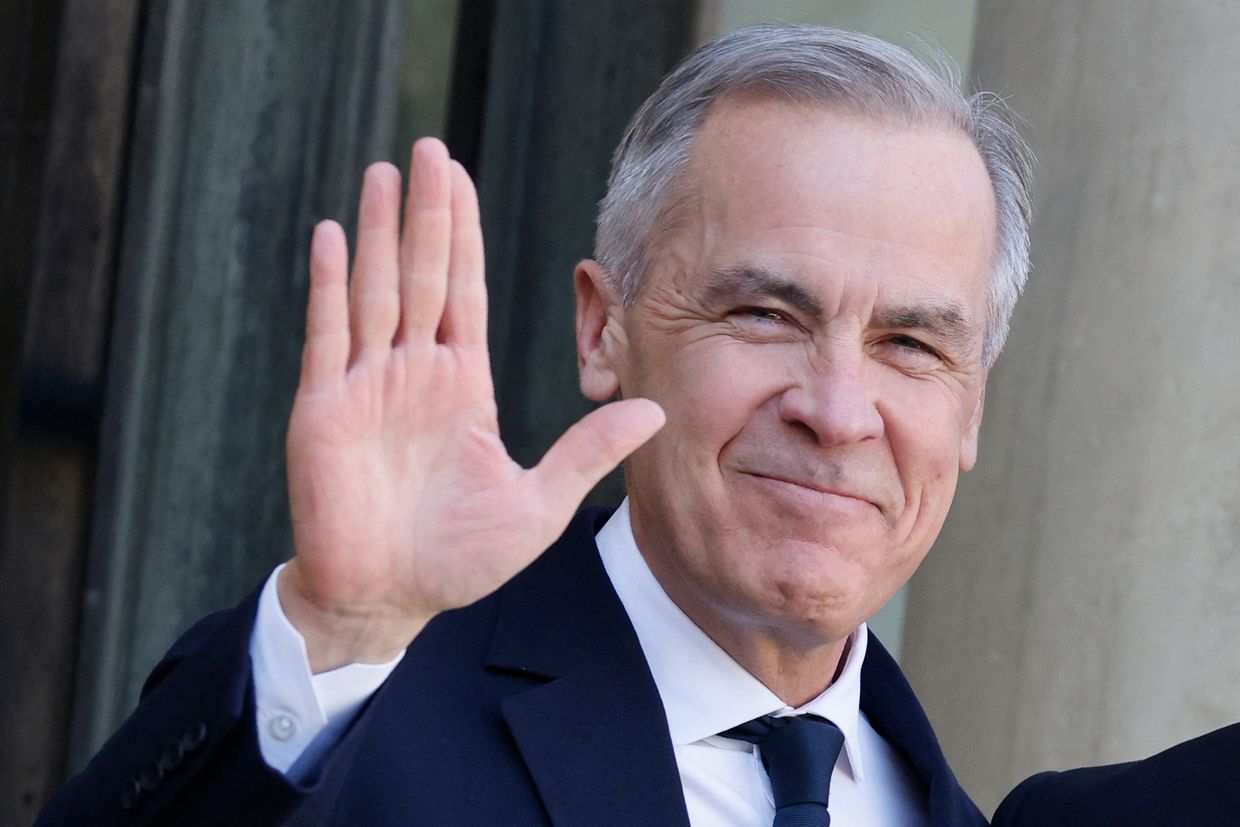
Prime Minister Mark Carney of Canada speaking about an oil pipeline planned to connect distribution points in Alberta to ports in British Columbia on Thursday in Fort McMurray, Alberta.
For decades, Europe operated on a series of assumptions: that borders were essentially settled; that economic interdependence would constrain major-power conflict; that international law would increasingly regulate state behavior; that military force was becoming less relevant; and that, ultimately, the United States would guarantee European security.
Russia's invasion of Ukraine has shattered those norms, as Moscow attempts to change borders by force and reshape the European security o
For decades, Europe operated on a series of assumptions: that borders were essentially settled; that economic interdependence would constrain major-power conflict; that international law would increasingly regulate state behavior; that military force was becoming less relevant; and that, ultimately, the United States would guarantee European security.
Russia's invasion of Ukraine has shattered those norms, as Moscow attempts to change borders by force and reshape the European security order. NATO now describes Russia as the most significant and direct threat to Allied security, while also identifying sabotage, cyberattacks, disinformation, economic coercion, and other hybrid actions as part of the threat.
The foreign policy of the Trump administration is further undermining past postulations. It threatens to annex Canada, speaks of occupying Greenland by force, and ignores Spain's sovereignty. It disrespects European military contributions, then demands European support for operations of its own choosing, legal justification optional. It negotiates European security over Europe's head while resetting relations with the power that threatens the continent, calls European countries "decaying" and their leaders "weak," and has launched a trade war against its former allies while pursuing business with its former strategic opponent.
Discussing solutions without first agreeing on the problem is meaningless. Yet that is what Europe has done since the war started in 2014.
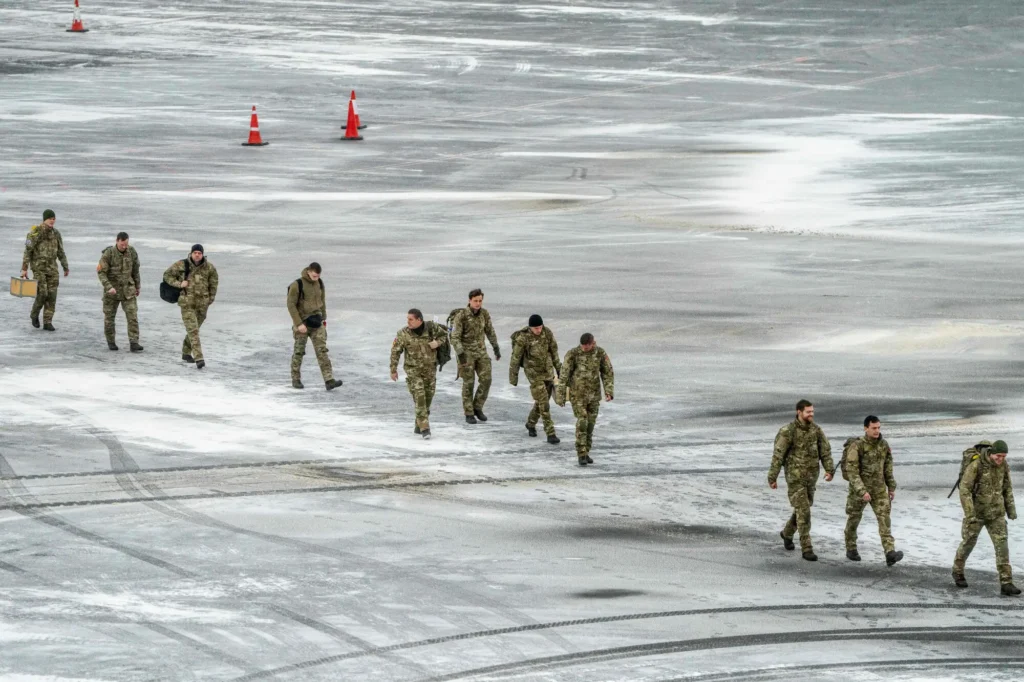
Danish soldiers walk across the frozen tarmac after arriving at Nuuk airport, Greenland, on 19 January 2026, following US President Trump's annexation threats. Photo by Mads Claus Rasmussen / Ritzau Scanpix / AFP) / Denmark OUT/Eastnews
Eight realities
Analyzing the security environment, before recommending solutions, I have identified eight fixed points that I regard as constants.
1. It was never a Russia/Ukraine war
Russia has offered the West four tales, all unpleasant, one designed to look like an "easy way out." The first calls on Ukraine to give up Crimea, Luhansk, Donetsk, Zaporizhzhia and Kherson, the lie Trump's plan is built on. But Putin's demands transcend Donbas, as his 2024 speech and Russia's operations show. The second, "Novorossiya," adds Kharkiv, Dnipropetrovsk, Mykolaiv and Odesa to the first lie.
The third, "one people, one nation," claims all of Ukraine. In the words of former US National Security Advisor Zbigniew Brzezinski: "Without Ukraine, Russia ceases to be an empire, but with Ukraine suborned and then subordinated, Russia automatically becomes an empire." The fourth, "the Russian World," is the only one formalized in Russian strategic documents, encompassing the "former territories of Kyivan Rus, the Kingdom of Muscovy, the Russian Empire, the Soviet Union, and the contemporary Russian Federation."
Ukraine's defeat is crucial to Russia's broader strategy. Integrated with Belarus, a subjugated Ukraine would give Russia the population, economy and technology to be seen as a near peer to the US and China, project power across the post-Soviet space, and ease its own demographic decline, while handing Moscow the country's defense industry, farmland and mineral, gas and oil deposits, and moving Russian military power nearly 900 km closer to London, Berlin and Paris.
It would create an aggressive, imperialist power on Europe's border, emboldened to force NATO's withdrawal to its 1997 borders and to deny the US the ability to deploy forces and nuclear weapons to Europe. The West, not Ukraine, has been defined as Russia's enemy.
2. A war is ongoing in Europe
Russia has been conducting an ever-escalating hybrid war against NATO's European member states since 2014. The EU Parliament acknowledged as much in September 2021. Its aggressions include sabotage against critical infrastructure, cyberattacks, disinformation, GPS jamming affecting civilian aviation, repeated airspace violations by strike drones, and attacks on Europe's defense-industrial base.
Russia's acts of violence against Western targets are becoming increasingly brazen. In August, Western intelligence sources reported a new wave of attacks on weapons factories in Europe under cover of "plausible deniability," The Telegraph reported. A CIA report shared with European governments warns Russia may attack Spain, France or Italy with Gerbera drones launched from ships, El Mundo reported, citing Lithuanian sources.
It is the same hybrid war Ukraine faced until 24 February 2022, one expected to turn open by 2029. Article 5 could, and probably should, have been triggered years ago. Having failed to respond, NATO has lost credibility, raising the risk of war.
Russian Ambassador Oleg Ozerov inspects a Gerbera drone recovered in Moldova after it entered the country’s airspace, at the Foreign Ministry in Chișinău, Nov. 26, 2025. (Elena Covalenco / AFP/Eastnews)
3. The tsunami of ripple effects is changing the political landscape in the West
In May 2022, I began using the term tsunami of ripple effects to describe the cost of not intervening in a war that threatens the security of the Alliance. It is the reverberations that raise the cost of living, undermine food and energy security, and spread famine, recession and inflation, raising the risk of unrest, extremism, and, ultimately, the fall of governments. Europe is living through the biggest refugee crisis since the Second World War.
The international security architecture is being dismantled, our institutions discredited, and NATO no longer deters Russia. Building on public frustration, the tsunami of ripple effects gave us Trump and the rise of right-wing parties across Europe.
4. NATO no longer deters Russia
If Russia were deterred, it would not have launched a full-scale invasion of Ukraine. NATO's strategic concept commits it to ending, by political and military means, conflicts that threaten Alliance security, including in Ukraine. Nor would Russia be conducting an ever-escalating hybrid war against NATO's European states, or preparing for a military conflict with the Alliance, as US and European intelligence services warn. Lack of deterrence raises the risk of Russian strategic miscalculation and war, especially since NATO was the only military power able to deny Russia its Great Power aspiration and its demand for a sphere of influence over the post-Soviet space.
NATO used to display readiness and capabilities. Today it has become a religion. Europe begs it is still almighty while Russia is a disbeliever.
Explore further
NATO no longer deters Russia. A new coalition could
5. The transatlantic rupture undermines NATO and European security
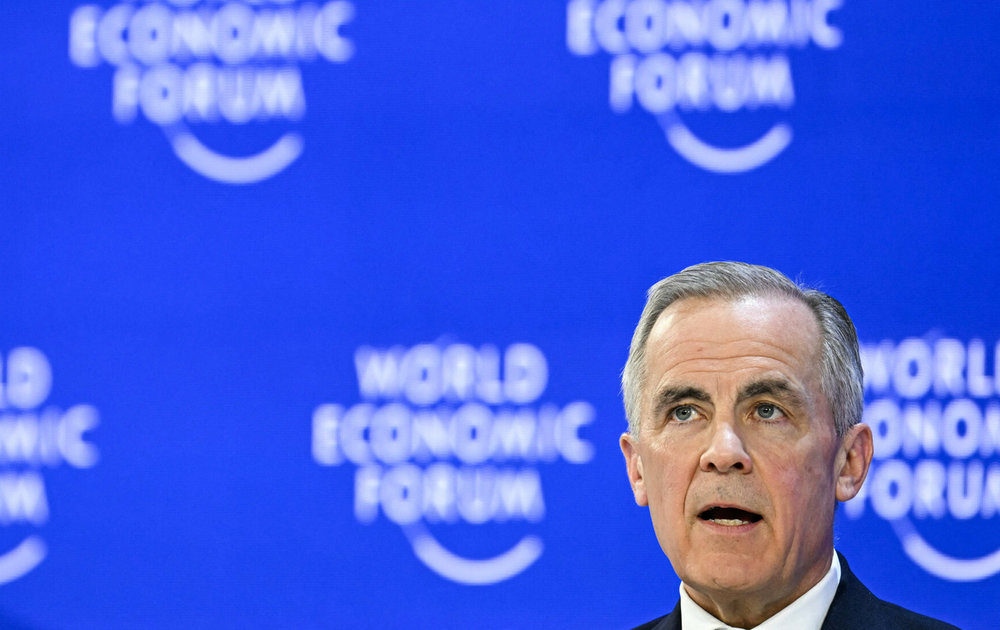
Canadian Prime Minister Mark Carney put it plainly at Davos on 20 January 2026: "We are in the midst of a rupture, not a transition." We "cannot live within the lie of mutual benefit through integration when integration becomes the source of your subordination," he said, calling for countries to organize in the face of great-power rivalry through different coalitions for different issues, based on common values and interests. As he told the World Economic Forum: "We actively take on the world as it is, not wait around for a world we wish to be."
Canada's Prime Minister Mark Carney delivers a speech during the World Economic Forum (WEF) annual meeting in Davos on January 20, 2026. The World Economic Forum takes place in Davos from January 19 to January 23, 2026. Source: Fabrice COFFRINI / AFP, via East News
6. The war is existential to both Ukraine and Russia
Ukraine is fighting for its right to exist. Russia is fighting for its Great Power status, strategic parity with the USA and China. If it is defeated in Ukraine, it will forever remain a pariah state, potentially imploding. For a negotiation to succeed, it must solve the cause of the war: Russia's Great Power ambitions, which cannot be negotiated away, only denied through military power.
7. Russia will never accept being defeated by Ukraine
Even with the tools to evict the Russian Armed Forces, Ukraine cannot expect Russia to accept defeat by a nation that, in its distorted narrative, "does not exist." Russia would only accept withdrawal from Ukraine if the alternative were to fight a far superior military power and thereby risk losing the means that secure the survival of the regime and the state.
8. Europe has very limited time to stop the war from escalating
Several European intelligence services warn of war by 2029;
French intelligence is preparing for large-scale Russian attacks by 2030, and autumn 2027 is now being discussed, France Télévisions reported;
US intelligence expects Russia may test NATO's resolve with a limited strike against a member state between this autumn and 2029, the Wall Street Journal reported in August;
Baltic intelligence chiefs told The Guardian on 20 September that an attack could come within "months, not years."
Worse still, Europe won't be ready until 2035, six to nine years too late, SACEUR warns.
Explore further
NATO’s generals warn of war by 2029. Europe won’t be ready until 2035.
Rules do not enforce themselves
International law, sovereignty, and territorial integrity remain fundamental principles. But without the capability and political will to defend them, principles become aspirations, not constraints on states prepared to use force. Acknowledging the world as it is means acknowledging that power still matters. It means accepting that deterrence requires more than statements of concern: ammunition, air and missile defense, long-range strike and counter-drone systems, secure communications, logistics, cyber resilience, and the industrial capacity to sustain a prolonged conflict.
Values mean nothing unless one is prepared to defend them.
This is where Carney's second formulation matters: countries must rely not only on "the strength of our values, but also the value of our strength." Values mean nothing unless one is prepared to defend them, as Canada is doing, raising defense spending and strengthening domestic industry. Europe needs to draw the same conclusion: strategic autonomy, not abandoning NATO, but ensuring Europe can defend itself and its interests even when an ally's priorities change.
The European Council already calls Russia's war an existential challenge and demands defense readiness be strengthened by 2030. But acknowledging reality means going further than setting targets.
It means recognizing that Ukraine is not merely the recipient of European security assistance. Ukraine is an integral part of Europe's security architecture. Its battlefield experience, defense industry, intelligence, and ability to absorb and defeat Russian attacks are crucial to European security.
Because individual member states refuse Ukraine as a member, NATO has made itself a liability, and some of the same countries are erecting hindrances to its EU membership too, letting national interest block common security.
The solution
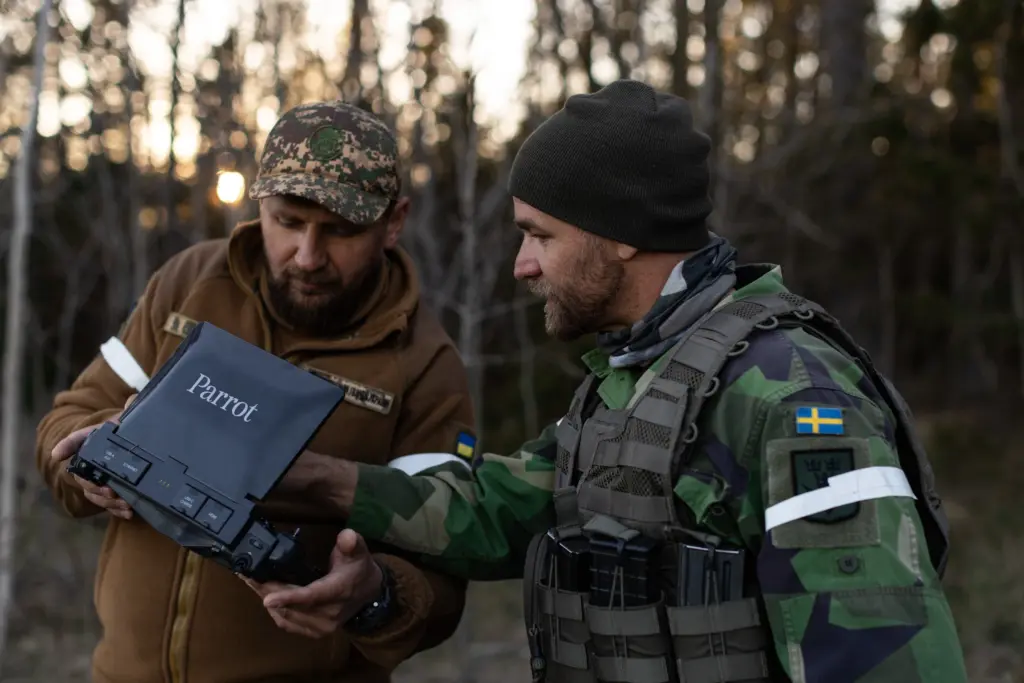
Swedish and Ukrainian drone operators check the feed from a reconnaissance drone on Gotland during Exercise Aurora 26. Ukraine sent operators to share lessons with NATO forces and to play a challenging opposing force. Photo: NATO/Flickr
The choice is not between idealism and realism. It is between pretending that the old assumptions still hold and building the capabilities required by the reality that has replaced them.
Acknowledging the world as it is means seeing the threats clearly; defending the world as it should be means acting on that knowledge, and the bridge between the two is strength.
Strength is not found in numbers, but in unity: agreeing on the enemy and a real will and capability to fight.
Accept those eight fixed points, and Europe's room for maneuver is gone, along with its present strategy. Europe cannot afford another 12 years of futile diplomacy while Russia exploits our naivety to prepare for war in the next two to three years, diplomacy that has undermined Europe's need to rearm and establish credible deterrence.
European governments have long acknowledged that their armed forces no longer provide credible defense, yet their security policy still assumes NATO guarantees collective security.
Acknowledge reality, and the illusion shatters.
Europe urgently needs a new strategy, one that looks beyond NATO and the EU's inherent weaknesses toward a military alliance credible enough to reshape the strategic environment. This is why I have long argued for a Coalition of Like-Minded European countries (CALM). It offers a path from recognition to action, from acknowledging NATO's failure to building something that works.
Strength is not found in numbers, but in unity: agreeing on the enemy, his aims and strategy, and committing to countermeasures that demonstrate real will and capability to fight.
Explore further
The alternative to NATO: A Coalition of Like-Minded European Countries
Unlike NATO or the EU, CALM does not have to wait for Europe's rearmament to reach 2035. It builds on existing NATO interoperability.
The force already exists: Ukraine's battle-hardened army, National Guard, Special Operations Forces, air defense, and Unmanned System Forces, combined with European fifth-generation aircraft and state-of-the-art navies, are credible, combat-proven, and in place.
Russia already struggles to fight Ukraine alone; it would face a different reality entirely if Ukraine formally joined a coalition of European military powers. That is why the declaration matters now, not after the capability is fully built: with the interoperability already proven, it changes Russia's strategic assessment immediately, not in 2035.
This is not only about physical capabilities. It is about changing Russia's perception of its strategic environment. It starts with a declaration; preparing for military intervention comes next. But it begins with the declaration.
Hans Petter Midttun, independent analyst on hybrid warfare, Non-Resident Fellow at the Centre for Defense Strategies, board member of the Ukrainian Institute for Security and Law of the Sea, former Defense Attaché of Norway to Ukraine, and officer (R) of the Norwegian Armed Forces.
Editor's note. The opinions expressed in our Opinion section belong to their authors. Euromaidan Press' editorial team may or may not share them.
New York Times journalists pressed the Canadian prime minister about a range of topics in an hourlong interview last week. Here’s a transcript of their conversation.
New York Times journalists pressed the Canadian prime minister about a range of topics in an hourlong interview last week. Here’s a transcript of their conversation.
Ten New York Times journalists and editors interviewed the Canadian prime minister for an hour at The Times office in New York on Wednesday. Here’s what we learned.
Ten New York Times journalists and editors interviewed the Canadian prime minister for an hour at The Times office in New York on Wednesday. Here’s what we learned.
Canada’s prime minister is pursuing deeper trade, defense and cultural ties with China, India and the European Union, but none are likely to replace ties to the United States.
Canada’s prime minister is pursuing deeper trade, defense and cultural ties with China, India and the European Union, but none are likely to replace ties to the United States.
As part of an effort to lessen dependence on the United States, Prime Minister Mark Carney of Canada has signaled a pivot toward trading partners in Europe and Asia.
Le premier ministre fédéral a annoncé hier la nomination de Dominic Barton comme président du conseil d’administration de l’organisme Investir au Canada.
Barton a notamment:
dirigé la firme de consultants américaine McKinsey;
été ambassadeur du Canada en Chine.
La nomination est intervenue deux semaines avant le premier Sommet canadien de l’investissement.
Cet événement d’envergure doit réunir «les plus grands investisseurs du monde» à Toronto, les 14 et 15 septembre proc
Le premier ministre fédéral a annoncé hier la nomination de Dominic Barton comme président du conseil d’administration de l’organisme Investir au Canada.
Barton a notamment:
dirigé la firme de consultants américaine McKinsey;
été ambassadeur du Canada en Chine.
La nomination est intervenue deux semaines avant le premier Sommet canadien de l’investissement.
Cet événement d’envergure doit réunir «les plus grands investisseurs du monde» à Toronto, les 14 et 15 septembre prochains.
L’objectif du gouvernement Carney est d’attirer d’ici 5 ans 1000 milliards $ d’investissements pour développer au pays de grands projets d’intérêt national.
Mark Carney avait expliqué la semaine dernière que plusieurs raisons l’avaient poussé à suspendre les négociations commerciales avec les États-Unis.
Parmi ces raisons, Carney a cité la volonté de Washington d’exempter les entreprises américaines des règles sur l’étiquetage bilingue et l’affichage en français.
Donald Trump et plusieurs membres de son gouvernement ont soutenu depuis qu’ils n’avaient jamais fait une telle demande.
Howard Lutnick, ministre américain du commerce, a mê
Mark Carney avait expliqué la semaine dernière que plusieurs raisons l’avaient poussé à suspendre les négociations commerciales avec les États-Unis.
Parmi ces raisons, Carney a cité la volonté de Washington d’exempter les entreprises américaines des règles sur l’étiquetage bilingue et l’affichage en français.
Donald Trump et plusieurs membres de son gouvernement ont soutenu depuis qu’ils n’avaient jamais fait une telle demande.
Howard Lutnick, ministre américain du commerce, a même laissé entendre hier que le gouvernement canadien aurait suspendu les négociations pour nuire au Parti québécois et à son projet d’indépendance, à l’approche des élections québécoises.
Le gouvernement fédéral a présenté des mesures en représailles aux droits de douane américains entrés en vigueur samedi dernier.
À compter du 8 septembre, le Canada imposera des taxes à l’importation de 15%, 25% ou 50% sur environ 700 produits américains.
Secteurs les plus touchés
acier
produits laitiers
électroménagers
matériel agricole
pâtes et papiers
électronique
Ces contres-tarifs ne visent que des produits frappés par des tarifs américains.
Ils s’ap
Le gouvernement fédéral a présenté des mesures en représailles aux droits de douane américains entrés en vigueur samedi dernier.
À compter du 8 septembre, le Canada imposera des taxes à l’importation de 15%, 25% ou 50% sur environ 700 produits américains.
Secteurs les plus touchés
acier
produits laitiers
électroménagers
matériel agricole
pâtes et papiers
électronique
Ces contres-tarifs ne visent que des produits frappés par des tarifs américains.
Ils s’appliqueront à presque 28 milliards $ d’exportations annuelles des États-Unis vers le Canada.
C’est un montant équivalent à celui des exportations canadiennes vers les États-Unis visées par les nouveaux tarifs américains.
Réponse américaine à la riposte canadienne
Donald Trump avait dès lundi, avant qu’on connaisse le détail des contre-tarifs, menacé de porter à 50% en janvier prochain les tarifs américains sur les voitures, les camions, les pièces automobiles et l’acier canadiens.
Mark Carney a annoncé que le gouvernement fédéral avait confié à Chantier Davie, à Lévis, dans Chaudière-Appalaches, la construction de six brise-glaces.
Le gouvernement veut remplacer les brise-glaces vieillissants de la Garde côtière canadienne.
Ces imposants navires:
ouvrent les voies commerciales maritimes;
répondent aux appels de bateaux en détresse.
Les nouveaux brise-glaces seront construits à partir d’acier et d’autres matériaux canadiens.
Selon Ottawa, le premi
Mark Carney a annoncé que le gouvernement fédéral avait confié à Chantier Davie, à Lévis, dans Chaudière-Appalaches, la construction de six brise-glaces.
Le gouvernement veut remplacer les brise-glaces vieillissants de la Garde côtière canadienne.
Ces imposants navires:
ouvrent les voies commerciales maritimes;
répondent aux appels de bateaux en détresse.
Les nouveaux brise-glaces seront construits à partir d’acier et d’autres matériaux canadiens.
Selon Ottawa, le premier sera prêt dans 5 ans et l’ensemble de la flotte, avant 2038.
Le montant total du contrat s’élève à plus de 11 milliards $.
Mark Carney a suspendu vendredi soir les négociations commerciales avec les États-Unis.
Il a expliqué que des modifications demandées par Washington étaient «inéquitables, non rentables et remettaient en cause la fiabilité de tout accord».
Selon Carney, les négociateurs américains voulaient:
restreindre les ententes commerciales que le Canada pourrait conclure avec d’autres pays;
maintenir des droits de douane trop élevés sur le secteur automobile;
exempter les entreprise
Mark Carney a suspendu vendredi soir les négociations commerciales avec les États-Unis.
Il a expliqué que des modifications demandées par Washington étaient «inéquitables, non rentables et remettaient en cause la fiabilité de tout accord».
Selon Carney, les négociateurs américains voulaient:
restreindre les ententes commerciales que le Canada pourrait conclure avec d’autres pays;
maintenir des droits de douane trop élevés sur le secteur automobile;
exempter les entreprises américaines de l’obligation d’afficher et d’étiqueter leurs produits en français.
Le premier ministre fédéral a résumé samedi: «quand vous êtes attaqués, c’est que vous êtes en guerre», avant d’affirmer: «nous avons été attaqués».
Le gouvernement américain applique depuis samedi des tarifs douaniers de 50% sur de nombreux produits canadiens:
les produits laitiers
les alcools
des matériaux de construction
d’autres produits très variés, dont des appareils électroniques, des meubles et des bâtons de hockey
Ces tarifs affecteraient 5% des exportations canadiennes aux États-Unis.
La proportion est de 9% pour les exportations venant du Québec.
Le gouvernement canadien a l’intention d’imposer le 8
Le gouvernement américain applique depuis samedi des tarifs douaniers de 50% sur de nombreux produits canadiens:
les produits laitiers
les alcools
des matériaux de construction
d’autres produits très variés, dont des appareils électroniques, des meubles et des bâtons de hockey
Ces tarifs affecteraient 5% des exportations canadiennes aux États-Unis.
La proportion est de 9% pour les exportations venant du Québec.
Le gouvernement canadien a l’intention d’imposer le 8 septembre des droits de douane d’un montant total équivalent, «au dollar près», sur les exportations américaines vers le Canada.
Ces contre-tarifs viseraient notamment les produits laitiers, l’acier et les appareils électroniques.
À la suite du report de l’instauration de nouveaux droits de douane américains, le gouvernement fédéral a confirmé hier qu’il finalisait un accord avec Washington.
Mark Carney s’est toutefois contenté d’évoquer des «progrès substantiels», en soulignant qu’«il reste encore du travail important à accomplir».
Aucun des deux gouvernements n’a dévoilé le contenu de l’accord qui serait en cours de finalisation. Seules indications:
Dominic LeBlanc, ministre responsable du commerce Cana
À la suite du report de l’instauration de nouveaux droits de douane américains, le gouvernement fédéral a confirmé hier qu’il finalisait un accord avec Washington.
Mark Carney s’est toutefois contenté d’évoquer des «progrès substantiels», en soulignant qu’«il reste encore du travail important à accomplir».
Aucun des deux gouvernements n’a dévoilé le contenu de l’accord qui serait en cours de finalisation. Seules indications:
Dominic LeBlanc, ministre responsable du commerce Canada–États-Unis, a indiqué que le système de gestion de l’offre resterait intact.
Tim Houston, premier ministre de la Nouvelle-Écosse, a dit que Carney avait demandé aux provinces de remettre en vente l’alcool américain.
Dans une publication sociale en fin de soirée mardi, le président américain a indiqué qu’il reportait de trois jours l’instauration de nouveaux droits de douane américains sur de nombreux produits canadiens.
Ces tarifs douaniers, de 50%, avaient été annoncés le mois dernier et devaient entrer en vigueur aujourd’hui.
D’intenses négociations commerciales entre le Canada et les États-Unis ont eu lieu ces derniers jours.
Trump a justifié le report de l’entrée en vigueur par le fait que
Dans une publication sociale en fin de soirée mardi, le président américain a indiqué qu’il reportait de trois jours l’instauration de nouveaux droits de douane américains sur de nombreux produits canadiens.
Ces tarifs douaniers, de 50%, avaient été annoncés le mois dernier et devaient entrer en vigueur aujourd’hui.
D’intenses négociations commerciales entre le Canada et les États-Unis ont eu lieu ces derniers jours.
Trump a justifié le report de l’entrée en vigueur par le fait que les deux pays seraient parvenus à une entente, qui resterait cependant à finaliser par écrit.
Christine Fréchette est à Saint-Jean, la capitale de Terre-Neuve-et-Labrador, avec Mark Carney.
Ils s’apprêtent à présenter, aux côtés du premier ministre terre-neuvien, un deuxième contrat d’approvisionnement d’Hydro-Québec à partir de la centrale de Churchill Falls, au Labrador, pour remplacer le contrat actuel en vigueur depuis 1969.
En 2024, après 4 ans de négociations, les gouvernements du Québec et de Terre-Neuve avaient signé une entente de principe pour un nouveau contrat qui
Christine Fréchette est à Saint-Jean, la capitale de Terre-Neuve-et-Labrador, avec Mark Carney.
Ils s’apprêtent à présenter, aux côtés du premier ministre terre-neuvien, un deuxième contrat d’approvisionnement d’Hydro-Québec à partir de la centrale de Churchill Falls, au Labrador, pour remplacer le contrat actuel en vigueur depuis 1969.
En 2024, après 4 ans de négociations, les gouvernements du Québec et de Terre-Neuve avaient signé une entente de principe pour un nouveau contrat qui devait aller jusqu’en 2075.
Mais le gouvernement terre-neuvien avait ensuite demandé de renégocier l’entente.
Canada's Prime Minister Mark Carney is expected to announce additional support for Ukraine during the G7 summit, CBC News reports on June 16, citing government sources.Canada, which holds the G7 presidency in 2025, invited President Volodymyr Zelensky to participate in what will be his fourth — and arguably most fragile — G7 Leaders' Summit since the outbreak of the full-scale invasion in 2022. Carney is also expected to hold a one-on-one meeting with the Ukrainian president.As part of Carney’s
Canada's Prime Minister Mark Carney is expected to announce additional support for Ukraine during the G7 summit, CBC News reports on June 16, citing government sources.
Canada, which holds the G7 presidency in 2025, invited President Volodymyr Zelensky to participate in what will be his fourth — and arguably most fragile — G7 Leaders' Summit since the outbreak of the full-scale invasion in 2022. Carney is also expected to hold a one-on-one meeting with the Ukrainian president.
As part of Carney’s pledge to boost defense spending this year, Ottawa has allocated two billion Canadian dollars ($1.46 billion USD) for military aid to Ukraine and the expansion of broader defense partnerships. According to one source, the government is set to disclose on June 20 how much of that funding will be directed specifically to Ukraine and what it will support.
Canada has been a strong ally of Ukraine, providing 19.5 billion Canadian dollars ($13.5 billion) in assistance, including 4.5 billion Canadian dollars ($3.1 billion) in military aid.
Following their bilateral talks, G7 leaders will join outreach countries for discussions on Ukraine’s ongoing fight against Russia.
Meanwhile, European Commission President Ursula von der Leyen and European Council President Antonio Costa urged G7 nations to ramp up pressure on Moscow through tougher sanctions, arguing that it is key to securing a ceasefire in Russia’s war against Ukraine.
"To achieve peaceful strength we must put more pressure on Russia to secure a real ceasefire, to bring Russia to the negotiating table, and to end this war. Sanctions are critical to that end," von der Leyen said at a press briefing on June 15, attended by a Kyiv Independent journalist.
Von der Leyen emphasized that economic sanctions have been effective since the start of Russia’s full-scale invasion. She pointed out that joint G7 and European Union measures have reduced Russian oil and gas revenues by nearly 80% since February 2022.
"(T)he sanctions are working, and we will do more," she said.

 Connexion