A Russian Software Company Duped the Secret Service, U.S. Prosecutors Say

© Kenny Holston/The New York Times


© Kenny Holston/The New York Times


A year ago, 12 Ukrainian brigades could order their own weapons off a state marketplace. Now, more than 500 units can. DOT-Chain Defense, which lets frontline units order necessary supplies using state funds or bonuses with just a few clicks, has scaled across most of Ukraine's Defense Forces, the Defense Ministry said.
The platform is the delivery backbone of Ukraine's soldier-led procurement revolution. It lies in a shift in the philosophy of defense procurement. Ukraine is abandoning the Soviet principle of "fight with whatever is handed down from above" and transitioning to a market-based model that centers on the choice of the individual soldier.
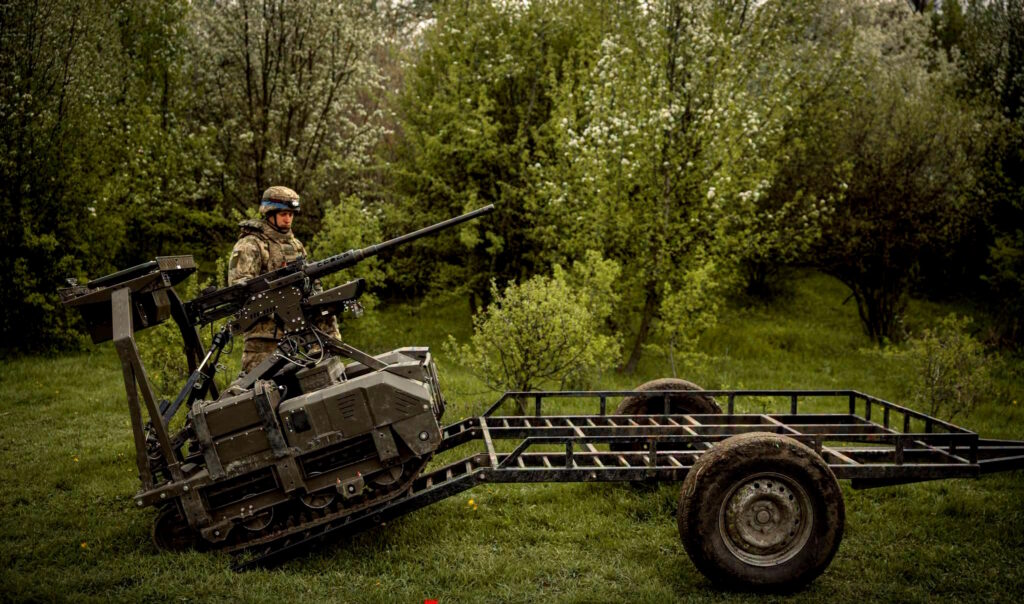
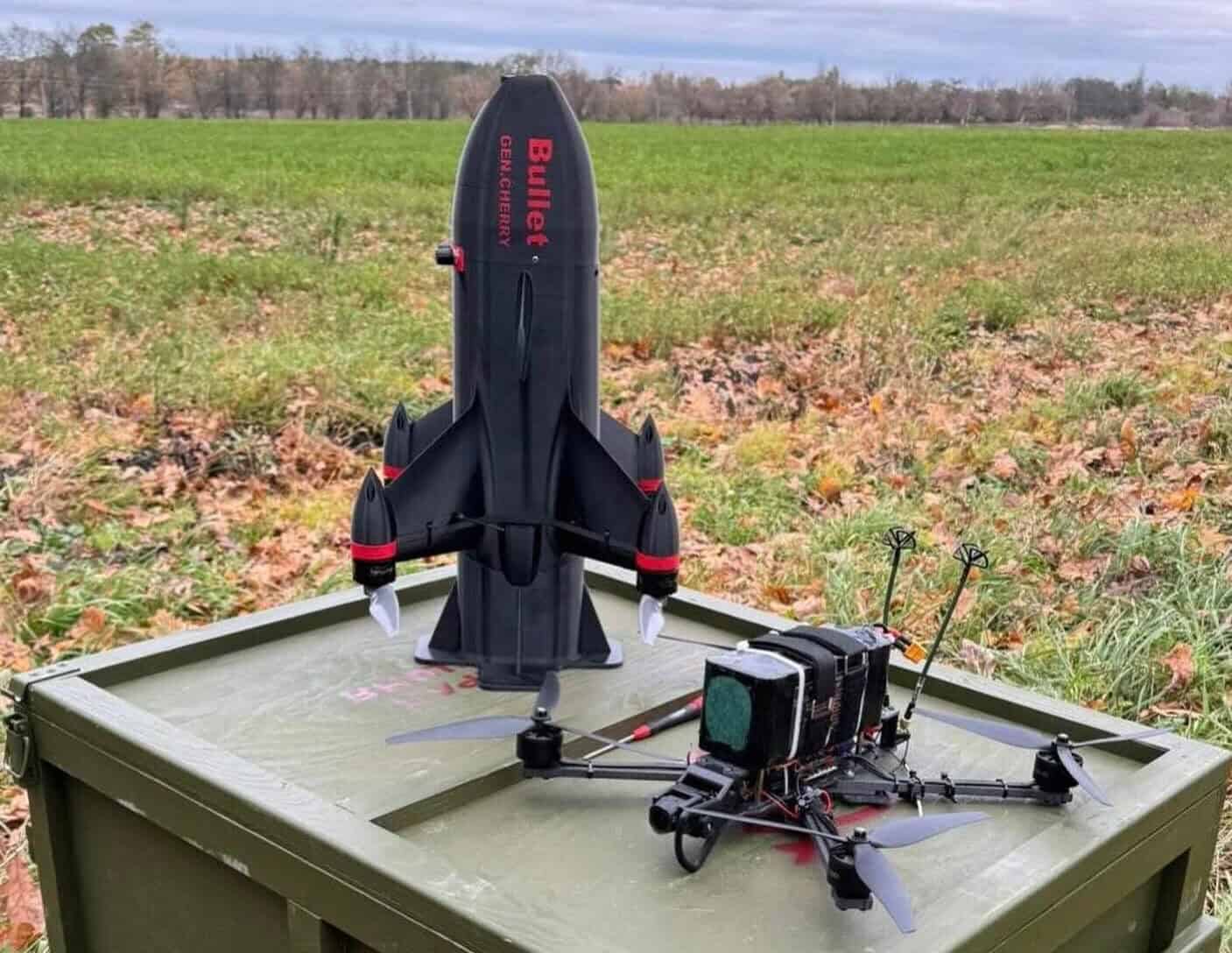
Over its first year, it has put more than 1.3 million drones and other systems into units' hands, worth about $1.9 billion, and the orders show what this war runs on: 84 percent are drones, with electronic-warfare gear and ground robots making up most of the rest. It is also the engine behind the points-for-kills system that lets units bank credit for battlefield results and spend it on their own equipment.
Access jumps from 12 to 500 units
The growth has been steep. DOT-Chain Defense is now used by combat units across the armed forces, the National Guard, the border and special transport services, the police, the Security Service, and Defense Intelligence, says Deputy Defense Minister Mstyslav Banik.
Assault regiments and the "Drone Line" project have joined, ordering unmanned systems to their own specifications.
Drones dominate the orders
By the ministry's count, electronic-warfare systems make up 8.6 percent of everything ordered, ground robotic complexes 7.2 percent, and ammunition a sliver at 0.2 percent.
The gear, worth about $1.9 billion, came both through direct marketplace purchases and through the "Army of Drones. Bonus" program, the points system tied to the same platform.
The US copies the model
The approach has drawn imitators. The US has launched its own Amazon-style marketplace for military drones, explicitly modeled on Ukraine's Brave1 Market and DOT-Chain Defense. For Ukraine, the payoff is data: a running record of which weapons work on which part of the front, which the state uses to scale up what performs.


Ukrainian engineers near the front rewrite their drones' software every couple of days. A NATO army needs about six months to push the same update. That gap in speed is the central challenge for the Western trainers working with Ukrainian troops in Poland, who say Ukraine's wartime tempo is exposing how slowly the West moves in peacetime, the Business Insider reports.
Russia's war forces the Ukrainian Army to buy, train, and adapt at a pace peacetime armies are not built for, and its experience is pushing NATO to confront how much its own bureaucracy slows it down.
The alliance has studied that experience without yet fully absorbing it: in an Estonian war game last winter, a ten-person Ukrainian drone team wiped out two NATO battalions in a day.
Now NATO Secretary General Mark Rutte is calling for a large-scale transformation of the West's defense industry so its armies can react faster.
Two speeds meet in Poland
The place where those speeds collided was Camp Jomsborg, a base Norway built in an eastern Polish forest in a matter of months. There, under an operation called Legio, trainers from across northern Europe drill Ukrainian soldiers while the Ukrainians hand their front-line lessons back to NATO.
The camp sits, as its operations officer, a major identified only as John, put it, at "the mental and geographical middle point between war in the east and peacetime mechanism in the West."
A drone update tells the story
Brigadier General Atle Molde, who commands the task force, put the gap in numbers. If a Western drone needs new software, he said, "you have to send it to a Western country or a company, and an update takes six months."
In Ukraine, "they have the engineers sitting close to the front updating every two days, every two weeks, developing software, adapting it to genuine situations."
Molde said he wants to see greater initiative in innovation within Western armies, but to achieve that, "it has to be some major changes that have to be done on all levels when it comes to legislation."


Ukraine's arms industry wants the government to scrap a steep fee on weapons exports, warning it undercuts their prices just as Europe's defense market opens, RBC-Ukraine reported. The same fee has opened a second fight in Kyiv, where parliament this week declined to turn its revenue into money for the army.
Russia's war on Ukraine has pushed Europe into rearming, and Ukraine's battle-tested arms makers are among the few that can deliver at scale right now—an opening that domestic red tape could blunt, handing the advantage to competitors just as the market grows.
The push comes as Europe opens a major market for Ukrainian weapons. The EU's €90 billion Ukraine Support Loan for 2026-2027 reserves €60 billion for defense purchases, and partners increasingly want weapons built on their own soil. International partners report more than 200 cooperation approaches to Ukrainian firms still without a decision, according to the industry's press release. Producers link the fee fix to Build with Ukraine, a co-production push they consider strategically significant.
On 15 September, the Verkhovna Rada—Ukraine's parliament—rejected a bill in first reading that would have sent fee revenue collected from 1 August 2026 into a special budget fund for the Defense Ministry, half for buying, modernizing, and repairing weapons, half for soldiers' pay. The vote left the fee itself untouched, since it rests on the Cabinet resolution, and settled only that its revenue will not be earmarked for the army.
The Ukrainian Council of Arms Manufacturers, joined by other defense and employer groups, prepared proposals to rework the July government resolution, No. 875. They want the fee—20% on finished goods and technologies, 30% on parts—cut to zero, or capped at 5%. Firms must also pay upfront, before any foreign payment lands, with no refund guaranteed if a deal collapses. A UAH 15 million (about $337,000) threshold shuts out the small test shipments new clients often begin with.
The fee has drawn complaints since the resolution took effect in early July. Ihor Fedirko, the council's executive director, earlier said the 30-day review window was welcome but warned it could clog into a bureaucratic queue as staff leave the agencies running it. One of the associations behind the submission calls the 30% rate on parts prohibitive, since Europe is where Ukrainian firms would undercut Chinese suppliers on price.
Ukraine has swung from banning weapons sales abroad to courting foreign buyers, and its defense sector now ranks among the country's fastest-growing industries. Wartime certification to NATO standards is turning that output into something European militaries can actually buy.


The U.K. has used interest generated from frozen Russian assets to purchase weapons for Ukraine, buying 350 air defense missiles worth £70 million ($87 million), The Guardian reported on June 25.
The move represents the U.K.'s first direct use of Russia-linked funds to buy weaponry for Kyiv.
The weapons purchase was funded through Britain's Extraordinary Revenue Acceleration (ERA) scheme, which captures interest from frozen Russian central bank assets.
According to The Guardian, the missiles, originally designed as air-to-air weapons, were converted by RAF engineers and MBDA UK in just three months to fire from ground-based systems.
Five additional Raven launcher systems will accompany the missiles to Ukraine, bringing the total to 13.
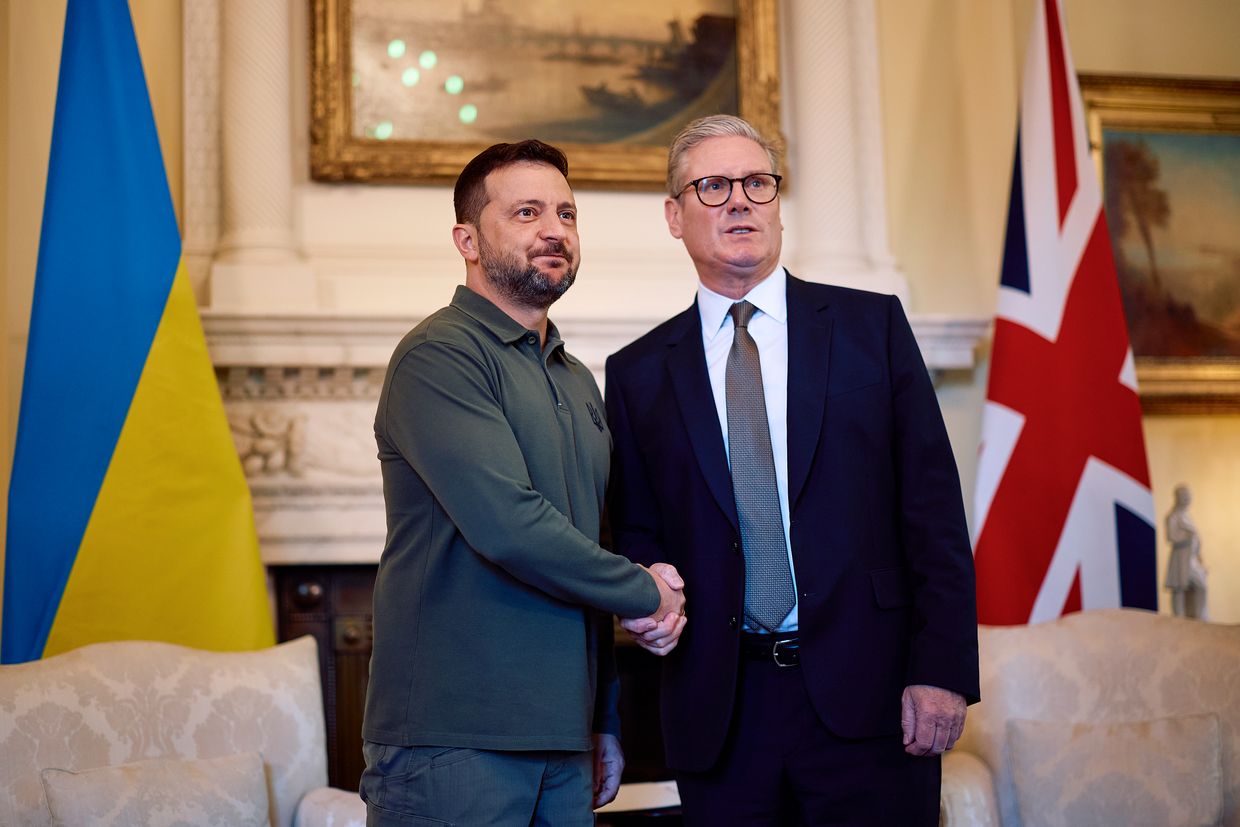
U.K. Prime Minister Keir Starmer announced the package ahead of NATO's annual summit.
"Russia, not Ukraine, should pay the price for Putin's barbaric and illegal war," he said.
The package is part of Britain's largest-ever annual military commitment to Ukraine of £4.5 billion ($5.6 billion), the Guardian reports.
It follows a £1.6 billion ($2.0 billion) deal in March for over 5,000 air defense missiles and a separate £350 million ($436 million) investment to increase drone deliveries tenfold.
The announcement comes as Starmer and President Volodymyr Zelensky agreed to work closely on military production between the UK and Ukraine. On June 24, Ukraine's Defense Minister Rustem Umerov announced that Britain will finance Ukrainian-designed drones manufactured in the UK.
European countries cannot fully confiscate the frozen Russian assets due to concerns about international law and financial stability. The European Central Bank warned that such a move could undermine confidence in the euro as a reserve currency, since most of the assets are euro-denominated.
Instead, only the interest generated from these funds is currently being used to back a $50 billion loan package for Ukraine, while the principal amount of 300 billion euros ($348 billion) remains frozen but not seized.
In June, Ukraine received another 1 billion euros ($1.1 billion) from the EU as part of the G7 loan program backed by frozen Russian assets, Prime Minister Denys Shmyhal announced.


Ukraine’s domestically developed short-range Sapsan ballistic missile has successfully completed combat testing and is in the process of serial production, Ukrainian media reported on June 13.
The missile, with a payload of 480 kg, completed testing in May after successfully striking a Russian military target at a range of nearly 300 km, Valentyn Badrak, head of the an independent Ukrainian think Center for Army, Conversion and Disarmament Studies told Liga.net.
Ukraine's Defense Ministry reportedly dedicated a department to formulate and test the missile.
There is no reported timeline as to when the missiles can be seen in regular use on the battlefield.
Domestically produced long-range weapons are of key importance to Ukraine's defense strategy, as Western partners have been slow in delivering adequate weaponry amid increasing Russian attacks and offensives.
The news comes as U.S. Defense Secretary Pete Hegseth said in a congressional hearing on June 10 that the United States will reduce funding allocated for military assistance to Ukraine in its upcoming defense budget
In November 2024, President Volodymyr Zelensky announced that Ukraine has produced its first 100 missiles.
Since then, Ukraine has continued to increase domestic weapon production. Zelensky said on April 16 that over 40% of the weapons used at the front line are now produced in Ukraine, including over 95% of drones used at front line.
Zelensky also previously revealed that Ukraine had developed another domestic-made weapon, a missile-drone Palianytsia.
As Ukraine attempt to increase its defense production, Russia has continued to unleash large-scale attacks on Ukrainian cities, regularly launching hundreds of drones to overwhelm Ukrainian air defenses.
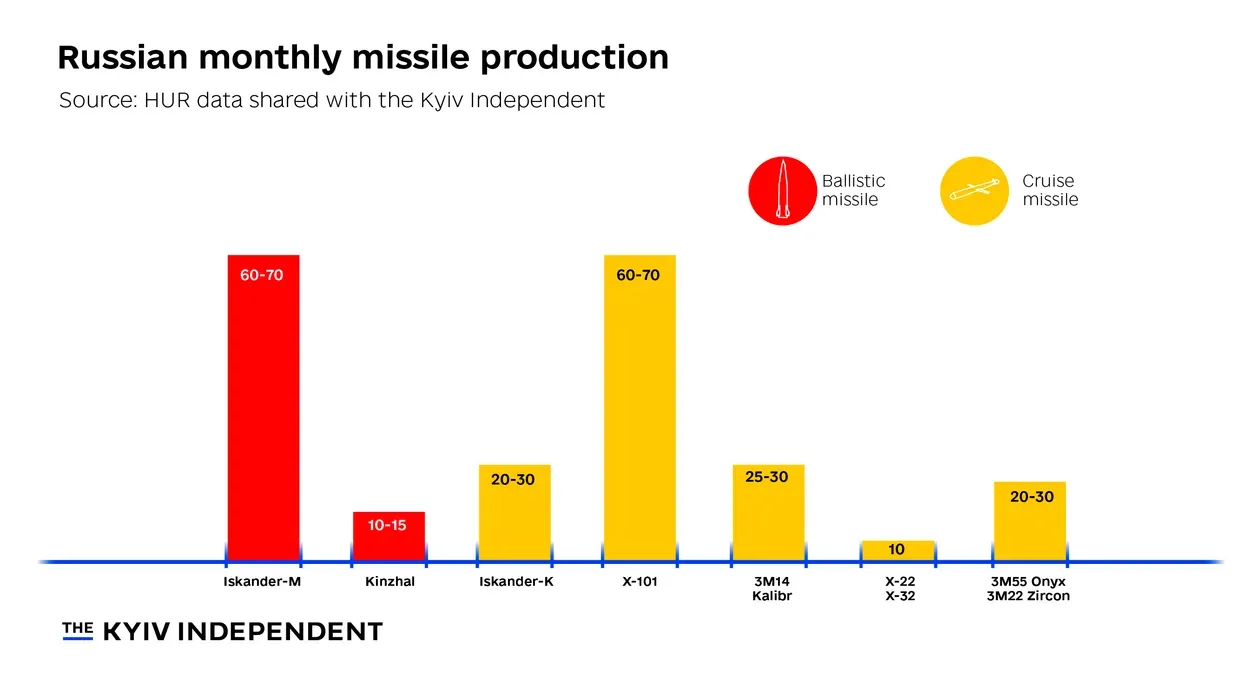
Ukraine's military intelligence (HUR) shared with the Kyiv Independent that Russia's production of ballistic missiles has increased by at least 66% over the past year.

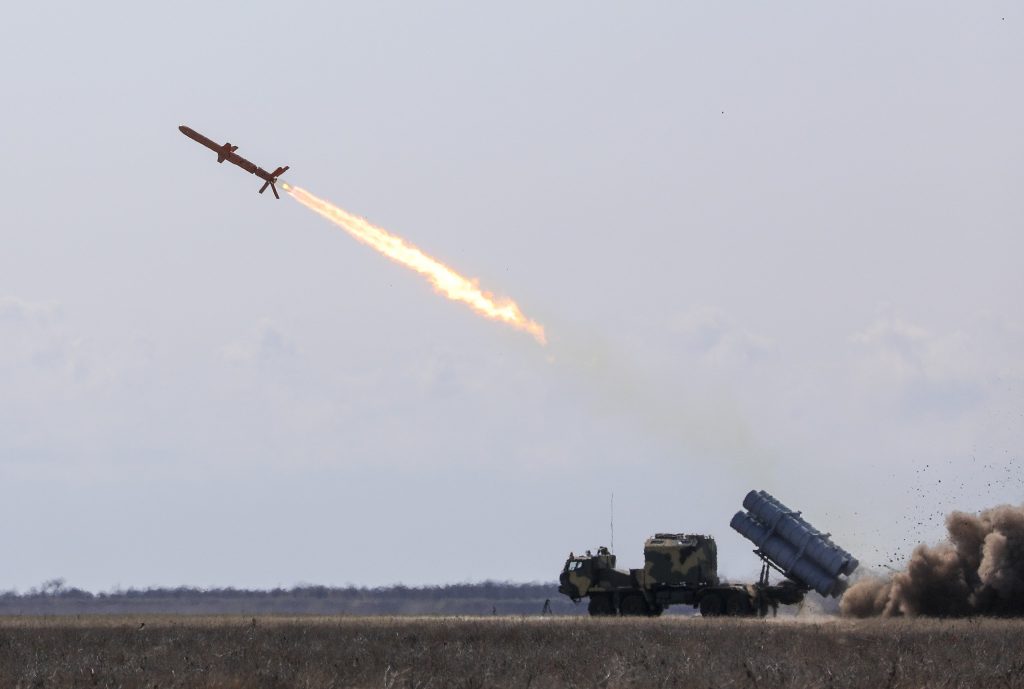
Ukraine's Defense Minister Rustem Umerov said in late 2024 that Ukraine also resumed and scaled up serial production of Neptune cruise missiles, modifying them to have a greater range.
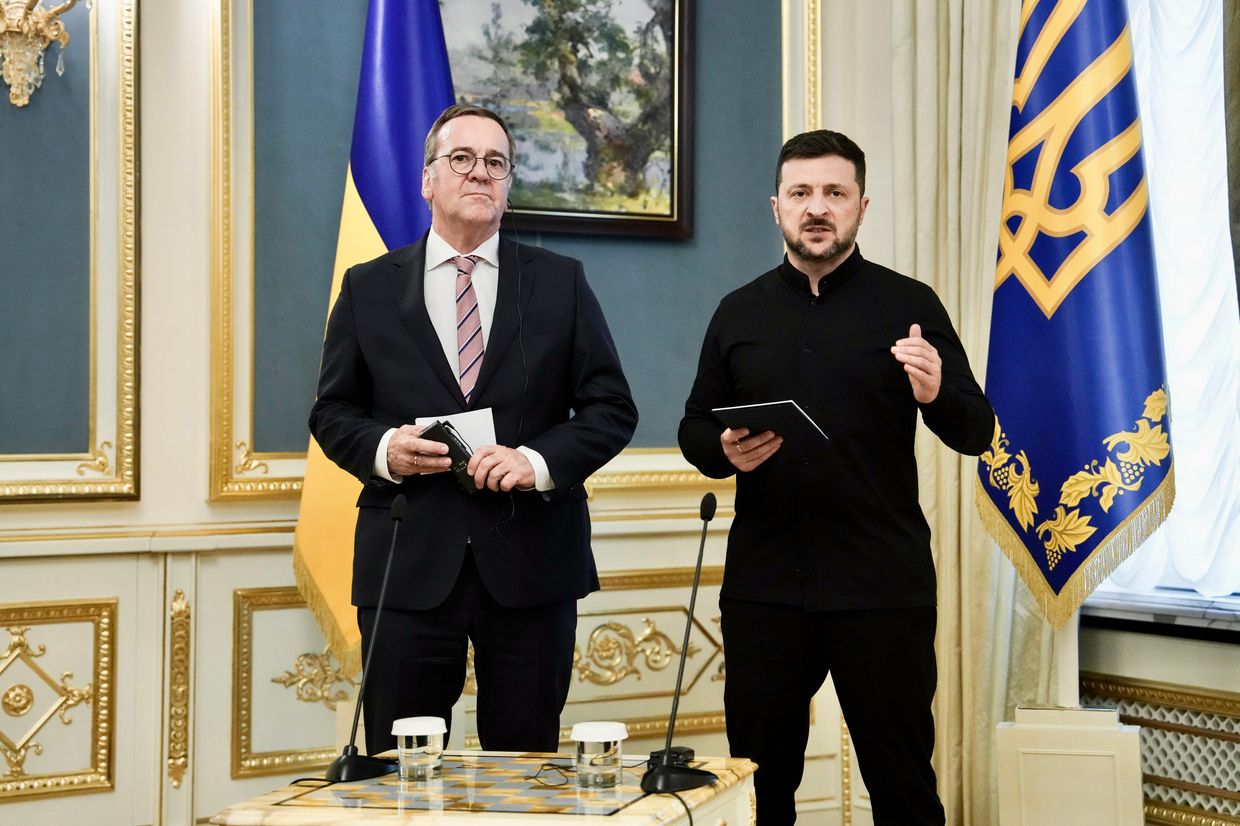
Kyiv has received a number of long-range missiles from partners, such as U.S.-made ATACMS, British Storm Shadow, or French SCALP/T. Despite Ukrainian requests, German Defense Minister Boris Pistorius said on June 12 that Berlin has no plans to provide Taurus long-range missiles to Kyiv.