❌

Vue normale

  • ✇Euromaidan Press
  • A Ukrainian firm now rents out drone jammers by the day—but the deposit is the device’s full price
    Ukrainian defense-tech firm BlueBird Tech has begun renting out its Hrets electronic-warfare jammers by the day, in what it calls Ukraine's first such service, the company said on 29 September 2026. Electronic-warfare gear—the devices that scramble the radio links attack drones rely on—is normally bought outright, renting lets a user take a system for a single mission or test it before committing. The pull is a war where cheap first-person-view (FPV) drones have made portable jamming a
     

A Ukrainian firm now rents out drone jammers by the day—but the deposit is the device’s full price
29 septembre 2026 à 13:50

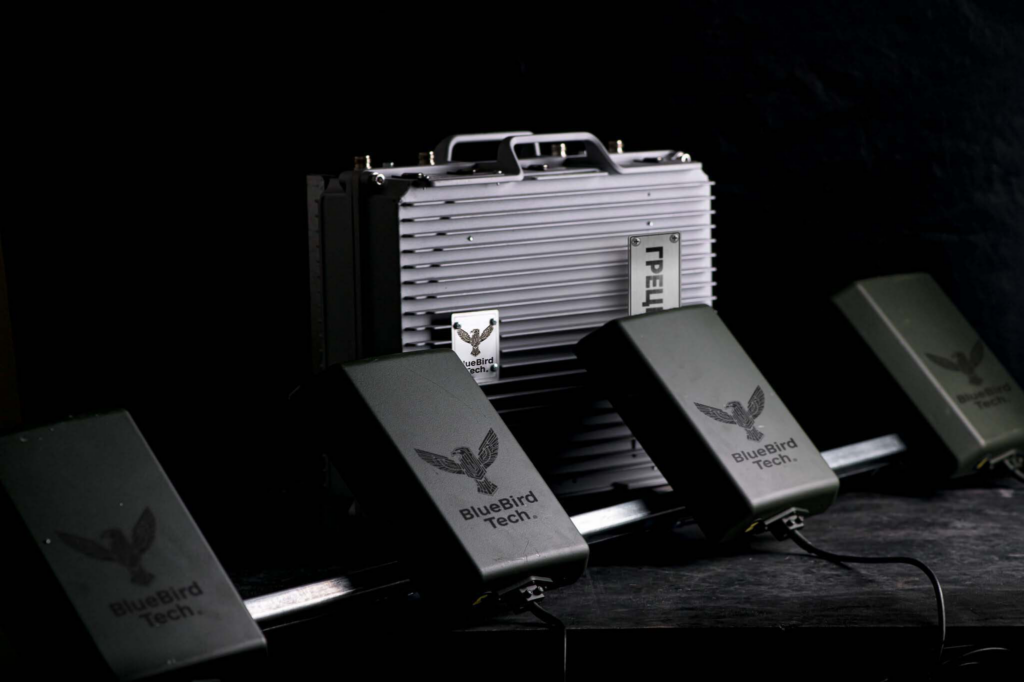
Hrets electronic-warfare jammers.

Ukrainian defense-tech firm BlueBird Tech has begun renting out its Hrets electronic-warfare jammers by the day, in what it calls Ukraine's first such service, the company said on 29 September 2026. Electronic-warfare gear—the devices that scramble the radio links attack drones rely on—is normally bought outright, renting lets a user take a system for a single mission or test it before committing.

The pull is a war where cheap first-person-view (FPV) drones have made portable jamming a routine need, one many users face only for a stint.

How renting works

After paperwork and a deposit equal to the device's full price, the system is handed over, and that handover counts as day one. Each day's rent is then drawn from the deposit, return the system working and undamaged and the renter gets back what is left. Keep it long enough that the fees add up to the full price, and the jammer passes to the renter automatically. Renting is open to individuals, companies, charities, and volunteer groups.

Three models, and what each one jams

The Hrets XL is a modular FPV jammer built from two to 10 working modules, priced case by case. The vehicle-mounted Hrets 4MC is an anti-drop system that jams DJI Mavic-type quadcopters—the drones Russian forces use to drop munitions—for about $56 a day. The lightweight Hrets 4M jams FPV drones at a stated 70 to 400 meters for about $67 a day. One Ukrainian firm has even packed detection, decoding, and jamming of an FPV signal into a single device.

Zelenskyy asks Japan for air-defense technology and offers Ukraine’s drones in return, while courting Chile to expand Ukraine’s reach in Latin America

24 septembre 2026 à 06:43

Volodymyr Zelenskyy and Sanae Takaichi at a meeting in New York.

Ukrainian President Volodymyr Zelenskyy has used the UN General Assembly in New York to court partners outside Ukraine's NATO core, pitching air-defense cooperation with Japan and drone cooperation with Chile, Ukrainska Pravda reported. In a single day of bilateral talks, he met Japan's Prime Minister Sanae Takaichi, Chile's President José Antonio Kast, and UK Prime Minister Andy Burnham.

The meetings turned on shielding civilian infrastructure before winter and trading Ukraine's battlefield-tested technology for capabilities it still needs. More than four years into Russia's war, a nation that entered the war reliant on donated arms now iterates drones faster than many of its Western backers, and that expertise has become leverage in its own diplomacy.

Zelenskyy pitches Ukraine's know-how for Japan's air-defense tech

In their first summit meeting, Zelenskyy cast the relationship as a two-way exchange.

"Ukraine is ready to share its experience and technologies on a mutually beneficial basis," he said.

While Japan has advanced technologies for protecting lives, particularly in air defense, that could carry Ukraine through the winter if Russia again rejects talks, the President's Office reported.

Ukraine walks into winter with two air-defense problems. It is still testing home-built interceptors to catch Russia's jet-powered drones. And it does not have enough Patriot interceptors to stop ballistic missiles over its cities. Japan holds the key to the second one.

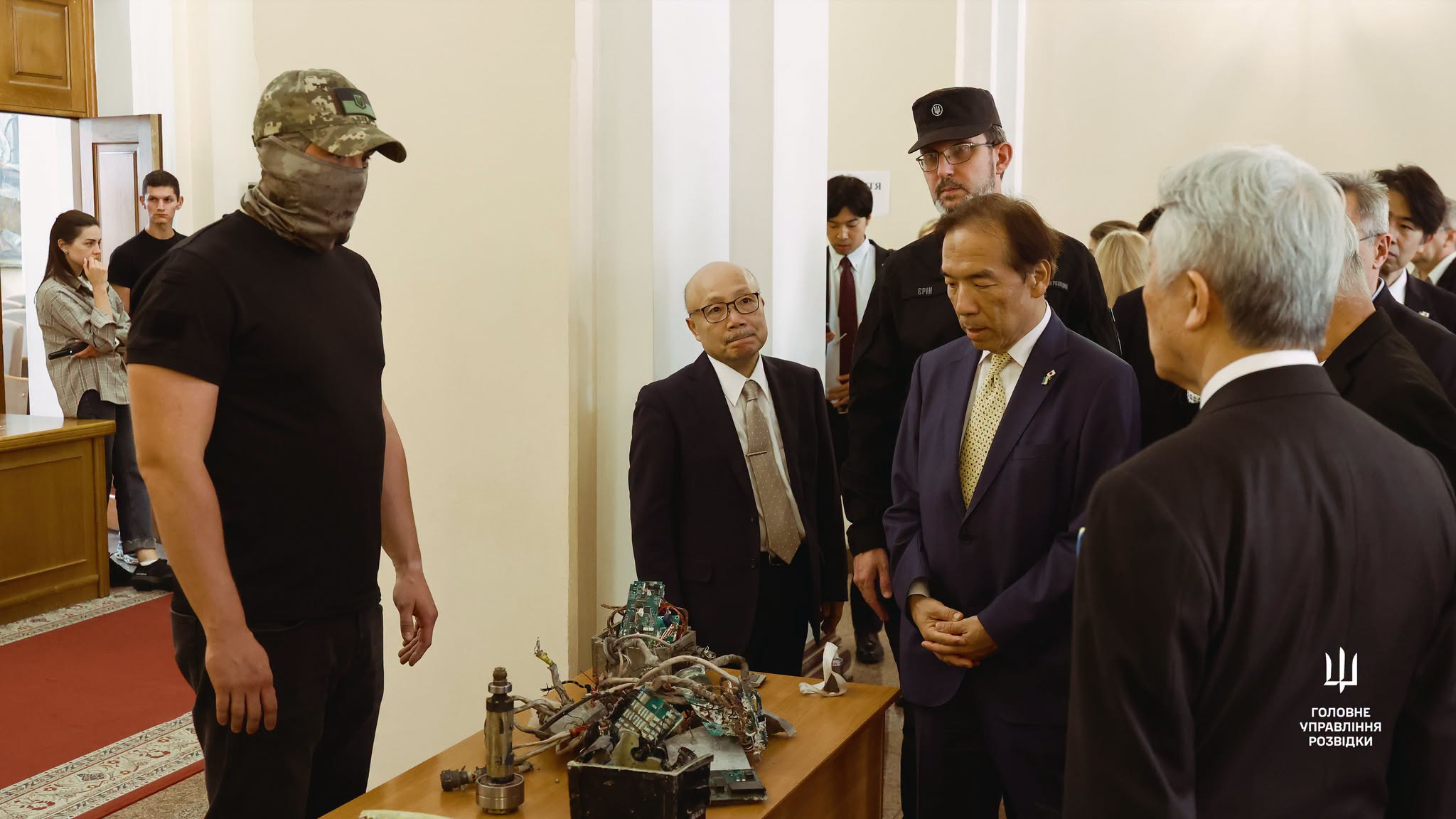
Ukraine's Defense Intelligence has given Eisuke Mori, speaker of Japan's House of Representatives, a close look at a North Korean weapon: the components of a ballistic missile Russia fired at Ukraine. Source: Ukraine's Defense Intelligence
Explore further

North Korea has fired around 150 ballistic missiles at Ukraine, learning from each one. Same missiles threaten Japan, and Kyiv just shows its speaker what is inside them

Mitsubishi Heavy Industries runs the only plant outside the US licensed to assemble the PAC-3, the advanced Patriot interceptor. Japan is also the sole maker of the guidance gyroscopes inside older PAC-2 missiles. It has already shipped Japanese-made PAC-3s to the US to refill stocks drained by transfers to Ukraine, and Zelenskyy has floated Mitsubishi as the model for Ukraine's own Patriot line.

The exchange runs both ways. Russia keeps pressing Japan over the Kuril Islands the Soviet Union seized in 1945. Against that backdrop, Ukraine's combat-tested drones could appeal to Tokyo. Kyiv offers the drone know-how it now leads in, and asks for the air-defense edge Japan already has.

Zelenskyy also thanked Tokyo for its sanctions on Russia, energy packages, and humanitarian projects, and Takaichi assured him of continued support. Zelenskyy invited her to Ukraine, including the Kyiv-Pechersk Lavra, which Japan helped restore after a Russian drone strike in June.

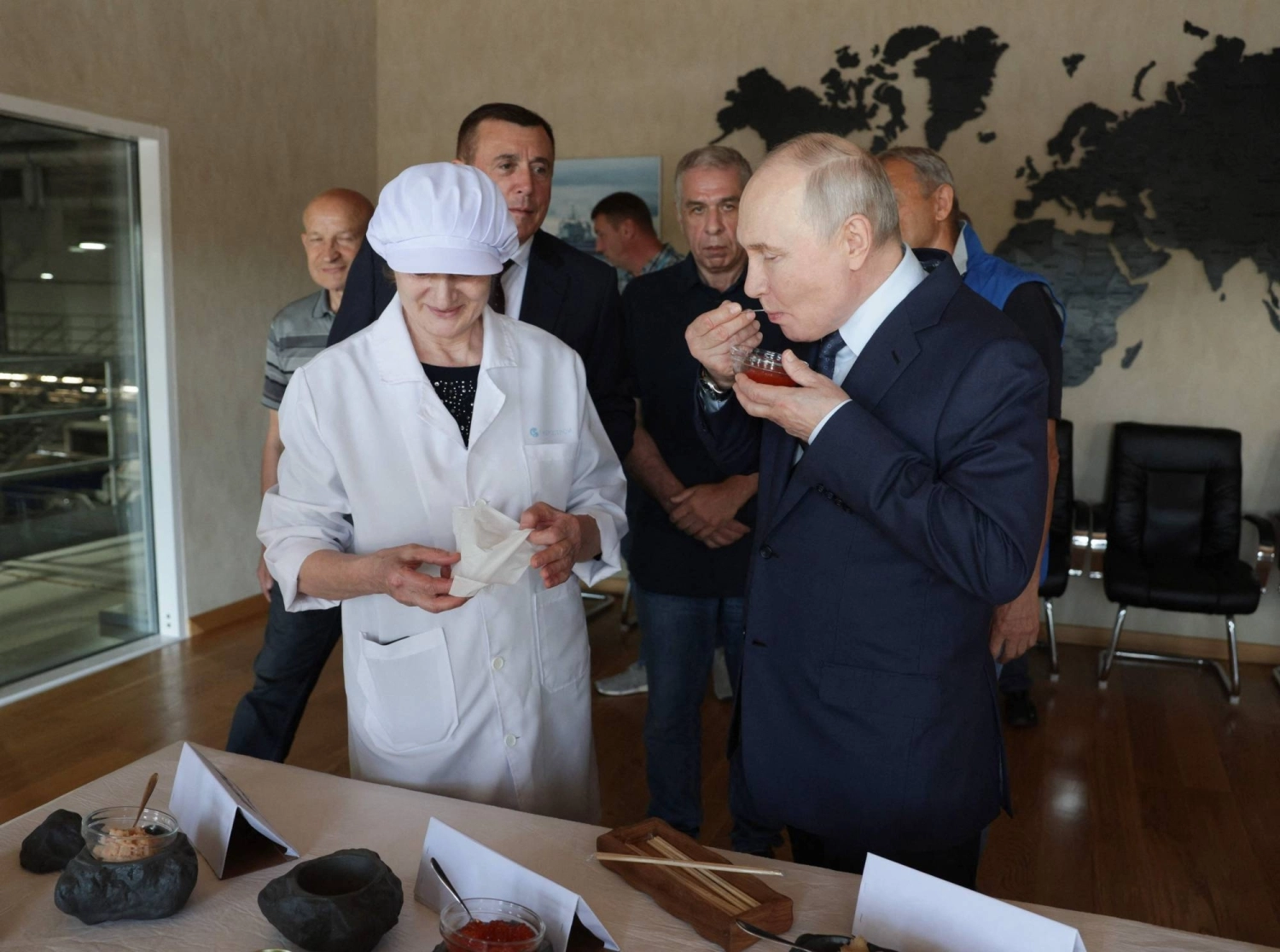
Vladimir Putin visits Etorofu island,
Explore further

Japan weighs sanctions after Putin’s first visit to disputed Kuril Islands

Chile opens a door to Latin America

With Kast, Zelenskyy discussed deepening security and drone-technology ties and thanked Chile for backing Ukraine at international forums and for helping return Ukrainian children abducted by Russia. He welcomed Santiago's willingness to help expand Ukraine's presence across Latin America, calling it an opening for "even more promising opportunities," and invited Kast to visit.

Building on ties already in place

Both partnerships rest on existing ground. Japan, barred by its own laws from sending lethal weapons, has delivered generators, transformers, and non-lethal gear, pledged a $6 billion package for 2026, and agreed to help rebuild the Lavra through UNESCO. Talks in Tokyo in July recast Ukraine as a security partner rather than an aid recipient.

Chile joined the coalition to bring abducted Ukrainian children home and, in an April call, heard Zelenskyy float a security arrangement modeled on Ukraine's Gulf-state pacts. The outreach tracks Kyiv's drive to turn its wartime industry into an export business under its "Drone Deals" framework.

  • ✇Euromaidan Press
  • A former US nuclear-sub commander, a Ukrainian fund, and a plan to shield Odesa with drone swarms
    TAF Industries signed a joint-venture memorandum with Danish firm Upteko for production but says bureaucracy is slowing the process. Meanwhile, Resist.UA agreed to invest in BlueShadow, a Danish maritime-defense startup whose founder commanded a US nuclear submarine and whose engineering team works largely in Ukraine, Defender Media reported. Ukraine's defense industry has outgrown much of its own 2022-era hardware in two years of rapid wartime iteration, but a government fee of 20-30%
     

A former US nuclear-sub commander, a Ukrainian fund, and a plan to shield Odesa with drone swarms

23 septembre 2026 à 10:05

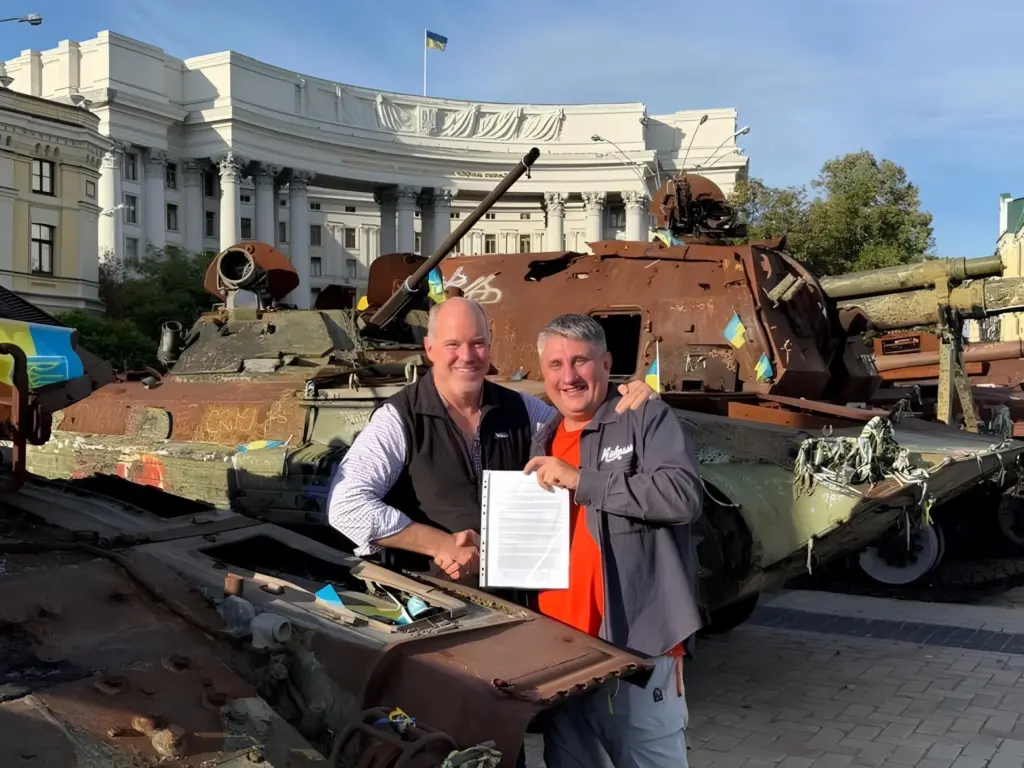
CEO of BlueShadow Charlie Maher with Resist.UA founder Roman Sulzhyk.

TAF Industries signed a joint-venture memorandum with Danish firm Upteko for production but says bureaucracy is slowing the process. Meanwhile, Resist.UA agreed to invest in BlueShadow, a Danish maritime-defense startup whose founder commanded a US nuclear submarine and whose engineering team works largely in Ukraine, Defender Media reported.

Ukraine's defense industry has outgrown much of its own 2022-era hardware in two years of rapid wartime iteration, but a government fee of 20-30% on export permits and over 200 stalled co-production bids have left the country's foreign arms sales far behind battlefield demand. Deals like the two in Denmark route Ukrainian technology into allied markets without waiting for Kyiv's export apparatus to catch up.

Ukrainian first-person-view drones, made on Danish soil

Drone maker TAF Industries plans to produce its first batch in Denmark by the end of 2026, through a joint venture with local firm Upteko. The two signed a memorandum in August 2026, but paperwork on both sides has slowed things down.

"We need to pass a fairly large number of bureaucratic procedures to make it possible," chief business development officer Mykhailo Diachenko told NordicDefenceWatch.

He called the year-end target reachable, "though maybe it will look more like a miracle."

TAF wants footholds in other countries that support Ukraine. It has started the process in Norway and is negotiating with Sweden's Recas. Diachenko said the goal is local production plus sharing Ukrainian combat experience and technology with European partners. TAF builds FPV drones, with capacity near 1 million units a year.

A Ukrainian fund bets on Odesa's sea defense

Ukrainian fund Resist.UA signed a letter of intent to invest an undisclosed sum in Danish maritime-defense startup BlueShadow's €2 million ($2.29 million) pre-seed round, the company announced. BlueShadow's software collects data from maritime sensors, commercial feeds, and open sources, merges them into a single operational picture, and uses AI to detect threats, Defender Media reported.

The company has also built an open software platform it says can help intercept Shahed-type drones. BlueSentry, designed to protect ports, offshore wind farms, undersea cables, and maritime borders from hybrid attack, is one product that the company plans to launch in the Baltic and North seas in October. BlueDragon, now in prototype testing with Defense Ministry certification targeted for late 2026 and deployment planned for spring 2027, is designed to defend Odesa with autonomous swarms of armed sea drones meant to shoot down Russian attack drones.

Founder Charles Maher is a former US Navy submarine commander who ran a nuclear-powered boat, Defender Media reported. Almost his entire engineering team works in Ukraine, drawing on more than 15 Ukrainian suppliers. Resist.UA this summer launched Resist 2.0, an Estonia-based fund aiming to raise €50 million for Ukrainian defense-tech companies.

  • ✇Euromaidan Press
  • Kyiv’s arms industry wants to kill the export fee. Parliament just refused to route that money to the army
    Ukraine's arms industry wants the government to scrap a steep fee on weapons exports, warning it undercuts their prices just as Europe's defense market opens, RBC-Ukraine reported. The same fee has opened a second fight in Kyiv, where parliament this week declined to turn its revenue into money for the army. Russia's war on Ukraine has pushed Europe into rearming, and Ukraine's battle-tested arms makers are among the few that can deliver at scale right now—an opening that domestic red t
     

Kyiv’s arms industry wants to kill the export fee. Parliament just refused to route that money to the army

17 septembre 2026 à 10:09

Novator armored vehicles

Ukraine's arms industry wants the government to scrap a steep fee on weapons exports, warning it undercuts their prices just as Europe's defense market opens, RBC-Ukraine reported. The same fee has opened a second fight in Kyiv, where parliament this week declined to turn its revenue into money for the army.

Russia's war on Ukraine has pushed Europe into rearming, and Ukraine's battle-tested arms makers are among the few that can deliver at scale right now—an opening that domestic red tape could blunt, handing the advantage to competitors just as the market grows.

A €60 billion European window—and a fee in the way

The push comes as Europe opens a major market for Ukrainian weapons. The EU's €90 billion Ukraine Support Loan for 2026-2027 reserves €60 billion for defense purchases, and partners increasingly want weapons built on their own soil. International partners report more than 200 cooperation approaches to Ukrainian firms still without a decision, according to the industry's press release. Producers link the fee fix to Build with Ukraine, a co-production push they consider strategically significant.

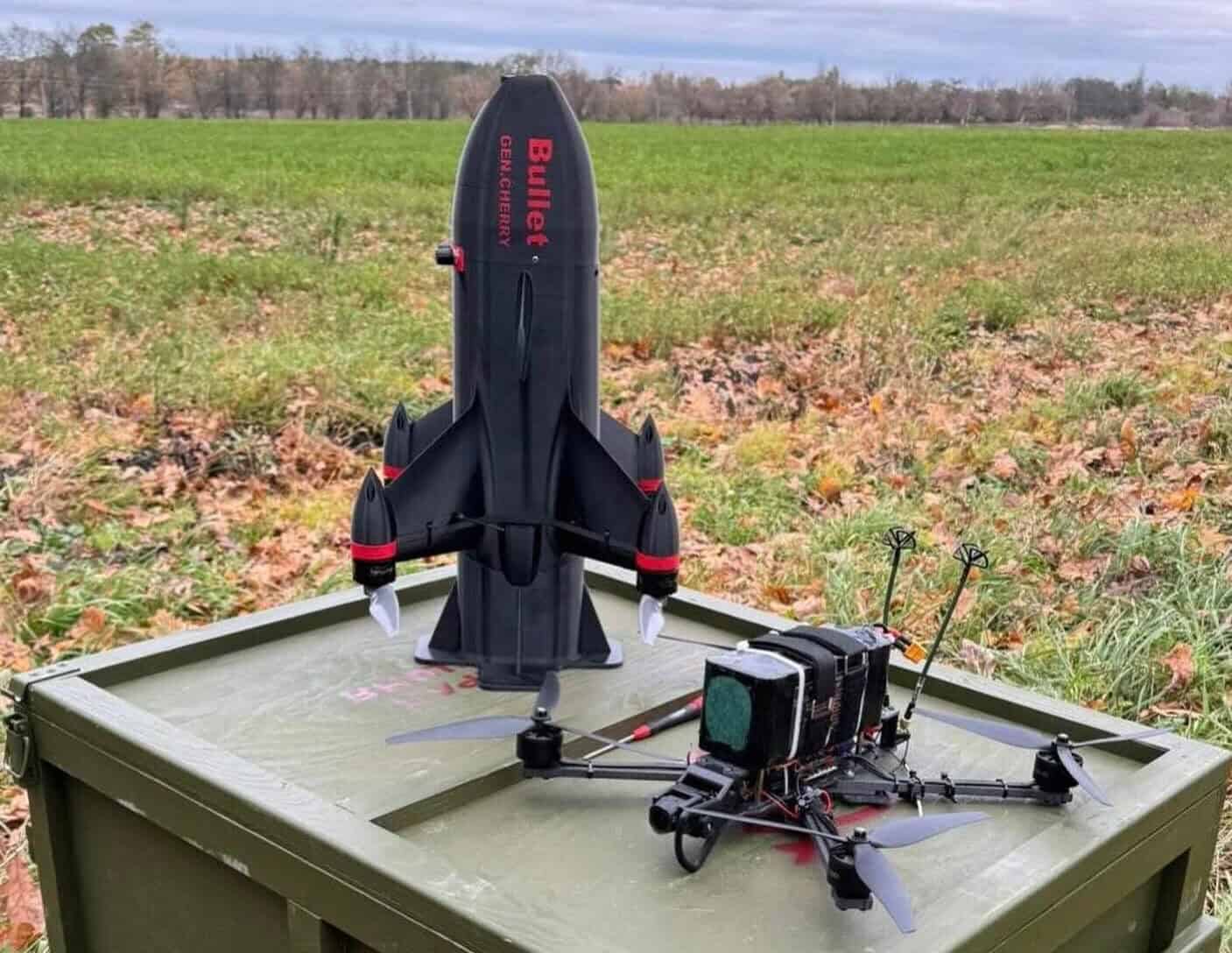
interceptor drones General Cherry (Chereshnia)
Explore further

Ukraine’s Build with Ukraine has 200-plus foreign cooperation bids pending decision. Its arms industry, representing 400-plus firms, wants to help fix mechanism

Parliament won't route the money to the army

On 15 September, the Verkhovna Rada—Ukraine's parliament—rejected a bill in first reading that would have sent fee revenue collected from 1 August 2026 into a special budget fund for the Defense Ministry, half for buying, modernizing, and repairing weapons, half for soldiers' pay. The vote left the fee itself untouched, since it rests on the Cabinet resolution, and settled only that its revenue will not be earmarked for the army.

The fee producers want gone

The Ukrainian Council of Arms Manufacturers, joined by other defense and employer groups, prepared proposals to rework the July government resolution, No. 875. They want the fee—20% on finished goods and technologies, 30% on parts—cut to zero, or capped at 5%. Firms must also pay upfront, before any foreign payment lands, with no refund guaranteed if a deal collapses. A UAH 15 million (about $337,000) threshold shuts out the small test shipments new clients often begin with.

Launch of an Aspide 2000 surface-to-air missile from a Spanish Skyguard-Aspide air defense system
Explore further

Ukraine put an Italian-Swiss Skyguard into combat duty. The missile inside is a Cold War design derived from the American Sparrow

The fee has drawn complaints since the resolution took effect in early July. Ihor Fedirko, the council's executive director, earlier said the 30-day review window was welcome but warned it could clog into a bureaucratic queue as staff leave the agencies running it. One of the associations behind the submission calls the 30% rate on parts prohibitive, since Europe is where Ukrainian firms would undercut Chinese suppliers on price.

Ukraine has swung from banning weapons sales abroad to courting foreign buyers, and its defense sector now ranks among the country's fastest-growing industries. Wartime certification to NATO standards is turning that output into something European militaries can actually buy.

A century ago, bright red trousers made soldiers easy targets. Ukraine’s ex-army chief says the West is wearing them again

15 septembre 2026 à 07:16

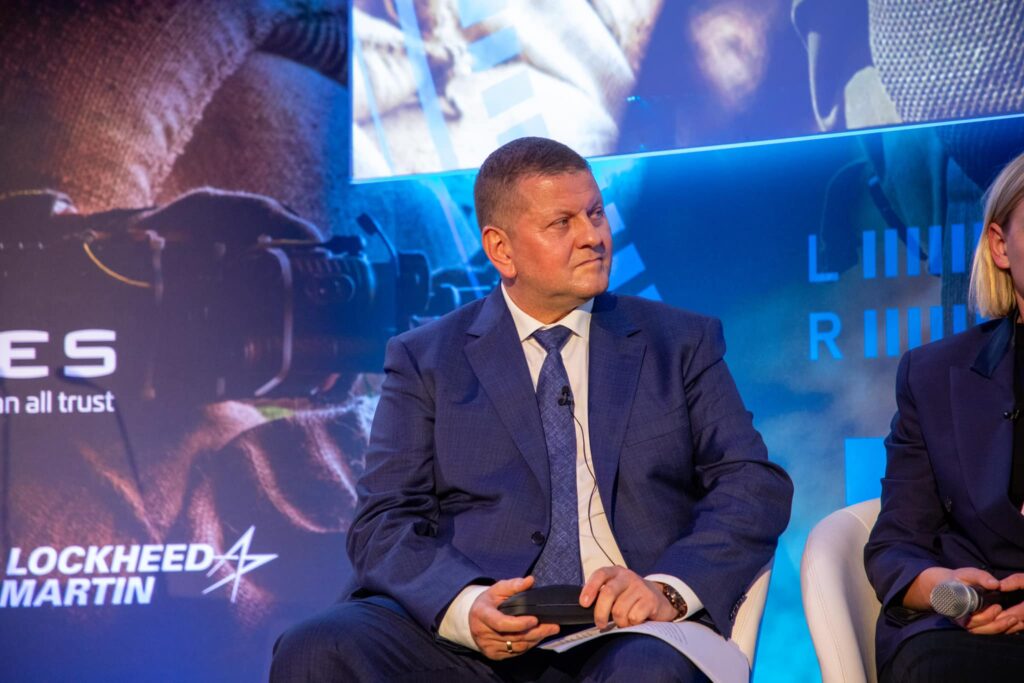
Zaluzhnyi ambassador Ukraine

Ukraine's former top commander has a warning for anyone betting that new gadgets will win the war, he wrote in a column for Ukrainska Pravda. Valerii Zaluzhnyi, the country's Commander-in-Chief until 2024 and now its ambassador to the UK, argues 2026 is a war of technologies and, no less, of the strategies and doctrines that must keep pace with them. Bolting modern tech onto an old Soviet playbook, he says, drove mobilization into a dead end.

A year ago, Zaluzhnyi warned that Ukraine would need thousands of counter-drone systems and mass drone production to cope with the growing role of UAVs in war. A year later, those capabilities still aren't there at the scale he called for, mobilization has hit the dead end he now describes, and the four measures he proposed have not kept pace with how quickly drones are spreading.

Drones are already cheap, widespread, and shaping the war, and the front has gone static, Zaluzhnyi writes, while Russian strikes keep reaching railways and fuel stations far behind it.

This is no longer a drone war

The drones filling headlines no longer exist on their own, Zaluzhnyi writes. They have evolved into more familiar weapon types, cheaper and more effective—anyone still treating drones as a stand-alone class is about three years behind. Fixating on individual gadgets, he argues, misses the real contest: strategy and doctrine.

He reaches back to World War I for the danger he sees, running the line from Verdun and the Somme to Robotyne and Bakhmut. Before that war, soldiers in one army marched in bright red trousers that were supposed to help against repeating rifles, machine guns, and long-range artillery, and later against tanks and aircraft.

Today's faith in old security guarantees, he warns, is that same proud symbol worn onto a modern battlefield.

"The red trousers taught them nothing," he writes of those still moving tanks and artillery toward the fight by yesterday's logic.

New weapons, old strategy

The war has surrendered itself to marketers and wheeler-dealers, Zaluzhnyi writes—people who, without understanding or strategy, stoke it for quick profit while flaunting the pace of technological progress. Trying to retake land with Soviet methods and new weapons drove mobilization into a dead end, and fewer and fewer people were willing to take the one chance it offered.

"Damn marketing that kills," he adds.

The way out, he argues, is to treat technology as a new weapon, build tactics around it, and only then reshape the force.

That is what he calls doctrine, built through resource and technological alliances into a strategy for victory. Ukraine and Russia, he writes, have become real-time testing grounds.

What he warned a year ago

In September 2025, Zaluzhnyi named the four fights Ukraine had to win to survive mass drone warfare: counter-drone systems at scale, state-level drone production, integrated battlefield networks, and channeling tech talent into defense industries.

The counter-drone systems he put first are still short of the scale he warned Ukraine would need. Mobilization, he writes, has hit a dead end, and marketers—not the doctrine he calls for—are setting the pace.

Ukraine’s FLYCAT strike drone is built to fly without satellite signals. Its bigger new sibling is designed to reach 200 km behind the front

14 septembre 2026 à 07:45

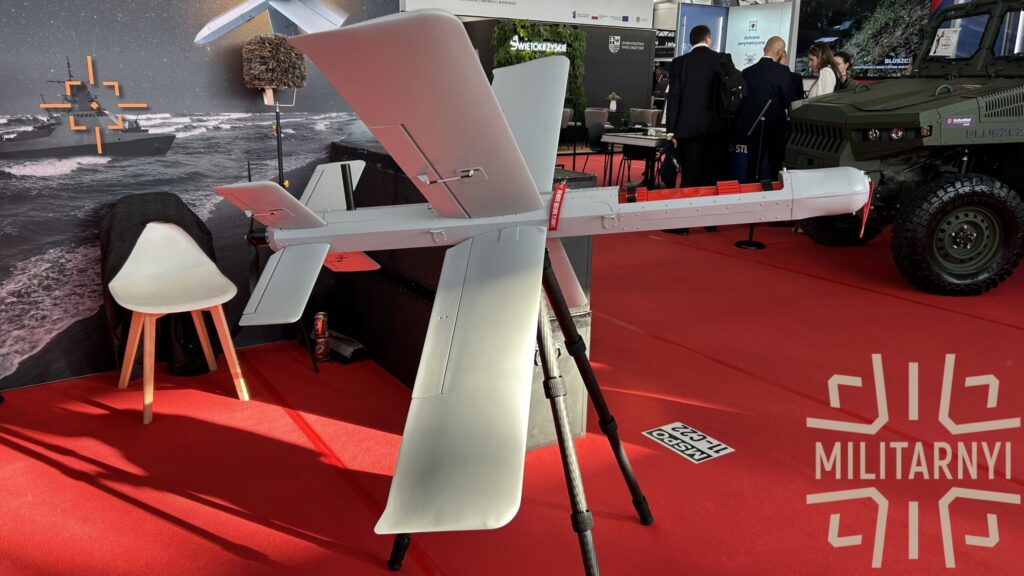
Updated FLYCAT strike UAV at MSPO 2026.

A Ukrainian company has unveiled a homegrown strike drone built to fly deep behind Russian lines, Militarnyi reported on 13 September. Octava Defence showed the new long-range aircraft—a bigger version of a drone already used in combat—at the MSPO 2026 defense expo in Kielce, Poland. The company says the smaller drone is built to keep working in electronic warfare conditions without a reliable satellite signal.

Russian jamming is one of the biggest obstacles to Ukrainian strikes deep in the rear, which is why Ukrainian makers keep building guidance that does not depend on satellite signals.

The workhorse is already in the fight

The base FLYCAT, presented in January 2026 by another Ukrainian firm, Venator Technologies, is a strike drone Ukrainian forces have used in combat since March. An improved model went into action in July and August and is now undergoing codification—entry into Ukraine's official weapons register.

Ukraine is approaching to the Project 1100M "Sargan" patrol boat in Kerch. Source: Ukraine's Defense Intelligence
Explore further

Watch first naval battle in history fought entirely by drones: Ukrainian uncrewed boat spots, fires on, and sinks Russian one in Black Sea

The company says the updated drone can fly more than 80 km, stay in the air for an hour, and carry a warhead weighing up to 3.7 kg. It is built to hunt armored vehicles, artillery, radars, and air-defense systems, as well as lighter shelters and communications gear. It can pair with a scout drone that finds the target and passes the coordinates. Several FLYCATs can also strike a single target together or hit multiple targets at once.

Nearly everything on it is built in Ukraine—the communications, navigation, guidance, and warhead. Only the engines come from abroad. Its two cameras—day-only or day-and-night—feed a terminal-guidance module that picks out the target from 2,000 m as it closes in.

The one that reaches deeper

The FLYCAT SL is a bigger, longer-range version, and it is still in testing. The company says it is built to fly more than 200 km, stay airborne for over two and a half hours, and carry a heavier load of up to 7 kg.

One of the warhead variants of the FLYCAT strike UAV.
One of the warhead variants of the FLYCAT strike drone, shown at MSPO 2026 in Kielce, Poland. Photo: Militarnyi

That range is meant to let it go after command posts, armored vehicles, artillery, and air defenses far behind the front line.

❌