❌

Vue normale

Russia’s threat isn’t better missile, it’s 14,000 cheap ones. Its new deadly weapon was built in early 1990s, experts say

21 septembre 2026 à 15:42

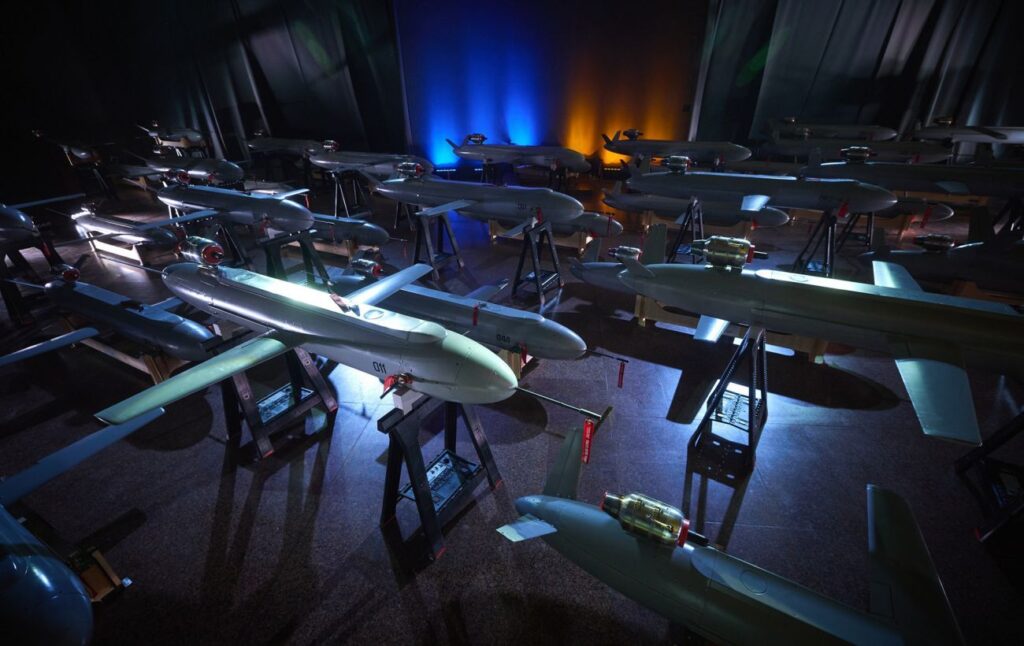
A Dan-M target drone

Russia wants to build 14,000 of a new cruise missile next year, enough to fire them at Ukrainian cities by the thousand. The weapon, the Dan-T, is a cheap air-launched jet missile that flies hundreds of kilometers on its own, RBC-Ukraine reported.

The danger is volume, not finesse. Russia aims to produce up to 2,000 Dan-T missiles by the end of this year and scale it drastically, RBC-Ukraine's sources say. Fired in large numbers, it would add a fresh layer to the Gerans and the cruise and ballistic missiles that already saturate Ukraine's skies on the worst nights.

Numbers make the threat

The experts are less worried about any single Dan-T than about the swarm. High speed, long range, and the ability to launch the missiles by the thousand would stretch Ukraine's air defense further with every strike, forcing crews to spend scarce interceptors on yet another cheap target.

The missile flies to its objective autonomously, and Russia claims a special flight profile designed to make it harder for air defense to spot and shoot down.

A target drone becomes a weapon

The Dan-T has an unusual pedigree. It began as the Dan-M, a jet-powered target drone Russia's Sokol bureau built in the early 1990s and imitated US Tomahawk cruise missiles for air-defense practice, now planned to be stripped of its recovery parachute, fitted with a warhead, and fired at Ukrainian cities. Like Russia's other new cruise weapons, it carries no operator link, steering itself by satellite and inertial navigation.

The Banderol joins the list

The Dan-T is not the only new weapon unsettling Ukraine's military. The experts named it alongside the S8000 Banderol, a separate cheap cruise missile that Russia already builds at up to 80 a month and has used in some of its heaviest strikes on Kyiv. The Dan-T closely resembles the Banderol and, being cheaper, may end up replacing it.

Ukraine says foreign defense suppliers owe country about $10.58 billion, including $1.7 billion already paid for goods delivered late or never at all

21 septembre 2026 à 15:21

Ukrainian produced missile drone Peklo

Foreign defense suppliers owe Ukraine approximately $10.58 billion, according to Ukraine’s Ministry of Finance. Of this amount, approximately $1.70 billion represents overdue receivables or funds that the Ministry of Defense has already paid to suppliers but for which the corresponding goods or services were either delivered late or not delivered at all.

Ukraine is seeking to recover these funds through the courts. However, in several cases, the statute of limitations is approaching or has already expired, potentially preventing the state from recovering the money.

A $22,400 legal bill could put $403 million in recoverable funds at risk

The government needs approximately $22,400 in legal fees to continue these proceedings. Without this funding, Ukraine could lose more than $403 million, roughly 18,000 times the amount required for legal services.

“The lack of funding for international disputes deprives Ukraine of the ability to forcibly recover these assets,” the Ministry of Finance said.

Funding shortfall could jeopardize legal cases and future financing

The ministry warned that a lack of funding could deprive the state budget of significant revenues, potentially force Ukraine to terminate contracts with foreign legal advisers already representing it, and delay the appointment of new advisers. It could also negatively affect Ukraine’s standing and make it more difficult to secure financing in the future, Ekonomichna Pravda reports.

Supplier debts to Ukraine’s Defense Ministry rise amid growing funding needs

The Ministry of Defense’s overdue receivables have been growing year after year. As of 1 January 2024, they amounted to approximately $886 million, rising to approximately $1.01 billion as of 1 January 2025.

In this context, receivables are amounts owed to the Ministry of Defense by suppliers for goods not delivered or services not provided on time, even though the ministry has already paid for them.

The Ministry of Finance raised these issues amid a funding shortfall for Ukraine’s Defense Forces in 2026, which the president has put at approximately $27 billion.

Ukraine spent year ignoring one Russian drone-control tech, and now Geran-5 flies on it. President’s adviser warns next one, from space, is worse

21 septembre 2026 à 14:47

Satellites are the new frontline in space and strategy. Photo: Depositphotos

Russia's newest military satellites keep stalling short of orbit, and Ukraine's top technology adviser says that is exactly why no one should relax. Serhii Beskrestnov, the presidential adviser on defense technology known as Flash, warns that once Russia completes its "Rassvet" satellite network, Moscow could steer its Gerans and missiles from space, and that Ukraine has to build the jamming to stop it before that day comes.

A working Rassvet would hand Russia a permanent link to its long-range weapons, letting it control drones and missiles online through satellites, what Flash calls "a small catastrophe."

Russia is nowhere near that yet: it has launched around 32 satellites but needs 200 to 250 for stable, round-the-clock coverage, and its most recent batch stalled in low orbit. Flash's point is that the reprieve is temporary.

"Russia is a space power," he wrote, and one heavy Angara rocket could loft much of the constellation in a single launch once its engines are fixed.

Ukraine has tried to choke the program at its source, striking a Russian space-rocket plant in mid-August and reaching for the Plesetsk cosmodrome days later, though the effort has only slowed it.

The MESH failure sets the warning

His alarm rests on a mistake, he says, Ukraine already made. For a year, he wrote, no one in the armed forces systematically worked on countering the MESH radio networks Russia uses to fly its jet Gerans, and no one shielded the capital with electronic warfare, even as the enemy openly built out the technology.

Breaking what he called a lifelong rule against criticizing colleagues, he "thanked" the former commander-in-chief and his electronic-warfare chief for the lapse, he wrote a bit earlier.

The result, he said, is that Russian Geran-5 are now striking under MESH control while Ukrainian specialists scramble to catch up.

The jamming must come first

With Rassvet, Flash argues, Ukraine cannot afford the same delay. The counter-system must not only be designed but actually fielded before the constellation is up, with the country's key infrastructure shielded by the time Russia's satellites reach orbit.

"This electronic warfare must ALREADY have closed all key infrastructure sites," he wrote.

Building it, he cautioned, will be neither fast nor cheap.

  • ✇Euromaidan Press
  • Ukraine builds app to cut soldiers’ paperwork. It has just saved them $40 million, mostly on fuel
    Ukrainian soldiers have saved about $40 million through discounts built into their army app. The "Pluses" program in Army+ just signed its 40th partner, Ukraine's tactical-gear maker M-Tac, and it lets soldiers claim the deals without showing a military ID, Mstyslav Banik, a deputy defense minister, says. Banik is the man who helps Ukraine's digital transformation. He was a part of Army+ and its companion Reserve+ development team, ran former Defense Minister Mykhailo Fedorov's procure
     

Ukraine builds app to cut soldiers’ paperwork. It has just saved them $40 million, mostly on fuel

21 septembre 2026 à 12:42

A Ukrainian soldier. Source: The Spartan Brigade

Ukrainian soldiers have saved about $40 million through discounts built into their army app. The "Pluses" program in Army+ just signed its 40th partner, Ukraine's tactical-gear maker M-Tac, and it lets soldiers claim the deals without showing a military ID, Mstyslav Banik, a deputy defense minister, says.

Banik is the man who helps Ukraine's digital transformation. He was a part of Army+ and its companion Reserve+ development team, ran former Defense Minister Mykhailo Fedorov's procurement reform, and kept his post after Fedorov was pushed out this summer. The new defense minister, Yevhenii Khmara, kept Banik and his team to preserve the reform's momentum.

Fuel leads the discounts

The discounts soldiers most often use, Banik says, are on fuel, pharmacy purchases, and postal services. The newest partner, M-Tac, a Ukrainian maker of military and tactical clothing and gear, becomes the ninth company in the program's "equipment" category, alongside Ukrarmor, UTactic, and Balistika.

To claim its discount, a soldier generates a code in the app and shows it at the Militarist store or enters it on M-Tac's website.

Soldiers skip the ID check

The design spares soldiers the need to prove their identity. Because only service members can access Army+ to begin with, the discounts require no military documents or status checks and therefore do not require handing over personal data, the Defense Ministry said. The ministry has also allowed soldiers to pass along offers to their families, a feature they have used more than 110,000 times.

The app started as a paperwork fix

Army+ is more than a coupon book. It was launched in 2024 to strip bureaucracy out of soldiers' lives, letting them file reports in a few clicks instead of days. Within a day of its launch, 20,000 soldiers had signed in. It has since grown to handle transfers, mobilization, the return of soldiers who were on AWOL, and services from training courses to secure chat.

Ukraine is saving Donetsk Oblast with world’s first-of-its-kind operation: Vivaldi counteroffensive drops robots directly from heavy bombers 10 kilometers behind Russian lines

21 septembre 2026 à 10:11

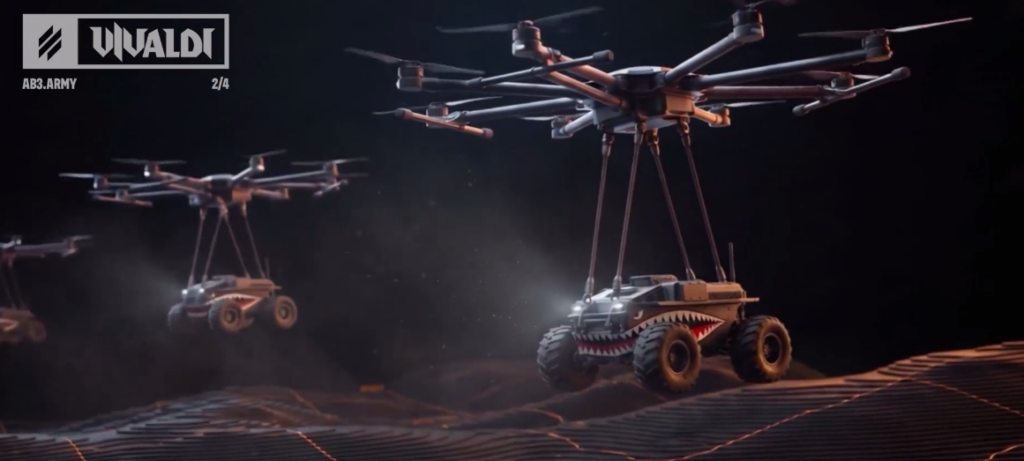
For the first time, Ukraine has dropped ground robots behind Russian lines from the air amid the Operation Vivaldi, protecting Ukraine's fortress cities in Donetsk Oblast. Source: The scheme by the 3rd Army Corps

For the first time, Ukraine has dropped ground robots behind Russian lines from the air. The 3rd Army Corps, behind the mission, says its heavy drones delivered kamikaze unmanned ground vehicles more than 10 kilometers into the Russian rear during the "second season" of Operation Vivaldi, letting Ukrainian troops flank them and clear another 40 square kilometers.

Vivaldi is the counteroffensive the corps is running near Lyman in northern Donetsk. Over its first two "seasons," the 3rd Army Corps and attached units have retaken more than 125 square kilometers, half of it de-occupied outright, and inflicted more than 3,000 casualties on Russian forces.

The operation, run under an information blackout for months, has also disrupted Russia's push and, the Institute for the Study of War found, its plan to encircle the fortified belt of Donetsk cities.

Brigadier General Andrii Biletskyi, corps commander, has said the operation, which he named after Vivaldi's Four Seasons, will run through four phases, and only two have been completed. The air-dropped robot is the newest report on how the corps fights.

Machines go first, infantry follows

The corps casts the tactic as a means of expending robots rather than people.

"In assault operations, drones and ground robots always go ahead of the infantry," Biletskyi says.

The 3rd Army Corps was the first in the world to begin air-dropping ground robotic systems. Our heavy bombers deliver kamikaze robots more than 10 kilometers into the Russian rear.

Wars are won by infantry, one of the corps' soldiers added, "but we protect ours, so the robots go to the enemy first."

A dome hides the assault

As the assault groups advanced amid the operation, Ukrainian air defense and electronic warfare threw a protective dome over the battle area, blinding Russian drones so they could not read the operation's design.

Meanwhile, artillery and strike drones hit command posts, communications nodes, logistics, crossings, and reserves, letting Ukrainian units dig in on the ground they had taken.

On the Lyman axis, the corps says it freed the villages of Shandryholove and Derylove and took control of Drobysheve, and that Vivaldi has kept Russia from shifting significant forces to the Kupiansk front.

North Korea has fired around 150 ballistic missiles at Ukraine, learning from each one. Same missiles threaten Japan, and Kyiv just shows its speaker what is inside them

19 septembre 2026 à 12:54

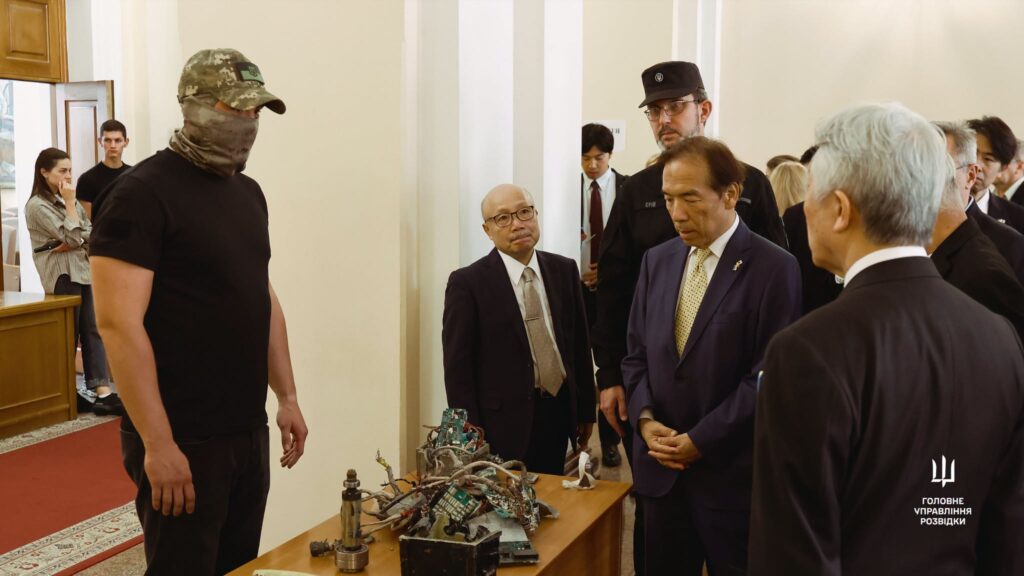
Ukraine's Defense Intelligence has given Eisuke Mori, speaker of Japan's House of Representatives, a close look at a North Korean weapon: the components of a ballistic missile Russia fired at Ukraine. Source: Ukraine's Defense Intelligence

Ukraine's Defense Intelligence, also known as HUR, has given Japan's parliament speaker a rare, close look at a North Korean weapon: the components of a ballistic missile Russia fired at Ukraine. Ukrainian officers have shown the parts to Eisuke Mori, speaker of Japan's House of Representatives, during his delegation's visit to Kyiv, HUR says on social media.

Ukraine has become the place where North Korea's missiles are tested in combat and taken apart. Pyongyang has supplied Russia with roughly 150 KN-23 and KN-24 ballistic missiles since late 2023, along with thousands of troops, and Russia has fired scores of them at Ukrainian cities.

Each strike gives Pyongyang combat data that has sharpened its weapons. Showing Japan the components turns that access into a prospect of future deterrence: the same missiles threaten the Asia-Pacific.

Ukraine hands Japan the evidence

Examining missile parts allows analysts to read the missile's technical characteristics, design, and the state of North Korea's arms industry, HUR says. Ukraine has found that the North Korean missiles falling on its cities are built partly from foreign parts, with components traced to companies in Britain, Japan, Switzerland, China, and the US, Radio Free Asia reports, evidence of how Pyongyang skirts sanctions to build them.

The threat reaches the Pacific

HUR frames the demonstration as a shared-security case. North Korean weapons endanger not only Ukraine but Japan and the wider Asia-Pacific, it says, while the Moscow-Pyongyang partnership lets Russia keep waging its war and lets Pyongyang build up its arsenal and refine its weapons.

"Countering this cooperation requires coordinated action by international partners. Sharing intelligence helps better assess common threats and find ways to overcome them," HUR states.

Pyongyang learns from the strikes

North Korea has sent Russia millions of artillery shells, rocket systems, and thousands of troops, and is paid in cash and technology, with one analyst estimating Pyongyang may have earned about $20 billion from the war. In return, the missiles' accuracy has improved as Pyongyang studies how they perform under fire, turning the war into a live proving ground for weapons built to threaten its neighbors.

  • ✇Euromaidan Press
  • At camp Norway built in Polish forest, NATO trainers admit Ukraine’s army now moves faster than their own
    Ukrainian engineers near the front rewrite their drones' software every couple of days. A NATO army needs about six months to push the same update. That gap in speed is the central challenge for the Western trainers working with Ukrainian troops in Poland, who say Ukraine's wartime tempo is exposing how slowly the West moves in peacetime, the Business Insider reports. Russia's war forces the Ukrainian Army to buy, train, and adapt at a pace peacetime armies are not built for, and its ex
     

At camp Norway built in Polish forest, NATO trainers admit Ukraine’s army now moves faster than their own

19 septembre 2026 à 12:37

The image shows Ukrainian soldiers. Source: The 80th Separate Air Assault Halytska Brigade

Ukrainian engineers near the front rewrite their drones' software every couple of days. A NATO army needs about six months to push the same update. That gap in speed is the central challenge for the Western trainers working with Ukrainian troops in Poland, who say Ukraine's wartime tempo is exposing how slowly the West moves in peacetime, the Business Insider reports.

Russia's war forces the Ukrainian Army to buy, train, and adapt at a pace peacetime armies are not built for, and its experience is pushing NATO to confront how much its own bureaucracy slows it down.

The alliance has studied that experience without yet fully absorbing it: in an Estonian war game last winter, a ten-person Ukrainian drone team wiped out two NATO battalions in a day.

Now NATO Secretary General Mark Rutte is calling for a large-scale transformation of the West's defense industry so its armies can react faster.

Two speeds meet in Poland

The place where those speeds collided was Camp Jomsborg, a base Norway built in an eastern Polish forest in a matter of months. There, under an operation called Legio, trainers from across northern Europe drill Ukrainian soldiers while the Ukrainians hand their front-line lessons back to NATO.

The camp sits, as its operations officer, a major identified only as John, put it,  at "the mental and geographical middle point between war in the east and peacetime mechanism in the West."

A drone update tells the story

Brigadier General Atle Molde, who commands the task force, put the gap in numbers. If a Western drone needs new software, he said, "you have to send it to a Western country or a company, and an update takes six months." 

In Ukraine, "they have the engineers sitting close to the front updating every two days, every two weeks, developing software, adapting it to genuine situations."

Molde said he wants to see greater initiative in innovation within Western armies, but to achieve that, "it has to be some major changes that have to be done on all levels when it comes to legislation."

What are “S-300 Clone” and GAM-67 in America’s new $2.68 billion package for Ukraine? Experts think they have answer

19 septembre 2026 à 12:16

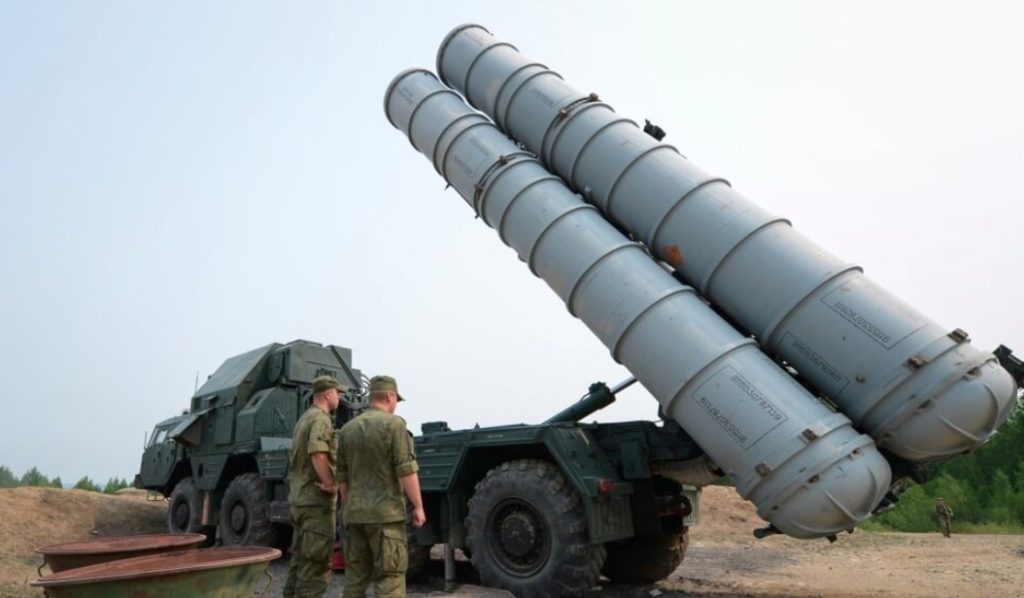
A Russian S-300 air defense system.

The US is preparing to sell Ukraine something unusual: American-made missiles for its Soviet S-300 air-defense systems. The missiles, labeled "S-300 Clone" in the paperwork, are part of a $2.68 billion package that the State Department approved on 18 September, financed by European partners and unused US military aid, Defense Express reports.

Ukraine has plenty of Soviet-era S-300 launchers but not the missiles to feed them. Russia will not sell more, and an earlier Ukrainian attempt to build its own went nowhere, according to Defense Mirror.

Not a Soviet 5V55 replica

At the same time, the missile itself is not actually a "clone" or replica of the Soviet 5V55. According to Defense Express's own information, this is a new development with enhanced characteristics and a different, more modern targeting guidance principle.

At the same time, the American side did not disclose the index, characteristics, or manufacturer of the missiles mentioned in the State Department's statement.

In September 2024, then-US Defense Secretary Lloyd Austin announced at the Ramstein contact group that Washington, in partnership with several European companies, was working with Ukraine to "design and build a substitute" for the Soviet S-300 and the R-27 air-to-air missile used by fighter jets, Newsweek reports. He never spelled out what that substitute would be.

Anti-radar missile project from the 1950s

The package will also include GAM-67. As for the GAM-67, despite the existence of an unrealized American anti-radar missile project from the 1950s, this is also a new development. It is intended for medium-range systems, both existing ones, including Soviet ones, and future ones.

The package also provides for modernization and maintenance: spare parts, consumables, and accessories, support during repair and return, software, transportation support, engineering, technical, and logistical services from the US government and contractors, and other related elements of logistical and program support.

Defender Media: Ukraine’s battle-tested drone makers reach no top slot in Pentagon’s $1.1 billion Drone Dominance program, but some Ukrainian technology wins anyway

19 septembre 2026 à 11:46

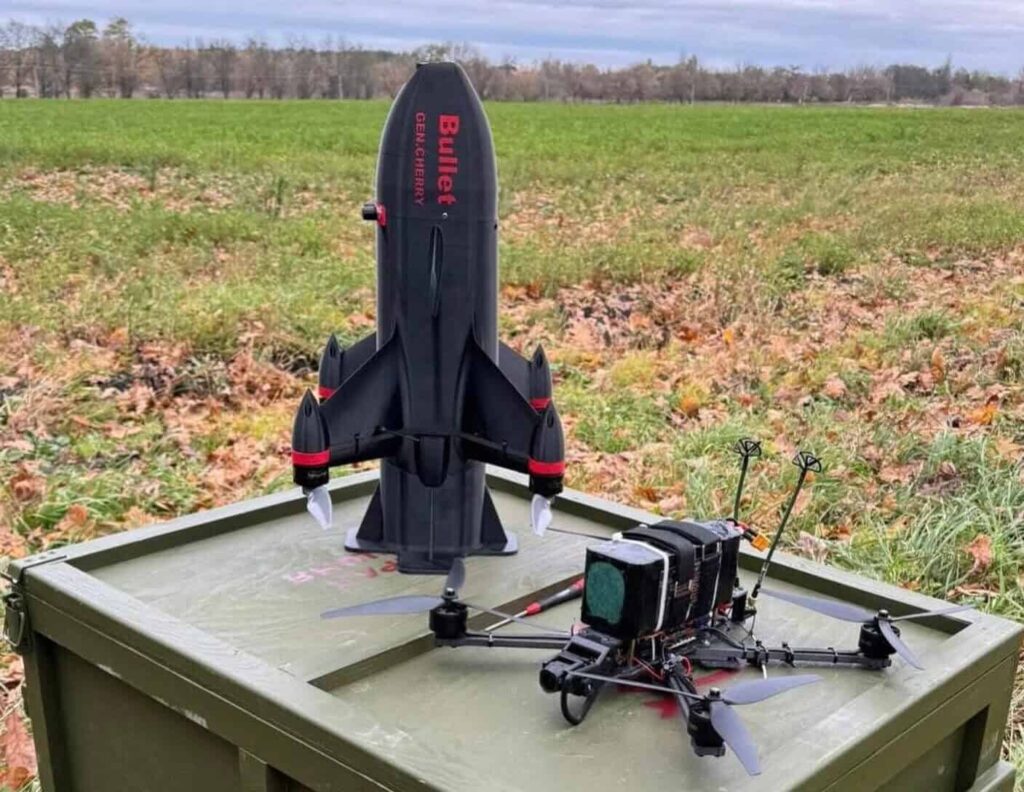
interceptor drones General Cherry (Chereshnia)

Ukraine's battle-tested drone makers did not win a single top slot in the Pentagon's latest drone contest. But some Ukrainian technology won anyway, competing quietly under the names of Western partners, The Defender Media reports.

The Pentagon's $1.1 billion Drone Dominance program does not allow direct purchases from Ukrainian firms, which must set up a US legal entity to bid.

The Ukrainians who competed under their own names were hampered by export licenses, the hunt for non-Chinese components, and visa issues, and none of the four cracked the top five in either category.

American firms sweep the top slots

The Pentagon picked five winners each in two categories, long-range strikes out to 15 kilometers and close-in assault. Eric Schmidt's Perennial Autonomy topped the long-range field with its Hornet drone, on 80.1 points, and Neros led the close-in category with 88.1. Neros already supplies Ukraine with 6,000 of its Archer FPV drones.

The rest of the winners, from ORQA's US arm to XTEND and ModalAI, were American as well. All will receive Pentagon supply contracts, with order sizes to be set later.

Ukrainians win under other flags

The Ukrainian firms that announced their entries, F-Drones, General Chereshnya, Grim Tech, and Stellarion, all missed the cut, though General Chereshnya had reached the program's second round earlier in the year.

Bureaucracy tripped the open entrants

Stellarion laid out what went wrong. Getting export permits and moving hardware took so long that integrating American parts, including warheads, and adapting the finished system on schedule became "complicated," its representatives said.

Finding NDAA-compliant, non-Chinese components ate up more time, and visa delays kept its specialists from fixing technical problems on site.

Firms that missed the top five can enter later rounds: a Gauntlet 2.5 contest for bomber drones is set for October, and a third phase begins in February 2027, with missions built to test control of several drones at once.

Ukraine’s Vivaldi operation cleared 85 square kilometers near Lyman. A soldier who fought it says one thing was hardest of all

19 septembre 2026 à 11:22

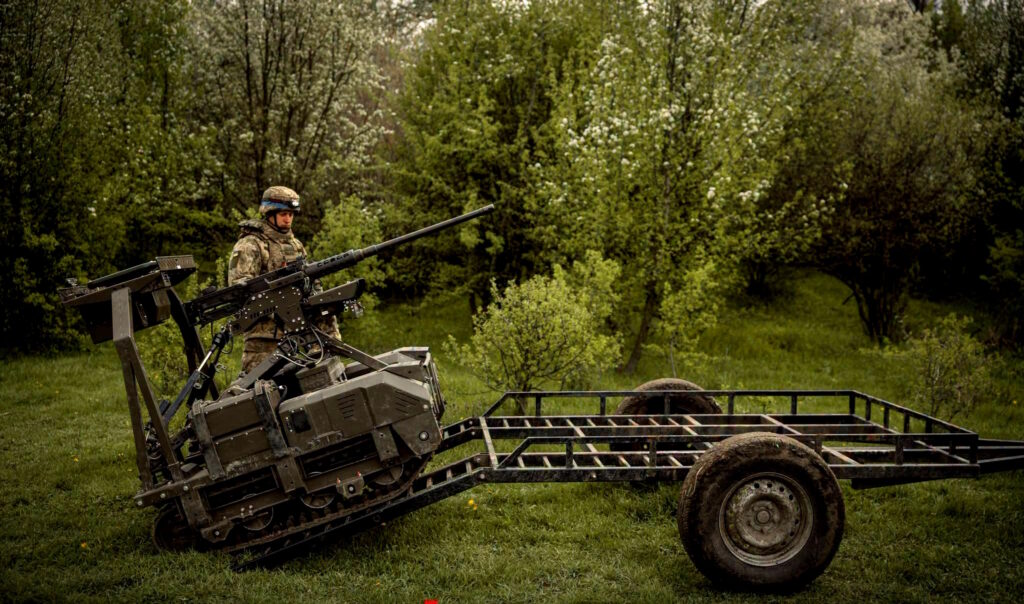
The image shows a Ukrainian soldier standing next to an unmanned ground robotic vehicle. Source: The General Staff

A soldier of Artan, a special unit of Ukraine's Defense Intelligence, known by the callsign Derun, described the fighting during important Ukraine's Operation Vivaldi, according to Novyny.Live. He says the hardest part of Ukraine's counteroffensive in the northern part of Donetsk Oblast is prying Russian troops out of positions they have fortified so well that they see every approach coming.

Vivaldi is bigger than any one assault. It is the counteroffensive that the Third Army Corps is running near Lyman. The Institute for the Study of War says it has disrupted Russia's plan to encircle the fortified "Fortress Belt" of Donetsk cities, as the corps says its first phase cleared 75 square kilometers of Russian infiltrators and de-occupied another 10.

Dug-in Russians see every approach

The problem is Russia's preparation, when "the enemy has made his positions very well fortified," Derun said.

"The hardest is to knock him out of there, because when a position is competently prepared, they see everything," he explained.

A well-sited position lets the defenders watch the open ground an assault group has to cross, spot the attackers early, and fight them at a distance, which is the worst way for the attacker to come.

A lapse opens the way in

When Russian troops stop watching the approaches to their position, the assault group can close the gap unseen, Derun said.

"When Russian troops are distracted, it can play into our hands: we can approach under cover, when he does not see us, and work him from close range," he added.

Once the attackers are in close, he added, the defenders can start to panic and make mistakes.

Vivaldi runs to four seasons

Artan fought as part of a larger force. Alongside the Third Army Corps' own brigades, the operation drew in Ukraine's Special Operations Forces, the border guard, and the military-intelligence unit, all under a single tactical command, and it ran for months under an information blackout before the corps disclosed it.

The corps commander, Andrii Biletskyi, said the phase revealed so far is only the first of four, naming the operation for Vivaldi's Four Seasons.

"This is only the first," he said, promising more.

Ukraine’s most effective units, Azov among them, need reinforcements. So National Guard is opening recruitment center aimed only at foreigners

19 septembre 2026 à 10:23

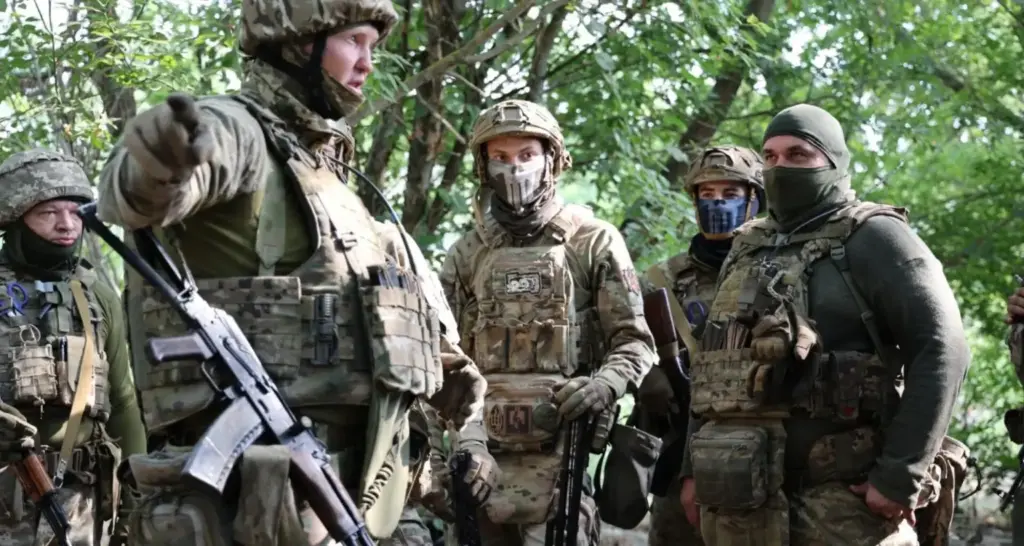
A unit commander gestures while briefing Colombian and Ukrainian soldiers wearing camouflage and tactical gear in a wooded area.

Ukraine's National Guard is setting up its own center to recruit foreigners into its ranks. The center will speed up the process of contracting foreign volunteers and deploying them to combat units as part of an experimental project approved by the government, Interior Minister Ivan Vyhivskyi says.

Around 16,000 foreigners from at least 72 countries already serve in the armed forces, according to Defense Post. The new center formalizes that pipeline for the National Guard, home to some of Ukraine's most effective units, including Azov, which is fighting for Donbas right now, and the Khartiia Corps.

Former Defense Minister Mykhailo Fedorov set the ambition higher still, saying in June 2026 that Ukraine wants to fill 30 to 50 percent of its assault and infantry positions with foreigners.

The Guard builds its own pipeline

Until now, foreigners have joined the National Guard through a Defense Ministry recruitment center. To speed things up, the Guard is building its own, which will coordinate the process and walk candidates through every step, from interviews and background checks to training.

"The candidate's path to service should be as fast as possible," Prime Minister Serhii Koretskyi said, adding that combat units should get their reinforcements more promptly.

Commanders pushed for it

The idea came from the front. Vyhivskyi said National Guard brigade and corps commanders raised it with him during recent trips to frontline regions, and that the center should directly strengthen their combat units.

Foreign recruits are already a fixture of the fight. Large numbers have come from Colombia and across South America, and Colombian volunteers have formed a reconnaissance and assault group within the 47th Mechanized Brigade. Their motivations vary, from combat experience to pay well above what many earn at home, but the effect is the same: extra soldiers for the Ukrainian force.

❌