Vue normale

  • ✇The Kyiv Independent
  • Russia's war-fueled economy is running on empty, Central Bank chief warns
    Editor's note: This story was updated to include Russian President Vladimir Putin's remarks at the St. Petersburg International Economic Forum. Russia's wartime economic momentum is fading fast, with key resources nearly exhausted, Russian Central Bank Governor Elvira Nabiullina said, warning that the country can no longer rely on the same tools that sustained growth in the first two years of the full-scale war against Ukraine, the Moscow Times reported on June 19.Speaking at the St. Petersburg
     

Russia's war-fueled economy is running on empty, Central Bank chief warns

20 juin 2025 à 05:29
Russia's war-fueled economy is running on empty, Central Bank chief warns

Editor's note: This story was updated to include Russian President Vladimir Putin's remarks at the St. Petersburg International Economic Forum.

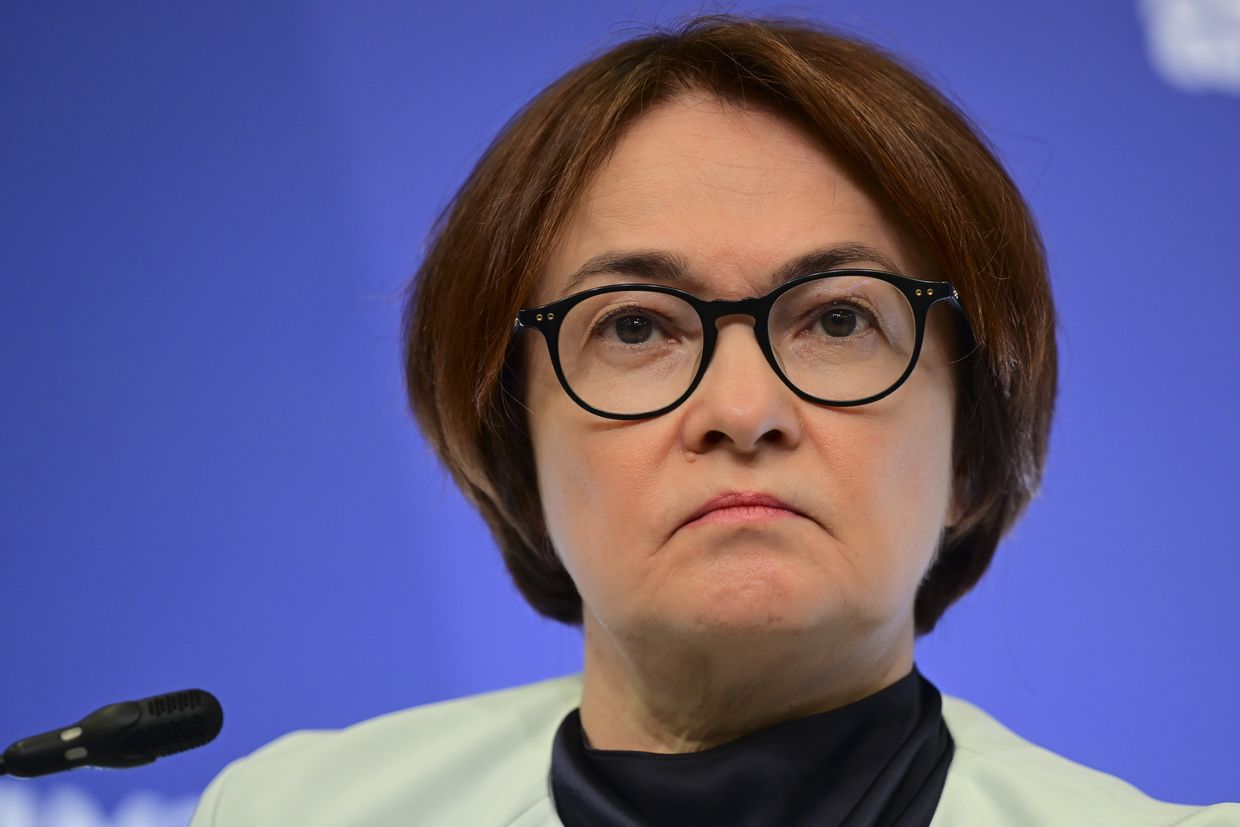
Russia's wartime economic momentum is fading fast, with key resources nearly exhausted, Russian Central Bank Governor Elvira Nabiullina said, warning that the country can no longer rely on the same tools that sustained growth in the first two years of the full-scale war against Ukraine, the Moscow Times reported on June 19.

Speaking at the St. Petersburg International Economic Forum, Nabiullina said that the Russian economy had been expanding on the back of "free resources," including labor, industrial capacity, bank capital reserves, and liquid assets from the National Wealth Fund (NWF) — all of which are now reportedly nearing depletion.

"We grew for two years at a fairly high pace because free resources were activated," she said. "We need to understand that many of those resources have truly been exhausted."

Speaking at the same forum, Russian President Vladimir Putin ordered officials "not to allow stagnation or recession" in the Russian economy under any circumstances.

"We must consistently change the structure of our economy," he said.

The comments come after Russia's ambassador to the U.K., Andrei Kelin, claimed in an interview with CNN this week that Russia is spending "only 5–7%" of its federal budget on the war. Kelin claimed that Russia can continue waging its war, saying Moscow "is winning."

According to the state statistics agency Rosstat, Russia's unemployment rate has dropped to a historic low of 2.3%. At the same time, mass emigration and large-scale wartime recruitment have created a labor shortage estimated at 2 million people. Industrial capacity utilization has surged beyond 80%, the highest in modern Russian history.

Ukraine war latest: Russia accidentally admits to its staggering troop losses in Ukraine
Key developments on June 19: * Russia accidentally admits to its staggering troop losses in Ukraine * Ukraine, Russia carry out another POW exchange under Istanbul deal * North Korea considers sending 25,000 workers to Russia to help produce Shahed drones, media reports * Zelensky appoints Brigadier General Shapovalov as new Ground Forces
Russia's war-fueled economy is running on empty, Central Bank chief warnsThe Kyiv IndependentThe Kyiv Independent news desk
Russia's war-fueled economy is running on empty, Central Bank chief warns

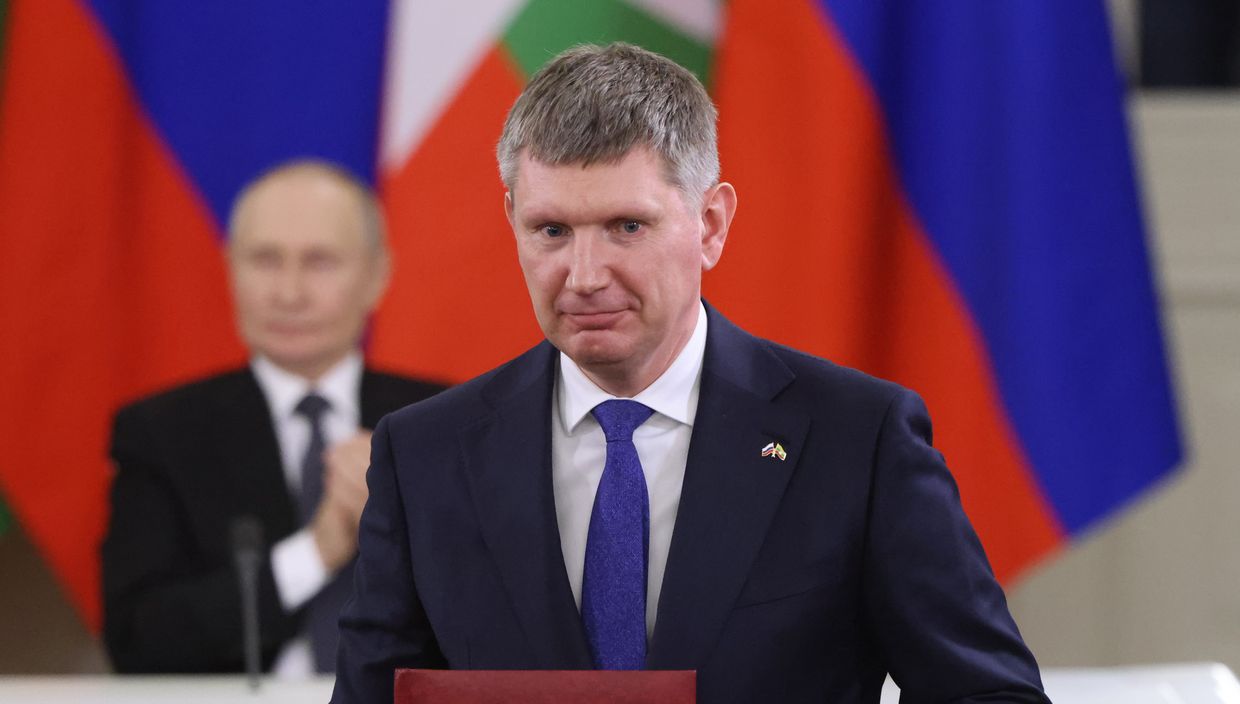
Russia's economy is now "on the verge of a transition to recession," Russian Economy Minister Maxim Reshetnikov said at the same forum. Official data show that GDP growth slowed from 4.1% in late 2023 to just 1.4% in the first quarter of 2024, with the economy contracting quarter-on-quarter for the first time since 2022.

Business profits in March fell by one-third overall and dropped by half in the critical oil and gas sector. Industrial growth stagnated at 1.2% year-over-year between January and April, while civilian sectors of the economy began shrinking. Retail turnover growth slowed from 7.2% in December to just 2.4% in April.

An anonymous Russian analyst told Novaya Gazeta Europe that government technocrats are effectively telling Putin it's time to choose between "war or economy."

During its invasion of Ukraine, Russia has faced rising inflation due to record military spending, pushing the central bank to maintain high interest rates. Under government pressure, the bank cut the rate slightly from 21% to 20% earlier in June, despite concerns about weakened private investment.

Officials have scaled back key development projects and reduced shipments of metals and oil products. Early hopes for recovery in 2025, driven by talks with the U.S., have faded as inflation and sanctions weigh heavily on growth.

As Russian losses in Ukraine hit 1 million, Putin’s war economy heads toward breaking point
Russian losses in Ukraine hit a massive, and grim milestone on June 12 — 1 million Russian soldiers killed or wounded during the 39-month-long full-scale war, according to figures from Kyiv. Although hugely symbolic, the number is unlikely to prompt a change in tactics from Moscow as it gears up for
Russia's war-fueled economy is running on empty, Central Bank chief warnsThe Kyiv IndependentChris York
Russia's war-fueled economy is running on empty, Central Bank chief warns
  • ✇The Kyiv Independent
  • EU reportedly eyes riskier investments for frozen Russian assets to boost Ukraine aid
    The European Union is developing a plan to generate more revenue for Ukraine by shifting nearly 200 billion euros ($215 billion) in frozen Russian assets into higher-yield, riskier investments, Politico reported on June 19, citing unnamed sources.The assets, largely held by Belgium-based clearinghouse Euroclear, have been immobilized since 2022 under EU sanctions imposed following Russia's full-scale invasion of Ukraine. Under the current framework, the funds are invested conservatively with the
     

EU reportedly eyes riskier investments for frozen Russian assets to boost Ukraine aid

19 juin 2025 à 07:26
EU reportedly eyes riskier investments for frozen Russian assets to boost Ukraine aid

The European Union is developing a plan to generate more revenue for Ukraine by shifting nearly 200 billion euros ($215 billion) in frozen Russian assets into higher-yield, riskier investments, Politico reported on June 19, citing unnamed sources.

The assets, largely held by Belgium-based clearinghouse Euroclear, have been immobilized since 2022 under EU sanctions imposed following Russia's full-scale invasion of Ukraine.

Under the current framework, the funds are invested conservatively with the Belgian central bank, generating low but steady returns. In 2024, this approach yielded around 4 billion euros ($4.3 billion) in windfall profits, which the EU allocated to help service a G7-backed 45-billion-euro loan for Ukraine (around $50 billion).

Now, with that loan largely disbursed and concerns mounting over future financing, especially amid signals from U.S. President Donald Trump that American support could be scaled back, EU officials are under pressure to find new funding streams.

According to Politico, the proposed plan would redirect the frozen Russian assets into a special investment fund under EU control, allowing for higher returns without confiscating the assets — a move designed to sidestep legal and political opposition.

As part of the current G7-led funding framework, Ukraine has already received 7 billion euros ($8 billion) from the EU under the Extraordinary Revenue Acceleration (ERA) initiative, which uses profits from frozen Russian sovereign assets to fund loans.

Prime Minister Denys Shmyhal confirmed on June 13 that a fifth tranche of 1 billion euros ($1.1 billion) had been disbursed to support Ukraine's state budget. The ERA mechanism, part of the broader $50 billion G7 program, aims to ensure stable financing for Kyiv while making Russia shoulder the cost of its aggression.

According to Politico, finance ministers from all 27 EU countries are expected to debate the idea during an informal dinner in Luxembourg on June 19.

Poland, which currently holds the Council of the EU's rotating presidency, emphasized the urgency of the discussions, writing in an invitation letter seen by Politico that "further steps regarding the sanctions regime" and the potential use of frozen Russian assets "must be addressed."

The European Commission has also been holding informal consultations with a group of member states, including France, Germany, Italy, and Estonia, to explore legal options for keeping the Russian assets frozen in case Hungary exercises its veto power during the semiannual sanctions renewal process. So far, no workaround has been finalized.

Hungarian Prime Minister Viktor Orban has repeatedly threatened to block sanctions extensions as a gesture of goodwill toward Moscow, raising concerns the assets could be unfrozen and returned to Russia by default.

By now, much of the EU's 50-billion-euro ($57 billion) Ukraine Facility, agreed in 2023 and intended to last through 2027, has already been spent. The bloc's broader 1.2-trillion-euro ($1.37 billion) budget is stretched thin, and any additional top-ups would also require unanimous support.

Russia just accidentally admitted to its staggering troop losses in Ukraine
A senior Russian official on June 19 inadvertently confirmed the staggering troop losses incurred by Moscow’s forces during its full-scale invasion of Ukraine. In an interview with CNN, Russian Ambassador to the U.K. Andrey Kelin was asked about Moscow’s maximalist intentions in Ukraine and its ability to recruit enough
EU reportedly eyes riskier investments for frozen Russian assets to boost Ukraine aidThe Kyiv IndependentChris York
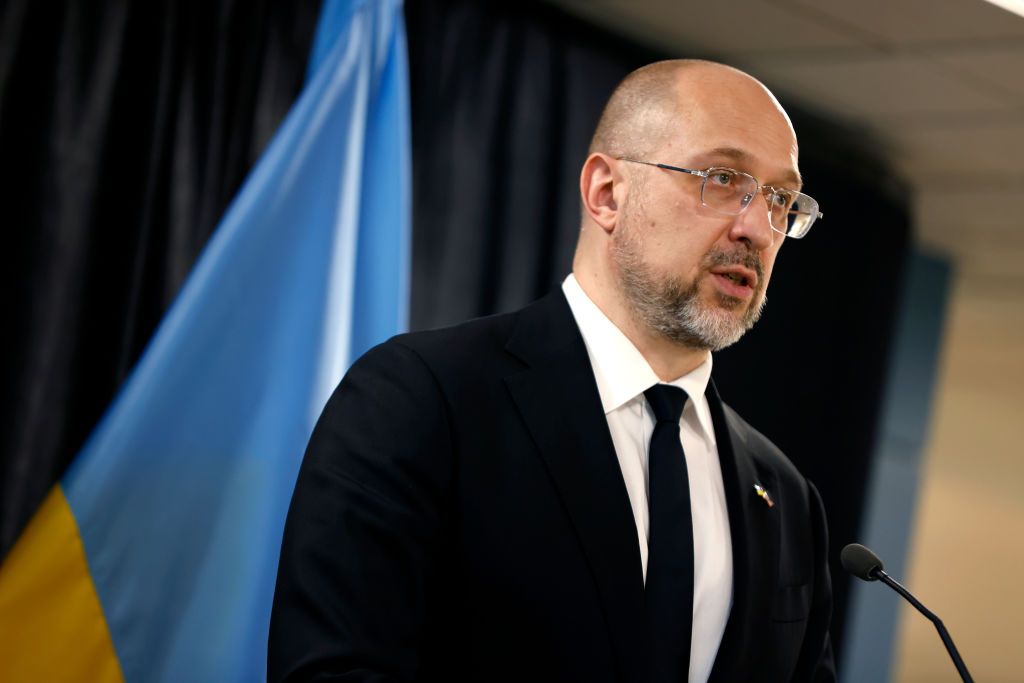
EU reportedly eyes riskier investments for frozen Russian assets to boost Ukraine aid
  • ✇The Kyiv Independent
  • Russia 'on the verge' of recession, Kremlin economy minister warns
    The Russian economy appears to be "on the verge of a transition to recession," Russian Economy Minister Maxim Reshetnikov said on June 19, adding that the next step will be decisive.The comments underscore Russia's mounting economic challenges as it continues its all-out war against Ukraine."According to figures, we have a cooling stage (in the economy). But all our numbers are like a rearview mirror," Reshetnikov said at the St. Petersburg International Economic Forum when asked about Russia's
     

Russia 'on the verge' of recession, Kremlin economy minister warns

19 juin 2025 à 05:32
Russia 'on the verge' of recession, Kremlin economy minister warns

The Russian economy appears to be "on the verge of a transition to recession," Russian Economy Minister Maxim Reshetnikov said on June 19, adding that the next step will be decisive.

The comments underscore Russia's mounting economic challenges as it continues its all-out war against Ukraine.

"According to figures, we have a cooling stage (in the economy). But all our numbers are like a rearview mirror," Reshetnikov said at the St. Petersburg International Economic Forum when asked about Russia's economic situation.

"According to current business perceptions, we are already, it seems, on the verge of a transition to a recession," the minister added. Reshetnikov clarified that recession is not inevitable and that "everything depends on our decisions."

Russia has faced soaring inflation during its invasion of Ukraine, driven by record wartime spending. This forced the central bank to set one of the highest key interest rates in decades, hurting private investments in non-defense-related sectors.

Facing government pressure, the central bank slashed the interest rate from 21% to 20% earlier this month.

Reshetnikov himself urged the central bank to cut rates in order to boost growth, aiming to achieve a 3% growth target set by Russian President Vladimir Putin.

Russia has been forced to slash key projects across various sectors in the face of an economic slowdown, brought on in part by plummeting oil prices. Major Russian exporters have also cut down on rail shipments of metals and oil products, even beyond earlier projected reductions.

After some positive signals earlier in 2025 due to U.S. President Donald Trump's outreach to Moscow and hopes for a ceasefire, more recent reports again indicate a sharp slowdown in Russia's economic growth.

Analysts have connected this development to the central bank policies, sanctions, low oil prices, supply difficulties, and high inflation.

Putin says he’s ready to meet Zelensky if West ‘stops pushing’ Ukraine to fight
Russia wants to end the war in Ukraine “as soon as possible,” preferably through peaceful means, and is ready to continue negotiations — provided that Kyiv and its Western allies are willing to engage, Vladimir Putin said.
Russia 'on the verge' of recession, Kremlin economy minister warnsThe Kyiv IndependentOlena Goncharova
Russia 'on the verge' of recession, Kremlin economy minister warns
  • ✇The Kyiv Independent
  • For the first time, Australia sanctions Russian shadow fleet oil tankers
    Australia has, for the first time, imposed sanctions on Russia's so-called "shadow fleet" of oil tankers, targeting 60 vessels used to circumvent international sanctions and sustain the Kremlin's war effort in Ukraine, the Australian government said on June 18.The move aligns Canberra with similar measures introduced by the United Kingdom, Canada, and the European Union. Australia's Foreign Ministry said the sanctioned vessels operate under "deceptive practices, including flag-hopping, disabling
     

For the first time, Australia sanctions Russian shadow fleet oil tankers

18 juin 2025 à 08:20
For the first time, Australia sanctions Russian shadow fleet oil tankers

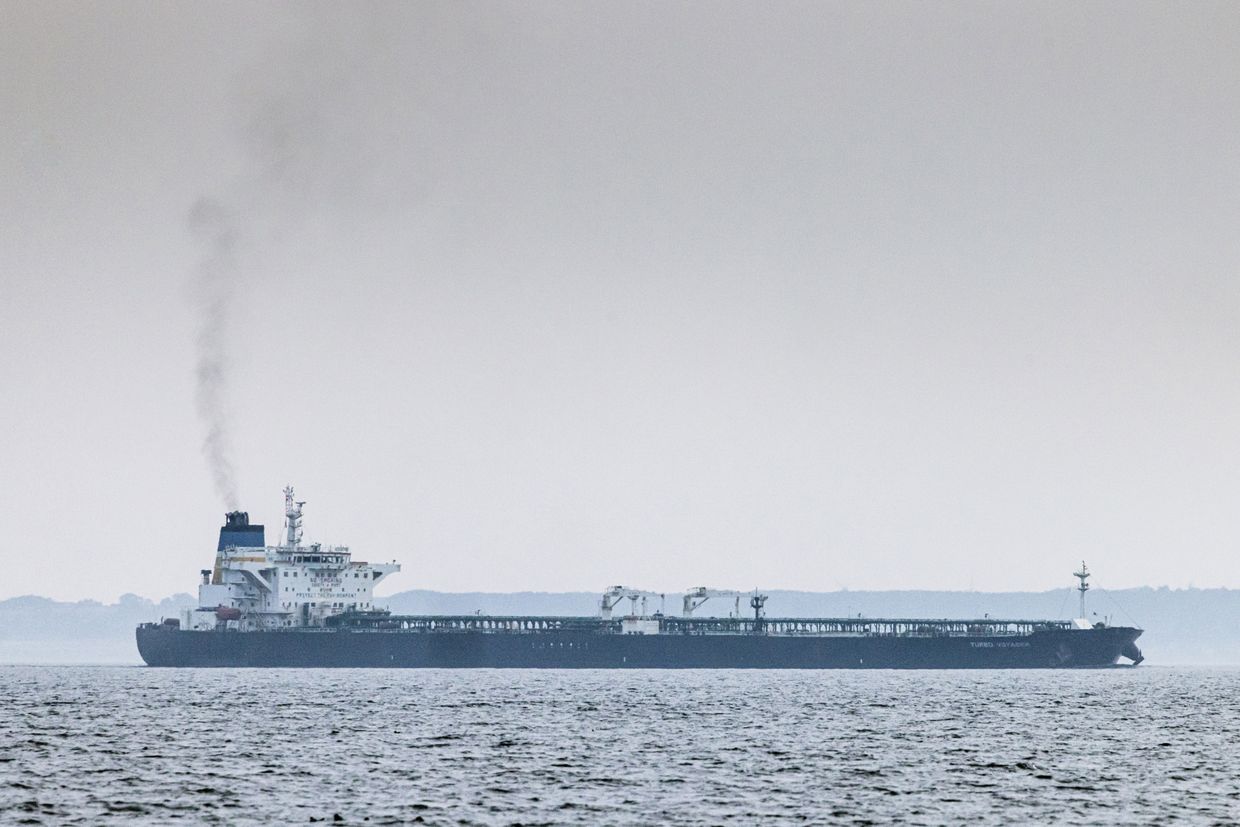
Australia has, for the first time, imposed sanctions on Russia's so-called "shadow fleet" of oil tankers, targeting 60 vessels used to circumvent international sanctions and sustain the Kremlin's war effort in Ukraine, the Australian government said on June 18.

The move aligns Canberra with similar measures introduced by the United Kingdom, Canada, and the European Union.

Australia's Foreign Ministry said the sanctioned vessels operate under "deceptive practices, including flag-hopping, disabling tracking systems and operating with inadequate insurance," enabling illicit Russian oil trade that undermines international sanctions.

"Russia uses these vessels to circumvent international sanctions and sustain its illegal and immoral war against Ukraine," the ministry said in a statement.

With this move, Australia has now sanctioned more than 1,400 Russian individuals and entities since Moscow's full-scale invasion of Ukraine began in February 2022, the government said.

The step comes amid the continued operation of Russia's shadow fleet. According to a recent study by the Kyiv School of Economics (KSE), Russia currently operates 435 tankers outside the control of Western regulators to evade sanctions such as the G7-EU price cap on Russian oil.

These vessels are typically un- or underinsured and pose a rising environmental risk due to their age and operational opacity.

KSE estimates that as of April 2024, 83% of Russia's crude oil and 46% of its petroleum product exports were shipped using shadow fleet tankers. The study warns that this undermines the effectiveness of Western sanctions and increases the likelihood of maritime disasters, as many of these ships fall outside international safety and insurance standards.

The EU formally adopted its 17th sanctions package against Russia in May, sanctioning nearly 200 vessels tied to the shadow fleet. EU foreign policy chief Kaja Kallas said the new measures also target hybrid threats and human rights violations, with more sanctions under consideration.

Some EU member states and observers have criticized the package for lacking stronger provisions to disrupt Russia's sanction evasion schemes.

Now, the EU seeks to approve its 18th sanctions package, which will add 77 more shadow fleet vessels to comply with the cap to prevent Russia from circumventing sanctions and propose imposing a ban on imports of petroleum products made from Russian oil.

The United States has signaled reluctance to pursue additional sanctions despite Moscow's continued aggression in Ukraine and rejection of ceasefire proposals supported by Western allies.

Putin ‘cannot be trusted’ as mediator, Kallas says, urges EU to tighten Russian oil cap after deadly Kyiv strike
EU High Representative Kaja Kallas urged the European Union to press forward with lowering the oil price cap on Russian crude, even without U.S. support, warning that Middle East tensions could otherwise drive prices up and boost Russia’s revenues.
For the first time, Australia sanctions Russian shadow fleet oil tankersThe Kyiv IndependentAnna Fratsyvir
For the first time, Australia sanctions Russian shadow fleet oil tankers
  • ✇The Kyiv Independent
  • Ukraine moves forward on lithium mining under US minerals deal, NYT reports
    More than a month after Ukraine signed a landmark agreement granting the United States a stake in its mineral reserves, Kyiv has approved initial steps to open one of its largest lithium deposits to private investors, the New York Times (NYT) reported, citing two government officials.On June 16, the Ukrainian government agreed to begin drafting recommendations for a bidding process to develop the Dobra lithium field in central Ukraine. According to the officials, who spoke to NYT on condition of
     

Ukraine moves forward on lithium mining under US minerals deal, NYT reports

16 juin 2025 à 15:46
Ukraine moves forward on lithium mining under US minerals deal, NYT reports

More than a month after Ukraine signed a landmark agreement granting the United States a stake in its mineral reserves, Kyiv has approved initial steps to open one of its largest lithium deposits to private investors, the New York Times (NYT) reported, citing two government officials.

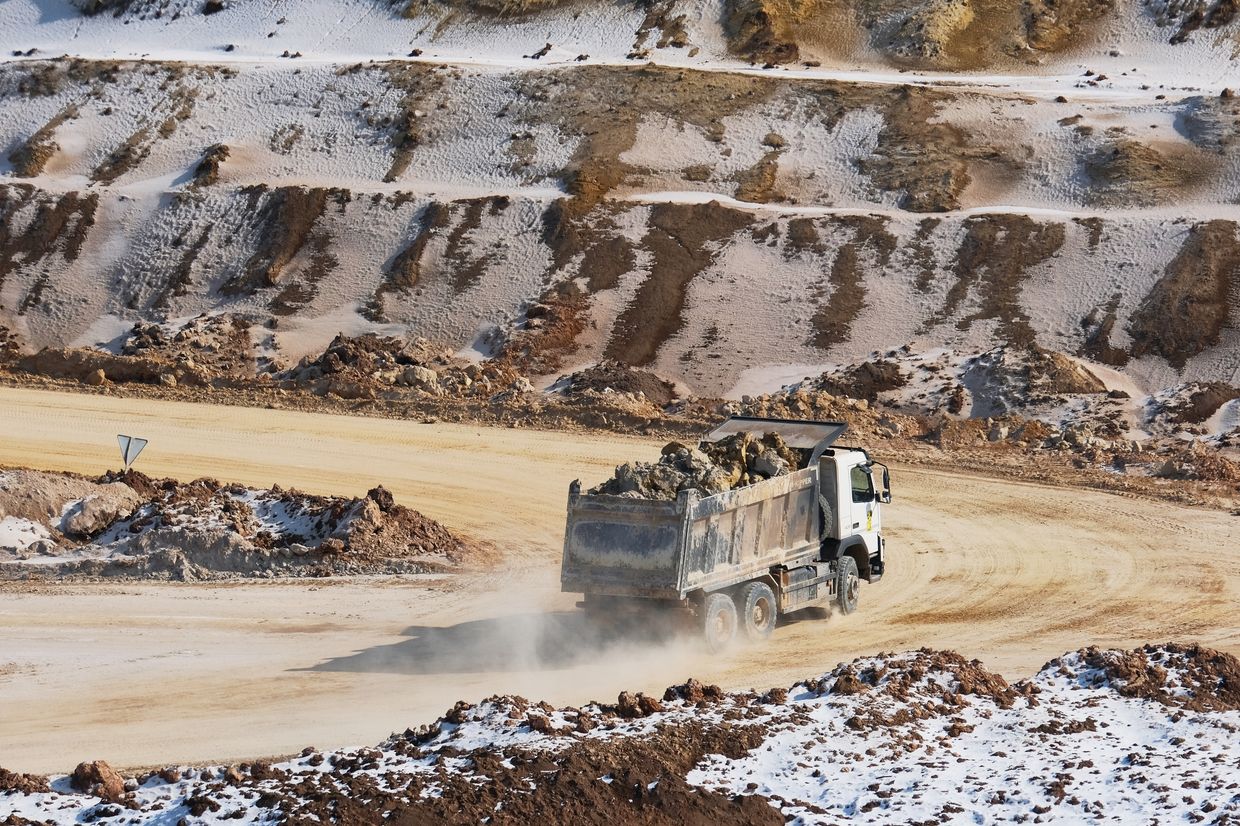
On June 16, the Ukrainian government agreed to begin drafting recommendations for a bidding process to develop the Dobra lithium field in central Ukraine. According to the officials, who spoke to NYT on condition of anonymity, this would be the first project advanced under the U.S.-Ukraine minerals deal.

The Dobra lithium ore site is located in the Novoukrainskyi district of Kirovohrad Oblast, rougly 300 kilometers southeast of Kyiv.

The deal, signed by President Volodymyr Zelensky on May 12, is aimed at deepening economic ties, boosting Ukraine's reconstruction, and positioning the country as a supplier of strategic resources to the U.S.

Among the likely bidders for the Dobra field is a consortium including TechMet, an energy investment firm partly owned by the U.S. government, and billionaire Ronald S. Lauder, a close associate of the U.S. President Donald Trump. The group has long expressed interest in the Dobra site and encouraged Zelensky to open it to bids last year.

Under the broader agreement, half of the revenues from mineral extraction would go to a joint U.S.-Ukraine investment fund. While the Ukrainian government would reinvest its share into the domestic economy, the United States would claim a portion of the profits — a structure Mr. Trump has framed as partial repayment for U.S. assistance to Ukraine.

TechMet CEO Brian Menell said investors were pushing for production-sharing agreements, which offer long-term stability and tax incentives. Monday’s step toward opening the Dobra field is based on such an arrangement, according to the outlet.

Ukraine war latest: Russia ramps up its summer offensive in several directions, seeks to encircle Kostiantynivka
Key developments on June 16: * Russia ramps up its summer offensive in several directions, Ukraine’s military says * Ukraine receives 1,245 bodies of fallen soldiers and citizens, concluding Istanbul repatriation deal * ‘Russians lie about everything’ — Ukraine hits out at Kremlin claims after yet another drone strike on Kyiv * Russia to
Ukraine moves forward on lithium mining under US minerals deal, NYT reportsThe Kyiv IndependentThe Kyiv Independent news desk
Ukraine moves forward on lithium mining under US minerals deal, NYT reports
  • ✇The Kyiv Independent
  • Russian strike hit Boeing office in Kyiv in deliberate attack on US business, FT reports
    Russia deliberately targeted a building used by the U.S. aerospace and defense giant Boeing in a recent attack on Kyiv,  the Financial Times reported on June 15. Overnight on June 9-10, Russian forces launched hundreds of drones and seven missiles in one of the biggest attacks on Ukraine, damaging buildings across the capital. One of the targets included Boeing’s office, according to two Boeing employees, three Ukrainian officials, and the head of the American Chamber of Commerce (ACC) in Ukrain
     

Russian strike hit Boeing office in Kyiv in deliberate attack on US business, FT reports

15 juin 2025 à 10:14
Russian strike hit Boeing office in Kyiv in deliberate attack on US business, FT reports

Russia deliberately targeted a building used by the U.S. aerospace and defense giant Boeing in a recent attack on Kyiv,  the Financial Times reported on June 15.

Overnight on June 9-10, Russian forces launched hundreds of drones and seven missiles in one of the biggest attacks on Ukraine, damaging buildings across the capital. One of the targets included Boeing’s office, according to two Boeing employees, three Ukrainian officials, and the head of the American Chamber of Commerce (ACC) in Ukraine, whom the FT spoke with.

"This is not just an attack against Ukraine, but also an attack where American business is being hit," Andy Hunder, President of the ACC in Ukraine, which represents nearly 700 U.S. and international investors and corporate members, told the Kyiv Independent.

"This is a war against a world where American businesses are making money and thriving," he added.

The strikes on Kyiv came after Ukraine surprised Russia with Operation Spiderweb that saw hundreds of drones target four airbases in Russia and damage 41 war planes. Moscow promised to retaliate in response.  

Boeing, one of the largest American companies operating in Ukraine, cooperates with the Ukrainian aerospace and defense company Antonov, with the two companies exploring several joint ventures and opportunities, including in defense.

Boeing told the FT that none of its employees were injured in the attack and that it continues to operate in Ukraine, where it employs some 1,000 people.

Antonov has also suffered from Russian strikes, as have other defense production sites. As Ukraine pushes for domestic defense production instead of relying on foreign imports, Ukrainian officials say that Moscow is attempting to hinder Ukraine’s efforts to manufacture arms.

German defense company Rheinmetall opened up a factory in Ukraine last October to produce a batch of Lynx infantry fighting vehicles. Moscow threatened the company, saying it was a legitimate target, although Rheinmetall said its facilities are well protected.

Russia has repeatedly targeted other Western businesses. Nearly half of the ACC’s members have had facilities damaged or destroyed, but 90% still continue to operate in Ukraine, Hunder said.

"The American business community is here, it continues to operate, and it's united," he added.

With no new US aid packages on the horizon, can Ukraine continue to fight Russia?
The U.S. has not announced any military aid packages for Ukraine in almost five months, pushing Kyiv to seek new alternatives. But time is running out quickly as Russian troops slowly advance on the eastern front line and gear up for a new summer offensive. “While Ukraine’s dependence on
Russian strike hit Boeing office in Kyiv in deliberate attack on US business, FT reportsThe Kyiv IndependentKateryna Hodunova
Russian strike hit Boeing office in Kyiv in deliberate attack on US business, FT reports
  • ✇The Kyiv Independent
  • Ukraine receives 5th tranche of EU aid from frozen Russian assets, PM confirms
    Ukraine has received another 1 billion euros ($1.1 billion) in macro-financial assistance from the European Union as part of a G7 loan, Prime Minister Denys Shmyhal announced on June 13."This is the fifth tranche of macro-financial assistance from the EU under the ERA Extraordinary Revenue Acceleration) initiative," Shmyhal wrote on social media. "The funds will be directed toward key expenditures of the state budget."Shmyhal thanked Ukraine's partners for their "consistent and reliable support,
     

Ukraine receives 5th tranche of EU aid from frozen Russian assets, PM confirms

13 juin 2025 à 06:37
Ukraine receives 5th tranche of EU aid from frozen Russian assets, PM confirms

Ukraine has received another 1 billion euros ($1.1 billion) in macro-financial assistance from the European Union as part of a G7 loan, Prime Minister Denys Shmyhal announced on June 13.

"This is the fifth tranche of macro-financial assistance from the EU under the ERA Extraordinary Revenue Acceleration) initiative," Shmyhal wrote on social media. "The funds will be directed toward key expenditures of the state budget."

Shmyhal thanked Ukraine's partners for their "consistent and reliable support," adding, "Together, we will make (Russia) pay for all the damage caused to Ukraine."

According to Shmyhal, Ukraine has received a total of 7 billion euros ($8 billion) from the European Union under the ERA initiative, which is funded by the windfall profits generated from immobilized Russian sovereign assets.

The ERA mechanism, launched by the G7 and backed by the EU and the United States, is a $50 billion program designed to support Ukraine through loans repaid using future income from frozen Russian assets. Since Russia's full-scale invasion in 2022, G7 countries have frozen around $300 billion in Russian sovereign assets.

Ukraine received the previous 1-billion-euro tranche on May 8 as part of the fourth installment of EU aid under ERA.

EU provides Ukraine with $1 billion tranche under G7 loan covered by Russian assets
This is the fourth such tranche from the bloc, which is secured by proceeds from frozen Russian assets.
Ukraine receives 5th tranche of EU aid from frozen Russian assets, PM confirmsThe Kyiv IndependentKateryna Hodunova
Ukraine receives 5th tranche of EU aid from frozen Russian assets, PM confirms
  • ✇The Kyiv Independent
  • Oil prices surge after Israeli strike on Iran
    Global oil prices soared on June 13  after Israel launched a strike on Iran, triggering fears of a broader conflict in the energy-rich Middle East that could disrupt global supplies, the BBC reported. The spike threatens to undermine Western efforts to choke off a vital revenue stream for Russia, which relies heavily on oil profits to sustain its war in Ukraine.According to the BBC, Brent and Nymex crude prices jumped by more than 10% following the Israeli attack, reaching their highest levels s
     

Oil prices surge after Israeli strike on Iran

13 juin 2025 à 04:22
Oil prices surge after Israeli strike on Iran

Global oil prices soared on June 13  after Israel launched a strike on Iran, triggering fears of a broader conflict in the energy-rich Middle East that could disrupt global supplies, the BBC reported.

The spike threatens to undermine Western efforts to choke off a vital revenue stream for Russia, which relies heavily on oil profits to sustain its war in Ukraine.

According to the BBC, Brent and Nymex crude prices jumped by more than 10% following the Israeli attack, reaching their highest levels since January. Prices later stabilized but remained about 7.5% higher, with Brent at $74.50 a barrel and Nymex at $73.20.

The price surge comes at a crucial time for Ukraine and its Western allies, who are intensifying efforts to minimize the Kremlin's oil revenues — the backbone of Russia's wartime economy.

President Volodymyr Zelensky urged the European Union on June 11 to impose tougher sanctions on Russia, including a more aggressive price cap on oil exports.

"A ceiling of $45 per barrel of oil is better than $60, that's clear," Zelensky said at the Ukraine-Southeast Europe Summit in Odesa. "But real peace will come with a ceiling of $30. That's the level that will really change the mindset in Moscow."

The EU's current $60 per barrel cap, introduced in December 2022, prohibits Western companies from shipping, insuring, or servicing Russian oil sold above the threshold. While this measure has curtailed some of Russia's profits, the Kremlin continues to earn significant revenue, especially when market prices rise.

European Commission President Ursula von der Leyen said on June 10 that the EU is considering lowering the cap to $45, a move that will be discussed at the G7 summit in Canada between June 15 and 17. According to Reuters, most G7 countries, excluding the U.S. and Japan, are prepared to proceed with the reduction regardless of Washington’s stance.

Israeli Prime Minister Benjamin Netanyahu said early on June 13 that Israeli forces had launched "Operation Rising Lion," a preemptive strike targeting Iran's nuclear program. In a televised address, Netanyahu claimed Israeli forces struck Iran's main nuclear enrichment site in Natanz and targeted key nuclear scientists.

Key to Russia’s defeat lies in its economy
As the war in Ukraine grinds on, attention remains fixed on the battlefield. But Russia’s most vulnerable flank is not in the trenches — it’s in the treasury. The West, and especially the United States, holds economic levers that could push Vladimir Putin toward serious negotiations or even collapse
Oil prices surge after Israeli strike on IranThe Kyiv IndependentWojciech Jakóbik
Oil prices surge after Israeli strike on Iran

  • ✇The Kyiv Independent
  • EU approves new tariffs on Russian, Belarusian agricultural goods
    The Council of the EU on June 12 approved fresh tariffs on fertilizers and remaining agricultural goods from Russia and Belarus, aiming to reduce Russian export revenues.The measures target those goods that have not yet been subject to additional customs duties and will enter into force on July 1. The tariffs on fertilizers will increase gradually over the next three years.The step comes as the EU readies additional sanctions against Russia as it continues to wage its all-out war against Ukraine
     

EU approves new tariffs on Russian, Belarusian agricultural goods

12 juin 2025 à 08:42
EU approves new tariffs on Russian, Belarusian agricultural goods

The Council of the EU on June 12 approved fresh tariffs on fertilizers and remaining agricultural goods from Russia and Belarus, aiming to reduce Russian export revenues.

The measures target those goods that have not yet been subject to additional customs duties and will enter into force on July 1. The tariffs on fertilizers will increase gradually over the next three years.

The step comes as the EU readies additional sanctions against Russia as it continues to wage its all-out war against Ukraine.

"Polish Presidency motto is 'Security, Europe!' and these measures increase our economic security by reducing dependencies from Russia," said Michal Baranowski, the trade undersecretary at the Polish Economy Ministry.

"We are further reducing Russia’s export revenues and therefore its ability to finance its brutal war. This is united Europe at its best," he said in a statement.

The new tariffs will apply to goods that made up around 15% of all agricultural imports from Russia in 2023. Fertilizer tariffs will focus on certain nitrogen-based products, the Council said in a statement.

Russian fertilizers accounted for more than a quarter of all of the EU's imports in this sector in 2023, worth almost $1.5 billion.

Apart from stifling Russia's trade revenue, the step also aims to reduce the EU's dependence on Russian and Belarusian goods, protect European farmers, and diversify the supply.

The EU adopted higher tariffs on cereals, oilseeds, and some other products from Russia and Belarus in May 2024. Earlier this year, the European Commission proposed imposing similar measures on all remaining agricultural products from the two countries.

Putin’s suspected daughter found working in anti-war galleries in Paris
Nastya Rodionova, a Russian writer and artist who has been based in Paris since 2022, had only met gallery manager Luiza Rozova in passing at events before she learned who the 22-year-old’s parents were. Described by a number of people as a “very nice and well-mannered girl,” Rozova is
EU approves new tariffs on Russian, Belarusian agricultural goodsThe Kyiv IndependentKate Tsurkan
EU approves new tariffs on Russian, Belarusian agricultural goods
❌