Vue normale

  • ✇Euromaidan Press
  • Spain keeps arming Ukraine against Russia’s ballistic missiles—and promises even more
    Spain will send Ukraine more Patriot interceptor missiles, Foreign Minister José Manuel Albares confirmed, according to Le Monde. Patriot interceptors are among the few weapons Ukraine has that can stop Russian ballistic missiles. The specialized rounds are scarce worldwide, and manufacturer Raytheon cannot build them fast enough to meet demand. Each costs $3 million to $4 million. Spain confirms the flow will grow Albares spoke at an informal meeting of European
     

Spain keeps arming Ukraine against Russia’s ballistic missiles—and promises even more

4 septembre 2026 à 08:42

Patriot ukraine air defense

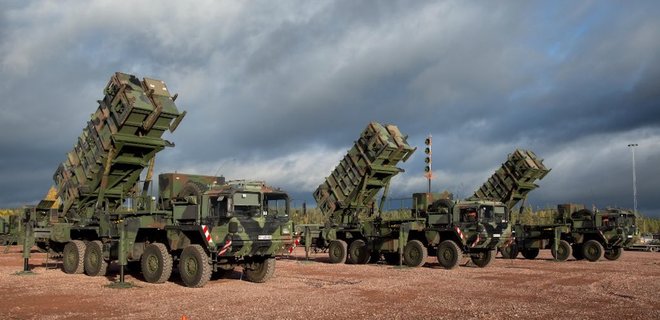
Spain will send Ukraine more Patriot interceptor missiles, Foreign Minister José Manuel Albares confirmed, according to Le Monde.

Patriot interceptors are among the few weapons Ukraine has that can stop Russian ballistic missiles. The specialized rounds are scarce worldwide, and manufacturer Raytheon cannot build them fast enough to meet demand. Each costs $3 million to $4 million.

Spain confirms the flow will grow

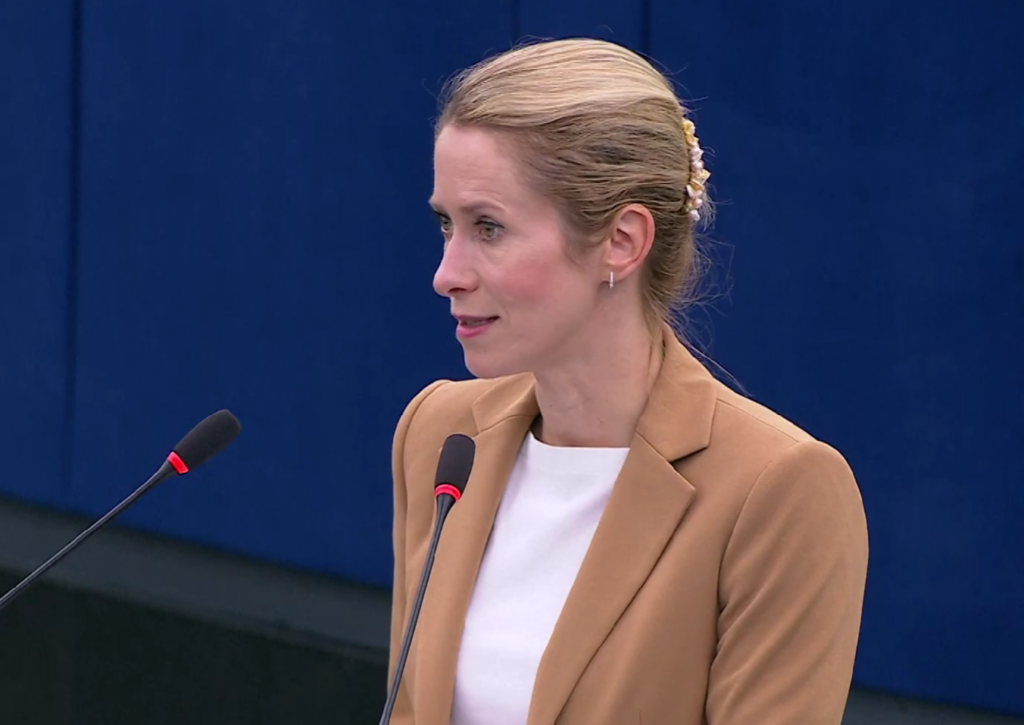
Albares spoke at an informal meeting of European Union foreign ministers in Ireland on 2 September. He reaffirmed Madrid's support as Kyiv pressed for more interceptors. "We have been doing this for a long time, and we will continue to do so," he said. He confirmed that Madrid is preparing a new batch. EU foreign policy chief Kaja Kallas said the bloc is also working with non-member states to lift Ukraine's air defenses.

Madrid and Kyiv meet in Wicklow

The confirmation followed talks with Ukrainian Foreign Minister Andrii Sybiha. They met on the sidelines of the same EU gathering, in Wicklow. Sybiha said he pressed Ukraine's urgent need to strengthen its air and ballistic missile defenses. He also thanked Spain for its solidarity. Albares reaffirmed Spain's role as a founding member of the Integrated Anti-Ballistic Missile Coalition, which ten countries launched in Paris on 13 July. The group aims to build a shared anti-ballistic capability, and its declaration calls the coalition purely defensive. Spanish military instructors are training Ukrainian technicians to maintain the systems.

What Spain has promised so far

Spain is not just giving—it is also buying. In December 2025, Madrid signed a $1.7 billion contract with US arms maker Raytheon for four new Patriot systems. It was Spain's largest Patriot order yet. The deal covers radars, launchers, command-and-control stations, and training. Spanish firm Sener builds the control system for the GEM-T interceptor those launchers fire. Spain is one of only a handful of European countries that operate Patriots.

What Spain has already sent

Spain has supplied Ukraine with Patriot missiles before. In March, Madrid pledged five older PAC-2 interceptors from an air-defense artillery regiment at Marines, near Valencia. Madrid has pledged €1 billion ($1.16 billion) in military aid for 2026. Ukraine has spent months urging partners to release interceptors from their stockpiles.

  • ✇Euromaidan Press
  • EU foreign ministers want Russia’s ex-fighters out. Nobody has written down what counts as proof
    EU foreign ministers have given broad backing to an entry ban on Russians who fought in Ukraine and to stricter tourist visa rules for Russian citizens, DW reported. The bloc's foreign policy chief announced that support on 2 September, after an informal meeting in Wicklow, Ireland, without setting out what the tightening would involve. She tied the visa question to the risk of sabotage in Europe. Russia has been attacking Ukraine since 2014 and at full scale since 2022
     

EU foreign ministers want Russia’s ex-fighters out. Nobody has written down what counts as proof

3 septembre 2026 à 11:33

eu foreign ministers want russia's ex-fighters out nobody has written down what counts proof · post kaja kallas high representative affairs security policy 9 2025 ukraine news ukrainian reports

EU foreign ministers have given broad backing to an entry ban on Russians who fought in Ukraine and to stricter tourist visa rules for Russian citizens, DW reported. The bloc's foreign policy chief announced that support on 2 September, after an informal meeting in Wicklow, Ireland, without setting out what the tightening would involve. She tied the visa question to the risk of sabotage in Europe.

Russia has been attacking Ukraine since 2014 and at full scale since 2022, bombing Ukrainian cities, and for several years its agents have also worked inside Europe, cutting cables, flying drones over military bases, and setting fires at plants and warehouses that supply Ukraine. The bloc that funds much of Ukraine's defense has still not managed to keep the citizens of that state out of its own territory.

"Broad support," and nothing pinned down

EU foreign policy chief Kaja Kallas spoke to reporters after the ministers finished. 

"There was broad support for moving ahead with a ban on entry to the EU for Russian ex-combatants and tougher visa restrictions for Russian tourists," she said.

She did not name the restrictions planned for Russian tourists, say when they might take effect, or say which categories of Russian citizens they would cover.

The bloc has no unified position on tightening visa rules further, Kallas acknowledged. Some member states have so far argued against additional steps in that direction, she said.

greece blocked gas ban france italy softened entry ban—now brussels tries 1600 companies helping russia's war · post 9 parade moscow 2025 youtube/kremlin grate patriotic warr shitshow ukraine news ukrainian
Explore further

Russia’s former soldiers may face a locked EU border—if France and Italy stop balking

Many EU countries say tourist visas serve sabotage preparation

Reporters asked Kallas about accounts that one suspect in the Leipzig attack may have entered the EU on a tourist visa issued by Italy. German authorities have to confirm or refute those accounts, she said. If the information is correct, it shows that visas can be used to enter the bloc by potential wrongdoers who intend to harm it, she added. Many EU countries pointed out that tourist visas are used in preparing sabotage, because the people who carry it out need to get onto EU territory, she said.

Berlin blamed Moscow for the hybrid attack in Leipzig on 1 September, and moved to close Russia's consulate in Bonn and end the agreement for a Moscow-backed cultural center in Berlin after the drone attack on Leipzig/Halle Airport. Lithuania has exposed a Russian military intelligence network behind attempted arson in four NATO countries, and someone left funeral wreaths outside defense companies in Lithuania and Czechia in late August.
russia's ex-combatants entering eu risk flagged leaked threat assessment · post russian soldier captured perspective ukrainian fpv drone moments before impact 2025 birds magyar about strike ukraine news reports
Explore further

Russia’s ex-combatants entering the EU is a risk flagged in a leaked threat assessment

"It is not normal": Russians in Europe while Russia bombs Ukraine

Many ministers raised the visa question while the meeting was discussing Russia's war against Ukraine, Kallas said.

"It is not normal when a country bombs Ukraine, kills civilians—in July and August more than ever during this war—and at the same time Russians enter and enjoy the hospitality of European countries. That should not be," she said.

EU representatives said in July that the ban, kept separate from the tourist visa rules, was agreed in principle but still needed an evidence standard for refusing entry. The EU Council signs off after that, and the European Commission hoped at the time to finish by October.

UN monitors counted 437 civilians killed and more than 2,600 injured across Ukraine in July, the deadliest month since 2022. That count included 183 children killed or injured, also the highest since 2022. Russian drones and missiles then kept Kyiv under near-constant fire for four days at the end of August.
  • ✇Euromaidan Press
  • 190 or 580 Patriot missiles? What Ukraine’s EU-loan request could buy—and why Washington still decides
    Ukraine has asked the EU to spend billions from its support loan on Patriot air-defense missiles, a request European Commission President Ursula von der Leyen confirmed the bloc is weighing. How far the money would stretch depends on a price only Washington controls. Russia keeps firing more ballistic missiles at Ukrainian cities than the country can shoot down, the warheads hardest for its air defenses to stop. Only a US-made Patriot system can catch them, and their in
     

190 or 580 Patriot missiles? What Ukraine’s EU-loan request could buy—and why Washington still decides

2 septembre 2026 à 15:10

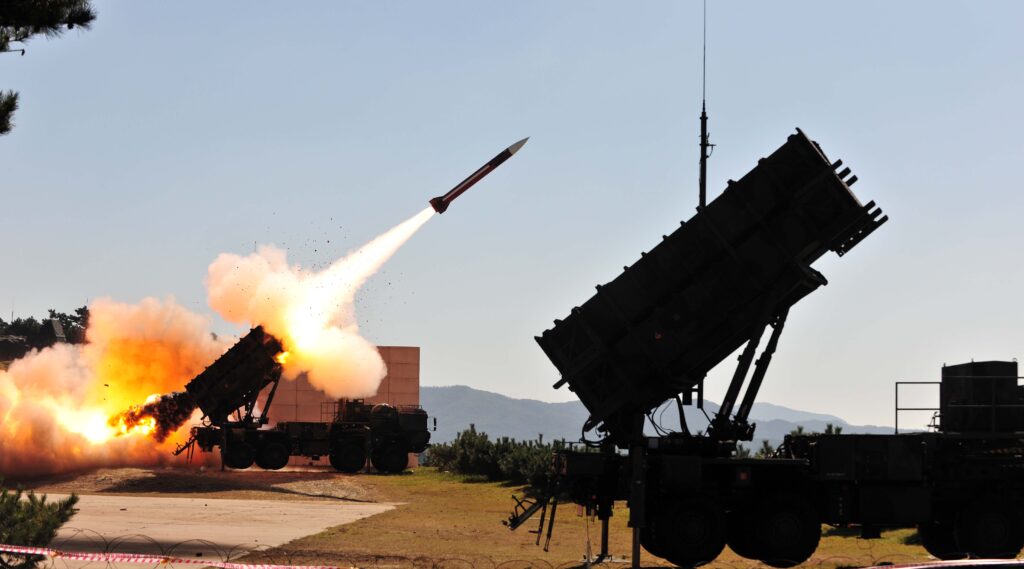
A Patriot air defense missile launcher. Photo: South Korean defense ministry.

Ukraine has asked the EU to spend billions from its support loan on Patriot air-defense missiles, a request European Commission President Ursula von der Leyen confirmed the bloc is weighing. How far the money would stretch depends on a price only Washington controls.

Russia keeps firing more ballistic missiles at Ukrainian cities than the country can shoot down, the warheads hardest for its air defenses to stop. Only a US-made Patriot system can catch them, and their interceptors remain in short supply worldwide, so who pays for them and Washington that agrees or disagrees to sell them now shapes how many cities stay covered.

The exemption Kyiv needs

The European Commission has already received a payment request covering Ukraine's air defenses, including the PAC-3 interceptors that arm Patriot systems. Von der Leyen put it at "several billion euros" and said member states were reviewing it, without naming a figure.

Suspilne, citing its own sources, reported that the request seeks just over $2.3 billion, with another $4.6 billion from the loan's defense tranche going to arms manufactured in Ukraine and the EU, mostly drones.

The money would come from the EU's $104 billion support loan for 2026–27. Because PAC-3 is US technology, spending loan money on it needs an EU exemption. National representatives will take up the decision on 7 September.

What the money actually buys

Defense Express has calculated how many interceptor missiles Ukraine can get with the loan. At the $4–5 million per round the US Army pays, $2.3 billion would fund 460-580 interceptors. At the $6.61 million export price Germany paid in late 2024, about 315. At up to $12.3 million each, the US cleared for Saudi Arabia on 30 January 2026, just 190.

Why money isn't the real problem

For Ukraine, the harder question is not price but whether it can get the missiles at all. Even 315 rounds would equal about half the world's current yearly output, which the sole producer, Lockheed Martin, is straining to lift from around 600 a year to 2,000 by 2030.

Kyiv has been short of interceptors for months. In August, Zelenskyy said Ukraine reached a deal with the US for monthly Patriot deliveries, but that it still needs at least around 5% of American output to get through winter. EU Foreign Policy Chief Kaja Kallas has urged member states to hand over interceptors, especially those with shelf lives nearing their end.

  • ✇Euromaidan Press
  • Four EU states revive push to use Russia’s frozen billions for Ukraine
    The Financial Times reported that Sweden, the Netherlands, Spain, and Poland are jointly urging the European Commission to restart work on using more than €200 billion ($233 billion) in frozen Russian central bank assets to fund Ukraine. Belgium blocked the proposal in December over legal and financial concerns.The Council says the EU’s €90 billion ($105 billion) loan covers two-thirds of Ukraine’s projected funding needs for 2026 and 2027. In the Financial Times,
     

Four EU states revive push to use Russia’s frozen billions for Ukraine

27 août 2026 à 05:50

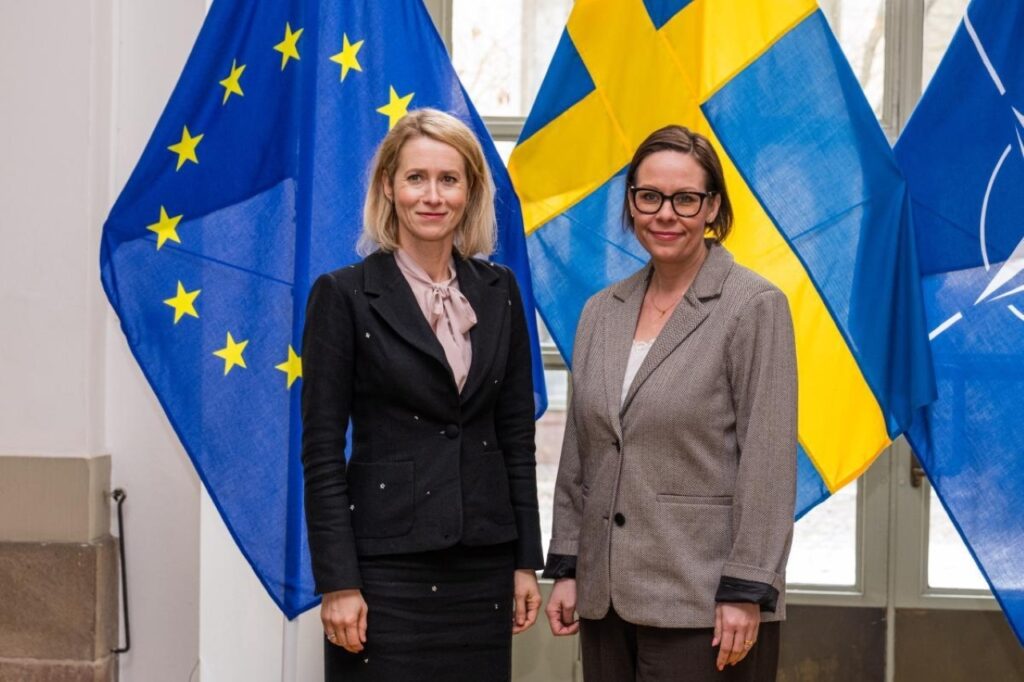
kaja kallas and maria malmer stenergard

The Financial Times reported that Sweden, the Netherlands, Spain, and Poland are jointly urging the European Commission to restart work on using more than €200 billion ($233 billion) in frozen Russian central bank assets to fund Ukraine. Belgium blocked the proposal in December over legal and financial concerns.

The Council says the EU’s €90 billion ($105 billion) loan covers two-thirds of Ukraine’s projected funding needs for 2026 and 2027. In the Financial Times, Swedish Foreign Minister Maria Malmer Stenergard called the loan a “manifestation of the EU’s commitment to support Ukraine,” but said it was “clearly not enough.”

A draft obtained by the Kyiv Independent is dated 27 August and asks EU foreign ministers to hold an initial discussion in Ireland on 1–2 September. Three EU diplomats told the outlet they expected it to be sent the same day.

EU rules already channel profits from frozen assets to Ukraine, primarily to help repay EU and G7 loans. The Commission proposed using cash balances from the Russian holdings for a separate reparations loan, while leaving the assets frozen.

In February, Kaja Kallas acknowledged that EU officials had done no further work on the option since December. Separately, Ukrainians and their supporters rallied across dozens of countries from 22 to 24 August to demand that Europe use the assets.

icuv demonstration at the eu commission on 12 december 2025
Explore further

Ukrainians rally across dozens of countries to demand Europe use Russia’s frozen billions

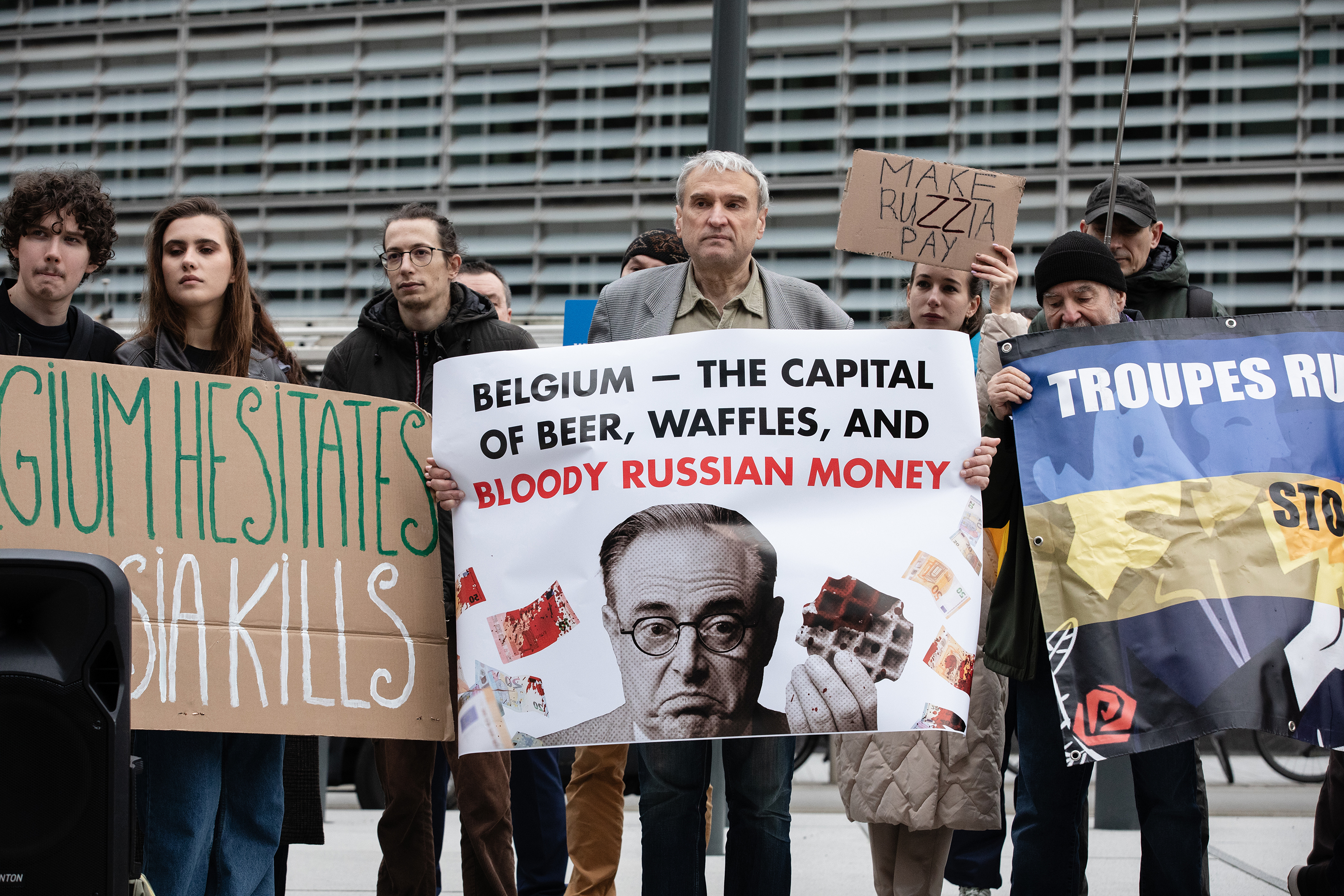
Belgium’s objections remain unchanged. The government fears Russian legal retaliation and wider risks to financial markets because most of the assets are held in Belgium. No new proposal has resolved those concerns, and the coalition is asking the Commission for a progress report on possible legal and technical solutions.

  • ✇The Kyiv Independent
  • 'If we don't help Ukraine further, we should start learning Russian,' EU diplomacy chief says
    Failure to provide stronger military and financial support for Ukraine could leave Europe vulnerable to growing Russian influence, meaning Europeans might have to "start learning Russian," the EU's top diplomat, Kaja Kallas, said, the Guardian reported on June 17."We know that Russia responds to strength and nothing else," Kallas said. She called Ukraine "Europe's first line of defense" and emphasized the need for continued sanctions against Russia and more aid to Kyiv.The comments come as Russi
     

'If we don't help Ukraine further, we should start learning Russian,' EU diplomacy chief says

19 juin 2025 à 03:39
'If we don't help Ukraine further, we should start learning Russian,' EU diplomacy chief says

Failure to provide stronger military and financial support for Ukraine could leave Europe vulnerable to growing Russian influence, meaning Europeans might have to "start learning Russian," the EU's top diplomat, Kaja Kallas, said, the Guardian reported on June 17.

"We know that Russia responds to strength and nothing else," Kallas said. She called Ukraine "Europe's first line of defense" and emphasized the need for continued sanctions against Russia and more aid to Kyiv.

The comments come as Russian forces are intensifying their attacks on Ukrainian cities and the Kremlin continues to reject a push by Kyiv and its Western allies for an unconditional ceasefire.

"To quote my friend, NATO Secretary General Mark Rutte: if we don’t help Ukraine further, we should all start learning Russian," Kallas said.

Kallas cited a sharp increase in Russia's military spending, noting that Moscow is now allocating more money to defense than the EU combined, and more than its own health care, education, and social policies put together.

"This is a long-term plan for a long-term aggression," she said.

In light of this, Kallas urged governments to adopt NATO's new target of spending 5% of GDP on defense, warning of Russia's hybrid warfare tactics, including airspace violations, attacks on critical infrastructure, and covert sabotage operations within EU borders.

The 5% defense spending target is expected to be formally adopted during the upcoming NATO summit, which will take place on June 24 and 25 in The Hague. U.S. President Donald Trump has insisted that the European allies increase their defense budgets.

Earlier, Kallas said Russian President Vladimir Putin "cannot be trusted" to mediate peace while continuing to bomb Ukrainian cities and civilians, as Moscow suggested to mediate negotiations between Israel and Iran amid growing escalation.

"Clearly, President Putin is not somebody who can talk about peace while we see actions like this," she said during a June 17 briefing, after a massive Russian missile and drone strike on Kyiv killed at least 28 people and wounded over 130.

Kallas also reiterated her call for the EU to move forward with tightening the oil price cap on Russian exports, even without U.S. backing. She warned that the ongoing Israel-Iran crisis could cause oil prices to spike, boosting Russia's war revenues.

The EU is currently preparing its 18th sanctions package against Moscow, targeting energy, defense, and banking sectors. The 17th round of sanctions came into effect in May.

Putin says he’s ready to meet Zelensky if West ‘stops pushing’ Ukraine to fight
Russia wants to end the war in Ukraine “as soon as possible,” preferably through peaceful means, and is ready to continue negotiations — provided that Kyiv and its Western allies are willing to engage, Vladimir Putin said.
'If we don't help Ukraine further, we should start learning Russian,' EU diplomacy chief saysThe Kyiv IndependentOlena Goncharova
'If we don't help Ukraine further, we should start learning Russian,' EU diplomacy chief says

Putin 'cannot be trusted' as mediator, Kallas says, urges EU to tighten Russian oil cap after deadly Kyiv strike

18 juin 2025 à 02:24
Putin 'cannot be trusted' as mediator, Kallas says, urges EU to tighten Russian oil cap after deadly Kyiv strike

Russian President Vladimir Putin "cannot be trusted" to mediate peace in the Middle East while continuing to launch brutal attacks against civilians, EU High Representative Kaja Kallas said on June 17, following a mass Russian strike on Kyiv that killed at least 21 people and injured over 130.

"Clearly, President Putin is not somebody who can talk about peace while we see actions like this,” Kallas said during a briefing in Brussels. "He's not a mediator that can really be considered. Russia cannot be a mediator if they don't really believe in peace."

Russia has sought to position itself as a potential mediator in the escalating conflict between Israel and Iran. Kremlin spokesperson Dmitry Peskov said on June 17 that Israel appeared unwilling to accept Russia’s offer of mediation.

President Donald Trump said on June 15 that Putin had expressed willingness to help mediate between Tel Aviv and Tehran — an idea already dismissed by France. EU leaders have also questioned Moscow’s neutrality given its deep military ties with Iran, which has supplied Russia with drones and missiles used in attacks on Ukraine.

Kallas also pointed to Iran's role in enabling Russia's attacks. "Iran has helped Russia do these attacks… their cooperation is working in this regard," she said.

Kallas urged the European Union to press forward with lowering the oil price cap on Russian oil, even without U.S. support, warning that Middle East tensions could otherwise drive prices up and boost Russia's revenues.

"The whole idea of the oil price cap is to lower the prices," Kallas said. "We shouldn't end up in a situation where the crisis in the Middle East increases oil prices and makes Russia earn more… that would mean they can fund their war machine on a bigger scale."

Her warning comes after global oil prices soared on June 13, following an Israeli strike on Iran that raised fears of a broader regional conflict. Brent and Nymex crude prices surged more than 10% before stabilizing around 7.5% higher, with Brent at $74.50 a barrel and Nymex at $73.20, the BBC reported.

The spike threatens to undermine Western efforts to restrict Russia’s wartime revenues, which heavily depend on oil exports.

Earlier, Kallas said the EU can act independently to lower the oil price ceiling, noting that most Russian crude flows through European-controlled waters.

"Even if the Americans are not on board, we can still do it and have an impact," she said.

Her remarks come as the EU works on its 18th sanctions package targeting Russia's energy, banking, and defense sectors. The 17th package entered into force on May 20. European Commission President Ursula von der Leyen has said new measures will further target Russia's war-sustaining supply chains.

Kallas spoke hours after one of Russia's deadliest attacks on Kyiv since the start of its full-scale invasion. The nearly nine-hour assault saw Moscow fire 472 aerial weapons, including over 280 Shahed drones and multiple cruise and ballistic missiles.

Ukraine's Air Force reported intercepting 428 targets, but several missiles hit residential buildings, including a nine-story apartment block in Solomianskyi district, where 16 people were killed.

President Volodymyr Zelensky called the assault "one of the most horrifying attacks on Kyiv" and again called on Western leaders to act decisively.

After 3 years of full-scale war in Ukraine, Europe finally lays out road map to detox from Russian oil and gas
After three years of limited measures and political hangovers, the European Union has laid out a legal roadmap to finally end its long-standing addiction to Russian oil and gas. Under a new legislative proposal announced in Strasbourg on June 17, Brussels aims to cut off all remaining imports of Russian
Putin 'cannot be trusted' as mediator, Kallas says, urges EU to tighten Russian oil cap after deadly Kyiv strikeThe Kyiv IndependentAlex Cadier
Putin 'cannot be trusted' as mediator, Kallas says, urges EU to tighten Russian oil cap after deadly Kyiv strike
❌