Vue normale

  • ✇Euromaidan Press
  • Russia’s blockade could halve Ukraine’s grain exports. Kyiv is asking the EU for €220 million
    Ukraine's Ministry of Agrarian Policy and Food has asked the European Commission for €220 million ($253 million) in grants to keep its small and medium farmers afloat, after Russian strikes on the Greater Odesa ports severed the sea route that carries most of the country's agricultural exports. The money would cover interest on loans issued under the state "Affordable Loans 5-7-9%" program, the ministry's press service said. The request marks the point where Russia's Bl
     

Russia’s blockade could halve Ukraine’s grain exports. Kyiv is asking the EU for €220 million

7 août 2026 à 11:38

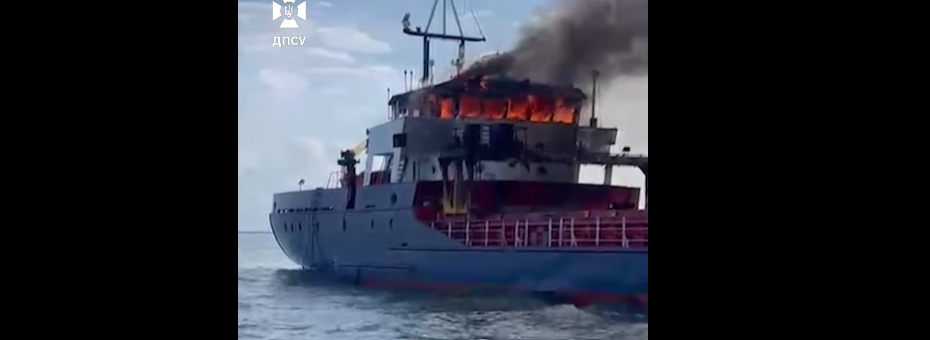
A Russian Shahed drone struck a Palau-flagged vessel carrying corn twice as it left a port in Odesa Oblast, setting it on fire. Source: Ukraine's State Border Guard Service

Ukraine's Ministry of Agrarian Policy and Food has asked the European Commission for €220 million ($253 million) in grants to keep its small and medium farmers afloat, after Russian strikes on the Greater Odesa ports severed the sea route that carries most of the country's agricultural exports. The money would cover interest on loans issued under the state "Affordable Loans 5-7-9%" program, the ministry's press service said.

The request marks the point where Russia's Black Sea campaign stopped being a shipping story and became a farm-finance one. With the corridor all but stalled, the ministry projects exports for the 2026/2027 season could fall by almost half, from 64.4 million to about 29.6 million tonnes. Grain the farmers have already harvested is piling up in silos the ministry expects to be full by October, and without cash from those sales, producers cannot finance the autumn sowing that plants next year's crop.

How €220 million turns into €4 billion in loans

The grant is small next to the hole it is meant to plug. Ukraine estimates its farm sector will take in roughly €6.4 billion this season against €11.2 billion in operating costs, and will need about €4 billion in working capital just to keep running. The €220 million would not cover that gap directly. Instead, by subsidizing interest, it is designed to unlock a credit portfolio of up to €4 billion ($4.6 billion) at a rate to farmers of no more than 10%, open to small and medium producers that meet the program's environmental and social criteria. Wheat exports alone could otherwise drop from 17.6 million to 8.3 million tonnes.

The blockade behind the request

Through July, Russia intensified strikes on civilian cargo ships in the Black Sea corridor, killing crew members and, on 22 July, halting traffic entirely — not a single vessel passed that day, at the height of the harvest. Ukraine's government called it "deliberate economic and humanitarian terror." Around 90% of Ukraine's farm exports normally move through three Odesa Oblast ports, and Agriculture Minister Taras Vysotskyi has said the rail, road, and Danube routes that remain can carry only about half the lost volume.

The squeeze is already reaching the fields. Oilseed and grain prices have fallen about 30% as unsold stock backs up inside the country, and the ministry puts direct losses to the sector this year at between $1.5 billion and $3 billion. The government has lowered minimum export prices on some products to keep trade moving, and Prime Minister Serhii Koretskyi has said it is expanding a separate program of grain-backed loans so farmers can borrow against stored crops rather than sell them cheap.

Whether Brussels funds the €220 million request, and how fast, will help decide how much of this year's harvest gets planted — and how much stays stranded in silos while the ports stay shut.

  • ✇Euromaidan Press
  • North Korea made $22 billion arming Russia – nearly four times its haul before the war
    North Korea has pulled in as much as $22 billion in foreign earnings since Russia's full-scale invasion of Ukraine in 2022—nearly four times what it earned in the previous four years, and the most cash Kim Jong Un has commanded in his 15 years in power, Bloomberg Economics estimates. That money is the bill for Russia's war, paid to the other side of the world. In exchange for the shells and soldiers keeping Moscow's offensive alive, Pyongyang has been handed the cash, f
     

North Korea made $22 billion arming Russia – nearly four times its haul before the war

7 août 2026 à 11:23

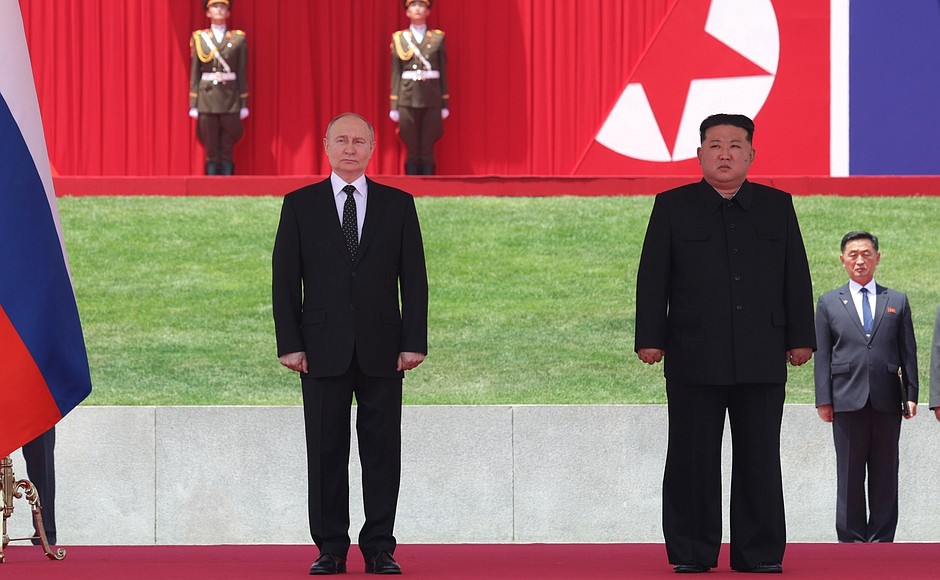
Putin North Korea

North Korea has pulled in as much as $22 billion in foreign earnings since Russia's full-scale invasion of Ukraine in 2022—nearly four times what it earned in the previous four years, and the most cash Kim Jong Un has commanded in his 15 years in power, Bloomberg Economics estimates.

That money is the bill for Russia's war, paid to the other side of the world. In exchange for the shells and soldiers keeping Moscow's offensive alive, Pyongyang has been handed the cash, food, and military technology to turn itself from an isolated pariah into a nuclear power that no longer needs to negotiate with anyone. The war draining Russia has quietly built a second, stronger adversary.

Half of Russia's shells, and thousands of soldiers

By the end of 2025, North Korea was covering up to half of Russia's need for 122mm and 152mm artillery ammunition, Ukrainian intelligence estimates—a share Euromaidan Press has tracked since the shipments began in 2023. Pyongyang backed the shells with men: some 16,000 soldiers, for whom Russia paid roughly $2,000 a month each, plus extra for the dead, by Bloomberg's accounting.

The turning point came in 2022. Kim had spent the previous years humiliated—a failed summit with Donald Trump, a harvest failure that triggered hunger, a self-imposed Covid border closure that severed trade with China. In a 2020 national address, he wept while apologizing for the economy. Then Putin's stockpiles ran low, and North Korea's warehouses became a resource Kim could turn into hard currency.

Cash, food, and the technology to build better weapons

The dangerous part is what came back the other way. Russia handed over advanced military technology alongside the payments, and US Forces Korea has said the transfers let Pyongyang compress its weapons-development timelines. Moscow supplied air defenses including at least one Pantsir-class system—a transfer Euromaidan Press reported last year—and a Pantsir-M worth about $20 million now sits on one of North Korea's two new 5,000-tonne destroyers, the largest warships it has ever built. The two countries have also begun jointly producing attack drones.

Kim poured the windfall into a nuclear buildup that, Bloomberg reports, puts North Korea on a path to rival France's arsenal. The country's economy grew 3.5% in 2025, its third straight year of expansion, according to the Bank of Korea.

A windfall that outlasts the war

The boom does not depend on the war continuing. Over the past decade Kim assembled the world's most prolific army of crypto thieves: hacking groups tied to Pyongyang now account for more than 70% of global cryptocurrency thefts, up from about 30% in 2017, according to blockchain intelligence firm TRM Labs. The stolen funds are laundered mostly through Chinese organized-crime networks that take a cut in exchange for clean offshore accounts. "It's absurd to think North Korea now has access to that much money," said Nick Carlsen, a senior TRM investigator.

Kim is spreading his bets diplomatically, too, hosting officials from Singapore, Indonesia, Belarus, and Vietnam over the past year to loosen his reliance on Moscow.

The Kim once written off as an erratic recluse is emerging as the durable leader of a growing nuclear power—one with little reason left to bargain. "Pyongyang has proven its ability to adapt to persistent sanctions," said Jenny Town of the Stimson Center. "And as international law and norms are eroding, it has found camaraderie in its resistance."

  • ✇Euromaidan Press
  • Nawrocki: where “Muscovites are beaten,” Poland helps. Russian Foreign ministry hits back
    Polish President Karol Nawrocki used a speech marking his first year in office to restate that Poland will keep backing Ukraine's war against Russia—and to frame that backing as cold strategic interest rather than solidarity, warning in the same speech that continued help does not extend to tolerating Ukrainian nationalist symbols" on Polish soil. He spoke on 6 August at a ceremony in the courtyard of the Presidential Palace in Warsaw, reported by RMF FM. The remarks la
     

Nawrocki: where “Muscovites are beaten,” Poland helps. Russian Foreign ministry hits back

7 août 2026 à 10:39

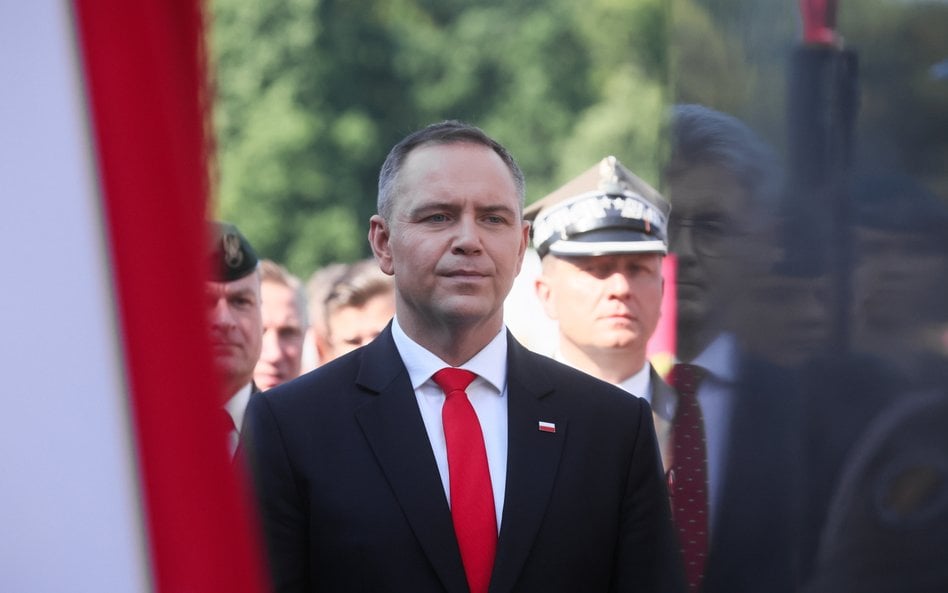
rzeczpospolita fourth year russia-ukraine war poland’s leader sides aggressor polish president karol nawrocki pap/leszek szymański 1699304a7cc0b825fd6ed95fba7ddad5 (1) editorial published 27 stated russia’s all-out against ukraine has taken position aligns commentary

Polish President Karol Nawrocki used a speech marking his first year in office to restate that Poland will keep backing Ukraine's war against Russia—and to frame that backing as cold strategic interest rather than solidarity, warning in the same speech that continued help does not extend to tolerating Ukrainian nationalist symbols" on Polish soil. He spoke on 6 August at a ceremony in the courtyard of the Presidential Palace in Warsaw, reported by RMF FM.

The remarks land at the hottest point yet in a Polish-Ukrainian memory row that has stripped Kyiv of much goodwill from its most important frontline ally. Poland's interest, Nawrocki said, is that Ukrainians fight "as long as possible and as effectively as possible" against Russia, keeping it far from Poland—help offered not out of shared cause but because a Ukraine that bleeds Russia serves Warsaw. Coming from the country most vital to Ukraine's supply lines, it is a statement of support recast as conditional self-interest.

Support as strategy, not solidarity

"Poland's interest is that Ukraine and Ukrainian soldiers cope as well as possible with the post-Soviet Russian Federation and keep it as far from Poland as possible. That is obvious; that is the Polish state's strategy," Nawrocki said. "Let them kill the Soviets who attacked them—it does not hurt us Poles at all. In this they can always count on our help, because where a Muscovite is beaten, Poland helps, even if it does not take part directly in this war."

The register was deliberate. Nawrocki, a historian who ran the Institute of National Remembrance before winning the presidency, used the pejoratives "Soviets" and "Muscovites" for Russians throughout, casting Polish aid as a matter of keeping the fight on the far side of the border.

The red line: no Bandera flags

The support came fenced. "It is also Poland's strategic interest that Bandera flags do not fly in Warsaw or anywhere in Poland," Nawrocki said, promising to help "but always saying: Poland first, Poles first"—not, he added, "thoughtlessly sending fleet after fleet without analysis, on phone calls and smiles."

The condition points straight at the dispute that has consumed the relationship since May, when Zelenskyy signed a decree granting a special-forces unit the honorary title "Heroes of the UPA," the insurgent army Poland's parliament holds responsible for the Volhynia killings of tens of thousands of Poles and has declared a genocide. Nawrocki stripped Zelenskyy of the Order of the White Eagle in response; in July he pressed parliament to ban the UPA's red-and-black flag by law.

Moscow moves to widen the gap

Russia moved to pry the crack open within hours. Foreign ministry spokeswoman Maria Zakharova derided Nawrocki as a former Gdansk war-museum director whose "clinical Russophobia," she claimed, was affecting his judgment, and reminded him that Russia and Poland share a border "with no Ukraine and no Ukrainians between us"—the erasure of Ukraine stated plainly, from Moscow's own podium.

That is the move Warsaw itself has warned about. Polish officials have cautioned that Russia would seek to exploit the Ukraine tensions, and Polish services recently detained a group accused of recruiting Ukrainians for paid anti-Ukrainian rallies on Russian instructions. The memory feud, as one Polish advocate for Ukraine told Euromaidan Press in June, is theater that serves only one audience—the one in the Kremlin.

  • ✇Euromaidan Press
  • Luxembourg adds €8 million to Ukraine’s energy fund, bringing total to €30 million
    Luxembourg contributed an additional €8 million ($8.7 million) to the Ukraine Energy Support Fund, raising its total donations to €30 million ($32.7 million), Ukraine's Ministry of Energy reported. The contribution arrives as the fund—which crossed €2 billion ($2.18 billion) in total lifetime contributions in July—races to close a €650 million ($709 million) gap in unfunded needs ahead of the 2026/2027 winter season. Russia has destroyed more than 9 gigawatts of generat
     

Luxembourg adds €8 million to Ukraine’s energy fund, bringing total to €30 million

7 août 2026 à 10:24

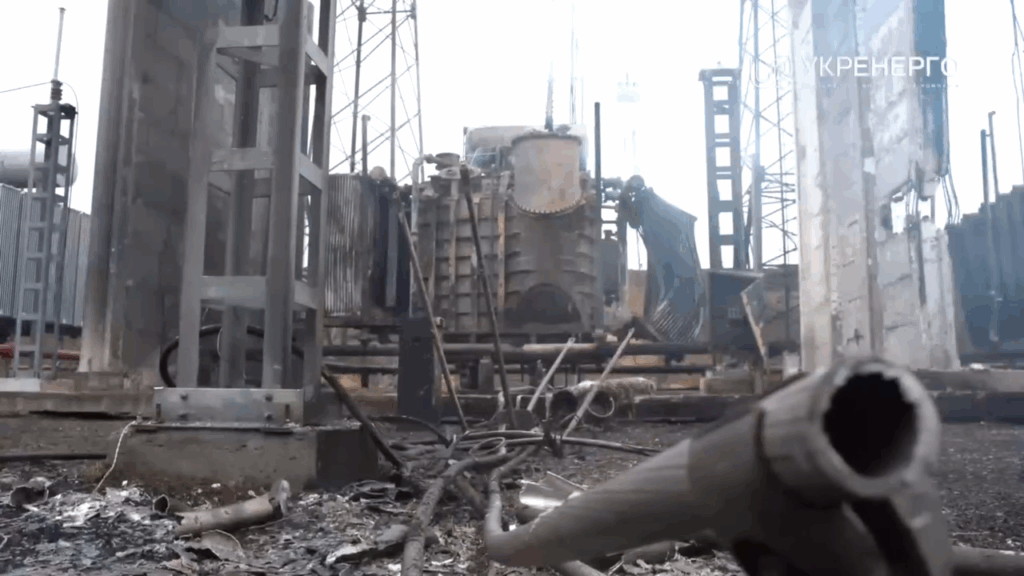
Ukrainian energy infrastructure damaged after a Russian attack. Screenshot from video: Ukrainian Ministry of Energy

Luxembourg contributed an additional €8 million ($8.7 million) to the Ukraine Energy Support Fund, raising its total donations to €30 million ($32.7 million), Ukraine's Ministry of Energy reported.

The contribution arrives as the fund—which crossed €2 billion ($2.18 billion) in total lifetime contributions in July—races to close a €650 million ($709 million) gap in unfunded needs ahead of the 2026/2027 winter season. Russia has destroyed more than 9 gigawatts of generation capacity since the start of the most recent heating season alone, and all previously available fund resources have been fully contracted.

Luxembourg's steady commitment

This marks Luxembourg's fourth donation to the fund since 2024. The country initially transferred €2 million in 2024, followed by €10 million in June 2025 and another €10 million in December 2025. The latest €8 million brings the total to €30 million—a notable sum from a country with a population of roughly 660,000.

Energy Minister Denys Shmyhal thanked Luxembourg and its Agency for Development Cooperation for what he called systematic support for Ukrainian energy, adding that the contribution would help provide energy companies with essential equipment and strengthen the resilience of Ukraine's power grid, European Pravda reported.

A fund preparing for its fifth wartime winter

The Energy Support Fund was established in April 2022 and is managed by the Energy Community Secretariat. It has become the primary international mechanism for channeling emergency energy assistance to Ukraine, with contributions from 37 donors across 26 countries and three international organizations.

In a June 2026 joint statement, the G7+ Energy Ramstein Group identified €650 million in priority needs for winter preparation and called for swift mobilization of additional funding.

Luxembourg's contribution is part of a broader wave of European support. Ireland announced €25 million ($29 million) for energy and critical infrastructure protection during its prime minister's visit to Kyiv on 23 July. Sweden's €123 million contribution on 8 July pushed the fund past the €2 billion milestone. Denmark has also recently added over €10 million.

  • ✇Euromaidan Press
  • New EU rule blocks temporary protection for Ukrainian men who dodge military duty
    A European Union rule requiring newly arrived Ukrainians of military age to prove they have met their military obligations before receiving temporary protection took effect on 5 August, according to the Council of the EU and Czechia's Interior Ministry. The rule, Council Implementing Decision (EU) 2026/1912, was published in the EU's Official Journal on 4 August and applies only to new applicants — not to Ukrainians already holding protected status. The measure closes a
     

New EU rule blocks temporary protection for Ukrainian men who dodge military duty

5 août 2026 à 05:05

Ukrainian war refugees

A European Union rule requiring newly arrived Ukrainians of military age to prove they have met their military obligations before receiving temporary protection took effect on 5 August, according to the Council of the EU and Czechia's Interior Ministry. The rule, Council Implementing Decision (EU) 2026/1912, was published in the EU's Official Journal on 4 August and applies only to new applicants — not to Ukrainians already holding protected status.

The measure closes a gap Czech and other EU officials have raised for months: hundreds of thousands of Ukrainian men of conscription age have used temporary protection to remain in the EU while Ukraine's own martial law bars most men aged 23 to 60 from leaving the country. Applicants must now show they left Ukraine legally — typically via a passport exit stamp — or produce paper or electronic proof of an exemption or completed service, drawn from Ukraine's Reserve+ registration app, among other documents.

What the rule requires

The decision extends the EU's temporary protection mechanism for displaced Ukrainians to 4 March 2028, one year beyond its prior expiration. That extension applies broadly. The new documentation requirement is narrower: it targets people with military obligations under Ukrainian law who are applying for temporary protection for the first time, not renewals.

Czech Interior Minister Lubomír Metnar said the change would cut new arrivals "by tens of percent," according to a statement carried by the Interior Ministry and Radio Prague International. He said the restriction would ease pressure on the Czech healthcare and social welfare systems, which he said are close to capacity — Czechia hosts roughly 395,000 Ukrainians under temporary protection, the largest share relative to population of any EU state.

The EU has framed the change as balancing humanitarian protection against Ukraine's manpower needs. "Recognising both the need to protect displaced persons and Ukraine's need to defend itself against Russia's illegal war of aggression, EU countries agreed that temporary protection should be granted only to those complying with their military obligations in Ukraine," the Council of the EU said.

A narrow carve-out, a broader debate

The rule does not close off asylum entirely — Ukrainians can still apply for international protection under standard EU asylum law, evaluated case by case, regardless of military status.

The change follows years of friction over Ukraine's own registration system. EP has previously reported that the Reserve+ app, heavily promoted by Ukraine's Ministry of Defense as a fix for a paper-heavy, post-Soviet mobilization bureaucracy, "delivered far less than hoped," part of a broader draft-evasion problem officials have linked to gaps in the system rather than to the app itself.

The EU's move also lands against a backdrop of Ukrainians increasingly settling in for the long term. In Poland, which hosts the largest Ukrainian population in the EU, 73% of surveyed Ukrainians say they plan to stay long-term and 44% for at least several more years, according to a University of Warsaw Center of Migration Research study cited in the source reporting; employment among that group has risen from 69% in 2022 to nearly 83% in 2026, though 45% work outside their qualifications.

  • ✇Euromaidan Press
  • US has burned through 80% of THAAD interceptors, sources tell CNN
    The US military has used up nearly 80% of its THAAD interceptors and roughly half of its Patriot stock during the five-month war with Iran, according to two sources familiar with the latest Pentagon inventory report, CNN reported. Senior US military commanders are warning the Pentagon's munitions stockpile is "dangerously low," according to multiple sources familiar with the matter. The disclosure on THAAD levels has not been previously reported. Before the war began, t
     

US has burned through 80% of THAAD interceptors, sources tell CNN

5 août 2026 à 03:24

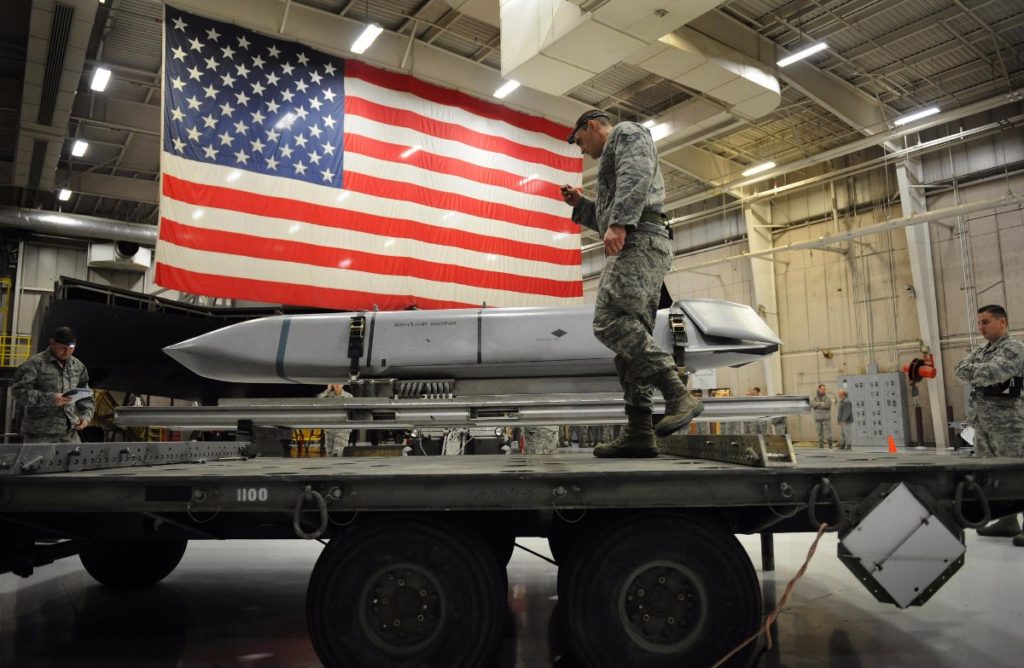
us weapon

The US military has used up nearly 80% of its THAAD interceptors and roughly half of its Patriot stock during the five-month war with Iran, according to two sources familiar with the latest Pentagon inventory report, CNN reported.

Senior US military commanders are warning the Pentagon's munitions stockpile is "dangerously low," according to multiple sources familiar with the matter. The disclosure on THAAD levels has not been previously reported. Before the war began, the US had around 2,200 Patriot interceptors of the platform's two most modern variants and 452 THAAD missiles, according to Center for Strategic and International Studies (CSIS) estimates. CSIS has assessed the war with Iran drained over half the global Patriot stockpile within its first 39 days.

The Patriot and THAAD systems are the same interceptor families that arm Ukraine's own air defense against Russian ballistic strikes - Kyiv depends on to stop Russian ballistic missiles. Thus a stockpile "dangerously low" for Washington is one that's already left Ukrainian Patriot launchers running empty during Russian barrages.

Commanders call stockpiles dangerously low

The US Army has fired "virtually all" of its long-range, surface-to-air precision weapons during the war, one source told CNN, referring to Army Tactical Missile Systems (ATACMS) and Precision Strike Missiles (PrSM). Close to half of the US Tomahawk cruise missile stockpile has also been used, a source said, up from nearly 30% reported by CNN in April.

Gulf allies have raised concerns that the shortage could limit their own ability to intercept Iranian retaliation, particularly if Washington resumes strikes. Replenishment is slow: the Pentagon is currently receiving about 15 new Tomahawks and 20 new Patriot missiles a month, and CSIS estimates rebuilding THAAD stocks to prewar levels will take three years or more.

Weekend strikes called off over stockpile concerns

The munitions warnings, combined with intelligence on the risks of striking Iranian energy infrastructure and concerns raised by Gulf states, were factors in President Donald Trump's decision to call off planned strikes over the weekend, according to CNN's sources. Trump had authorized the operation Friday, with Defense Secretary Pete Hegseth receiving the final order to proceed, a senior Trump official said. Trump reversed course Saturday after Middle East allies told him they feared Iranian retaliation against their energy infrastructure, the official said. He told Hegseth to stand down for now but has not ruled out strikes at a later date.

Pentagon spokesman Sean Parnell said in a statement that the US military "has everything it needs to execute at the time and place of the President's choosing." White House spokesperson Anna Kelly said the military has "more than enough munitions, ammo, and stockpiles to serve all of President Trump's strategic goals and beyond."

Joint Chiefs Chairman Gen. Dan Caine raised the stockpile issue in a separate White House meeting last month, CNN previously reported, where officials also discussed the risk of mass civilian casualties from a resumed US campaign inside Iran.

The shortage extends beyond Iran

CNN's sources said the depleted stockpile could affect the US military's ability to fight a future war involving China, Russia, or North Korea. "The lack of interceptors means that conventional attacks can backfire if the suicide drones start making it through in-masse," one source said. "Tit-for-tat will never end this."

Euromaidan Press has reported that the same Patriot shortage has already strained deliveries to Ukraine, which depends on PAC-3 interceptors as its only defense against Russian ballistic missiles. A senior Ukrainian official has told the Financial Times that deliveries to Kyiv faced delays since the war with Iran began, and President Volodymyr Zelenskyy has said late arrivals have left Patriot launchers empty during Russian missile barrages.

Analysts expect a slow recovery. The Precision Strike Missile and Joint Air-to-Surface Standoff Missile inventories should return to prewar levels by mid-to-late 2027, according to CSIS. The Defense Department has signed two deals this week to expand Patriot and THAAD rocket motor production, though a Pentagon spokesperson declined to say when the expansion would show results.

Trump on Monday called Iranian leadership "unbelievably duplicitous" after Tehran denied that negotiations would resume, and said Tehran had one "last chance" to sign a deal.

  • ✇Euromaidan Press
  • Ukraine hits 16th Wildberries warehouse in under three weeks, one injured overnight
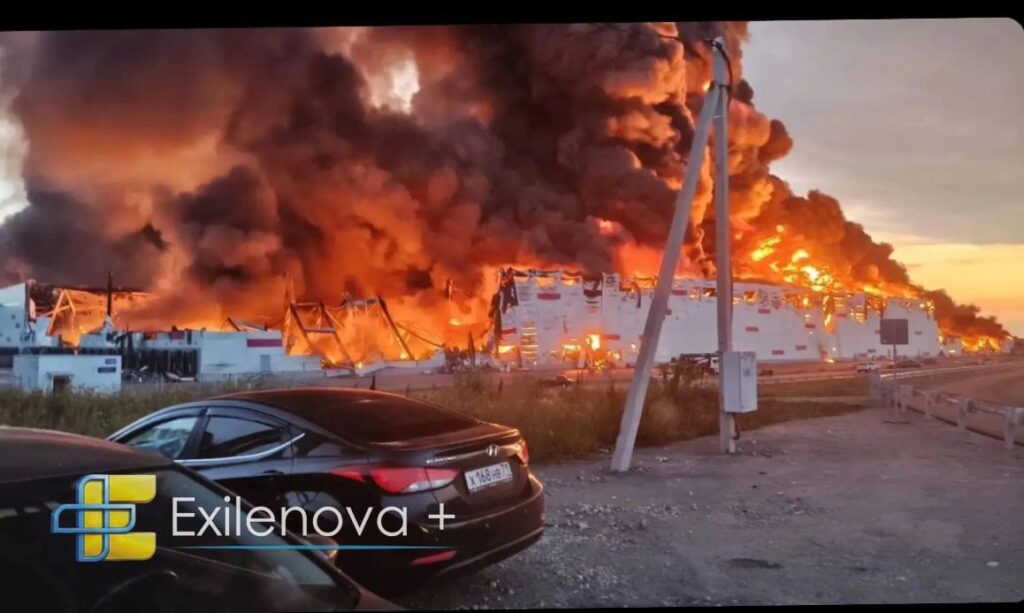
    A Ukrainian drone strike set fire to a Wildberries logistics center in Oleksin, Russia's Tula Oblast, overnight into 5 August, according to the monitoring Telegram channel Exilenova+ and Russian outlet ASTRA. Tula Oblast Governor Dmitry Milyaev confirmed one person was injured and said a drone came down on the sorting center's territory before the fire broke out. The strike extends a Ukrainian campaign against Russia's largest online retailer that has hit 15 Wildberries
     

Ukraine hits 16th Wildberries warehouse in under three weeks, one injured overnight

5 août 2026 à 01:40

Russia Tula oblast attacl

A Ukrainian drone strike set fire to a Wildberries logistics center in Oleksin, Russia's Tula Oblast, overnight into 5 August, according to the monitoring Telegram channel Exilenova+ and Russian outlet ASTRA. Tula Oblast Governor Dmitry Milyaev confirmed one person was injured and said a drone came down on the sorting center's territory before the fire broke out.

The strike extends a Ukrainian campaign against Russia's largest online retailer that has hit 15 Wildberries logistics sites in 18 days, Unmanned Systems Forces commander Robert "Madyar" Brovdi said on 4 August, before the Oleksin strike. Thirteen of those 15 were knocked out of action or seriously damaged, he said. Ukraine's deep-strike drones have turned Wildberries hubs — repeatedly described by Ukrainian officials as Russia's answer to Amazon — into a recurring target as they widen a campaign against the fuel and freight networks that keep Russia's war economy running.

Wildberries confirmed the fire at its Oleksin site, saying it evacuated staff in advance and temporarily redirected new deliveries to other warehouses. Milyaev also reported damage to two apartment buildings in Venyov district and two industrial sites in Novomoskovsk and Uzlovaya district from the same overnight barrage.

The Oleksin center covers about 194,500 square meters, according to Exilenova+, and opened in 2022. It supplies Tula, Kaluga, Oryol, Bryansk, Kursk, Lipetsk, Ryazan, and other central Russian oblasts, and partly relieves logistics centers in the Moscow region.

The strike follows fires at two other Wildberries sites — in Krasny Bor, Leningrad Oblast, and Chekhov, Moscow Oblast — overnight into 4 August, and comes as Wildberries has begun restricting employees to camera-free phones after staff filmed and shared footage of the strikes.

  • ✇Euromaidan Press
  • Russia hits Kyiv and its region overnight, 14 dead as ammonia leaks and building collapses
    Russia launched a massed combined missile and drone attack on Kyiv and Kyiv Oblast overnight into 5 August, killing 14 people and injuring 26, Ukraine's State Emergency Service (DSNS) reported. Rescuers were still working seven locations across three raions as of the latest update, with fires, a residential building collapse, and an ammonia leak among the damage reported in the capital and its surrounding region. The strike is the second massed barrage on Kyiv in five d
     

Russia hits Kyiv and its region overnight, 14 dead as ammonia leaks and building collapses

5 août 2026 à 01:15

attack on kyiv

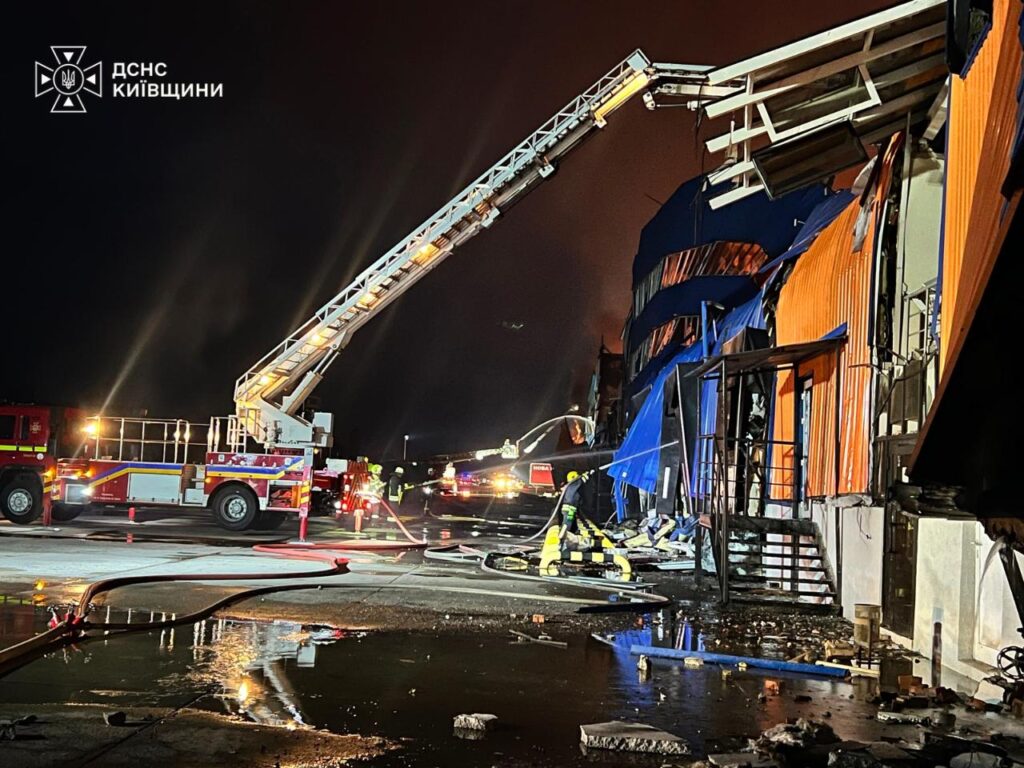
Russia launched a massed combined missile and drone attack on Kyiv and Kyiv Oblast overnight into 5 August, killing 14 people and injuring 26, Ukraine's State Emergency Service (DSNS) reported. Rescuers were still working seven locations across three raions as of the latest update, with fires, a residential building collapse, and an ammonia leak among the damage reported in the capital and its surrounding region.

The strike is the second massed barrage on Kyiv in five days. Russia killed nine people in the capital on 1 August with 27 ballistic missiles, damaging the Lithuanian embassy and destroying part of the city's ambulance fleet in a double-tap strike on a medical-transport depot.

The renewed attack this week points to a pattern of sustained pressure on the capital even as Russia continues to reject a full ceasefire in ongoing talks.

Kyiv Oblast bore the heaviest toll. Most of the deaths came in Brovarskyi raion, where nine people were killed, according to Kyiv Oblast Military Administration head Tymur Tkachenko. Four more people died in Bucha raion and one in Fastiv raion. Warehouse fires broke out in Brovary, Velyka Dymerka, Kvitneve, and Peremoha in Brovarskyi raion; rescuers were also fighting a warehouse fire in Chaiky, Bucha raion, and had extinguished a logistics-facility fire in Sofiivska Borshchahivka.

In Kyiv city, ballistic missiles and drones struck four districts — Obolonskyi, Sviatoshynskyi, Holosiivskyi, and Desnianskyi — starting shortly after midnight. A woman was killed in Obolonskyi, where a non-residential building caught fire. In Holosiivskyi, a strike destroyed a private residential building, with rescuers searching for people under the rubble, and damaged a tank holding roughly 300 liters of ammonia at a nearby industrial site. Emergency crews contained the leak and confirmed no threat to residents. Repeated explosions at one strike site also damaged an ambulance, injuring its driver.

The overnight fires pushed air quality across Kyiv to hazardous levels by morning, with monitoring stations in Obolonskyi and Sviatoshynskyi districts recording index readings of 140–174 against a healthy baseline of under 50, according to SaveEcoBot and AQICN data.

DSNS said the death and injury toll could still rise as search-and-rescue operations continue in Brovarskyi and Bucha raions.

  • ✇Euromaidan Press
  • Ukraine exhumes Volhynia graves from 13 July as Poland’s president seeks a UPA flag ban
    Ukraine wants the search for Volhynia victims to move faster, President Volodymyr Zelenskyy said in an address on 11 July, the day Poland marks its national remembrance of the 1943–1945 killings. Exhumations begin in two days at the sites of the destroyed villages of Ostrivky and Volia Ostrovetska in Volyn Oblast, he said, and Ukraine has an interest in accelerating the work. That is the one concession Warsaw has demanded for a decade, and it is arriving in the worst we
     

Ukraine exhumes Volhynia graves from 13 July as Poland’s president seeks a UPA flag ban

11 juillet 2026 à 14:55

Ukrainian President Volodymyr Zelenskyy, 7 July 2026. Photo: Zelenskyy / Telegram

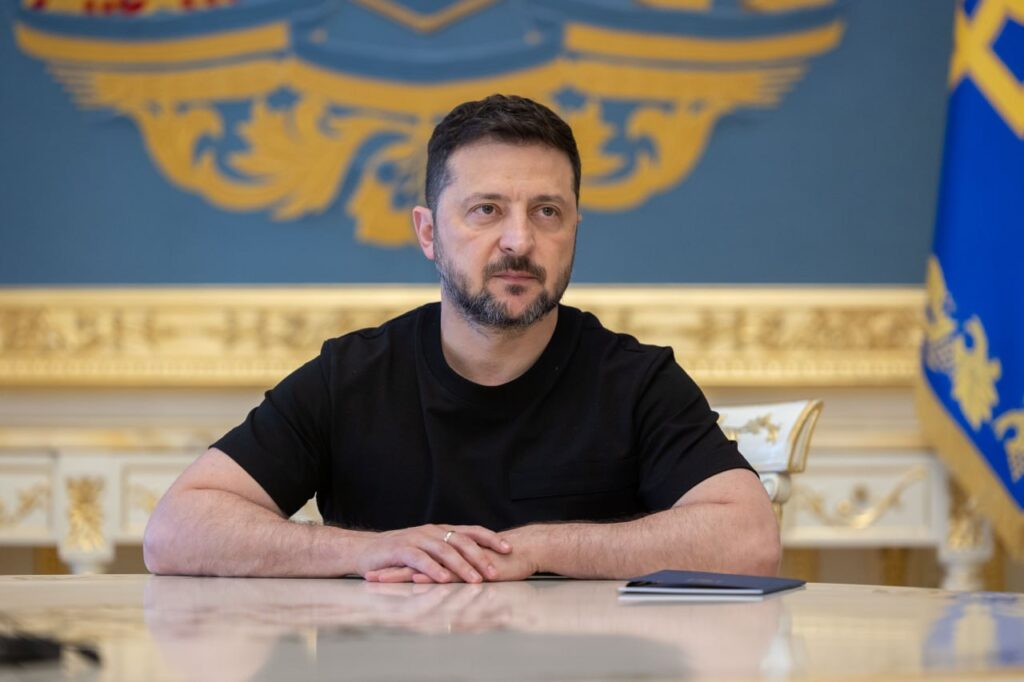
Ukraine wants the search for Volhynia victims to move faster, President Volodymyr Zelenskyy said in an address on 11 July, the day Poland marks its national remembrance of the 1943–1945 killings. Exhumations begin in two days at the sites of the destroyed villages of Ostrivky and Volia Ostrovetska in Volyn Oblast, he said, and Ukraine has an interest in accelerating the work.

That is the one concession Warsaw has demanded for a decade, and it is arriving in the worst week for it. Ukraine is handing over the bones while Poland's president spends the same day arguing about a flag—and the two governments are no longer saying the same thing to each other.

What starts on 13 July

The work at Ostrivky and Volia Ostrovetska will run from 13 July to 7 August, the Ukrainian Institute of National Remembrance announced on 10 July. Both villages were attacked on the night of 28–29 August 1943; neither exists today.

Search teams worked the same ground from 20 April to 1 May this year, and Polish archaeologists reported finding a previously unknown mass grave near the old Strazhytsia farmstead. They estimated it may hold the remains of about 350 people, RMF24 reported. This week's work turns that survey into exhumation and reburial.

Ukraine imposed a moratorium on Polish search work in 2017 after Ukrainian memorials in Poland were vandalized. It was lifted in 2025. The exhumations are the substantive half of the Polish-Ukrainian memory dispute—and the half that has kept moving while everything above it broke down.

The rest of the day

Zelenskyy framed the anniversary around the present war, saying Ukraine and Poland now face one shared and mortal threat to their independence, and that it is called Russia. Speaking about the past, he said, must not put the future of either nation in doubt. Ukraine's ambassador to Poland, Vasyl Bodnar, knelt at the victims' memorial in Warsaw during a wreath-laying.

Poland's answer came in two registers. Prime Minister Donald Tusk said memory cannot be an instrument of hatred and called for solidarity built on truth, memory, and hope. Defense Minister Władysław Kosiniak-Kamysz, who attended commemorations in the Ukrainian town of Olyka, warned against a "spiral of hatred."

President Karol Nawrocki, speaking in the border village of Radruż, called on parliament to ban the red-and-black UPA flag in Poland by law. He said he blames not Ukrainians but what he called the Bandera ideology, and that turning a blind eye to genocide invites a new one. He also compared the death of a 14-year-old Polish girl at Radruż to the deaths of 14-year-old Ukrainians killed by Russia today.

Ukraine's Foreign Ministry, in its statement for the day, said the two countries share the pain and share the enemy, proposed reviving the Ukrainian-Polish Forum of Historians, and asked that the exhumation work continue without politicization.

Why the flag, why now

The dispute traces to Decree 440/2026 of 26 May, in which Zelenskyy granted the honorary title "Heroes of the UPA" to the Separate Center of Special Operations "Pivnich." Nawrocki stripped him of the Order of the White Eagle on 19 June; Zelenskyy mailed it back; three former Ukrainian presidents renounced their own.

A march is expected in Warsaw on 12 July, organized by Grzegorz Braun's Confederation of the Polish Crown—a party outside the Confederation grouping that sits in the Sejm.

Ukrainian historian Yaroslav Hrytsak, speaking on Suspilne, placed Volhynia inside a chain of violence rather than at its start: the 1938 revindication campaign, Soviet rule, German occupation, the Holocaust. The chain did not end in 1943 either, he said—it ended with Operation Vistula, the Polish communist deportation of Ukrainians from the country's southeast, which historians agree was ethnic cleansing with genocidal motives.

Ukraine's Institute of National Remembrance puts the identified dead at roughly 30,000 Poles and 10,000 Ukrainians. Poland's institute estimates up to 100,000 Poles killed. Warsaw's parliament has declared the killings a genocide; Kyiv has not.

  • ✇Euromaidan Press
  • Two state firms broke law storing ammo in Vyshneve — Zelenskyy
    SBU Deputy Head Major General Oleksandr Poklad has reported to President Volodymyr Zelenskyy on who inside Ukroboronprom allowed weapons and ammunition to be stored in warehouses next to residential buildings in Vyshneve, Kyiv Oblast, Zelenskyy said in his evening address on 11 July. According to the president, the directors of two state enterprises acted in defiance of both the law and a decision of the Supreme Commander-in-Chief's Staff. "There was a direct ban on
     

Two state firms broke law storing ammo in Vyshneve — Zelenskyy

11 juillet 2026 à 14:17

vyshneve

SBU Deputy Head Major General Oleksandr Poklad has reported to President Volodymyr Zelenskyy on who inside Ukroboronprom allowed weapons and ammunition to be stored in warehouses next to residential buildings in Vyshneve, Kyiv Oblast, Zelenskyy said in his evening address on 11 July.

According to the president, the directors of two state enterprises acted in defiance of both the law and a decision of the Supreme Commander-in-Chief's Staff.

"There was a direct ban on this — both under the law and under the Staff's decision — and all of it was violated. The specific officials are known, and the state's position is that each of them must be brought to fair justice. We all understand what wartime means, and every director must feel that people's lives depend on his decisions or his inaction," Zelenskyy said.

Investigators are also examining the conduct of the deputy directors responsible for security, as well as the actions of other officials. The SBU is working jointly with other law enforcement agencies and the Prosecutor General's Office within a criminal case.

"There are proper places in Ukraine to store weapons and ammunition — all of it is defined, so that there are no residential buildings nearby," Zelenskyy added.

The president also called for faster reconstruction of housing destroyed by Russian strikes, not only in Vyshneve. He said there is "something to fix at the government level," and that decisions will follow shortly.

"Today we also spoke in detail about the future of Ukroboronprom. It is a large structure, it includes dozens of enterprises, one of which sited that depot in Vyshneve. Of course, the internal processes within Ukroboronprom for controlling the enterprises and their directors must be stronger," Zelenskyy said.

Background: what happened in Vyshneve

Russia struck Kyiv and Kyiv Oblast with a massive combined barrage overnight on 6 July. Ukraine's Air Force tracked 68 missiles and 351 attack drones, including 23 Iskander-M and S-400 ballistic missiles and six Zircon/Oniks missiles. Air defenses downed or suppressed 363 of 419 targets — but not a single ballistic or Zircon missile was intercepted, and 29 ballistic missiles and 18 drones struck 34 locations.

The failure to stop a single ballistic missile is a direct consequence of Ukraine's exhausted Patriot interceptor stocks, drained further by the global shortage that followed the war on Iran. At the NATO summit in Ankara on 8 July, Donald Trump promised Ukraine a license to build Patriots itself — an offer that cannot stop a missile before 2027, and that Lockheed Martin and RTX had not been told about. Two expert groups advising the UK Defence Ministry were asked whether Ukraine could realistically produce Patriots within a year; both concluded it could not.

In Kyiv itself, the death toll from the overnight barrage climbed to 19 as rescuers kept working through the rubble of damaged high-rises, and eleven of those people died in a basement that the city's own map listed as an official shelter.

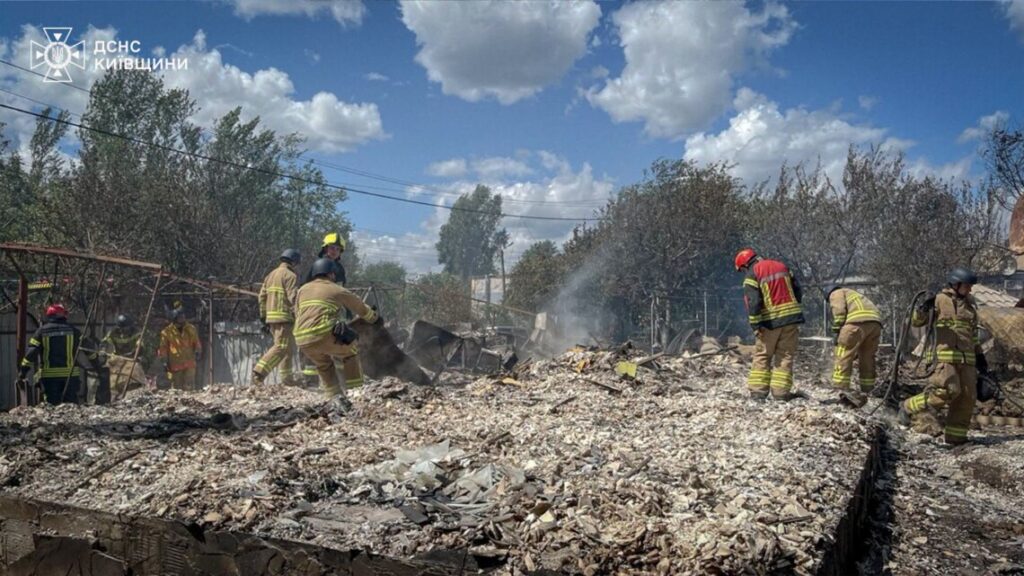
In Vyshneve, a town on Kyiv's southwestern edge, the strike triggered a secondary detonation that burned for hours. More than 600 residents were evacuated because of the risk of further explosions. In all, 13 hectares of residential development in the town were damaged. Prime Minister Yuliia Svyrydenko called it the largest destruction of the residential sector in the entire full-scale Russian invasion, and the government is allocating money from the reserve fund to rebuild damaged housing in the community.

General Staff spokesman Dmytro Lykhovii said the facility where the detonation occurred is not subordinate to the Armed Forces and does not fall under their management, noting that the Commander-in-Chief's order banning the siting of ammunition depots near civilian buildings remains in force.

On 9 July, Zelenskyy confirmed that the object hit in Vyshneve was an ammunition depot belonging to one of Ukroboronprom's enterprises, called the situation "absolutely appalling," and promised criminal liability and dismissals. Ukroboronprom, also known as Ukrainian Defense Industry, groups roughly 100 enterprises producing missiles, drones, armored vehicles, and ammunition.

  • ✇Euromaidan Press
  • Drone strike hits four vessels in Russia’s Taganrog Bay, killing one sailor
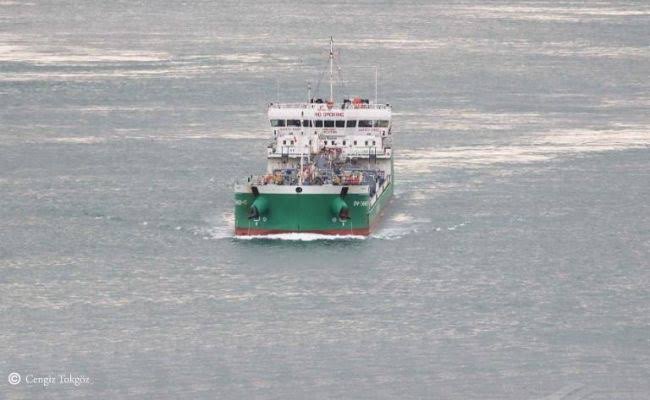
    Drones attacked four vessels, including a tanker carrying methanol, in Russia's Taganrog Bay on 11 July, killing one sailor aboard a technical vessel, Rostov Oblast governor Yuri Slyusar wrote on Telegram. The strike comes as Ukraine has intensified attacks on Russian tankers elsewhere in the region: over five days, strikes hit 48 Russian vessels near Crimea. The campaign has increasingly targeted tankers, cargo ships, ferries, and other vessels that Ukraine says tra
     

Drone strike hits four vessels in Russia’s Taganrog Bay, killing one sailor

11 juillet 2026 à 03:24

taganrog

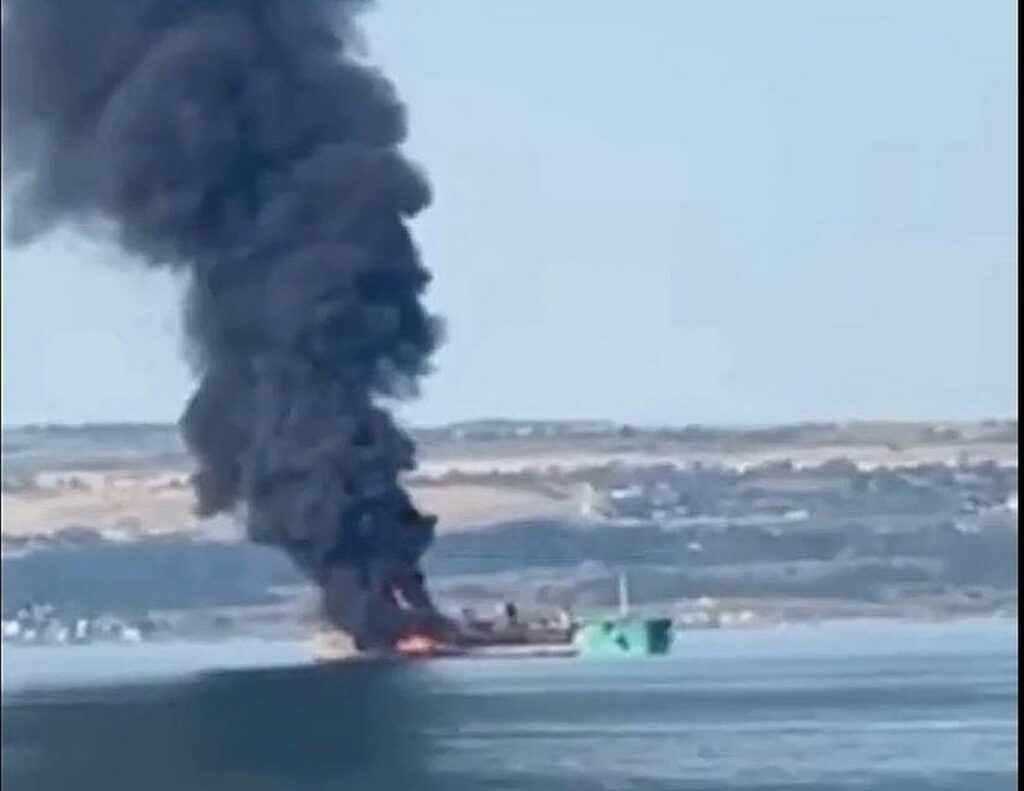
Drones attacked four vessels, including a tanker carrying methanol, in Russia's Taganrog Bay on 11 July, killing one sailor aboard a technical vessel, Rostov Oblast governor Yuri Slyusar wrote on Telegram.

The strike comes as Ukraine has intensified attacks on Russian tankers elsewhere in the region: over five days, strikes hit 48 Russian vessels near Crimea.

The campaign has increasingly targeted tankers, cargo ships, ferries, and other vessels that Ukraine says transport fuel and military supplies sustaining Russian forces after repeated strikes degraded road and rail supply routes to the occupied peninsula.

Casualties and damage

The sailor killed served aboard a technical vessel, Slyusar said. No other injuries were reported.

The four vessels struck were of "various purposes," Slyusar said, and sustained only "minor damage." One of them was a tanker carrying methanol; Slyusar said there was no threat of a leak or spill of the substance.

Air defense response

Air defense units downed more than 15 drones during the attack, according to Slyusar. The strike targeted the city of Taganrog and the Azov and Neklinovsky districts of Rostov Oblast.

Slyusar said drone danger remained active in Rostov Oblast at the time of his post and urged residents to move away from open streets, take shelter indoors, and stay away from windows.

  • ✇Euromaidan Press
  • Russia halts Don-Azov Channel shipping, closes Kerch Strait after Ukrainian tanker strikes
    Russia temporarily stopped shipping through the Don-Azov Channel, a navigable waterway linking the Don River with the Sea of Azov, three grain export industry sources told Reuters on 10 July. Up to one-quarter of wheat exports from Russia, the world's largest exporter of the grain, pass through the Sea of Azov, market analysts said, and Russia's leading grain-producing regions, Rostov and Krasnodar, both lie along its coast. Kerch Strait closure One source said Ru
     

Russia halts Don-Azov Channel shipping, closes Kerch Strait after Ukrainian tanker strikes

11 juillet 2026 à 03:16

isw ukraine has opened new phase crimea's isolation hunting seaborne fuel tankers · post russian tanker burns off sea azov coast after ukrainian drone strike ablaze exilenova+ 1 appears have

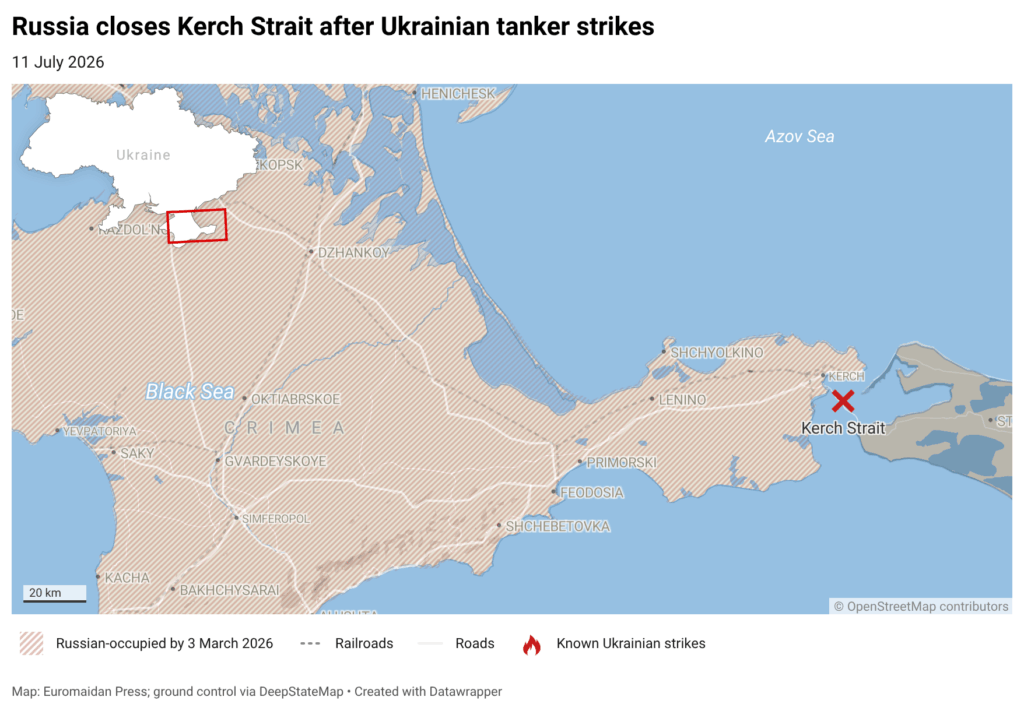
Russia temporarily stopped shipping through the Don-Azov Channel, a navigable waterway linking the Don River with the Sea of Azov, three grain export industry sources told Reuters on 10 July.

Up to one-quarter of wheat exports from Russia, the world's largest exporter of the grain, pass through the Sea of Azov, market analysts said, and Russia's leading grain-producing regions, Rostov and Krasnodar, both lie along its coast.

Kerch Strait closure

One source said Russia's border guards, who report to the FSB security service, notified shipping companies that all requests for passage through the Kerch Strait would not be accepted from 6:10 pm local time on 10 July. The notification did not say when the halt would be lifted, Reuters reported.

The Kerch Strait links the Sea of Azov and the Black Sea. Russia's second-largest port in the Black Sea region is located on the strait.

Russia's agriculture and transport ministries did not respond to a request for comment, according to Reuters.

What preceded the halt

The move followed a Ukrainian attack on 13 Russian vessels in the Sea of Azov on 10 July, including 10 tankers, Reuters reported.

Ukraine has recently intensified attacks on Russian petroleum refineries, triggering fuel shortages across the country, Reuters reported.

Market reaction

Euronext wheat rose as much as 4 percent on 10 July to a six-week high, as talk circulated in the market about a possible closure of shipping through the Sea of Azov.

Analysts and international organizations have warned about risks to global grain trade from the war in Ukraine, because the Black Sea is used by both Ukraine and Russia for grain exports, though there have been no major disruptions to the grain trade over four and a half years of war, according to Reuters.

  • ✇Euromaidan Press
  • Russian hackers accessed doorbell cameras to track Ukraine-bound weapons, Dutch intelligence says
    Russian hackers gained access to internet-connected doorbell cameras to monitor the movement of military equipment being transferred to Ukraine, the Telegraph reported on 10 July 2026, citing the Netherlands' domestic security service and military intelligence service. The intrusions were part of what the Dutch services called a "large-scale Russian operation" aimed at cameras overlooking military transport routes, intended to establish which weapons were being sent to
     

Russian hackers accessed doorbell cameras to track Ukraine-bound weapons, Dutch intelligence says

11 juillet 2026 à 02:54

flat

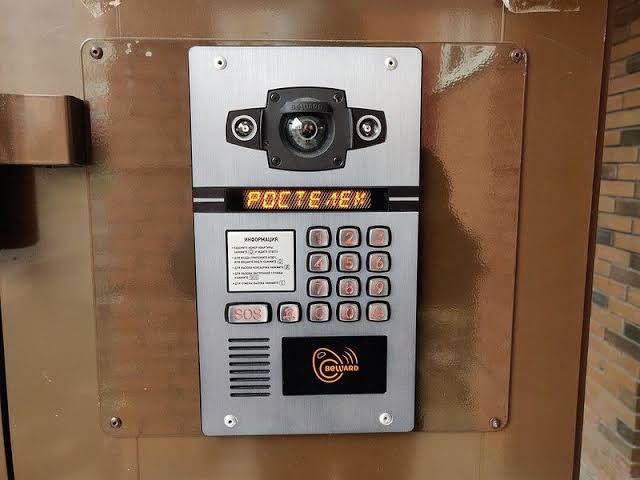
Russian hackers gained access to internet-connected doorbell cameras to monitor the movement of military equipment being transferred to Ukraine, the Telegraph reported on 10 July 2026, citing the Netherlands' domestic security service and military intelligence service.

The intrusions were part of what the Dutch services called a "large-scale Russian operation" aimed at cameras overlooking military transport routes, intended to establish which weapons were being sent to Kyiv. Allies had previously reported similar Russian hacking of internet-connected cameras near Ukraine's borders, close to military facilities, and at railway stations.

Where the intrusions occurred

The services did not disclose the specific locations affected, saying only that the operation concerned "European NATO member states, including the Netherlands, as well as Ukraine."

Organizations operating IP cameras along the affected routes have been notified. "Organizations that have IP cameras (cameras with internet protocol) on these routes have now been warned so that they can take measures," the services said.

How the hackers found their targets

Many of the cameras lacked adequate protection, according to the services. The devices "often used standard passwords, outdated firmware, and typical settings," the services said. Hackers then used readily available apps to scan for devices that might be accessible, the Telegraph reported.

IP cameras have become widespread in recent years because of inexpensive imports and high-speed internet access. The doorbell-mounted systems are commonly used by owners to monitor property through smartphones, and the intelligence agencies did not specify which type of cameras were compromised in this operation.

Allies had previously reported that Russia was hacking internet-connected cameras near Ukraine's borders, close to military facilities, and at railway stations.

  • ✇Euromaidan Press
  • Russian missiles strike four Kyiv districts before air raid siren sounds, injuring 10
    Russian forces struck four Kyiv districts with ballistic missiles overnight on 11 July, injuring at least 10 people, according to Kyiv City Military Administration head Tymur Tkachenko and mayor Vitali Klitschko. The first explosions were heard around 03:38, more than a minute and a half before the city's air raid siren sounded at 03:40. The overnight assault combined ballistic missiles with a large drone swarm, part of a strike pattern that has repeatedly targeted the
     

Russian missiles strike four Kyiv districts before air raid siren sounds, injuring 10

11 juillet 2026 à 02:37

attack on kyiv

Russian forces struck four Kyiv districts with ballistic missiles overnight on 11 July, injuring at least 10 people, according to Kyiv City Military Administration head Tymur Tkachenko and mayor Vitali Klitschko. The first explosions were heard around 03:38, more than a minute and a half before the city's air raid siren sounded at 03:40.

The overnight assault combined ballistic missiles with a large drone swarm, part of a strike pattern that has repeatedly targeted the capital in recent days—including an air raid alert on the night of 8 July that followed at least four explosions. Ukraine's Air Force said interceptors and electronic warfare stopped roughly 90 percent of the drones launched, while none of the ballistic missiles were shot down.

Blasts preceded the official warning

Tkachenko wrote on Telegram: "The enemy is attacking the capital with missiles. Please stay in safe places!" The regional air raid siren followed the city's alert, activating at 03:54.

Monitoring channels said the weapons used were preliminarily identified as Iskander-M ballistic missiles or S-300/S-400 surface-to-air missiles, launched from Russia's Bryansk region. Klitschko later confirmed that the city had been struck by ballistic missiles.

Air Force reports weapon breakdown and interception rate

According to the Air Force, Russia launched six Iskander-M/S-400 ballistic missiles, four Kh-59/69 guided air missiles, two Kh-31 anti-radar missiles, and 121 drones overnight. Two of the four Kh-59/69 missiles were shot down or suppressed, along with 111 of the 121 drones.

All six ballistic missiles, both intercepted guided air missiles that got through, and seven attack drones hit 11 locations, the Air Force said, while debris fell in three additional locations. The fate of the two anti-radar missiles was not reported.

Damage and casualties across four districts

Klitschko detailed the impact by district: "In Sviatoshynskyi district, preliminarily, a hit on a non-residential building. In Darnytskyi, a transformer substation is on fire. In Solomianskyi, a fire in a three-story office building. In Dniprovskyi, a fire on the territory of non-residential development."

The State Emergency Service said 10 people were injured, including an 11-year-old boy. Klitschko said: "Four of the injured are in city hospitals. Others received medical assistance on site."

❌