❌

Vue lecture

Ukraine cuts more than 4,000 vacant government posts and trims deputy ministers by about 20% in the first stage of civil service reform

prime minister serhii koretskyi

Ukraine is thinning its state bureaucracy. Central government bodies will cut more than 4,000 vacant positions in the first stage of a civil service reform, Prime Minister Serhii Koretskyi says, with the number of deputy ministers to fall by about 20% and deputy heads of other central bodies by nearly 18%.

The reform aims to build a professional state apparatus that can carry out tasks quickly and effectively, Koretskyi said. It comes as Ukraine faces an economic crunch, and about $20 billion in EU aid is on hold, blocked by reforms Kyiv has not completed.

The cuts are only the visible first step, and the final headcount is not set yet. The number of deputies will be tied to the volume of tasks each office carries, Koretskyi states.

"The most important thing is that we are running a functional diagnostic of the state apparatus," he continues.

The Ukrainian government will assess which functions the bodies have and whether they align with the state's realities and priorities, and only then will it define the structure and final headcount.

Training is tied to the job

Another track reshapes how officials learn. Training will be linked to the tasks of each specific post, with outreach and internships for young people and a separate program for veterans, Koretskyi says.

The Public Administration Council, which brings together officials, members of parliament, and experts, has resumed work, presenting a detailed plan on the task and assigning responsibility for each area.

The squeeze that forces the cuts

The reform lands in a tight budget. The war is costing Ukraine about $155 billion a year, and with Western aid running late, Kyiv has frozen almost everything except the army, pensions, and public wages.

On 1 October, the state suspended a veterans' gym subsidy that had cost about $13 million and drawn more than 800,000 users, for lack of funds.

  •  

Ukraine’s war leadership sets new electronic warfare tasks as Russia’s jet-powered drones slip past nearly half of its air defenses

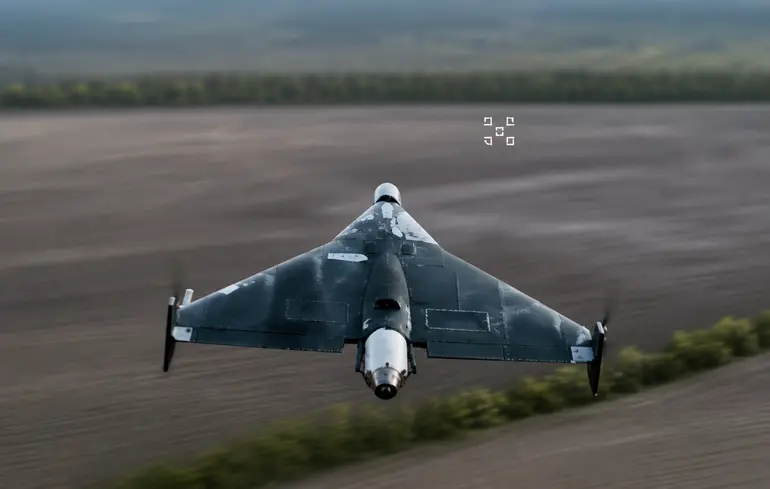
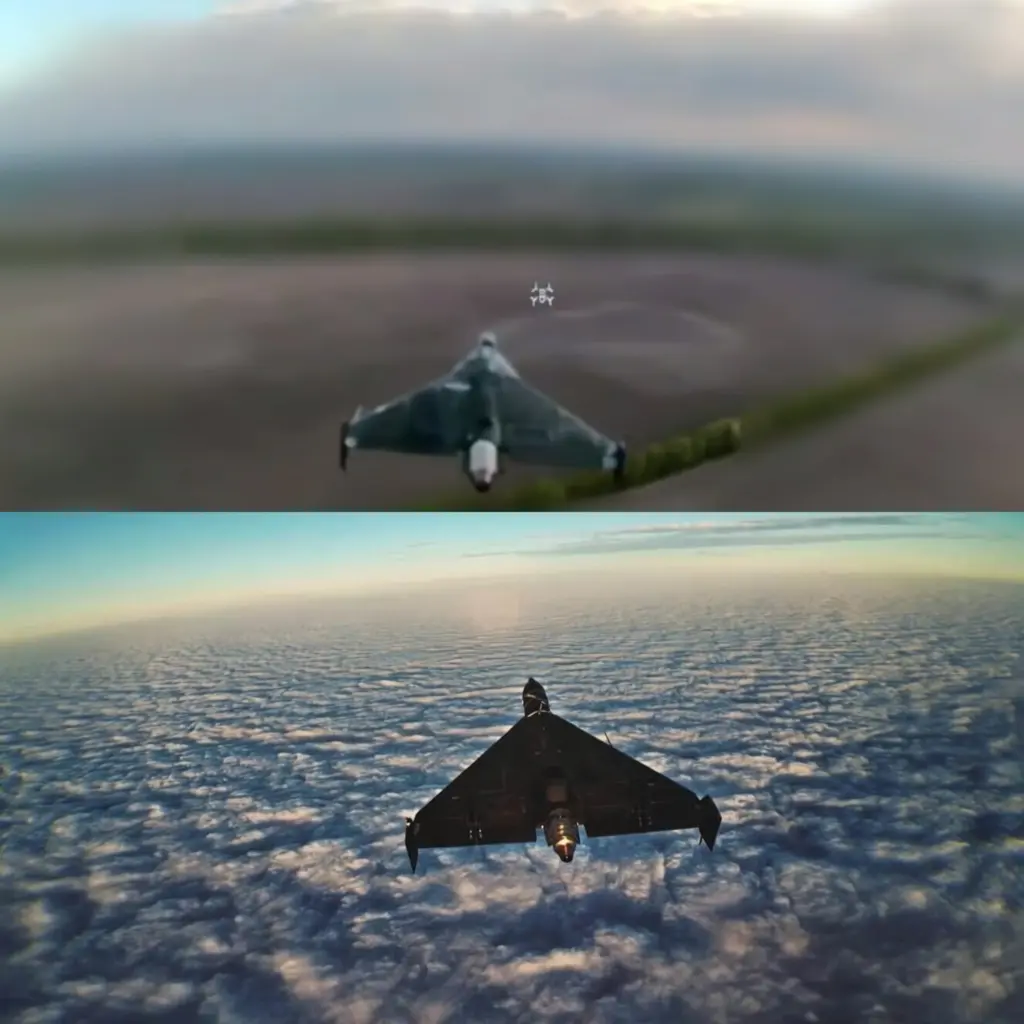
Geran-4" is an evolution of the earlier "Geran-3" model

Russia keeps upgrading its jet-powered drones, and Ukraine's electronic warfare is racing to keep up. Kyiv has set extra tasks for its military and manufacturers to scale up the most effective electronic warfare approaches, President Volodymyr Zelenskyy said after a meeting of the Supreme Commander-in-Chief's Staff on electronic warfare and infrastructure protection.

Russia keeps modifying its jet-powered Shaheds to beat each new Ukrainian defense, and Ukraine's answers have to keep pace. The race is tight: from 1 to 26 September, air defenses downed only 55 percent of the 2,730 new jet-powered drones, against 90% of the slower ones.

Hidden relays blunt Kyiv's jammers

Jamming has to improve because Russia keeps finding new ways around it. On 3 October, presidential adviser Serhii "Flash" Beskrestnov said someone had installed Russian MESH radio repeaters in Kyiv, a short control channel that guides Shahed drones onto their targets. As long as they are there, he said, closing the city with electronic warfare will not be effective.

"As long as online control of drones exists, not only the bridges but the air defense assets will be under threat," Flash stressed.

Sanctions aim at the supply chain

Beyond the jamming task, the Staff turned to where Russia gets the parts for those drones. Defense Intelligence reported on Russia's technological priorities for this year and next, and on supplies of critical components and equipment for its weapons production, Zelenskyy said.

New sanctions packages will follow, with Defense Intelligence due to send proposals to the Ukrainian government and the National Security and Defense Council, and Ukraine is working to align its sanctions with partners' jurisdictions.

The Staff also set the main tasks for supplying Ukrainian forces with long-range drones next year.

"The main criterion is that we must be able to respond in kind to Russian strikes," Zelenskyy emphasized.

Those parts, and the drones built from them, keep changing

In August, Intelligence Deputy Chief Vadym Skibitskyi said Russia remained fully dependent on Chinese turbojets for the Geran-4 and Geran-5, each costing about $35,000 to $40,000.

However, two months later, Ukraine reported the Geran-4 had received a locally built engine and a new optical navigation system. Kyiv has to stay attuned to changes to keep pace with the technology race, and so far, it is still trying to catch up rather than get ahead.

  •  

Ukraine is third in world for cyberattacks after US and Israel, and first in Europe. Machine-speed assaults run continuously and without fatigue

Illustrative photo. Credit: Philippe HUGUEN / AFP

Only the US and Israel were hit by more cyberattacks than Ukraine this year. Ukraine ranked third in the world and first in Europe among the countries whose organizations and users were most often targeted by cyberattacks in the first half of 2026, accounting for 4.8% of all victims worldwide, up from fifth in the world and third in Europe a year earlier, Microsoft said in its Digital Defense Report 2026.

Microsoft processes more than 165 trillion security signals a day, which lets it show how often attackers go after customers in each country. Russian state hackers aimed 14% of their recorded activity at Ukraine, more than at any country except the US.

The era of machine-speed cyberattacks is here

Government agencies and services were the most targeted sector worldwide at 27%, up from 17% in 2025. Phishing drove 23% of intrusions Microsoft investigated, up from 7% a year earlier, and the median time from finding a vulnerability to weaponizing it has fallen well below 24 hours.

The use of artificial intelligence is pushing cyberspace into an era of “machine-speed” attacks that operate continuously and without fatigue, according to Dev.

“Many AI agents act on behalf of users and with their access rights, so a compromised agent combines user-level access with machine-scale actions,” Natalia Burlakova, Security Sales and Engineering Lead at Microsoft, says.

Deception beats code in attacks on Ukraine

Ukraine's own agency data show a similar pattern. Malware accounted for 33% of cyber incidents in the first half of 2026, and social engineering 31%, the State Service of Special Communications and Information Protection reported on 30 September. System infections made up 15%, and system compromises 4.5%.

Attackers rely less on technical complexity than on trust, according to the report by Ukraine's computer emergency response team, CERT-UA. Hacker groups create fake pages that mimic CERT-UA, Ukraine's Parliament's document management system, and the Brave1 defense technology platform.

Microsoft urges five government steps

Microsoft asks governments to prepare for faster-moving threats by assigning roles and coordinating agencies in advance of a crisis, and to treat AI security as part of national resilience. It also asks them to plan for incidents that spread, noting that 52.2% of intrusions involving valid accounts led to additional credential theft.

  •  

Ukrainian units hit record number of Russian air defense systems and radars in September, one of them 552 kilometers away

two russian fighters one spy drone hit kranodar radars anti-air systems elsewhere—ukraine forces · post combat aircraft ukrainian drone's sights vityazevo airfield krasnodar krai russia 23 2026 su-33 video sbs

In September, Ukraine struck more Russian air defense systems than in each month since 2024. Its Defense Ministry reports that Ukraine stepped up strikes on targets deep in the Russian rear, and this is how it hit this amount of protective systems, radars among them, in the history of the ePoints program.

ePoints are points that Ukrainian units earn for verified combat missions, from strikes to reconnaissance and evacuation, and spend on drones, ground robots, and electronic warfare systems on the state's Brave1 Market. In September, units confirmed hits on 33,087 Russian soldiers under the program, more than in any month this year except March and April.

Every result is recorded on video in the DELTA battlefield system and verified by the Brave1 defense innovation cluster, the ministry said. Russian losses are also growing far from the contact line, it added, and units are finding new and unconventional ways to inflict them.

The strikes are meant for "bleeding the Russian war machine," Defense Minister Yevhenii Khmara said on 4 October.

Deep strikes pass 11,000

In September, the number of hits more than 20 kilometers behind the front line exceeded 11,000 for the first time. Hits beyond 50 kilometers also set a record, most of them along the Russian logistics route between Mariupol and Crimea. One air defense system was hit 552 kilometers away.

Ukraine also now has a ballistic missile for such depths, not simply drones. It fired its first FP-7 in combat on 1 October, President Volodymyr Zelensky announced without naming a target. Its maker, Fire Point, plans an interceptor version that aims to achieve a first ballistic missile shoot down by mid-2027.

Troops down more propeller Shaheds

Even as Russia kept changing its air attack tactics and launched more jet-powered drones, Ukrainian troops shot down 28% more non-jet-powered Shahed drones in September than in August, the ministry said.

Jet drones remain the harder target. Ukraine shoots down 85 to 92% of propeller-driven Shaheds but only 50 to 60% of jet-powered ones, Zelensky said on 4 October, when he announced a new small missile called Nika for testing against them. Ukraine's military intelligence estimates that Russia builds about 3,000 jet-powered drones a month.

  •  

At ruined Donetsk’s airport, three Russians snap selfies and ready jet-powered Geran-4. Ukrainian drone slips in unseen and rams their launcher

russia steers its long-range drones ground towers—kyiv says hit one occupied crimea · post russia’s new “geran-4 seeker” shahed variant uses machine-vision ai targeting geran 4 ukraine news ukrainian reports

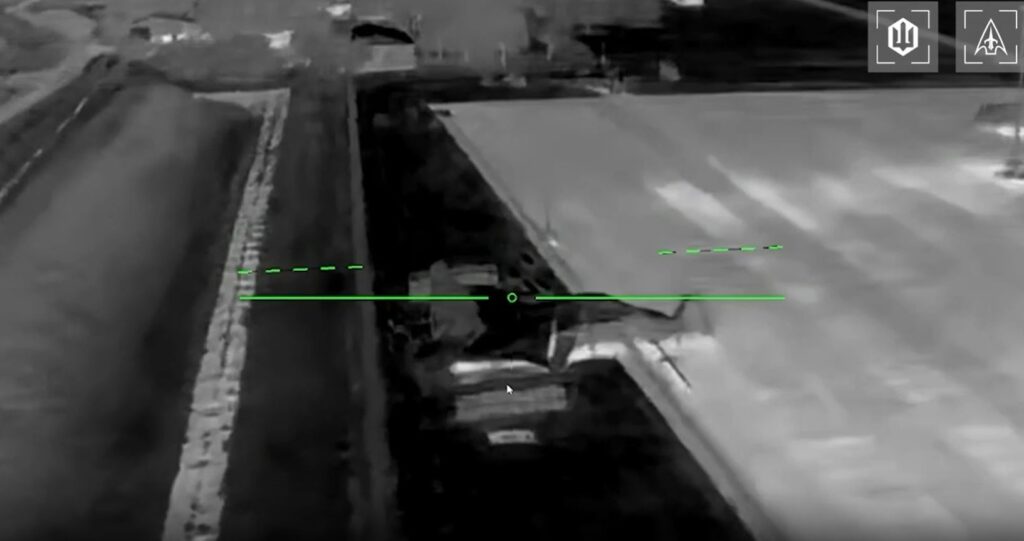
Russian troops were taking selfies beside a jet-powered Shahed launcher when a Ukrainian drone hit them. A Ukrainian drone attacked a pickup truck converted to launch Russian Shahed drones in the Donetsk airport area while its crew prepared to fire a jet-powered Geran-4, according to video from the Cursed Empire drone unit of the 100th Separate Mechanized Brigade that volunteer Serhii Sternenko published on 6 October.

Three Russian soldiers struck a pose by their drone launcher near Donetsk airport

It was their last selfie. Ukrainian drones hit the crew moments later as they prepared to fire a jet-powered Geran-4
🎥 Serhii Sternenko pic.twitter.com/ri9bNztW5y

— Euromaidan Press (@EuromaidanPress) October 6, 2026

Russia launches Shahed drones, including jet-powered ones, from pickup trucks and fixed launchers, and the ruined Donetsk airport, about 50 kilometers from the front line, is one of its drone bases. In September, Oboronka outlet counted that in general, Russia has at least 63 launchers at its drone bases, which are built to survive strikes.

The video shows three carefree Russian soldiers next to a pickup fitted with a launch frame.

"That was their last photo shoot," Sternenko noted, commenting on the hit on the soldiers.

The primary target

Earlier, an officer of the 1st Separate Center of the Unmanned Systems Forces, call sign “Falco,” explained that the primary goal of strikes on drone bases is to disrupt Russia's ability to launch drones.

This is done by destroying launchers and storage facilities, as well as creating an aerial threat over the drone base. Such attacks can delay drone launches indefinitely, while the destruction of infrastructure can reduce the overall number of drones launched.

But the "jewel" of anti-drone port operations is the military staff

Although these facilities are important targets, the Unmanned Systems Forces have another priority: drone operators.

“The most difficult and, at the same time, the most valuable target is the operator. They don’t stay near the launchers for long,” Falco said.

By taking out drone operators, Ukraine inflicts losses on a scarce resource. There are already relatively few of them, and Russia will have to spend additional money and time training new crews.

  •  

Ukraine’s Defense Ministry says some suppliers cannot build weapons ordered, and drops contracts to free $346 million for front

The image shows Ukrainian marines. Source: The 34th Separate Marine Brigade of the Ukrainian Marine Corps

Ukraine is canceling part of its planned military purchases and moving the money to other priorities. Ukraine's Defense Ministry has announced that it, together with the General Staff and the Logistics Forces Command, will free about $346 million by terminating some weapons contracts and dropping some planned purchases.

What the army planned to buy in 2024 and 2025 may no longer be suitable for the front, the ministry noted, because technology and tactics change quickly. The review comes four days after the Ukrainian government drew about $1.1 billion from the defense reserve to pay soldiers in October amid a looming economic crisis.

The ministry gives five reasons for the review: some weapons no longer match combat tasks, certain suppliers cannot build the planned volume, certain models have not been codified, partners already cover some needs, and cheaper means can perform specific jobs in larger numbers.

"For us, there is one criterion: does the item work for results in combat today. Every hryvnia released from irrelevant contracts must reach the troops as the weapons needed right now and in the right place," Col. Yurii Pohribnyi, commander of the Logistics Forces, says.

The procurement agency calls each producer

The General Staff set the final list of purchases for review, and the ministry forwarded the documents to the Defense Procurement Agency to implement the decision. For specific items, delivery volumes were adjusted rather than canceled, which the contracts allow when needs change.

Affected producers have been informed, and the agency is discussing each item with suppliers based on the status and payments of each contract. Artem Romaniuk, acting director of the agency, has explained that further steps on each contract will depend on the army's current needs and the contract terms. The list of weapons stays secret for security reasons.

Funds freed up by terminating contracts and canceling planned purchases will be redirected to the urgent needs of Ukraine’s Defense Forces.

  •  

Ukraine’s drone pilots hit 76.5% more Russian infantry than two months ago: 2,699 in first five days of October

The image shows Ukrainian soldiers. Source: The 80th Separate Air Assault Halytska Brigade

Ukraine's drone pilots are killing and wounding far more Russian infantry than they did a month ago. Ukraine's Unmanned Systems Forces confirmed that their pilots took out 2,699 Russian infantry from 1 to 5 October, 39.7% more than in the first five days of September, Commander Robert "Madiar" Brovdi wrote on Telegram on 6 October.

The Unmanned Systems Forces, the branch of Ukraine's military that fights with drones, count only losses verified by their own pilots in the military's Delta system, so the full picture of Russian losses is larger, Brovdi stressed. Compared with the first five days of August, the rise is 76.5%, from 1,529 losses, which he ties to denser and more frequent Russian assaults.

The sharpest growth occurred in the area of the 1st Azov Corps of Ukraine's National Guard on the Dobropillia-Pokrovsk axis in Donetsk Oblast, as fighting for fortress-belt cities continues. Drone pilots recorded 1,268 Russian losses there, 43% more than the 884 of early September and 91% more than the 664 of early August.

"Russia's hidden mobilization is in action. This is the beginning," Brovdi said ironically.

Russia doubles its monthly recruitment pace

Russian recruitment, mobilization, and contracts run at about 70,000 people a month, twice the 35,000 monthly average from January to August 2026, Brovdi noted on 16 September, when he forecast 12,500 losses for his pilots in September.

He expected the toll to keep climbing. Bigger records still lie ahead because of Russia's unannounced mobilization, Brovdi added on 24 September.

Drone pilots outpaced August by a quarter

September was completed above that forecast. The pilots logged 13,358 Russians killed or wounded, 25.35% more than the 11,010 of August, an average of 445 a day against 355, Brovdi reported. By his count, that equals the full assault infantry of one battalion every day, and his pilots hit a Russian target every 42 seconds.

Two sets of axes took the heaviest toll. In the first 24 days of September, the Dobropillia and Pokrovsk axes accounted for 4,018 losses, and the Oleksandrivka and Huliaipole axes for 3,021, according to Brovdi. The first of those groups covers the same Dobropillia-Pokrovsk axis where the Azov corps zone recorded the sharpest October rise.

  •  
❌