Vue lecture

Germany Identifies a Plot After Finding a Weapons Cache, but Names No Culprit

Officials were careful not to point a finger, after revealing what they said was a plan for a political attack, at a time when a series of destabilizing actions have been blamed on Russia.

© Bernd Von Jutrczenka/DPA, via Associated Press

“This case shows that we are working on the assumption that the risk level is high,” Alexander Dobrindt, the German interior minister, said at a news conference on Friday.
  •  

Latvia resumes naming firms trading with Russia or Belarus after nearly three years

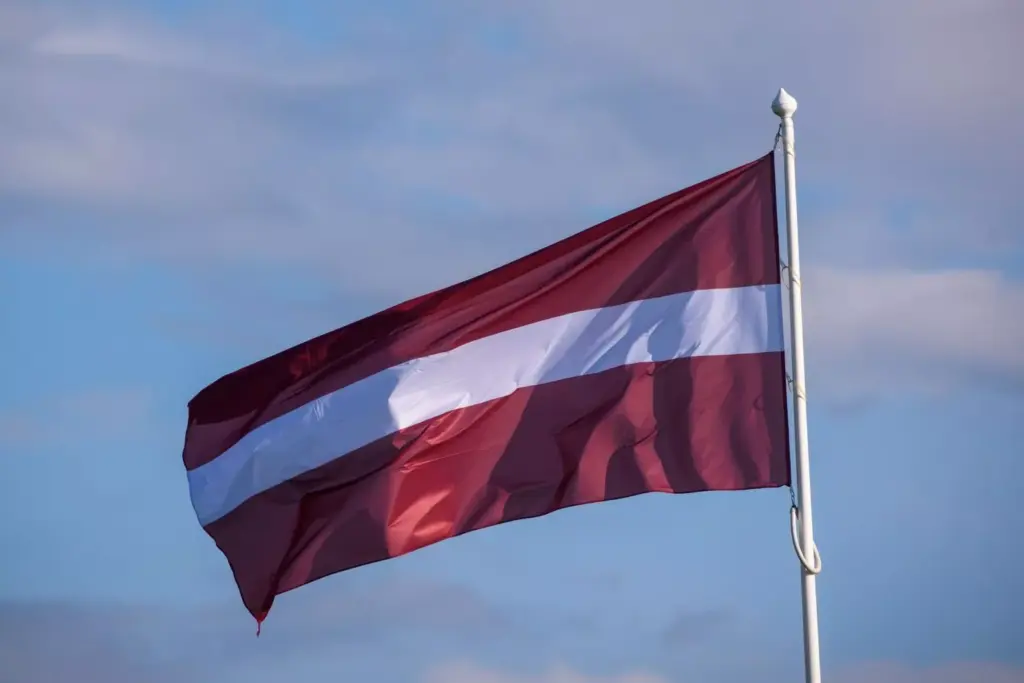
Latvian flag flying from a white flagpole against a blue, lightly clouded sky.

Latvia has resumed publishing monthly lists of locally registered companies trading goods with Russia or Belarus after a nearly three-year pause, public broadcaster LSM reported on 20 August 2026.

Prime Minister Andris Kulbergs has pledged to sever its remaining economic ties with Russia and Belarus, but substantial trade remains legal because EU sanctions are not a full embargo. The monthly register makes that commerce visible by identifying the companies involved.

The Central Statistical Bureau, Latvia's national statistics agency, published the names of 171 companies for July. A subsequent analysis by Latvian news agency LETA found that more than two-thirds operated in logistics, food and agriculture, or medicine.

The disclosure is, in effect, a form of naming and shaming. Yet the statistics bureau stopped publishing a similar list in autumn 2023 because names without transaction details could not support objective conclusions. The register is not a sanctions blacklist, and inclusion does not indicate a sanctions violation.

Under an amendment adopted on 18 June 2026, Latvia’s tax authority must send the data to the statistics bureau each month. The change also lifted tax-confidentiality rules that had kept company names private, LSM reported.

The explanatory note accompanying the law said disclosure was intended to support Ukraine. The amendment's authors argued that Latvian companies should not contribute to Russian and Belarusian state revenues while Russia’s invasion continues, according to LSM.

Latvia seeks to cut its remaining trade

The Prime Minister said in June that Latvia must sever its remaining economic ties with Russia and Belarus. However, he indicated that pharmaceutical exporters would likely be exempted on national-security grounds.

Latvia’s exports to Russia and Belarus each fell only about 7% in 2025, while imports from Russia plunged by more than two-thirds, according to official data cited by Euromaidan Press.

EU sanctions do not prohibit all trade

The EU renewed its economic sanctions on Russia through July 2027, preserving restrictions on trade, finance, and energy, as well as on goods and technology with both civilian and military uses, Euromaidan Press reported in June.

The Council of the EU says its trade restrictions exclude health, pharmaceutical, food, and agricultural products to avoid harming Russian civilians. Those exclusions allow EU companies to continue lawful trade with Russia even while other parts of its economy remain under sanctions over the invasion of Ukraine.

  •  

After Canada in May, now Finland: top-ranked Ukrainian drone maker keeps taking its technology abroad

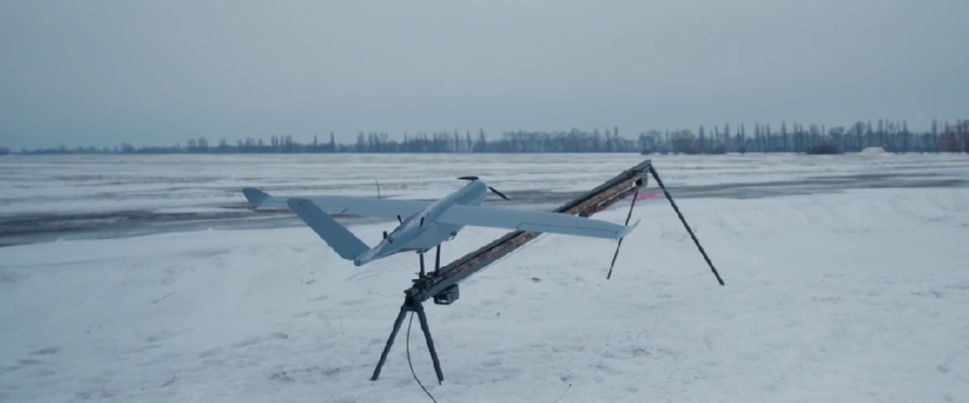
The GOR UAV. Source: Airlogix

A Ukrainian drone maker is taking its battle-tested technology to a European factory floor. Ukrainian producer Airlogix has agreed with Finnish technology company Innokas to establish a joint venture in Finland, the company reported.

Under the "Build with Ukraine" initiative, the partnership will manufacture uncrewed systems based on Airlogix's Ukrainian technology in Finland, scaling production of Ukrainian drones in Europe and increasing supply to Ukraine's Defense Forces.

The deal was signed in Denmark

The two companies formalized their intent at a defense event. Airlogix and Innokas signed a Letter of Intent to establish manufacturing in Finland for uncrewed systems based on Airlogix's Ukrainian technology during DALO Industry Days in Denmark.

The next stage will focus on developing the manufacturing model in Finland and establishing the joint venture, according to Airlogix.

Airlogix is a globally ranked drone maker

Airlogix is one of Ukraine's most recognized drone developers. In 2025, it ranked 84th on The Defense Post's list of the world's top 100 unmanned-systems makers, a ranking that weighed revenue, R&D investment, and growth. It was one of three Ukrainian companies on the list, alongside TAF Drones and Ukrspecsystems.

Airlogix makes the GOR unmanned aerial system, designed for reconnaissance and artillery spotting, which flies for two to two-and-a-half hours, has a range of 150 kilometers, and maintains communication at a range of 30 to 40 kilometers.

It is Airlogix's second European production deal

The Finnish venture follows a similar one across the Atlantic. In May 2026, Airlogix formed a 50-50 joint venture, Airlogix-Sentinel, with a Hamilton-based manufacturer to produce Ukrainian reconnaissance drones on Canadian soil for Ukraine's forces, under the same "Build with Ukraine" initiative.

  •  

Ukraine planned 1,000 AI-guided drones a night to shut Moscow airports, Atlantic reports

Smoke rises behind illuminated apartment buildings in Moscow at night following a reported Ukrainian drone attack.

President Volodymyr Zelenskyy allowed preparations for an AI-guided drone campaign against Moscow-area airports, The Atlantic reported on 20 August, citing two anonymous sources with direct knowledge of the proposal.

The reported plan sought to keep civilian flights grounded long enough to pressure Russia’s elite. Had it proceeded, it would have moved Ukraine toward large-scale autonomous strikes, raising questions under the laws of war about attacks without human confirmation. The Atlantic's disclosure follows months of reported Ukrainian attacks that repeatedly forced Moscow-area airport closures and sent increasingly large drone swarms toward the capital.

How the drone operation would have worked

Code-named M&Ms, the operation called for as many as 1,000 drones to fly toward Moscow-area airports each night and overwhelm Russian air defenses, one source said.

Onboard cameras would compare live views with preloaded maps and target images. They would also allow the drones to strike without pilot confirmation and to navigate without a remote-control link that is vulnerable to Russian electronic jamming, the sources said.

One source said prolonged airport closures were intended to pressure Kremlin-linked elites and push Vladimir Putin toward negotiations.

The plan was presented to Zelenskyy during the winter of 2025–26, The Atlantic reported. Preparations stopped after Zelenskyy dismissed Defense Minister Mykhailo Fedorov, whom The Atlantic described as the operation’s mastermind, in July, both sources said. One source said another team could revive the project within about three months.

Both sources said Zelenskyy allowed preparations despite concerns that a drone could hit a civilian airliner. Planners proposed warning airlines, according to one source.

A Zelenskyy spokesperson declined to comment. Another unnamed presidential office official called the report “total nonsense,” saying Ukraine lacked long-range weapons reliable enough to strike the airports without posing undue risks to civilians.

Previous Ukrainian strikes on Moscow

The alleged M&Ms operation never launched, but other reported Ukrainian drone attacks repeatedly disrupted Moscow’s airports.

From 5 to 7 May 2026, restrictions imposed amid reported Ukrainian drone attacks delayed more than 450 flights at Moscow airports. Limits at Vnukovo remained in place for nearly 18 hours, EP reported, citing the independent Russian investigative outlet Agentstvo.

Earlier this week, Russian authorities claimed that 620 drones flew toward Moscow in one night, EP reported. The Atlantic placed Russia’s nationwide interception claim for that night at 791 drones. Ukraine’s military did not claim the attack.

  •  

Ukraine can’t get one permit to find its WWII dead in Poland—yet approves Polish searches, Kyiv’s ambassador says

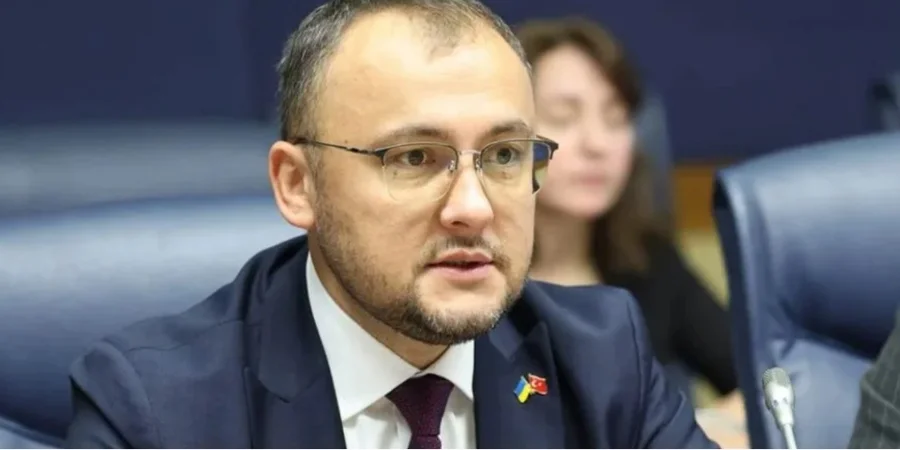
Ukraine’s Ambassador to Poland Vasyl Bodnar speaks into a microphone during a meeting.

Poland has held up a Ukrainian search at Łasków for months, Ambassador Vasyl Bodnar told Polish broadcaster RMF24, NV reported on 19 August. He says the eastern Polish village may contain the remains of civilians killed there by Polish underground forces in 1944.

The permit dispute is part of a much larger argument over how Ukraine and Poland remember the wartime killings of Poles and Ukrainians. Reciprocal searches resumed only recently after years of deadlock, giving both countries a way to recover and identify victims even as they disagree over historical responsibility. The latest delay tests that fragile progress while Poland remains Ukraine’s main route for Western arms and aid.

Bodnar says Ukrainian civilians were killed at Łasków in 1944 by the Home Army—Poland’s principal underground resistance force during the Nazi occupation—and the Peasant Battalions, an agrarian underground movement.

Bodnar appealed to Poland to issue "at least one permit" for searches on its territory. He said Ukraine systematically approves Polish requests in return. The ambassador blamed the holdup on unspecified “bureaucratic restrictions” and urged Warsaw not to leave the impression that Kyiv was obstructing the work.

In July, Bodnar said Poland’s Institute of National Remembrance had supported the Łasków application procedurally and that only approval from the regional monuments conservator remained. He expected work to start in August.

The institute said it had assisted with Łasków but was awaiting more documents for Ukraine’s separate applications concerning Sahryń and Przemyśl.

Past Polish-Ukrainian exhumations

Reciprocal work between Ukraine and Poland resumed only after Kyiv lifted a moratorium imposed in 2017. Ukraine had halted Polish exhumations in response to the destruction of Ukrainian memorial sites on Polish soil.

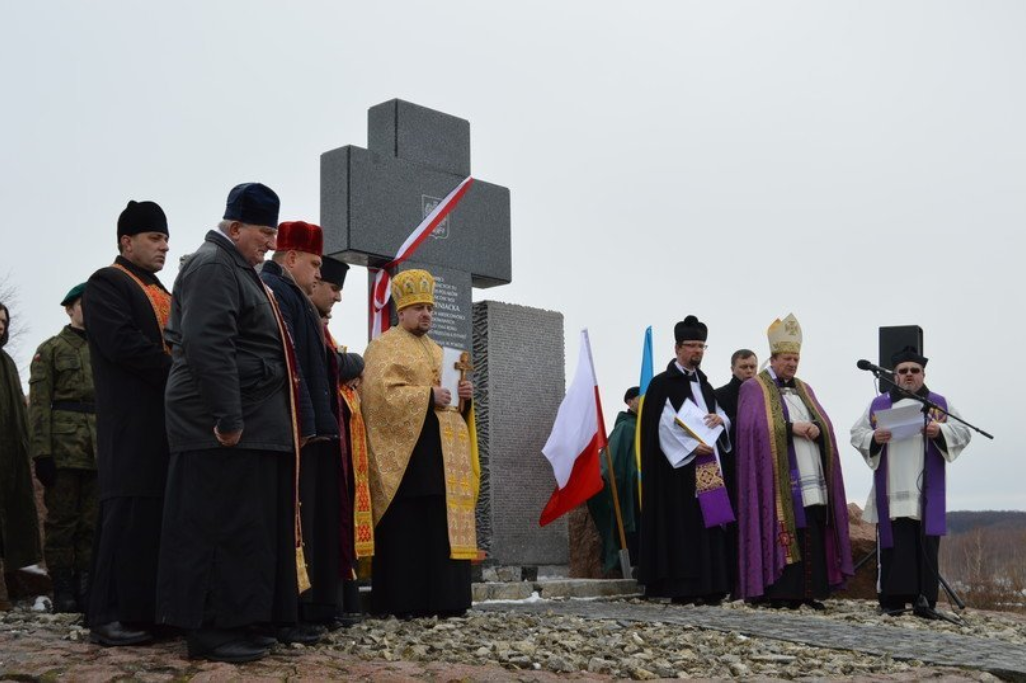
The monument to murdered Polish civilians in Huta Peniatska in Ukraine's Lviv Oblast was restored in 2017. Photo: NV
Explore further

Ukraine will keep issuing Polish exhumation permits despite historical tensions. Dispute “causes joy in Moscow,” Kyiv says

A joint team exhumed the remains of 42 Polish victims of massacres by Ukrainian nationalists at Puzhnyky in western Ukraine in May 2025. Ukrainian researchers later searched for a suspected grave of up to 18 Ukrainian Insurgent Army fighters at Jureczkowa, Poland, but found none.

Ukraine granted further permits for Polish searches in 2026. Joint work at Uhly in Rivne Oblast found no mass grave, while exhumations began at Ostrivky and Volia Ostrovetska in July.

Historical grievances strain wartime alliance

The searches are the practical core of a broader dispute over wartime killings of Poles and Ukrainians. Competing interpretations of the Volyn tragedy and battles over Ukrainian Insurgent Army symbols have increasingly spilled into Polish politics and the streets.

Kyiv says it continues approving Polish grave searches while its own researchers wait to begin work in Poland.

  •  

Russia occupied Anton’s home when he was 10. At 18, he volunteered to fight against Ukraine

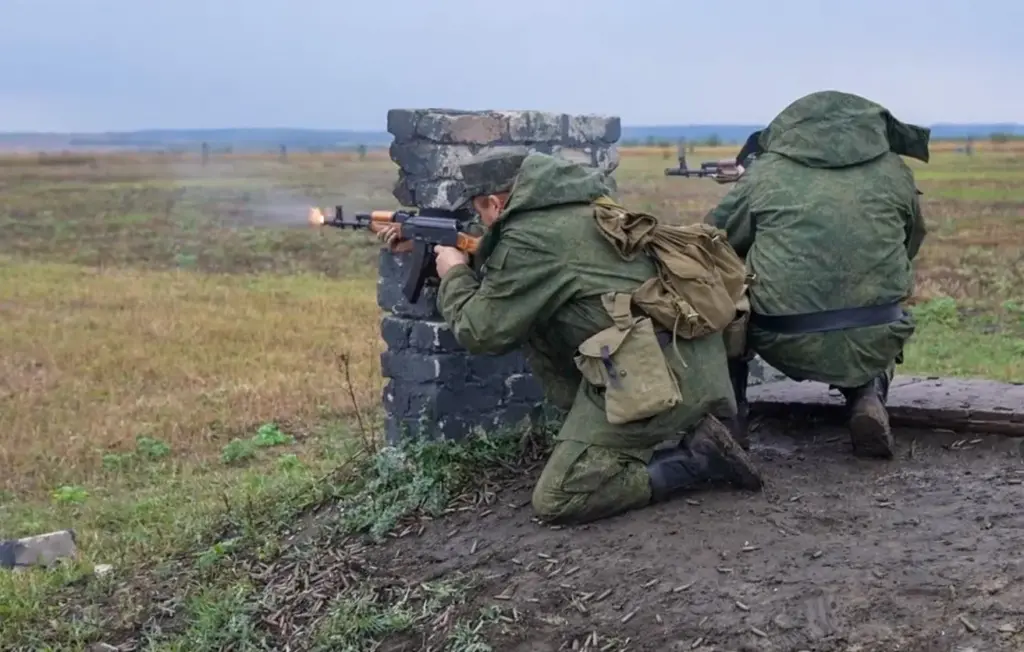
Two soldiers kneel behind a low brick barrier and fire rifles across an open training field.

Now held in a POW camp in western Ukraine, Anton does not consider himself a traitor. He calls Putin “my President” and said he joined Russia’s army to defend “my land,” the BBC reported.

The BBC interviews show what more than a decade of Russian rule has produced in occupied Donbas. Moscow has replaced Ukrainian schools, media, and public institutions while presenting the occupied regions as permanent parts of Russia. It also recruits residents or forces them to fight against Ukraine.

The BBC said prisoners could refuse and were interviewed without guards or cameras.

Almost all its Ukrainian-born interviewees from territories occupied since 2014 said they had enlisted willingly. Anton said he was not a traitor and called Vladimir Putin “my President.”

His friends also volunteered. Messages announcing their deaths followed: “Dead, dead, dead.”

Forced conscription of Ukrainians in occupied territory

One prisoner from Donetsk Oblast told the BBC he had been forced to fight. He wanted only to return to his wife and children.

The BBC cited an official intelligence-based estimate that Russia forcibly conscripted more than 50,000 Ukrainians in occupied areas. It noted that other estimates were higher.

Ukrainian veteran Pavlo Pshenychnyi told Hromadske that occupation authorities used planted drug evidence to push him into Russia’s army. They threatened him with up to 12 years in prison.

Article 51 of the Fourth Geneva Convention prohibits occupying powers from compelling protected residents to serve in their armed forces.

Anton and the Russification of occupied Ukrainian territory

Russia took control of Anton’s home while he was still in primary school. By adulthood, he called himself Russian and dismissed his Ukrainian surname as irrelevant.

Putin’s 2025 policy decree set a 95% target for “all-Russian civic identity” by 2036 and ordered the integration of occupied Ukrainian regions into Russian education, culture, and media.

Kherson-based outlet MOST reported that Russia will introduce compulsory textbooks on 1 September, presenting four occupied Ukrainian regions as historically Russian.

Ukraine’s Center for Countering Disinformation reported in 2025 that more than 100 teenagers from occupied Luhansk attended a Russian military camp. They received firearms, drill, and guard-duty training.

The center described the camp as part of a wider effort to spread Russian war propaganda and hostility toward Ukraine.

Petro Yatsenko of Ukraine’s POW Coordination Headquarters told the BBC that these prisoners were strongly pro-Russian. He said their national identity was “very blurred.”

Ukraine still considers them Ukrainian and treats Russia’s control of their home regions as temporary, the BBC noted.

  •  

At 77, She Walked 9 Miles Under Drone-Filled Skies to Escape From ‘Hell’

Rescue teams no longer enter the city of Lyman, in eastern Ukraine, because it is deemed too dangerous. The only way out is a terrifying journey on foot.

© Cassandra Vinograd/The New York Times

Nina Ivanova at an evacuation center in Sloviansk, Ukraine. She and her daughters took their chances on the road, as countless Ukrainians have done before them all along the front line.
  •  
❌