❌

Vue lecture

They’re Young and Frustrated and Want France to Change. They Disagree on How.

One is a left-wing student leader, the other a young far-right activist. Together, Soumaya Sarré and Louise Montangon reflect the polarization of France, where more protests and strikes took place on Tuesday.

© Aurelien Morissard/Associated Press

A student-led protest in Paris last month. Though many young people support the protests, some are drawn to far-right groups.
  •  

Is Italy the Model for Europe’s Future?

Over more than a quarter-century, I’ve watched Europe’s politics become more like Italy’s, with all the resulting instability, as the far right came in from the cold.

© Gianni Cipriano for The New York Times

Supporters of Giorgia Meloni’s Brothers of Italy party at a rally in Rome before general elections in 2023. Her victory was the first for a party with post-fascist roots since Mussolini.
  •  

One of France’s Most Popular Athletes Is Running for President

Centrists want alternatives to a matchup between the far right and far left in the 2027 presidential race. Enter Christine Lagarde, a former central banker — and Teddy Riner, a judo star.

© Benoit Tessier/Reuters

Teddy Riner, a judo champion, in 2025. Mr. Riner, one of France’s most popular athletes, announced on Monday that he would run for president.
  •  

Germany threatens to block EU’s next budget unless all 27 states help close Ukraine’s 70-billion-euro funding gap

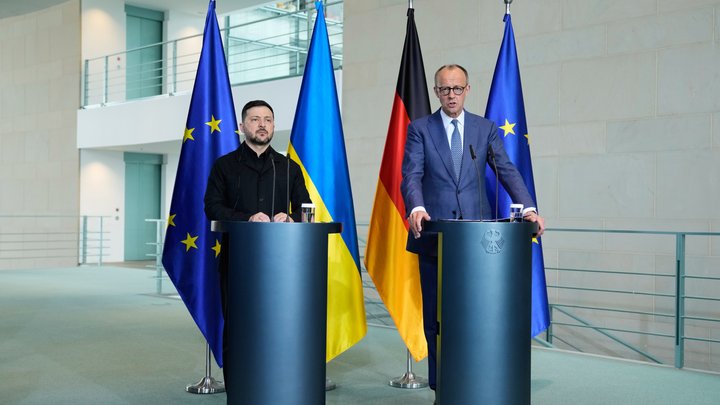
Ukrainian President Volodymyr Zelenskyy and German Chancellor Friedrich Merz

Germany is threatening to block the EU’s next long-term budget unless every member state helps pay for Ukraine. In a letter to European Council President António Costa, Chancellor Friedrich Merz made his support for the 2028-2034 budget conditional on all 27 countries committing to cover Ukraine’s financing, which faces a €70 billion gap next year, the Financial Times reported.

This way, Germany, the EU’s biggest net contributor, leverages pressure over a handful of governments that have refused to pay for Ukraine’s defense, despite previous warnings from multiple intelligence agencies and NATO that Russia might have planned to expand its aggression on European countries.

The report came days before EU leaders meet in Dublin on 12-13 November, where closing Kyiv’s shortfall is already on the agenda, and as elections across Europe threaten to make unanimous support harder to hold.

The 70-billion-euro gap

Last December, EU leaders agreed a €90 billion loan for Ukraine, but Kyiv says it needs €70 billion more next year to keep fighting, a figure its allies accept.

The bloc has pledged to cover about two-thirds, roughly €45 billion, and the European Commission is weighing options including fresh joint borrowing, hoping for a deal by year’s end.

Closing the gap is “an essential prerequisite for resolving this issue and for discussing any further matters, particularly those with financial implications,” Merz wrote in the letter, tying it directly to the budget.

The holdouts

Four countries, Hungary, Slovakia, Bulgaria, and the Czech Republic, have signaled they will not contribute to further aid for Kyiv. Three of them already won an opt-out last year from the interest payments on the €90 billion loan. All four are net beneficiaries of the EU budget, while Germany is its largest net contributor, the leverage Merz is now pressing.

Berlin also wants future funding for Ukraine to require only a qualified majority rather than unanimity, to head off vetoes.

A narrowing window

Merz insists the EU “must then find a solution supported by all Member States that ensures a sound and multiannual financing perspective for Ukraine from 2028 onwards.” The politics are tightening: Marine Le Pen, leading the polls before France’s April presidential election, has said that if she wins, she would end support for Kyiv beyond some operational help and training. Votes in Italy and Poland could further erode consensus.

  •  

Russia Senses Opportunity in Polish Political Turmoil

After its sometime allies were ousted in elections in Hungary and Serbia, Moscow has seized on Poland’s constitutional standoff in its effort to weaken Europe’s support for Ukraine.

© Wojtek Radwanski/Agence France-Presse — Getty Images

Protesting outside Poland’s Constitutional Tribunal in Warsaw on Sunday.
  •  

Clashes Erupt Again in France, After Festive Start to Day of Protest

More than 300,000 people took to the streets, some wearing Halloween costumes, before the demonstrations ended in violence.

© Jeff Pachoud/Agence France-Presse — Getty Images

A protester in Lyon, France, on Saturday dressed as Marie Antoinette and held a sign translating to “Let them eat cake.”
  •  

Another Toll of the Violent Unrest in France: The Political Center

Support for Édouard Philippe, the leading candidate from the centrist bloc, has eroded, while his far-right and far-left rivals benefit.

© Sebastien Salom-Gomis/Agence France-Presse — Getty Images

Édouard Philippe, the leading centrist candidate in France’s presidential race, has struggled in the polls since widespread protests broke out across the country last month.
  •  

Ukraine plans to rebuild its air force on NATO’s model by 2035. Its Air Force already knows which fighter it wants next, and why

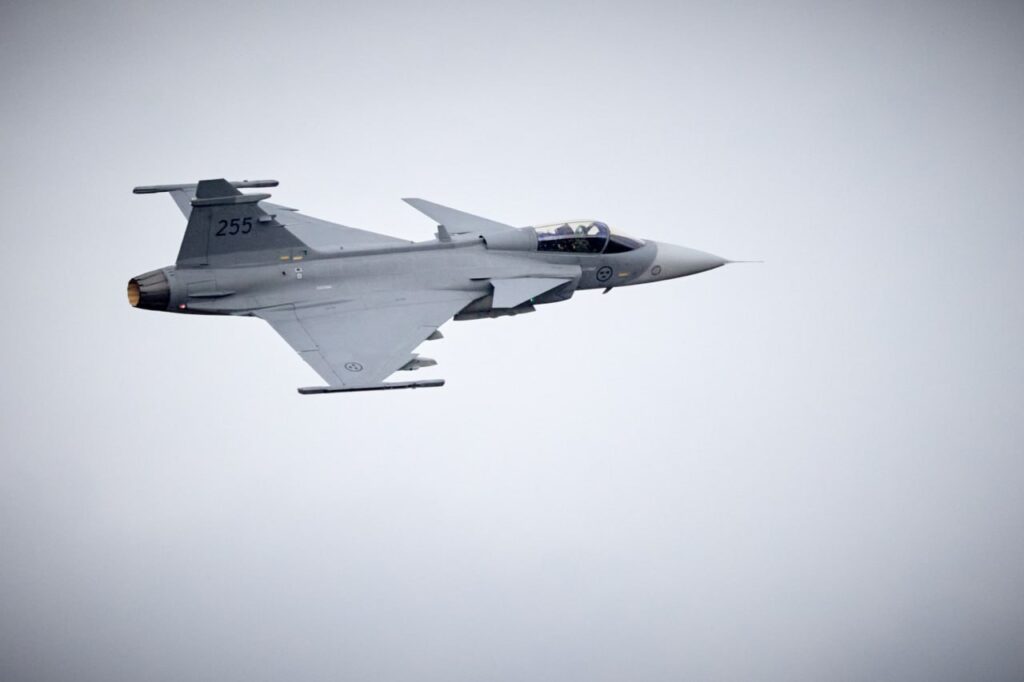
Ukraine is remaking its air force on NATO’s model, down to the way its squadrons are organized and the aircraft they fly. The reforms are planned to be completed by 2035 and include modernizing its F-16s while pursuing the Swedish Gripen jets, Air Force Spokesperson Yurii Ihnat says, per Tse Baza.

Ukraine’s fighters are working hard against Russia’s air war, and in the previous month alone the Air Force faced around 3,500 jet-powered targets, with F-16s heavily used to intercept Russian drones. The new reform is meant to build an air force that can be sustained over the long term and can contest Russian jets and glide bombs, not only survive the next wave.

Wings and universal air bases

The central change, Ihnat said, is a move to the “wing” units that NATO air forces use. The first steps have already been taken: Ukraine has set up the 107th F-16 wing, which now has its own Facebook page and may publish material about its work.

Ukraine also plans to build universal air bases on the operational airfields it has used through the full-scale war. In the future, Ihnat says, those bases should be able to receive and service different models of combat aircraft, as NATO does.

A worn fleet, and the jets Ukraine wants next

Currently, the F-16s Ukraine flies are older Block 15 jets, used by other countries before they arrived, and intensive combat has left them in need of repairs, service life restoration, and upgrades.

Ukrainian officials discussed modernization with the American manufacturer Lockheed Martin, while Kyiv would prefer the newer Block 70/72 version, which Ihnat says would let its pilots stand up more confidently to Russia’s Su-35 fighters.

Keeping the current fleet flying has been hard: fewer than half of Ukraine’s F-16s may be operational, held back by slow maintenance abroad.

At the same time, Lockheed Martin and Kyiv are discussing a special F-16 variant for Ukraine, with a modern AESA radar, longer range, and a wider choice of weapons, though no firm deal exists yet.

Ukraine is also counting on Swedish Gripen fighters. Ihnat says Ukrainian pilots are drawn to them for their lower operating costs and simpler maintenance, with the country likely to receive older C/D models first, before the newer Gripen E that Saab is developing.

Ukrainian pilots have already begun their training on the Gripen, a jet seen as a counter to the Russian aircraft dropping guided glide bombs on the front, though delivery timing depends on further agreements.

  •  
❌